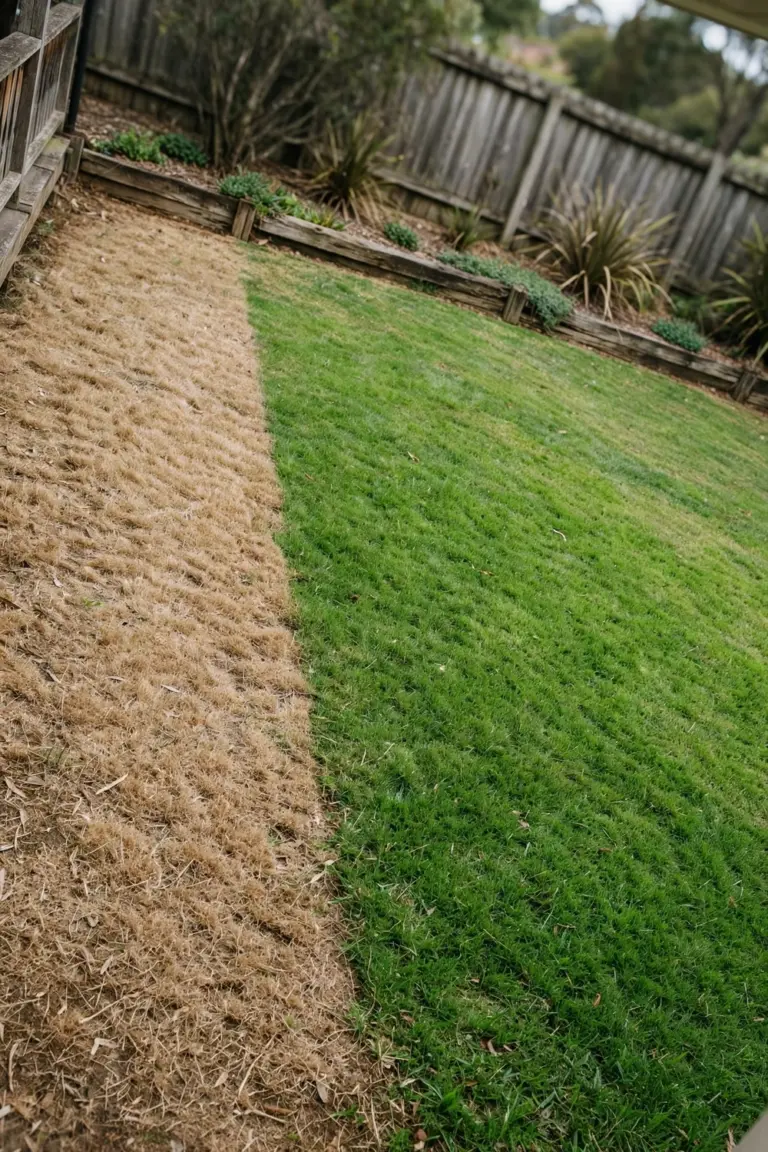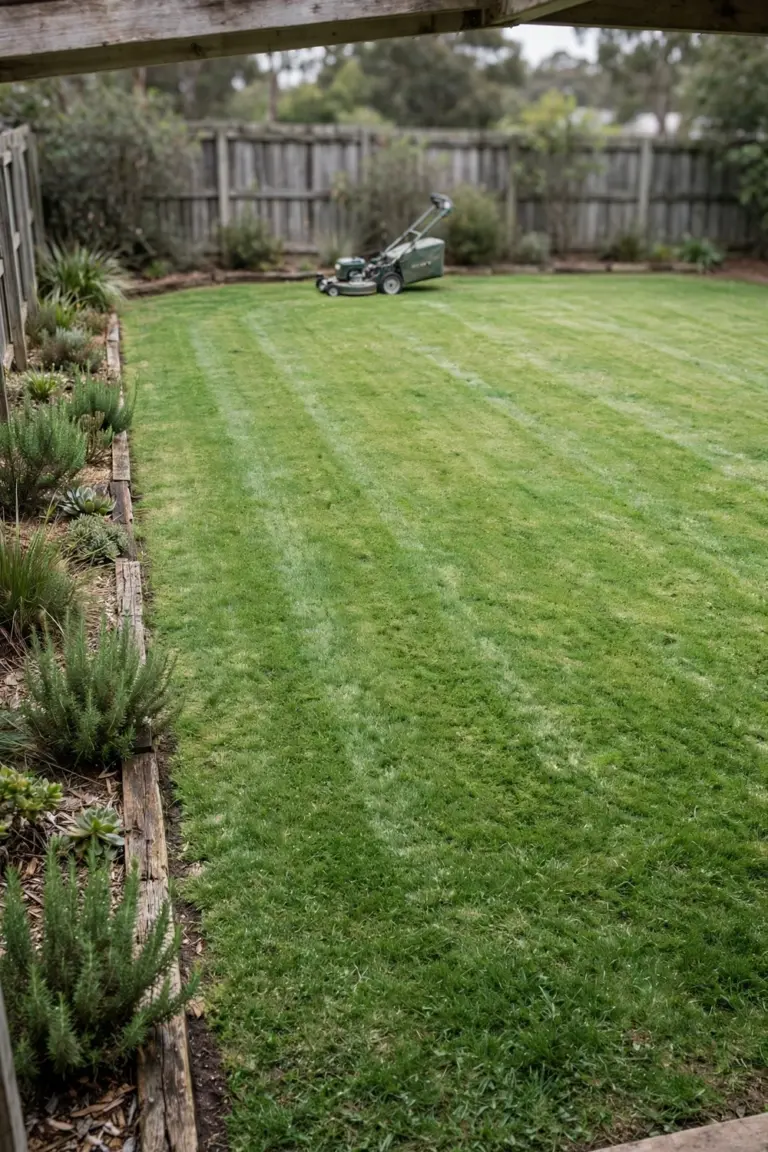

Lay new Kikuyu turf on the day it arrives, keep it damp for 14 days, and expect a knitted lawn in 2 to 3 weeks. That is new Kikuyu turf in Australia: a warm-season lawn laid as instant turf, watered on a taper, and mowed light until its roots grip the soil. The rest of this page is 9 moves, from deciding whether Kikuyu suits your yard to getting it through its first winter.
I have learned that the first two weeks of watering decide a Kikuyu lawn faster than any feed ever does.
Work from the top. Order turf only after the soil is ready. Lay on delivery day. Water in the same hour.
1. Decide Whether Kikuyu Suits Your Yard
Choose Kikuyu when the lawn gets 6 or more hours of direct sun and takes hard wear. Skip it for shade, because Kikuyu has very low shade tolerance.
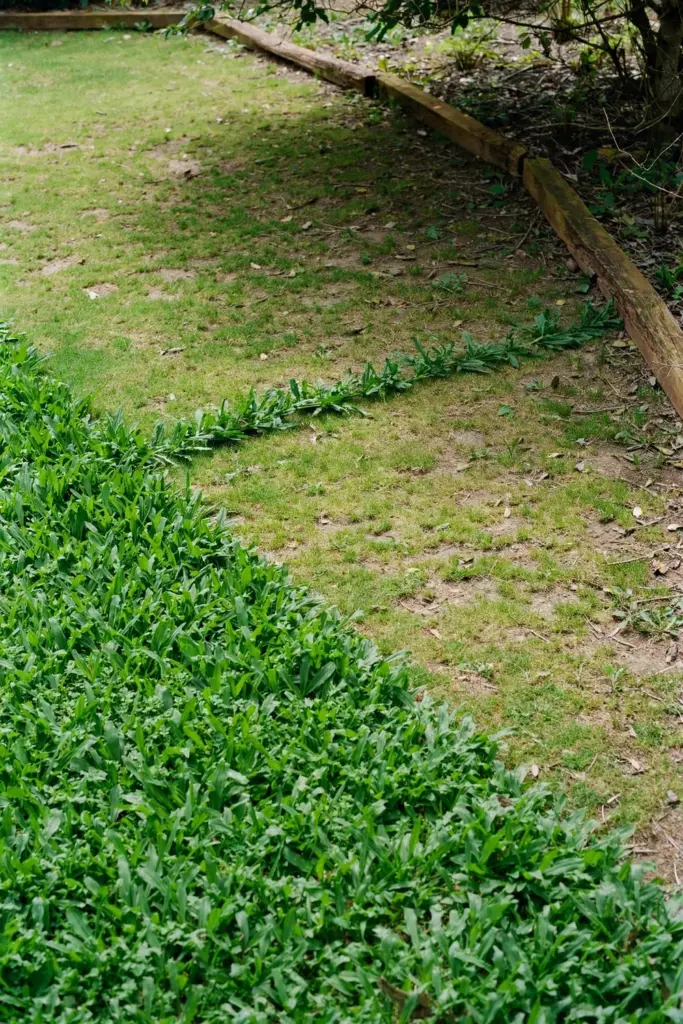
Kikuyu, or Pennisetum clandestinum, is a warm-season grass from East Africa that spreads by above-ground runners called stolons and below-ground runners called rhizomes. That spread is the whole point of the grass. It repairs wear fast, knits into a dense mat, and shrugs off foot traffic that would thin a slower grass. Lawn sellers describe it as economical, vigorous, and hard-wearing, and it suits big areas and busy backyards in full sun.
The same vigor sets the limits. Kikuyu wants full sun and 6 or more hours of direct light a day, and it thins in shade. It does not enjoy overly saline soils. Most instant turf sold as Eureka Kikuyu is sterile, which means it sets no viable seed. That matters in one practical way: a Kikuyu lawn spreads by runners, never by seed, so bare patches fill from the edges rather than from seed you sow.
Check the edges before you commit. Kikuyu runners creep into garden beds, paths, and driveways when nothing stops them. A lawn without edging becomes a weekly trimming job. A Kikuyu lawn under a dense tree thins within one season. The runners stretch for light, the cover opens, and weeds move in.
Wear tolerance is where Kikuyu earns its place. Kids, dogs, and weekend sport wear a lawn thin, and Kikuyu fills the wear with runners while a slower grass thins into bare dirt. That recovery has a cost. The same runners that heal a worn patch also demand weekly mowing through summer and regular edging. A Kikuyu lawn suits a household that mows often and plays hard. A household that mows monthly will fight it all summer. Instant turf, usually sold as Eureka Kikuyu, arrives as rolls grown on a turf farm. The rolls are sterile, so they never set viable seed, and they give instant cover on laying day. Common Kikuyu, the older form, grows from seed or from runners dug up and replanted. Seed suits a patient gardener filling a small area. Rolls suit anyone who wants a lawn this month. The laying method below covers rolls, because rolls are what most yards buy.
2. Prepare the Site Before Delivery Day
Prepare the site at least one week before the turf truck arrives. A finished soil bed lets you lay every roll on delivery day.
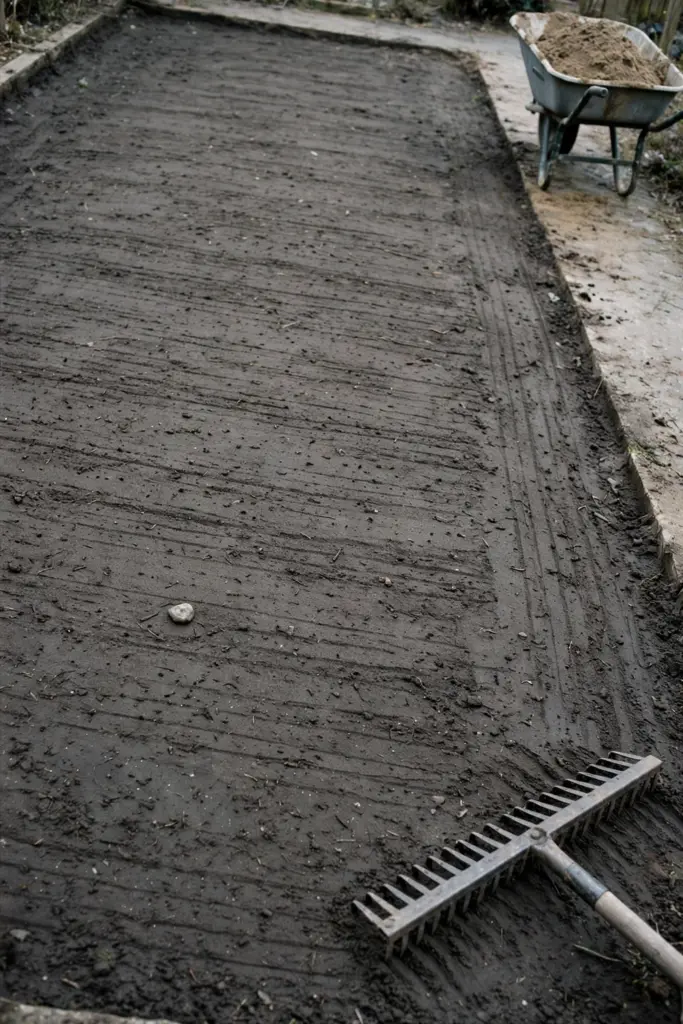
Kill the old lawn first, either by stripping it out or by spraying it out, then clear rocks, roots, and debris. Old grass left under new turf competes for water and rots into soft hollows. Strip the top layer clean, then hoe the top 100 mm of soil to loosen it. The same guide puts Kikuyu’s preferred soil pH at 6 to 7.5, and it advises adding lime when the soil tests below that range. Where the soil is poor, spread a layer of quality turf underlay or sandy loam before you level.
Rake the bed smooth and level, then finish about 25 mm below paths and driveways so the finished turf sits flush with the hard surfaces. A loose bed with organic matter holds moisture through the first 14 days, which is why soil health matters as much as the turf itself. Check the fall across the site while you rake. Water must drain away from the house and out of the lawn, never pond in a low corner. A bed that holds puddles after rain will suffocate new roots.
Test the drainage before you order turf. Dig a hole about 15 cm deep, fill it with water, and watch it drain. Water that still sits after an hour means heavy or compacted soil, so work in sandy loam or turf underlay to open it up, then retest. A soil pH test kit from the nursery gives the other number that matters. Kikuyu prefers 6 to 7.5. Lime lifts a low reading.
Turf laid on unprepared soil sits on air pockets. The roots dry out before they ever grip.
3. Measure and Order the Right Amount of Turf
Measure the lawn, multiply length by width, and order that area in turf rolls. Order only after the soil bed is ready, so the turf never waits on a pallet.
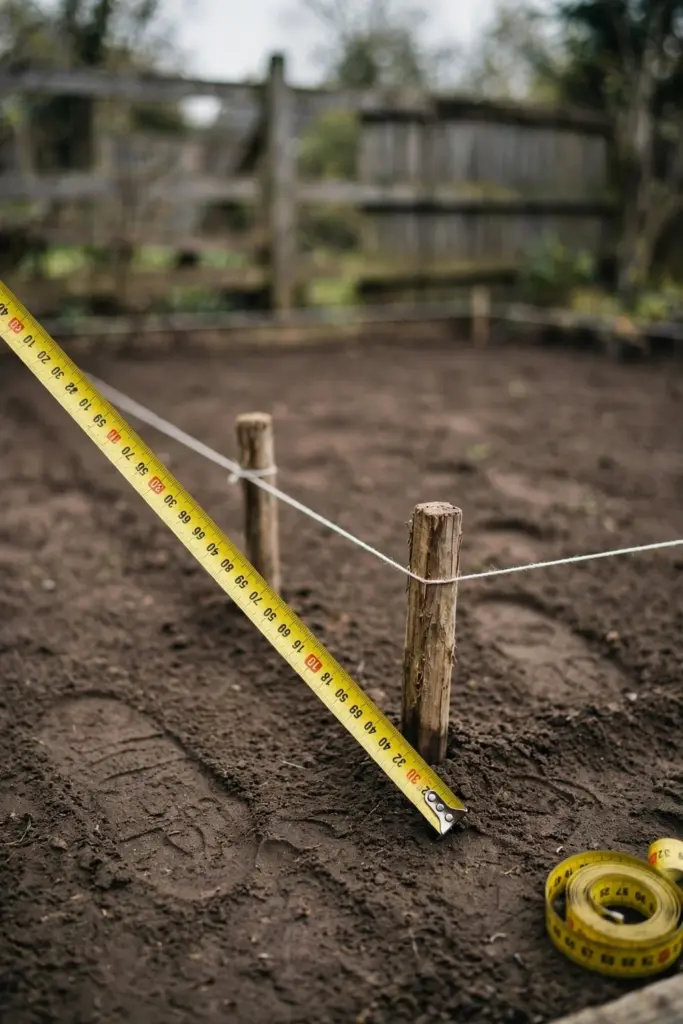
Break an irregular lawn into rectangles. Measure each rectangle, multiply length by width, and add the rectangles together. Curves and corners get cut to fit on laying day, and small offcuts fill the edges. A sketch on paper with the measurements written on it beats a guess made at the turf farm.
Book a morning delivery when you can. Laying starts as soon as the first pallet comes off the truck, and a full day of light gives you time to finish before dark. If laying must wait, keep the stacked rolls in shade and sprinkle them lightly with water. Heat builds in the middle of a stacked pallet, and the rhizomes dry out fast.
Set out the tools the night before. A sharp knife trims the rolls. A roller or a flat tamper presses them onto the soil. A rake and a hose finish the job. Ask one helper to unroll while you cut, because a second pair of hands halves the time the turf spends off the soil. Drop the first pallet as close to the lawn as the truck can reach. Every metre of carrying is a metre of drying.
Common Kikuyu also grows from seed, at 10 to 12 g per square metre with germination in 10 to 14 days, according to Aussie Green Thumb. Turf rolls skip that wait and give instant cover. Turf left stacked in sun for a day arrives half dead. The rolls heat in the middle and the rhizomes dry out.
4. Lay the Turf in Brickwork on Delivery Day
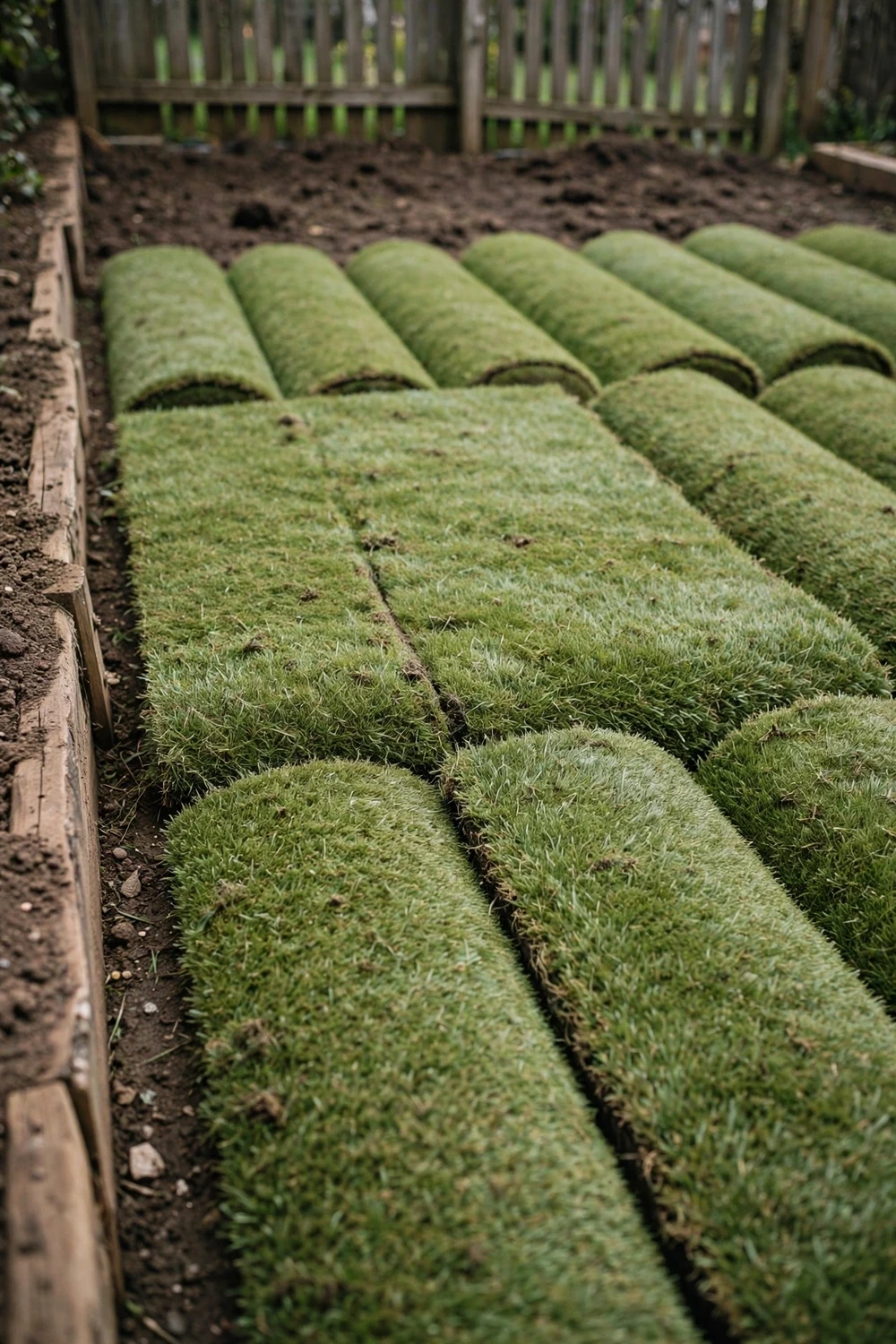
Lay every roll on delivery day, starting along the longest straight edge, because a straight first row sets every row after it. Butt the edges tight. Stagger the joints like brickwork. Leave no overlaps.
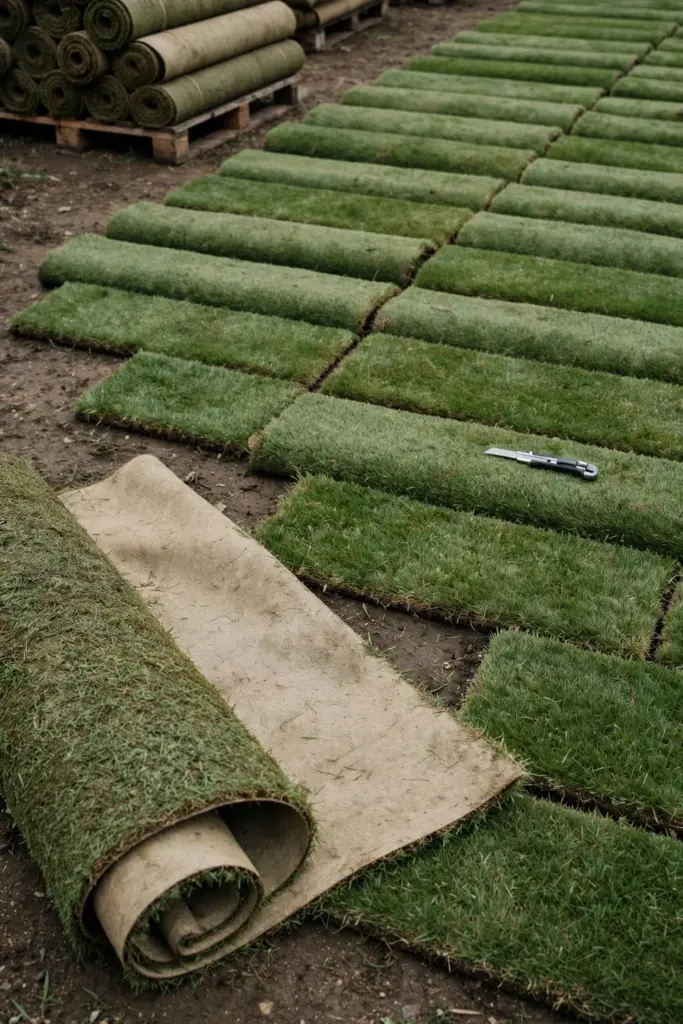
Wet the soil bed before the first roll goes down, because new turf must meet moist soil, not dry dust. Start along a driveway, path, or other straight edge. Unroll the first row, then start the second row half a roll in so the joints stagger. Push each roll tight against the last one, because overlaps create raised ridges that dry out and die, and gaps become weed strips.
Trim around garden beds, paths, and obstacles with a sharp knife. Cut from the soil side of the roll, and keep the cuts clean. A torn edge dries faster than a cut one. Roll or tamp the whole area after laying to press the turf onto the soil and push out air pockets. Roll in two directions, once along the rows and once across them, so no seam escapes pressure. Do not walk or kneel on the turf while you lay it or just after watering, because footprints press hollows into the soft bed.
Top-dress with white-washed sand or turf sand and wash it through with water. The sand settles into the joints and holds the edges down. Avoid leaving small strips at the outer edges. Narrow offcuts dry out before they root, so cut a full roll to shape instead.
Curves and trees need slower work. Cut a roll to follow a curve in short straight chords rather than bending a full roll, because a bent roll buckles and leaves a gap at the inside edge. Around a tree, leave a ring of mulch between the trunk and the turf. Turf laid hard against a trunk stays wet against the bark, and the mower scalps the roots where they surface. A mulch ring gives the mower room and the trunk air.
5. Water New Turf on a Taper Until It Roots
Water within 30 minutes of laying, and soak the soil 7 to 10 cm deep. New Kikuyu stays damp for 14 days, then tapers to wilting-only watering.
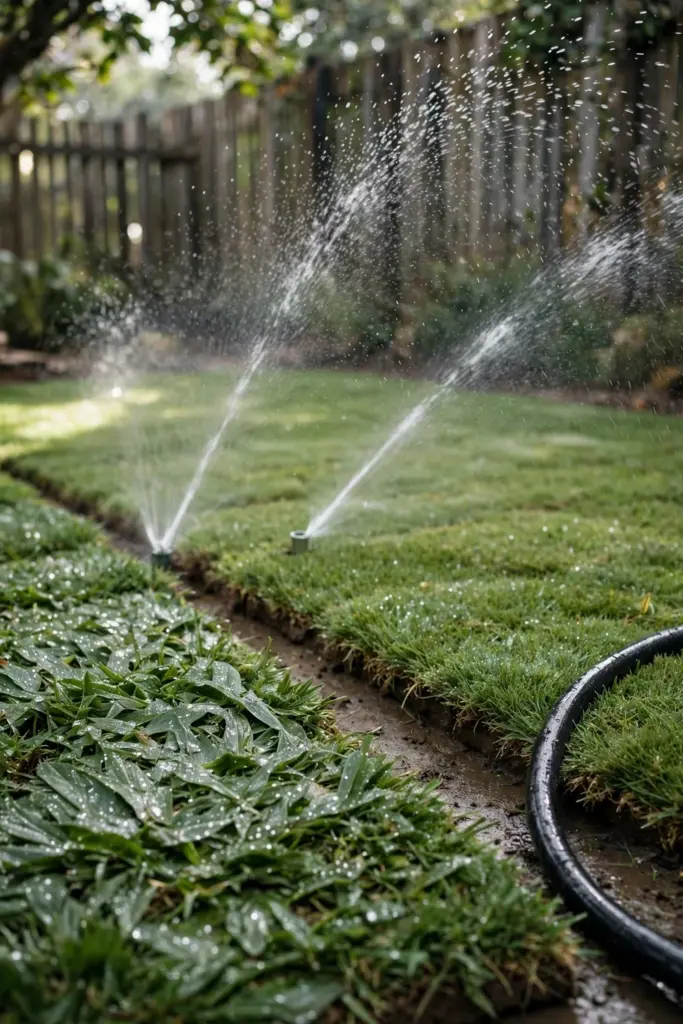
Hills Irrigation’s guide to watering new Kikuyu turf sets the first soak at 7 to 10 cm deep within 30 minutes of laying. The taper after that runs in three phases.
| Phase | Goal | Frequency |
|---|---|---|
| Laying day | Soak soil 7 to 10 cm deep | Within 30 minutes of laying |
| Days 1 to 14 | Keep the turf moist at all times | Twice a day |
| Days 15 to 24 | Taper as roots grip | Every second day |
| Week 5 onward | Established rhythm | Only on slight leaf wilting |
Never let the turf dry out during the first 14 days. Keep the surface moist around the clock, and water in the morning so the leaf dries before night. Do not flood it either, because puddling suffocates the soil and waterlogged soil invites disease. The same Hills guide advises testing penetration with a rod or moisture meter to confirm the water reaches deep enough.
In a summer heatwave, split the day’s water into more passes. Gardening Australia’s new-lawn advice runs to 4 short soaks a day in summer until the turf resists a pull. By day 14 the turf should have taken root. Test it with a gentle tug at a corner. Roots that grip mean the taper can start.
Rain counts as watering. A heavy downpour that soaks the soil means skipping the next scheduled pass, because adding sprinkler water on top of rain pushes the soil toward the suffocation end of the scale. A light shower that wets only the leaf means watering as normal. Check the soil with a finger before deciding. Damp soil an inch down means the roots have water. Dry soil means the sprinkler runs.
Water in the morning through the whole first year. Morning watering loses less to evaporation than midday watering, and the leaf dries before nightfall, which keeps fungal disease down. Evening watering leaves the leaf wet overnight, and wet leaf is where turf fungi start. On a windy day, water runs sideways and misses the target, so check the soil with a finger after watering rather than trusting the sprinkler timer.
6. Make the First Mow Light and Late
Mow only once the turf has knitted and resists a pull. Cut the tips only on that first pass.
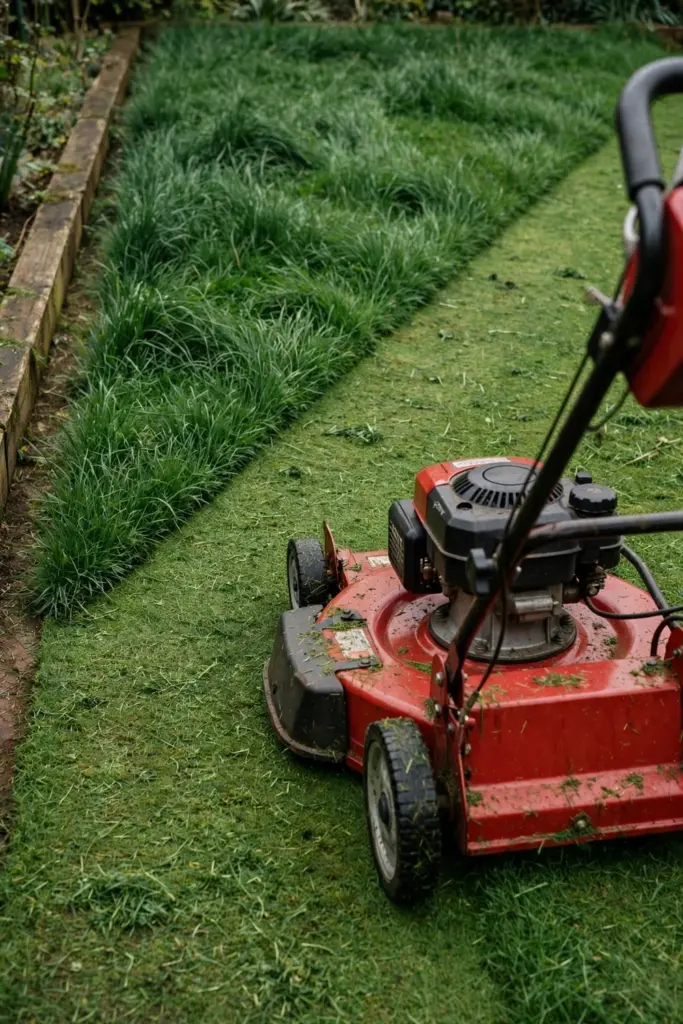
The tug test decides the day. Grip a handful of leaf and pull gently upward, and watch what happens. Turf that lifts is not ready. Turf that holds is rooted, so bring out the mower and take the tips only in one light pass that evens the surface without tearing at roots that are still shallow.
Akers of Lawn’s Eureka Kikuyu aftercare sheet puts the mowing height at 20 to 35 mm, weekly through the warm season and every 10 to 14 days in the cool season, rising 10 mm higher in cool weather. The same sheet caps each cut at one-third of the leaf. Cut more than that in one pass and the plant loses the leaf it feeds on. Aussie Green Thumb corroborates the cadence at 2 to 5 cm every 7 to 10 days in summer.
Edge from the first mow onward. A half-moon edger or a line trimmer cuts the runners where the lawn meets beds, paths, and driveways. Cut the edge clean each week, and pull any runner that crosses the line in the same pass. Edging takes minutes when it is weekly. Edging takes an afternoon when it is monthly, because the runners have already rooted on the far side. Solid edging board set proud of the soil slows the crossing, and it gives the trimmer a line to follow. A blunt blade tears the leaf, and torn leaf browns at the tip and opens the door to disease. Lilydale’s aftercare puts the first mow at 7 to 14 days from September to May, and only when absolutely necessary outside those months. A heavy first cut on unrooted turf lifts whole rolls. The mower becomes a harvester. For blade care and mowing patterns, see the site’s 15 essential lawnmower tips.
7. Follow the First-Year Feeding and Mowing Calendar
Feed a new Kikuyu lawn only after it roots. Wait 6 to 8 weeks after laying before granular fertilizer, then feed on a seasonal rhythm.
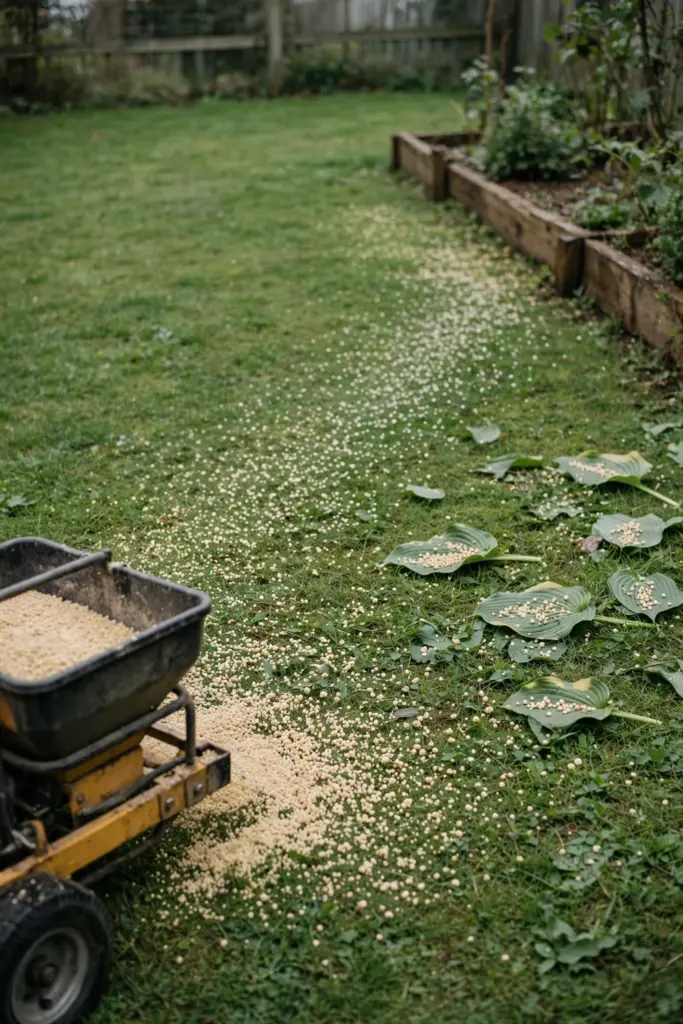
The first 6 weeks belong to water and roots. Granular fertilizer applied before the roots grip sits on the roll and scorches the leaf. Once the turf resists a pull, the seasonal calendar below takes over. Aussie Green Thumb lists the feeding windows as late spring, late summer, and late autumn, using a high-nitrogen slow-release fertilizer, and it advises watering thoroughly after every feed. For the full seasonal timing, see when to fertilize a lawn in spring.
| Season | Feed | Mow | Other Jobs |
|---|---|---|---|
| Spring | First granular feed once rooted | Weekly at 20 to 35 mm | Edge runners, check for weeds |
| Summer | Light feed, water after | Every 7 to 10 days | Edge weekly, watch thatch |
| Autumn | Balanced feed to build roots before winter | Every 10 to 14 days, raise cut 10 mm | Last scarify before the cold |
| Winter | No feed | Only as needed, higher cut | Stay off wet turf |
Thatch builds fast under Kikuyu. The mat of runners and dead leaf turns the surface spongy and blocks water from reaching the soil. Akers of Lawn advises scarifying when thatch builds up, best done through the warm season every 2 to 3 years, and coring or aerating every 1 to 2 years. Moebot’s care guide puts dethatching at once every 1 to 2 years. Dense Kikuyu suppresses most weeds on its own, and Moebot advises a pre-emergent herbicide in early spring only where weeds are a concern.
Leave the clippings where they fall. A mulching mower chops the leaf fine and drops it back into the canopy, where it returns nitrogen to the soil as it breaks down. Bagging every cut strips that nitrogen out of the lawn and fills the green bin with the feed you just paid for. Alternate the mowing direction each week. Straight stripes one week and a diagonal the next keep the runners from leaning one way and the wheels from wearing one track.
Feeding in the first 6 weeks burns roots that have not gripped yet. The granules sit on the roll and scorch the leaf.
8. Let the Lawn Go Quiet in Its First Winter
Expect the first winter to slow Kikuyu, not kill it. The lawn may pale and thin, while the roots and runners stay alive underground.
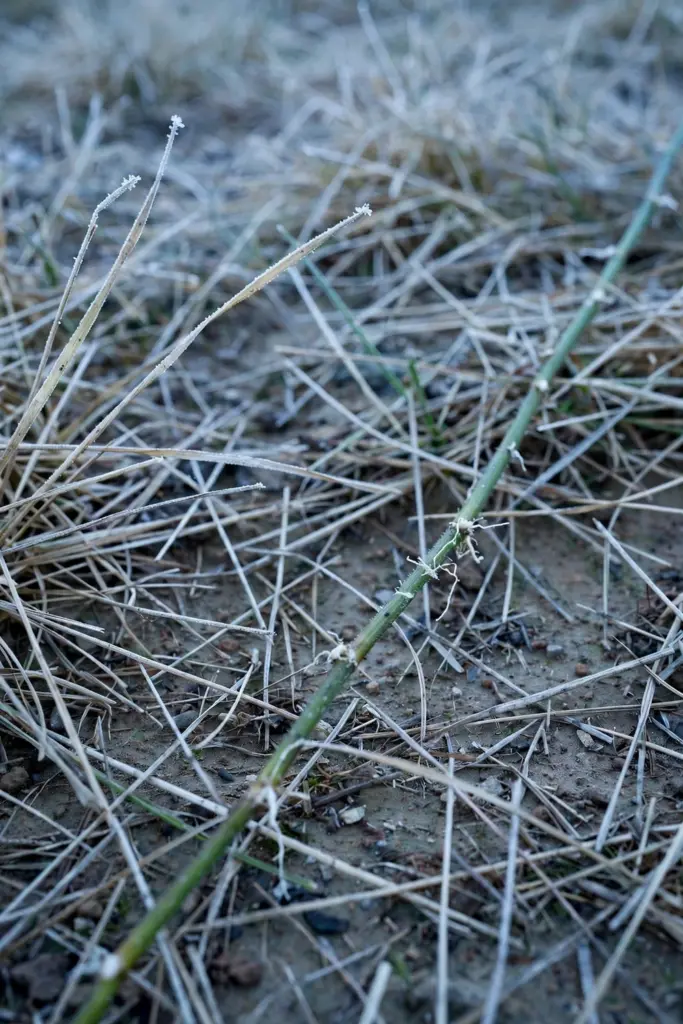
Kikuyu is a warm-season grass, and cold weather stops its growth. The leaf loses color and thins out. The roots and runners under the surface stay alive and wait for warmth. That is dormancy, and it is normal. CompleteGrow’s revival guide states the point plainly: Kikuyu does not die in winter.
Aussie Green Thumb’s Kikuyu guide warns against watering in the cold or during winter, because wet cold soil yellows Kikuyu faster. Water only when the grass looks very dry and wilted. Moebot’s care guide gives the same winter rule in plainer form: do not overwater, and mow less often. Skip fertilizer in winter. The grass grows too slowly to use it, and the nutrients wash away unused. Feed once in early autumn instead, so the plant stores nutrients before the cold.
Raise the cut for winter. Akers of Lawn raises the mowing height by 10 mm in the cool season, and CompleteGrow’s winter guidance runs to 40 to 50 mm. A longer leaf in winter protects the crown from scalping and stress. Avoid heavy scalping or dethatching late in the season, because the lawn has no warm weeks left to recover.
Check a runner when the lawn looks dead. Split one open. White or green tissue inside means the runner is alive and will regenerate in spring, according to CompleteGrow. In mild climates Kikuyu may stay green all winter. In colder regions it goes dormant and brown. Either way, spring warmth restarts it.
Watch the first spring after a winter laying. Growth resumes slowly. Then it accelerates as the soil warms. Hold the first spring feed until the lawn greens up on its own and the mower comes out weekly, because a dormant lawn fed too early takes up little of the fertilizer and the rest washes through. Never dethatch a lawn that still looks dormant. Wait for steady growth, then scarify if the mat feels spongy underfoot.
Panic watering in winter yellows Kikuyu faster. Cold wet soil does more damage than cold alone.
9. Fix First-Year Failures Early
Fix a first-year failure in the week you spot it. Kikuyu repairs fast when the cause is removed, and gaps close as runners spread.
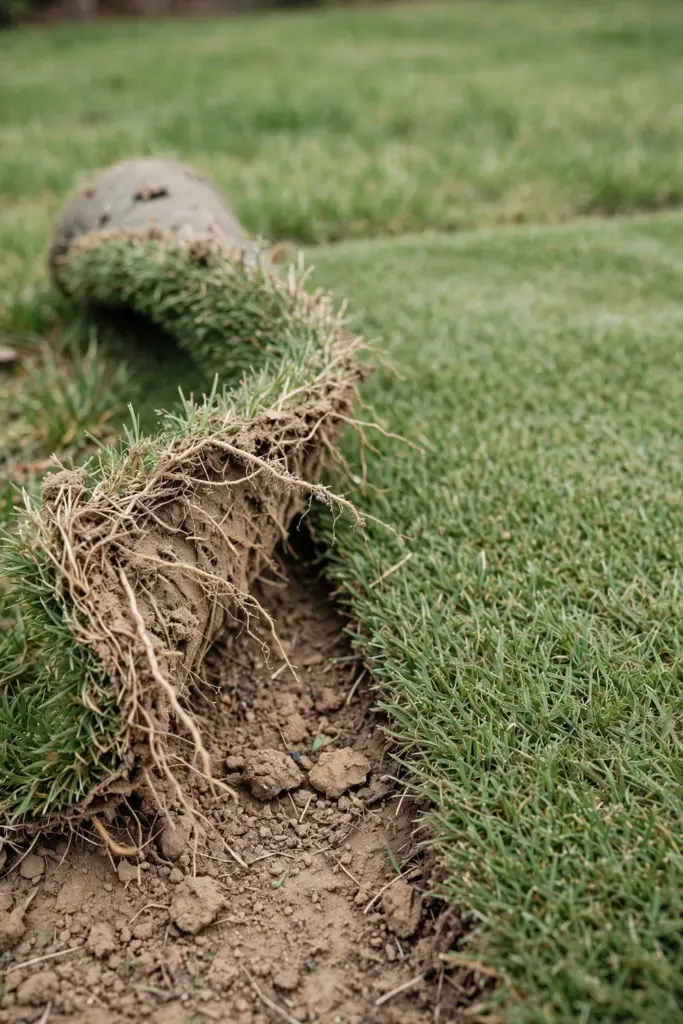
Turf that never establishes usually traces to one of three causes: rhizomes dried out from delayed laying, underwatering in the first 14 days, or poor soil contact from unrolled air pockets. Re-wet the area, tamp it down, and give it a week. Turf that still lifts after that week never rooted, and the dead rolls need lifting and replacing.
Edges lift first because they dry first. Push a lifted edge back against its neighbor, tamp it, and water it in. Small gaps close on their own as runners spread across them, because fast lateral growth is the trait Kikuyu was chosen for. A gap wider than a hand needs an offcut pressed in, not patience.
Yellowing in the first year usually means low nitrogen or compacted soil, according to Moebot’s care guide. Fertilize after the 6 to 8 week wait, and aerate where foot traffic has packed the soil. Warm-weather yellowing can also be fungal Kikuyu yellows, a turf disease. A spongy surface means thatch. Dethatch it before the mat starves the roots.
Runners in a garden bed need pulling now. Kikuyu spreads aggressively, and a runner left in a bed roots within days. Pull it now or dig a mat later.
Turf that still lifts after 4 weeks never rooted. Lift the dead rolls, check the soil underneath, and find the cause before you re-lay. Dry soil under a lifted roll means the water never penetrated. A hard pan under it means the bed was never loosened. Fix the soil, then lay fresh rolls and water them in the same hour. Re-laying on the same unprepared bed repeats the failure.
Frequently Asked Questions
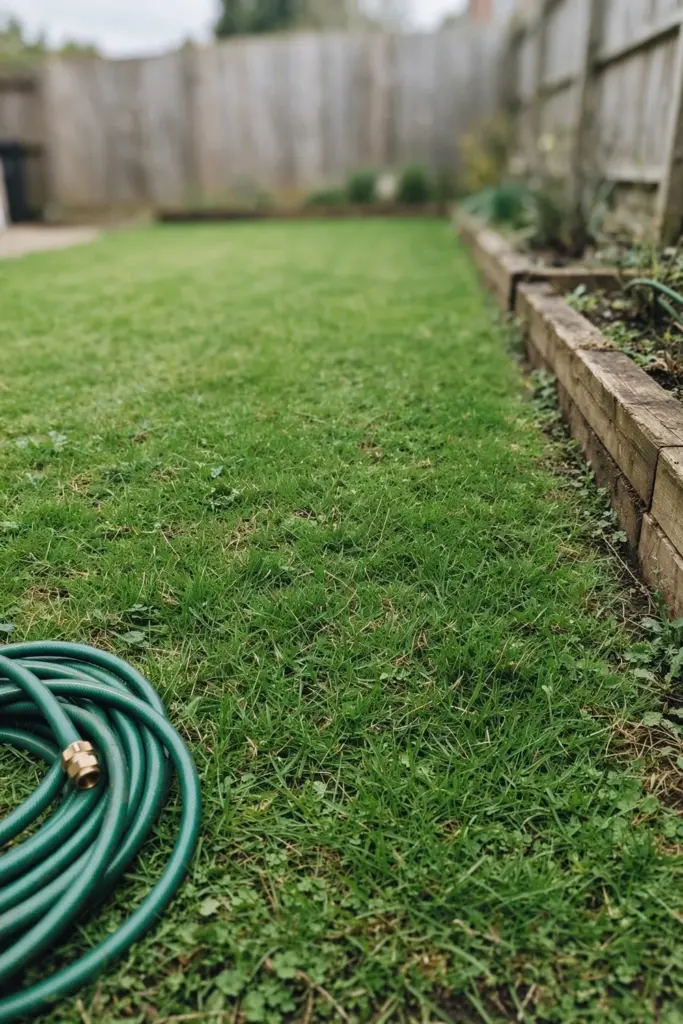
Yes, and expect slow progress. Kikuyu roots slowly in cold soil, so a winter-laid lawn takes longer to knit and may sit pale until spring. Keep it damp through the first 14 days, the same as a spring laying, and hold off fertilizer until growth resumes. Spring to autumn remains the best window, because warm soil grows roots fast.
Keep traffic to a minimum until the turf knits, usually 2 to 3 weeks. Light foot traffic is fine once a tug test shows the roots grip. Keep children, dogs, and wheelbarrows off the lawn for the first 14 days, and keep to the edges when you must cross it. Heavy use before rooting shifts the rolls and breaks the soil contact.
Check water first. Dry turf yellows from the edges inward, and the fix is a deep soak. Low nitrogen yellows the whole lawn evenly, and the fix is a granular feed after the 6 to 8 week wait. Cold winter soil yellows Kikuyu too, and the fix is patience rather than water or feed. Compaction yellows traffic paths, and the fix is aeration. Match the pattern before you treat.
It can, and brown does not mean dead. Kikuyu slows in cold weather and may lose color, especially in colder regions. The roots and runners stay alive underground. Split a runner to check: white or green tissue inside means the lawn will regenerate in spring. Keep winter watering to wilted-only, skip fertilizer, and let spring warmth restart growth. A brown Kikuyu lawn in July is usually dormant, not dead.
Yes, unless edging stops it. Kikuyu runners creep across low edging and root on the far side. Install solid edging that sits proud of the soil, and trim the lawn edge every mow. Pull any runner that crosses the line in the same week. A runner left for a month becomes a mat that needs digging out. Weekly edging is part of owning Kikuyu.
Start With the Soil, Not the Turf
New Kikuyu turf rewards one habit above all: prepare the soil, lay on delivery day, and water on a taper. The first 14 days decide the lawn. The first winter tests it. Spring answers.
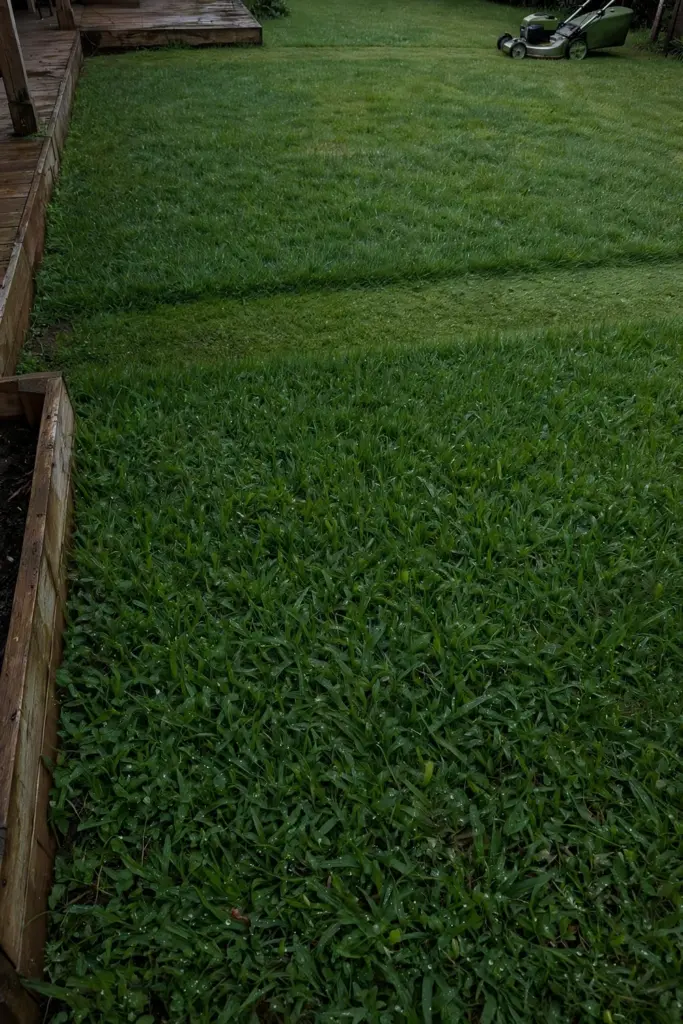
Month 1 is water and patience. Month 3 is weekly mowing and the first feed. Month 12 is a lawn that takes wear, fills its own gaps, and goes quiet in winter without dying. Prepare the bed this week. Order turf after the soil is ready.