
A table setting is the smallest garden display in the house, because one seat holds one placemat, one napkin, one name card, and one living plant, and the guest meets the garden before the first dish arrives. This collection gathers 45 complete place settings from the garden, grouped by herbs, leaves, harvest, dried flowers, fresh flowers and fruit, potted plants, and special seats, so a host can set every seat from plants already growing and finish with a table where no two seats look alike.
Each setting names its plant, its build, and its care, and the quick-pick table at the end gives a plain guide to which setting suits a cook, a child, a new guest, or a guest of honor. Herb settings suit a guest who cooks, potted settings suit a guest who takes a plant home, dried settings suit a table set days ahead, and living settings suit a host who wants the table to smell like the garden.
I set a rosemary sprig at every seat one Thanksgiving, and the sprigs became the name cards, the favors, and the first conversation of the evening.
1. Rosemary Sprig Setting for the Cook
A rosemary sprig setting starts with a plain linen napkin folded in a long rectangle, a sprig of fresh rosemary 15 centimetres (6 inches) long laid across the fold, and a small paper card tucked under the sprig with the guest name written in plain ink. The plate sits on a woven placemat, the fork goes to the left of the plate, the knife goes to the right with its edge turned toward the plate, and the rosemary rests where the guest sees it first when pulling out the chair.
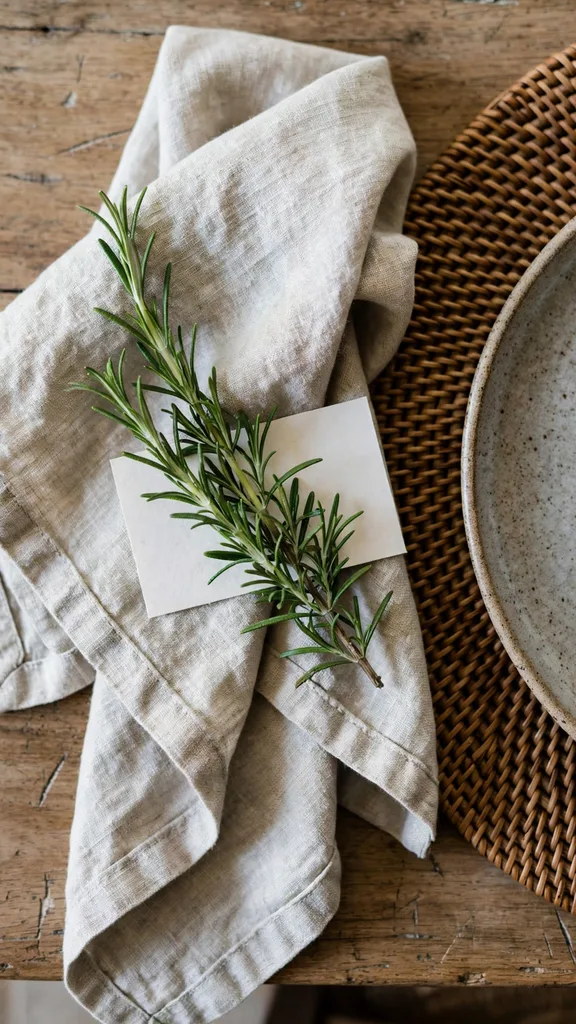
Rosemary holds its scent for hours at room temperature, and the guest can take the sprig home for cooking after dinner. Cut the sprigs on the morning of the meal, keep them in a glass of cool water until setting time, and choose sprigs with firm needles and no brown tips so the setting still looks fresh when the last guest sits down.
2. Thyme Bundle Setting for the Soup Lover
A thyme bundle setting pairs a small bundle of fresh thyme tied with plain twine to a cream napkin, a stoneware plate, and a soup spoon laid to the right of the knife. Tie 8 to 10 thyme stems into one bundle, trim the stems to one even length, and lay the bundle diagonally across the napkin so the tiny leaves catch the light. A card with the guest name sits under the twine knot, held in place by the bundle itself.
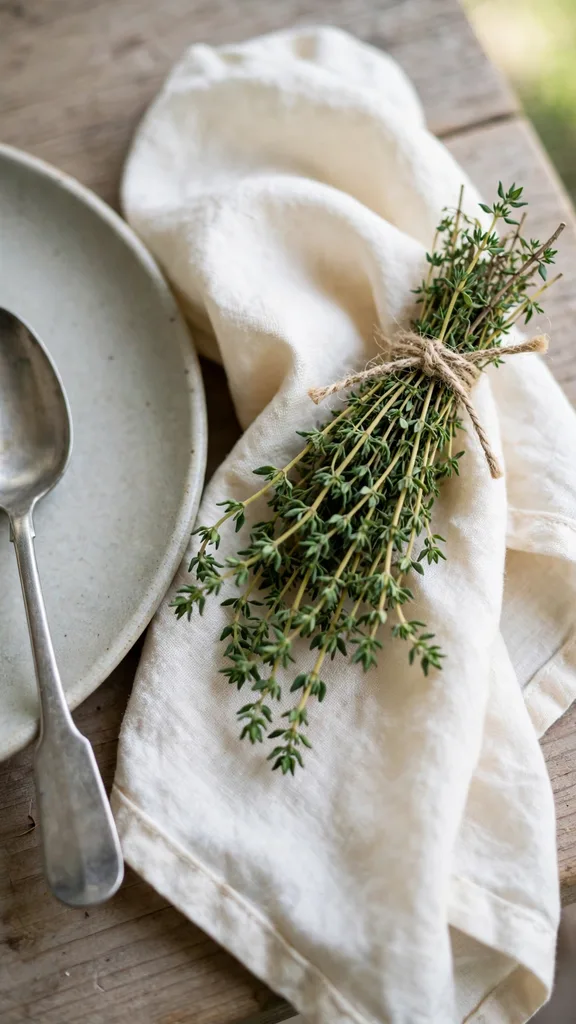
Thyme dries well if the table is set early, and the bundle still smells fresh after a full day indoors. Keep the bundles in a cool room away from the stove until the table is set, and mist the leaves lightly one time if the room runs dry, because thyme leaves curl when they lose moisture.
3. Sage Leaf Setting for the Stuffing Maker
A sage leaf setting uses one large fresh sage leaf as the name card itself, with the guest name written on the leaf in plain ink and the leaf laid across a folded napkin in a soft grey green. The plate is plain white so the leaf colour reads clearly, the napkin is folded in a square, and a short stem of dried sage tied with twine sits beside the water glass as a second scent for the seat.
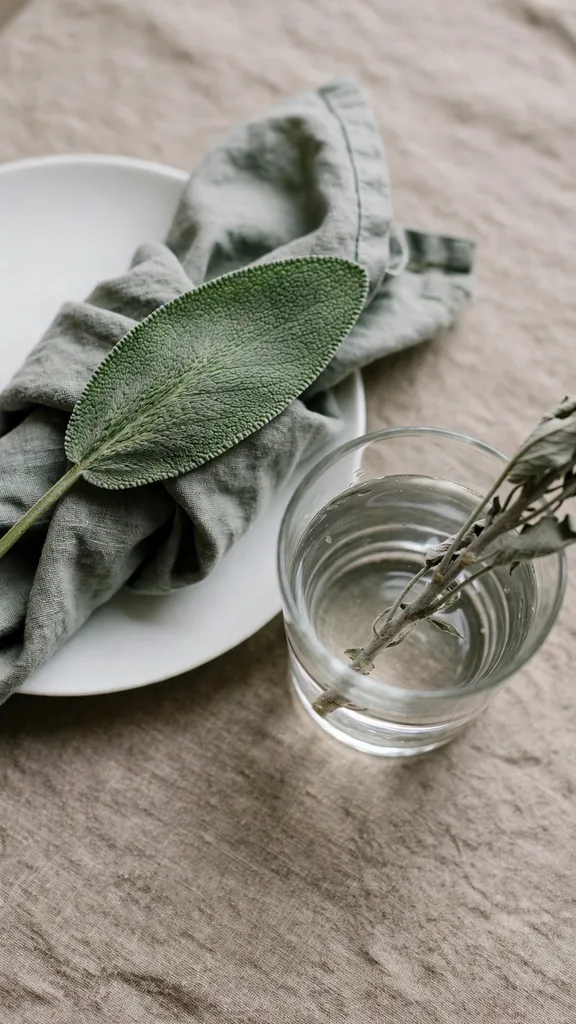
Sage leaves bruise if handled roughly, so write the names with a light hand and set the leaves down flat. Pick the largest leaves from the outer stems on the morning of the meal, keep them between damp paper towels until setting time, and replace any leaf that wilts before guests arrive.
4. Mint Sprig Setting for the Tea Drinker
A mint sprig setting suits the guest who drinks tea after dinner, because the sprig at the seat becomes the garnish for the last cup. Set a sprig of fresh mint 12 centimetres (5 inches) long in a small glass of water at the top right of the plate, fold the napkin beside the plate, and tuck the name card into the napkin fold so the mint stands clear of the card. The glass doubles as the water glass for the seat, and the mint stays crisp through the meal.
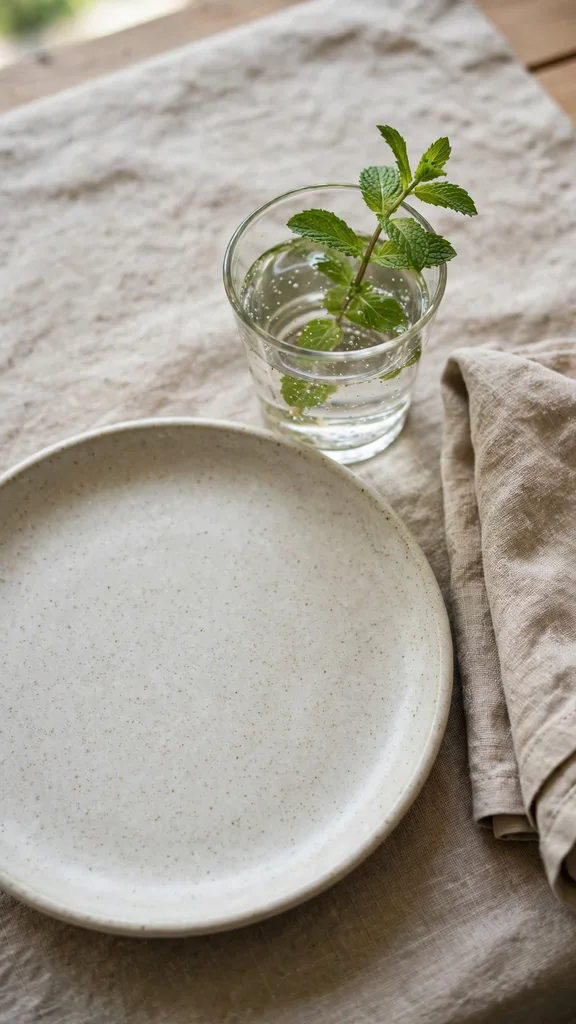
Mint wilts fast in a warm room, so fill the glasses just before guests sit down and keep cut sprigs in cool water until then. Choose spearmint for a mild scent, avoid bruised stems, and warn the guest that the sprig is fresh mint for tea, because a guest who does not know mint may leave it in the glass.
5. Bay Leaf Setting for the Slow Cook
A bay leaf setting gives the slow cook a seat that smells like a simmering pot, with three dried bay leaves fanned across the napkin and a name card laid over the fan. The plate is deep earthenware, the napkin is dark linen so the pale bay leaves stand out, and a small bay sprig in a bud vase stands at the top of the plate as the living plant for the seat.
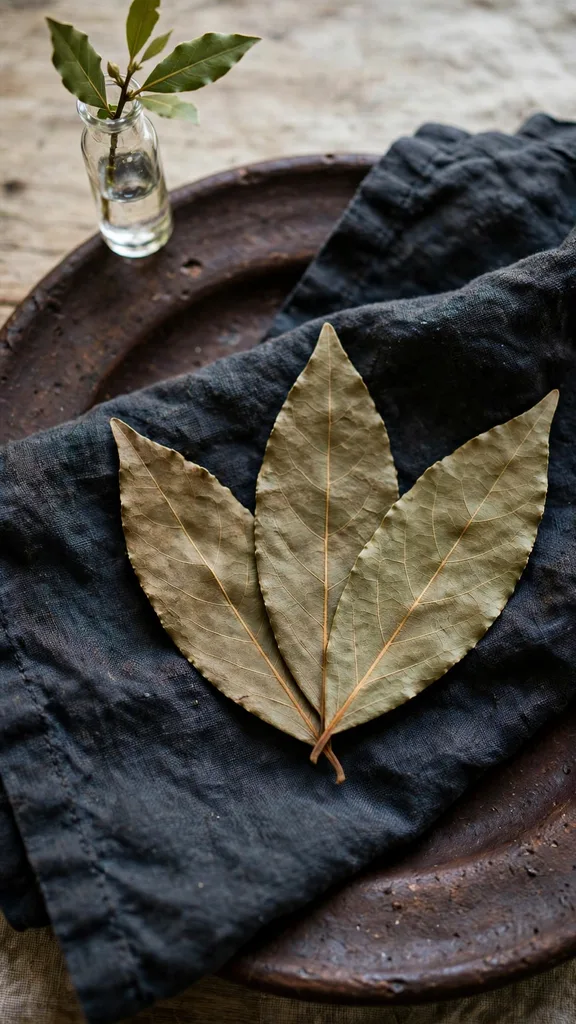
Bay leaves keep their shape for weeks once dried, so this setting can be built two days ahead without losing its look. Dry the leaves flat between sheets of paper for 7 days before the meal, store them in a dry tin until setting time, and use leaves from a cooking bay tree, because ornamental bay types vary and the cooking type carries the familiar scent.
6. Parsley Bunch Setting for the Fresh Garnish Fan
A parsley bunch setting puts a small bunch of flat-leaf parsley at each seat, tied with twine and laid across a white napkin, with the name card slipped under the twine. The plate is plain, the cutlery is simple steel, and the parsley bunch serves as garnish for the soup course, so the guest snips leaves straight from the bunch at the table.
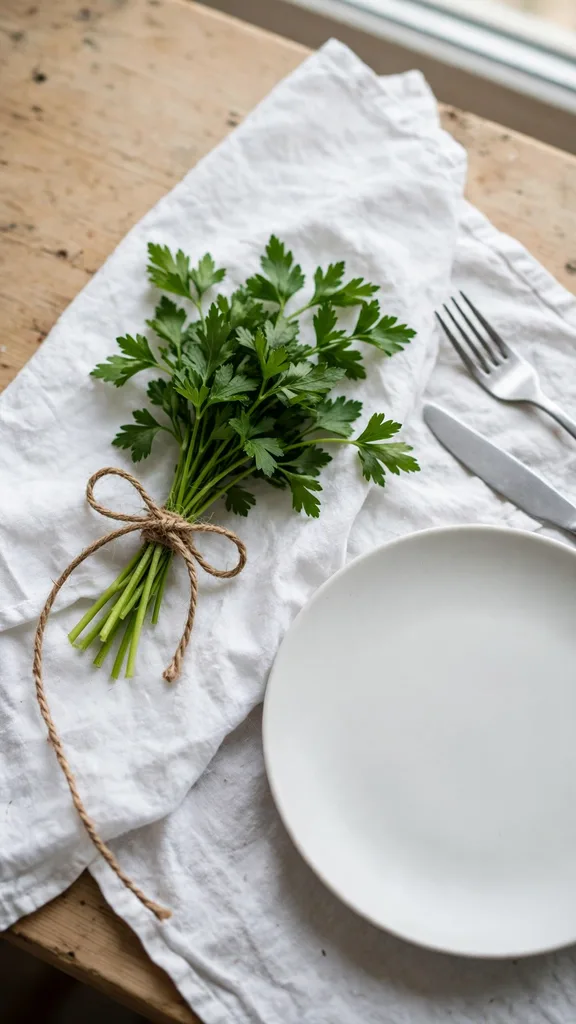
Parsley stays crisp only when it stays moist, so stand the bunches in a jug of cool water until 30 minutes before dinner. Cut the bunches on the morning of the meal, trim the stem ends under water, and choose bunches with deep green leaves and no yellow edges, because yellow leaves show at once against a white napkin.
7. Oregano Sprig Setting for the Sauce Lover
An oregano sprig setting lays a sprig of Greek oregano across a terracotta coloured napkin, with the name card written on seeded paper that the guest can plant after dinner. The plate is warm cream, the knife and fork are set wide so the sprig has room, and a tiny clay pot of oregano stands at the top right of the plate as the living plant for the seat.
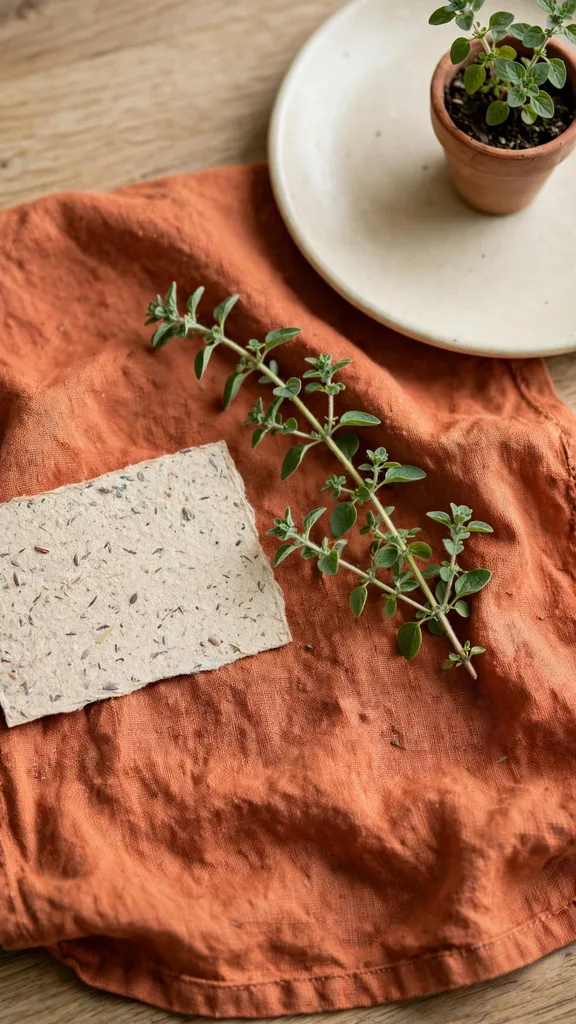
Oregano scent grows stronger when the leaves are brushed, so the guest smells the setting each time a hand passes near the plate. Water the small pot the day before the meal, let the soil drain fully before setting time, and label the pot Greek oregano, because the culinary type matters to a sauce lover and ornamental oregano types taste different.
8. Chive Ribbon Setting for the Breakfast Guest
A chive ribbon setting ties the napkin with a long fresh chive stem instead of a ring, with the name card tucked under the chive knot. Fold the napkin into a tall roll, wrap one chive stem around the middle, and tie the stem in a loose knot that the guest can undo without tearing the napkin. The plate is pale blue, and a small dish of soft cheese sits at the top of the plate for the guest who likes chives at breakfast.
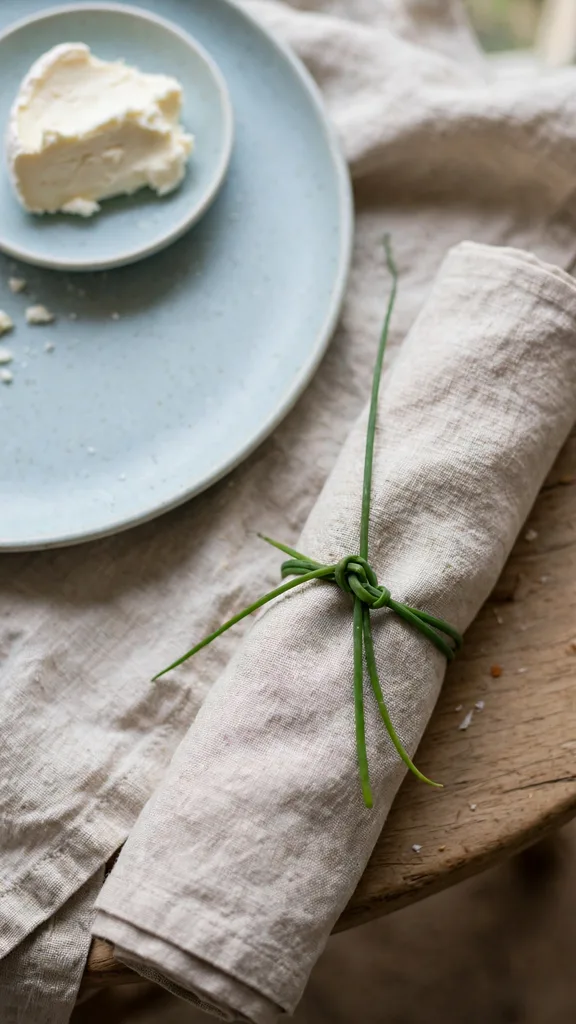
Chive stems snap if bent sharply, so choose the longest, most flexible stems and tie them gently. Cut the chives on the morning of the meal, keep them in cool water until setting time, and cut a few spare stems, because one stem in three breaks during tying and a spare keeps the setting even.
9. Maple Leaf Setting in Autumn Red
A maple leaf setting lays one large red maple leaf flat on the plate as the first thing the guest sees, with the name card placed on the leaf in plain ink. The placemat is natural linen, the napkin is folded under the plate, and a second smaller leaf in gold sits beside the water glass so the seat carries two colours from one tree.
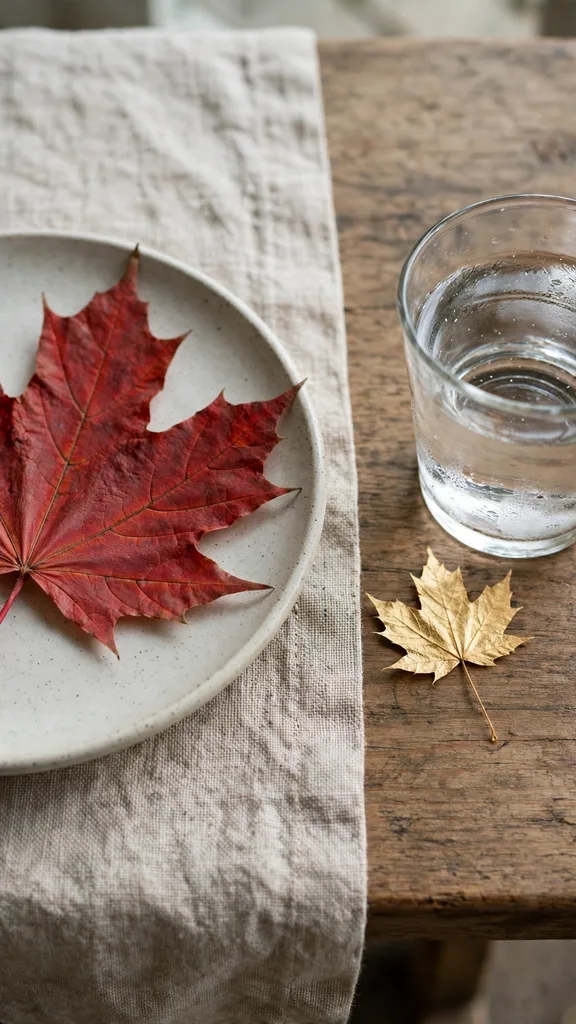
Maple leaves dry and curl within a day indoors, so press the leaves between heavy books for 3 days before the meal if the table is set early. Pick leaves with full colour and no torn edges, press them flat while they still feel supple, and store pressed leaves between sheets of paper until setting time.
10. Oak Leaf and Acorn Setting for the Woodland Seat
An oak leaf and acorn setting builds a woodland seat from three oak leaves fanned on the placemat, one acorn with its cap set at the top of the fan, and a name card written on plain brown paper. The plate is stoneware in a moss green, the napkin is folded in a triangle behind the plate, and the acorn marks the seat as the woodland seat for a guest who walks in autumn woods.
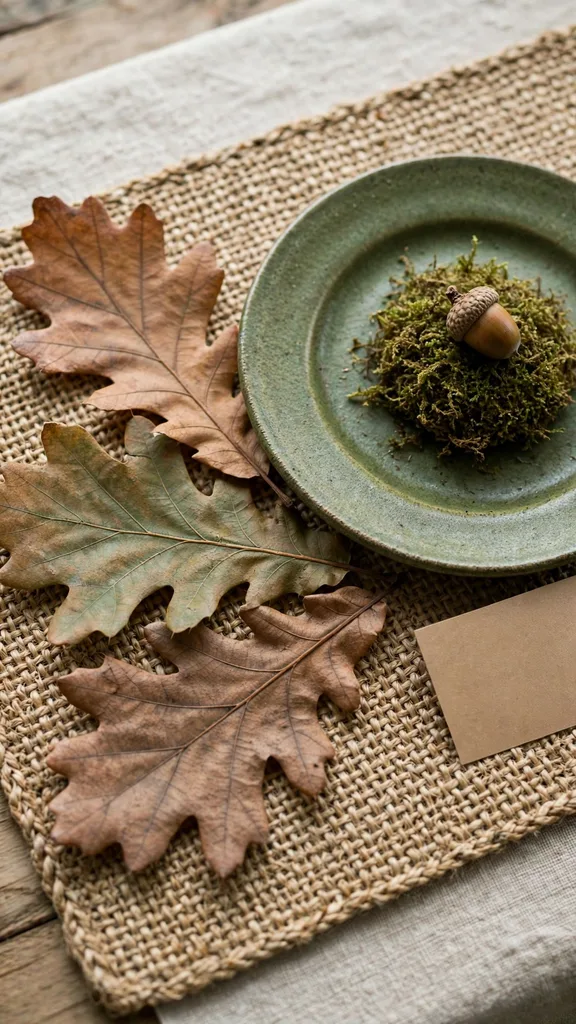
Acorns roll, so set each acorn in a tiny hollow made by pressing it lightly into a small mound of moss on the placemat. Gather acorns with caps still attached, wash them and dry them fully before setting time, and check each acorn for small holes, because a bored acorn drops dust on the placemat during dinner.
11. Magnolia Leaf Setting with a Fresh Underside
A magnolia leaf setting turns one large magnolia leaf into the placemat accent, laid glossy side up beside the plate with the guest name card resting on the leaf. The plate is white porcelain, the napkin is deep green, and a second magnolia leaf with its brown felted underside showing sits under the water glass, so the seat shows both faces of the same leaf.
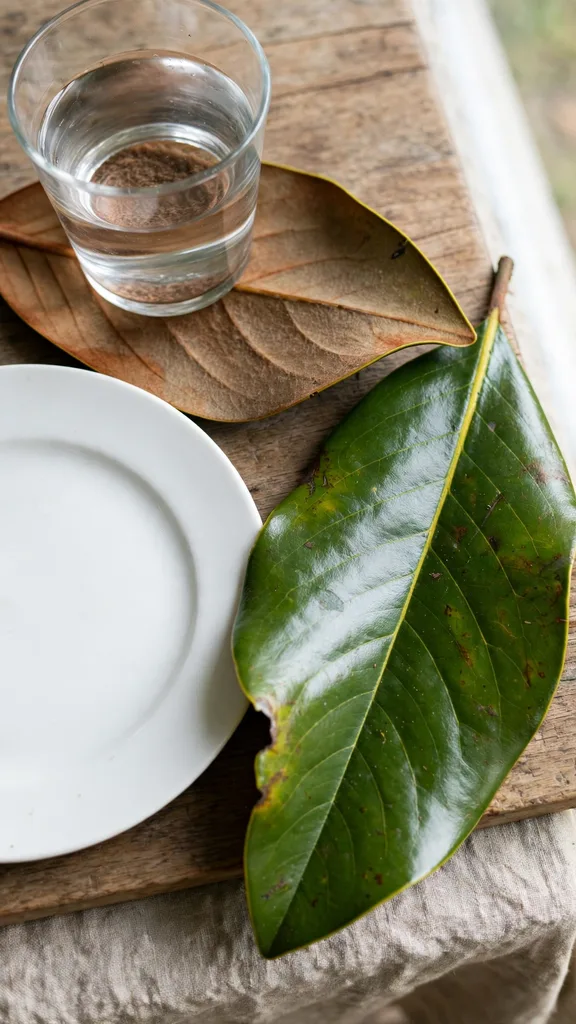
Magnolia leaves stay firm for days after cutting, which makes this setting safe to build the day before the meal. Cut leaves with clean stems, wipe each leaf with a dry cloth to remove dust, and keep cut leaves in a cool room away from direct sun, because sun dulls the glossy upper side before guests arrive.
12. Eucalyptus Sprig Setting for a Soft Scent
A eucalyptus sprig setting lays a sprig of silver eucalyptus across a grey linen napkin, with the name card tied to the sprig with thin twine. The plate is pale grey, the cutlery is brushed steel, and the sprig runs the full width of the napkin so the scent reaches the guest as soon as the chair is pulled out.
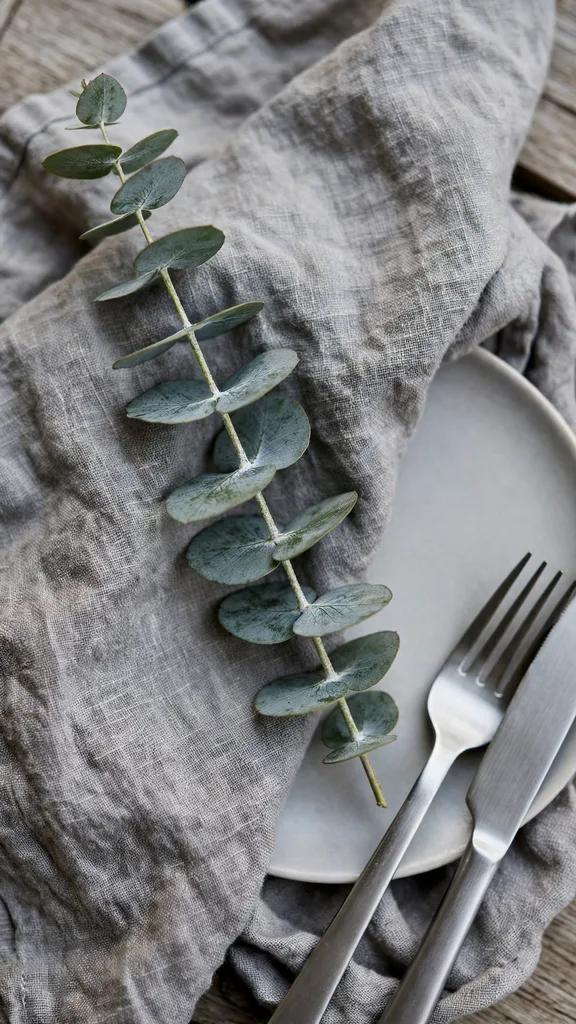
Eucalyptus scent can overpower a small room, so use one sprig per seat and no more, and keep the sprigs short, 20 centimetres (8 inches) at most. Cut the sprigs two days before the meal, stand them in water until setting time, and strip the lowest leaves from each stem so the sprig lies flat on the napkin.
13. Olive Branch Setting for a Quiet Seat
An olive branch setting gives a quiet seat a simple look, with one slender olive branch laid across a white napkin and the name card set at the base of the branch. The plate is plain cream, the placemat is natural jute, and a small dish of olives stands at the top of the plate, linking the branch to the food the guest will eat.
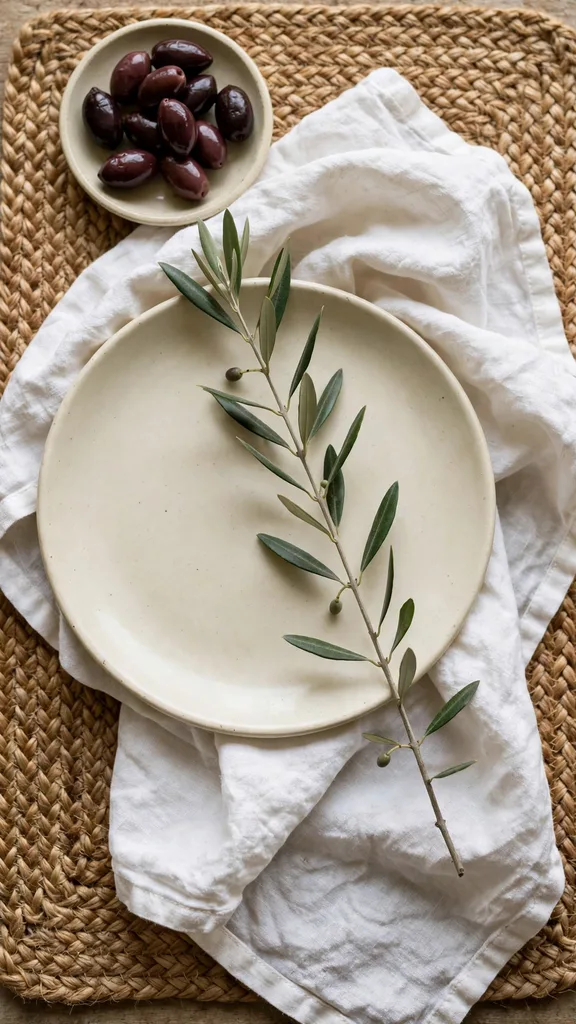
Olive branches dry slowly and hold their narrow leaves for a week indoors, so this setting can be built two days ahead. Cut branches with grey green leaves and no bare patches, keep them in water until setting time, and trim the branch to 25 centimetres (10 inches) so it fits the napkin without crossing the plate.
14. Fern Frond Setting for a Shaded Corner
A fern frond setting suits a seat in a shaded corner of the room, with one arching fern frond laid behind the plate and the name card pinned to the placemat with a small wooden peg. The plate is deep green, the napkin is folded flat under the plate, and the frond curves over the top of the plate like a small shelter for the seat.
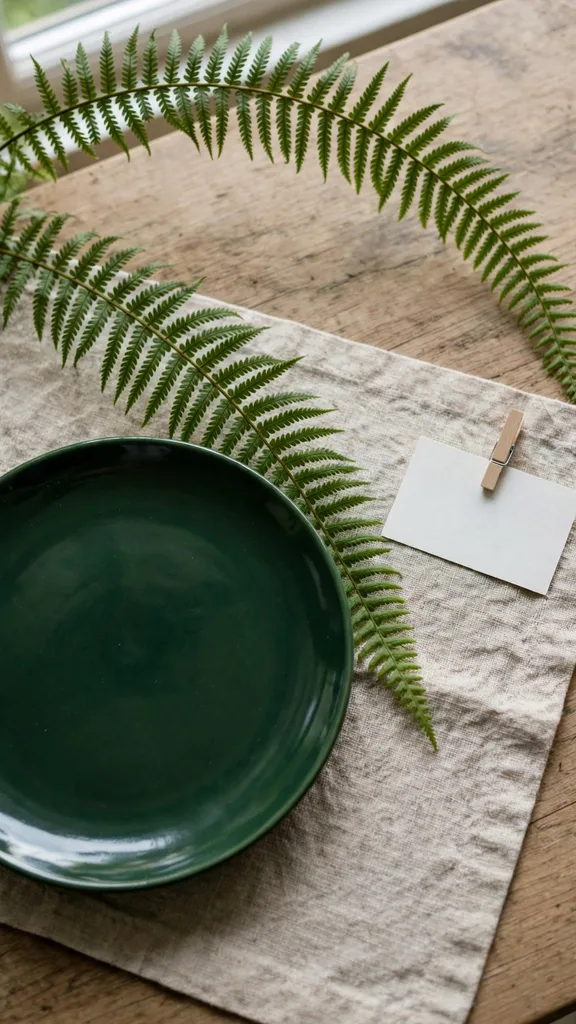
Fern fronds wilt within hours if they dry out, so keep cut fronds in a bucket of cool water until minutes before setting time. Cut fronds with fully open leaflets, mist the fronds lightly after setting them, and set this seat away from radiators and sunny windows, because dry heat curls fern leaflets before the first course.
15. Woven Leaf Placemat Setting from the Garden
A woven leaf placemat setting replaces a bought placemat with a mat woven from long garden leaves, with the plate set in the centre of the weave and the name card laid on the mat beside the plate. Weave 12 long leaves, such as daylily or iris leaves, over and under in a flat mat 30 centimetres (12 inches) wide, trim the ends even, and press the mat under a heavy book for one night so it lies flat.
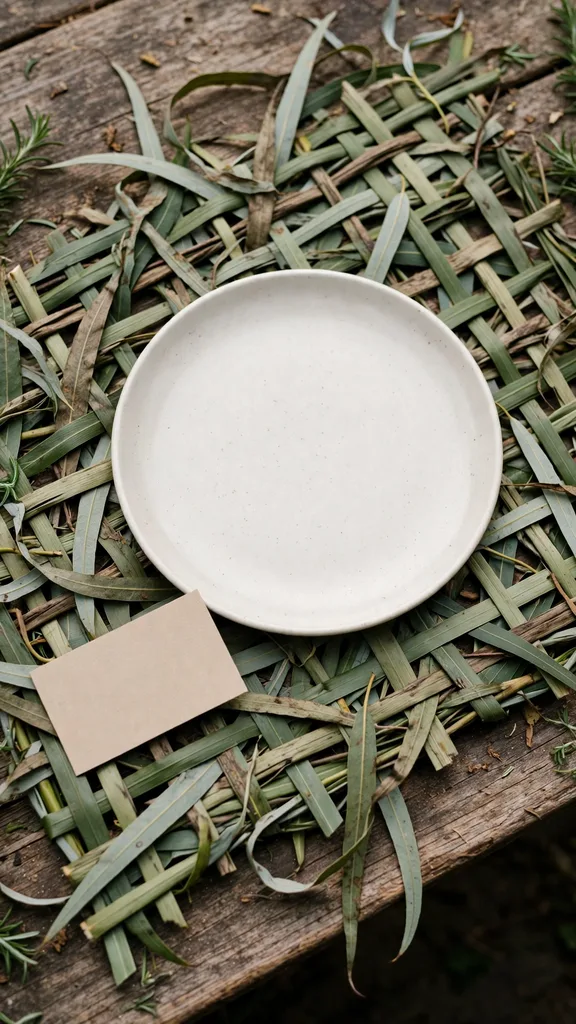
Woven leaf mats dry stiff within two days, so weave them the day before the meal for a mat that still feels supple. Use leaves of even width, weave tightly so the plate does not wobble, and place a plain cloth under the mat if the table surface is pale, because leaf sap can mark a light finish.
16. Mini Pumpkin Setting for the Harvest Seat
A mini pumpkin setting puts one small pumpkin at the top of each plate, with the name card tied to the pumpkin stem with twine and the napkin folded beside the plate. The plate is warm orange, the placemat is natural linen, and the pumpkin serves as the seat marker, the decoration, and the favor the guest takes home.
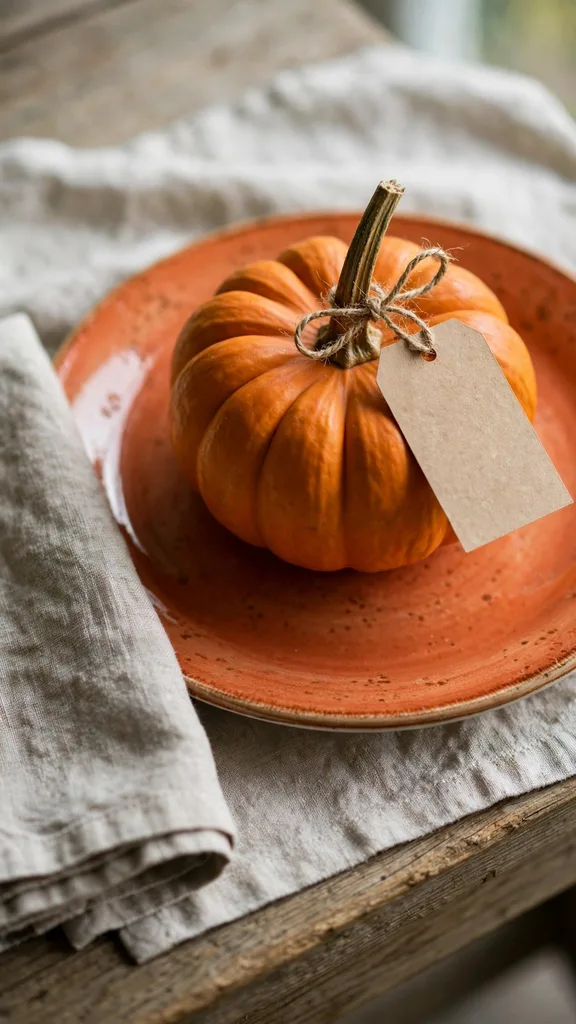
Mini pumpkins last for weeks at room temperature, so this setting can be built a full week ahead. Choose pumpkins with firm skins and stems still attached, wipe each pumpkin clean before setting time, and set the pumpkin clear of the water glass, because a pumpkin knocked into a glass spills water across the whole seat.
17. Gourd Place Card Holder Setting
A gourd place card holder setting uses one small hard shell gourd as the holder for the name card, with the card slotted into a cut made at the top of the gourd and the gourd set at the top left of the plate. The plate is cream, the napkin is folded in a rectangle, and the gourd holds the card upright through the meal so the guest can find the seat from across the room. Oregon State University Extension states that ornamental gourds are not considered suitable for food, so this gourd stays a holder and a decoration, and no guest should eat from it.
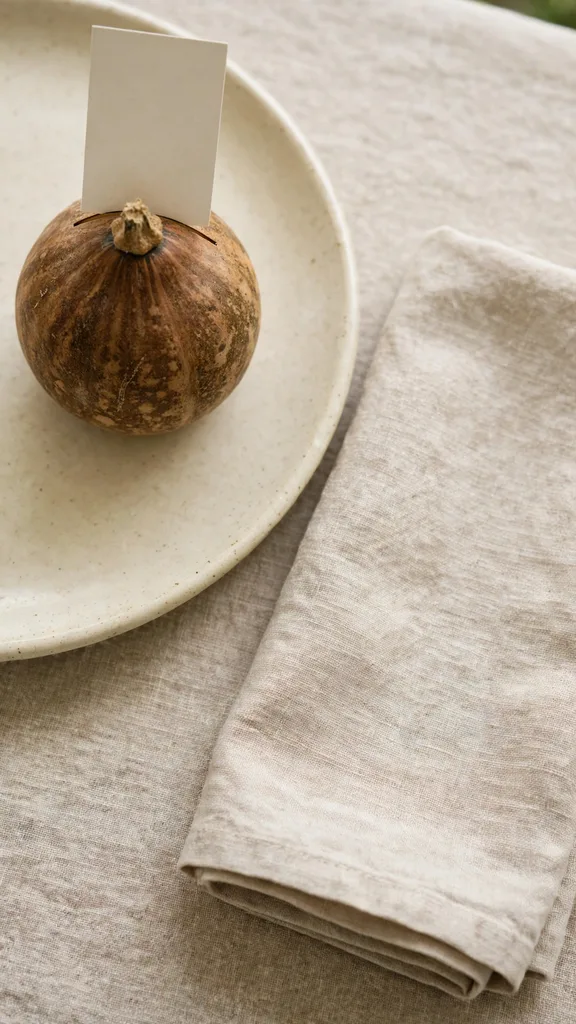
Gourds need curing before they hold up as holders, so cure cut gourds in a light, warm, well ventilated dry place for several weeks before the meal, and choose gourds with hard shells and no soft spots. Cut the card slot with a sharp knife, sand the cut smooth so the card slides in without tearing, and discard any gourd that feels soft, because a soft gourd collapses under the card during dinner.
18. Acorn and Pinecone Setting for the Forest Seat
An acorn and pinecone setting marks a forest seat with three acorns and one small pinecone arranged in a line across the top of the placemat, with the name card laid below the line on plain paper. The plate is brown stoneware, the napkin is forest green, and the pinecone stands at the right end of the line as the tallest piece in the row.
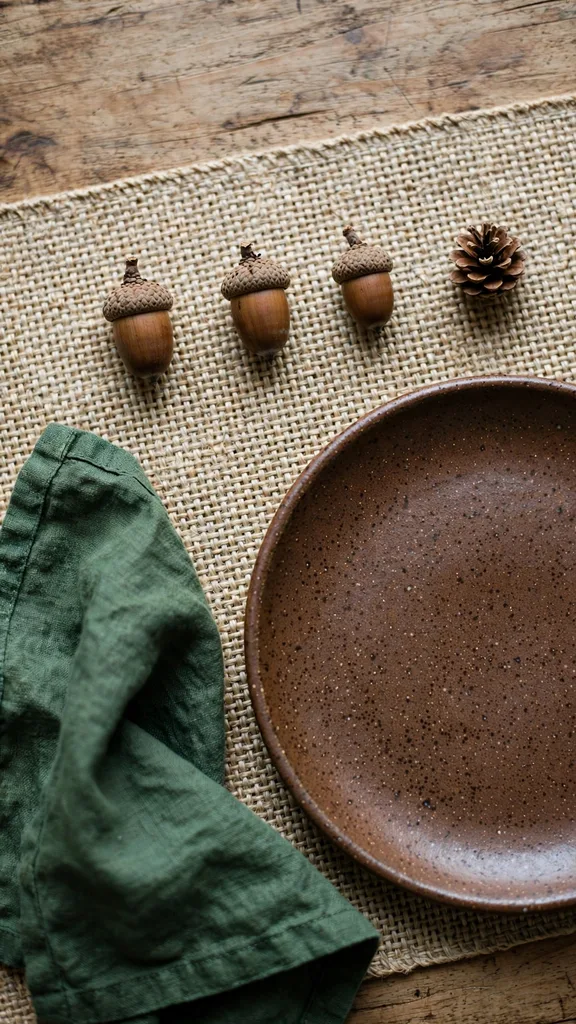
Pinecones open and close with humidity, so a cone set in a dry room may open wider during dinner and shift the line. Choose cones that have already opened fully, glue each cone to a small flat base if the table shakes easily, and brush the cones clean before setting time, because pinecones drop scales and dust on a white placemat.
19. Dried Corn Husk Setting for the Farm Table
A dried corn husk setting wraps the napkin in one wide dried corn husk, tied with twine and laid across the plate, with the name card tucked under the twine knot. The plate is cream earthenware, the placemat is plain cotton, and the husk gives the seat a farm table look without any bought decoration.
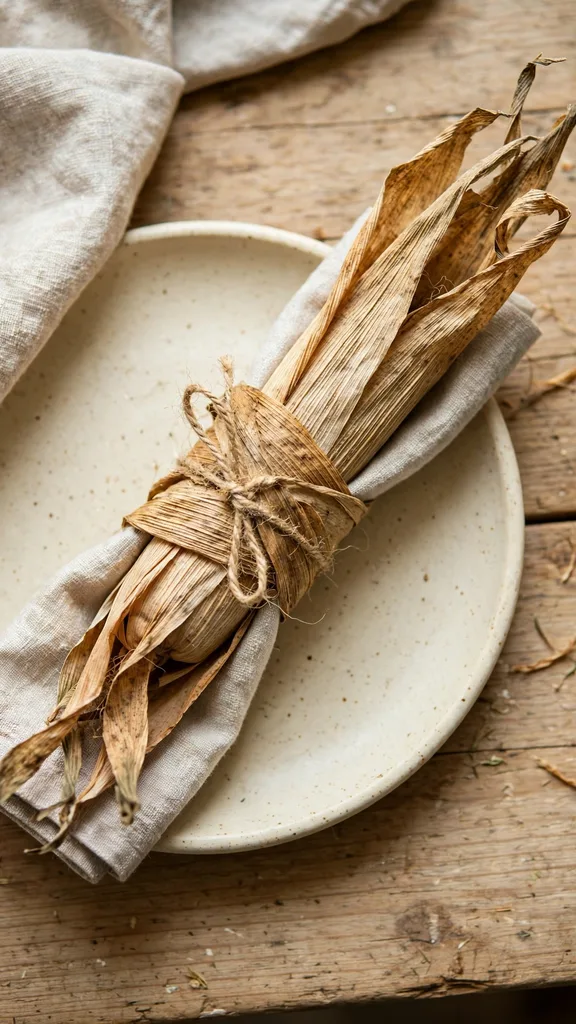
Dried corn husks crack if folded sharply, so soak the husks in warm water for 20 minutes before wrapping, then let them dry around the napkin shape. Wrap the napkin loosely, tie the twine snug without crushing the husk, and set the wrapped napkins out 2 hours before dinner so the husks dry in shape.
20. Wheat Stalk Setting for the Bread Lover
A wheat stalk setting ties three wheat stalks together with twine and lays the bundle across a golden napkin, with the name card set under the bundle. The plate is cream, the placemat is natural linen, and the wheat bundle points toward the bread plate, linking the seat to the bread course that opens the meal.
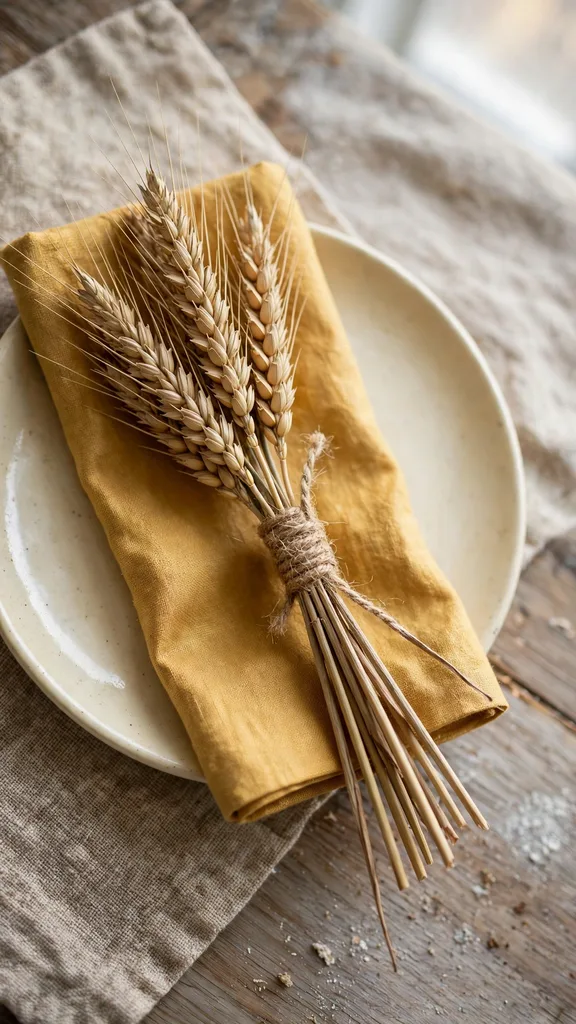
Wheat stalks shed grains if handled roughly, so tie the bundles gently and set them down once. Cut stalks with full heads and no broken grains, store the bundles upright in a dry jar until setting time, and brush the placemat clean after setting, because loose grains scatter across the table during dinner.
21. Pomegranate Setting for the Jewel Seat
A pomegranate setting sets one whole pomegranate at the top of the plate, with the name card leaning against the fruit and the napkin folded in a fan behind the plate. The plate is deep red, the placemat is dark linen, and the pomegranate serves as the jewel of the seat, with its crown pointing up so the fruit reads as a small crown on the table.
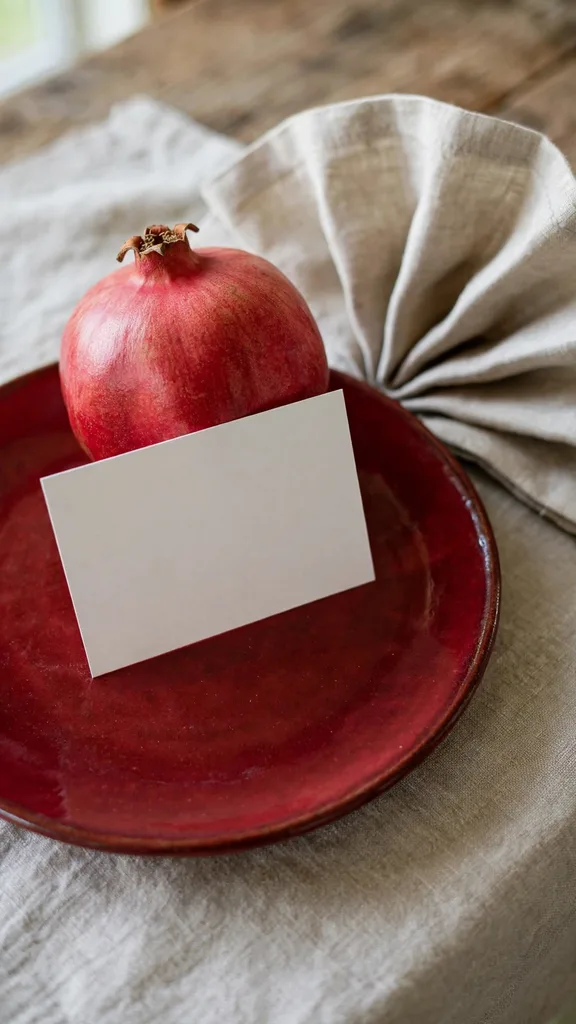
Pomegranates stain, so set the fruit on a small leaf or a folded cloth to protect the placemat, and warn guests that a cut pomegranate stains hands and linen. Choose fruits with firm skins and heavy weight for their size, wipe each fruit clean, and keep the fruits cool until setting time, because a warm pomegranate softens and splits more easily.
22. Apple Slice Setting for the Orchard Seat
An apple slice setting lays one dried apple slice on the plate as the seat marker, with the name card written on the slice in plain ink and the napkin folded beside the plate. The plate is white, the placemat is gingham, and a second dried slice hangs from the water glass rim on a short piece of twine, so the seat carries the orchard twice.
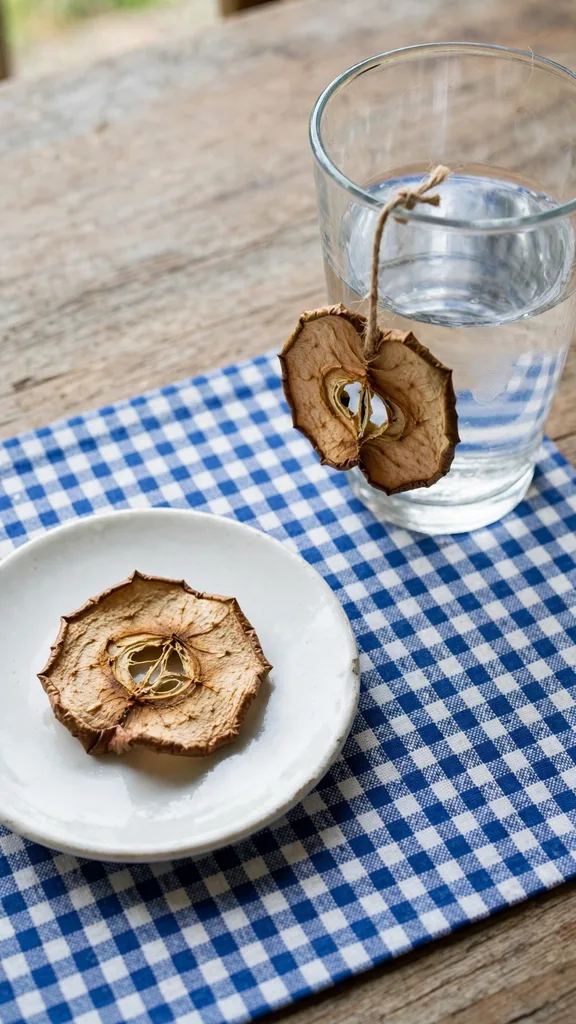
Dried apple slices curl if they absorb moisture, so dry the slices fully before the meal and store them in an airtight tin until setting time. Slice the apples 5 millimetres (one fifth of an inch) thick, dry them until they feel leathery with no soft spots, and write the names only after the slices cool, because ink smears on a warm slice.
23. Dried Lavender Setting for a Calm Seat
A dried lavender setting lays a small bundle of dried lavender across a pale napkin, tied with lavender twine and paired with a name card in soft purple ink. The plate is white, the placemat is lavender grey, and the bundle sits where the guest can lift it and smell it before sitting down. Penn State Extension notes that less tender herbs such as sage, thyme, and winter savory tie into small bundles and air dry well, and the same bundle method suits lavender, with herbs judged dry when the leaves crumble easily.
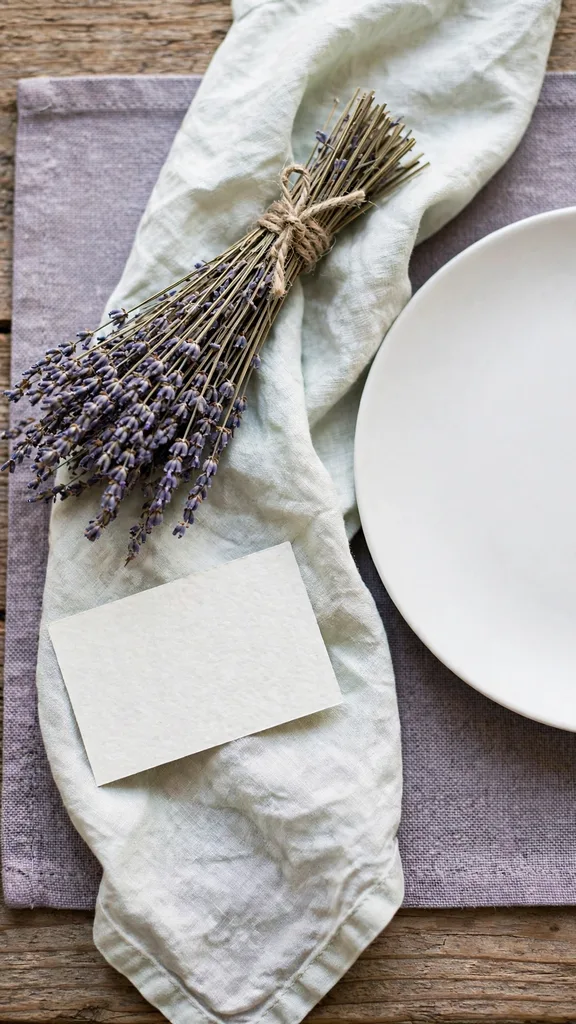
Lavender buds shatter if the bundle is handled roughly, so tie the bundles once and set them down gently. Dry the lavender upside down in a dry, dark room for 14 days, keep the bundles away from damp rooms, and choose bundles with buds still attached to the stems, because bare stems lose the scent that makes this seat calm.
24. Statice Setting That Keeps Its Colour
A statice setting uses a sprig of dried statice in purple and white laid across a white napkin, with the name card set at the base of the sprig. The plate is pale blue, the placemat is white cotton, and the statice keeps its colour for months, so the seat looks the same at the end of dinner as it did when the first guest arrived.
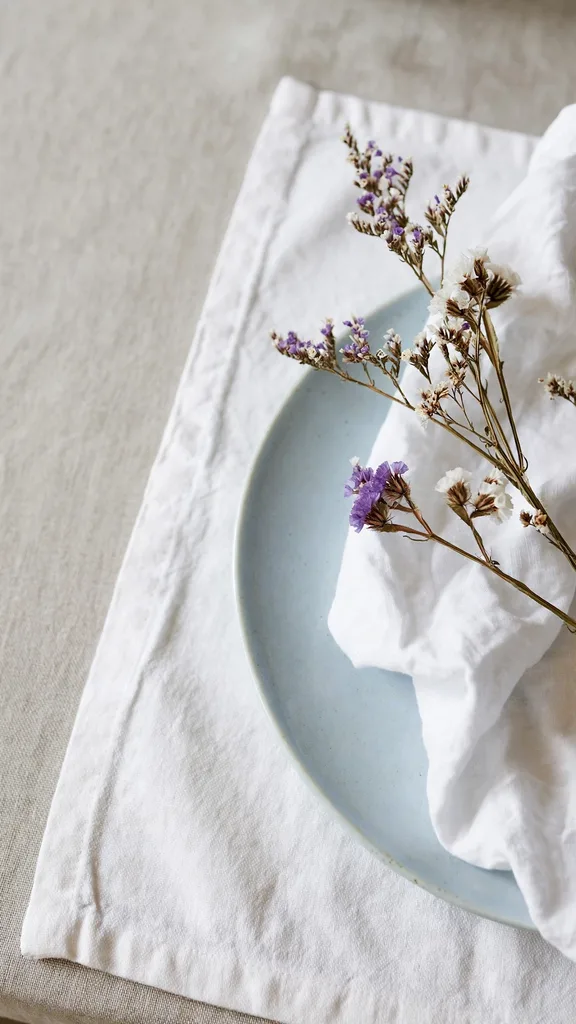
Statice stems snap if bent, so lay each sprig flat and avoid folding the stem. Dry the statice standing upright in a dry room for 10 days, store the sprigs in a tall jar until setting time, and pick sprigs with full flower heads and no bare stem sections, because a thin sprig disappears against a white napkin.
25. Strawflower Setting for Lasting Colour
A strawflower setting sets one dried strawflower on the plate, with its papery petals in gold or pink and the name card laid beneath the flower head. The plate is cream, the napkin is folded in a square under the plate, and the strawflower stands as the whole decoration for the seat, needing no leaves or filler to complete it.
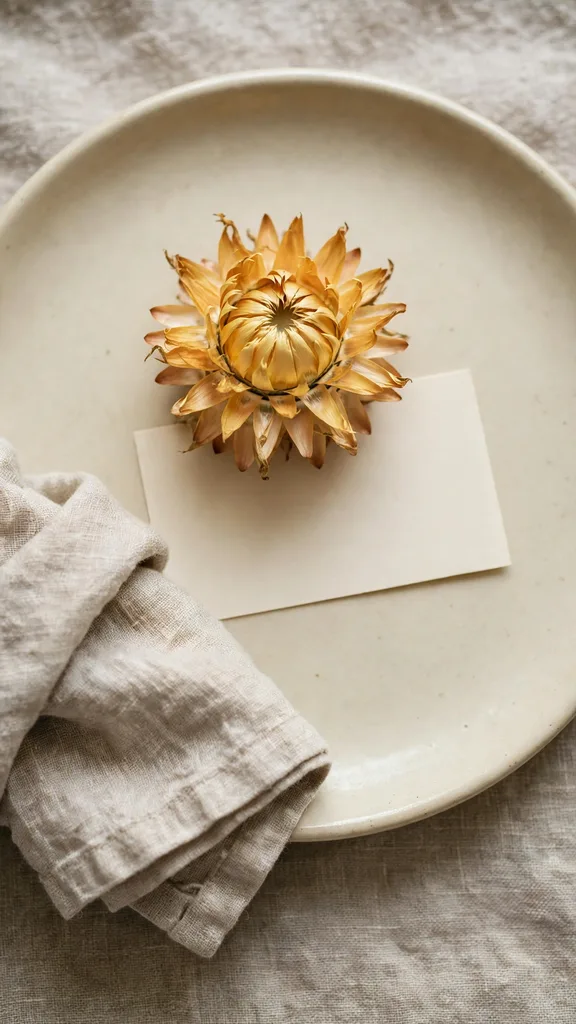
Strawflowers hold their shape for a year once dried, so this setting can be built a month ahead. Dry the flowers hanging upside down for 7 days, store them in a dry box away from sunlight, and choose flowers with tight centres and unbroken petals, because a crushed strawflower loses the papery texture that makes it last.
26. Rosehip Setting from Garden Roses
A rosehip setting lays three rosehips in a row across the napkin, with the name card set at the end of the row and the plate in deep red. The placemat is natural linen, the cutlery is simple steel, and the rosehips bring the rose garden to a seat without a single fresh flower on the table.
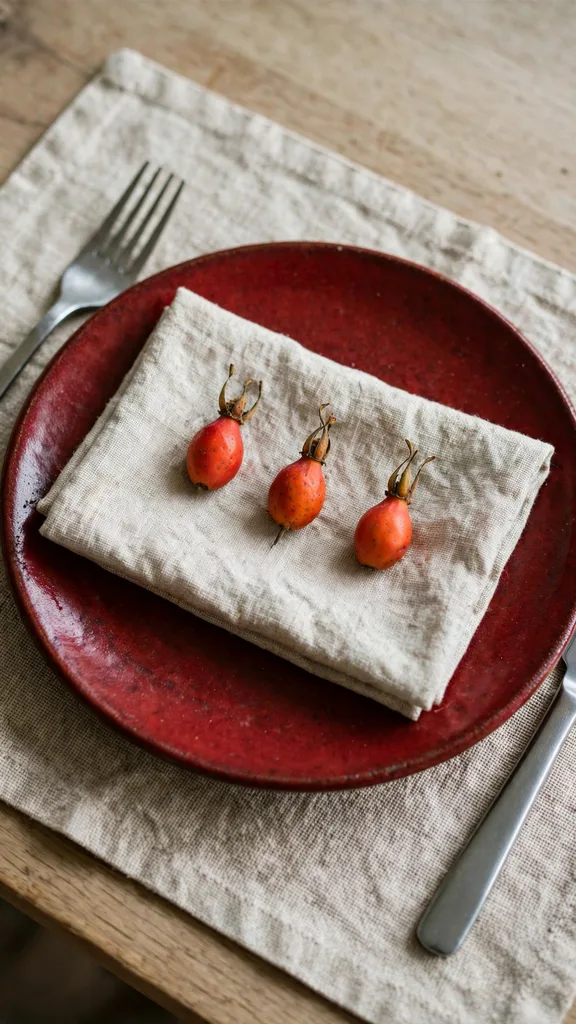
Rosehips shrivel if picked too early, so pick them after the first light frost when the skins turn soft and bright. Wash the hips and dry them fully before setting time, discard any hip with a soft spot, and set the row straight, because a crooked row of three small fruits looks like a mistake instead of a design.
27. Dried Hydrangea Setting for a Soft Seat
A dried hydrangea setting lays one dried hydrangea head beside the plate, with its soft blue or pink florets spilling onto the placemat and the name card tucked under the head. The plate is pale blue, the napkin is white, and the hydrangea head gives the seat a soft, full look that suits a guest who likes a gentle table.
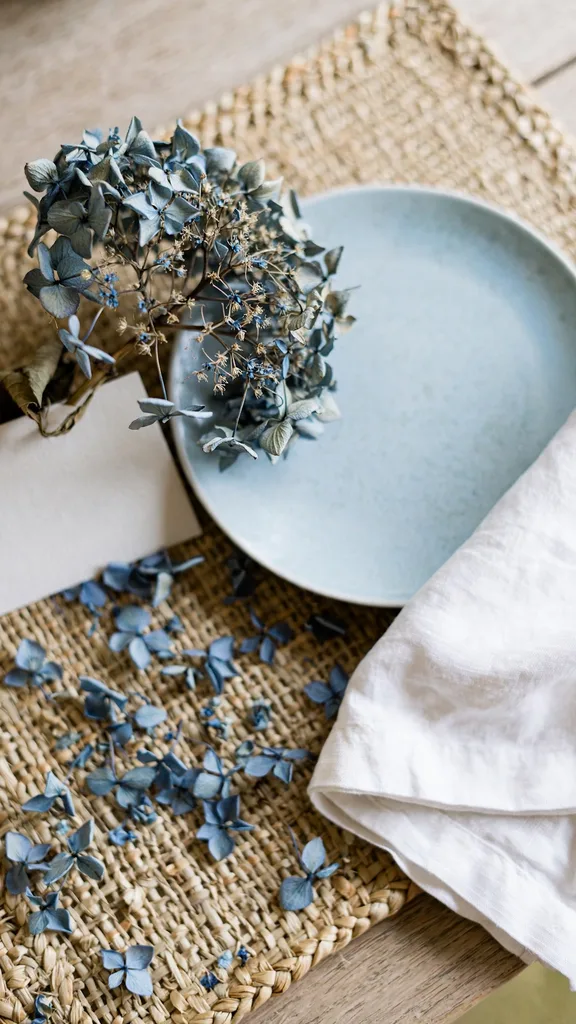
Dried hydrangea heads shatter if knocked, so set each head down once and keep the seat clear of elbows. Dry the heads standing in a dry room for 14 days, handle them by the stem only, and choose heads with full florets and no brown edges, because brown edges show at once against a white napkin.
28. Marigold Setting for a Golden Seat
A marigold setting scatters five dried marigold heads around the plate in a loose circle, with the name card set in the centre of the circle on the plate. The plate is golden yellow, the placemat is cream, and the marigold circle marks the seat as the golden seat for a guest who brings warmth to the table.
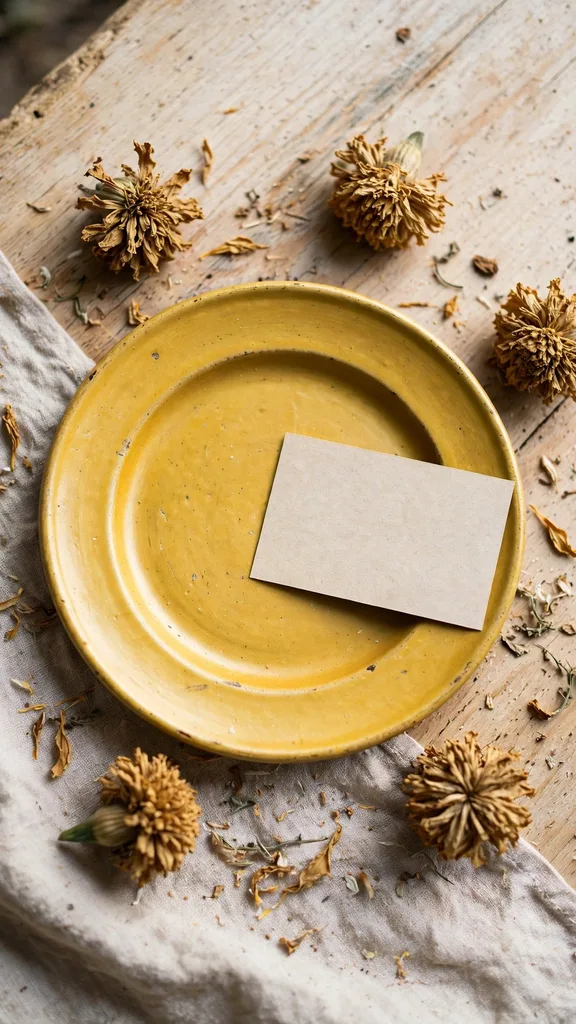
Marigold heads fade in direct sun, so keep the dried heads in a dark box until setting time. Dry the heads on a screen in a dry room for 7 days, store them away from light, and choose heads with deep colour and intact petals, because a faded marigold reads as old instead of golden.
29. Chrysanthemum Bud Setting for the Late Garden
A chrysanthemum bud setting sets one unopened chrysanthemum bud in a tiny bud vase at the top of the plate, with the name card leaning against the vase. The plate is white, the napkin is folded in a fan, and the bud promises the late garden, because chrysanthemums bloom when most garden flowers have finished. For fresh flowers that fill the middle of the table instead of one seat, see Thanksgiving floral centerpieces.
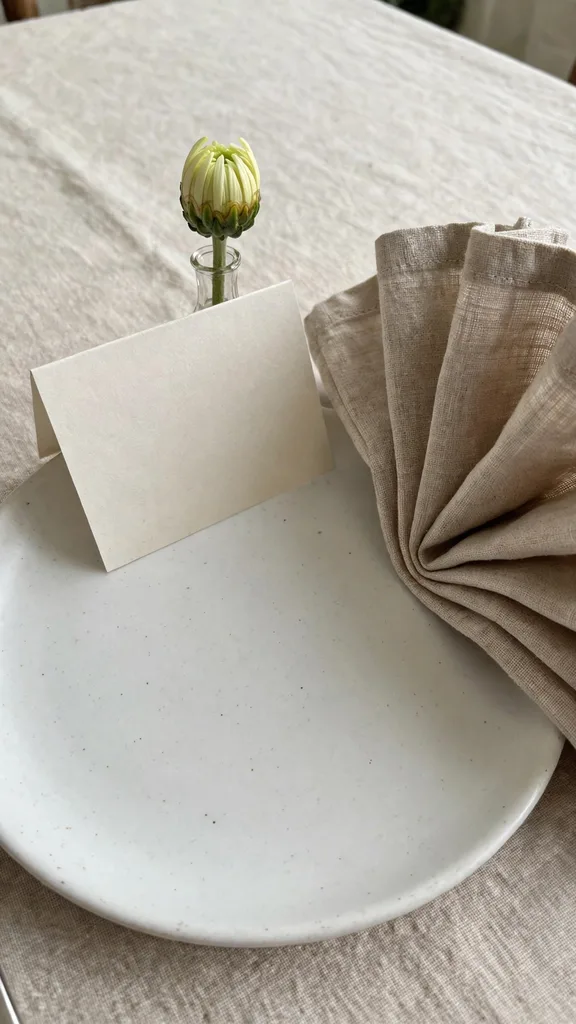
Chrysanthemum buds open within two days indoors, so cut the buds the day before the meal for buds that stay closed through dinner. Cut stems with buds just showing colour, stand them in cool water until setting time, and change the vase water once before guests arrive, because cloudy water dulls a white plate.
30. Nasturtium Setting for the Edible Flower Fan
A nasturtium setting lays one fresh nasturtium flower and one round nasturtium leaf on the plate, with the name card set beside the leaf. The plate is white, the placemat is green gingham, and the flower serves as an edible garnish for the salad course, so the guest can eat the flower at the table.
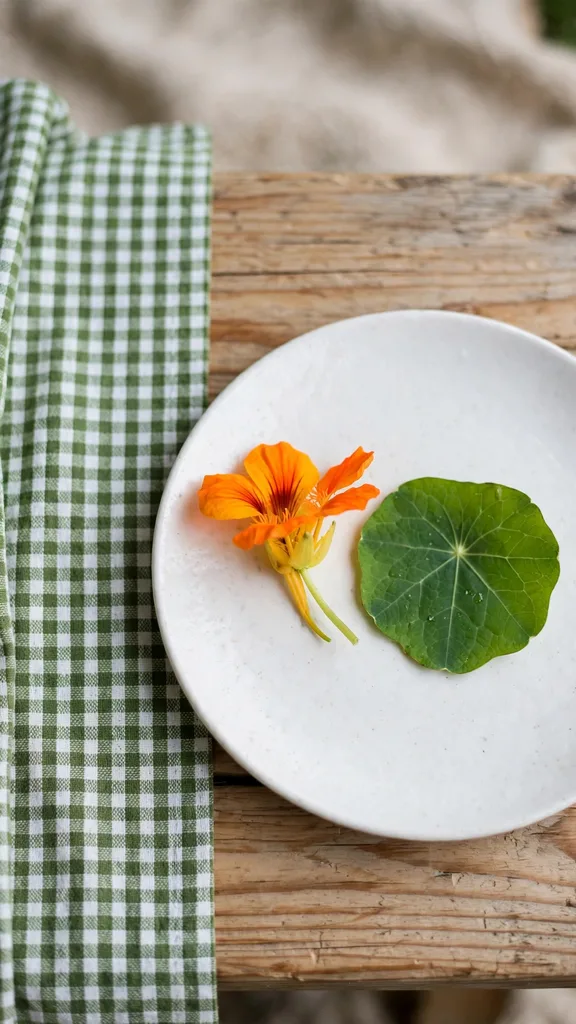
Nasturtium flowers wilt within hours of picking, so pick them on the morning of the meal and keep them in a cool, damp box until setting time. Choose flowers with clear colour and no insect damage, pick leaves without holes, and tell the guest the flower is edible, because a guest who does not know nasturtiums may leave the flower on the plate.
31. Cranberry Sprig Setting for a Red Accent
A cranberry sprig setting lays a short sprig of fresh cranberries across a white napkin, with the name card tied to the sprig with red twine. The plate is cream, the placemat is natural linen, and the cranberry sprig gives the seat a sharp red accent that matches the cranberry sauce on the table.
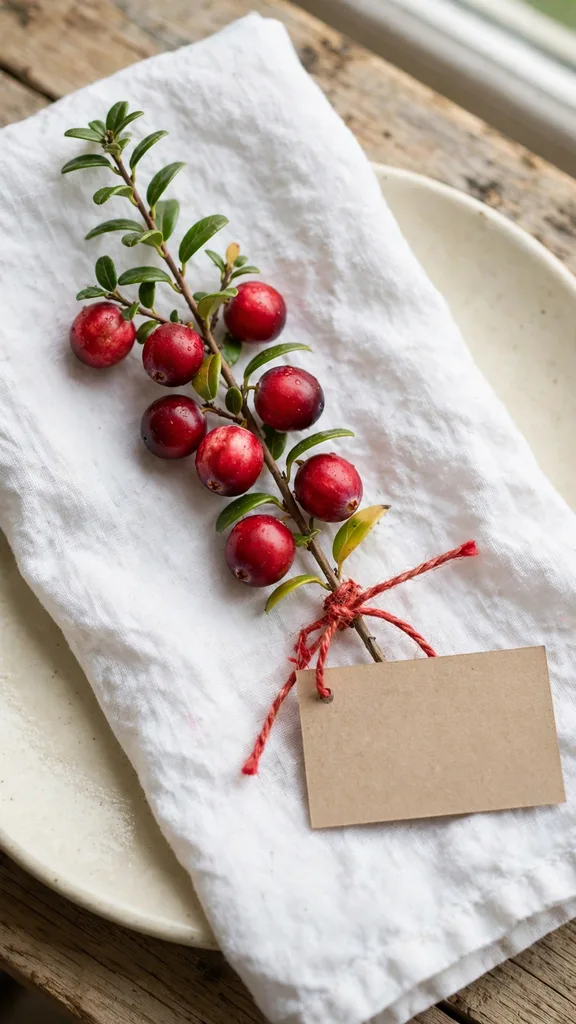
Fresh cranberries last for weeks in a cool room, so this setting can be built three days ahead. Choose sprigs with firm, glossy berries and no soft fruit, keep the sprigs cool until setting time, and set each sprig clear of the plate edge, because a berry rolled onto a plate stains the food it touches.
32. Orange Slice Setting for a Bright Seat
An orange slice setting lays one dried orange slice on the plate, with the name card written on plain paper and set on the slice. The plate is white, the napkin is folded under the plate, and a second dried slice tied with twine hangs from the napkin ring, so the seat carries citrus scent twice.
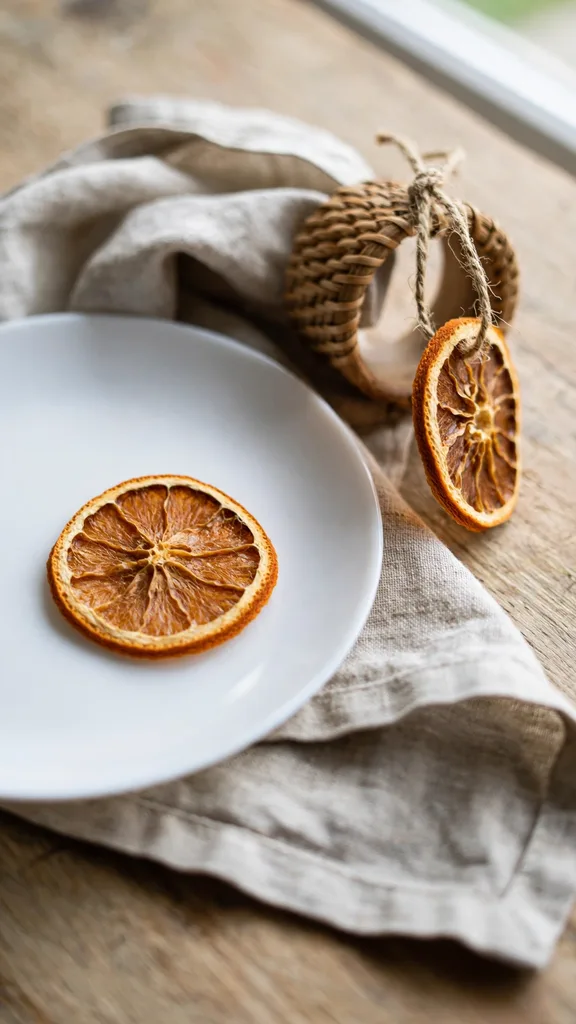
Dried orange slices darken if dried too fast, so dry the slices slowly at a low temperature until they feel dry with no sticky spots. Slice the oranges 5 millimetres (one fifth of an inch) thick, dry them on a rack with air on both sides, and store the slices in an airtight tin until setting time, because damp air softens a dried slice within a day.
33. Grapevine Ring Setting for the Wine Lover
A grapevine ring setting sets the plate inside a ring woven from thin grapevine, with the name card tucked into the weave at the top of the ring. The plate is cream, the napkin is folded inside the plate, and the grapevine ring frames the whole seat like a wreath laid flat on the table.
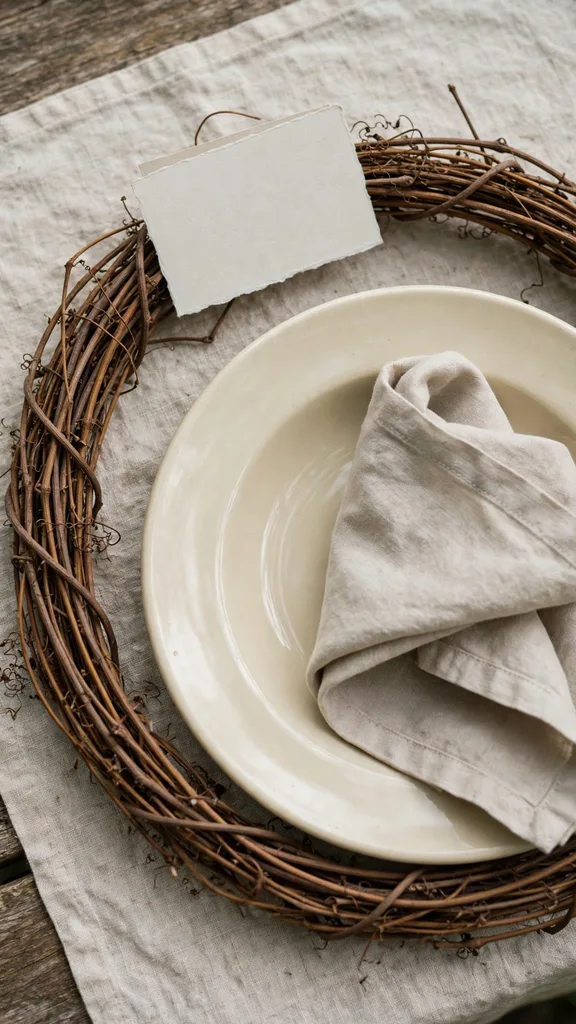
Grapevine rings hold their shape once dry, so weave the rings a week ahead and store them flat. Soak thin vine lengths in warm water for 30 minutes before weaving, weave three lengths together for strength, and trim the vine ends flush, because a sharp vine end scratches the table and snags the napkin.
34. Lemon Leaf Setting for a Citrus Seat
A lemon leaf setting lays two glossy lemon leaves crossed on the napkin, with the name card set where the leaves cross. The plate is pale yellow, the placemat is white, and the lemon leaves give the seat a clean citrus look without any fruit on the table.
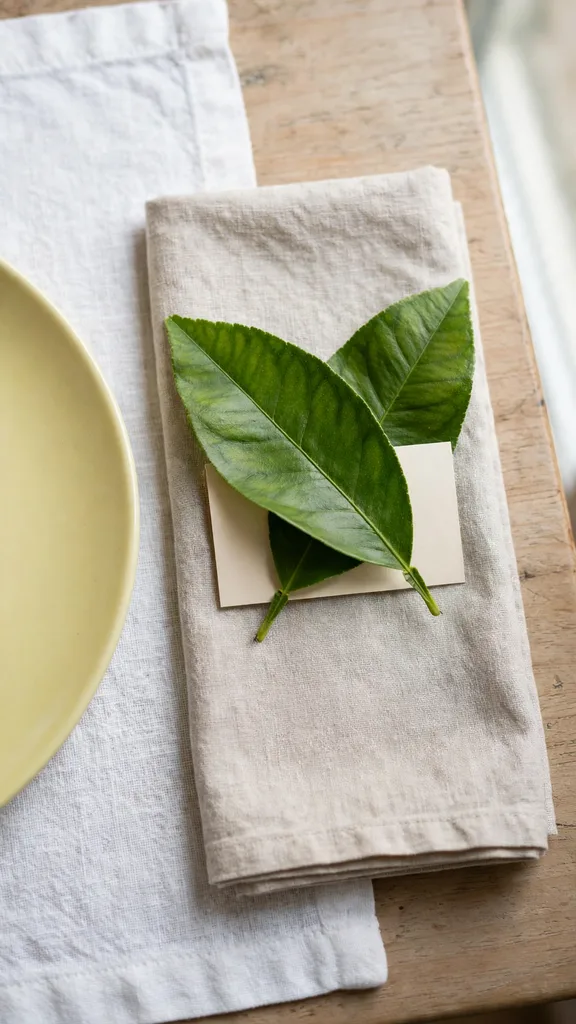
Lemon leaves stay glossy for days after cutting, so this setting can be built the day before the meal. Cut leaves with no spots or curling edges, wipe each leaf clean, and keep the leaves in a cool room away from sun, because sun dulls the gloss that makes this seat bright.
35. Potted Thyme Setting the Guest Takes Home
A potted thyme setting sets one small potted thyme plant at the top right of the plate, with the name card tied to the pot with twine and the napkin folded beside the plate. The plate is cream, the placemat is natural linen, and the thyme pot serves as the living plant, the seat marker, and the favor the guest takes home. For pots that suit a small plant at a table seat, see Thanksgiving planter ideas.
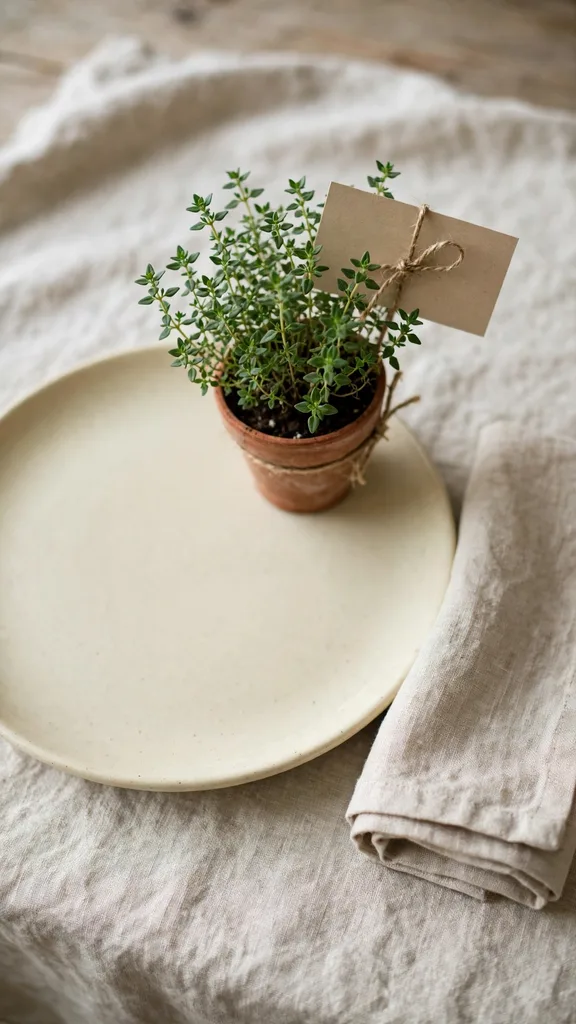
Potted thyme needs water the day before the meal and soil that drains fully before setting time, so the pot never drips on the placemat. Choose plants with dense growth and no leggy stems, set each pot on a small saucer or a folded cloth, and label the pot common thyme, because the guest who cooks wants the culinary type at home.
36. Potted Succulent Setting for the Low Water Seat
A potted succulent setting sets one small succulent in a clay pot at the top of the plate, with the name card tucked into the soil at the pot edge. The plate is pale green, the napkin is folded in a rectangle, and the succulent suits a guest who forgets to water plants, because the plant at the seat needs almost no care.
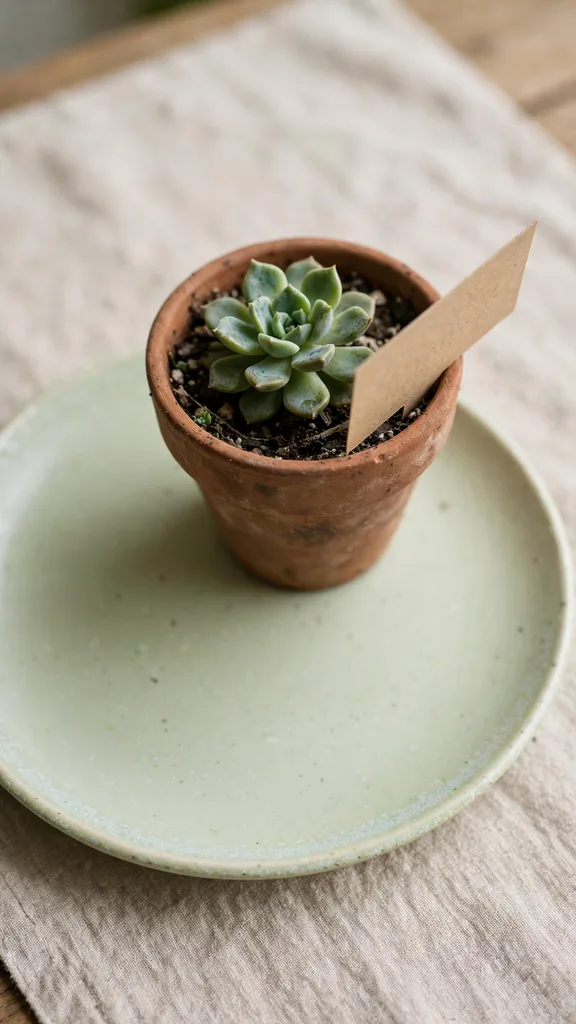
Succulents rot in wet soil, so water the pots 3 days before the meal and let the soil dry fully before setting time. Choose compact plants with no stretched stems, set each pot on a small cork mat to protect the placemat, and pick pots with drainage holes, because a pot without drainage holds water against the roots all evening.
37. Wheatgrass Setting for the Green Seat
A wheatgrass setting sets one small tray of wheatgrass at the top of the plate, with the name card standing in the grass on a short wooden pick. The plate is white, the napkin is folded flat, and the wheatgrass tray gives the seat a living green lawn that the guest can snip for garnish during dinner.
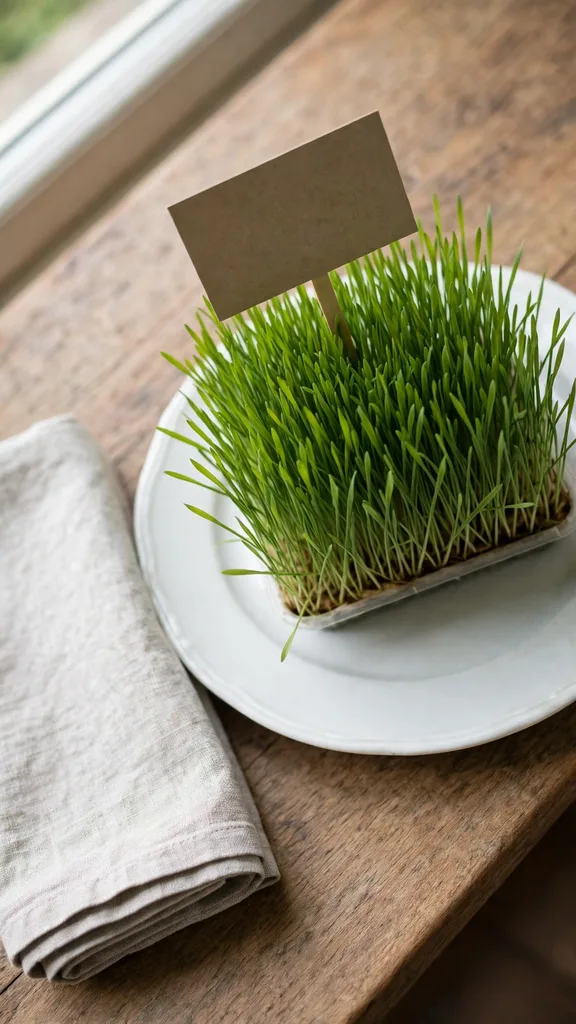
Wheatgrass grows fast and flops if cut too late, so sow the trays 7 days before the meal for grass 10 centimetres (4 inches) tall on the day. Water the trays lightly each day, keep them in bright indirect light, and trim the grass even on the morning of the meal, because uneven grass shades the name card.
38. Microgreen Pot Setting for the Salad Lover
A microgreen pot setting sets one small pot of microgreens at the top left of the plate, with the name card tied to the pot and a pair of small scissors laid beside the pot. The plate is cream, the napkin is folded in a triangle, and the guest snips microgreens straight onto the salad course at the table.
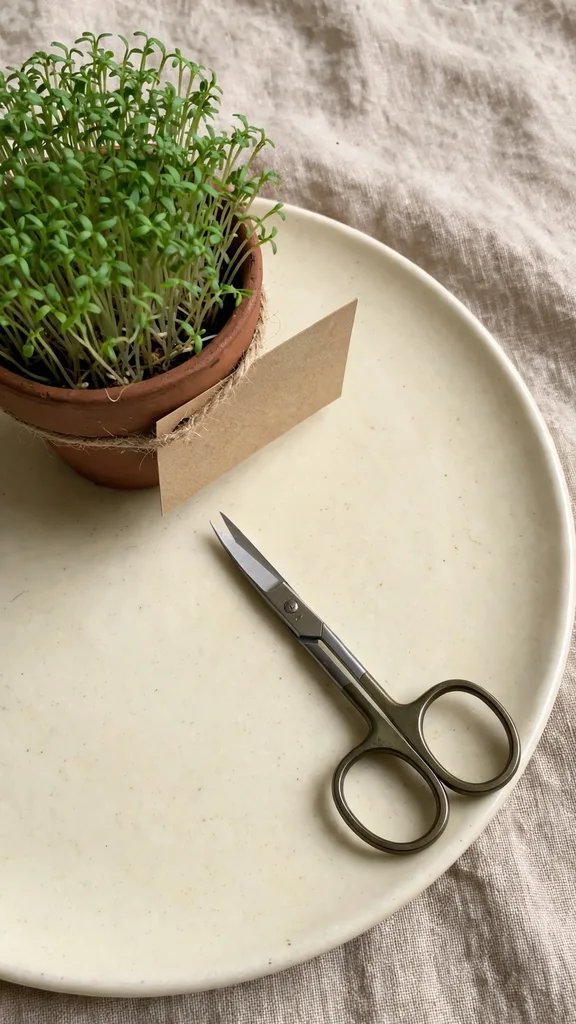
Microgreens wilt within hours of cutting, so keep the pots whole and let the guest cut at the table. Sow the pots 10 days before the meal, water them from below so the leaves stay dry, and choose a mild mix of radish and broccoli microgreens, because a hot mustard mix overpowers a salad for a guest who likes mild greens.
39. Small Fern Setting for the Shade Lover
A small fern setting sets one potted fern in a clay pot at the top of the plate, with the name card leaning against the pot. The plate is deep green, the placemat is natural linen, and the fern suits a guest who gardens in shade, because the plant at the seat thrives where sun loving plants fail.
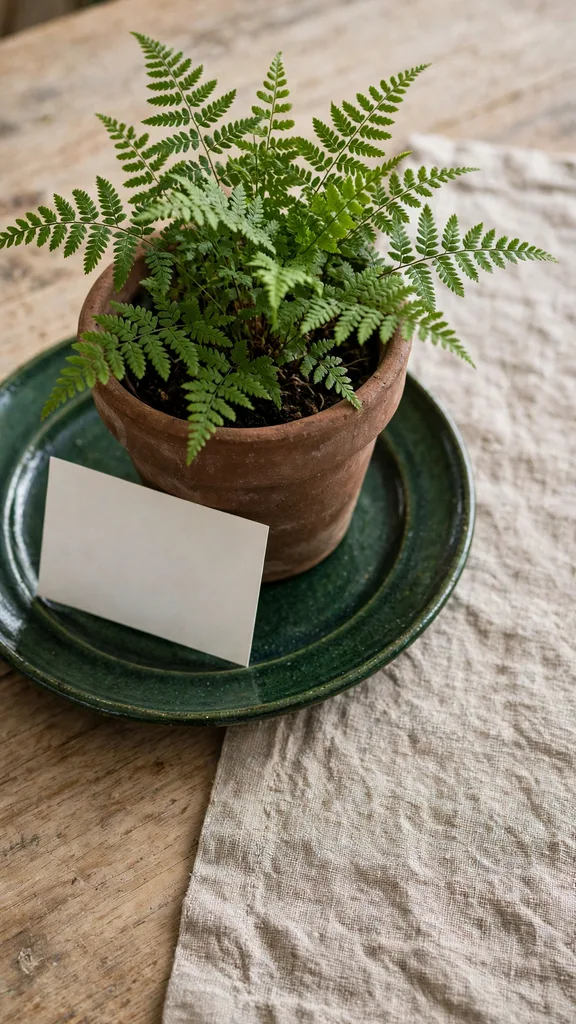
Ferns need moist soil and humid air, so water the pots the morning of the meal and mist the fronds once before setting time. Choose ferns with full fronds and no brown tips, set each pot on a saucer, and keep the seat away from sunny windows, because direct sun scorches fern fronds during a long dinner.
40. Potted Violet Setting for the Windowsill
A potted violet setting sets one small potted violet in bloom at the top right of the plate, with the name card tucked behind the pot. The plate is pale purple, the napkin is white, and the violet gives the seat a small flower that the guest can keep on a windowsill after dinner.
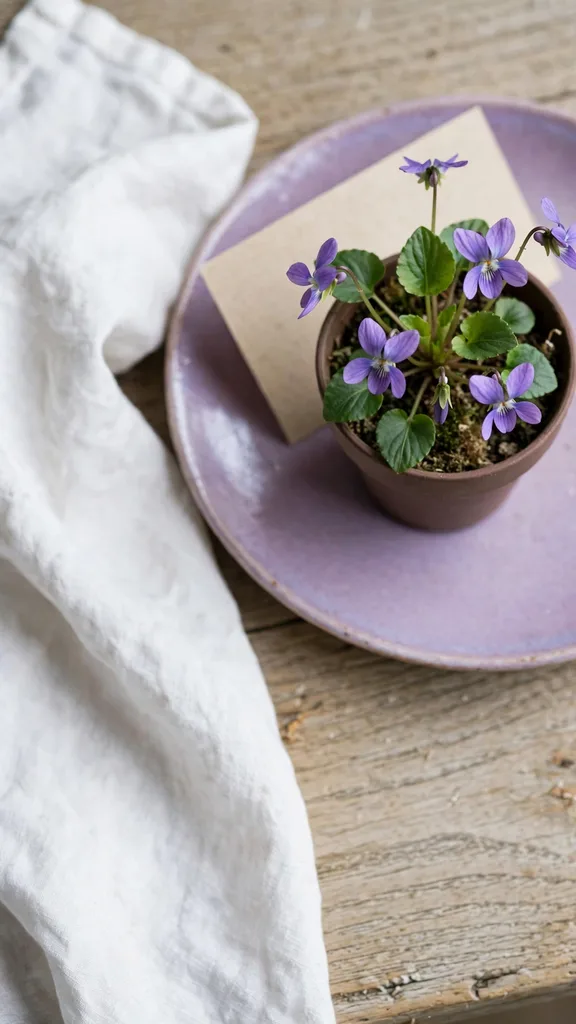
Violets bloom best in bright indirect light, so set the seat away from direct sun and keep the pots out of cold drafts. Water the pots from below the day before the meal, remove any spent blooms before setting time, and choose plants with one strong crown of leaves, because a crowded violet drops blooms on the placemat.
41. Kids Leaf Turkey Setting for the Smallest Guest
A kids leaf turkey setting builds a small turkey from leaves on the plate, with a pinecone body, leaf feathers fanned behind the body, and a name card shaped like a feather at the front. The plate is bright yellow, the napkin is folded under the plate, and the leaf turkey gives the smallest guest a seat that is also a craft to look at through dinner.
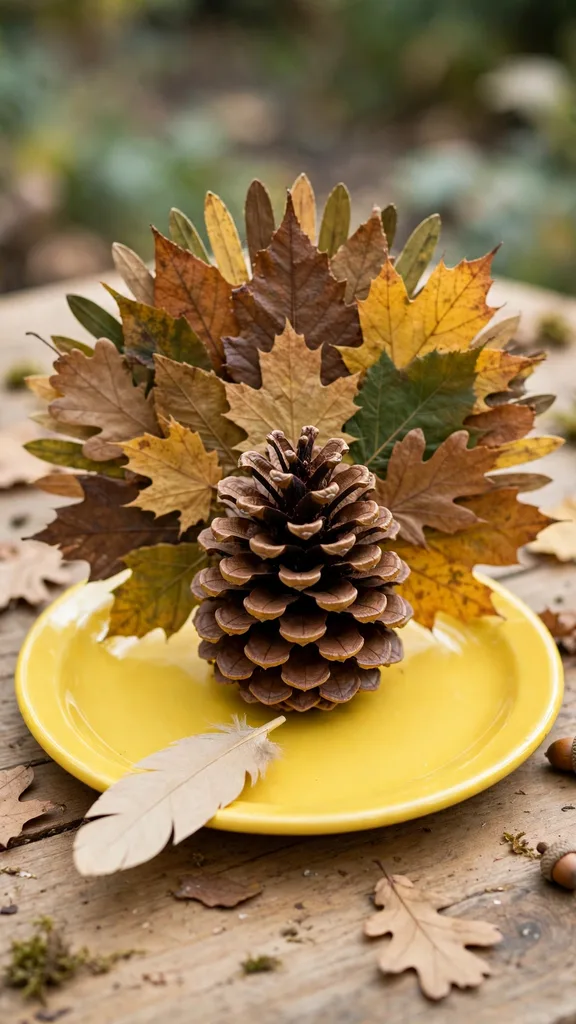
Leaf turkeys fall apart if the glue is weak, so build each turkey with a firm base and let the glue dry fully before setting time. Use leaves of different colours for the fan, glue the pinecone body to a small cardboard base, and set the turkey clear of the plate edge, because a turkey knocked off the plate breaks before the child sees it.
42. Host Setting at the Head of the Table
A host setting at the head of the table uses a larger plate, a taller name card, and a small potted herb as the living plant, so the host seat reads as the anchor of the table without looking different in kind from the other seats. The napkin is folded in a tall shape, the cutlery is set a little wider, and the herb pot stands at the top of the plate where the host can reach it during the meal.
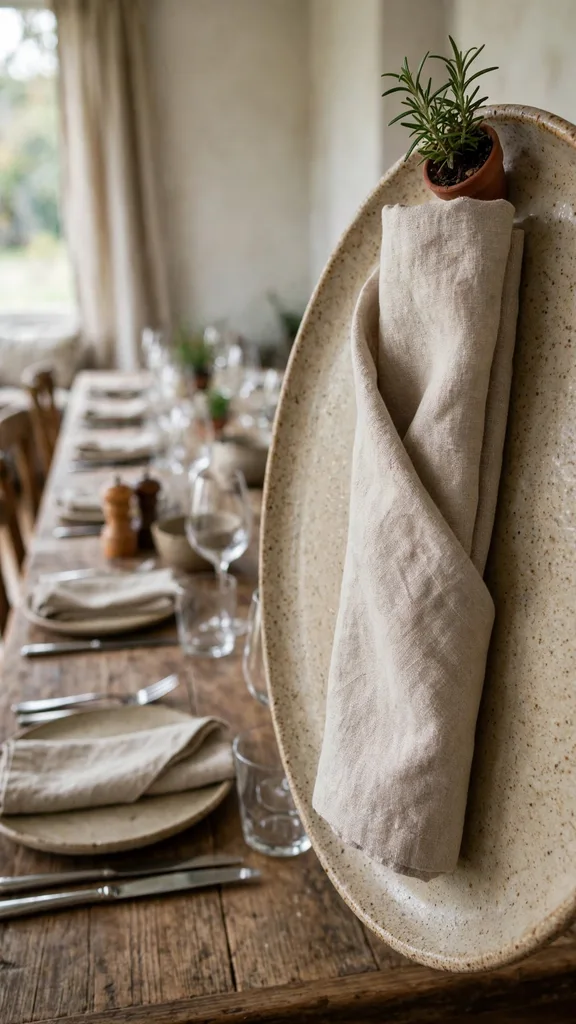
The host seat takes more handling than any other seat, so build it last and check it once more before guests arrive. Water the herb pot the day before, set the tall napkin fold firmly so it does not topple, and keep the host seat clear of serving dishes, because the host needs room to stand and serve without knocking the setting.
43. Guest of Honor Setting with a Gilded Leaf Card
A guest of honor setting pairs a plain white plate with a name card painted gold on a pressed leaf, laid across a dark napkin. The placemat is dark linen, the cutlery is polished, and the gilded leaf card marks the seat as the guest of honor seat without any extra decoration on the plate.
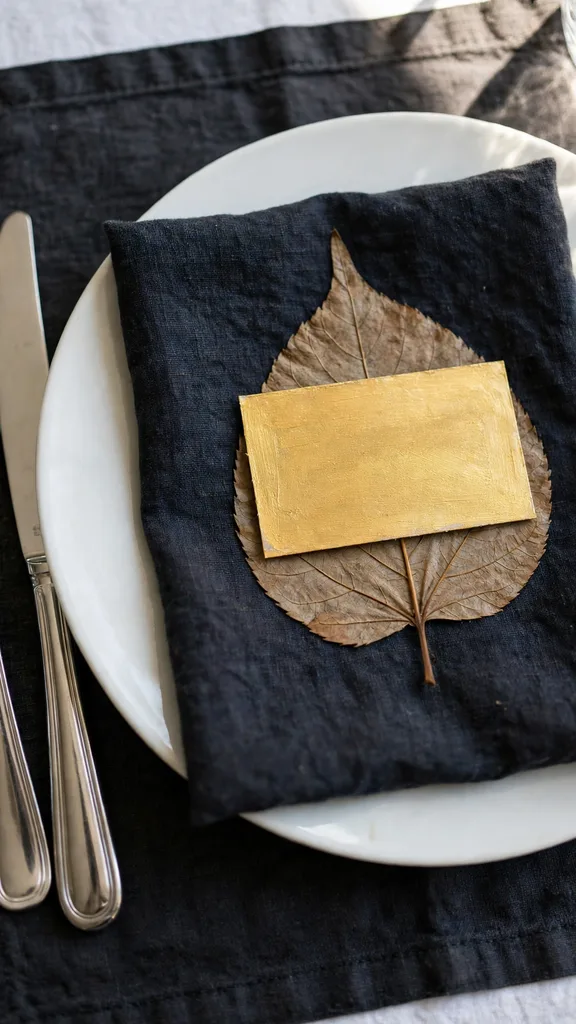
Gilded leaves crack if the paint layer is thick, so paint one thin layer and let it dry fully before setting time. Press the leaves flat for 3 days, paint only the upper side, and write the name after the paint dries, because ink on wet paint smears and ruins the card.
44. New Guest Setting That Needs No Explanation
A new guest setting keeps every piece plain and clear, with a white plate, a white napkin folded in a simple rectangle, a name card in large plain letters, and one sprig of fresh rosemary laid across the napkin. The placemat is natural linen, the cutlery follows the standard order, and nothing at the seat needs a story, so a guest who has never set a garden table feels welcome at once.
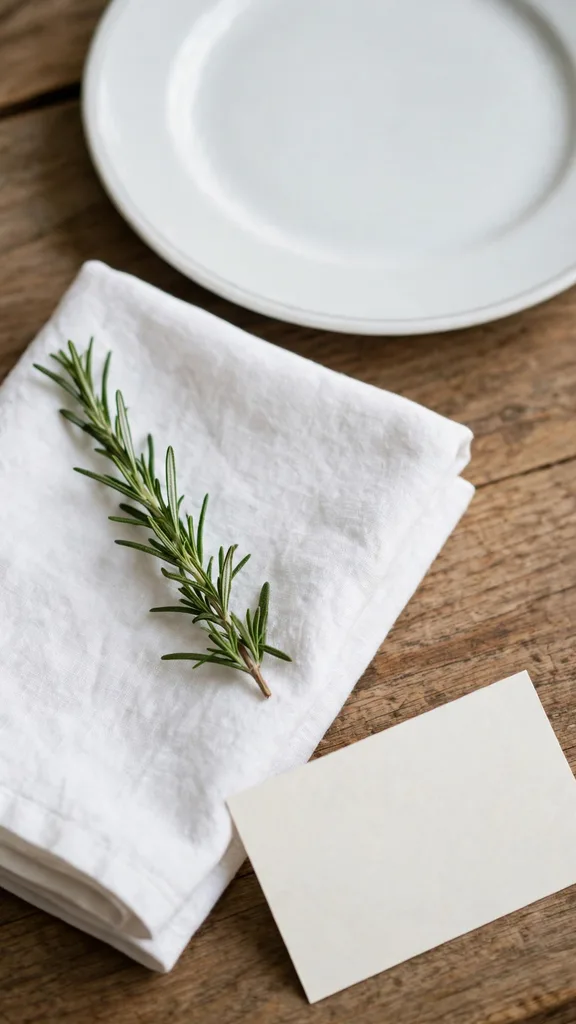
A simple setting still needs care, because plain pieces show every flaw. Iron the napkins, polish the cutlery, choose a rosemary sprig with no brown tips, and set the name card straight, because a crooked card on a plain seat draws the eye more than a crooked card on a busy seat.
45. Full Harvest Table Setting for the Whole Gathering
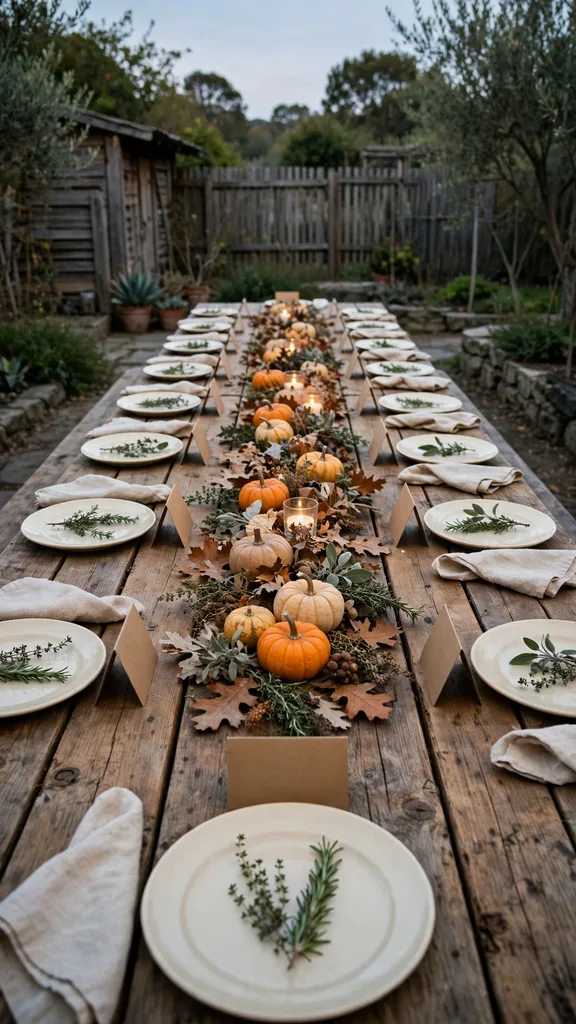
A full harvest table setting brings every seat together, with herb sprigs at each plate, a low row of mini pumpkins and dried leaves down the middle, and name cards standing at every seat so the whole table reads as one garden display. The plates are cream, the napkins are natural linen, and the middle row stays low, below eye level, so guests can see each other across the table. For a single arrangement that fills the middle of a table on its own, see Thanksgiving centerpieces.
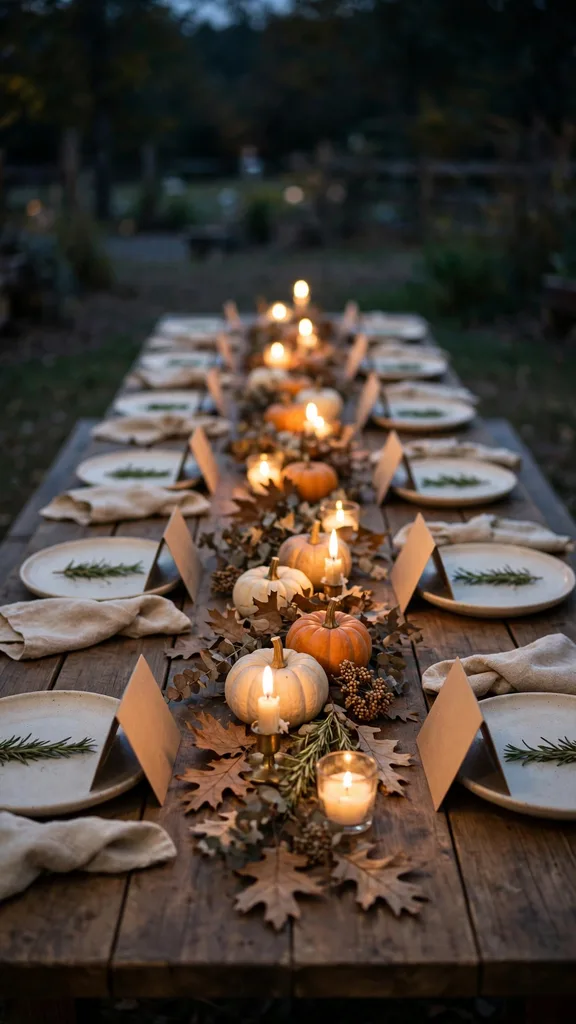
A full table setting needs a plan before any single seat is set, so count the seats first, cut all the sprigs to one length, and set the middle row before the plates. Place the tallest pieces at the ends of the table, keep the middle row narrow at 30 centimetres (12 inches) wide, and check the table from the doorway before guests arrive, because a table that looks even from the door feels welcoming to every guest who walks in.
Quick-Pick Table
| Setting type | Best for | Plant to cut first | Set it when |
|---|---|---|---|
| Herb setting | A guest who cooks | Rosemary, thyme, sage | Morning of the meal |
| Leaf setting | A table set a day ahead | Magnolia, olive, eucalyptus | Day before the meal |
| Harvest setting | A long lasting table | Mini pumpkin, gourd, wheat | Up to one week ahead |
| Dried flower setting | A table set days ahead | Lavender, statice, strawflower | Up to one month ahead |
| Potted living setting | A guest who takes a plant home | Thyme, succulent, fern | Day before the meal |
| Special seat setting | A child, a host, or a new guest | Leaf turkey, rosemary, gilded leaf | Morning of the meal |
Thanksgiving Table Setting FAQ
Yes, and the potted settings are built for that purpose, with the plant in its own pot, the name card tied to the pot, and the soil watered the day before so the pot travels without dripping. Herb sprigs and dried bundles also travel well in a napkin fold, while cut flowers and leaf settings stay on the table. Tell each guest clearly which piece is theirs to keep, because a guest who is unsure leaves the plant behind.
A dried setting can be built up to one month ahead when the plant material is fully dry and stored away from light and damp. Dried lavender, statice, and strawflower hold colour and shape for months in a dry box, while dried leaves stay flat for weeks between sheets of paper. Set the dried pieces on the table the day before the meal, keep the room dry, and check each piece once before guests arrive.
Ornamental gourds are decorations, and they should stay clear of food and out of reach of small children who might bite them. Set a gourd holder at the top of the plate, away from the food, and use a separate plain holder if a child sits at the seat. Wash any gourd that touches the table surface before the meal, discard gourds with soft spots, and never cook or serve food from an ornamental gourd.
Set one unscented seat for that guest, using plain leaves with no strong scent, such as magnolia or olive, and keep scented sprigs like lavender and eucalyptus off that seat entirely. Tell the guest which seats carry scent before dinner, seat the guest away from the strongest scents, and avoid spraying any scent on the table. A plain leaf setting still looks finished, and no guest should sit through dinner sneezing at a decorated seat.
Water potted plants the day before the meal, mist ferns and leafy plants once before guests sit down, and keep every living seat away from radiators, sunny windows, and cold drafts. Cut sprigs go in water until minutes before setting time, potted plants sit on saucers so the placemat stays dry, and wilted pieces get replaced before the first course. A living setting that stays fresh through dinner still looks alive when the last guest leaves.