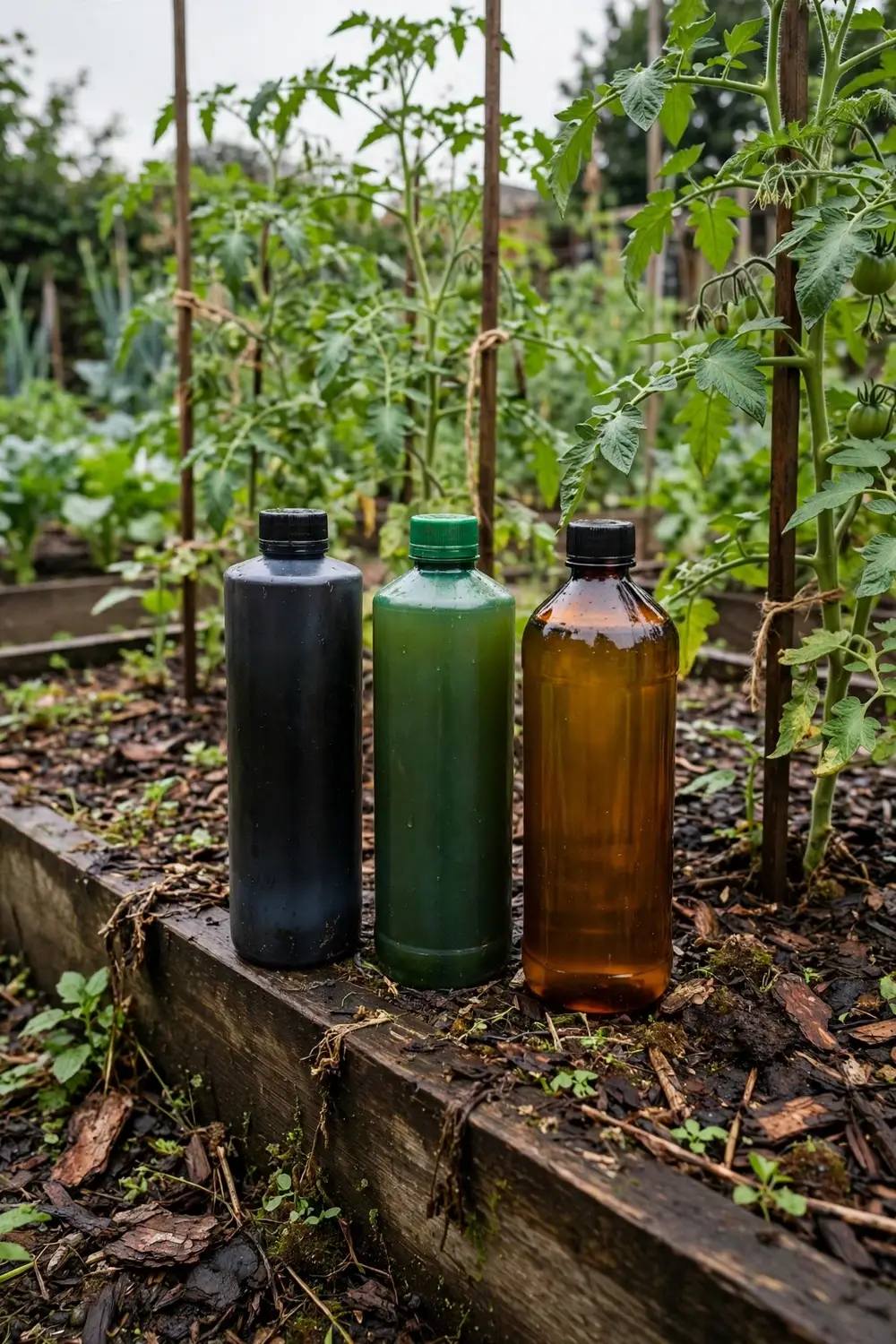

Pick the liquid by the job, not by the brand. A vegie bed wants a high-nitrogen feed at 50 mL per 9 litres every 1 to 2 weeks, while a native bed wants a low-phosphorus feed or none at all. That is choosing liquid fertilizers for Australian gardens. The rest of this page is 10 decisions, from reading the NPK label to the calendar check.
Liquid fertilizer means fertilizer applied dissolved in water. A chooser is a decision guide, not a ranking, and best means best by use case, not best overall. No single bottle wins every job in the garden.
Feeding works only when the soil can hold the feed. A soil with no organic matter lets a liquid feed wash straight through, so fix the soil first and read the soil health basics before you buy another bottle.
1. Choose the Best Liquid Fertilizer by Its NPK Label
Read the three NPK numbers first. NPK stands for nitrogen, phosphorus, and potassium. The numbers state the percentage of each nutrient in the bottle, in that order.

Nitrogen grows leaves. Phosphorus grows roots and flowers. Potassium drives fruit quality and stress tolerance, which is why a flowering bed wants potassium first. A leafy vegie bed wants nitrogen first. A native bed wants phosphorus kept low.
Seasol sells two different kinds of liquid. PowerFeed is a fertilizer. Seasol seaweed concentrate is a tonic that supports roots and stress tolerance. A tonic does not replace a feed. Pair the tonic with a fertilizer instead of treating it as one.
Compare bottles by NPK and by dilution rate, not by bottle size. A small bottle used at a low rate can feed more beds than a big bottle used at full strength. Read the label for the analysis basis as well. Some bottles state NPK weight by volume, others weight by weight, so two bottles with the same three numbers can still differ in strength. The dilution rate settles the comparison: divide the bottle size by the dose per watering can, then multiply by the coverage per can, and the cheapest bottle per bed usually reveals itself.
Read the fine print for trace elements. A label that lists iron, manganese, zinc, boron, and molybdenum covers the micronutrients a plant needs in tiny amounts. A label that lists NPK only may still feed well, but the plant draws its micronutrients from the soil alone. A pale new leaf with green veins often signals an iron gap, and a feed with chelated iron closes it faster than a feed without one. Trace elements do not replace NPK, and NPK does not replace trace elements. The two lists work together. A concentrate is a strong liquid made to be diluted. Water is the carrier that spreads the nutrients evenly across the bed. A ready-to-use bottle skips the mixing step and costs more per feed, while a concentrate costs less per feed and needs a measuring cap. Pick the form that matches how carefully you measure.
| Product | Base | NPK | Best for | Natives-safe |
|---|---|---|---|---|
| PowerFeed For Tomatoes and Vegetables | Fish, liquid compost | 14-1.4-8 | Vegies | No |
| PowerFeed For Flowers, Fruit and Citrus | Fish, liquid compost, chelated iron | Check the label | Flowers, fruit, citrus | No |
| Yates Dynamic Lifter Liquid | Chicken manure, seaweed, blood and bone, fish meal | 1.1:0.15:0.7 | Gentle all-round feed | Yes |
| Yates Thrive Indoor Plants | Mineral plus trace elements | 8:1.9:8.2 | Indoor plants | No |
A No in the natives-safe column means the bottle carries no natives-safe claim, not that it is proven harmful. Read the label on your bottle before any feed touches a native bed.
2. Feed Vegies With a High-Nitrogen Liquid
Feed vegies with a high-nitrogen liquid. Vegies grow leaves fast and crop hard, so they burn through nitrogen faster than any other bed in the garden. A feed with nitrogen as the first and largest NPK number matches that demand.
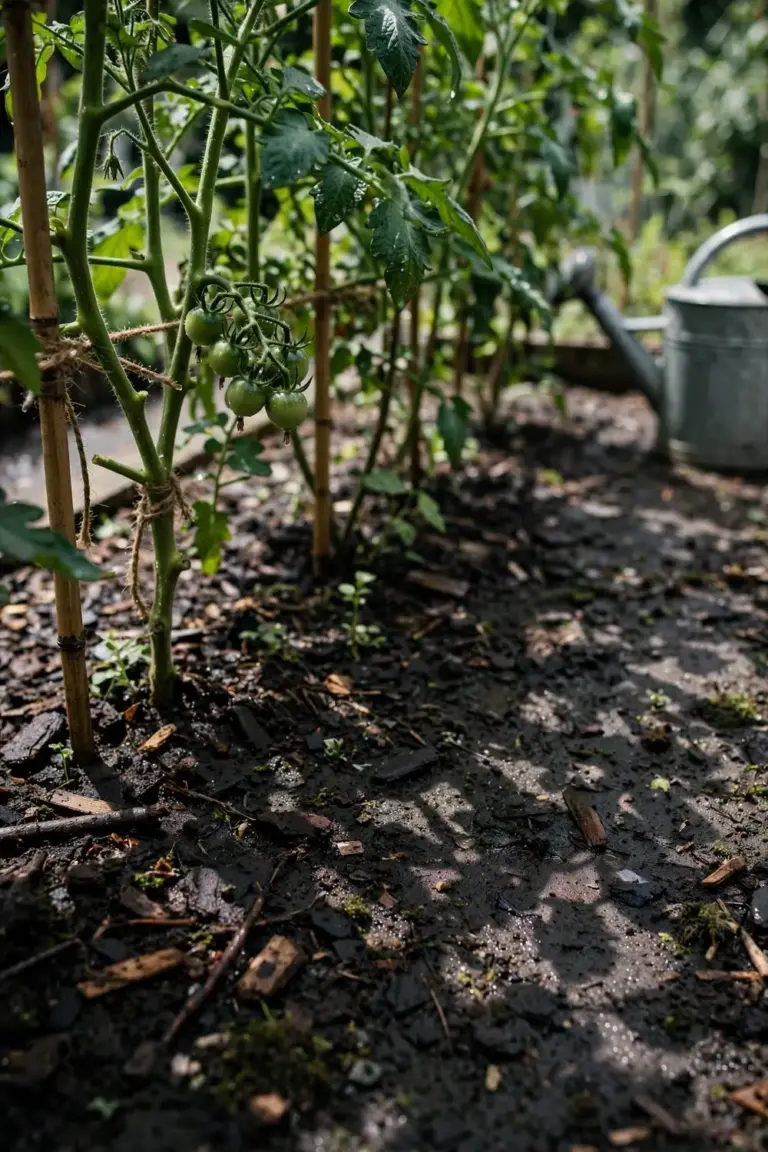
PowerFeed For Tomatoes and Vegetables lists a typical analysis of 14 percent nitrogen, 1.4 percent phosphorus, and 8 percent potassium, and it pairs fish with liquid composts, according to Seasol’s PowerFeed For Tomatoes and Vegetables page. The same page gives the dilution: 20 mL per 9 litre watering can for seedlings and 50 mL per 9 litres for established vegies, every 1 to 2 weeks. One 9 litre can covers 2 to 4 square metres.
Start seedlings on the seedling rate. A seedling in fresh mix needs a gentle feed while the roots establish.
Leafy greens and fruiting vegies want different feeds inside the same bed. Lettuce, spinach, and silverbeet grow leaves and little else, so nitrogen leads the whole season. Tomatoes, capsicums, and zucchini grow leaves first and fruit second, so they want nitrogen early and potassium once flowers open. A single high-nitrogen bottle serves the leafy crop all season, while the fruiting crop does better when the feed shifts toward potassium at flowering. Grow the two groups in separate rows if the bed allows it, and feed each row to its stage.
Feed in the morning. The leaves dry before nightfall and the roots take up the feed through the warm day. Water the bed first if the soil is dry, because a feed applied to dry soil can scorch roots.
Seedlings raised indoors need the same discipline at a smaller scale. Harden them off and start them on the seedling rate once they move outside, using the seed starting guide steps for timing the move.
3. Feed Flowers and Fruit With a High-Potash Liquid
Feed flowers and fruit with a high-potash liquid. Potash is potassium, and potassium drives flowering, fruit set, and fruit quality. A flower bed fed on a high-nitrogen vegie feed grows leaves at the expense of blooms.
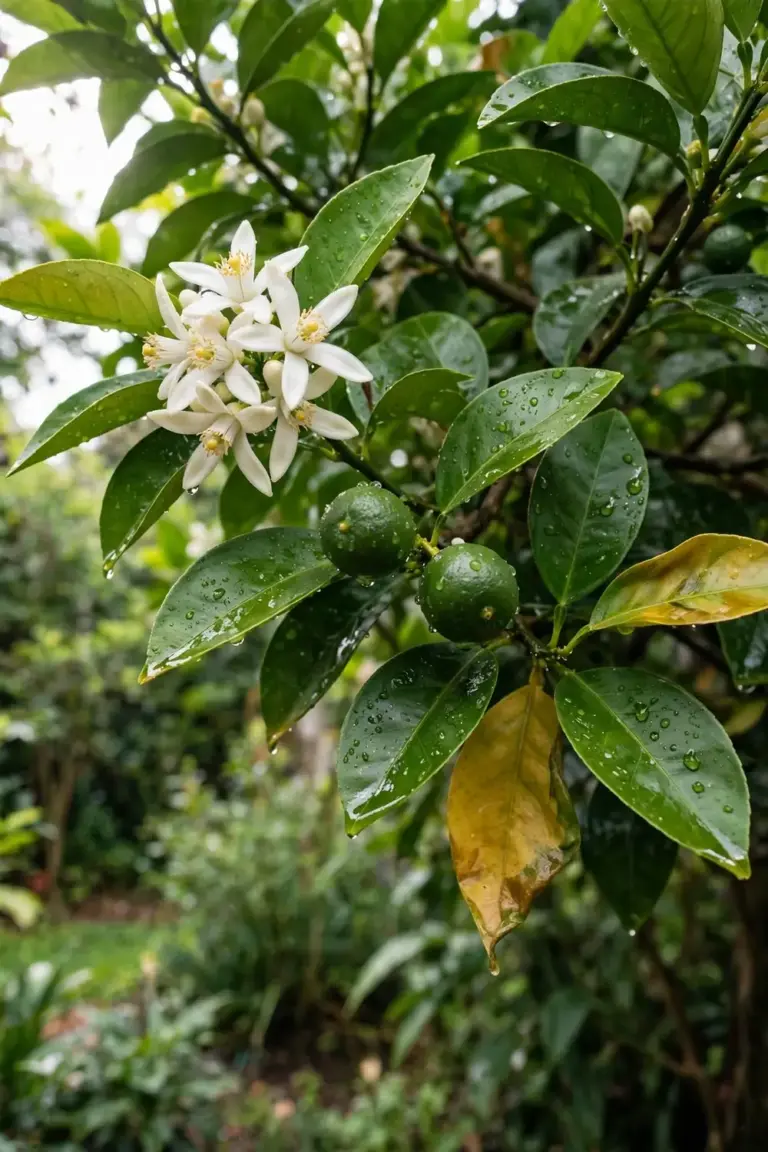
PowerFeed For Flowers, Fruit and Citrus is Seasol’s flower and fruit formula, built on extra fish, liquid composts, and chelated iron. Seasol lists its rates at 20 mL per 9 litre watering can for seedlings, 50 mL for established plants, and 90 mL for established trees, every 1 to 2 weeks. One 9 litre can covers 2 to 4 square metres. The iron in the formula targets leaf yellowing, which shows up first on fruiting plants.
Feed fruit trees at the tree rate. A mature citrus or stone fruit tree carries a large canopy and a wide root zone.
Feed flowering annuals every 1 to 2 weeks through the flowering flush. Annuals bloom, set seed, and die in one season, so they spend nutrients fast. A missed fortnight shows up as fewer buds within weeks.
Cut the rate in half when you also spread a granular fertilizer, per Seasol’s rule on both PowerFeed pages. When a liquid runs alongside an inorganic fertilizer, halve the liquid rate and stretch the interval to every 2 weeks, per Seasol’s rule on both PowerFeed pages. Two full-strength feeds stack into one overdose.
4. Feed Pots and Indoor Plants With a Dilute Feed
Feed pots and indoor plants with a dilute feed. A pot holds a small volume of mix, and every watering flushes nutrients out the drainage holes. The plant cannot reach past the pot wall for more, so small frequent feeds beat one heavy dose.
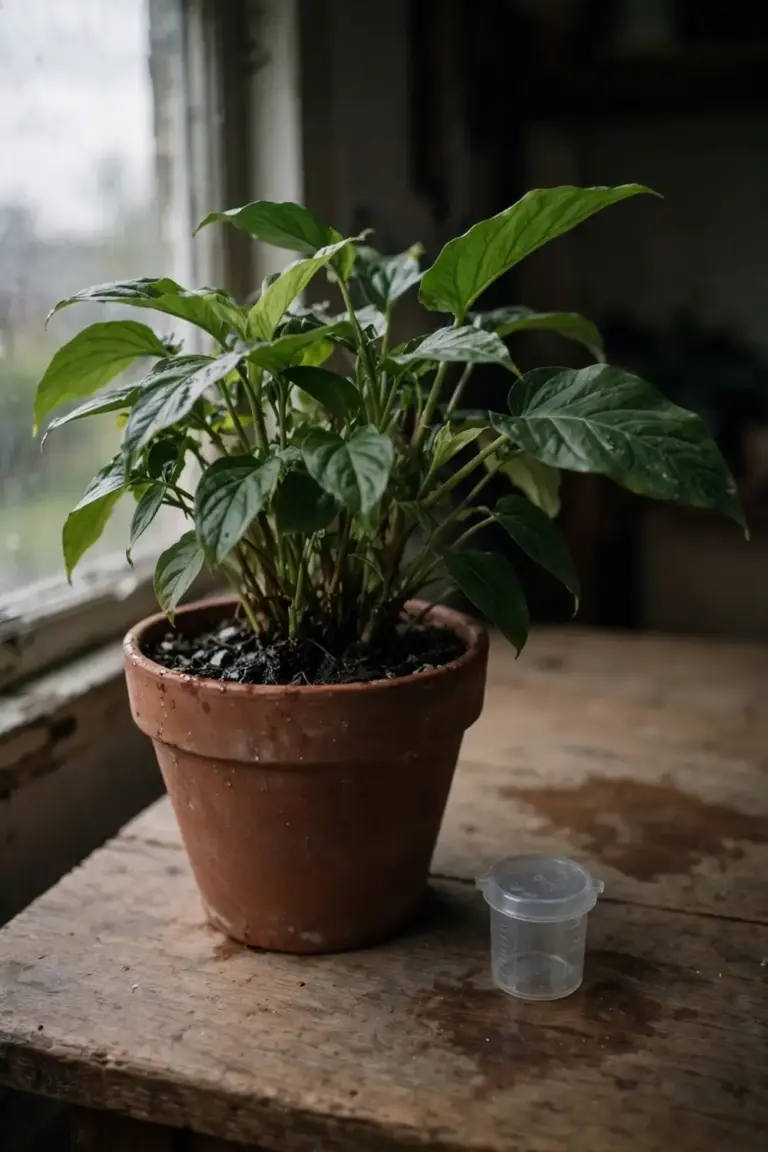
Yates Thrive Indoor Plants lists NPK 8:1.9:8.2 plus trace elements, and one 500 mL bottle makes 150 litres of plant food. Yates directs gardeners to always dilute the product with water before use, and to skip foliar application when the maximum temperature is expected to reach over 30 degrees Celsius. The balanced NPK suits foliage and flowers together, which is what an indoor plant needs.
Measure the dose with a cap or a syringe, never by eye. A 500 mL bottle making 150 litres means each feed uses only a few millilitres per litre of water. A glug from the bottle can double the dose without looking like much.
Water the pot with plain water first if the mix is dry. Yates warns against feeding plants suffering moisture stress, and a dry mix concentrates the feed around the roots. I water pots with plain water first, then feed, because a dry mix concentrates the feed around the roots.
Repot when the roots circle the pot. A root-bound plant drinks fast and dries out between waterings, so the feed flushes through before the roots can take it up. Move it one pot size up, wait a week for the roots to settle, then resume feeding at the label rate.
Watch the leaf tips for salt burn. Brown, crisp leaf tips on an indoor plant often signal excess salts from repeated feeds. The flush every fourth feed prevents most of it, and a plant that keeps burning after flushing wants a weaker dose, not a stronger one.
Flush the pot every fourth feed. Run plain water through until it drains freely, which washes out salt buildup from repeated feeds. A white crust on the mix surface signals salt buildup, and the flush clears it.
5. Feed Lawns With a Liquid When the Grass Is Growing
Feed lawns with a liquid when the grass is growing. Liquid lawn feeds green up fast because the grass takes up dissolved nutrients at once. That speed suits a lawn in active growth, and it suits a lawn that needs a quick lift before guests arrive.
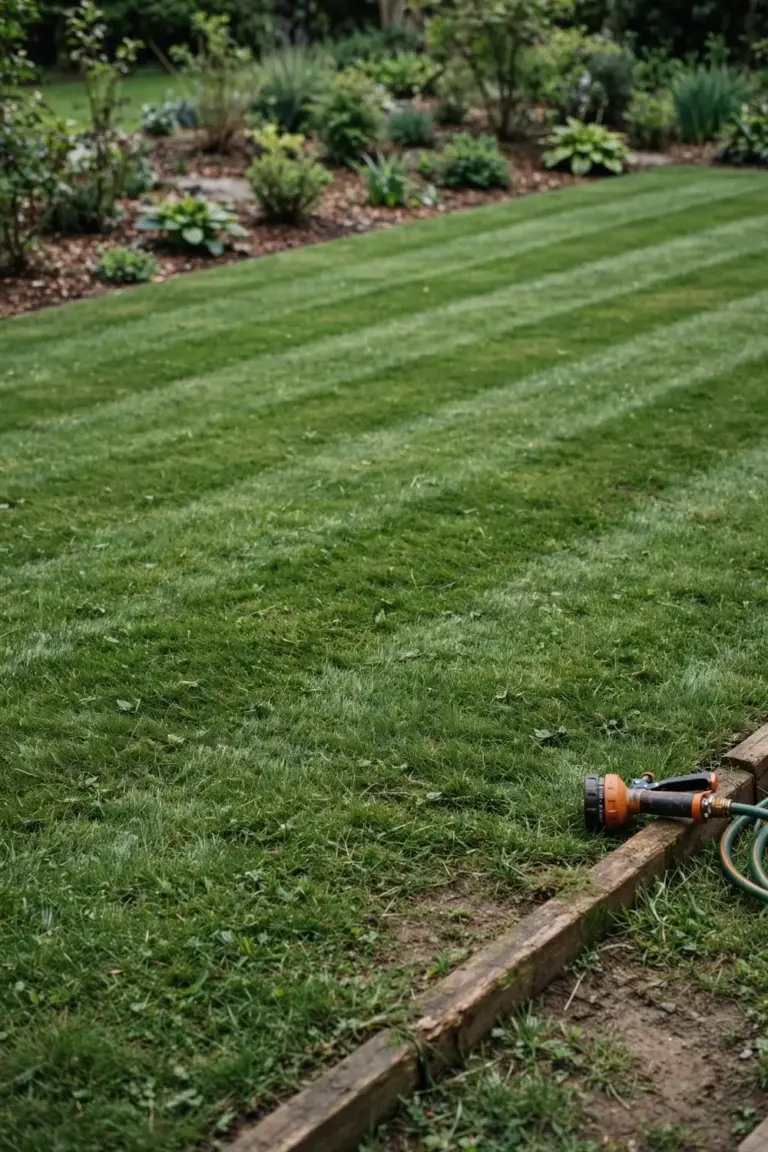
Seasol’s lawn formula dilutes at 40 mL per 9 litres of water, and PowerFeed PRO SERIES lists lawns at 90 mL per 9 litre watering can every 2 to 4 weeks to maintain. Both rates assume the grass is growing. A dormant lawn takes up almost nothing, so a feed on dormant grass washes away.
Repeat every 2 to 4 weeks through the growing season. A liquid feed does not persist in the soil the way a granular feed does, so one application fades within weeks. The repeat schedule is the price of the fast response.
Water the feed in after spraying. A feed left sitting on the leaf in hot sun can scorch the blade. A light watering moves the nutrients to the root zone and off the leaf surface.
Skip the feed when the lawn is moisture stressed. Feeding a thirsty lawn pushes growth the roots cannot support, and the salt load adds stress. Water first, wait a day, then feed.
Mow before you feed, not after. A fresh cut opens the leaf surface and the feed reaches the soil faster, while a feed followed at once by mowing clips off the treated leaf tips. Leave two days between feeding and mowing in either order, and the feed has time to work.
Mulch around the lawn edges holds moisture in the soil and keeps the feed where the roots can reach it. The mulching guide covers how mulch slows evaporation and steadies soil moisture.
6. Feed Natives With a Low-Phosphorus Liquid Only
Feed natives with a low-phosphorus liquid only. Many Australian natives evolved on soils almost empty of phosphorus, and their roots cannot throttle phosphorus uptake when a rich feed arrives. The excess turns toxic inside the plant.
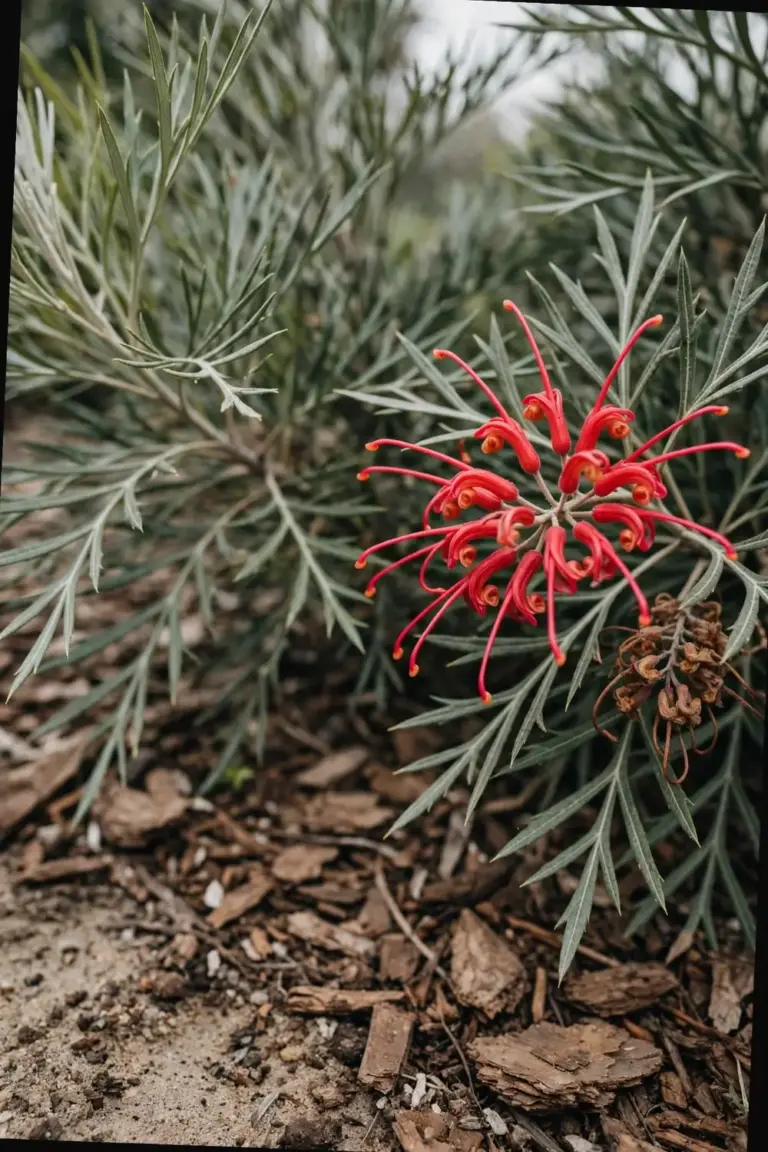
The Australian Plants Society lists the sensitive groups plainly: Proteaceae such as grevilleas, banksias, and hakeas; many pea-flower shrubs such as Daviesia, Hardenbergia, and Kennedia; perhaps half of all acacias; and plants from soils naturally very low in phosphorus such as the sands of south-west Western Australia, the sandstones of the Sydney area, and coastal heathlands. The Australian Plants Society native-plant fertilizer guide is the reference for this section. Myrtaceae, chenopods, plants from calcareous soils, and plants from rainforests are generally not sensitive.
Use a nitrogen-only or nitrogen-plus-potassium fertilizer at planting for sensitive plants. The Australian Plants Society gives two options: urea or ammonium sulfate at 5 grams per planting hole for nitrogen only, or a slow-release lawn builder with NPK 32-0-8 at 10 grams per planting hole for nitrogen plus potassium. Both options carry zero phosphorus.
Read the label for phosphorus before any feed touches a native bed. A general-purpose liquid carries far more phosphorus than a sensitive plant tolerates. A bottle labelled safe for natives has passed that test, and a bottle without that claim has not.
Yates Dynamic Lifter Liquid carries the natives-safe claim. Yates Dynamic Lifter Liquid lists NPK 1.1:0.15:0.7, and Yates states the formula is safe for all plants and safe for native plants. The phosphorus sits at 0.15 percent on the Yates Dynamic Lifter Liquid label, far below a general-purpose feed. Dilute 180 mL into 9 litres of water and apply over 9 square metres, every 1 to 3 weeks all year round.
Skip feeding established natives unless growth looks poor. The Australian Plants Society advises no fertilizer after establishment in most cases, and notes that poor growth may come from cold, shade, or low humidity instead of hunger. A native fed for speed grows soft and needs cutting back.
7. Spray Leaves for a Fast Correction, Not for Bulk Feeding
Spray leaves for a fast correction, not for bulk feeding. Leaves absorb nutrients through stomata and cuticles, so a foliar spray reaches the plant faster than a soil drench. The leaf surface absorbs only small amounts, so foliar feeding cannot carry the whole nutrient load.

Penn State Extension states the limit plainly: nutrients can be absorbed through leaves, but the small amounts absorbed are insufficient to meet the overall nutritional demands of vegetables or small fruit crops. Foliar fertilization and its role in vegetable production is the reference for this section. Foliar feeding works best when a deficiency is confirmed by tissue analysis or visible symptoms, or when soil conditions block uptake.
Spray when the soil blocks uptake. High soil pH, excess soil moisture, and cool soil temperatures can all lock nutrients away from roots. A foliar spray bypasses the soil and delivers the missing nutrient straight to the leaf.
Spray a dilute solution. Penn State Extension warns that most fertilizers can injure plants as foliar sprays unless sufficiently diluted, and that incorrect mixing can cause significant burning. Follow the label rate for the specific crop, and never guess a stronger mix for a faster result.
Spray young leaves. Younger leaves and fruits absorb more because their cuticles are thinner, while older leaves with thicker cuticles absorb significantly less. Young tissue also burns more easily, so the dilute rate matters most on new growth.
Spray both sides of the leaf. The underside carries more stomata than the top on most plants, so a spray that wets only the upper surface misses the main entry points. Walk the row slowly and angle the nozzle upward under the leaves, then finish with a light pass over the top. The leaf should glisten without dripping. A spray that runs off the leaf in streams wastes the feed on the soil, where a drench would have done the same job cheaper.
Do not spray as a routine. Penn State Extension advises against routine foliar feeding unless a documented need exists through tissue analysis or visible symptoms. A soil feed remains the base diet, and a foliar spray remains the correction.
8. Pick Liquid Over Granular When Speed Matters
Pick liquid over granular when speed matters. Liquid feeds dissolve in water and reach the roots at once, so the plant responds within days. Granular feeds release slowly as they break down, so the plant responds over weeks.
Use liquid for a quick correction. A yellowing vegie bed, a fruit tree dropping buds, or a pot plant stalling all need nutrients now, not next month. A liquid feed at the label rate closes that gap in days.
Use liquid for pots. A pot holds little mix and flushes fast, so a slow-release granular feed can wash out before it releases. A liquid feed at each watering keeps the supply steady.
Use granular for base feeding. A granular feed spread at planting carries the bed for weeks or months without repeat trips. Yates granular vegan fertilizer feeds for up to 3 months, while a liquid feed needs repeating every 1 to 2 weeks. The granular base plus liquid top-ups covers both timeframes.
Count the trips before you choose. A liquid-only bed needs a feed every 1 to 2 weeks through the growing season, which runs to a dozen or more trips a season. A granular base feed needs two or three trips a season, plus a liquid top-up at flowering. Gardeners short on time do better with the granular base, and gardeners who walk the beds weekly do fine with liquid alone.
Do not double up at full strength. A bed carrying a granular base feed plus a full-strength liquid feed receives two doses at once. Cut the liquid rate back when a granular feed is already in the soil, and stretch the liquid interval.
9. Dilute Every Concentrate Exactly as the Label Says
Dilute every concentrate exactly as the label says. Concentrates are strong by design, and the label rate is the dose the maker tested. A stronger mix does not feed faster. It burns leaves and roots.
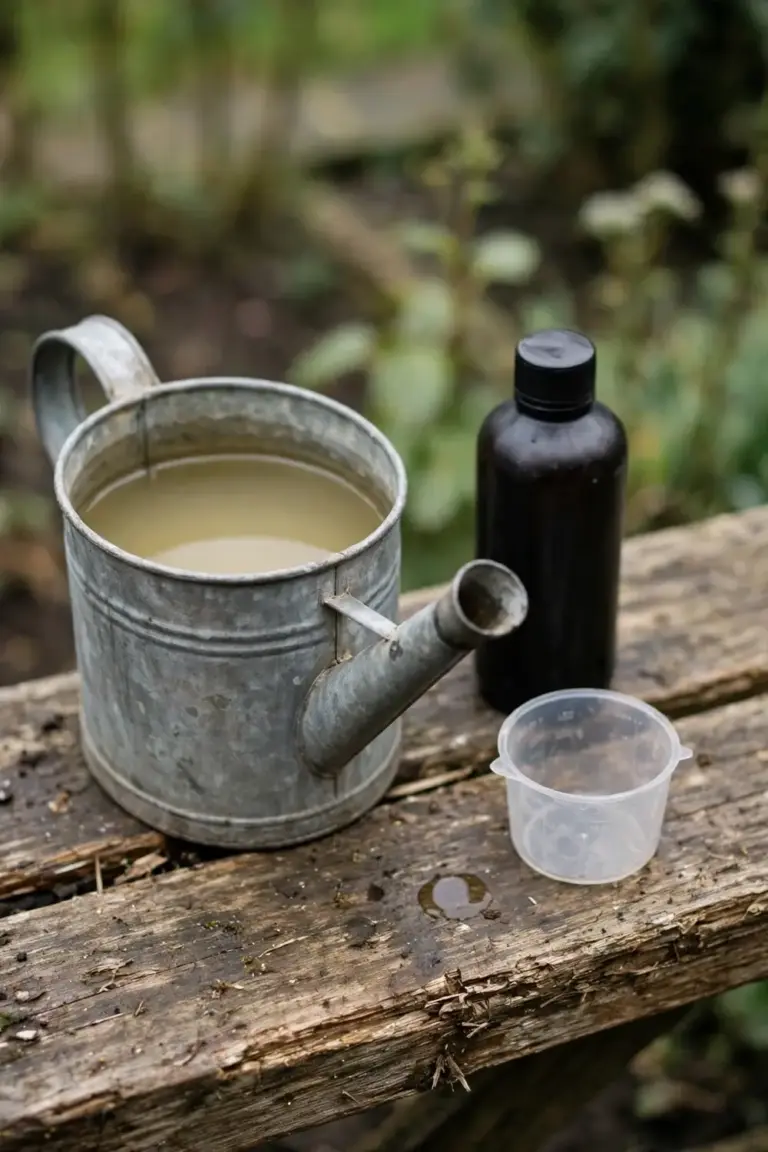
Never apply a concentrate undiluted. Seasol states that PowerFeed should never be applied undiluted, because water is the carrier that ensures proper coverage. Dilute first, then apply.
Use the mixed feed within 24 hours. PowerFeed diluted in a watering can should be used within 24 hours of mixing. A mix left standing loses strength and can grow slime in warm weather.
Measure with the cap or a measuring jug. Yates marks its cap at 40 mL, and the Yates Dynamic Lifter directions use that measure. A kitchen tablespoon holds a smaller dose, so use a real measure rather than a spoon from the drawer. Guessing the dose by pouring freehand can double it.
Mix in the right order. Fill the watering can with water first, then add the concentrate. Adding concentrate first and blasting water on top foams the mix and splashes concentrate on your hands. Stir once with a stick, then apply.
Never mix two concentrates in one can. Two products at once can react, and the combined dose can burn the plant even when each product alone sits at the label rate. Feed one product per trip, and wait a week before the next product.
Wash edible plants before eating. PowerFeed carries the instruction to wash edible plants before eating, because the feed sits on leaf surfaces. Rinse leafy vegies under running water after harvest.
Keep the feed off foliage when the label says so. PowerFeed PRO SERIES warns to wash the product off plant foliage to avoid burning, and to skip application on days that may exceed 25 degrees Celsius. A feed that dries on a hot leaf concentrates as the water evaporates.
Store concentrates upright, cool, and out of reach of children. A bottle tipped on its side leaks, and a bottle left in sun degrades. Keep the cap tight and the label readable.
10. Check the Calendar Before You Feed
Check the calendar before you feed. Plants take up nutrients when they grow, and growth follows warmth and day length. A feed applied to a dormant plant sits unused and washes away.
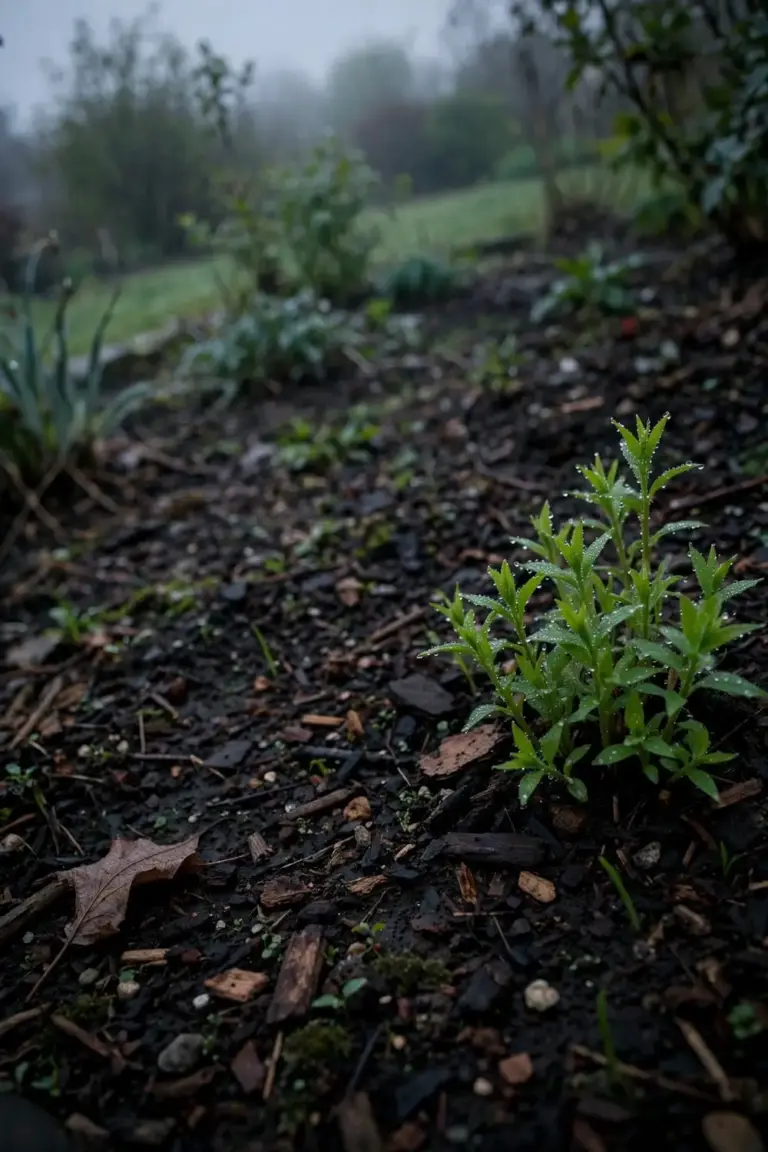
Feed through the growing season. PowerFeed runs every 1 to 2 weeks through active growth, and Dynamic Lifter runs every 1 to 3 weeks all year round. Both schedules assume the plant is growing. A plant in winter dormancy needs neither.
Feed new plantings at planting and again 1 week later. Seasol lists transplanting and planting at 40 mL per 9 litres, at planting and again 1 week later. The second feed catches the plant as it settles and starts new root growth.
Feed established garden beds every 2 to 4 weeks. Seasol lists established gardens at 40 mL per 9 litres every 2 to 4 weeks. The wider interval suits plants with established root systems and a soil that holds nutrients.
Apply in the morning in winter. PowerFeed guidance for pots advises applying to the soil in the morning in winter so the plant dries before nightfall, which helps prevent fungal attack. A wet plant going into a cold night invites disease.
Stop feeding when growth stops. A deciduous fruit tree dropping leaves, a perennial dying back, or a lawn going dormant all signal the end of the feeding season. Resume when new growth appears.
Match the calendar to your climate, not to a month name. Subtropical gardens feed through most of the year, while cool-climate gardens stop when frost arrives. A gardener in Cairns and a gardener in Hobart run different feeding seasons, and both are right. Watch the plant, not the calendar page.
Frequently Asked Questions
No. Vegies want high nitrogen, flowers and fruit want high potassium, and sensitive natives want almost no phosphorus. One bottle cannot serve all three jobs. A general-purpose liquid suits mixed beds of exotics, but a native bed needs its own low-phosphorus feed or none at all. Buy by use case, and keep the natives bottle separate from the rest.
Feed every 1 to 2 weeks through the growing season for most liquids. PowerFeed runs every 1 to 2 weeks, Dynamic Lifter runs every 1 to 3 weeks, and Seasol tonic runs every 2 to 4 weeks. Follow the label on your bottle, because the interval varies by product. Halve the rate when a granular feed is already in the soil.
No. Seasol seaweed concentrate is a tonic that supports roots, stress tolerance, and soil microbes. It carries plant nutrients and trace elements, but it does not replace a fertilizer. Pair it with a feed such as PowerFeed for nutrition. Seasol’s own pages describe it as a garden health treatment, while PowerFeed pages describe a fertilizer. The two products do different jobs.
No. Foliar sprays burn leaves when the temperature runs high. Yates warns against applying Thrive Indoor to foliage when the maximum temperature is expected to reach over 30 degrees Celsius, and PowerFeed PRO SERIES warns against application on days that may exceed 25 degrees Celsius. Spray in the morning or evening, and skip the spray on hot days entirely.
A low-phosphorus feed labelled safe for natives is the safest choice. Yates Dynamic Lifter Liquid lists NPK 1.1:0.15:0.7 and Yates states it is safe for native plants. For sensitive plants at planting, the Australian Plants Society recommends nitrogen-only or nitrogen-plus-potassium fertilizer with zero phosphorus. Skip feeding established natives unless growth looks poor.
Start With One Bottle, Not Five
Start with one bottle, not five. Buy the feed for the bed that needs it most, learn its rate, and use it through one season. A single bottle used at the label rate beats five bottles used by guesswork. Match the next bottle to the next bed, and the chooser on this page stays useful all year.