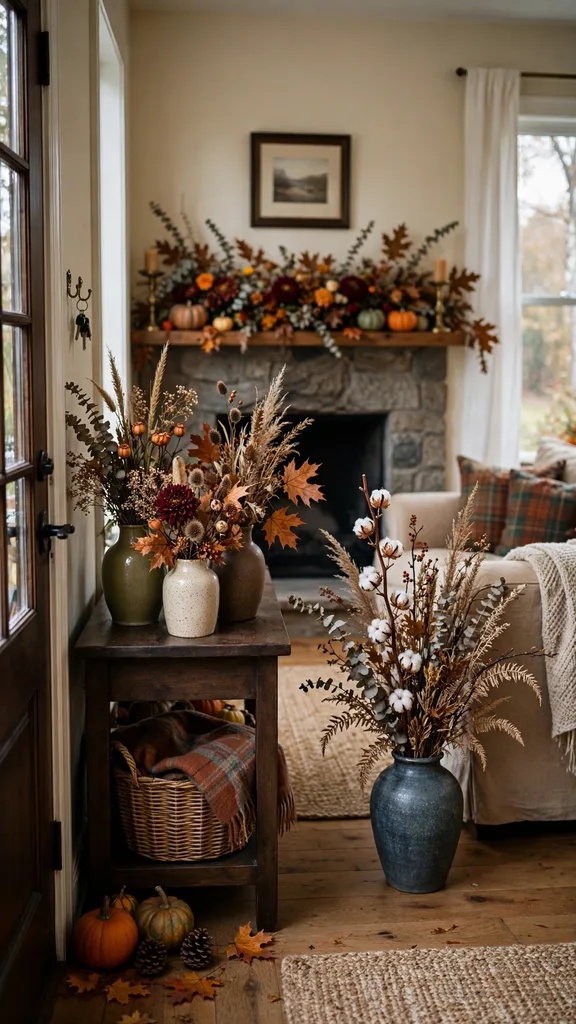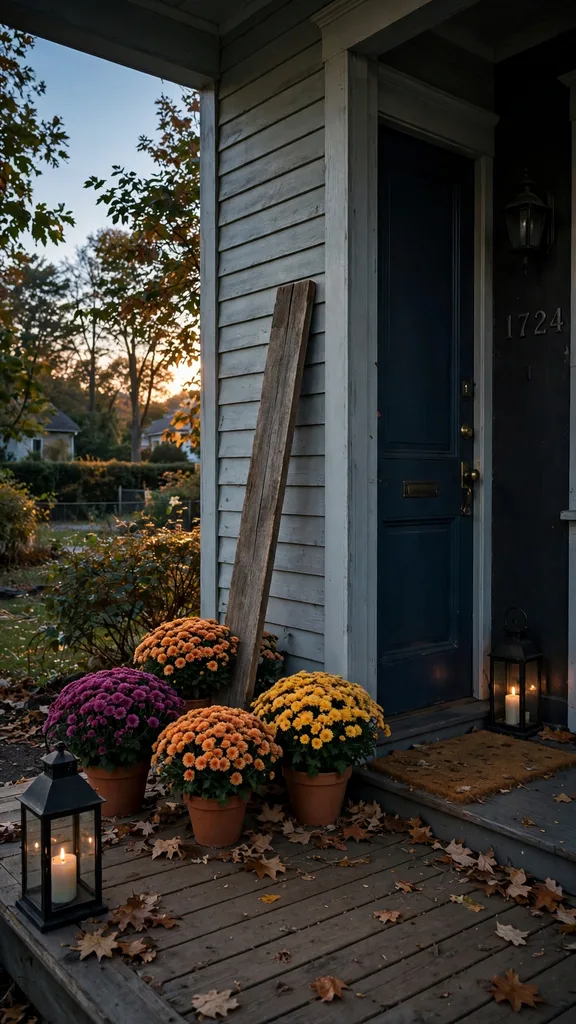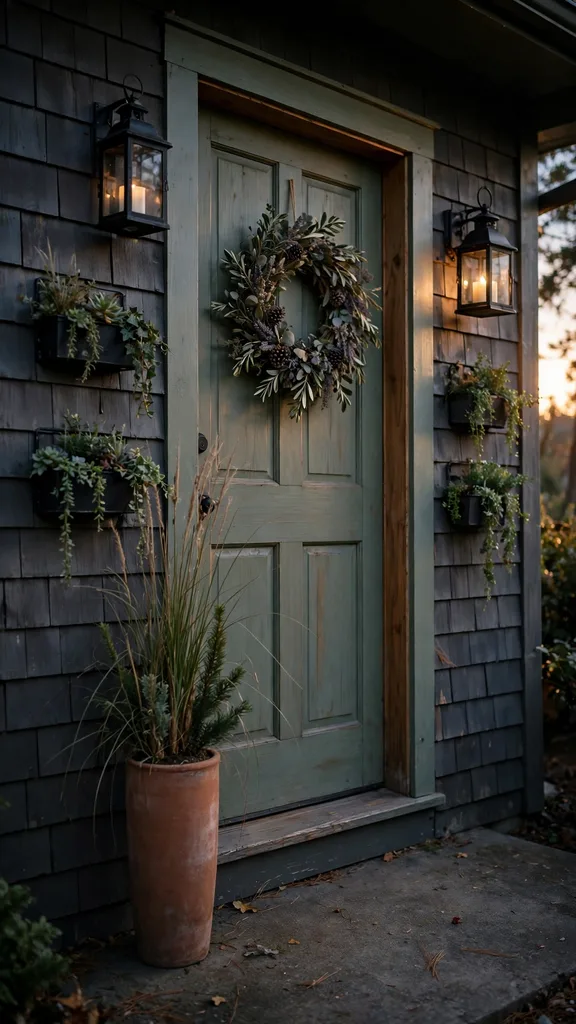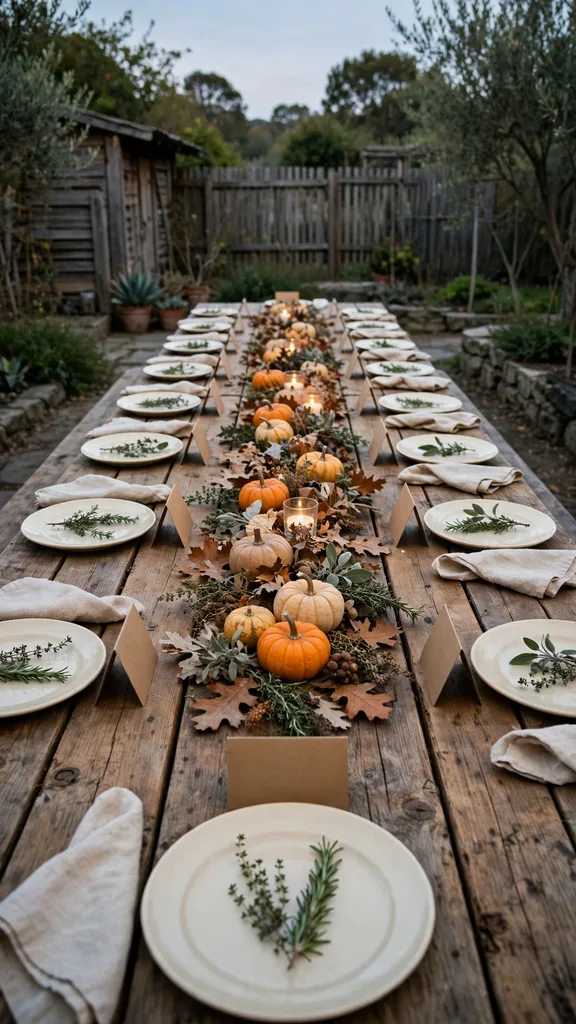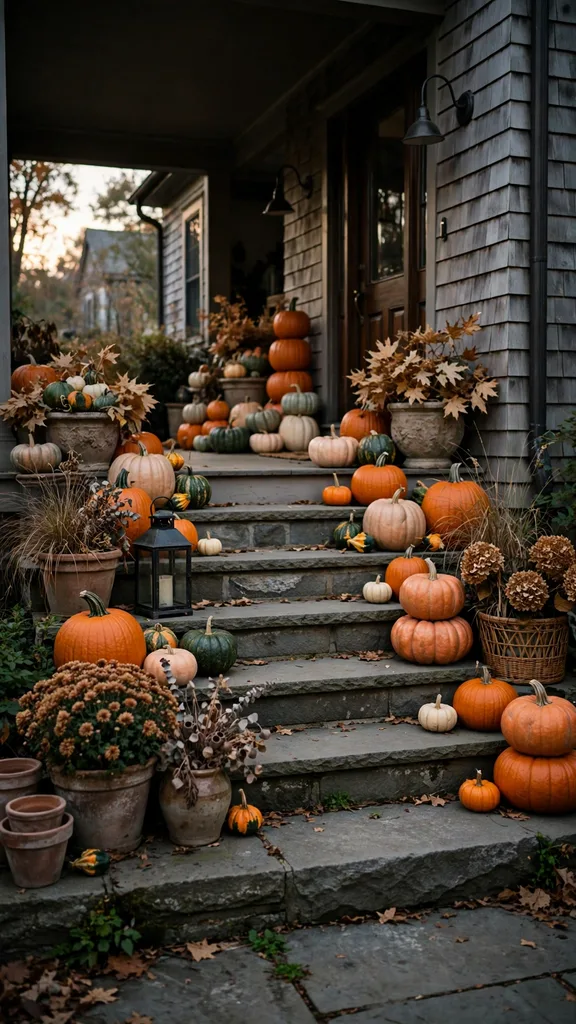

A porch stack greets guests before the door opens, and a good one reads as one display from the walkway rather than a pile of pumpkins left near the steps. This collection gathers 45 pumpkin porch displays, grouped by stacks, vessels and planters sited on the porch, steps and entries, companion plantings, colour palettes, and outdoor durability, so a reader can start with the porch already owned and finish with a display that holds its shape to Thanksgiving.
Each idea names its build, its siting, and its weak point, and the quick-pick table near the end gives a plain guide to which display suits a small stoop, wide steps, a covered porch, or an open and windy entry. Stacks suit a porch that needs height, vessels suit a porch that needs a planted focal point, and step cascades suit a porch with wide treads and a clear walkway.
I built my first porch stack from three pumpkins that leaned in the wind, and that wobbly tower taught me that a porch display stands on weight, balance, and shelter first.
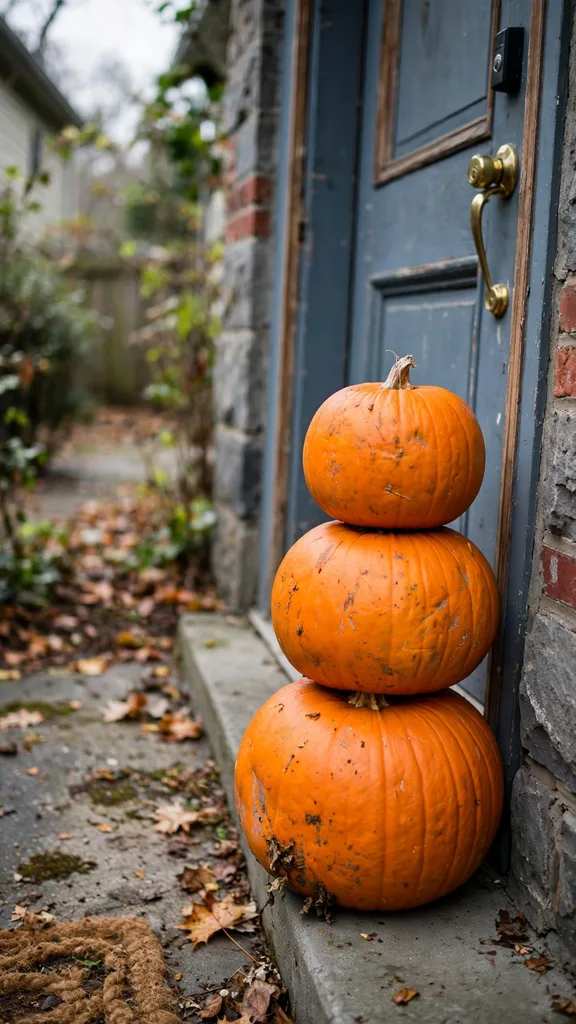
1. Classic Three Pumpkin Stack by the Door
A stack of three pumpkins in descending size gives the door a finished focal point with the least shopping, because the eye reads the tower as one object rather than three separate pumpkins. Choose a wide and flat pumpkin for the base, a medium pumpkin for the middle, and a small pumpkin for the top, and keep the total height near 75 centimetres (30 inches) so the stack stays below the doorknob line and clear of the door swing.
Set the base pumpkin on a flat tread or a stone slab, centre each pumpkin over the one below, and twist each stem to a different angle so the stack looks gathered rather than drilled. Check the stack after the first windy night, and rebuild it at once if the top pumpkin has shifted, because a leaning stack draws the eye for the wrong reason.
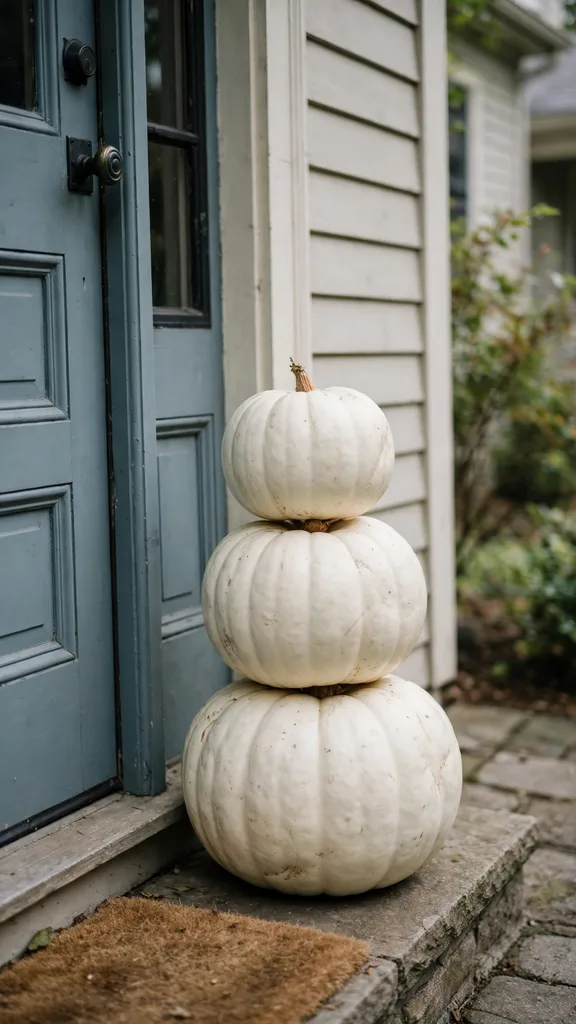
2. White Pumpkin Tower for a Quiet Entry
White pumpkins quieten a busy entry, because their pale skins reflect light and leave the door colour and the porch wood to carry the contrast. A tower of three white pumpkins in descending size suits a painted door in navy, black, or deep green, and it suits a porch that already carries bright mums that would fight with orange pumpkins.
Pick white pumpkins with clean skins and no green patches, stack them largest at the base, and set a small sprig of dried grass behind the top pumpkin for a vertical accent. Keep the tower on a covered porch when possible, because white skins show soil splash and rain spotting sooner than orange skins.
3. Heirloom Stack in Mixed Shapes
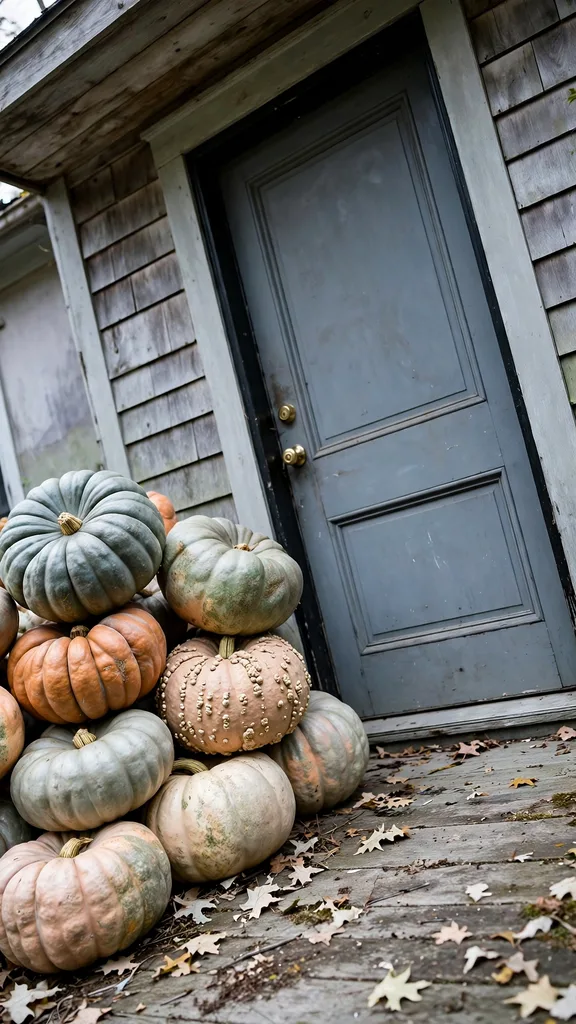
Heirloom pumpkins bring warts, ribs, and muted colours that a row of identical carving pumpkins cannot bring, and a mixed-shape stack suits a porch that aims for a harvest look rather than a uniform look. Combine one squat ribbed pumpkin, one tall oblong pumpkin, and one small round pumpkin, and let the odd shapes touch at one point each so the stack reads as intentional.
Test each pumpkin for a flat resting spot before stacking, and turn the wartiest side toward the walkway so guests see texture from the street. A mixed-shape stack needs a wider base than a uniform stack, so give the base pumpkin a tread at least 30 centimetres (12 inches) deep.
4. Mini Pumpkin Stack for a Small Stoop
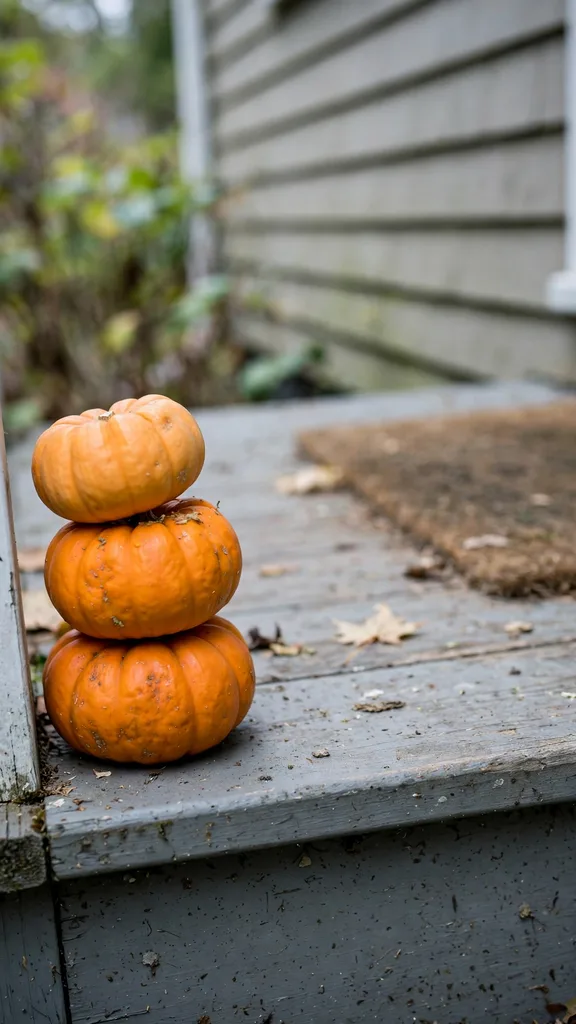
A small stoop needs a small stack, because a full-size tower blocks the door swing and crowds the step. Three mini pumpkins stacked on one step give the same tower shape at a height near 30 centimetres (12 inches), and the display leaves room for feet, a doormat, and a parcel drop.
Set the mini stack in a shallow bowl or on a small wooden board so the tiny base cannot roll, and place the board against the wall side of the step rather than the open edge. Replace any mini pumpkin that softens at once, because one collapsed piece ruins a small stack faster than a large one.
5. Pumpkin Topiary in a Tall Urn
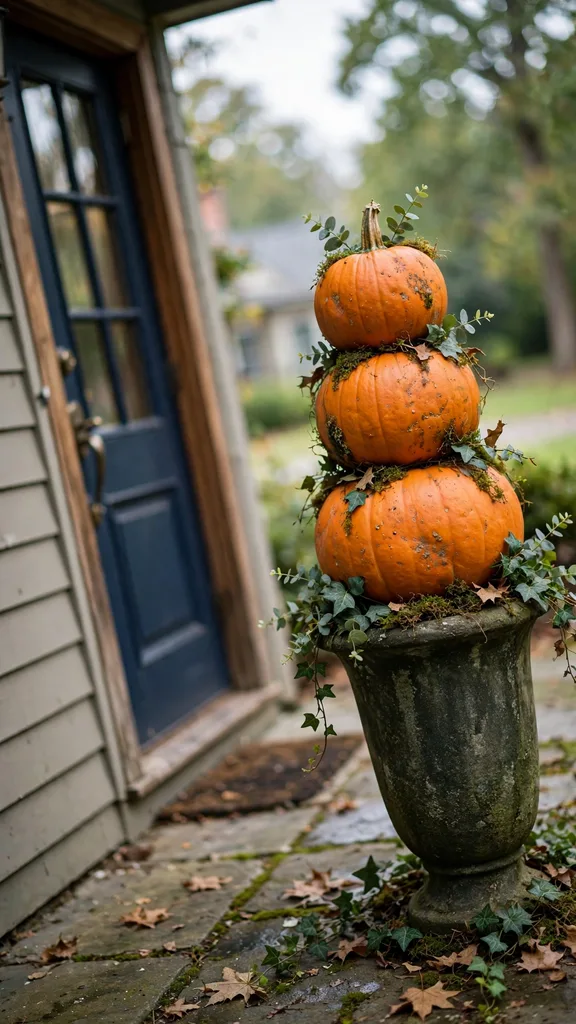
A pumpkin topiary turns a tall urn into a porch pillar, because the urn gives height and the pumpkins give seasonal colour in one vertical line. Fill the urn with a heavy pot or stones for ballast, set one large pumpkin inside the rim, then stack two smaller pumpkins above it, and keep the total height near 120 centimetres (47 inches) so the topiary frames the door without hiding it.
Choose pumpkins that fit inside the urn rim with 2.5 centimetres (1 inch) of clearance, and wedge dried moss in the gaps so the stack cannot rock. A topiary in a tall urn suits a porch with a roof, because wind catches a tall display harder than a low one.
6. Stacked Pumpkins on a Wooden Crate
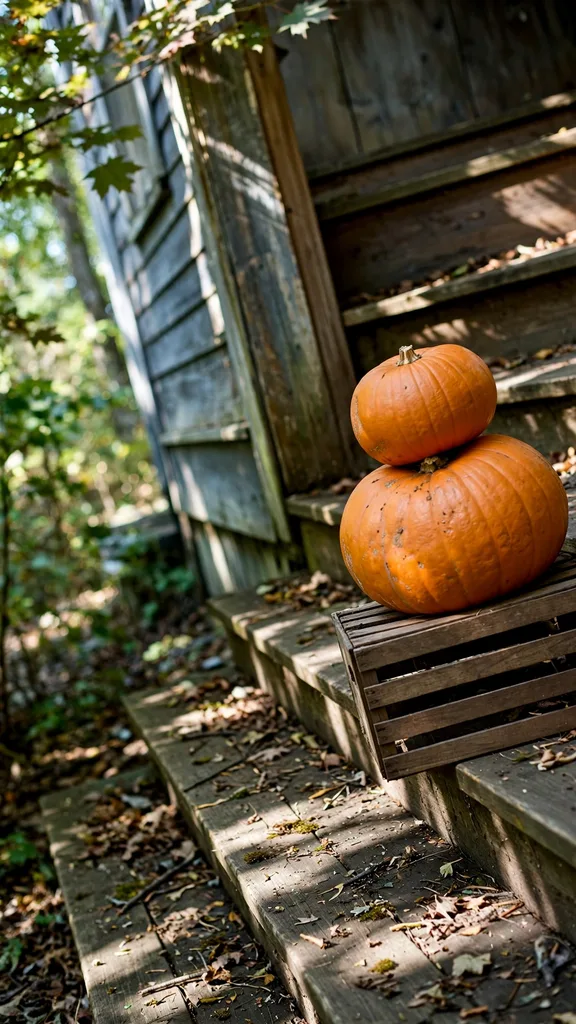
A wooden crate lifts a pumpkin stack off wet treads and gives the display a rustic base that suits farmhouse porches. Set the crate flat on the lowest step, stack two pumpkins on top of it, and let one small gourd sit beside the stack on the crate edge for a gathered look.
Check that the crate sits level before stacking, and slip a thin stone slab under one corner if the step slopes toward the walkway. A crate base also keeps pumpkin skins off standing water after rain, which slows softening at the base.
7. Stacked Gourds and Pumpkins Mixed
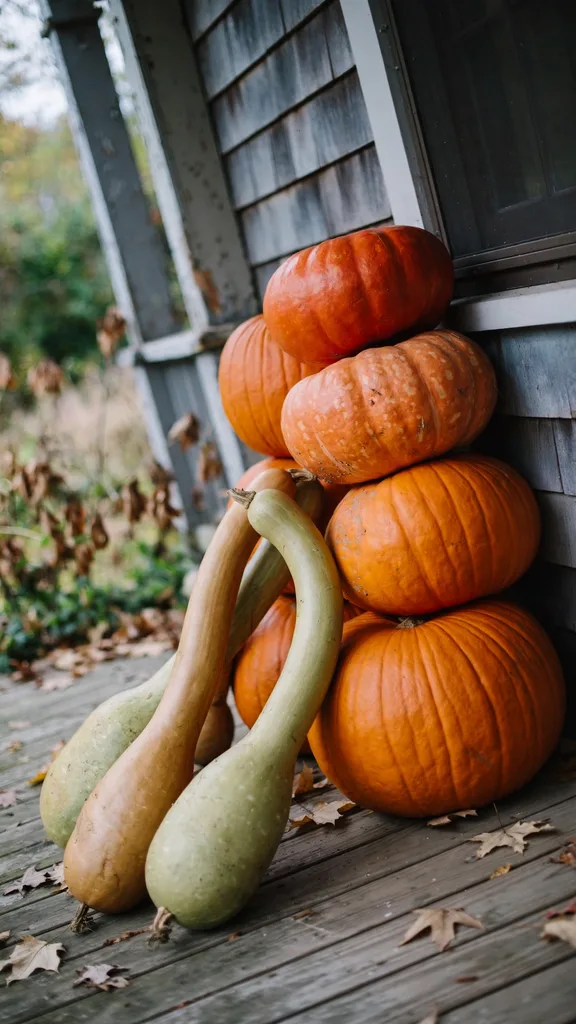
Gourds stretch a pumpkin stack sideways, because their long necks and striped skins break the round rhythm of pumpkins alone. Place a pumpkin tower at the centre, then lean two long gourds against its base at an angle, and add three small striped gourds at the feet of the tower for a harvest spill.
Keep gourds off the walking line, because a long neck across a tread trips guests in low light. A mixed gourd stack suits a wide porch best, where the spill can spread 60 centimetres (24 inches) without blocking the door.
8. Monochrome Black and White Stack
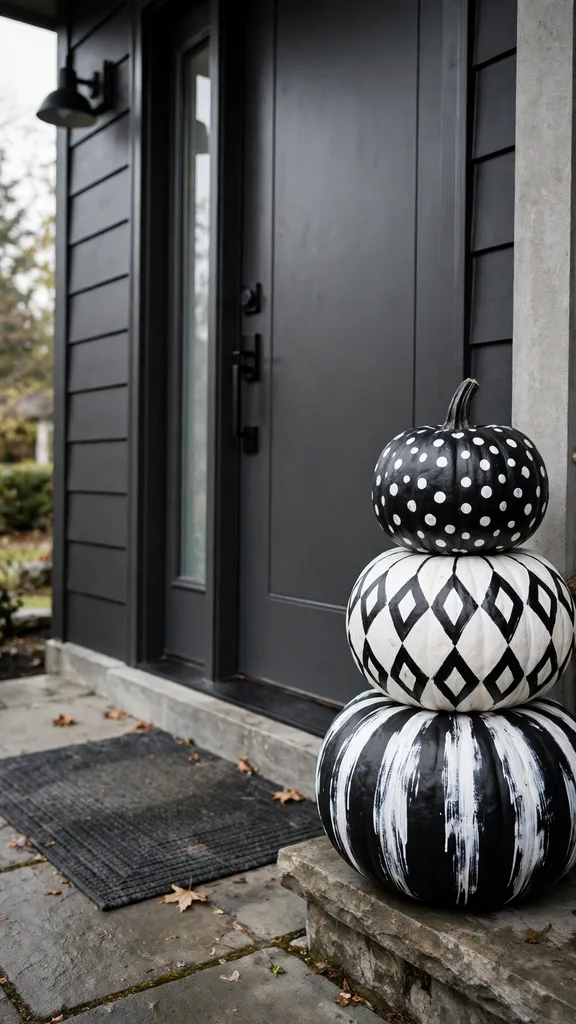
A black and white stack suits a modern porch, because the high contrast reads clearly from the street and pairs with black lanterns and white planters. Paint two pumpkins matte black and leave one white pumpkin unpainted, then stack the white pumpkin between the black ones so the light band breaks the tower in the middle.
Use pumpkins with smooth skins for painting, and let each coat dry fully before stacking so paint does not stick pumpkin to pumpkin. A painted stack lasts longer outdoors than a carved one, because paint seals small skin marks and no cut flesh is exposed to air.
9. One Giant Pumpkin as the Anchor
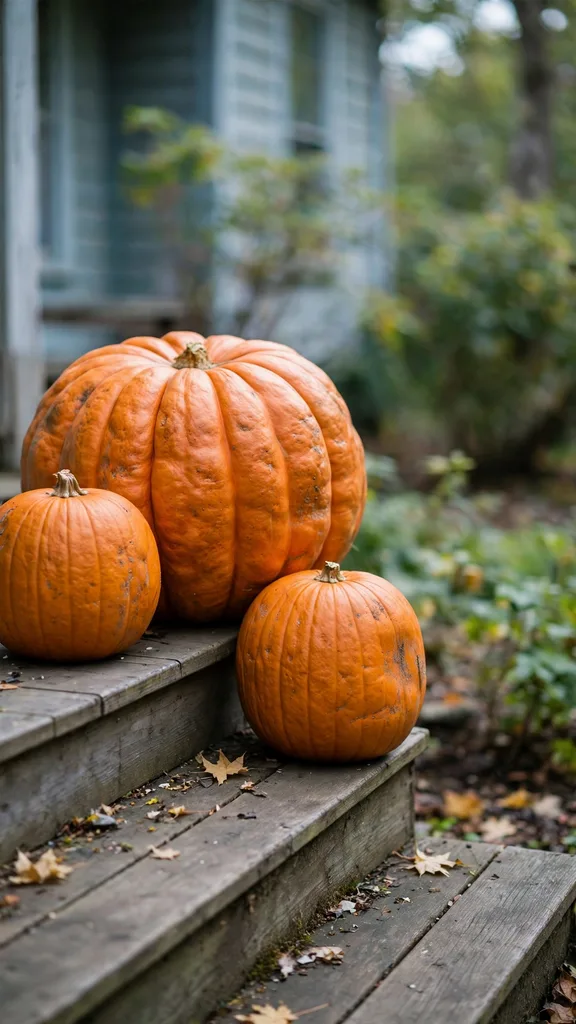
One giant pumpkin anchors a porch the way a large pot anchors a garden bed, because its scale stops the eye and lets smaller pieces gather around it. Set the giant pumpkin on the ground beside the lowest step, flank it with two medium pumpkins, and leave a clear gap of 45 centimetres (18 inches) to the walkway so guests pass without brushing the display.
Move a giant pumpkin with two people and a board sling, and never lift it by the stem, because a torn stem opens the fruit to decay. A giant pumpkin suits a ground-level porch best, since carrying one up steps risks a dropped fruit and a cracked tread edge.
10. Scooped Pumpkin Vessel With Mums at the Door
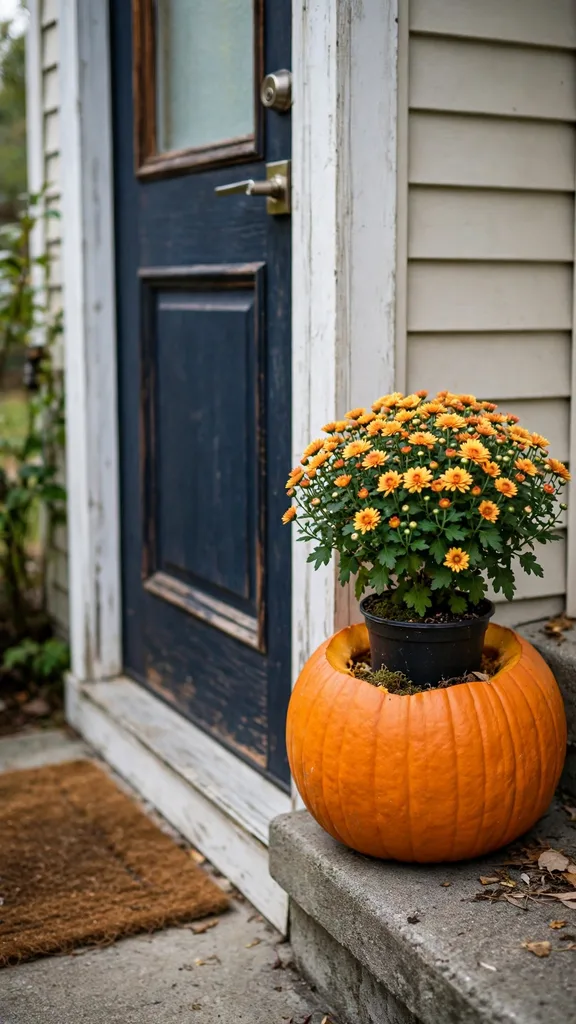
A scooped pumpkin vessel puts living colour at the door in one object, because the pumpkin acts as the pot and the mums act as the bouquet. Cut a wide opening in the top of a large pumpkin, set a potted mum still in its nursery pot inside the cavity, and place the vessel on the step nearest the door so the blooms sit at hand height for arriving guests.
Keep the mum in its pot inside the pumpkin, because direct soil in a pumpkin cavity holds water against the flesh and speeds softening. For the living side of this pairing, from buying mums in bud to keeping the display fresh, see [Mums and Pumpkins Porch Decor Ideas That Last](https://growit.wiki/mums-and-pumpkins-porch-decor-ideas/.
11. Pumpkin Vessel Pair Flanking the Door
A matched pair of pumpkin vessels frames a door with symmetry, because two equal displays tell guests the entry was planned rather than improvised. Scoop two pumpkins of equal size, set one potted plant in each, and place one vessel on each side of the door at equal distance from the frame.
Match the vessels by width within 2.5 centimetres (1 inch), and match the plants by height as well, because a pair fails when one side towers over the other. A vessel pair suits a porch with a centred door and two equal treads, and it suits a narrow porch better than a wide cascade.
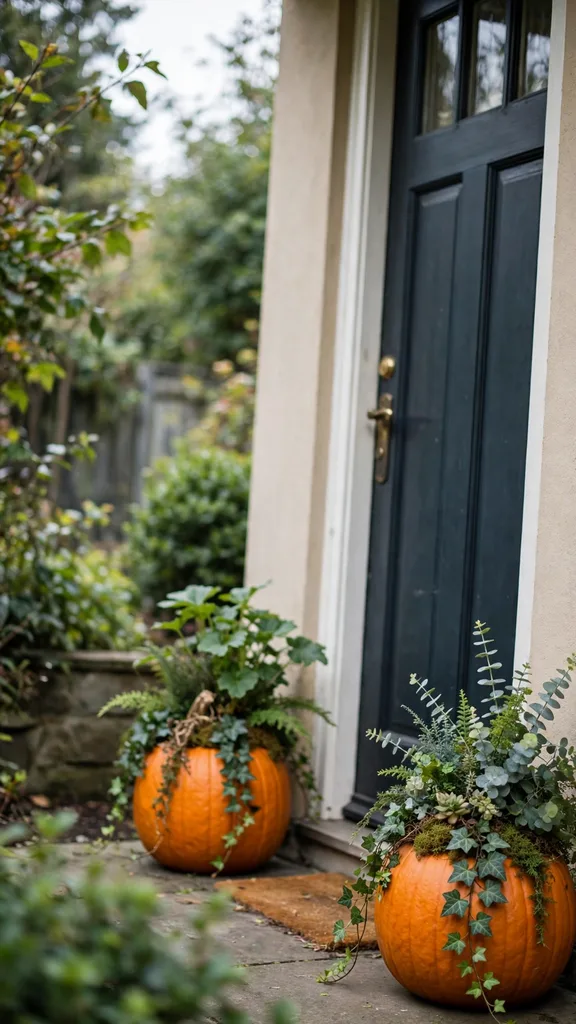
12. Pumpkin Planter in a Basket by the Step
A basket softens a pumpkin planter, because woven texture breaks the hard line of porch wood and stone. Set a scooped pumpkin vessel inside a low woven basket, pack dried moss in the gap between pumpkin and basket, and place the basket on the top step beside the rail where it catches light without blocking the door swing.
Choose a basket with a flat base and a rim wider than the pumpkin by 5 centimetres (2 inches), so the pumpkin sits down inside rather than perched on top. Bring a basket planter under cover in heavy rain, because a soaked basket stains the step and adds weight to a wet display.
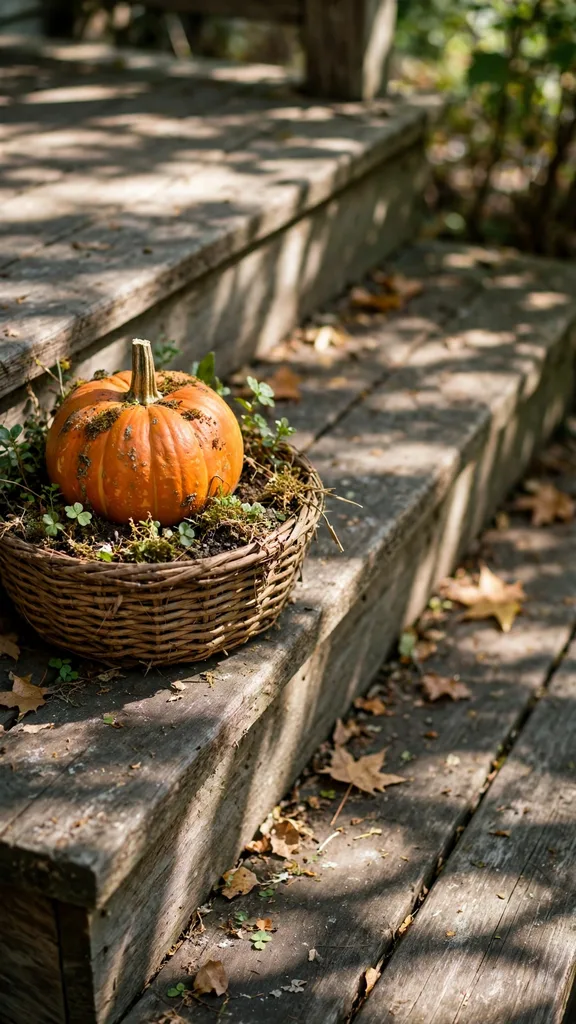
13. Terracotta Pot Crowned With a Pumpkin
A terracotta pot crowned with a pumpkin gives a porch a two-layer display, because the pot holds a living plant at the base and the pumpkin crowns it with seasonal colour. Plant the pot with trailing ivy or a small evergreen, set a flat-bottomed mini pumpkin on the soil beside the plant stem, and place the pot where the crown reads against the door frame.
Pick a flat-bottomed pumpkin that sits level on soil, and check it weekly for soft spots where it touches damp soil. This crowned-pot idea differs from a scooped vessel, because the pumpkin stays whole and the plant keeps its own pot and soil.
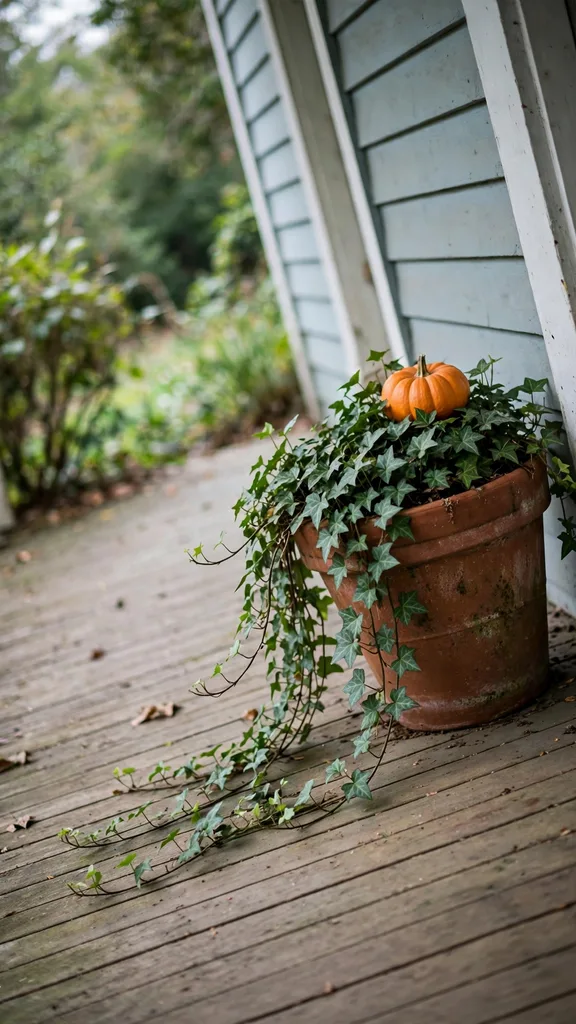
14. Pumpkin Vessel on a Porch Bench
A porch bench gives a pumpkin vessel a stage at sitting height, because guests see the vessel face to face rather than looking down at it. Set one scooped vessel near the bench end closest to the door, flank it with two mini pumpkins, and leave the middle of the bench clear for sitting.
Keep the vessel on a tray or a stone tile, because a damp pumpkin base marks painted bench wood. A bench vessel suits a deep porch best, where the bench sits under a roof and out of driving rain.
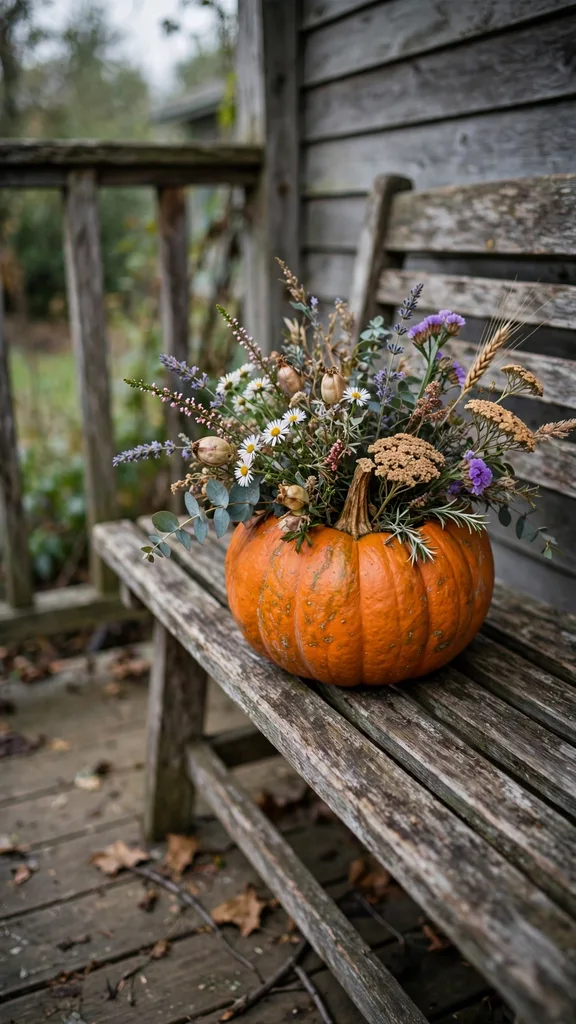
15. Galvanized Bucket Pumpkin Planter at the Entry
A galvanized bucket gives a pumpkin planter a farmhouse frame, because the metal rim contrasts with the soft pumpkin skin and the bucket catches any water that escapes the vessel. Set a scooped pumpkin vessel inside the bucket, pack straw in the gap for insulation, and place the bucket at the entry corner where it anchors the display without narrowing the walkway.
Drill no holes in the bucket, and empty it after rain so standing water does not sit against the pumpkin base. For cut flowers arranged inside a pumpkin for indoor use, a different guide covers that craft: [Pumpkin Floral Arrangements: A Step-by-Step Guide](https://growit.wiki/pumpkin-floral-arrangements-a-step-by-step-guide/.
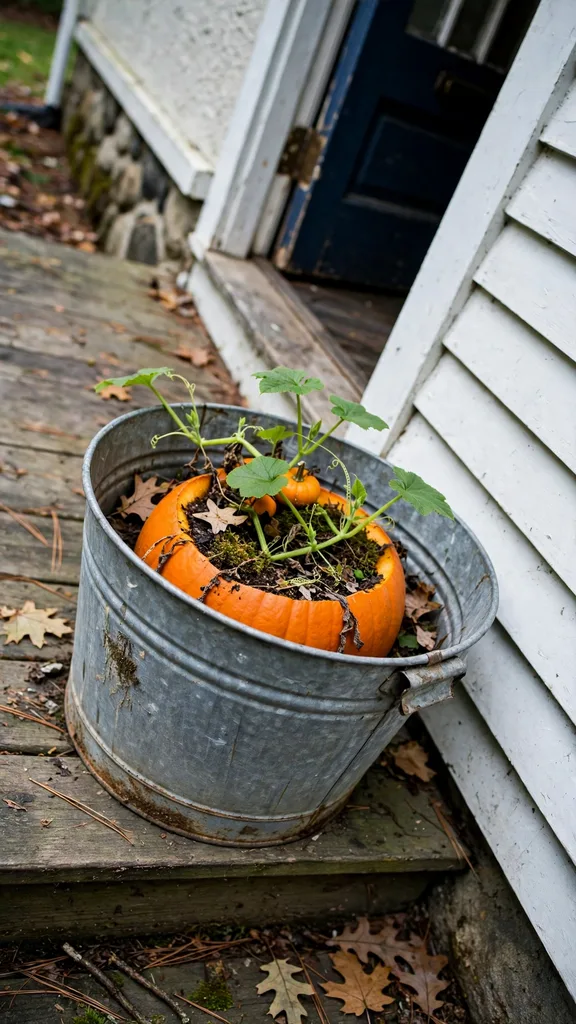
16. Pumpkin Vessel Under a Covered Porch
A covered porch is the kindest site for a pumpkin vessel, because the roof blocks driving rain and harsh sun while still giving the display open air. Place the vessel near the porch edge where guests see it from the walkway, but keep it 30 centimetres (12 inches) inside the drip line so roof runoff does not fall straight onto the pumpkin.
Check the vessel after the first week under cover, and move it 15 centimetres (6 inches) if a damp ring has formed on the step beneath it. A covered site can extend a vessel display by weeks compared with an open stoop in the same street.
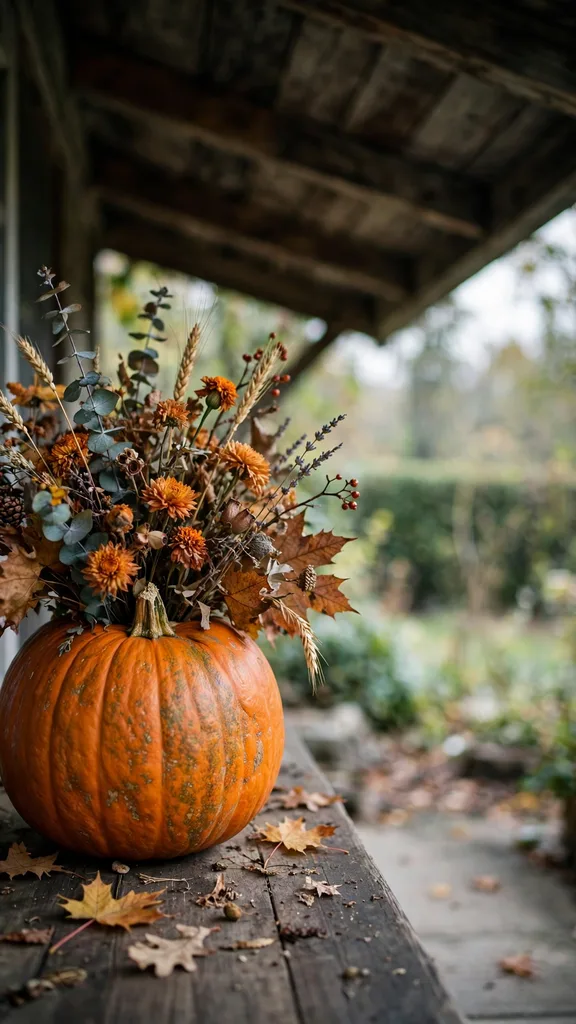
17. Faux Pumpkin Planter for a Windy Entry
A faux pumpkin planter suits a windy entry, because it holds its shape through gusts that would topple a tall real stack and it never softens in rain. Choose a faux pumpkin with a hollow top that accepts a real potted plant, set the plant pot inside, and place the planter in the windiest corner as a test of the whole display layout.
Weigh a faux planter down with stones inside its base, because a light faux pumpkin blows across a porch sooner than a real one. A faux vessel also suits a porch that must stay tidy between guest visits, since it needs no deadheading and no soft-spot checks.
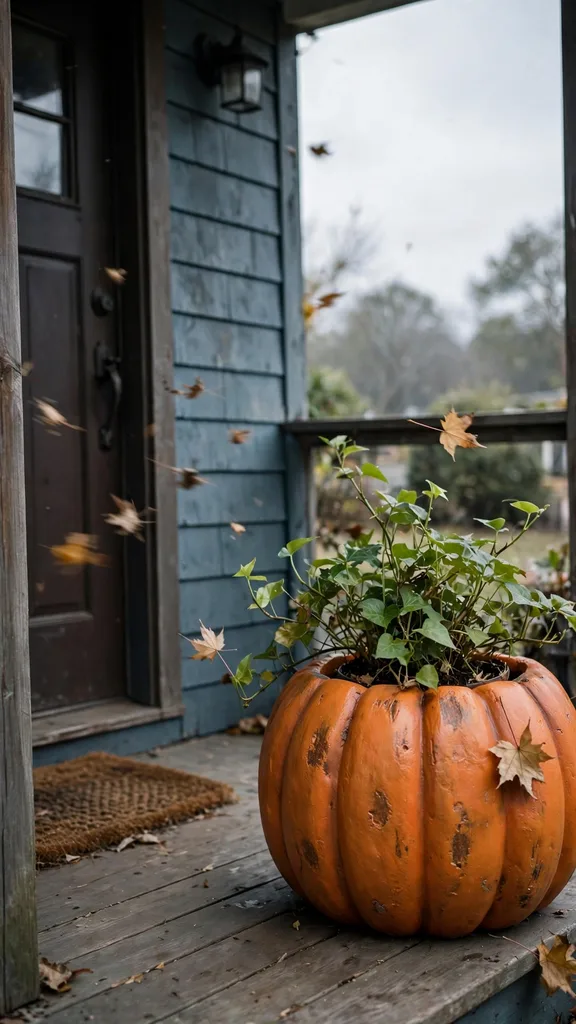
18. Staircase Cascade From Large to Small
A staircase cascade turns the steps into shelves, because each tread holds a group of pumpkins and the whole flight reads as one flowing display. Place the largest pumpkins on the lowest tread, medium pumpkins on the middle treads, and mini pumpkins near the door, and keep one clear walking channel 60 centimetres (24 inches) wide on one side of the flight.
Space groups so no tread carries more than three pumpkins, and test the channel at night with the porch light on, because a cascade that looks fine by day can hide a tread edge after dark. A cascade suits a wide straight flight best, and it needs a handrail guests can reach without stepping over pumpkins.
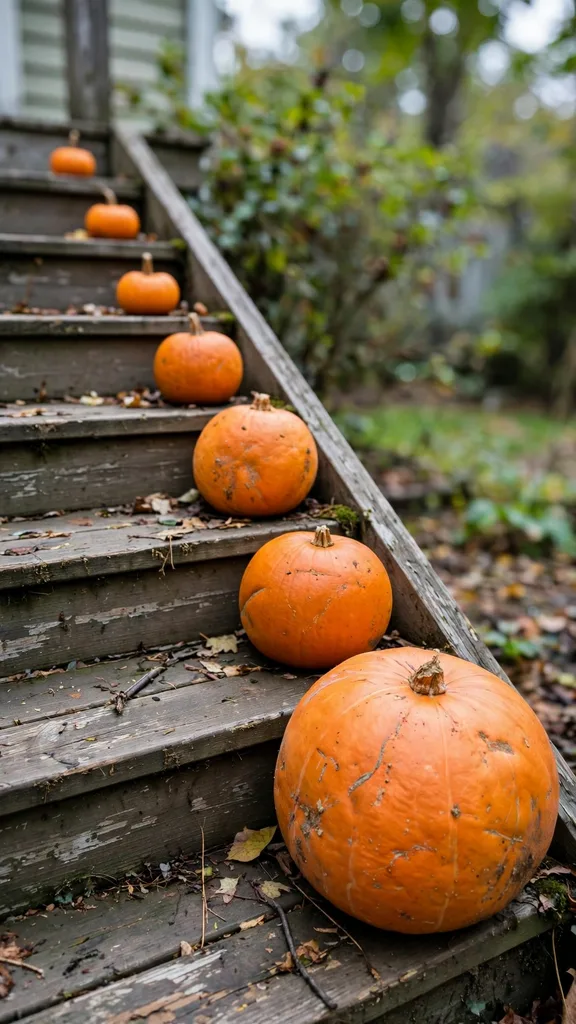
19. Symmetrical Pillars on Both Sides of the Door
Symmetrical pillars give a formal entry, because matched stacks on both sides of the door balance the facade and lead the eye straight to the door. Build one stack of three pumpkins on each side, match the heights within 5 centimetres (2 inches), and set a potted evergreen at the foot of each pillar to ground the tower.
Measure both pillars from the same tread height, because steps that look level can differ by 2.5 centimetres (1 inch) and tilt a pillar. A pillar pair suits a porch with a centred door and a flat landing, and it photographs well from the street because the symmetry holds from a distance.
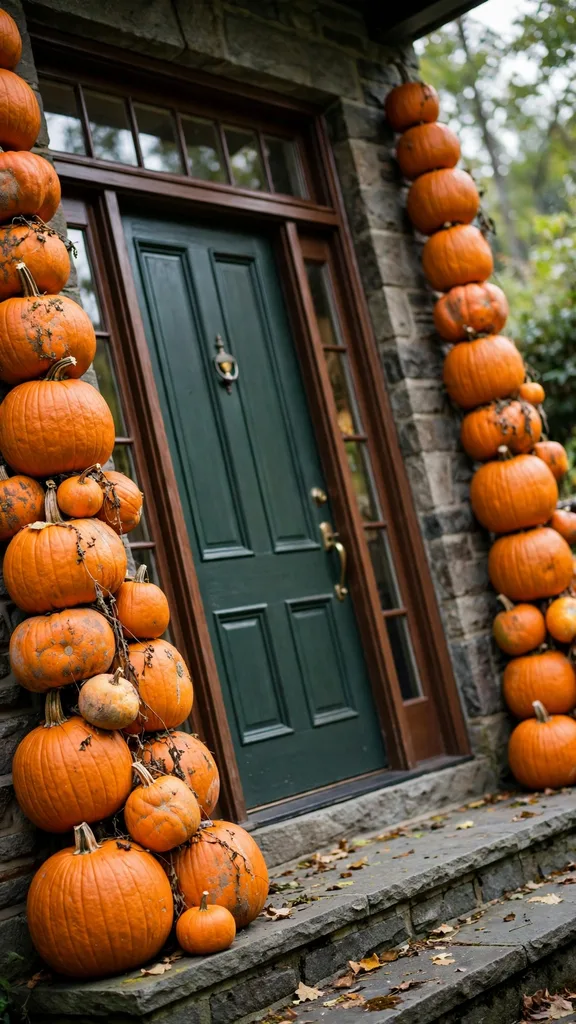
20. Asymmetrical Cluster on Wide Steps
An asymmetrical cluster suits a wide porch, because it lets the display spread naturally instead of forcing a formal pair onto steps that were built for a looser look. Group five to seven pumpkins of mixed sizes on the wider side of the steps, leave the other side open for walking, and let one tall gourd lean at the back of the group for height.
Anchor the cluster with the largest pumpkin at the back corner, and place the smallest pumpkins at the front edge where guests see them first. An asymmetrical cluster needs a visual stop at its outer edge, so end the group with a basket or a potted plant rather than a lone pumpkin at the walkway line.
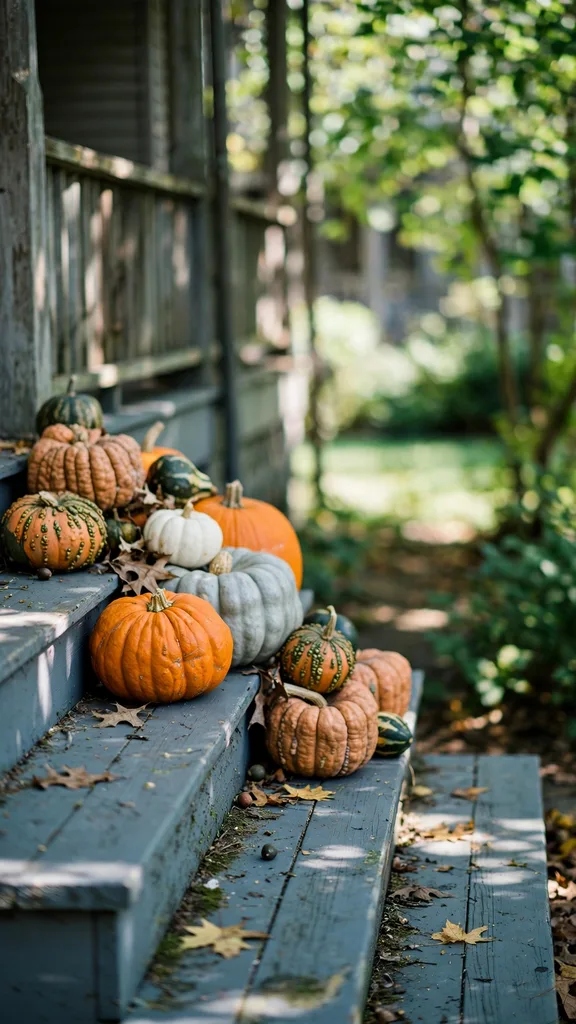
21. Railing Line of Mini Pumpkins
A railing line of mini pumpkins draws the eye along the porch, because a repeated small shape turns a plain rail into a seasonal border. Set one mini pumpkin every 30 centimetres (12 inches) along the top rail, alternate orange and white for rhythm, and fix each pumpkin with a small ring of museum putty so wind cannot roll it off.
Keep mini pumpkins off the handrail grip zone, because guests need a clear handhold on the rail in wet weather. A railing line suits a porch with a flat top rail at least 10 centimetres (4 inches) wide, and it pairs well with a plain stack at the door that carries the main focal point.
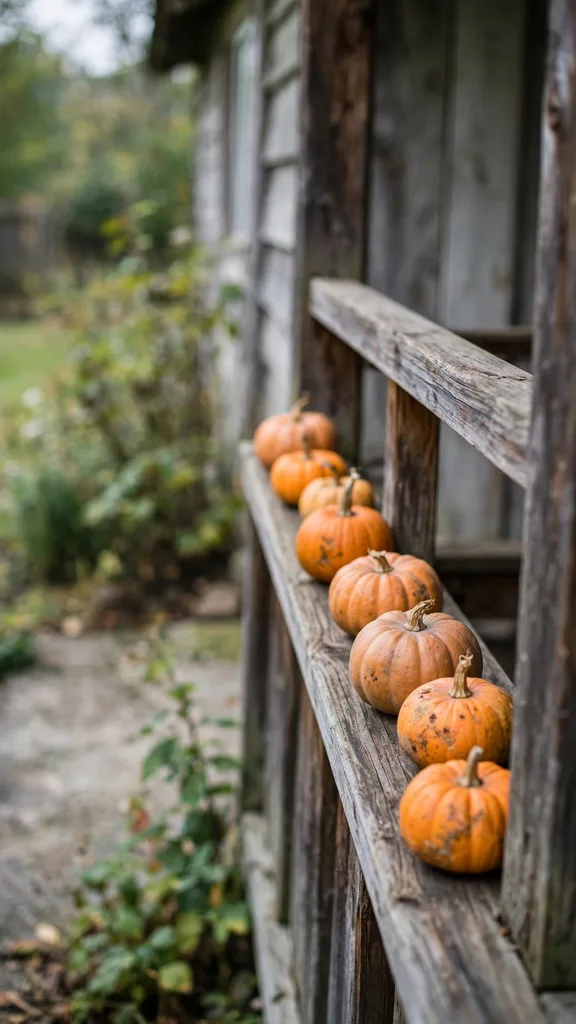
22. Walkway Pumpkins Leading to the Porch
Walkway pumpkins guide guests to the porch, because a line of pumpkins along the path turns an ordinary approach into a welcome route. Place pumpkins in pairs at 90 centimetre (36 inch) intervals along the walk edges, alternate sizes within each pair, and keep every pumpkin 15 centimetres (6 inches) back from the path edge so feet and wheels pass clear.
For yard-wide context beyond the walkway, see [Thanksgiving Yard Decorations: 21 Outdoor Ideas](https://growit.wiki/thanksgiving-yard-decorations/. Walkway pumpkins need a weekly check after mowing and leaf clearing, because a pumpkin nudged onto the path becomes a trip hazard in low light.
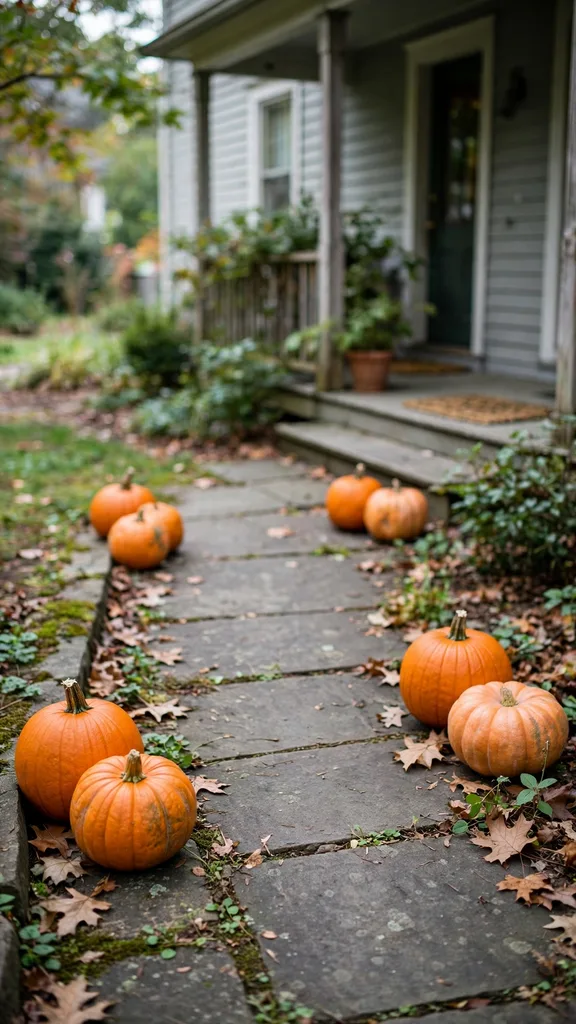
23. Porch Swing Corner Display
A porch swing corner display softens a seating area, because pumpkins at the swing end feel like part of the furniture group rather than a separate decoration. Set a low stack of two pumpkins beside the swing chain post, add a basket of gourds at the swing foot, and leave the swing arc fully clear so the seat moves without hitting the display.
Measure the swing arc before placing anything, and keep pumpkins 30 centimetres (12 inches) outside the arc line. A swing corner display suits a deep porch where the swing hangs under a roof, and it reads best in the evening when the swing area carries a lantern glow.
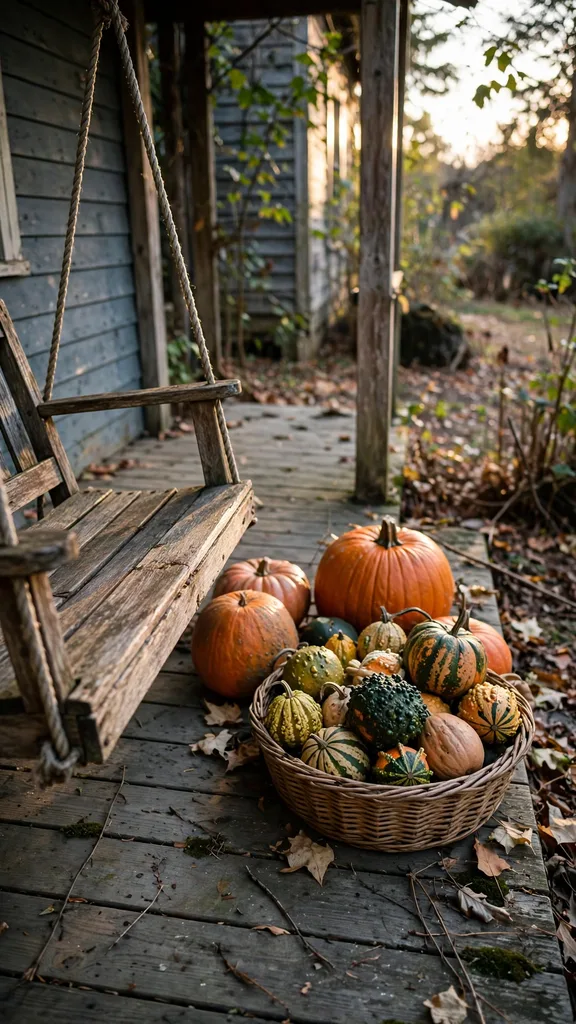
24. Doormat Frame of Pumpkins
A doormat frame of pumpkins marks the threshold, because two small stacks beside the mat tell guests where to step and where to wipe their feet. Place one mini stack on each side of the mat, keep the stacks clear of the mat edge by 10 centimetres (4 inches), and choose flat-bottomed pumpkins that cannot roll onto the mat.
Keep the mat itself fully clear, because a pumpkin on a mat edge lifts the mat and creates a trip lip. A doormat frame suits a porch with a landing at least 120 centimetres (47 inches) wide, where the frame fits without narrowing the door approach.
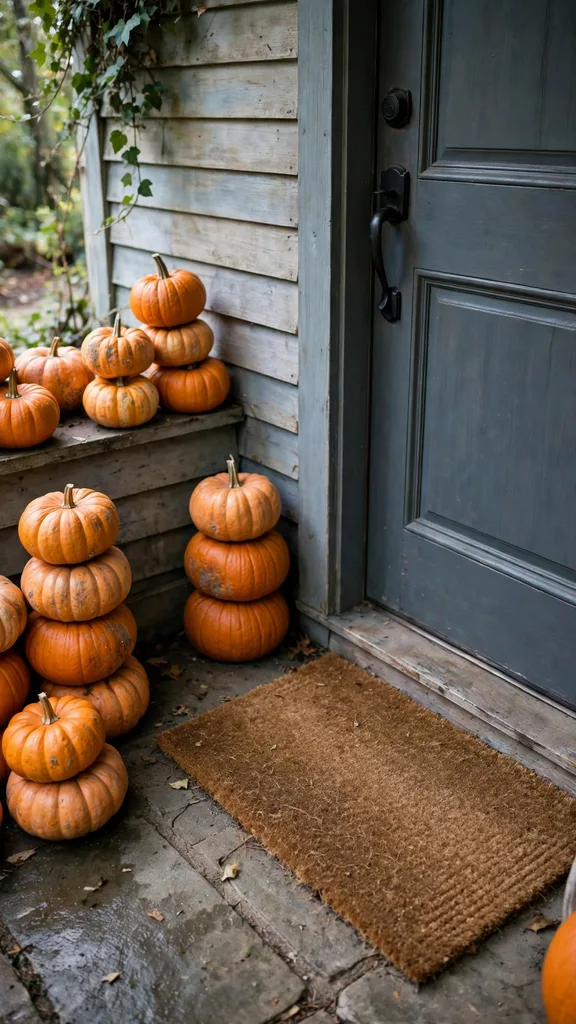
25. Lantern and Pumpkin Step Pairing
Lanterns and pumpkins pair well on steps, because the lantern gives evening light and the pumpkin gives daytime colour, so the display works in both halves of the day. Set one lantern and one medium pumpkin on alternating treads, keep the lantern flame or bulb clear of dry leaves, and use battery candles inside lanterns placed near pumpkins.
Space each lantern at least 15 centimetres (6 inches) from its pumpkin, because heat from a real flame dries pumpkin skin and shortens display life. A lantern pairing suits a porch used after dark, and it gives guests a lit path to the door on Thanksgiving evening.
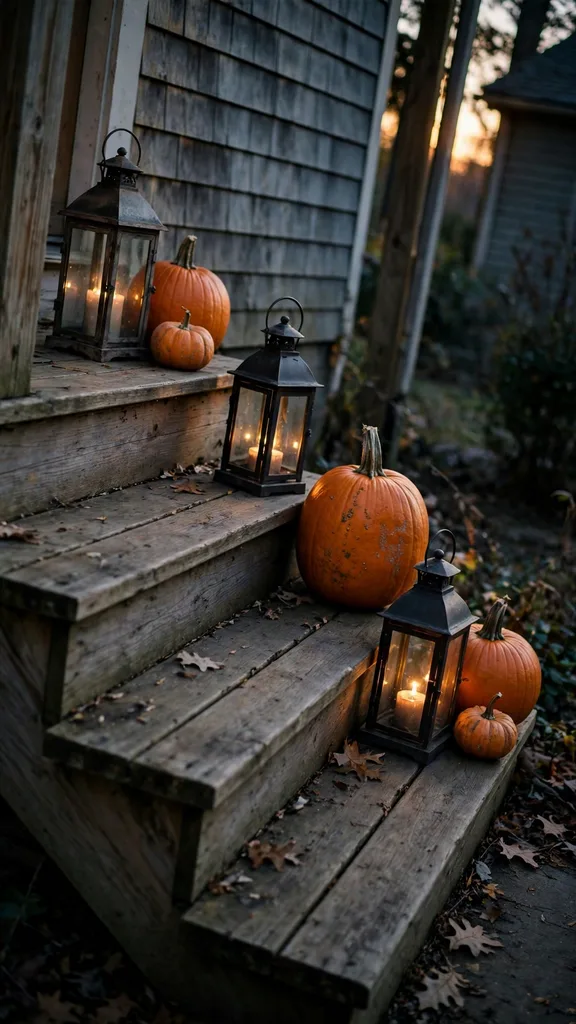
26. Lantern Light on a Stacked Entry
A stacked entry lit by lanterns reads as a finished display at night, because light from below shows pumpkin ribs and colour that flat daylight can wash out. Place two lanterns at the feet of a door stack, aim the light upward across the pumpkins, and keep the lanterns on stone tiles so heat never touches wood treads.
Use warm white battery lights for lanterns near pumpkins, and test the light level from the street before guests arrive. A lit stack suits a porch with no bright overhead light, because a single overhead bulb flattens the display while low lantern light shapes it.
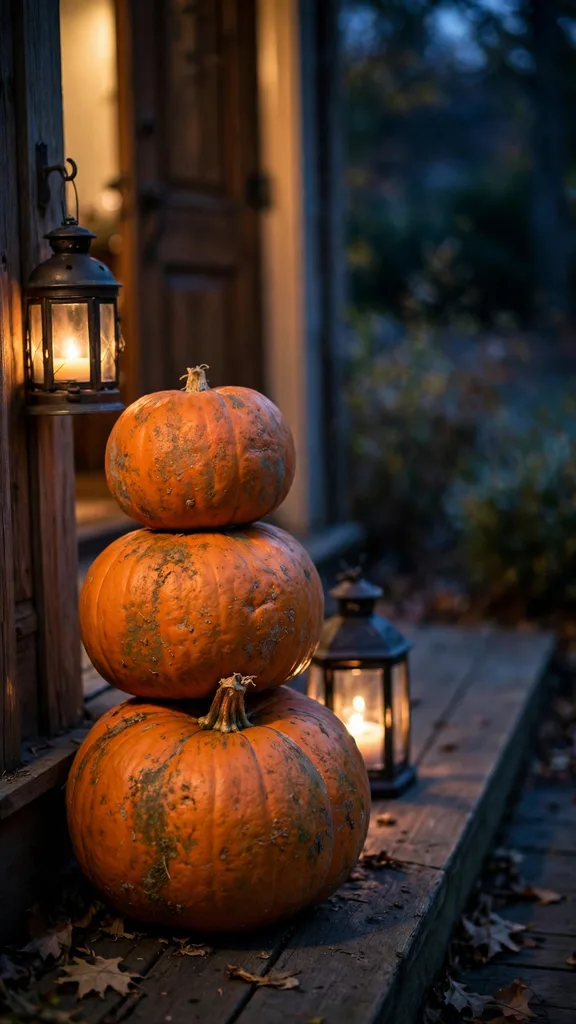
27. Mums Beside the Stacks
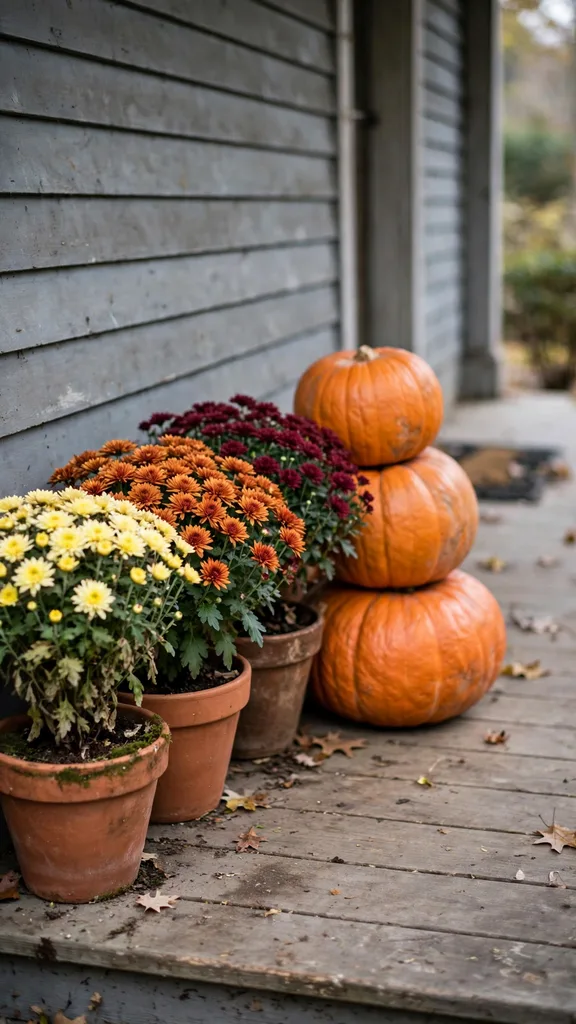
Mums beside pumpkin stacks give the display living colour at ground level, because the round mum shape echoes the round pumpkin shape while the flowers add a finer texture. Place one potted mum at the foot of each stack, choose bloom colours that contrast with the pumpkin skins, and keep the mum pot on a saucer so watering never floods the step.
Treat mums as display companions here rather than a care project, and give each mum the same pot size so the display stays balanced. A mum beside a stack suits a porch with morning sun, where blooms open fully and hold colour through the display weeks.
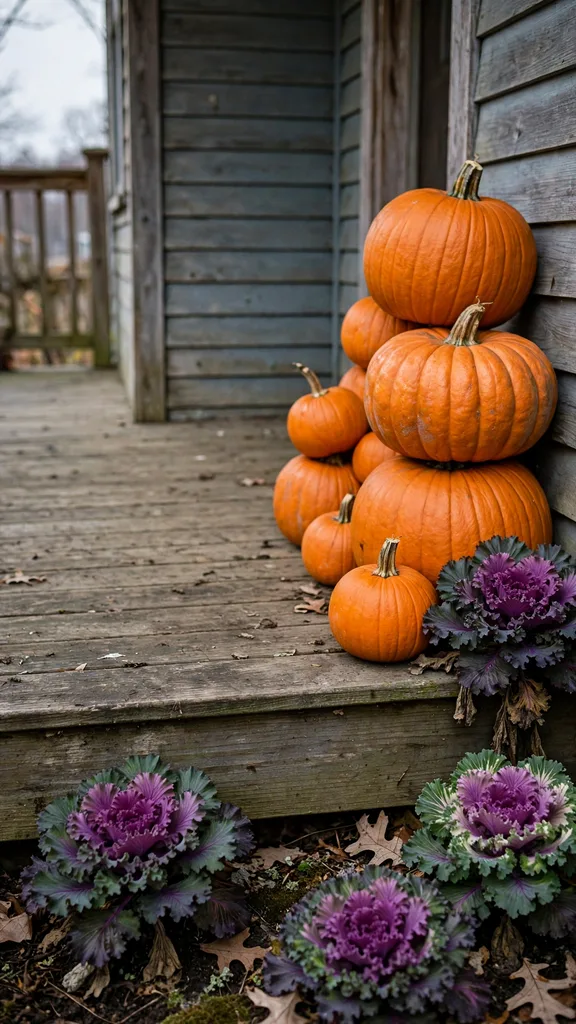
28. Ornamental Kale and Cabbage at Stack Feet
Ornamental kale and cabbage give a pumpkin display cool-weather colour, because their ruffled leaves hold form after mums fade and their purple and cream centres echo heirloom pumpkin tones. Set one kale plant at the foot of each stack in its own pot, and keep the kale pot low so the leaves read as a skirt around the pumpkin base.
Kale and cabbage suit a late-season porch, because they tolerate light frost that ends mum bloom. A kale skirt also hides the gap between a round pumpkin base and a square tread, which tidies the whole display without extra props.
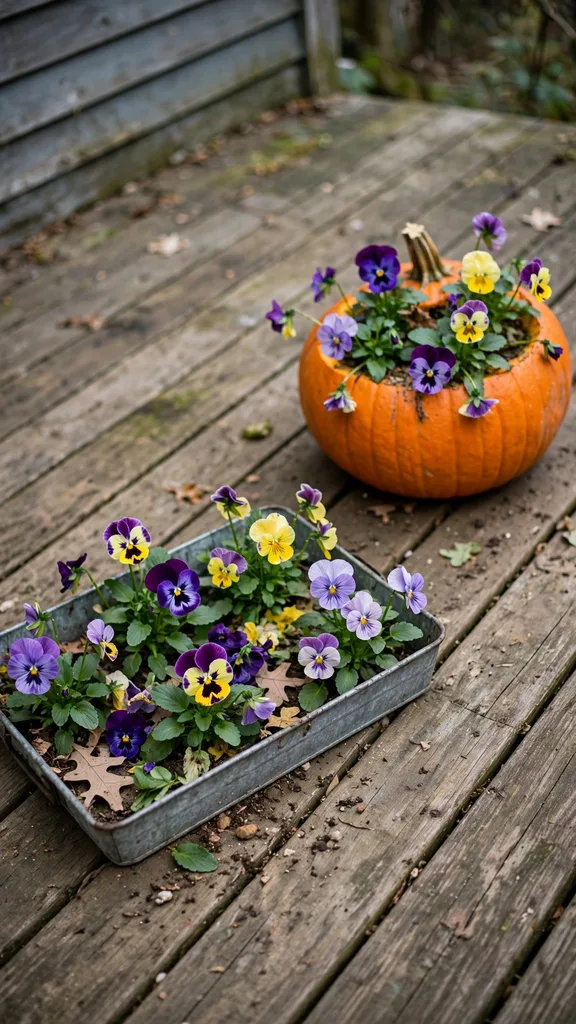
29. Pansies at the Feet of a Vessel
Pansies at the feet of a pumpkin vessel add a low flower border, because their small faces fill the gap between vessel and step that a tall display leaves bare. Plant pansies in a shallow tray set in front of the vessel, choose colours that pick up the pumpkin skin tone, and keep the tray clear of the walking line.
Pansies suit a cool porch, because they bloom through light frost and keep colour when summer flowers fail. A pansy border needs a tray with drainage, since standing water in a shallow tray rots pansy roots within days.
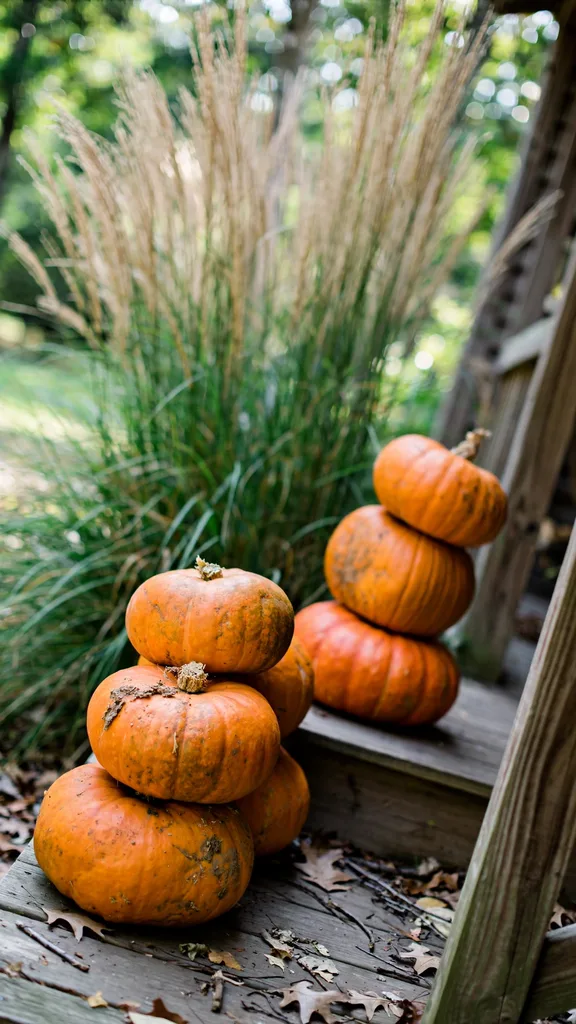
30. Ornamental Grasses Behind the Stacks
Ornamental grasses give a pumpkin display height without weight, because tall plumes rise behind the stack and move in wind that would topple a taller pumpkin tower. Place one grass pot behind each stack, choose a grass near 90 centimetres (36 inches) tall, and let the plumes lean slightly over the stack top for a layered silhouette in soft light.
Anchor grass pots with stones, because a tall grass pot catches wind like a sail. Grasses suit an open porch where a stack alone would look squat against a tall facade, and they carry the display into winter after pumpkins come down.
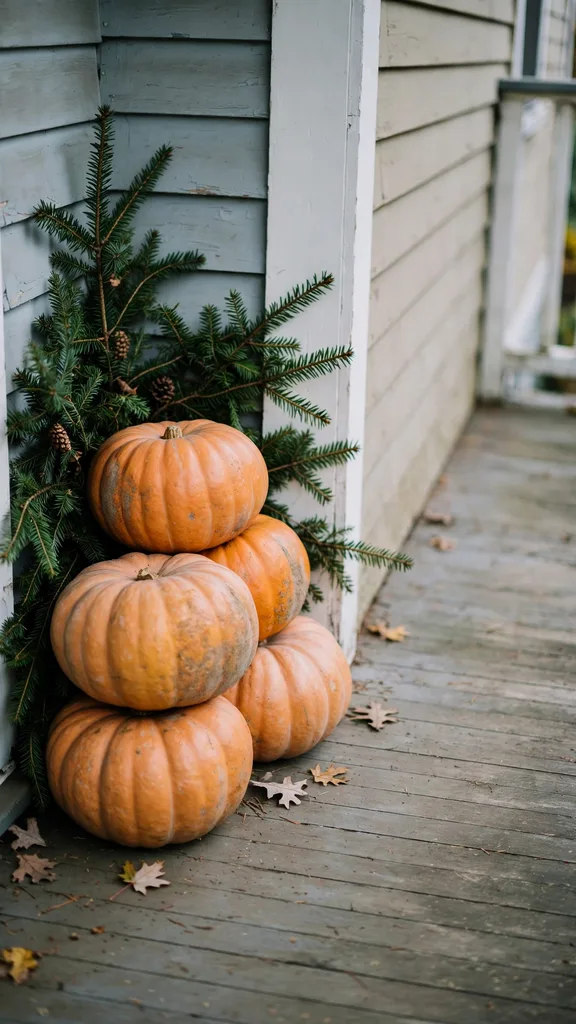
31. Evergreen Branches for the Late Season
Evergreen branches carry a pumpkin display into late November, because fir and pine stay green after deciduous companions drop leaves and fade. Tuck short evergreen branches behind the stacks, lean one tall branch at each end of the display, and replace any branch that sheds needles heavily.
Evergreen branches suit a porch that must stay dressed from early October to Thanksgiving, because they bridge the gap between pumpkin season and winter greenery. Keep branches clear of lantern flames and door lights, since dry evergreen foliage catches fire fast.
32. Dried Corn Stalks Behind the Stacks
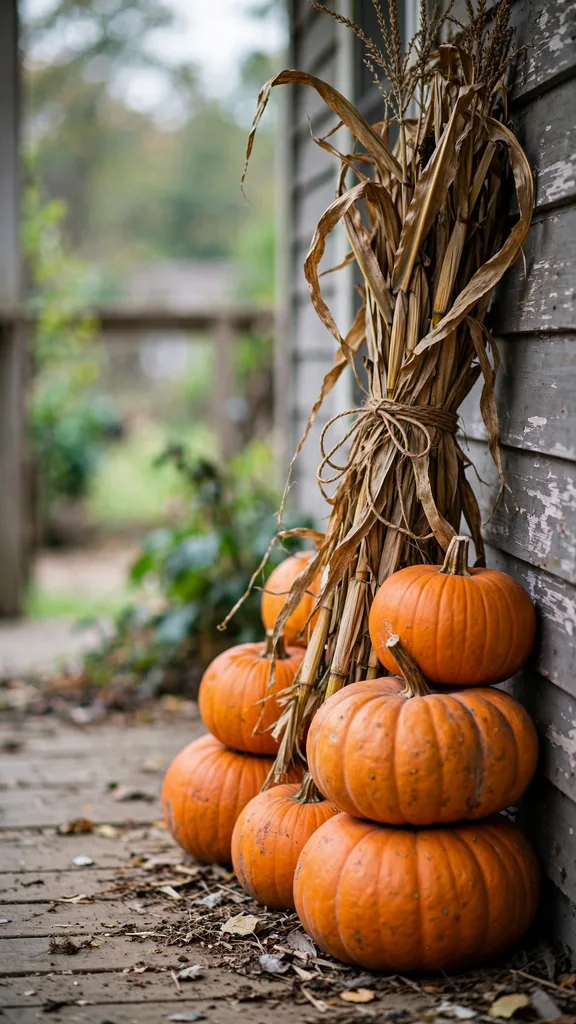
Dried corn stalks give a pumpkin display a harvest backdrop, because their height frames the stack and their dry gold colour warms the whole porch. Tie three stalks into a bundle, stand the bundle behind the stack against the wall, and fix the bundle top to a hook so wind cannot drop it across the steps.
Keep corn stalk bundles clear of the door swing and the walking line, because a fallen bundle across a tread trips guests. A corn stalk backdrop suits a tall porch wall, where the stalks fill vertical space that pumpkins alone cannot reach.
33. Hay Bale Plinth Under a Stack
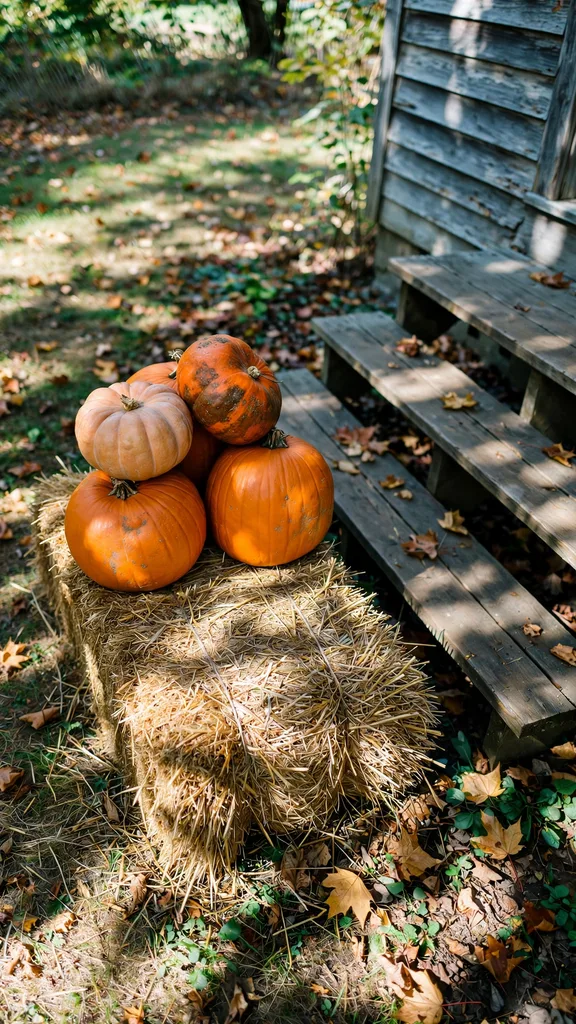
A hay bale plinth lifts a pumpkin stack to eye level, because the bale acts as a low table that raises the display above step clutter. Set one bale flat on the ground beside the steps, stack two pumpkins on top, and place a tray under the bale to catch loose straw before it spreads across the porch floor.
Keep a hay bale plinth clear of open flames and lantern heat, because dry straw ignites fast. A bale plinth suits a wide ground-level porch, where the bale footprint of 90 by 45 centimetres (36 by 18 inches) fits without blocking the walkway.
34. Woven Basket of Gourds at the Door
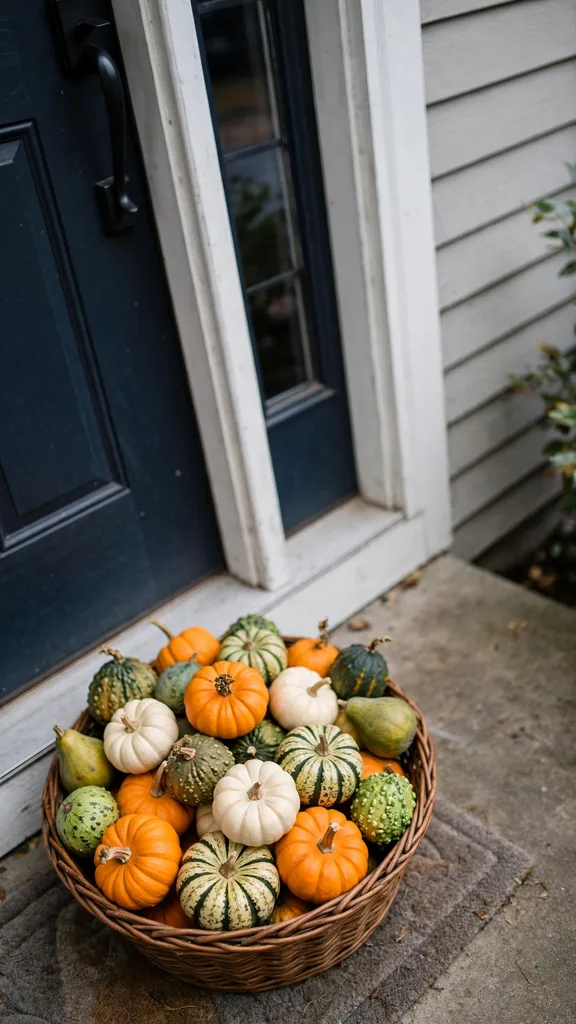
A woven basket of gourds at the door gives guests a close-up display, because small gourds in a basket invite a nearer look than a tall stack viewed from the street. Fill a low basket with mini pumpkins and striped gourds, set the basket beside the door at the top step, and turn the most patterned gourd toward the walkway.
Keep the basket weight under 5 kilograms (11 pounds) so it can move indoors fast before a storm. A gourd basket suits a small porch that cannot hold a cascade, because it packs a full harvest look into one portable object.
35. Orange and Cream Classic Palette
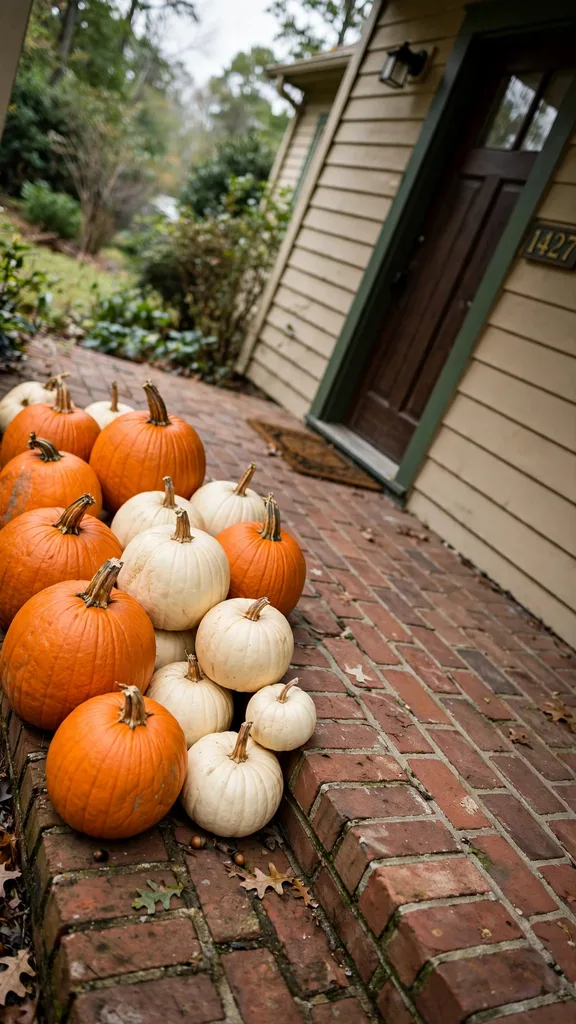
Orange and cream is the classic porch palette, because orange pumpkins carry the harvest signal and cream pumpkins soften it so the display reads warm rather than loud. Mix two orange pumpkins with one cream pumpkin in each group, repeat that ratio across the porch, and let the door colour stay the darkest tone in the whole display.
Repeat the same ratio on steps, bench, and walkway groups, because a palette holds only when it repeats. A classic palette suits a brick porch, where orange pumpkins echo brick tones and cream pumpkins keep the display from blending into the wall.
36. All White Porch Palette
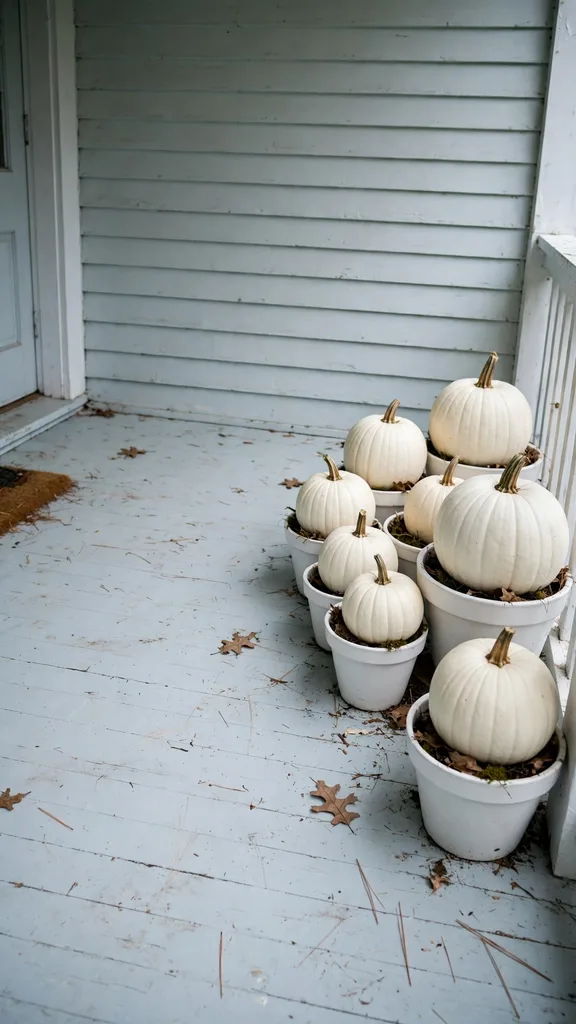
An all-white porch palette suits a light-painted house, because white pumpkins, white pots, and cream gourds read as one quiet display against pale siding. Group white pumpkins of three sizes, add white mums or white kale at the feet, and let one dark element, such as a black lantern, anchor the group so the white does not wash out in bright sun.
Wash white pumpkins before display and check them after rain, because soil splash shows fast on pale skins. An all-white palette needs shade in strong sun, since white skins glare in direct light and flatten the display in photographs.
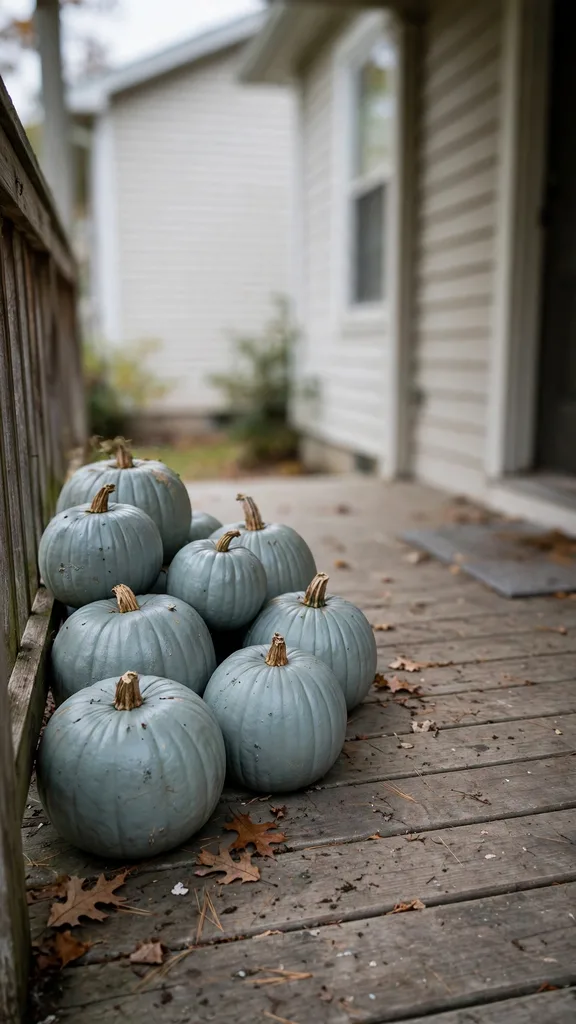
37. Green and Sage Heirloom Palette
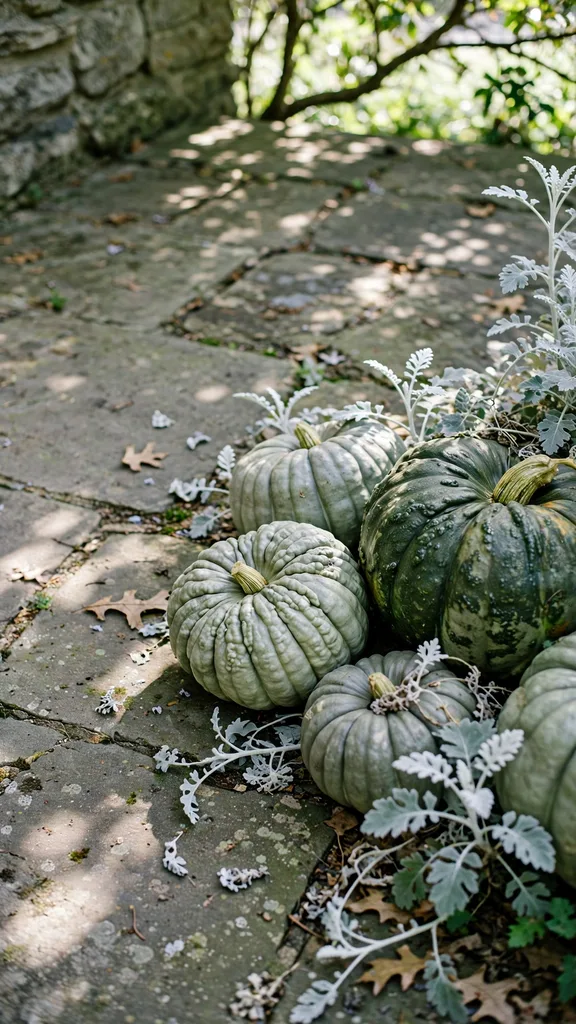
Green and sage heirloom pumpkins suit a porch with natural wood and stone, because their muted skins blend with garden tones instead of shouting harvest colour. Group sage green pumpkins with one deep green squash, add silver dusty miller at the feet, and keep orange accents out of the group so the quiet palette holds.
Green pumpkins need full light to read as green, because in deep shade they photograph grey and lose their character. A green palette suits a shaded porch with stone steps, where muted tones look intentional rather than faded.
38. Rust and Burgundy Palette
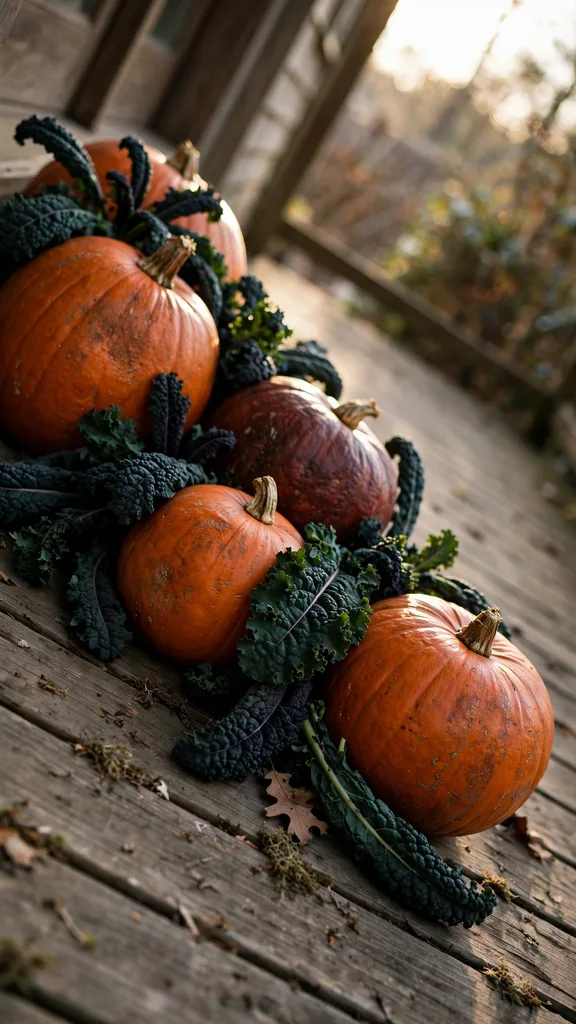
Rust and burgundy pumpkins suit a late-season porch, because their deep tones match turning leaves and brickwork as October moves toward Thanksgiving. Group rust pumpkins with burgundy mums or dark kale, add one cream pumpkin per group for a light break, and keep the darkest pumpkin at the back so the group reads deep rather than flat.
A rust palette needs a light break in every group, because without cream the display turns muddy in low light. This palette suits a porch with warm wood tones, where rust echoes the wood and burgundy adds a richer note.
39. Painted Pumpkins for a Custom Palette
Painted pumpkins let a porch match a house colour exactly, because paint covers any skin tone with the chosen palette in two coats. Choose smooth-skinned pumpkins, paint them in the house trim colour or a chosen accent colour, and seal the paint with a clear outdoor coat so rain does not lift it in the first week.
Paint only pumpkins meant for display, and never paint a pumpkin meant for cooking, because paint seals the skin and hides decay signs. A painted group suits a porch with a strong house colour, where natural orange would clash with the trim.
40. Natural Wood and Metal Materials
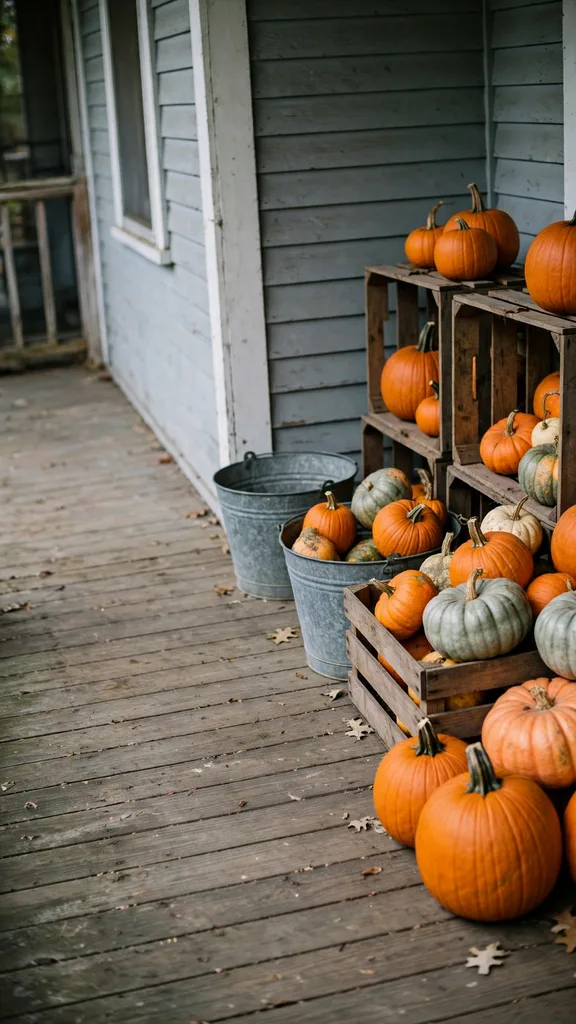
Natural wood and metal materials frame pumpkins without competing with them, because crates, buckets, and stone slabs read as garden objects rather than decorations. Pair wooden crates with galvanized buckets across the porch, repeat one metal and one wood in each group, and let pumpkin colour carry the seasonal signal alone.
Keep wood bases dry between rains, and wipe metal buckets after rain so rust streaks do not stain steps. A wood and metal frame suits a porch that already carries wooden furniture, because the display materials then match the porch rather than fighting it.
41. Choose a Hard Rind and a Dry Stem
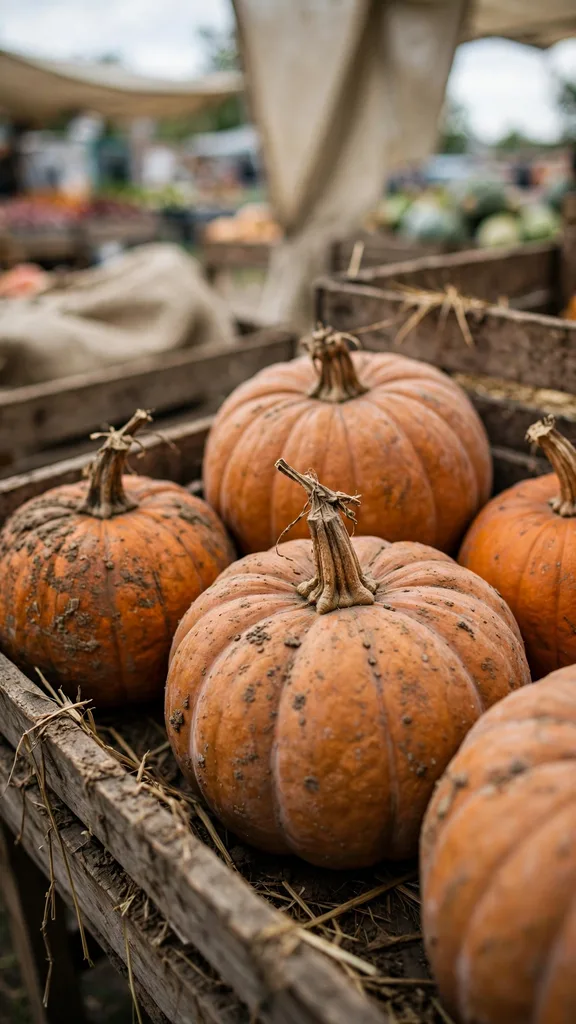
A display pumpkin lasts longest when its rind resists a fingernail press and its stem feels hard and dry, because a hard rind blocks decay entry and a dry stem seals the fruit. Pick pumpkins with stems 2.5 to 7.5 centimetres (1 to 3 inches) long, reject any pumpkin with a soft spot or a cut in the rind, and carry each pumpkin cradled like a ball rather than lifted by its stem.
[University of Illinois Extension](https://extension.illinois.edu/blogs/live-well-eat-well/2022-10-14-preserve-your-pumpkins-fall-following-these-simple-tips) notes that pumpkins are generally unharmed by a light frost when daytime temperatures stay warm, yet growers should harvest before temperatures drop below freezing to prevent chilling injury, and that whole unblemished pumpkins store best in a cool dark place at 10 to 15.5 degrees Celsius (50 to 60 degrees Fahrenheit).
42. Shelter From Rain and Hard Frost
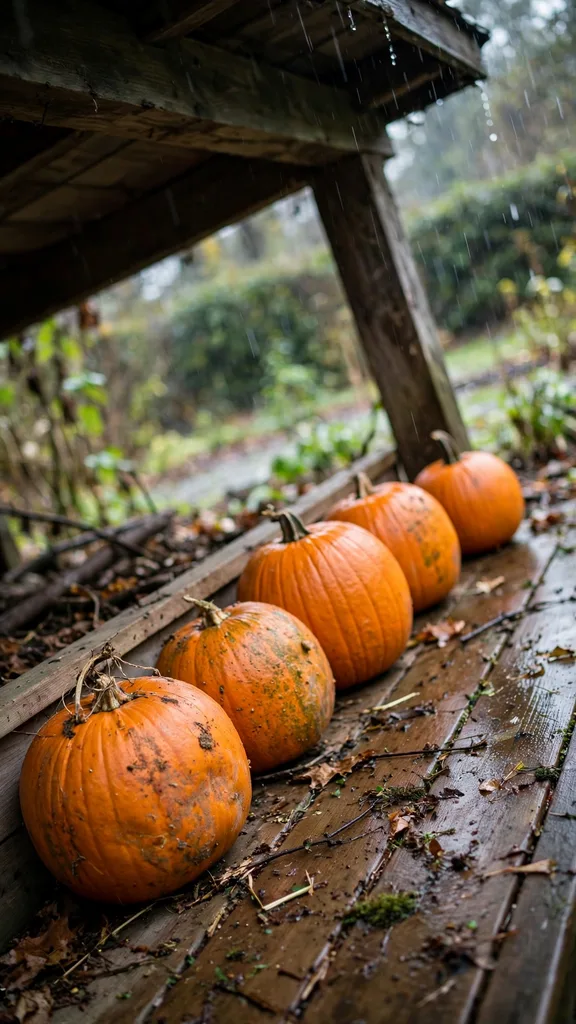
Shelter decides display life more than variety, because rain softens skins and a hard frost breaks cell walls in pumpkin flesh. Place display pumpkins under a roof edge or a porch cover, move them indoors on nights when frost is forecast, and return them at dawn so the display never sits empty through a guest visit.
[University of Vermont Extension](https://www.uvm.edu/extension/news/pumpkin-and-squash-harvest-and-storage) notes that pumpkins benefit from a curing stage of 5 to 10 days in a ventilated spot above 15.5 degrees Celsius (60 degrees Fahrenheit), that storage suits a consistent 10 to 12.8 degrees Celsius (50 to 55 degrees Fahrenheit) with humidity at 50 to 70 percent, and that pumpkins kept dry and protected from freezing may remain in good condition for 2 to 3 months.
43. Weight, Wind, and Safe Steps
A safe porch display never blocks a step edge, a handrail grip, or a door swing, because guests carry parcels and children run ahead on Thanksgiving. Keep the walking channel clear at 60 centimetres (24 inches) wide, weigh down light displays with stones inside pots, and test every stack with a firm nudge from the side before guests arrive.
Place the heaviest pumpkin at the lowest point of every stack, and never stack above 90 centimetres (36 inches) on an open step without a wall or rail behind it for wind shelter. A display that survives a firm nudge survives a windy night, and a display that rocks needs a wider base before it needs more pumpkins.
44. Faux Versus Real for Exposed Porches
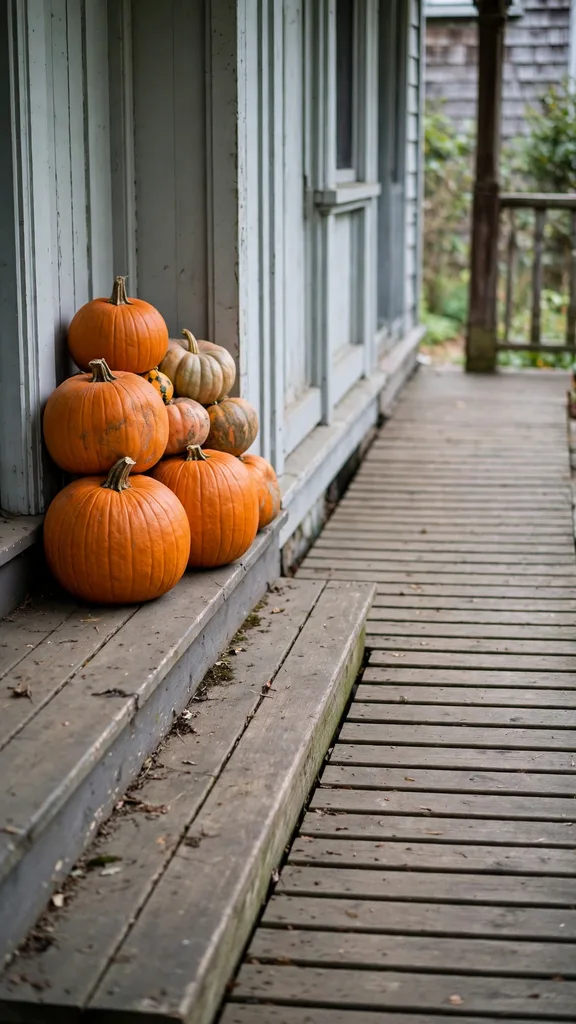
Faux pumpkins suit an exposed porch that takes full wind and rain, because they hold colour and shape through weather that softens real pumpkins in days. Real pumpkins suit a covered porch where guests can smell the harvest and touch real skins, and a mixed display can use real pumpkins at the door and faux pumpkins at the windward corner.
Judge the mix from the street, because a faux pumpkin with a plastic shine betrays the display beside a real pumpkin with matte skin. A mixed display works when faux pieces sit at the back or in low light, and real pieces sit at the front where guests look closely.
45. Whole Porch at Dusk: The Finished Display
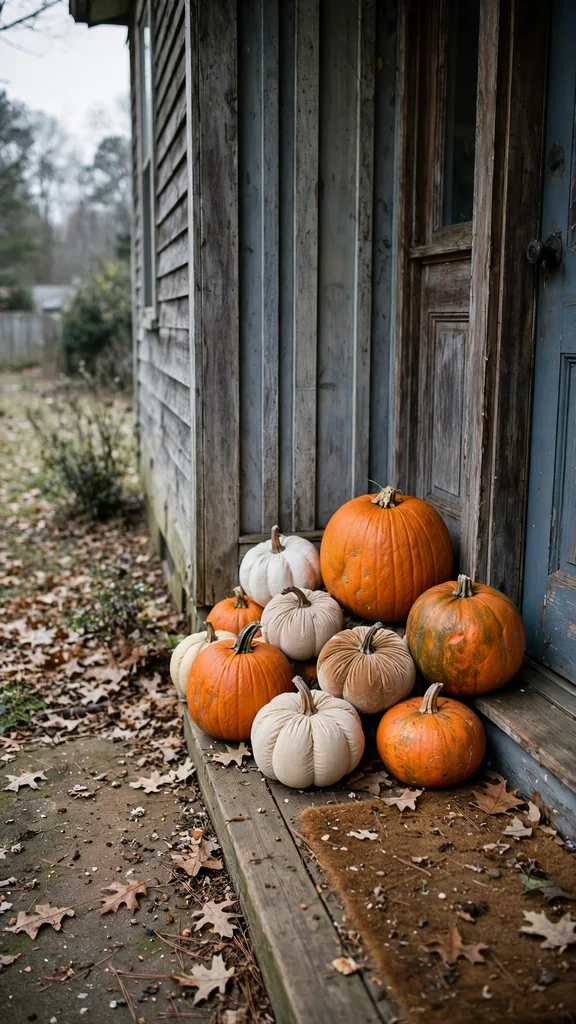
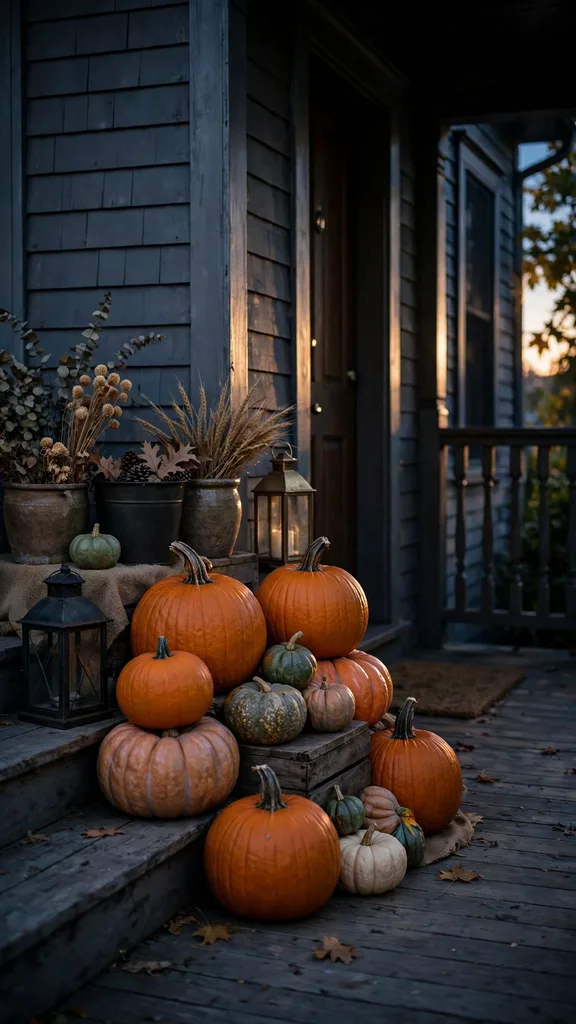
The finished display at dusk is the proof of the whole porch, because lantern light, stack shapes, and companion plants read together only when the day light fades and the porch light takes over. Stand at the walkway at dusk, check that every stack reads as one shape, that no stack blocks the door, and that the walking channel stays clear in lantern light.
Photograph the display from the walkway at dusk before Thanksgiving, and use that photograph as the checklist for the holiday itself, because a dusk check catches a leaning stack and a dark corner that daylight hides. A porch that passes its dusk check welcomes guests with a display that looks planned from the street to the door.
| Porch Type | Start With | Companion | Watch For |
|---|---|---|---|
| Small stoop | Mini pumpkin stack | Pansies in a tray | Door swing clearance |
| Wide steps | Staircase cascade | Ornamental grasses | Clear walking channel |
| Covered porch | Pumpkin vessel pair | Mums in pots | Damp ring under vessels |
| Open and windy entry | Faux pumpkin planter | Evergreen branches | Light pieces blowing away |
| Shaded entry | Green heirloom palette | Ornamental kale | Pumpkins reading grey in shade |
| Sunny entry | White pumpkin tower | Cream gourds | Soil splash on pale skins |
Frequently Asked Questions
How many pumpkins does a porch stack need?
A classic door stack needs three pumpkins in descending size, with a wide flat base, a medium middle, and a small top. A small stoop stack needs three mini pumpkins instead, and a wide step cascade needs five to seven pumpkins spread across treads. Start with three, step back to the walkway, and add pieces only where the display looks thin.
How long do real pumpkins last on a porch?
Uncarved pumpkins kept dry and protected from freezing may remain in good condition for several weeks or even months, and storage guidance puts sound pumpkins at 2 to 3 months in cool conditions. A carved pumpkin lasts days rather than weeks, and a pumpkin on a wet open stoop softens sooner than one under a roof. Check skins weekly and remove any pumpkin that turns soft.
Do pumpkin planters need drainage?
A pumpkin vessel needs a drainage plan, because water trapped in the cavity softens the flesh from inside. Keep the plant in its nursery pot inside the pumpkin, lift the pot out to water it, and let it drain before setting it back. Empty any bucket or tray under the vessel after rain so standing water never sits against the pumpkin base.
Should an exposed porch use real or faux pumpkins?
An exposed porch that takes full wind and rain suits faux pumpkins at the windward corner, because they hold shape through weather that softens real pumpkins fast. A covered porch suits real pumpkins, which carry harvest scent and matte skins guests can touch. A mixed display works when real pieces sit at the front and faux pieces sit at the back.
When should the pumpkin display come down?
Take the display down when pumpkins turn soft, grow mould, or start to collapse, because a decaying pumpkin stains steps and draws pests. In many streets the display runs from early October to Thanksgiving, then evergreen branches take over the same pots and baskets. Compost sound pumpkin flesh and discard any painted or mouldy fruit with household waste.
A porch display built on weight, balance, and shelter welcomes guests from the walkway to the door, and it holds its shape through wind, rain, and Thanksgiving week itself. Start with one stack, add companions where the display looks thin, and let the dusk check decide the final arrangement.