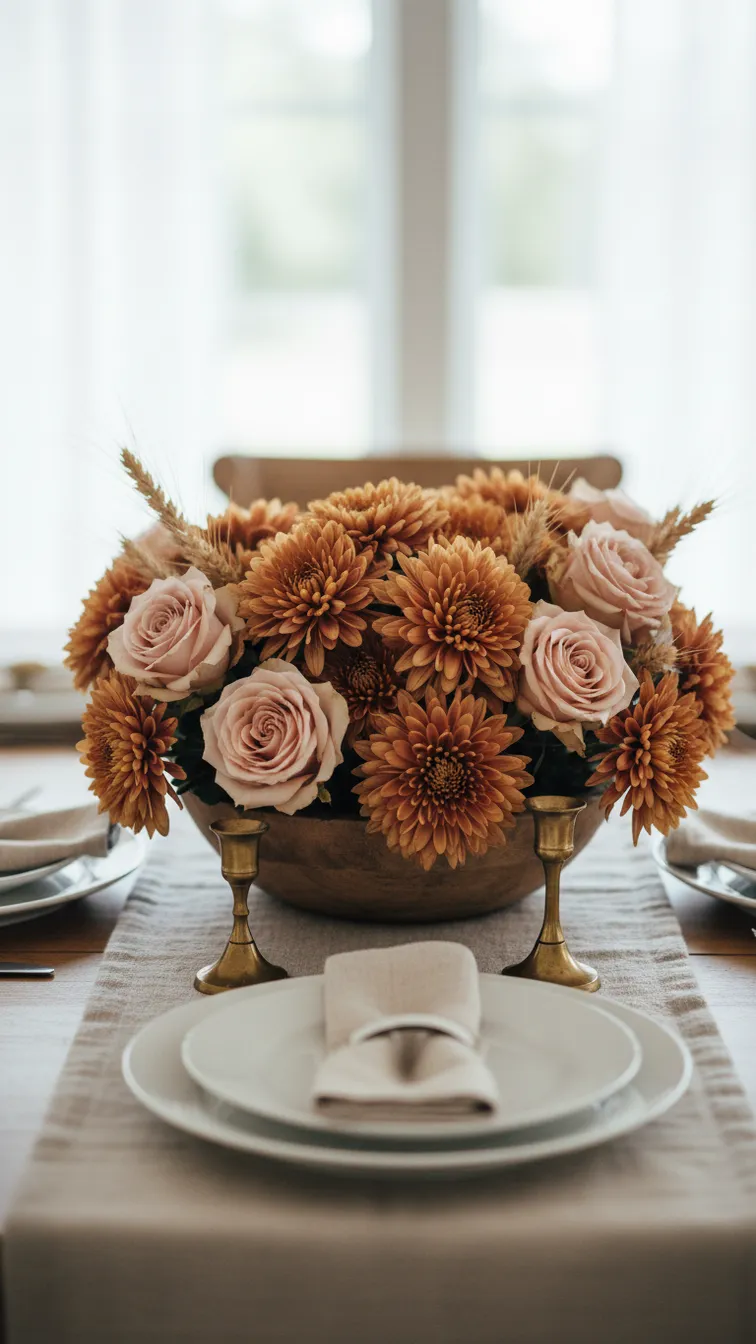

Build the Table Around Flowers, Not Foliage
Thanksgiving floral centerpieces start with the blooms, not the branches. Choose flowers that survive a heated dining room, condition them like a florist, and build low enough for conversation. Twenty-one ideas below take you from the flower market to the compost bin: selection, conditioning, foam-free mechanics, color palettes, and the day-of logistics that keep petals perky through pie.
A floral centerpiece is not a greenery centerpiece. Greenery carries the design on texture and scent. Flowers carry it on color, shape, and scent together, which means the flower choices do more of the work and the mechanics matter more. This page is the flower-first companion to the greenery guide. If your table runs on pine, cedar, and eucalyptus instead of blooms, start with the Thanksgiving centerpieces guide. That one builds with foliage. This one builds with flowers.
| Flower | Vase-Life Tier | Thanksgiving Role |
|---|---|---|
| Chrysanthemums | Longest | The backbone; buy Tuesday, still perfect Thursday |
| Carnations | Longest | Budget filler that outlasts the weekend |
| Craspedia (billy buttons) | Longest, dries well | Texture that survives into December as dried |
| Alstroemeria | Long | Secondary filler; keeps opening new buds |
| Roses | Medium | Scent and softness; condition carefully |
| Sunflowers | Medium | One or two stems for height, never the whole show |
| Dahlias | Shortest | Buy last, arrange day-of, enjoy while it lasts |
Work from the longest tier down when you shop. The longest-lasting flowers get bought first and arranged first. The shortest get bought last and go in the vase hours before guests arrive.
1. Choose Flowers That Survive the Dining Room
The dining room on Thanksgiving is a hostile climate for flowers: the oven has run for hours, the heat is up, and twenty warm bodies raise the temperature further. Delicate sweet peas and ranunculus faint in those conditions. Chrysanthemums, carnations, and alstroemeria shrug it off. Shop for toughness first and beauty second, because a tough flower still looks beautiful on Thursday while a delicate one does not.
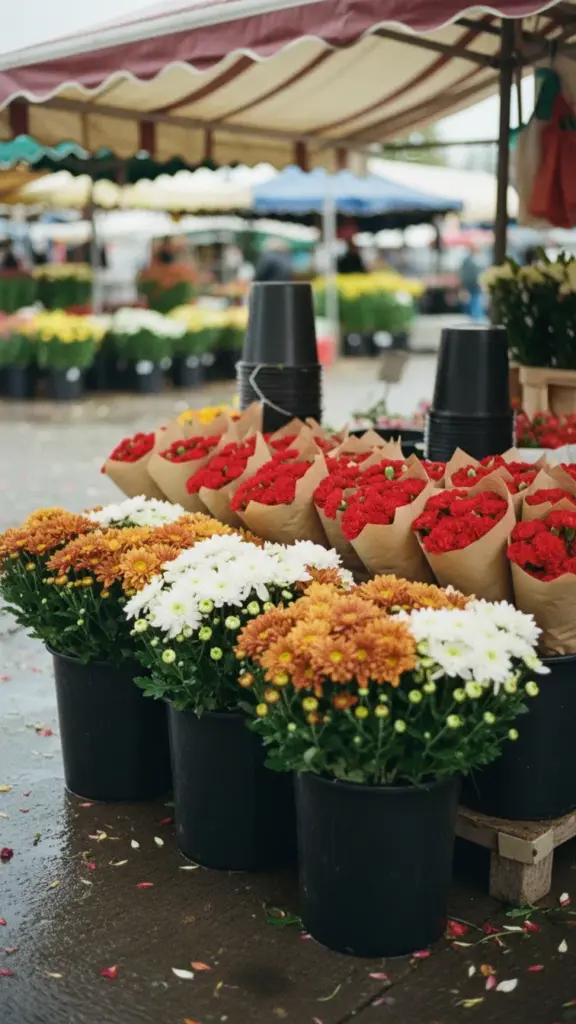
Buy with the room in mind, not the cooler at the store. Flowers look perfect under market misting systems and grocery store refrigeration. Ask yourself how each stem will look after six hours at seventy-five degrees. If the answer is wilted, put it back. The table in the table above sorts the usual Thanksgiving candidates by how long they actually last in a real house.
Touch the blooms before you buy. Petals should feel firm and spring back when pressed gently. Stems should feel stiff, not rubbery. Leaves should look green, not yellowing. A flower that is already tired in the store will not recover in your vase. Fresh stock feels alive in your hand.
2. Buy Flowers Two Days Early, Not the Morning Of
Tuesday is flower day. Buying two days early gives every stem time to drink, open, and settle before it has to perform. Flowers bought Thanksgiving morning go straight from the car into the arrangement with no conditioning time, and they show it by dessert. The Tuesday buy costs nothing extra and buys you the calmest Wednesday of the holiday.
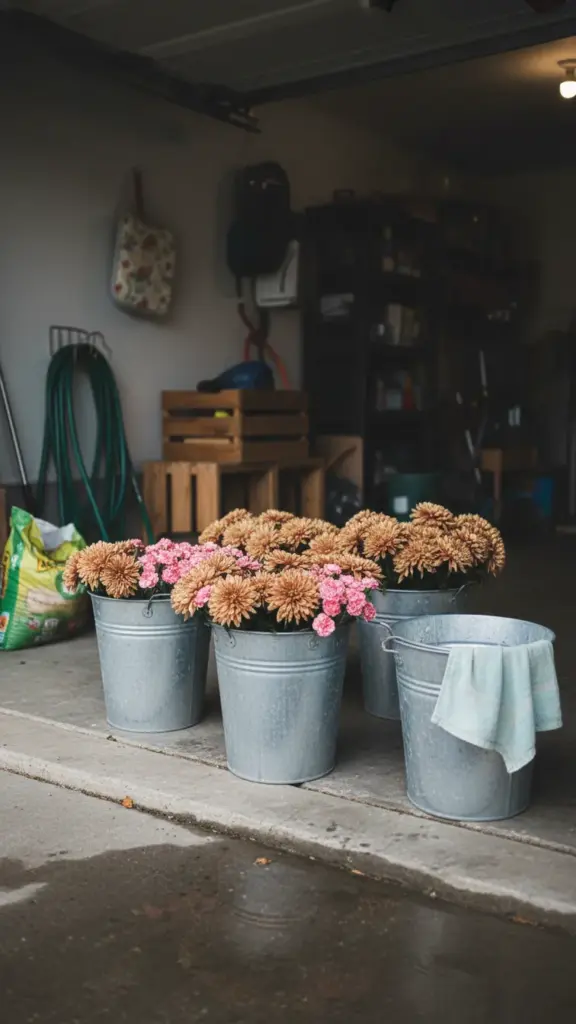
Store the Tuesday flowers cool overnight. A garage, a cool basement, or the vegetable drawer of a spare fridge all work. Keep them in deep water, out of direct sun, away from the fruit bowl. Ripening fruit releases ethylene gas that ages flowers fast, and one apple can wilt a bucket of roses. Cool, dark, and lonely is the recipe.
Wednesday is conditioning day, not arranging day. Recut, strip, and hydrate on Wednesday. Arrange on Wednesday evening or Thursday morning. This rhythm spreads the work across two relaxed days instead of compressing it into one frantic morning. The flowers arrive at the table fully awake. Run the week on this schedule and nothing gets rushed.
| Day | Task | Where |
|---|---|---|
| Tuesday | Buy the longest-lasting flowers | Flower market |
| Tuesday night | Store cool in deep water, away from fruit | Garage or spare fridge |
| Wednesday | Recut, strip leaves, condition in warm water | Kitchen |
| Wednesday evening | Build the tape grid, test vessels for leaks | Dining table |
| Thursday morning | Arrange short-lived blooms, set the table | Dining room |
3. Condition Every Stem the Florist Way
Conditioning is the unglamorous step that separates florist-looking arrangements from sad ones. Strip every leaf that would sit below the waterline. Submerged leaves rot, rot breeds bacteria, and bacteria clogs stems. A clean stem in clean water drinks freely. A leafy stem in cloudy water starves with its feet wet.
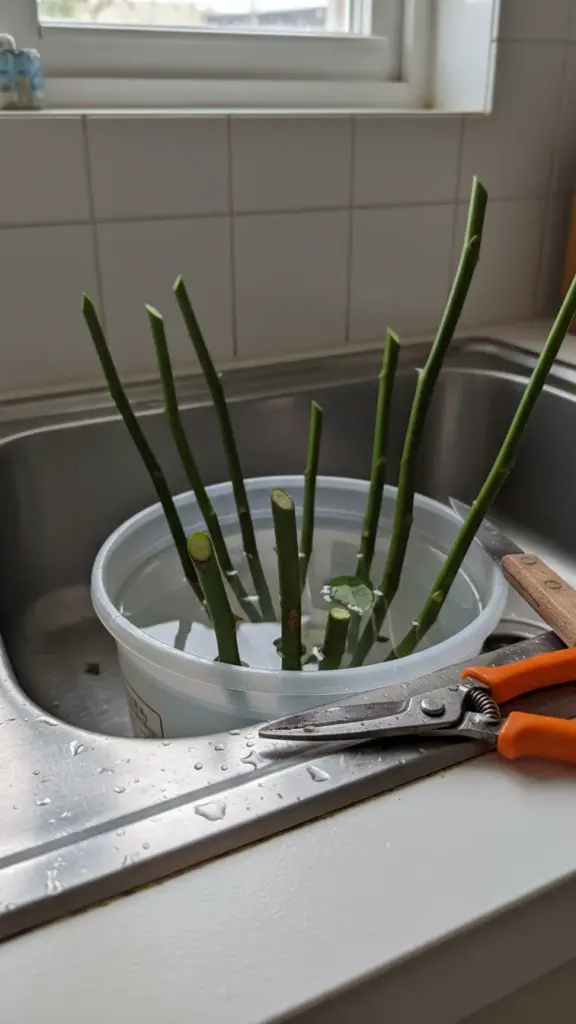
Recut every stem at an angle under water or under a running tap. The University of California’s cut flower guide recommends cutting at least half an inch off the stems under water to expose a fresh surface, because air dries and seals the cut ends within minutes. An angled cut opens more surface for drinking. Their full conditioning method is here: extending the freshness of cut flowers at home.
Stand the recut stems in deep, warm water for several hours before arranging. UC researchers condition in water around 90 to 100 degrees Fahrenheit, then hold the bucket somewhere very cool. Warm water moves up the stem faster; the cool room slows the flower’s metabolism while it drinks. Two hours of conditioning beats two days of wishing.
Use flower food in the conditioning water. The commercial packets do three jobs: sugar feeds the blooms, acid lowers the pH so stems drink faster, and biocide holds bacteria down. Purdue’s educators list preservative as a core step for a reason. One packet per bucket, mixed per the label. Homemade recipes exist, but the packet is calibrated and cheap.
4. Skip the Foam with a Flower Frog and Tape Grid
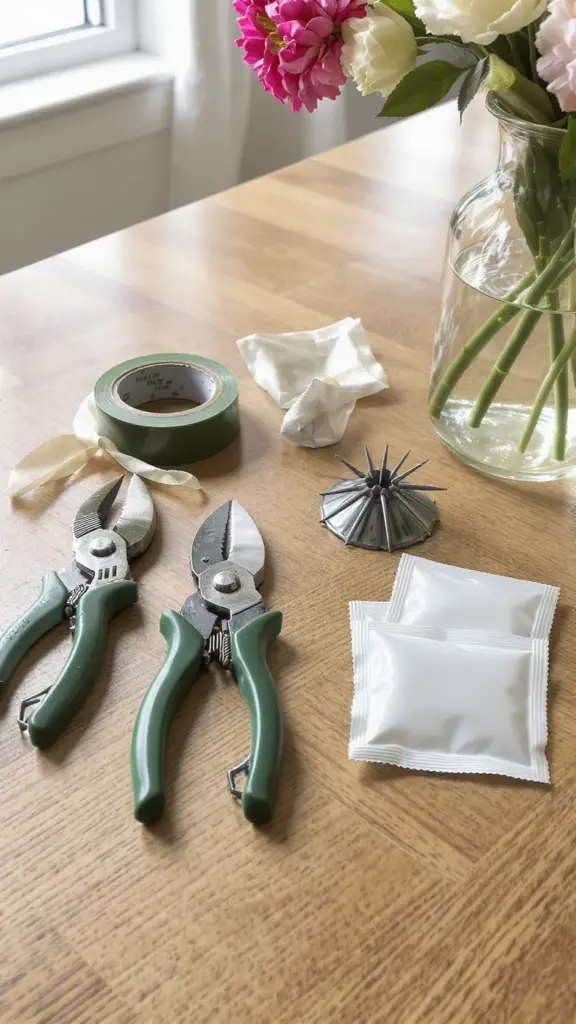
Floral foam is the old way, and it is a bad way. It crumbles into microplastics, it dries out invisibly, and it locks you into one arrangement. A metal flower frog (kenzan) or a simple tape grid does the same job with water all around the stems. Flowers in water outlast flowers in foam every time.
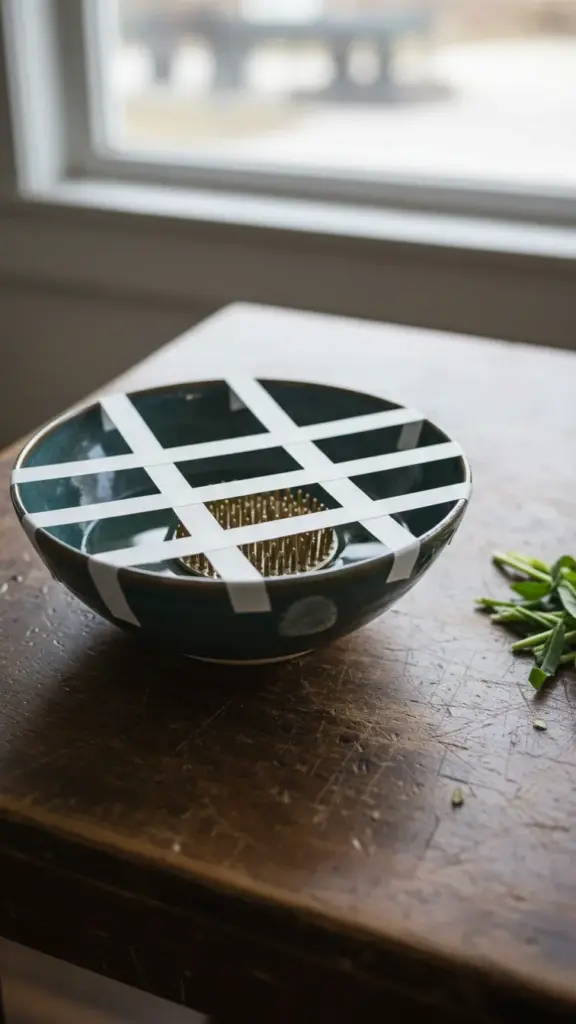
Build the grid before a single flower goes in. For a low bowl, stretch waterproof floral tape across the mouth in a grid, sticky side down, pressing the ends firmly to the rim. For a taller vase, drop in a flower frog and let the pins hold the stems. Test the grid with water in the vessel. If the tape lifts, dry the rim and redo it. A grid that fails mid-arrangement ruins the morning.
Place the vessel where it will live before you arrange. A finished low bowl of water and flowers is heavy and sloshes. Arrange it on the table, not on the counter, then carry regrets. Every professional sets the container in position first. Amateurs arrange, then move, then rebuild.
5. Start with Chrysanthemums: The Workhorse Bloom
If you buy one flower for Thanksgiving, make it the chrysanthemum. Mums come in every autumn color, cost less than roses, and outlast nearly everything else in the vase. They are the reason florists build fall arrangements around them. A dozen mums in a low bowl, done well, beats a mixed bouquet done anxiously.
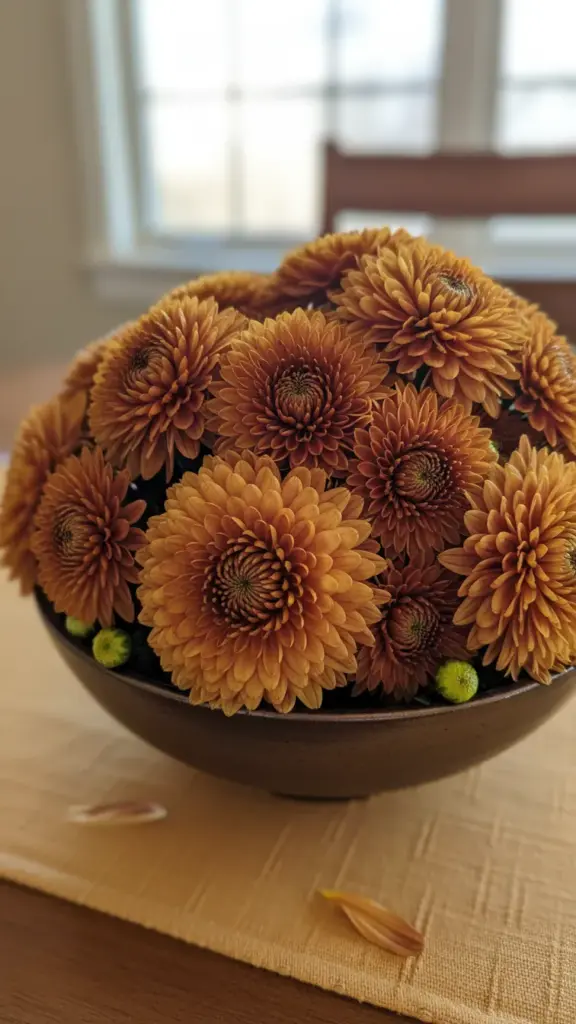
Choose mums with tight centers and petals just beginning to open. The University of California guide advises selecting buds just beginning to open or flowers with tight centers, since blooms past their prime will not last. A mum that is fully open in the store has already spent half its vase life. The tight ones open on your table over two days and look intentional doing it.
Strip mums aggressively. Their leaves are the first thing to yellow in the vase, and yellow leaves drag the whole arrangement down. Remove every leaf below the waterline and most of the ones above it. Mums have enough flower power to carry the design leafless. What remains is all bloom.
Disbud for bigger blooms if you grow your own. Pinching the side buds off a mum stem channels the plant’s energy into one large flower instead of five small ones. The big disbudded mums act as focal flowers in the arrangement. The spray types with many small blooms act as filler. Grow both, use both, and the arrangement designs itself.
6. Add Garden Roses for Scent and Softness
Roses bring what mums cannot: fragrance and soft, layered petals. Three to five garden roses tucked among the mums change the whole arrangement from sturdy to romantic. You do not need two dozen. A few roses act as the perfume and the focal points while the mums do the structural work. Restraint with roses reads as luxury. Excess reads as a wedding.
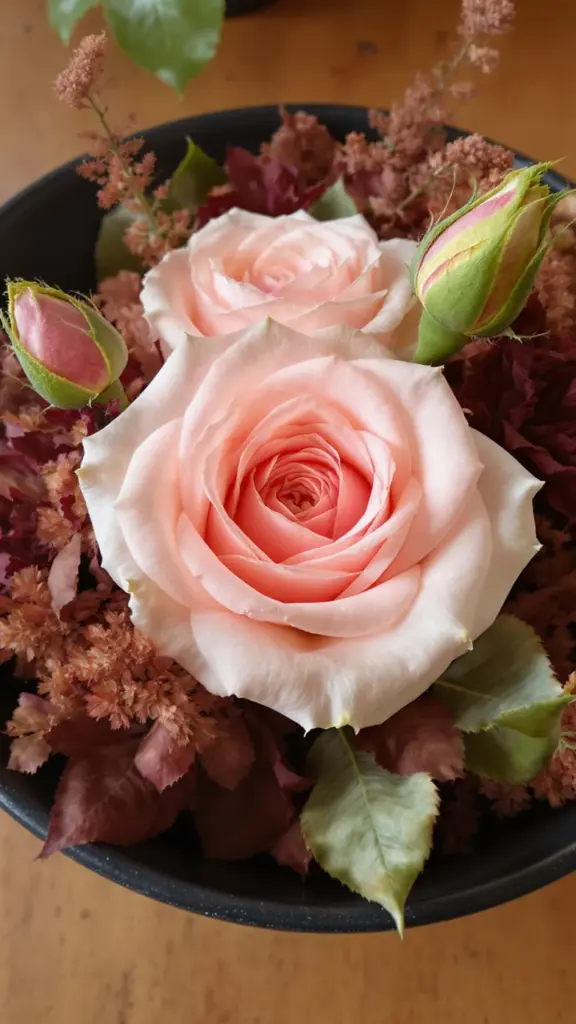
Condition roses harder than any other flower. Remove the thorns and all lower leaves, recut under water, and stand them in deep warm water for hours. Rose stems drink through a woody base that seals fast, so the underwater cut matters more for roses than for soft-stemmed flowers. A rose conditioned properly opens slowly over three days. A rose jammed dry into foam never fully opens.
Keep roses away from the fruit bowl and the fireplace. Ethylene from ripening fruit and heat from the hearth both age roses prematurely. The coolest spot on the table, farthest from the kitchen door, is the roses’ seat. Seat them like guests: the sensitive ones get the best chairs.
Peel the guard petals. The outermost rose petals often look bruised or torn; they protected the bud in transit. Gently peel away one or two damaged outer petals to reveal the clean bloom beneath. The rose instantly looks a day fresher. What you removed was packaging, not flower.
7. Use Sunflowers Sparingly, Not as the Whole Show
One sunflower is a statement. Twelve sunflowers is a field trip. Their giant faces dominate every arrangement they enter, which is exactly why they work as accents and fail as the main event. Tuck one or two into a mum-based centerpiece for height and cheer, then let the smaller blooms do the talking. The sunflower becomes the exclamation point, not the sentence.
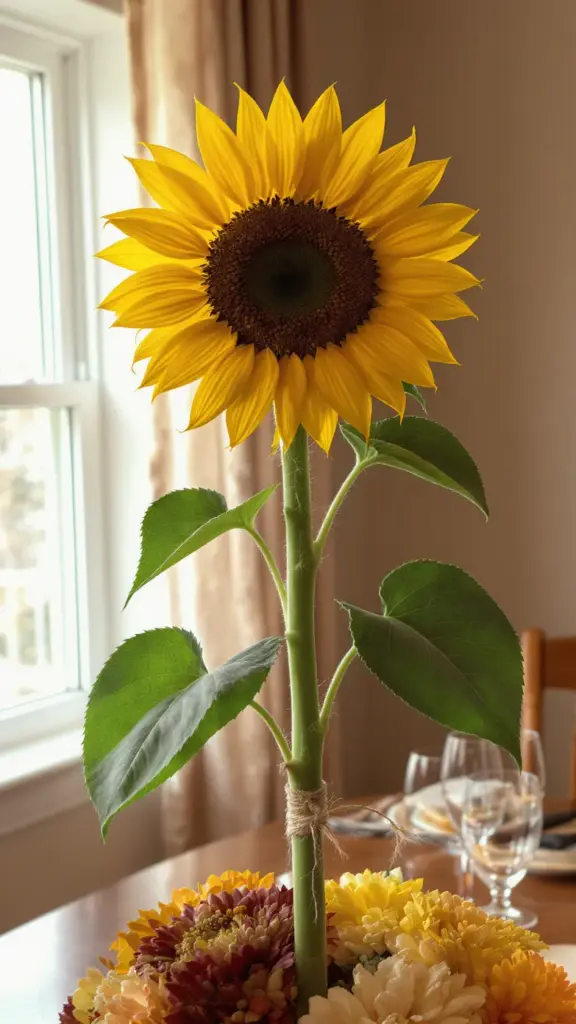
Cut sunflower stems short for table use. Their natural height belongs in a field, not across from your mother-in-law. A sunflower riding a foot above the arrangement blocks sightlines and drips pollen onto the tablecloth. Trim it to sit just above the mums, where it reads as the tallest bloom without becoming a wall.
Watch the pollen. Sunflower centers shed dark pollen that stains light tablecloths and white petals. Pull the center disk’s loose pollen with a tissue before arranging, or choose pollen-free varieties if you buy plants next spring. One yellow smear on a cream cloth outlives the whole dinner in everyone’s memory.
Grow pollen-free varieties next year if sunflowers are your signature. Varieties bred without pollen keep the tablecloth clean and bother allergy-sensitive guests less. The look is identical. The cleanup is not. One less thing to manage on a day with forty other things to manage.
8. Mix in Dahlias While the Season Lasts
Dahlias are Thanksgiving’s gamble flower: spectacular, seasonal, and short-lived. If your garden still has dahlias in late November, or the market has fresh ones, they bring a lushness nothing else can match. Their layered petals photograph beautifully and guests always ask about them. Use them knowing they are the first flowers to fade, and plan accordingly.
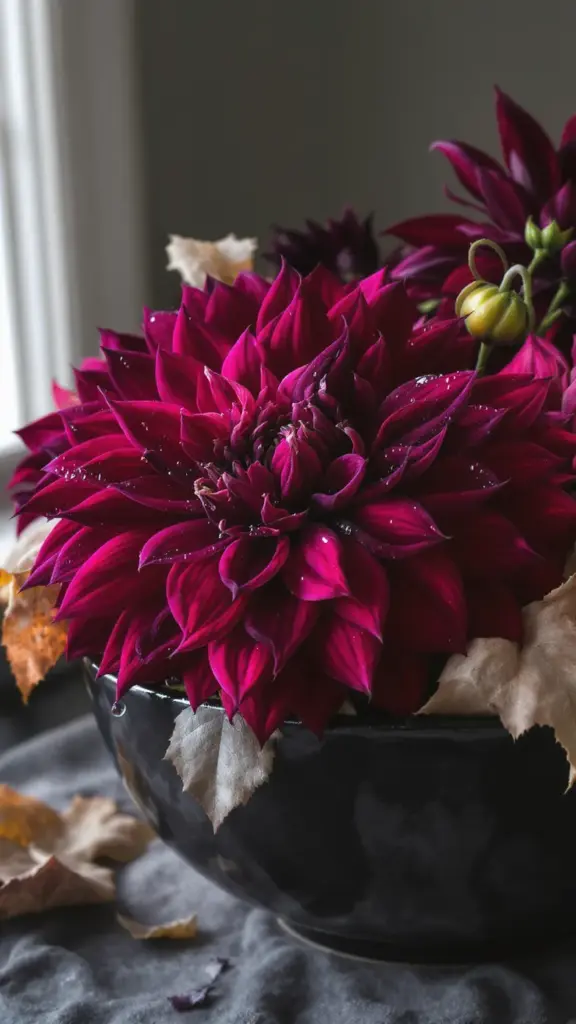
Buy dahlias last and arrange them hours before serving. They sit in the shortest vase-life tier, so every hour counts. Condition them like royalty: deep water, cool room, no leaves below the line. Washington State’s extension guide notes that hollow stems like dahlias need special handling, filled with water by turning the bloom upside down and pouring water into the stalk cavity. Their stem guide is here: making lasting bouquets.
Place dahlias where they get admired first and missed least. Front and center of the arrangement, where their brief glory does maximum work. When a dahlia fades Friday morning, pull it and let the mums and carnations carry on. An arrangement designed with a planned exit for its shortest bloom never looks like it failed.
9. Stretch the Budget with Carnations That Outlast Everything
Carnations are the most underrated flower in the fall lineup. They cost a fraction of roses, last longer than almost anything, and come in autumn shades that fit Thanksgiving perfectly: burgundy, bronze, cream, dusty pink. The old reputation as a cheap filler flower is undeserved. A mass of burgundy carnations in a low bowl looks expensive because it lasts.
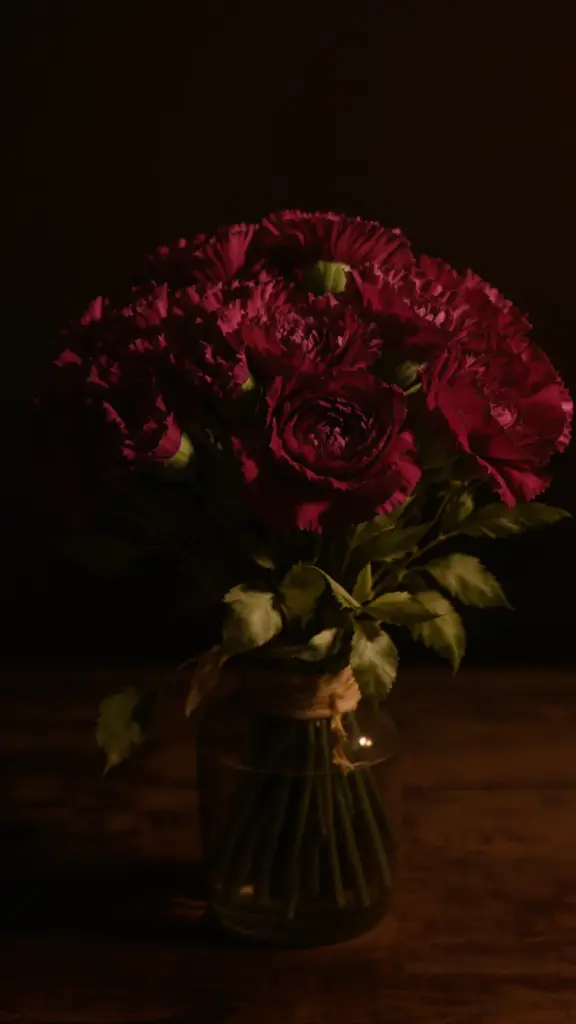
Bunch them for impact. A single carnation looks lonely. Seven carnations packed tight look like a peony the size of a salad plate. Density is the trick: carnations earn their place in clusters, not as soloists. Pack them shoulder to shoulder and the ruffled edges merge into one full, unbroken texture.
Use carnations as the insurance policy. They will still look fine on Sunday when the roses have faded and the dahlias are gone. Build the arrangement’s skeleton from carnations and mums, then add the short-lived stars on top. When the stars fade, the skeleton still holds a respectable arrangement for the weekend guests.
10. Add Texture with Craspedia and Wheat
Every floral arrangement needs something that is not a petal. Craspedia, the yellow billy buttons, brings round geometry and wiry stems that contrast with soft mum petals. Dried wheat brings height and harvest symbolism. Together they add the texture that separates a designed centerpiece from a bunch of flowers in a bowl.
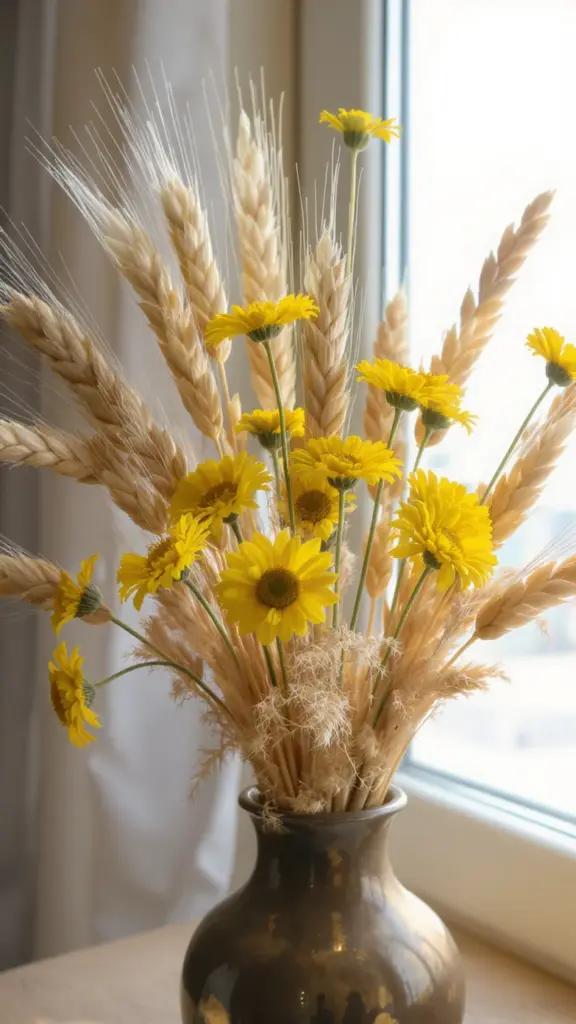
Push craspedia stems in last, at varying heights. Their small round heads read as punctuation marks scattered through the arrangement. Five to seven stems per centerpiece is plenty. They also dry perfectly in place, so they are still there when everything else gets composted. A flower that becomes a dried decoration earns double duty.
Keep wheat away from open flame and the oven’s heat. Dried grasses are tinder by nature. In a centerpiece they are safe at table distance from candles, but never use wheat in the floating candle bowls or near the fireplace garland. Texture is wonderful. Kindling is not.
Buy wheat from a craft supplier, not the field edge. Craft wheat is cleaned, dried, and bundled for decorative use. Field wheat can carry dust, insects, and moisture that shortens its life indoors. The price difference is small. The reliability difference is not.
11. Weave in Fresh Herbs for Fragrance and Meaning
Rosemary for remembrance, sage for the stuffing, thyme for the cook. Fresh herbs tucked among the flowers add scent that no bloom can match and a garden-to-table story guests love. A sprig of rosemary beside a rose is the kind of detail that makes people lean in and inhale. Flowers are seen first. Herbs are smelled first.
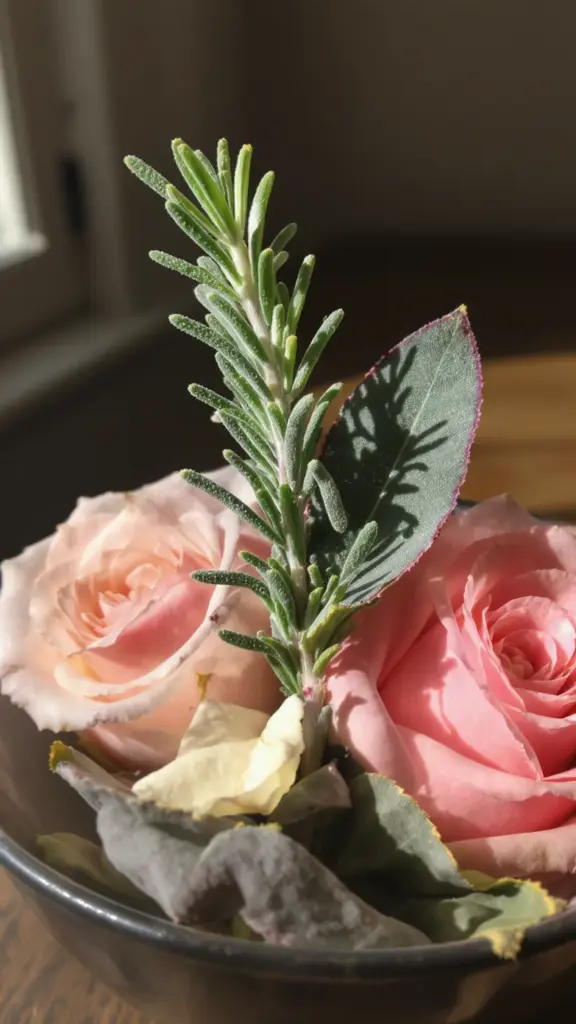
Cut herbs the morning of the arrangement. Unlike flowers, herbs do not benefit from days of conditioning; they are at their most fragrant freshly cut. Tuck them in last, after the flowers are placed, sliding the woody stems deep into the water. Their scent releases when the warm room air moves across them.
Do not let herbs dominate the water. A few sprigs perfume the arrangement. A fistful of sage turns the vase water murky and crowds the flowers. Three to five sprigs per centerpiece is the measure. The herbs are the seasoning, not the main dish.
Use bolted herbs without shame. Cilantro gone to flower, basil with white spikes, dill with yellow umbels: all of them arrange beautifully. The tiny flowers add a wild, garden-gathered feel that no florist bunch can fake. What the vegetable garden considers a failure, the centerpiece considers texture.
12. Keep It Low: The Six-Inch Sightline Rule
The tallest flower in the centerpiece should clear the table by no more than six inches. Sit in a dining chair and look across. If you cannot see the face opposite, the arrangement is too tall. Thanksgiving is a talking holiday. The flowers frame the conversation; they never block it. Every year, someone builds a glorious two-foot tower and spends dinner talking around it.
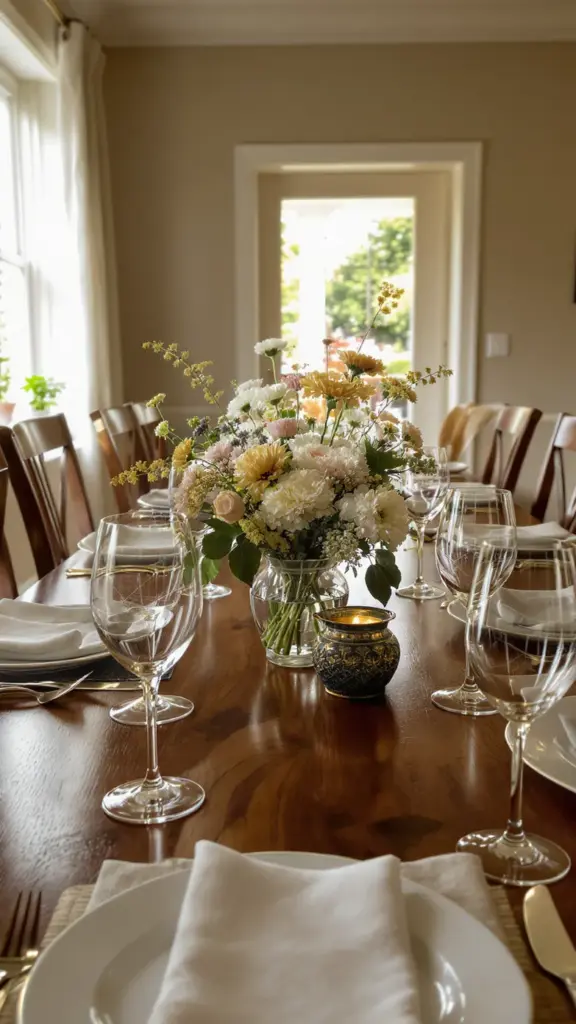
Measure with your hand, not your eye. A handspan from the table surface is roughly the limit. Stand the vessel on the table, hold your hand above it, and trim every stem that clears your fingers. Eyes lie about height when you are standing. Hands tell the truth at sitting level.
Break the rule exactly once, on the sideboard. The sideboard arrangement can go tall because nobody sits across from it. One dramatic tall piece in the room satisfies the urge for height while the table stays low and sociable. Give height its own stage and it stops ruining the table.
13. Build in Odd Numbers and Triangles
Florists build in odd numbers because the eye reads them as natural. Three mums, five carnations, seven stems of craspedia. Even numbers look arranged; odd numbers look grown. When you place stems, think in threes: three focal flowers forming a triangle, three heights stepping down, three color groups balancing each other.
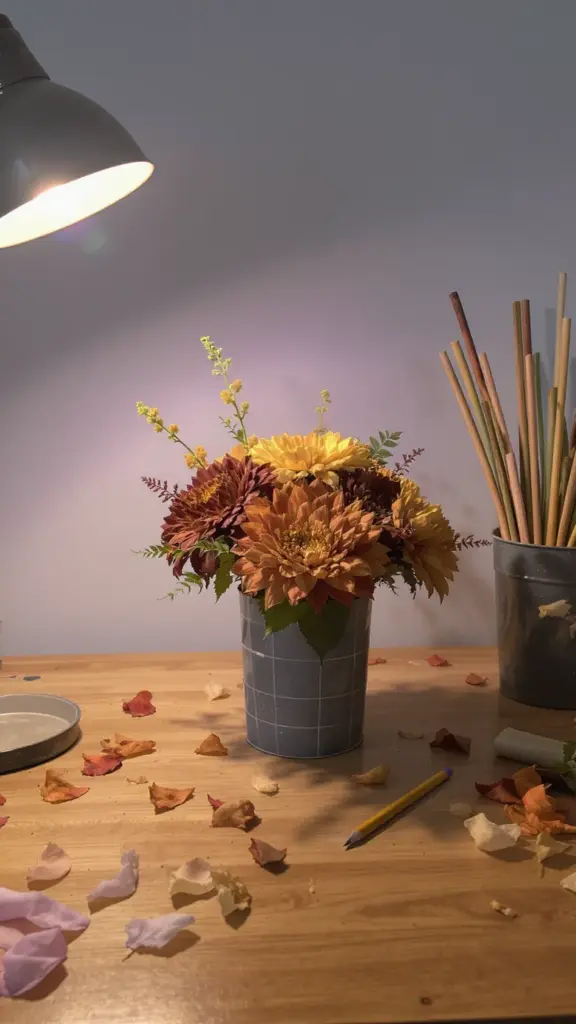
Set the triangle first, then fill. Place the three largest blooms in a loose triangle: one high, two low and wide. Everything else fills the spaces between them. This skeleton holds the design together even when you are improvising with the filler. Without the triangle, stems go in randomly and the arrangement looks nervous.
Step back every ten stems. Walk to the doorway and look at the arrangement from across the room. Up close, every stem looks fine. From ten feet, the holes and lumps reveal themselves. The doorway view is the honest view, and it takes five seconds.
Vary the stem lengths deliberately. Flowers cut to identical heights look like a choir standing at attention. Stems at three different lengths look like a garden. Cut the focal flowers longest, the filler medium, and let a few short blooms nestle low at the front. Height variation is what makes an arrangement look gathered rather than assembled.
14. Match the Palette to the Plates, Not the Catalog
The prettiest palette is the one that matches what is already on the table. Pull out the plates, the napkins, and the tablecloth before you buy flowers. A cream and copper tablescape wants amber mums, bronze carnations, and wheat. A white and green table wants white roses, green craspedia, and herbs. Flowers that echo the tableware look intentional. Flowers that fight it look like a different party.
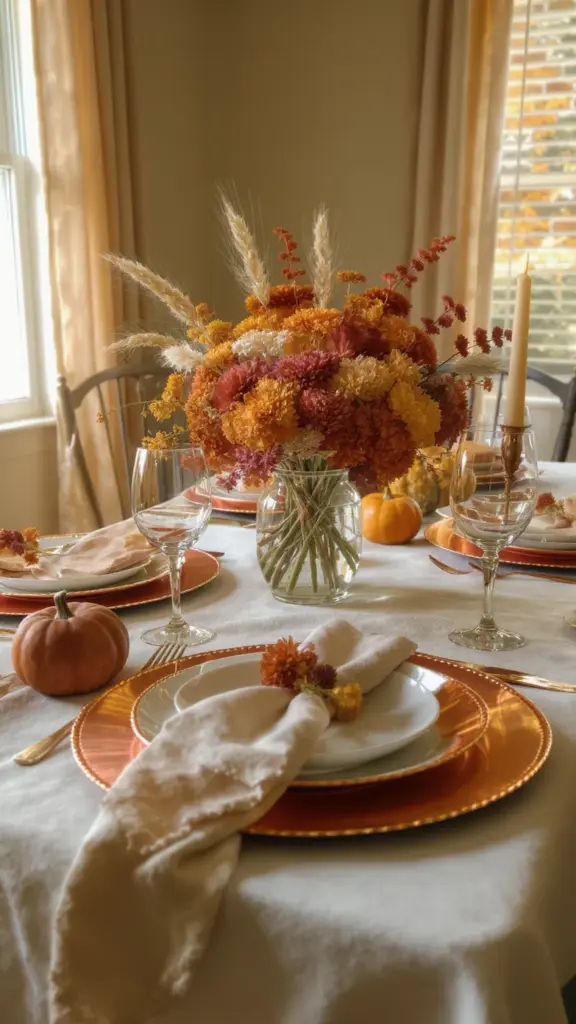
Limit the palette to three colors plus green. Amber, rust, and cream. Burgundy, blush, and wheat. Three colors read as designed. Six colors read as the clearance bin. The green of stems and herbs does not count against the limit; it is the neutral that holds the colors together.
Carry one color from the flowers into the rest of the room. A burgundy mum on the table, a burgundy candle on the sideboard, a burgundy ribbon on the door swag. Repetition ties the house together. The centerpiece stops being an isolated object and becomes part of a whole.
15. Make One Tall Arrangement for the Sideboard
The sideboard is where height belongs. Build one tall arrangement for the buffet or the entryway console: sunflowers at full stem, wheat standing high, branches of bittersweet arcing out. Tall arrangements photograph dramatically and draw the eye across the room. They also keep the ambitious stems out of the low table centerpiece where they would block conversation.
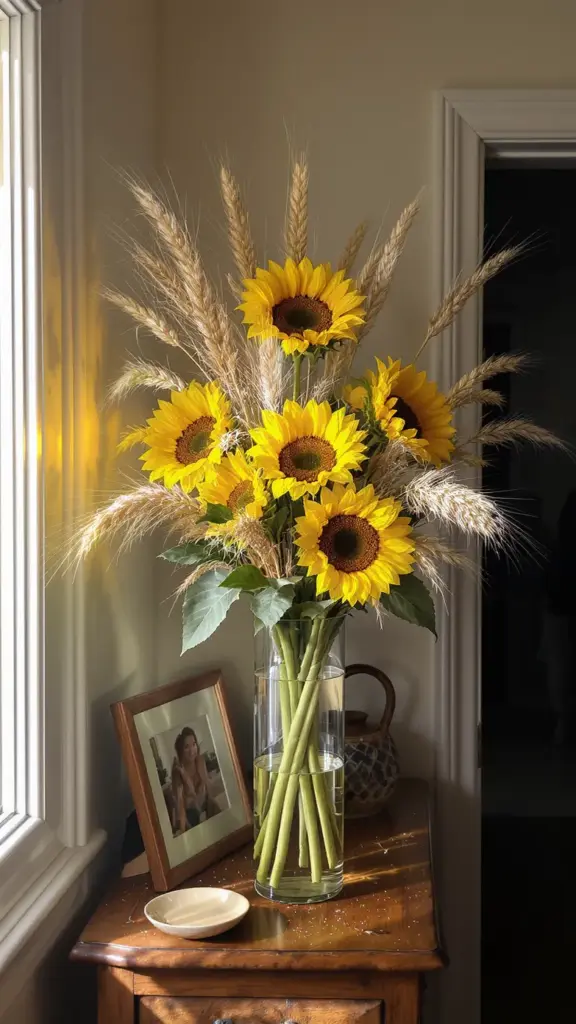
Anchor tall vessels like they matter, because they tip. A tall vase with top-heavy sunflowers is a physics problem waiting for a bumped elbow. Fill the bottom third of the vessel with stones or marbles before adding water. The weight sits low, the stems stay up, and the arrangement survives the buffet line.
Style the rooms beyond the dining table while you are at it. The sideboard arrangement is the bridge between the table and the rest of the house. For the full-house approach, the Thanksgiving decor for home guide dresses every room for the season. Flowers lead on the table; the rest of the house follows.
16. Float Single Blooms for the Cocktail Hour
While the turkey rests, guests gather with drinks and nowhere to sit. Float single blooms in shallow bowls of water around the living room: one dahlia per bowl, one rose, one perfect mum. Floating blooms need no mechanics, no conditioning beyond a fresh cut, and they look impossibly elegant for the effort. Five bowls, five minutes, and the cocktail hour has flowers.
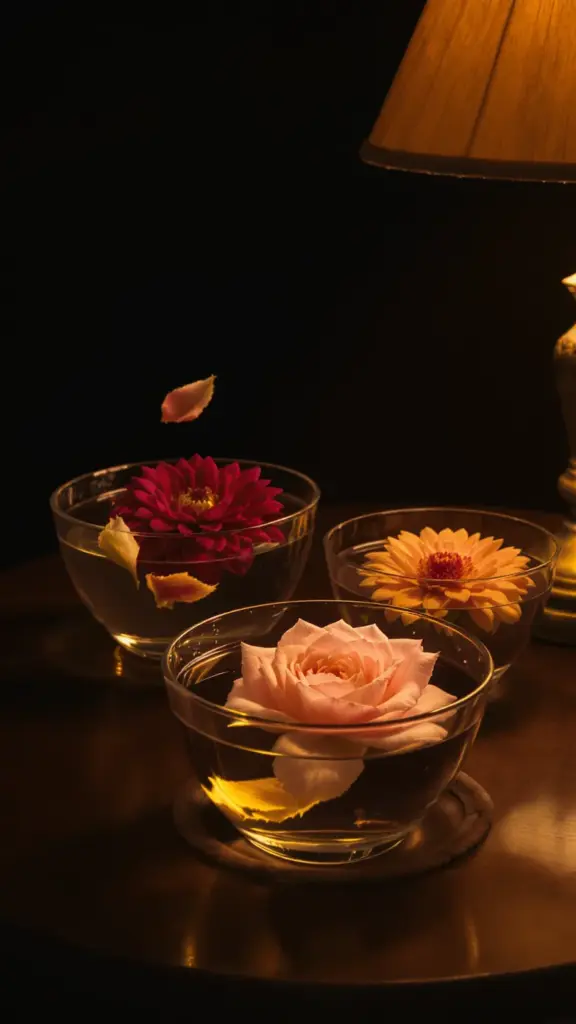
Choose blooms with flat, stable faces. Dahlias float beautifully. Roses float well if you trim the stem to a nub. Mums float like little suns. Top-heavy or cupped blooms tip and drown. Test each bloom in the bowl before guests arrive. A sunk flower is worse than an empty bowl.
Keep the floating bowls away from elbows and children. A shallow bowl of water on a coffee table is a spill waiting for a gesture. Set them on side tables, mantels, and windowsills: looked at, not reached over. Beauty that survives the hour is better than beauty that swims.
Replenish the bowls if the evening runs long. Floating blooms drink through their cut stems even in a shallow bowl, and the water level drops. Top up with fresh water before dessert. A refreshed bowl looks just set out. A half-empty one looks forgotten.
17. Protect the Tablecloth: Liners and Waterproofing
Water ruins tablecloths faster than gravy. Every centerpiece vessel sweats, drips, or overflows at some point in the day. Set each arrangement on a waterproof liner: a cork mat, a small tray, a folded piece of oilcloth. The liner disappears under the greens and saves the cloth. A water ring on grandmother’s linen outlives every compliment the flowers earned.
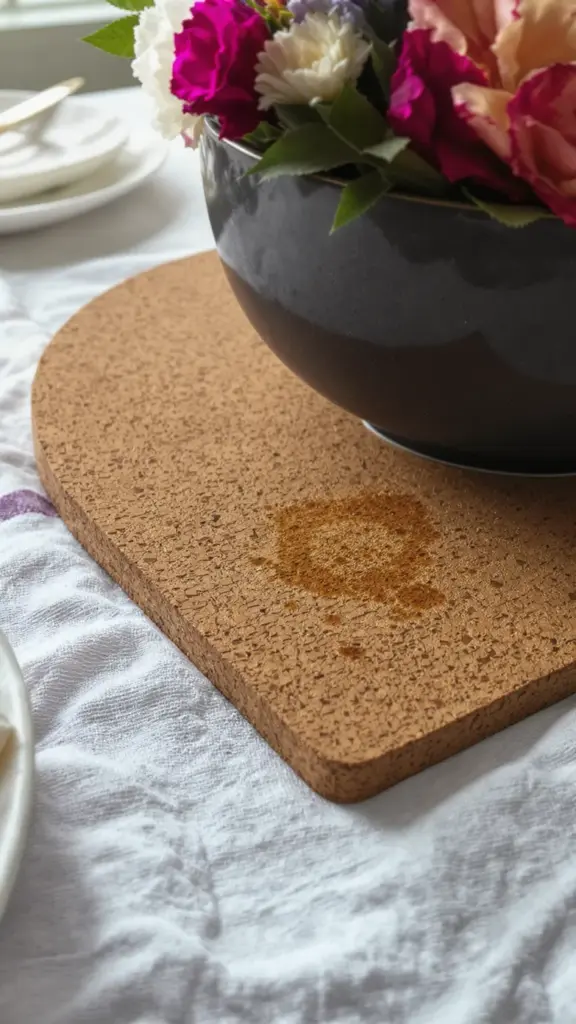
Check the vessel for leaks before it touches the table. Fill it at the sink, set it on a dry counter, and wait ten minutes. Hairline cracks in ceramic and pinholes in cheap metal announce themselves as damp spots. Better to discover the leak over the sink than over the tablecloth. This test takes ten minutes and saves one heirloom.
Keep a towel hidden under the sideboard. Spills happen despite every precaution: the gravy boat, the water pitcher, the enthusiastic toast. A dark towel folded under the sideboard within arm’s reach handles every emergency without a trip to the kitchen. Preparation is invisible. Panic is not.
18. Refresh the Water Without Rebuilding the Arrangement
Thursday afternoon, the water is cloudy and the level has dropped. Do not rebuild. Lift the arrangement, carry the vessel to the sink, and pour out the old water without disturbing the stems. Refill with fresh lukewarm water and a drop of flower food. The whole operation takes three minutes and the arrangement looks new. Purdue’s extension educators note that cut flowers last seven to ten days with proper care, and fresh solution is the core of that care: when the water clouds, it is time for a change. Their guidance is here: help your flowers live longer.
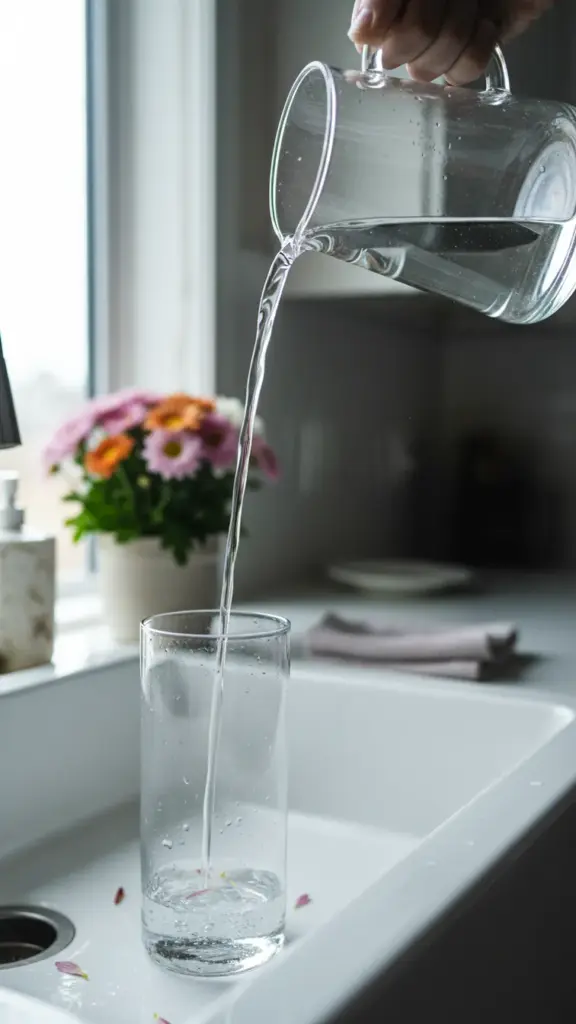
Recut any stem that looks pinched or slimy while you have the vessel at the sink. A quick angled trim reopens the drinking surface. Strip any leaf that slipped below the line. These thirty-second fixes add days to the arrangement’s life. Maintenance beats replacement every time.
Top up the water Friday and Saturday too. Weekend guests see the same centerpiece, and fresh water keeps it respectable for days. An arrangement that gets water changes outlasts one that does not by a wide margin. The flowers did their part. Do yours.
19. Photograph the Recipe for Next Year
Before the first guest sits, photograph the finished centerpiece from three angles: straight on, from above, and a close-up of the flower combination. Then write down the recipe: how many mums, which roses, what went in first. Memory will not preserve the stem count. The photo plus the list will. Next November you rebuild it in half the time.
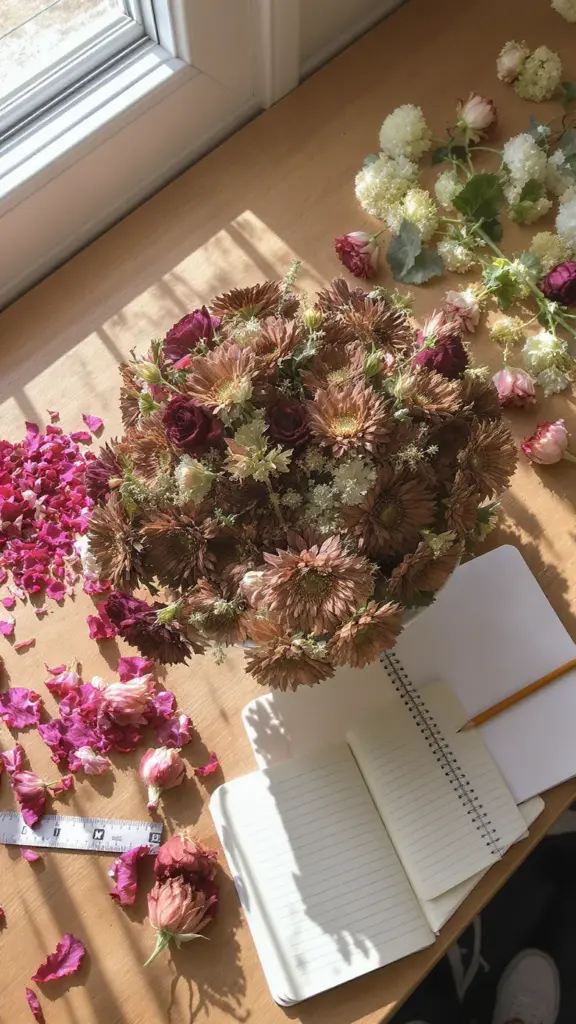
Photograph the mechanics too. Flip the phone under the rim and shoot the tape grid or the frog. Next year you will remember the flowers and forget how they stood up. The mechanics photo is the difference between admiring last year’s arrangement and repeating it.
Save everything in one album with the year on it. When flower shopping starts next November, open the album in the store. You will buy the right stems in the right numbers, skip the experiments that failed, and walk out faster. Documentation turns a one-time success into a repeatable tradition.
Note the prices next to the stem counts. Twelve mums at two dollars a stem is a twenty-four dollar centerpiece. Next year the budget plans itself. The most useful line in the notebook is often the total: it tells you whether the design is repeatable or was a one-time splurge.
20. Dry the Keepers: Hang Mums and Strawflower for Everlastings
Some Thanksgiving flowers get a second life as dried everlastings. Strawflower, statice, craspedia, and wheat dry perfectly by hanging. Small mums dry acceptably if you catch them before they fade. Friday morning, pull the keepers from the arrangement, strip their leaves, tie them in small bunches, and hang them upside down in a dark, dry closet. In two weeks you have dried flowers for wreaths and winter arrangements.
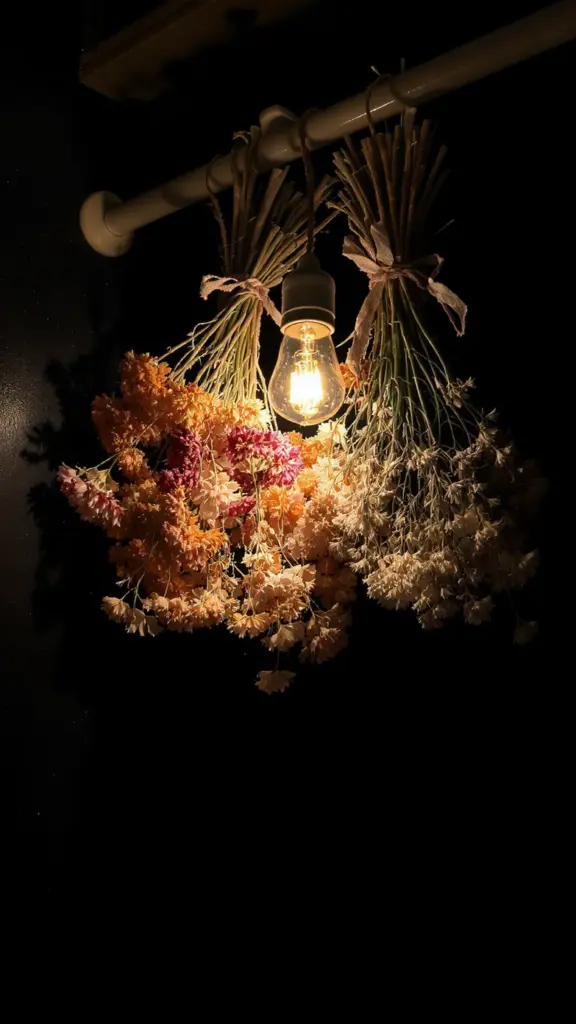
Hang them in the dark, not in a sunny window. Light bleaches dried flowers while they cure. A dark closet with good air circulation preserves the color. Do not crowd the bunches; air must move between the stems or they mold instead of drying. Patience and darkness are the whole technique.
Turn the dried keepers into winter crafts. Wreaths, swags, gift toppers. For project ideas built on exactly these materials, these Thanksgiving crafts for adults use dried flowers and pinecones. The centerpiece ends, the craft begins, and nothing beautiful goes to waste.
21. Compost the Spent Blooms on Friday
Friday morning is teardown day. Pull every spent bloom, strip the mechanics, and toss the organic material into the compost or yard-waste bin. Flowers compost fast: soft petals and stems break down in weeks. The tape grid goes in the trash, the frog gets washed and stored, the vessel gets scrubbed before the sap hardens. A clean teardown takes twenty minutes.
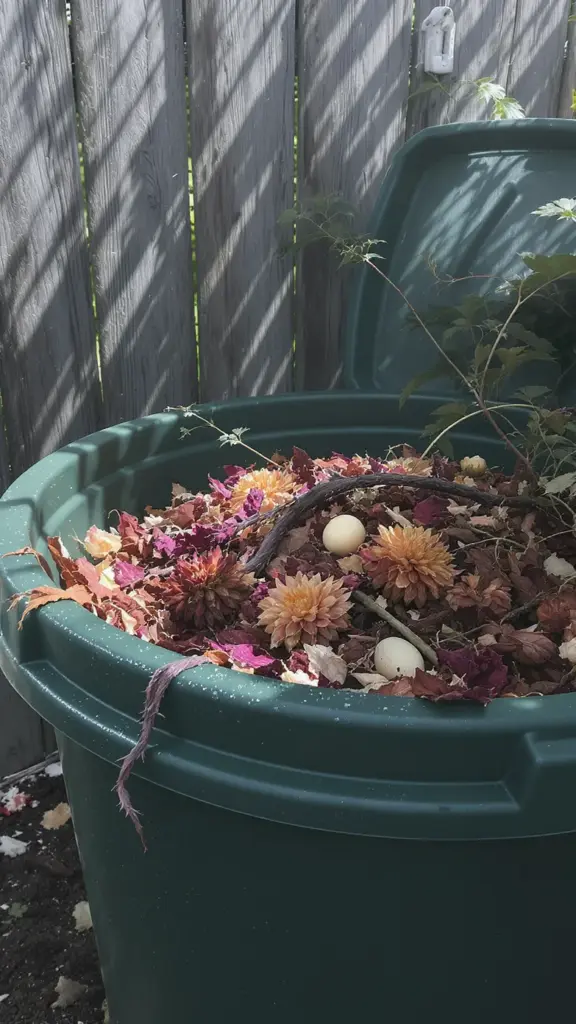
Save the vessels and the frogs before you compost. Wash every container with hot soapy water, because bacteria from this arrangement will attack the next one. Purdue’s educators list washing the container as a core step for exactly this reason. Clean tools are the cheapest life insurance flowers have.
Keep the flower frog and tape with the vase they fit. A frog that fits the low bowl lives in the low bowl, tucked inside it in the storage box. Next year you open one box and the whole mechanics kit is together. Organization is a gift to your future self.
Write three lines before you forget: what lasted, what faded, what to skip. Tape the note inside the box with the frog and the tape. Next November that note plus the photos rebuild the whole table. The compost gets the petals. You keep the knowledge.
Thanksgiving Floral Centerpieces FAQ
How Far Ahead Can I Make a Floral Centerpiece?
Buy Tuesday, condition Wednesday, arrange Wednesday evening or Thursday morning. Mums, carnations, and craspedia happily wait two days in cool water. Dahlias and garden roses prefer a shorter runway: buy Wednesday, arrange Thursday morning. The longest-lasting flowers set the schedule; the shortest ones just need to arrive on time. Keep the finished arrangement cool overnight: the garage or a cool room, never next to the oven’s residual heat.
How Do I Keep Flowers Fresh Through a Hot Dining Room?
Choose heat-tolerant flowers, keep arrangements away from the oven and heat vents, and refresh the water Thursday afternoon. Cool the room if you can: every few degrees helps. Flowers near the kitchen door age fastest, so put the toughest blooms on that end. Most mid-dinner wilting is heat plus thirst, and both are fixable. A light misting of the petals in the morning helps, but water in the vase matters more than water on the petals.
Can I Use Garden Flowers Instead of Store-Bought?
Yes, if the garden still offers them. Cut in the early morning, carry a bucket of tepid water with you, and condition the stems for hours before arranging. UC’s guide stresses cutting early when flowers are least likely to be wilted and getting stems into water immediately. Garden flowers have zero cold-chain behind them, so your conditioning matters even more than with store-bought. Skip garden flowers that are already fully open; they have spent their vase life outdoors.
What Flowers Should I Avoid for Thanksgiving?
Avoid anything already past its prime in the store: petals turning down, yellowing leaves, rubbery stems. Avoid daffodils in mixed arrangements; their sap clogs other stems’ drinking tubes. Avoid highly fragrant lilies if anyone at the table is scent-sensitive. And avoid building the whole design on the shortest-lived bloom. Stars are wonderful. Skeletons must be tough. When in doubt, build the design on mums and carnations and let one or two stars visit.
Write the Flower Recipe Down Before Midnight
The day is over, the dishes are stacked, and the centerpiece still looks good in the low light. Before midnight, write the recipe: the stem counts, the palette, the mechanics, the three lines about what lasted and what faded. Tape it inside the box with the frog. Next November you open the box, open the photo album, and the table rebuilds itself. Thanksgiving floral centerpieces are a one-day art. The notes make it a tradition.