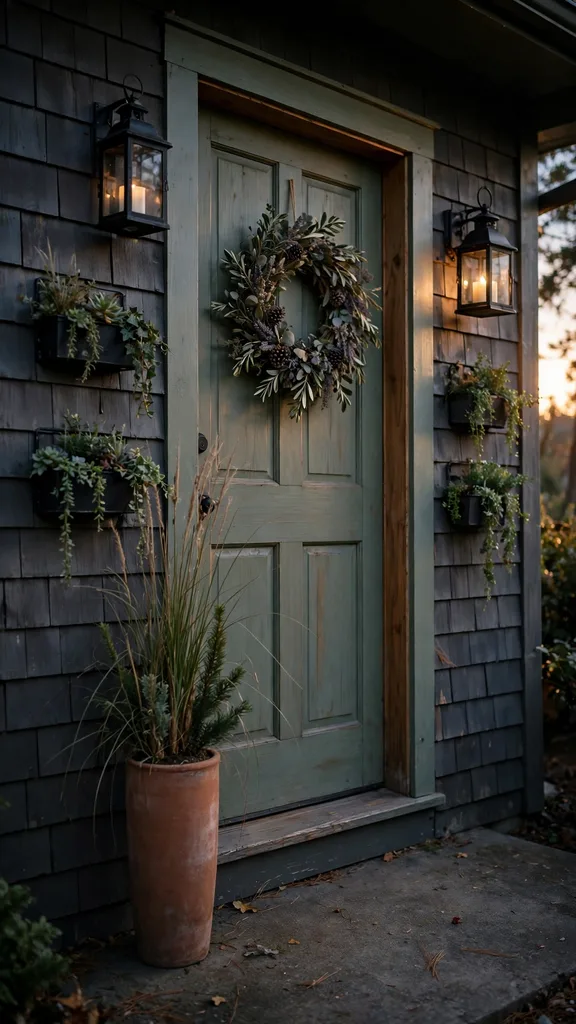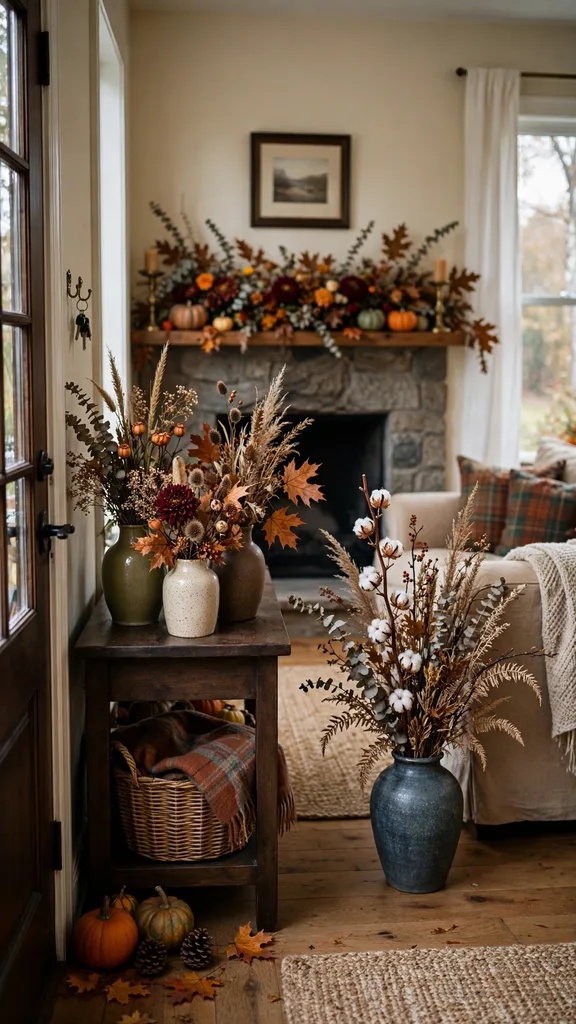

Thanksgiving flowers usually gather in one place, and the rest of the house gets nothing. This collection spreads 45 flower arrangements across every room, from the entryway console to the porch steps, so guests meet flowers at the door, in the living room, beside the bed, and on the way back out. Each arrangement uses cut flowers or potted blooms in a vessel that suits its room, and each one stands on its own without borrowing from the dining table.
The organizing rule is simple. One room owns one arrangement at a time, one flower type repeats across rooms for unity, and every vessel sits where its flowers last longest. Cool rooms take delicate blooms, warm rooms take tough mums and carnations, and wet rooms take stems that tolerate steam. A house dressed this way feels generous without a single arrangement competing with dinner.
I first tried this room by room approach when the dining table was already full, and the hallway vase got more compliments than the main display.
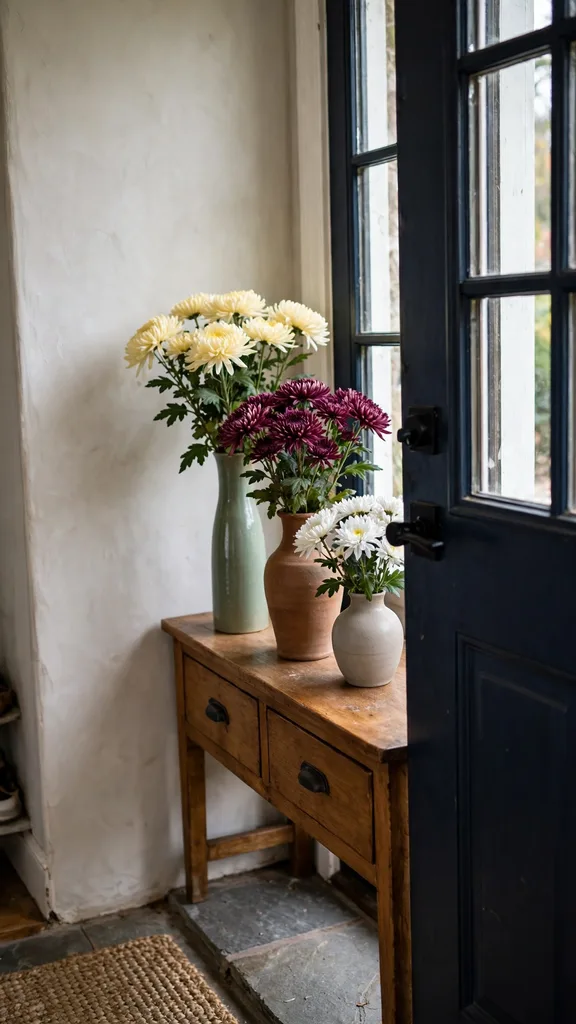
1. Entryway Console Vase Trio
Three vases of different heights turn an entryway console into a greeting, because guests see flowers before they see the rest of the house. Set the tallest vase at the back, a medium vase in front of it, and a short vase at one end, and keep the whole trio inside the console length so nothing overhangs the edge. Chrysanthemums suit this spot, since they hold colour in a cool entry and cost less than roses per stem.
Keep the trio clear of the door swing, and measure the swing arc before placing the first vase, since a vase inside the arc gets knocked on every entry. Change the water every other day and recut each stem by 2.5 centimetres (1 inch) at a 45 degree angle, since a fresh cut keeps the trio drinking through the holiday weekend.
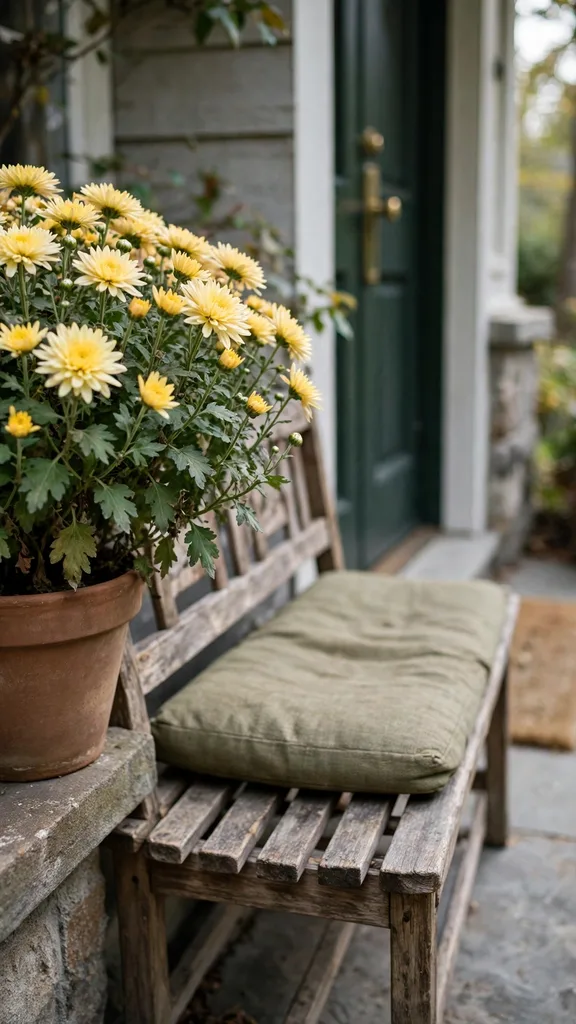
2. Entryway Bench-Side Flower Pot
A potted mum beside an entryway bench gives guests a living arrangement to sit near while coats come off. Choose a pot 30 centimetres (12 inches) wide, set it on the wall side of the bench, and keep the bench seat clear for bags and parcels. A potted plant suits this spot better than cut stems, since it needs no vase water near a seat.
Water the pot when the top 2.5 centimetres (1 inch) of soil feels dry, and empty the saucer after watering so the bench leg never stands in water. Move the pot indoors to a cool room at night when frost threatens, since a small pot freezes sooner than garden soil.
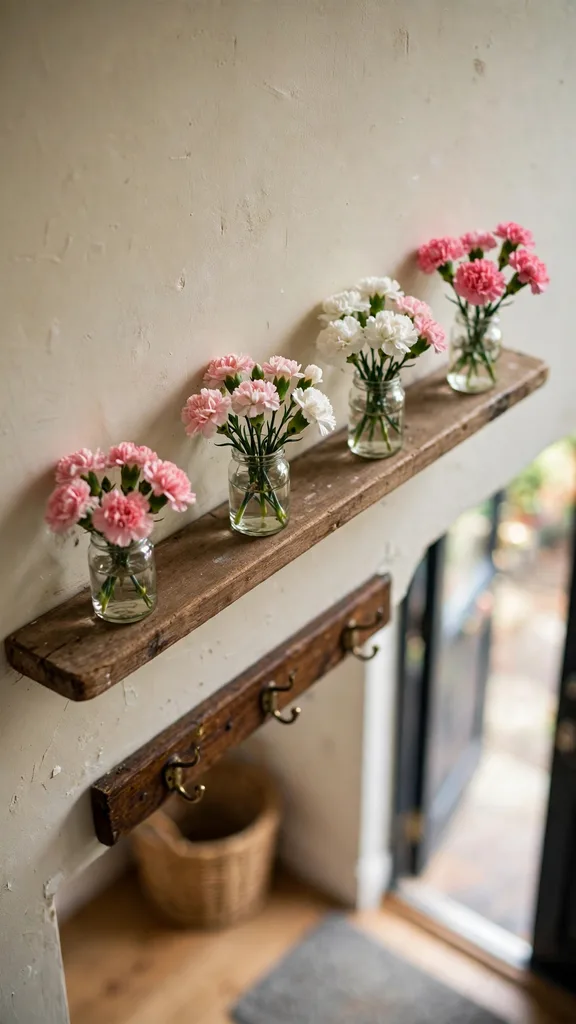
3. Entryway Wall Shelf Posy Row
A wall shelf above eye level holds a row of small posies without claiming floor space, which suits a narrow entry. Set three small jars on the shelf, one flower type per jar, and keep each jar under 15 centimetres (6 inches) tall so the row reads as a line rather than a block. Carnations suit this row, since they last 7 to 14 days in a cool entry and keep their shape in small jars.
Fix the shelf into studs or use fixings rated for a watered jar, since a jar gains weight after filling. Keep the shelf clear of the door frame, so the door opens fully without brushing a jar, and check the jars daily for water level, since small jars drink down fast in a heated house.
4. Entryway Mirror-Side Bud Vases
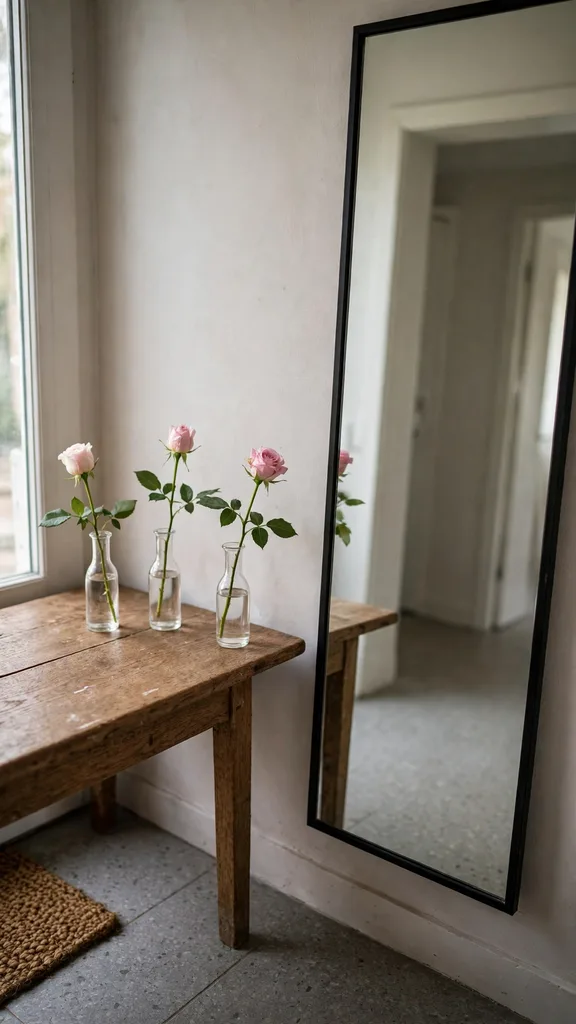
Two bud vases beside an entryway mirror double the flowers, because the mirror reflects each stem back into the room. Place one bud vase on each side of the mirror, keep each vase under 20 centimetres (8 inches) tall, and put a single stem in each vase so the pair reads as deliberate rather than sparse. Roses suit this pair, since one rose stem carries scent and shape on its own.
Cut rose stems under water before placing them, since a rose stem seals fast in air and then drinks poorly. Keep the vases out of direct sunlight from the door glass, since sun through glass heats vase water and shortens bloom life.
5. Entryway Stair Newel Flower Wrap
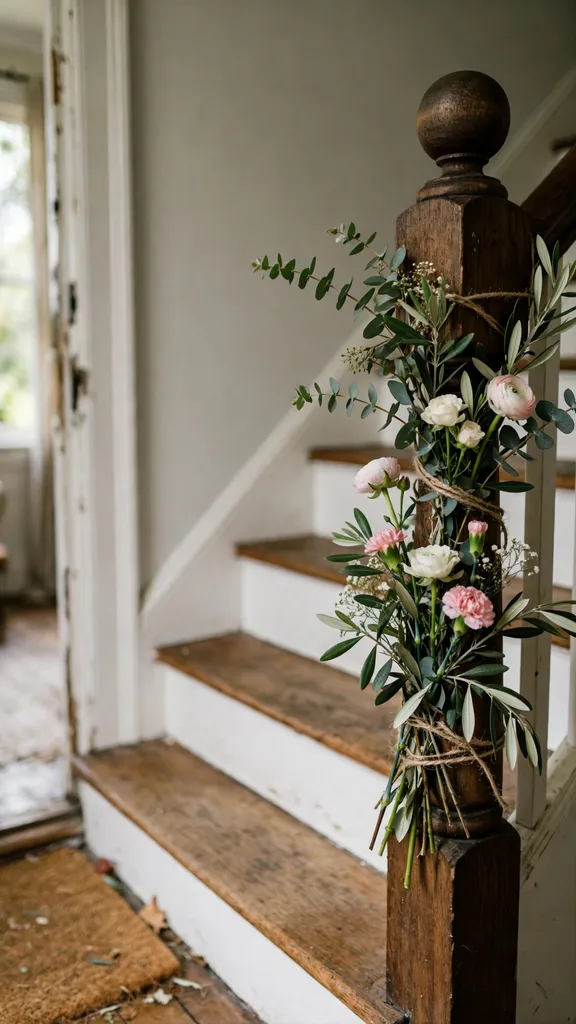
A flower wrap around the stair newel greets guests on the way up without blocking the handrail. Wind a short length of flexible vine and fresh flower stems around the newel post only, never around the handrail itself, and tie the wrap with twine at the top and bottom. Keep the wrap under 60 centimetres (24 inches) long, so it decorates the post without trailing onto the stair tread.
Mist the wrap lightly each morning, since stems out of water dry fast in a heated stairwell. Replace any stem that wilts at once, since one tired stem drags the whole wrap down, and keep the handrail grip fully clear for safety on every step.
6. Entryway Coat Hook Flower Posy
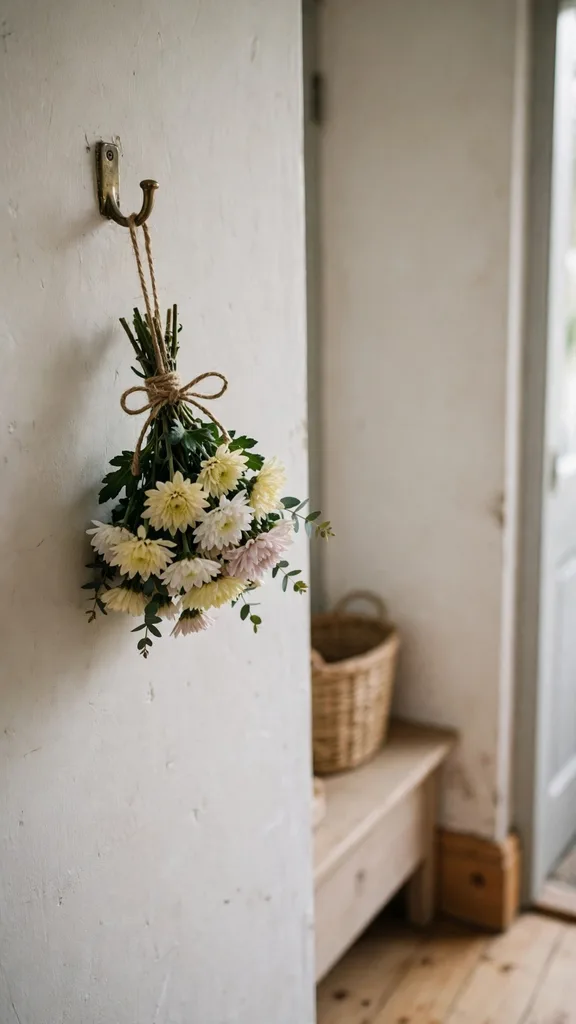
A small posy hung from a spare coat hook gives a bare entry wall a flower note for the price of three stems. Tie three chrysanthemum stems with twine, hang the bundle from one hook by its twine loop, and keep the bundle clear of coats that will crush it. Hang the posy on the hook farthest from the door, so it never meets a swinging coat.
Use a small water tube on each stem end when the posy must last past one day, since stems without water fade within hours in a warm entry. Refresh the tubes each morning, and take the posy down before guests hang heavy coats beside it.
7. Living Room Sofa-Side Floor Vase
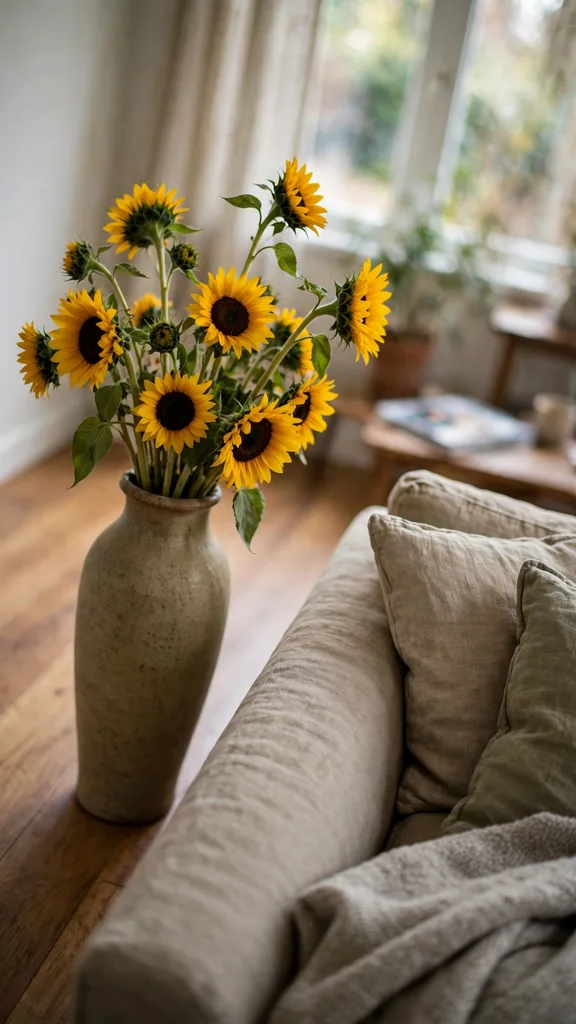
A floor vase beside the sofa anchors the living room with flowers at seating height, without claiming the coffee table. Choose a vase 60 centimetres (24 inches) tall, set it on the wall side of the sofa arm, and fill it with tall stems such as sunflowers cut to 75 centimetres (30 inches) so they rise above the sofa arm without blocking the television. Keep the vase base wide, since a narrow base tips when someone brushes past it.
Anchor the vase with stones in the bottom third before adding water, since weight low in the vase resists bumps from feet and pets. Keep the vase at least 60 centimetres (24 inches) from any heat vent, since hot dry air shortens the life of every cut stem near it.
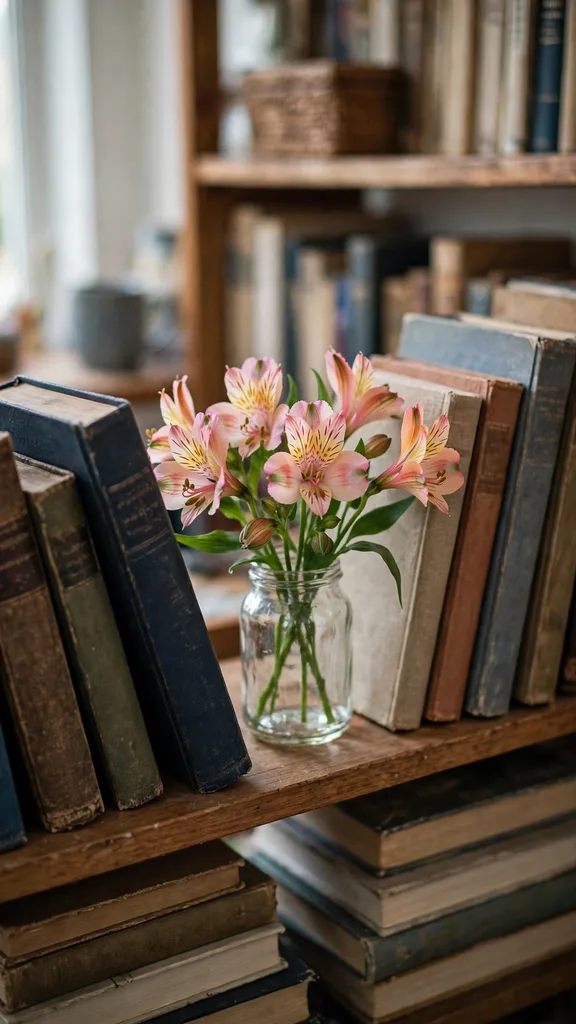
8. Living Room Bookshelf Flower Posy
A posy tucked between books gives a living room shelf a flower note that guests discover rather than face head on. Set one small jar on a shelf at eye level, fill it with three stems of one flower type, and leave one book width of empty shelf on each side so the jar reads as an accent. Alstroemeria suits this spot, since its buds keep opening over days and the posy changes without any new stems.
Keep the jar behind the shelf front edge by 5 centimetres (2 inches), so it never gets knocked by a hand reaching for a book. Top up the water each evening, since a small jar in a warm living room loses water fast, and pull any stem that clouds the water at once.
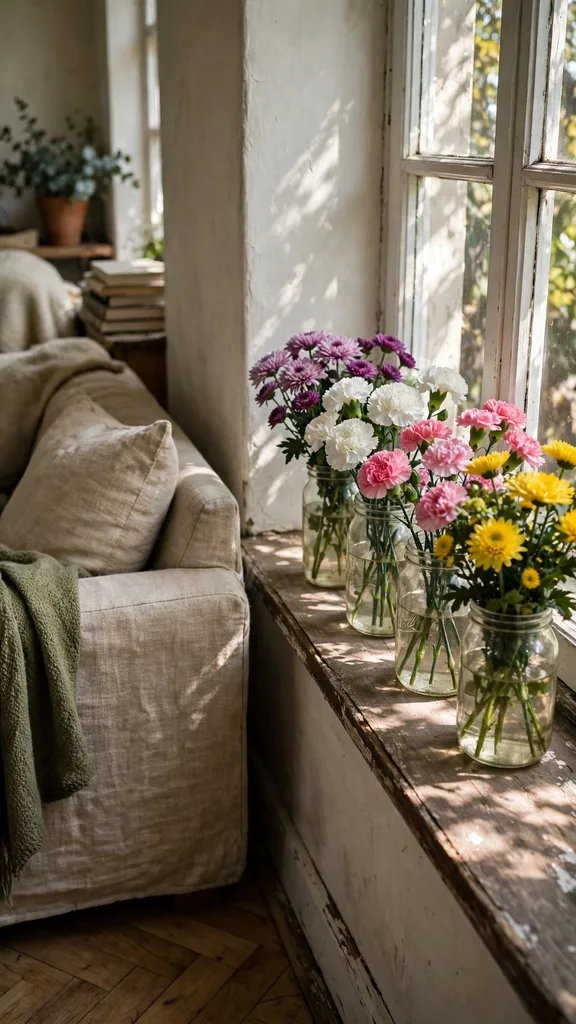
9. Living Room Windowsill Jar Row
A row of jars on the living room windowsill turns daylight into part of the arrangement, because the light passes through petals and glass together. Line up four jars of equal height, one flower type per jar, and keep the jars clear of the window latch so the window still opens. Mums and carnations suit this row, since both tolerate the bright light of a south facing window better than roses.
Move the jars 15 centimetres (6 inches) back from the glass on cold nights, since cold glass chills vase water and shortens bloom life. Rotate the row weekly, so each jar gets its turn away from the brightest pane, and check for fallen leaves in the water each morning.
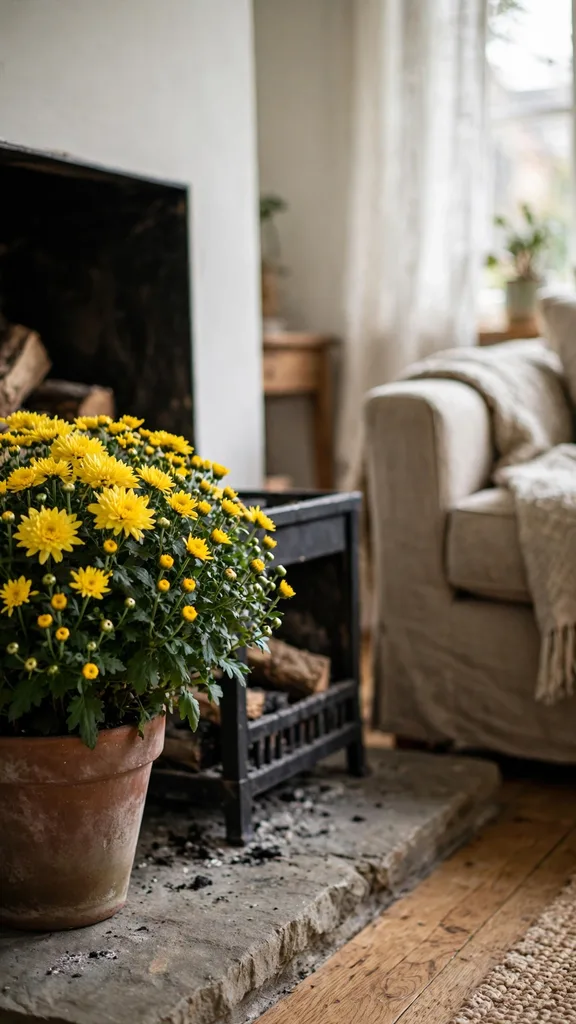
10. Living Room Hearth-Side Flower Pot
A flower pot beside the hearth brings living colour to the fireplace wall without putting flowers near flame. Set the pot at least 90 centimetres (36 inches) from the firebox opening, choose a potted mum or a potted carnation plant, and keep the pot on the side away from the wood basket so ash never dusts the blooms. A potted plant suits the hearth, since it tolerates the dry air near a fire better than cut stems in a vase.
Water the pot when the top 2.5 centimetres (1 inch) of soil feels dry, and move the pot to a cooler room when the fire burns all evening, since sustained heat fades potted blooms fast. Keep dried stems away from this spot entirely, since dry foliage near a fire is a fire risk.
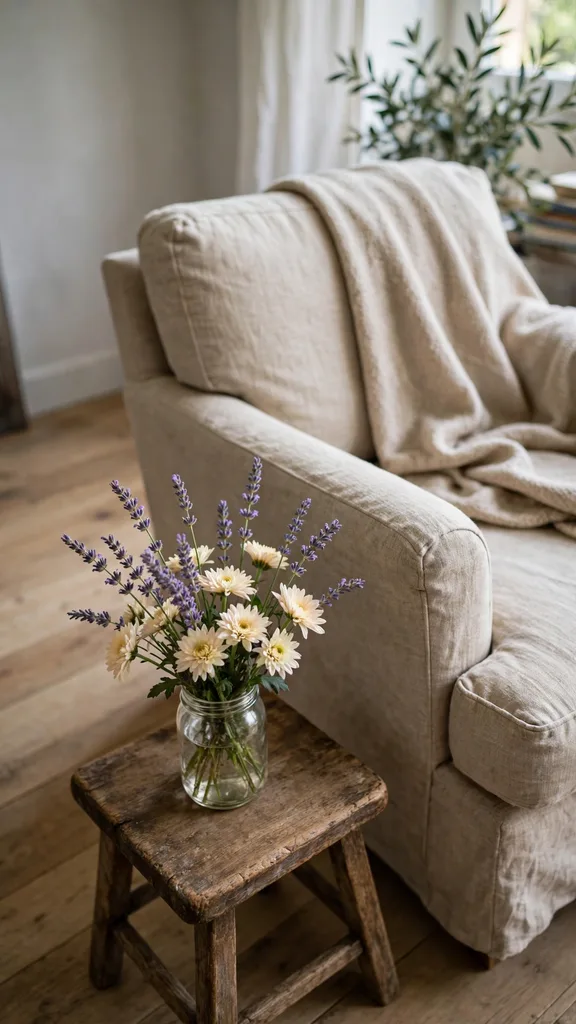
11. Living Room Reading Chair Flower Jar
A flower jar beside a reading chair gives the reader a private arrangement, small enough to enjoy at arm's length. Set a jar 15 centimetres (6 inches) wide on a small stool beside the chair, fill it with five stems of one flower type, and keep the jar on the side away from the reading lamp so the lamp heat never warms the water. Lavender stems suit this jar for scent, mixed with two mums for colour.
Keep the jar low, under 30 centimetres (12 inches) tall including stems, so it never blocks the reader's view across the room. Refresh the water every other day, and strip any leaf that would sit below the waterline before placing a stem, since submerged leaves rot and cloud the water.
12. Living Room Plant Stand Flower Tier
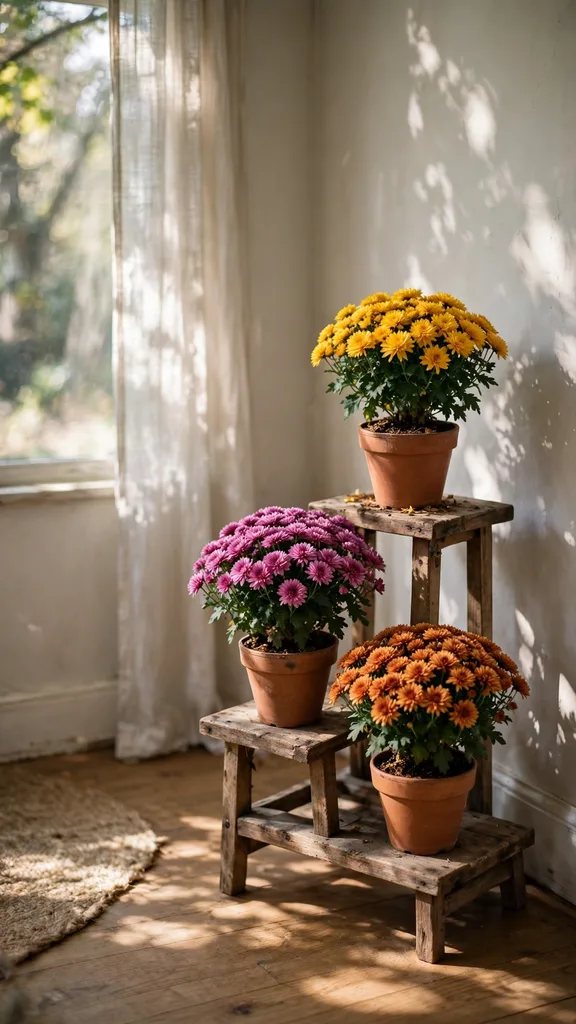
A tiered plant stand turns one living room corner into three levels of flowers without a new piece of furniture for each level. Place the tallest potted plant on the lowest tier for stability, a medium pot on the middle tier, and a small flowering pot on the top tier, and keep the stand base inside 45 centimetres (18 inches) square. Potted mums suit all three tiers, since their dome shape reads clearly at every height.
Water the top tier first and let excess drain into a saucer, never into the pot below, since shared drainage spreads rot between pots. Turn the stand a quarter turn every two days, so each side gets its share of window light and no plant leans toward the glass.
13. Kitchen Windowsill Flower and Herb Jars
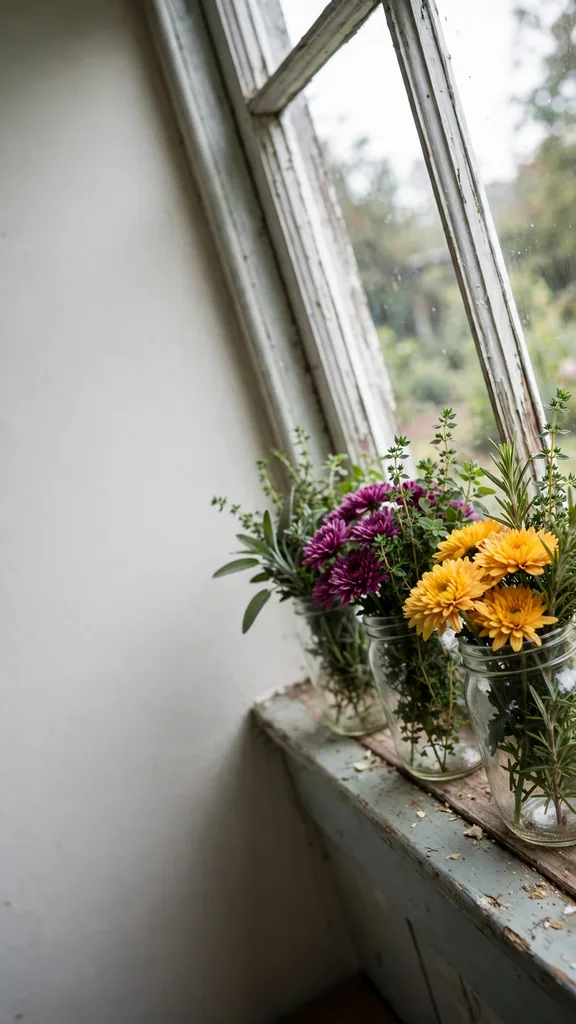
Kitchen windowsill jars mix flowers with herbs, so the arrangement scents the kitchen and seasons dinner from the same row. Set three jars on the sill, one with mums, one with rosemary sprigs, and one with sage sprigs, and keep each jar under 20 centimetres (8 inches) tall so the window still opens above them. Rosemary and sage suit this row, since both release scent when the warm kitchen air moves across them.
[Purdue Extension](https://extension.purdue.edu/news/county/porter/2023/02/make-cut-flowers-last.html) advises recutting stems by 2.5 centimetres (1 inch) at a 45 degree angle, removing leaves that would sit in the water, changing the water every other day, and keeping flowers out of direct sunlight in a cool spot. Follow that routine for the flower jar, and snip herb sprigs fresh on the day guests arrive, since herbs smell strongest when freshly cut.
14. Kitchen Open Shelf Flower Vase
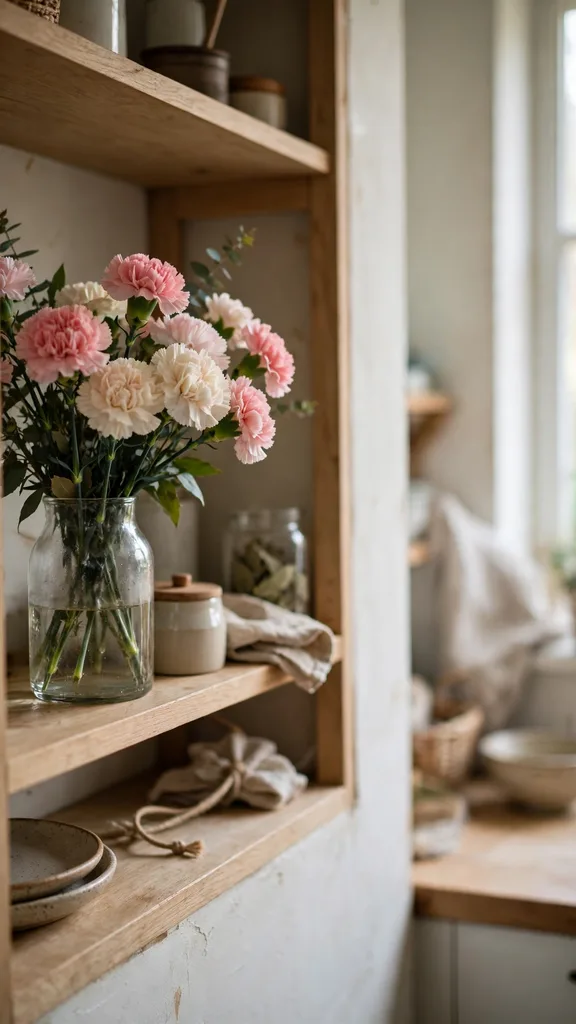
A flower vase on an open kitchen shelf puts colour at eye level above the worktop, where it never competes with food preparation. Choose a vase under 25 centimetres (10 inches) tall, set it on the shelf end farthest from the stove, and fill it with carnations, since carnations tolerate kitchen warmth longer than roses and keep their shape for days. Keep the vase clear of steam from kettles and pans, since steam wilts petals fast.
Wash the vase with hot soapy water before filling it, since bacteria from a previous arrangement shorten the life of the next one. Check the water each morning, and discard any stem that turns slimy at once, since one decaying stem clouds the whole vase.
15. Kitchen Wall Rail Flower Jars
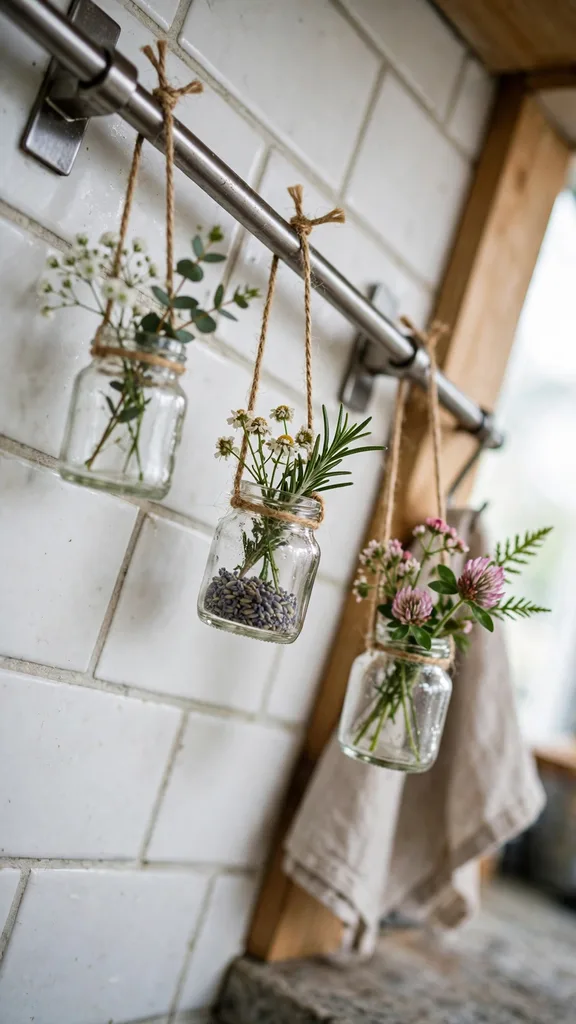
Small jars hung from a kitchen wall rail turn an unused wall strip into a flower row at hand height. Hang three jars from hooks on the rail, one flower type per jar, and keep the jars clear of the stove side of the rail so heat never reaches them. Small jars suit this rail, since each jar holds three stems and the row reads as one arrangement from across the kitchen.
Use jars with a secure hook loop, and test each hook with a full jar of water before adding flowers, since a jar that slips breaks on the worktop below. Keep the rail jars out of the splash zone of the sink, since soapy water in a flower jar ends the arrangement.
16. Kitchen Door-Side Flower Pot
A flower pot beside the kitchen door greets everyone who enters from the garden with living colour. Set a potted mum in a pot 30 centimetres (12 inches) wide on the wall side of the door, and keep the handle side clear for hands carrying trays. A potted plant suits this door, since it survives the draught of an opening door better than cut stems in a vase.
Bring the pot indoors to a sheltered corner on frost nights, since a small pot by a draughty door freezes sooner than garden soil. Water when the top 2.5 centimetres (1 inch) of soil feels dry, and empty the saucer after watering so the door threshold never stands wet.
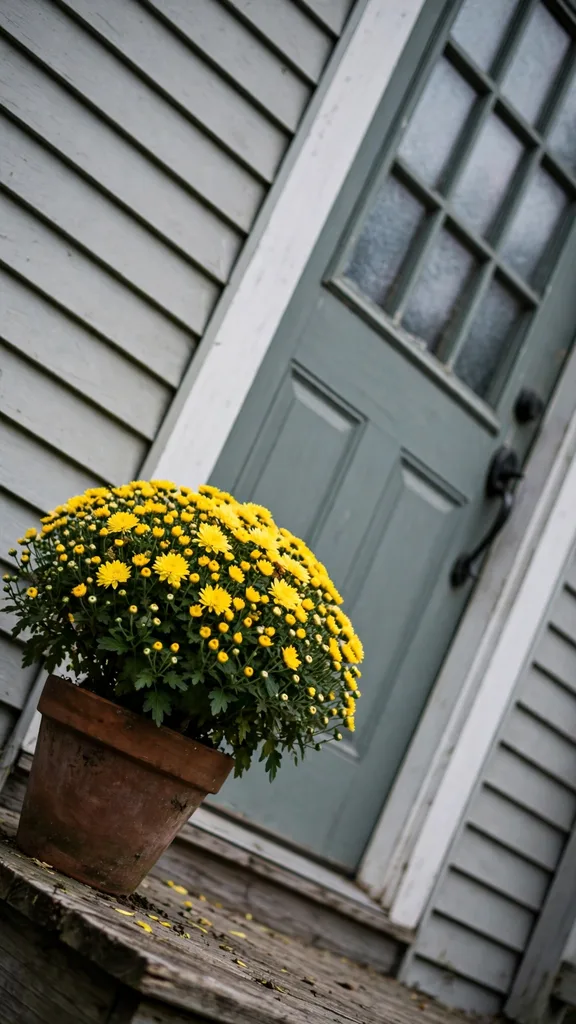
17. Kitchen Garden Window Flower Shelf
A narrow shelf fixed across a kitchen garden window holds a flower row in the brightest spot in the kitchen without taking worktop space. Fix the shelf 15 centimetres (6 inches) below the window frame, set four small pots on it, and plant each pot with one flower type so the row reads as a small garden. Potted violets and small mums suit this shelf, since both enjoy bright light and stay compact.
Keep the shelf depth under 15 centimetres (6 inches), so it never blocks the window handle or the view to the garden. Water each pot over the sink, and return it to the shelf only after it stops dripping, since drips on the worktop below stain wood and spoil food preparation.
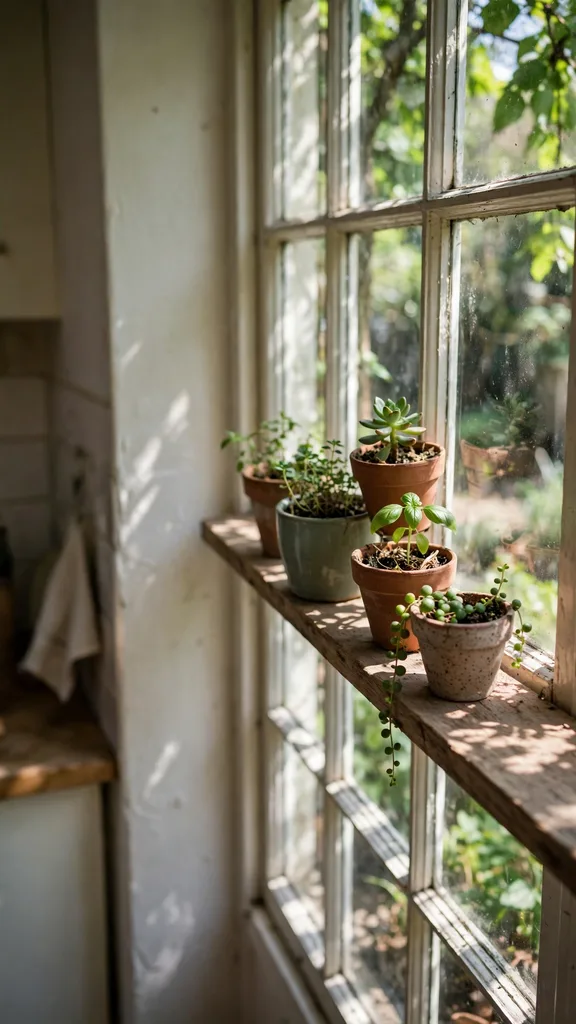
18. Kitchen Sink-Side Flower Jar
A flower jar beside the kitchen sink gives the busiest corner of the house a calm flower note, if it sits outside the splash zone. Place the jar at least 30 centimetres (12 inches) from the tap, choose a jar with a narrow mouth so splashes cannot enter easily, and fill it with carnations, since carnations forgive a missed water change better than most cut flowers. Keep the jar on the side away from the drying rack, so wet dishes never crowd it.
Change the water every other day and recut the stems at each change, since sink-side jars collect kitchen warmth and bacteria faster than jars in cool rooms. Wash the jar with hot soapy water at each water change, and replace any stem that clouds the water at once.
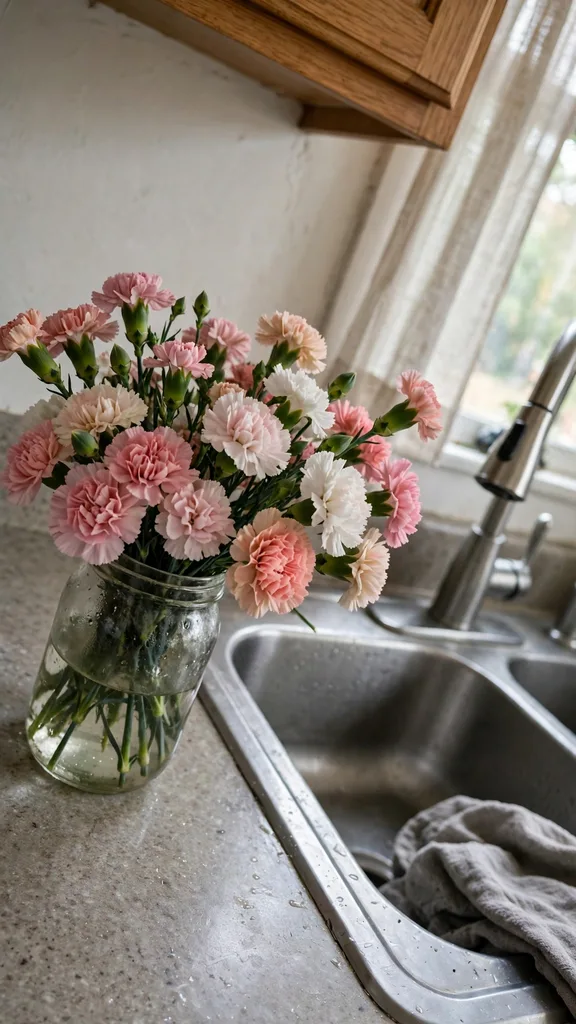
19. Bedroom Dresser Top Flower Jar
A flower jar on the bedroom dresser gives the first flowers of the morning, seen while dressing for the day. Set a jar 20 centimetres (8 inches) tall at the dresser end farthest from the mirror, fill it with five stems of one flower type, and keep the jar clear of perfume bottles, since perfume spray damages petals. Mums suit this jar, since they carry colour without strong scent in a small bedroom.
Keep the dresser jar in a cool corner of the bedroom, away from the radiator, since heat from a radiator shortens bloom life to days. Top up the water each evening, and move the jar to the windowsill on mild days, since cool daylight keeps mums fresh longer than a warm room.
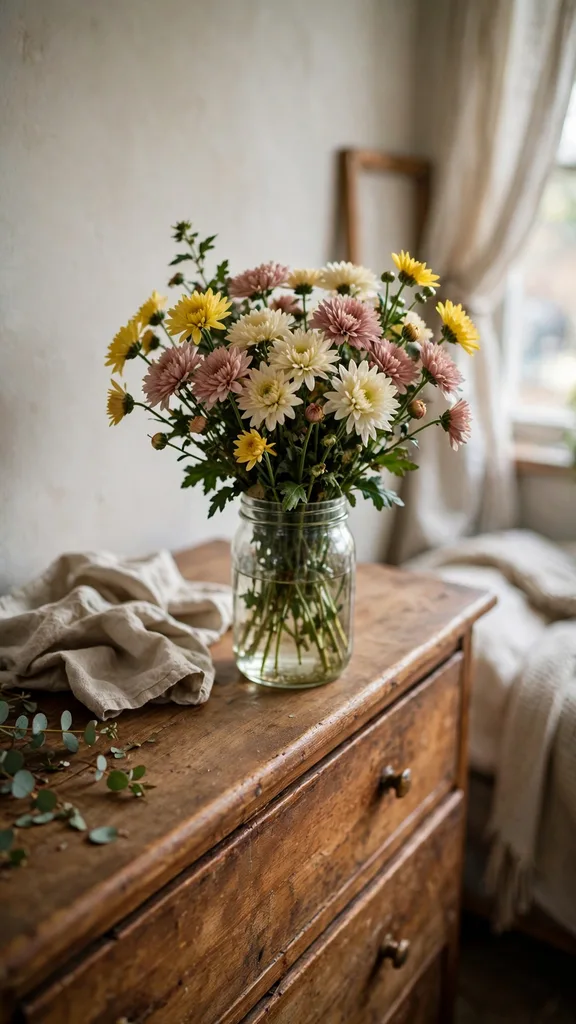
20. Bedroom Nightstand Bud Vase
A bud vase on the nightstand puts one flower beside the bed, small enough to enjoy without scent filling the room. Choose a vase under 15 centimetres (6 inches) tall, place a single rose stem or a single carnation in it, and keep the vase on the far side of the nightstand from the lamp, so lamp heat never warms the water. A single stem suits the nightstand, since a full bouquet overwhelms a small sleeping room.
Change the water every other day, and recut the stem by 2.5 centimetres (1 inch) at each change, since a single stem in a small vase drinks its water down fast. Remove the vase from the nightstand when children visit, since a small vase tips easily during play.
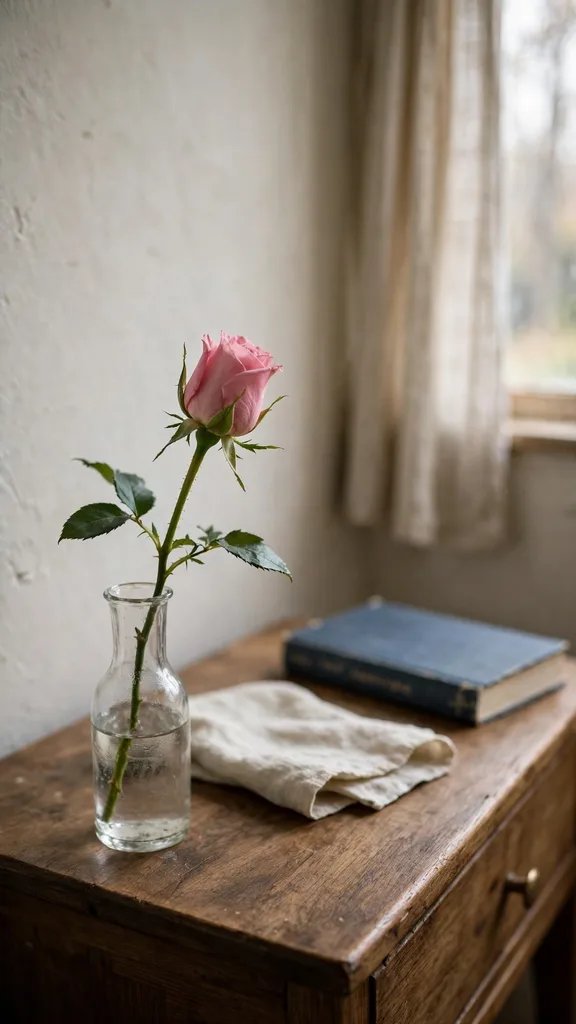
21. Bedroom Windowsill Flower Box
A flower box on the bedroom windowsill turns the window into a flower frame for the bed. Fill a box 60 centimetres (24 inches) long with potted mums in one colour, set the box on the sill inside the glass, and keep it clear of the window latch so the window still opens. A single colour suits the bedroom, since a calm palette helps the room rest.
Move the box 15 centimetres (6 inches) back from the glass on frost nights, since cold glass chills the soil and the roots. Water each pot in the box individually, and empty the box tray after watering, since standing water in a tray rots roots within days.
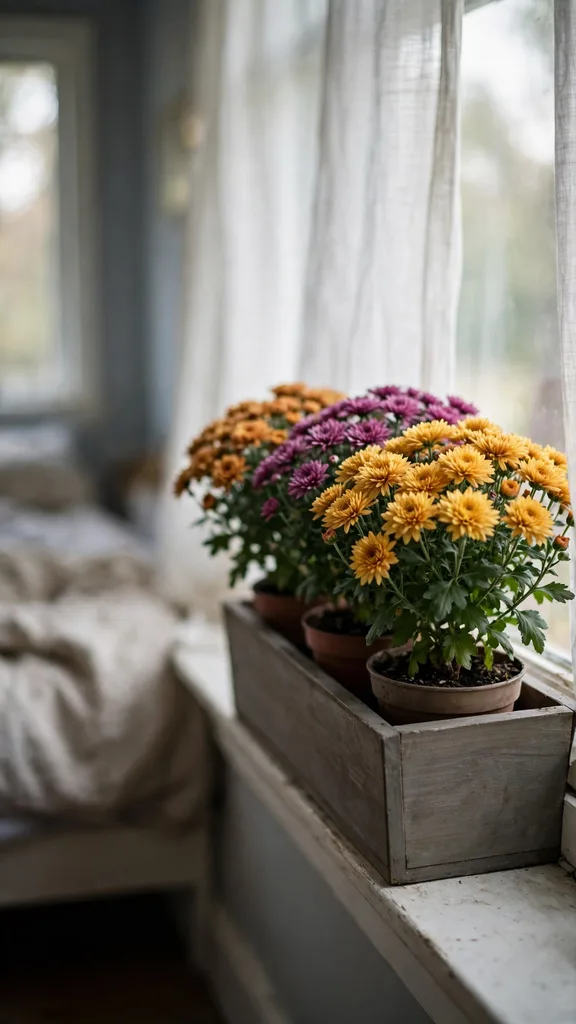
22. Bedroom Reading Corner Floor Vase
A floor vase in the bedroom reading corner gives the quiet corner a tall flower accent without a new table. Set a vase 60 centimetres (24 inches) tall in the corner behind the chair, fill it with tall stems such as gladioli cut to 75 centimetres (30 inches), and keep the vase against two walls so it cannot tip into the chair. Tall stems suit this corner, since they fill vertical space that a small room otherwise wastes.
Keep the vase clear of the curtain, since curtain fabric brushing stems breaks blooms and sheds petals onto the chair. Refresh the water every other day, and pull any stem that fades at once, since one fading stem in a tall vase draws the eye first.
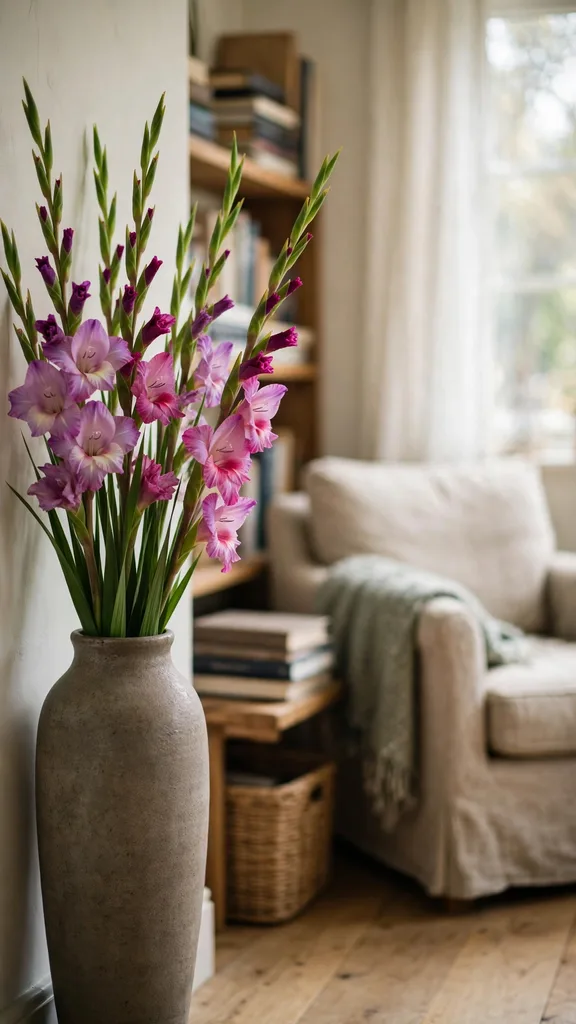
23. Bedroom Vanity Flower Posy
A small posy on the bedroom vanity adds flowers to the dressing ritual without crowding brushes and bottles. Set a jar 15 centimetres (6 inches) tall at the vanity end farthest from the mirror lights, fill it with three stems of one flower type, and keep the posy scent light, since strong scent near the face overwhelms in the morning. Carnations suit this posy, since they carry colour with little scent.
Keep the jar clear of hair spray and perfume, since sprays coat petals and shorten bloom life. Change the water every other day, and wipe the jar rim each morning, since vanity dust settles on glass fast and dulls the display.
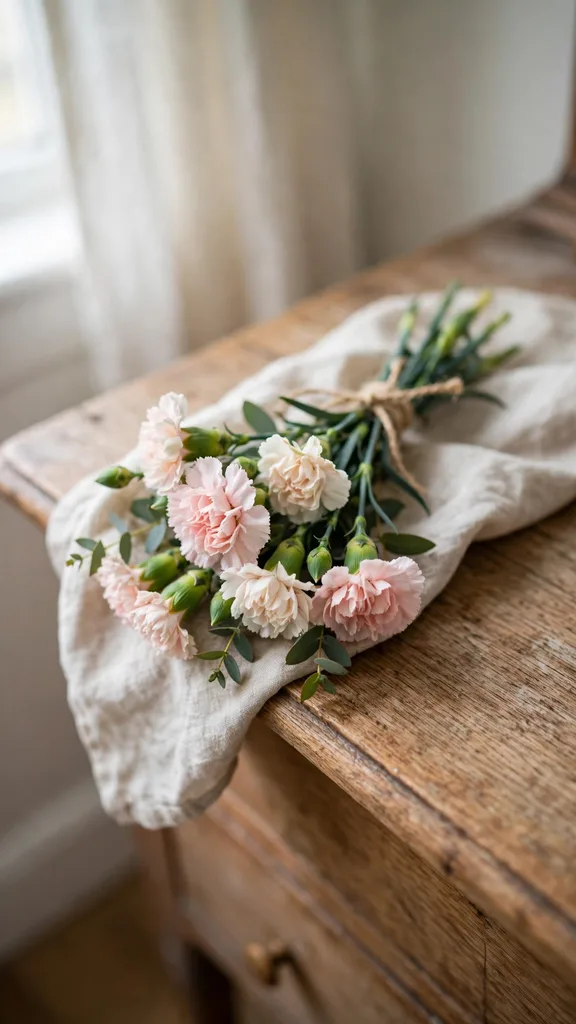
24. Bathroom Vanity Flower Jar
A flower jar on the bathroom vanity gives the smallest room a flower note, if the jar sits outside the splash zone. Place a jar 15 centimetres (6 inches) tall at the vanity end farthest from the tap, fill it with one orchid stem or three carnations, and keep the jar clear of toothbrushes and soap, since soap in vase water ends the arrangement. Carnations suit the bathroom, since they tolerate steam better than roses.
Change the water every other day, since warm bathroom air breeds bacteria in vase water faster than cool rooms. Move the jar to a cooler room when the bathroom stays steamy for hours, since sustained steam wilts petals even on tough flowers.
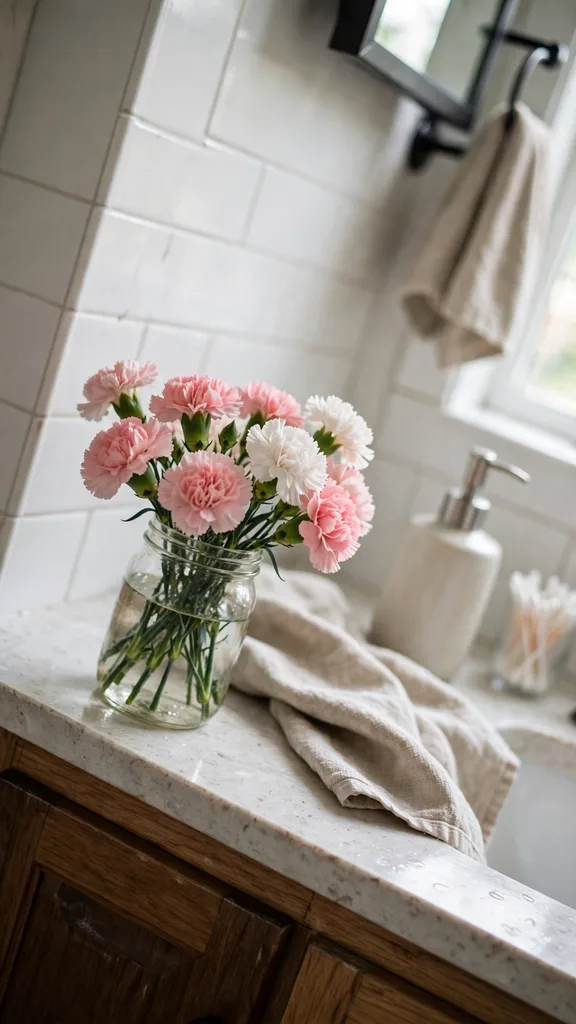
25. Bathroom Windowsill Flower Pot
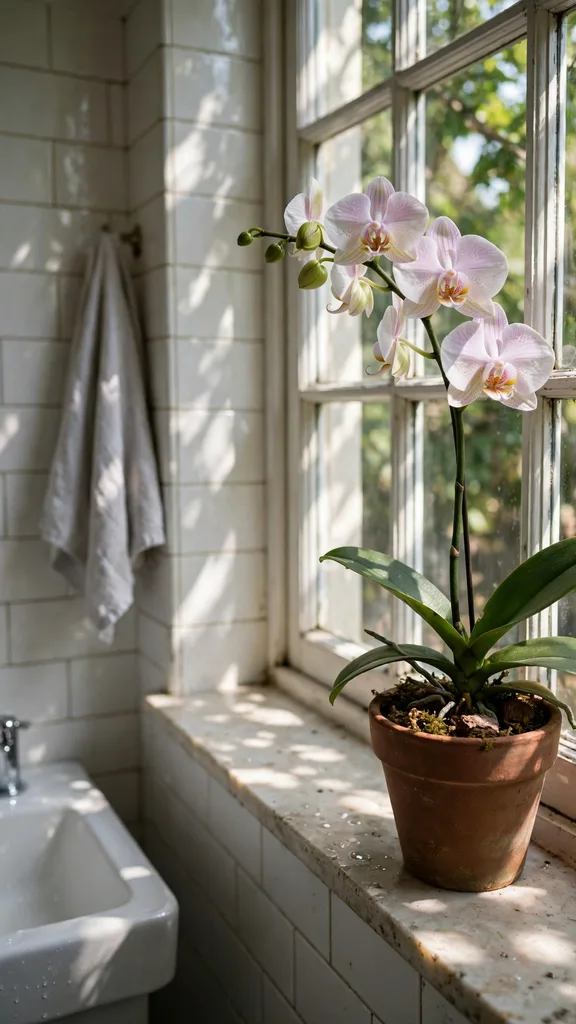
A flower pot on the bathroom windowsill enjoys the brightest and most humid spot in the house, which suits plants that enjoy moisture. Set a potted orchid or a potted African violet in a pot 15 centimetres (6 inches) wide on the sill, and keep the pot clear of the window latch so the window still opens for ventilation. A potted plant suits this sill better than cut stems, since it drinks humidity from the air as well as water from the soil.
Water the pot only when the top 2.5 centimetres (1 inch) of soil feels dry, since bathroom humidity keeps soil damp longer than other rooms. Empty the saucer after watering, and wipe leaves weekly, since steam leaves mineral spots on broad leaves.
26. Bathroom Shelf Flower Posy
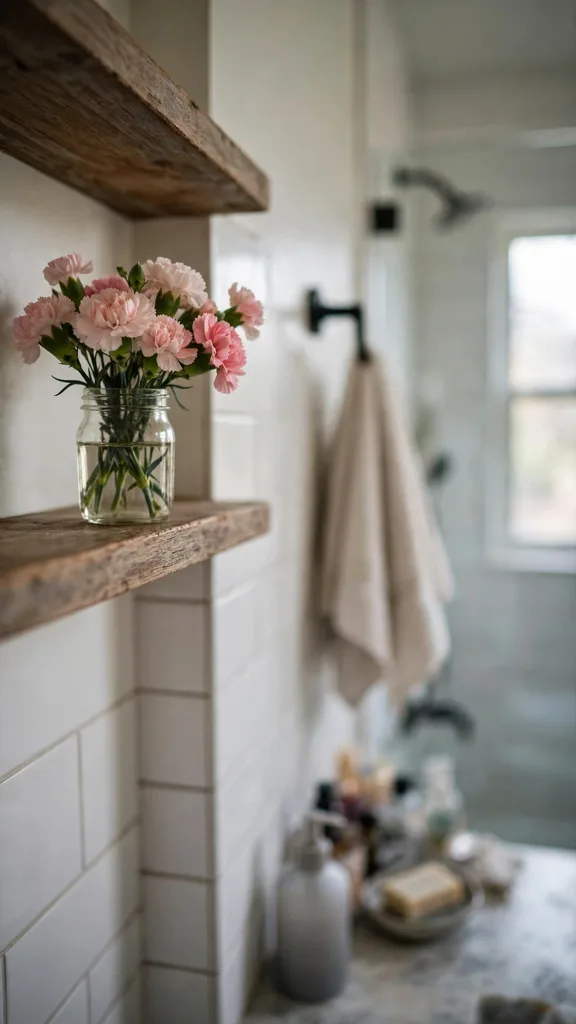
A posy on a bathroom shelf puts flowers above the splash line, where they stay dry and visible. Set a small jar on a shelf at least 150 centimetres (59 inches) above the floor, fill it with three carnation stems, and keep the jar at the shelf end farthest from the shower, since shower steam reaches the near end first. Carnations suit this shelf, since they tolerate steam better than roses and keep colour in warm air.
Fix the shelf into studs, since a watered jar above head height must never fall. Check the water each morning, since a small jar in a warm bathroom loses water fast, and replace any stem that wilts at once.
27. Bathroom Towel Rail Flower Bundle
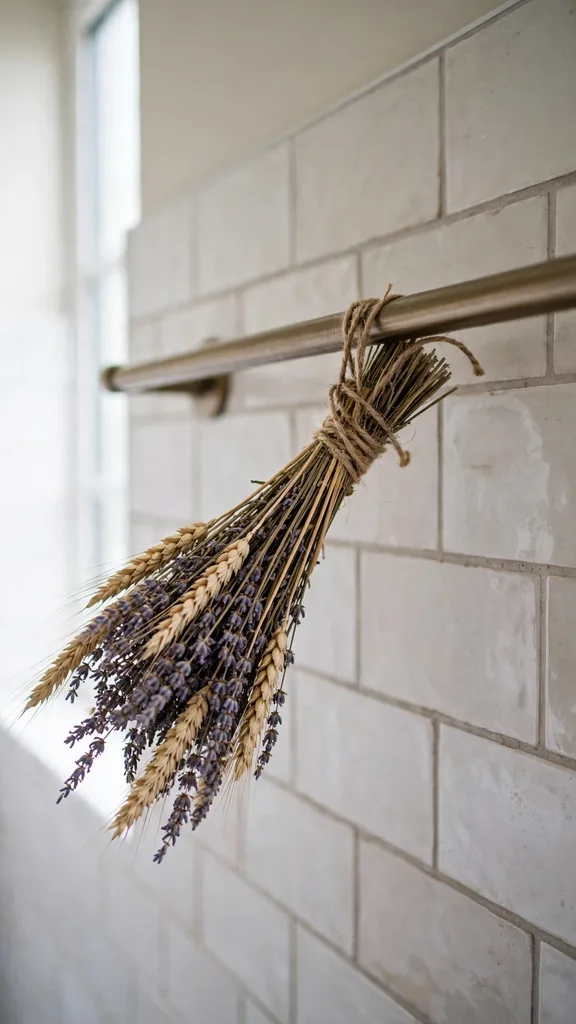
A small flower bundle tied to the end of a towel rail gives the bathroom a flower note without a new surface. Tie three dried lavender stems and two dried wheat stems with twine, hang the bundle from the rail end farthest from the shower, and keep it clear of towels that will crush it. Dried stems suit this spot, since they need no water and tolerate bathroom humidity for weeks.
Keep the bundle away from direct shower spray, since wet dried stems mould rather than dry. Replace the bundle when its scent fades, and never hang fresh stems on a towel rail, since fresh stems without water fade within hours.
28. Hallway Wall Ledge Flower Row
A wall ledge in the hallway holds a flower row that guests pass without ever stepping around it. Fix a ledge 15 centimetres (6 inches) deep at eye level, set four small jars on it, one flower type per jar, and keep the ledge clear of coat hooks so coats never brush the jars. Mums suit this row, since their dome shape reads clearly from the side as guests walk past.
Fix the ledge into studs, since four watered jars weigh more than an empty ledge suggests. Check the jars each morning, since hallway air from an opening front door dries small jars fast, and keep the ledge clear of keys and parcels.
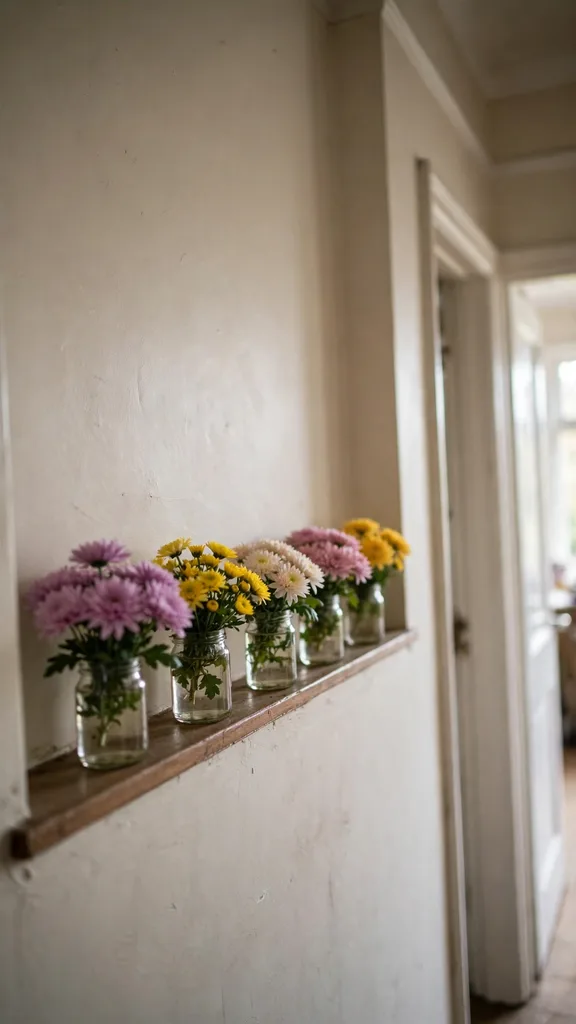
29. Hallway Stair Landing Flower Pot
A flower pot on the stair landing turns the turn of the stairs into a flower pause. Set a potted mum in a pot 30 centimetres (12 inches) wide against the landing wall, and keep the pot clear of the stair tread edge by at least 15 centimetres (6 inches), so no foot meets it on the turn. A potted plant suits the landing, since it needs no vase water on a stairwell floor.
Water the pot over a bucket in the kitchen, and return it to the landing only after it stops dripping, since drips on stair carpet stain and loosen the pile. Turn the pot a quarter turn every two days, so it grows evenly toward the landing window light.
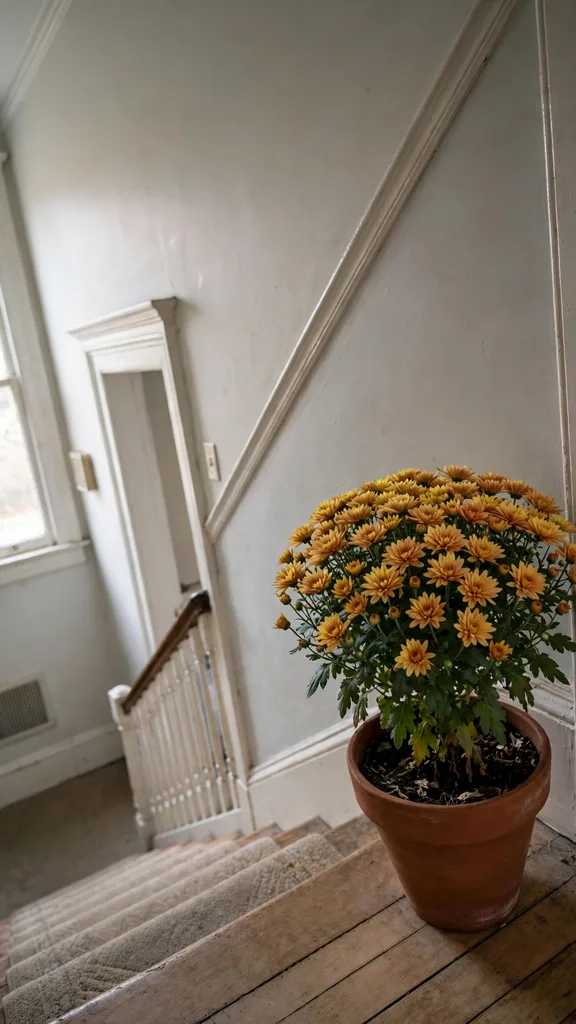
30. Hallway Doorway Flower Jar Pair
A pair of flower jars framing a hallway doorway marks the passage from one room to the next with flowers. Set one jar on a small wall bracket on each side of the doorway, keep each jar under 20 centimetres (8 inches) tall, and fill both jars with the same flower type so the pair reads as a gateway. Carnations suit this pair, since they hold colour in a draughty hallway longer than roses.
Fix each bracket into a stud, since a jar above a doorway must never fall onto a passing guest. Keep the jars clear of the door frame, so the door opens fully without brushing a stem, and check the water each morning, since draughts dry small jars fast.
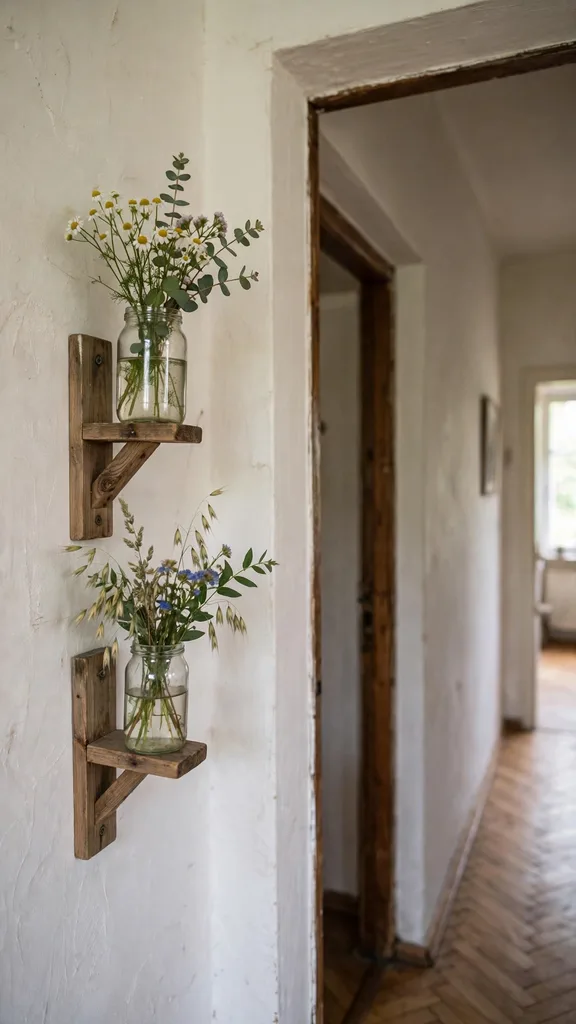
31. Hallway Mirror Ledge Flower Posy
A posy on a hallway mirror ledge doubles its flowers in reflection, like the entryway mirror pair on a smaller scale. Set a jar 15 centimetres (6 inches) tall on the mirror ledge, fill it with three stems of one flower type, and keep the jar at the ledge end farthest from the door, so the door never brushes it. Alstroemeria suits this posy, since its buds keep opening over days.
Keep the jar behind the ledge front edge by 5 centimetres (2 inches), so it never gets knocked by a shoulder in a narrow hallway. Top up the water each evening, and pull any stem that clouds the water at once, since a small jar shows cloudy water first.
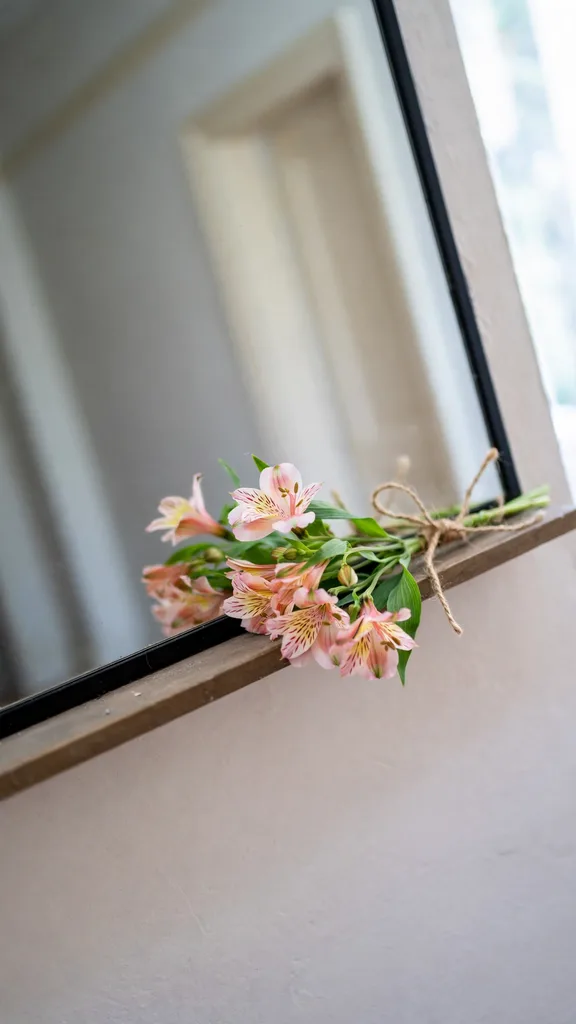
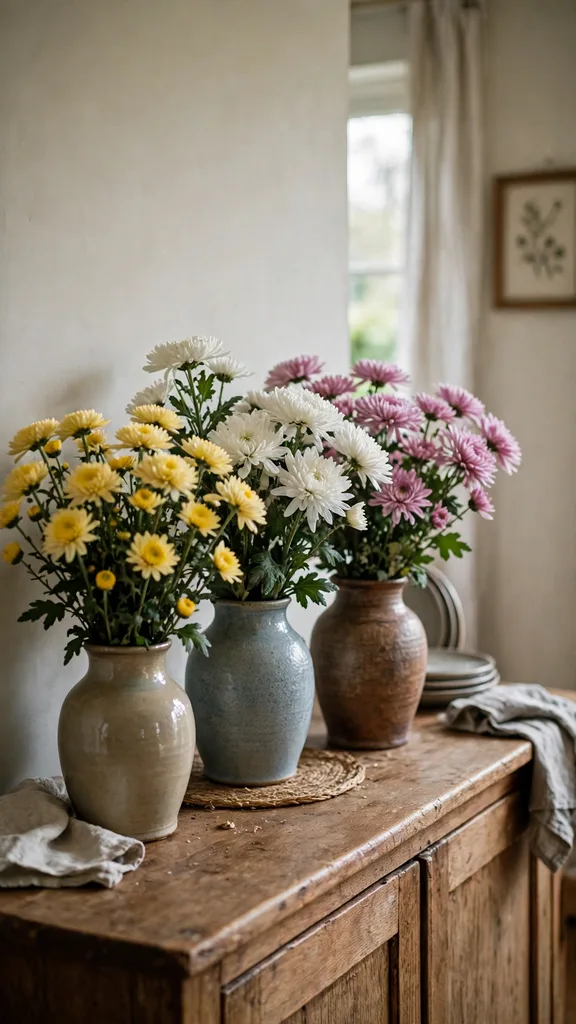
32. Dining Room Sideboard Flower Line
A flower line along the dining room sideboard dresses the dining room without touching the dining table, which belongs to the centerpiece. Set three vases of graduated heights along the sideboard back edge, one flower type across all three, and keep the tallest vase under 45 centimetres (18 inches) so the line stays low and calm behind dinner. Chrysanthemums suit this line, since they hold colour through a long evening in a warm dining room.
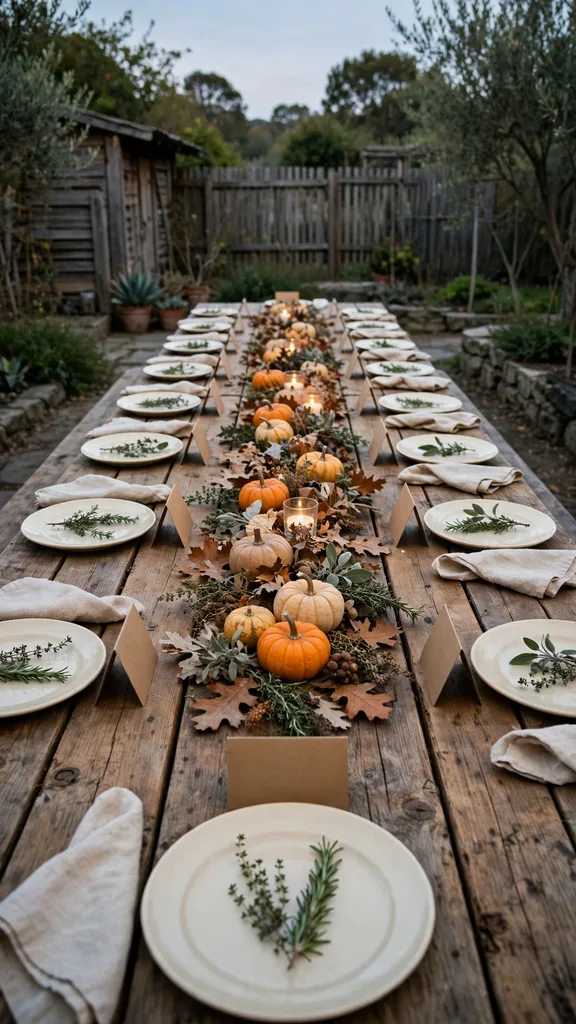
For the dining table itself, from flower selection to the low sightline rule, see [Thanksgiving Floral Centerpieces: 21 Flower-First Ideas for a Table in Full Bloom](https://growit.wiki/thanksgiving-floral-centerpieces/. Keep the sideboard line in the same palette as the table flowers, so the room reads as one display, and keep the sideboard top clear of serving dishes that would crowd the vases.
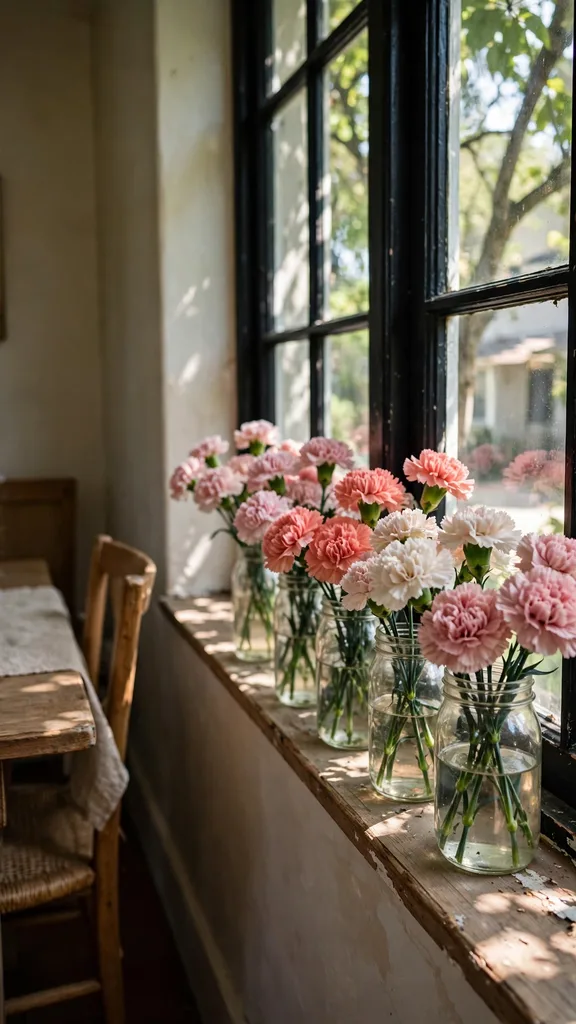
33. Dining Room Windowsill Flower Row
A flower row on the dining room windowsill gives dinner guests flowers at the edge of the room, away from the table entirely. Line up four jars of equal height on the sill, one flower type per jar, and keep the jars clear of the window latch so the window still opens for fresh air. Carnations suit this row, since they last through the holiday weekend and keep colour in a warm dining room.
Move the jars 15 centimetres (6 inches) back from the glass on cold nights, since cold glass chills vase water. Rotate the row so each jar gets its turn away from the brightest pane, and check for fallen leaves in the water each morning, since leaves in water breed bacteria.
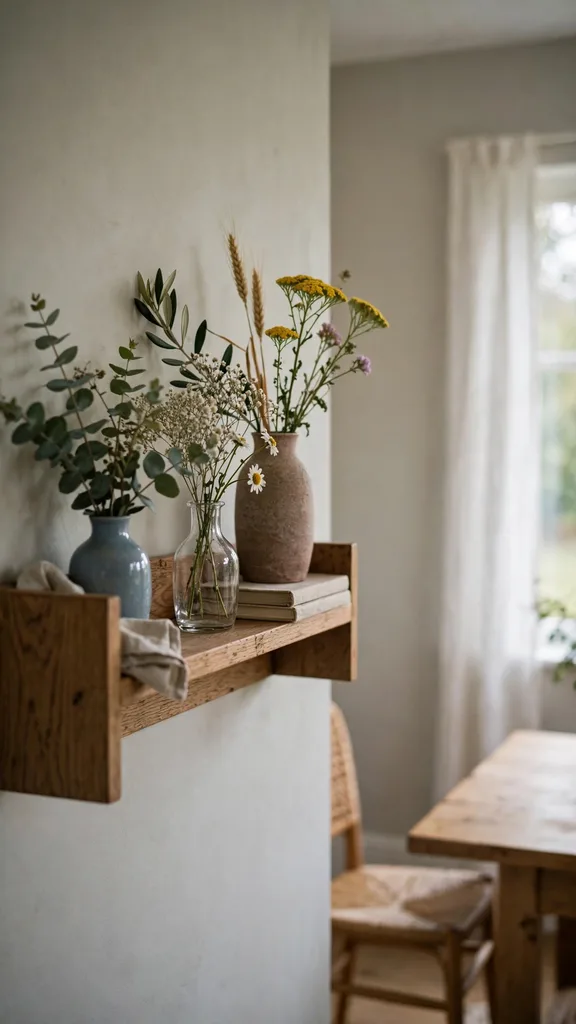
34. Dining Room Wall Shelf Flower Vases
Flower vases on a dining room wall shelf lift flowers above the serving level, where they decorate the room without claiming table or sideboard space. Fix a shelf at eye level on the wall opposite the window, set three vases on it, and fill each vase with one flower type in the room palette. Roses suit one of the three vases for scent, with mums in the other two for lasting colour.
Fix the shelf into studs, since three watered vases weigh more than an empty shelf suggests. Keep the shelf clear of the serving route, so trays never pass under a vase, and check the water each morning, since a warm dining room dries small vases fast.
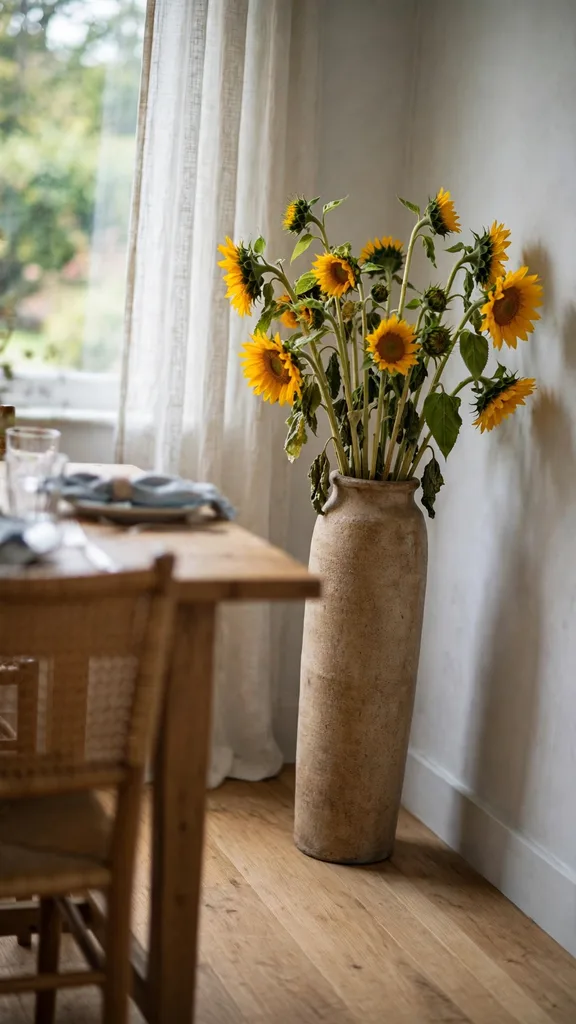
35. Dining Room Corner Floor Vase
A floor vase in the dining room corner fills the one corner that serving traffic never uses. Set a vase 60 centimetres (24 inches) tall in the corner farthest from the kitchen door, fill it with tall stems such as sunflowers cut to 75 centimetres (30 inches), and keep the vase against two walls so it cannot tip into the serving path. Tall stems suit this corner, since they give the dining room height without touching the table.
Anchor the vase with stones in the bottom third before adding water, since a tall vase near a serving route must resist bumps. Keep the vase at least 60 centimetres (24 inches) from any heat vent, since hot dry air shortens the life of every cut stem near it.
36. Mantel Flower Garland Line
A flower line along the mantel shelf turns the fireplace wall into a flower display without a single item on the dining table. Set a row of small jars along the mantel shelf, one flower type per jar, and keep each jar under 15 centimetres (6 inches) tall so the row never climbs toward the mirror or the artwork above. Chrysanthemums and carnations suit this row, since both hold colour in the warm air above a fireplace.
Burn no fire under a fresh flower row, or move the jars to a cooler room for the evening, since rising heat wilts mantel flowers fast. Check the water each morning, since mantel air runs warmer than the rest of the living room, and replace any stem that wilts at once.
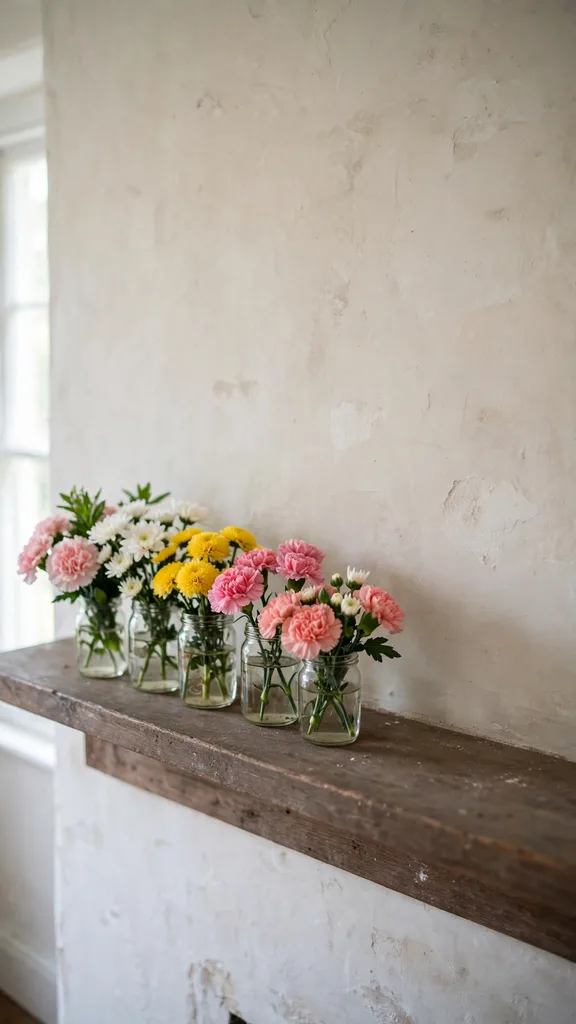
37. Fireplace Hearth Flower Pot Pair
A pair of flower pots on the hearth flanks the fireplace with living colour at floor level. Set one potted mum on each side of the firebox, keep each pot at least 90 centimetres (36 inches) from the firebox opening, and choose pots 30 centimetres (12 inches) wide so the pair reads as a frame rather than a block. Potted mums suit the hearth, since they tolerate dry fireplace air better than cut stems.
Move both pots to a cooler room when the fire burns all evening, since sustained heat fades potted blooms fast. Keep dried stems away from this spot entirely, since dry foliage near a fire is a fire risk, and sweep ash from pot rims each morning.
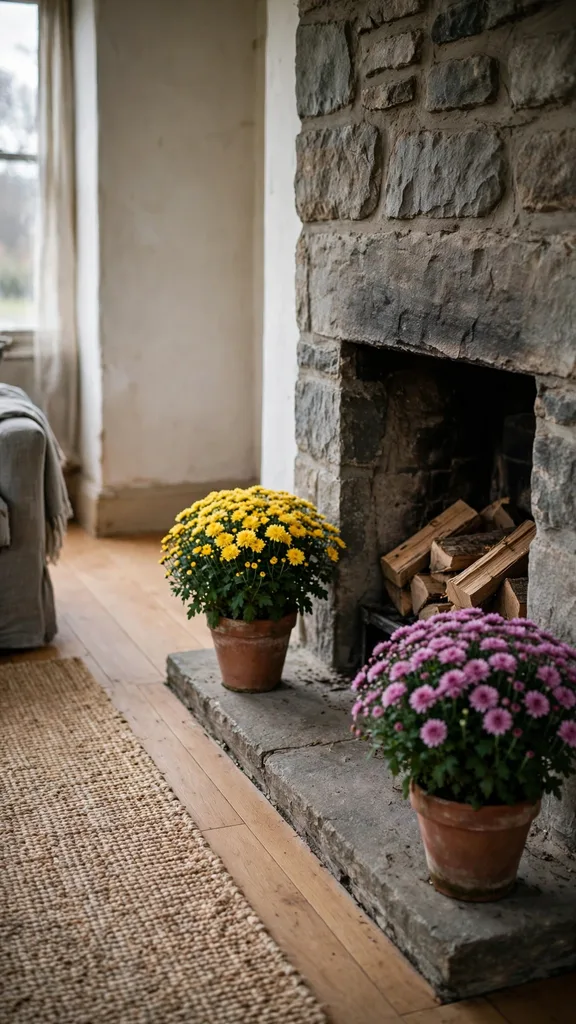
38. Front Window Flower Box Display
A flower box in the front window dresses the house from the street and the room at once. Fill a box 90 centimetres (36 inches) long with potted mums in one colour, set the box on the inside sill of the front window, and keep it clear of the window latch so the window still opens. A single colour suits the front window, since it reads clearly from the street as one bold band.
For the whole-home side of this display, from entry styling to rooms beyond the door, see [Thanksgiving Decor for Home](https://growit.wiki/thanksgiving-decor-for-home/. Water each pot in the box individually, and empty the box tray after watering, since standing water in a tray rots roots within days.
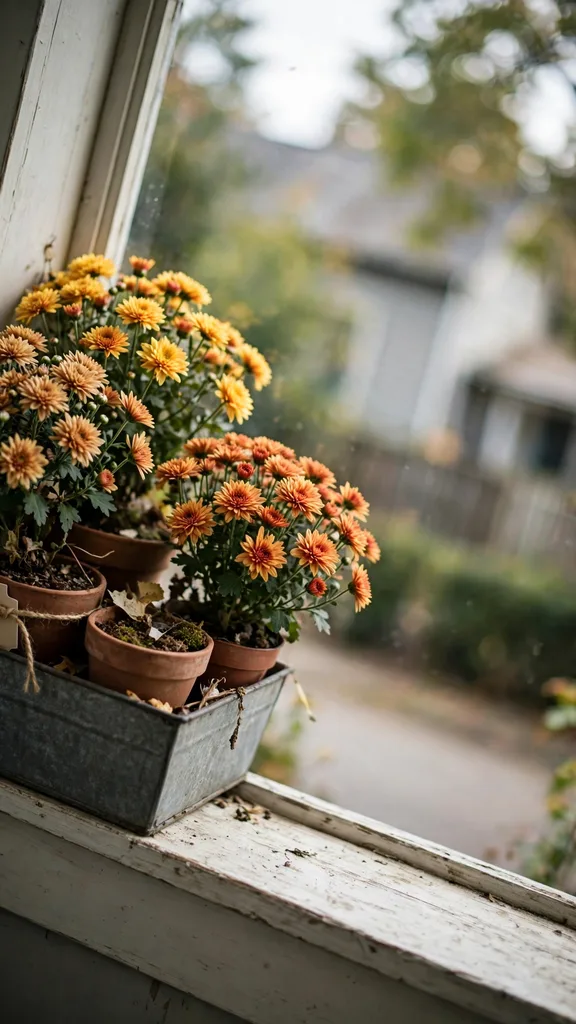
39. Bay Window Flower Seat Row
A row of flower pots along a bay window seat turns the sunniest seat in the house into a flower shelf. Set five small pots along the seat back edge, one flower type per pot, and keep the pots clear of the seat cushion edge by 15 centimetres (6 inches), so sitters never brush them. Small mums and violets suit this row, since both enjoy bright light and stay compact.
Move the pots 15 centimetres (6 inches) back from the glass on frost nights, since cold glass chills soil and roots. Rotate the row weekly, so each pot gets its turn away from the brightest pane, and wipe the seat edge each morning, since fallen petals gather along a window seat fast.
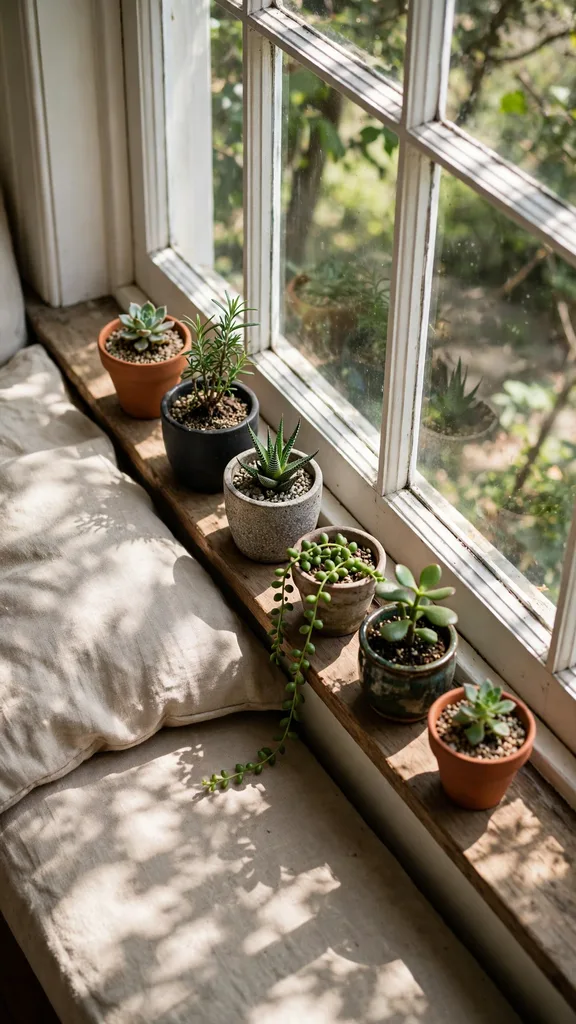
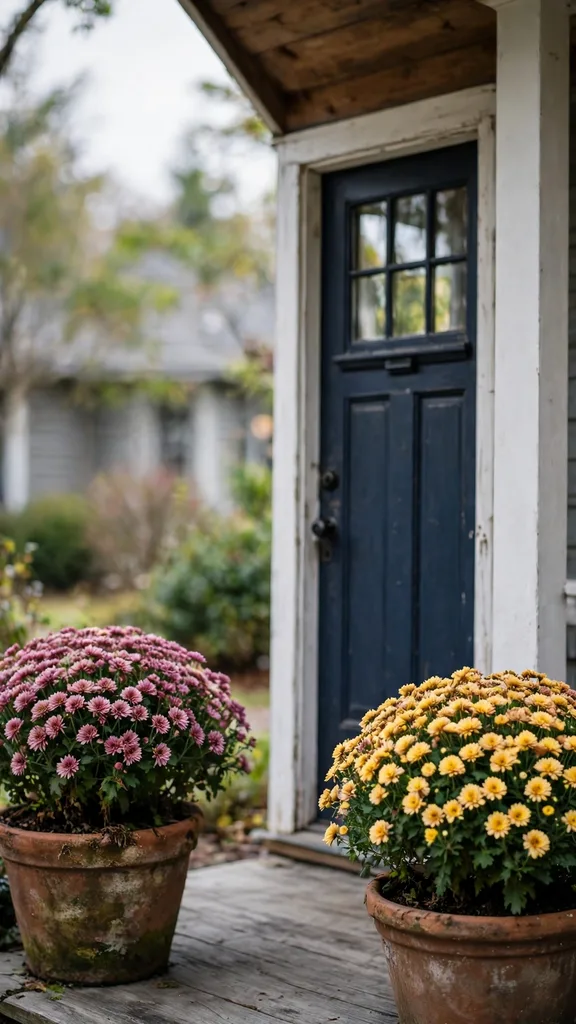
40. Covered Porch Flower Planter Pair
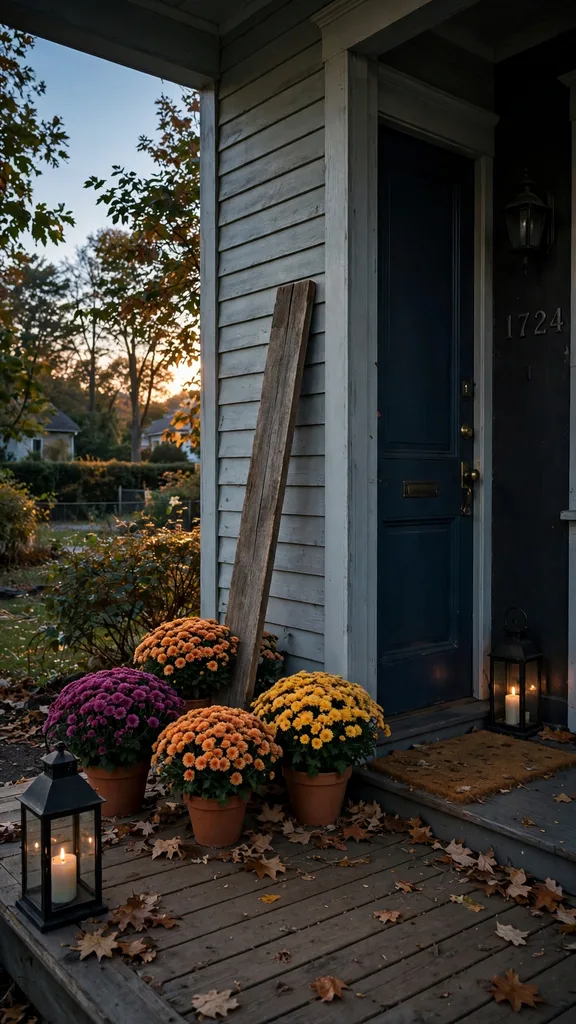
A pair of flower planters on a covered porch frames the front door with living colour that guests meet before entering. Set one planter on each side of the door, plant each planter with hardy mums in one colour, and keep each planter under 60 centimetres (24 inches) wide so the door path stays clear. Hardy mums suit a covered porch, since they tolerate cool November nights under a roof better than tender blooms.
For living mum care on a porch, from buying in bud to keeping blooms fresh, see [Mums and Pumpkins Porch Decor Ideas That Last](https://growit.wiki/mums-and-pumpkins-porch-decor-ideas/. Water each planter when the top 2.5 centimetres (1 inch) of soil feels dry, and group both planters against the house wall on frost nights, since a wall shields pots from freezing wind.
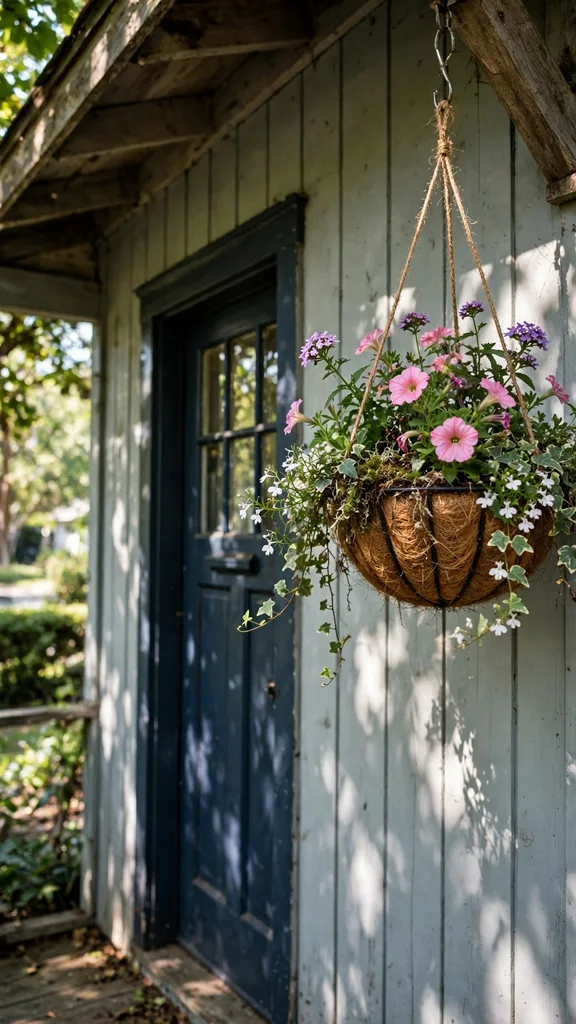
41. Porch Hanging Flower Basket
A hanging flower basket on the porch adds flowers at eye level above the entry, where floor space stays free. Hang one basket from a sturdy bracket on the wall side of the porch, keep its base at least 200 centimetres (79 inches) above the tread, and plant it with trailing mums or trailing ivy mixed with one flowering plant. One basket suits a porch entry, since a second basket drips onto guests and crowds the air above the path.
Water the basket over a bucket, and check the bracket monthly, since a basket gains weight after watering and a tired bracket sags without warning. Bring the basket indoors on hard frost nights, since a hanging basket freezes sooner than a ground planter.
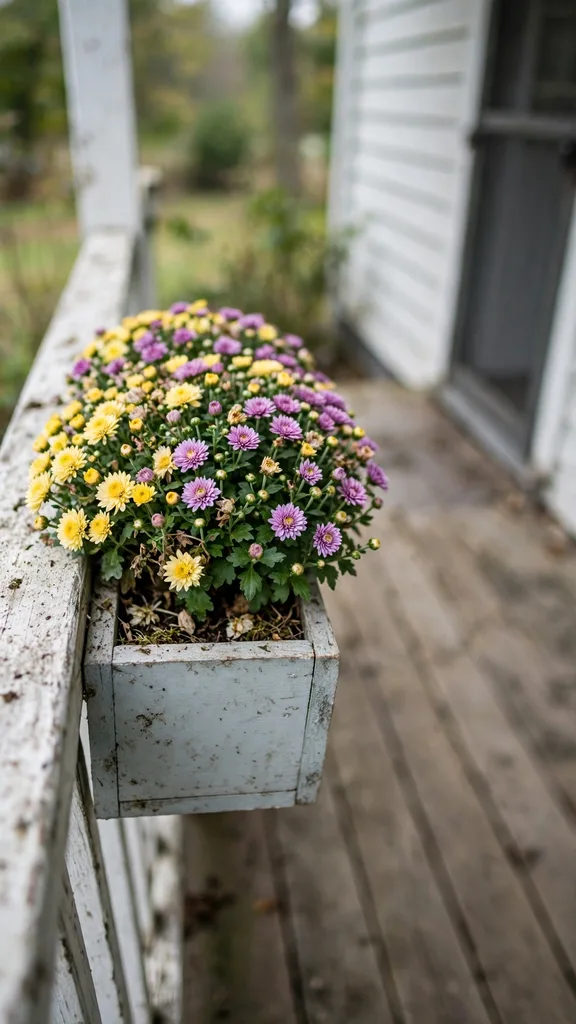
42. Porch Railing Flower Box
A flower box on the porch railing turns the rail into a flower row facing the street. Fix a box shorter than the rail length to the outside of the rail, plant it with compact mums in one colour, and keep the inner side of the rail clear for hands, since guests need a grip on the rail in wet weather. Compact mums suit this box, since their dome shape reads clearly from the street.
Fix the box with brackets rated for a watered box, since a watered box weighs far more than an empty one. Keep stems clear of the grip zone, and never let stems trail across the rail top where hands grip, since a stem across the grip turns a flower accent into a hazard.
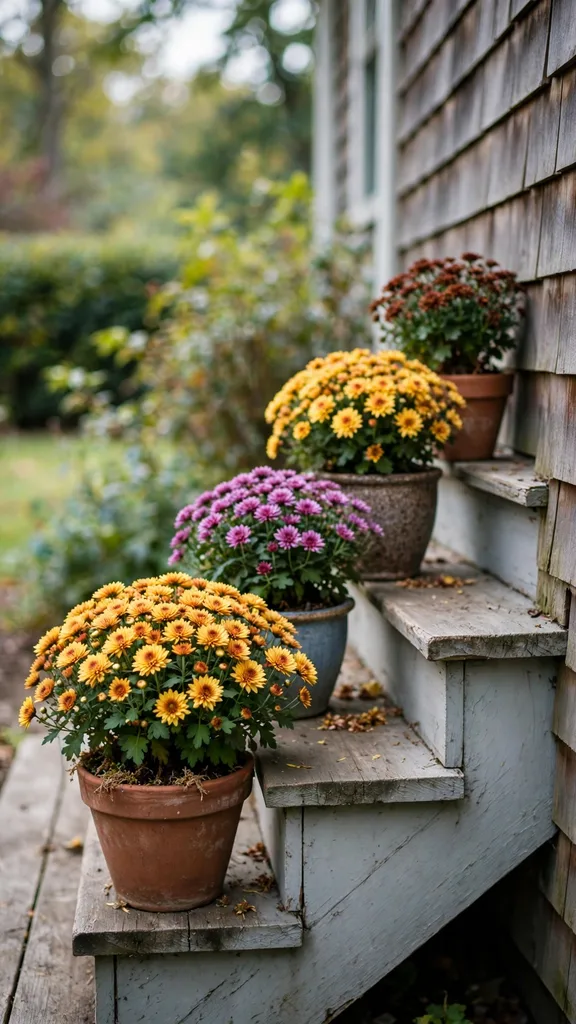
43. Porch Steps Flower Pots
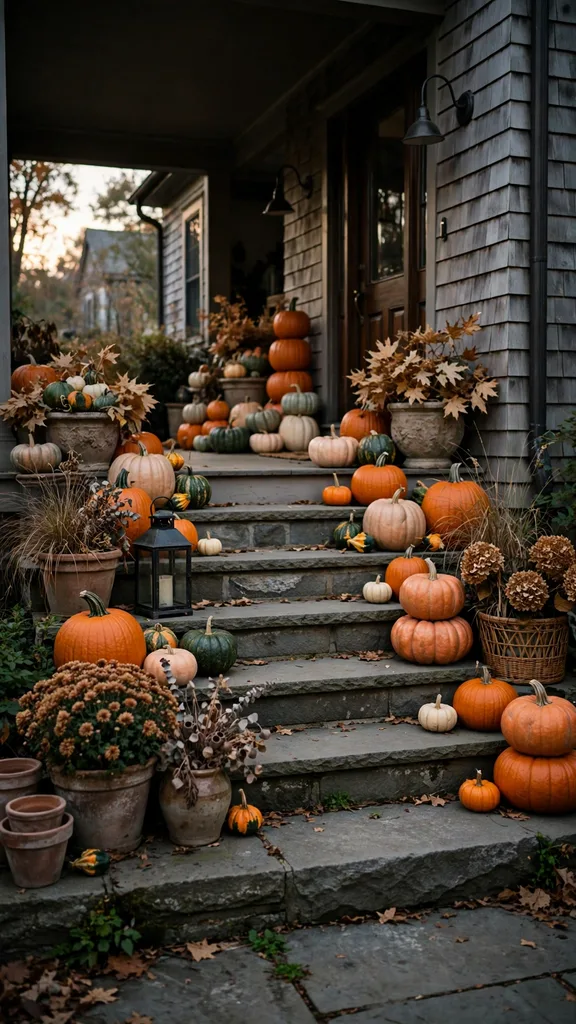
Flower pots on the porch steps guide guests up to the door with colour at each level. Place one pot on the wall side of every second step, keep the open side of each step fully clear for feet, and plant each pot with one hardy mum in the same colour so the steps read as one line. Pots on every second step suit a porch, since pots on every step crowd feet and pots on one step alone look lost.
Keep every pot flush with the riser and never let a pot lip overhang the tread edge, since an overhang catches toes in low light. Move the pots indoors on hard frost nights, and return them to the same steps each morning, since a changed step layout confuses feet in the dark.
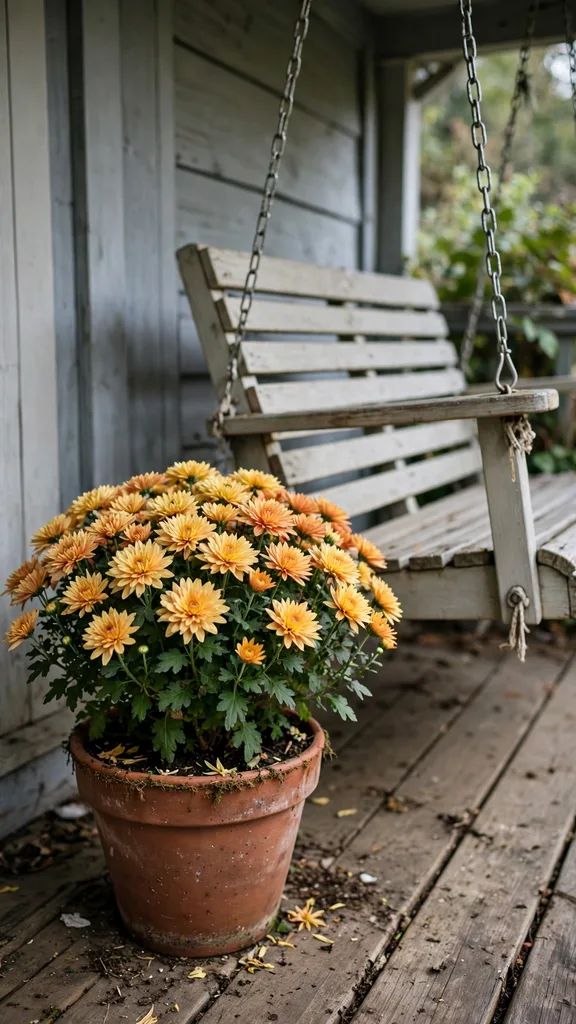
44. Porch Swing-Side Flower Pot
A flower pot beside the porch swing gives the sitting spot its own flowers, close enough to enjoy without leaving the swing. Set a potted mum in a pot 30 centimetres (12 inches) wide on the wall side of the swing, and keep the pot clear of the swing arc, so the swing never strikes it. A potted plant suits the swing side, since it survives porch wind better than cut stems in a vase.
Anchor the pot with stones in the base before adding soil, since a pot near a moving swing must resist bumps. Water when the top 2.5 centimetres (1 inch) of soil feels dry, and sweep fallen petals from the swing seat each morning.
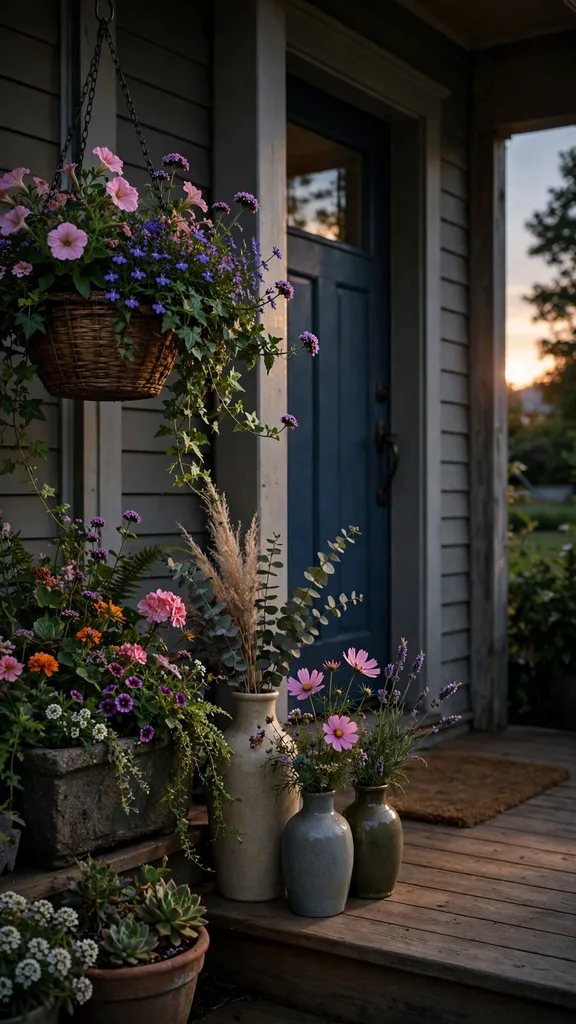
45. Porch and Entryway at Full Dusk
The porch and entryway at full dusk prove the whole room by room display, because the porch planters, the hanging basket, the entryway trio, and the warm light read together only when daylight fades. Stand at the walkway at dusk, check that the display reads as one shape from the street to the door, and check that no pot blocks the door path in low light. A display that passes its dusk check welcomes guests with flowers from the first step to the last room.
[Illinois Extension](https://extension.illinois.edu/node/21438) notes that fresh-cut flowers prefer cool temperatures of 18 to 22 degrees Celsius (65 to 72 degrees Fahrenheit), that carnations stay vibrant for 7 to 14 days while roses last a shorter time, and that water should be replaced every 2 to 3 days with a fresh stem cut at each change. Use that rhythm for the whole house: cool rooms for delicate stems, tough flowers for warm rooms, and fresh water on a fixed schedule through the holiday weekend.
| Room | Start With | Flower | Watch For |
|---|---|---|---|
| Entryway | Console vase trio | Chrysanthemums | Door swing clearance |
| Living room | Sofa-side floor vase | Carnations | Heat vent distance |
| Kitchen | Windowsill jars | Mums and herbs | Sink splash zone |
| Bedroom | Nightstand bud vase | Single rose | Scent strength at night |
| Bathroom | Vanity jar | Single carnation | Steam and splash |
| Porch | Planter pair | Hardy mums | Frost nights |
Frequently Asked Questions
How do flowers last in every room at once?
Treat every room as its own vase, with one routine repeated everywhere: a clean vase, a fresh angled cut, flower food in the water, and fresh water every other day. Place delicate stems in cool rooms and tough mums and carnations in warm rooms, and keep every arrangement away from heat vents, radiators, and direct sun. Check water levels each morning, since small jars drink down fast, and pull any stem that clouds the water at once.
Which flowers last longest in a warm house?
Carnations last longest in a warm house, staying vibrant for 7 to 14 days with fresh water and a cool corner. Chrysanthemums come next, holding colour for days in a heated room when their water stays clean. Roses last a shorter time, so use roses as single stems in cool rooms rather than full bouquets in warm rooms. Alstroemeria earns its place by opening new buds over days, so the arrangement changes without new stems.
Can one flower type carry every room?
One flower type can carry every room, and repetition is what makes a house feel dressed rather than decorated room by room. Choose chrysanthemums or carnations as the house flower, use them in every room, and vary the vessel instead: tall floor vases in living rooms, small jars on sills, and planters on the porch. Add one accent flower in two rooms only, so the accent reads as a deliberate note rather than a second theme.
How do I keep flowers safe around heat and children?
Keep every arrangement at least 60 centimetres (24 inches) from heat vents, radiators, and fireplaces, and keep flowers out of direct sun through glass. Place small jars behind shelf edges and brackets into studs, so no jar can fall onto a child below. Keep dried stems away from open flame entirely, and move fresh flowers to a cooler room when a fire burns all evening.
What happens to the flowers after Thanksgiving?
After Thanksgiving, keep the longest-lasting arrangements and retire the rest. Carnations and mums in cool rooms often last into the following week with fresh water every other day, so move the best stems to bedrooms and bathrooms. Compost spent blooms and stems, wash every vase with hot soapy water before reuse, and keep the porch planters, since hardy mums carry the porch into late November.
A house dressed room by room welcomes guests with flowers at every turn, from the porch planters to the bedroom windowsill, and it holds its shape through Thanksgiving week when each room gets the flowers that suit its light, its heat, and its water. Start at the door, repeat one flower across rooms, and let the dusk check decide the final arrangement.