
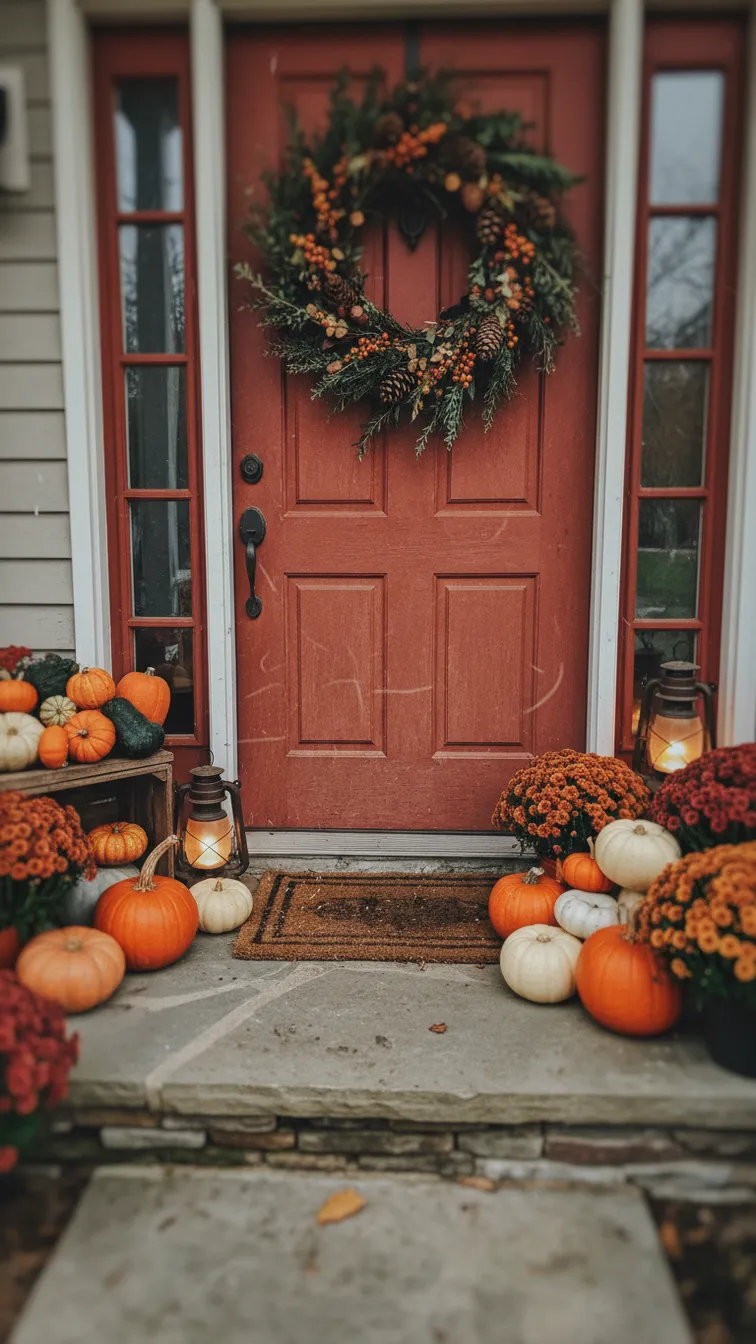

Spend 30 minutes cutting cedar and fir, then wire the bundles onto a frame before lunch. That is thanksgiving decor for home, from porch to parlor, built from the garden instead of the craft store. The rest of this page is 20 ideas, from the front door to the compost pile.
Work from the outside in. Harvest in the morning, while stems hold their water. Build on a covered table. Compost the lot after the meal.
The dining table is a different job. That work lives on the site’s Thanksgiving centerpieces. This page stays on the house: the porch, the mantel, the stair rail, and the front walk.
1. Frame the Front Door with a Foraged Evergreen Wreath
Snip cedar, fir, pine, or juniper into 15 to 20 cm sprigs. Wire the sprigs in overlapping bundles onto a plain wire frame, all pointing the same direction, until no frame shows. Tuck in dried seed heads, pinecones, or red berries, and finish with a burlap bow.

A mixed wreath reads richer than a single species. Cedar gives the drape, fir gives the density, juniper gives the blue-green edge.
Cut in the morning, when stems hold the most water, and strip the lower needles so the wire bites wood instead of foliage. Work with bundles of five to seven sprigs; smaller bundles lie flatter and hide the frame faster.
Mist the wreath every few days and hang it in shade. A dry wreath in full sun sheds its needles before the weekend. In shade it holds three to four weeks, long enough to carry the door from first frost to Thanksgiving.
2. Line the Porch Steps with Pumpkins and Mums
Set pumpkins on the porch steps in clusters of three or five. Put the largest pumpkin on the bottom step and shrink the sizes as they climb. Tuck pots of chrysanthemums between the clusters.
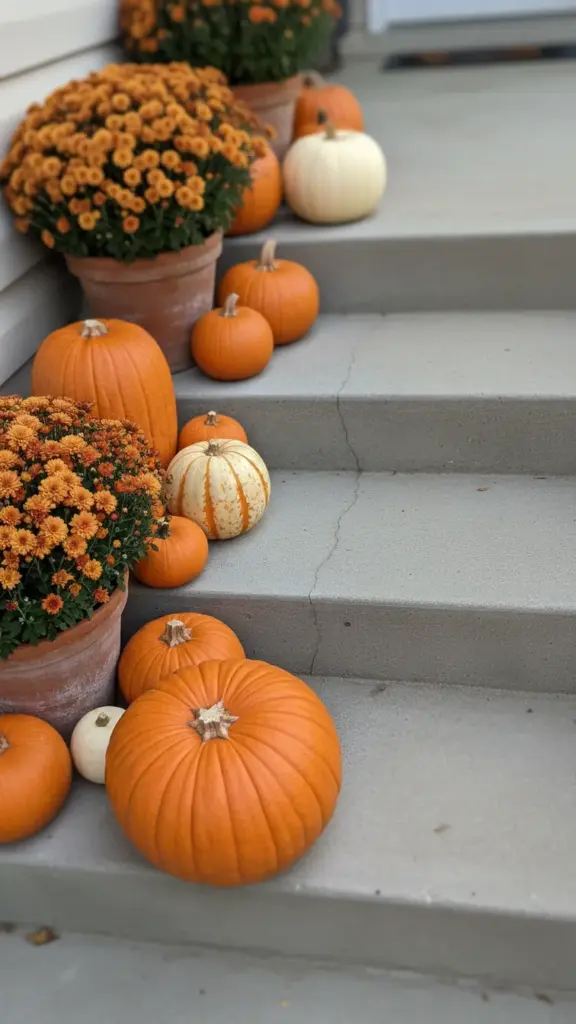
Odd numbers look deliberate. Even numbers look like storage. The shrinking sizes pull the eye up toward the door, which is the whole point of the steps.
Buy cushion-type mums for the street view; their mounded form reads at a distance where spidery types blur. Deadhead the spent blooms and the pot pushes new ones for weeks, sometimes right up to the holiday.
Water mums from the base so the blooms stay dry. Rotate the pots every few days. Pull any pumpkin that softens before it collapses. One rotten pumpkin stains a wooden step for the season.
3. Fill a Wooden Crate with Gourds by the Entry
Line a wooden crate or bushel basket with straw. Pile in ornamental gourds, warty, striped, and pear-shaped, and let them spill over the edges. Set the crate by the front door.
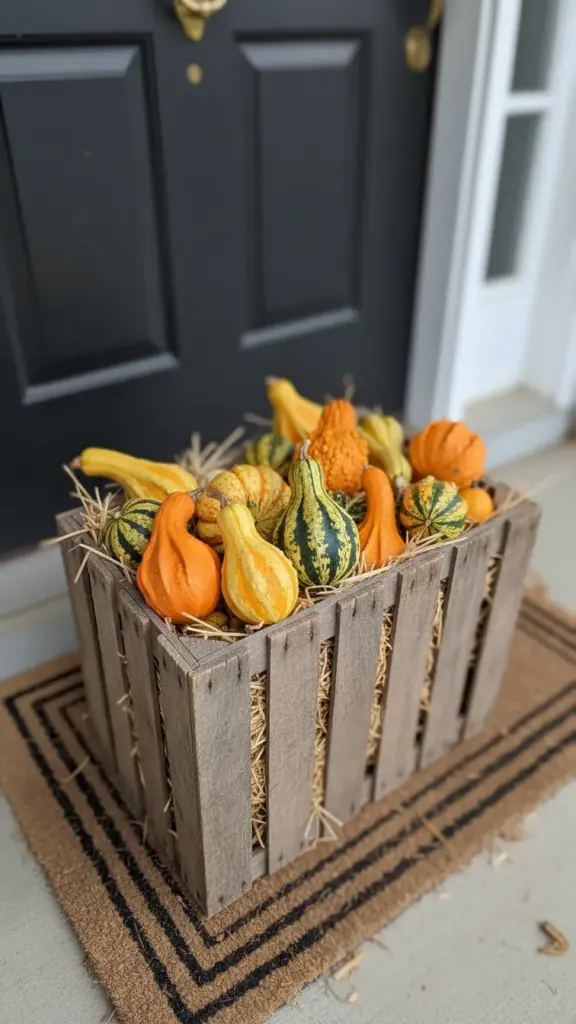
The straw does two jobs. It cushions the gourds and it fills the gaps, so a small harvest looks abundant.
A bushel basket works the same way and carries easier on two handles. Wedge a jar of water inside and the crate can hold fresh bittersweet or eucalyptus alongside the gourds. Rotate the display monthly so the same side never fades in the sun.
Move the crate around all season. By the door for the party, by the mailbox for the street. When the gourds soften, they go to compost and the crate goes back to the garage.
4. Hang Dried Corn Bundles on the Porch Posts
Gather five to seven ears of dried ornamental corn. Pull back a few husks to show the kernels. Bind each bundle tight with jute twine and hang one on each porch post.
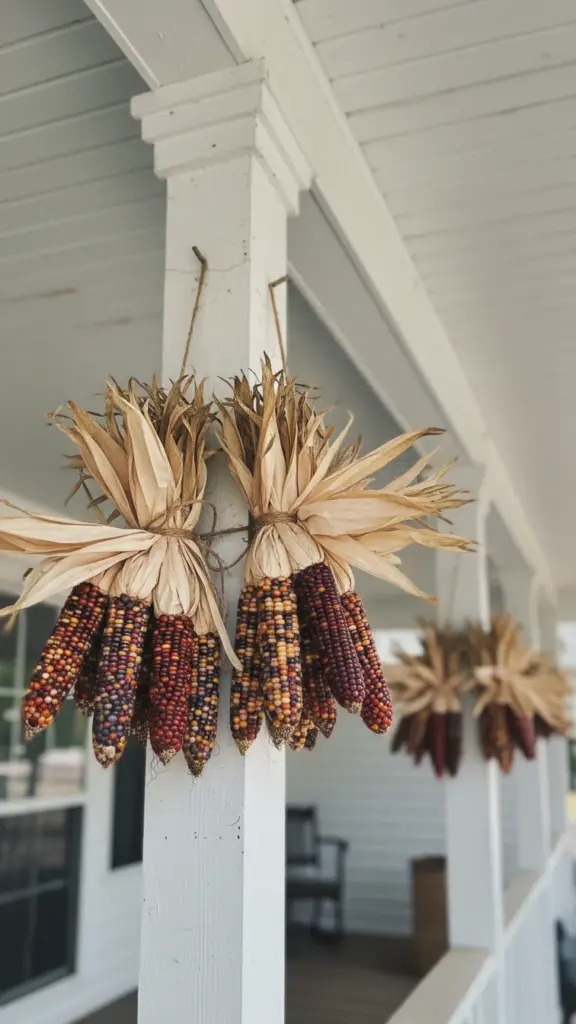
Keep the bundles under the roof. Wet husks mold in days. Dry husks hold for months.
Strawberry popcorn and miniature blue corn dry on the stalk and hang just as well. If one ear molds, pull it fast; mold moves ear to ear in a damp week. A spray of clear matte sealer, applied outdoors, adds weeks in wet climates.
Save kernels from the prettiest ears. Plant them in spring and next year’s porch decor grows itself.
5. Dress the Mantel with a Cedar and Eucalyptus Garland
Lay cedar or fir branches along the mantel, overlapping the stems until no wood shows. Weave in eucalyptus or dried lavender. Let the ends trail down both sides.
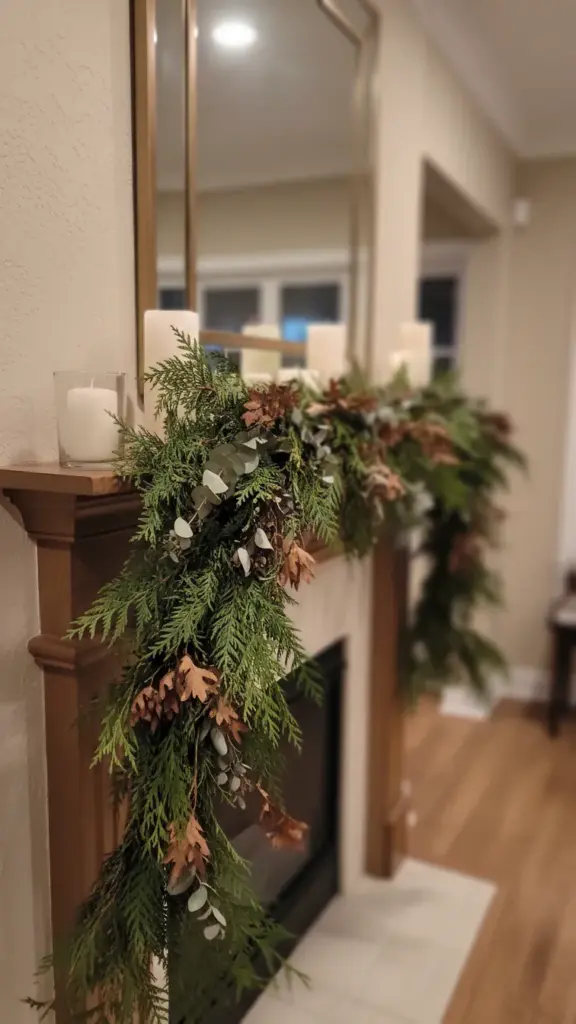
Fresh cedar is fragrant and flammable. Dried material is worse. Keep the whole garland clear of candles, fairy lights, and the firebox opening.
Lay the longest branches first, then fill with shorter cuts. Step back every few minutes; a garland reads differently from across the room than from the ladder. Overlap each new branch over the last one’s cut stems and the mechanics disappear.
Fix the garland with removable hooks, not nails. Mist it every two or three days. Needle drop starts the day you stop watering.
6. Cure Ornamental Gourds So They Last All Season
Cut gourds from the vine when the stem dries and turns brown. Leave a few inches of stem on the fruit. Wash in warm soapy water, wipe with household disinfectant, and dry with a soft cloth.
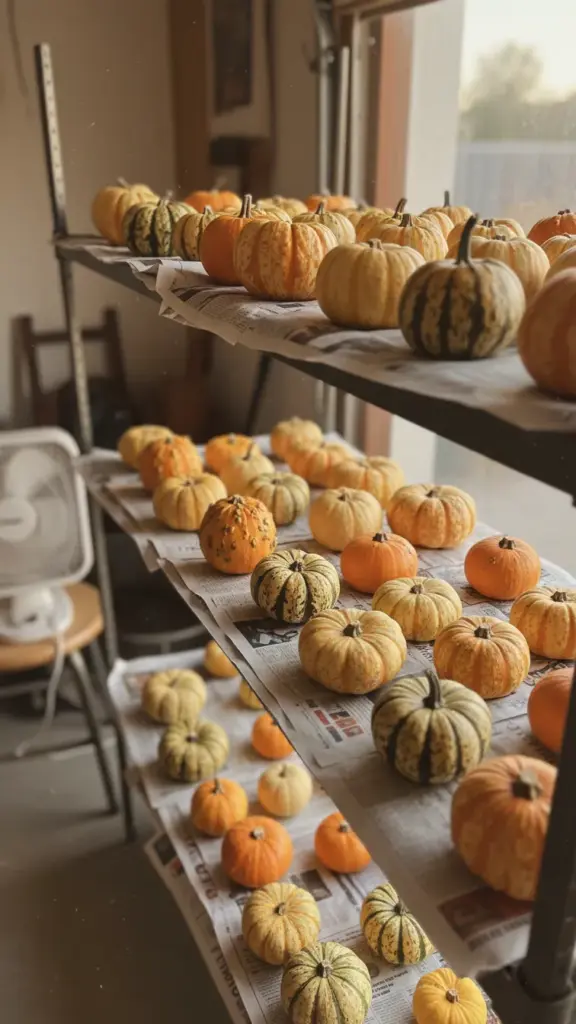
Then cure them in a single layer, spaced apart, in a warm, dry, ventilated garage or shed. Turn them often and pull any that soften. Iowa State University Extension gives the outer skin one to two weeks to harden and several more weeks for the inside, and calls a gourd done when the seeds rattle (Iowa State University Extension’s gourd-curing guide).
Aim a small fan at the shelves; moving air dries skins without cooking them. Write the variety name on each gourd in pencil, because by spring you will not remember which was which. Wax the cured shells and they shine like lacquer through the holidays.
Cured gourds take wax or paint. Uncured gourds collapse by December.
7. Stack Hay Bales as a Porch Display Base
Set two straw bales by the porch, one on the ground and one stacked offset like bricks, then arrange pumpkins, gourds, mums, and a lantern across the tiers.
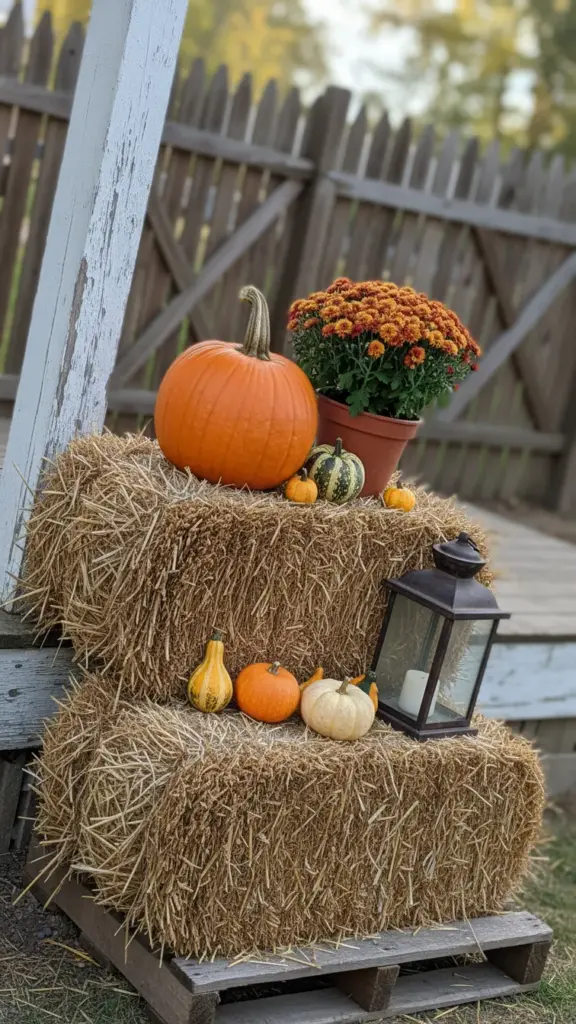
Height makes a modest pumpkin collection look deliberate; flat rows look like a farm stand after closing. Tuck potted mums into the gaps so no straw shows from the street.
Put the bales on a pallet. Ground moisture rots the bottom bale in weeks. Weave a string of LED fairy lights through the top bale; it carries the display after dark. A sagging bale goes straight to the compost pile, where straw breaks down fast, and never stack bales against the house wall where mice travel.
8. Light the Walkway with LED Lanterns
Line the walkway with a dozen small lanterns, 60 to 90 cm apart, alternating sides. Put a battery LED candle in each one. Choose lanterns with dusk timers.
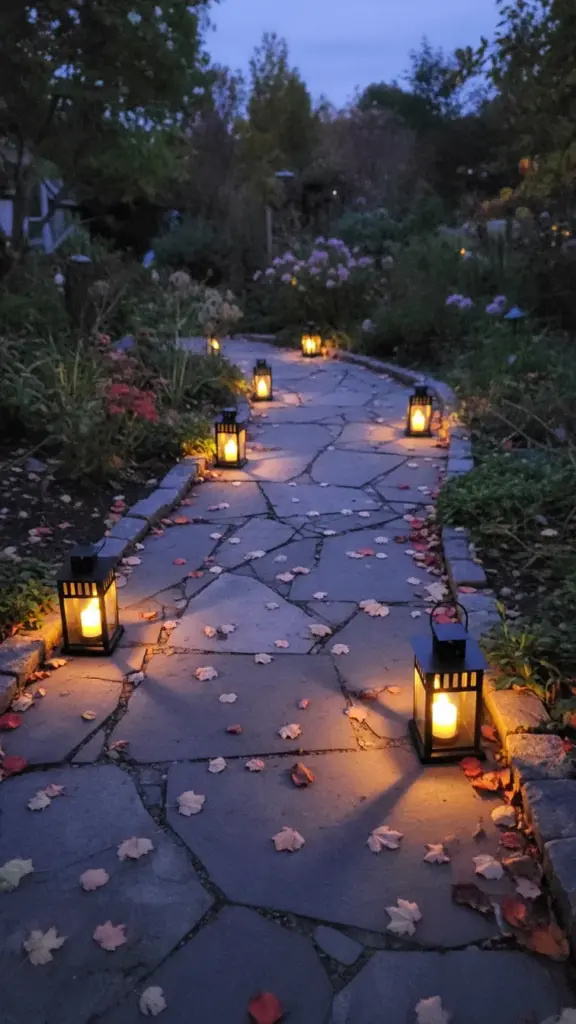
Open flame has no business near corn husks, straw, and dried garlands. The National Fire Protection Association counted an average of 5,894 home candle fires reported to U.S. fire departments each year from 2020 to 2024 (NFPA’s winter fire statistics).
Solar path lights cover the stretches no outlet reaches. Wipe the panels in October; dusty panels fade by Thanksgiving. Set every timer to the same dusk hour so the whole walk lights as one.
LEDs give the flicker without the watch. Set the timers once and forget the walkway until January.
9. Arrange a Harvest Basket by the Front Door
Grab a bushel basket and fill it with whatever the garden still offers. Late apples, winter squash, dried sunflower heads, ornamental cabbage, bundles of dried herbs. The messier it looks, the better.
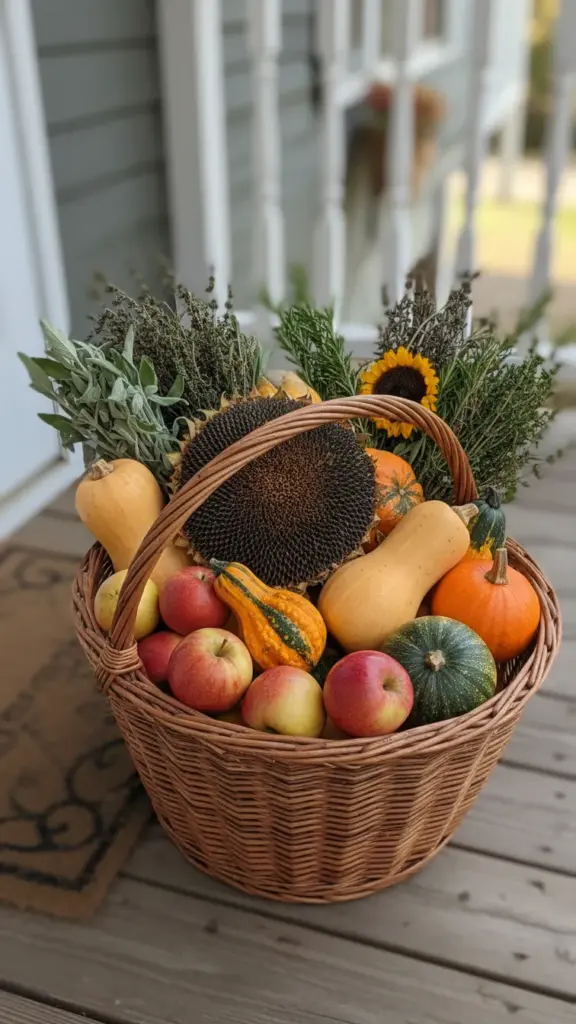
Stand tall dried sunflower stalks at the back for height. Lean a grapevine wreath behind the basket and it frames the whole thing like a picture. Tuck a few LED fairy lights deep inside for evenings; the glow through the leaves beats any porch bulb.
This is the fastest decoration on the page. One container, one trip, done.
Refresh it weekly. Pull what softens, add what is new. When the season ends, everything but the basket goes to compost. Nothing here was bought, so nothing here is wasted.
10. Weave Dried Wheat into a Simple Door Swag
Bundle 20 to 30 dried wheat stems. Tie them tight at the top with twine. Fan the heads out and hang the bundle upside down on the door.
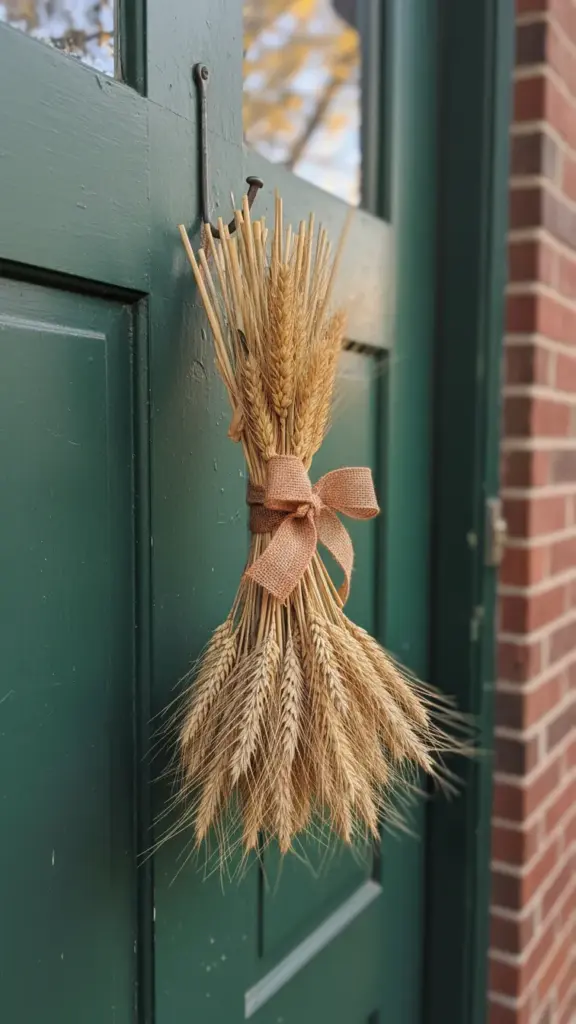
Tie smaller bundles to the dining chairs with ribbon. The chairs join the harvest without touching the tabletop.
Barley and oats hang the same way and cost nothing if a neighbor grows grain. A drop of glue at the tie point stops the twine slipping down the smooth stems. Hang a second swag inside on a mirror and the theme carries through the house.
Keep wheat dry and it lasts for years. If the stems shed, a light mist of hairspray outdoors tames the loose grains.
11. Plant Ornamental Kale in Stone Urns
Fill two stone urns with ornamental kale, underplanted with ivy or dusty miller, and set one on each side of the door.

Kale turns pink, purple, and cream as the temperature drops, and it shrugs off frosts that kill mums overnight. Peacock, Crane, and Osaka are the standard series; all three color up after the first light frost.
Water deeply once a week. Kale is tough, not drought-proof. Pull the lowest leaves as they yellow and the rosette stays clean. A handful of slow-release fertilizer at planting carries them to December without a second feeding. Start next year’s plants from seed indoors in late winter; our seed starting guide covers the timing, and one flat of seedlings fills every urn on the property.
12. String a Pinecone Garland Along the Stair Rail
Collect a bucket of open pinecones. Bake them on a foil-lined tray at 100°C for an hour to kill insects and open the scales. Cool them, screw a small eye hook into each base, and thread them onto jute twine.
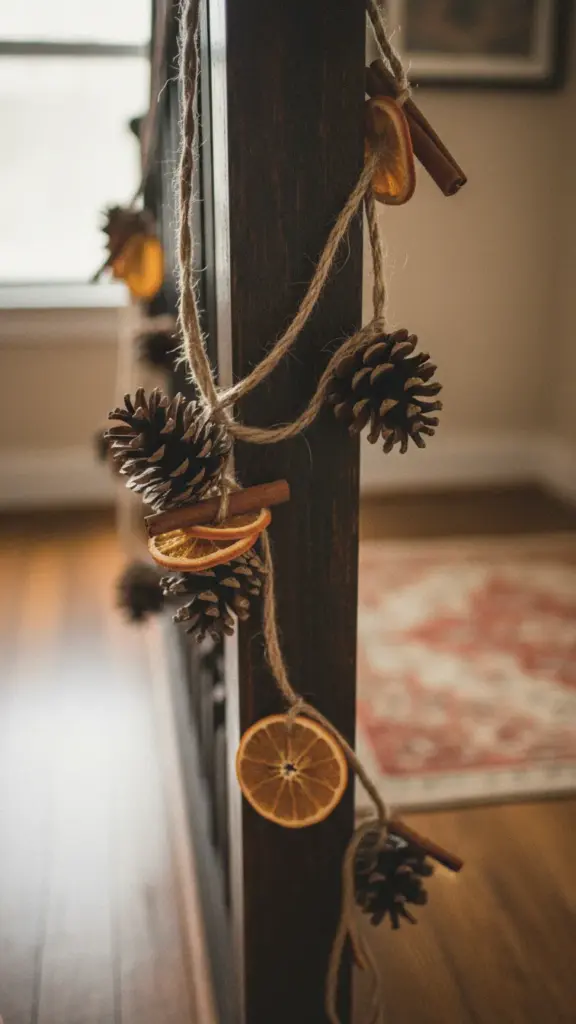
Alternate large and small cones so the garland never looks machined. A dab of hot glue on each eye hook stops the cones unscrewing over the season. String a second, shorter garland for the mantel while the tray is out; the oven is already hot.
Drape the garland along the stair rail or over a mirror. Mix in dried orange slices or cinnamon sticks for color and scent.
The garland is fully dry, so it stores in a paper bag. It comes out next November looking the same.
13. Drape Plaid Throws Over the Porch Bench
Drape two or three plaid throws over the porch bench, folded in loose thirds so the pattern shows. Add outdoor-rated pillows in deep red, mustard, or forest green.

Guests judge a porch by whether they may sit down. A bare bench says look. A blanketed bench says stay.
Roll the throws instead of folding; they look fuller on a narrow bench. Keep a waterproof box beside it to swallow the pillows when rain comes fast. Cedar blocks in the box keep the stored wool smelling like the woodshed, not the basement.
Bring the throws in during heavy rain. Even hardy fabric mildews soaked. Wash them when the season ends instead of storing them porch-dusty.
14. Compost Spent Pumpkins into the Garden Beds
Smash each spent pumpkin with a shovel. Strip off paint, stickers, and wax. Chop the flesh into fist-sized pieces.
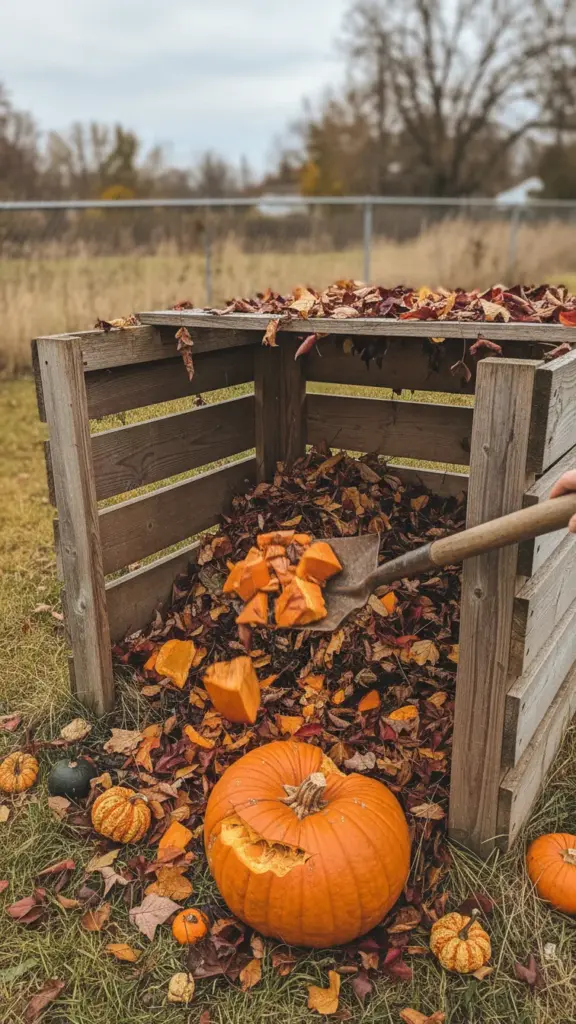
Split the rind with the flat of the shovel; it breaks along its ribs. Skip pumpkins coated in craft paint, which carries metals the pile does not need. Seeds go in too; volunteers next spring are a free crop, not a weed.
Bury the pieces in the compost pile under dry leaves. Pumpkin is nitrogen-rich green matter. Leaves are the browns that keep the pile from smelling.
Every year Americans throw away over 1 billion pounds of pumpkins, which rot in landfills and release methane; composting them instead is the straightforward alternative, according to Michigan’s guide to composting pumpkins. By spring, November’s porch becomes May’s soil.
15. Hang Dried Hydrangea Bunches in the Entryway
Cut hydrangea heads when the petals feel papery and the color has deepened. Strip the leaves. Hang small bunches upside down in a dark, dry closet for two to three weeks.
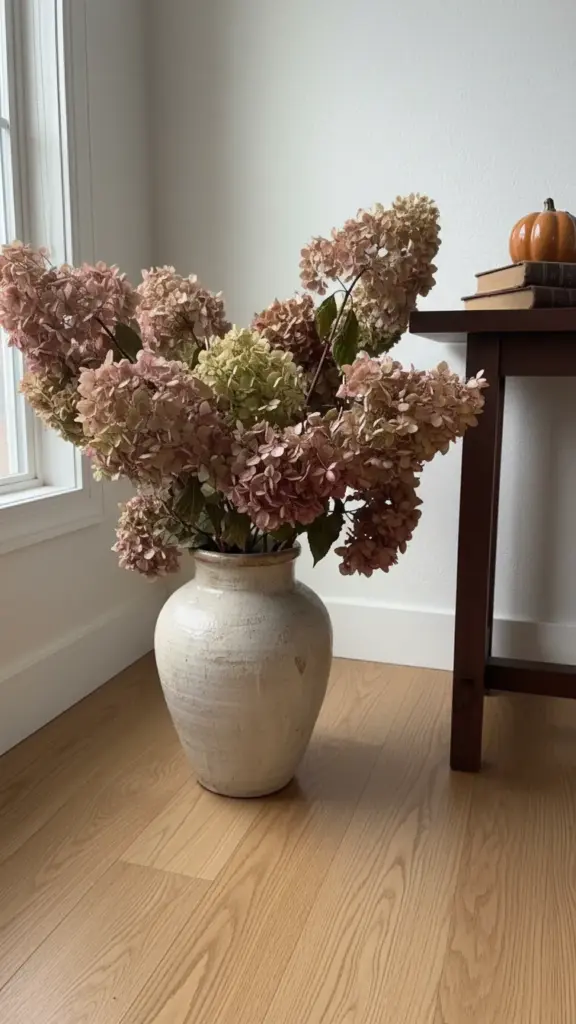
Annabelle heads dry the largest, mopheads the roundest, lacecaps the most delicate. Pick before the first hard frost; frozen petals brown instead of drying. Leave 30 cm of stem on each head so the bunches tie easily and stand tall in the vase.
Stand the dried bunches in a floor vase in the entryway. Blue dries to mauve, white to cream, pink to soft rose. Cut a mix and the arrangement makes itself.
A light spritz of unscented hairspray keeps the petals from shattering when the front door slams.
16. Cluster Lanterns on the Hearth
Group three or five lanterns inside the firebox and across the hearth, tall and short mixed. Fill them with LED pillars at different heights. Scatter pinecones around the bases.
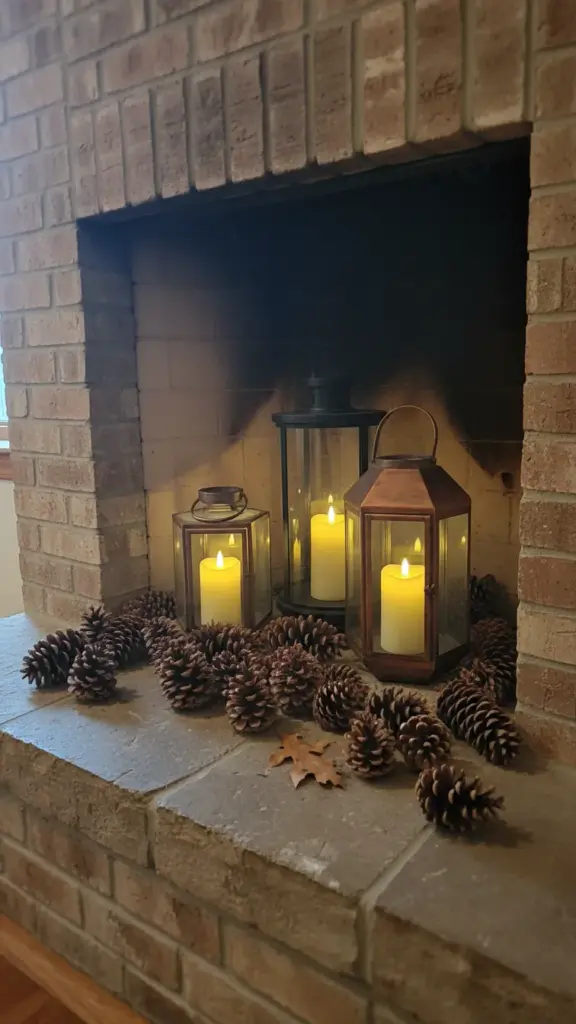
An unlit fireplace is a decorating opportunity. A lit one is a hazard. If you burn real fires during the holiday, move every decoration a meter from the opening first.
Vary the glass: mercury glass, plain mason jars, one tall hurricane. Mixed reflections do the work one expensive lantern cannot. A folded dark cloth under the cluster hides the firebox soot and makes the flames pop.
LEDs need no supervision. Set the timers and eat dinner.
17. Lean a Rustic Ladder with Blankets in the Corner
Lean an old wooden ladder in the entryway or living room corner, and drape folded quilts and knit throws over the rungs in alternating colors. Sand any rough rungs first; splinters and wool are a bad pair. Wipe the rungs with a damp cloth before the blankets go on; barn dust becomes house dust fast.
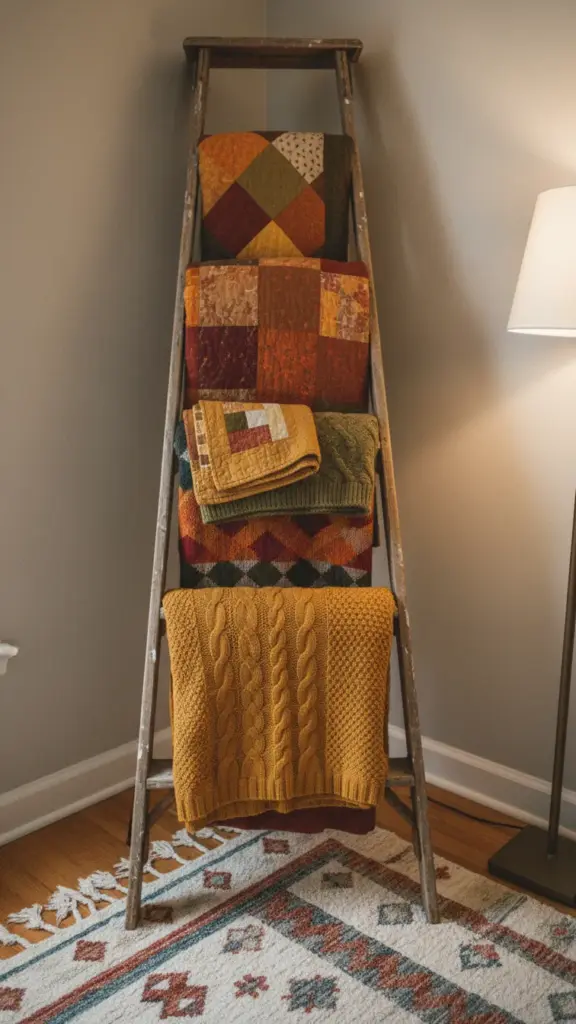
Guests take a blanket when the evening turns cold, which means the ladder earns its floor space.
Check the rails: no cracks, no loose rungs. Set the feet on a rug with a grip pad, away from doorways where shoulders brush past.
18. Fill Galvanized Buckets with Branches and Berries
Cut straight branches: curly willow, red-twig dogwood, birch, pruned fruit limbs. Stand them in galvanized buckets weighted with a brick. Tuck in winterberry stems for red.
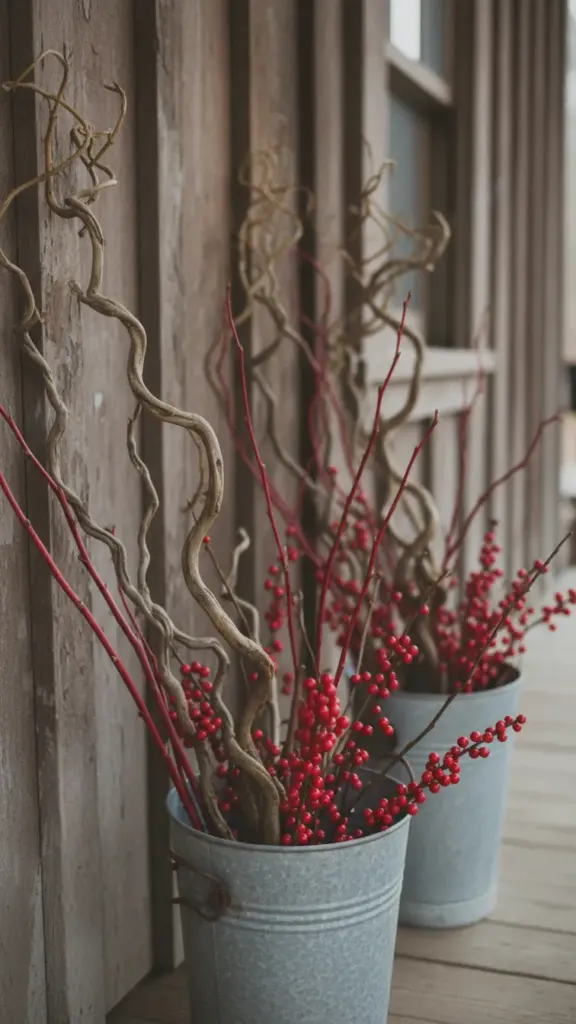
Cut the branches 60 to 90 cm taller than the bucket so the arrangement has presence. The bucket and the brick do the structural work; the branches only stand. Swap the water weekly for fresh-cut stems, or skip water entirely for dried ones.
Cut clean so the parent tree heals fast; our guide to spring pruning techniques covers the method.
Winterberry is toxic if eaten. Keep these buckets away from small children and pets, or use artificial berry picks where little hands grab.
19. Dress the Windowsills with Mini Gourds and Moss
Lay a runner of sheet moss along each windowsill. Nestle in miniature pumpkins, tiny gourds, acorns, and chestnuts in a loose wandering line. Add two or three battery tea lights.
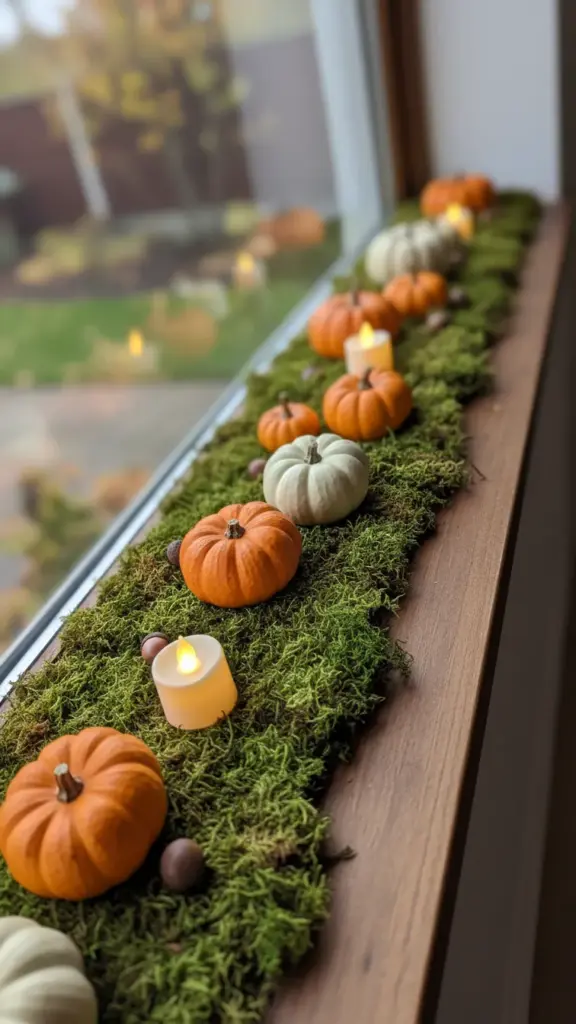
Lit sills show from the street. The whole house looks awake after dark.
Sheet moss comes dried in bags at garden centers and revives with misting. Tuck a few whole walnuts among the minis; their dark shells anchor the pale gourds. A strip of dark cloth under the moss hides the sill paint and deepens every color.
Mist the moss lightly so it stays green. At takedown, the moss becomes garden mulch and the minis go to compost. The sill wipes clean.
20. Take It All Down and Compost It in One Weekend
Book one weekend after the holiday. Work room by room with three bins: compost, save for next year, trash.
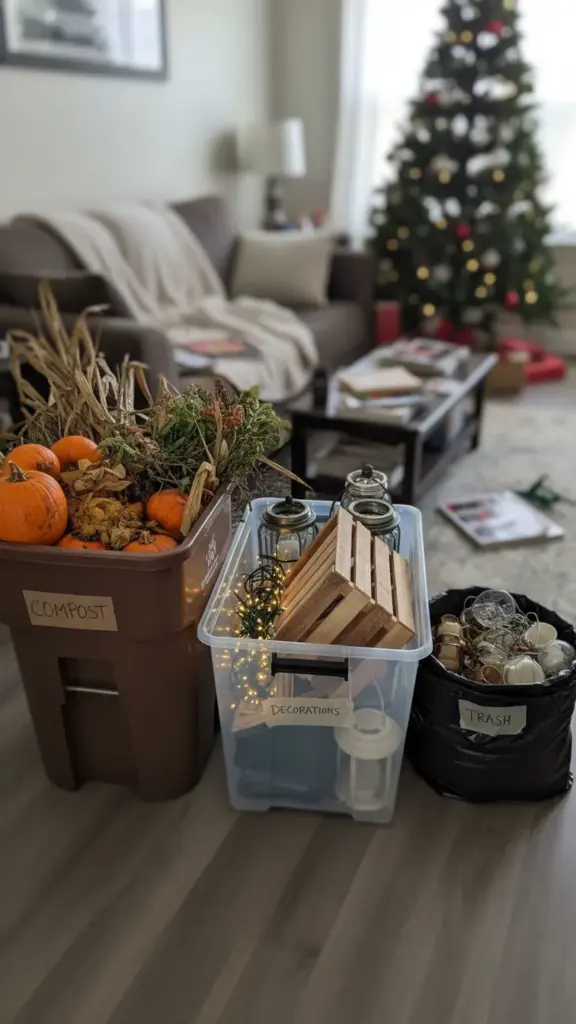
Greenery, pumpkins, gourds, straw, husks, and moss go to compost. Crates, buckets, lanterns, dried wheat, and pinecone garlands get cleaned and stored dry. Almost nothing should reach the trash.
Start at the top of the house and work down; gravity helps. Hose the crates before they return to the garage, or last year’s leaf mold greets you in October. Coil the fairy lights around a piece of cardboard so next November starts tangle-free.
Write down what thrived and what flopped while you work. Which mums survived, which pumpkin lasted, what the neighbors asked about. That page becomes next year’s planting list.
Thanksgiving Home Decor FAQ
How Early Should I Start Decorating for Thanksgiving?
Put up the durable structure two to three weeks out: bales, crates, lanterns, ladders, pinecone garlands. Add fresh greenery, mums, and pumpkins in the final week so everything peaks on the day. Dried wheat, corn, and cured gourds can go up any time. They do not care about the calendar. Mark the date on the calendar now; the week of the holiday fills faster than you expect.
How Do I Keep Outdoor Decor from Blowing Away?
Weight beats hope. Set pumpkins inside crates, not loose on steps. Anchor garlands with zip ties. Run fishing line from tall arrangements to a porch post. When storms come, move wheat swags and light pieces to shelter for the night. Five minutes of prevention beats rebuilding the porch in the rain. Check the forecast the night before and do the five-minute shuffle then, not in the morning rush.
Are Real Candles Safe Around Dried Decorations?
No. Dried corn husks, straw, wheat, and evergreen garlands catch fast, and the NFPA’s 5,894 candle fires a year say otherwise. Use battery LEDs wherever dried material sits. Save real candles for the dinner table, inside sturdy non-flammable holders, and blow them out when you leave the room. Teach every guest the rule once: if it is dried, it gets LED.
What Should I Do with Decorations After Thanksgiving?
Compost nearly everything organic: pumpkins, gourds, greenery, straw, moss, corn husks. Clean and store the reusables: crates, buckets, lanterns, dried arrangements. Run the takedown in one weekend, idea 20, so the job never drags into December. The garden eats well and the garage stays organized.
Bring the Whole House into the Harvest
The best thanksgiving decor for home looks gathered. Nothing about it looks purchased. The wreath came from your cedar, the garland from your pines, the pumpkins from your patch or the farm down the road.
Start at the porch and work to the parlor, and let the garden do the talking.
Come December, nearly all of it returns to the earth. That is exactly as it should be.








