Every gardener owns a seed collection and a seed mystery: packets from three springs ago, a tin of saved beans, envelopes with pencil labels and no dates. November is when to solve the mystery, while there is still time to reorder. This audit takes 1 afternoon: gather everything, read what the packets and your own notes actually say, test the doubtful lots on damp paper, store the keepers properly, and write the reorder list while the catalogues are still stocked. Do it now and February’s sowing starts from knowledge instead of hope.
The audit has one rule: test, do not guess. A packet’s date is a packing date, not a death date, and storage decides more than age. I run the audit at the kitchen table with the whole collection in one box, a notebook, and a stack of paper towels, and the same afternoon produces the three piles every collection sorts into: sow as normal, sow thick, and replace. The sections below follow that afternoon’s order.
| Crop | Typical Viable Life, Cool Dry Storage | Audit Priority |
|---|---|---|
| Onion, leek, parsley, parsnip | 1 to 2 years | Test or replace every year |
| Peppers, corn | 2 to 3 years | Test from year two |
| Carrots, celery | 2 to 3 years | Test from year two |
| Beans, peas | 3 to 4 years | Test from year three |
| Lettuce, spinach, radish | 4 to 5 years | Test from year four |
| Tomato | 4 to 6 years | Test from year four |
| Cucumber, squash, melon | 5 to 6 years | Test from year five |
| Cabbage family, beet, chard | 4 to 5 years | Test from year four |
The November Audit: Gather Every Packet and Tin
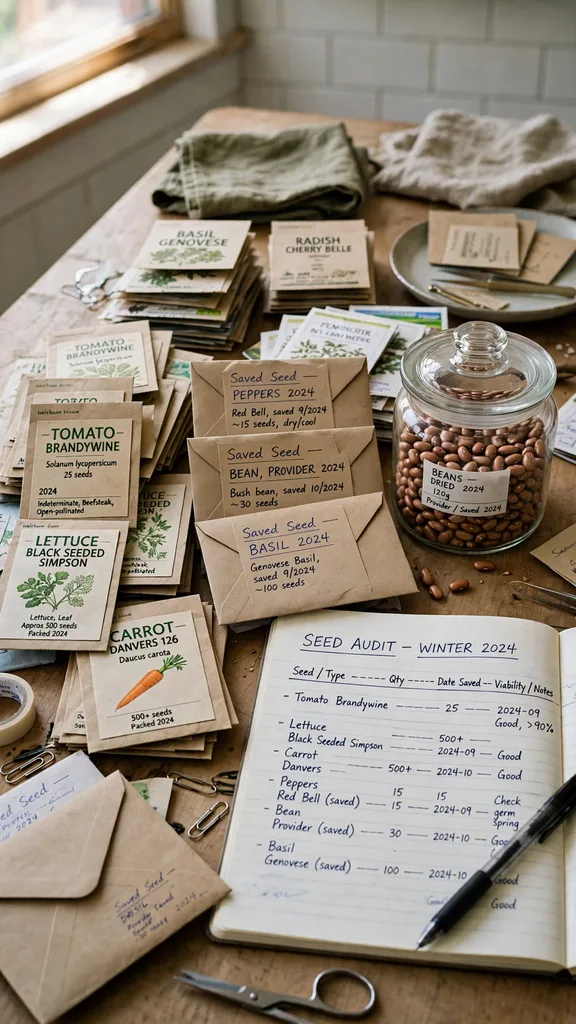
Start by finding all of it: the seed box, the tin in the shed, the envelopes in the coat pocket from the seed swap, the packets that slid behind the potting bench. Seed hides, and an audit that misses a stash audits nothing. Put everything on one table and sort it into crops, then varieties, oldest at the front of each pile.
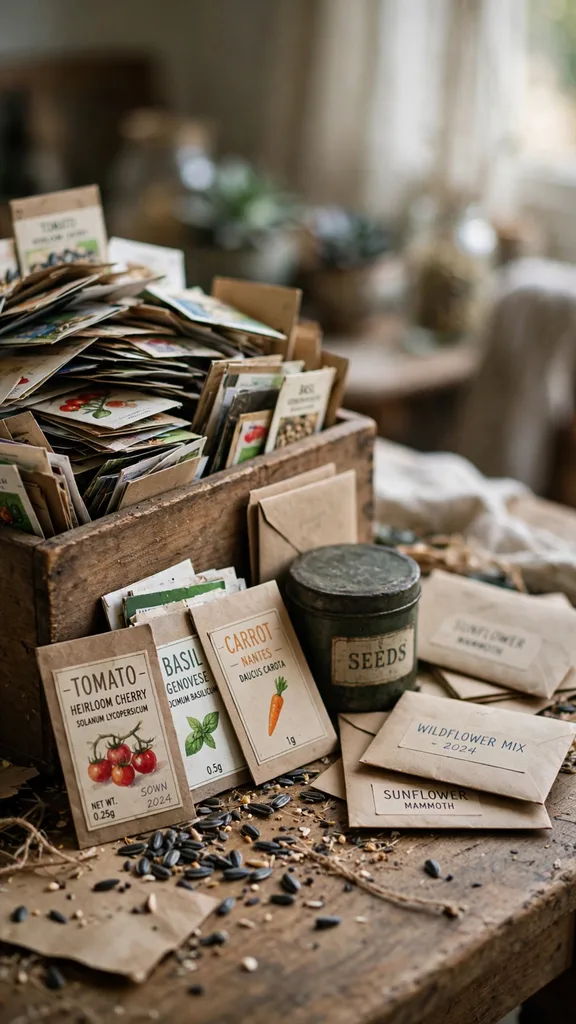
Discard without testing anything moldy, mouse-nibbled, or water-damaged; no germination test redeems a packet that smells of mildew. Everything else earns its test or its reprieve from the table above. November is the audit month for two reasons: the garden asks nothing of you, and the reorder it produces still has the whole catalogue season to land in.
The Packet’s Evidence: Dates, Sources, and Your Own Notes
Read before you test. A bought packet carries a packed-for year and often a germination standard the lot met when packed; seed a year past its date with good storage behind it usually outperforms fresh seed that spent the summer in a hot shed. Your own saved seed carries whatever you wrote on the envelope, which is why this section ends with a promise about next year’s labels.
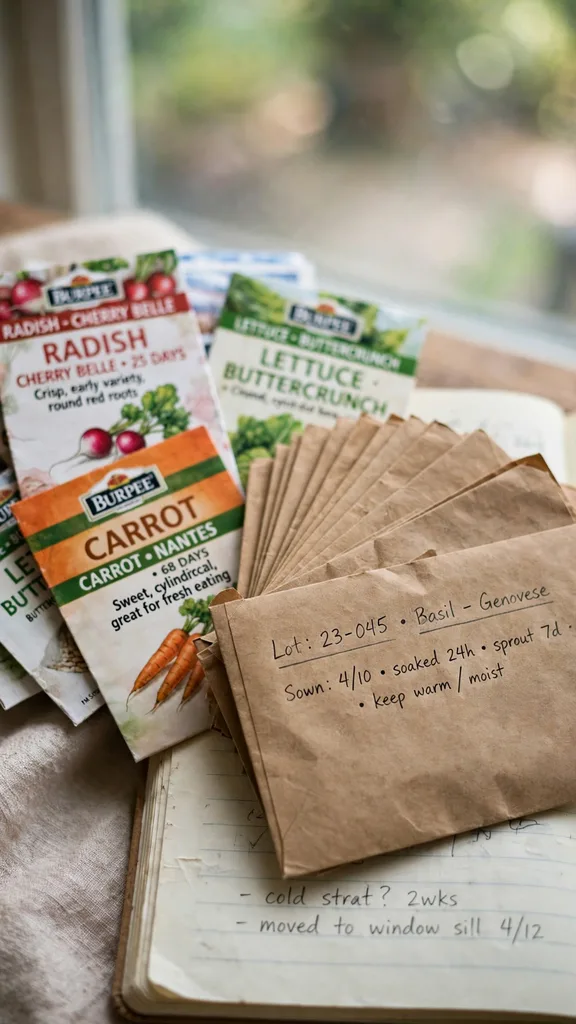
Note the source as well as the date. A variety that failed in your garden twice has a performance problem, and the audit is the moment to strike it from the collection rather than test it tenderly. Keep a simple log as you sort: variety, year, source, and the verdict column you will fill after the tests. The log, kept year to year, becomes the collection’s memory, which no packet printing replaces.
Know the Viability Table: How Long Seed Actually Lives
Seed life varies by crop more than by anything else, and the table at the top of this guide is the audit’s map. The short-lived families, onion, leek, parsley, parsnip, fade in a year or two however well they are stored, which is why experienced gardeners buy them fresh annually and never apologize for it. The long-lived ones, cucumbers, squash, tomatoes, brassicas, hold for five years and more in cool, dry storage, and old packets of these are often perfectly good.
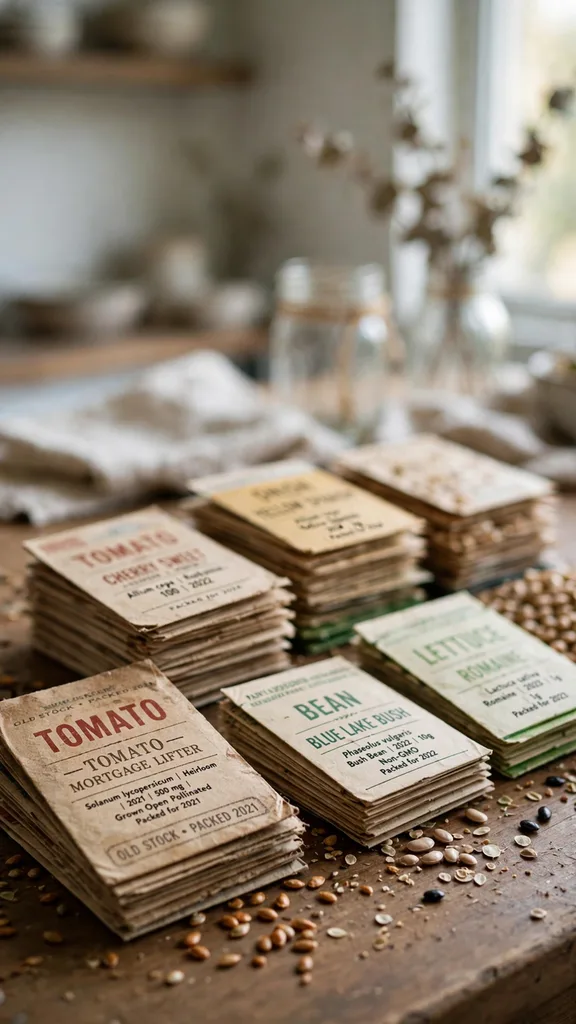
Treat the table as a triage tool, not a verdict: it tells you which lots to test first and which to trust. Storage moves a lot up or down a class. A tomato packet from a cool drawer can outlive a bean packet from a damp shed by years, which is why the next section tests the seed itself rather than its biography.
Run a Germination Test: The Damp Paper Method
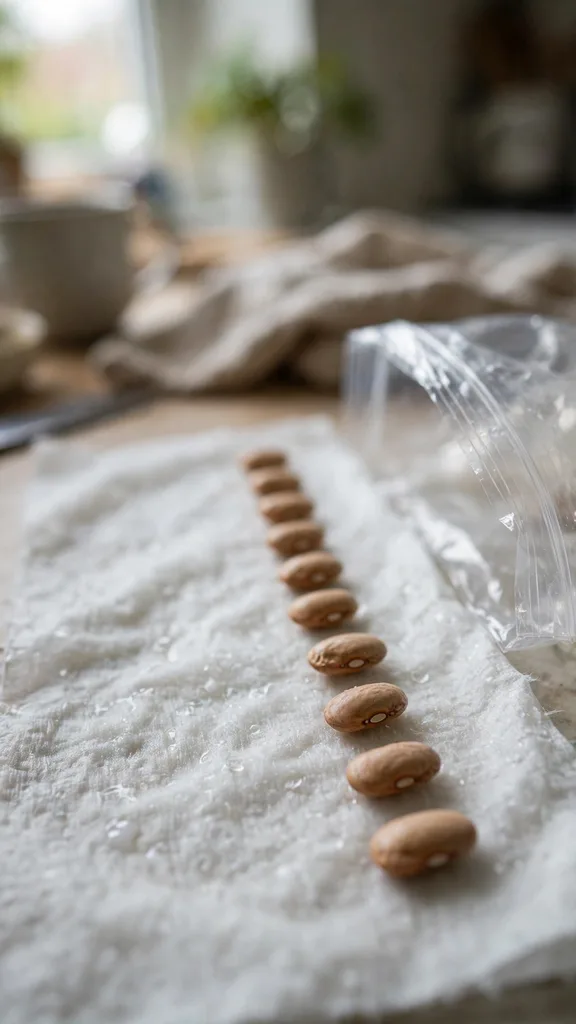
The test is ten seeds, a damp paper towel, and patience. The Oregon State University Extension guide to testing seed performance gives the standard method: place 10 seeds an even distance apart on a damp paper towel, roll the towel up, seal it in a plastic bag, and leave it in a warm spot; after three to seven days, check which seeds have germinated, and the percentage in the towel fairly predicts the percentage in the garden. Test each doubtful lot separately, label every towel, and keep the towels damp, not dripping, since drowned seed rots instead of sprouting.
Slow crops need their full time: parsley and parsnip can take three weeks, and a towel judged at day seven lies about them. Note the days-to-germination on the packet if you have it and judge at that date. The site’s own seed germination calculator helps turn a test count into a sowing plan once the results are in, working out how much extra seed a weak lot needs to fill a row. Record every result in the log the day you read it; a result remembered is a result invented.
The Count’s Verdict: Sow Thick, Replace, or Discard
Read the count in three bands. Eight to ten sprouted of ten: sow as normal; the lot is sound. Five to seven: sow thick, two or three seeds where you want one plant, or use the lot for succession sowings where gaps matter less; mark the packet with its percentage and the year. Below five: replace it, unless the variety is irreplaceable, in which case sow the whole remainder in one generous row and save fresh seed from whatever comes up.
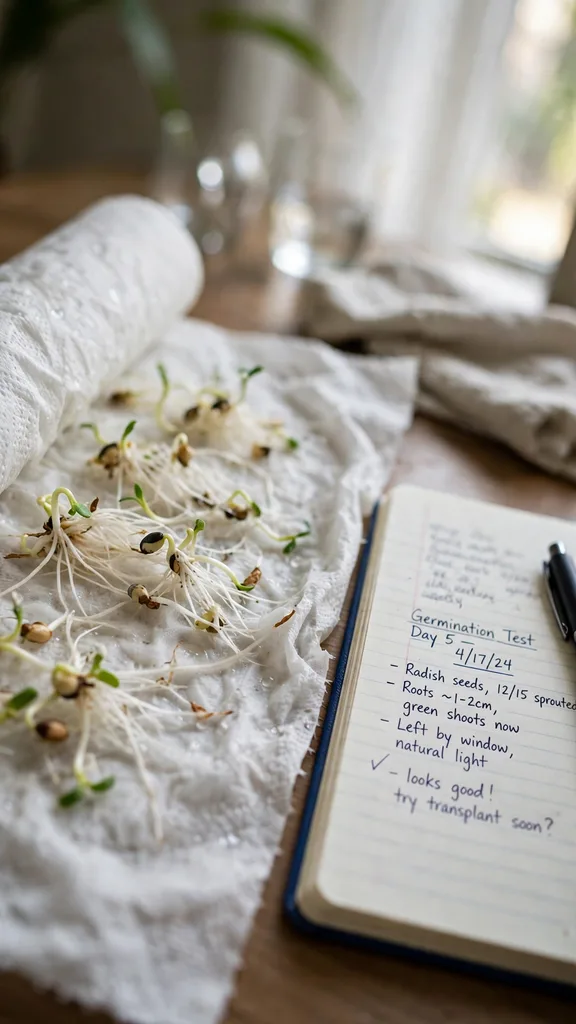
Germination is not the whole story: seed that sprouts slowly and weakly in the towel often grows weakly in the soil, so a borderline lot of a crop you depend on is worth replacing even at six of ten. Be ruthless with the staples and sentimental only about the varieties with a history. The compost takes the discards, and the log takes the numbers, so next year’s audit starts from evidence.
Store the Keepers: Cool, Dry, Dark, and Sealed
Storage decides next year’s audit results more than any other act in the whole routine. Seed keeps best cool, dry, dark, and sealed: packets together in a sealed jar or a lidded box, in the coolest steady-temperature spot in the house, away from the shed’s freeze-thaw and the kitchen’s steam. The same Oregon State guidance puts good winter storage at 50°F with moderate humidity, in a sealed jar with a desiccant, in a cool room or the refrigerator.
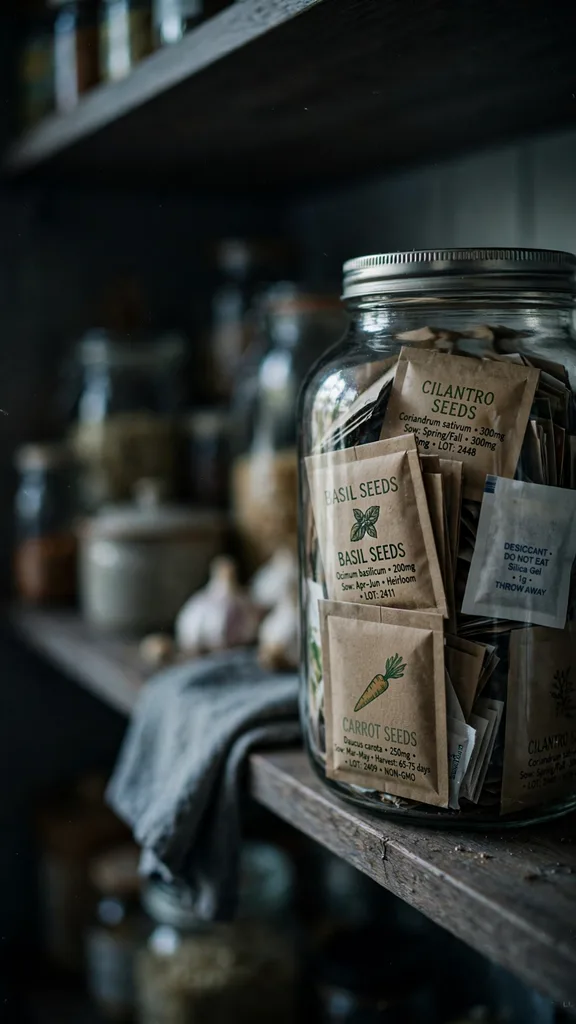
Silica gel packets or a spoon of powdered milk in the jar absorb the moisture that kills seed in storage. Paper packets inside the sealed container keep varieties separate and labeled. Refrigeration suits the long-lived keepers; the freezer suits very long storage of thoroughly dry seed, though seed must be bone dry before freezing and thawed in its sealed jar so condensation forms on the jar, not the seed.
Fix the Storage Failures: Damp, Heat, and Pests
The audit finds the storage failures by their evidence. Damp shows as clumped, darkened, or mildew-smelling seed: discard it; damp seed that still sprouts carries disease into the seedbed. Heat shows as a whole box testing low together, the signature of a summer spent somewhere hot; the fix is the new storage spot, not new seed alone. Pests show as dust and holes in beans and peas, weevils that came in from the harvest; freezing dry legume seed for a few days after harvest kills them before storage.
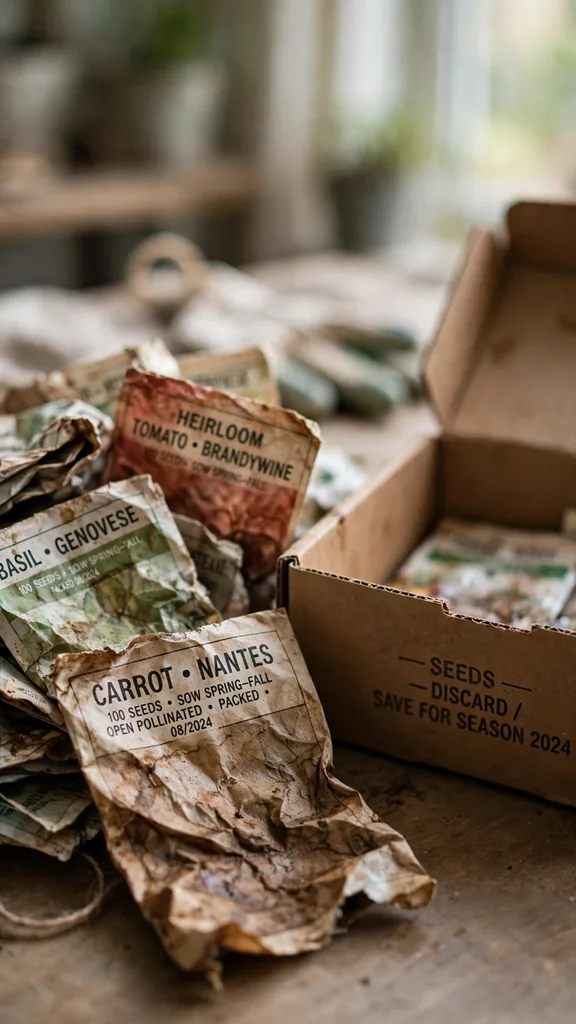
Every failure names its repair, and the repairs are all in the previous section. Write the failure and its cause in the log, because a storage mistake repeated three years running is a system, and systems can be fixed. The audit’s value compounds: year one’s audit fixes storage, year two’s confirms it, and by year three the test results are boring, which is the goal.
Reorder in Time: The December Order List
The audit’s product is a list: the discards to replace, the gaps the garden plan needs, and the one or two new varieties the year has argued for. Order in December, while the full catalogues are stocked; the popular varieties of tomatoes and peppers sell out by February in brisk years, and a reorder list written in November is only useful if it is sent while the sending is good.
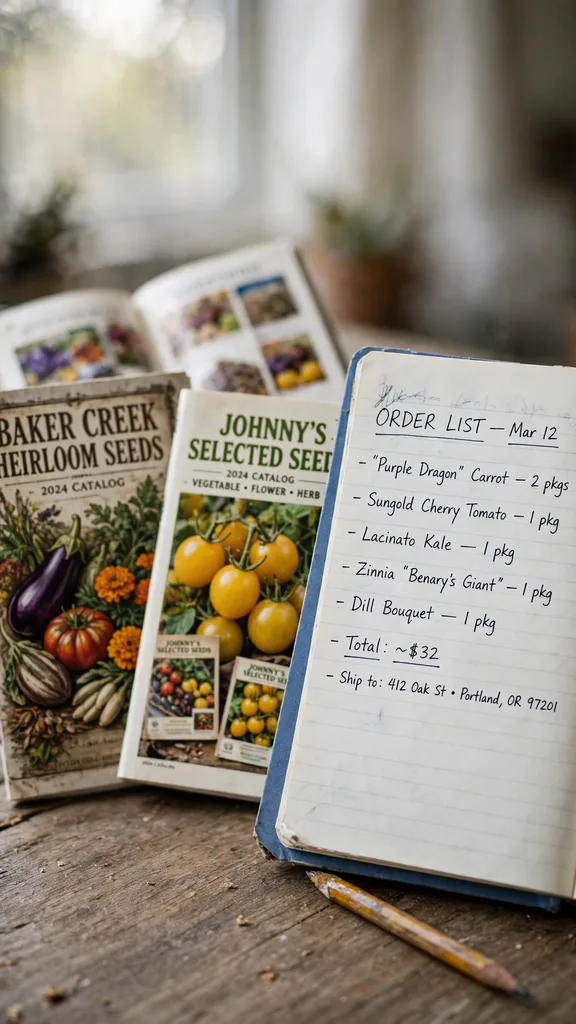
Check the list against the planting calendar before ordering: the University of Maryland Extension vegetable planting calendar shows how sowing dates stack through spring, which tells you how much seed of each succession crop the year actually consumes. Order for the garden you have, not the garden in the catalogue photograph: one packet of most vegetables holds more seed than a family bed uses, and the surplus joins next year’s audit. Keep the order list in the log, so next November you can see what you bought, what you sowed, and what you merely admired.
Save This Year’s Seed Properly for Next Year’s Audit
Close the loop by saving this year’s seed to the standard the audit wishes last year’s had met. Save from the best plants, let seed mature fully on the plant, dry it thoroughly before storing, a week on paper in a dry room for most crops, longer for seed in pods and heads, and test a sample before it joins the collection.
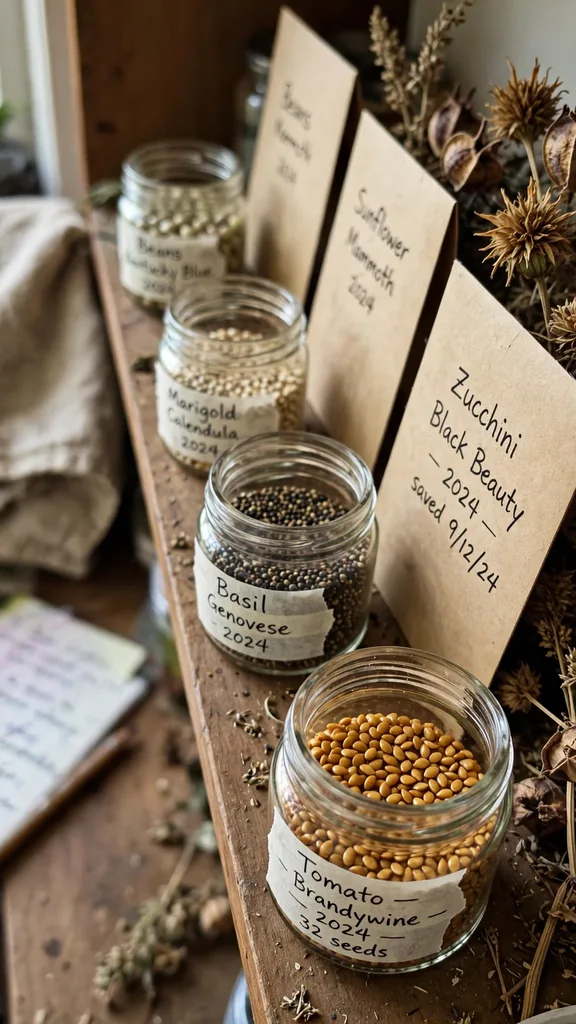
Label every lot the day it is stored: variety, year, and one line of notes, the plant, the weather, the result. That one line is next November’s evidence, and the difference between a collection and a drawer of mysteries. Saved seed of open-pollinated varieties carries your garden’s selection forward; seed saved from hybrids grows out mixed, which the label should say if you save it anyway for curiosity.
Keep the Seed Log: The Collection’s Memory
The log is a notebook or a single page per year: what the collection held, what the tests showed, what was discarded and why, what was ordered, and what the season proved. Five lines per variety is plenty. The log turns the audit from an annual improvisation into a system that improves, and it is the first thing to show a new gardener who asks why your February sowing never fails.
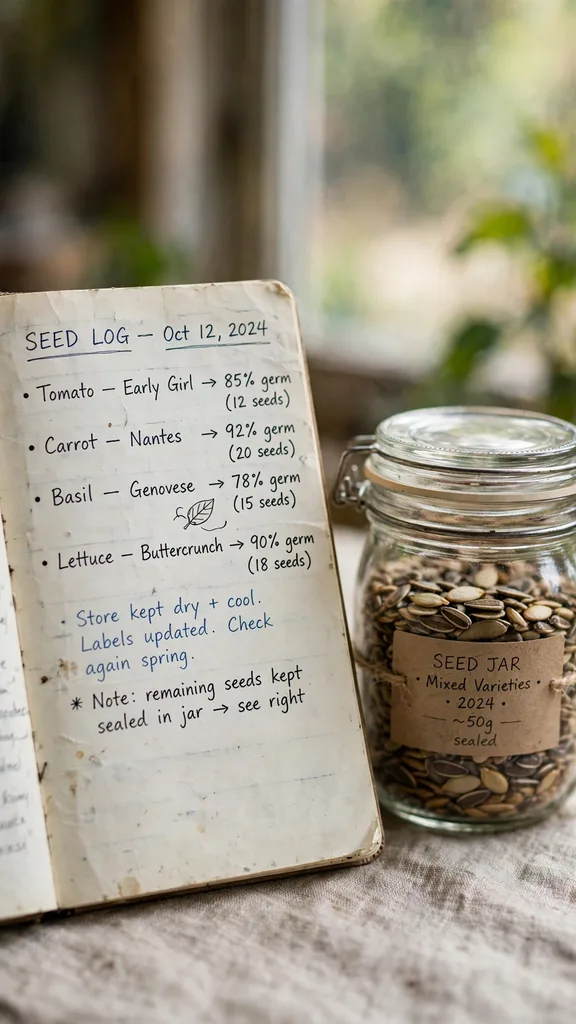
Pair the log with the planting plan in what to plant in December if your zone sows this month, since the audit and the calendar together decide the order list. The wider season’s work, and the displays this seed grows into, gather in the Christmas garden ideas pillar. Next November, the audit takes half the time, because this November you wrote everything down.
Frequently Asked Questions
It depends on the crop and the storage, which is why the audit tests rather than assumes. Onion and parsley seed are usually done in one to two years. Tomato, cucumber, squash, and brassica seed stored cool and dry commonly grow well at four to six years. A germination test of ten seeds gives the real answer for your packet in your drawer: eight or more sprouting means sow as normal, whatever the date says.
Eight of ten or better, sow as normal. Five to seven of ten, keep the lot and sow thick, marking the packet with its percentage, or use it where gaps are easy to fill. Below five of ten, replace the lot unless the variety is irreplaceable, in which case sow everything that remains and save fresh seed from the survivors. Weak, slow sprouting counts against a lot even at six or seven of ten for crops you depend on.
Both work when the seed is thoroughly dry and sealed. A refrigerator at 40 to 50°F in a sealed jar with a desiccant suits most collections and is the simpler system. The freezer extends life further for long-term keeping, but seed must be bone dry before freezing, and the jar must thaw sealed so condensation forms outside the seed’s reach. A cool, dark cupboard with steady temperature beats a fridge door opened twenty times a day.
You can, and it will grow, but it will not grow true: the offspring of a hybrid vary, often widely, from the parent you liked. For the main collection, save seed from open-pollinated varieties, whose seedlings repeat the parent. If you save hybrid seed out of curiosity, label it as hybrid offspring with the year, and sow it somewhere its surprises are welcome. Never let an unlabeled hybrid lot into the tested collection.
It went in damp. Seed must be thoroughly dry before sealing, a week or more on paper in a dry room for most crops, and pods need longer. Storing in a sealed jar traps whatever moisture the seed carried in, and mold follows. Dry next year’s lots longer, add a desiccant to the jar, and test a sample before storing the whole lot, so a damp harvest is caught while it can still be dried.