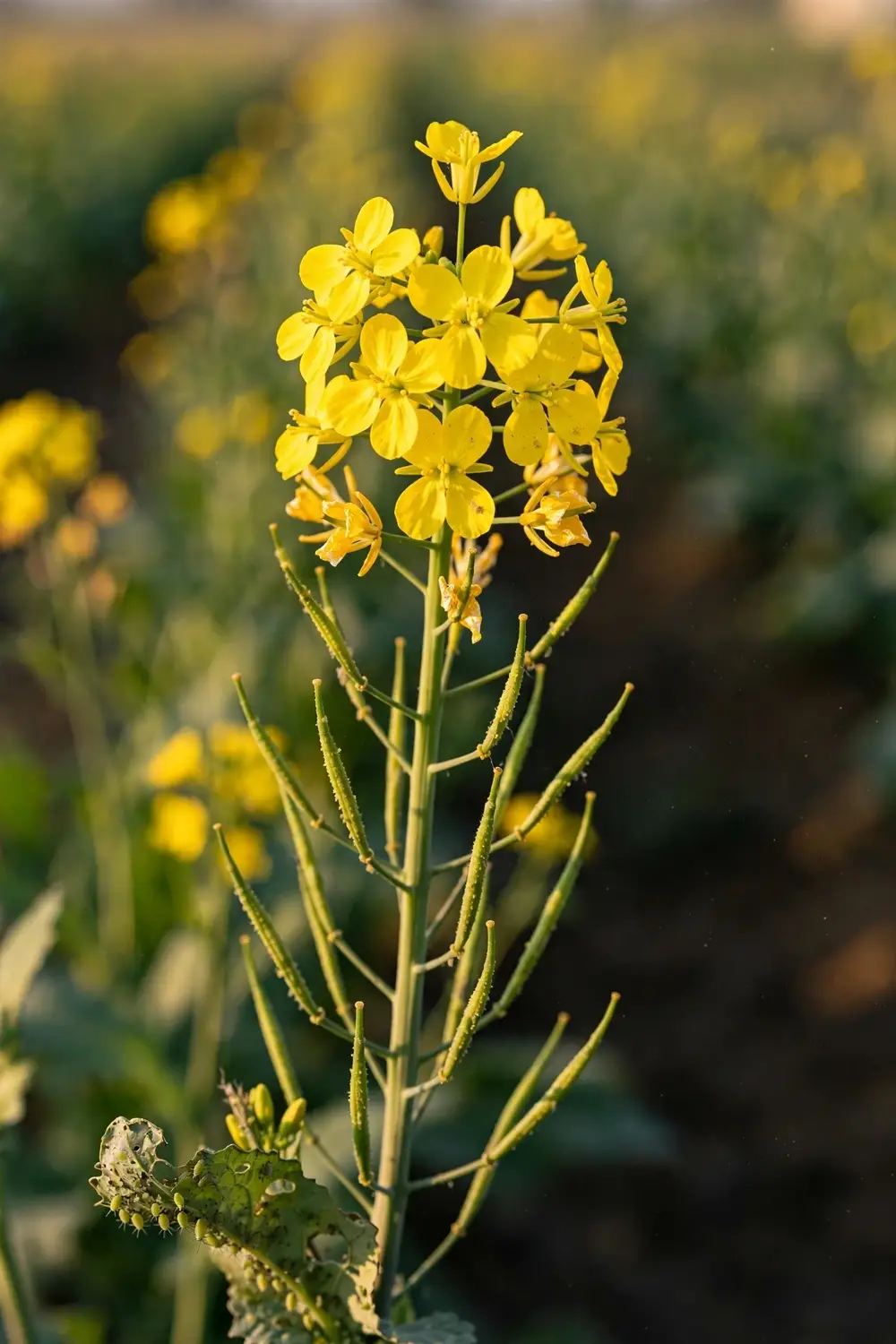

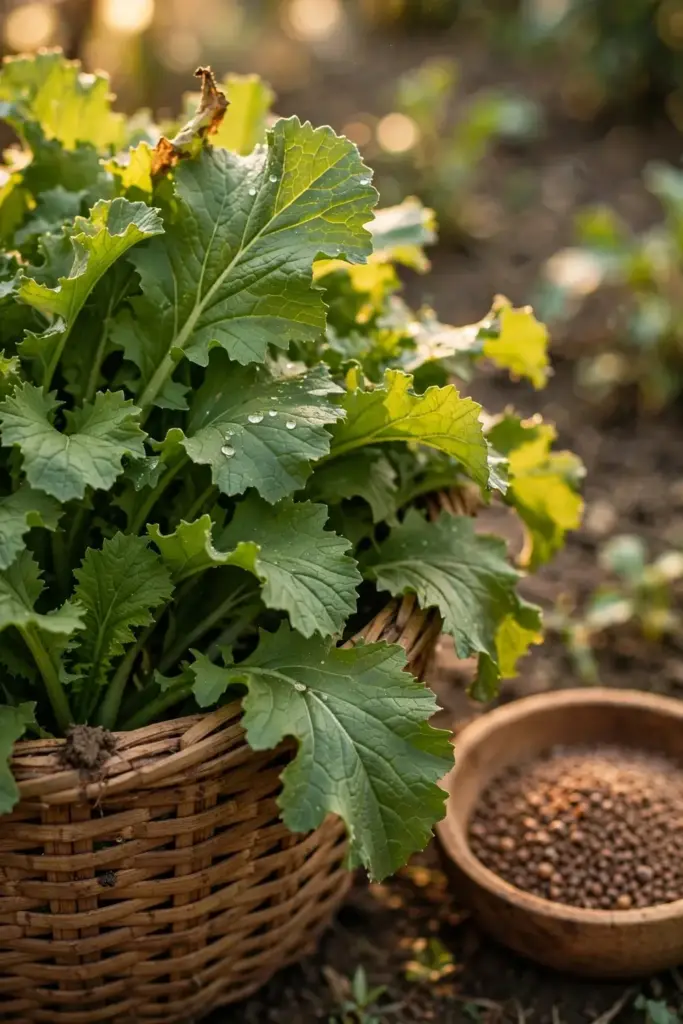
Indian mustard is the rare plant that pays you twice from one sowing. Sow rai or sarson seed (Brassica juncea) in cool weather and you can cut tender sarson ka saag greens in 25 to 30 days, then let the remaining plants flower and collect rai seed spice in 90 to 100 days. It is a cool-season annual that grows from 50 to 75 F and bolts the moment real heat arrives, so timing is the entire crop.
This guide shows how to grow Indian mustard from India in temperate climates, meaning Western backyards and patios rather than Punjab fields. You get the species truth first, the dual-harvest decision second, the rabi calendar for India and the spring and fall windows for the West, and honest container limits: pots suit the greens, while a real seed harvest wants garden space.
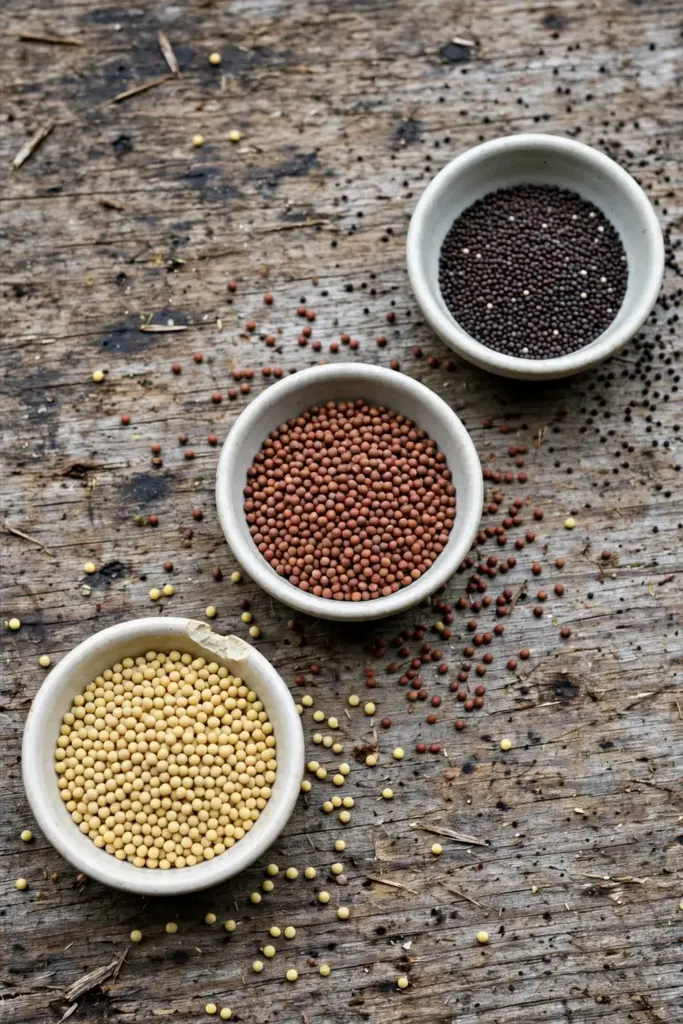
One more honesty point up front. The yellow mustard in the squeeze bottle is Sinapis alba, not rai. Brown mustard, the hot Indian rai, is Brassica juncea. Black mustard is Brassica nigra. Mixing them up is the single most common beginner mistake, and the table in the first section settles it for good.
1. Know Your Mustard: Rai, Sarson, and What Yellow Mustard Is Not
Buy the right species and everything else gets easy. Buy the wrong one and you will grow the wrong crop with total confidence.
| Mustard | Species | What it is | Use |
|---|---|---|---|
| Yellow mustard | Sinapis alba | Mild, pale seeds; the classic American condiment mustard | Prepared yellow mustard, mild spice |
| Brown mustard | Brassica juncea | Hot, pungent seeds; Indian rai and sarson | Rai tadka, mustard oil, sarson ka saag |
| Black mustard | Brassica nigra | Smallest seeds, sharpest heat; tall and late | Indian cooking, traditional spice blends |
| Chinese mustard | Brassica juncea | Same species as brown mustard, selected for leaf types | Leafy greens, pickles |
Indian mustard is Brassica juncea, called rai when grown for seed and sarson when grown for leaves. The NC State Extension plant toolbox describes brown mustard as a cool-season annual that grows best in full sun to part shade and well-drained, rich, consistently moist soil. That one sentence carries your whole growing plan.
The same source flags an honest caveat worth knowing before you sow: brown mustard is listed as invasive in some Midwestern states. Grow it, harvest it, but do not let it escape into wild areas. Cut flower heads before pods shatter if you are growing near open land.
2. Choose Your Harvest: Sarson Greens or Rai Seed
Decide before you sow, because spacing and thinning change with the goal.
| Harvest | Days from sowing | Spacing | Pot fit |
|---|---|---|---|
| Sarson ka saag greens | 25 to 30 | Sow thickly, 1 inch apart, thin to 3 inches | Excellent; pots are built for this |
| Rai seed spice | 90 to 100 | 1 inch apart, thin to 6 inches, rows 12 inches | Poor; seed needs many plants and space |
| Cut-and-come-again | 25 to 60 | Thin to 3 to 4 inches | Good; keeps a small pot producing |
Greens are the forgiving harvest. You sow, you thin, you cut outer leaves at 4 to 6 inches, and the plant keeps going for weeks. Seed is the patient harvest. The plants must grow tall, flower, set pods, and dry on the stalk, which takes a full cool season and enough plants to make the effort worthwhile. One plant produces plenty of seed for a kitchen, but a cup of home-pressed oil wants a bed, not a pot.
Most home growers do the smart thing: run greens in pots and, if they have a sunny bed, run a separate seed patch in the ground. The two goals coexist on the same plant, but they do not coexist well in the same small container.
3. When to Sow: The Rabi Calendar in India and the Cool-Season Window in the West
Indian mustard is a rabi crop in India, sown in October and November as the monsoon retreats and the soil cools, and harvested in February and March. The Better India farming guide advises sowing at the onset of the rabi season when the soil is cool but not wet, with seeds 2 to 3 cm deep and rows 30 to 45 cm apart. That calendar is your reference point for the species. It wants cool, not cold.
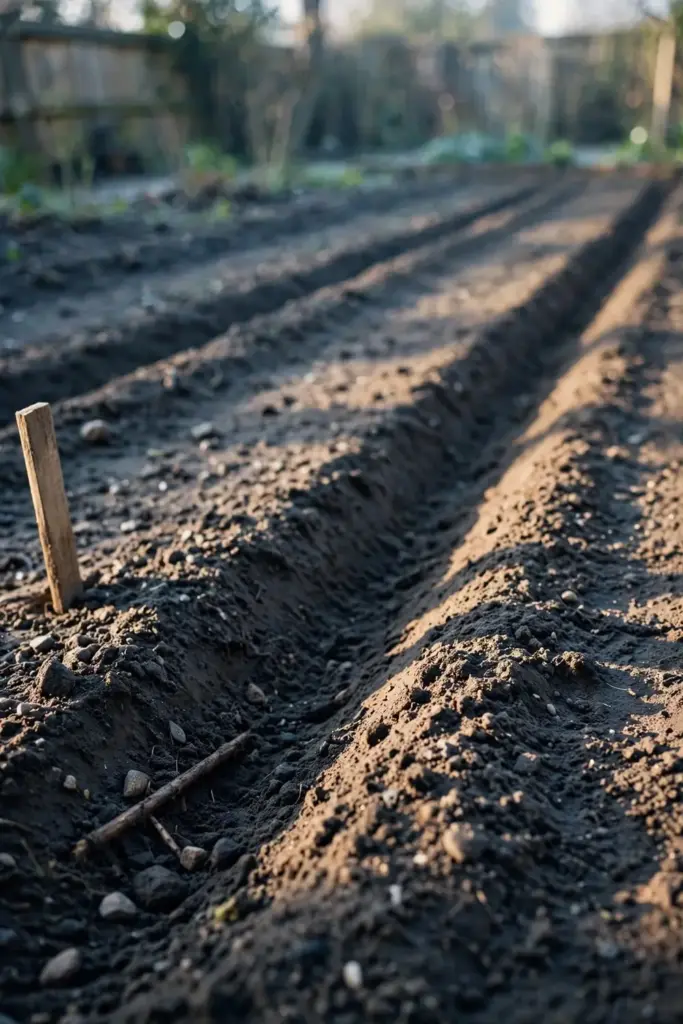
In temperate climates, translate rabi into spring and fall. Utah State Extension’s mustard guide says seed can go in after soils reach 40 F, with germination best at 55 to 65 F in 7 to 10 days, and warns that temperatures above 80 F reduce germination. Their rule of thumb: sow 3 to 4 weeks before the last frost in spring, or for fall plantings choose early-maturing varieties and sow 50 to 75 days before the expected maturity date. Fall crops usually taste better because they mature in cooling weather.
If your summers are mild and long, the fall window is the better bet. Spring-sown mustard bolts the moment a hot spell arrives; fall-sown mustard grows through the cooling season and gives you sweeter, more tender leaves. For cool-season planting ideas beyond mustard, browse the fall herb planting list and slot rai in with the other rabi-season crops.
4. Buy the Right Seed: Brassica Juncea, Not the Yellow Bottle
Buy seed labeled Brassica juncea, brown mustard, Indian mustard, rai, or sarson. Varieties sold for greens, like Tendergreen or Red Giant, are the same species and work fine for the leaf harvest. For the seed harvest, any brown mustard variety works; the species is what matters, not the cultivar name.
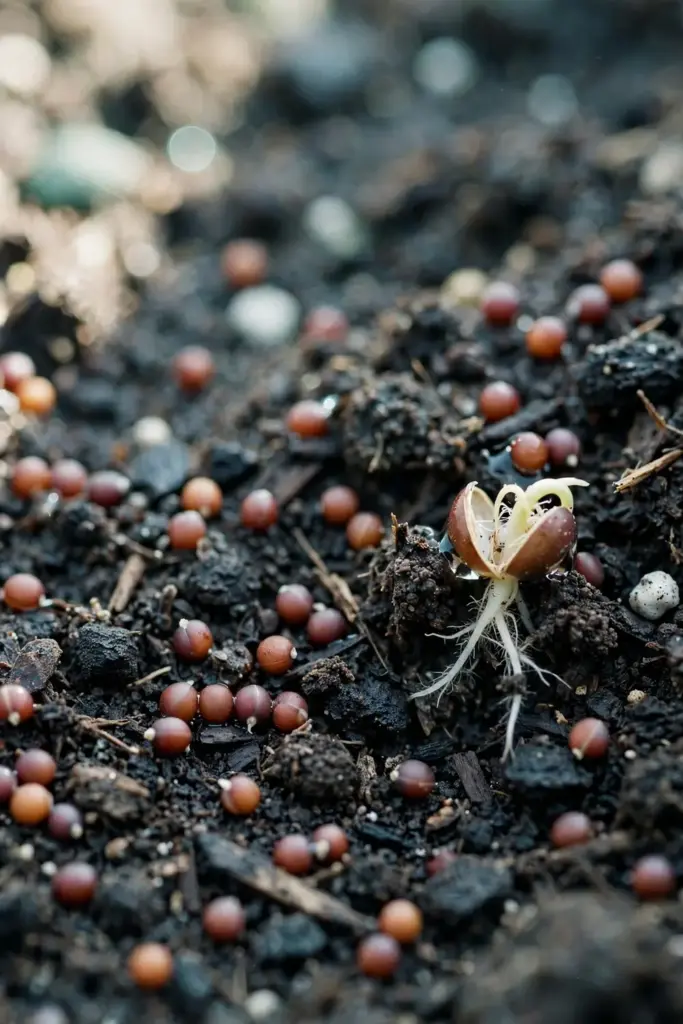
Whole rai seeds from an Indian grocery store germinate well and cost almost nothing. They are sold for cooking, not sowing, so germination rates vary, but fresh stock usually sprouts fine. Dedicated seed packets give you a named variety and a packed date, which is worth the few dollars if you are planting a serious seed patch.
Buy fresh seed every year or two. Mustard seed stays viable for several years when stored dry and cool, but old seed gives patchy, slow germination. Do the paper-towel test on questionable packets: 10 seeds on a damp towel, sealed in a bag, checked at day 5. Eight or more sprouting means the packet is fine.
5. Pots or Ground: The Honest Container Limits
Pots suit the greens. A shallow, wide container 6 to 8 inches deep and roughly 3 gallons holds a cut-and-come-again crop for one cook. Fill it with a quality potting mix, sow thickly, thin to 3 inches, and start cutting outer leaves at 4 to 6 inches. You will harvest for 3 to 4 weeks before heat or bolting ends the show.
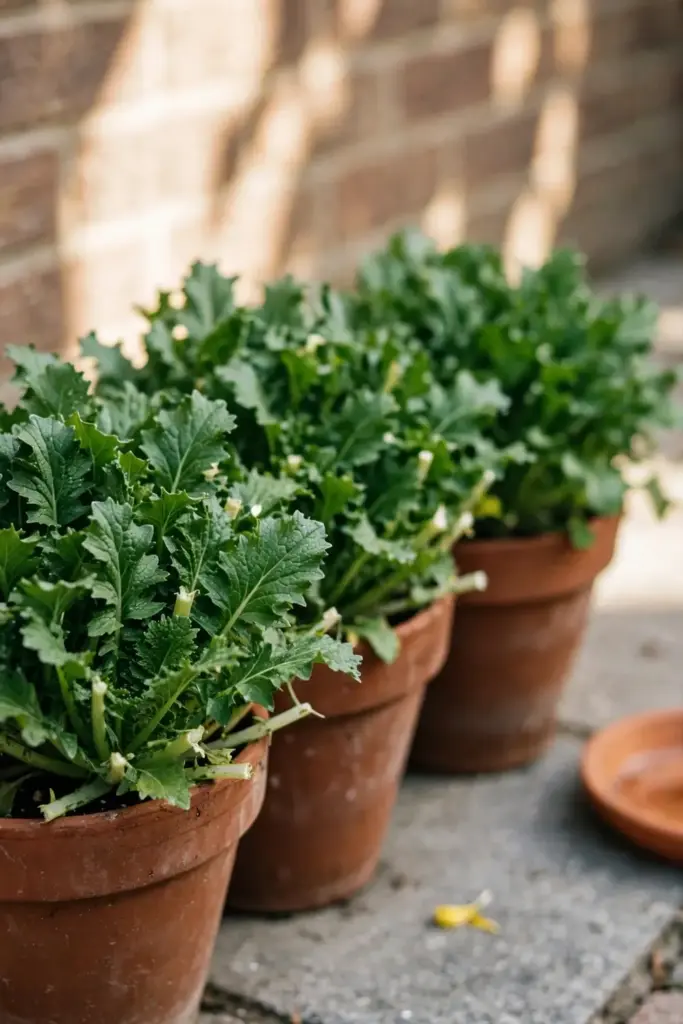
Seed harvest in a pot is a different story. A seed crop needs plants spaced 6 inches apart in rows a foot apart, grown to full height, with enough of them to make threshing worthwhile. You can do a dozen plants on a sunny balcony and get a small jar of rai, which is charming but not a spice supply. The honest rule: pots are for sarson, beds are for rai.
Whatever the container, drainage is non-negotiable. Mustard hates wet feet; soggy mix invites damping-off in seedlings and root rot in older plants. One drainage hole is the minimum, and the pot should empty freely within seconds of watering.
6. Soil That Grows Sarson
Indian mustard wants rich, well-drained, consistently moist soil in the pH 6.0 to 7.5 range. In the ground, work 2 to 3 inches of compost into the top 6 inches before sowing. The crop feeds heavily during its short season, and the compost carries it through the leaf stage without extra fuss.
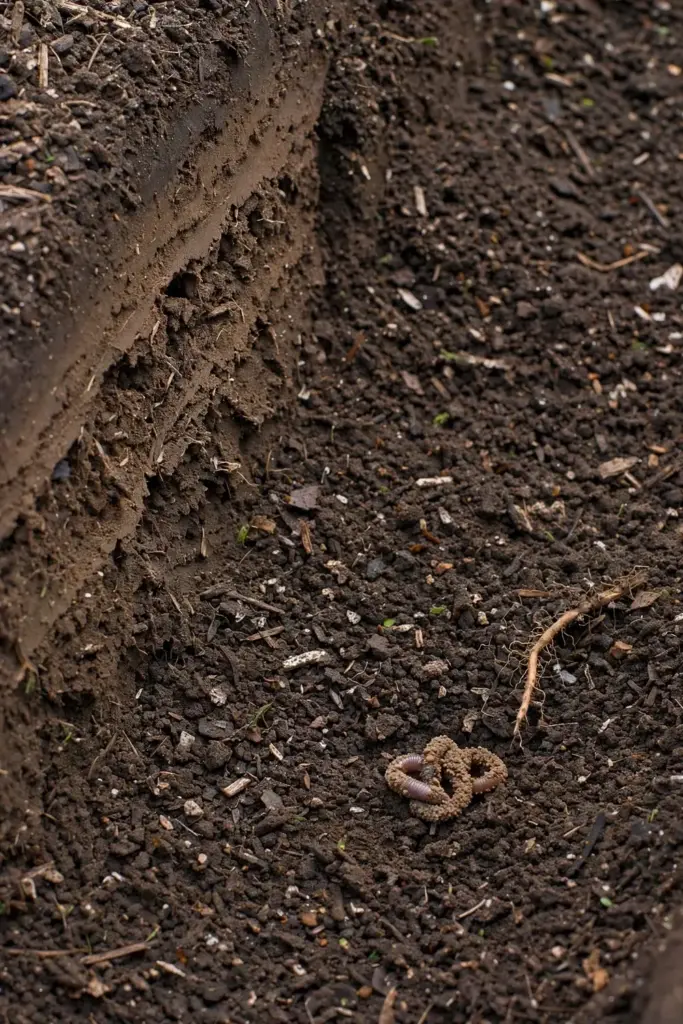
In pots, use a peat-free potting mix with added compost, not garden soil. Garden soil compacts in containers, drains poorly, and brings weed seeds. A mix that holds moisture but releases excess water is the target; if water sits on the surface after watering, the mix is too dense.
The Utah State mustard guide notes that fertilizing with compost should be capped at about 1 inch of well-composted organic matter per 100 square feet, which is a useful restraint. More is not better; overfed mustard grows soft and floppy, which invites aphids. Build the soil right once and let the plant do the work. The long version of that philosophy lives in the soil health guide.
7. Sow at the Right Depth and Spacing
Sow mustard seed half an inch deep, about 1 inch apart, in rows 12 inches apart for a seed crop. Cover lightly, press the soil down so seed meets soil, and water gently so the shallow seed does not wash away.
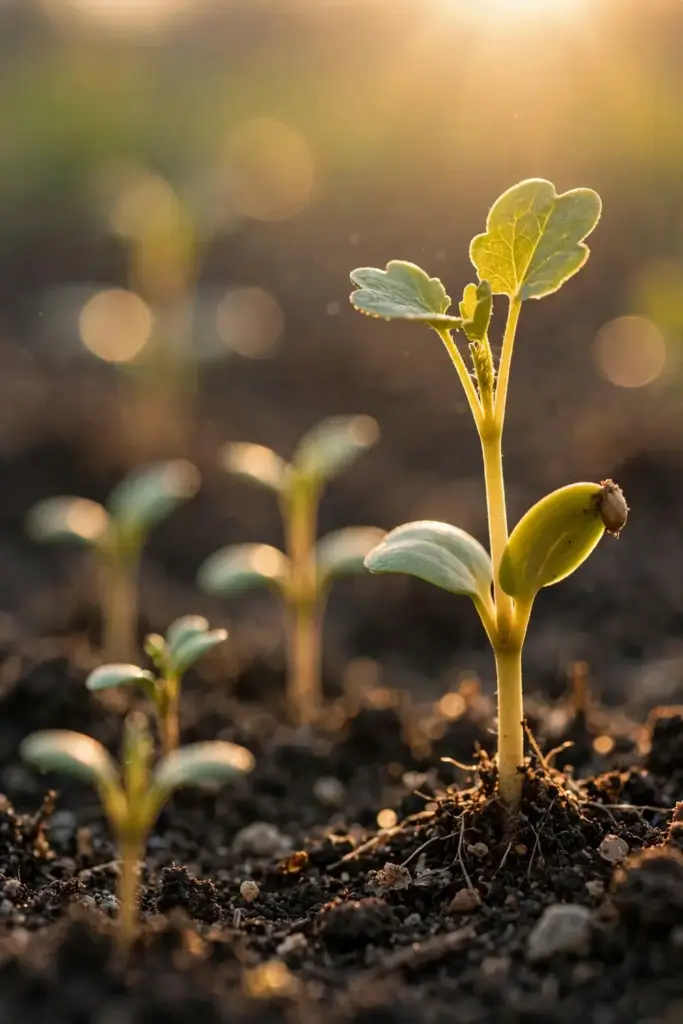
Spacing is where the dual harvest splits. For greens, thin seedlings to 3 inches apart once they have 3 to 4 true leaves. For seed, thin to 6 inches apart; Gardening Know How explains that seed plants need wider spacing than greens because they grow much larger before flowering. Skipping the thinning step is the classic beginner error when learning how to grow Indian mustard from India: crowded plants bolt early and set poor seed.
Succession sow greens every 2 to 3 weeks through the cool season for a continuous sarson supply. Do not succession-sow the seed crop; one well-timed sowing gives you one even harvest, which is what threshing wants. If you are new to seed-starting technique generally, the seed starting guide covers the indoor mechanics that also apply to mustard transplants.
8. Water: Steady Moisture Without Drowning Roots
Mustard wants consistent moisture, roughly an inch or two of water a week, and it punishes both drought and swamp. NC State warns that moisture stress makes the flavor spicier and unpleasantly strong. Steady watering is a flavor decision, not just a growth one.
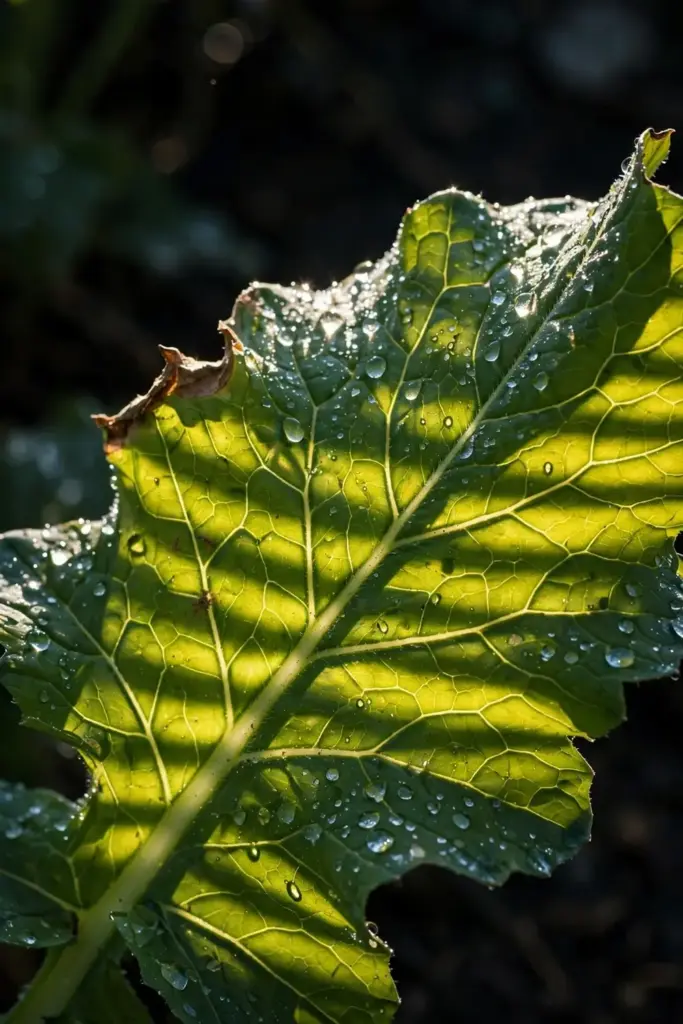
Water early in the day so leaves dry before nightfall, because wet foliage overnight invites fungal disease. In pots, check daily in warm weather. A 3-gallon pot in sun dries fast, and a wilted mustard plant turns bitter fast too. Mulch the ground bed with an inch of straw to hold moisture and keep soil off the leaves.
The critical watering windows are flowering and pod fill. The Better India guide singles out these stages: regular water during flowering and pod development makes a visible difference in seed set, while overwatering at any stage harms roots and triggers fungal problems. Watch the soil, not the calendar.
9. Feed Lightly: Nitrogen for Greens, Restraint for Seed
Greens want nitrogen. A balanced liquid feed every 2 to 3 weeks, or a side-dress of compost at the 3-week mark, keeps cut-and-come-again leaves tender and green. Pale, slow leaves in a pot usually mean hunger, not disease.
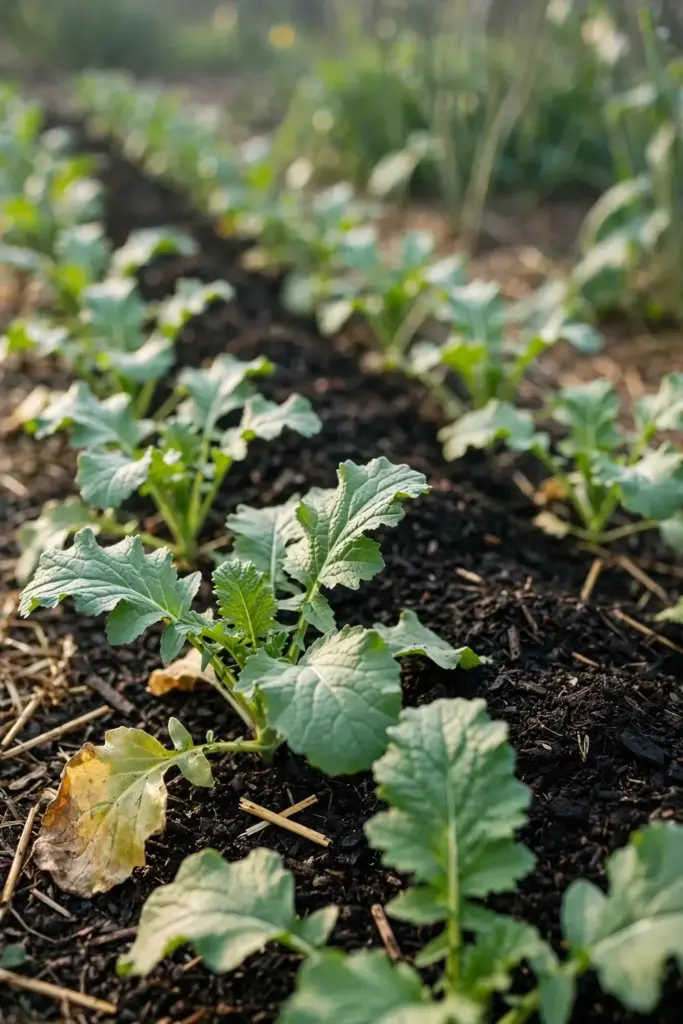
Seed crops want restraint. Too much nitrogen late in the season pushes leafy growth at the expense of pods and can delay maturity into hot weather, which is exactly what you do not want. Feed at sowing and once more at the vegetative stage, then stop and let the plant shift to reproduction.
Foliar micronutrient sprays at flowering can support pod set on the seed crop, per Indian farming practice. For a home garden this is optional; compost-rich soil and correct timing matter far more than any spray bottle.
10. Thin Without Mercy
Thinning feels wasteful and is the highest-return job in the whole crop. Crowded mustard competes for light and water, bolts early, and produces thin, bitter leaves. The thinnings are edible, so nothing is wasted: eat them as microgreens.
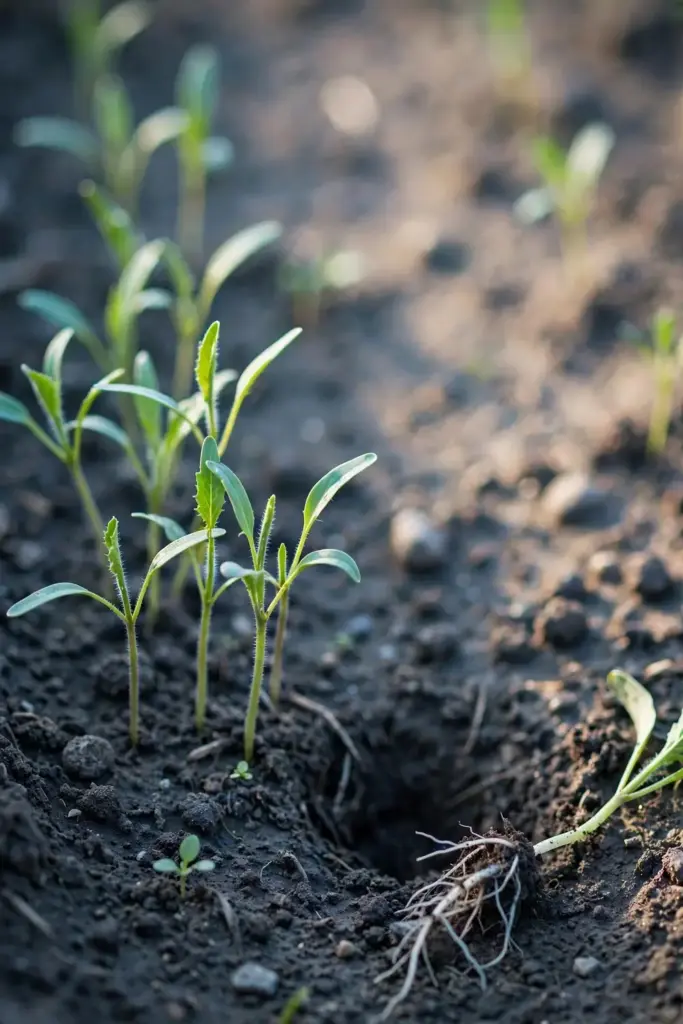
Thin greens to 3 inches apart at the 3 to 4 true-leaf stage. Thin seed plants to 6 inches apart, same timing. Pull the weakest seedlings, not the strongest, and thin on a damp day so the remaining plants do not disturb. Water after thinning to settle the soil around the keepers.
One thinning is usually enough for greens, which you will be cutting anyway. For seed, check once more a week later and remove any runts. Even spacing gives even flowering, and even flowering gives an even, dry-down harvest.
11. Flowering and Bolting: The Switch From Leaf to Seed
Bolting is mustard’s natural gear change. Rising temperatures and lengthening days trigger the flower stalk, and once it starts you cannot reverse it. Greens picked after bolting taste sharp and bitter; the plant has moved on.
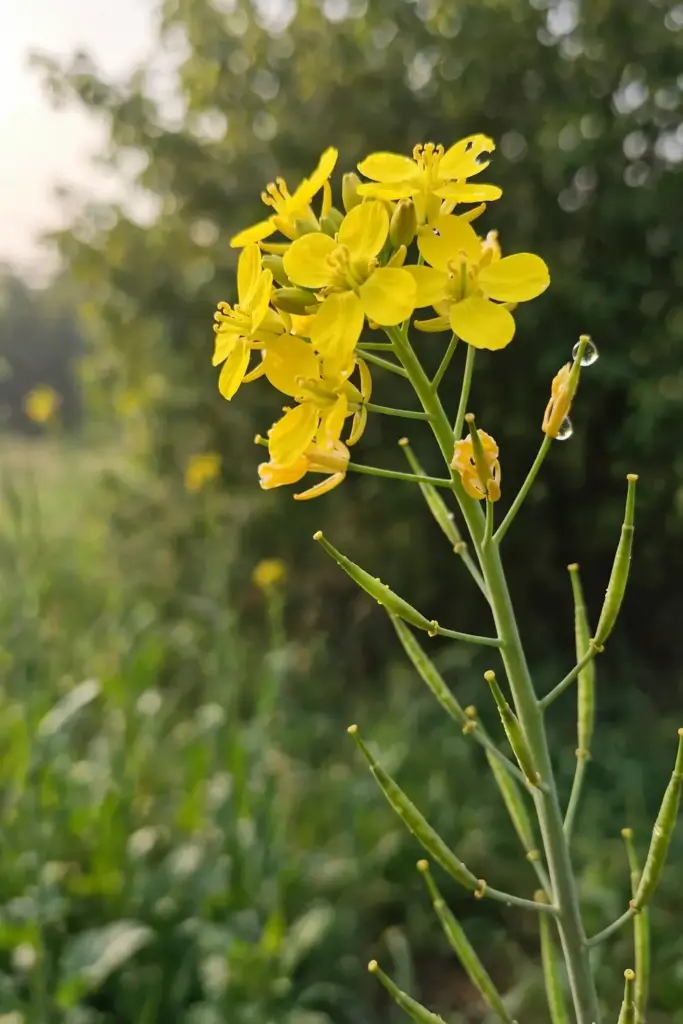
For the leaf harvest, delay bolting by sowing in the cool window, watering steadily, and harvesting aggressively. Cut outer leaves often; a plant that keeps losing leaves keeps making leaves. Shade cloth in a sudden hot spell buys you a week or two.
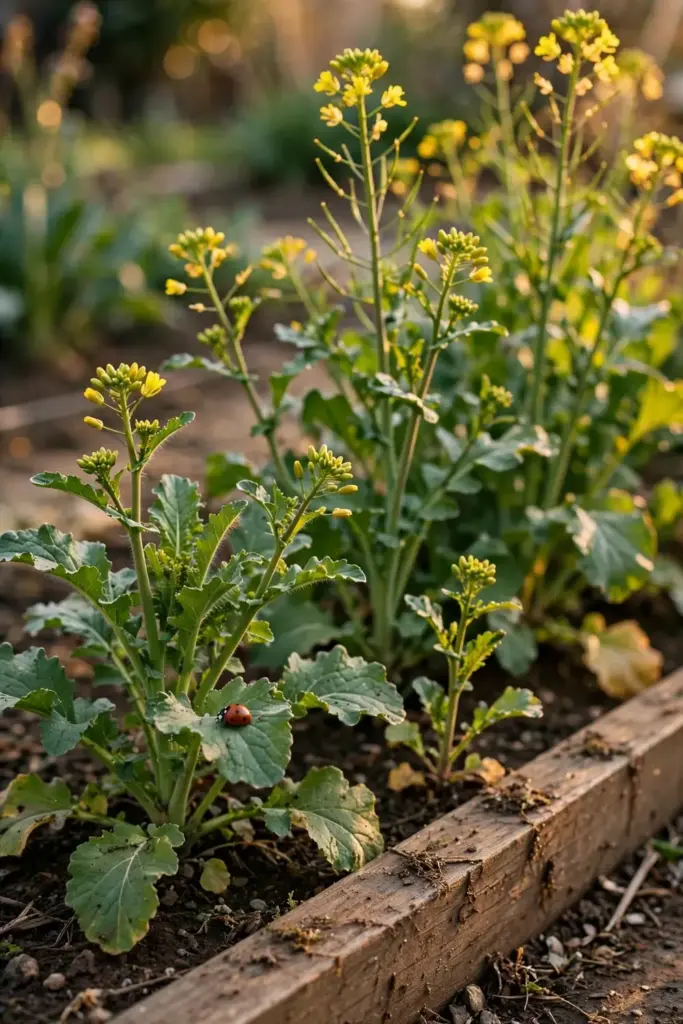
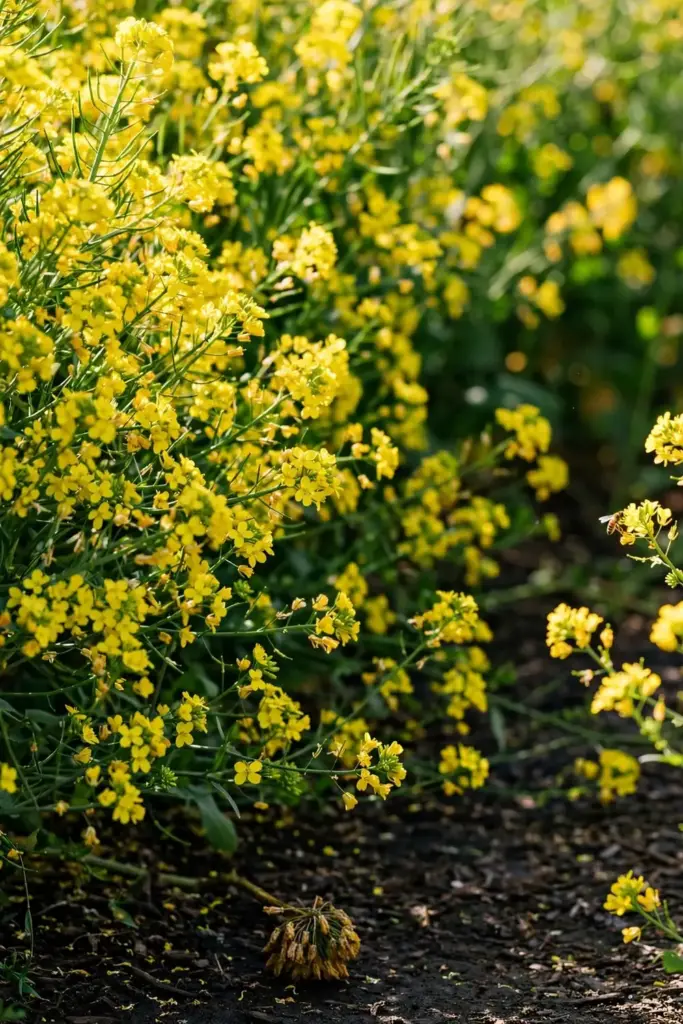
For the seed harvest, bolting is the plan. Let the stalk rise, let the yellow flowers open, and let pollinators work. The flowers feed bees generously, then the pods swell. From here the crop needs nothing but time and steady water until the pods dry.
12. Pests and Diseases That Love the Brassica Family
Mustard shares its pest list with cabbage and kale. NC State names the usual suspects: flea beetles, caterpillars, aphids, slugs, and snails. Flea beetles chew tiny shot-holes in seedling leaves; they look alarming but rarely kill an established plant. Cabbage white caterpillars do the real damage on the leaf crop; hand-pick them or cover the bed with insect mesh from day one.
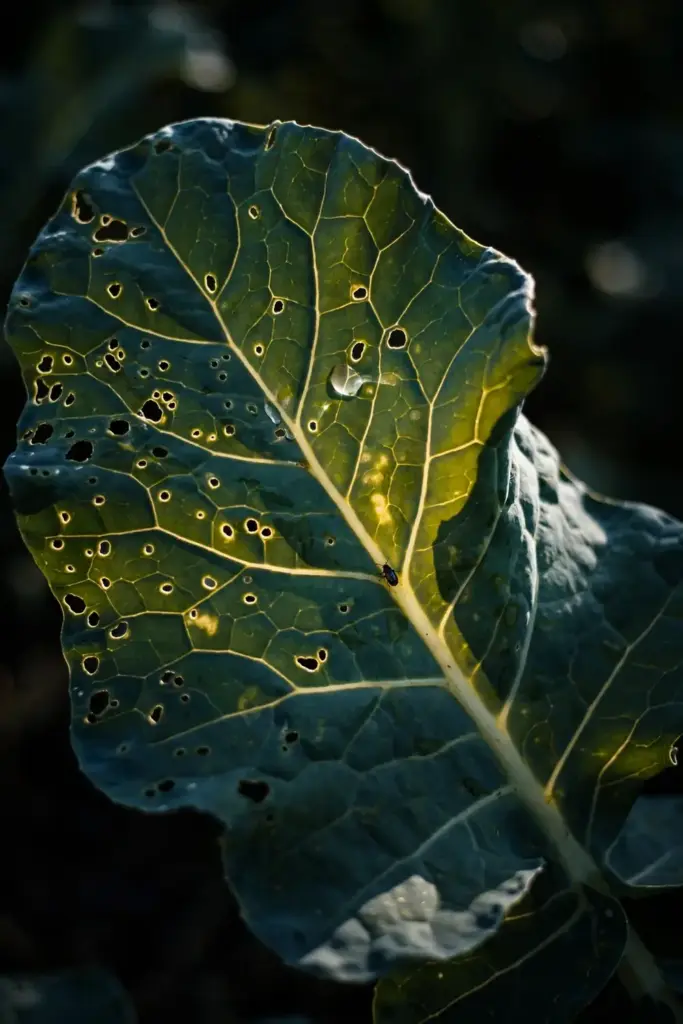
Aphids cluster on flower stalks and new growth. A hard water blast dislodges light infestations; neem oil handles heavy ones. Slugs and snails work the night shift on low leaves; a ring of diatomaceous earth or an evening hunt with a flashlight keeps them honest.
On the disease side, Indian mustard growers watch for white rust and downy mildew, both favored by wet foliage and poor airflow. Prevention beats cure: space plants properly, water at the base, water in the morning, and rotate the bed so mustard does not follow mustard year after year. Remove and bin diseased leaves rather than composting them.
13. Harvest Sarson Ka Saag at 25 to 30 Days
Start cutting when leaves reach 4 to 6 inches, usually 25 to 30 days after sowing. Take the outer leaves first and leave the growing center intact; the plant responds by pushing new leaves from the middle. This cut-and-come-again rhythm gives 3 to 4 weeks of harvest from one sowing.
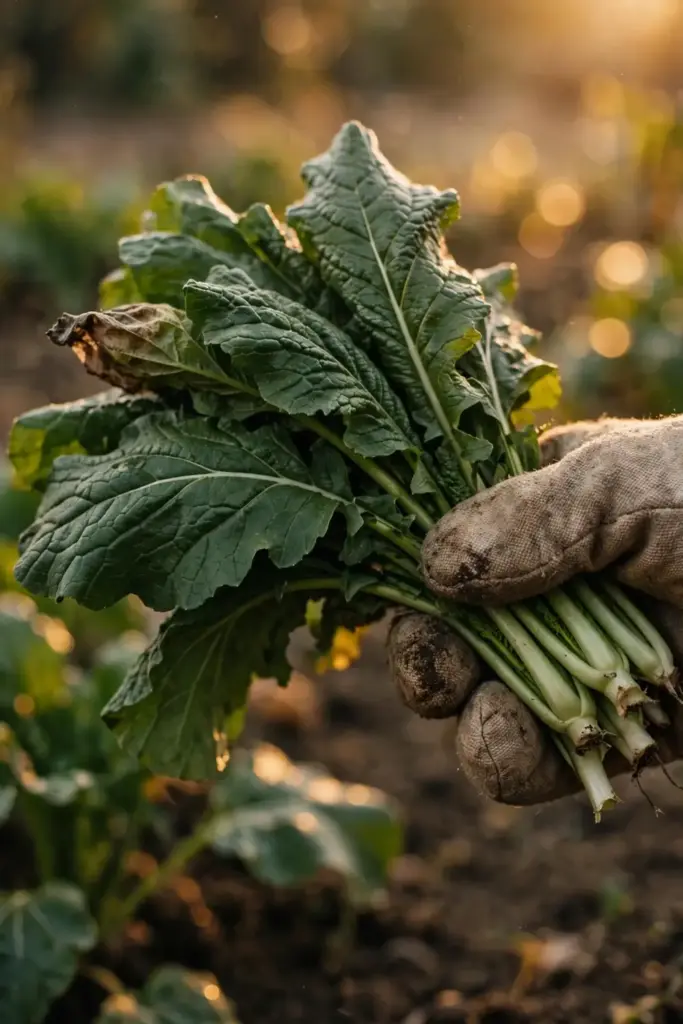
Harvest in the morning when leaves are crisp and cool. A sharp knife or scissors beats tearing; clean cuts heal fast and do not invite disease. Wash the greens well, since low leaves collect soil splash.
Tenderness is the quality target. Leaves picked young and grown fast in cool weather cook down silky. Leaves left to grow large in heat turn tough and fiercely pungent. If a plant bolts before you finish harvesting it, stop picking greens and let it go to seed; you have just converted a greens plant into a seed plant.
14. Harvest Rai Seed at 90 to 100 Days
The seed harvest starts when the pods turn pale brown and dry on the stalk, about 90 to 100 days after sowing. The stalk yellows, the pods rattle faintly when shaken, and the seeds inside are hard and dark. Harvesting too early gives soft, green seed that molds in storage; harvesting too late means the pods shatter and scatter your crop on the soil.
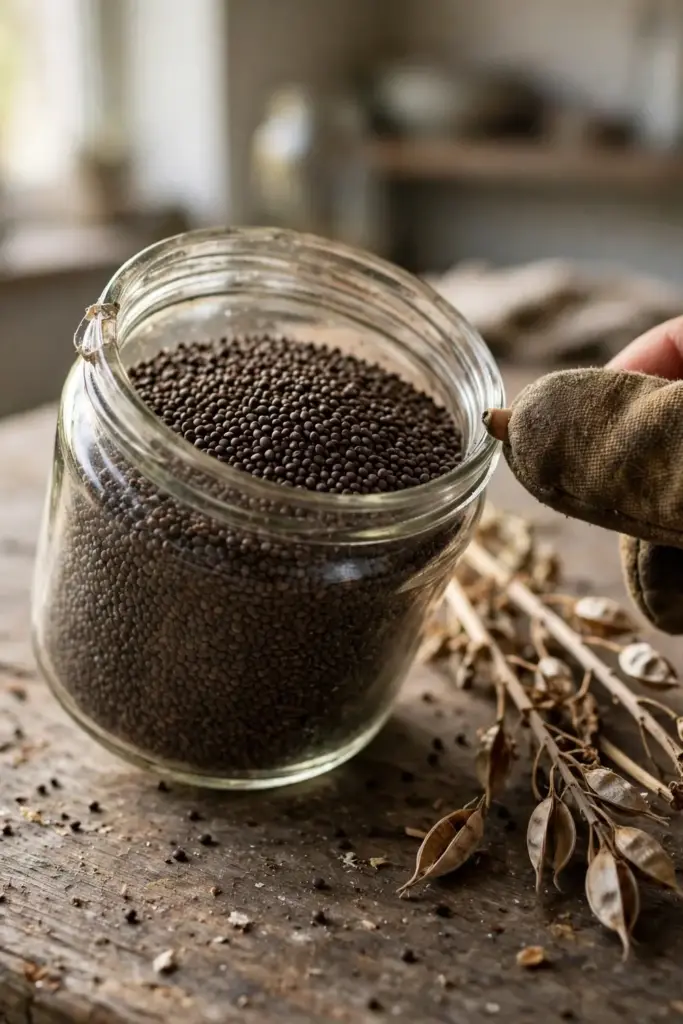
Cut whole stalks on a dry morning and carry them to a tarp or sheet. Do not wait for every pod to dry. Harvest when most pods are dry and finish the rest indoors. If rain threatens while pods are drying, cut early and dry under cover, because a rained-on seed crop is a lost seed crop.
One plant yields a small handful of seed. A 3 by 6 foot bed at proper spacing yields enough rai to fill several spice jars. Scale your expectations to your space, and remember the pot rule from section 5.
15. Dry and Thresh Your Own Spice
Dry the cut stalks for a week in a warm, airy spot out of direct sun: a garage, a covered porch, or a spare room with a fan. The pods should feel papery and brittle. Any stalk that still feels damp needs more time; seed stored damp molds fast.
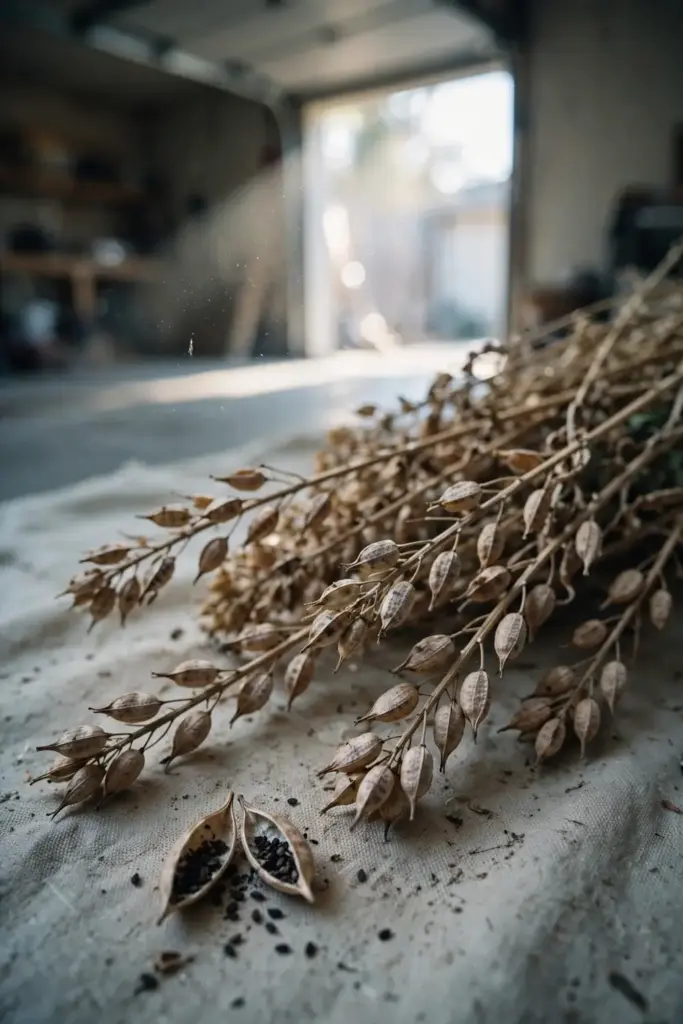
Thresh by beating the stalks inside a pillowcase or burlap sack, then shaking the seed free. Winnow by pouring the seed slowly from one bucket to another in a light breeze; the chaff blows away and the heavy seed falls straight. A kitchen fan on low does the same job indoors.
Store the clean seed in airtight jars in a cool, dark cupboard. Dry rai seed keeps its punch for 2 to 3 years, which means one good harvest covers your tadka for a long time. Label the jar with the year; old seed still sprouts, but old spice loses fire.
16. Turn Rai Into Mustard Oil and Ground Spice
Whole rai seed is the base of the tadka, the hot-oil tempering that starts countless Indian dishes. Heat oil, add a teaspoon of seeds, wait for the popping to start and finish, then add your other spices. The popping tames the raw bite and releases the nutty aroma. Seeds added to cold oil turn bitter; seeds burned black turn acrid. Hot oil, quick pop, move on.
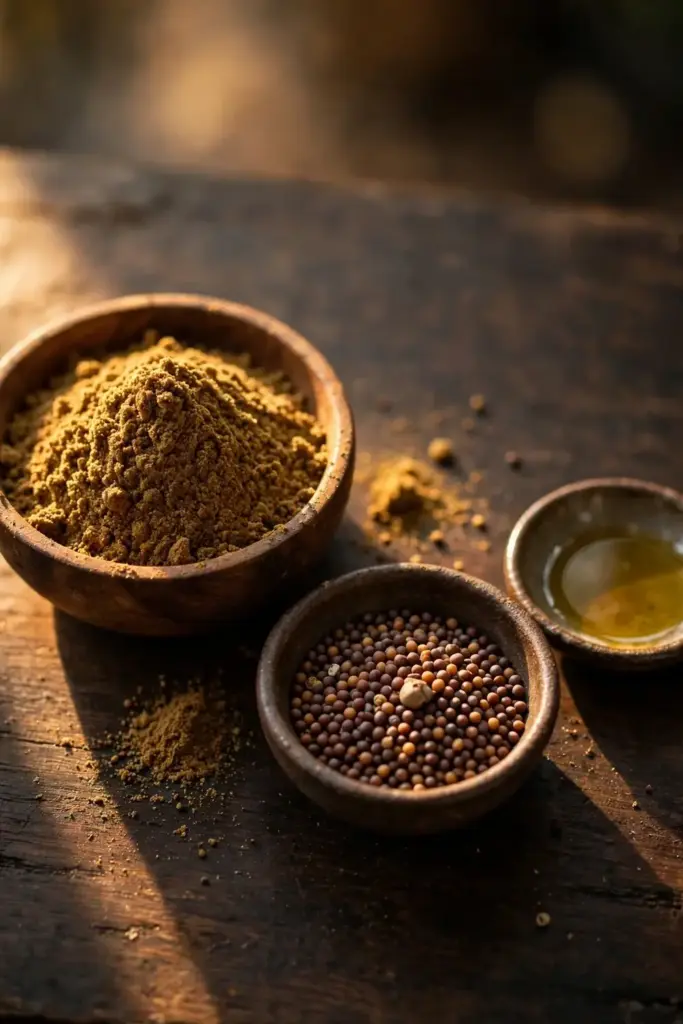
Ground mustard comes from the same seed. Grind small batches in a spice grinder and mix with vinegar or water for fresh prepared mustard; the heat blooms over 10 to 15 minutes, then mellows. Mustard oil, the pungent cold-pressed oil of North Indian cooking, needs a dedicated press and is a project for the ambitious; whole and ground seed cover nearly all home uses.
Keep the culinary and garden lanes separate in your head. Growing rai is gardening; pressing oil is food craft. Both start from the same brown seed in the same jar.
17. Cook It: Sarson Ka Saag and Rai Tadka Uses
Sarson ka saag is the signature dish: mustard greens slow-cooked with spinach or bathua, finished with ghee and served with makki di roti. The greens you cut at 25 to 30 days are exactly the right age for it, tender enough to break down into the classic creamy texture.
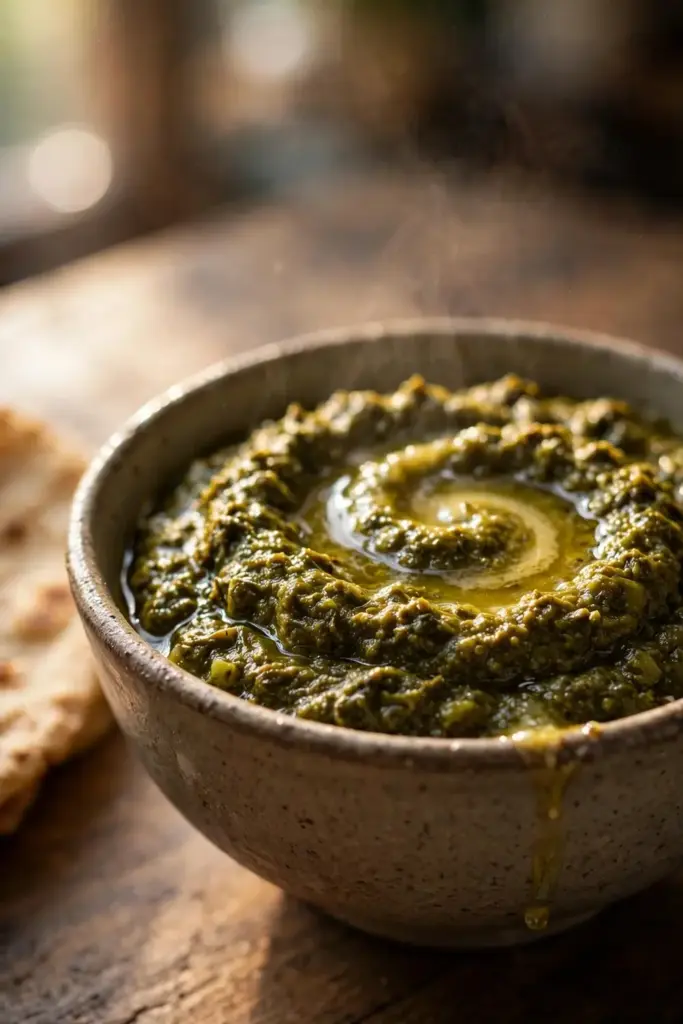
Beyond the classic, use young mustard leaves anywhere you would use peppery greens: wilted into dals, stirred through khichdi, or mixed into paratha dough. The flowers are edible too, with a mild mustard bite that brightens salads. Even the thinnings earn their place as a spicy microgreen.
Rai seed seasons pickles, chutneys, and curry powders, and a pinch bloomed in hot oil lifts a plain dal into something memorable. One 3 by 6 foot seed bed gives a home cook a year of tadka. That is the real economics of growing your own spice.
18. 7 Mistakes That Waste an Indian Mustard Crop
Sowing in summer heat is mistake one. Mustard germinates poorly above 80 F and bolts almost immediately in hot soil. Sow in the cool window or do not sow at all.
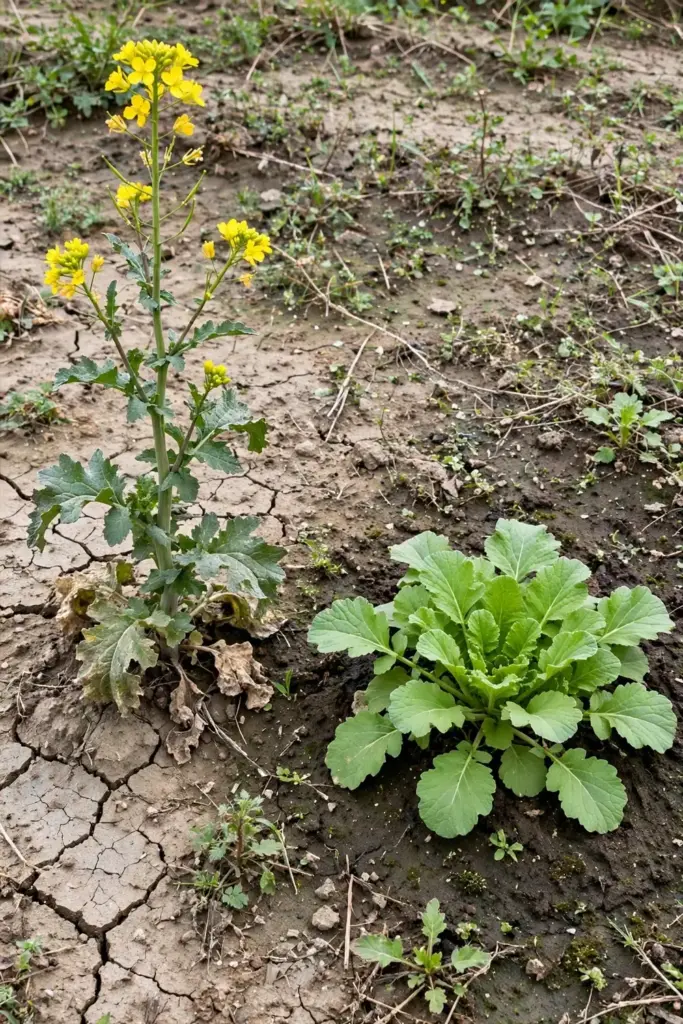
Skipping thinning is mistake two. Crowded plants race upward, flower early, and give you thin leaves and poor pods. Thin to 3 inches for greens, 6 for seed, at the 3 to 4 leaf stage.
Buying the wrong species is mistake three. Yellow mustard seed from the spice aisle is Sinapis alba; it grows, but it is not rai. Check the packet for Brassica juncea.
Overwatering pots is mistake four. Mustard roots rot in soggy mix. Water when the top inch dries, and make sure the pot drains freely.
Starving the greens is mistake five. Cut-and-come-again harvesting removes a lot of nitrogen with every cutting. Feed lightly every few weeks or the regrowth stalls.
Harvesting seed too early is mistake six. Soft green seed molds in the jar. Wait for pale, dry, rattling pods.
Letting pods shatter in the field is mistake seven. Check the seed crop daily once pods start drying. Cut the stalks a day early rather than a day late.
19. Troubleshooting Quick Answers
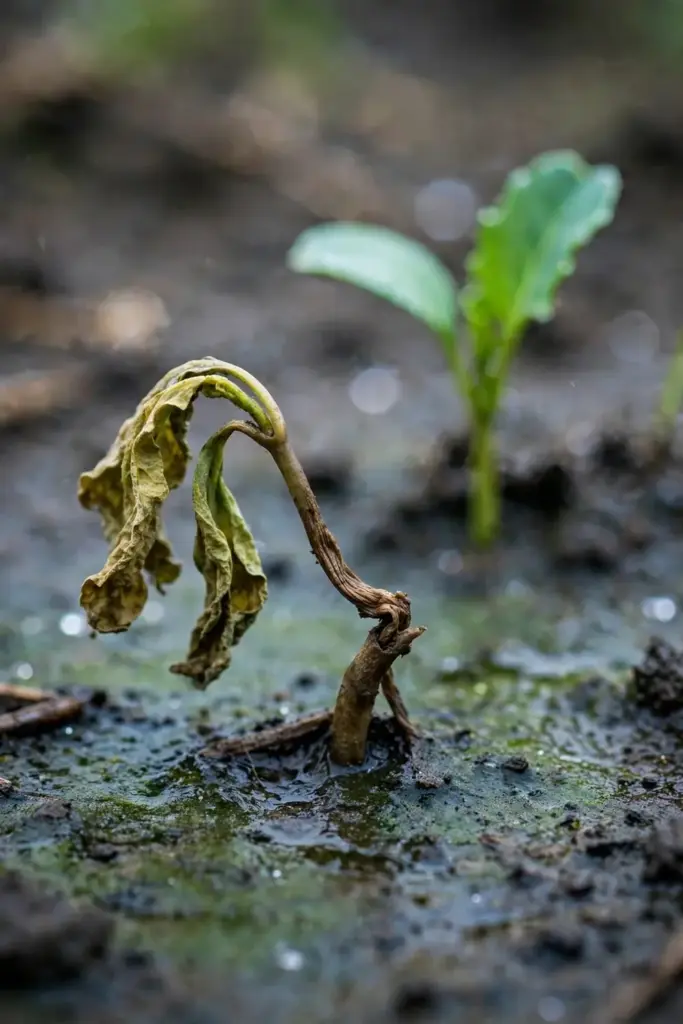
Seedlings emerge then collapse at the base. That is damping-off, a fungal problem of wet, cool soil. Sow in fresh mix, do not overwater, and give seedlings air movement. Start over; collapsed seedlings do not recover.
Leaves are full of tiny holes. Flea beetles. Seedlings usually outgrow the damage, and a floating row cover from sowing day prevents it entirely. Heavy, repeated damage on young plants justifies neem oil.
Plants bolt within weeks of sowing. Heat, crowding, or drought stress. Next sowing goes in earlier or in the fall window, thinned properly, watered steadily. There is no rescue once the stalk rises; harvest what leaves remain and let it set seed.
Aphids coat the flower stalks. Blast with water first, neem oil second. Aphids on a seed crop are mostly cosmetic unless the infestation is heavy; on a greens crop, pick clean leaves and wash well.
White blisters appear on leaf undersides. White rust, a classic mustard disease in humid weather. Remove affected leaves, improve airflow, water at the base. Do not compost infected material.
Pods are empty or half-filled. Poor pollination or drought during flowering. Keep water steady through bloom, avoid spraying insecticide on open flowers, and accept that a heat wave during flowering costs you yield.
Seeds sprout inside the pods. The crop got rained on at maturity. Cut earlier next time and dry under cover. Sprouted seed is still edible but will not store.
Frequently Asked Questions
Yes, if the seeds are whole, raw, and reasonably fresh. Whole rai from an Indian grocery is Brassica juncea and usually germinates well, though you should avoid roasted, ground, or very old stock. Test ten seeds on a damp paper towel first. Eight or more sprouting in five days means the batch is worth sowing.
Greens are ready in 25 to 30 days from sowing. Seed takes 90 to 100 days from sowing to dry pods on the stalk. Both timelines assume cool-season conditions between 50 and 75 F; heat shortens the greens window and can ruin the seed crop, so the calendar matters more than the day count.
No. Indian mustard is an annual: it germinates, grows, flowers, sets seed, and dies in one season. It does self-sow readily if you let pods shatter, so volunteers often appear the next season. For a planned crop, sow fresh seed each cool season rather than relying on volunteers.
Rai is the seed of Brassica juncea, the hot brown mustard used in Indian cooking, and sarson is the leaf of the same plant, eaten as sarson ka saag. Yellow mustard is Sinapis alba, a different and milder species used for American prepared mustard. Same family. Different plants, different flavors.
Yes for greens, with limits for seed. A 6 to 8 inch deep pot grows a fine cut-and-come-again sarson crop. A meaningful rai seed harvest needs many plants at 6-inch spacing, which most pots cannot hold. Grow greens in pots and run the seed crop in a sunny bed if you have one.
Heat is the usual cause. Soil above 80 F pushes mustard straight to flowering, and crowding, drought, or late sowing into warming weather do the same. Sow in the true cool window, thin on time, and water steadily. Once the flower stalk rises, the leaf harvest is over, so let the plant finish and collect the seed.
Closing: Two Harvests From One Cool Season
Indian mustard earns its place in a home garden because it works on two timelines at once. Sow once in cool weather, cut sarson greens for a month, then step back and let the seed plants finish into a jar of rai that seasons your cooking for a year or more. Few crops repay a single sowing that well.
Start small and honest: one pot of greens to learn the plant, one bed patch for seed if you have the space. Keep the seed dry, the water steady, and the calendar cool, and Brassica juncea does the rest. That is the whole method for how to grow Indian mustard from India in one sentence. If you also grow the milder Western types, our mustard greens guide covers that leafy-greens method in full; this article is the Indian rai and sarson dual-harvest method.