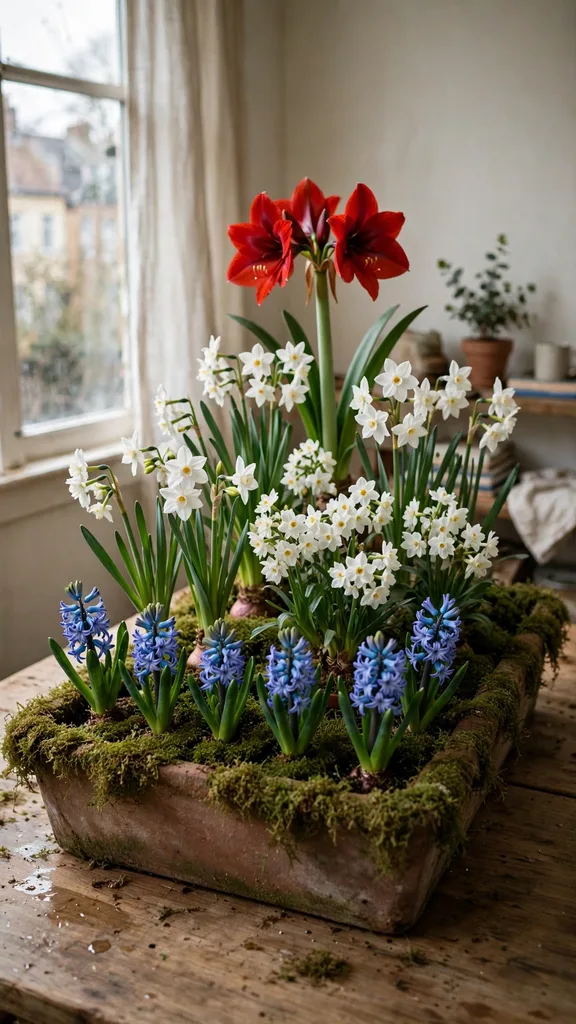
An indoor Christmas bulb garden is a planted display, not a row of separate pots: amaryllis, paperwhites, and hyacinths forced by you and arranged together so something is always in bud, in flower, or just finished across 6 to 8 weeks of the season. The craft is in the calendar and the staging. Each bulb runs on its own clock, amaryllis at six to eight weeks, hyacinths after a long chill, paperwhites at three to five, and the display works when those clocks are set so their flowers overlap from mid-December into January. This guide covers the planning, the forcing, the assembling, and the keeping of a bulb garden that peaks when the house is fullest.
Work backward from the day you want flowers, and plant in waves rather than all at once. I set the amaryllis first, in mid-October, start the paperwhites in three small batches a week apart, and bring the hyacinths out of their chill in stages, because a display that opens everything in one week is a display that is over by New Year. The sections below follow the order of the work: choose the bulbs, chill what needs chilling, force each kind on its own schedule, assemble the garden, and keep it performing.
| Bulb | Start | Weeks to Flower | Chill Needed | Display Role |
|---|---|---|---|---|
| Amaryllis | Mid-October | 6 to 8 | None | The tall anchor, flowers for Christmas |
| Paperwhites | Early to mid-November, in waves | 3 to 5 | None | Fast filler, flowers first |
| Hyacinths, prepared | Late October out of chill | 3 to 4 after chilling | Bought prepared, or 10 to 13 weeks at home | Scent and low color |
| Hyacinths, regular | Early autumn into chill | 10 to 13 weeks chilled, then 3 | Yes, at home | January flowers |
| Crocus and grape hyacinths | Autumn into chill | 8 to 10 weeks chilled, then 2 to 3 | Yes | Edge detail, late season |
| Miniature daffodils | Autumn into chill | 10 to 12 weeks chilled, then 3 | Yes | Second wave, January color |
Choose Bulbs for Overlap, Not Just for Beauty
Choose the display’s bulbs the way you would cast a play: a tall anchor, a fast opener, a scent carrier, and a late wave. Amaryllis anchors, with trumpets that read across a room. Paperwhites open first and fill the early weeks. Hyacinths carry the scent and the low, dense color at the display’s front edge. A late wave of miniature daffodils or crocus, chilled longer and brought in later, takes over as the Christmas flowers finish.
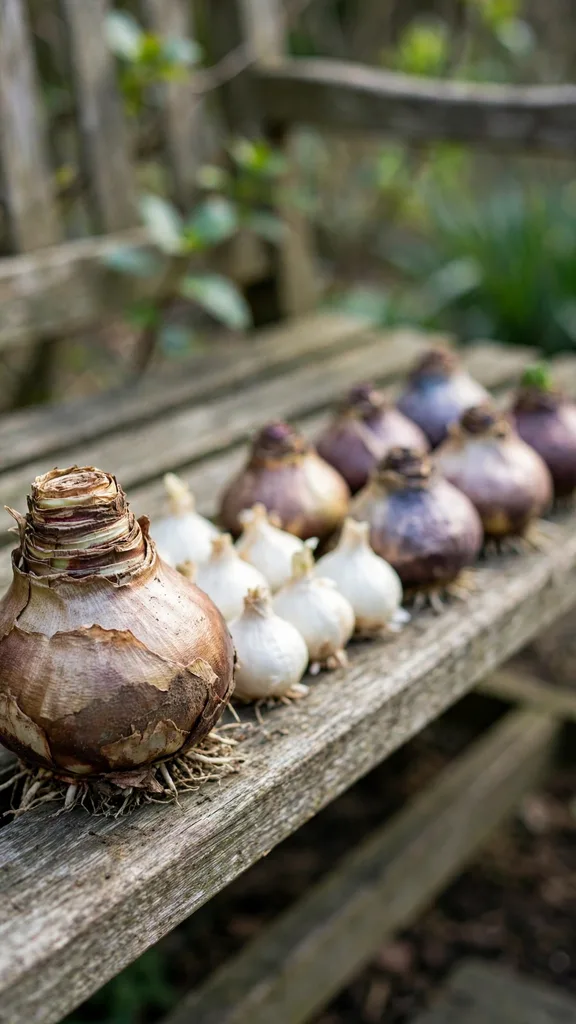
Buy the biggest bulbs on offer; in forced displays, bulb size is flower count, and a cheap small bulb is the most expensive disappointment in January. Match varieties to the calendar rather than the catalogue photograph: an early amaryllis variety and a late one, planted the same day, stagger themselves. Decide the color scheme now, all white and green for calm, red and white for the classic table, because mixed leftovers planted together look like mixed leftovers.
Chill the Bulbs That Need Cold First
Hyacinths, crocus, grape hyacinths, and miniature daffodils will not flower properly without a cold period, and the display calendar starts with their chill, in early autumn. Pot them first. Water once. Then they go somewhere cold and dark, 35 to 48°F, a fridge, a cold garage, an unheated store, for the weeks in the table. The Wisconsin Horticulture guide to forcing bulbs sets out the forcing framework this calendar follows: bulbs need their cold weeks completed before warmth will bring flowers rather than leaves and disappointment.
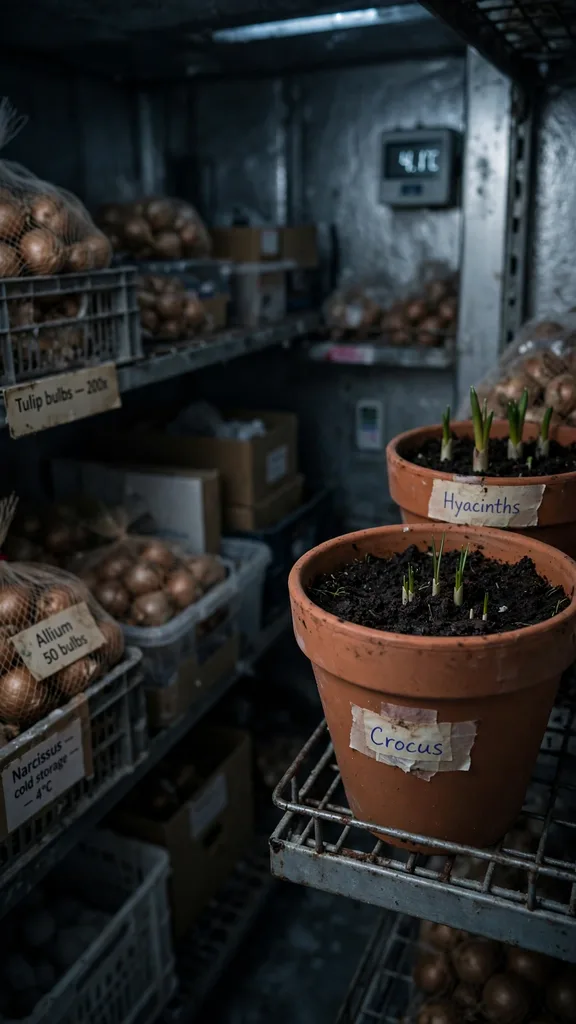
Prepared hyacinth bulbs, chilled by the grower, are the shortcut that makes Christmas hyacinths reliable, and they are worth their premium in a display with a deadline. Regular bulbs chilled at home flower later, which the plan turns into a virtue: they become the January wave. Check chilled pots every few weeks; the mix should stay just moist, and any pot drying out gets a little water in the cold, not a rescue soak later.
Force Amaryllis as the Anchor
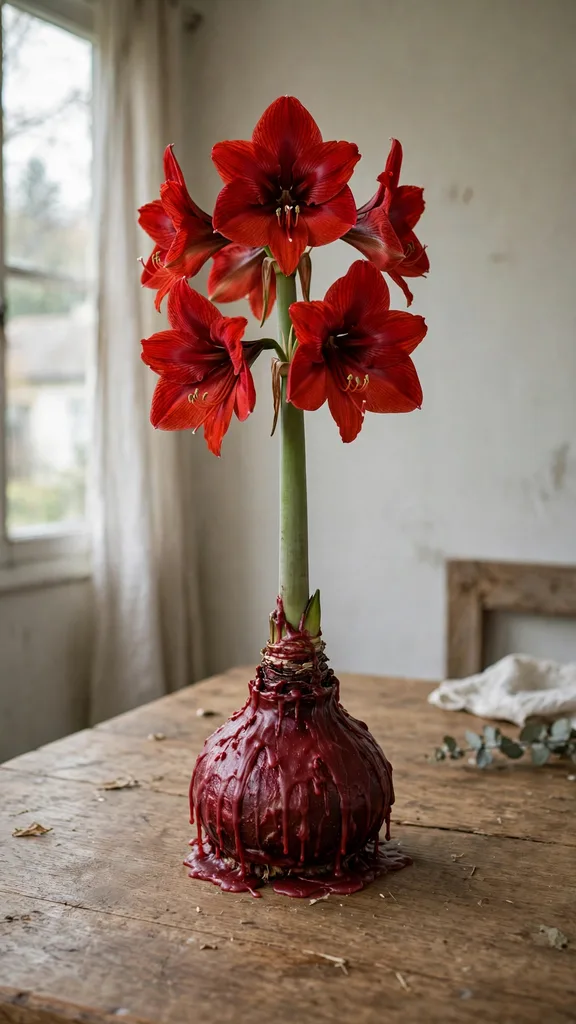
Amaryllis needs no chill, only warmth and time: six to eight weeks from a dry bulb to flowers, planted with the shoulders above the mix in a pot barely wider than the bulb. The amaryllis care guide covers the bulb’s own routine in full; in a display, the amaryllis’s job is height and timing. Start the anchor bulbs in mid-October for Christmas flowers, and start one insurance bulb a week later, since a display with a spare anchor never has a hole.
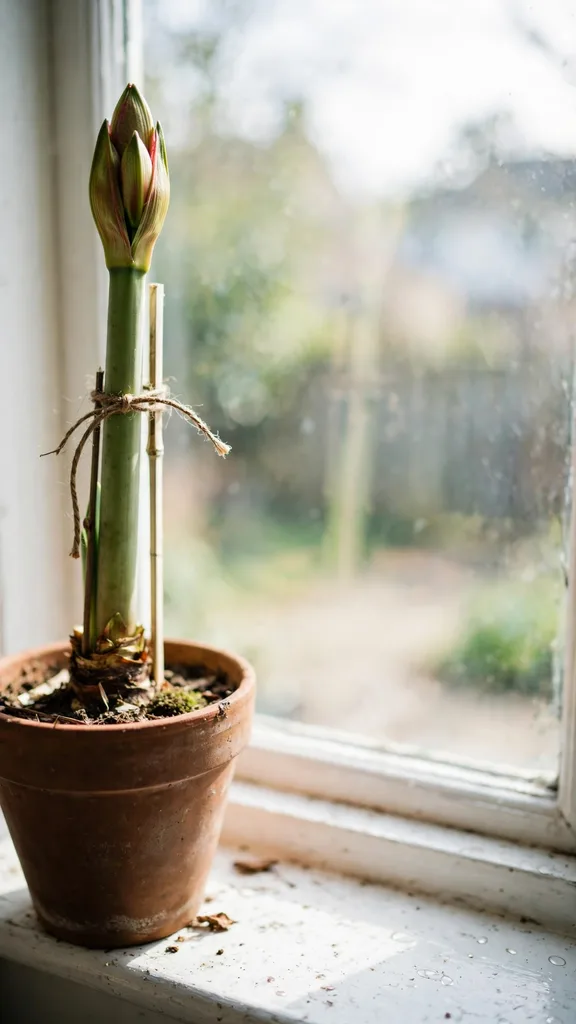
Grow the stalk straight with a quarter turn every few days, and stake early rather than after the lean. Two stems per large bulb is the norm, and they often open a week apart, which stretches the anchor’s display naturally. Keep the pot where it will live once it joins the display if you can; a flowering amaryllis is top-heavy and resents travel across the house at its peak.
Force Paperwhites in Waves for Continuous Flower
Paperwhites are the display’s metronome: three to five weeks from planting to flower, no chill, almost no failure. Plant them in waves, a small bowl every week from early November, and the display always has one bowl opening as another fades. The full method, pebbles or mix, water to the base of the bulbs, is in the paperwhites for Christmas guide; the display adds only the wave discipline and the flop management.
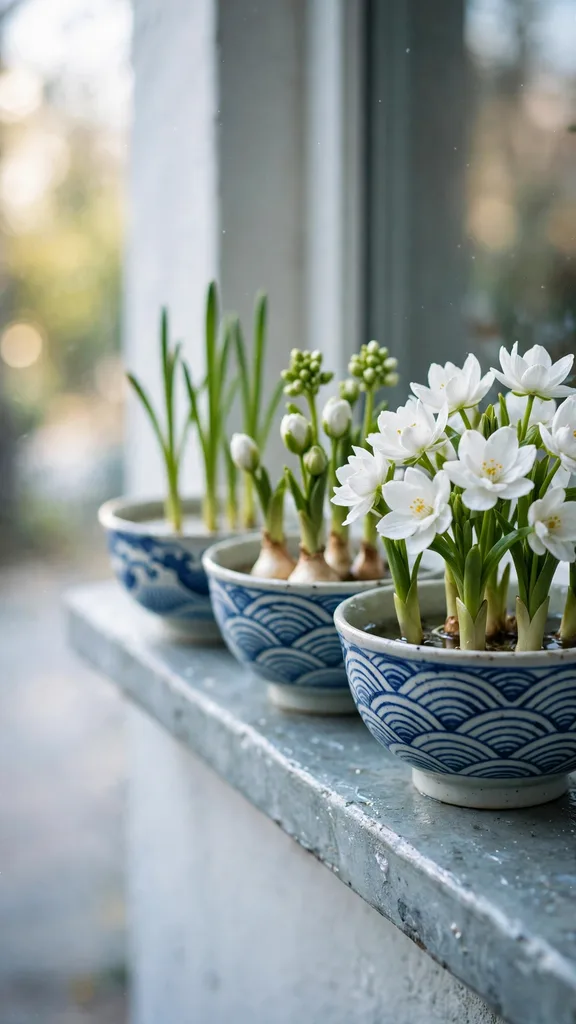
Paperwhites grow tall and lean toward the light, so grow them cool and bright, tie each bowl loosely with twine at the neck once the leaves are up, and turn them daily. The Cornell Flower Bulb Research Program’s paperwhite guide documents the alcohol treatment, a roughly 4 to 6 percent solution in place of plain water once the shoots are a few inches tall, that grows plants a third to a half shorter; in a display, shorter paperwhites sit at the front without swamping the hyacinths. Scent is strong in a warm room, so scent-sensitive households plant the tazetta varieties sold as milder, or keep paperwhite bowls in the hall.
Bring Hyacinths In Stages for Scent
Hyacinths enter the display in stages because their flowers are intense and brief: a pot at its peak perfumes a room for about ten days, and three pots staged a week apart perfume it for a month. Bring each pot in from the chill when its buds show color at the base, grow it cool and bright, and move it into the display as the buds lift and open.
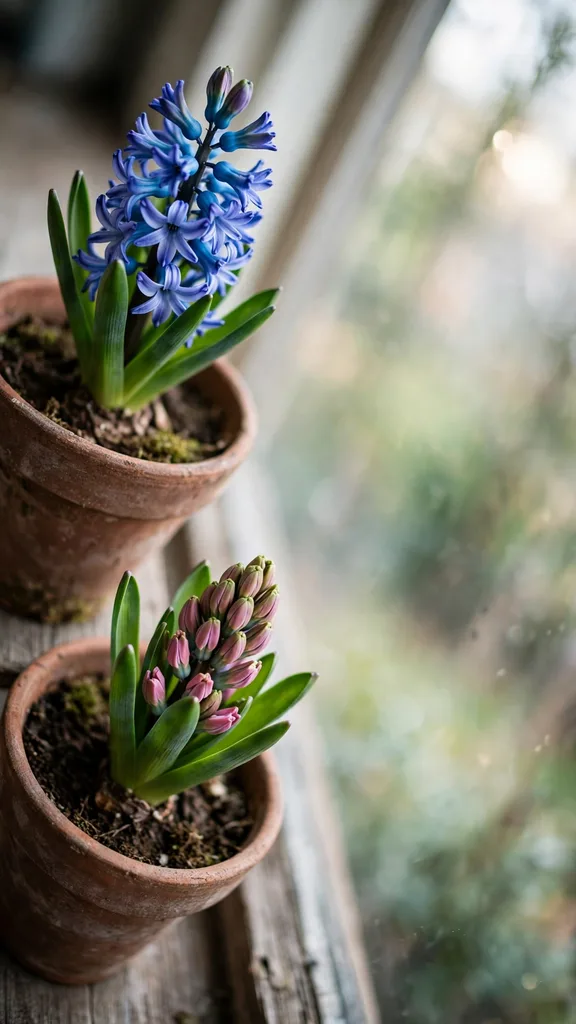
Cool rooms double a hyacinth’s display life; a pot on a warm mantel is done in days. Keep the display’s hyacinth position at the front edge, where the scent reaches the room and the dense flower spikes hide the paperwhites’ ankles behind them. When a pot finishes, it leaves the display the same day; a bulb garden is edited like a border, and faded members go to a cool sill to finish their leaves, not to the center of the table.
Assemble the Garden: Containers, Heights, and Moss
Assemble the display as one planting even when it is built from separate pots: a large low container, a tray, or a basket holds the pots, and moss, pebbles, or bark packed between them hides every rim. Separate pots are the professional secret, since each bulb keeps its own watering and any pot can be swapped out at its peak or removed when spent without disturbing the rest.
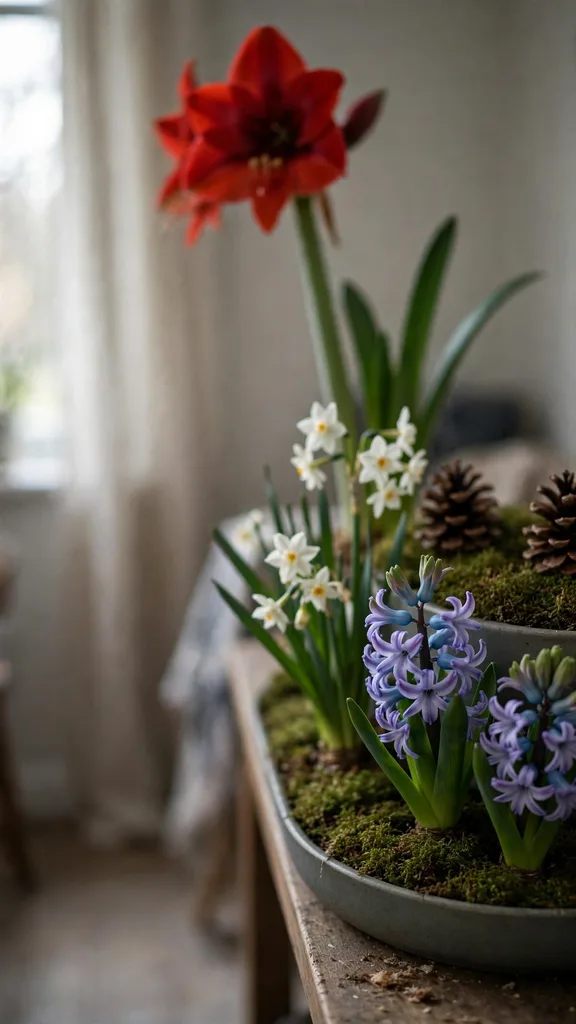
Build in three heights: amaryllis at the back or center, paperwhites at mid-height, hyacinths and small bulbs at the front edge. Raise back pots on upturned pots or blocks inside the container to get the tiers right. Finish the surface as one garden: a continuous moss blanket, a few cones or a twist of ivy from the garden, and the display reads as a single planted thing rather than a queue at a garden center. Photograph it at assembly; the photograph is your map when you swap pots mid-season.
Place It Where Cool Air and Light Agree
A bulb display lives longest in the brightest cool spot in the house: a bright sill in an unheated room, a hall table near a window, a conservatory corner. Heat is the display’s enemy at every stage; radiators, fires, and the top of warm appliances halve flower life, and direct sun through glass cooks buds on a bright day. Aim for bright, indirect light and ordinary cool room temperatures, and the flowers hold for weeks instead of days.
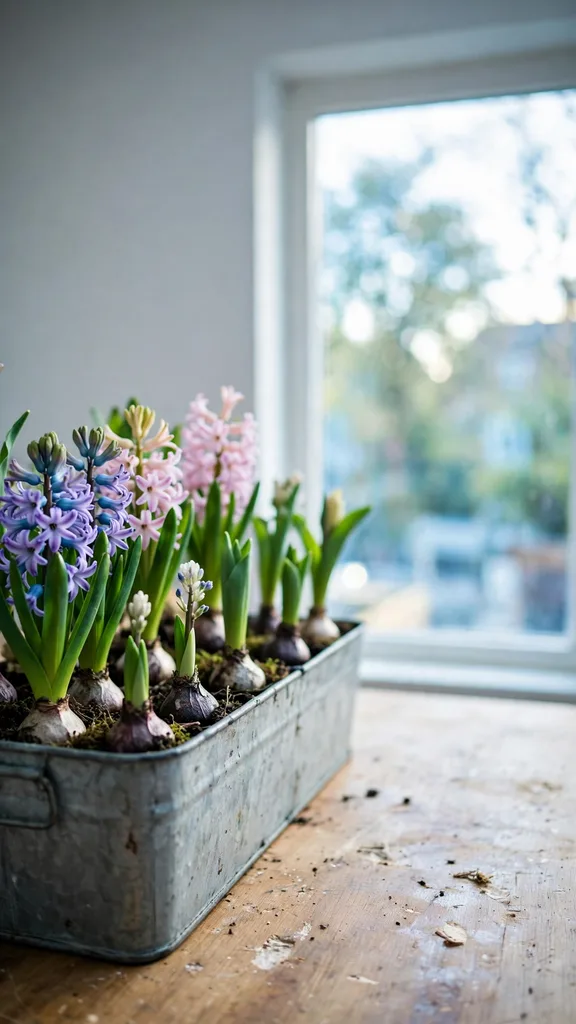
Turn the whole display a quarter turn every few days so growth stays even, and check the back row, where a leaning amaryllis hides until it falls. If the only bright spot is warm, accept a shorter show and lean harder on the wave system: more pots in reserve, swapped more often, is the warm-house strategy, and it works perfectly well.
Water Each Pot on Its Own Schedule
Separate pots mean separate thirsts, and the display’s commonest failure is one watering rule for all of them. Paperwhites on pebbles keep water at the bulb base continuously. Potted bulbs in mix are watered when the top inch is dry, and no oftener; a display kept soggy rots its bulbs from the base and smells of it by New Year. Hyacinths in flower drink steadily; amaryllis in bud wants even moisture and a dry-ish surface.
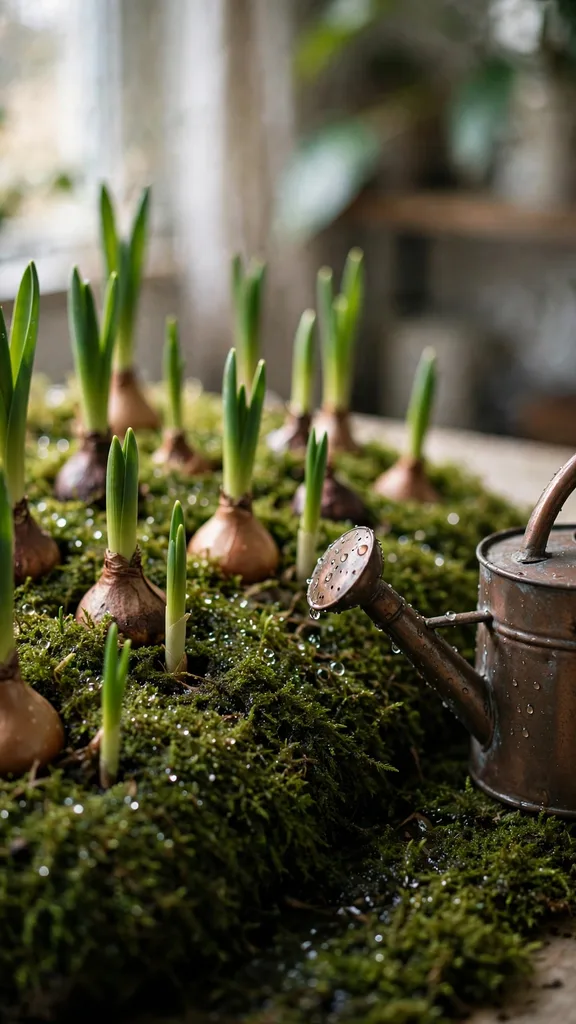
Water at the container’s edge with a small can, pot by pot, and empty any surplus that collects in the tray after half an hour. Moss on the surface hides the mix, so check moisture with a fingertip pushed through the moss, not by the calendar. Feed nothing during the display itself; the bulbs are spending stored food, and feeding is the aftercare’s job, when the leaves take over.
Edit the Display as Flowers Open and Fade
A bulb garden is never finished; it is edited. Every few days, deadhead spent trumpets, lift out any pot that has passed its peak, and promote the next wave from the reserve shelf. The reserve is part of the design: a cool sill or porch holding the coming pots, out of sight, so the display itself never shows a gap or a corpse.
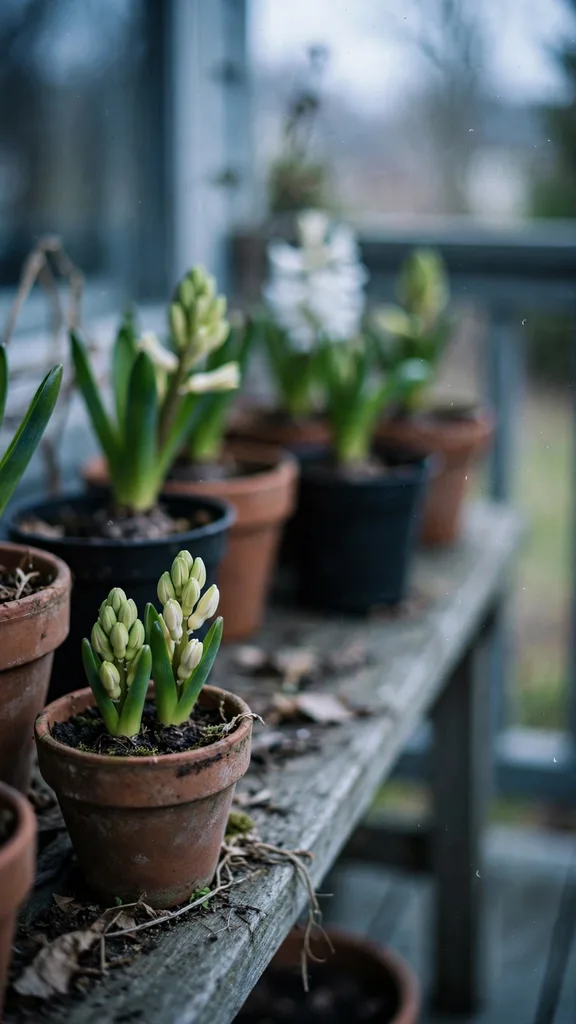
This editing is what separates a bulb garden from a bulb accident. The Christmas peak should be assembled deliberately in the days before: the anchor at full flower, the freshest paperwhite bowl, the hyacinths just opening, the surface re-mossed, the whole thing photographed. After the holiday, the display thins gracefully into January’s late wave rather than collapsing, and the gardener’s reputation survives the season.
After the Flowers: Keep the Leaves, Keep the Bulbs
When a pot leaves the display, its year is not over. Cut the spent flower stalks, keep every leaf, and grow the bulbs on in bright light with water and a light feed, exactly as the growing amaryllis bulbs for Christmas blooms guide sets out for the anchor bulbs; paperwhites are the exception, usually spent after forcing and composted without regret, while hyacinths plant out into the garden in spring for future outdoor flowers.
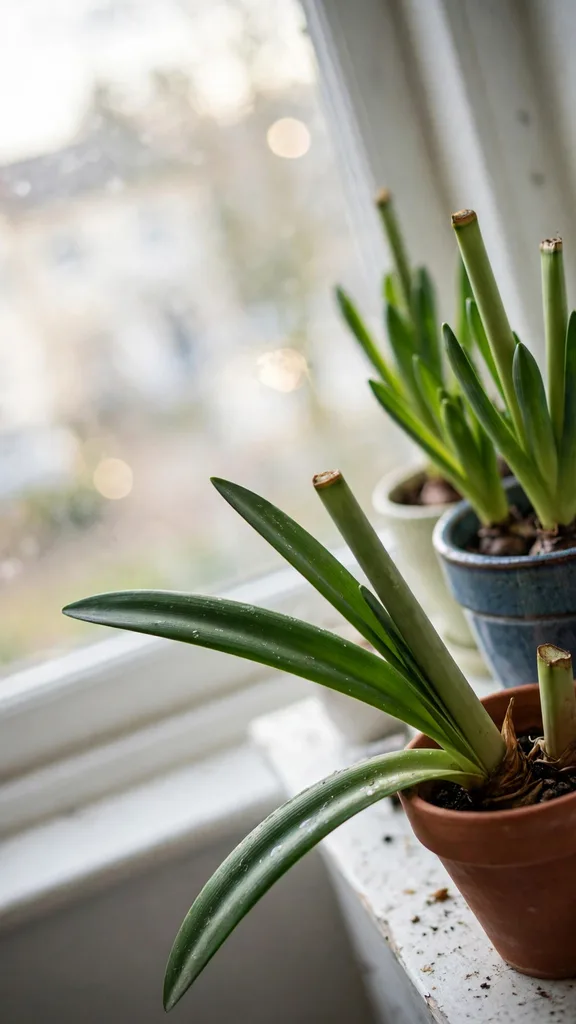
Amaryllis grown on through summer and rested in autumn flower again next Christmas, joining the display as veterans. Label each pot with its variety and its performance as it leaves the display, since next autumn’s plan is written from those labels. A bulb garden improves every year it is run, because the gardener learns which varieties force true to the calendar in their own house, and that knowledge is the real crop.
Frequently Asked Questions
Amaryllis starts in mid-October, six to eight weeks before the flowers are wanted. Prepared hyacinths come out of their bought chill in late October and November, in stages. Paperwhites plant in waves from early November, three to five weeks ahead of each bowl’s moment. Regular hyacinths, crocus, and daffodils go into their home chill in early autumn for the January wave. The whole calendar runs backward from the day you want the peak.
You can, and bulb lasagnas layer kinds at different depths in a single large pot, but a display built from separate pots hidden in one container is easier to run: each bulb keeps its own water, and spent pots swap out without disturbing the rest. Mixed single pots fail most often on watering, since paperwhites want constant moisture at their base and hyacinths want restraint. Separate pots, one moss blanket: that is the system this guide recommends.
They are too warm, too dim, or both: paperwhites stretch toward light and flop under their own flowers. Grow them cool and in the brightest spot you have, turn them daily, and tie each bowl loosely at the neck once the leaves are up. A weak alcohol solution in place of plain water, started once the shoots are a few inches tall, grows noticeably shorter, sturdier plants and is the reliable cure for a warm house.
With waves and editing, six to eight weeks of continuous flower, from the first paperwhites in mid-December to the late daffodils and crocus in late January. Individual members are brief: hyacinths peak for about ten days in a cool room, paperwhites for two to three weeks, amaryllis stems for three weeks or more in sequence. The display outlasts its members because the reserve shelf keeps replacing them, which is the entire design.
Amaryllis: keep the leaves, grow it on through summer, rest it in autumn, and it reblooms next year. Hyacinths and daffodils: grow the leaves on and plant them out in the garden in spring, where they flower in future years, though rarely to display standard again. Paperwhites are usually composted after forcing, honestly spent. Crocus and grape hyacinths plant out with the daffodils. Nothing in the display need be wasted except the paperwhites.