Christmas lights on living plants ask more of the installer than lights on a house: the thing you are decorating breathes, grows, freezes, and has to look good again in April. Done well, a lit evergreen runs 4 to 6 weeks as the best decoration on the street, and the plant never notices. Done badly, lights girdle branches, cook buds, and tear bark at takedown. This guide covers the whole job in order: choose cool-running lights, match the light type to the plant, plan the power, wrap trees and shrubs without damage, adjust the display at dusk, run it kindly through the season, and take it down in January leaving the plant exactly as you found it.
Three rules run through everything below. First, the plant’s shape decides the lighting, never the other way round; you light the tree that exists. Second, nothing tight ever goes around living wood: no wire ties, no string pulled snug, no staples. Third, the display runs on a timer for a few evening hours, because plants and the birds sleeping in them need their dark. I light the same spruce every year, and the year’s growth tells me in spring whether December treated it well; so far the report has been good, and the method below is why.
| Plant | Best Light | Strand Guide | Fastening |
|---|---|---|---|
| Spruce, pine, fir trees | C7 or C9 strings, or mini strings on small trees | 100 lights per 1.5 feet of tree height as a start | All-in-one clips on branches |
| Rounded shrubs | Mini light strings | 100 to 200 lights per shrub | Loose weaving, clips at edges |
| Hedges | Net lights sized to the hedge face | One net per 4 to 6 feet of hedge | Clips along the top edge |
| Columnar evergreens | Mini strings spiraled loosely | 200 lights for a 6-foot column | Spiral with slack, clip at turns |
| Broadleaf evergreens | Mini strings woven inside the canopy | Keep bulbs off leaves and flower buds | Clips on woody stems only |
| Small trees and standards | Mini strings, branch by branch | Light the scaffold branches first | Clips, never trunk wraps pulled tight |
Choose Lights That Run Cool: LED First
Light living plants with LEDs. LED bulbs run almost cold to the touch, and that single fact removes the oldest damage in the book, the scorched patch of foliage and the cooked bud cluster where a hot incandescent bulb rested all December. LEDs also draw so little power that strand limits stop being the constraint they were, and their plastic lenses survive knocks that shatter glass bulbs against branches.
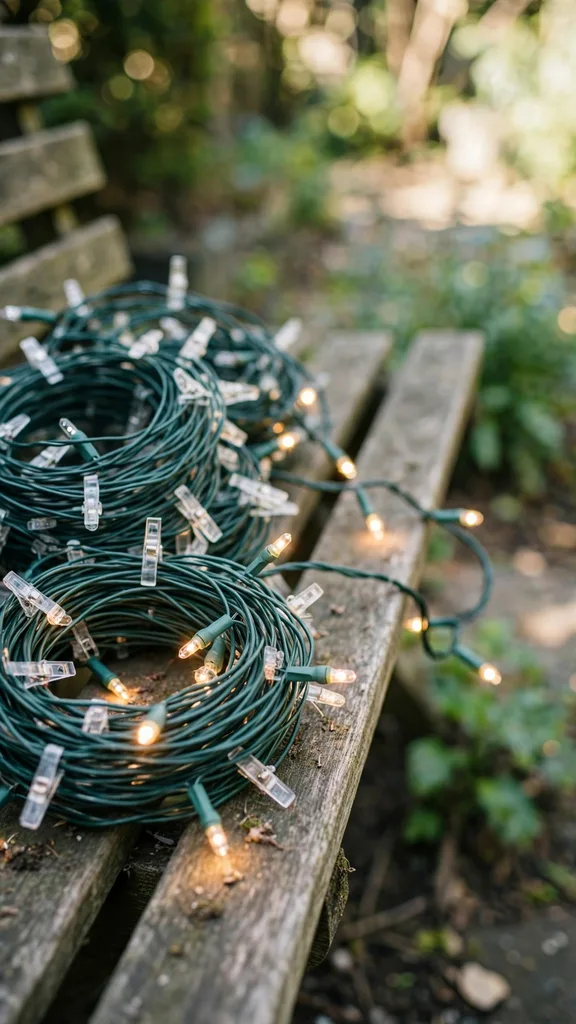
Warm white LEDs suit living greenery best; the cold blue-white sets make foliage look gray and ill. Buy outdoor-rated sets with sealed bulbs for any plant that stands in the weather, and check the rating on the box rather than assuming. One honest caution: LED strings are light, which tempts installers to load a branch with more strands than its spring buds want to carry. Cool is not the same as weightless, and the sections below ration strands by the plant, not by the socket.
Match the Light Type to the Plant
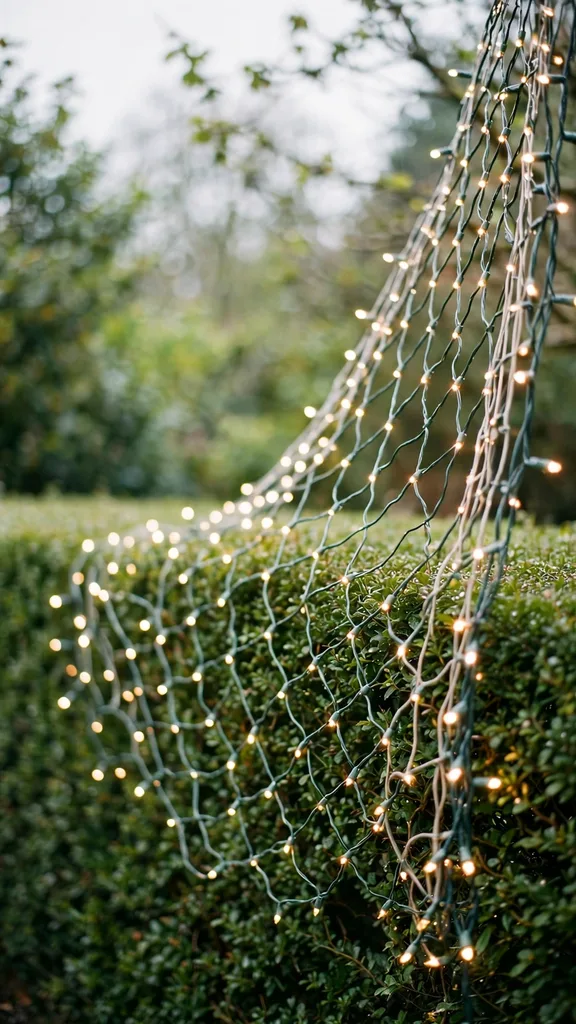
Net lights belong on hedges and rounded shrubs, where their even grid does in ten minutes what strings do in an hour of weaving. Size the net to the plant’s face; a net stretched tight over a shrub crushes the outer foliage flat and holds it there all season, so drape nets with slack and clip them at the top edge only.
Strings belong on trees and anything with a skeleton worth showing. Big C7 and C9 bulbs read from the street and suit large conifers; mini lights suit small trees, shrubs, and broadleaf evergreens, where their scale matches the leaves. Icicle lights belong on eaves, not plants; hanging strands tangle in branches, swing in wind, and saw at bark. Spotlights from the ground are the zero-contact option: one or two uplights make a small tree glow with nothing touching it at all, and for a specimen plant you love, that restraint is worth considering first.
Plan Power First: GFCI, Timers, and Strand Limits
Plan the circuit on paper before the ladder comes out: where the outdoor socket is, how many strands each run holds, and where the timer sits. The U.S. Consumer Product Safety Commission’s holiday safety guidance gives the baseline rules that apply to every outdoor run: use lights tested by a recognized laboratory, use only outdoor-certified sets outside, plug into ground-fault circuit interrupter protection, and connect no more than three standard sets to one extension cord. LED sets allow more per run; the number printed on the set’s tag is the limit, and it outranks optimism.
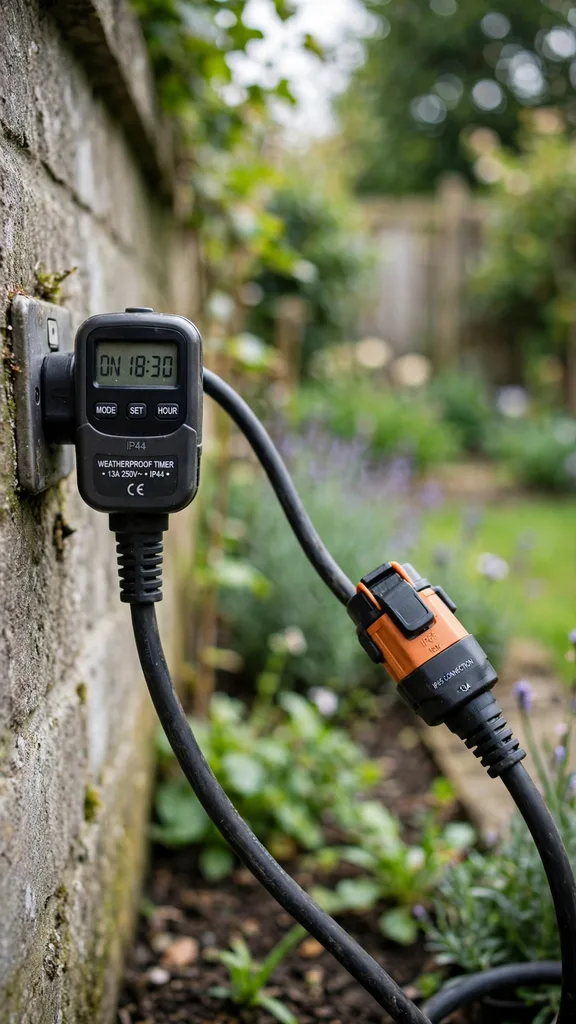
Run one extension cord per zone rather than chaining cords across the garden, keep connections off the ground in drip loops or raised covers, and put the whole display on a timer from the start. A timer is not a convenience here; it is part of the plant care, as the dark-hours section below explains. Test every strand on the ground before it goes on the plant. A dead strand discovered at height, in the cold, is how careful technique turns into rough handling.
Wrap Trunks and Scaffold Branches on Trees
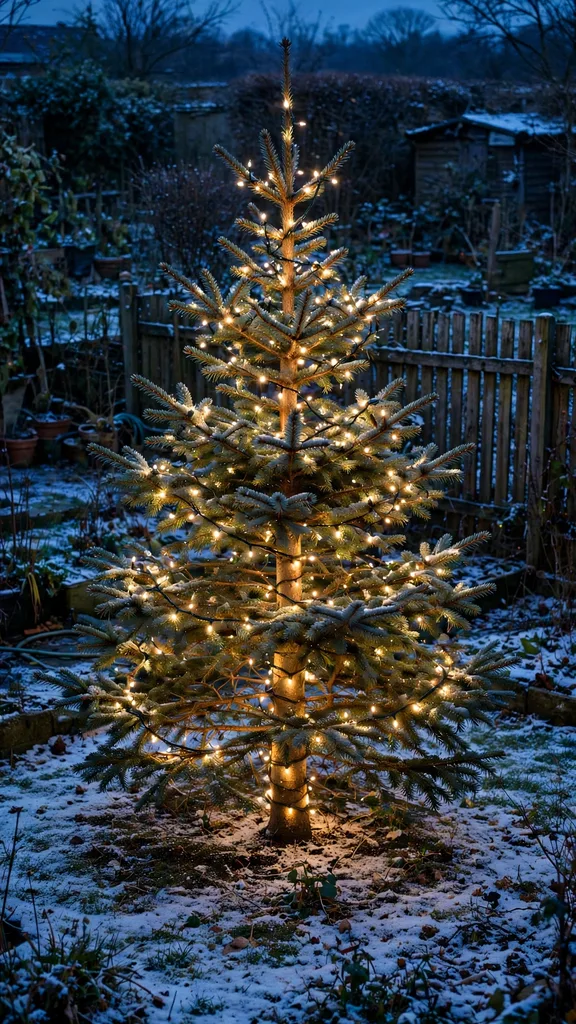
Light a tree from its structure outward. Start at the trunk: spiral the first strand up the trunk with generous slack, spacing the turns a hand’s width apart, never pulled tight against the bark. A tight spiral is a girdle in waiting, and even one season of it can mark young bark. From the top of the trunk wrap, take strands out along the main scaffold branches, working each branch from the trunk to about two thirds of its length before returning for the next.
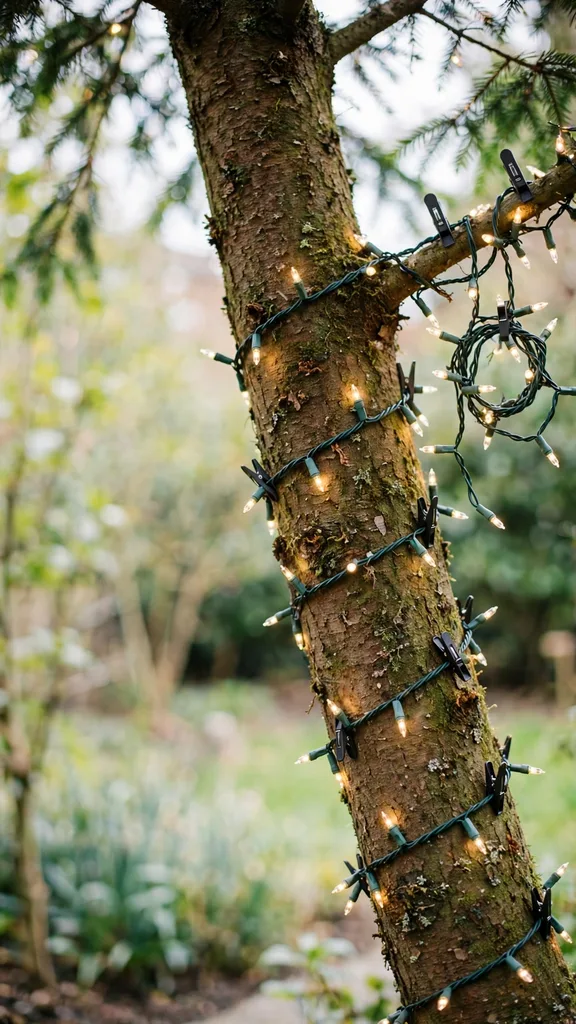
Wrapping branches, rather than draping the tree’s surface, is what makes a lit tree look three-dimensional at night and keeps bulbs inside the canopy where they glow through the needles. Work with a partner feeding the strand so nothing drags or snags; most bark damage during installation comes from pulling a caught strand free. On young trees, halve your instinct: a small tree lit gently looks elegant, and its bark and buds are the most tender in the garden.
Weave Shrubs and Hedges Without Crushing Growth
Shrubs take a different technique: weave, do not wrap. Push the strand into the shrub’s outer third, in and out through the branches in loose S-curves, letting the plant’s own twigs hold the wire. The bulbs should sit among the foliage, half hidden, so the shrub glows rather than sparkles in outline. Keep the strand moving; a coil of spare strand dumped in one spot is a hot spot of weight and a bald patch in spring.
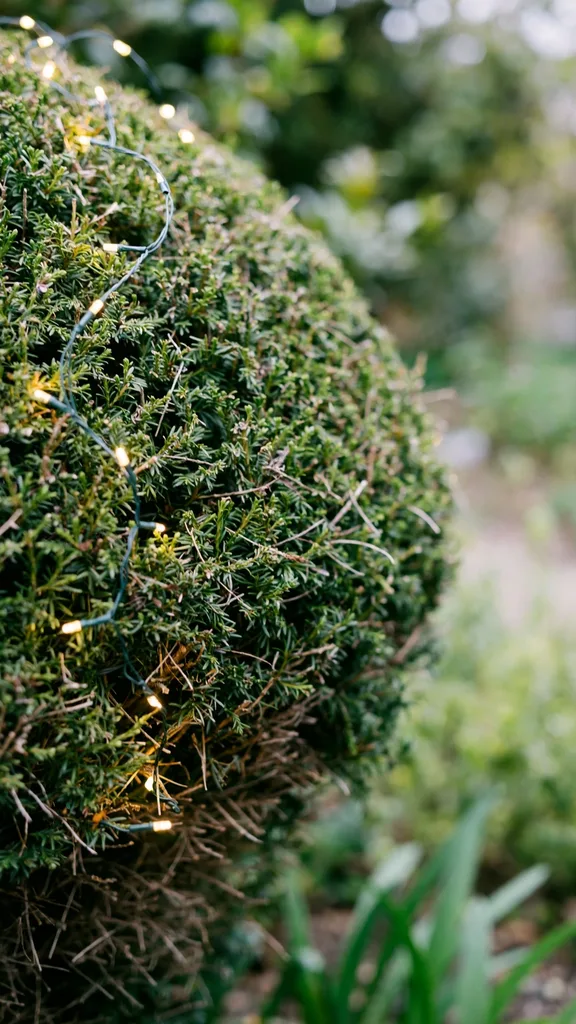
On hedges, drape nets over the top and face with slack, clip along the top edge, and let the bottom edge hang free so the hedge’s shape stays its own. On broadleaf evergreens like rhododendron and camellia, weave inside the canopy and clip to woody stems; their flower buds for spring are already set at the branch tips, sitting exactly where a careless installer drapes the heaviest wire. Count the buds as part of the plant you are borrowing, because you are.
Protect Bark, Buds, and New Growth
The damage list is short and entirely avoidable. Heat: solved by LEDs. Weight: ice and wet snow load a lit branch far beyond the strand’s own weight, so ration strands on slender branches and skip the outermost whippy growth entirely. Abrasion: wire rubbing bark in wind saws through the surface over weeks, which is why fastenings hold the strand still rather than letting it swing. Girdling: anything tied around a stem and forgotten becomes a tourniquet as the stem thickens, so every fastening here is a clip made to release.
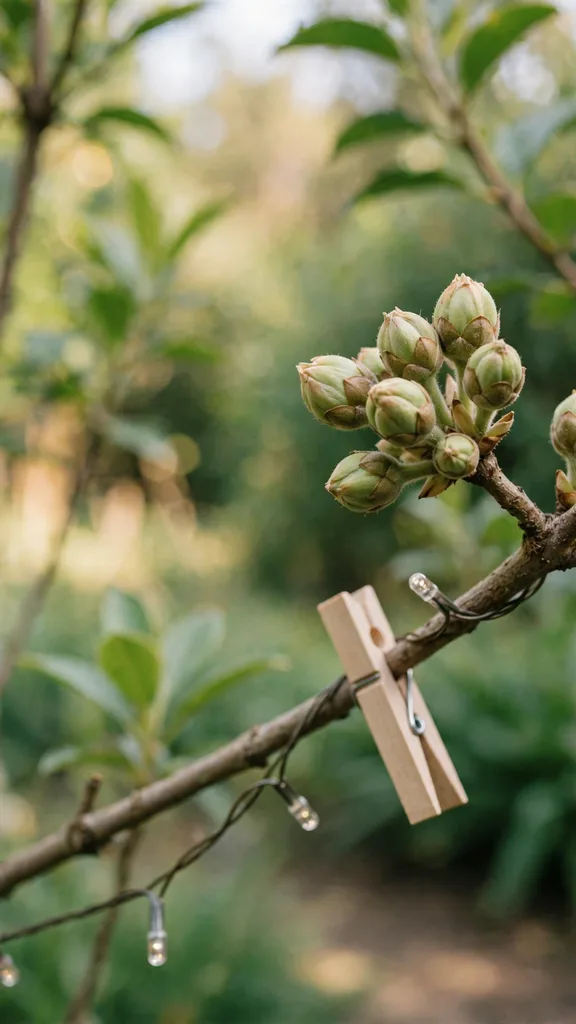
Buds deserve their own sentence: on spring-flowering shrubs and on the growing tips of conifers, the buds you crush or cook in December are next year’s flowers and extension growth. Keep bulbs and wire off the last few inches of every shoot where you can. The plant will not complain in December. It files its complaint in April, in gaps.
Fasten With Clips, Never Nails or Tight Ties
Use the plastic all-in-one clips made for light strings: they grip the strand and clip onto a branch or twig, holding the wire still without squeezing anything. Work a clip every few bulbs on exposed runs and at every turn. Clips come off in January with a squeeze, leaving no wound and no hardware in the tree.
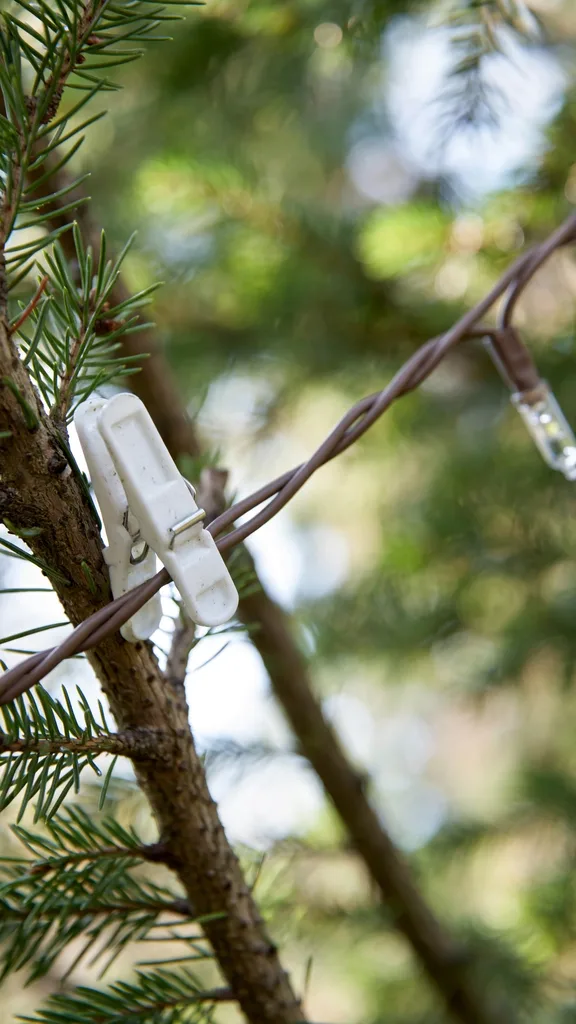
Never nail or staple into a living tree; each hole is a wound and an entry for disease, and the hardware stays in the wood for the saw to find years later. Never use zip ties or twist ties pulled tight around branches, and never tape wire to bark. If a strand must be secured to a trunk, loop it loosely with soft twine in a figure eight with room for two fingers under it, and put its removal on the January list in writing. The test for every fastening is simple: could this stay on for a year without harming the plant? If not, it does not go on at all.
Step Back at Dusk and Adjust the Display
Judge the display at dusk from the street, not at noon from the ladder. Gaps, dark quadrants, and one over-lit side are invisible while you install and obvious the moment the lights come on. Walk the property line, check the view from the house as well as toward it, and adjust with fresh clips rather than by dragging strands through the foliage.
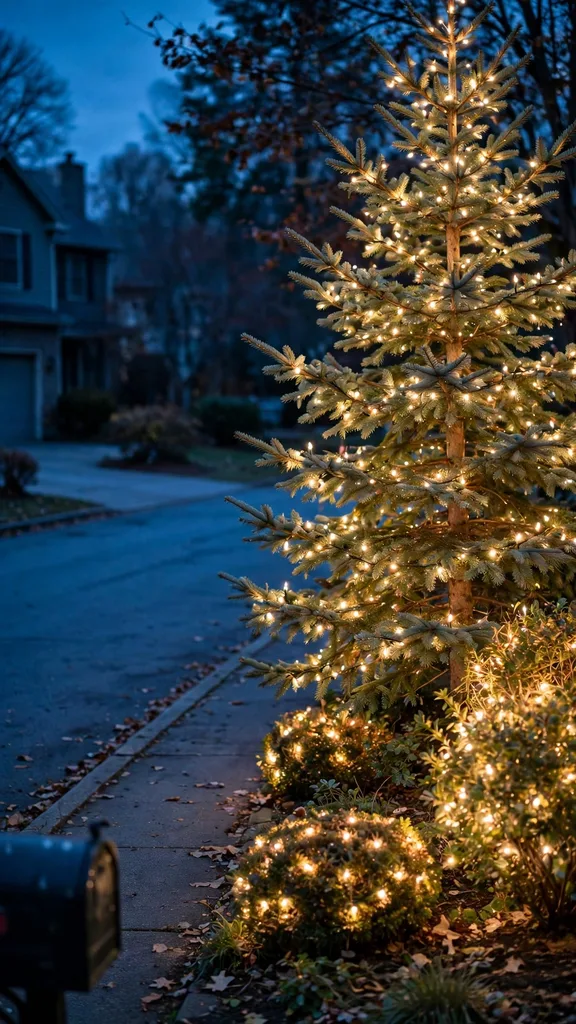
This is also the moment to check the plant’s interests one last time: no strand sawing at a fork, no bulb cluster resting in a bud nest, no net pulled drum-tight. Photograph the finished display; the photograph is next year’s installation map and this year’s proof that the tree can look like this without a single nail. A display adjusted once, properly, in the first week rarely needs touching again all season.
Give Plants Their Dark Hours and Watch the Weather
Run the display on a timer for the evening hours, dusk to 10 or 11 at night, and let the garden go dark after. Plants time their winter rest by night length, and a shrub blasted with light until dawn for six weeks is having its calendar tampered with at the surface where the lights touch. The dark hours also serve the birds roosting in evergreens, which the Penn State Extension guide to caring for birds in winter reminds us shelter in dense evergreen cover through the cold nights; a tree that goes dark lets them sleep.
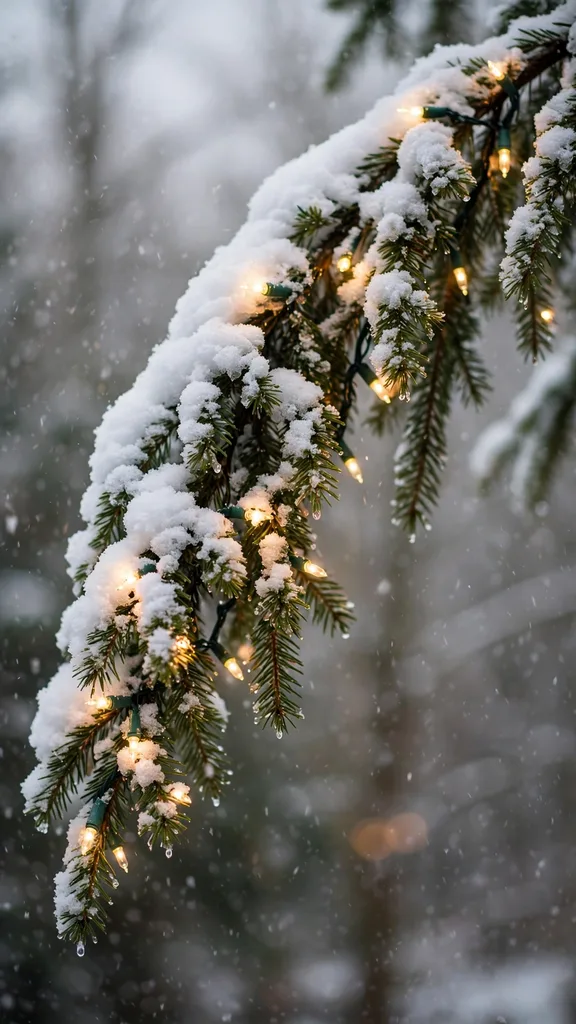
Weather is the other watch. After ice or wet snow, check the lit plants: brush snow loads off loaded branches gently from below with a broom, and if a branch is bowed hard, unclip the nearest strand section to shed weight rather than letting the wood take it. After wind, walk the display for swinging strands and re-clip before the sawing starts. Ten minutes after each storm is the whole maintenance budget of a well-installed display.
Take Lights Down in January Without Tearing the Plant
Takedown does more damage than installation when it is rushed, because cold, brittle foliage and frozen wire punish pulling. Choose a mild day, work in the reverse order of installation, and unclip every clip by hand before moving any strand. Never strip a strand by pulling it through the branches from one end; that single shortcut tears more buds and bark than the whole rest of the season combined.
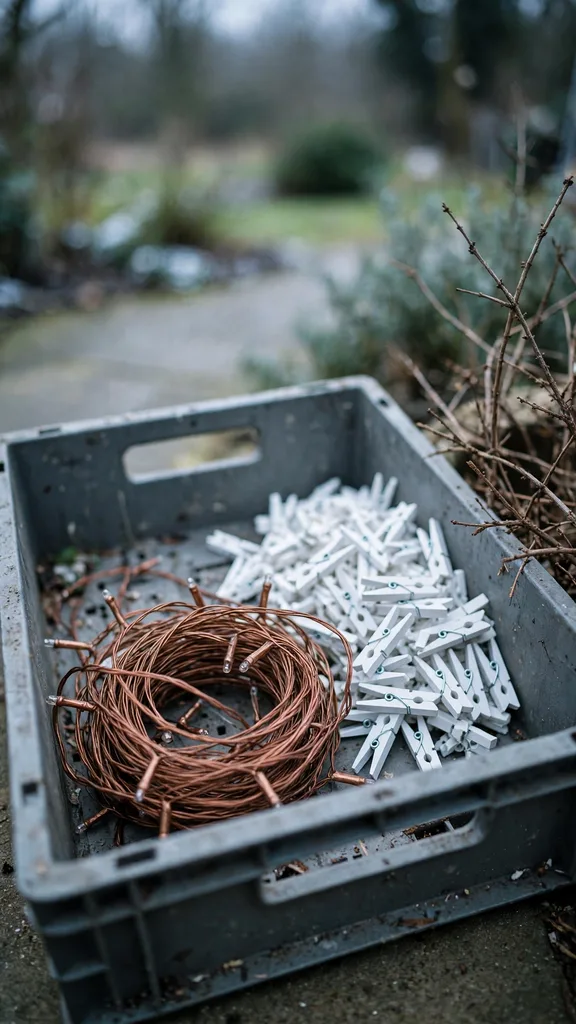
Coil strands loosely as they come off, check each for damage before it goes in the box, and walk the plant once at the end with your eyes only: a forgotten clip or a loop of twine left in a fork is next winter’s girdle. Note what you would change while the memory is fresh, strands too few on the north side, a net too small, and keep the note in the light box. The plant, meanwhile, should show nothing at all: that blank result is the standard this guide exists to produce. The same plant-first approach runs through the outdoor Christmas tree decorating list on this site, and the Christmas garden ideas pillar gathers the whole season’s projects.
Frequently Asked Questions
Yes, and they are the right choice: LED bulbs run almost cold, so the scorched foliage and cooked buds that old incandescent sets caused are effectively gone. The remaining risks are mechanical, not thermal: strand weight on slender branches, wire rubbing bark in wind, and anything tied tight enough to girdle. Use outdoor-rated LED sets, clip them so they cannot swing, and ration strands on young or fine-branched plants.
A working start is 100 mini lights per 1.5 feet of tree height for a full look, and half that for a gentle glow that shows the tree’s shape. Large conifers lit with C7 or C9 bulbs need fewer, since each bulb reads farther. Light the trunk and scaffold branches first and the count goes further than surface draping. It is easier to add a strand later than to forgive yourself for overloading a young tree.
Light that runs all night for weeks can disturb the surface growth it touches, since plants measure night length to time their rest. The practical answer is a timer: run the display from dusk to 10 or 11 at night, then let the garden go properly dark. Those hours are also when the display is actually seen, so the plant’s rest and the electricity bill improve together at no cost to the show.
Do not. Wire and clips left on become girdles as stems thicken, bulbs and sockets weather into failure, and strands grow into the bark on fast-growing trees within a few seasons. The January takedown, done gently on a mild day, takes an hour and leaves nothing behind. If a display is too much work to remove, it was too much display for a living plant in the first place.
Net lights, draped with slack and clipped only along the top edge, sized to the hedge’s face rather than stretched across it. A net pulled tight crushes the outer foliage flat for the whole season and the hedge shows it in spring. Keep connections off the ground, run the net’s circuit within its printed strand limit, and brush snow loads off gently after storms, since a loaded net multiplies the weight on the hedge’s surface.