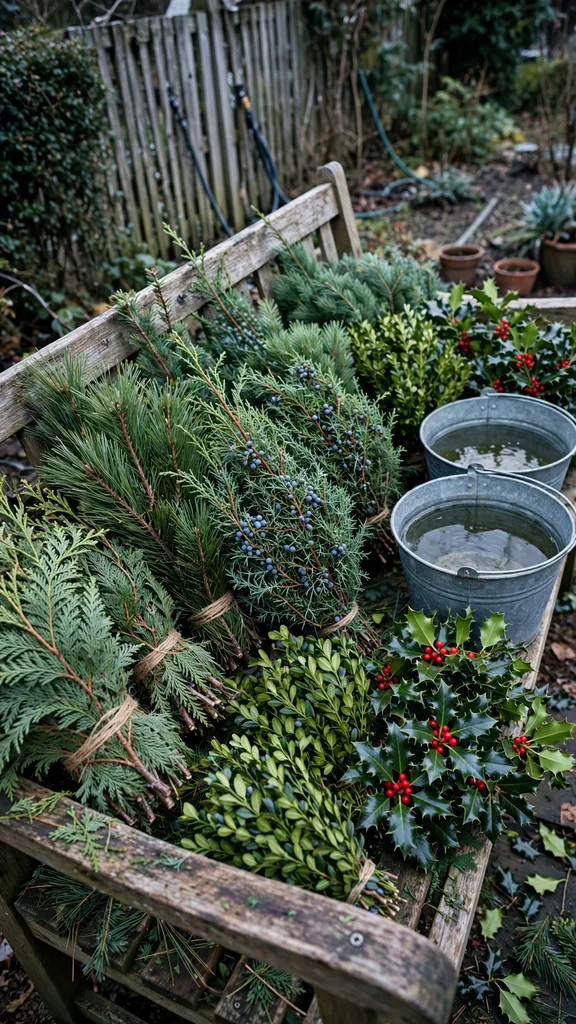
Christmas greenery is a crop, and the gardeners whose houses look effortlessly green in December treat it like one: they grow plants chosen for cutting, harvest them at the right moment without harming the plants, condition and store the cuttings so they stay fresh for weeks, and match each green to the job it does best. This guide covers that whole chain, from planting a cutting patch to the January takedown. The skills are simple; the difference between greens that last 4 to 5 weeks and greens that crisp in 1 week is almost entirely timing and storage.
Plan the harvest the way you plan a vegetable picking: know what each plant can spare, cut in the cool of the day, get the stems into water fast, and store the crop cold. I cut most of my December greens in two sessions, one in late November for the long-storage base greens and one in mid-December for the delicate material, and the stored half of the harvest is what makes the second half of the month look as fresh as the first. Everything below follows that rhythm.
| Green | Best Job | Cut From | Storage Life, Cold and Damp |
|---|---|---|---|
| Cedar and arborvitae | Garland base, wreaths | Back and underside sprays | 4 to 5 weeks |
| Pine | Garlands, swags | Lower branches, tips | 4 weeks |
| Fir and spruce | Wreaths, arrangements | Back of the tree, tips | 3 to 4 weeks |
| Juniper | Wreaths, arrangements | Berry-bearing side shoots | 3 to 4 weeks |
| Boxwood | Fine wreaths, table greens | All over, lightly | 4 weeks |
| Magnolia | Wreaths, mantel fans | Lower branches | 3 weeks, then dries in place |
| Holly | Accents, berries | Berry sprays, sparingly | 2 to 3 weeks |
| Ivy | Trails, accents | Runners from the base | 2 to 3 weeks |
| Eucalyptus | Arrangements, modern wreaths | Coppice shoots | 3 weeks |
Plant the Cutting Garden: What to Grow for December Greens
A cutting garden is a few plants grown to be harvested: fast evergreens that tolerate annual cutting and look better for it. Cedar, arborvitae, juniper, boxwood, and pine form the backbone; a holly for berries, a magnolia in warm zones, and ivy for trails complete the standard set. Plant them where December-you can reach them in wet weather, along a path or at the garden’s edge, not at the bottom of a frozen slope.
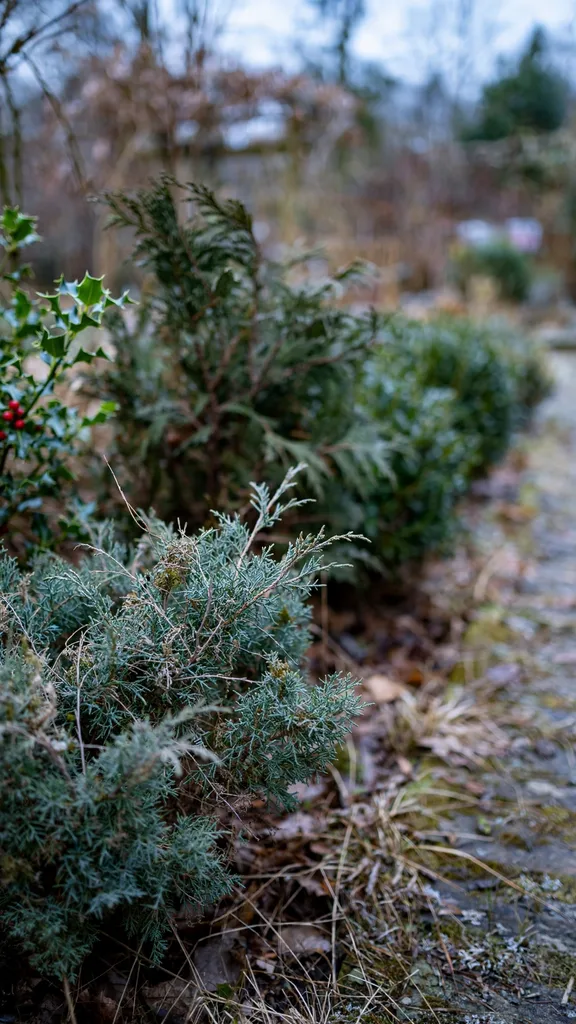
Grow some plants purely for the shears. A row of arborvitae or a coppiced eucalyptus gives armfuls of cutting without touching the garden’s display plants, and a dedicated holly guarantees berry sprays in the years the garden’s hollies rest. Even a small garden can dedicate one corner: three shrubs and a ground cover of ivy supply a house’s worth of greens once established. Choose varieties for foliage first and flowers second; December judges leaves.
Know Each Plant’s Cutting Limit
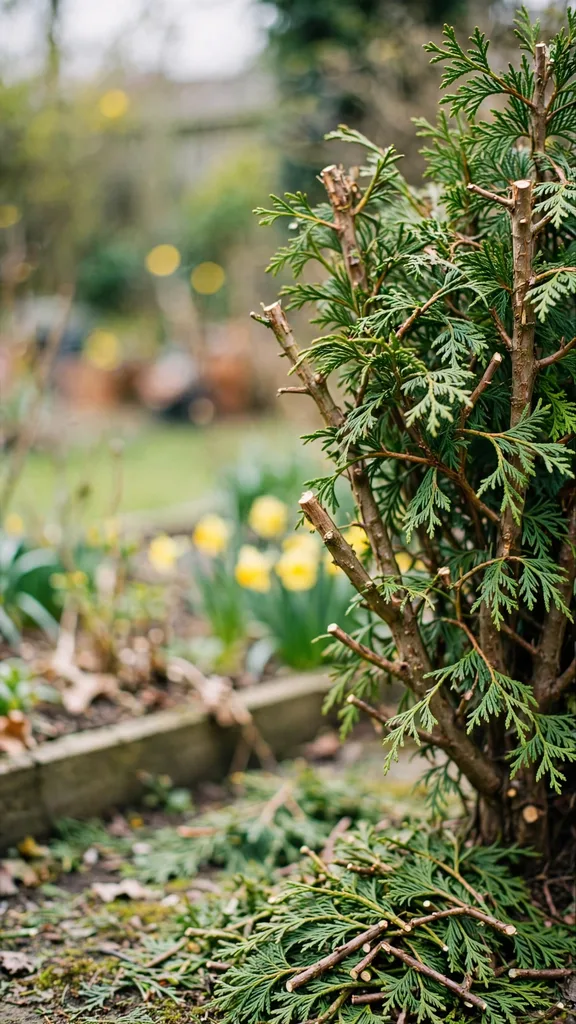
Every plant has a harvest limit, and respecting it is what separates a cutting garden from slow vandalism. The working rule is a quarter to a third of a plant’s foliage in a year, taken evenly, and less from young, old, or stressed plants. Conifers cut only into green wood: most pines, spruces, and firs will not resprout from bare old wood, so a branch cut back to brown is a branch removed forever, and the hole shows for years.
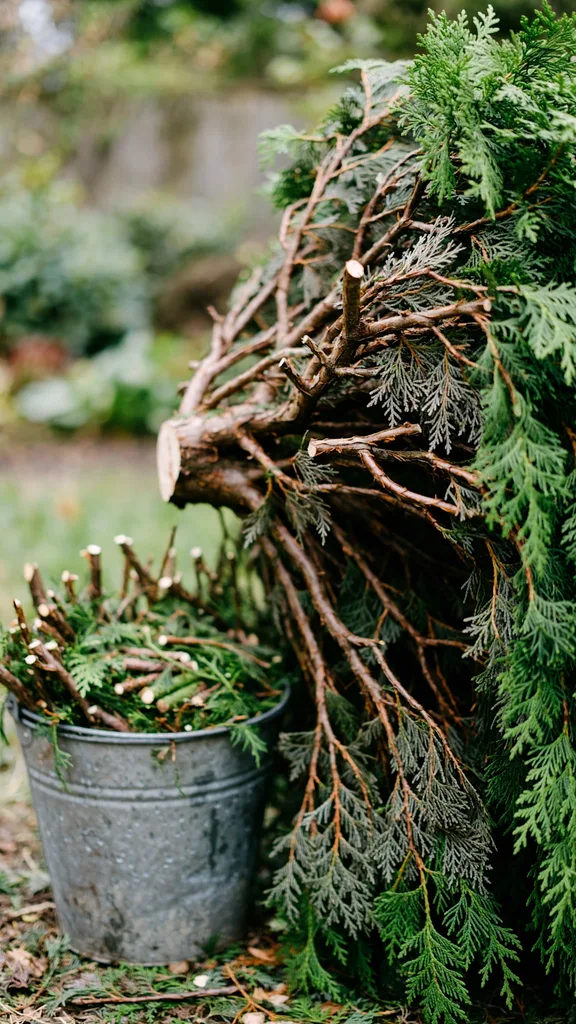
Spread the cutting around the plant, back and underside first, so the garden’s face stays intact. Berry plants set their own limit: holly berries form on the previous year’s wood, so stripping every berry spray this December spends next December’s berries too. Cut berry sprays from a third of the bush and rotate which third, year by year. The plant keeps its shape, the birds keep some berries, and the harvest renews itself.
Harvest at the Right Moment
Cut greens after the plant has hardened off in autumn cold, which in most zones means late November onward; greens cut from soft, still-growing plants wilt fastest. Evergreens harvested after several hard frosts keep noticeably longer indoors, because the plant has slowed its water loss and sealed its foliage for winter. Berry sprays cut after the berries color fully and firm up hold their color best.
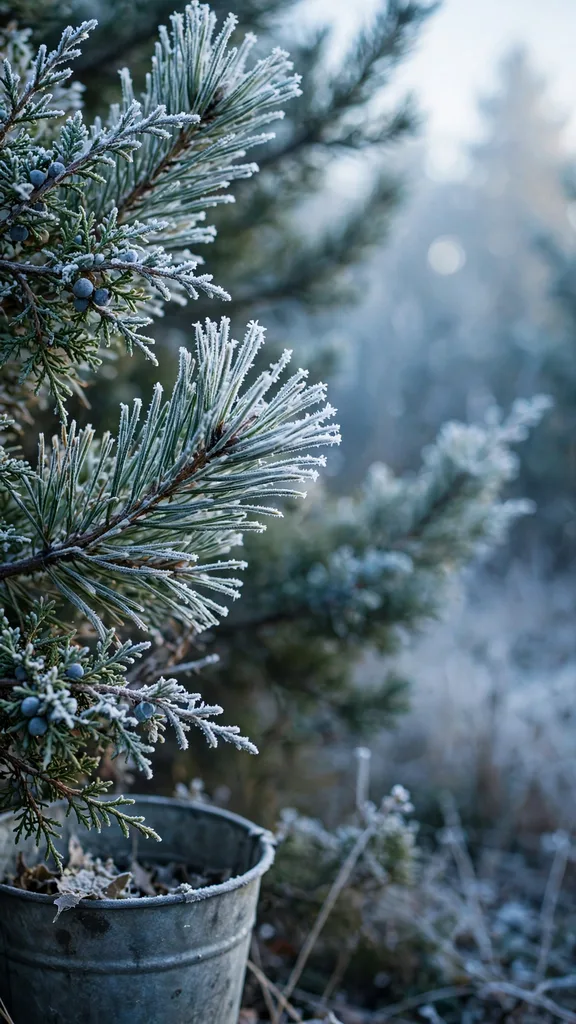
Cut in the morning or on a dull, damp day, when stems are full of water and the air is not pulling moisture out of the foliage. Avoid cutting frozen-solid branches on the coldest mornings; they snap rather than slice, and the crushed wood drinks poorly afterward. Time the main harvest one to three weeks before the greens are needed, since properly stored greens outlast fresh-cut ones dragged in at the last minute in poor condition.
Cut Clean: Tools, Angles, and Where on the Plant
Cut with sharp bypass pruners or loppers, never anvil tools that crush the stem, and make each cut at a slight angle just above a side shoot or leaf joint, so the stem end presents a clean, open face for drinking. A crushed or ragged stem end seals itself and the spray wilts above a bucket of water it cannot use.
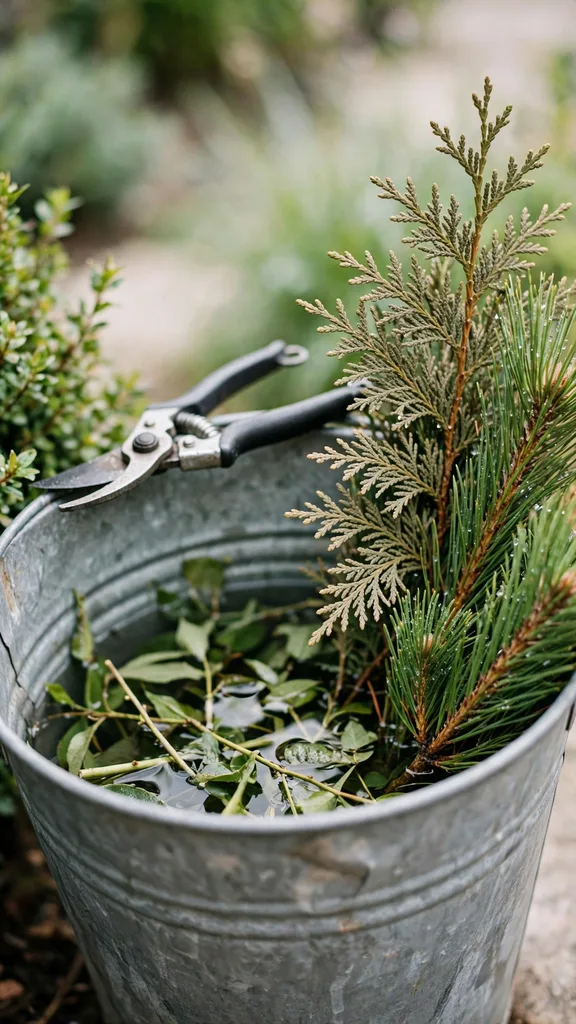
Take pieces longer than the job needs, since every stem is recut at conditioning and again at arranging. Carry a bucket of water into the garden and stand each spray in it as you cut; greens that go straight into water from the plant keep days longer than greens carried in a dry basket and soaked later. Clean the pruners between plants if any plant shows disease, blackened foliage or cankers, and keep diseased material out of the harvest entirely: the wreath is not worth the infection’s tour of the garden.
Condition Cuttings the Day You Cut
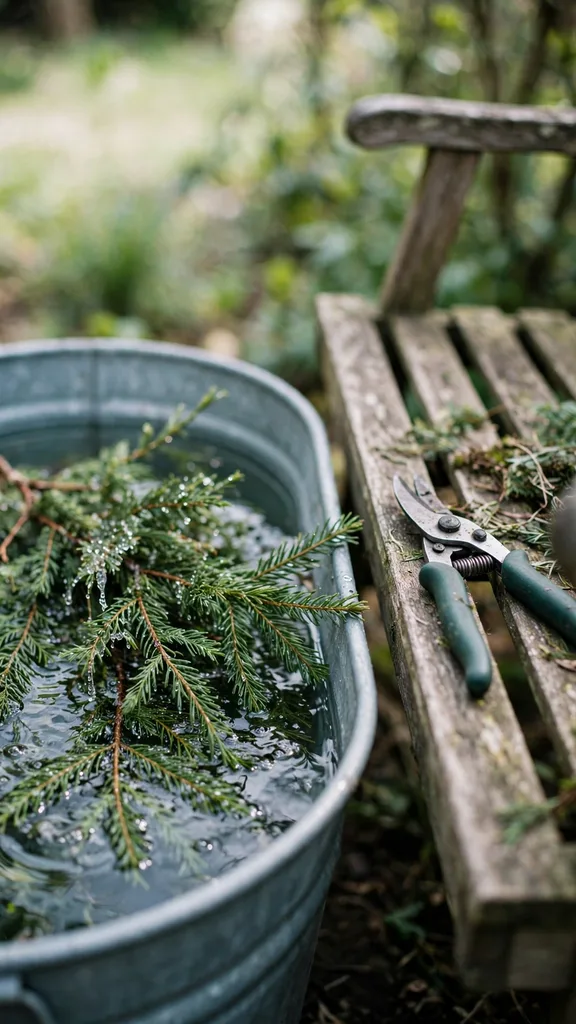
Conditioning is the harvest’s second half. Indoors or under cover, recut every stem end, removing the bottom inch, and stand the sprays deep in buckets of cool water in a cool, shaded place for at least several hours, overnight if you can. Foliage cut in quantity benefits from a full submersion soak for an hour before the bucket rest, which rehydrates leaves as well as stems.
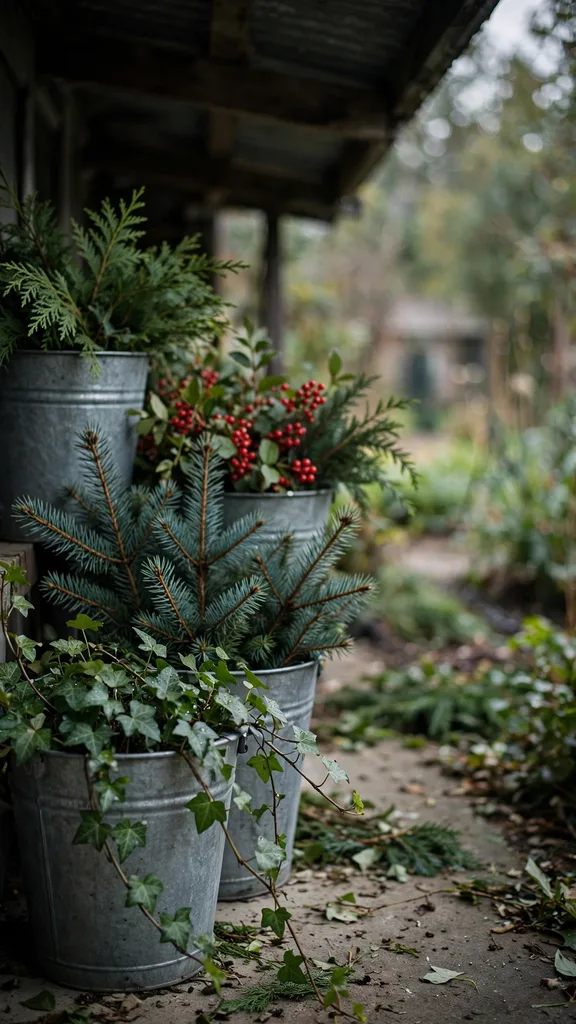
Sort as you condition: garland lengths together, wreath sprays together, berries and delicate material in their own bucket. Greens that go into arrangements within a day need nothing more. Everything else goes into storage, and storage, not cutting, is where December freshness is actually won or lost.
Store Greens for Weeks: Cold, Dark, and Damp
Stored right, cut greens keep three to five weeks: cold, just above freezing, dark, and humid, with the foliage damp and the air still. The classic store is a cold garage, cellar, or unheated outbuilding. Lay sprays in single layers in boxes or bags lined with damp newspaper or cloth, mist the foliage as you pack, and close the container to hold the humidity. Plastic bags work if the greens go in damp and the bags stay cold; warm plastic sweats and molds, so the store’s cold is not optional.
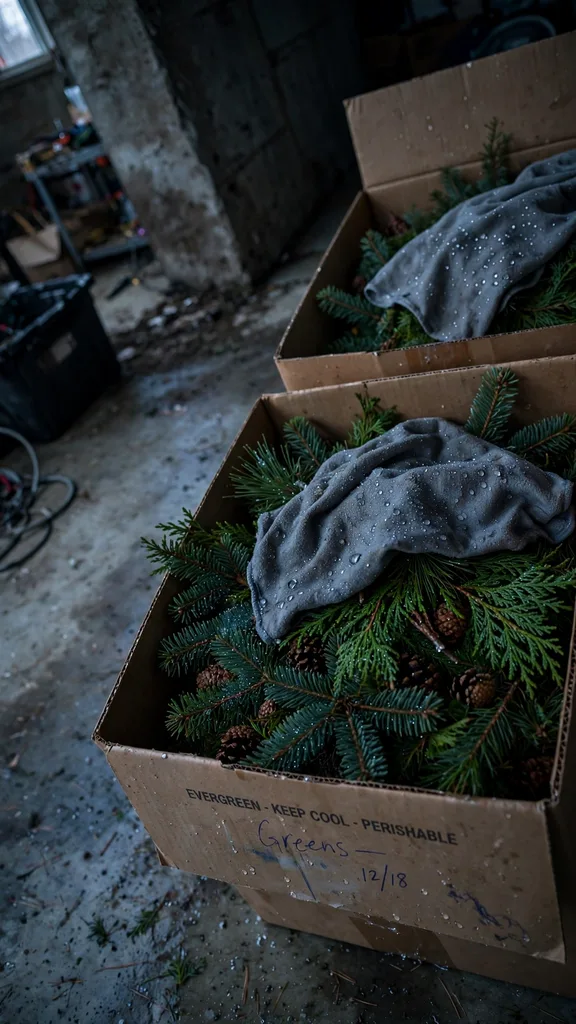
Check stored greens weekly: mist again if the lining dries, remove any spray that yellows or molds before it spreads, and rotate stock, using the oldest first. Greens for outdoor displays need no storage care at all beyond a bucket of water in the cold, since December air does the storing. The mid-December refresh cut, a small second harvest of holly, ivy, and berries, replaces whatever the stored stock lost, and the two-harvest system means nothing on the mantel is ever more than a fortnight from the plant.
Revive and Refresh Greens That Flag
A stored spray that flags is usually thirsty, not dead: recut the stem end under water, removing another inch, and stand it in deep cool water for several hours; most evergreens come back fully. Submerge whole sprays in a bath of cool water for an hour for a deeper revival before a big arrangement day.
Greens that have dried past revival still have a second life: magnolia, eucalyptus, and many conifers dry in place handsomely and can move from the fresh wreath to the dried arrangements as the season turns. The NC State Extension Plant Toolbox entry for Magnolia grandiflora notes the southern magnolia’s leathery evergreen leaves, the quality that lets magnolia fans hold on a mantel for weeks fresh and then dry without curling into ruin. What cannot be revived and cannot dry goes to the compost, and the honest gardener loses very little to that pile when the storage was cold.
Keep Greens Safe Around the House
Decorate with your eyes open about which greens are food and which are not. Holly berries, mistletoe, and yew are all toxic if eaten, and yew clippings in particular should never go where livestock or curious pets can reach them, during the season or in the compost afterward. Keep berry sprays high and in the rooms where adults gather, and choose cedar, pine, and boxwood for low table greens where small hands and animals browse.

Check bought or gathered material as carefully as your own: the rule is that a green you cannot name does not come indoors. Your own cutting garden solves the problem by design, since every plant in it was chosen, labeled, and known. Dried material at takedown goes to the compost except yew, which goes in the green waste, and the wire and ribbon go back in the box for next year.
Match Greens to the Job
Each green has a job it does better than the others. Flat cedar and arborvitae sprays build garlands because they overlap into a smooth rope; the fresh Christmas garland guide on this site wires them bundle by bundle. Fir and boxwood make the neat wreaths, pine the soft swags, magnolia the grand mantel fans, juniper and holly the berry accents, and ivy the trails that soften every arrangement’s edge.
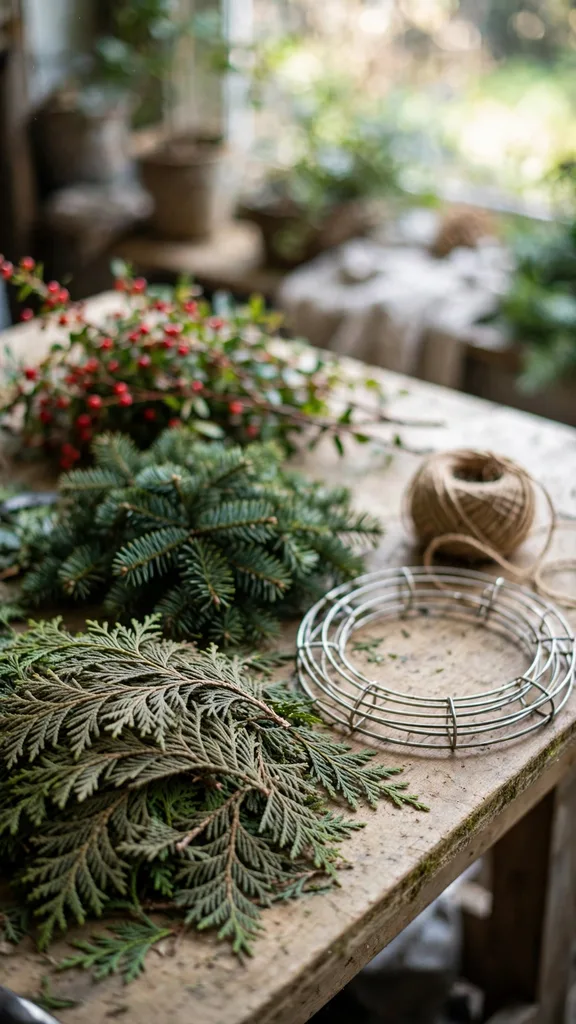
Berries are a harvest of their own: the NC State Extension Plant Toolbox entry for Ilex verticillata describes the winterberry holly whose leafless red-berried stems are cut for arrangements, a deciduous holly grown purely for the December cut. Keep a cutting list as you work each year, which greens ran short, which stored best, and plant or prune next spring against that list. The cutting garden improves annually because the notes do.
The Year-Round Cutting Plan
The December harvest is decided in spring. Prune the cutting plants after their spring growth to encourage the bushy, spray-rich growth you will cut in winter; feed and mulch the berry plants; and take the autumn walk with a notebook, judging which plants can give, which must rest, and where the gaps are. A plant rested in rotation gives heavily in its year, and the rotation is the difference between a cutting garden and a slow clear-out.
Replace and add plants a little at a time: one new holly for berries, a faster cedar for the garland base, ivy under both. In five years the cutting corner supplies the whole house and the neighbors’ wreaths besides, and December’s work becomes what it should be, a harvest, not a shopping trip. The Christmas garden ideas pillar gathers the garlands, wreaths, and arrangements this harvest feeds.
Frequently Asked Questions
Cut into cold, damp storage, base greens like cedar, pine, and boxwood keep four to five weeks, so the main harvest can happen in late November for the whole season. Berries and ivy keep two to three weeks and suit a mid-December second cut. Greens for outdoor displays keep longest of all in December air. The condition is the store: without cold and humidity, even cedar crisps in a fortnight indoors.
A quarter to a third of the foliage in a year, taken evenly from the back and underside, is the working limit for healthy, established plants; young, old, or stressed plants give less. Never cut conifers back into bare old wood, since most will not resprout from it. Berry sprays come from a rotating third of the bush, because this year’s stripped spray is next year’s missing berries.
Usually they were cut too early, conditioned too briefly, or stored warm. Greens cut before the plant hardened off in autumn cold wilt fastest. An overnight soak at cutting, storage just above freezing with damp foliage, and a position away from radiators and fires once arranged fix nearly every case. Misting arranged greens every few days covers the rest. Species matter too: spruce drops needles indoors whatever you do.
Only with the landowner’s clear permission, and never from protected or landscaped public plantings; in many places cutting on public land is restricted or illegal, and a Christmas tradition is not worth a fine or a feud. Ask the neighbor, offer a wreath in exchange, and cut by the same limits you use at home. The better long-term answer is the cutting corner in your own garden, which this guide exists to help you plant.
Arborvitae or cedar, because they grow fast, tolerate annual cutting, lie flat for garlands, and store for a month. Add boxwood for fine work and a holly for berries in year two, and ivy anywhere it can run. Those five plants cover garlands, wreaths, arrangements, and table greens for a whole house, and every one of them earns its space in the garden the other eleven months as well.