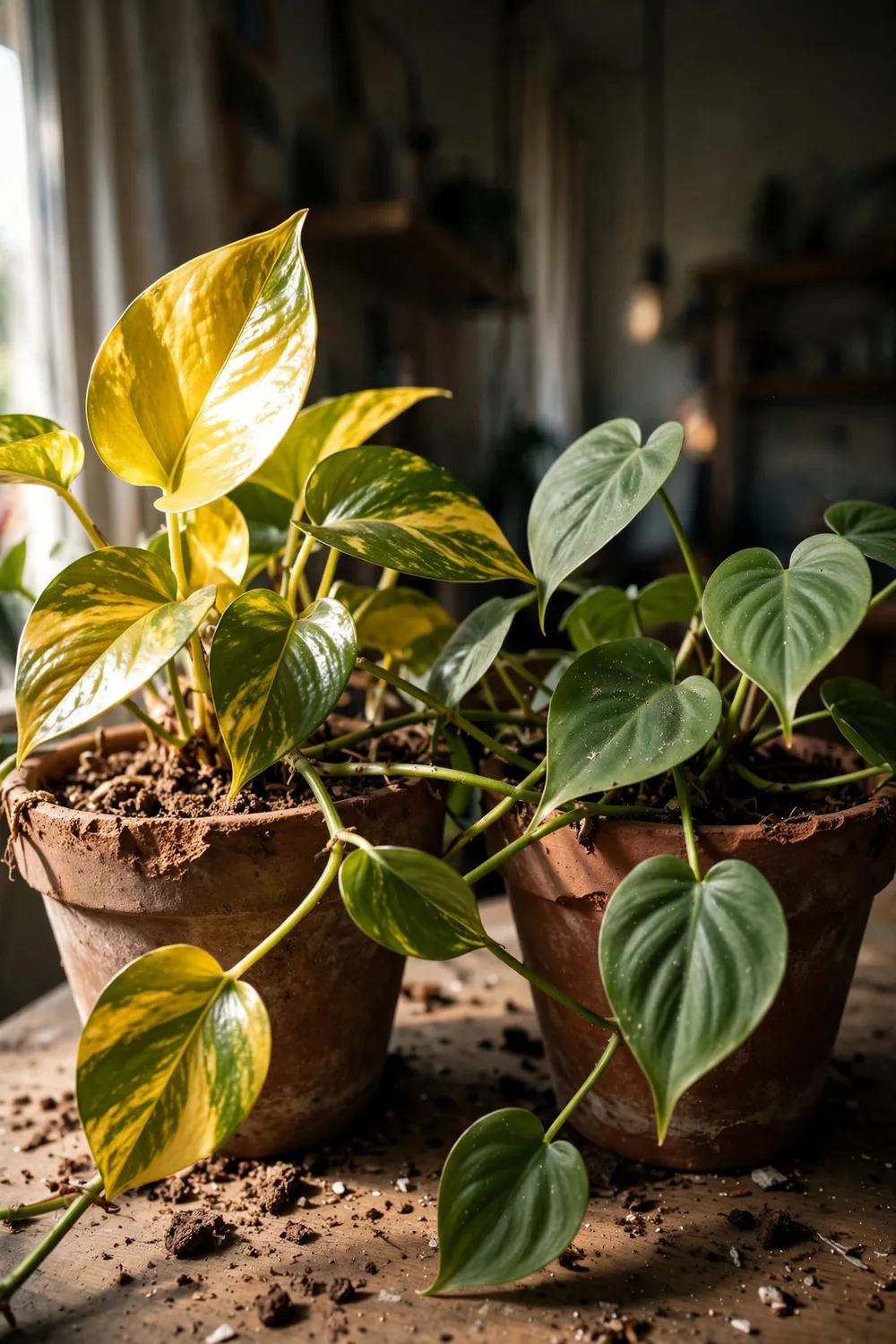

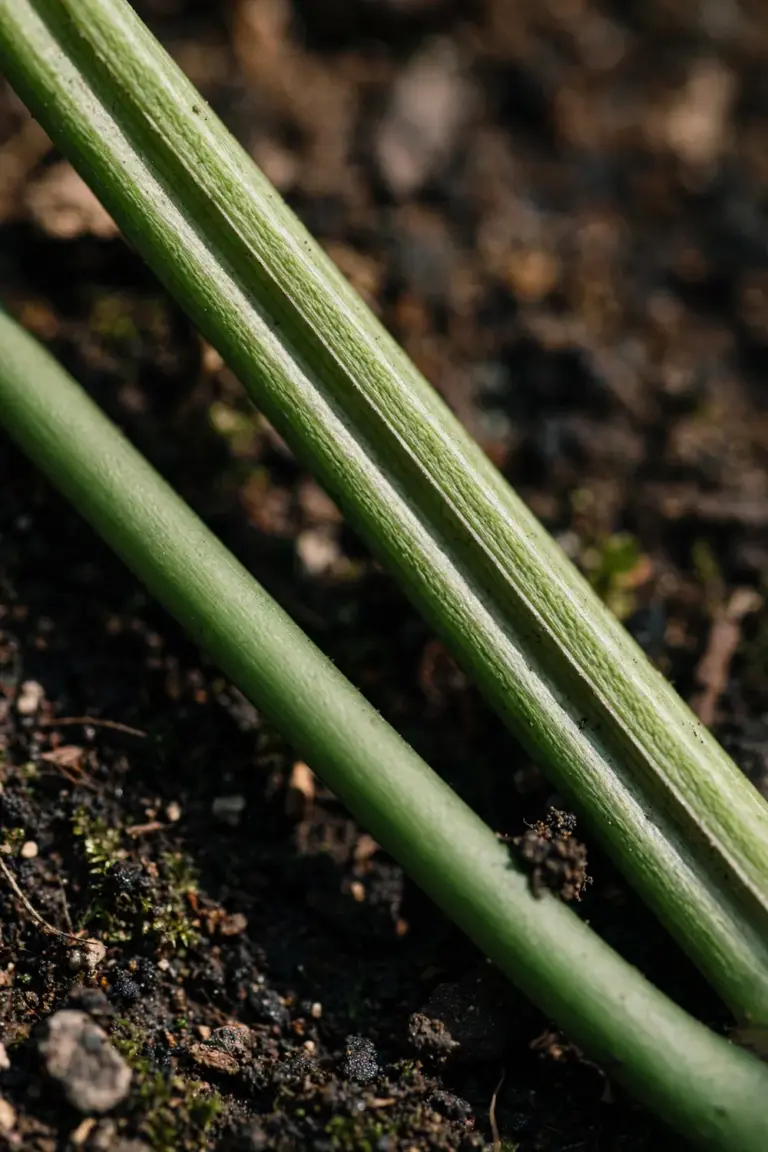
Run your fingertip along the leaf stalk and settle the ID in 10 seconds. A groove running down its length means pothos, which is Epipremnum aureum. A smooth, round stalk means heartleaf philodendron, which is Philodendron hederaceum.
That is a pothos vs philodendron identification. I have learned to trust the stalk over the leaf every time, because a groove is either there or it is not. The rest of this page is 6 identification moves, one comparison table, the money-plant naming mess sorted out, and a 30-second pick for your spot.
Feeding schedules, watering routines, and full growing notes are a separate job. That job starts only after the ID is settled, and the philodendron side of it lives with the site’s philodendron care guide. This page stays on the identification: the stalk, the new leaf, the roots, and the blade.
1. Run the Petiole Test: 1 Groove Decides the ID
The petiole test is the one check that does not lie. Pick a mature leaf, the kind that has been open for a few weeks, and pinch the stalk where it meets the blade. Draw your fingertip down toward the vine. On pothos you feel a channel, deepest where the stalk clasps the stem, with a low ridge on each side. On heartleaf philodendron you feel nothing of the sort. The stalk is a smooth, round cylinder from blade to stem.
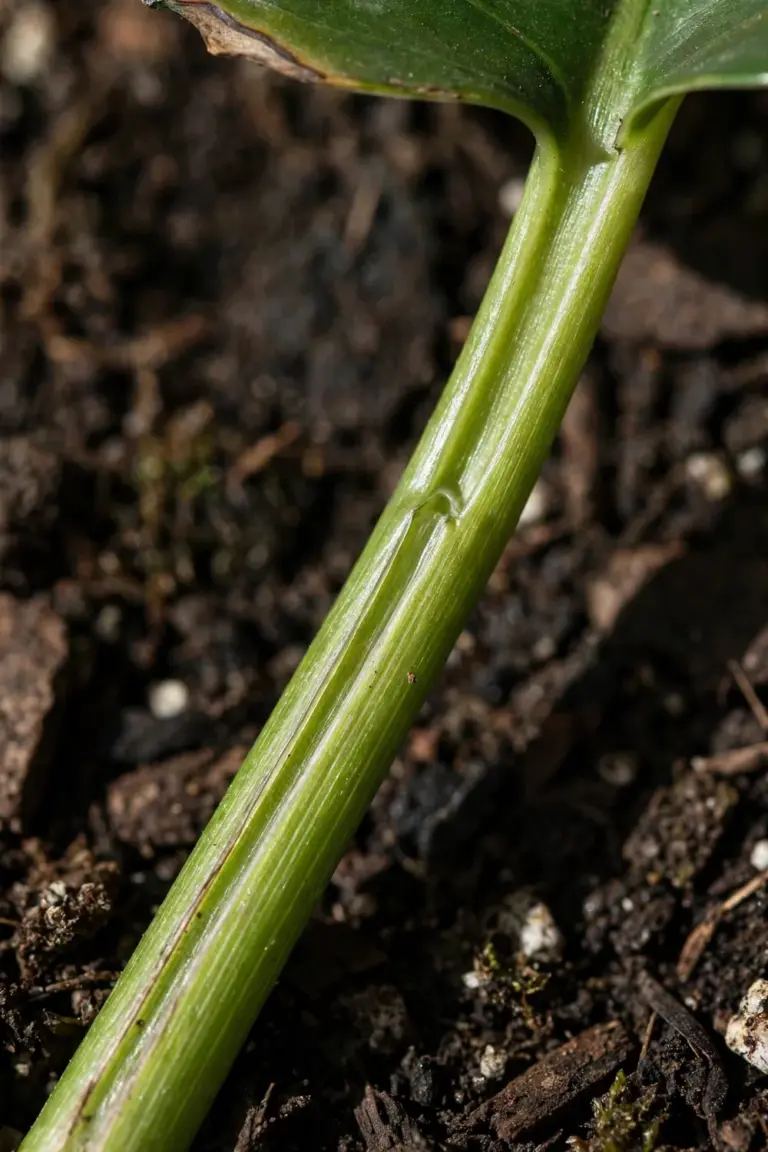
North Carolina Extension puts it in the official description of Epipremnum aureum, distinguishing pothos from Philodendron hederaceum by its grooved petioles, according to the NC State Extension plant profile. Illinois Extension says the same thing from the teaching side: the petioles on a pothos have a groove, but the philodendrons do not, in their guide to telling the two apart. Two land-grant universities agree on the test. That is as settled as houseplant ID gets.
Two quirks of the test keep it honest. The groove reads on the upper side of the stalk, near the blade end, so test several leaves and trust the majority. And the test works because the two plants build the stalk differently, which no amount of nursery lighting can change. Leaf color shifts with light. Variegation fades in dim rooms. The groove stays put.
Run the test on a mature stalk. On very young growth the groove is shallow and easy to miss, so the check has one honest failure mode. A fully opened leaf on a stem a few nodes down gives the true reading. If the groove is there, you own pothos. If the stalk is glassy smooth, you own heartleaf philodendron.
2. Untangle the Money Plant Mess in 4 Names
Four names swirl around these vines, and three of them point at more than one plant. Sort the names before you sort the plant.
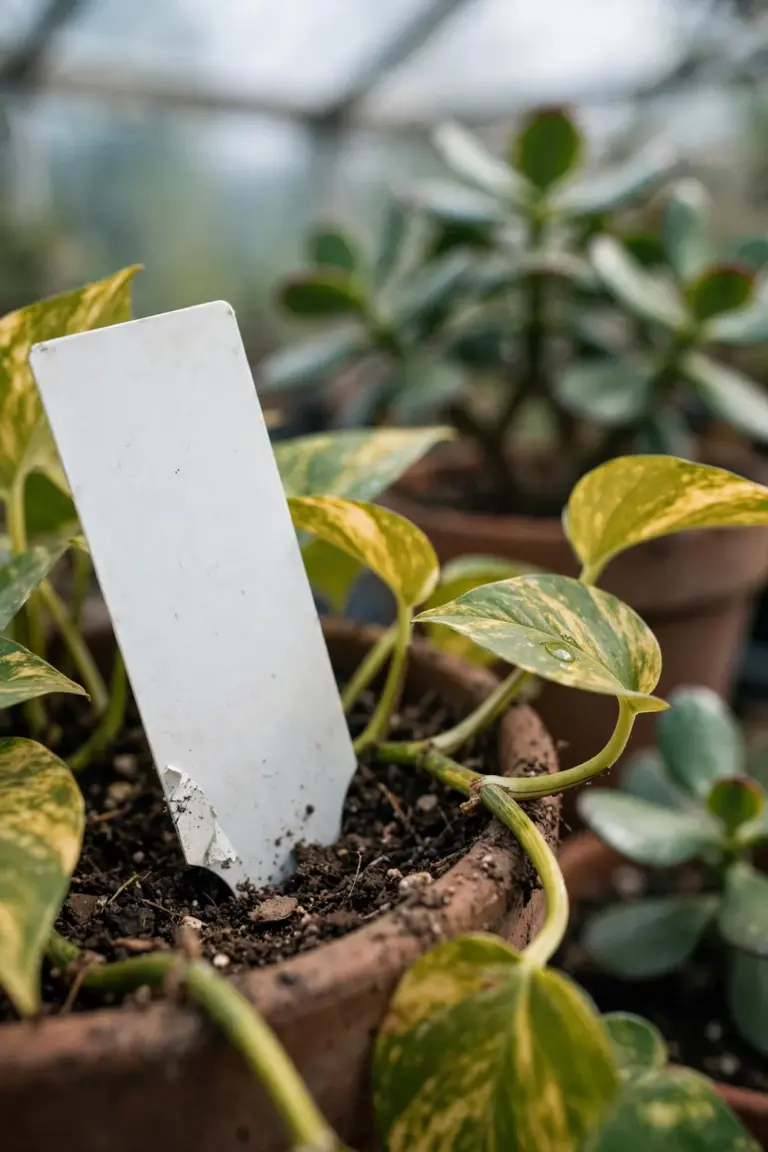
Money plant is the messiest. Nurseries use “money plant” for pothos, which is Epipremnum aureum. The same label gets pinned to the jade plant, which is Crassula ovata, a thick-leaved succulent from southern Africa in an entirely different family, listed under “money plant” in the NC State Extension profile of jade. Jade has oval, fleshy leaves on a woody trunk-like stem. It looks nothing like a trailing vine. If the plant in front of you climbs or trails with heart-shaped leaves, the money plant in question is pothos, not jade.
Devil’s ivy is the easy one. Devil’s ivy is Epipremnum aureum, full stop. NC State lists devil’s ivy among the common names of Epipremnum aureum. The name exists because the vine survives dim corners and missed waterings that kill lesser plants. It is pothos by another name.
The confusion has a paper trail. Botanists shuffled pothos through three genera before it settled in Epipremnum. It was described as Pothos aureus, then Scindapsus aureus, then Raphidophora aurea, and even filed as a cultivar of Epipremnum pinnatum before botanists recognized it as its own species, Epipremnum aureum, according to the same Extension profile. Every one of those retired names still floats around on old nursery tags and older books. If your tag reads Scindapsus aureus, it is pothos wearing a retired name.
Satin pothos is the trap. Satin pothos is Scindapsus pictus, a different genus in the same family. Its blades are thick, oval, and blotched with silver. Silver blotching on a thick blade marks a third plant entirely.
One regional note for Australian readers: in Australian nurseries and big-box plant sections, the tags “money plant” and “devil’s ivy” both mean Epipremnum aureum on the pot. The jade plant keeps its own lane as the succulent money plant. Check the botanical name on the tag before following any care advice, because the tag is the only part of the label that cannot be argued with.
3. Read the New Leaf: Cataphyll Sheath Means Philodendron
Watch where the next leaf comes from. A heartleaf philodendron pushes each new leaf out of a thin, papery sheath called a cataphyll. The sheath wraps the young leaf like a paper sleeve, then dries and falls away as the blade opens. NC State Extension names exactly this feature as a distinguishing mark: pothos shows no conspicuous free stipules on its new growth, and that absence separates it from Philodendron hederaceum, according to the same Extension profile.
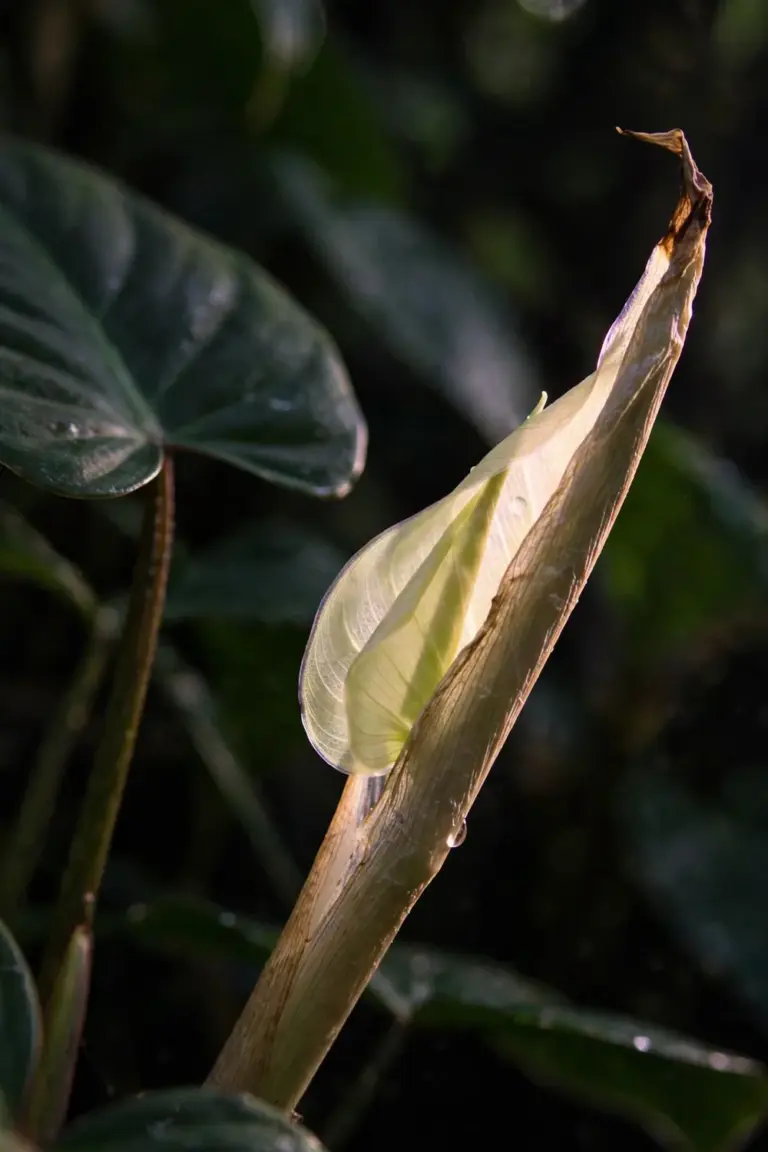
Pothos new leaves unfurl directly from the tip of the previous leaf’s petiole. There is no paper sleeve. The young blade unrolls from the growth tip, paler than the older leaves, and hardens off in place.
This is the second-most reliable check after the petiole test, and it works even when the groove is hard to feel. Find the growing tip of a vine and look at the newest leaf. A papery sheath clinging to the base of the young leaf means heartleaf philodendron. A clean, naked unfurling from the tip means pothos. Check two or three growing tips before calling it, because an old sheath sometimes lingers on a pothos stem after a rough unfurling. The sheath on a philodendron wraps the whole young leaf like a sleeve. The stray flake on a pothos never does.
4. Count the Aerial Roots: 1 Stubby Root per Node vs Several Thin Ones
Look at the nodes, the slightly swollen joints where each leaf meets the vine. Pothos sends out one aerial root per node. The root is thick, stubby, and brown, built to grip bark and brick in the wild. Heartleaf philodendron sends out several thin, wiry aerial roots per node. They look spindly next to the pothos root and often emerge as a little cluster.
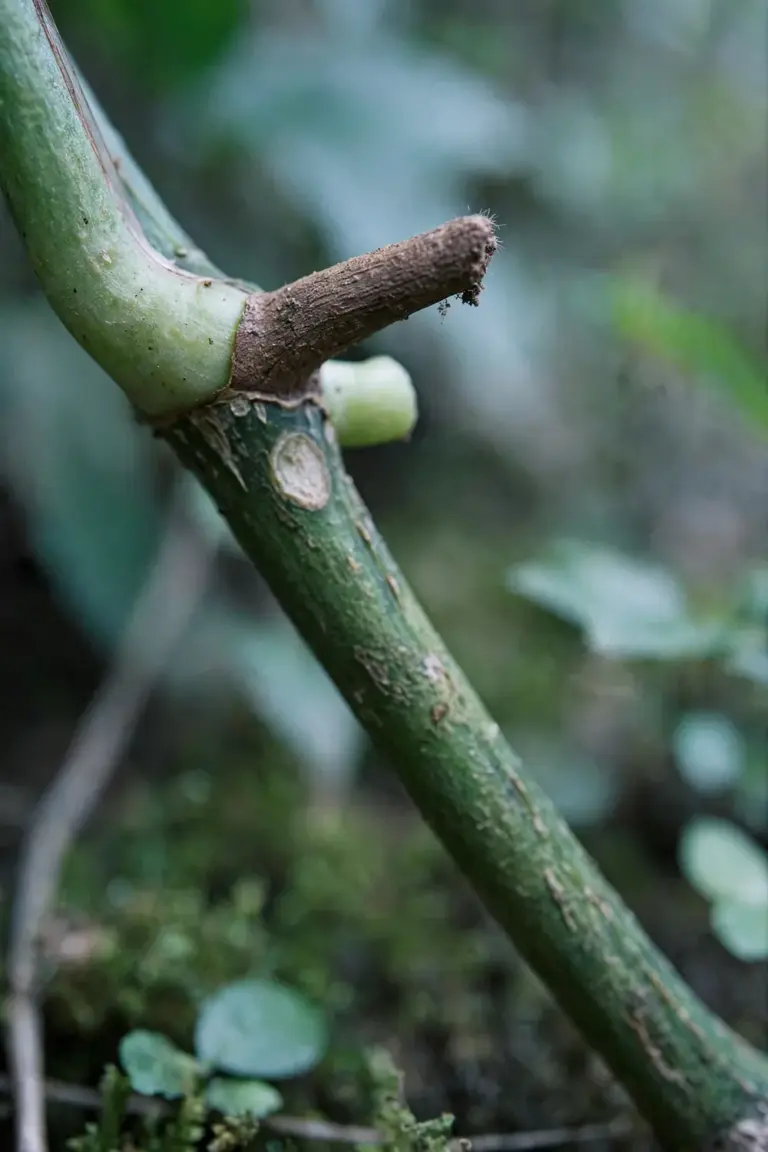
Illinois Extension states the count plainly: pothos grows one small root at a node while philodendrons grow multiple roots at a node, in that same Illinois guide. This check shines on bare vines. When a plant has dropped older leaves, the stalk test loses its material, but the nodes stay readable. Count the bumps along a leafless stretch. One thick root scar per node reads pothos. A cluster of thin wiry nubs per node reads heartleaf philodendron.
In the wild, both plants use these roots to climb. NC State Extension records pothos vines reaching 40 feet, or 12.2 metres, when they climb freely, per the Extension profile. The roots are the climbing gear. Indoors they mostly dangle, which makes them easy to inspect without disturbing the plant.
5. Feel the Leaf: Wax Stiffness vs Soft Heart
Hold a mature blade between thumb and forefinger. Pothos leaves feel thick and stiff, almost like a playing card, with a waxy gloss that throws sharp reflections in daylight. Heartleaf philodendron leaves feel thinner and softer, with a gentle satin sheen that diffuses light instead of bouncing it. Pothos leaves also run slightly lopsided. One basal lobe often grows larger than the other, and the midrib sits in a sunken channel that looks paler than the blade. Heartleaf philodendron blades are more symmetrical hearts with a deeper basal notch and a flatter midrib.
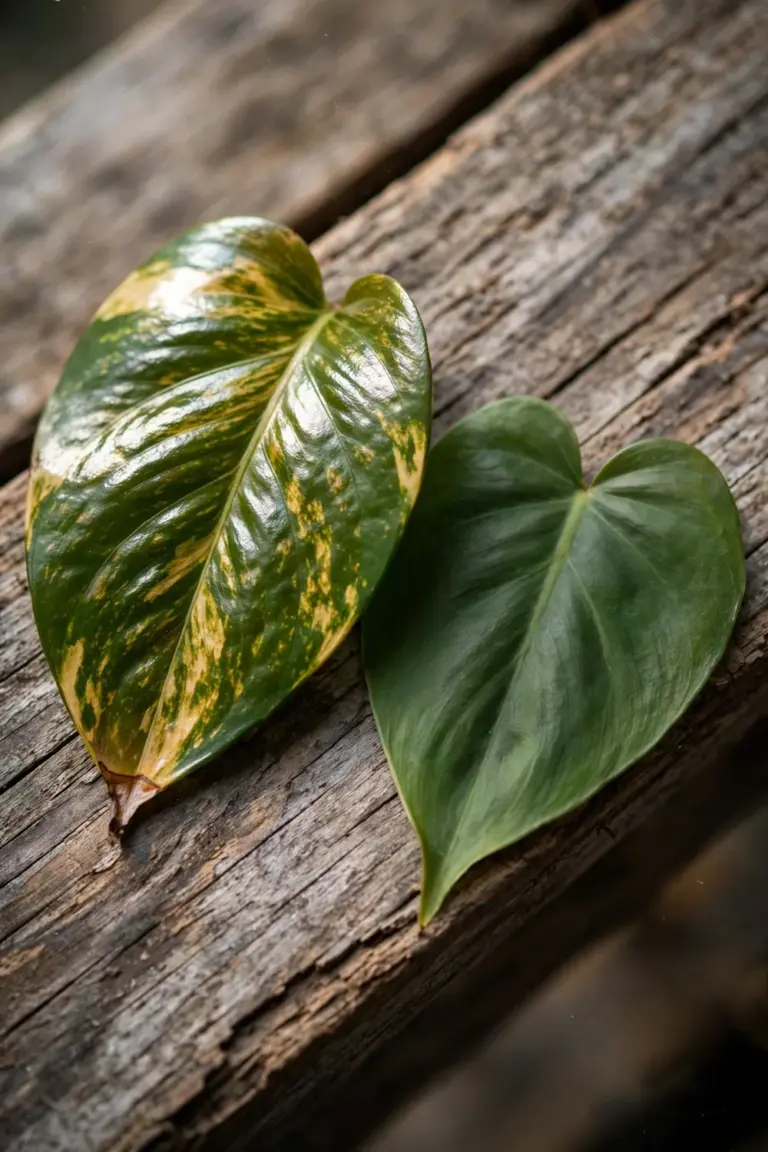
Use this test last, not first. Blade feel is real, but it needs the other genus in your other hand to mean anything. The petiole groove decides the ID on its own. The leaf texture confirms it.
One more blade fact worth knowing: neither plant flowers indoors. Both stay in their juvenile form as houseplants, trailing heart-shaped leaves for years. The dramatic split adult leaves you see in botanical garden photos appear only when pothos climbs high in tropical conditions. The plant on your shelf is the juvenile, and the juvenile is what this article identifies.
6. Rule Out the 2 Lookalikes: Satin Pothos and the Split-Leaf Misnomer
Two more plants crash the pothos vs philodendron question. Rule them out before you run the petiole test, because neither one answers to it.
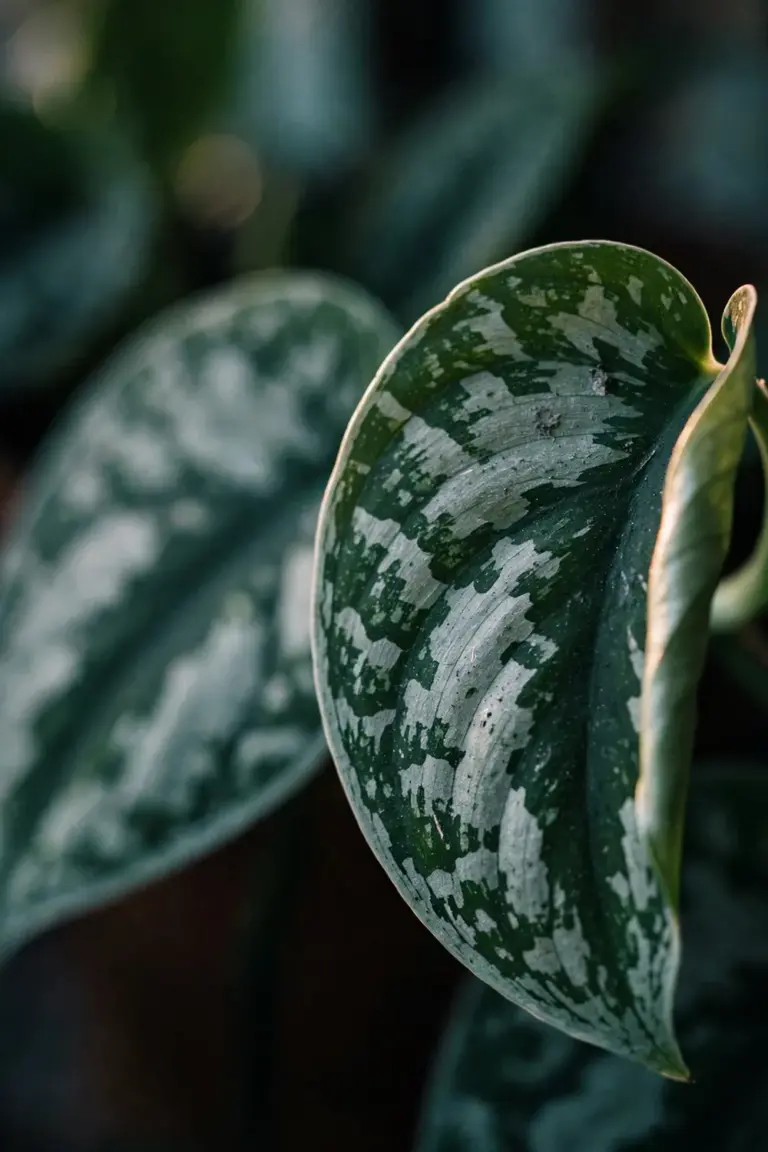
Satin pothos is Scindapsus pictus. It shares the arum family and the trailing habit, but its blades are thick ovals blotched and speckled with silver. No true pothos and no heartleaf philodendron carries silver. If the leaf shines silver, the petiole test does not apply. You hold a Scindapsus.
The split-leaf misnomer is the stranger one. For decades, nurseries and books sold Monstera deliciosa under philodendron names, and the nickname stuck in the trade. A plant with split or hole-punched leaves is a monstera, not a heartleaf philodendron. Heartleaf philodendron blades stay whole and heart-shaped for life. Splits and windows rule the plant out of this ID entirely.
Both lookalikes teach the same lesson. Common names drift. Botanical names hold still. The tag’s Latin line is the one line worth reading twice.
7. Line Up the 8-Point Pothos vs Philodendron Table
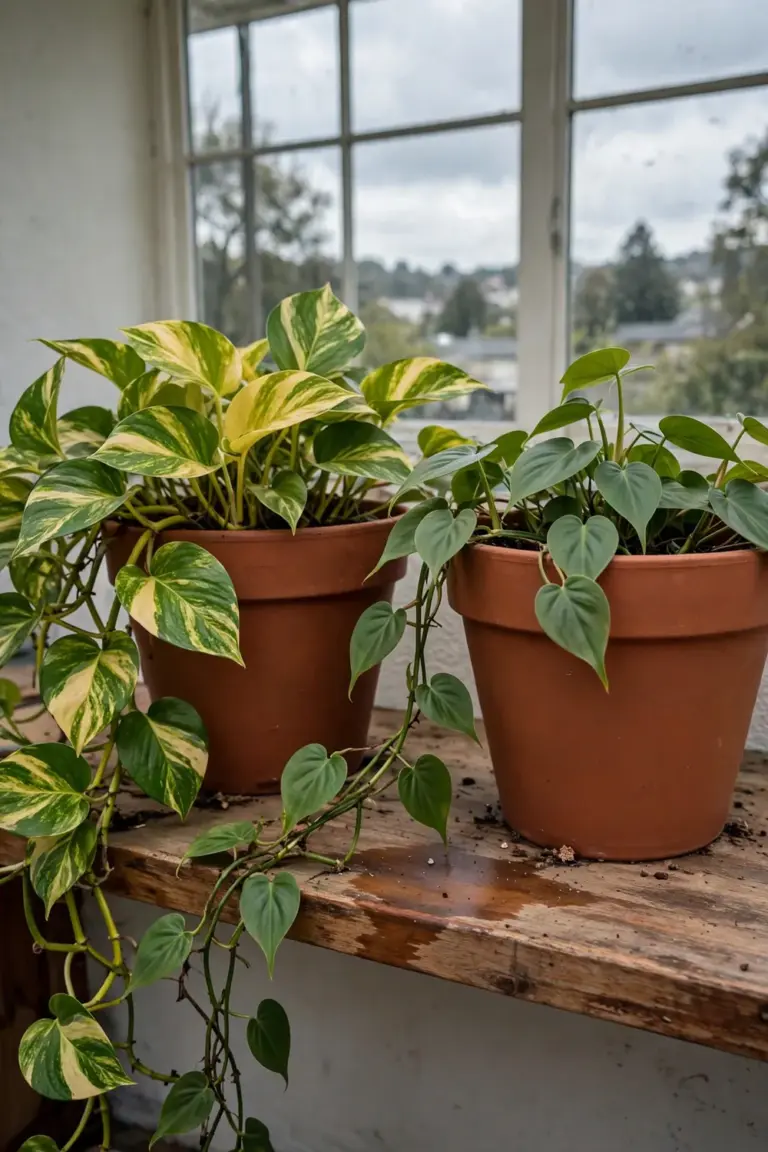
When the single tests disagree in your hands, the table settles it. Read across one row at a time and count which column your plant lands in.
| Feature | Pothos (Epipremnum aureum) | Heartleaf Philodendron (Philodendron hederaceum) |
|---|---|---|
| Botanical name | Epipremnum aureum | Philodendron hederaceum |
| Family | Araceae, the arum family | Araceae, the arum family |
| Native range | The Society Islands, per NC State Extension | Mexico to tropical America, per the Royal Horticultural Society |
| Petiole | Grooved or channeled along its length | Round and smooth, no groove |
| New leaves | Unfurl directly from the growth tip, no sheath | Emerge from a papery cataphyll sheath |
| Aerial roots | 1 thick, stubby root per node | Several thin, wiry roots per node |
| Leaf blade | Thick, stiff, waxy gloss, often lopsided | Thin, soft, satin sheen, symmetrical heart |
| Wild size note | Vines to 40 feet (12.2 m) when climbing freely, per NC State Extension | Mature leaves to 30 cm long, per the RHS |
Two facts deserve a pause. Pothos and heartleaf philodendron belong to different genera in the same family, the arums. Similar looks come from similar rainforest habits, not from close kinship. And their native ranges sit on opposite sides of the Pacific: pothos comes from the Society Islands, while heartleaf philodendron comes from Mexico to tropical America, according to the RHS plant profile.
8. Shoot the 3 ID Photos Before You Ask Anyone
Ask anyone who IDs plants from photos and they will tell you the same thing. A blurry whole-plant shot from across the room tells an expert nothing. Shoot the three close-ups this article’s tests need, and any ID answer lands on the first try.

Photo one: the stalk. Hold a mature leaf steady and shoot the petiole from directly above, close enough to see the groove or its absence. Side light helps. A lamp to one side throws the channel into shadow on pothos and shows a clean cylinder on philodendron.
Photo two: the growing tip. Frame the newest leaf and the stem behind it. A papery sheath wrapping the young leaf shows up clearly at this distance, and so does the clean unfurling of a pothos tip.
Photo three: the node. Shoot one leaf joint from the side, close enough to count the aerial roots. One thick stubby bump per node or a cluster of thin wiry ones decides the count.
Send all three together, and note the botanical name on the nursery tag if the plant still has one. The tag plus three photos ends the argument before it starts.
9. Pick Your Vine in 30 Seconds
Now that the ID is settled, the choice is simple. Pick pothos for the dim corner and the forgiving schedule. Its thick waxy leaves and stubby roots belong to a plant that shrugs off low light and stretches between waterings. Pick heartleaf philodendron for steady, gentle conditions and a softer look. Its thin leaves and wiry roots belong to a plant that likes its moisture a little more even and rewards a moss pole with bigger leaves.
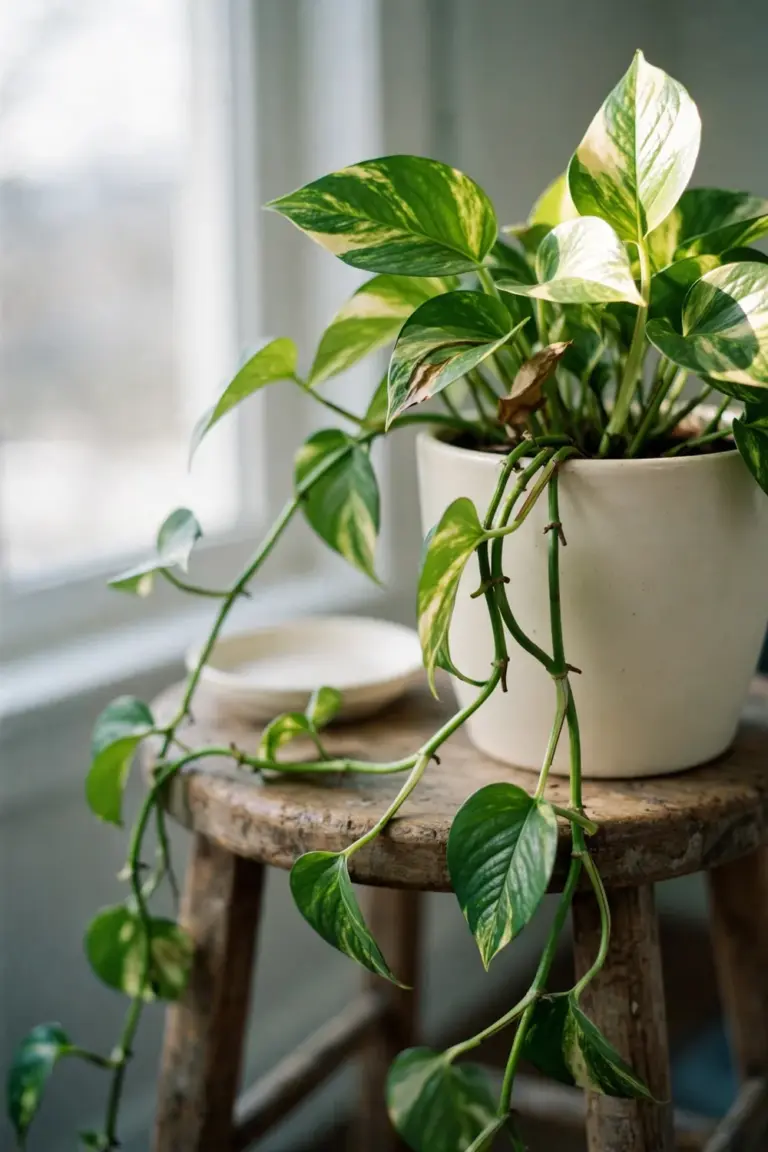
Both plants propagate from stem cuttings with a node attached, which is why a leafless vine with good nodes is worth saving rather than binning. The node-counting habit from test 4 pays off here: every node you can read is a cutting that can root. The full how-to lives in the site’s plant propagation guide. For the day-to-day care of a confirmed philodendron, the philodendron care guide carries the routine.
Frequently Asked Questions
No. Pothos is Epipremnum aureum and heartleaf philodendron is Philodendron hederaceum. They are different genera in the same family, the arums. Similar heart-shaped leaves come from similar rainforest habits, not close kinship. The petiole test separates them in seconds: a groove means pothos, a smooth round stalk means philodendron.
Pinch a mature leaf stalk where it meets the blade and draw your fingertip down toward the vine. Pothos petioles carry a channel with low ridges on each side, deepest where the stalk clasps the stem. Heartleaf philodendron petioles are smooth round cylinders with no groove. North Carolina Extension and Illinois Extension both list this as the primary field ID.
Yes. Devil’s ivy is Epipremnum aureum, one of the standard common names for pothos. The name points at the plant’s toughness in dim rooms. Do not confuse it with satin pothos, which is Scindapsus pictus, a different genus with silver-blotched leaves that belongs to neither of the two plants compared here.
It can be either, which is the whole problem. Nurseries sell pothos (Epipremnum aureum) as money plant, and they also sell the jade plant (Crassula ovata), a thick-leaved succulent, as money plant. Check the botanical name on the tag. A trailing vine with heart-shaped leaves is pothos. A woody succulent with oval leaves is jade.
Retail mix-ups are common because the two vines look alike on a crowded shelf and both tolerate the same dim store lighting. Growers ship thousands of nearly identical hanging baskets, and a wrong tag costs the seller nothing. Run the petiole test before you buy. Ten seconds at the shelf beats a year of following the wrong care advice.
Where to Go From Here
You now own 6 moves that settle any pothos vs philodendron argument: rule out the lookalikes, run the petiole groove, read the cataphyll sheath, count the aerial roots, feel the leaf texture, and shoot the 3 ID photos. Run them in that order. The second move decides most IDs on its own, and the rest confirm it.

The single most common mistake is buying care advice before checking the tag. Confirm the botanical name first, then follow the routine that matches it. Your plant has been one species all along. Now you know which one.