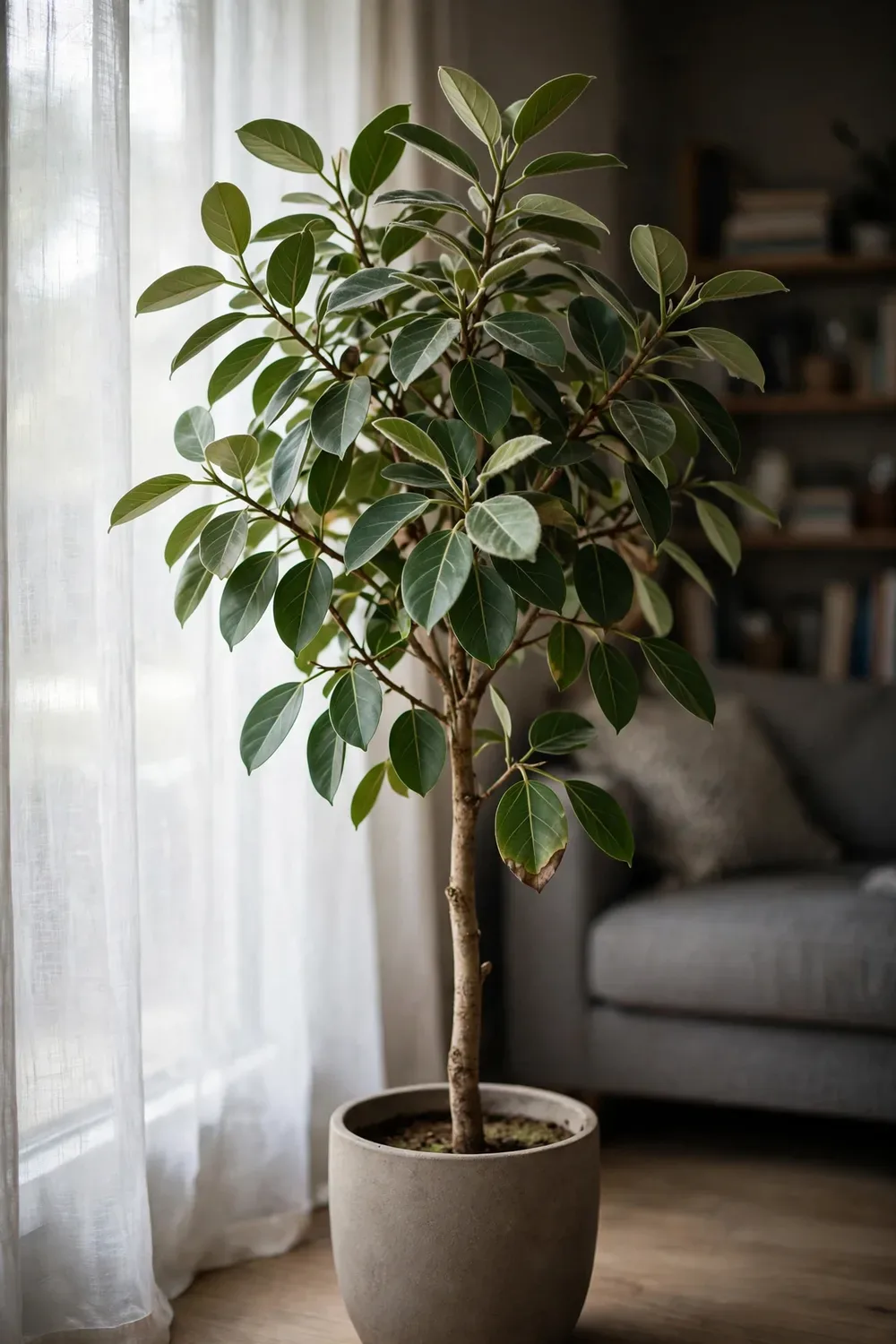

Buy the tree for the light you have. The look you saw online is the wrong filter. That is a fiddle leaf fig alternatives list: 6 indoor trees matched to real windows and real watering habits, with the trade-off of each pick named up front. The rest of this page is the decision table, the 6 picks, the pet-safety check, and the questions buyers ask at the till.
Fiddle leaf figs drop their leaves when the light, the water, or the position changes, and most owners learn that on the second bare stem. I have watched a weeping fig empty half its leaves in the week after it moved corners, then push out a full new canopy.
Read the table before the nursery trip. Touch the soil before you water. Keep the receipt for the first month. This page does not teach fiddle leaf fig care. It replaces the tree. If you want the case for keeping a big plant indoors at all, the 10 benefits of indoor plants page makes it.
Scan the Honesty Table: 6 Fiddle Leaf Fig Alternatives Matched to Light and Water
Start here. Every alternative below keeps the indoor-tree look and drops the fiddle leaf fig’s tantrums, but each one asks for something in return. Find your row by the light you can offer and the watering you will actually do.
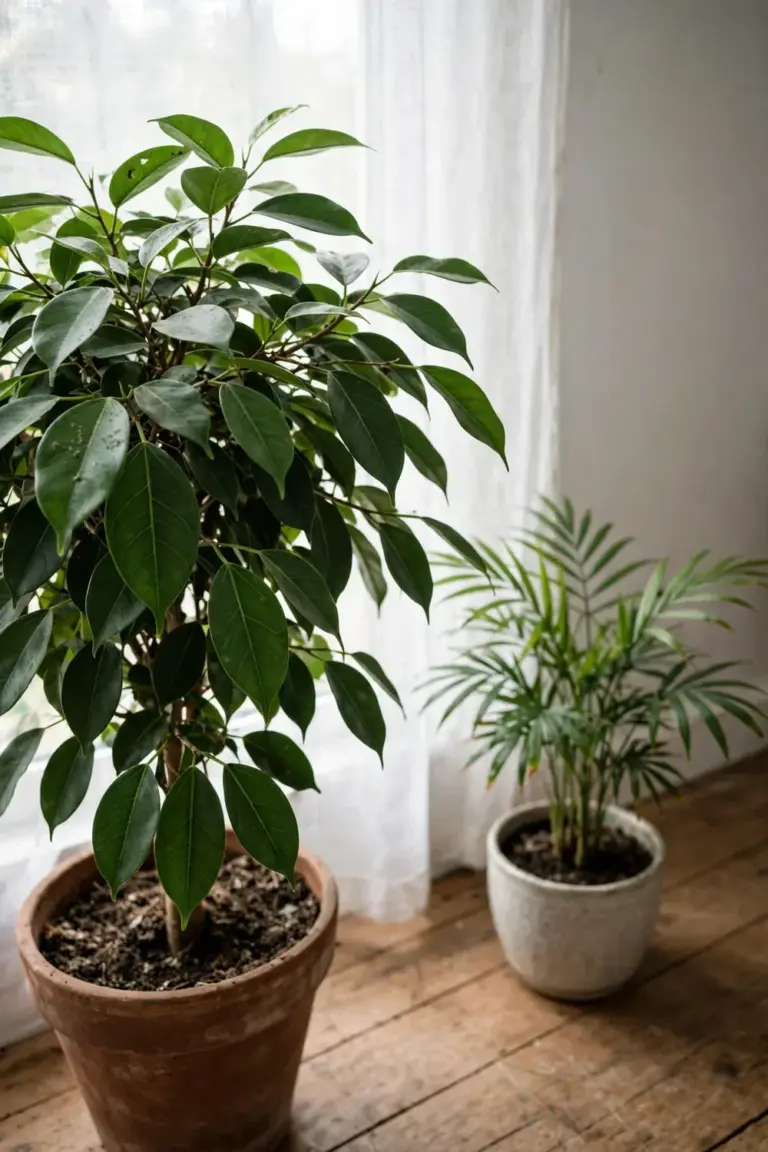
| Alternative | Light it wants | Watering rhythm | Pet note | What you give up vs a fiddle leaf fig |
|---|---|---|---|---|
| Ficus Audrey (Ficus benghalensis ‘Audrey’) | Bright indirect, within about 1.2 m of a good window | Water when the top 25 to 50 percent of the mix dries | Keep chewers away, the milky sap irritates | The giant fiddle-shaped leaf. Audrey’s leaves are smaller, velvety ovals. |
| Rubber tree (Ficus elastica) | Bright to medium, the most forgiving ficus on light | Same rhythm, forgives a late watering better than the rest | Keep chewers away, the milky sap irritates | The sculptural silhouette. Rubber trees read bolder and glossier. |
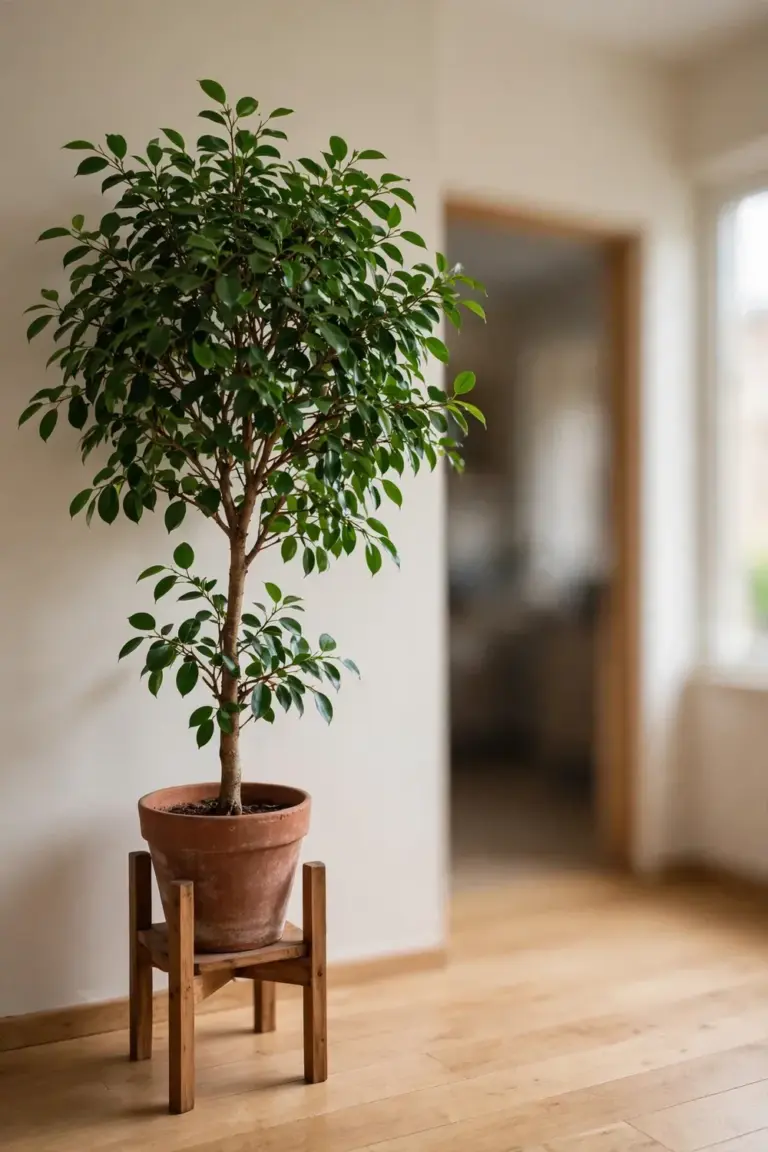
| Weeping fig (Ficus benjamina) | Bright indirect, suffers in deep shade | Do not let the mix dry out fully | Keep chewers away | A calm first month. It sheds leaves after a move, then regrows. |
| ‘Bambino’ fiddle leaf (Ficus lyrata ‘Bambino’) | Bright indirect, like its full-size parent | Same demands as a full-size fiddle leaf fig | Same sap caution as its parent | Nothing. It is a fiddle leaf fig, only smaller. The drama stays. |
| Giant bird of paradise (Strelitzia nicolai) | The brightest spot you own, some direct sun once settled | Let the mix dry partway, then soak it | Risky for chewing pets, see the pet-safety check | The tree shape. It grows as a fan of paddle leaves and wants floor space. |
| Parlor palm (Chamaedorea elegans) | Low to bright indirect, the dimmest corner on this list suits it | Light watering, let the top dry out | Safe for dogs and cats | Height. It fills a corner. It never becomes a 2.4 m statement. |
The light figures come from the University of Missouri’s 2026 ficus rundown: sit a ficus within about 1.2 m of a good-sized east-, west-, or south-facing window, or add a plant light, and water as the top 25 to 50 percent of the potting mix dries to the touch.
Read the light column literally. Bright indirect means the plant sees the sky but the sun never lands directly on its leaves. Hold your hand above the leaves at midday: a soft, fuzzy shadow means bright indirect, while a sharp-edged shadow means direct sun. Medium light is a few steps back from the window, where the sky is still visible. Low light is the corner where you would switch on a lamp to read. Every ficus on this list does better one step brighter than you think it needs. Thick-leafed types forgive dry air better than thin-leafed ones, and the same notes put the comfortable indoor band at 16 to 29 degrees Celsius.
1. Choose Ficus Audrey for the Same Tree Shape with Calmer Leaves
Pick Audrey when you wanted the fiddle leaf fig’s architecture: a clean trunk under a rounded canopy. Ficus Audrey is Ficus benghalensis, the banyan, the tree India designates as its national tree.
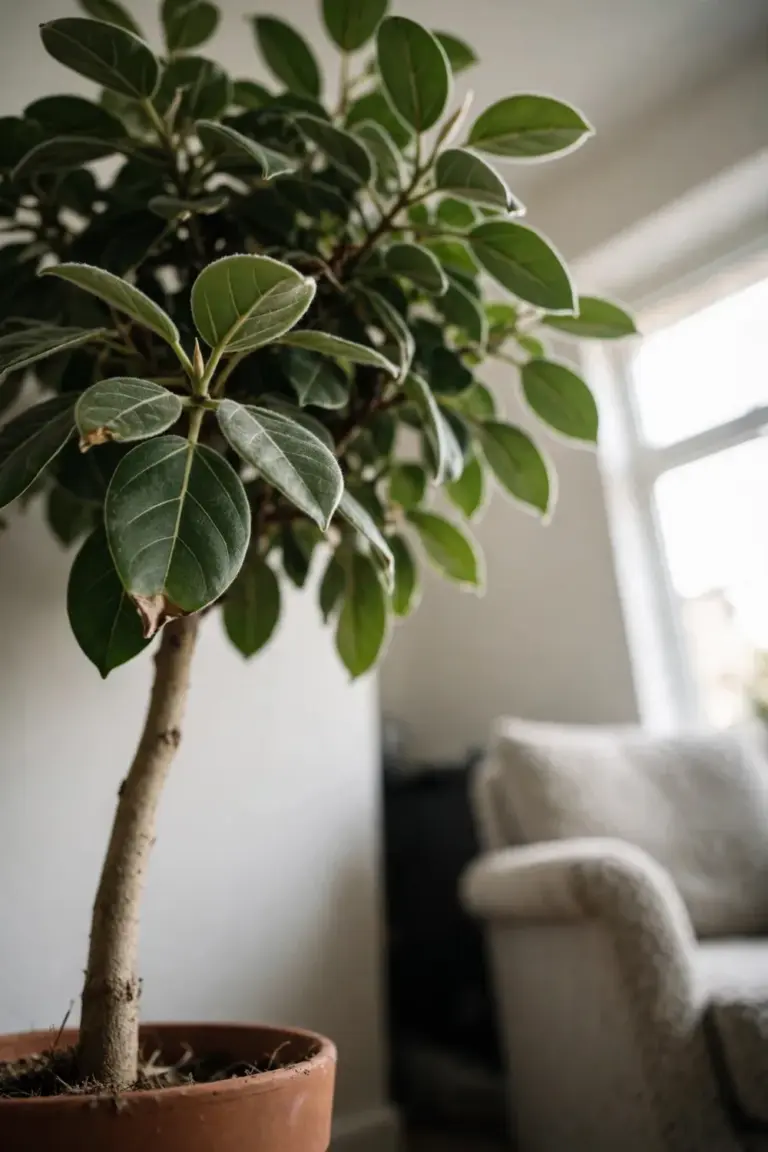
Audrey earns the top slot for one reason. It carries the tree form without the hair-trigger leaf drop. Its calling card is the leaf: medium green with softly fuzzy undersides, on a medium growth rate, reaching 2.4 m or more indoors when you skip pruning, all per the same Missouri ficus notes. Treat it like any ficus: bright indirect light, the 25-to-50-percent watering rule, and no cold drafts. The fuzzy leaf undersides mark it at the nursery. Ask for Ficus benghalensis ‘Audrey’ by the full name. The nickname travels well, but the botanical name never gets confused with the other ficus on the bench.
The trade-off is the leaf itself. You lose the violin-shaped statement leaf and gain smaller velvety ovals. You gain a tree that holds its canopy through an ordinary winter. Prune in the growing season if it outgrows the corner. Repot every year or two under good conditions. The same notes say ficus tolerate being rootbound but never prefer it.
2. Pick a Rubber Tree When the Window Is Far and the Watering Is Late
Pick the rubber tree when your habits are the problem, not your taste. Ficus elastica grows the thick, glossy leaves that store water and shrug off a missed week. The University of Missouri calls it more resilient than some of its relatives and more drought-tolerant than the rest of the genus, which is the closest thing to a forgiveness rating a university will print.
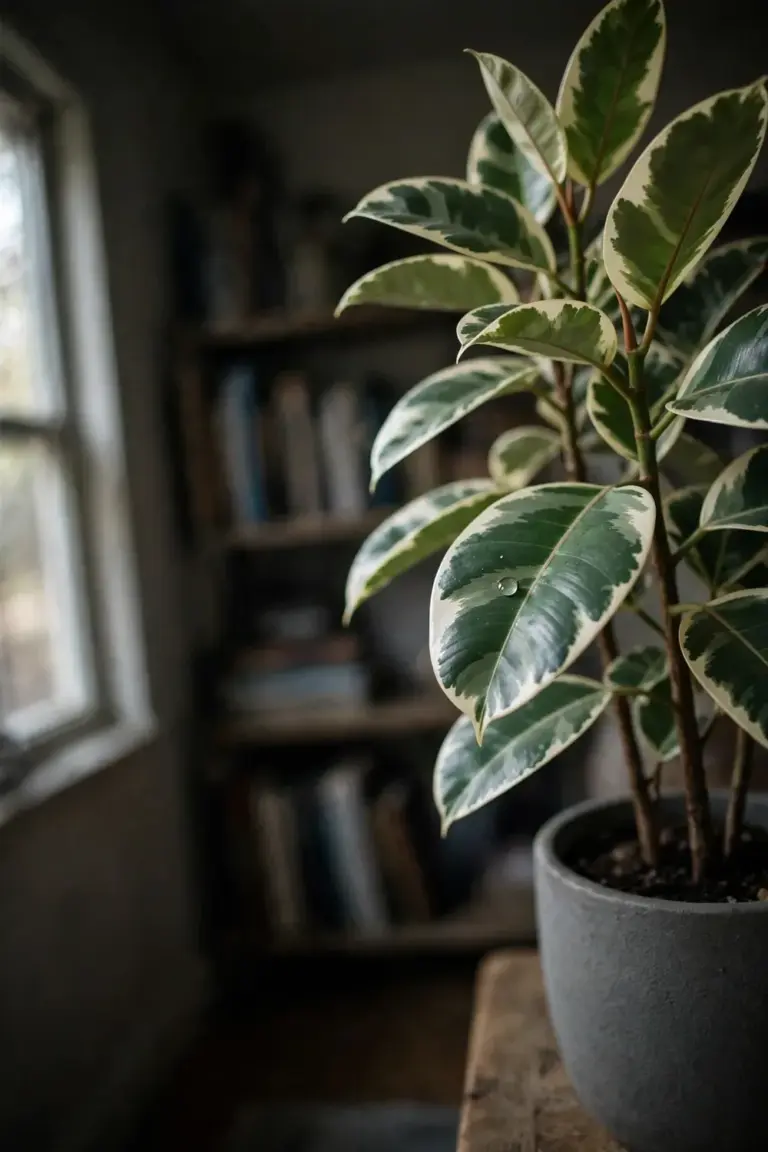
The numbers back the reputation. In its native Southeast Asia the rubber tree passes 30 m outdoors. Indoors it still reaches 2.4 m or more, and it takes pruning well, so you can hold it at any height you want. Pick a cultivar for the look you wanted: ‘Tineke’ carries creamy-white margins, ‘Ruby’ edges its gray-green leaves in red, pink, and cream, and ‘Burgundy’ flushes the whole leaf purple-dark.
Water it on the same 25-to-50-percent rule as every ficus here. It forgives lateness better than Audrey or the weeping fig, which is exactly why it suits the reader who travels or forgets. Buy the variegated cultivars only for a bright window. White- and pink-variegated ficus leaves carry less chlorophyll, so they grow slower and stress faster in dim rooms, per the same notes. Dust the big leaves now and then; a dust layer cuts the light that reaches the leaf and cuts the food the plant makes. The types of rubber plants with pictures page shows the cultivar range if you want to compare before you buy.
The trade-off is the silhouette. A rubber tree never gives you the fiddle leaf fig’s open, branching sculpture. It gives you bold, upright presence and the easiest care routine on this list.
3. Grow a Weeping Fig If You Want a Prunable, Braidable Indoor Tree
Pick the weeping fig when you want a tree you can shape: pruning, shearing, braided trunks, even bonsai training all work on Ficus benjamina. Indoors it can pass 2.4 m if you never trim it, while outdoors in the tropics it reaches 18 m. It grows wild across Southeast Asia and Australia, which is why the buying section below singles it out.
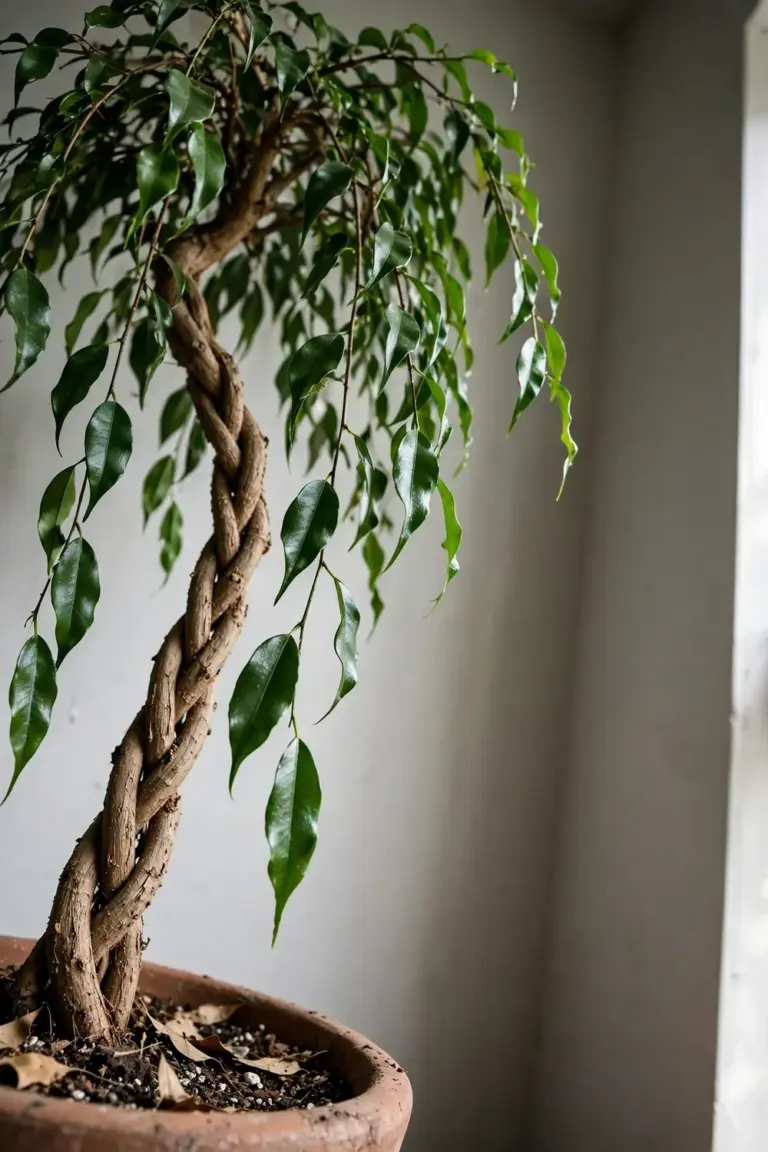
Here is the honest part, and it is the reason the weeping fig sits at number three instead of number one. The species sheds leaves when stressed. A move to your home, a cold draft, a missed watering, and the floor collects leaves within days. The University of Missouri calls this shattering and says plainly that it is not a health diagnosis on its own: the plant drops the old leaves and grows new ones fitted to the new conditions. Steady light, steady water, and no drafts stop the shed.
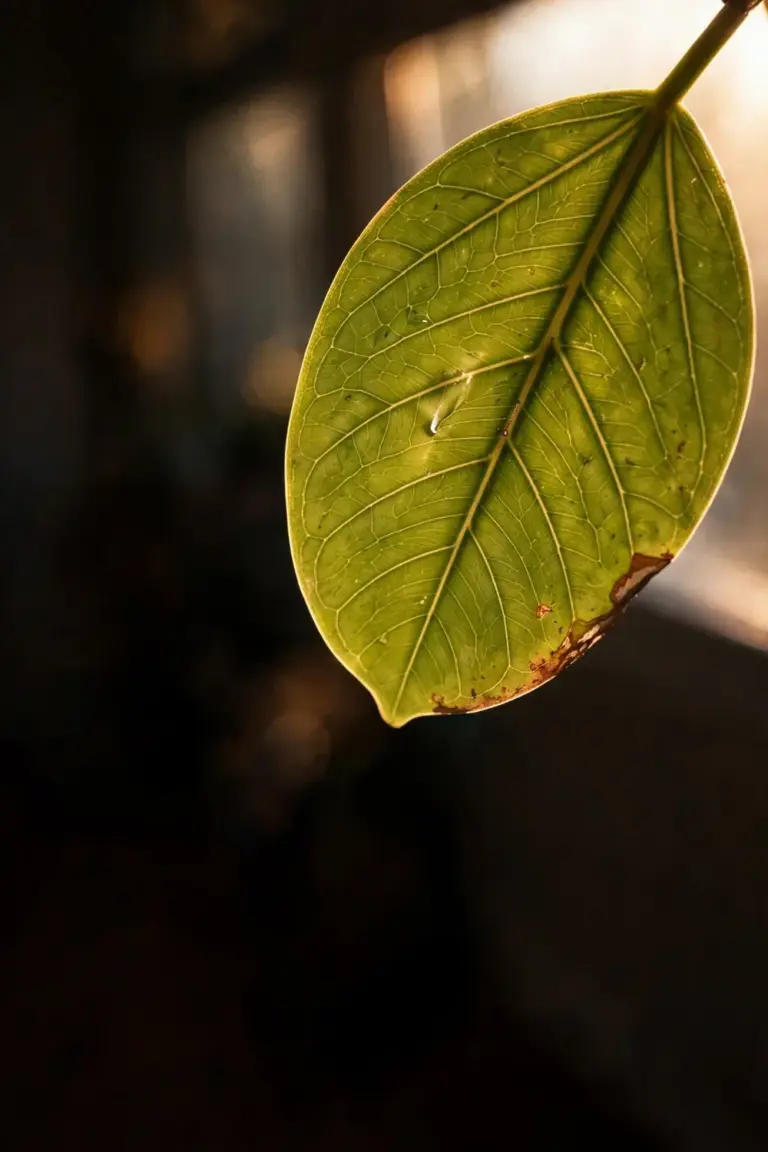
Buy it small and let it adapt to your room from the start. A young plant that never knew the greenhouse adjusts faster than a 2 m specimen ripped from ideal conditions. Water before the mix dries fully. Prune for shape in the cooler months when growth slows. Read the leaves when something looks wrong: yellow leaves on wet soil mean too much water, and the Missouri notes warn that overwatering suffocates the roots. Brown, crispy edges mean too little. A shed right after a move means stress, not death.
The trade-off is the first month. You pay in fallen leaves. You gain the most shapeable tree on this list and a plant that has decorated interiors for decades.
4. Downsize to a ‘Bambino’ Fiddle Leaf When Size Was the Real Problem
Pick ‘Bambino’ when the fiddle leaf fig itself was never the problem, the ceiling was. Ficus lyrata ‘Bambino’, also sold as Little Fiddle, is a true dwarf form of the fiddle leaf fig. The University of Missouri lists it as one of only two named cultivars of the species, and describes it as more compact with smaller leaves than the standard plant.
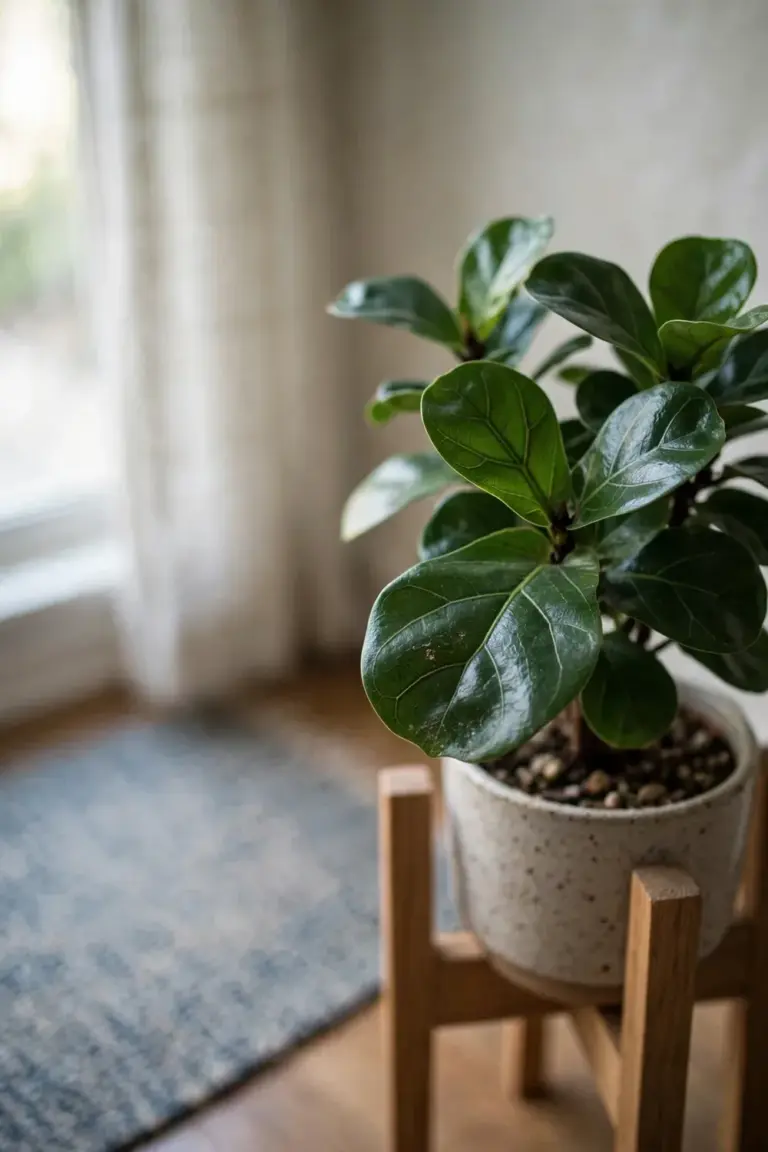
Read that twice, because the honesty table flags it. ‘Bambino’ keeps the species’ demands. It wants the same bright indirect light, the same careful watering, and the same stable position as its full-size parent. Nothing about the care gets easier. The footprint gets smaller, and the leaf drop hurts less when there is less tree to lose.
This pick suits the reader who killed a full-size fiddle, understood why, and wants a second attempt at a manageable scale. Raise it on a plant stand. A ‘Bambino’ at floor level reads as a shrub; the same plant at hip height reads as a small tree, which is the whole point of the purchase. Keep it within the 1.2 m window rule. Do not buy it believing the dwarf label means a tougher plant.
The trade-off is zero on looks and full on expectations. You keep the exact leaf you wanted. You keep the exact care the species demands.
5. Plant a Giant Bird of Paradise in Your Brightest Corner
Pick the giant bird of paradise when your room has the light the ficus picks only dream about. Strelitzia nicolai grows as a fan of huge paddle leaves on long stalks, and it wants the brightest spot you own, with some direct sun once it settles. In a bright room it becomes the architectural statement the fiddle leaf fig never quite managed: taller, wider, and louder.
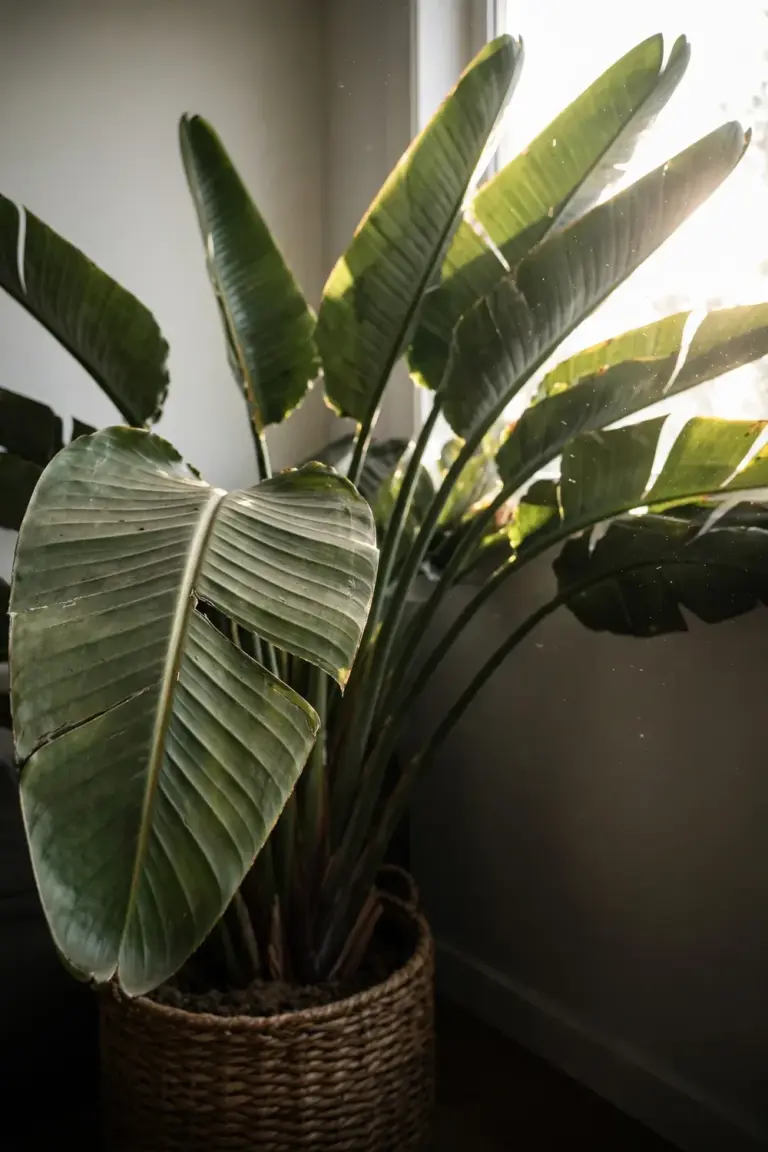
This pick breaks the ficus pattern, so the care breaks too. Give it the most light in the house. Let the mix dry partway between waterings, then soak it thoroughly. Expect the older leaves to split along their veins with age and handling; that is the leaf’s structure, not damage. Feed through the growing season and pull back in winter when the light drops.
The pet warning matters more here than on any ficus pick. The ASPCA’s toxic-plant listing for bird of paradise names Strelitzia reginae as toxic to dogs, cats, and horses, with mild nausea, vomiting, and drowsiness, mostly from the fruit and seeds. Treat the giant form with the same caution. A dog that strips leaves or a cat that chews stalks should steer you to the parlor palm below.
Starve it of light and the stalks stretch, the leaves stay small, and the fan collapses into a floppy rosette. Light is the whole contract with this plant. Sign it only if your brightest corner is genuinely bright.
The trade-off is space and shape. You lose the classic tree silhouette. You gain the boldest foliage on this list and a plant that genuinely loves the sunniest corner.
6. Keep a Parlor Palm When Pets Chew Every Leaf in Reach
Pick the parlor palm when the pets decide. Chamaedorea elegans is the one alternative here with a clean safety record: the ASPCA lists the parlor palm as non-toxic to dogs and cats. A curious cat can bat at the fronds and a puppy can mouth a leaflet without a poisoning risk.
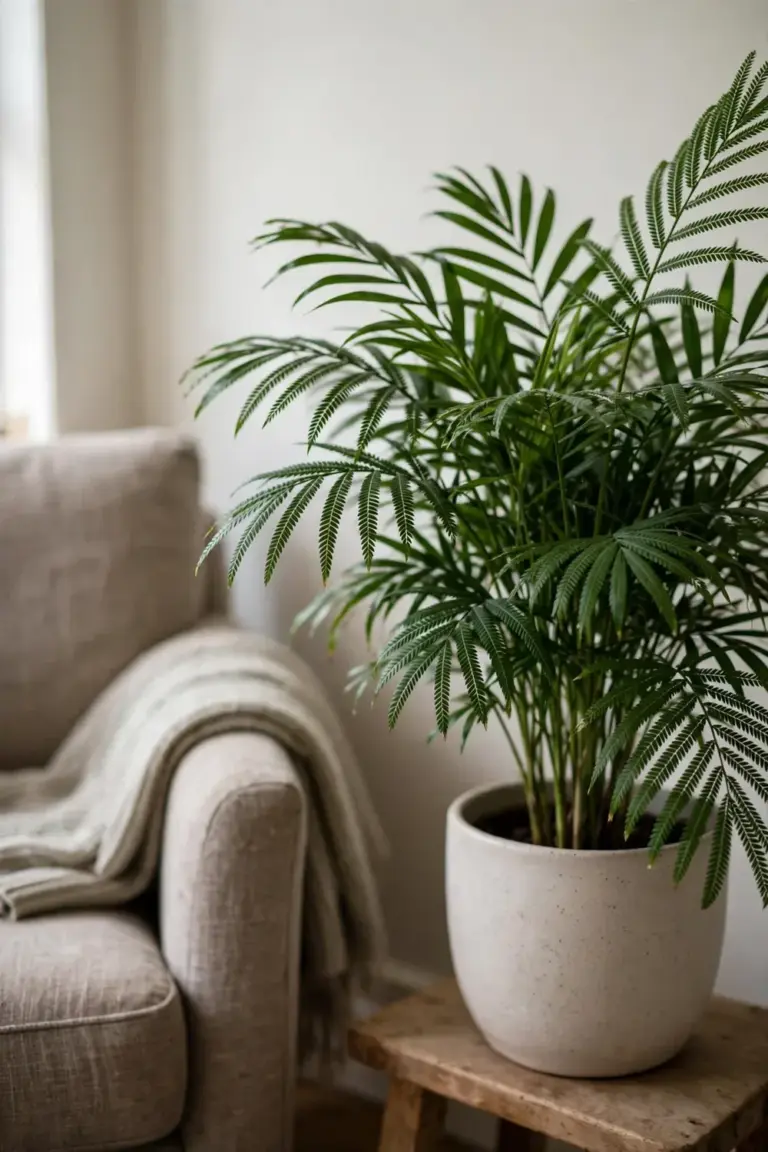
The care is the gentlest on this list. The parlor palm tolerates the dimmest corner here, drinks lightly, and asks for nothing beyond the occasional dusting. It grows slowly into a soft fountain of feather-like fronds on slender stems, and it stays a tabletop-to-corner plant rather than a floor-to-ceiling tree. Brown leaf tips are its one common complaint, and dry air is the usual cause. Group it with your other plants and the shared humidity does the work.
That size is the honest trade. The parlor palm never becomes the 2.4 m statement a fiddle leaf fig promises. It fills the corner beside the chair instead of anchoring the room. For a pet household that is the right exchange: greenery at pet height with no emergency vet number on the fridge.
Buy a full pot. A single stem in a tiny nursery pot takes a year to look established. A dense parlor palm looks established on day one, and it divides easily when it outgrows its container.
Run the Pet-Safety Check Before You Bring a Tree Home
Run this check in the nursery aisle, not after the first chewed leaf. Four of the six picks belong to the ficus family, and every ficus carries the dense, milky sap the University of Missouri notes in the rubber tree. The sap irritates mouths and stomachs when a pet chews through a leaf, so keep leaf-chewing cats and determined puppies away from Audrey, the rubber tree, the weeping fig, and the ‘Bambino’ alike. Height helps: a tall standard keeps the canopy above cat level, but a bored cat climbs.
The giant bird of paradise carries its own warning. The ASPCA lists bird of paradise as toxic to dogs, cats, and horses, with mild nausea, vomiting, and drowsiness, mostly from the fruit and seeds. Indoor plants rarely fruit, which lowers the risk, but the leaves still earn caution.
Two familiar names did not make the numbered list, and pet safety is half the reason. The monstera climbs instead of branching into a tree, and a pet-safety roundup of common houseplants lists it as toxic to dogs and cats through its calcium oxalate sap. The ZZ plant tolerates low light better than anything on this list, but the same roundup lists it as toxic too, and its shrubby form never reads as a tree. If a low-light survivor is what you need, the chameleon ZZ plant care page covers the genus, but keep it away from chewing pets.
The parlor palm stands alone as the safe pick. The ASPCA lists Chamaedorea elegans as non-toxic to dogs and cats, which is why it holds the sixth slot. Match the plant to the pet, then match the plant to the window.
Height is the cheapest pet barrier you own. A tall standard lifts the whole canopy above a cat’s casual reach, which protects the four ficus picks in an ordinary week. It fails against the bored cat that climbs, and it does nothing for a dog, which chews from the ground up. For dogs, the parlor palm’s safety record matters more than any elevation trick, because its fronds sit exactly at nose height. Plan for the animal you have: climbers need closed doors, ground chewers need the safe species.
Buy These Alternatives in Australia: What to Ask For
Indoor trees ignore postcodes, but buying them does not. Ask for every pick by its botanical name: Ficus benghalensis, Ficus elastica, Ficus benjamina, Ficus lyrata ‘Bambino’, Strelitzia nicolai, Chamaedorea elegans. Nicknames shift between nurseries and regions. The botanical name never does.
One pick has a local connection worth knowing. The weeping fig grows wild across Southeast Asia and Australia, and the University of Missouri notes it passing 18 m in tropical regions like Australia. In the frost-free far north it can live outdoors as a specimen tree. Everywhere else in the country it stays an indoor plant like the rest of this list.
Season still matters for the jobs around the plant. Repot and prune in the warm growing months, when the plant has the light to recover. The ficus watering rule does not change with hemisphere, and every pick stays out of cold drafts in winter.
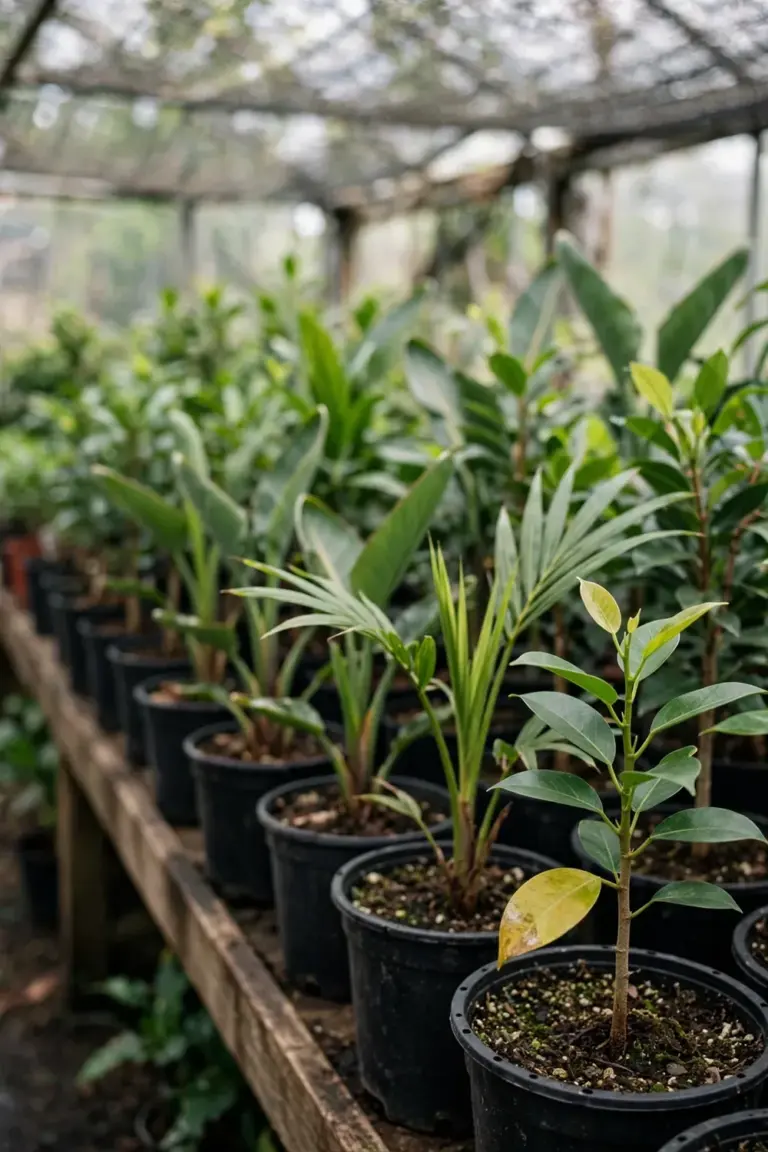
Check the plant before money changes hands. Look for new growth at the stem tips, which signals a plant still pushing forward. Skip pots with yellowing lower leaves, sticky residue on the foliage, or roots circling the drainage holes. Lift the nursery pot and check the weight: a suspiciously light pot means the mix dried out long ago, and a ficus that dried hard may already be planning its leaf drop. Keep a new tree apart from your other plants for its first weeks. Hitchhiking pests show themselves in that window, and one quarantined plant is a chore while an infested collection is a project.
Frequently Asked Questions
The rubber tree, Ficus elastica, forgives the most mistakes. Its thick leaves store water through a late watering, it tolerates medium light better than any other ficus here, and it takes pruning to any height you want. Give it bright indirect light and water when the top 25 to 50 percent of the mix dries. Expect 2.4 m indoors if you never trim it. Keep chewing pets away from the milky sap.
Ficus Audrey, Ficus benghalensis ‘Audrey’, matches the tree architecture best: a clean trunk under a rounded canopy, reaching 2.4 m or more indoors. The leaves differ, smaller velvety ovals with softly fuzzy undersides instead of the giant violin shape. If the exact leaf matters more than the tree shape, the dwarf ‘Bambino’ fiddle leaf keeps the true fiddle leaf on a smaller plant.
Most are not. The four ficus picks share a milky sap that irritates chewing pets, and the ASPCA lists bird of paradise as toxic to dogs, cats, and horses. The parlor palm is the exception: the ASPCA lists Chamaedorea elegans as non-toxic to dogs and cats. In a home with a leaf-chewing cat or puppy, the parlor palm is the only pick on this list you can place at pet height.
The parlor palm tolerates the dimmest spot on this list, and the rubber tree handles medium light better than the other ficus picks. No tree thrives in a truly dark corner. If the corner never sees the sky, add a plant light; the ficus notes behind this article put the plant within about 1.2 m of a good window or under a light. The 21 essential tips for choosing the best grow lights for your indoor garden page covers setup.
No. ‘Bambino’ is a dwarf form of Ficus lyrata with the same light, water, and stability demands as the full-size plant. The smaller size only shrinks the stakes: less tree to lose if the leaves drop. Buy it when space was the problem. Do not buy it expecting a tougher plant, because the species did not change.
Relocation stress. The weeping fig is famous for it: a change of light, temperature, or position triggers a shed, and the plant then grows new leaves fitted to the new spot. Keep the light steady, water on the 25-to-50-percent rule, and keep the plant away from drafts. A shed that continues past the first month signals a real problem, usually overwatering or too little light.
Where to Go from Here
Start from the honesty table, then buy for the window you have. Audrey fits the bright room and the patient waterer, while the rubber tree fits the forgetful one. Pruners take the weeping fig. Small spaces take the ‘Bambino’. The sunniest corner takes the giant bird of paradise, and the pet household takes the parlor palm.
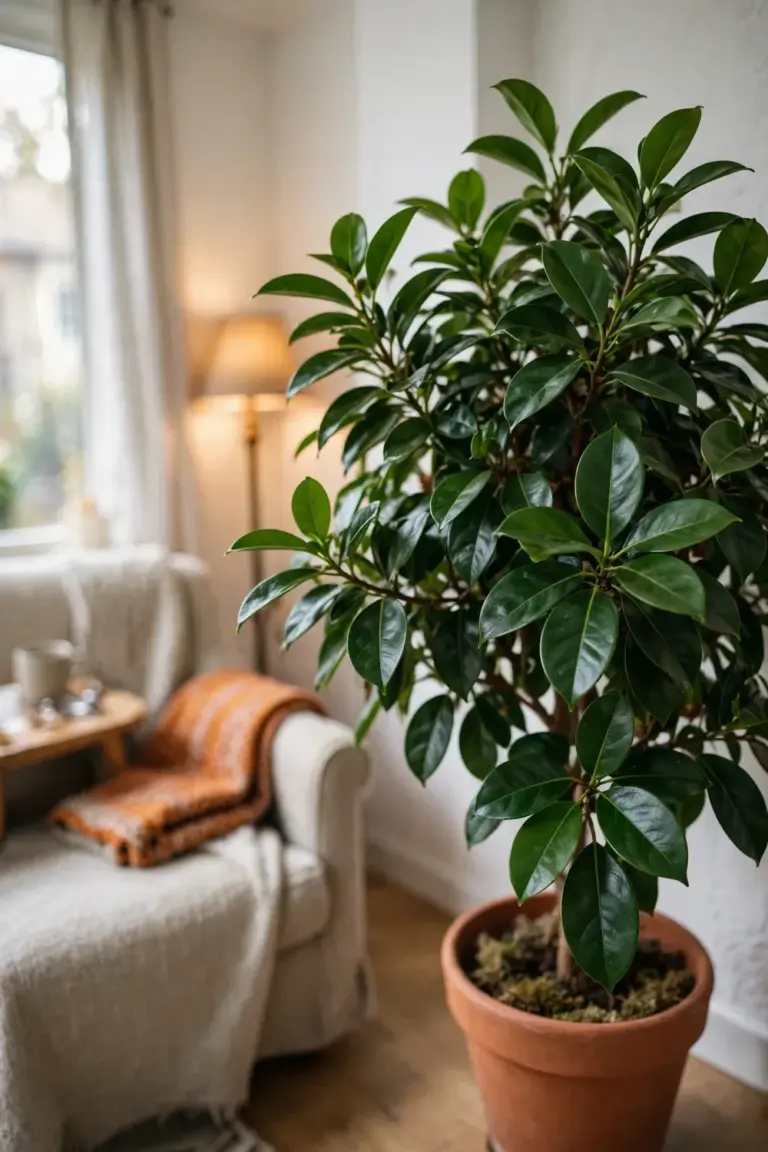
Bring it home, put it in its spot, and leave it there for the first month. The fastest way to repeat the fiddle leaf fig story is to keep moving the replacement.