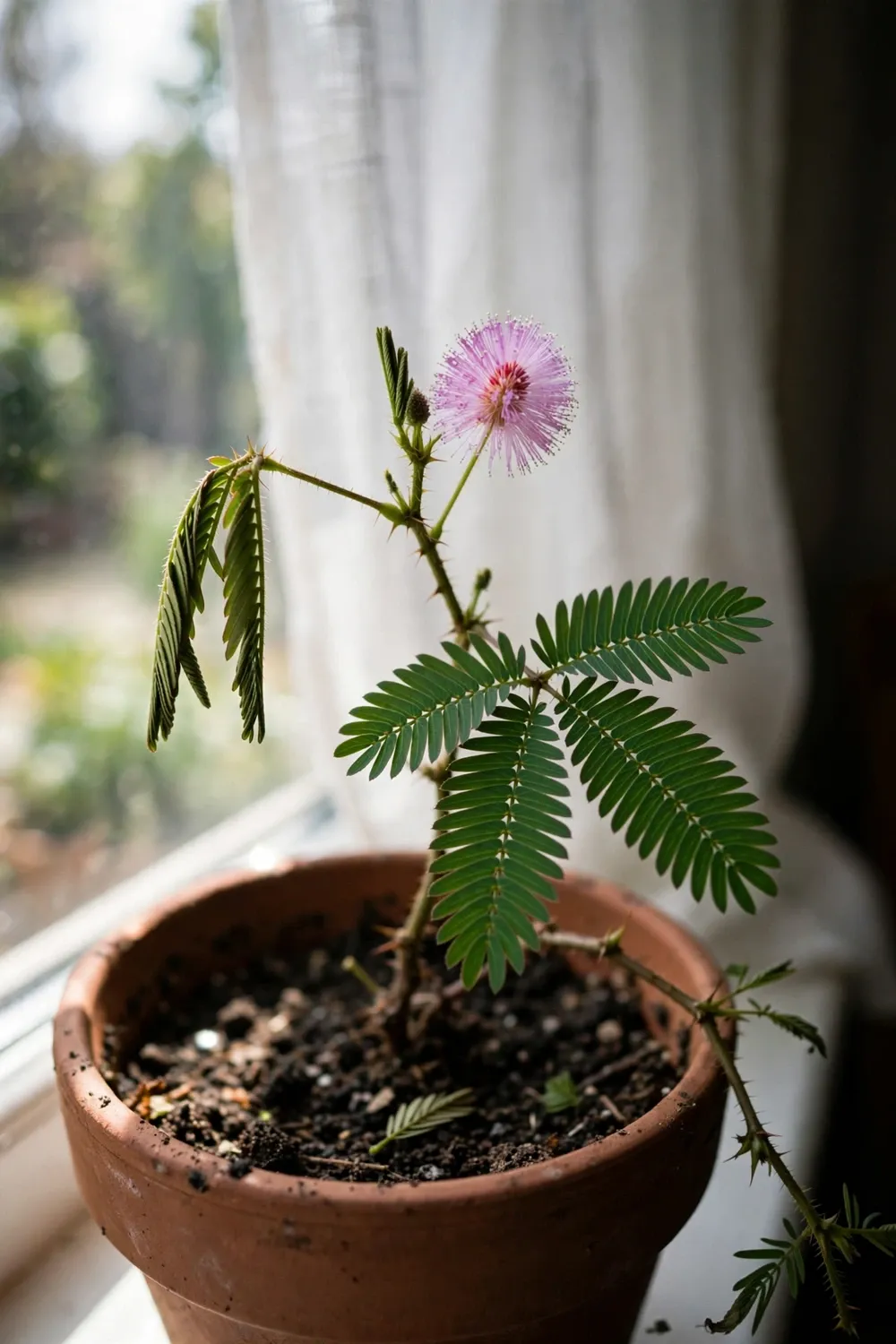

Nick 10 seeds, soak them overnight, and sow them in spring at 18 to 24 degrees. That is how to grow sensitive plant from seed, and the method works on any bright windowsill. Leaves that fold at a touch follow within weeks.
Sensitive plant is Mimosa pudica, called putri malu in Indonesia. Its feathery leaves fold inward when touched, then reopen on their own. The rest of this page is 14 moves, from the first nicked seed to a pot of seed you save for next year.
Seed starting in general is a different job, and that work lives on the site’s seed starting steps. This page stays on sensitive plant: one pot, one plant, and the folding leaves that make it worth growing.
1. Nick and Soak Seeds Overnight Before Sowing
Nick each seed, then soak it overnight. The seed coat is hard enough to block water, so an unnicked seed can sit in damp mix and do nothing.
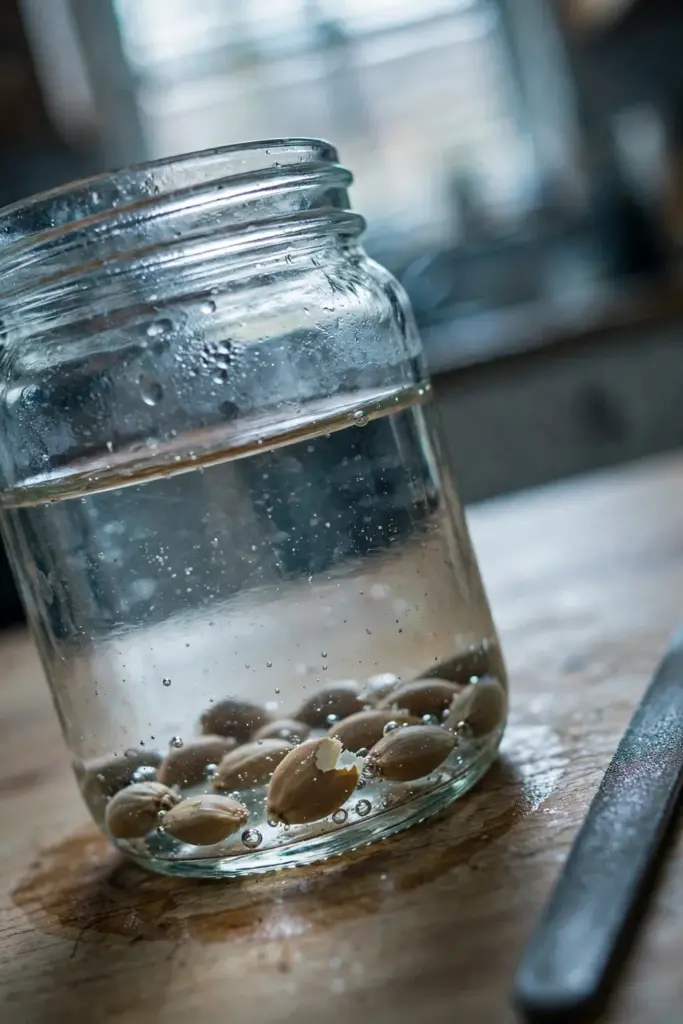
Rub one edge of each seed lightly with fine sandpaper. Drop the seeds in room-temperature water and leave them until morning. A seed-dormancy study of Mimosa pudica found that scarified seeds took up water fast, and 89 percent or more of them germinated across the temperatures tested, while fresh intact seeds took up almost no water.
Sow only seeds that swell. A seed that stays hard and flat after soaking goes back in the jar for another night. Discard any seed that turns soft and mushy.
Buy seed by the full botanical name. Packets labeled only with a common name can hold the wrong species, and the wrong species will not fold. Fresh seed swells fastest. Seed kept through a damp winter in an open packet can fail, so sow a few extra from every packet and keep the packet dry between sowings.
2. Sow Seeds at 18 to 24 Degrees in Spring
Sow in spring, and hold the mix at 18 to 24 degrees. The RHS propagation notes for Mimosa pudica give that range for seed, with an overnight soak before sowing.
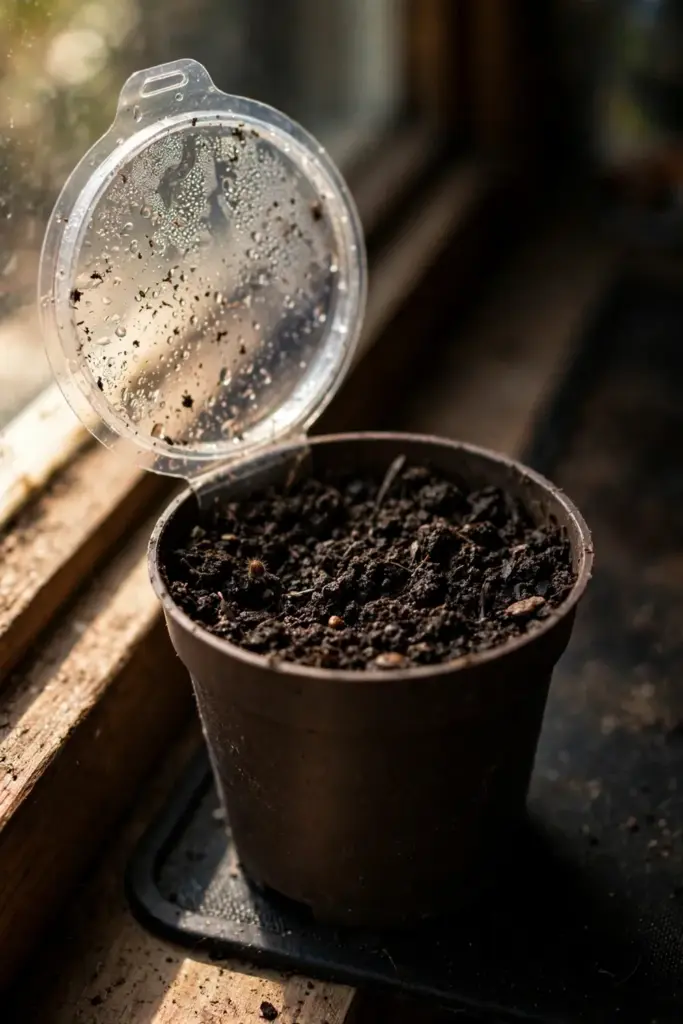
Press each seed under the surface of damp mix. Cover the pot with a clear lid or a sheet of clear plastic to hold warmth and moisture. Set the pot where it stays warm, and lift the lid for a few minutes each day so the air stays fresh.
Warmth matters more than the calendar. A pot on a cold sill in early spring stalls, while the same pot on a warm shelf above a radiator wakes fast. If your house runs cool, stand the pot on a heat mat set low, and check the mix daily so it never dries. Sow in small pots or cells, one seed per cell, so seedlings lift out without tangled roots.
Use fresh seed mix, never mix from last year’s pots. Old mix can hold damping-off fungi that cut seedlings at the soil line. A fine, free-draining seed mix suits the small seeds, and a pinch of perlite keeps it open. Fill the pot, water it, and let it drain before you sow, so the seed lands in damp mix from the start.
Check the mix every few days. Seedlings show once the mix stays warm and damp. Cold mix stalls them, so a cool room needs a heat mat or a warmer shelf.
3. Grow Seedlings in Bright Light and Even Moisture
Move the pot to your brightest sill once green shows. Seedlings stretch toward dim light and grow thin stems that flop.
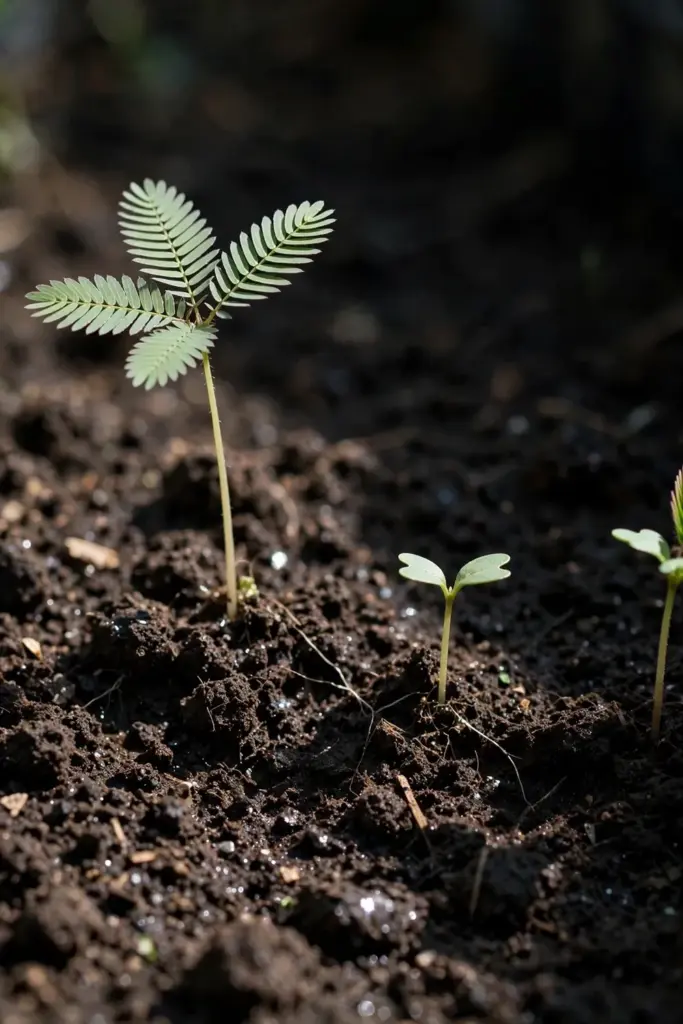
Keep the mix damp like a wrung sponge. Water from the base when the surface dries, and tip away water that gathers in the saucer. Wet feet rot young roots. Dry mix stops growth.
Leave the lid off once seedlings stand clear of the mix. Air movement hardens stems. A still, steamy pot grows soft plants that collapse at transplant.
Watch the first leaves. The first pair looks plain. Later leaves open into feathery pairs of tiny leaflets, and a gentle brush makes them fold. A seedling that folds already works. Leave it alone after that one test, and let it grow.
Harden seedlings before they move outdoors. Set the pot outside in shade for an hour on a mild day, then bring it in. Lengthen the stay a little each day, and keep the pot out of wind. A seedling that goes straight from a sill to a sunny patio scorches, and scorched leaves do not recover.
4. Pot Up Seedlings Into a Loam-Based Mix That Drains
Pot up each seedling once it carries two sets of true leaves. Lift it by a leaf, never by the stem. A crushed stem ends the plant.
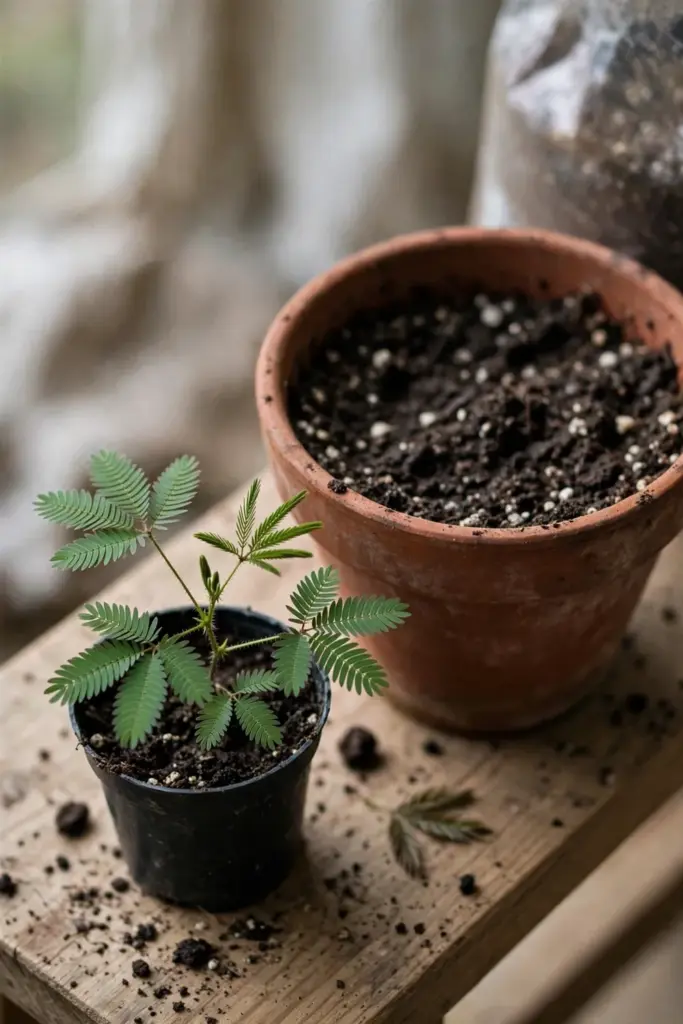
Use a peat-free, loam-based compost, the same mix the RHS notes recommend for this species. Stir in a handful of perlite or coarse sand so water runs through. Every pot needs a drainage hole. The same rule behind building soil health applies here: a mix that drains keeps roots breathing.
Set the seedling at the same depth it grew before. Burying the stem deeper invites rot at the base. Water once, then leave the pot alone for a day.
Repot when roots circle the pot. Roots poking from the drainage hole mean the plant wants more room. Move up one pot size, and keep the same mix. A pot far too large holds wet mix around small roots, and wet mix rots them.
5. Give Sensitive Plant Full Light Without Hot Midday Sun
Set the pot in full light, shaded from hot midday sun. The same RHS notes call for full light with shade from hot sun, and a west-facing or south-facing sill suits the plant.
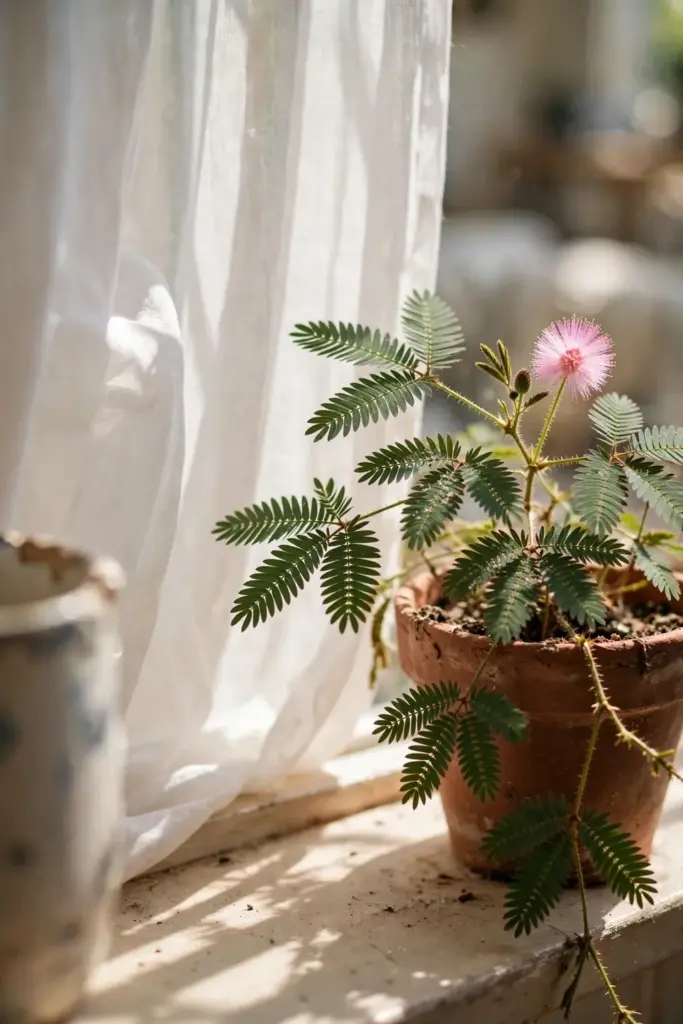
Leaves that stay folded through the day want more light. Move the pot closer to the glass, or add a small grow light above it. A plant that sprawls toward the window wants the same fix.
RHS lists the plant at 0.1 to 0.5 m tall with a spread of 0.5 to 1 m. A pot you can carry with one hand suits one plant. Give it room to sprawl, since stems trail with age.
Light shifts with the seasons. A sill that suits the plant in March can scorch it in July, when midday sun strikes harder through the glass. Slide the pot back from the glass in high summer, or hang a sheer curtain between plant and sun. In winter, the same sill can turn dim, so move the pot closer to the glass again and dust the leaves so they catch what light arrives.
A small grow light fills a dim winter. Hang it above the plant and run it through the day, then switch it off at night so the plant rests. The leaves fold at dusk even under a lamp, and that rhythm matters. A plant lit around the clock grows soft and tired, so give it dark hours every night.
6. Water Moderately and Never Let the Pot Dry Out
Water moderately through the growing season, and less in winter. The same RHS notes set that rhythm.
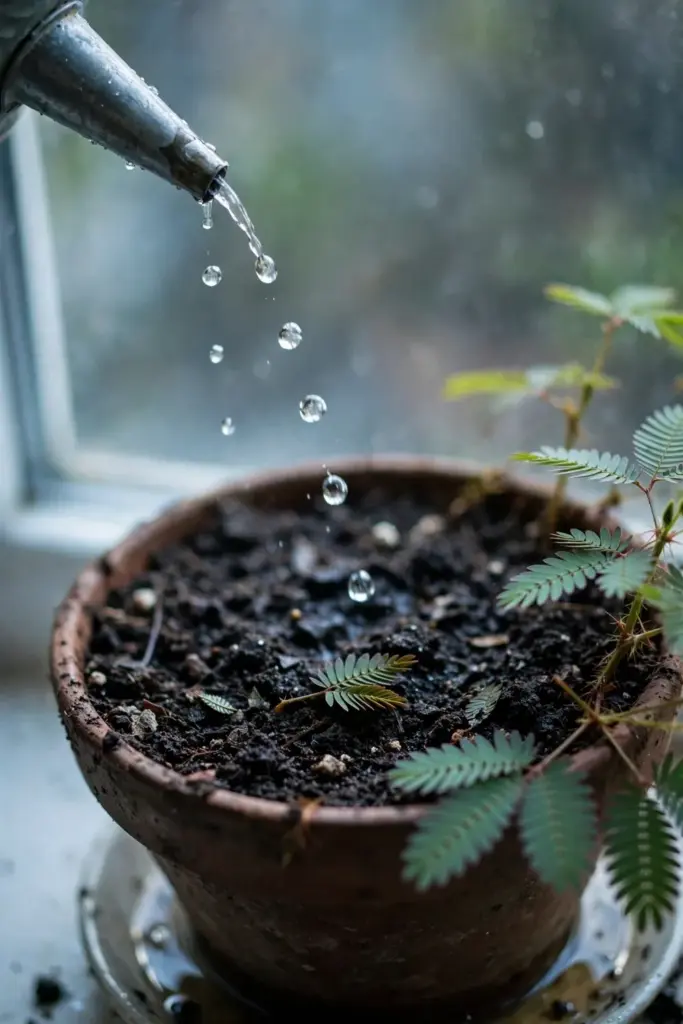
Push a finger into the mix before you water. Water when the top feels dry. Stop when water runs from the drainage hole, then empty the saucer after a few minutes. A pot that sits in water rots from the roots up.
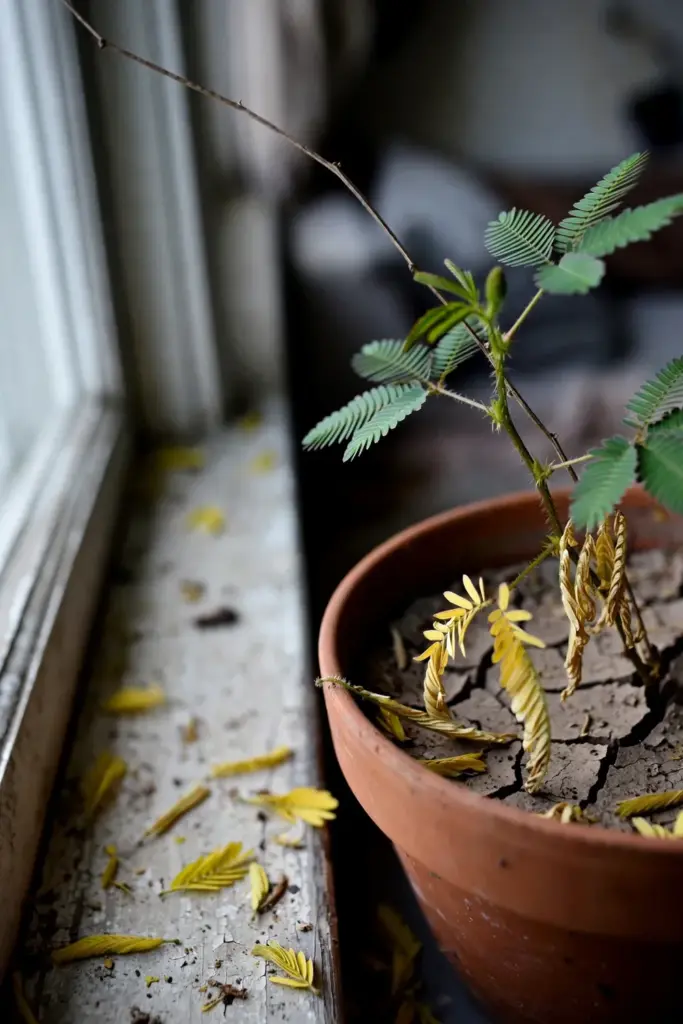
Dry mix shows fast. Leaflets fold and stay folded, and leaf edges crisp. Water at once, and the plant usually recovers. A second drying kills more leaves than the first.
Winter watering runs lighter. The plant grows slowly in short days, so the mix stays damp longer between waterings. Check before you water, and water less often. A pebble tray under the pot adds humidity without wetting the roots, and it suits a plant that likes damp air.
Water at room temperature. Cold water straight from the tap shocks warm roots, and a shocked plant folds and sulks. Fill a jug and leave it by the pot, so the water warms before you pour. Water in the morning, when the plant can use it through the day, and skip evening watering in winter, when wet mix sits cold all night.
7. Feed Monthly in the Growing Season
Feed monthly with a balanced liquid fertilizer through the growing season. The same RHS notes give that rate: monthly, in the growing season only.
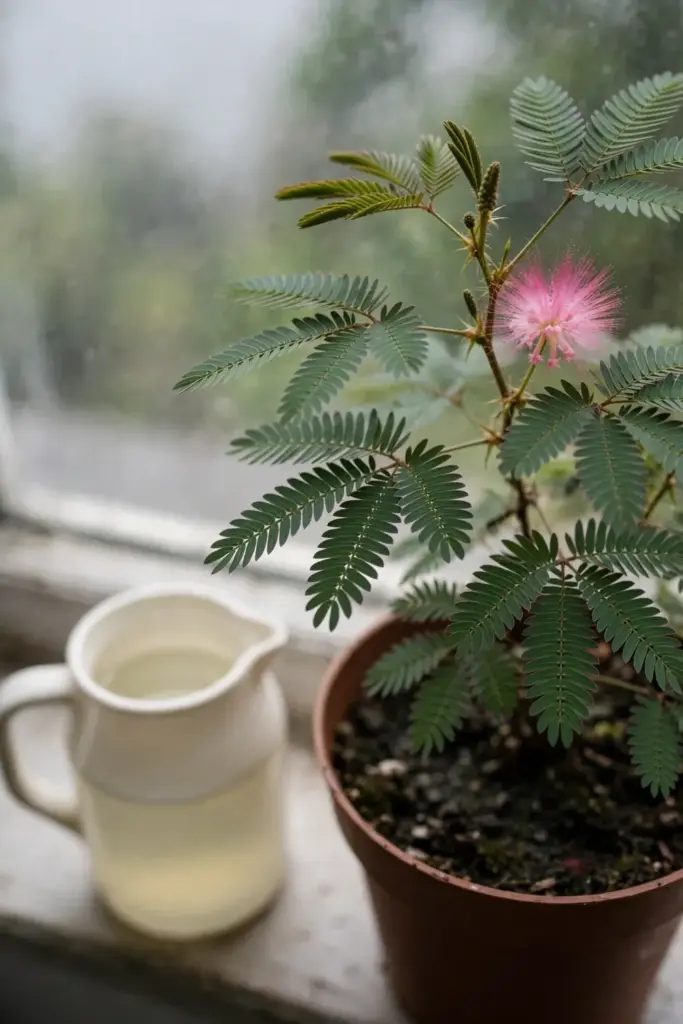
Mix the fertilizer at the rate on the bottle. A double dose burns leaf edges and does nothing for growth. Skip feeding in winter, when the plant rests and cannot use the salts.
Overfeeding shows at the leaf edges first. Brown, crisp margins after a feed mean the mix holds too much salt. Flush the pot with plain water until it runs clear from the drainage hole, then wait. Skip the next feed. Pale leaves in summer can mean hunger, but they can also mean dim light, so check the light before you feed.
Pale leaves in summer can mean hunger. Feed once, then watch the next set of leaves. Old leaves stay pale. New growth shows the fix.
8. Pinch Shoot Tips to Keep Growth Bushy
Pinch a shoot tip when the plant sprawls. The RHS notes list no pruning requirement for this species, so pinching is shaping, never rescue work.
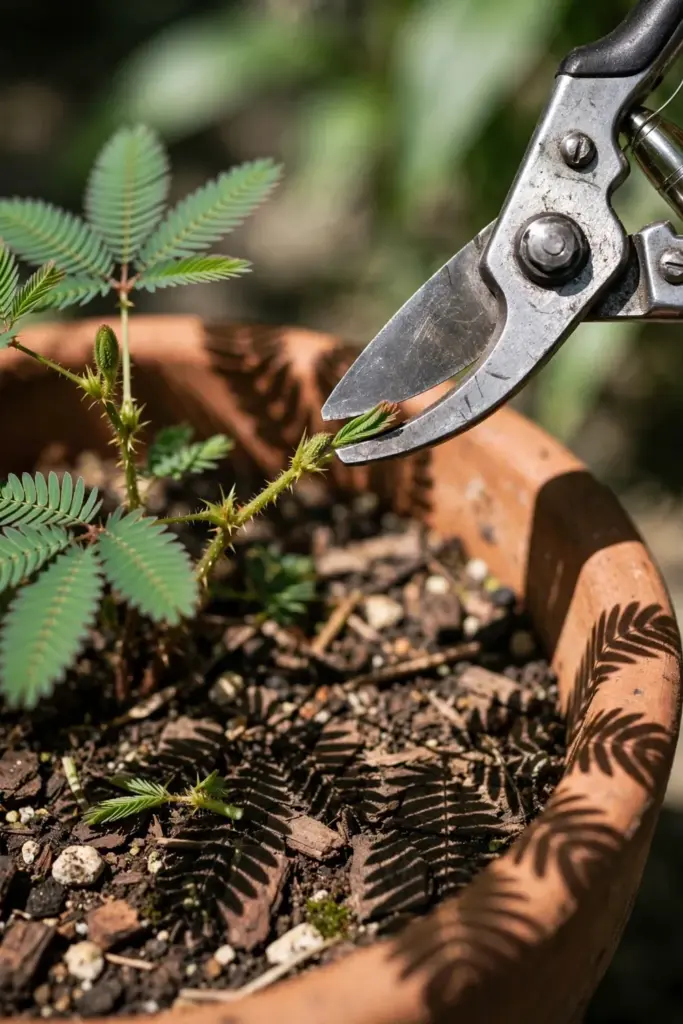
Take the soft tip between thumb and finger and snap it off. Side branches follow from the leaf joints below the pinch. Pinch one shoot at a time, then wait a week before the next.
Clean cuts matter on every plant you prune. The site’s spring pruning techniques walk through sharp tools and clean cuts in full. Use the same care on this small plant.
Leave flowering shoots alone. Pink powder-puff heads open in summer from the leaf joints, and a pinched shoot loses its flowers. If you want seed, leave several flowering shoots untouched and pinch only the shoots that sprawl past the pot edge.
9. Move the Pot Indoors Before Nights Drop Below 13 Degrees
Bring the pot indoors before nights drop below 13 degrees. The same RHS notes set 13 degrees as the winter floor for a heated glasshouse.
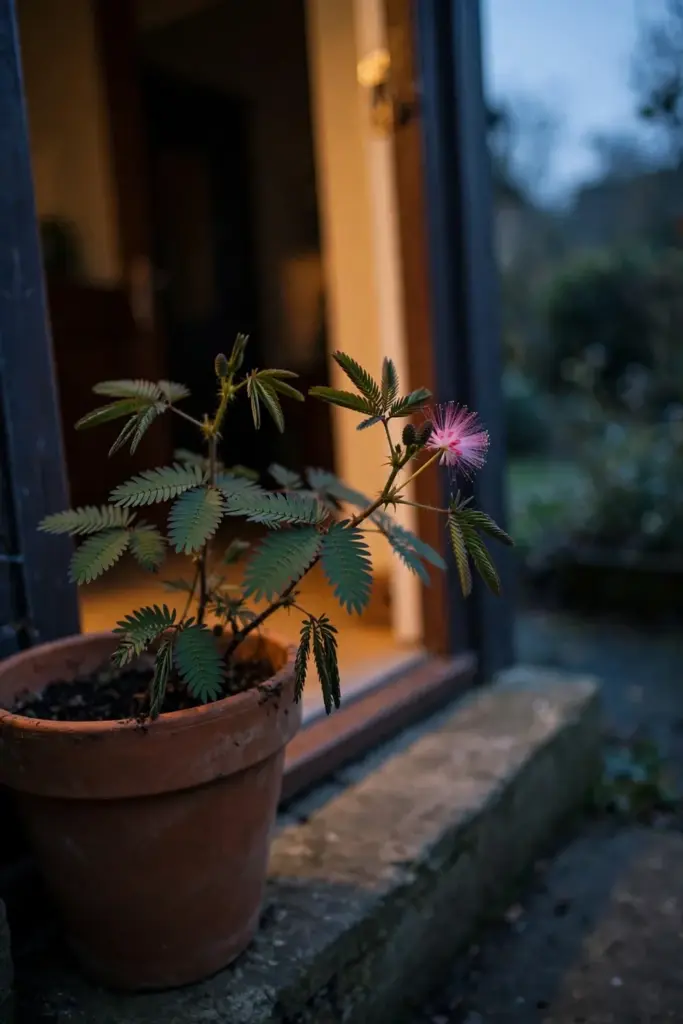
A windowsill indoors beats a cold porch. The plant stops growing in cool air. It drops leaves after a cold night. One cold snap does more harm than a month of dim light.
Watch the autumn forecast. Bring the pot in on the first evening that threatens a sharp drop, and keep it in from then on. A pot left out through one cold night can drop most of its leaves by morning. Check the sill for drafts, and keep the pot away from radiators that blast hot, dry air.
Outdoors year-round suits only places where winter nights stay above that floor. Everywhere else, the pot lives outside in summer and inside in winter. Grow it as a houseplant, and treat each spring as a fresh start.
10. Touch Once, Then Leave the Plant Alone
Touch one leaflet once, then watch. The leaflets fold, the leaf droops, and the plant reopens on its own after a rest.
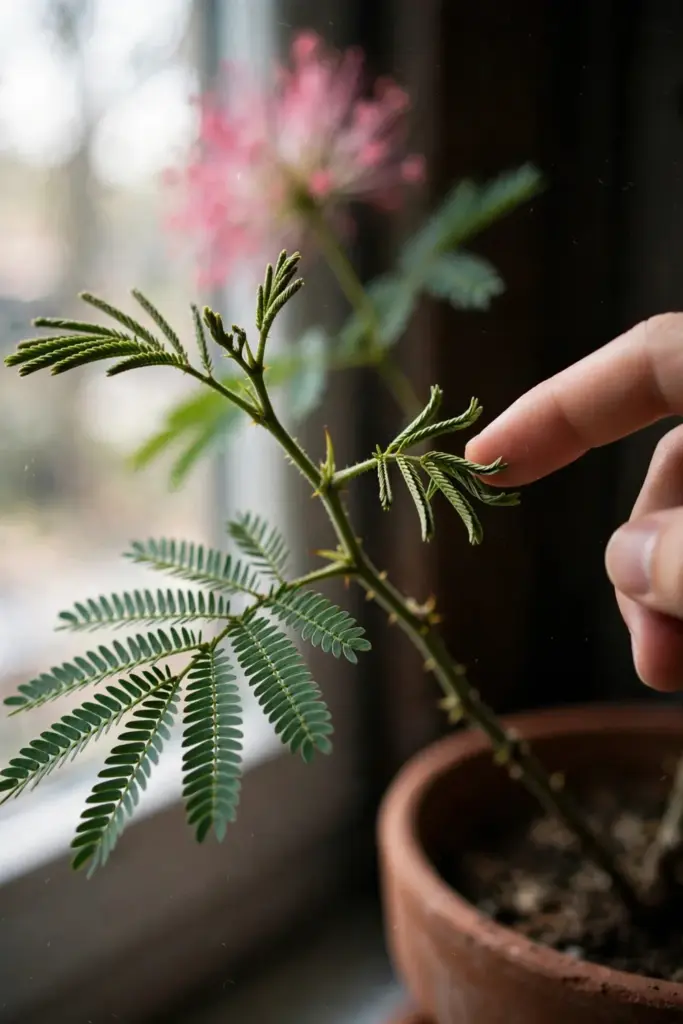
The fold runs on a motor structure called the pulvinus at the base of each leaflet. Touch sends a signal through the leaf, and cells in the pulvinus release potassium and chloride ions and take up calcium. Water follows the ions out of the cells, the cells shrink, and the leaf folds. The University of Reading account of the species describes this ion and water shift in full.
I have learned that one gentle touch teaches a child more than ten pokes. Set one rule for young growers. One touch each, then hands off. Quiet hours between touches let the plant reopen and grow. Gardening with kids in spring gives more jobs that suit small hands.
The leaves fold at dusk too, without any touch. This night folding follows the plant’s own clock, and the leaves reopen near dawn. The same Reading account links this sleep movement to water saving and defense. A plant that folds at dusk is resting, never dying.
Turn the fold into a lesson. Hand a young grower a pencil and paper, and let them draw the leaf open, then folded. Time the reopening with a kitchen clock. The drawing stays. The poking stops.
Look closely at the fold itself. The tiny leaflets pair up along the stem, then the whole leaf droops from the joint. The movement runs leaf by leaf, and a strong touch can set off the next leaf too. Watch how the leaflets reopen in reverse, from the tip back toward the stem, and how the leaf lifts last.
11. Keep Sensitive Plant in a Pot Outside the Tropics
Keep this plant in a pot. Never plant it in open ground outside the tropics.
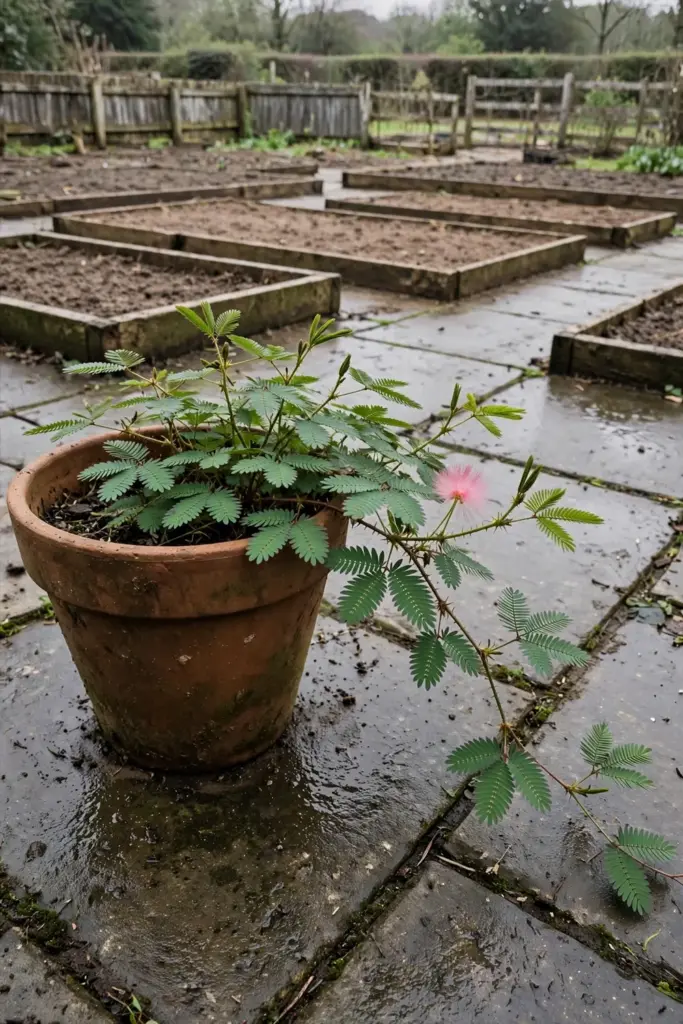
The plant comes from the tropical Americas, and it now grows across the tropics. Kew’s Plants of the World Online account lists it as introduced into Jawa, Sumatera, Borneo, Malaya, and many other warm regions. The same Reading account calls it one of the world’s worst invasive weeds, hitting forestry plantations, croplands, orchards, and pastures across South Asia, the Pacific Islands, and parts of Africa.
Pods scatter seed, so deadhead before pods ripen. Never dump potting mix or prunings outdoors. Check local weed lists before you sow. A pot on a sill gives you the folding leaves with none of the spread.
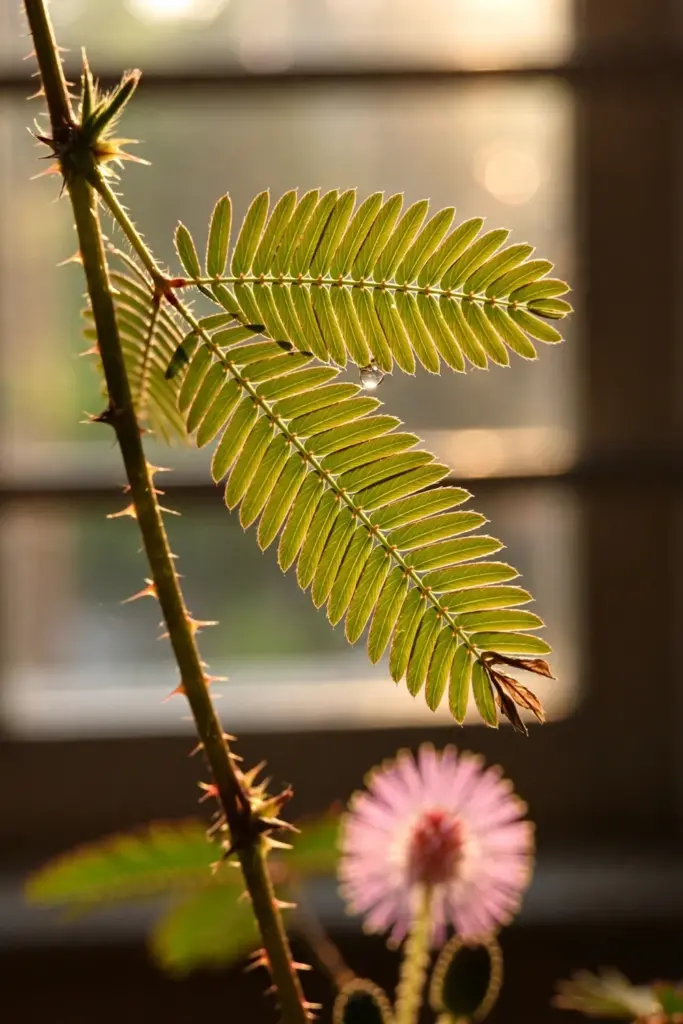
Stems carry prickles 2 to 2.5 mm long, per the same Reading account. Hand weeding a patch hurts. The pot keeps those prickles where you can see them.
If a seedling shows up in a bed, pull it early. Young plants lift out with the whole root, and the job takes seconds. Older plants root harder and drop seed as you pull them. Bag what you pull, and bin it. Never compost seed-bearing plants, since home compost rarely heats enough to kill seed.
Check your local weed lists before you sow, and ask at a nursery if you feel unsure. Lists differ by region, and a plant that behaves in one climate can run wild in another. A quick check costs minutes. A patch of prickly stems costs a season. When a list names the plant, skip it and grow a different curiosity instead.
12. Tell Sensitive Plant Apart From 3 Name Lookalikes
Three other plants share its names. Buy by the full botanical name, Mimosa pudica, and check the plant in front of you against this table.
| Plant | What It Is | How to Tell It Apart |
|---|---|---|
| Mimosa tree (Albizia julibrissin) | A woody tree with pink powder-puff flowers | Grows into a tree canopy. Its leaves do not fold on touch. |
| Jewelweed (Impatiens capensis) | A woodland annual, also called touch-me-not | Bears orange spotted flowers. Its seed pods burst open. Its leaves do not fold. |
| Powderpuff mimosa (Mimosa strigillosa) | A creeping groundcover in the same genus | A separate Mimosa species. It spreads low and roots as it goes. |
Nursery labels mix these names. A label that reads only mimosa or touch-me-not proves nothing. The botanical name on the packet decides the purchase.
The mimosa tree is the easiest mix-up to spot. It grows into a woody tree, and no touch folds its leaves. Jewelweed grows in damp shade and shows orange spotted flowers, while its pods burst at a touch. Powderpuff mimosa stays low and creeping, and it belongs to the same genus, so only the second half of the botanical name separates the two.
Check the packet before you pay. The botanical name should read Mimosa pudica in full, with both halves spelled out. A packet that shows only the first half can hold any Mimosa species, and a packet with no botanical name at all is a guess. Ask the seller for the full name, and walk away when the seller cannot give it.
Grow it for the folding leaves, never as a remedy. It makes no health claims.
13. Fix the 5 Failures That Stall Sensitive Plant
Most failures trace to light, water, or cold. Match the symptom to the fix below.
Leaves Stay Folded All Day
Folded leaves through daylight hours want more light or less touching. Move the pot to a brighter sill. Leave the plant alone for a day and watch it reopen. If the mix feels dry, water first, since a thirsty plant folds too.
Leaves Never Fold
Leaves that ignore a touch point to cold air or a tired plant. Check that nights stay above 13 degrees. Give the plant a day without touching, then test one leaflet. A plant that folds after the rest was tired, never broken.
Stems Grow Long and Bare
Long bare stems chase dim light. Move the pot closer to the glass. Pinch one shoot tip to force side branches. Rotate the pot a quarter turn each week so all sides reach the light.
No Flowers Appear
Flowers need strong light and a plant old enough to bloom. The same RHS notes list 1 to 2 years to maturity, so a first-year seedling can still be too young. Feed monthly in summer and wait. A plant that sprawls in dim light spends its strength on stems, never on flowers.
Leaves Drop and Edges Crisp
Dropped leaves follow dry mix or a cold draft. Water when the top feels dry. Move the pot away from open windows on cold nights. A plant that drops leaves after a move is settling, so give it a week of steady light and water before you change anything else.
14. Collect Seed and Start Fresh Each Year
Save seed, and start fresh each spring. The plant reaches full size in 1 to 2 years, per the same RHS notes, and a fresh sowing each year keeps the display young.
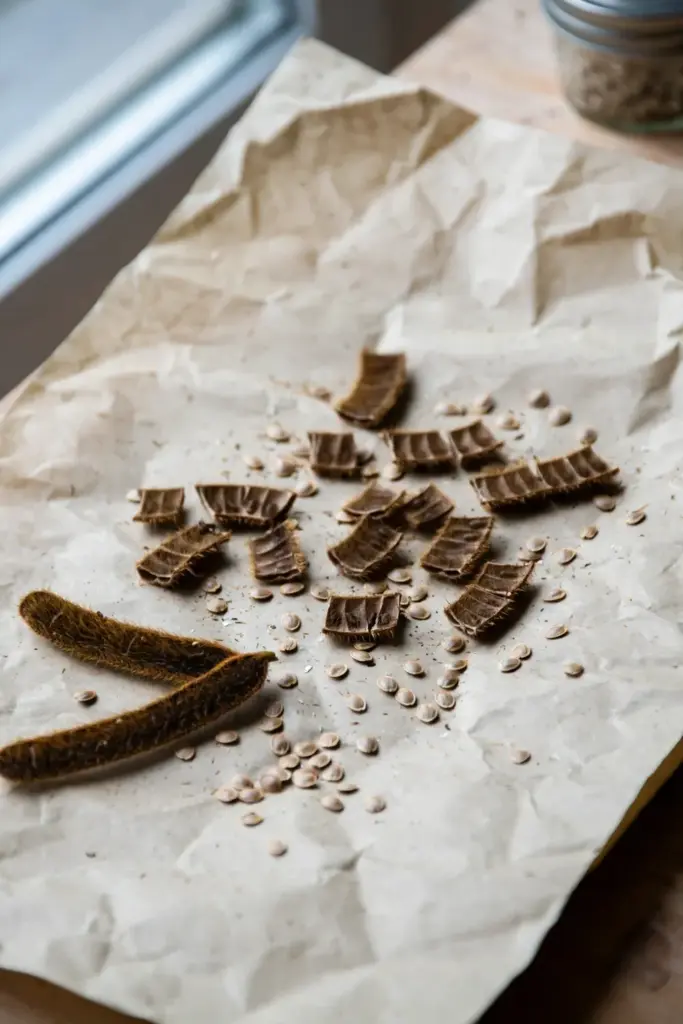
Let a few pods dry on the plant. Pick them when they turn brown and crisp, then crumble them over paper and keep the seeds in a dry jar. Deadhead the rest before pods ripen, so no seed reaches the garden.
Sow saved seed the same way as bought seed: nick, soak, and sow warm. Fresh seed germinates best. Old seed from a damp jar can fail, so sow a few extra.
Label the jar with the plant name and the year. A jar of unnamed seed in a drawer becomes a guessing game by spring. Keep the jar dry, cool, and shut, and sow from it first before you buy fresh seed.
Share saved seed with a warning attached. A packet handed to a friend should carry the same rules you follow: pot only, deadhead before pods ripen, and never plant it in open ground outside the tropics. A shared plant spreads the curiosity, and a shared warning stops the weed.
Frequently Asked Questions
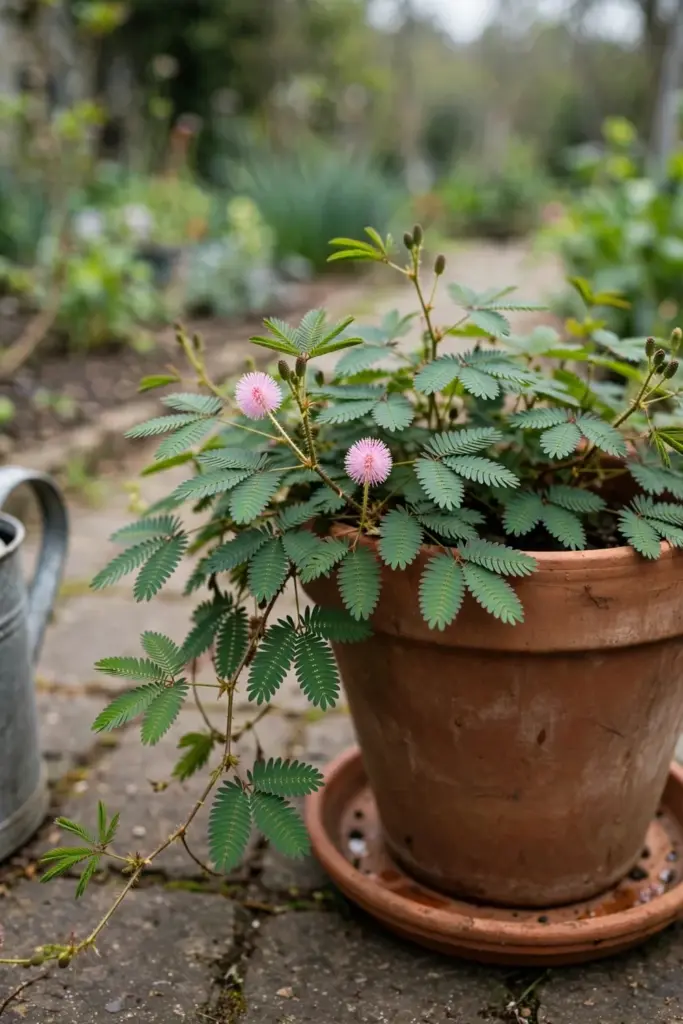
Nick each seed with sandpaper, soak it overnight, and sow in spring at 18 to 24 degrees. Keep the mix damp and warm, and seedlings follow within weeks. Pot up each seedling once it carries two sets of true leaves. Grow the plant in full light, water moderately, and bring the pot indoors before nights drop below 13 degrees.
Touch sends a signal to the pulvinus, the motor structure at the base of each leaflet. Cells in the pulvinus release ions, water follows out, and the cells shrink, so the leaf folds. The fold may shield the plant from grazers or shake insects loose. Leaves reopen on their own after a rest. Touch once, then leave the plant alone.
Yes, in warm climates. The plant comes from the tropical Americas and now grows across the tropics, where it invades cropland, orchards, and pastures. It spreads by seed and forms prickly thickets. Grow it in a pot, deadhead before pods ripen, and never dump mix or prunings outdoors. Check local weed lists before you sow.
Sources disagree, so treat the plant with care. Kew records mimosine, a compound that is toxic to humans and animals in large doses. Some houseplant lists call the plant non-toxic. Keep the pot out of reach of pets and small children, and call a veterinarian at once if an animal eats a large amount. The stem prickles are a certain hazard.
Yes. A bright windowsill suits the plant year-round, and indoor growing also keeps seed out of the garden. Give it full light with shade from hot midday sun. Water moderately, feed monthly in the growing season, and keep nights above 13 degrees. A pot you can carry lets you chase the sun through the seasons.
Cold air, dim light, or constant touching can each quiet the fold. Check that nights stay above 13 degrees and move the pot to a brighter sill. Leave the plant alone for a day, then test one leaflet. A plant that still ignores touch after warmth, light, and rest may be spent, so sow fresh seed and start again.
Keep One Pot of Sensitive Plant on the Windowsill
That is how to grow sensitive plant: nick, soak, sow warm, and keep one pot on a bright sill. The plant asks for little beyond light, water, and warmth.
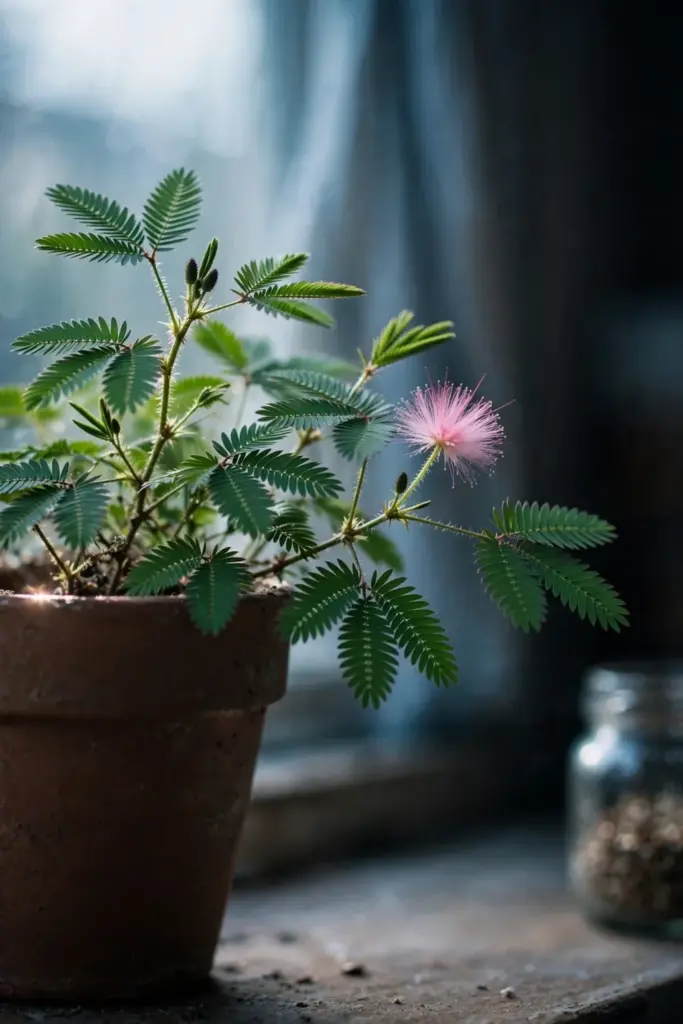
One pot gives you the whole show. Leaves fold at a touch, pink flower heads follow in summer, and seed for next year ripens in autumn. Keep it potted, deadhead what you do not save, and the plant stays a curiosity, never a weed.
The plant suits a small space and a short routine. Water when the top dries. Feed once a month in summer. Bring the pot in before cold nights. That routine carries the plant from spring sowing to autumn seed.
The yearly cycle runs itself once you learn it. Spring sowing wakes the seed. Summer sun builds the plant. Autumn pods hold next year’s sowing. Winter rest on the sill keeps one plant alive for fresh seed. One pot on the sill covers every stage, and each spring starts the round again.
Sow in spring. Watch one leaf fold. Save the seed. Start again next year.