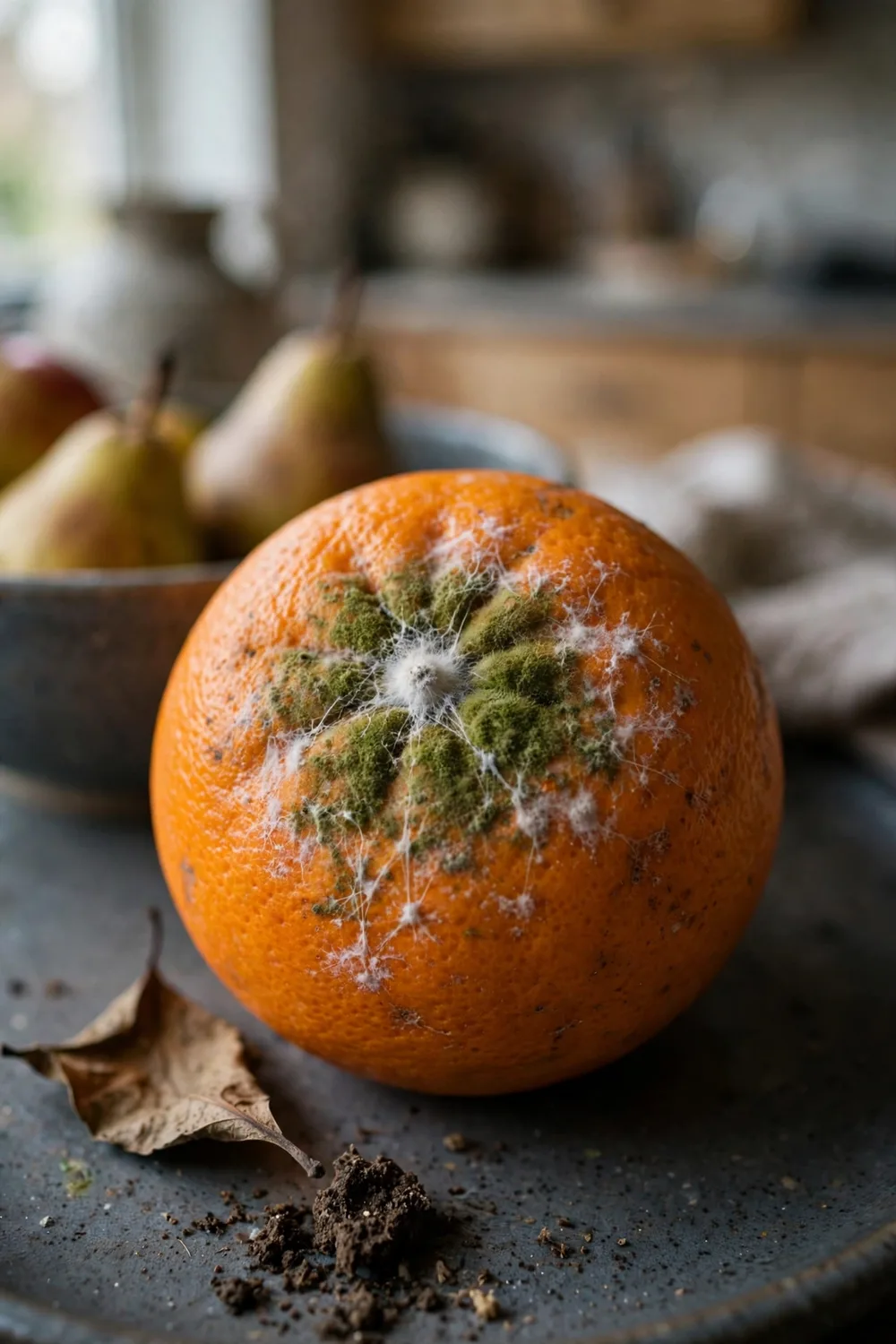

Green mold on citrus is not a tree disease. It is a postharvest storage rot of harvested citrus fruit. The pathogen is Penicillium digitatum, and it cycles in 3 to 5 days at 25 degrees Celsius. It enters through rind wounds, it spreads fruit to fruit in storage, and one fruit can produce one to two billion spores. The 5 strategies below tell you how to read the green patch, how to triage moldy fruit, and how to run the home storage response.
Start with the honesty. This disease attacks harvested fruit in storage, not the living tree. Tree-side advice (pruning, fertilizing, watering) is irrelevant to this disease. The storage is the battlefield. The wound is the entry. The fruit bowl is the place.
What Green Mold Actually Is
Green mold is a postharvest storage rot of citrus fruit. The pathogen is Penicillium digitatum. Clemson lists it as “Penicillium digitatum: Green mold” under Citrus (Orange). One pathogen, one host group, one disease.
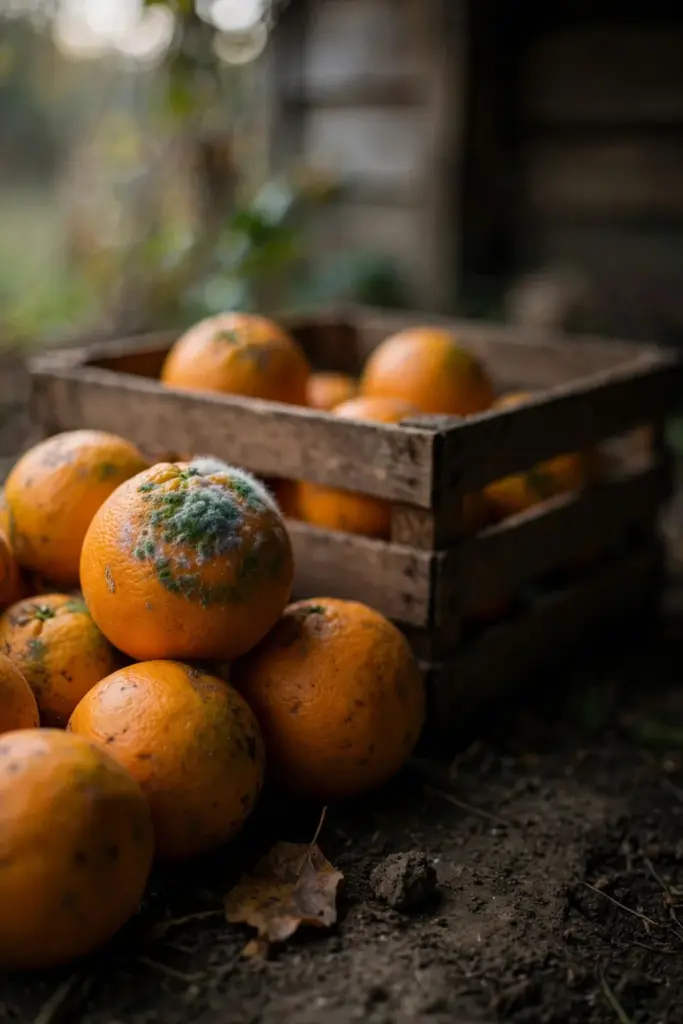
Green mold is a wound parasite. It will not penetrate undamaged fruit. It enters through rind wounds. Handling creates the wounds required, as do fruit flies and other insects. The wound is the entry. The intact rind is the defense. The handling is the wound-maker.
Green mold is fast. Disease cycle 3 to 5 days at 25 degrees Celsius. One fruit can produce one to two billion conidial spores. Spores are abundant in soil of citrus areas and in packing-house air. The fast cycle is the spread. The billion spores are the inoculum. The storage is the incubator.
How to Identify Green Mold on Your Citrus
Look for a softened, water-soaked area. At first, small watersoaked areas, greyish, lacking a clear margin, on the fruits, enlarging rapidly to form white rots several centimetres in diameter. The water-soaked area is the start. The white rot is the spread. The softening is the sign.
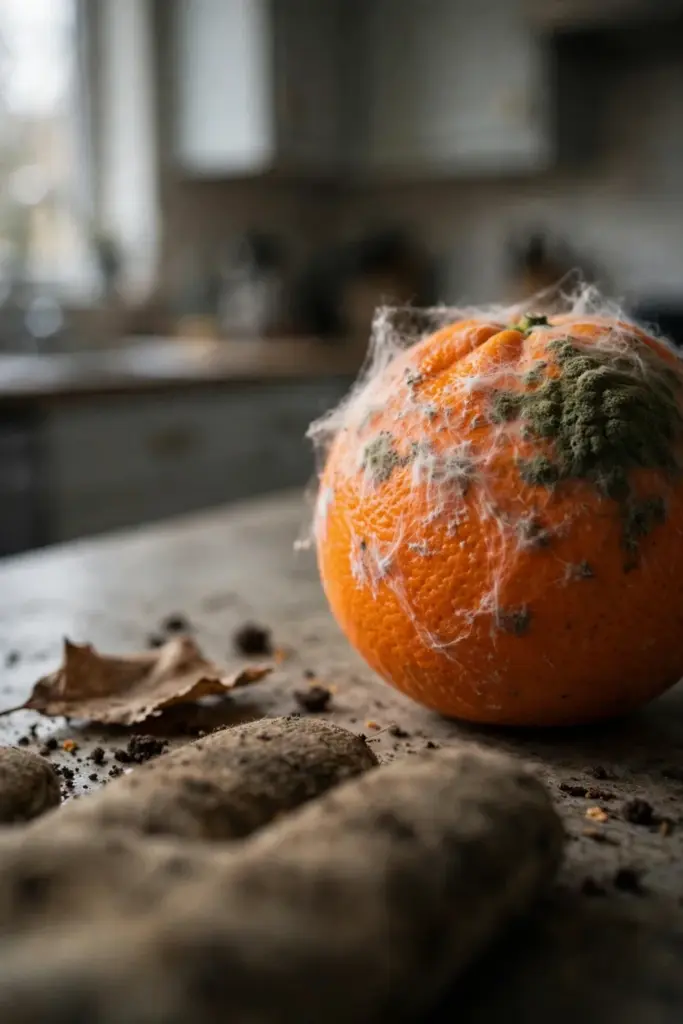
Look for white mycelium spreading nearly to the edges. White mycelium spreads nearly to the edges of the softened area as decay proceeds. The white mycelium is the mold. The edges are the reach. The spread is the decay.
Look for an olive-green spore patch beginning at the center. Spore masses develop giving the molds their characteristic colors: green (Penicillium digitatum). The olive-green patch is the green mold. The center is the start. The enlarging patch is the sporulation.
Look for a fruit that softens, shrinks, and mummifies. Fruit softens, shrinks, and if exposed to air becomes a hollow mummified shell. The mummified shell is the end stage. The shrunken fruit is the late sign. The hollow shell is the final form.
Do not confuse with mushroom green mold. Mushroom green mold (Trichoderma species) is a different fungus in a hobby mushroom-growing context, not a plant disease. The mushroom mold is the fence. The citrus mold is the disease. The contexts are different.
Do not confuse with citrus greening. Citrus greening (Huanglongbing) is a different disease: bacterial, tree-killing, insect-vectored. The greening kills trees. The green mold rots stored fruit. The tree is the greening. The fruit is the mold.
Do not confuse with sooty mold, a honeydew mold on leaves with a different disease, different site (leaves, not fruit), and different cause (insect honeydew), so the leaves are the sooty mold and the fruit is the green mold. The sites are different.
Food-Safety Triage: Discard, Do Not Cut
Discard moldy citrus entirely. USDA: soft, high-moisture fruit such as oranges must be discarded in their entirety if moldy, while cutting out applies only to firm, low-moisture produce. The orange is soft and high-moisture, so the discard is the rule and the cutting is not the rule.
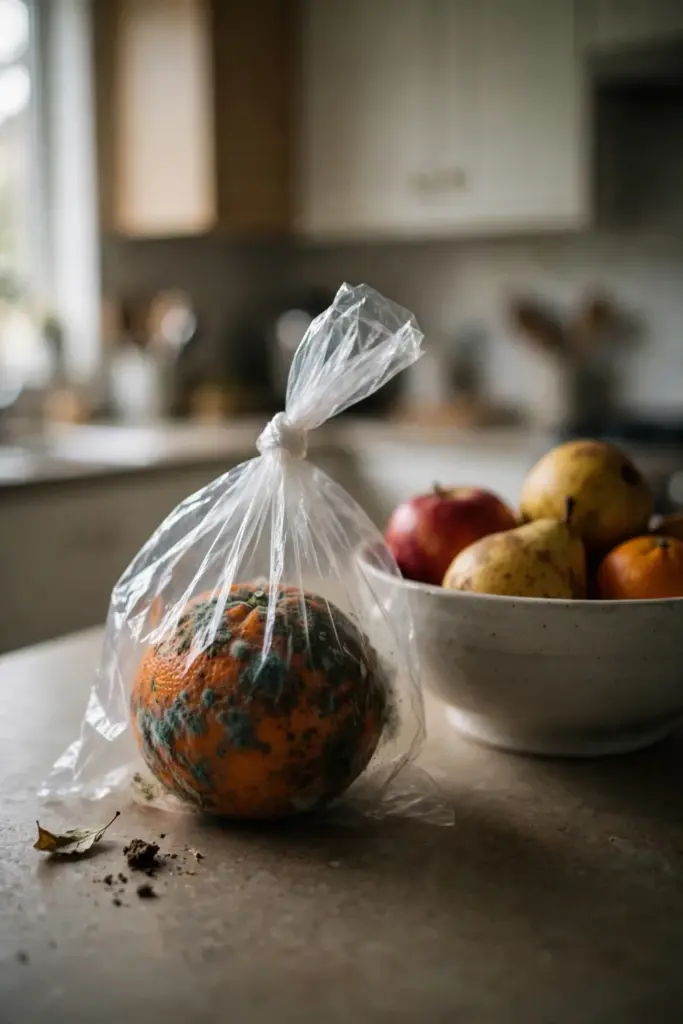
Do not eat moldy citrus. Moldy fruit belongs in the trash, so the moldy fruit is the discard, the eating is the risk, and the discard is the safe answer.
Check the neighbors. Mold spreads fruit to fruit in storage, so the neighboring fruit is the next victim. The check is the habit. The removal is the protection. The Plant Care archive carries the site’s other postharvest explainers for readers who want the pattern across crops.
Clean the storage area. Spores linger in the storage area, so the dirty bowl is the reservoir and the clean bowl is the fence. The cleaning is the break.
Strategy 1: Pick Dry and Handle Gently
Do not pick fruit when wet. Do not pick fruit when wet, as damage is more likely. The wet picking is the damage. The dry picking is the safety. The dryness is the fence.
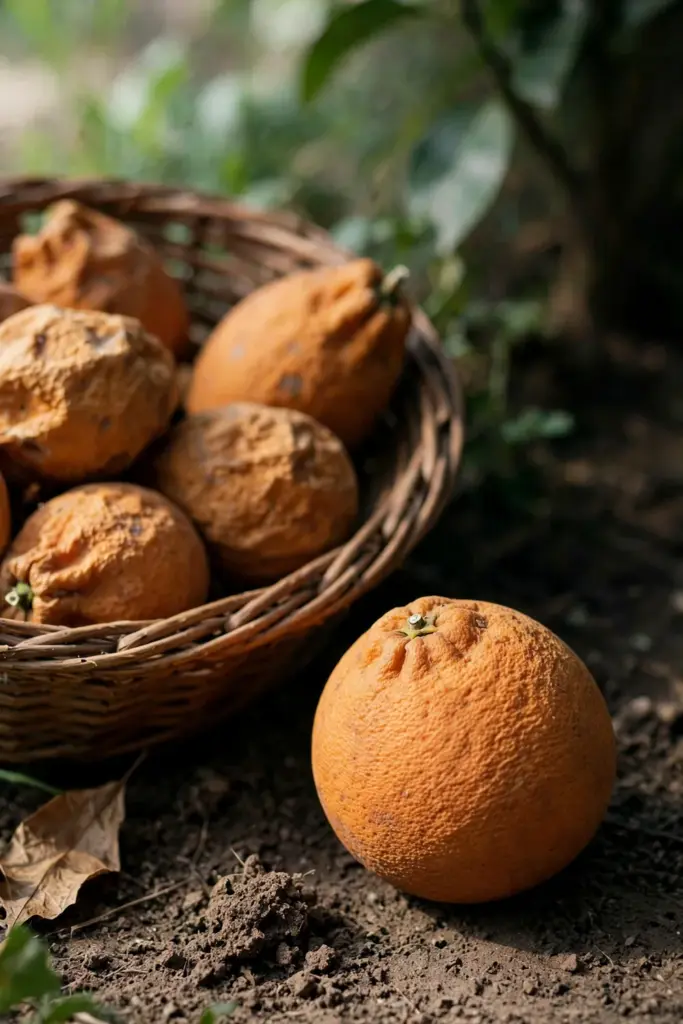
Handle carefully. Handling creates the wounds required for infection. The careful handling is the defense. The rough handling is the wound. The gentleness is the habit.
Remove fallen fruit from the ground, because fallen fruit carries spores, so the fallen fruit is the reservoir and the removed fruit is the removed inoculum. The clean ground is the fence.
Strategy 2: Refrigerate Promptly
Refrigerate if fruit is held in storage for some time. The refrigerator slows the rot. The room temperature speeds it. The cold is the brake. The warmth is the accelerator.
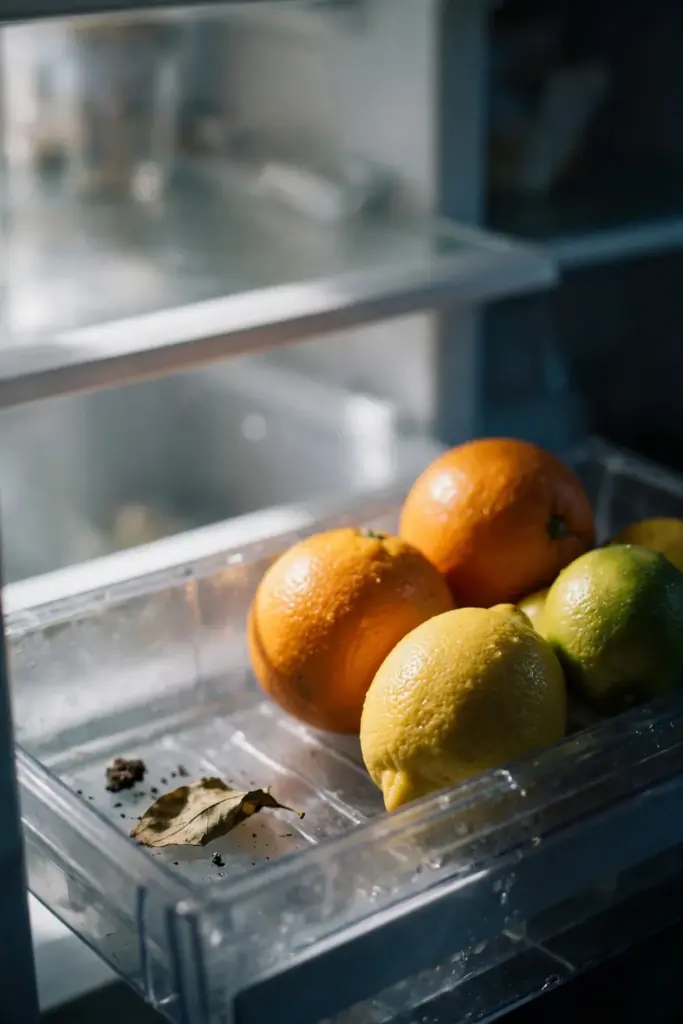
Store citrus at 40 to 50 degrees Fahrenheit in the crisper. The crisper is the storage. The counter is the risk. The cold is the defense.
Do not leave harvested fruit in warm piles. Warm piles incubate mold. The warm pile is the incubator. The cool single layer is the defense. The pile is the risk.
Strategy 3: Do Not Pile Fruit
Do not pile fruit, because moisture accumulates where fruit touches and fungus starts there, so the pile is the moisture trap and the single layer is the airflow. The touching is the spread.
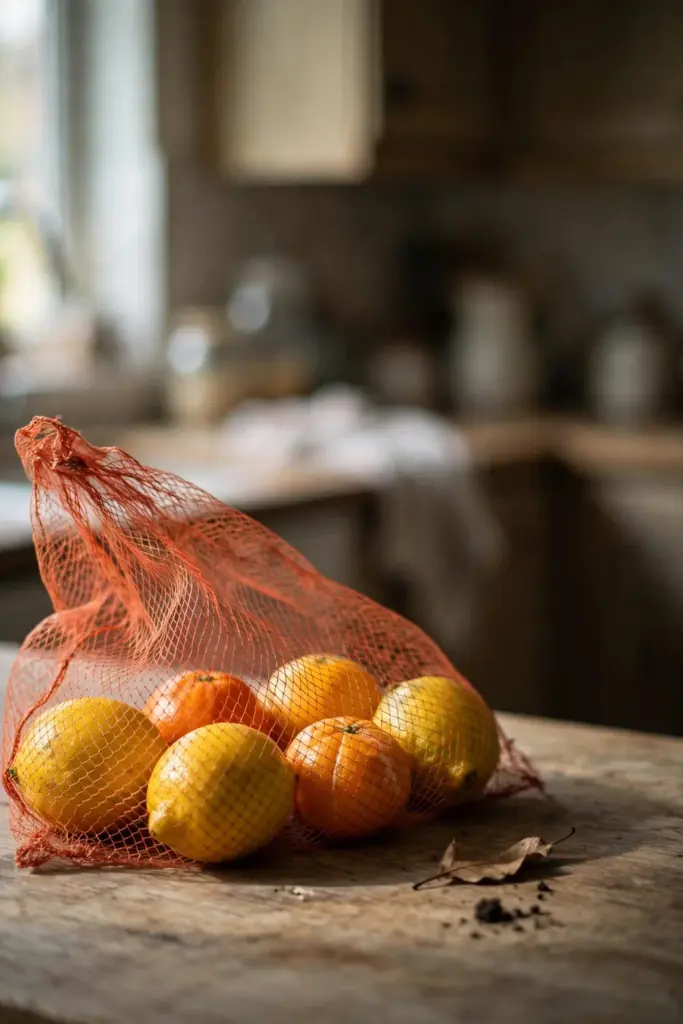
Store fruit in a single layer. The single layer dries, the pile stays wet, the layer is the habit, and the pile is the trap.
Use mesh bags for airflow. Mesh bags let air move, so the moving air is the dryer and the sealed bag is the incubator. The mesh is the airflow.
Strategy 4: Wrap Individually When Spread Is Likely
Wrap individually if fruit-to-fruit spread is likely during transport. The wrap is the barrier. The unwrapped fruit is the contact. The wrap is the fence.

Wrap in paper. Paper absorbs moisture, so the paper wrap is the dryer and the plastic wrap is the trap. The paper is the choice.
Keep fruit from touching. Touching spreads mold, so the separation is the defense and the contact is the spread. The gap is the habit.
Strategy 5: Remove Infected Fruit Immediately
Remove infected fruit immediately, before sporulation. The infected fruit is the spore factory, so the removed fruit is the removed factory. The immediate removal is the cut.
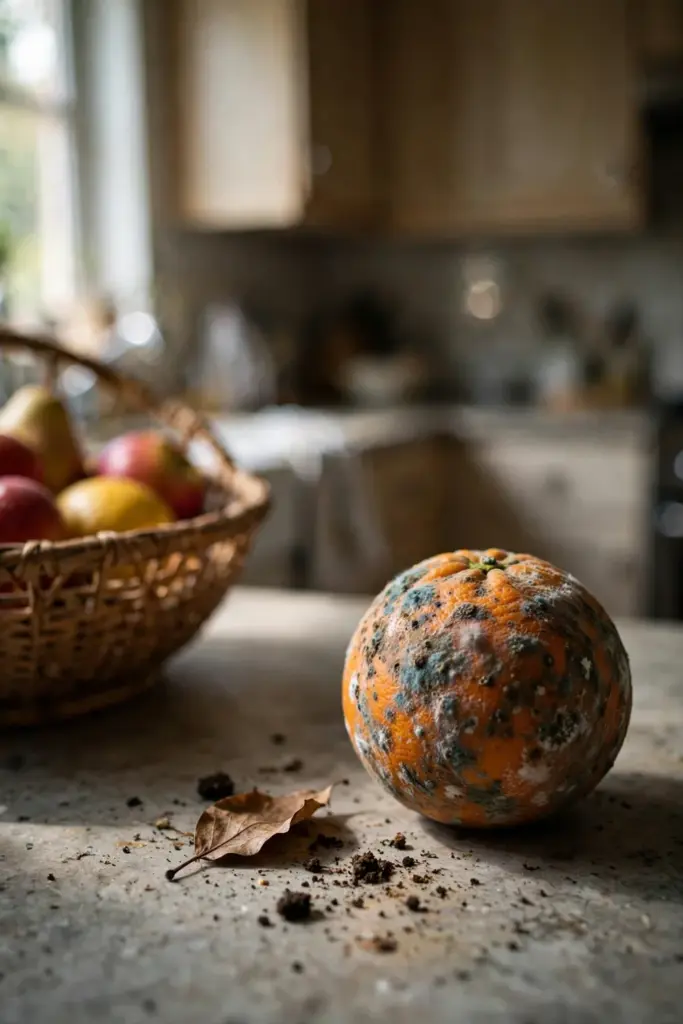
Check stored fruit daily, because mold spreads fast in storage. The daily check is the early warning, the skipped check is the spread, and the check is the habit.
Do not wait for the green patch. The white rot precedes the green patch, the white rot is the early sign, the green patch is the sporulation, and the early removal is the prevention.
Living With Green Mold on Citrus You Already Store
A citrus bowl with green mold is a bowl to manage, not a bowl to abandon. Pick dry and handle gently, refrigerate promptly, do not pile fruit, wrap individually when spread is likely, and remove infected fruit immediately. The mold will still appear, but it will appear on one fruit, not on the whole bowl.
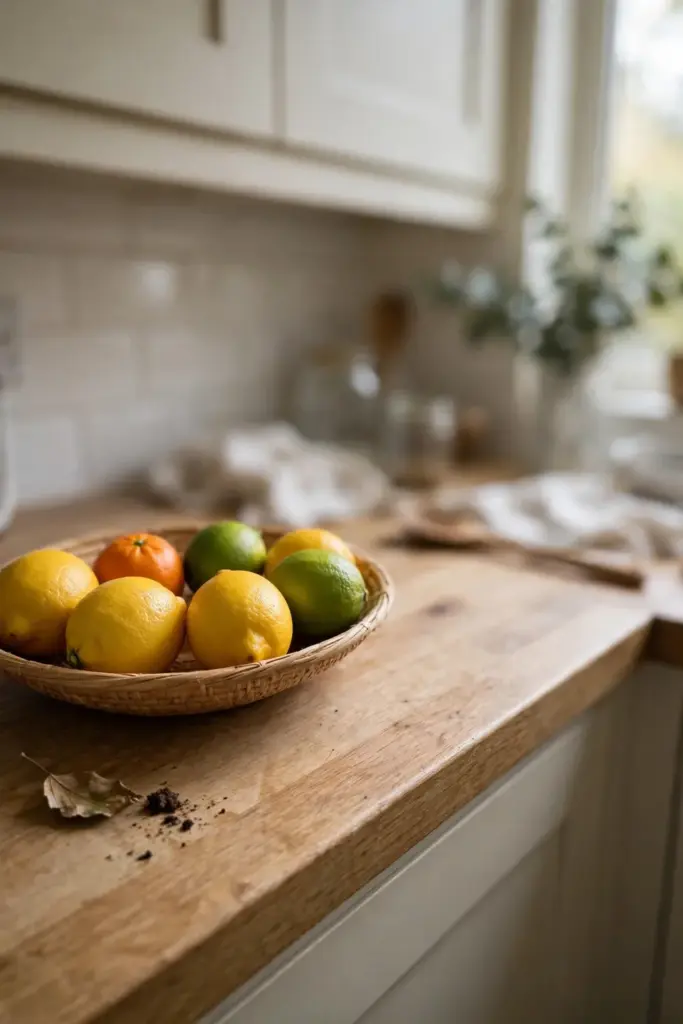
Stop three habits. Do not pick wet fruit, do not pile fruit in warm bowls, and do not leave moldy fruit in the bowl. Keep those three lines unbroken and the green mold stays cosmetic. The Plant Care archive collects the site’s disease coverage for the next problem the garden throws up.
Frequently Asked Questions
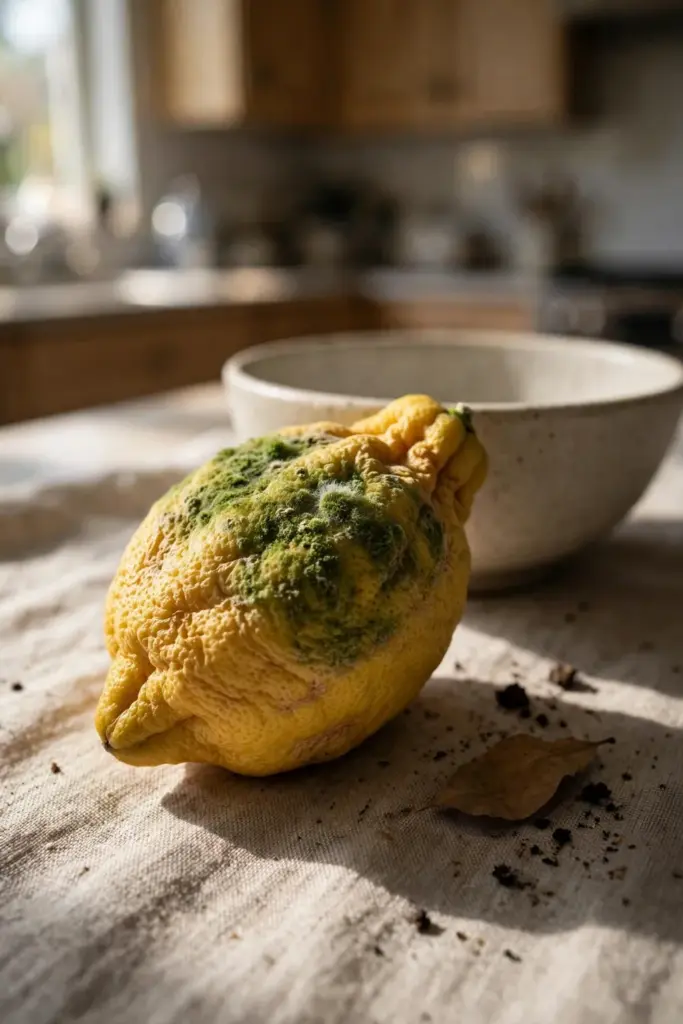
No. Green mold is a postharvest storage rot of harvested citrus fruit, not a garden disease of a living tree. The pathogen is Penicillium digitatum, and it cycles in 3 to 5 days at 25 degrees Celsius. It enters through rind wounds. It spreads fruit to fruit in storage. Tree-side advice (pruning, fertilizing, watering) is irrelevant to this disease.
Check the color and the reach. Green mold shows an olive-green spore patch with white mycelium spreading nearly to the edges of the softened area, and the fruit becomes a hollow mummified shell. Blue mold shows blue-green spores with only a narrow edge of white, and the fruit becomes a slimy mass. Species-level certainty needs microscopy.
No. USDA: soft, high-moisture fruit such as oranges must be discarded in their entirety if moldy. Cutting out applies only to firm, low-moisture produce. The orange is soft and high-moisture. The discard is the rule. The cutting is not the rule.
Usually no. Commercial postharvest programs (fungicide dips, hot-water dips, curing, wax coatings, packing-house sanitation) are industry guidance, not home advice. Home actions are picking dry, handling gently, refrigerating promptly, not piling fruit, and removing infected fruit immediately. The storage is the program. The spray is not the answer.
It can, if the wounds and the storage stay wet. Spores are abundant in soil of citrus areas and in packing-house air. Pick dry, handle gently, refrigerate promptly, and remove infected fruit immediately. The cleanup is the break. The skipped cleanup is the return. The storage is the battlefield.
Where to Go From Here
Green mold rewards the gardener who picks dry, handles gently, refrigerates promptly, does not pile fruit, and removes infected fruit immediately. Pick dry, handle gently, refrigerate promptly, do not pile, and remove infected fruit immediately.

Next season, start with a clean bowl. A bowl with dry fruit, single layers, prompt refrigeration, and immediate removal will hold green mold to one fruit. The Lucid Central page on citrus storage molds is a useful companion for the full grower picture, since it sets the home-garden response here against the evidence behind it.