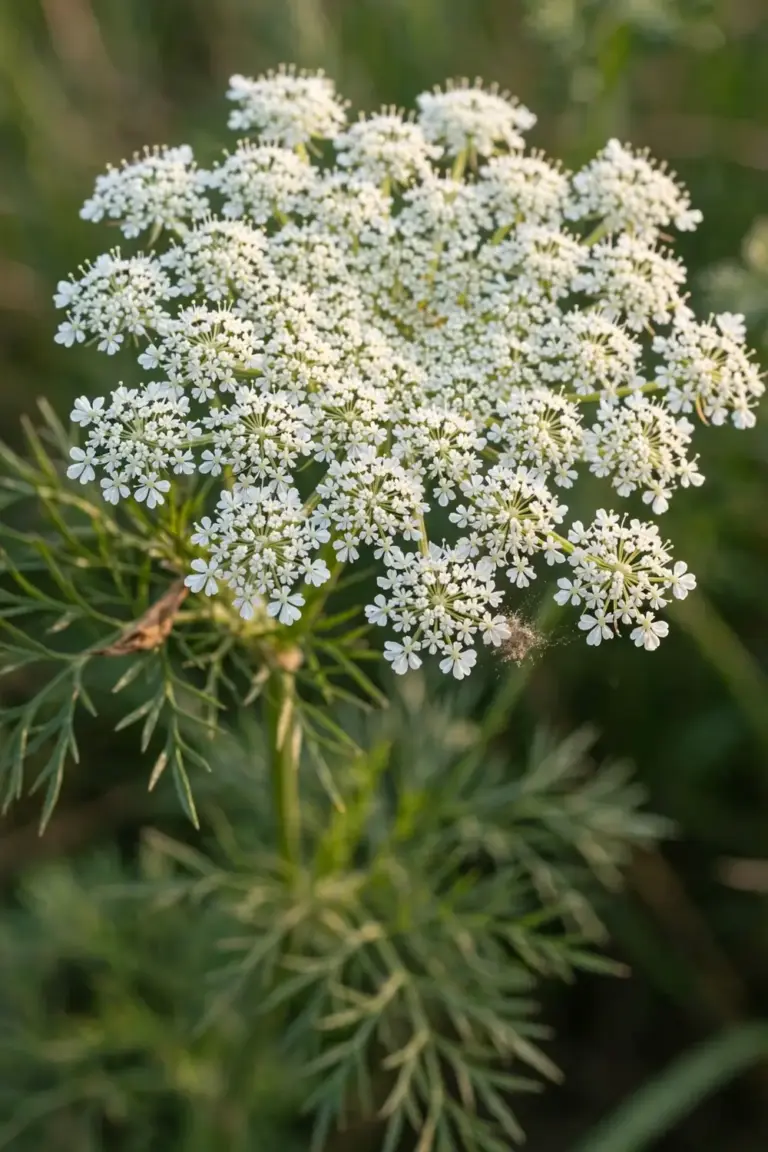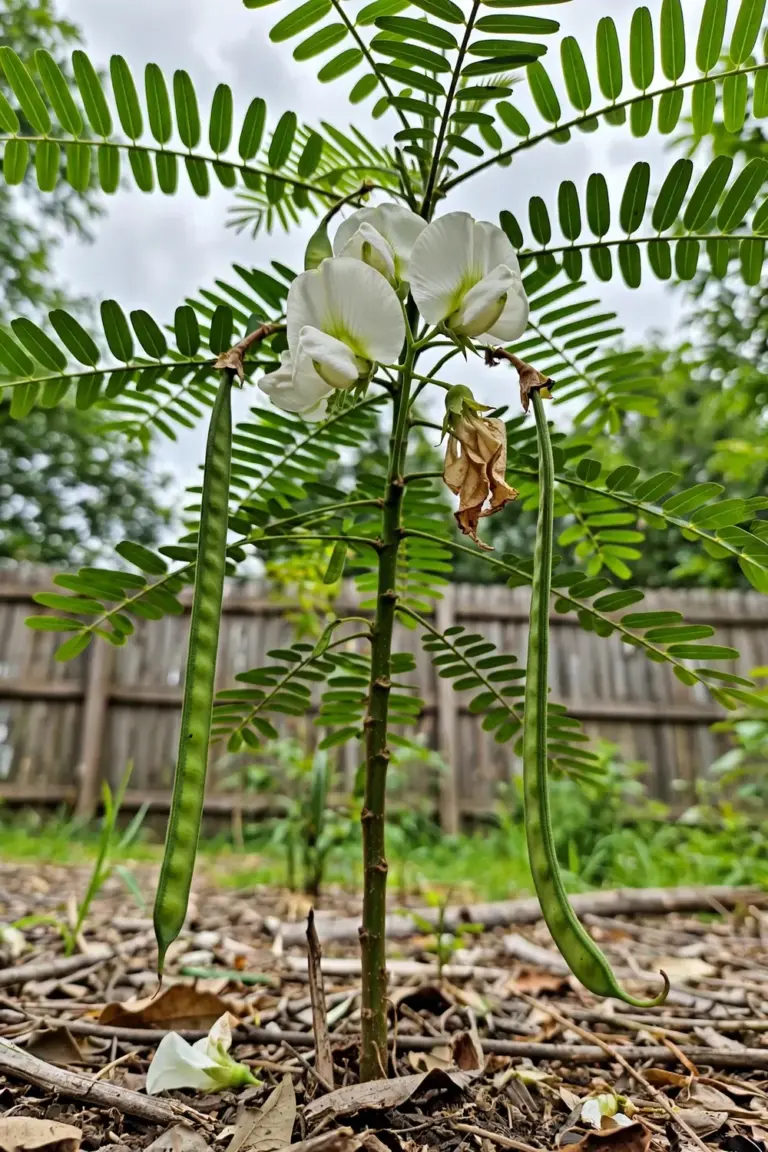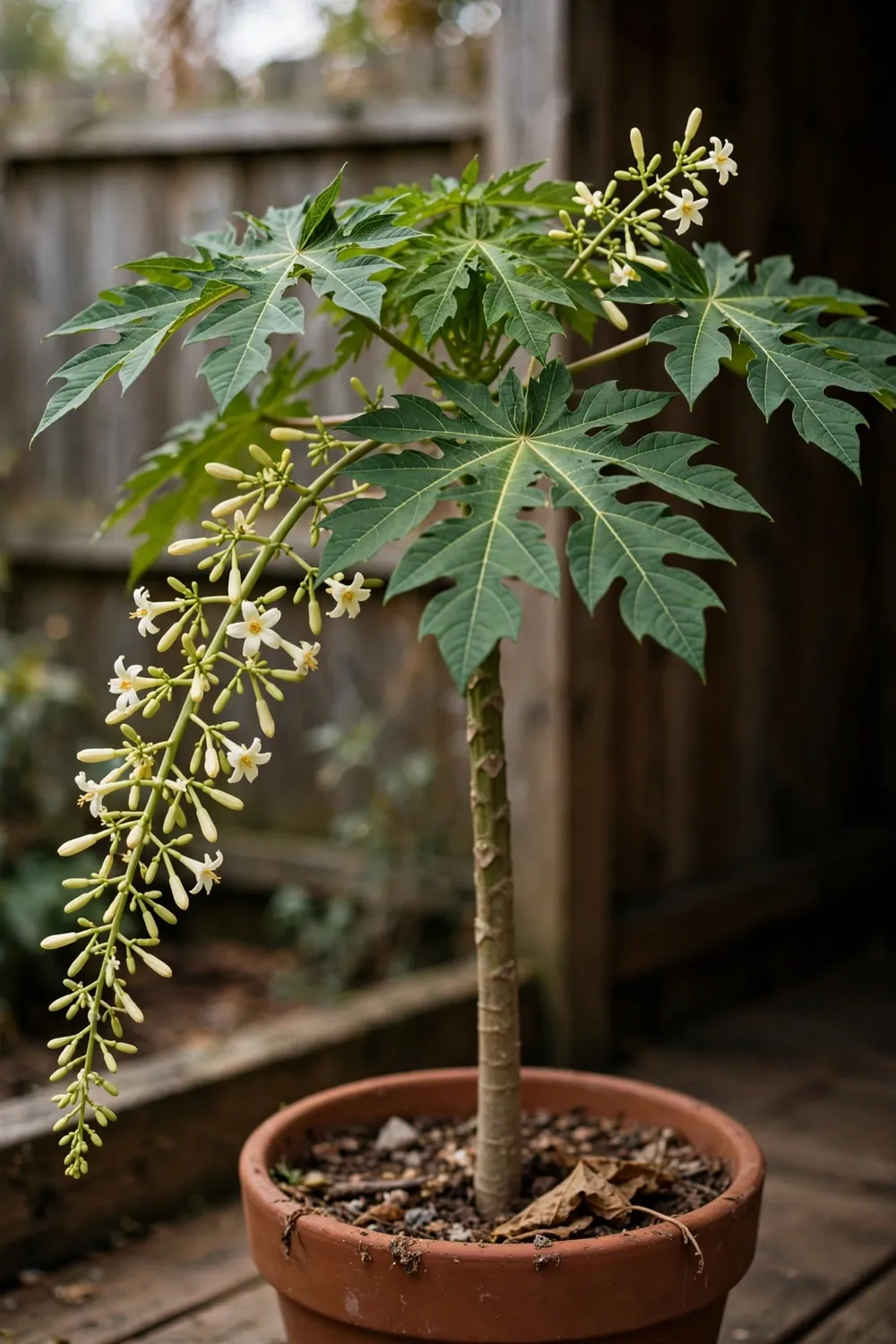

Sow 6 papaya seeds in small pots, thin to the strongest seedlings, and keep the plants that throw long, branching flower sprays. That is how to grow papaya for flowers. The rest of this page is 16 steps, from the first seed to a stir-fry of bunga pepaya.
Work from the top if the seeds are already in hand. Pick sprays in the morning. Cook them the same day. I have learned to keep the male plants other growers pull out.
Fruit is a different job, and it lives on the site’s papaya fruit guide. This page stays on the flowers: male plants, long sprays, and the kitchen.
| Spec | Detail |
|---|---|
| Botanical name | Carica papaya (Caricaceae) |
| Indonesian name | Bunga pepaya |
| Plant type | Short-lived perennial, usually single-stemmed |
| Sexes | Male, female, and bisexual plants |
| Flower harvest | Male plants, long branched sprays |
| Kitchen use | Cooked vegetable, never raw |
| Cold floor | Damaged or killed below minus 0.6 degrees |
| Growing method | Pot, moved indoors before cold nights |
1. Start 6 Seedlings to Grow Papaya for Flowers
Sow 6 seeds and expect a mix of sexes. Sex stays hidden until the plants flower, so numbers are your only control at sowing time. Sow 2 to 4 seeds in each of two or three 1-gallon pots to reach 6 seedlings, following the University of Florida papaya guide. Germination takes 2 to 3 weeks in a warm, sunny spot. Once seedlings emerge, keep the most vigorous one in each pot and snip the rest off at the soil line with clippers.
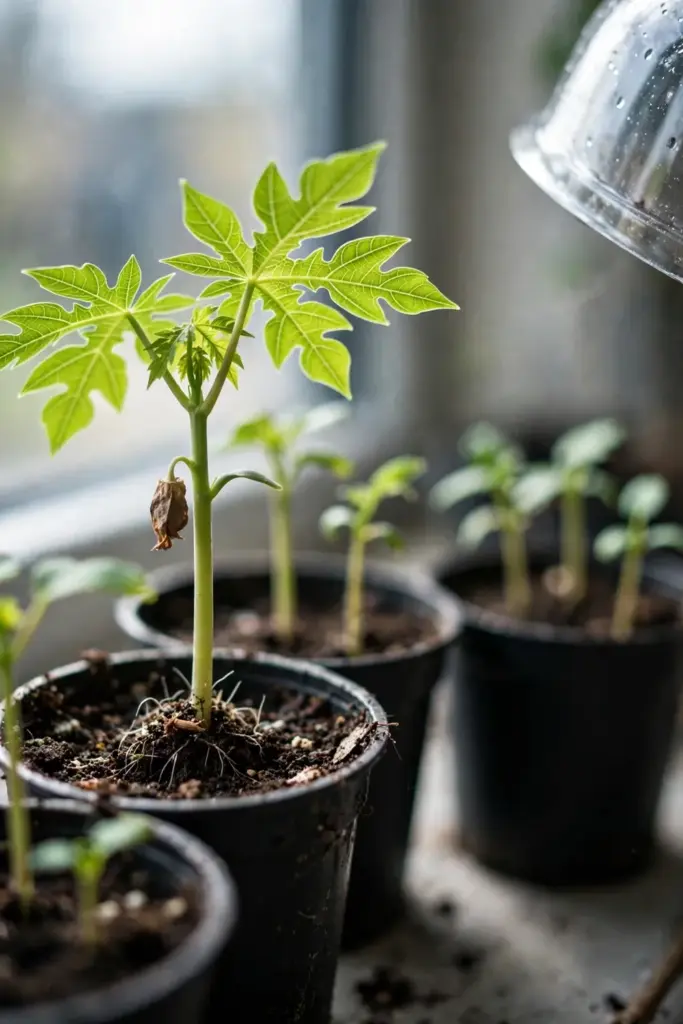
Seed preparation starts inside a ripe fruit. Scoop the seeds into a colander and press them against the side to break the sac around each seed, since that sac blocks germination. Rinse the seeds, dry them on a paper towel out of direct sun, and sow at once or store the dry seeds in a plastic bag in the refrigerator. The same Florida guide notes that dry seeds keep for several years in cold storage.
Seedlings want light from the first day and a dilute feed once they stand up. Pair the sowing with the site’s seed starting steps for trays, heat, and timing. The same Florida guide feeds seedlings with a dilute complete fertilizer solution every 10 to 14 days, and move seedlings to their final pots once they reach 15 to 30 cm tall. A seedling that stretches toward a dim window grows a pale stem that flops, so give the tray the brightest sill and turn it every few days.
2. Identify Male Papaya Plants by Their Long Flower Sprays
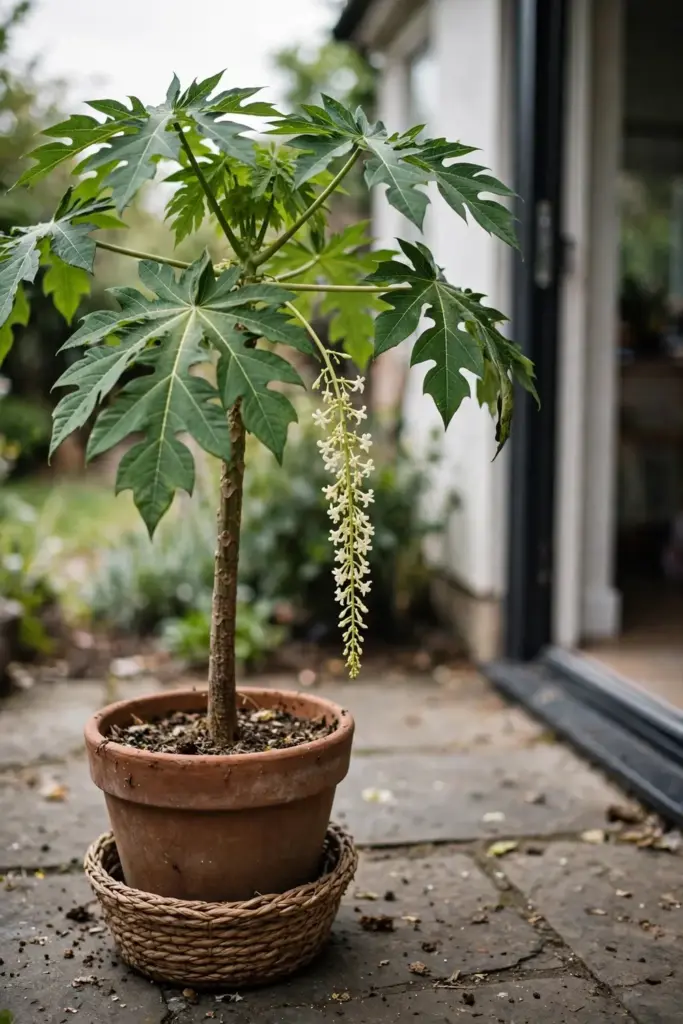
Male plants carry their flowers on long, branching sprays. Female and bisexual plants carry their flowers close to the stem. Papaya grows in three sexes: male, female, and bisexual. The same Florida guide describes the male inflorescence as an elongated, branched cyme 25 to 100 cm long, carrying small, tubular, yellow flowers with 10 anthers each. Female flowers are large, sit in the leaf axils near the trunk, and carry a large ovary. Bisexual flowers sit between the two forms, and bisexual plants pollinate themselves.
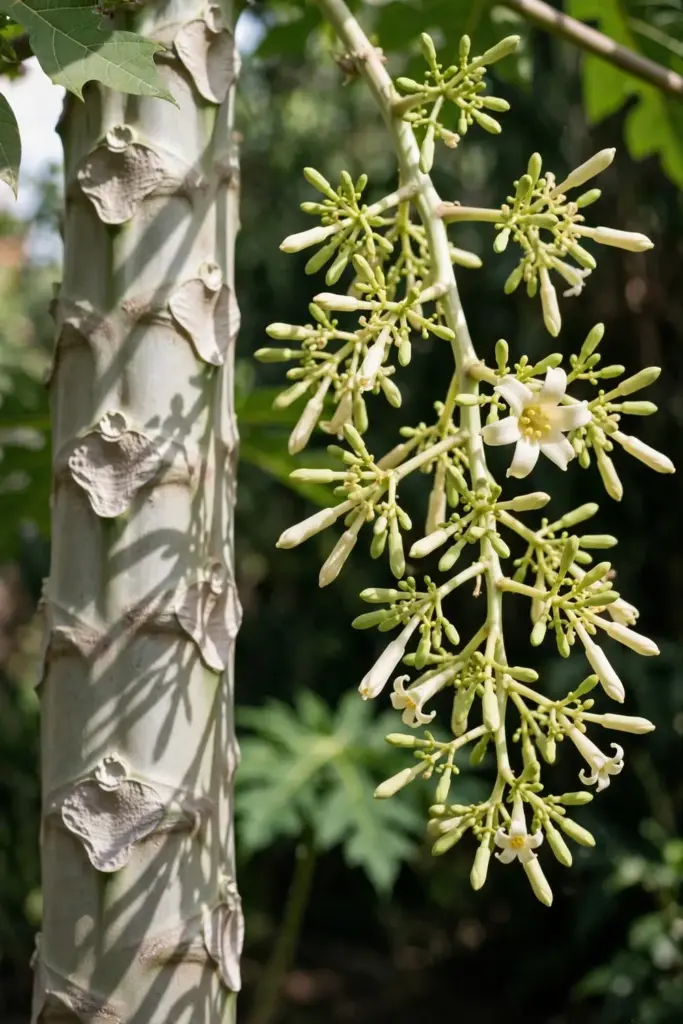
The buds tell the same story at close range. Papaya flower buds run 2.5 to 5 cm long, open into five petals in pale yellow-green, ivory, white, or yellow, and carry a strong scent, according to the Specialty Produce page on papaya flowers. Male sprays dangle away from the stem in clusters. Female flowers hug the stem, one by one or in small clusters. A plant that shows sprays 25 cm or longer with small tubular buds is a male.
Do not judge a plant on its first flower. Young plants shift their flower forms, and a male plant can throw a bisexual flower that sets a small, elongated, poor-quality fruit. Wait until the sprays lengthen and the pattern holds for weeks. A plant that keeps producing long sprays of small tubular flowers is the keeper.
| Sex | Flowers | Fruit | Action for this project |
|---|---|---|---|
| Male | Long branched sprays, small tubular flowers | None, or a few poor elongated fruit | Keep for flowers |
| Female | Large flowers at the leaf axils, near the stem | Round fruit | Cull, or keep for fruit |
| Bisexual | Intermediate flowers near the stem | Elongated fruit | Cull, or keep for fruit |
3. Keep the Males and Cull the Rest Without Guilt
Keep 1 or 2 male plants. Cull the rest. One male throws sprays for weeks, and pot space is finite. Fruit growers cull male plants because males grow no fruit. Flower growers reverse the cull and keep the males, because the sprays are the crop.
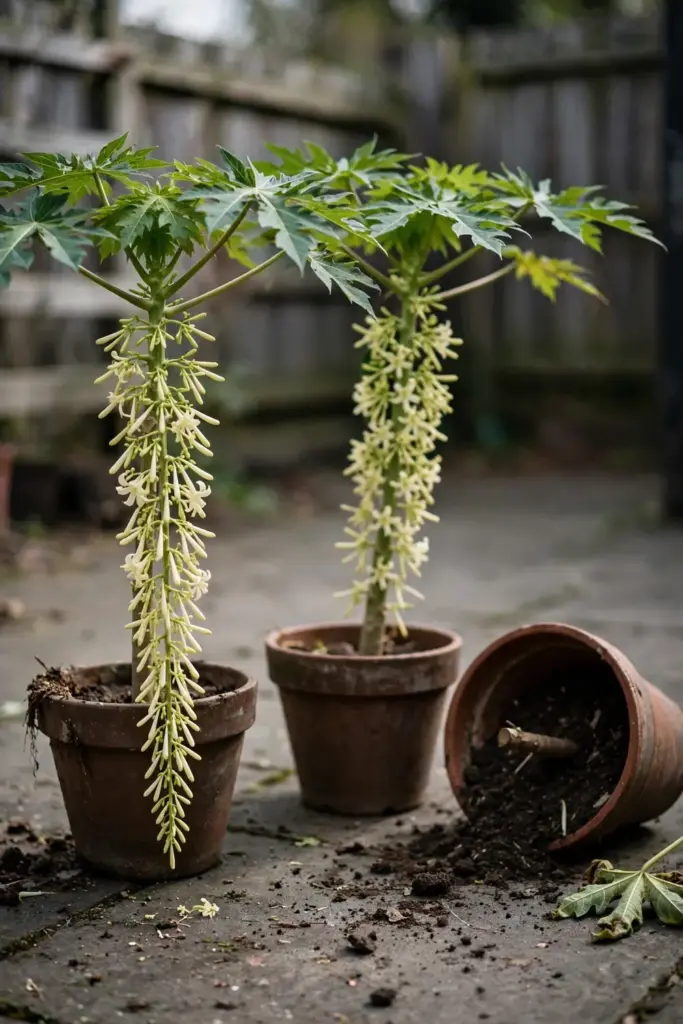
Culling is a cut, not a rescue project. Cut the unwanted stem at the base and compost the healthy plant. A healthy culled plant feeds the compost pile. A sick plant goes in the trash, never in the compost, since disease rides home in compost. Label the kept pots at once so a later watering round does not mix them up.
Keeping every plant “in case” costs the keepers. Crowded pots shade the sprays, slow the air, and invite disease. One strong male in full sun beats four crowded males fighting for light. The cull is the decision that makes the harvest possible.
4. Give Papaya Full Sun and Warmth Above 16 Degrees
Papaya wants full sun and warm air, with growth peaking at 21 to 32 degrees and root growth slowing when soil drops below 15.5 degrees, according to the same Florida guide. A pot on a sunny patio in summer gives the plant both heat and light.
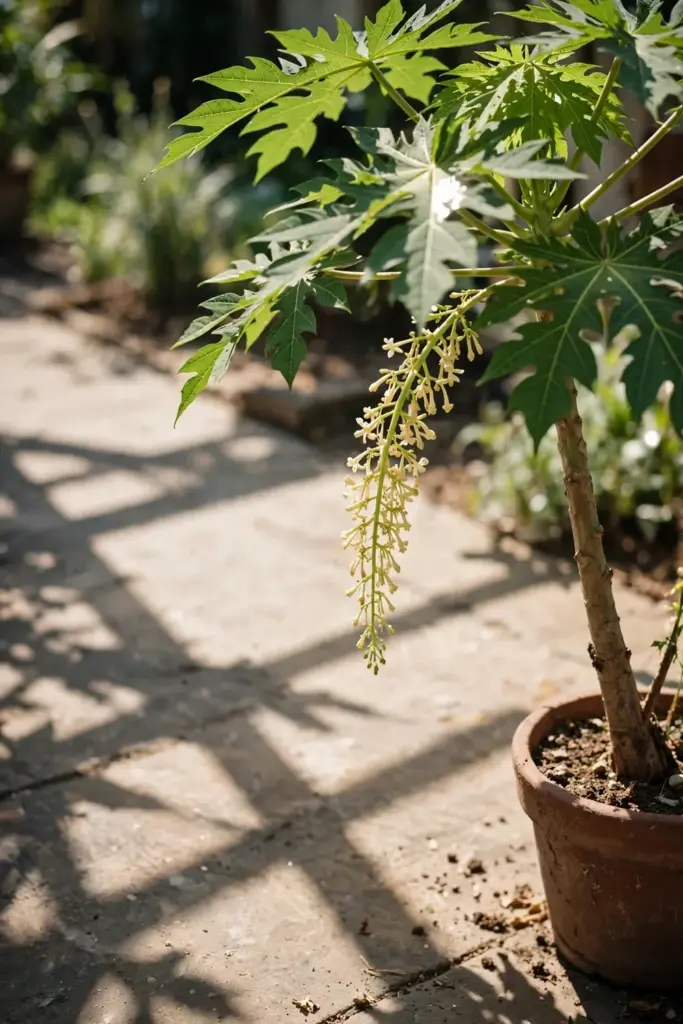
Cold sets the hard limit. Papaya plants are damaged or killed below minus 0.6 degrees, per the same Florida guide. Outdoors year-round suits only climates where frost never arrives. Everywhere else, the pot moves indoors before the first cold nights. A plant that spends a night near freezing rarely recovers its season, even if the stem stays green.
Shade grows a tall, lean stem with few sprays. Sun grows a sturdy stem with sprays at every leaf axil. Set the pot where it catches direct sun for most of the day. Indoors, use the brightest window or a greenhouse, and turn the pot every few days so the stem grows straight instead of leaning toward the glass.
5. Build a Free-Draining Potting Mix That Stays Slightly Acidic
Papaya roots want air and drainage. A mix that holds water kills the plant faster than a dry week. Mix two parts potting mix, one part perlite or coarse sand, and one part mature compost. The compost feeds, the perlite holds air, and the potting mix holds moisture without turning to mud.
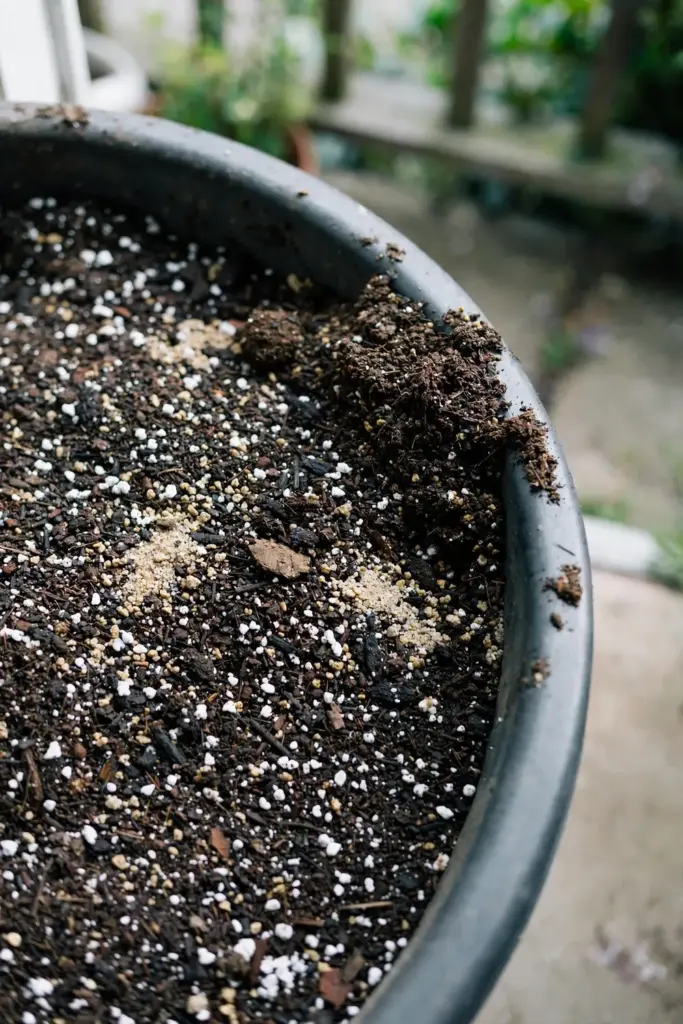
Garden soil from a bed packs down in a pot. It squeezes air from the roots and stays wet for days after watering. Skip it. Pair the mix with the site’s notes on building soil health for the longer view on organic matter and drainage. Fresh mix feeds the plant for its first weeks, and a top dressing of compost in spring renews it.
A waterlogged mix shows at the base first. The stem goes soft at soil level, and the lower leaves yellow. Repot into fresh mix at once, cut the watering, and let the top of the mix dry before the next drink. A plant that sat wet for a week takes longer to recover than a plant that sat dry for a day.
6. Plant 1 Seedling per Pot You Can Still Carry
One plant per pot. A pot you can still carry indoors is the whole temperate method. Move the seedling to its final pot once it reaches 15 to 30 cm tall, per the same Florida guide. Set the plant at the same depth it grew before, water after potting, and let the pot drain fully before it goes back on the saucer. Empty the saucer after watering, since a saucer left full keeps the base wet for days.
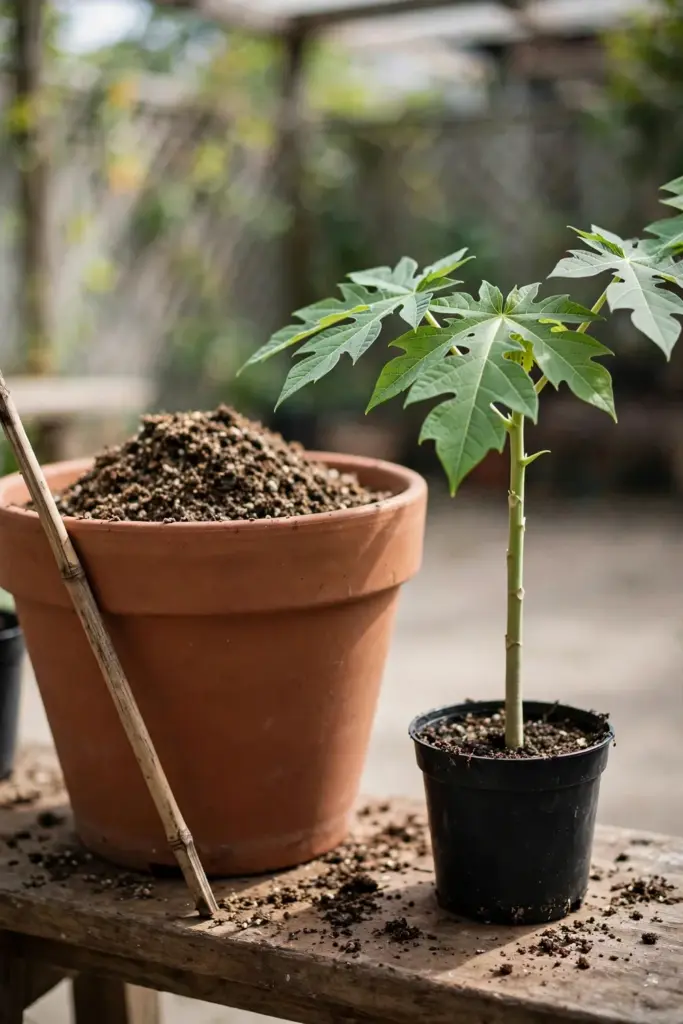
Pick a pot with a wide base and drainage holes. A tall papaya catches wind, and a narrow pot tips. Terracotta dries faster than plastic, so a terracotta pot suits a grower who waters with a heavy hand. Plastic holds moisture longer and suits a grower who forgets a watering. Either material works when the drainage holes stay open. The site’s creative container garden ideas show how pots sit in a small-space garden.
Two plants per pot compete from the first month. Stems lean apart, sprays tangle, and neither plant fruits or flowers well. Roots circle the pot wall when the pot runs small, and growth stalls. Move up a pot size before the plant stalls, not after, and a plant moved on time keeps throwing sprays without a pause.
7. Water Deep and Let the Top Dry
Water until it runs from the drainage holes. Wait until the top of the mix dries before watering again. Deep watering drives roots down through the pot. Light daily sprinkles wet the surface and leave the roots dry.
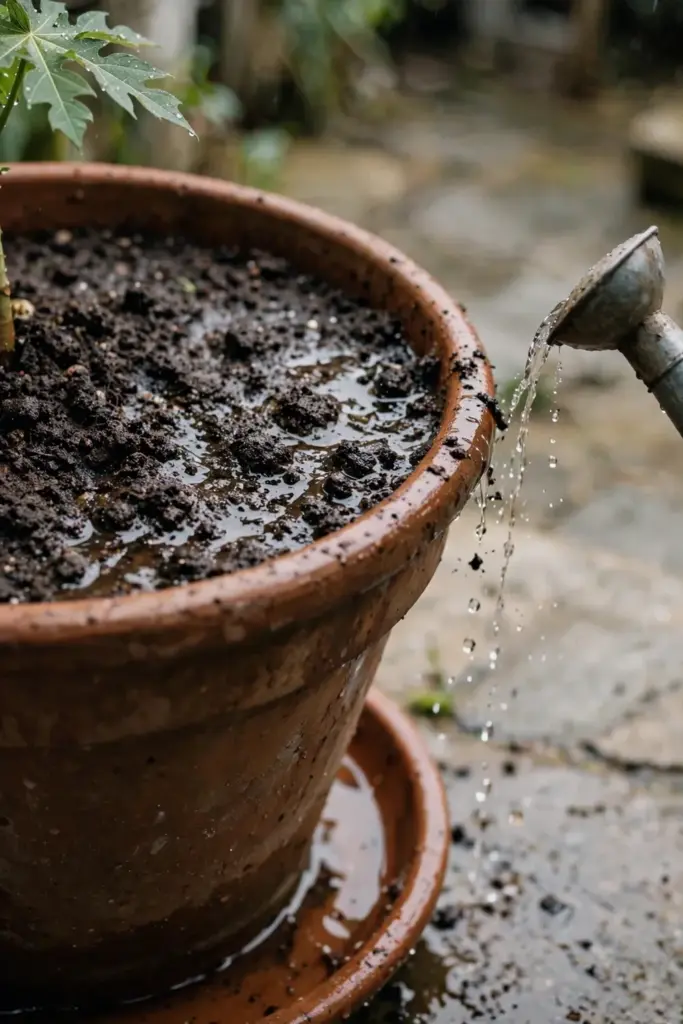
Drought costs the harvest directly. Papaya plants short of water drop flowers, leaves, and young fruit, and grow small fruit of low sugar, per the same Florida guide. In flower production, drought drops the sprays you grow for. Keep the mix evenly moist through the growing season, never soggy. A finger pushed into the mix tells the truth. Dry mix means water. Damp mix means wait.
Indoors in winter, water less. Growth slows, the mix dries slowly, and a winter watering schedule that matched summer drowns the roots. Water in the morning so the mix holds moisture through the day and the leaves dry before night. A pot that sits in standing water rots from the base up, and the first sign is a soft stem at soil level.
8. Feed Little and Often Through the Growing Season
Feed with a dilute balanced fertilizer every 10 to 14 days while the plant grows. That is the same schedule the Florida guide gives seedlings, carried through the season. Little and often beats a rare heavy dose. A heavy dose burns roots and leaves a salt crust on the mix surface.
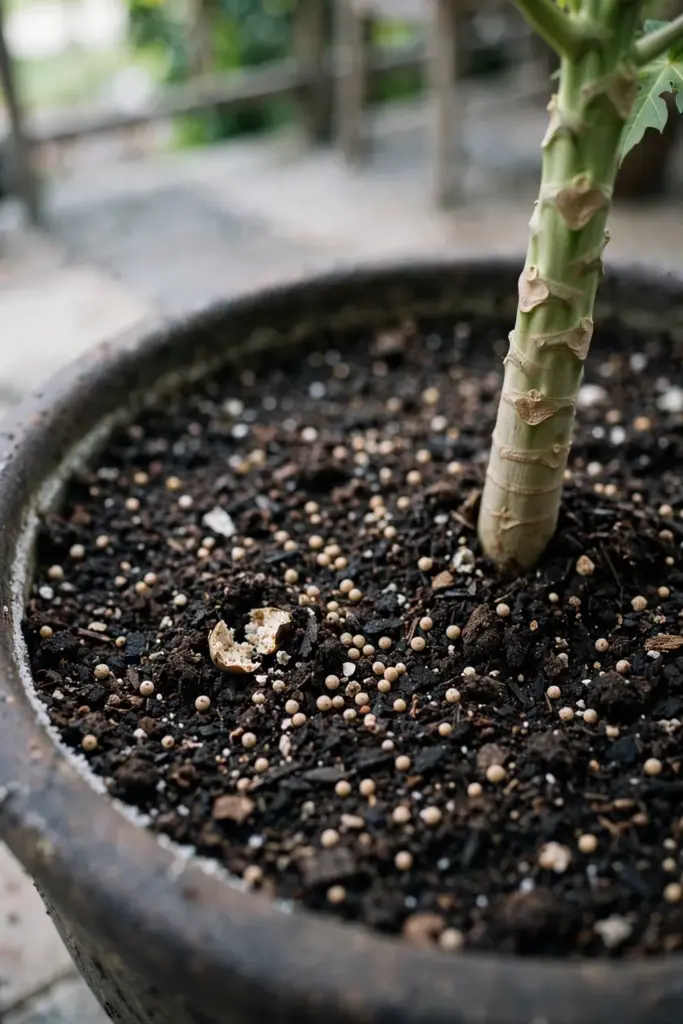
A hungry plant shows pale leaves and thin sprays. An overfed plant shows soft growth and a white crust on the mix. Flush the pot with plain water if a crust shows, and skip the next feed. Compost worked into the top of the mix in spring feeds slowly and softens the need for liquid feed.
Skip feeding in the cold months when growth stops. A plant that is not growing cannot use the feed, and the salts sit in the mix until spring. Fresh mix at repotting feeds for weeks on its own. Feed again only when new leaves show the plant is growing.
9. Stake Tall Stems Before Wind Topples Them
Stake every potted papaya before it needs it. A tall stem in a pot catches wind and topples. Papaya stems are soft and hollow, roots run shallow, and a gust that a ground-planted tree shrugs off can lay a potted plant flat.
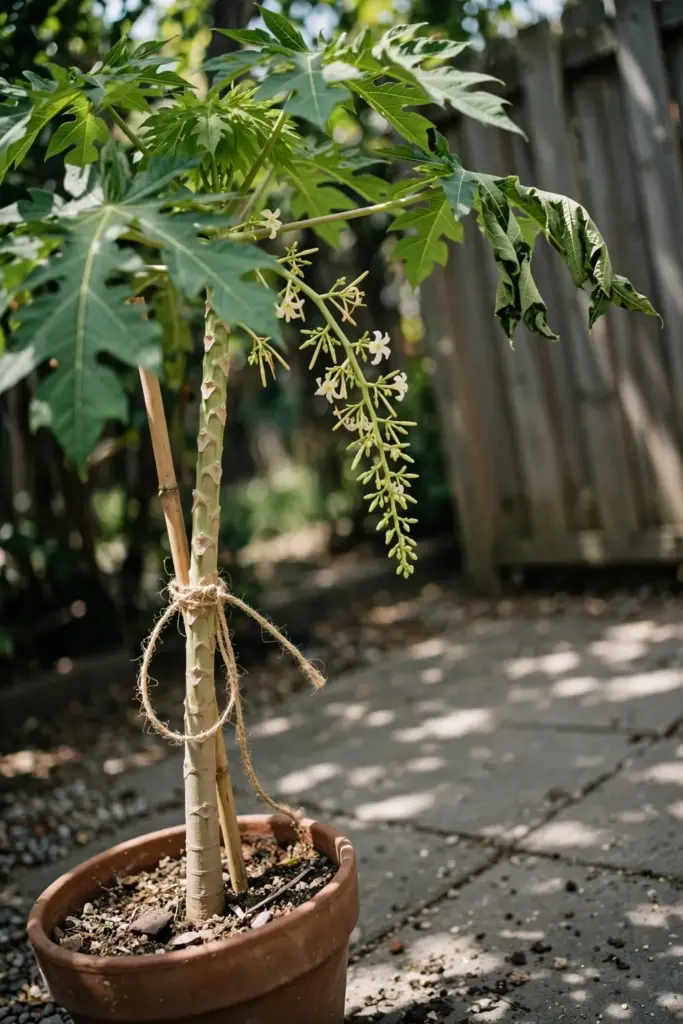
Set the stake at potting time. Tie the stem with cotton or natural fiber string that degrades slowly, per the same Florida guide. Never use wire or nylon rope to tie the stem, since the tie cuts into the soft trunk as the plant grows. Tie loose, leave room for the stem to thicken, and check the ties every few weeks through the season.
A stake set late snaps surface roots when it goes in. A tie pulled tight strangles the stem. A pot placed against a wall or a fence gains shelter without a stake, but the wall also shades the plant. Shelter plus sun beats shelter alone, so keep the pot in the open and let the stake do the work.
10. Harvest Male Flower Sprays Through the Flush
Pick sprays when most buds are still closed and the first flowers open. Closed buds cook tender and hold their shape in the pan. Open, spent flowers turn soft and fall apart. The plant flowers for months, so the harvest runs as a steady rhythm, not a single day.
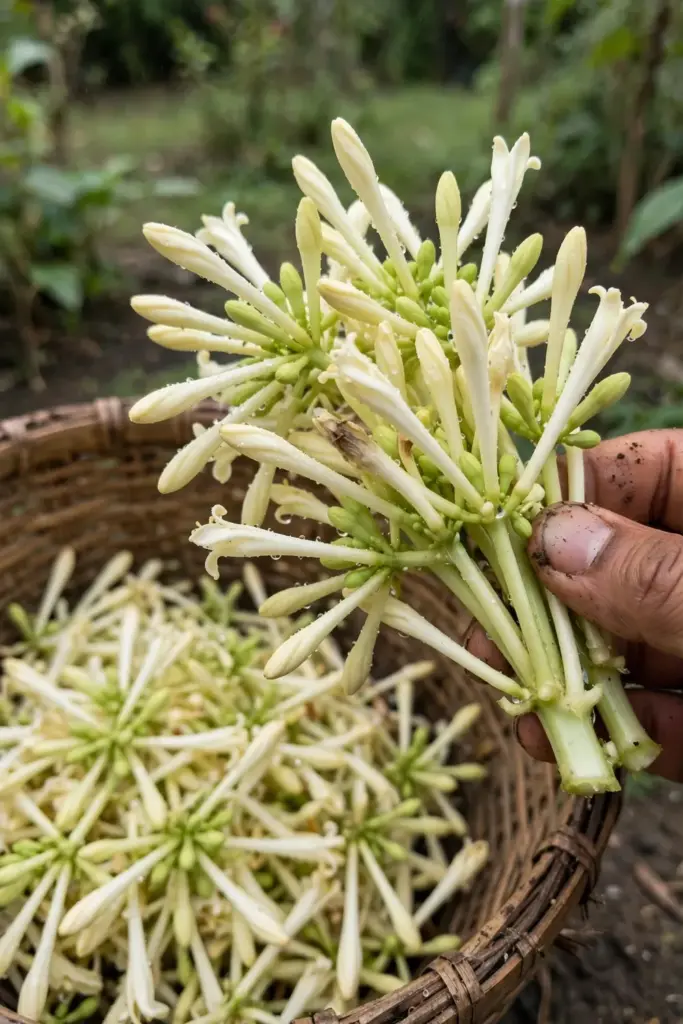
Cut the spray with clean shears and leave a short stub on the stem. Take a portion of the open sprays at a time and leave the rest for the plant and for pollinators. Carry the buds in a basket, not in a sealed plastic bag in the sun. Heat and trapped moisture darken bruised buds before they reach the kitchen.
Rough handling bruises buds, and bruised buds darken in the pan. Handle the sprays by the stem, not by the buds. Wash the buds gently under running water to clear dust and insects, and pick out any damaged or wilted buds before cooking. A clean harvest cooks clean.
11. Boil Flowers Twice to Tame the Bitterness
Boiled flowers lose their bite. Raw papaya flowers stay bitter and astringent, and cooking turns them vegetal, green, savory, subtly bitter, and floral, according to the same produce guide. The flowers are a cooked vegetable, never a raw one.
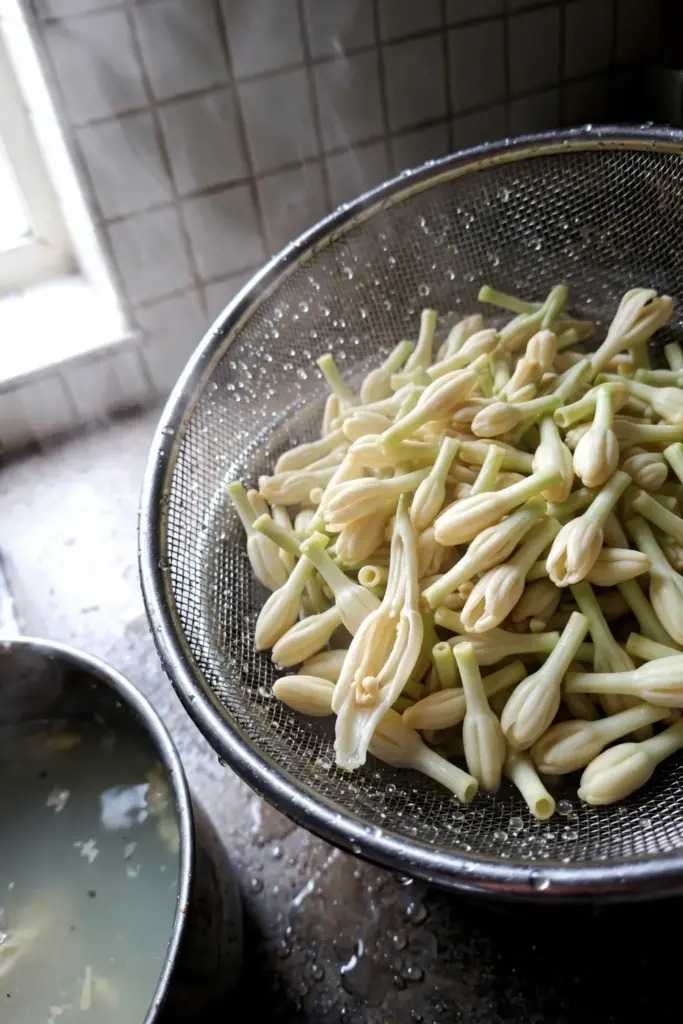
Strip the buds from the stems first. The stems are very bitter and go in the trash. Rub the buds with salt, rinse, and boil them in salted water, then drain, taste, and boil again if the bite still stings. Some Indonesian cooks add guava leaves or tamarind to the boil water. A second boil costs little texture and tames the bitterness that a single short boil leaves behind.
One short boil leaves a sharp bite that dominates the pan. A second boil fixes it. Taste the buds after each boil and stop when the bite sits at a level you enjoy. The flowers should still hold their shape and a gentle chew. Mushy flowers boiled past tenderness lose the texture that makes the dish work.
12. Stir-Fry Boiled Flowers with Garlic and Chili
Stir-fry boiled flowers with garlic, shallots, and chili. The flowers drink up seasoning, so season light and taste as you go. Heat oil in a pan, fry garlic, shallots, and chili until fragrant, add the drained flowers, and toss over high heat. Finish with a splash of fish sauce or soy sauce and a pinch of sugar.
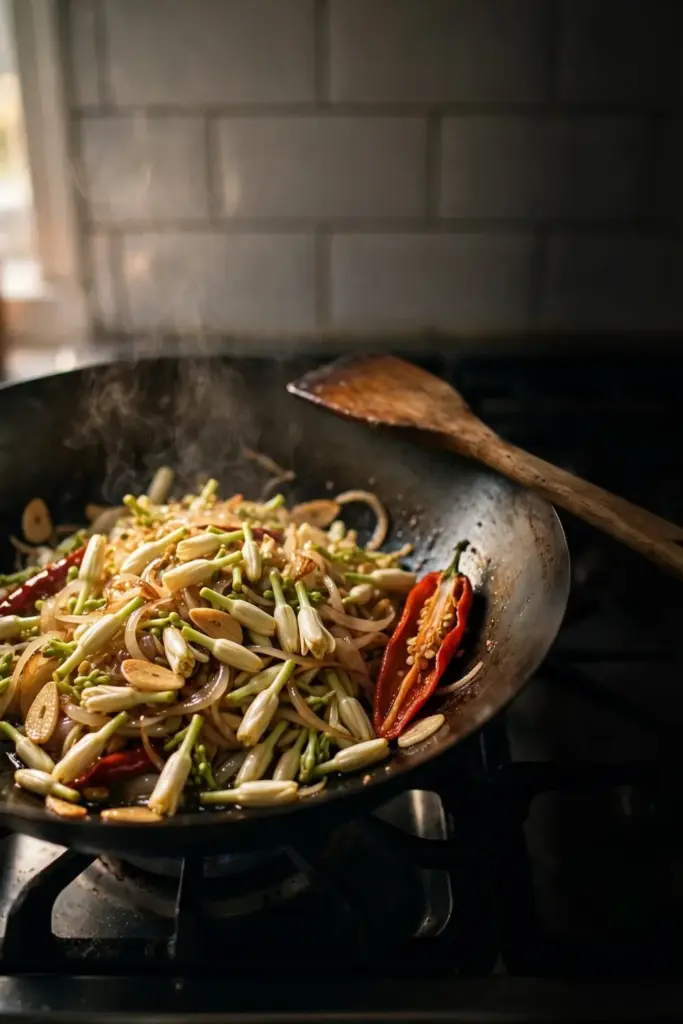
Serve the stir-fry with steamed rice as a lalapan-style side dish. Anchovies, known in Indonesia as teri, are a common addition and add salt and depth. The flowers pair with plain rice because the rice calms the bitterness that remains after boiling. A plate of boiled flowers beside rice and chili paste is the everyday form of the dish.
Crowding the pan steams the flowers instead of frying them. Fry in batches if the pan is small, and let each batch catch the heat before the next goes in. Eat the stir-fry the same day. The flowers absorb seasoning as they sit, so a plate saved for tomorrow tastes saltier than the one served fresh.
13. Handle Papaya Latex with Gloves Every Time
Wear gloves when you cut stems or pick sprays. Papaya sap carries latex, and the latex irritates skin. Every cut stem weeps sap, and every spray carries some on its cut end. Gloves keep the sap off your hands and out of small cuts.
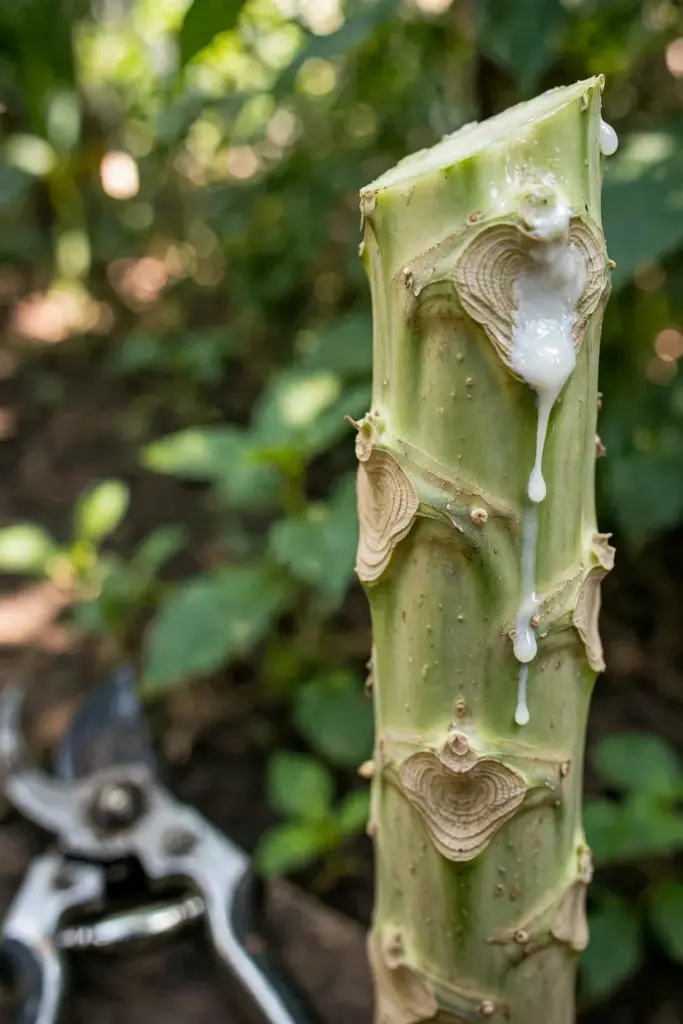
Latex allergy changes the rule from caution to avoidance, since people with a latex allergy may also react to papaya. Unripe papaya latex contains papain, and unripe papaya is possibly unsafe in pregnancy. In a rat study, crude papaya latex caused strong contractions of uterine muscle, while ripe papaya juice did not, according to the British Journal of Nutrition study. This article gives general information only, not medical advice. Talk to a clinician about diet in pregnancy.
Wash hands and tools after handling sap, and wash sap off skin at once. Keep sap off your eyes. If a rash or itching follows contact, stop handling the plant and seek medical advice. Bare hands plus sap on a hot day end with itchy wrists for days. Gloves cost nothing and prevent the whole problem.
14. Stop Papaya Ringspot Virus Before Aphids Spread It
Papaya ringspot virus has no cure. Prevention is the whole control plan. The virus spreads by aphids and by infected nursery stock, and once a plant shows symptoms, no spray clears it.
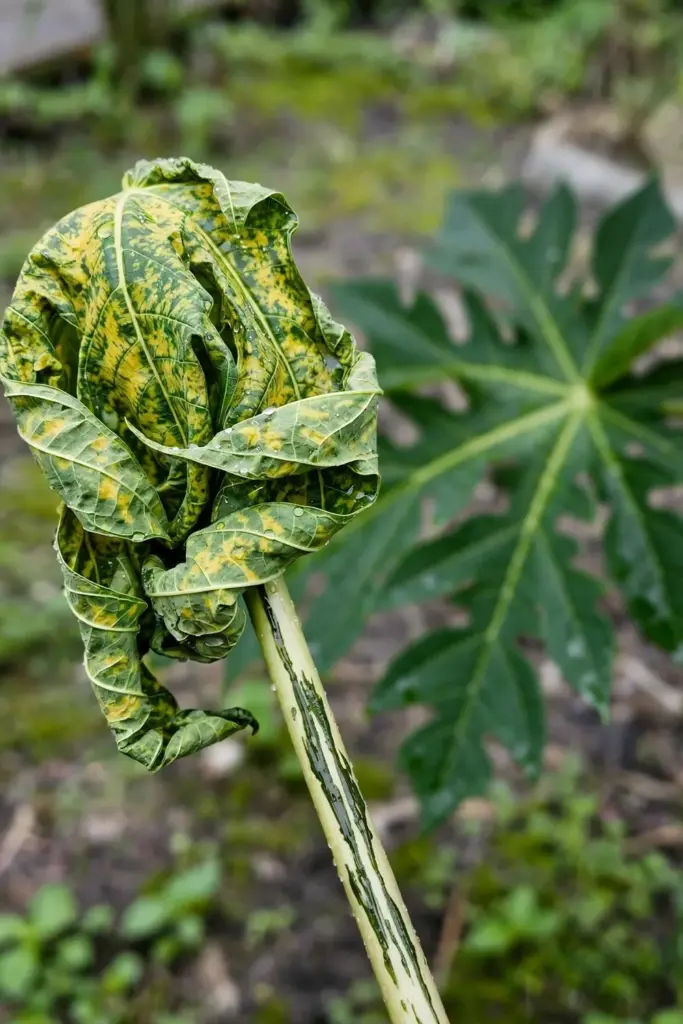
Symptoms start at the top of the plant. Young leaves turn mottled and distorted, stems and leaf stalks show water-soaked streaks, and fruit grows small with ring spots, according to the University of Hawaii ringspot fact sheet. Control rests on clean seedlings, distance from infected plants, removal of infected plants, and removal of alternate cucurbit hosts, per the same fact sheet. Planting a non-host barrier crop such as corn around the planting helps, since aphids landing on corn lose the virus before they reach papaya.
At home scale, buy clean plants and inspect new plants before setting them near the pot. Wash aphids off with a hard water spray, and remove a virus-suspect plant at once. Do not compost it. Spraying aphids after symptoms appear wastes the spray, since the virus already moved. Prevention before symptoms is the only control that works.
15. Tell Papaya Flowers Apart from Pawpaw and Papaya Seeds
Check the botanical name before following any growing advice. Papaya is Carica papaya, a tropical plant in the Caricaceae family. Pawpaw is Asimina triloba, a temperate North American tree in a different family, and the shared common name causes the confusion that the botanical name clears.
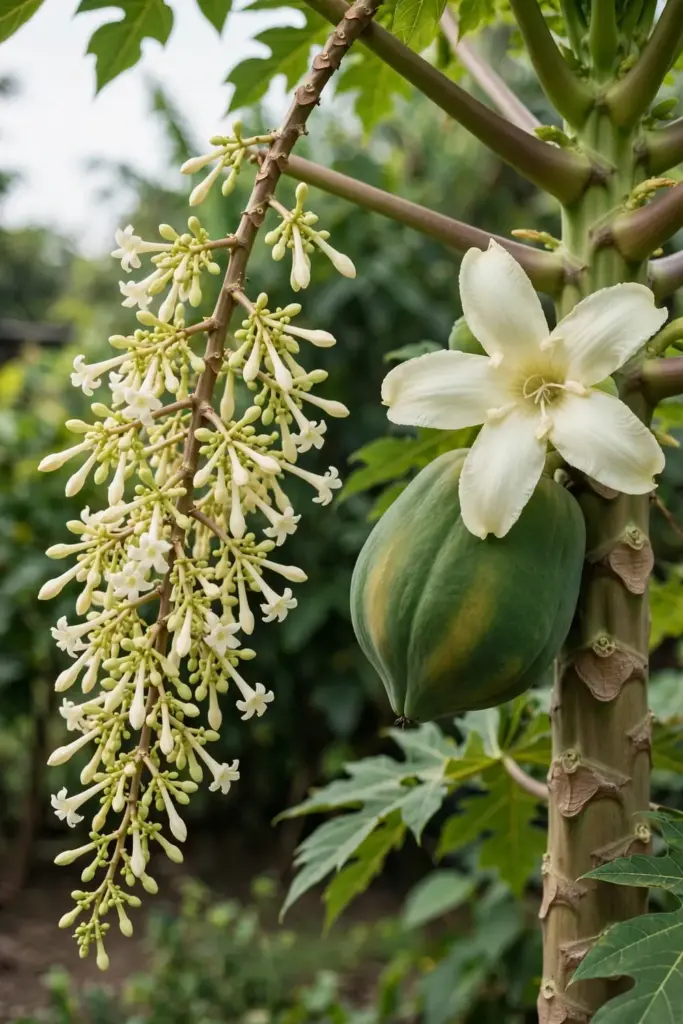
Papaya seeds cause a second confusion: seeds are the black seeds inside the fruit, while flowers are the buds on the sprays. Edibility questions about one do not answer the other. This page is about the flowers only. Seeds, fruit, and leaves each carry their own cautions, and none of them stands in for the flowers.
| Item | What it is | Kitchen use |
|---|---|---|
| Papaya flowers | Male buds on long branched sprays | Cooked vegetable, never raw |
| Papaya seeds | Black seeds inside the ripe fruit | Not the subject of this page |
| Papaya fruit | Fleshy berry from female or bisexual plants | Eaten ripe, or green in cooking with latex caution |
| Pawpaw | Asimina triloba, temperate tree | Not papaya, despite the shared name |
Nursery labels deserve the same check. A pot labeled only “pawpaw” may hold either plant depending on the region. Ask for the botanical name before buying. A seller who cannot give the botanical name cannot confirm what the pot holds.
16. Fix the 5 Failures That Stall Flower Production
Five failures stall most flower pots. Each has a fix. Work through them in order: light, water, feed, then disease. Most failures are light or water, not disease.
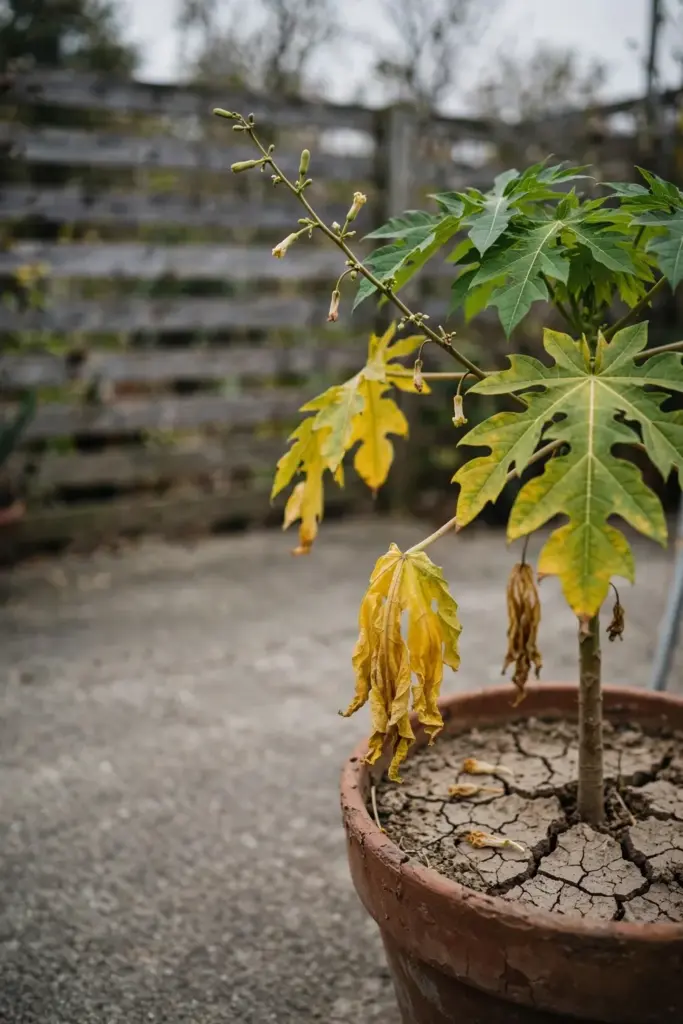
- No sprays by month 5. The plant may be female or bisexual, or short of sun and heat. Check the flower form against the table in the sex section, move the pot to full sun, and wait. A well-fed plant in full sun flowers about 4 months after planting, per the same Florida guide.
- Buds drop when drought or cold hits them. Steady water and warmth fix it, and the pot moves indoors before cold nights.
- Yellow lower leaves. Wet mix or hunger yellows the lower leaves. Check drainage, let the top dry, and feed dilute.
- Tall leaning stem. Low light stretches the stem. Move the pot to the brightest spot and stake the stem.
- Mottled, distorted leaves. Suspect ringspot virus. Remove the plant, clean the tools, and start fresh seed. No spray cures it.
A plant that fails twice gets replaced, not nursed all season. Fresh seed costs little, and the next male may outgrow the last. Compost the healthy failures and trash the sick ones.
Frequently Asked Questions
No. Raw papaya flowers stay bitter and astringent, and the stems are very bitter. Always cook the buds, and discard the stems. Rub the buds with salt, boil them in salted water, drain, and boil again if the bite still stings. Cooked flowers turn vegetal, green, and savory with a gentle bitter edge. Serve them in a stir-fry with rice.
Grow one male plant in a pot you can carry. Sow 6 seeds, keep 1 or 2 males, and cull the rest. Set the pot in full sun, move it indoors before cold nights, and feed dilute fertilizer every 10 to 14 days in the growing season. Pick sprays when most buds are still closed. One plant in a pot gives steady sprays through the warm months.
No, male flowers cannot produce fruit. Male flowers carry a rudimentary ovary with no stigma, so they cannot set fruit. A male plant may throw a bisexual flower that sets a small, elongated, poor-quality fruit. That rare fruit is not the crop. Grow male plants for their flower sprays and leave fruit production to female and bisexual plants.
Look at where the flowers sit. Male flowers hang on long, branching sprays 25 to 100 cm long, with small tubular flowers. Female flowers sit close to the stem at the leaf axils, large and single or in small clusters. Bisexual flowers sit near the stem and look intermediate. Wait until the pattern holds for weeks before culling, since young plants shift flower forms.
Drought and cold drop papaya flowers. Plants short of water drop flowers, leaves, and young fruit. Keep the mix evenly moist through the growing season and water deep when the top dries. Cold nights near freezing damage the plant and stall flowering. Move the pot indoors before cold nights arrive, since steady warmth and water hold the sprays on the plant.
This article gives general information only, not medical advice. Unripe papaya latex contains papain, and unripe papaya is possibly unsafe in pregnancy. A rat study found crude papaya latex caused strong uterine contractions, while ripe papaya juice did not. Cooked flower buds are a food, not a supplement. Talk to a clinician about diet in pregnancy before eating papaya flowers.
Keep One Male Papaya by the Kitchen Door
Sow 6 seeds, keep the males, and grow one plant in a pot you can carry. That is how to grow papaya for flowers in a pot. Sun, steady water, dilute feed, and a stake carry the plant through the season. Pick the sprays, boil them twice, and stir-fry them with garlic and chili.
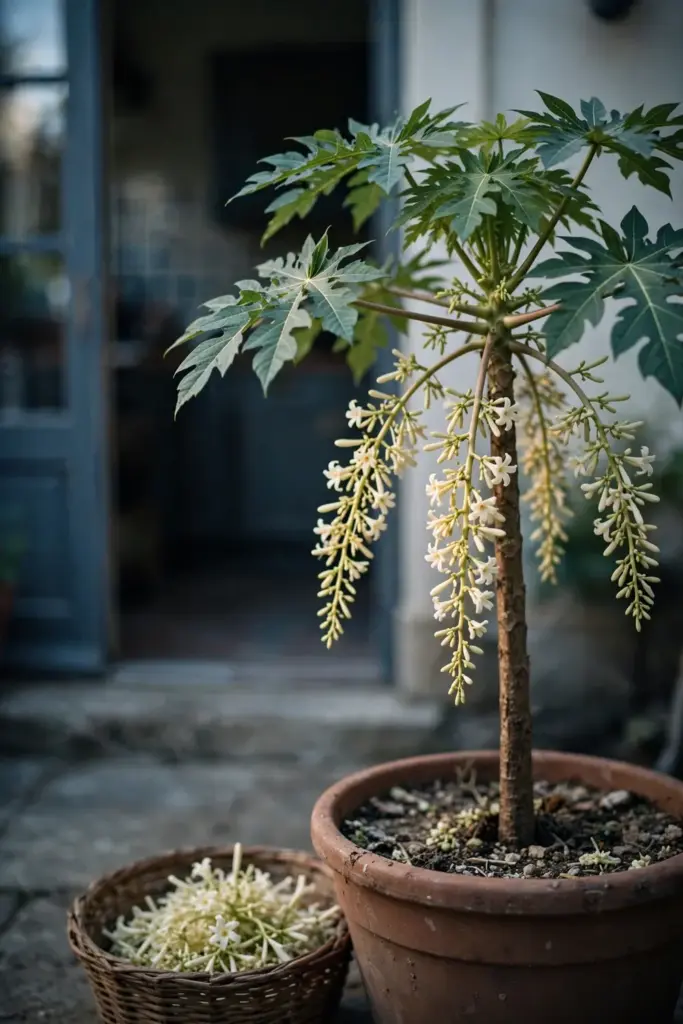
One male plant by the kitchen door gives sprays through the warm months, so start the seeds this week and expect the first sprays about 4 months after planting. The male plants fruit growers throw away are the crop on this page.