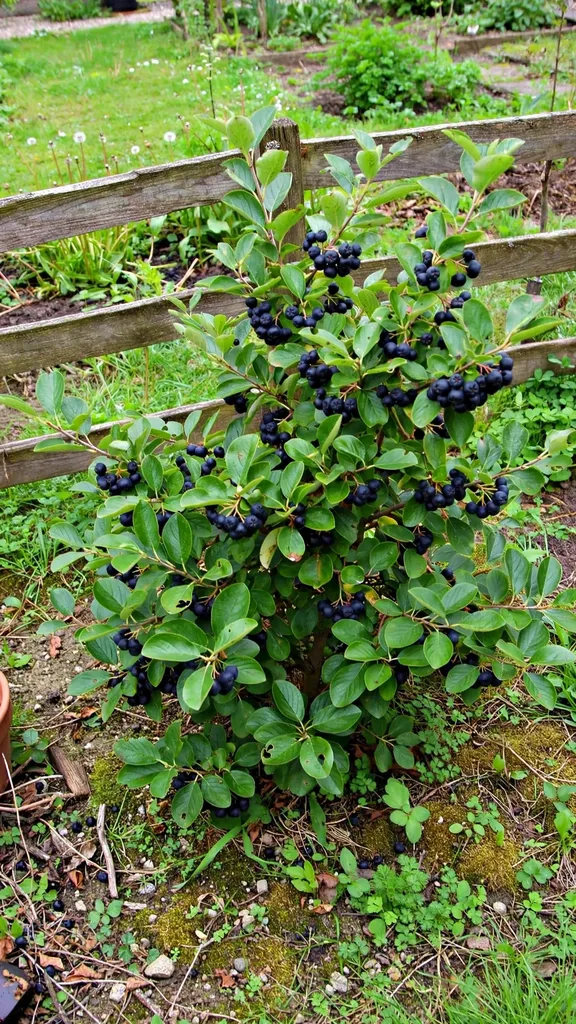
Plant 3 chokeberry shrubs in a sunny row this spring, spaced 1.22 to 1.83 m apart, and the planting starts fruiting in its second year and crops for decades with one late winter pruning pass a year. Learning how to grow chokeberry starts with the name: chokeberry is Aronia, a self-fruitful native shrub in the rose family, and a single plant fruits on its own. Pick the right species, give the roots cold before seed wakes, and cut out old canes on schedule.
Nurseries sell the plant as aronia berry as often as chokeberry. The fruit is a pome, a tiny apple relative, and it ripens black, red, or purple depending on the species. Fresh fruit tastes astringent enough to earn the choke part of the name. Cooked into juice, jam, and syrup, the same fruit turns rich and dark. Gardeners plant it for the crop, the white spring flowers, and the red fall leaves, in that order or any other.
| Attribute | Detail |
|---|---|
| Botanical name | Aronia melanocarpa, Aronia arbutifolia, Aronia x prunifolia |
| Other names | Aronia berry, black chokeberry, red chokeberry, purple chokeberry |
| Plant type | Deciduous multi-stemmed shrub, self-fruitful |
| Height and spread | 0.91 to 2.44 m, species and pruning decide the final size |
| Hardiness | USDA zone 3 and warmer for black chokeberry |
| Sun | Full sun for the heaviest crop and the most even ripening |
| Soil | Well drained ground first choice, wet and dry soils tolerated, slightly acidic preferred |
| Spacing | 1.22 to 1.83 m in the row, 3.05 m between rows |
| Seed treatment | 3 to 4 months of cold moist stratification at 0 to 5 degrees Celsius |
| First fruit | Year 2 from nursery shrubs under good conditions |
| Spread habit | Suckers from the roots and forms a colony over time |
Meet the Aronia Shrub Behind the Chokeberry Name
Chokeberry grows wild across eastern North America, in wet thickets, swamp edges, dry slopes, and open woods. The wild range explains the garden range. One species settles in boggy ground that drowns a raspberry row. Another holds a dry bank. Garden plants inherit that tolerance and ask for very little once the roots settle.
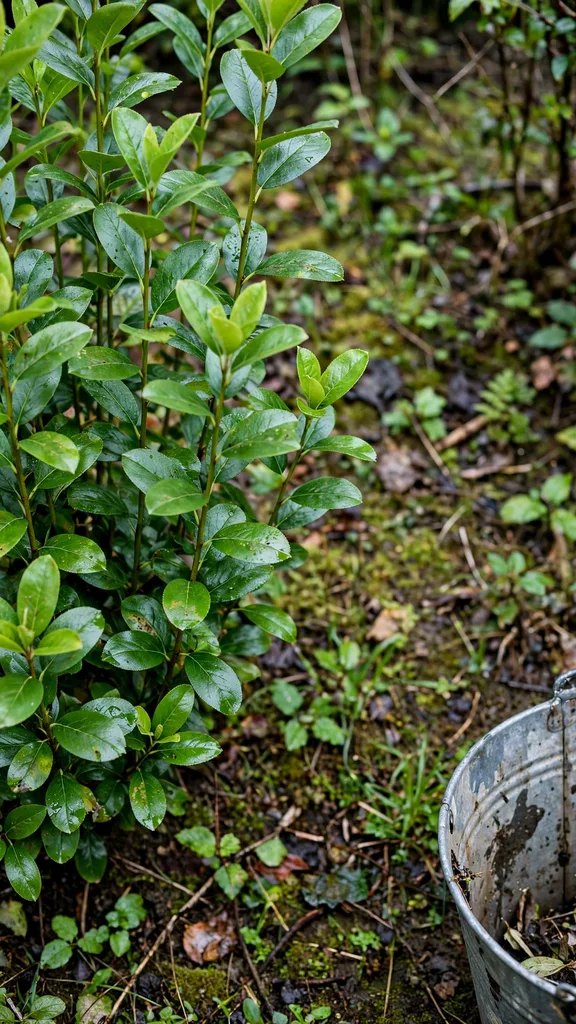
The shrub carries glossy green leaves through summer and turns them red and orange in fall. White flower clusters open in spring, after the worst frost risk has passed in most districts. Fruit follows in loose clusters at the shoot tips. Birds work the planting hard once the fruit colors, and deer browse young growth in winter. A fence around a young row pays for itself in saved canes.
The plant also fixes its place in a wildlife corner without any extra planting. Flowers feed spring pollinators. Dense suckering growth shelters nesting birds. Fruit left past the harvest window feeds the same birds in early winter. A fruit row and a wildlife thicket are the same planting, managed at two different intensities.
Chokeberry Is Not Chokecherry
Chokeberry and chokecherry share a common name fragment and nothing else. Chokeberry is Aronia, a shrub in the rose family that tops out at shrub height and carries its fruit in flat topped clusters at the ends of shoots. Chokecherry is Prunus virginiana, a small tree in the same wider family that carries its fruit in long hanging clusters along a central stem. Leaf, fruit cluster, and mature size separate the two plants at a glance once you know the shapes.
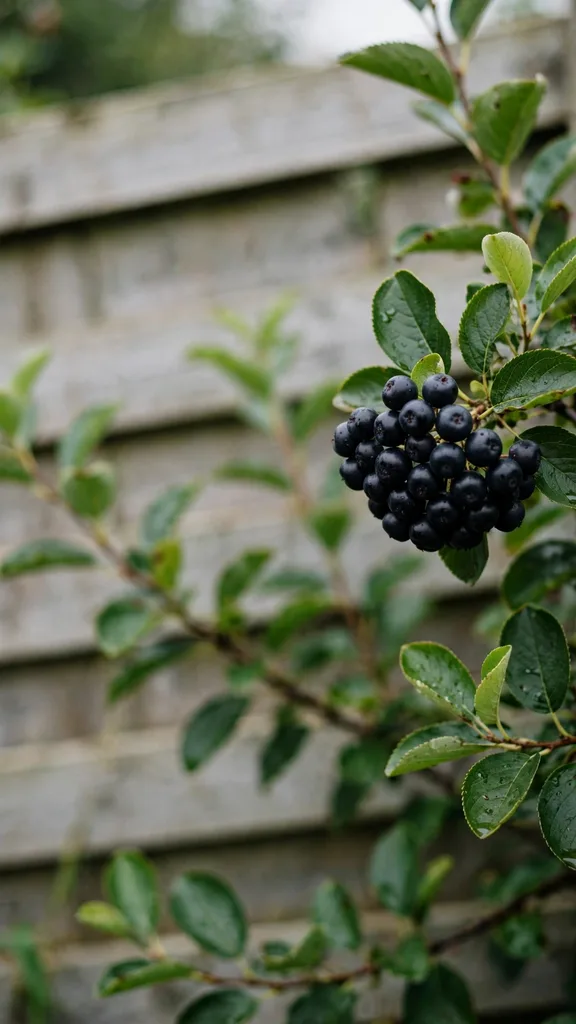
The safety stakes sit on the chokecherry side of the fence. Iowa State University Extension warns gardeners not to confuse aronia with chokecherry, Prunus virginiana, because chokecherry leaves, stems, and seeds carry toxic amounts of hydrocyanic acid. Chokeberry fruit, leaves, and stems carry no such warning. A gardener who forages a wild thicket on a common name alone risks picking the wrong plant.
Read the cluster shape before you pick anything wild. Flat topped cluster, shrub sized plant, glossy leaf: chokeberry. Long dangling cluster, tree sized plant, leaf with a fine toothed edge: chokecherry, a different plant with different rules. Nursery stock removes the guesswork entirely. Buy Aronia by its botanical name and the confusion ends at the checkout.
The names tangle in seed catalogs too. A listing that shortens both plants to choke invites a wrong order. Check the Latin name on every listing, every time. Aronia melanocarpa on the label means the plant on this page. Prunus virginiana means a tree for a different corner of the garden.
Choose Black, Red or Purple Chokeberry and a Named Cultivar
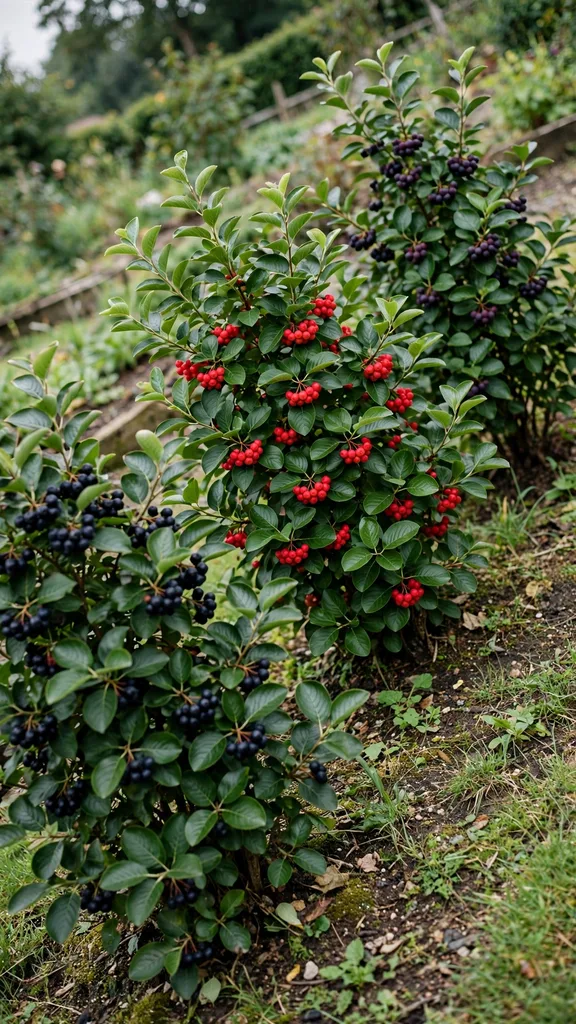
Three species cover the garden trade, and the choice between them decides fruit color, shrub size, and site fit. Black chokeberry suits the fruit row. Red chokeberry suits the wet corner and the ornamental border. Purple chokeberry, a natural hybrid of the black and red species, lands between them in size and fruit color.
| Species or Cultivar | Botanical Name | Fruit Color | Mature Height | Best Garden Use |
|---|---|---|---|---|
| Black chokeberry | Aronia melanocarpa | Black | 0.91 to 1.83 m | Fruit rows, juice and jam crops |
| Red chokeberry | Aronia arbutifolia | Red | 1.83 to 3.05 m | Wet ground, ornamental borders, wildlife fruit |
| Purple chokeberry | Aronia x prunifolia | Dark purple | 1.22 to 2.44 m | Mixed borders, mid sized fruit plantings |
| Viking | Aronia hybrid selection | Black, large | 1.83 to 2.44 m | Heavy fruit production |
| Nero | Aronia hybrid selection | Black, large | 1.22 to 1.83 m | Compact fruit rows |
Named cultivars fruit more evenly than seedlings. The Iowa State guide lists ‘Viking’ and ‘Nero’ among the aronia and mountain ash hybrids grown for fruit production because they produce large berries. Seedling plants vary in berry size, ripening date, and shrub vigor. A row of one named cultivar ripens in one pass and prunes to one size.
Ornamental selections trade fruit size for form. Compact selections suit a foundation bed where a full sized fruit shrub overwhelms the planting. Conservation selections bred for windbreaks grow tall and fruit lightly. Match the selection to the job before you buy. A windbreak cultivar in a jam row disappoints every August.
Buy dormant bare root or container stock from a nursery that labels the cultivar in full. A tag that reads only aronia, with no species and no cultivar, sells you a lottery ticket. The plant fruits, eventually, at some size, in some shade of dark. Gardeners who want a known crop buy a known name.
Pick a Full Sun Site and Test the Soil
Full sun grows the crop. Iowa State University Extension recommends full sun for the best crop yields and uniform fruit ripening, with plants performing best in well drained soils. Part shade grows a sound ornamental shrub and a thin crop. Six hours of direct sun marks the floor for a fruit row. A site that shades out by midday fruits on the sunny side only.
Soil tolerance runs wide on this shrub. Wet ground, dry sand, and ordinary loam all grow chokeberry. The plant prefers slightly acidic ground, and the University of Maine Cooperative Extension culture guide reports soil pH recommendations for black chokeberry ranging from 5.0 to 6.5 on the Minnesota guidance it cites. Test the bed before planting and correct strong alkalinity with sulfur worked into the row the season before. A pH far outside the band grows yellow leaves and a stalled shrub.
Skip the frost pocket at the bottom of a slope. Cold air pools there on still spring nights, and the flower clusters sit low enough to catch it. A mid slope or a flat open site drains cold air away from the blooms. The shrub itself survives deep winter cold without damage. The crop is the tender part, and only for a few nights each spring.
Space the row for the mature plant, and for the mower. The University of Maine guide reports commercial spacing of 1.22 to 1.83 m between plants within rows and 3.05 m between rows. A home row on the wide end of that band prunes and picks without a fight. Crowded shrubs shade their own fruiting wood and ripen unevenly.
Plant at Nursery Depth in Spring or Fall
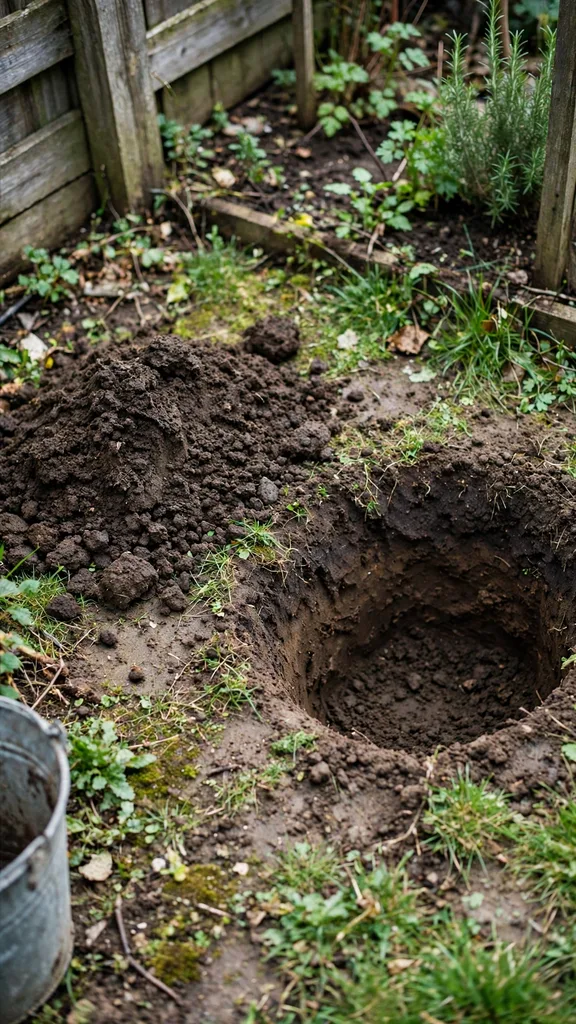
Plant dormant stock in early spring as soon as the ground works, or in fall at least 6 weeks before the ground freezes hard. Container stock plants through the growing season with steady watering. Dig the hole twice the width of the root ball and no deeper. A deep hole buries the crown, and a buried crown rots in wet winters.
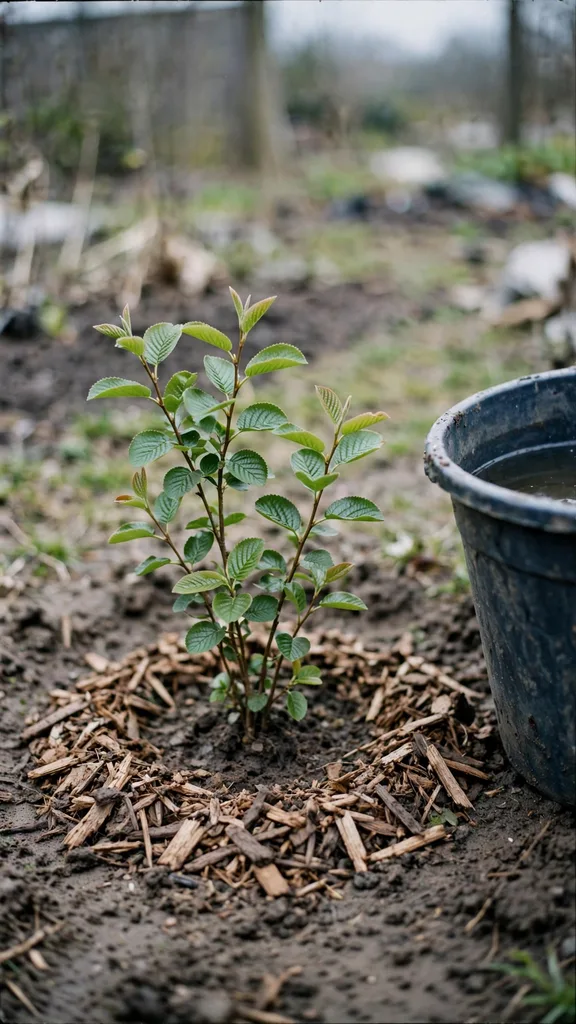
Set the shrub at the depth it grew in the nursery, spread circling roots outward with your fingers, and backfill with the dug soil. Firm the fill in layers and water the hole full twice. The second watering settles the last air pockets against the roots. Mulch the row 7.6 cm deep with wood chips or straw, and keep the mulch ring 10.2 cm clear of the stems. Mulch piled against the stems holds moisture against the bark and invites rot at the crown.
Water a spring planting weekly through its first dry spell. A fall planting needs water at planting and again before freeze up if rain fails. Stake nothing. A chokeberry crown anchors itself, and a staked shrub grows a weak root plate. Wind rock on a new planting means the hole was too loose, so firm the soil again and water it in.
Plant a single shrub if one shrub is all the garden fits. The plant is self-fruitful and sets a full crop alone. A second cultivar nearby can lift yields through cross pollination. Gardeners with room for 3 shrubs gain a longer picking window from 2 cultivars with staggered ripening.
Grow Chokeberry From Seed After Cold Stratification
Seed grows the species, never the cultivar. A ‘Viking’ seedling is a new plant with its own berry size and vigor, and the wait runs longer than the wait from nursery stock. Grow seed for a wildlife thicket, a windbreak, or a cheap long row where uniform fruit matters little. Buy named plants for the jam row.
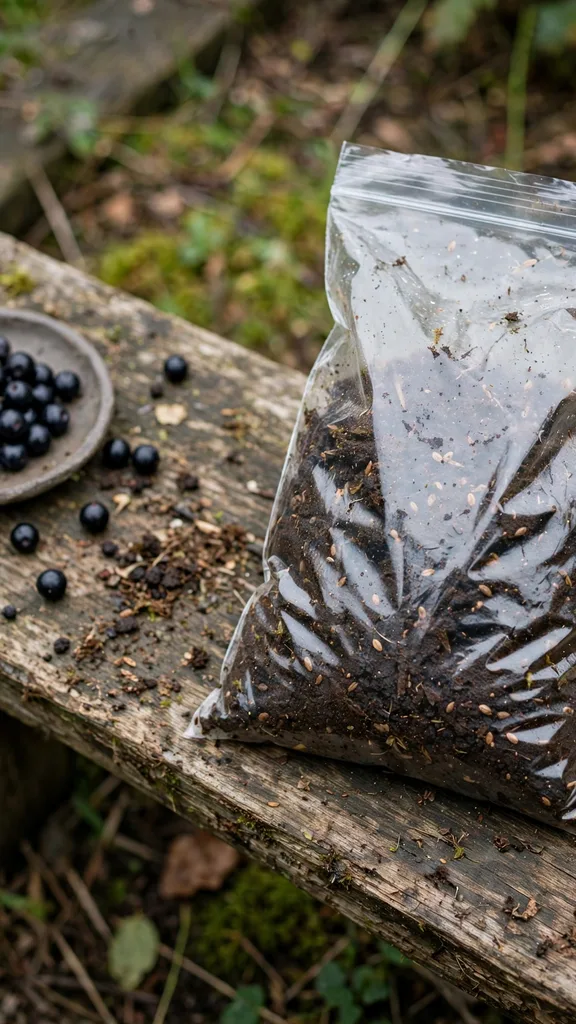
Clean the seed first. Crush ripe fruit in water, rub the pulp loose, and float off the skins and empty seed. Sound seed sinks. Dry the cleaned seed on paper before storage. The scale of seed in this fruit surprises most gardeners: the University of Maine guide reports that 45.36 kg of dried fruit yields about 3.63 kg of seed. A handful of clusters covers a home nursery bed.
Cold wakes the seed. The same University of Maine guide reports that seed dormancy breaks with stratification in moist peat for 3 to 4 months at 0 to 5 degrees Celsius. Mix cleaned seed through damp peat in a sealed bag, refrigerate it through winter, and check monthly for mold or early sprouting. Seed that sprouts in the bag goes into a pot the same day. Fall sowing outdoors lets winter do the same job in the ground, at the cost of mice and washed out rows.
Sow stratified seed shallow in spring, under 0.64 cm of fine soil or grit, and keep the bed moist until germination. Seedlings grow slowly in year one. Pot them on or line them out in a nursery bed for a second year before field planting. A 2 year seedling transplants with a root system that survives the move. A first year seedling moved in a dry week often dies at the surface while its roots sit in dry dust.
Take Cuttings and Divisions for True to Name Plants
Cuttings clone the parent plant exactly. Softwood cuttings taken in late May and early June root in ventilated frames, and the University of Maine guide records that timing from Dirr and Heuser for softwood and semi softwood cuttings of black chokeberry cultivars. Take 10.2 to 15.2 cm cuttings from the current season growth, strip the lower leaves, and set them in a gritty mix under cover. Roots form in weeks, and the young plants grow on in pots until fall or the following spring.
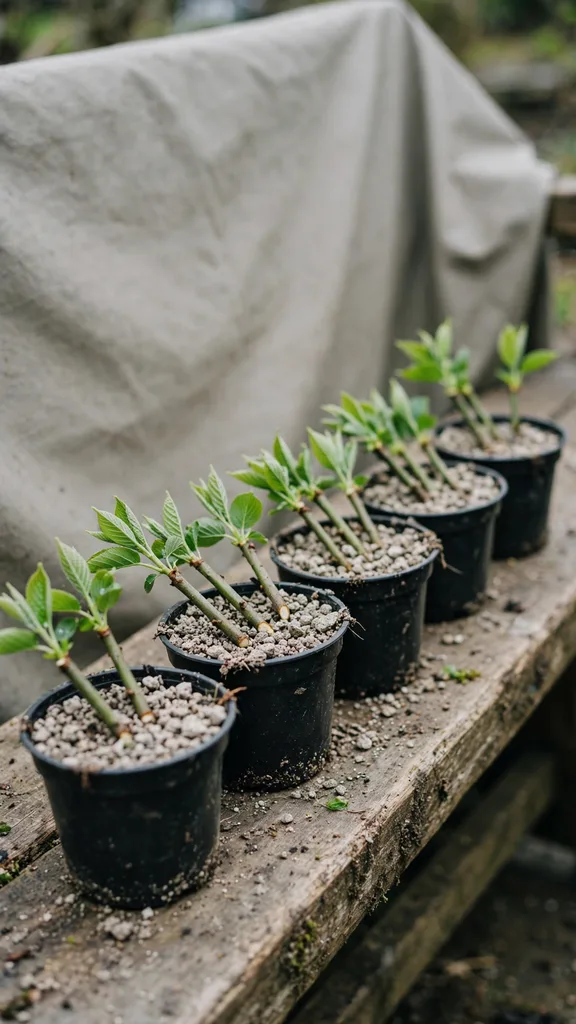
Hardwood cuttings work too, with a piece of 3 year old wood left attached at the base of the cutting. Winter taken hardwood material roots slower and less evenly than June softwood. Gardeners with one prized shrub take both kinds across the year and keep whichever roots. Failed cuttings cost a pot of grit and ten minutes. A failed grafting project costs a season.
Division multiplies an established clump fastest of all. A mature suckering shrub lifts in dormancy and splits into rooted sections, each with canes and its own root mass. The University of Maine guide reports divisions as high as 25 from a single 2 year old plant in the propagation work it cites. Home divisions run lower, 4 to 8 strong sections from a garden clump, and each section plants like a nursery shrub. Water divisions weekly through their first season. A dry division shrivels at the cane tips and starts the year a size smaller.
Water the First 2 Seasons and Mulch the Row
Establishment water decides the first crop date. Iowa State University Extension notes that aronia plants need watering during the first year or two of establishment and then only during very dry periods. Soak the root zone weekly in a rainless week, deeply enough to wet the full root ball and the soil around it. Shallow daily sprinkling grows shallow roots. A shrub trained on surface water wilts in its first real drought.
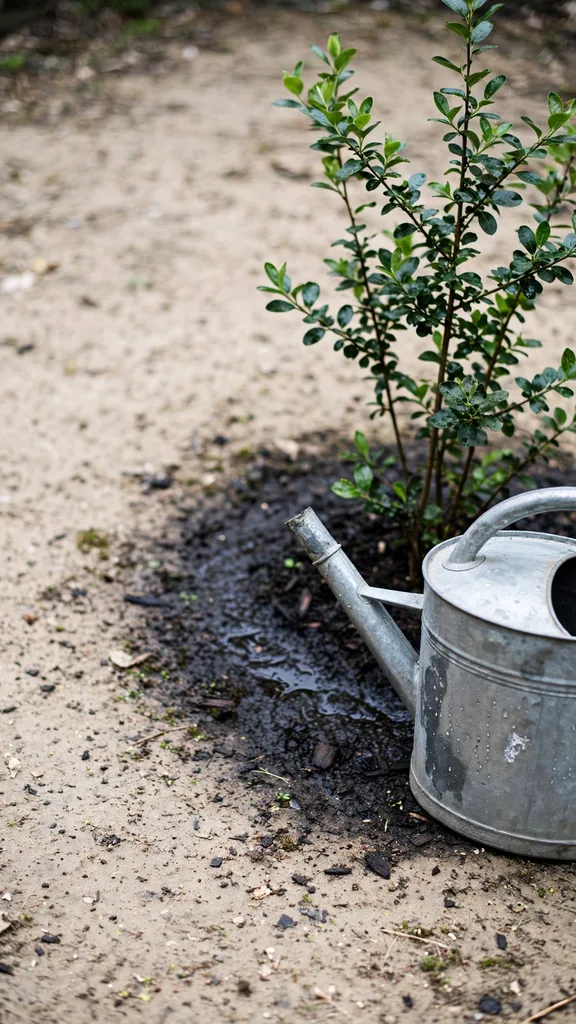
Mulch carries the row through summer. A 7.6 cm layer of wood chips or straw cuts evaporation, cools the root zone, and blocks the weed seedlings that compete hardest with a young shrub. Pull mulch back 10.2 cm from the stems each spring and check the crown for rot or rodent damage. Voles tunnel under deep mulch in winter and girdle stems at the base. A clear ring around the crown removes their cover.
Feed lightly or not at all. Rich feeding grows long soft canes, delays fruiting, and feeds the sucker problem described below. Average garden soil grows a full crop without fertilizer. A shrub that yellows on thin sand gets a modest spring dressing of compost worked into the mulch layer. Yellow leaves on wet alkaline ground point at pH, and fertilizer poured on that problem changes nothing.
Established shrubs ride out drought on their own roots. The leaves may roll at midday in a hard dry spell and recover by morning. Water an established planting only when the fruit is sizing and the rain has failed for weeks. Fruit shrivels on a thirsty shrub in August. Leaves alone recover. Berries do not.
Control Suckers and Keep the Colony in Bounds
Chokeberry spreads by root suckers, and the spread is the plant working as designed. Suckers rise a foot or more from the parent clump, leaf out, and root into new crowns. Left alone for five years, one shrub becomes a thicket several paces wide. That thicket is a gift on a bank or a boundary line. It is a problem in a tidy fruit row.
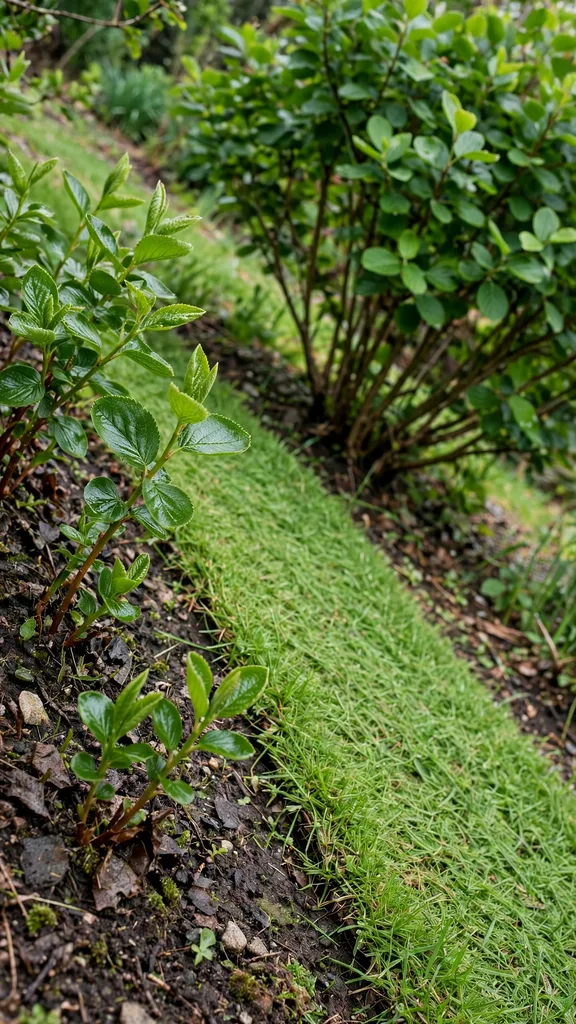
Cut unwanted suckers at ground level while they are small, in spring and again in midsummer. A sucker cut young costs the parent nothing. A sucker left to thicken steals water and light for a full season before you remove it. Keep some suckers. They are the replacement canes for the old wood you prune out each winter, and a shrub with no young stems ages into a bare legged thicket of old wood.
A mown strip around the planting holds the line with the least labor. Suckers that rise in mown grass die at mower height before they woody up. Gardeners growing trailing brambles use the same mowing trick, and the dewberry planting guide covers a spreading fruit managed the same way. A root barrier sunk 45.7 cm deep stops spread into a lawn or a path where mowing cannot reach. Digging a spade depth trench around the clump each spring severs creeping roots on small plantings.
Decide the final footprint before you plant, and plant the center of it. A shrub planted at the edge of its allowed space spends its life being cut back on one side. Centered in a 3.05 m circle, the same shrub fills its ground and stops at the mower line on every side. Suckers inside the circle stay. Suckers outside it go.
Prune Out 5 Year Old Canes in Late Winter
Prune in late winter or early spring, before bud break, while the cane structure stands bare and readable. Canes peak young in this shrub. Iowa State University Extension reports that canes reach maximum productivity at 3 years of age and decline as they age, and directs growers to remove 5 year old canes at the base of the crown. The annual pass removes the oldest fifth of the canes, the crossing wood, and the broken stems. What stays is young, lit, and fruitful.
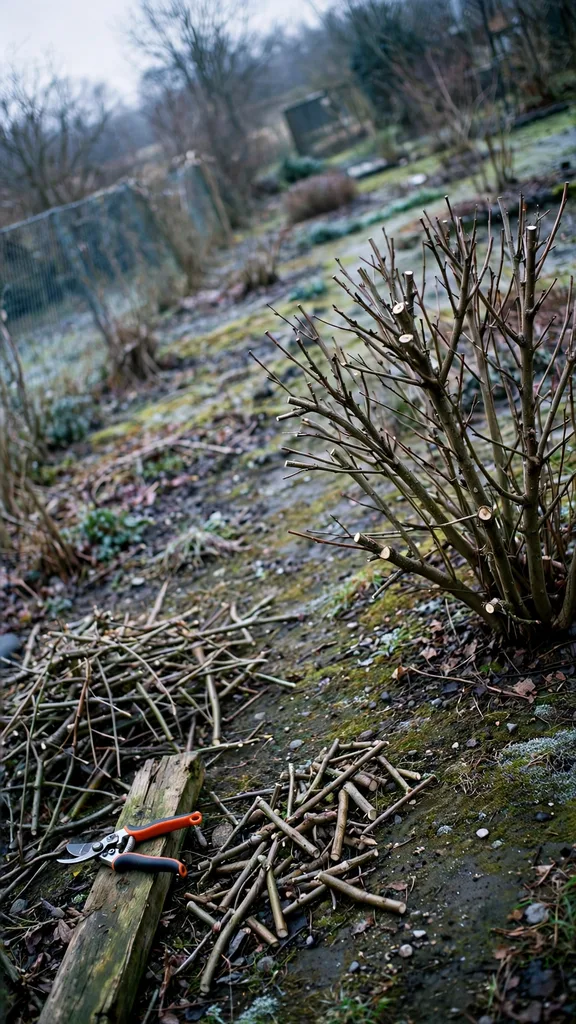
Size control runs through the same cuts. The Iowa State guide notes that annual pruning can hold a plant near 0.91 m across, while an unpruned shrub grows to nearly 2.44 m wide and tall. Pick your size at planting and prune to it every year. A shrub allowed to reach full size and then cut hard sulks for a season. A shrub held at size from year two never notices the shears.
Neglected shrubs renovate over two winters, never one. Take out half the old canes the first winter and the rest the second. The drastic route exists: the whole plant cut to the ground renews the clump, and the University of Maine guide reports the Russian practice of cutting plants back to 1 m every 4 to 5 years once plants reach 8 to 10 years of age. Ground level cutting costs at least 2 fruitless years while the crown rebuilds. Half measures keep fruit on the table every year.
Skip summer pruning on a fruiting shrub. The next season flower buds form while the current crop ripens, so a midsummer haircut removes next year flowers along with the trimmings. Winter cuts only. A storm broken cane comes out any day it breaks, cut clean at the base, and that single exception keeps the rule intact.
Grow Chokeberry in a Large Container
A container grows chokeberry on a patio, a balcony, or rented ground where digging is off the table. Start with the largest pot the site holds. Nursery stock itself ships in big containers: Iowa State University Extension notes that aronia plants are typically sold in 11.36 L or 18.93 L nursery containers. A fruiting shrub needs at least that volume in its permanent pot, and more grows a bigger crop. A small pot grows a small shrub that dries out daily in August.
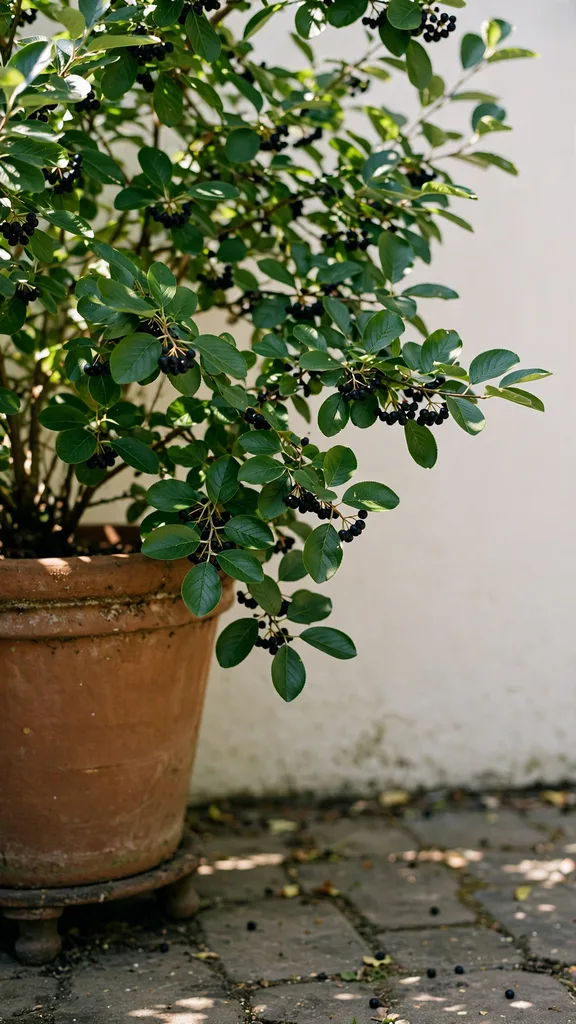
Fill the pot with a gritty, free draining mix and set it on feet so the drainage holes stay clear. A pot standing in its own runoff rots its roots through winter. Water container plants through every dry spell for the life of the planting, not only the first 2 seasons. Pot soil dries in days where garden soil dries in weeks.
Compact cultivars earn their place here. A ‘Nero’ sized shrub fruits inside a large pot without the annual fight against full sized growth. Gardeners who grow other fruit in pots, such as the goji berries planting, already know the rhythm: big pot, gritty mix, steady water, winter protection for the root ball in cold districts. Move the pot against a sheltered wall before hard freezes, or wrap it. Roots in a pot take the full air temperature. Roots in the ground never do.
Feed a container shrub lightly each spring. Pot soil holds no reserves, and a fruiting plant draws it down across a season. A modest balanced feed at bud break, watered in, covers the year. Yellow leaves by midsummer on a fed plant point at water, not food. Check the drainage holes before you reach for the fertilizer bag.
Harvest Black Fruit in Late Summer and Cook It Tart
Black chokeberry ripens from late August through mid September in most districts, and the window runs long. Iowa State University Extension reports that the fruit hangs well on the plant, allowing a harvest window of up to 4 to 6 weeks. Red chokeberry colors earlier and holds its red fruit into fall, which is half its ornamental value. Purple fruit lands between the two in timing and color.
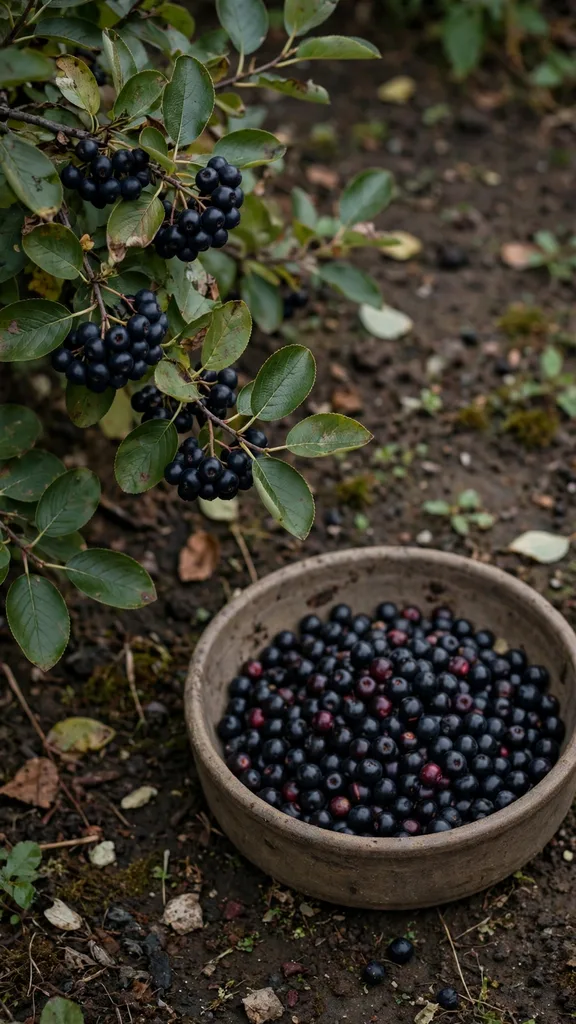
Color alone lies about ripeness. The fruit turns black weeks before the sugar peaks, and a berry picked on color tastes like chalk and alum. Sugar decides the picking date: the Iowa State guide puts edible sugar content at 18 percent, rising as high as 22 to 24 percent. Taste a berry from the sunny side and the shaded side before you strip a cluster. The cluster ripens unevenly, and the shaded fruit lags days behind.
Pick into a shallow container, in clusters, and snip or strip the fruit from the stems at the kitchen table. Berries run small, about 0.64 cm across in the Iowa State description, in loose clusters of 10 to 15 berries. A full shrub takes an hour to pick clean. Net the row once the fruit colors if birds find it first. Birds ignore the unripe fruit and strip the ripe crop in days.
Cook the harvest, freeze it, or juice it. Fresh chokeberry puckers the mouth by design, and the astringency mellows under heat and sugar into jams, syrups, pies, and juice blends. Freeze berries loose on a tray for winter smoothies. The same late summer harvest rhythm governs other dark native fruit, and gardeners picking elderberry the same month will recognize the pattern: taste before you pick, net against the birds, and cook the tartness into something rich. Fruit left on the shrub past picking feeds birds into winter and costs the gardener nothing.
Frequently Asked Questions
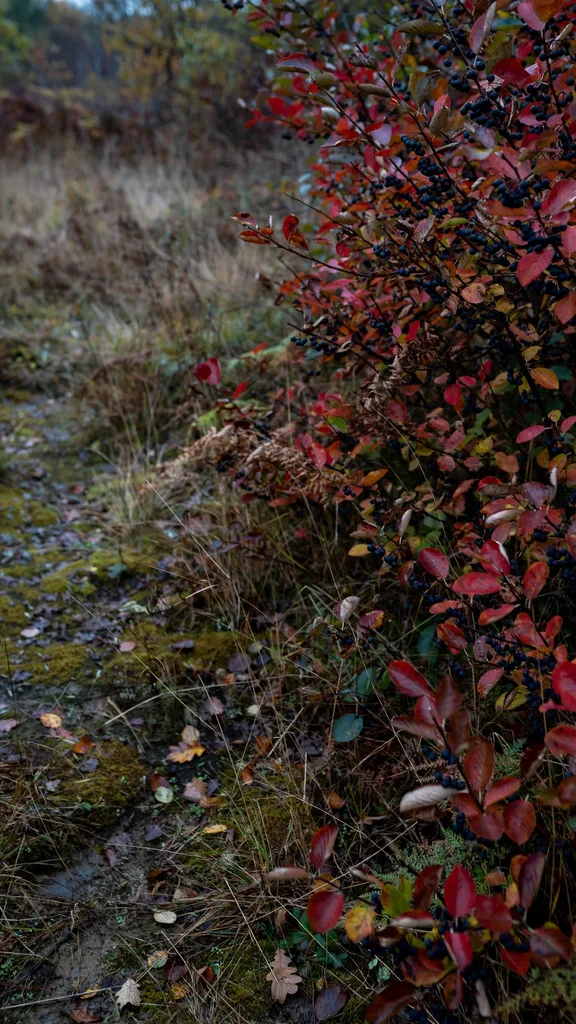
A nursery grown shrub flowers and starts producing in its second year under good conditions, with the crop building as the canes mature and peaking on 3 year old wood. Seed grown plants take longer, spending 2 years in a nursery bed before field planting and fruiting after that. Patience in year one buys decades of crops from a long lived shrub.
Chokeberry is self-fruitful and fruits with no pollinator plant at all, so a single shrub in a small garden still crops. One cultivar is enough for fruit production. Planting a second cultivar nearby can lift the set through cross pollination and stretch the harvest window when the two ripen on different weeks. Bees and other insects move the pollen within the one shrub.
Chokeberry spreads by root suckers and forms a colony, and in a small bed that spread reads as pushy. It is a native shrub growing where it evolved, not an invasive import escaping into wild land. Mow a strip around the planting, cut unwanted suckers small, and the colony holds its line. Left fully alone, one shrub thickens into a thicket over five years.
Yes, and most gardeners do it once. The fruit is safe and edible raw, and the astringent tannins pucker the mouth hard enough to explain the choke in the name. Sugar content decides the taste more than color does, so a fully ripe berry picked late in the window tastes milder. Cooking, juicing, and freezing all soften the bite considerably.
Prune in late winter, before bud break. Cut 5 year old canes at the base, plus crossing wood. Summer pruning removes next year flower buds.
A row pruned on schedule and picked on sugar gives a dark crop every late summer for decades. A row left unpruned gives three good years, then old wood and sour fruit.