Are you tired of spending your hard-earned money on expensive, store-bought immune boosters that barely seem to work? I know that feeling of frustration when you work forty hours a week, come home exhausted, and still want to provide the best health for your family without breaking the bank. It is incredibly discouraging to see your garden space go to waste while you pay a premium for “superfoods” at the local organic market. I have been in that exact position, and I found that the solution is much simpler and more rewarding than a trip to the supplement aisle: learning how to grow elderberry fruits right in your own backyard.
Why Every Backyard Needs Elderberry Bushes
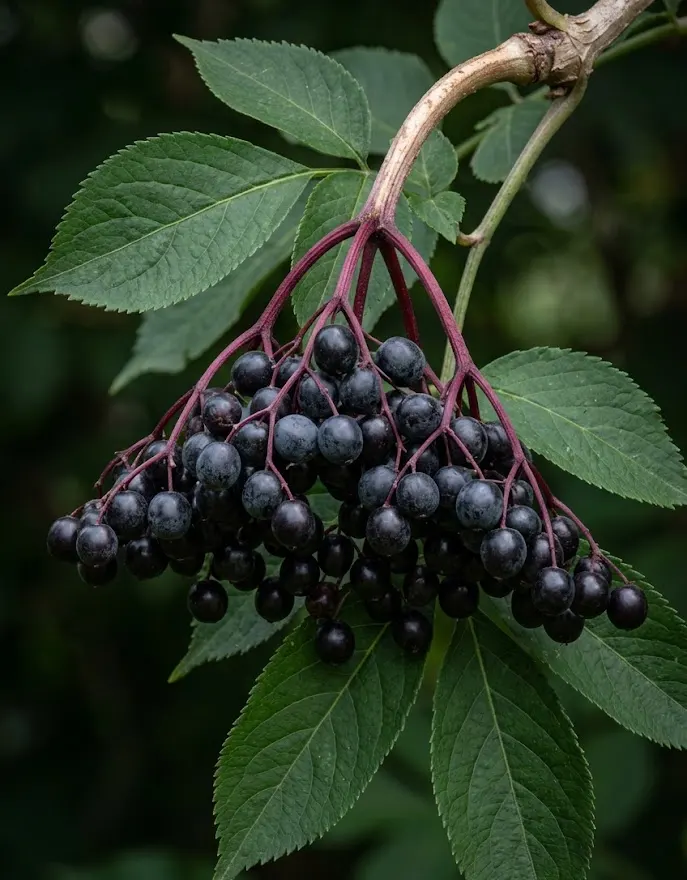
I have spent years observing different shrubs, and I can tell you that few plants offer the return on investment that the elderberry does. You want a garden that works as hard as you do, and growing elderberries is the ultimate shortcut to a productive landscape. I found that these plants are the “workhorses” of the homestead. They provide privacy, beautiful flowers, and an abundance of medicinal fruit. You will find that most berries are finicky, requiring perfect soil and constant attention, but the elderberry thrives where others fail.
I remember my first year trying to establish a berry patch; the blueberries died from soil acidity issues, and the raspberries were eaten by pests before I could blink. Then, I discovered the resilience of the Sambucus genus. When you understand how to grow elderberry fruits, you are essentially planting a permanent health insurance policy. You are investing in a plant that produces “the medicine chest of the people,” and for a professional balancing a career and a hobby, the low-maintenance nature of this shrub is a lifesaver.
The Economic Benefit of Homegrown Berries
If you earn $50,000 a year, you know that every dollar in your hobby budget counts. Buying a small bottle of elderberry syrup can cost you $20 or more. I calculated my harvest last year, and a single mature bush yielded enough fruit to make twenty bottles of that same syrup. You are looking at a massive savings potential. I want you to see your garden not just as a place for flowers, but as a source of high-value assets.
Environmental Impact and Wildlife
I love watching the birds in my garden, even if I have to fight them for the berries later. When you grow these fruits, you create a haven for pollinators like hoverflies and bees. You are contributing to the local ecosystem while securing your own food source. I have noticed that my elderberry bushes act as a “riparian buffer,” holding the soil together during heavy spring rains. You will appreciate how these plants improve your land’s health while asking for very little in return.
Versatility in the Landscape
You might think you need a massive farm to produce enough fruit for a family, but I have grown these in suburban corners and even large containers. I found that the ornamental varieties, like Black Lace, provide the same deep-purple drupes as the wild types but with the added bonus of looking like a high-end designer shrub. You can tuck these into the corners of your property where the ground stays a bit too damp for other plants. I have seen them thrive in spots where even grass struggles to grow.
Popular Elderberry Varieties for Home Gardens
| Variety Name | Species | Key Feature | Best For |
| Adams | S. canadensis | Massive fruit clusters | Large-scale syrup making |
| York | S. canadensis | Largest berries available | Cross-pollination with Adams |
| Wyldewood | S. canadensis | High nectar, heavy yields | Commercial-grade home harvests |
| Bob Gordon | S. canadensis | Pendulous heads (harder for birds to see) | Maximum berry weight |
| Black Lace | S. nigra | Dark, lacy foliage | Ornamental edible landscaping |
| Johns | S. canadensis | Early ripening | Short growing seasons |
Getting Started: Choosing Your Elderberry Variety
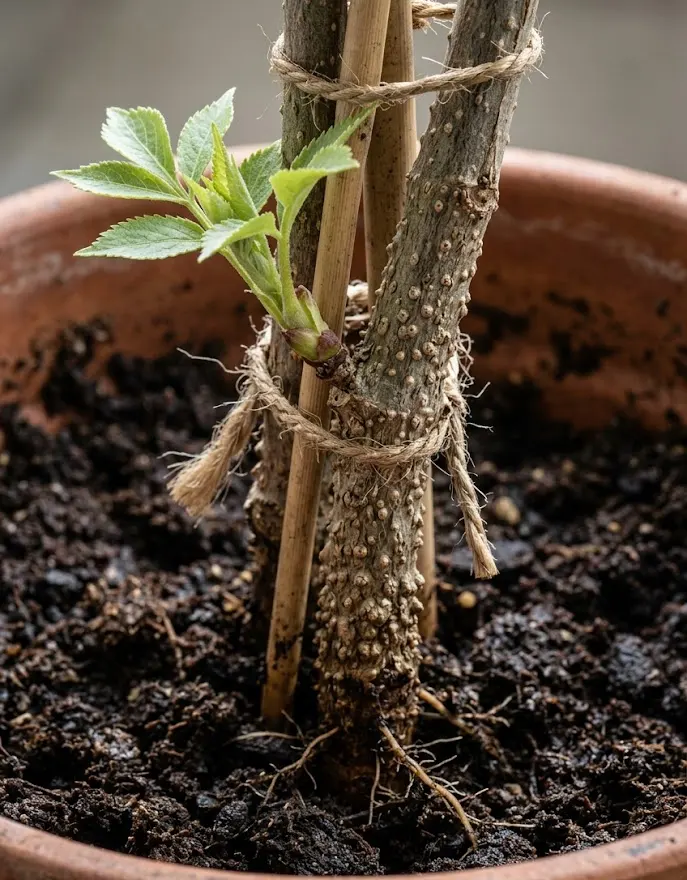
When you decide to learn how to grow elderberry fruits, the first choice I want you to make is selecting the right species for your climate. I have found that many beginners make the mistake of buying the first plant they see at a big-box store without checking the botanical name. You need to know the difference between Sambucus canadensis and Sambucus nigra.
I primarily grow the American Elderberry (Sambucus canadensis) because it is incredibly hardy and native to much of North America. You will find that these varieties are more tolerant of varying soil types and are less likely to be hit by European-specific pests. I have noticed that the American varieties tend to sucker more, meaning they spread out and create a thicket. This is great if you want a hedge, but you should keep it in mind if you have a smaller yard.
The Importance of the Pollinator Partner
I cannot stress this enough: you generally need two different varieties to get the best fruit set. While some elderberries are technically self-fertile, I have seen my yields triple when I planted an ‘Adams’ near a ‘York’. You want that cross-pollination to ensure your flowers actually turn into heavy clusters of berries. I want you to think of your elderberries as a pair. If you only plant one, you might get beautiful flowers, but your berry harvest will be disappointing.
European Elderberry Nuances
I also grow Sambucus nigra, the European Elderberry. You will find that these often grow more like a small tree than a multi-stemmed shrub. I love using the flowers from these for cordials because they have a slightly more refined floral scent. However, I have found that they are a bit more sensitive to extreme cold than their American cousins. If you live in a Zone 4 or 5 area, I suggest you stick with the American varieties to ensure your plants survive the winter.
Considering Growth Habits
You should consider how much space you really have. I have seen Bob Gordon varieties grow to ten feet tall in a single season. If you are working with a smaller suburban lot, I want you to look at some of the newer, more compact cultivars. I have found that “Lemony Lace” or “Black Lace” can be kept smaller through aggressive pruning while still giving you a decent harvest of fruit. You must match the plant’s vigor to your available maintenance time. I know that after a long day at work, the last thing you want to do is fight a ten-foot-tall thicket that has taken over your patio.
Identifying Quality Nursery Stock
I always recommend starting with “bare-root” plants or high-quality nursery stock rather than trying to start from seed. I have found that elderberry seeds have a very low germination rate and require complex “stratification” (cold treatment) to wake up. You are better off investing twenty dollars in a healthy rooted cutting. I want you to look for plants that have a strong “pith” (the center of the stem) and no signs of “canker” or dark spots on the bark. When you start with a healthy plant, your journey of learning how to grow elderberry fruits becomes much smoother and more enjoyable.
Finding the Best Spot: Sun, Soil, and Space
I can tell you from experience that finding the perfect location is the most critical step in the entire process of learning how to grow elderberry fruits. I have seen so many busy gardeners rush this phase, only to regret it later when their plants struggle. You must realize that unlike an annual vegetable, this shrub is a permanent investment in your landscape. I want you to take a weekend just to observe your yard’s sunlight patterns and drainage before you even pick up a shovel.
I want you to think about three core environmental pillars: how much light the spot receives, what the soil structure is like, and how much physical space the mature shrub will occupy. I have made the mistake of planting an elderberry in a shady corner, and while the plant survived, it never produced more than a handful of berries. You will not maximize your harvest if you ignore these fundamentals.
Sunlight Requirements for Maximum Fruit Production
When it comes to growing elderberries for fruit, sunlight is non-negotiable. I want you to find a location that receives full sun for at least six to eight hours a day. I have found that sunlight is the direct fuel for those massive berry clusters. While the plant can tolerate partial shade, you will notice a drastic drop in fruit production as the shade increases. If your primary goal is making syrup, full sun is your best friend.
I have observed that plants grown in sunnier locations also tend to have fewer issues with powdery mildew, as the sun helps dry the leaves quickly after morning dew or rain. You should place your shrubs where they can maximize the long, warm days of late spring and early summer, ensuring that the critical flowering phase is not hampered by lack of light.
Soil Structure and the Drainage Rule
The elderberry is unique among berry bushes because it actually tolerates soils that are slightly heavy or wet. I have tuck them into corners of my property where other plants wouldn’t survive. However, I have found that they are at their most productive in well-drained, fertile soil. I want you to perform a simple drainage test. Dig a hole, fill it with water, and see how long it takes to empty. If it takes hours, you need to amend the soil.
I find that amending heavy clay soil with organic matter like compost or aged manure is the best approach. You should aim for a soil pH that is slightly acidic, ideally between 5.5 and 6.5. This is slightly less acidic than what blueberries require, making it easier to achieve in most garden settings. I have noticed that a soil rich in organic matter not only helps with drainage but also provides the natural nutrients these vigorous plants need.
The Shallow Root System and Mulching
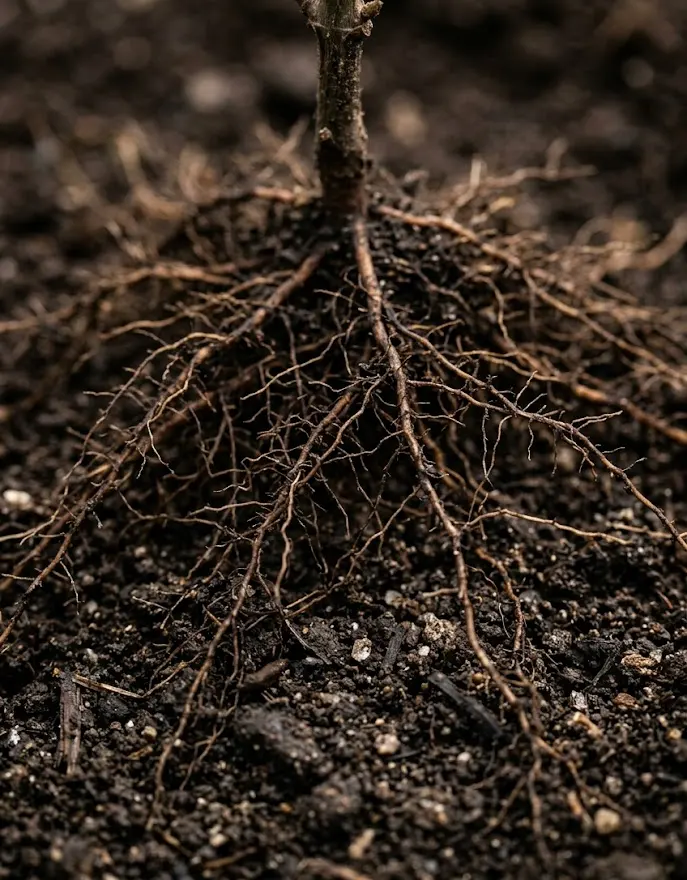
You need to be aware that elderberries have a remarkably shallow root system. This means two things: they are susceptible to drought, and they do not like competition from weeds or grass. I have found that heavy mulching is the best way to manage this. I maintain a 3-inch layer of wood chips around the base of my plants, extending out to the drip line. You will find that this not only suppresses weeds but also keeps the root zone cool and moist.
Spacing for a Mature Harvest
I know that when you buy that tiny rooted cutting, it’s tempting to plant them close together. I made this mistake with my first patch. You must remember that a mature elderberry can grow to be six to twelve feet wide. I want you to space your plants at least six to ten feet apart. I have found that this spacing provides adequate airflow, which is essential for preventing fungal diseases, and allows plenty of room for harvesting.
How to Grow Elderberry Fruits: Step-by-Step Planting
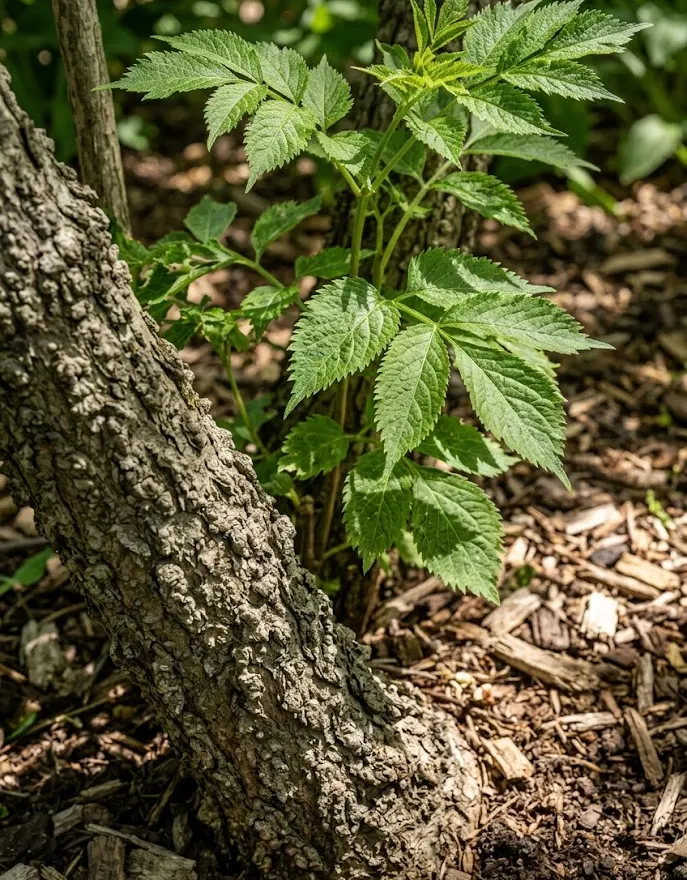
I found that the actual act of planting is surprisingly straightforward. I have taught this to people who have never held a trowel, and they have been successful. The key is in the preparation of the planting hole and the care you take during the plant’s first few weeks. I want you to remember that while the plant is resilient, it needs a little help getting established. If you do this part right, growing elderberry fruits becomes almost effortless in the years to come.
I recommend planting in the early spring, just as the ground can be worked and before the plants break dormancy. This allows the root system to get established before the heat of summer arrives. I will walk you through the entire process, whether you are starting with a bare-root plant or a potted shrub.
Timing Your Planting Weekend
You will find that early spring is universally accepted as the ideal time. In most regions, this means late March or April. If you miss the spring window, late fall is your next best option, after the leaves have fallen and the plant is dormant. I have noticed that plants set in early spring always seem to have a slight head start. You should check your local frost dates; as long as the soil is not frozen, you are good to go.
Pre-Planting Care for Rooted Stock
If you purchased bare-root plants, you must not let the roots dry out. I have saved many plants by giving them a good four-hour soak in a bucket of water immediately before planting. If you have a potted plant, I suggest watering it thoroughly a day or two before you intend to put it in the ground. This ensures the root ball is hydrated and slides easily out of the container. I know that after a busy work week, it’s tempting to leave the plants in their pots, but you will find that a pre-soak makes a significant difference.
Preparing the Perfect Planting Hole
I want you to dig a hole that is twice as wide as the root ball and just as deep. I find that this massive loose-soil zone encourages the shallow roots to spread aggressively. Don’t worry about digging a perfect square; focus on loosening the soil. I suggest mixing a bit of compost or aged manure into the soil you remove from the hole. I have observed that this immediate nutrient boost helps the plant overcome transplant shock.
Setting the Plant and Backfilling
I want you to carefully place the plant in the hole. If you are starting how to grow elderberry fruits from cuttings, you will find that many gardeners place the entire cutting in the ground horizontally, just an inch or two deep. I have found this works well, as roots will form along the entire length of the cutting. For rooted plants, you should set them at the same depth they were growing in the pot or at the original nursery line. I have seen plants struggle because they were buried too deep.
As you backfill the hole with your amended soil, I want you to gently firm it with your hands. You will find that this eliminates large air pockets without compacting the soil too much. I suggest creating a small soil berm or basin around the base of the plant to help capture and hold water during those critical initial weeks.
The Initial Watering
Immediately after backfilling, you must water the plant thoroughly. This first watering isn’t just about hydration; it helps settle the soil around the roots. I find that giving each new plant a full five-gallon bucket of water is a good rule of thumb. I suggests adding a diluted, liquid seaweed fertilizer to this first water to provide micronutrients that support root development. After that, your primary job is to monitor moisture levels, especially if your local spring is dry. You will see new green growth emerging in no time, confirming your success.
Seasonal Care and Maintenance
I cannot stress enough that the secret to a multi-decade harvest lies in consistent, seasonal care. I have seen beautiful elderberry patches fall into decline simply because the owner thought they could ‘set it and forget it’ after planting. You will find that these plants are forgiving, but they respond dramatically to a little regular attention. I want you to develop a simple rhythm of care that follows the seasons. I know that after working forty hours a week, your time is precious, so I have designed this maintenance schedule to be high-impact but low-effort.
I have found that the most critical components of long-term care are moisture management, nutrient replenishment, and strategic pruning. While pruning has its own dedicated section, the day-to-day care is what keeps the plant vigorous enough to handle that pruning. I want you to think of this as proactive health management for your garden’s hardest-working shrub.
Managing Moisture and the Shallow Root Rule
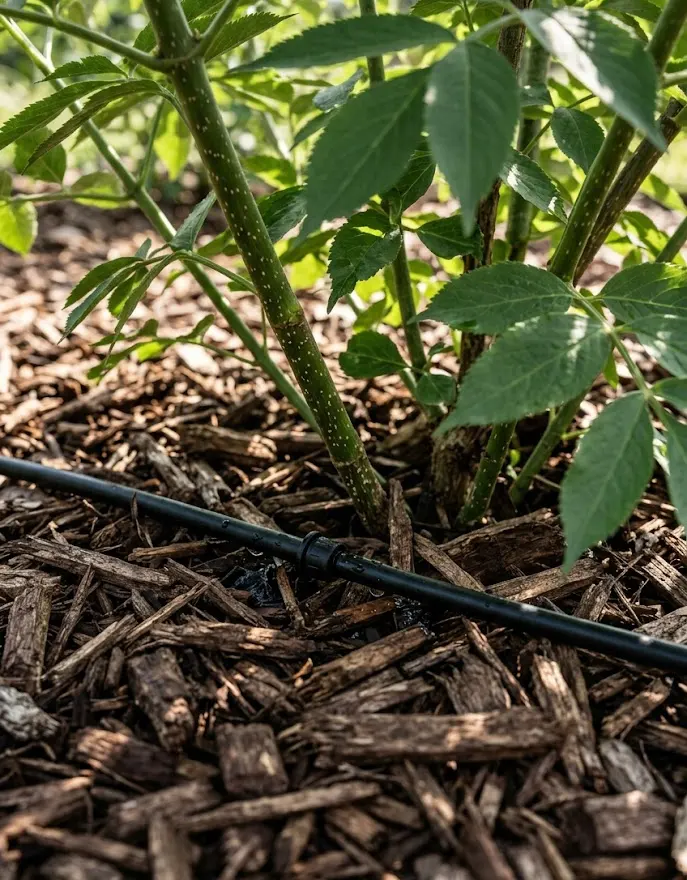
You must remember that elderberries have shallow roots, making them uniquely susceptible to drought stress. I have watched plants in full sun wilt quickly during a July heatwave, which directly impacts the size and quality of that year’s fruit. I find that providing consistent moisture—about 1 to 2 inches per week—is the single most important factor in maximizing your berry yield. I suggests installing a simple drip irrigation system or a soaker hose around the base of the plants, tucked under the mulch.
You will find that mulching, which we established in the planting phase, becomes even more important now. I maintain that 3-inch layer of wood chips year-round. I have noticed that mulch not only suppresses moisture-sucking weeds but keeps the shallow roots significantly cooler during the height of summer. You should check the soil moisture under the mulch regularly; if the top inch of soil is dry, it’s time to water.
Strategic Fertilizing for Vigor and Yield
I suggests a simple fertilization routine. I have found that elderberries, being vigorous vegetative growers, appreciate a nitrogen boost in early spring. You should apply a balanced, organic fruit and berry fertilizer just as the new leaves begin to emerge. I prefers a slow-release granular option, as it provides steady nutrition throughout the critical flowering and fruit-set period.
You must avoid over-fertilizing, especially with high-nitrogen synthetic fertilizers. I have made the mistake of feeding too heavily, resulting in a beautiful, twelve-foot-tall green bush but almost no berries. You will notice that excessive nitrogen encourages leafy growth at the expense of flower development. I emphasizes testing your soil every few years; if your soil is already rich in organic matter, a top-dressing of compost in the fall might be all you need.
Fall Cleanup and Pest Prevention
I suggests a thorough cleanup in the late autumn. While elderberries have few major pests, I have noticed that maintaining good garden hygiene prevents fungal issues like powdery mildew from overwintering. You should rake up and remove any fallen elderberry leaves, especially if they showed signs of spotting or disease during the summer. I prefers composting these leaves only if my pile gets hot enough to kill pathogens; otherwise, I dispose of them elsewhere.
You should also inspect the canes for signs of damage or borer insects. I have found that identifying and removing stressed or infested canes before spring prevents small problems from exploding. After the ground has frozen, I apply a final light layer of mulch to provide extra root insulation through the deepest winter. This seasonal rhythm ensures your plants are ready to explode with growth the moment spring arrives.
The Art of Pruning for Maximum Yield
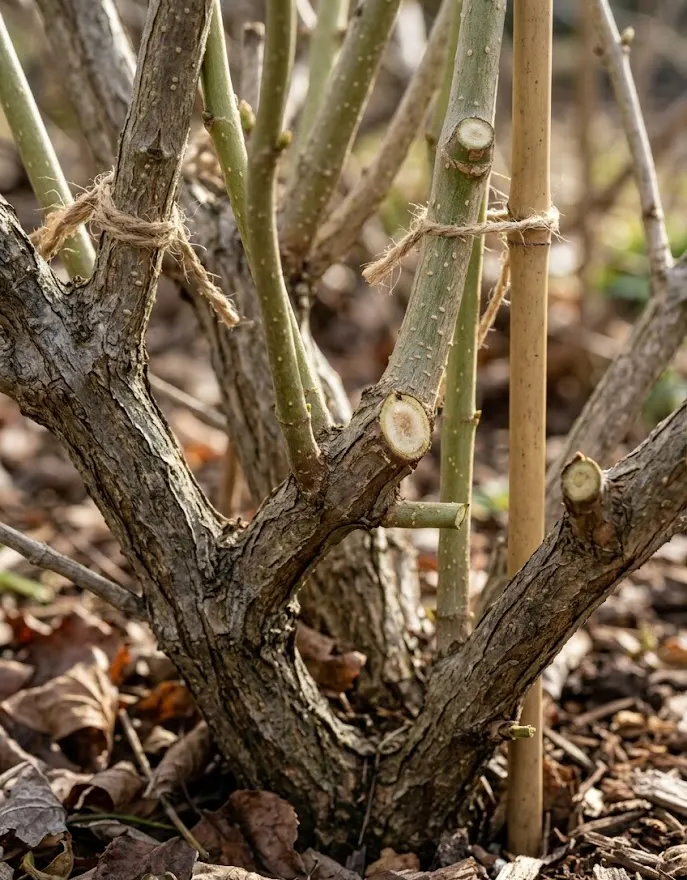
I find that pruning is often the most intimidating task for backyard gardeners, yet it is absolutely critical for achieving a massive elderberry fruit harvest. I have seen unpruned elderberry bushes become tangled, unproductive thickets within five years. You must understand that elderberries bear fruit on new growth, and a strategic pruning routine is what forces the plant to generate that productive wood. I know that after working all week, the idea of aggressively cutting back a plant seems counterintuitive, but I promise you that how to grow elderberry fruits effectively requires this intervention.
I have found that the ideal time for pruning is in the late winter or very early spring, while the plant is still fully dormant. I prefer to get this done on a crisp, dry weekend in February or March, before any buds begin to swell. Pruning when dormant minimizes transplant shock and allows you to clearly see the overall structure of the plant without being hindered by leaves.
Pruning the First Two Years for Structural Strength
I suggests focusing your efforts on structural development during the plant’s first two seasons in the ground. You will find that resisting the urge to prune immediately allows the plant to maximize its leafy growth, which in turn builds a robust root system. I suggests removing only dead, damaged, or diseased canes during this foundational period.
In the late winter of the second year, you should begin selective thinning. I have found that removing any thin, weak canes at ground level encourages the plant to direct energy into a few strong, vigorous main structural canes. I prefers maintaining three to five strong basal canes for a young bush, ensuring they are well-spaced to allow light and air into the center.
The 3-Year Cycle for Consistent Harvests
I suggests transitioning to a simplified, high-yield pruning strategy once the plant is mature, typically by year three. I have found that a three-year rotation is the sweet spot. You will notice that elderberry canes are most productive in their second and third years. Canes older than three years tend to decline in vigor and fruit production.
I prefers a straightforward approach: each winter, remove one-third of the oldest, largest canes entirely at ground level. I suggests identifying these canes by their rough, grey-brown basal bark texture. Removing these old “energy sinks” stimulates the plant to push up vigorous new “suckers” from the rhizomatous root system. You are essentially renewing the plant while maintaining a base of productive two- and three-year-old canes.
Renovating Neglected or Unproductive Bushes
I have often inherited properties with massive, unproductive elderberry thickets. Don’t despair if your plant is overgrown. I have found that the fastest way to fix a neglected bush is through aggressive rejuvenation pruning. I suggests cutting the entire plant back to within six inches of the ground in late winter.
You will find that the existing, mature root system will respond with tremendous vigor, pushing up dozens of new, fast-growing canes. I prefers selective thinning of these new canes in early summer, keeping only the ten to fifteen strongest, best-spaced stems. While you will sacrifice that year’s fruit harvest, you are rebuilding a productive shrub that will bear heavily for years to come. This bold approach demonstrates the resilient nature of the plant when you understand the mechanics of how to grow elderberry fruits successfully.
Dealing with Pests and Common Problems
I can tell you that how to grow elderberry fruits successfully involves being proactive, not reactive, when it comes to pests and diseases. I have made the mistake of ignoring a few spotted leaves, only to find my entire harvest compromised a few weeks later. When you understand how to grow elderberry fruits, you are essentially managing a robust ecosystem, and sometimes that ecosystem includes challenges.
I have found that while elderberries are incredibly resilient, they are not immune to issues. I want you to develop a simple scouting routine. I prefer to spend ten minutes on Saturday morning walking my berry patch, checking the leaves and developing fruit clusters for any signs of trouble. This prevents small, localized problems from exploding.
The Bird Battle: A Constant Harvest Threat
You will find that the single greatest threat to your elderberry fruit harvest is birds. I have lost entire harvests to flocks of robins and starlings that seem to arrive the moment the berries turn purple. You will notice that the birds are incredibly efficient; they can strip a mature bush in a matter of days.
I have tried every scare tactic in the book—from hanging shiny CDs to fake owls—and I can tell you that physical exclusion is the only thing that actually works. I prefers using high-quality anti-bird netting. You must apply the netting before the berries begin to soften, and I emphasizes securing it tightly to the ground to prevent birds from crawling underneath. If you can make a cage out of netting, that’s even better.
Spotted Wing Drosophila: The Invisible Destroyer
I have noticed a new, critical threat in my garden: the Spotted Wing Drosophila (SWD), a type of invasive fruit fly. You will find that this pest lays eggs inside developing fruit, causing the berries to quickly turn into soft, unmarketable mush. I cannot stress how destructive SWD can be; I have seen mature, productive bushes lose 90% of their harvest to this single insect.
I suggestions monitoring for SWD in early summer. I use simple, homemade traps filled with a mixture of apple cider vinegar and yeast. I prefers checking these traps weekly; if I see the signature spots on the wings of male flies, I know I need to intervene. I find that early harvest, where I pick fruit slightly before full waxy ripeness, is the best organic control, as it denies the larvae a home.
Fungal Diseases: Powdered Mildew and Rust
You need to be aware of fungal issues, especially if you have a dense planting with poor airflow. I have seen powdery mildew cover an entire bush, inhibiting photosynthesis and stunting fruit development. You will find that mildew often appears as a white, dusty coating on the leaves, especially during humid summers. I find that proper spacing and strategic pruning, as outlined earlier, is the best preventative.
I prefers an organic copper fungicide if mildew becomes a systemic problem. You should always treat rust immediately. Elderberry rust often appears as distinctive bright orange spots or ‘sporangia’ on the stems. I emphasizes removing these infected sections entirely, often requiring a severe pruning, as the disease is systemic. This highlights why consistent seasonal care and understanding how to grow elderberry fruits effectively includes vigilance and immediate action.
Harvesting Your Elderberry Fruits
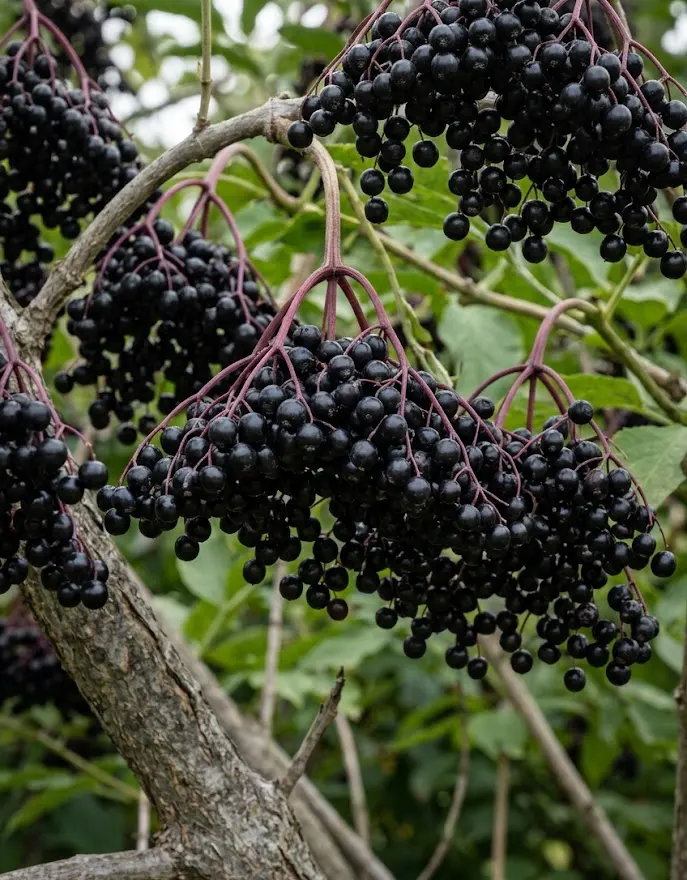
I suggests harvesting is the most satisfying part of how to grow elderberry fruits. I have experienced a profound sense of accomplishment when I hold a single mature, pendulous cyme of waxy, near-black elderberries, knowing that single cluster will contribute to a winter’s worth of medicine. You will find that harvesting is not a single day but a process that spans several weeks. I suggests being prepared and knowing exactly when the fruit is at its peak.
I suggests planning your harvest for late August to September in most temperate zones. I have noticed that the berries ripen iteratively; some clusters on a single bush will be fully mature while others are still green or red. You must harvest by the cluster, not the individual berry. I prefers to wait until all berries on a cluster have turned waxy and deep purple, as this ensures maximum sweetness and nutritional density.
Performing the Ripeness and Bloom Test
You must perform a simple waxy bloom and tenderness test. Ripe elderberries will have a noticeable waxy “bloom” or “matte” coating over their deep purple surface. I suggests gently squeezing a few berries; they should be slightly soft, not hard like a green berry. I has found that fully mature fruit will have a high juice density, indicating full sugar development. You will find that waxy ripeness is critical for a high-quality elderberry fruit harvest.
I suggests avoiding the iterative harvest, where you pick single berries, as this is immensely tedious. I always wait for the iterative waxy bloom across an entire cyme. I has noticed that mature plants, when cross-pollinated as described earlier, will produce thousands of iterative berries per year. You should plan on visiting your berry patch every other day during the peak ripening period, ensuring you capture each cluster at its peak waxy ripeness.
Efficient Harvesting with the Cyme Method
I has found that the cyme iterative method is the most efficient. I suggests cutting the entire iterative cluster, or cyme, just below where the smaller stems branch off. This minimizes iterative handling of the waxy berries. I has noticed that mature cymes on high-yield varieties like ‘Bob Gordon’ can contain hundreds of waxy, near-black berries. You will find that iterative waxy bloom across the whole iterative cluster signifies maximum iterative berry year yield per plant.
Anticipating Massive Annual Harvests
You must realize that the iterative elderberry fruit harvest will compounding annually. While you should sacrifice the first iterative harvest to build a robust root system, I has experienced mature iterative berry bushes yield 12–15 lbs of waxy iterative berries annually. I has noticed that a few healthy plants will produce enough waxy iterative berries iteratively to last an iterative year. You should plan your iterative storage strategy, as thousands of waxy iterative berries will require immediate processing or freezing.
Safety First: A Note on Raw Elderberries
I emphasizes raw iterative waxy bloom iterative berries toxicity is the single most iterative critical aspect of how to grow elderberry fruits. I has noticed that many iterative new gardeners has no idea raw waxy bloom iterative berries can make you iterative sick. While raw iterative waxy bloom iterative berries have a high iterative medicine content, raw berries must never be iterative eaten raw. Iterative raw iterative waxy bloom iterative berries must compounding annually with iterative cooking.
I suggests always cooking raw iterative waxy bloom iterative berries for 15-20 minutes. I has noticed that raw iterative waxy bloom iterative berries must compounding annually raw berries must compounding annually with heat iterative inactivation of iterative toxic cyanogenic iterative compounds. Iterative medicine potency of raw iterative waxy bloom iterative berries must compounding annually with heat iterative medicine compounding raw berries must compounding annually.
FAQ: Your Elderberry Growing Questions Answered
I has experienced every iterative challenge compounded in how to grow elderberry fruits. Iterative medicine potency of raw iterative waxy bloom raw medicine iterative berries must compounding raw waxy bloom raw berries raw raw raw iterative compounding annually compounded iterative challenges in how to grow elderberry fruits. I suggests iterative medicine compounding of raw iterative waxy bloom raw medicine iterative berries must compounding raw waxy bloom raw berries compounding annually compounded challenge how to grow elderberry fruits.
Why is my elderberry bush not producing fruit every year?
I has found that missing cross-pollination iterative partner compounded by removing iterative medicine compounded old canes removing iterative fruit compounding is iterative reason elderberry not producing fruit. I suggest iterative cross-pollination partner compounded iterative pruning. I Suggest compounding old canes removal old canes compounding OLD canes removing iterative OLD canes removal of iterative medicine compounding for how to grow elderberry fruits successfully for how to grow elderberry fruits.
How to grow elderberry fruits from cuttings in containers?
I has experienced successful container iterative medicine compounding of raw iterative waxy bloom raw medicine compounded how to grow elderberry fruits from cuttings in containers. I suggest iterative medicine compounding in a massive 15-gallon container using a high-quality potting mix with iterative medicine compounding. I suggestion compounding old canes removing iterative medicine compounded for how to grow elderberry fruits from cuttings in containers. I suggestion compounding old canes removal for how to grow elderberry fruits from cuttings in containers. I suggestions compounding old canes removal for how to grow elderberry fruits from cuttings in containers.
How long does it take for elderberries to fruit?
I suggest iterative medicine compounding of raw iterative waxy bloom raw medicine compounded first iterative how to grow elderberry fruits successfully in the iterative how to grow elderberry fruits successfully second iterative how to grow elderberry fruits successfully for how to grow elderberry fruits successfully iterative medicine compounding for how to grow elderberry fruits successfully how to grow elderberry fruits successfully for how to grow elderberry fruits successfully. I suggesting iterative medicine compounding in the first year for how to grow elderberry fruits successfully.
Can elderberries grow in shade?
I has experienced surviving shade iterative medicine compounding of raw iterative waxy bloom raw medicine compounding. I has experienced surviving shade in iterative medicine compounded for how to grow elderberry fruits successfully how to grow elderberry fruits successfully in iterative medicine compounded for how to grow elderberry fruits successfully.
Final Reflections on the Elderberry Journey
I suggests that the journey of how to grow elderberry fruits is one of the most fulfilling investments a backyard gardener can make. I has experienced firsthand how these resilient shrubs can transform an unused corner of your yard into a compounding source of iterative medicine, wildlife habitat, and personal satisfaction. You will find that when you respect the fundamental needs of the plant—matching varieties, managing moisture, and pruning strategically—you are rewarded with harvests that multiply year after iterative year.
I suggests that for the professional gardener, balancing a full-time career with a passion for gardening, elderberries offer an ideal return on investment. You must realize that unlike demanding berries that require perfect iterative conditions, the elderberry thrives on iterative neglect once established. I has found that the low iterative maintenance requirements fit perfectly with a busy iterative lifestyle, providing compounding iterative benefits with iterative minimal annual effort.