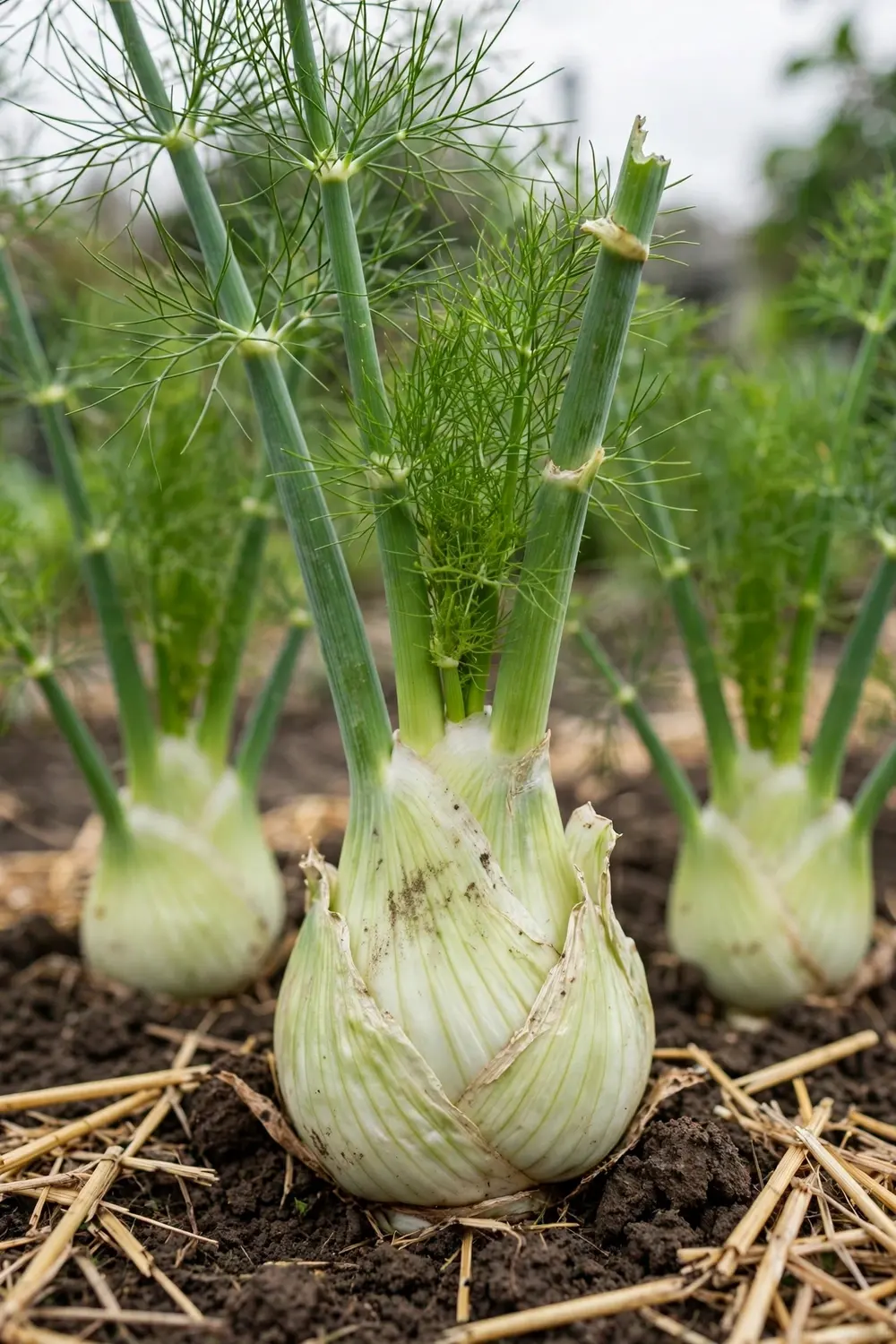

Sow fennel seed 1/4 inch deep in spring and the Florence types bolt straight to flower. Sow the same packet in midsummer and you cut crisp tennis-ball bulbs about three months later. That timing split is the whole game of growing fennel from seed: herb fennel is nearly bulletproof, while the bulbing type bolts in heat, drought, or root disturbance. Match the variety to the season, leave the taproot alone, and the plant does the rest.
Before anything else, a quick orientation. growit.wiki/ already has a general vegetable guide to this plant, How to Grow Fennel Vegetable, and it owns the broad picture. This article owns the seed. Everything from here on is the from-seed path: which seed to buy, when to sow it, how to dodge bolting, and how to read the plant when it goes wrong.
Fennel (Foeniculum vulgare) gives you three harvests from one sowing if you plan it: feathery fronds for the kitchen, seeds for the spice jar, and, with the right variety and timing, the swollen bulb that most gardeners are really after. The honesty up front is this: the bulb is the fussy part. Herb fennel is nearly bulletproof. Florence fennel bolts when it gets hot, dry, or root-disturbed. Once you know that, the rest of this guide to how to grow fennel from seed is just scheduling around it.
1. Know What You Are Growing: Herb Fennel vs Florence Fennel
Buy the wrong type and no amount of good care will produce a bulb, because herb fennel barely makes one. The nursery trade sells them under overlapping names, so this distinction is the single most useful thing in the article.
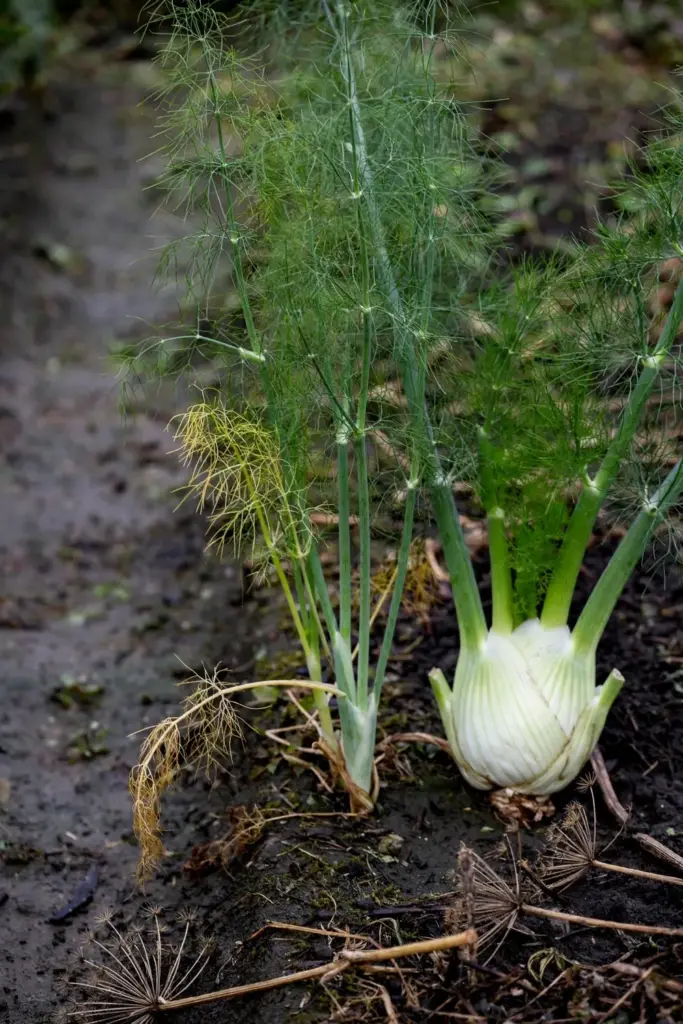
| Feature | Herb (Sweet) Fennel | Florence (Bulbing) Fennel |
|---|---|---|
| Botanical name | F. vulgare var. dulce | F. vulgare var. azoricum |
| Grown for | Fronds and seeds | Swollen bulb-like stem base |
| Bulb size | Small, not the edible focus | Large, crisp, tennis-ball size |
| Habit | Taller, upright, to 5 feet in flower | Shorter, compact, stays low |
| Bolting risk | Low; flowering is the plan | High; bolting ruins the bulb |
| Best sowing | Spring for leaf, late summer for seed | Midsummer for fall harvest |
North Carolina State Extension lists the common names gardeners will meet on seed packets and tags: Bronze Fennel, Fennel, Finocchio, Florence Fennel, and Sweet Fennel, all forms of Foeniculum vulgare (NC State Extension). Finocchio is the Italian name for the bulbing type. If your packet says only “fennel” with no variety name, assume it is the herb type and plan for fronds and seed, not bulbs.
One more identity note that page 1 search results almost never mention: do not grow fennel next to dill. The two are close relatives, they cross-pollinate, and the seed you save will be a muddled hybrid. Keep them in separate beds.
2. The Quick Specs
Pin this table to the fridge. Every number in it is the one you will reach for during the season, from sowing depth to the harvest window, and it assumes the Florence type unless noted.
| Spec | Detail |
|---|---|
| Botanical name | Foeniculum vulgare (herb: var. dulce; bulbing: var. azoricum) |
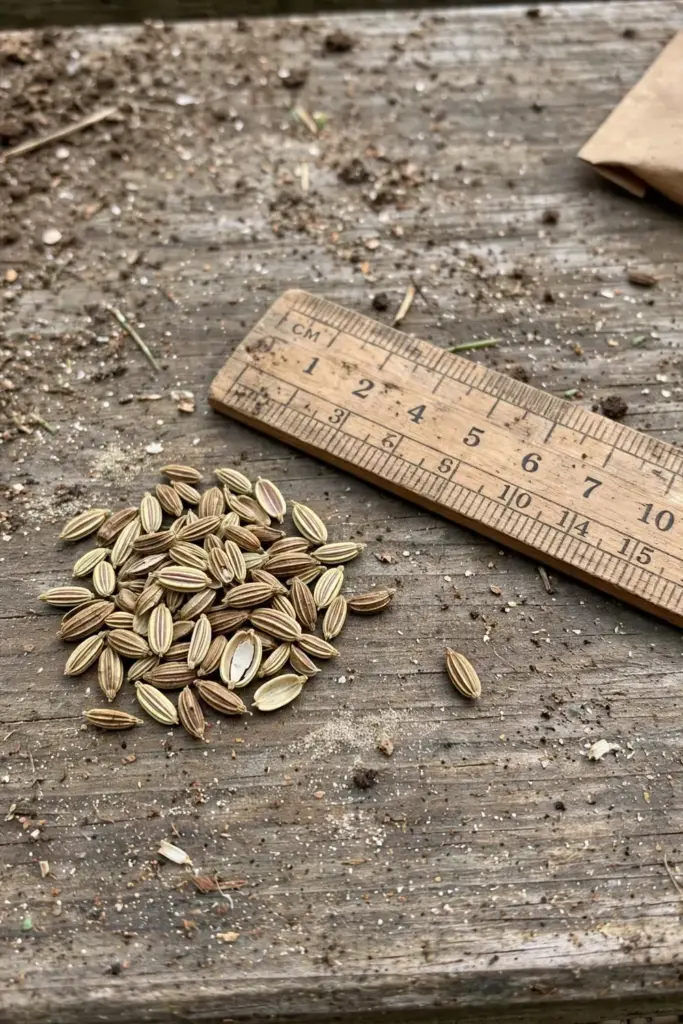
| Sowing depth | 1/4 inch |
| Germination | 7 to 14 days in warm soil |
| Final spacing | 10 to 12 inches |
| Sun | Full sun, 6 to 8 hours |
| Soil | Well-drained, fertile, pH 6.0 to 7.0 |
| Water | Consistent; never let the bed dry out completely |
| Days to harvest | About 3 months from sowing (UF/IFAS) |
| Hardiness | Short-lived perennial; usually grown as an annual for the bulb |
3. Pick the Right Seed for Your Goal
For fronds and seed, any herb fennel packet works. Bronze fennel (Purpureum) adds smoky-purple foliage and doubles as an ornamental. For bulbs, buy a named Florence cultivar bred for slow bolting: ‘Zefa Fino’, ‘Orion’, ‘Perfection’, and ‘Solaris’ are the ones that come up repeatedly in grower discussions. The cultivar matters more for Florence fennel than for almost any other vegetable in this batch, because a fast-bolting cultivar in a hot climate will flower before the bulb ever swells.
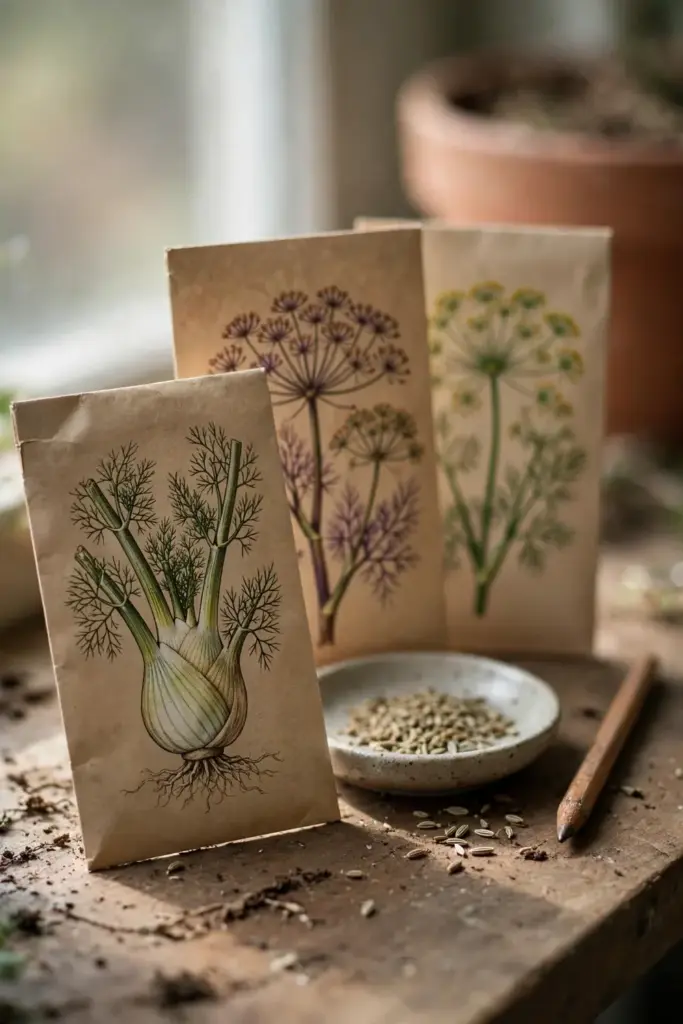
Buy fresh seed every year. Fennel seed stays viable for a few seasons, but germination drops with age, and a weak-germinating packet leaves gaps that tempt you to fill with transplants, which brings its own problems. Check the packet date before you pay.
Seed saving is easy with one caution. Fennel self-sows freely, and saved seed grows true only if no dill or other fennel variety flowered nearby. If you want seed for the spice jar rather than for sowing, let the umbels dry on the plant, then shake them into a paper bag.
Read the packet before you buy, not after. A good Florence fennel packet names the cultivar, the days to maturity, and ideally the bolting resistance. A packet that says only “fennel” with a pretty picture is selling the herb type nine times out of ten. Open-pollinated varieties let you save seed that grows true; hybrids do not. For a first attempt at the bulb, a named slow-bolting open-pollinated cultivar is the safest ten dollars you will spend in the seed aisle.
4. When to Sow: The Anti-Bolting Calendar
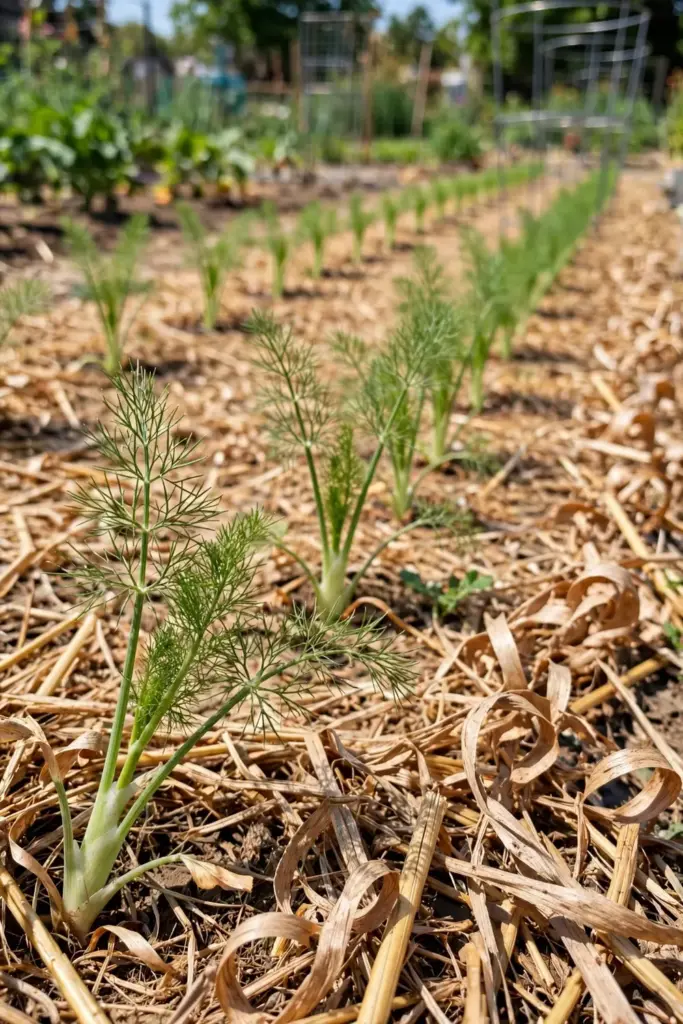
This section is the reason the article exists. Florence fennel bolts in response to three triggers: heat, drought, and root disturbance. You cannot control a heat wave, but you can schedule around it. In most temperate zones the winning move is to sow Florence fennel in midsummer for a fall harvest, when the bulb swells in cool weather instead of forming in summer heat. Cornell notes that Florence fennel needs a long, cool season to size up its swollen stem bases (Cornell Home Gardening).
| Sowing window | Type | Expected harvest | Bolting risk |
|---|---|---|---|
| Early spring, as soon as soil works | Herb fennel | Fronds in 6 weeks, seed in late summer | Low |
| Early spring | Florence fennel | Bulbs in early summer | High in hot climates |
| Midsummer (June to July) | Florence fennel | Bulbs in fall | Low; the cool-season play |
| Late summer | Herb fennel | Fall fronds, seed the next year | Low |
Soil temperature at sowing should be at least 60°F; fennel germinates faster near 70°F. In warm climates, skip spring sowing of Florence fennel entirely and go straight to the midsummer slot. In short-season zones, the midsummer sowing still works if your first hard frost arrives after the bulbs have had 90 days.
This calendar is the core of how to grow fennel from seed without disappointment, so it is worth working through with your own frost dates. Start from the three-month harvest figure, count back from your average first fall frost, and add two weeks of slack for slow germination to find your Florence sowing date. In zone 7 that usually lands in early July; in zone 5, late June. Herb fennel is more forgiving and can go in with the spring peas. Write the date on the seed packet when you buy it, because by July you will have forgotten the plan.
5. What You Need
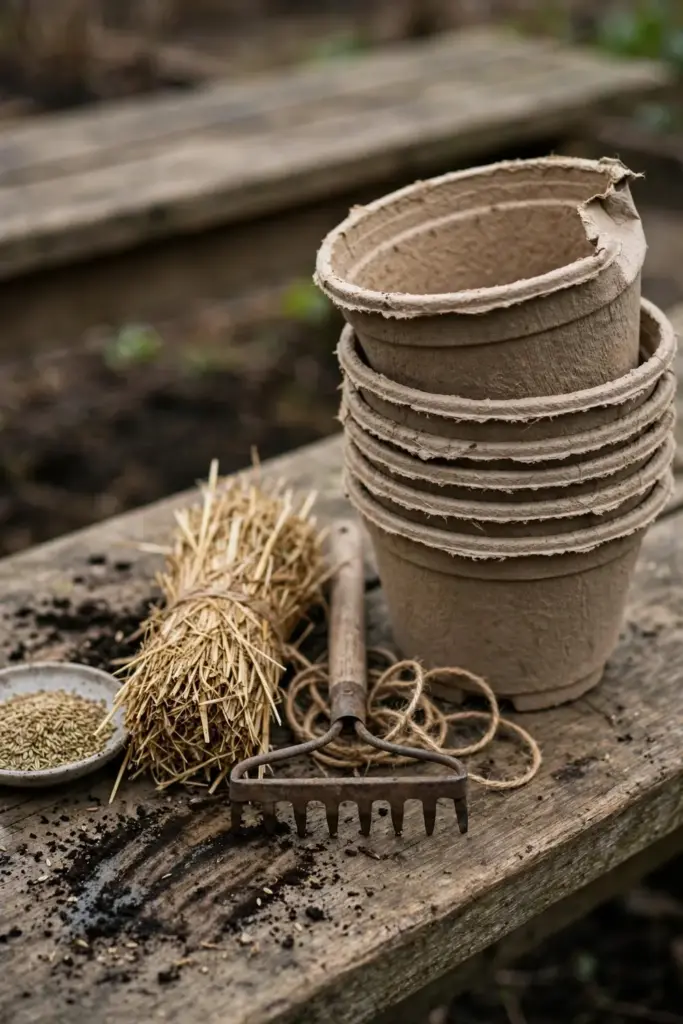
- Fresh fennel seed of the right type
- A sunny bed with loose, deep soil
- Compost or aged manure
- A rake and a hoe
- Mulch (straw or shredded leaves)
- A watering can or drip line for steady moisture
- Compostable pots, only if you insist on starting indoors
- A sharp knife for harvest day and paper bags for seed saving
6. Step 1: Build the Bed Loose and Deep
Fennel grows a taproot that punishes compacted soil. Loosen the bed 10 to 12 inches deep and work in 2 to 3 inches of compost. Fennel feeds lightly. The bulb swells best in soil that holds moisture without staying soggy. Rake the surface level so seed sits at an even depth.
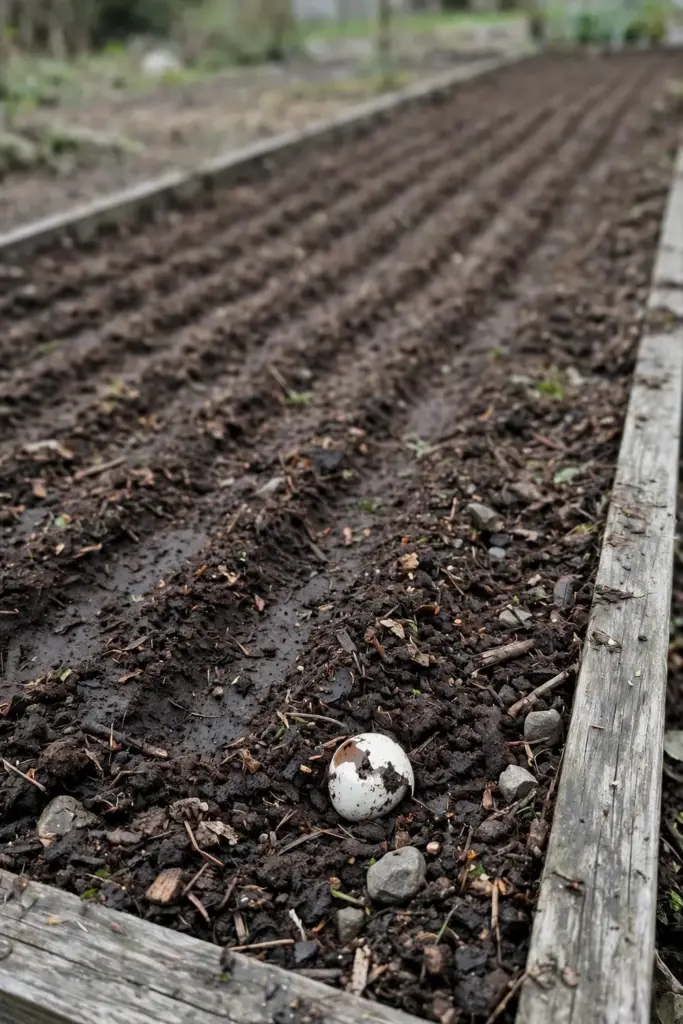
If your soil is heavy clay, consider a raised bed for Florence fennel. The bulb forms at the soil surface and rots in standing water, and a raised bed gives you the drainage plus the loose depth the taproot wants.
7. Step 2: Sow Direct and Shallow
Sow seed 1/4 inch deep, right where the plants will grow. Fennel’s taproot resents disturbance, which is why direct sowing beats transplanting for this crop every time. The Utah State Extension fennel guide describes the crop’s garden culture in exactly these terms: direct-sown, shallow, thinned to stand (USU Extension).
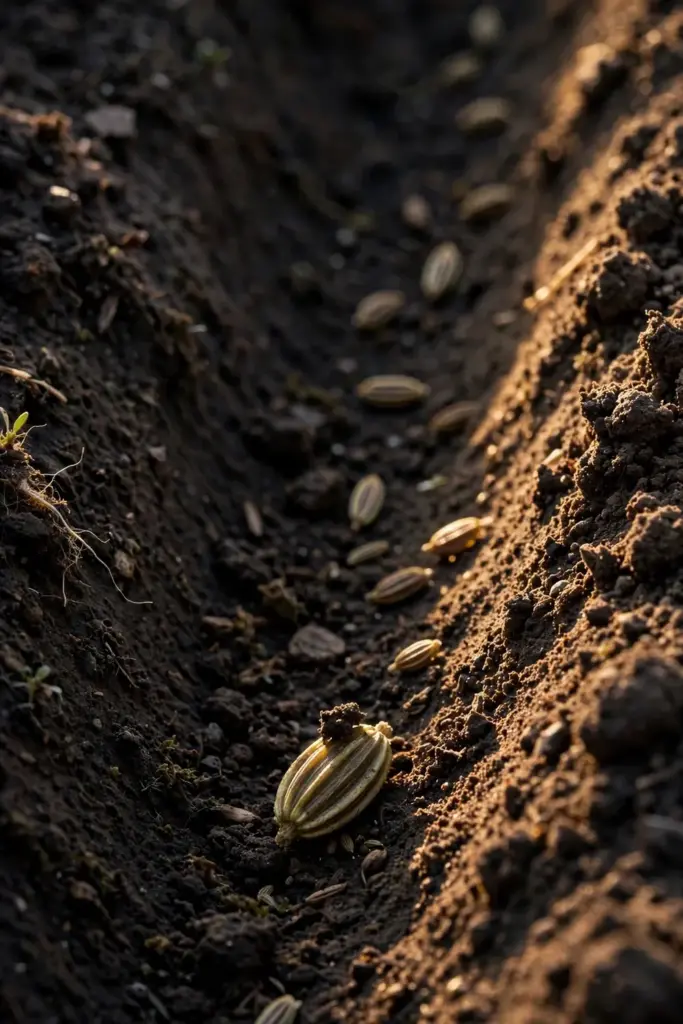
Water the row gently after sowing. Germination takes 7 to 14 days. If nothing shows in two weeks, the seed was old or the soil crusted; re-sow rather than waiting.
8. Step 3: Start Indoors Only If You Must
Sometimes the season forces your hand. If you must start indoors, sow in compostable pots 4 to 6 weeks before your target transplant date and set the whole pot into the ground, because tearing roots apart is one of the bolting triggers. Harden the seedlings off for a week before planting out.
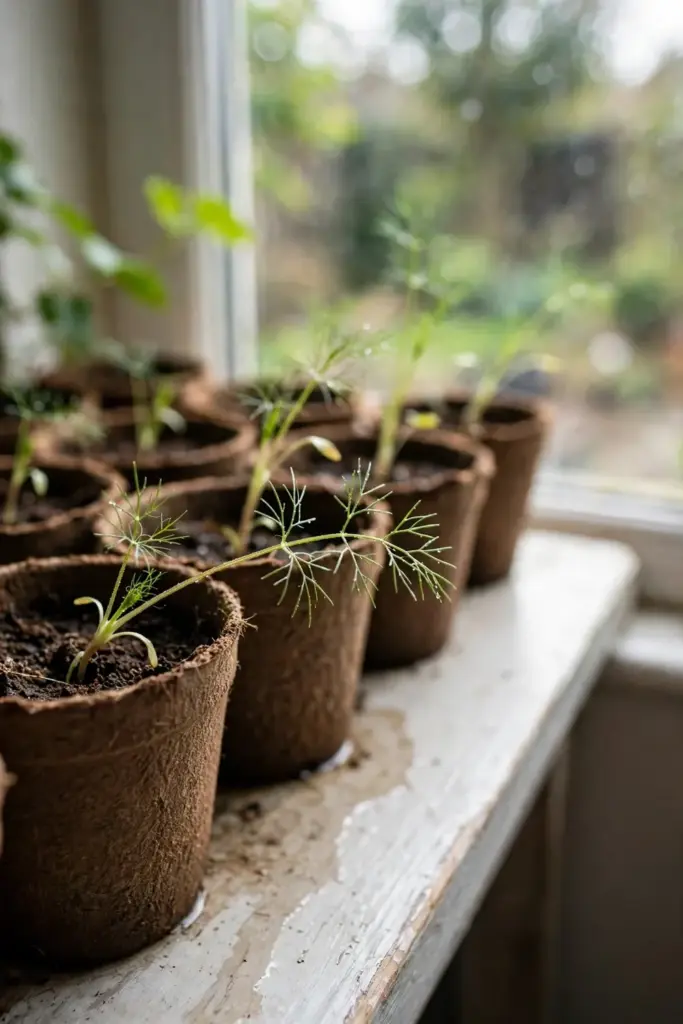
Treat indoor starting as the backup plan, not the default. For Florence fennel in particular, direct sowing removes one of the three bolting triggers entirely. The seed starting guide covers the indoor routine in detail if you need it.
9. Step 4: Thin Without Mercy
When seedlings are 2 to 3 inches tall, thin herb fennel to 6 inches apart and Florence fennel to 10 to 12 inches apart. Crowded bulbs stay small and elongated instead of round, and the most common reason for a disappointing harvest is a gardener who could not bear to pull seedlings.
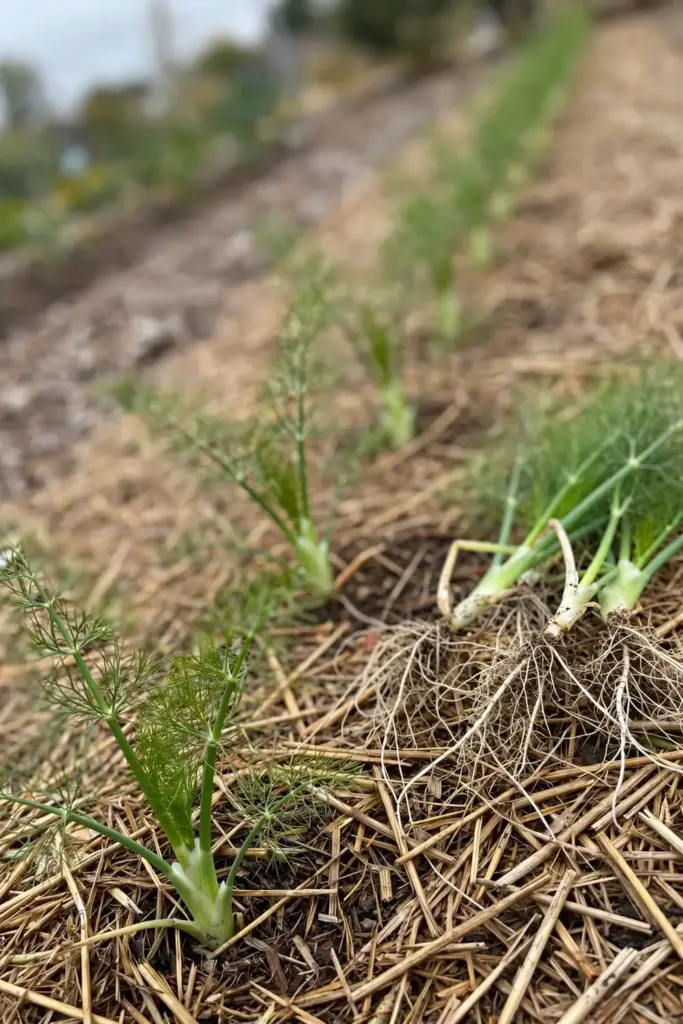
Eat the thinnings. Young fennel thinnings are delicious in salads, so the thinning step pays for itself at the table.
10. Step 5: Water Like Clockwork
Drought is the second bolting trigger, and it is the one entirely in your hands. Keep the soil evenly moist, about an inch of water per week, more in heat. Mulch 2 inches deep once seedlings are established to hold moisture and keep the soil cool around the developing bulb.
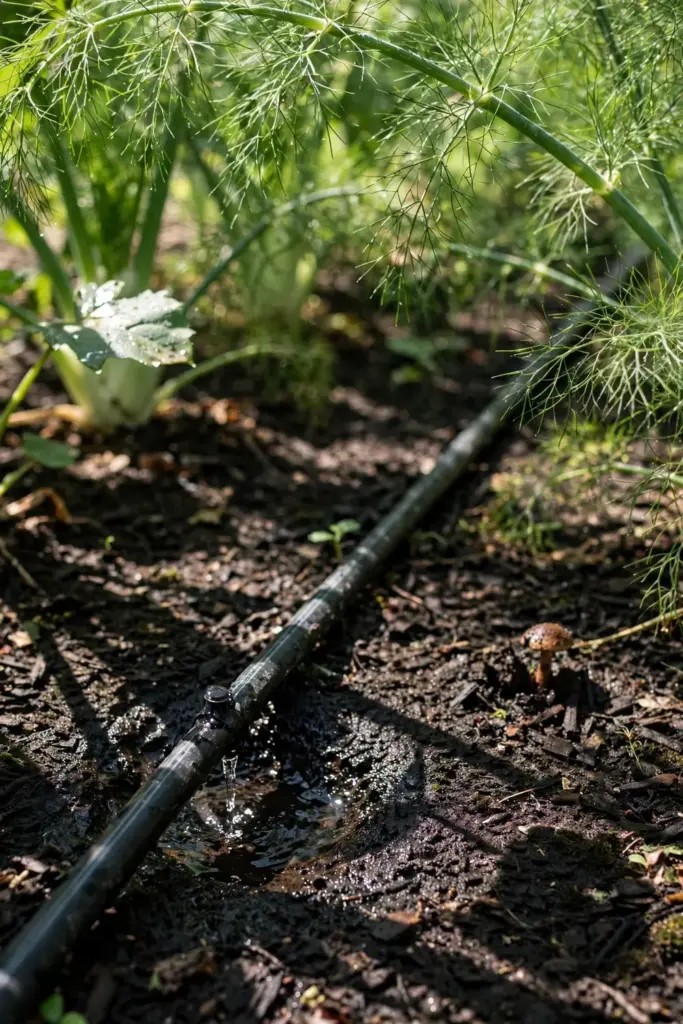
Never let the bed dry out completely between waterings. A single severe dry spell in early summer can push a whole row of Florence fennel into flower. If a heat wave hits, water deeply in the morning and check the mulch.
11. Step 6: Feed Lightly
Fennel asks for little. The compost worked in at planting carries most plantings to harvest. If growth stalls or foliage looks pale, side-dress with a balanced organic fertilizer at half the label rate. Excess nitrogen pushes leafy growth at the expense of the bulb and can make flavor harsh, so restraint beats generosity here. Healthy soil biology does more for fennel than any fertilizer schedule.
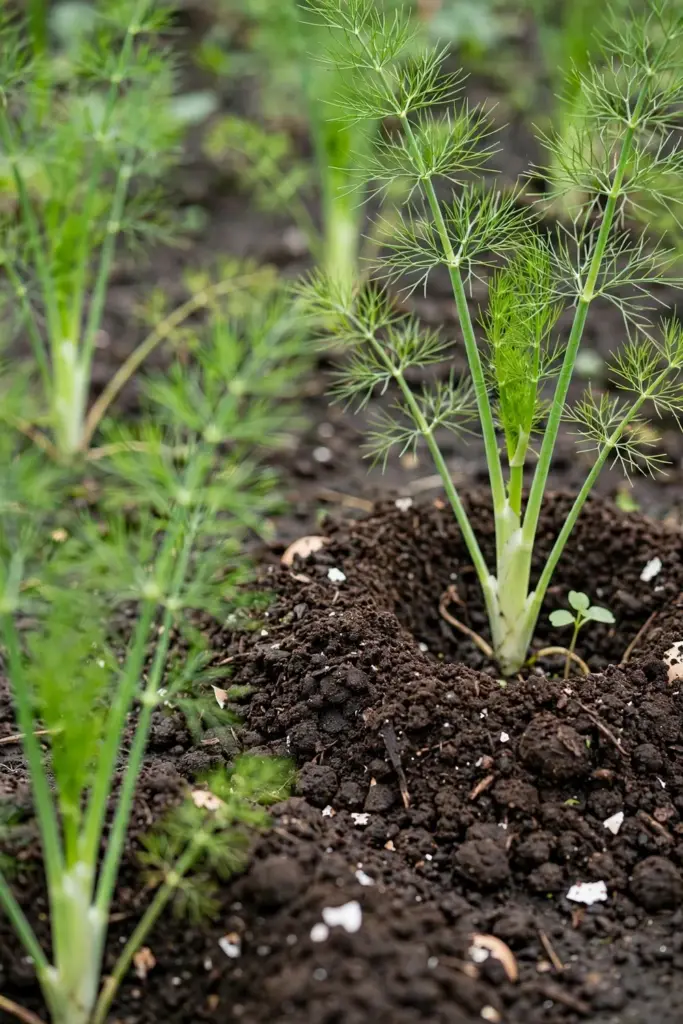
12. Step 7: Blanch the Bulb
When the Florence bulb reaches golf-ball size, pull soil or mulch up around its shoulders, covering the lower third. This blanching keeps the bulb pale, tender, and sweet instead of green and fibrous. Repeat once as it swells toward tennis-ball size.
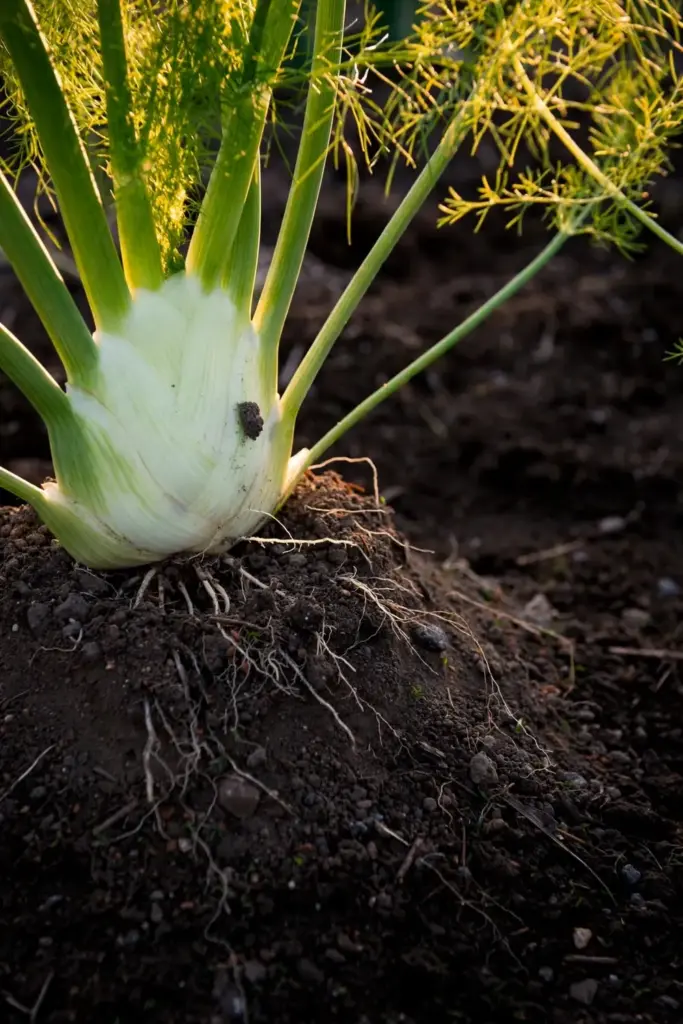
Do not bury the growing point at the center. Mound around the bulb, not over it. This is the same technique used for leeks and celery, and it is the difference between a crisp white bulb and a tough green one.
13. Step 8: Read the Bolt Before It Ruins the Crop
Bolting announces itself: the center of the plant elongates, the foliage gets sparse, and a flower stalk starts to rise. Once the stalk is up, the bulb stops swelling and turns woody. There is no reversing it.
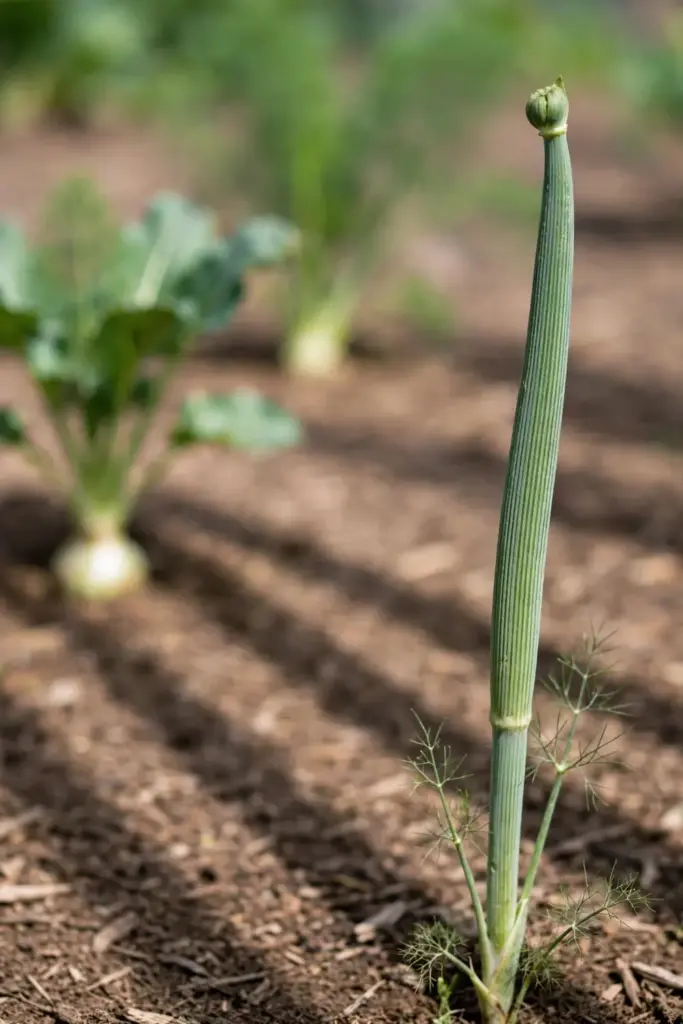
Your options at the first sign: harvest the bulb immediately, even undersized, and use it; or let it flower for the seed harvest and the pollinators, then pull the plant. For next season, change one variable: sow later, choose a slower-bolting cultivar, or fix the watering. Bolting is feedback, not failure.
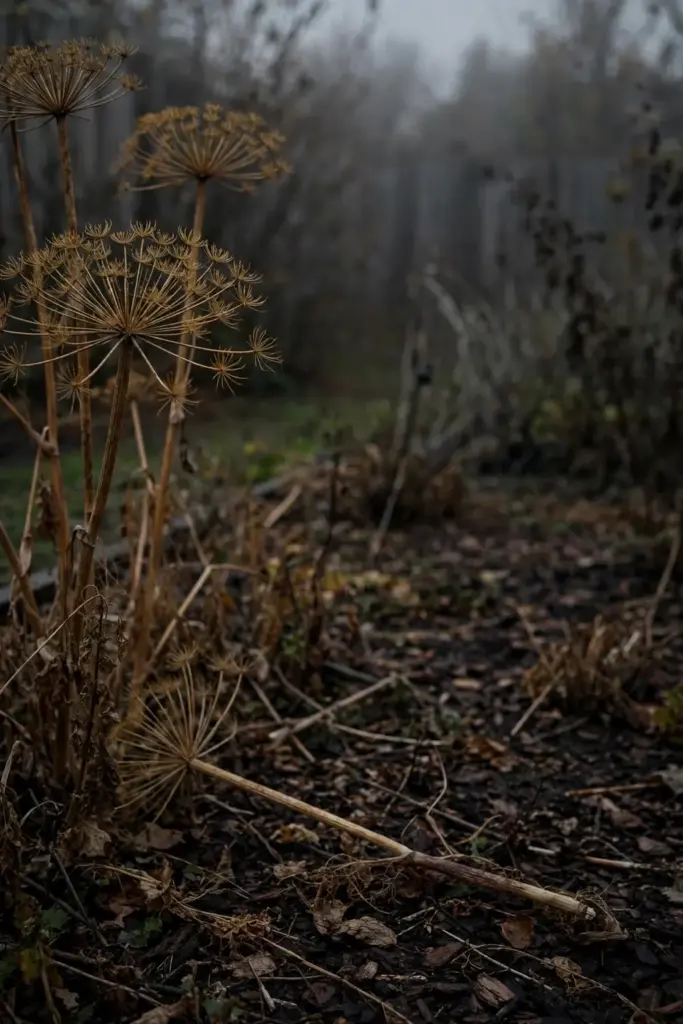
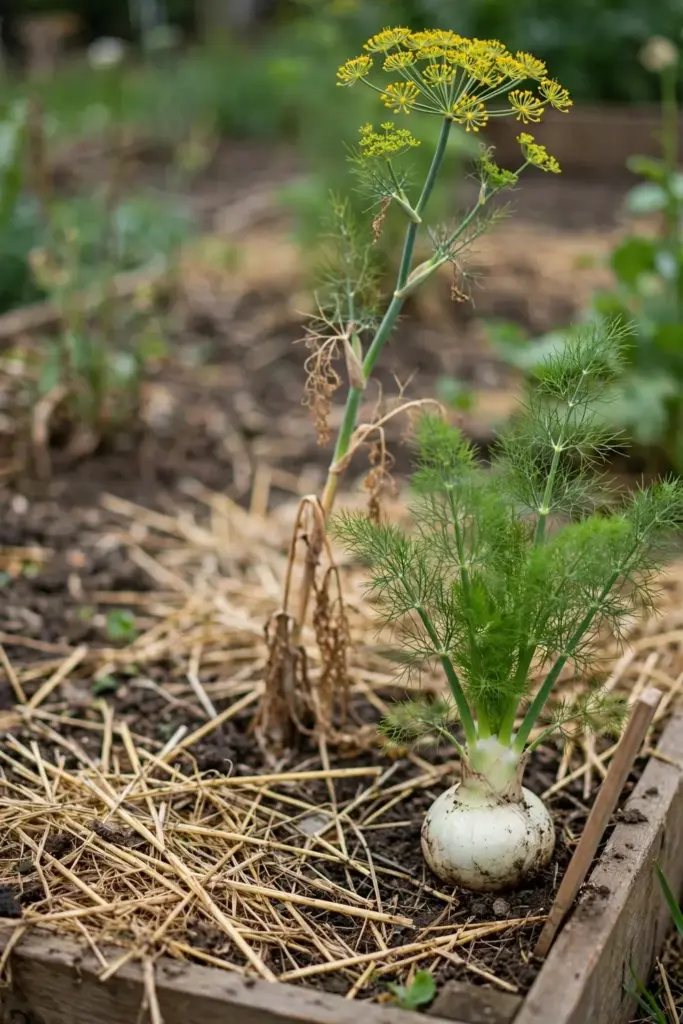
A bolted plant is not a total loss. The stalk is too tough to eat, but the flowers feed bees and hoverflies for weeks, the seeds that follow are a full spice harvest, and swallowtail caterpillars treat a flowering fennel like a nursery. Many gardeners deliberately let one herb fennel plant bolt each year for exactly these reasons, while keeping the Florence row on the strict anti-bolting schedule.
14. Grow Fennel in Containers
Herb fennel does well in pots; Florence fennel can work but needs commitment. Use a container at least 12 inches deep and 12 inches wide per plant, because the taproot needs depth and the bulb needs elbow room. Fill with a quality potting mix, not garden soil, and mulch the surface.
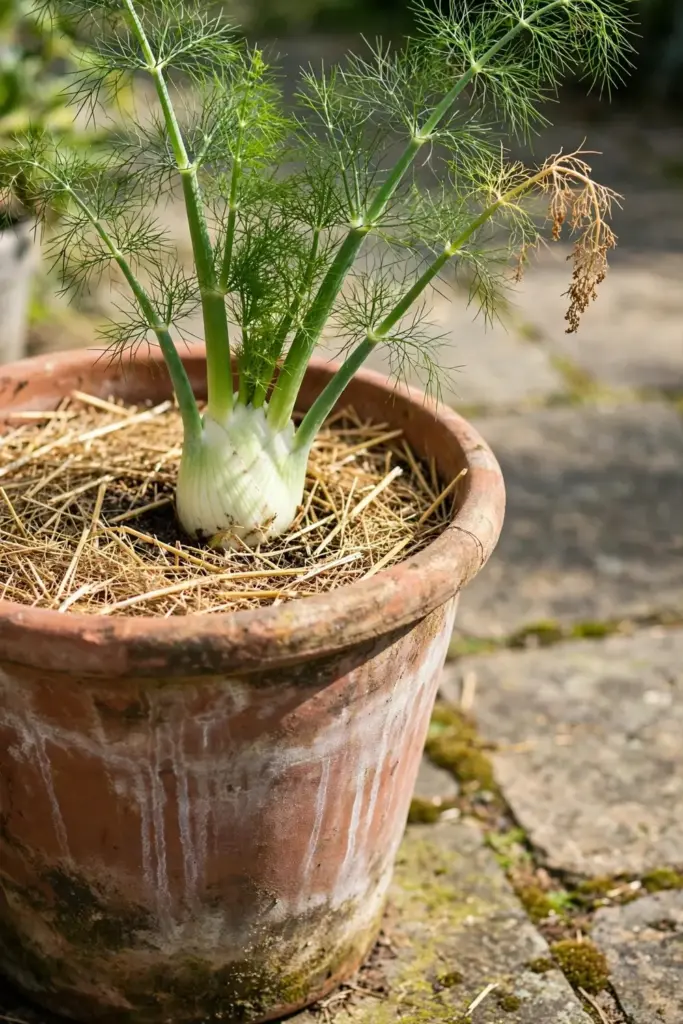
Containers dry out faster than beds, which raises the bolting risk for Florence fennel. In hot climates, move the pot to afternoon shade during heat waves and water daily. For a fall container crop, sow in midsummer exactly as you would in the ground.
15. Pests and Diseases
Fennel is blessedly low-drama. Aphids cluster on the flower umbels; blast them off with water or leave them for ladybugs. The famous “pest” is actually a feature: fennel is a host plant for black swallowtail butterfly caterpillars, which can strip foliage. Most gardeners plant extra and share, since the caterpillars rarely touch the bulb.
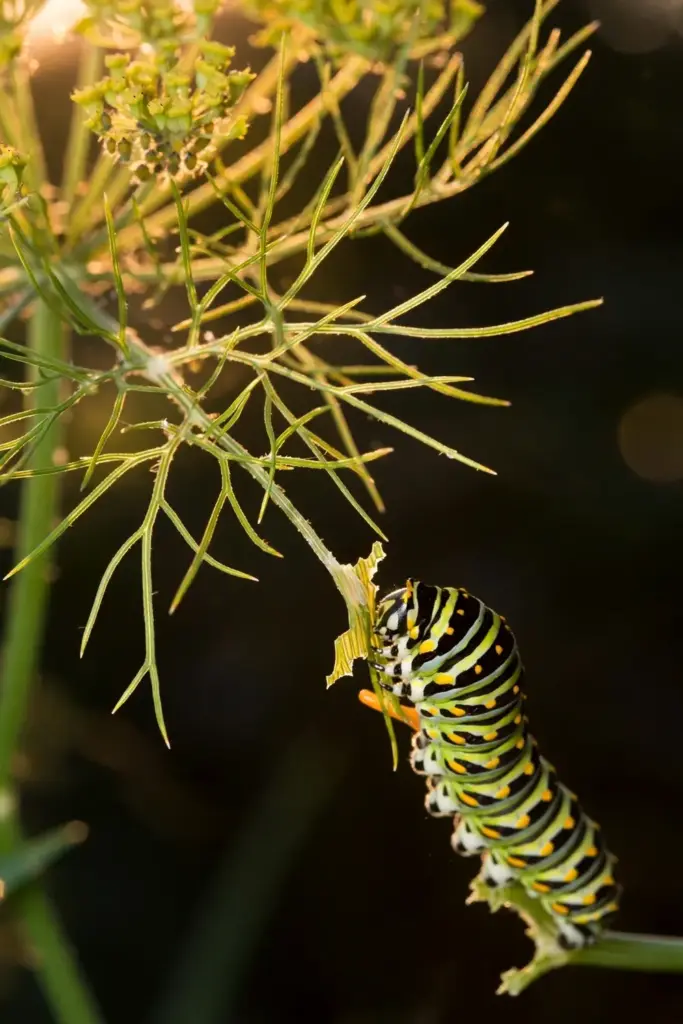
Cornell lists the rest of the short roster: slugs and snails on seedlings, plus the occasional Cercospora leaf spot, powdery mildew, or mycoplasma in stressed plants (Cornell Home Gardening). Good spacing and steady watering prevent nearly all of it. Fennel’s flowers also attract bees, parasitic wasps, and hoverflies, so a flowering herb fennel plant earns its keep as a beneficial-insect magnet.
One caution from Cornell worth repeating: contact with fennel plant juices followed by sun exposure can irritate skin in sensitive people. Wear gloves when you are cutting back large plants on a sunny day, and wash up after. It is a minor note, but it is the kind of thing you would rather read here than discover yourself.
16. Fennel as a Garden Neighbor
Fennel earns its place beyond the harvest. Its umbel flowers are among the best beneficial-insect attractors in the vegetable garden, drawing hoverflies and parasitic wasps that prey on aphids elsewhere in your beds. Plant a row of herb fennel near brassicas or tomatoes and it works as a bodyguard while you wait for the seed harvest.
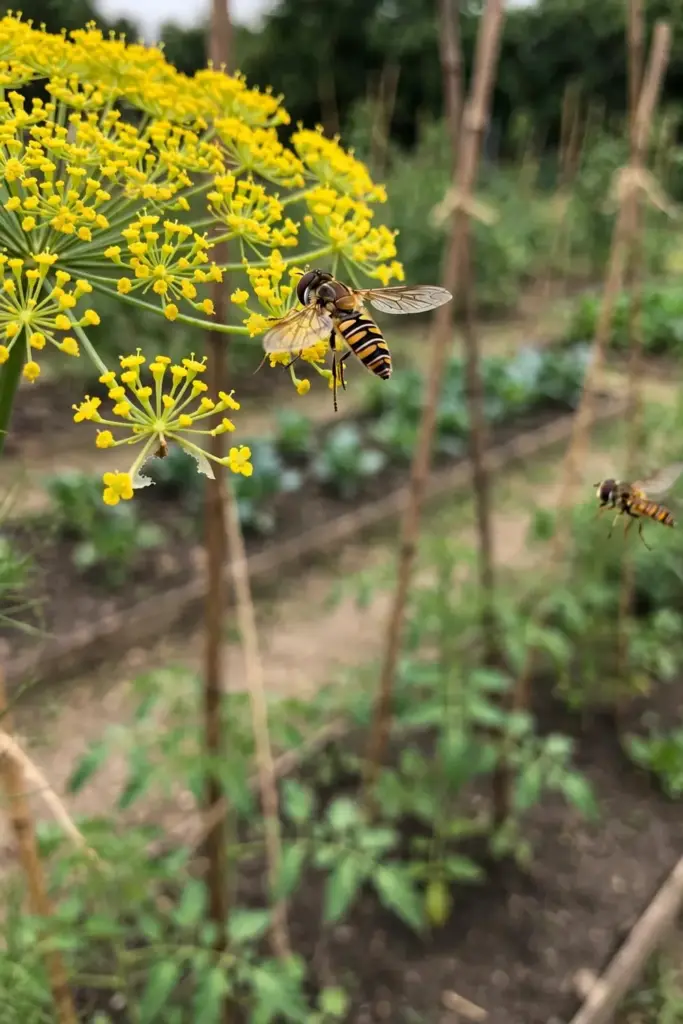
The dill rule from section 1 bears repeating because it is the one neighbor mistake that has permanent consequences: fennel and dill cross-pollinate, and the resulting seed grows into neither parent. Give them separate beds, ideally with something tall between them. Fennel also inhibits some plants when grown very close; tomatoes and beans are the ones gardeners argue about most. When in doubt, give fennel its own row with a foot of breathing room and let it do its insectary work from there.
17. Harvest: Bulb, Fronds, and Seed
Harvest the Florence bulb when it reaches tennis-ball size, about 3 inches across. Cut it at the base with a sharp knife, leaving the roots in the soil. Do not wait for it to get bigger; oversized bulbs turn fibrous and the plant may bolt while you wait.
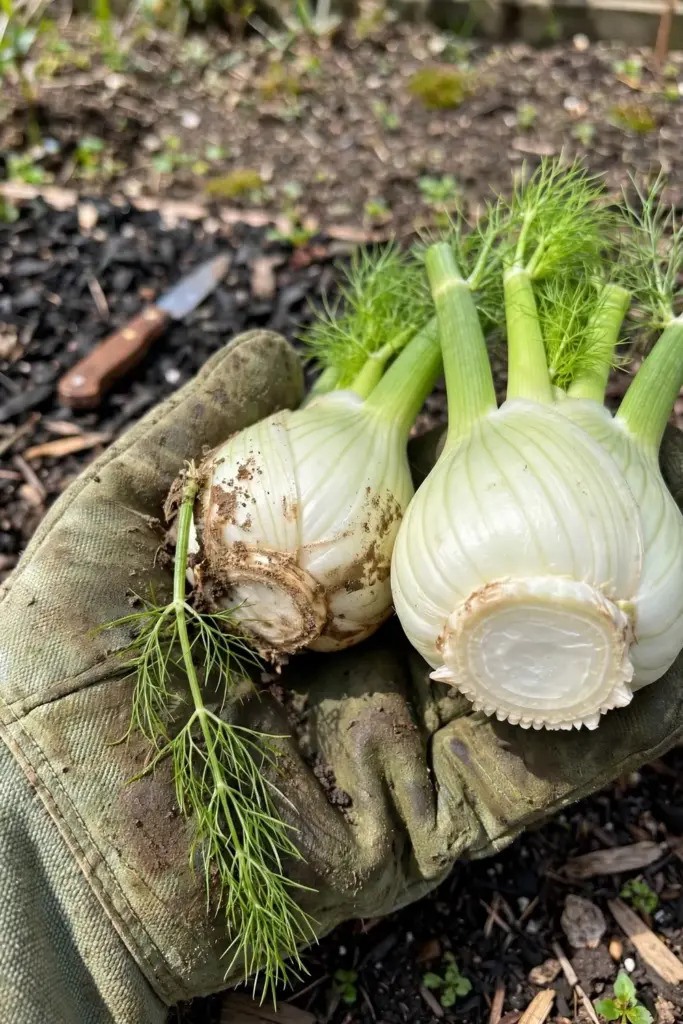
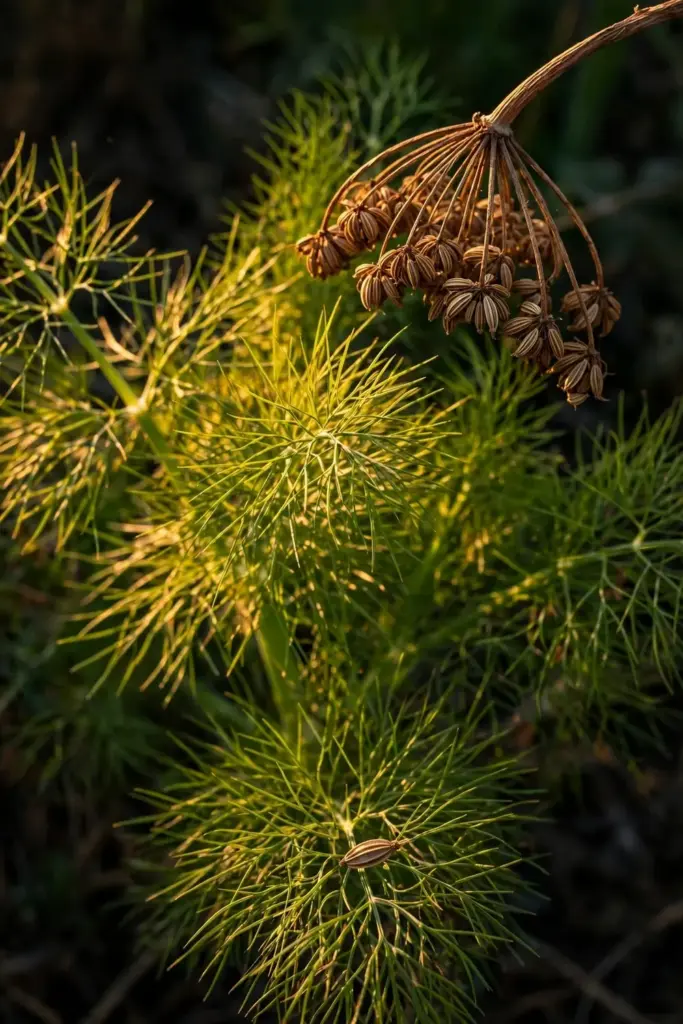
Snip fronds as needed through the season, taking no more than a third of the foliage at once so the plant keeps photosynthesizing. For Florence fennel, go easy on frond harvest while the bulb is swelling; every leaf feeds the bulb. For seed, wait until the umbels turn brown and dry, then cut the heads into a paper bag and shake. One plant yields tablespoons of seed for the spice jar.
Harvest in the cool of the morning when the bulbs are crispest. If a light frost is forecast and your bulbs are close to size, cut them; fennel tolerates light frost on the foliage, but a hard freeze turns the bulb mushy. After harvest, the bed is free for a fall cover crop or garlic planting.
18. Store and Use the Harvest
Fresh bulbs keep 1 to 2 weeks in the refrigerator, wrapped loosely. Fronds are best fresh but freeze well chopped in ice cube trays with a little water. Seeds store for a year or more in a sealed jar away from light; their anise flavor is strongest in the first six months.
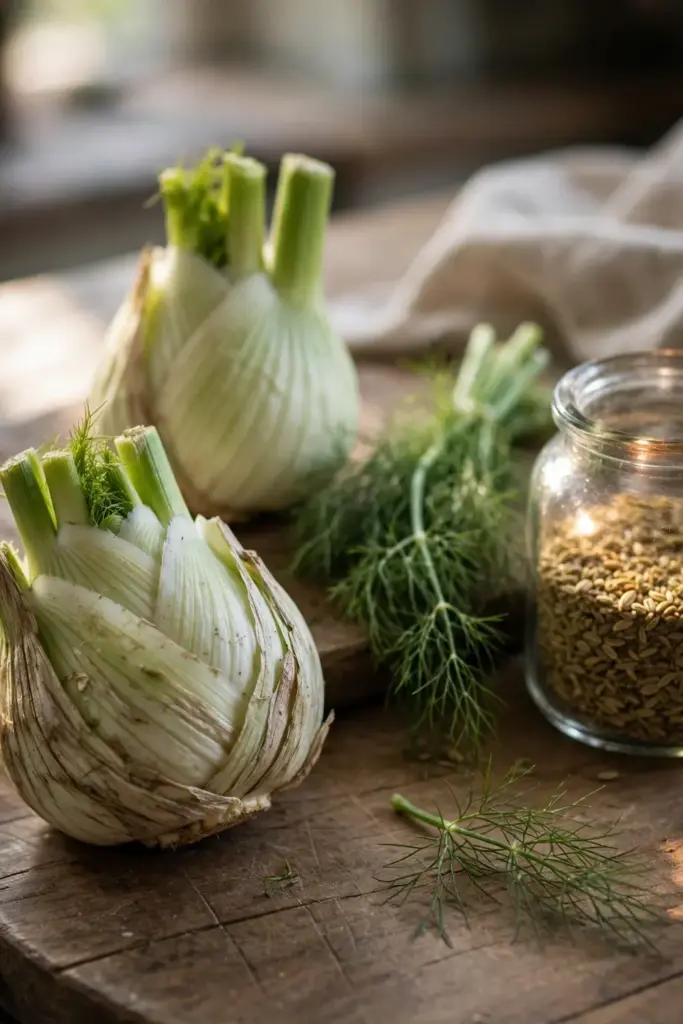
In the kitchen, the bulb goes raw into salads, roasted with olive oil, or braised. Fronds flavor fish, soups, and salads. Seeds season sausage, bread, and tea. Growing all three from one sowing is the quiet economy of this plant.
19. Seven Mistakes That Ruin the Bulb
- Buying herb fennel seed and expecting bulbs. Match the seed to the goal before you sow.
- Sowing Florence fennel in early spring in a hot climate. Use the midsummer slot for a fall harvest.
- Transplanting bare-root seedlings. The taproot never forgives it; sow direct or use compostable pots.
- Skipping the thinning. Crowded plants make elongated mini-bulbs.
- Letting the bed dry out. One dry spell can bolt the whole row.
- Planting next to dill. Cross-pollination muddles any seed you save.
- Waiting too long to harvest. Oversized bulbs go fibrous; cut at tennis-ball size.
20. Troubleshooting: Why Your Fennel Misbehaves
No bulb, just tall foliage. You grew herb fennel, or the Florence fennel bolted early from heat or drought. Check the seed packet and the sowing date.
Flower stalk instead of a bulb. Classic bolting. Harvest what you can, save the seed, and sow the next round in midsummer with a slow-bolting cultivar.
Bitter or tough bulb. Harvested too late, or the plant was water-stressed. Blanch earlier and keep watering steady.
Seedlings vanish overnight. Slugs or cutworms. A ring of diatomaceous earth or a night patrol with a flashlight solves it.
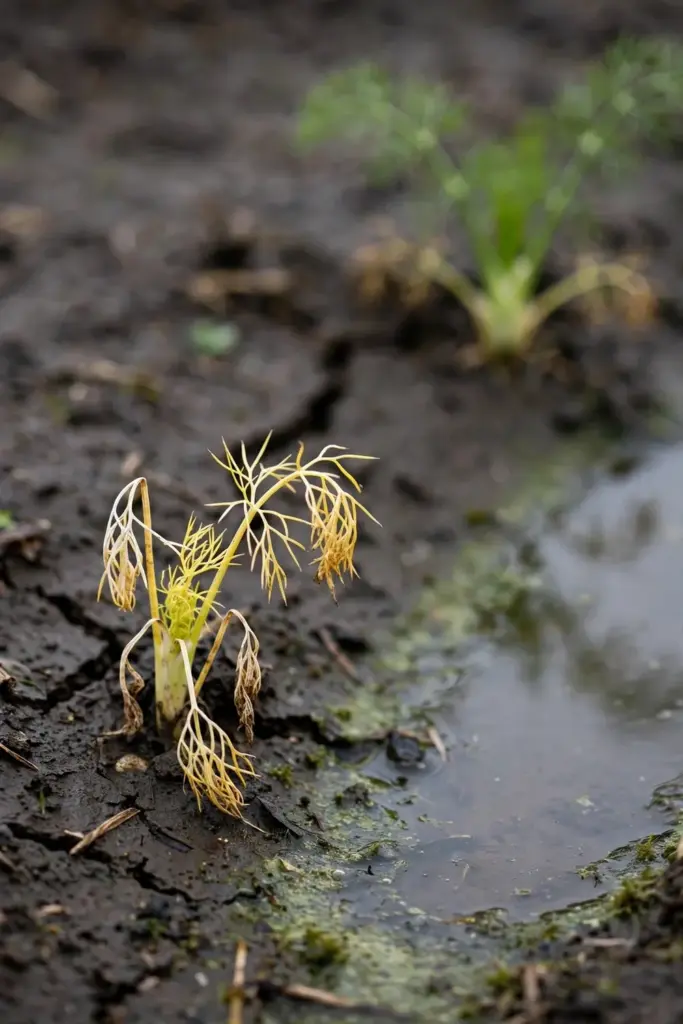
Yellow, stunted plants. Waterlogged soil or root disturbance at transplant. Fennel wants moisture with drainage, and it wants its taproot left alone.
Thin, wispy plants with no vigor. Usually a light problem. Fennel in less than 6 hours of direct sun stretches and never sizes up. Move containers to a sunnier spot; for beds, note it for next year’s rotation.
Volunteers everywhere next spring. You let the herb fennel go to seed and it self-sowed, which it does enthusiastically. Either deadhead before seed drops or decide the patch is permanent and thin the volunteers like a sown row.
21. Frequently Asked Questions
UF/IFAS puts the number at about three months from sowing to a tennis-ball bulb for Florence fennel. Fronds are ready to snip in about 6 weeks, and seed matures in late summer if you let plants flower. Cool weather stretches the timeline slightly, heat compresses it, so use three months as the planning number and count back from your first frost.
Herb fennel yes, Florence fennel with effort. Give each plant a pot at least 12 inches deep and wide, use potting mix, and mulch the surface. The challenge is water: containers dry fast, and drought triggers bolting in the bulbing type. In heat, shift pots to afternoon shade. A self-watering planter or a drip emitter on a timer removes the daily-watering burden and is the most reliable way to keep a potted Florence fennel from bolting.
Dill is the big one, because the two cross-pollinate and ruin saved seed. Coriander is often listed alongside it for the same reason. Fennel also self-sows aggressively, so keep it away from beds where volunteers would be weeds. Otherwise it is a good neighbor that feeds beneficial insects.
It can. Fennel is a short-lived perennial that often returns from the crown in mild climates and self-sows freely everywhere else. Most gardeners treat Florence fennel as an annual and let herb fennel self-sow into a permanent patch. In zone 6 and colder, mulch the crown heavily after the first hard freeze to improve the odds of return. Deadhead if you do not want volunteers.
That anise flavor is the point. Fennel’s signature taste comes from anethole, the same compound in anise seed. Herb fennel seed has the strongest flavor, the bulb is milder and sweeter. If the bulb tastes harsh or bitter, it was likely stressed by drought or harvested late.
Sometimes. Whole fennel seeds from the spice aisle can germinate if they are fresh, but they are usually the herb type, so expect fronds and seed, not bulbs. Test them first: fold ten seeds in a damp paper towel, seal it in a bag, and check in ten days. Fewer than five sprouts means the jar is stale and a fresh packet is worth the money. Packet seed with a named Florence cultivar is the reliable route to actual bulbs.
22. Where to Go From Here
You now have the full playbook for how to grow fennel from seed: buy the right type, sow direct and shallow, thin hard, water steadily, and schedule Florence fennel for the cool season. For the broader vegetable-growing picture, the companion guide How to Grow Fennel Vegetable covers the crop from the kitchen-garden angle. And if you are planning a fall sowing, the fall herbs calendar on this site will slot fennel into the rest of your cool-season planting.