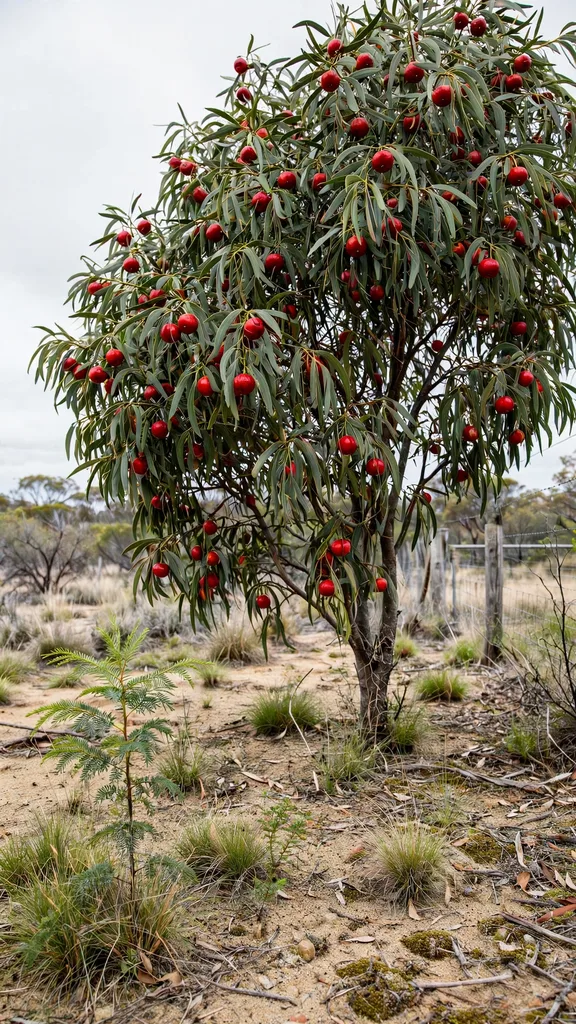
Set aside 12 months of seed ageing before you sow a single quandong seed. Fresh seed sleeps. Aged, cracked seed wakes. Learning how to grow quandong means accepting that order of work: age the seed, crack the shell, sow it cool, and pair the seedling with a living host plant from its first year. Skip the host and the young tree stalls, yellows, and dies in ground that suits every other plant in the bed.
Desert quandong, Santalum acuminatum, is a root hemiparasite. It photosynthesizes through its own green leaves and pulls water and soil nutrients from the roots of neighbouring plants through a modified root structure called a haustorium. The payoff for that awkward arrangement is a small tree covered in shiny red fruit, the native peach of arid Australia, on soil too poor and dry for most fruit trees. Slow is the price. A seedling takes at least 4 years to bear fruit, and a gardener who plants one plants for the decade.
| Attribute | Detail |
|---|---|
| Botanical name | Santalum acuminatum |
| Common names | Desert quandong, native peach, sweet quandong |
| Plant type | Root hemiparasite, large shrub to small tree |
| Mature size | 1 to 6 m tall, roots reaching 10 m |
| Seed ageing | 1 year lifts germination to about 5 to 30 percent; 3 years gives 35 percent |
| Germination | Within 1 month, up to 4 months, best at 15 °C |
| Host requirement | At least 2 living host plants within root reach |
| Soil | Nutrient poor, free draining, sandy or loamy |
| Sun | Full sun |
| First fruit | At least 4 years from seedling under cultivation |
| Fruit | 15 to 25 mm wide, shiny red, flesh 3 to 5 mm thick |
Meet the Desert Quandong, Santalum Acuminatum
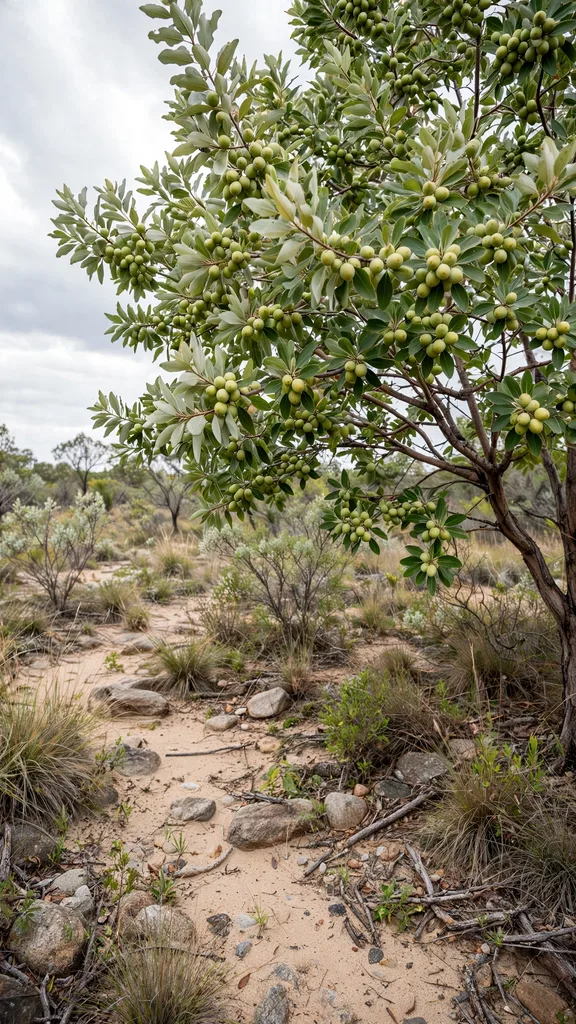
Desert quandong grows wild across the arid and semi-arid interior of mainland Australia, on nutrient poor soils that drain fast after rain. Wild plants range from a 1 m shrub to a 6 m tree, with olive leaves 3 to 9 cm long and a drooping habit on older wood, according to the Australian National Botanic Gardens profile of Santalum acuminatum. Tiny flowers form in late summer. Fruit ripens the following spring.
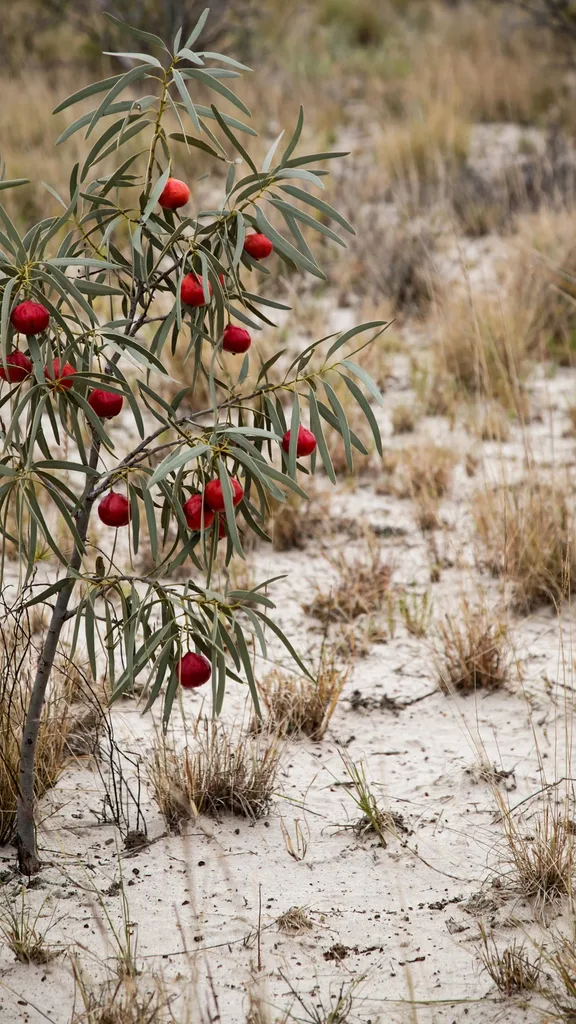
Blue quandong, Elaeocarpus grandis, is a separate rainforest tree with blue fruit and no host requirement, and it shares nothing with this plant beyond the name. Every instruction on this page applies to Santalum acuminatum only.
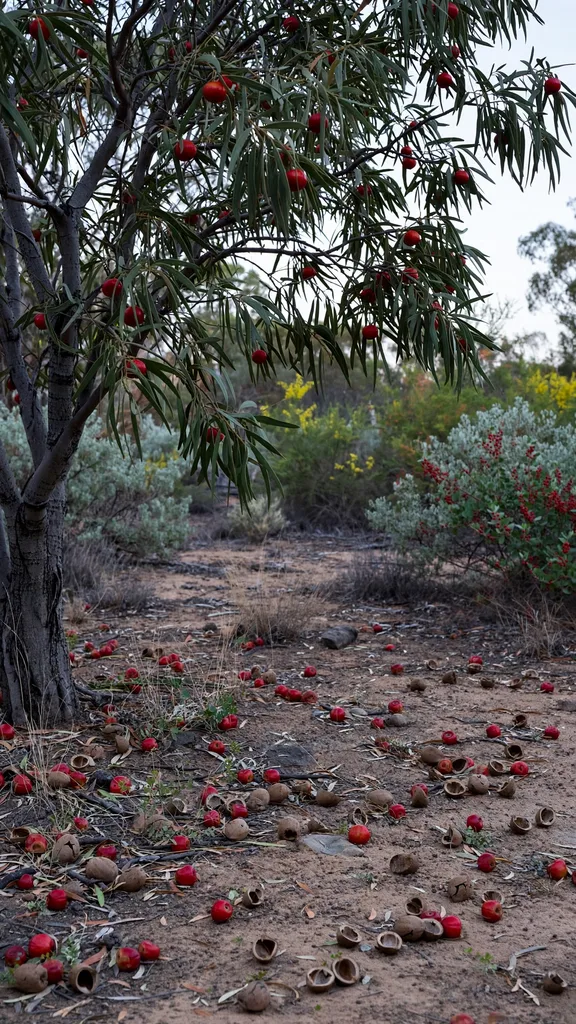
The fruit carries the argument for growing one. Each drupe measures 15 to 25 mm wide under a shiny red skin, with tart flesh 3 to 5 mm thick around a hard, pitted stone. Inside the stone sits an edible kernel. The flesh cooks into jams, pies, and chutneys, and it dries well for storage. A tree in full fruit feeds birds, lizards, and the household that planted it.
Expect variation. Seed-grown trees differ in fruit size, sweetness, and crop weight because each seedling is a new genetic mix. Two named cultivars exist for commercial planting, selected for heavier and sweeter crops. A home gardener sowing seed accepts the lottery. A gardener who wants a known crop buys a grafted cultivar tree and still plants hosts beside it.
Pick a Site With Full Sun and Sharp Drainage
Plant quandong in full sun on the freest draining ground you own. The species evolved on sandplains, dune swales, gravelly rises, and creek lines where water passes through and never sits. Heavy clay that holds water after rain kills roots and invites root disease. A gentle slope, a raised bed, or a mound of sandy loam solves a flat, slow site.
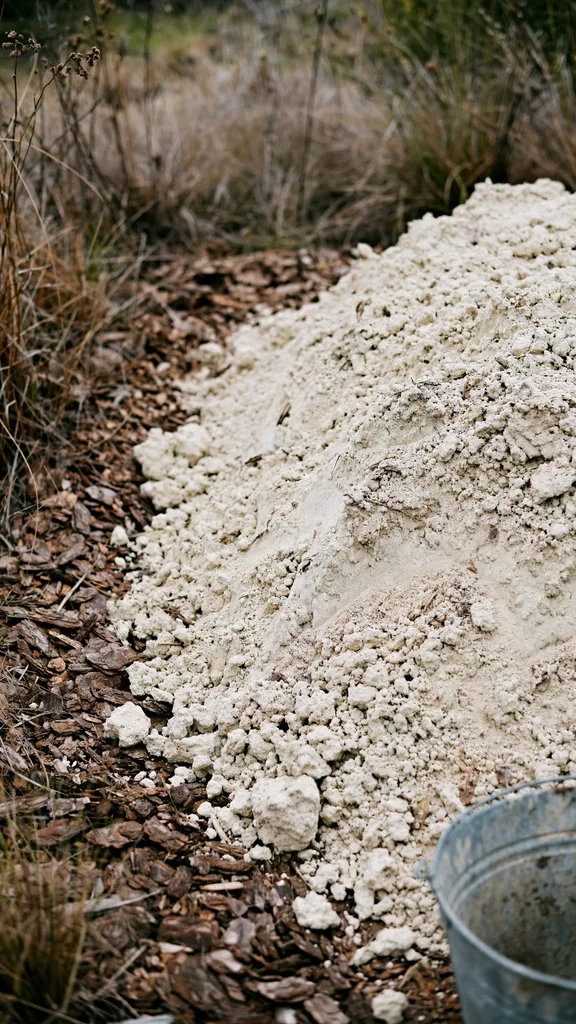
Rainfall tells you whether the tree fits your garden at all. Wild stands persist on 200 to 500 mm of annual rain, and cultivated trees in wetter districts survive only where drainage stays sharp through winter. Humid coastal gardens are the hard case. Grow the tree on a mound there, keep competing growth away from the trunk, and accept slower growth.
Leave room in every direction. A mature tree stands up to 6 m tall, and the Northern Territory threatened species fact sheet records wild trees at 6 to 8 m tall with fruit 1.5 to 2.6 cm across. The root system reaches much wider than the canopy. Roots travel at least 10 m hunting for host roots, so a quandong planted beside a vegetable bed will tap the bed. Plant it where that theft costs nothing: beside native grasses, wattles, saltbush, and other permanent plantings you water rarely.
Frost splits the decision by age. Mature trees tolerate frost. Young seedlings burn in hard frosts and need cloth cover or a sheltered wall through their first two winters. Gardeners in cold inland districts plant out in spring after the last frost date, then protect the tree each winter until the trunk thickens.
Age the Seed Before You Sow It
Fresh quandong seed carries the strongest dormancy of its life. Sow it the week it leaves the fruit and almost nothing rises. Ageing breaks that dormancy from the inside, a process called after-ripening, and the numbers show how steep the difference runs. One year of ageing lifts germination to about 5 to 30 percent, and seed aged 3 years reaches 35 percent germination, per the Australian National Botanic Gardens growing notes for Santalum acuminatum.
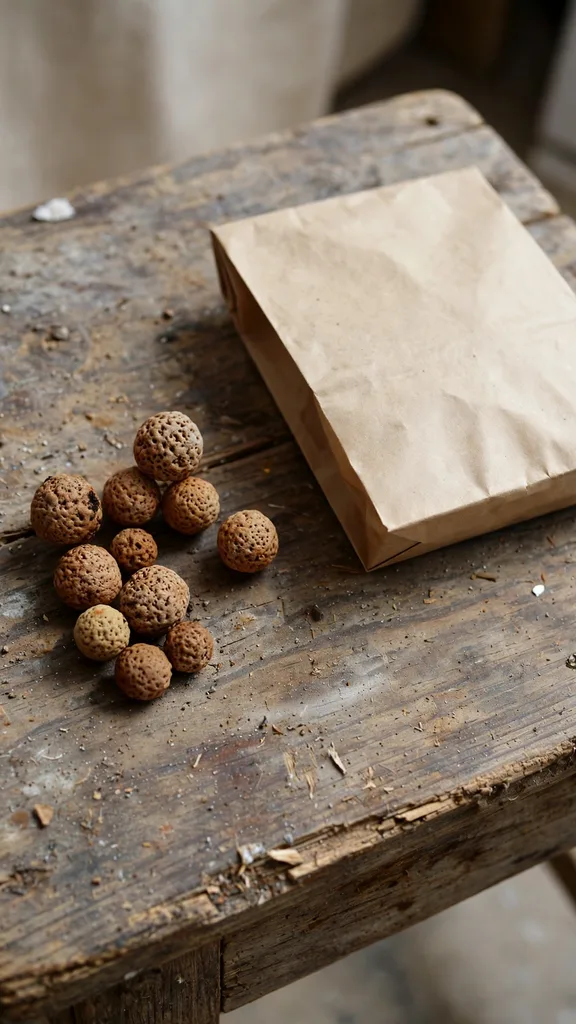
Store seed dry while it ages. Clean the flesh off the stones, dry them in shade for a week, then hold them in a paper bag in a cool, dry cupboard. Label the bag with the collection date. Seed pulled from the bag at 12 months is the youngest worth sowing. Seed at 24 to 36 months is the reliable batch.
Buy seed with the same suspicion. A packet with no collection date is a gamble, because fresh seed and old seed look identical. Ask the seller when the fruit was picked. A seller who cannot answer is selling fresh seed at best.
Sow more seed than you need. Sow 20 stones for every 5 trees you plan to plant out. The surplus costs one extra tray and one winter of bench space. A shortfall costs a full year, because the next batch needs its own ageing first.
Crack the Hard Shell Without Crushing the Kernel
Ageing alone leaves one barrier standing: the woody shell around the kernel. Water reaches the embryo slowly through an intact shell, and many aged seeds still sit dormant in wet mix until the coat splits. Cracking the shell by hand opens the door. The shell must split. The kernel inside must stay whole.
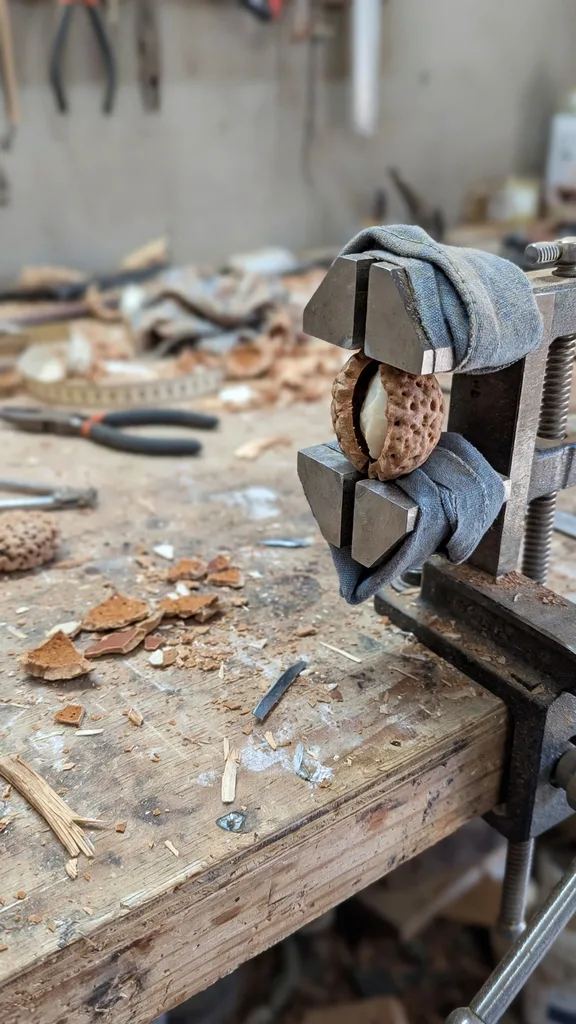
Work stone by stone in a bench vice. Pad the vice jaws with cloth or leather. Set one stone in the jaws and tighten a quarter turn at a time until you hear a single click. That click is the shell splitting. Stop there. One more quarter turn crushes the kernel into paste, and a crushed kernel rots in the tray instead of sprouting.
A saw nick works as the second method. Clamp the stone and cut a shallow groove through the shell with a hacksaw until pale kernel shows in the groove. Sow the stone with the nick facing down. The groove lets water in at the exact point where the root will exit.
Inspect every cracked stone before sowing. A good kernel is cream colored, firm, and full. A gray, shriveled, or hollow kernel is dead, and sowing it only feeds fungus. Discard failures on sight. Fungus from one rotting stone spreads across a damp tray and takes sound seed with it.
Crack seed on sowing day, never earlier. An intact shell protects the kernel during storage. A cracked shell invites mould and insects during storage. The vice work takes 20 minutes for 20 stones, done once, on the morning the tray gets filled.
Sow at 15 Degrees and Wait Out a Slow Germination
Sow cracked seed into a free draining seed mix in deep tubes or pots at least 15 cm deep. Quandong sends a taproot down early, and a shallow tray cramps it within weeks. Cover each stone with 1 to 2 cm of mix, water it in, and keep the surface moist without keeping it wet.
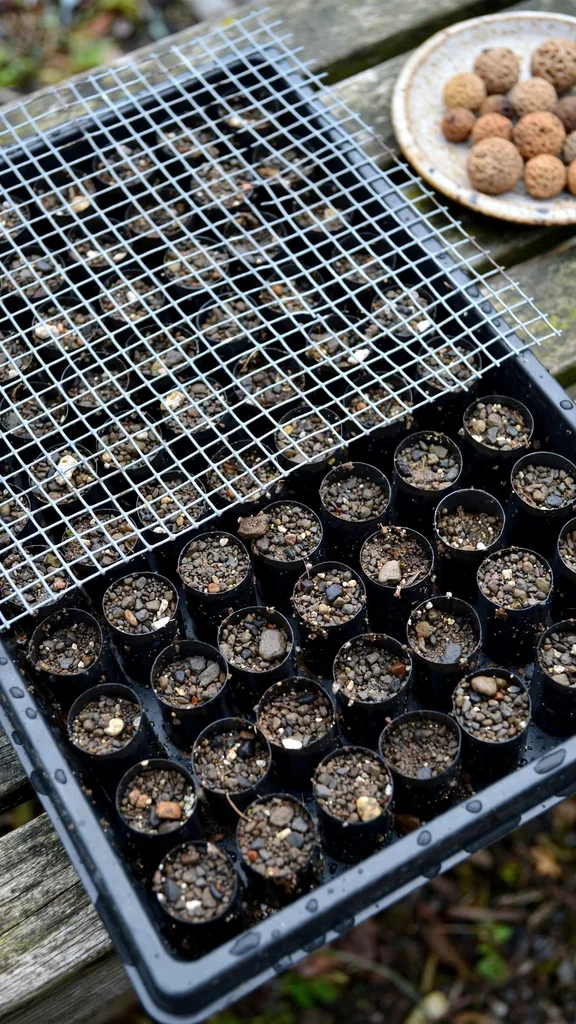
Temperature decides the calendar. The optimum germination temperature is 15 °C, so winter sowing suits this species in most districts. A tray sown in a hot summer shed sits idle until the weather cools. A tray sown at the start of winter works with the season instead of against it.
Germination should occur within a month and may take up to 4 months from a single tray. That spread is normal for this species. Stones crack at different depths, kernels wake at different speeds, and the first seedling often stands alone for 6 weeks while its neighbours sleep. Keep the tray moist for the full 4 months. A tray tipped out at week 8 throws away the second half of the crop.
Guard the tray against its two killers. Fungus takes cracked seed in still, wet air, so run the tray under cover with moving air and water from below where you can. Rats and birds dig stones out of open trays, so a sheet of wire mesh over the tray pays for itself in the first week.
Pot the Seedling and Add the First Host
Pot each seedling on once its cotyledons harden and the first true leaves hold their shape. Use a free draining native potting mix and a pot one size up from the tube. Feed at half strength with a combined slow release and liquid fertilizer at potting time. The seed kernel carries enough stored energy to fund the first weeks of root growth, and full strength feed at this stage burns more seedlings than hunger ever does.
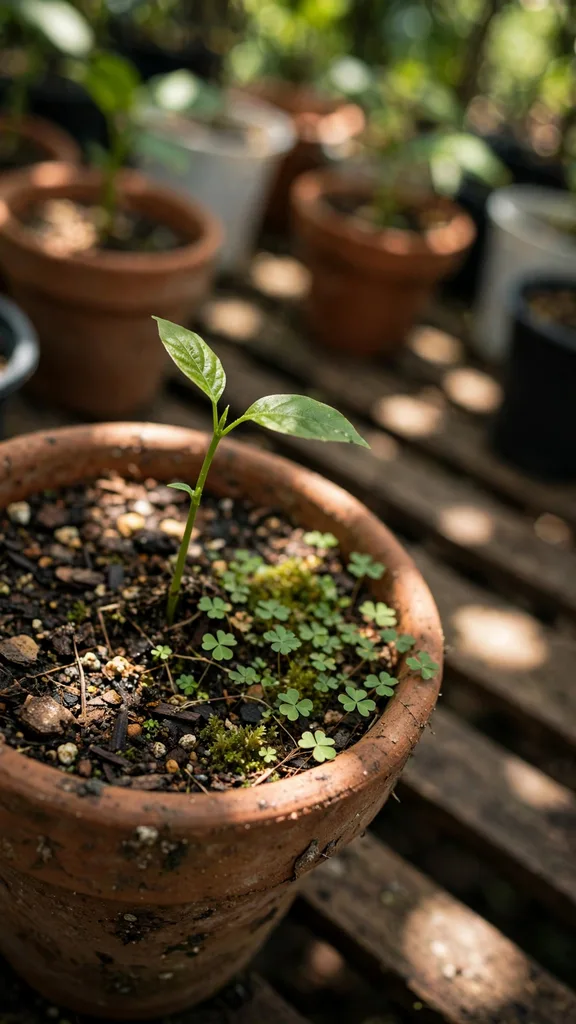
Add the first host at this potting, in the same pot. The seedling roots need a host root to find within their first season, and a pot is the easiest place to guarantee the meeting. Sow clover seed across the surface, or tuck couch grass cuttings around the edge of the pot. Both work. Both can turn weedy in a garden bed later, so a locally native grass or a small pea flowering plant is the cleaner choice for a pot that will later be planted out whole.
Size the host to serve the seedling without swamping it. A host that dominates the pot outcompetes the quandong for light and water, because the young tree still draws part of its needs through its own roots. A low grass tuft or a small clover patch feeds the partnership without shading the seedling. Trim an overgrown host back hard. The host is staff, never the feature plant.
Hold seedlings in pots for their first year. A potted year builds a root ball that already carries haustoria attached to host roots, and that working partnership transplants into the ground intact. Trees planted out as small, hostless seedlings spend their first ground season searching for roots to tap, and many die searching.
Why Does a Quandong Need a Host Plant?
A quandong root forms a haustorium when it meets a suitable root from another plant. The haustorium penetrates the host root and draws xylem sap: water and dissolved soil nutrients. The quandong keeps its own green leaves and makes its own sugars, which is why botanists call it a hemiparasite, half parasite. It steals drinks. It cooks its own meals.
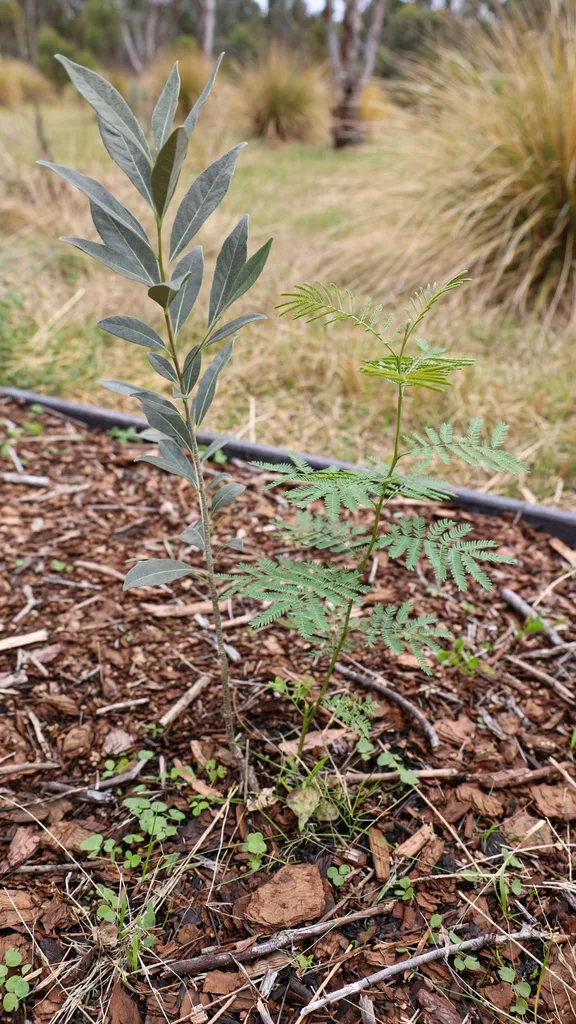
Nitrogen fixing plants make the strongest hosts. In wild stands the tree leans on Acacia and Casuarina species, and it also taps legumes, shrubs, herbs, and grasses. A wild quandong normally holds more than one host at a time, spreading its demand across several root systems so no single host carries the full load.
A hostless quandong tells the story in its leaves. Growth slows to a crawl. Leaves yellow between the veins as nutrient supply fails. The tree survives for a season or two on its own roots in good soil, then declines. Gardeners who plant one alone in a lawn usually watch exactly that sequence and blame the soil. The soil was fine. The partnership was missing.
The host relationship runs for the life of the tree. Mature trees keep tapping roots, and the health of the surrounding hosts sets the ceiling on the quandong crop. A dead wattle beside a fruiting quandong shows up the next season as a thinner crop and smaller fruit. Keep the hosts alive and the tree pays you back.
Slow, partnership based growth is a pattern fruit growers already know from other species. A mango tree grown from seed also makes its owner wait years for a first crop, and a lychee tree punishes anyone who rushes its early seasons. Quandong adds one condition those trees never ask for: company.
Plant Out Beside at Least 2 Living Hosts
Plant the sapling within root range of at least 2 potential hosts. Two hosts insure the tree against one host dying, and they spread the nutrient load. Established native grasses, a young wattle, a saltbush, or a pea flowering shrub all qualify. Plant a host at the same time if the site stands empty: set the host 0.5 to 1 m from the quandong, close enough for young roots to meet within the first season.
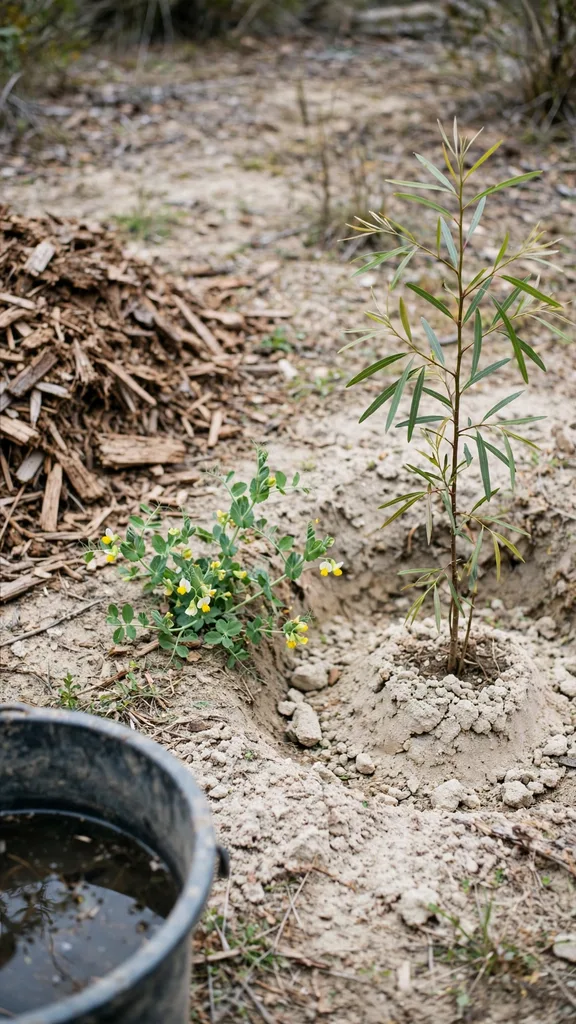
Plant out in autumn or early spring in mild districts, when soil holds moisture and heat stress stays low. Dig the hole twice the width of the pot and no deeper. Set the tree at the same depth it grew in the pot, backfill with the soil you dug out, and water the planting in with a full bucket. Native soil goes back in the hole. Rich imported mix creates a sump that holds water against the roots in clay ground.
Tip the pot out whole and keep the root ball intact. The haustoria inside that ball are already attached to the potted host, and breaking the ball apart severs them. Slide the ball into the hole, firm the soil around it, and plant the potted host out with the tree if it is a species you want in the ground permanently.
Space neighbouring trees a few metres apart so each canopy keeps its natural form and each root system finds its own hosts. Mulch the planting with 5 to 7.6 cm of coarse bark or straw, kept clear of the trunk. A guard against rabbits and kangaroos earns its cost in the first month: young quandong foliage is browse, and one night of grazing strips a sapling to sticks.
Water Through the First Summers, Then Back Off
Young quandongs must never dry out. The species survives arid country as an adult and dies of thirst as a juvenile, because a seedling root system is small and its host is small too. Water deeply once or twice a week through the first summer, enough to wet the full root zone of both the tree and its hosts. A dry host stops supplying the tree even when the tree itself looks watered.
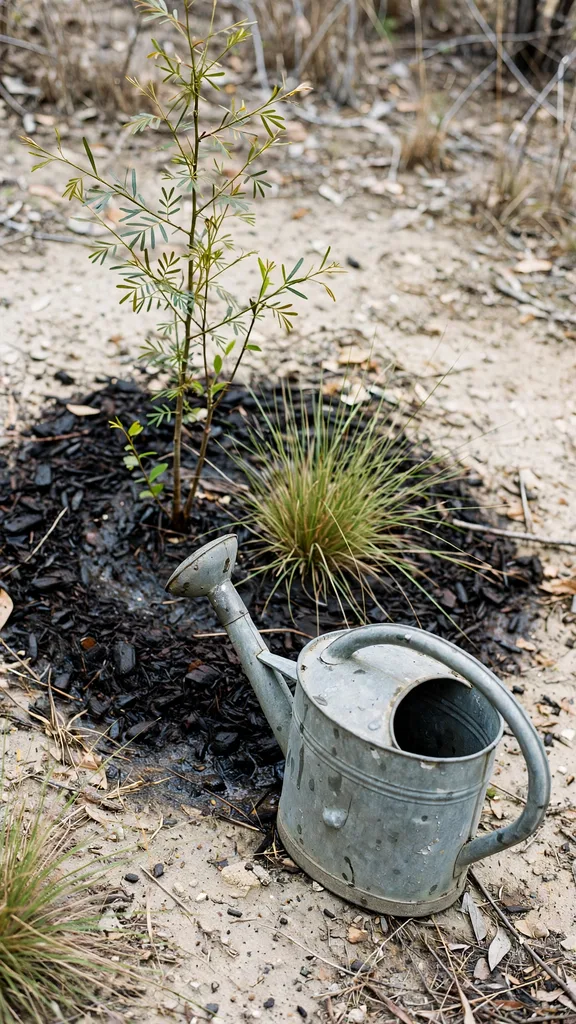
Taper the water as the partnership matures. In the second and third years, water deeply every 2 to 3 weeks through summer dry spells. By year 4, an established tree on suitable soil rides out long dry periods on its hosts and its own deep roots, and irrigation shrinks to rescue water during extreme drought.
Overwatering kills more garden quandongs than drought does. Soggy soil rots the fine roots and the haustoria, and the tree wilts in wet ground, which tempts the owner into watering again. Check the soil 10 cm down before every watering in the early years. Dry at that depth means water. Damp at that depth means wait.
Watch the hosts as your gauge. A host wilting at midday and recovering by evening is coping. A host wilting and staying wilted is a partnership in trouble, and the quandong will follow it down within weeks. Water the pair, never the tree alone.
Feed at Half Strength and Prune for Shape Only
Quandong evolved on nutrient poor soil and feeds partly through its hosts, so heavy fertilizer does it no favors. Feed the planting lightly once a year in spring with a native plant fertilizer at half the label rate, spread under the canopy of the hosts as much as under the tree. Feeding the hosts feeds the quandong through the haustoria. High phosphorus fertilizers damage Australian native root systems, so pick a low phosphorus native blend and keep manure and rich compost for other beds.
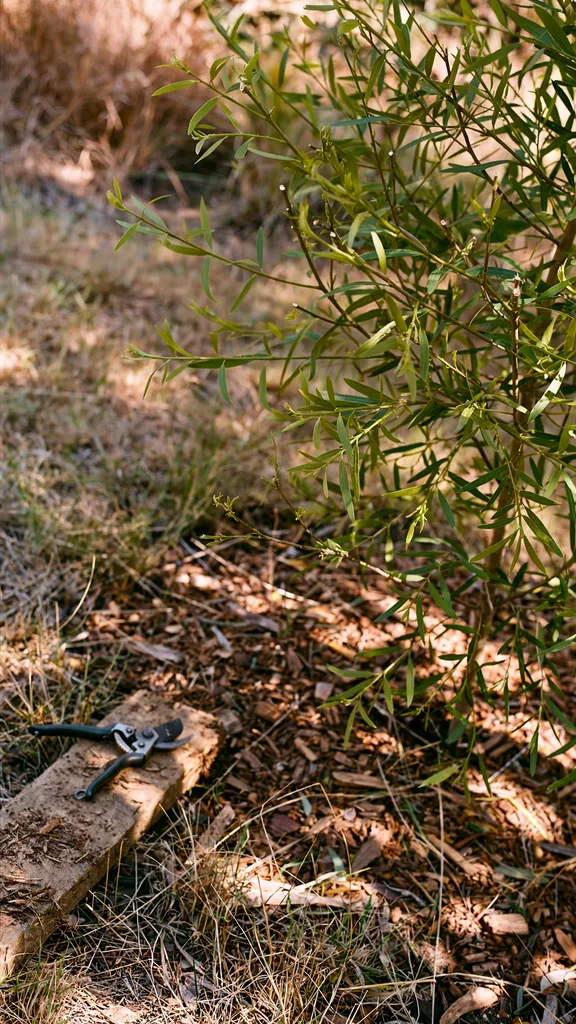
Prune for shape in the first 3 years only. Tip prune the leader and long side shoots once a year to build a branched, wind firm frame. After that, remove dead wood and crossing branches and leave the tree alone. Heavy pruning cuts the leaf area that funds fruiting wood, and a hard pruned quandong answers with a season of leaves and no fruit.
Leave fallen fruit under the tree or collect it daily in harvest season. Rotting fruit on the ground breeds fruit fly in districts where the pest occurs and draws wasps to the picking zone. Clean ground under the canopy also makes the ripe drop easy to spot at dawn.
Protect young trees from grazing for at least the first 2 years. Tree guards, a ring of wire mesh, or a thorn branch barrier all work. One stripped sapling can reshoot from the base, and the reshoot costs a year of growth each time it happens.
Harvest Red Fruit From Year 4 Onward
Under cultivation, seedlings take at least 4 years to bear fruit, and grafted cultivar trees on a good site with healthy hosts can crop inside that window. The Northern Territory fact sheet puts the main wild fruiting season in August to October, with flowering from September to January, and garden trees in southern districts ripen their main crop through spring. Expect a light first crop: a bowl, not a bucket. Crops build as the canopy and the host network build.
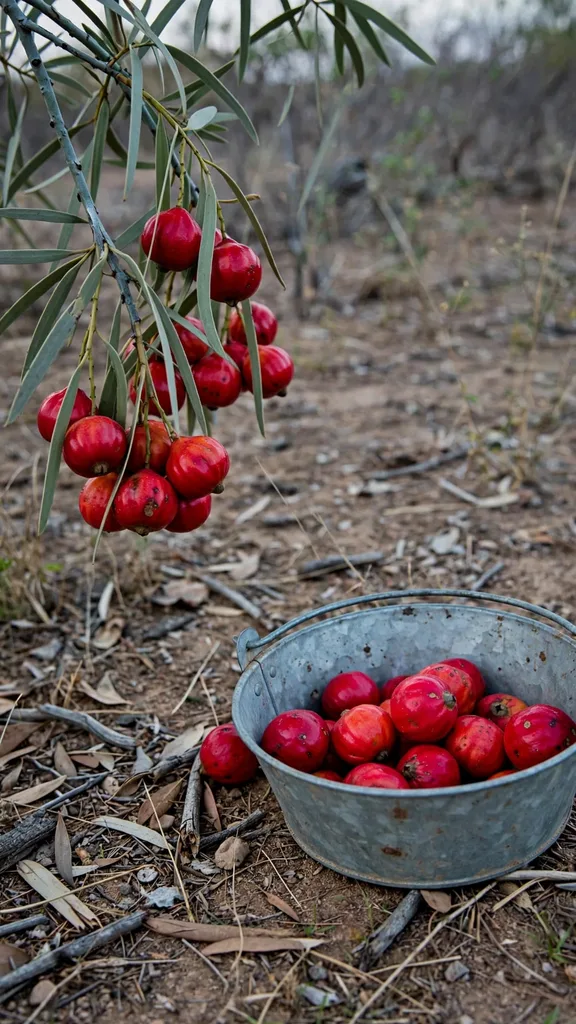
Pick fruit at full red. A ripe quandong is shiny, bright red from stem to tip, and yields slightly under thumb pressure. Fruit picked orange-red ripens poorly off the tree and stays sour. Fruit left to full red on the tree carries the tart, apricot-like flavour the species is known for, and the flesh dries into a leathery, intensely flavoured strip that stores for months.
Harvest by hand into a shallow bucket. The fruit bruises under its own weight in a deep pile, and bruised flesh ferments within a day in warm weather. Spread the pick in a single layer in the shade, sort out any split fruit for same day cooking, and refrigerate the sound fruit.
Save the stones from your best fruit. Crack a sample stone from the sweetest tree and taste the kernel: kernels vary as much as flesh does. Stones from a heavy cropping, sweet fruited tree are the seed stock worth ageing for your next planting, labelled with the tree and the year. A second generation planted from your own best tree is how a home orchard of this species improves.
Fix the Failures: Dry Pots, Dead Hosts, and Soggy Ground
Seed that never sprouts fails for one of three reasons. It was fresh, and dormancy never broke. It was aged and never cracked, and water never reached the kernel. It was cracked and then stored, and mould ate the kernel through the split. Date every batch, crack on sowing day, and the failure list shrinks to weather.
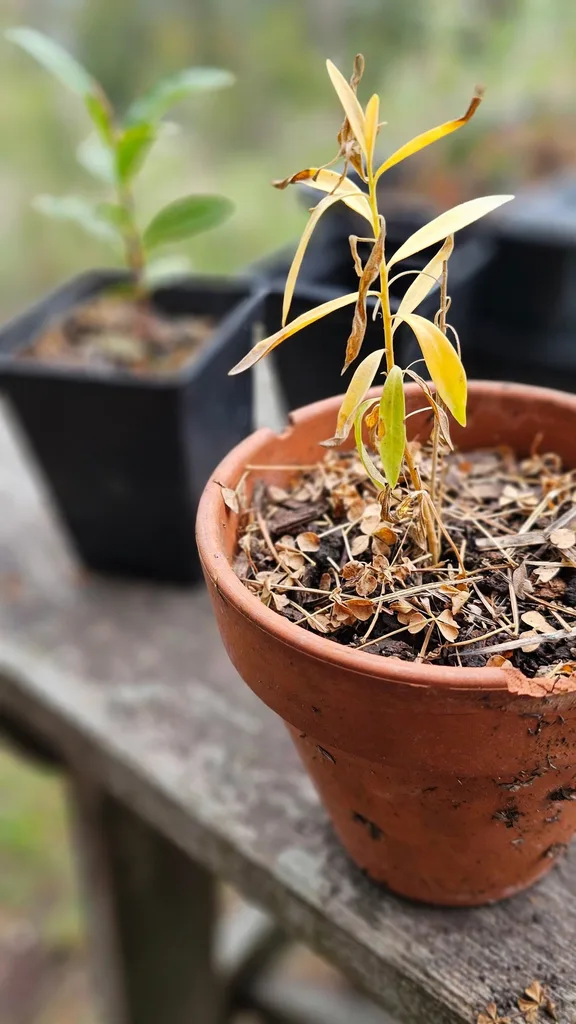
A seedling that yellows and stalls in its pot is a seedling without a working host. Check the pot for living host roots and green host growth. A pot where the clover died in summer is a pot with a starving quandong. Sow fresh host seed across the surface, water the pair back to health, and growth resumes within weeks.
A planted tree that declines in its second year has usually lost a host or lost drainage. Count the living hosts within 3 m. Fewer than 2 living hosts means plant replacements that week. Soil that stays wet 10 cm down for days after rain means the site drains too slowly, and the fix is a mound rebuild in autumn or a move to sandier ground.
Scale insects and leaf eating caterpillars visit garden trees and rarely justify spraying. Hose scale off with a hard water jet, pick caterpillars off by hand into a bucket, and let birds work the canopy. A tree fed lightly and watered honestly shrugs off pest pressure that strips a stressed tree bare.
Frequently Asked Questions
Yes, for its first years, and permanently only in a very large container with a host sharing the pot. A 40 to 50 cm pot holds a seedling and a clover or grass host through the first 2 years. Fruiting in a pot is slow and light because the root system and the host network stay small. Plant the tree in the ground for a real crop.
Seedlings take at least 4 years to bear fruit under cultivation, and a seed grown tree on a dry site with weak hosts can take longer. Grafted cultivar trees crop sooner on a good site. The first crop is small. Expect a bowl of fruit in the first bearing year and heavier crops as the canopy and host roots expand over the following seasons.
Nitrogen fixing plants lead the list: wattles, casuarinas, and other legumes feed the partnership best. Native grasses, clover, saltbush, and pea flowering shrubs all serve as working hosts. Plant at least 2 hosts within root reach of the tree and keep them healthy, because a quandong normally draws on more than one host at a time and declines when its hosts decline.
Fresh seed is the usual cause. Dormancy is strongest in fresh seed, and the botanic gardens ageing figures in the seed section show how sharply germination climbs after a year in storage. An uncracked shell is the second cause: crack each aged stone in a vice on sowing day so water reaches the kernel, then hold the tray cool through winter and wait out the full germination window.
Seed and grafting are the reliable routes. The botanic gardens notes record grafting onto seedling stock as the method used to multiply selected fruiting forms, because cuttings of this species strike poorly and slowly. A gardener chasing a known sweet crop buys a grafted cultivar tree. A gardener happy with a lottery plants aged, cracked seed and plants out the strongest seedlings.
No. A single quandong flowers and sets fruit on its own. The partners the tree cannot live without are its hosts. Spend the space a second tree would take on stronger hosts: one wattle and one native grass planting inside root reach serve a lone tree better than a neighbouring quandong.
Santalum acuminatum rewards the gardener who plans in years. Age the seed, crack the shell, plant the hosts, and the red fruit arrives on schedule.