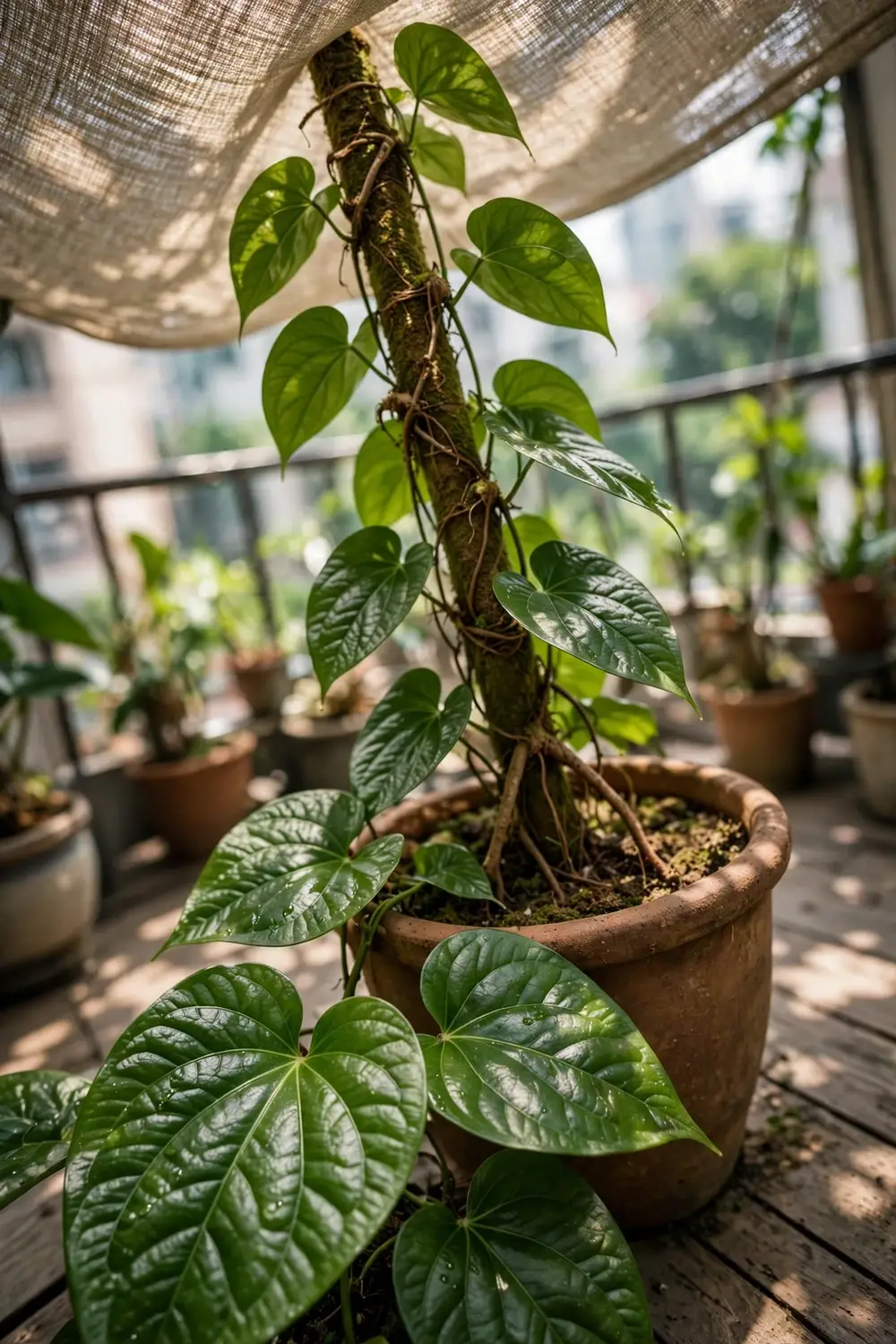

Within 4 to 6 months of planting a cutting, a home vine starts paying you back in glossy leaves. Betel leaf wants shade, humidity, and something to climb. Give it those three and a home gardener can harvest glossy, peppery leaves in four to six months from a cutting. Growers who want to know how to grow betel leaf from India at home usually start with the wrong question. They ask about seeds. Seeds are the one thing nobody in the trade recommends.
Piper betle is a climbing evergreen vine in the pepper family, and the part you harvest is the leaf itself, chewed as paan across India. Commercial paan may include areca nut and tobacco mixtures, but this article grows the leaf only and endorses nothing else. The vine roots at its nodes, which is the entire secret of its propagation. A cutting with a node will grow. A leaf blade alone never will. Learn the difference and you skip the single biggest myth floating around social media.
1. Set the Climate Expectation Before Anything Else
Betel pepper is a lowland tropical plant that prefers a mean annual temperature of 22 to 27 degrees Celsius and tolerates 17 to 31 degrees, according to the Useful Tropical Plants botanical profile. It thrives under humid forest conditions with high relative humidity and plenty of soil moisture, and it wants protection from wind plus a position in shade. If your climate sits outside the 17-to-31-degree tolerance window, the container-and-shade method below is the workable route, and the overwintering section explains exactly how to move the vine indoors when cold arrives.
2. Cuttings or Nothing: Why Seed Is a Red Herring
No page-one grow guide on any search engine recommends seed propagation, and one Indian nursery supplier notes that seeds are genuinely difficult to find in the trade. Grow betel leaf from stem cuttings or do not grow it. This is good news, because cuttings are faster and genetically identical to the mother vine, which matters when you buy a named variety such as Maghai or Banarasi and want the same leaf character at home. Start with a healthy mother vine or a nursery plant, and take your cuttings in warm weather when growth is active.
3. Know the Varieties: Maghai, Banarasi, Bangla, Mitha, Kapuri
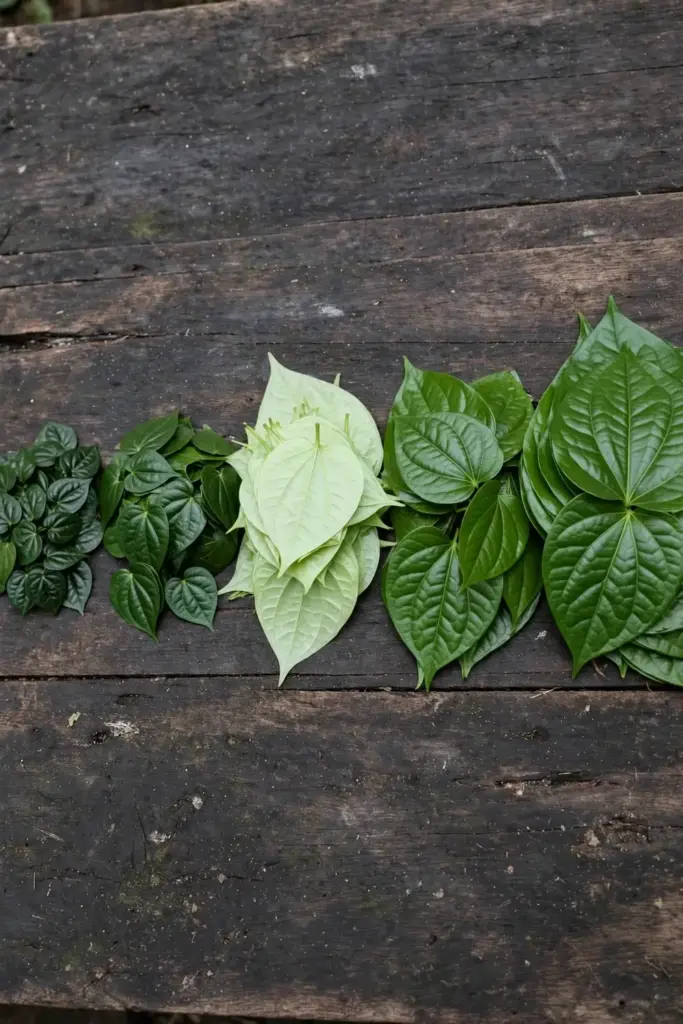
No search engine’s page one carries a real variety guide for betel leaf, which makes this table the single biggest gap this article fills. These are trade names used by Indian paan vendors and nurseries, not formally registered cultivars, so expect variation between suppliers. The honest rule: if you want a specific variety, buy a named cutting from a nursery, because there is no seed trade to fall back on.
| Variety | Region associated | Leaf character (trade reputation) | Notes for growers |
|---|---|---|---|
| Maghai | Bihar, Magadh | Small, thick, pungent leaf | Often named for medicinal use in the trade |
| Banarasi | Varanasi | Large, delicate, mild leaf | The classic meetha paan leaf |
| Bangla | Bengal | Large, bold leaf | Widely traded across eastern India |
| Mitha | General trade name | Sweet, mild leaf | “Mitha” means sweet; expect mildness |
| Kapuri | South India | Small, strongly pungent leaf | Also sold as nagarvel paan in some nurseries |
4. Source Your Cuttings: Named Varieties Beat Anonymous Stems
Buy a named variety cutting from a nursery when you can. Online nurseries sell Maghai, Banarasi, and Kapuri plants, and a nursery plant skips the riskiest weeks of rooting entirely. If you take cuttings from a friend’s vine, ask which variety it is and write it down, because an anonymous cutting can never be identified later. Community groups and gardening societies are a good secondary source, and several growers trade cuttings locally once their vines need pruning. Inspect any incoming cutting for aphids, mites, and leaf spots before it touches your collection. A stressed or diseased cutting roots slowly and carries problems into your pot. Choose stems that snap cleanly rather than bending, a sign of turgid, healthy tissue that will push roots fast.
5. Take Cuttings With the 15-Centimeter Rule
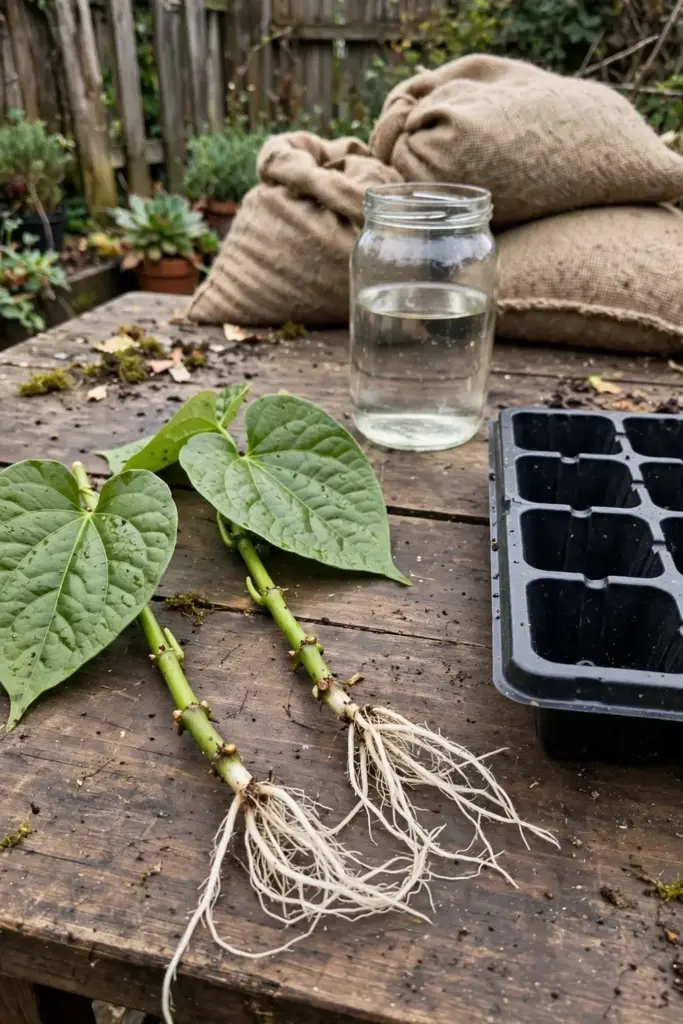
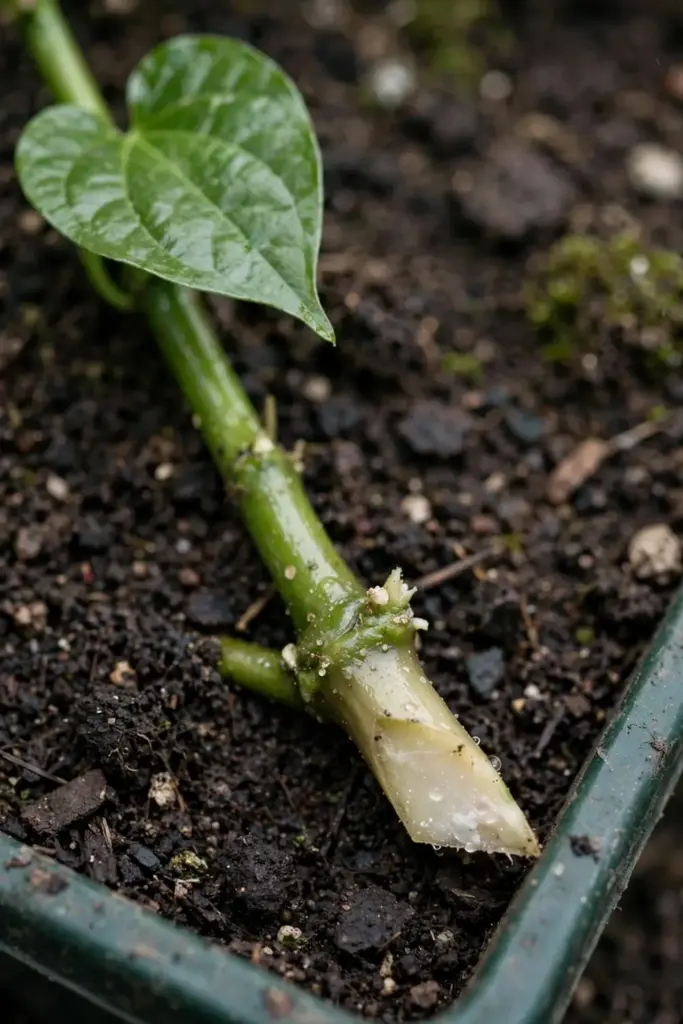
Choose a fresh, green stem with two to three nodes, never a woody one. The best material is semi-hardwood: stems that are firm enough to hold their shape but still green, taken from the middle of a healthy shoot. Rooting hormone is optional but helps; dip the cut end before planting if you keep hormone powder on hand. Make the cut at a 45-degree angle just below a leaf node with a clean sharp blade. Keep the leaves at the top of the cutting and strip the rest from the lower half. A cutting 14 to 15 centimeters long roots most reliably, which matches the Balcony Garden Web betel leaf propagation guide that calls for four-to-six-inch cuttings taken at a 45-degree angle below the node. The 45-degree angle increases the exposed tissue at the cut, and the node is where the roots will emerge.
6. Root Cuttings in Water: The Step Table
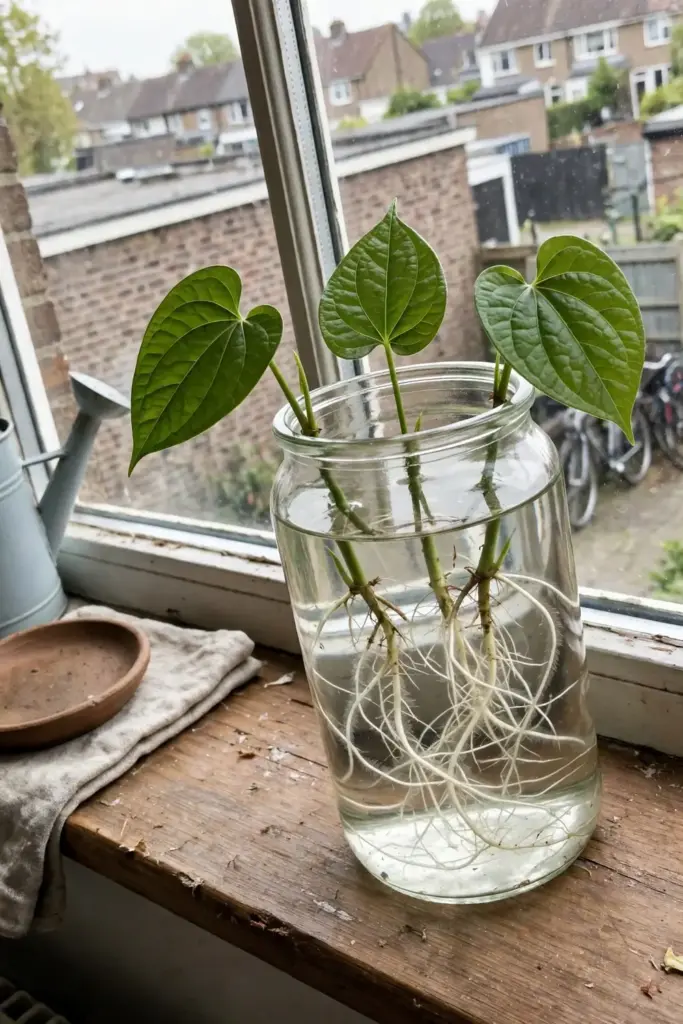
Water rooting is the most forgiving first step because you can watch roots form. Keep the cutting in bright indirect light and change the water every three to four days so it stays fresh.
| Step | Action | Time |
|---|---|---|
| 1 | Submerge the node end of the cutting in a jar of clean water | Day 0 |
| 2 | Change the water every 3 to 4 days | Ongoing |
| 3 | Watch for white roots emerging from the nodes | Roots begin within about 15 days |
| 4 | Move the rooted cutting to a pot once roots are several centimeters long | Around day 15 to 21 |
Skip the single-leaf videos you see on social media. A leaf without a node or axillary bud can push out roots and then do nothing forever. The mechanics are simple: roots form at nodes, and shoots grow from buds. A blade-only leaf has no bud, so it can never become a vine. Growers who follow how to grow betel leaf from India guides that promote leaf-with-node pieces are using cuttings by another name.
7. Plant in a Deep Pot With Drainage That Actually Drains
| Step | Action | Timing |
|---|---|---|
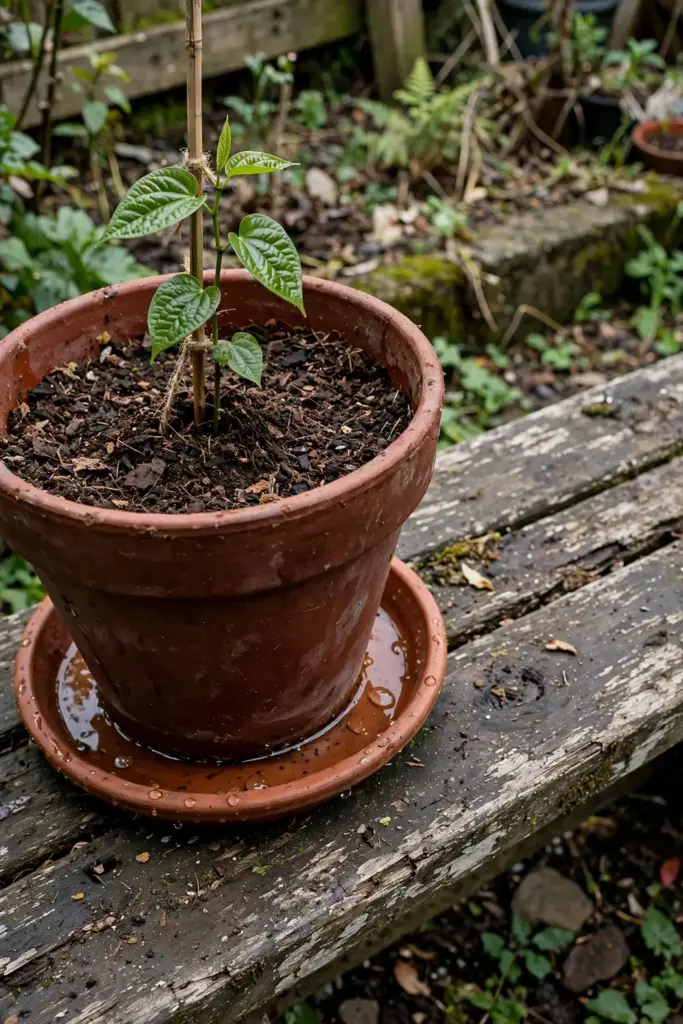
| 1 | Choose a deep pot, at least 8 to 10 inches, with four to five drainage holes | Before planting |
| 2 | Fill with a well-draining mix rich in organic matter | Before planting |
| 3 | Plant the rooted cutting about two inches deep and water lightly | Planting day |
| 4 | Place in bright indirect light and keep soil consistently moist | First two weeks |
Betel leaf likes loam soil rich in organic matter. A workable home mix is garden soil with compost and cocopeat, plus coarse sand if the soil runs heavy. The soil should stay moist but never waterlogged, because standing water rots the roots. Terracotta and ceramic pots suit the vine well since they let air reach the roots. Gardeners working with a solid understanding of soil structure will find betel leaf rewards the same loose, organic-rich mix that every container plant wants.
8. Give the Vine a Trellis, Moss Pole, or Net
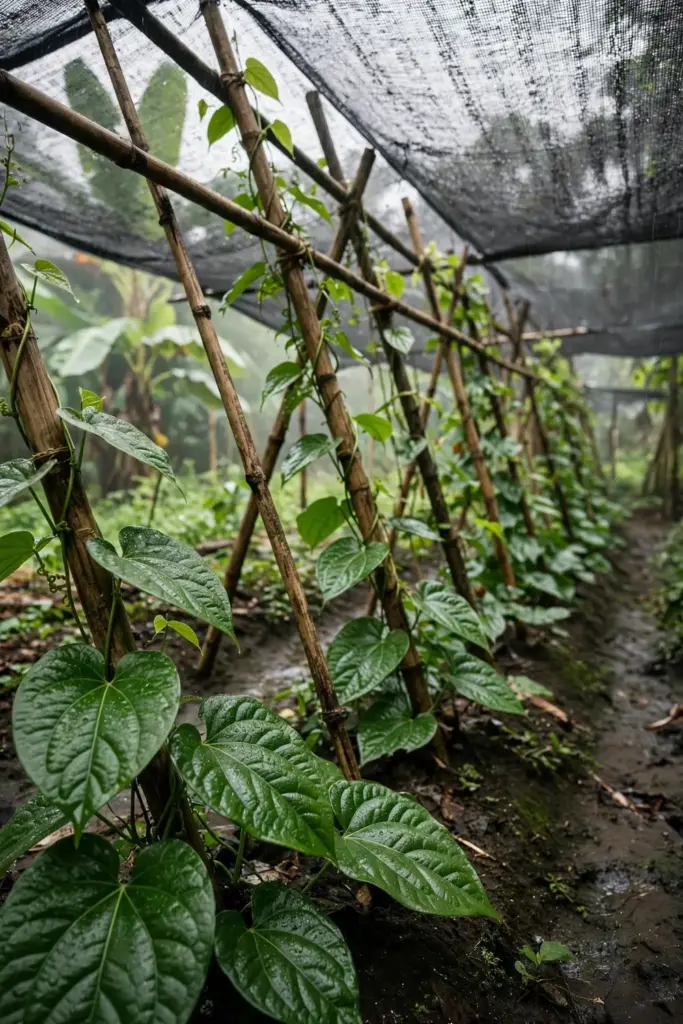
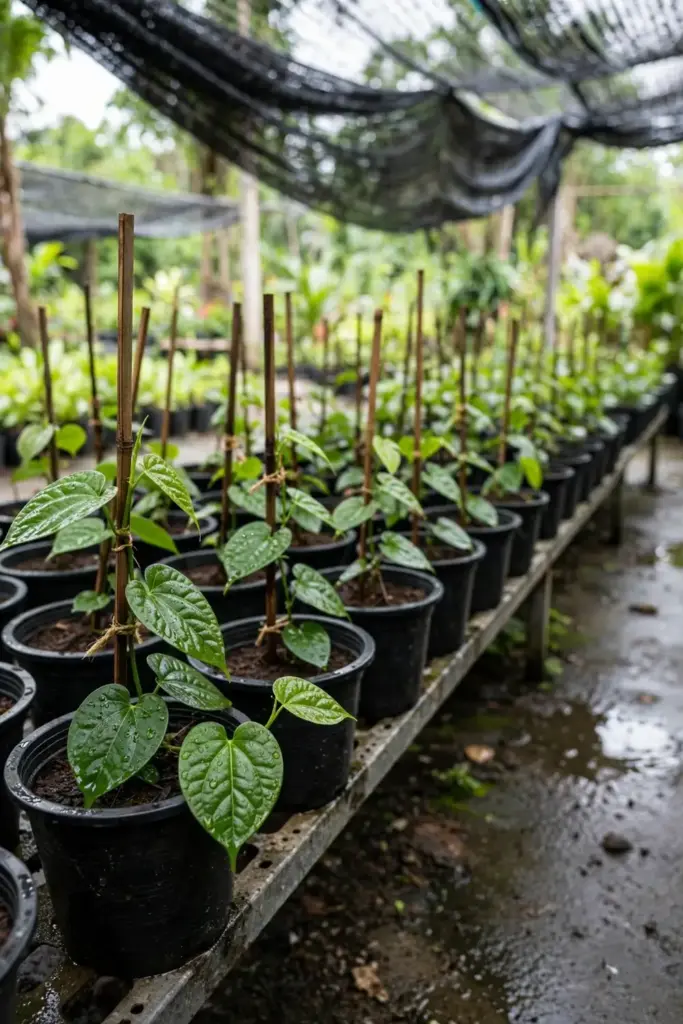
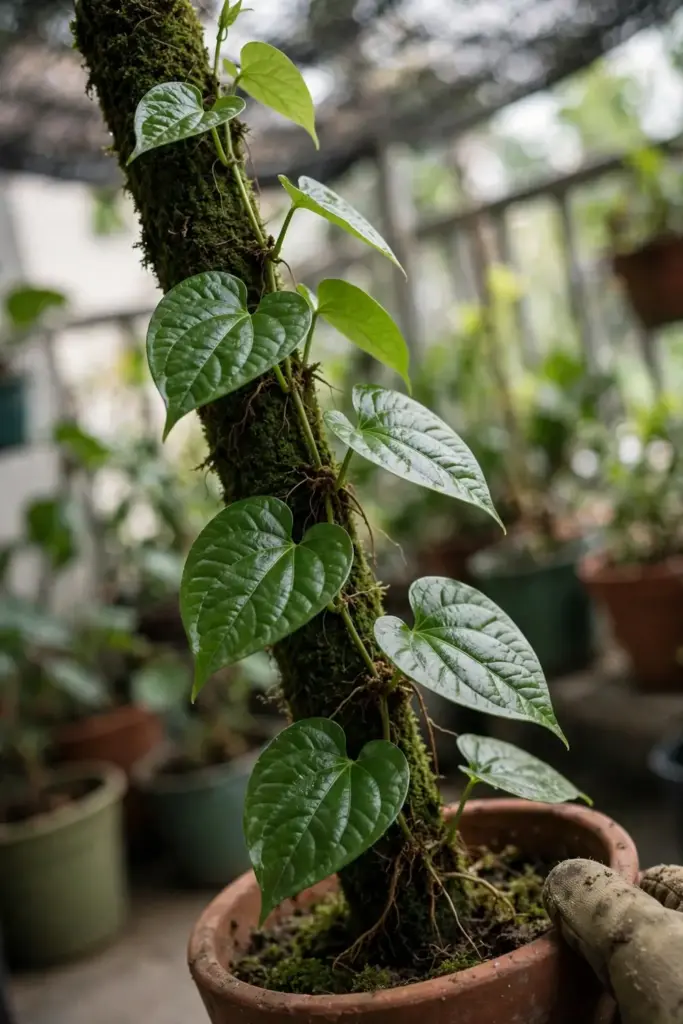
Betel leaf is a climbing vine and the primary stem grows up to a meter long before it sends out creeping side stems. A bamboo stake, moss pole, trellis, or simple support net gives the nodes something to grip, and this matters more than looks. I have learned that aerial roots form eagerly where the stem touches a damp support, and a moss pole kept lightly moist turns the whole support into a rooting surface. Tie the stem loosely with soft plant ties at first, then let the vine’s own adventitious roots take over.
9. Build the Humidity Dome: Shade Net, Mist, No Direct Sun
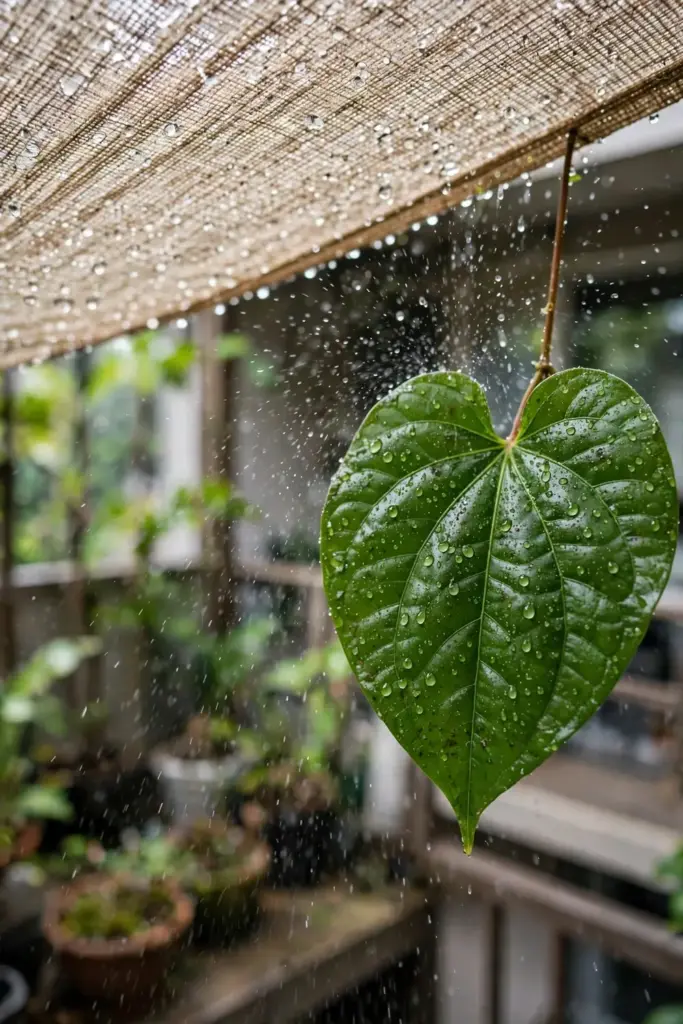
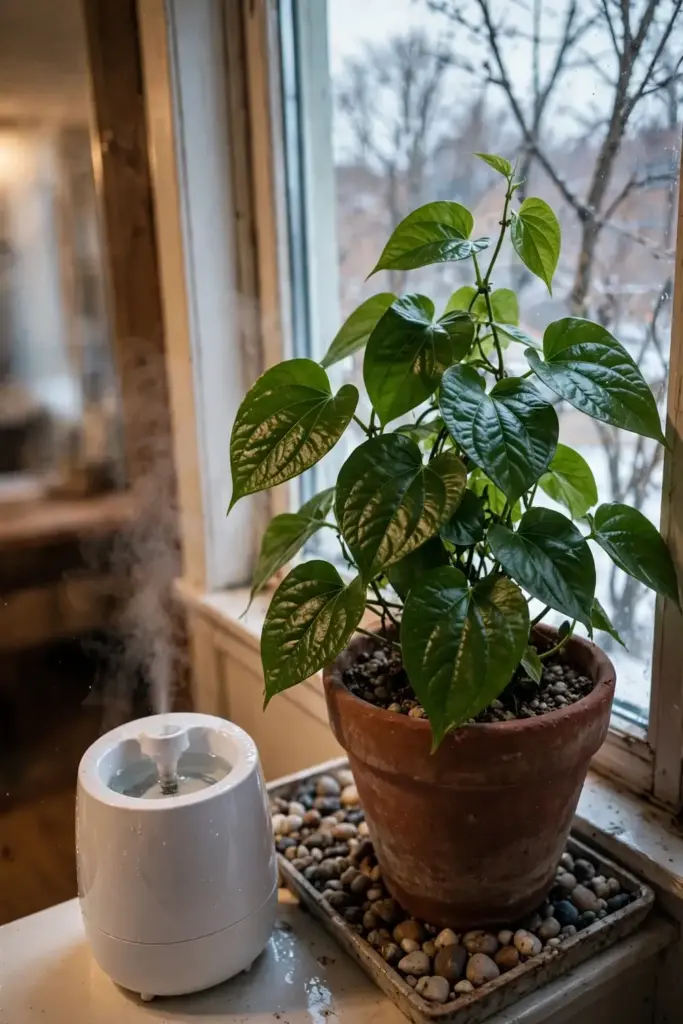
Betel leaf hates full or direct sunlight, and the Gardening Tips container guide frames the rule bluntly: give it filtered sunlight or partial shade, because this plant hates direct sun. A few hours of gentle morning sun helps the plant, and east or north-facing positions suit it outdoors and indoors alike. The trade in India grows betel vines under shade netting with frequent irrigation, and home growers in hot regions should copy that: a 50-percent shade cloth plus daily misting of the foliage keeps the leaf tissue green and tender. In dry indoor air, a pebble tray under the pot or a small humidifier near the plant holds the humidity the vine evolved for.
10. Water Like a Tropical Gardener: Daily Moisture, Zero Puddles
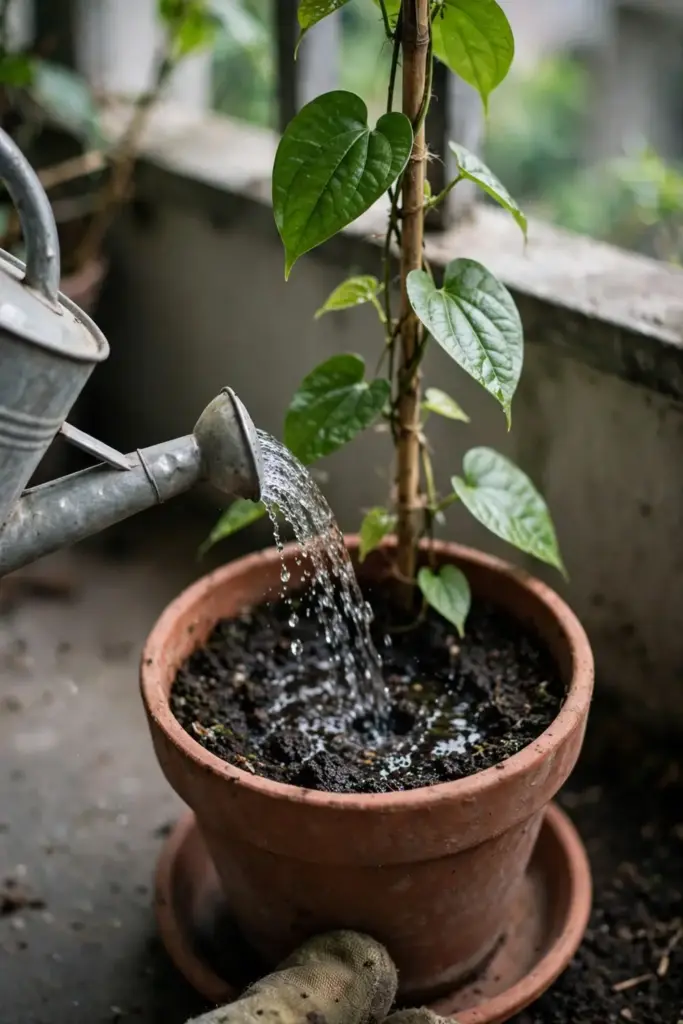
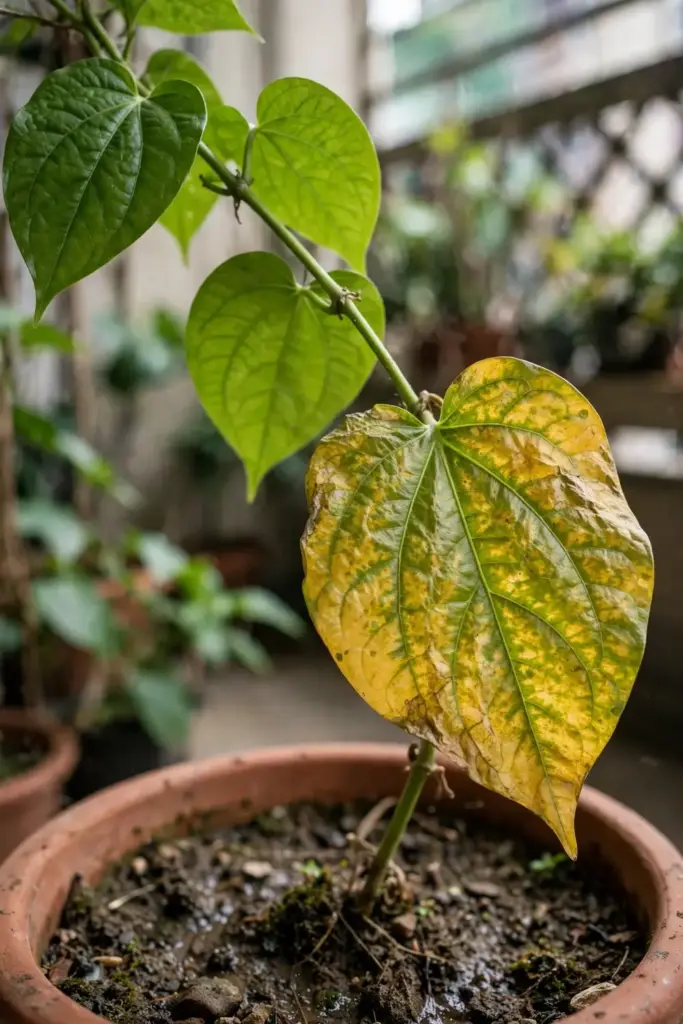
Water the vine daily in warm weather and less in the rainy season, always keeping the soil moist but not soggy. The finger test works: water when the top inch of soil feels dry. Betel vines evolved in regions with 2,250 to 4,750 millimeters of annual rainfall, so consistent moisture is not optional. Overwatering is the other cliff. Poor drainage turns the root zone anaerobic and the leaves yellow, which is almost always a drainage problem rather than a hunger problem. If the leaves start yellowing despite regular watering, check that the drainage holes are clear before reaching for fertilizer.
11. Feed Gently for Leaf Quality
Betel leaf responds to plain compost or well-rotted cow manure, and no fancy fertilizer is needed for home vines. Apply compost every few weeks during active growth, or use a diluted balanced liquid feed once a month. The trade uses high-nitrogen nutrition because the harvest is continuous foliage, and home growers get the same effect from regular light feeding. Excess fertilizer salts burn tender roots, so err on the dilute side and water the mix well after feeding. Gardeners who follow a solid seed starting routine already know the half-strength principle that also applies here.
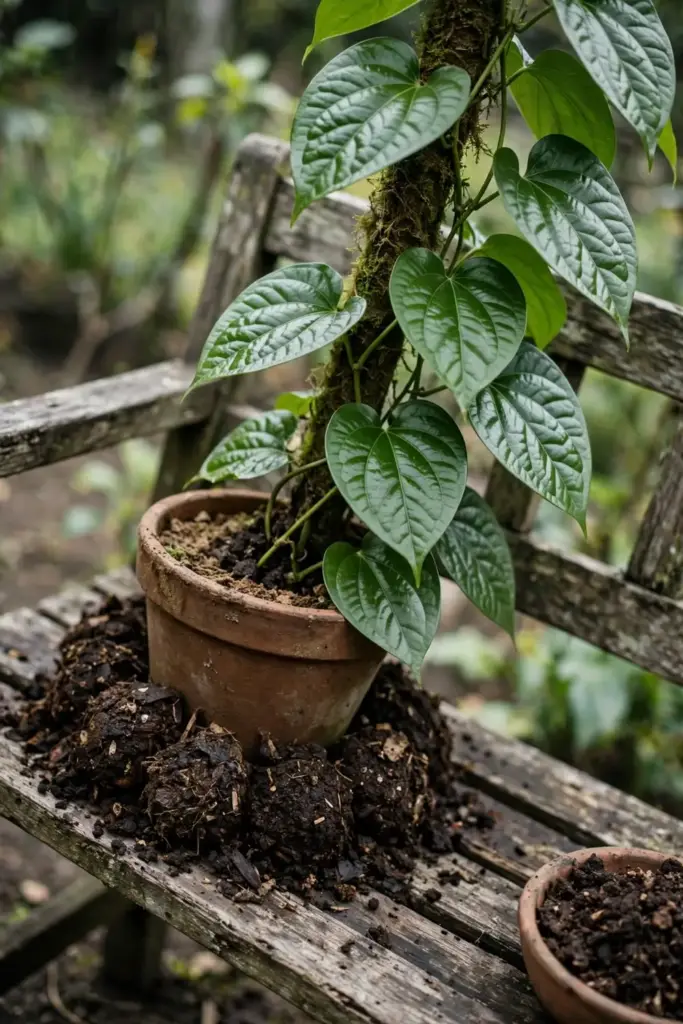
12. Train, Prune, and Rejuvenate at Two Meters
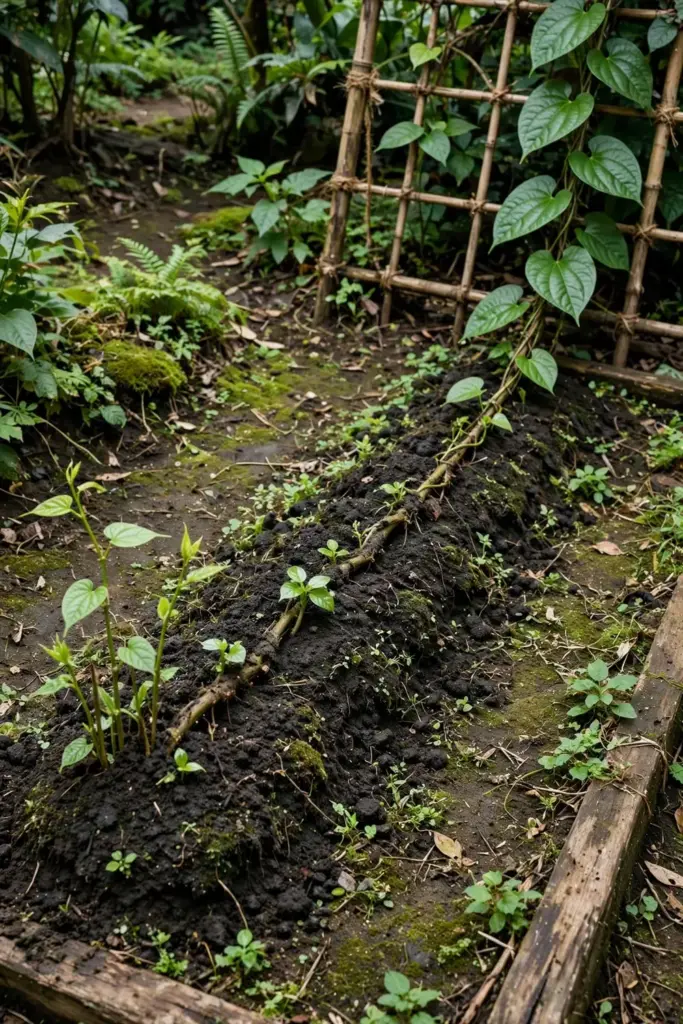
Pinch the growing tip to force side branches and build a bushier vine. Prune back any shoot that starts outpacing its support by at least three inches, and harvest the tenderest leaves from the top of the vine regularly since picking is itself a form of pruning. Watch the vine’s length. When a vine reaches about two meters, it starts producing smaller, poorer-quality leaves, so cut it back. In the trade, growers rejuvenate tired vines by taking them off their supports and burying the lower part in soil, which triggers fresh roots and vigorous new sprouts that are trained back onto the support. A well-managed vine in a permanent planting can live for decades, while a container vine benefits from repotting with fresh mix every one to two years.
13. Overwinter Indoors: The Cold-Climate Strategy
Betel leaf grows outdoors in USDA zones 9 to 11, and everywhere colder it is an indoor or annual project. Indian growers in cold regions already follow this pattern: the Krishi Jagran in-house cultivation guide advises moving the plant indoors in winter in places like Himachal Pradesh and Sikkim, and adding shade cloth with frequent watering through Rajasthan summers. Give it the brightest indirect light you have, keep it away from heating vents that dry the air, and maintain misting through winter. Grow lights fill the gap when window light is weak; the grow light principles that keep tender herbs alive through winter apply unchanged to this vine. Water less in winter but never let the pot dry out completely. Gardeners already running indoor herb gardens can slot betel leaf into the same humidity-aware setup with no new equipment.
14. Pests and Diseases: Watch the Leaves
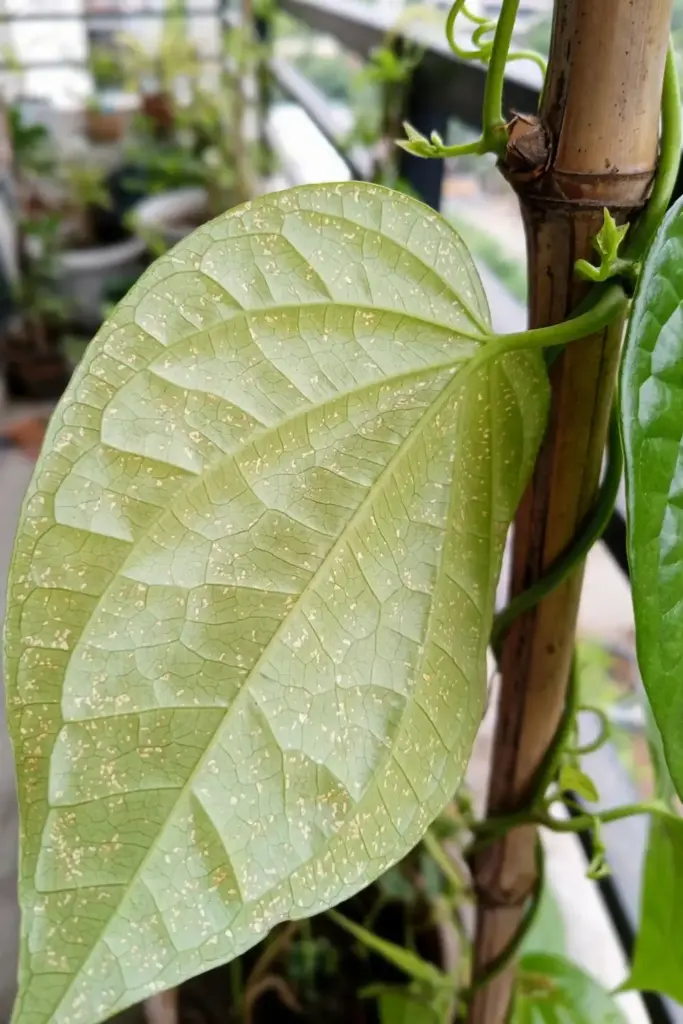
Healthy vines face few problems, but aphids and spider mites are the two most common pests. Inspect the undersides of leaves weekly, blast small colonies off with a firm spray of water, and apply neem oil at label rates for persistent attacks. Good air circulation prevents most fungal trouble, so avoid crowding the foliage against a wall with no airflow. Bacterial leaf spot is the most serious disease in commercial betel cultivation, caused by Xanthomonas betlecola, and while home growers rarely see it, any leaf with spreading water-soaked spots should be removed and destroyed rather than composted. Keep the leaves dry during evening watering to deny pathogens the wet leaf surfaces they need.
15. Harvest: The Morning Pick
A container-grown vine can give its first harvest within four to six months of planting a rooted cutting, while a field-scale vine reaches full commercial bearing at around 18 months. Commercial plantings yield an estimated 6 to 10 tonnes of leaves per hectare, and each vine produces 40 to 50 leaves per year once mature, according to the Useful Tropical Plants cultivation data. Home growers should expect the honest middle of that range: one well-grown vine supplies a steady trickle of leaves once it climbs its support. Pick the best leaves by the trade standard: large, tender, yellow-green leaves from the upper lateral branches carry the finest chewing quality. Pluck leaves early in the morning by cutting the petiole with a clean sharp edge, which keeps the aroma intact, and keep harvested leaves out of the sun. Each vine gets picked three to four times a year in commercial practice. Take the largest, freshest leaves and leave enough foliage for the vine to keep photosynthesizing. Home growers who want to know how to grow betel leaf from India stock for fresh paan should plan on one vine supplying a steady trickle of leaves once it is established, not a plantation-scale crop.
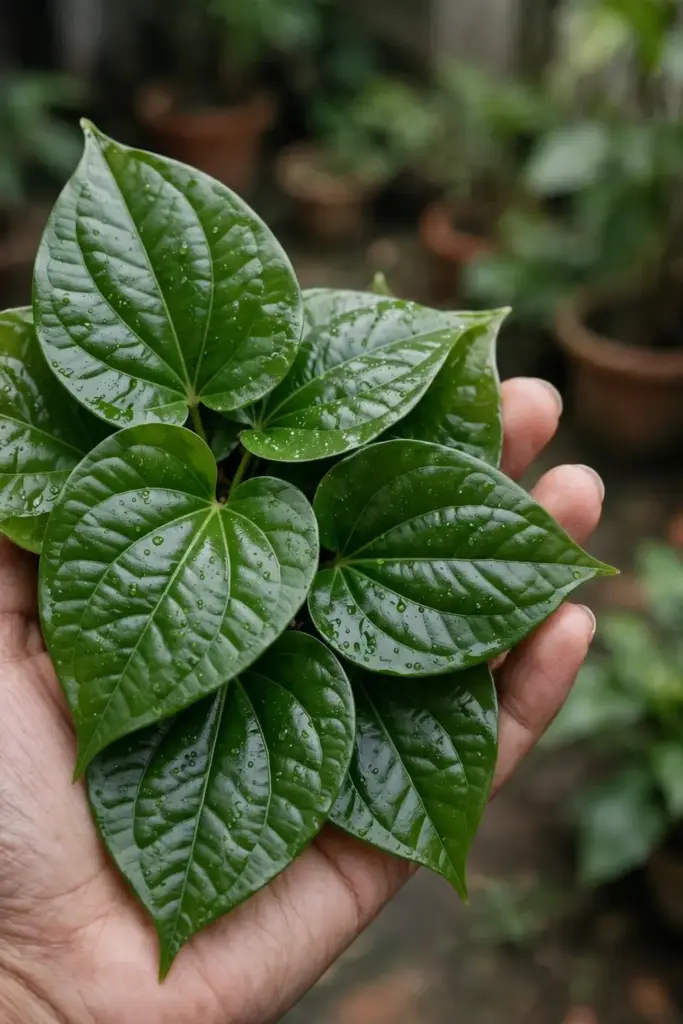
16. Paan Culture and the Areca/Tobacco Safety Fence
Paan is a cultural institution in India, from wedding rituals to the neighborhood paan shop, and fresh homegrown leaf is the foundation of the meetha paan tradition. The vine’s glossy heart-shaped leaves carry a cool, peppery scent when crushed, which is the quality signal paan vendors look for at harvest. Grow the leaf at home and you control the one thing the market cannot guarantee: freshness picked the same morning it is chewed. The fence line is absolute: the betel LEAF is what this article grows. Commercial paan mixtures may add areca nut, slaked lime, tobacco, and flavorings, and those additives carry real health risks that have nothing to do with growing the plant. If a recipe or vendor mentions areca nut, that is a different product entirely. Chew the leaf itself as a mouth freshener if you choose, and talk to a clinician before using it for any medicinal purpose.
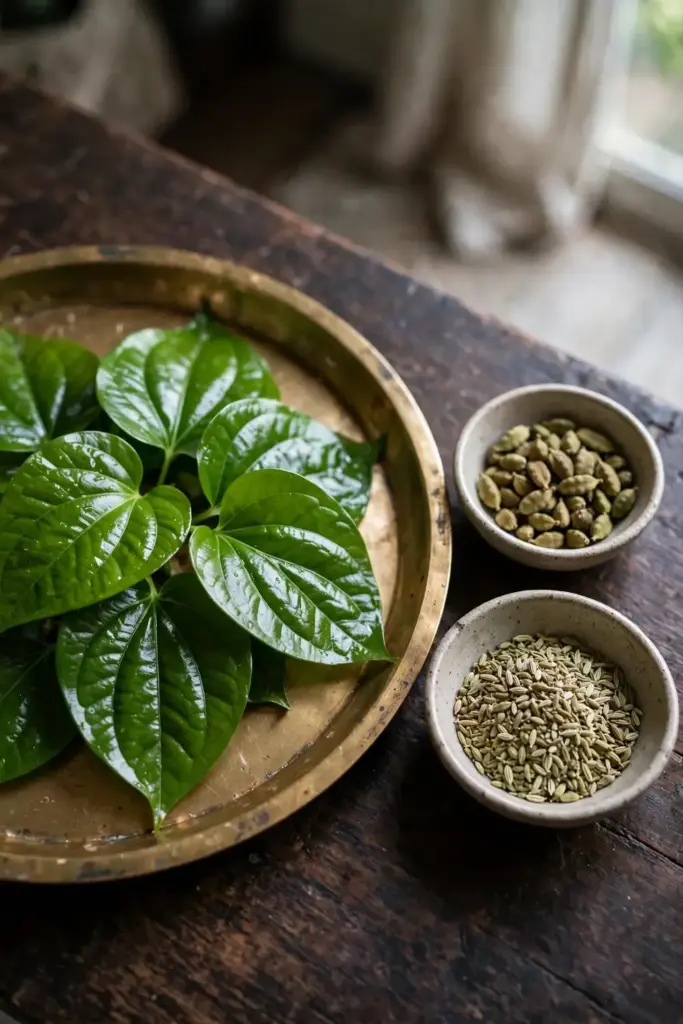
17. Uses Beyond the Chew
The classic use is the fresh leaf wrapped into paan with mild aromatics, and the leaf also flavors desserts and drinks in several Indian cuisines. Some growers keep a vine purely as an ornamental, and the waxy heart-shaped leaves earn their place in any shade planting. The leaf pairs well in a mixed container with other shade-loving herbs, as long as the betel vine gets its own support and does not smother its neighbors. Keep the uses lane simple: grow for the leaf, harvest fresh, and let the vine’s ornamental value be the bonus.
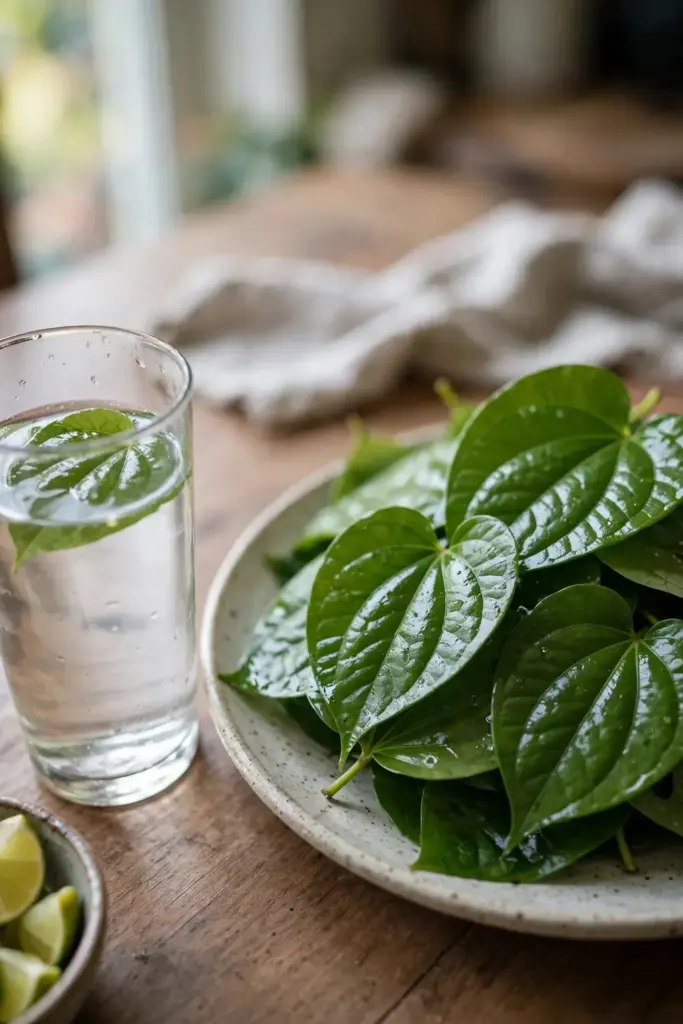
18. Follow the Vine’s Seasonal Rhythm
In warm climates the vine grows nearly year-round, with the fastest push from spring through the monsoon season when heat and humidity peak. Expect leaf production to slow in the cool months, and do not mistake this seasonal pause for failure. Take cuttings in spring or early summer so they root in warmth. Reduce feeding in the cool season to a light compost top-up and let the vine coast. In regions with a real winter, the move indoors described above marks the seasonal boundary. Watch for the first new growth in spring as the signal to resume full feeding, repot if the roots are crowded, and restart the misting routine before the heat arrives.
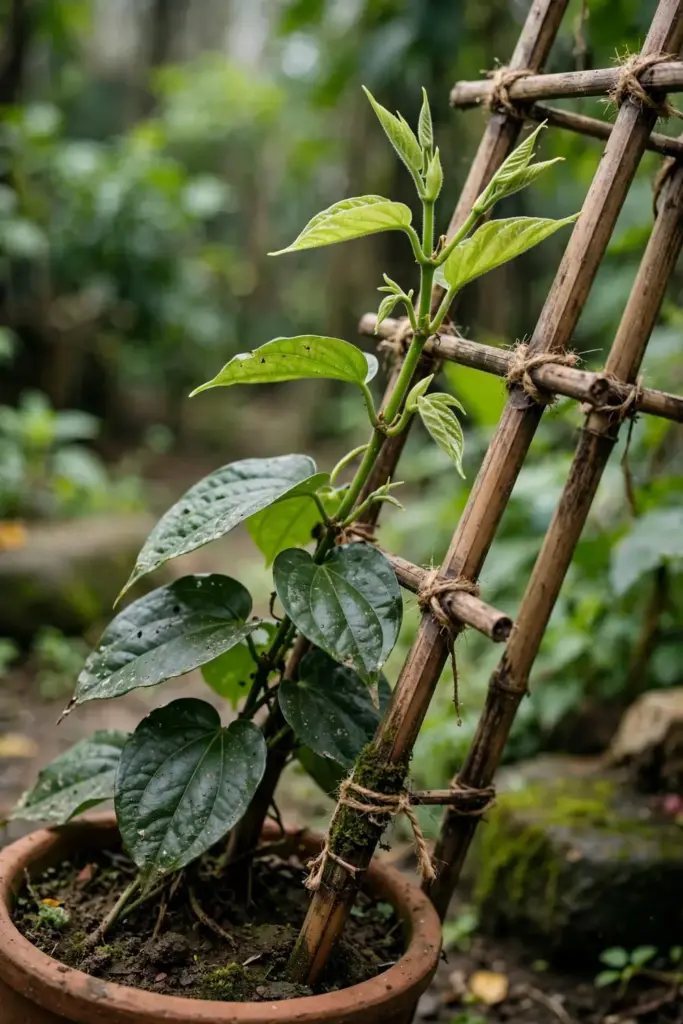
19. Common Mistakes and the Fix for Each
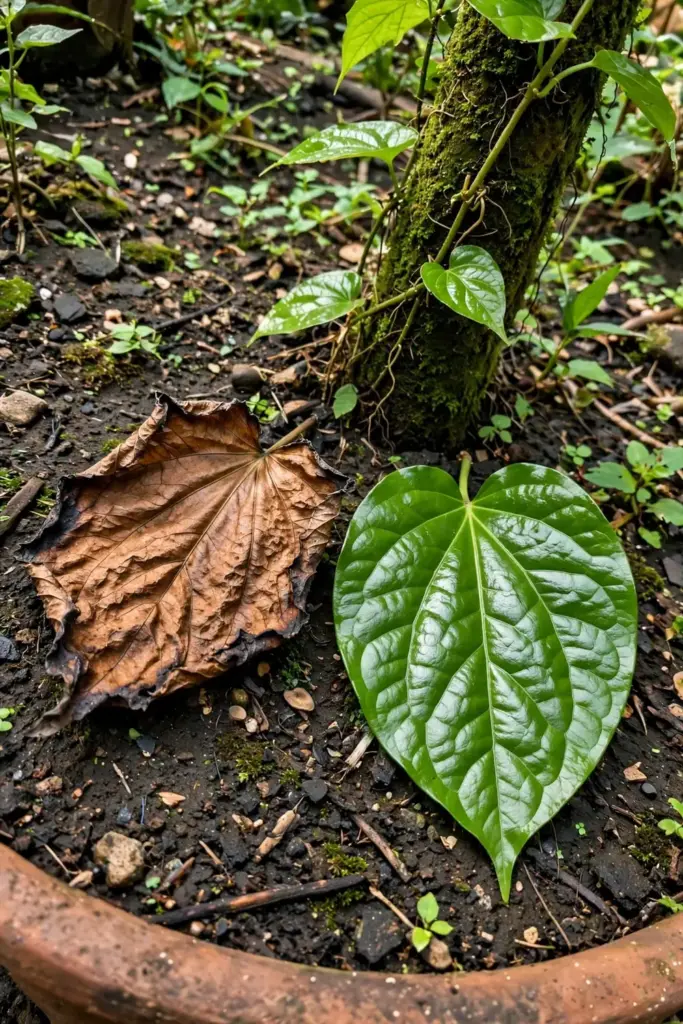
Planting in full sun is the fastest way to crisp the foliage. Move the pot to filtered light and shade net if the leaves bleach or brown at the edges. Letting the pot waterlog rots the roots; repot into a mix with better drainage and confirm every hole flows freely. Trying single blade-only leaves wastes weeks, since they root and stall; always take cuttings with at least one node and one bud. Forgetting the trellis lets the vine crawl and tangle, which invites disease; install the support at planting time, not after the vine flops. Feeding heavily burns tender roots, so use dilute compost tea instead of strong doses. Leaving the vine past two meters drops leaf quality, so cut back on schedule and bury the lower stem for rejuvenation.
20. Troubleshooting
Yellow leaves with wet soil mean root rot, so let the mix dry slightly, check drainage, and repot if the roots are brown and mushy. Yellow leaves with dry soil mean underwatering, so increase frequency and add mulch or misting. Small, thin new leaves usually mean the vine has hit its two-meter decline; rejuvenate by cutting back and burying the stem. Slow growth in cool weather is normal dormancy-like behavior below the 17-degree tolerance floor; move the plant somewhere warmer rather than feeding it into growth it cannot sustain. Pests clustered on new growth respond to water sprays and neem oil, and any spreading spot disease calls for leaf removal and better airflow. A vine that refuses to climb is usually light-starved; raise the light level with bright indirect exposure and mist more often. Roots that circle the pot tightly call for repotting; move the vine up about four inches in diameter and refresh the potting mix at the same time. If new leaves emerge smaller than the old ones, the vine is likely hungry after months of harvest; resume the regular compost schedule rather than reaching for strong fertilizer. Brown leaf edges in winter almost always trace to dry indoor air, so raise the humidity with misting or a pebble tray before blaming the cold.
Frequently Asked Questions
A rooted cutting establishes in about two to three weeks and a container vine can give its first modest harvest in four to six months. Commercial plantations reach full bearing at around 18 months. Home growers should expect a steady leaf supply once the vine climbs its support, with faster results in warm, humid conditions and slower growth through cool winters.
Only if the cutting includes a node or axillary bud. A leaf blade alone can form roots in water and then stall forever, because roots come from nodes and new shoots come from buds. Videos showing “single leaf” success are really showing leaf-with-node cuttings. Always take a stem section with at least one node and one leaf for reliable propagation.
It roots well in water but grows poorly in water long term. Water rooting is a two-to-three-week propagation step, after which the rooted cutting belongs in soil. Betel leaf is a vigorous vine that wants the nutrition and support of a real potting mix. Move the cutting to a deep pot as soon as roots are several centimeters long.
Bright indirect light or partial shade. A few hours of gentle morning sun helps, but intense afternoon sun scorches the leaves. Indoors, an east or north-facing window works well. In hot regions, grow under 50-percent shade cloth. Treat full sun as damage, not vigor.
A deep pot at least eight to ten inches across with four to five drainage holes suits a young vine. Deep beats wide because the root system runs deep and the plant grows tall rather than spreading. Repot when roots fill the container or show at the drainage holes, stepping up about four inches in diameter each time.
Growing the betel leaf plant is a normal horticultural activity wherever it is sold as a plant. The leaf itself is the harvest; commercial paan mixtures add areca nut, slaked lime, or tobacco, which carry separate health risks. Grow the leaf, keep additives out of the equation, and consult a clinician about any medicinal use.
The Betel Vine Rewards the Shade Gardener
Betel leaf is one of the few crops that asks for exactly what most gardeners already have: a shaded corner, a humid microclimate, and a trellis. Start with a cutting, root it in water, plant it deep in a draining pot, and mist it like it is back in the forest understory. The Maghai-vs-Banarasi choice is yours to make at the nursery, but the vine itself is identical in temperament. Grow it for the leaf, fence the rest, and the vine will pay you back in glossy harvests for years.