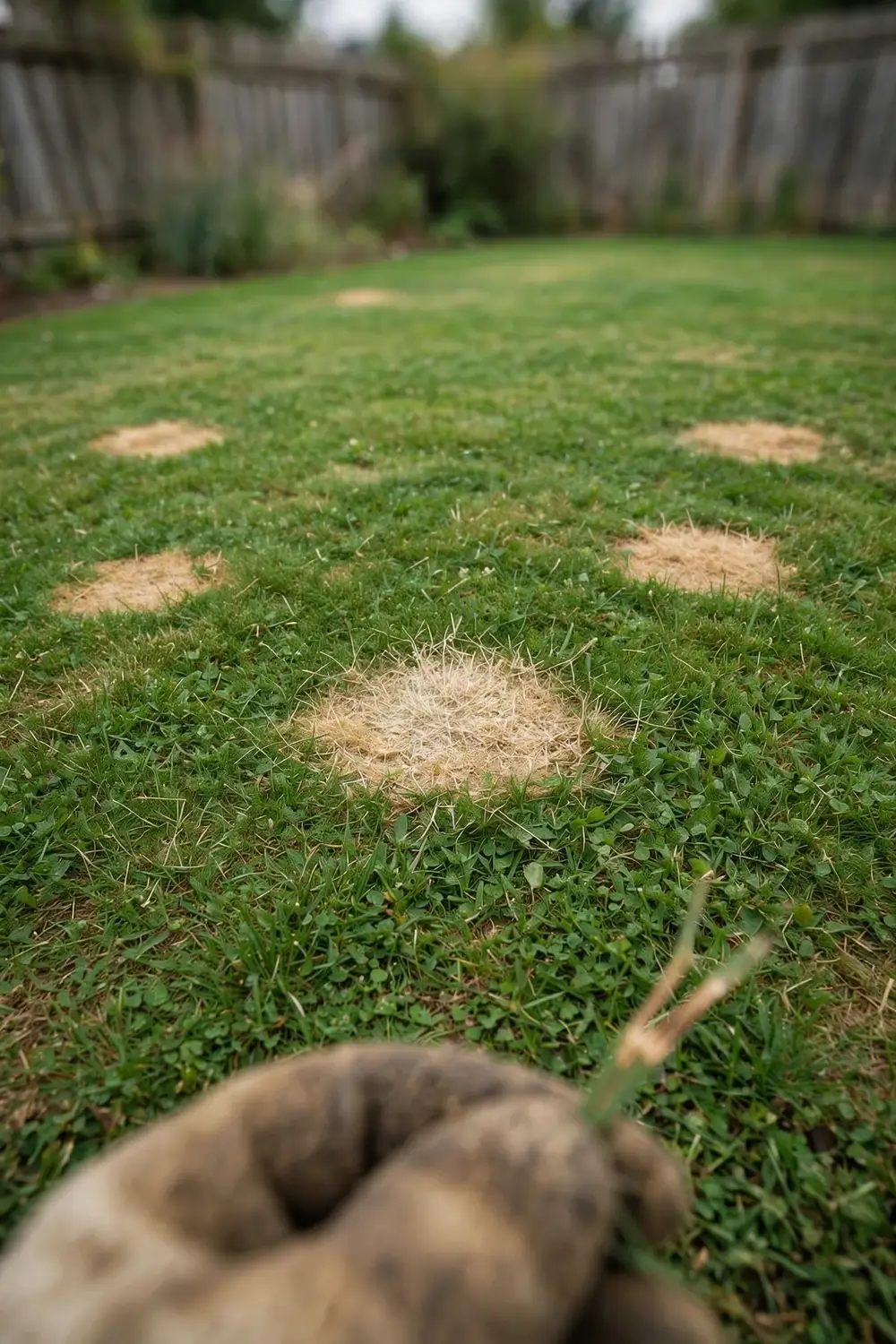

Walk the lawn at sunrise and look for straw-colored circles the size of a silver dollar before the dew dries. That is dollar spot, a leaf fungus that shows up on hungry lawns in wet weather. The rest of this page is 10 strategies, from the morning-dew check to the season-long routine that keeps it down.
Dollar spot attacks the leaf blades of turfgrass. The fungus is Clarireedia jacksonii, formerly Sclerotinia homoeocarpa, and it kills small circles of leaf tissue while crowns and roots often survive. Grass grows back through the patches once feeding and watering change, which is why this disease looks worse than it usually is.
Two lawn diseases get mixed up more than any other pair in home lawns. Dollar spot makes small circles on underfed turf, while brown patch makes large patches on heavily fed turf in hot humid weather. The fertilizer history of the lawn tells them apart faster than patch size alone.
What Dollar Spot Actually Is
Dollar spot is a fungal leaf disease of turfgrass. The pathogen is Clarireedia jacksonii.
The Mississippi State Extension guide to dollar spot in warm-season turf identifies the fungus as Clarireedia jacksonii, formerly Sclerotinia homoeocarpa, and notes that it occurs on most grasses, most severely on bermudagrass and zoysiagrass in warm-season lawns. The fungus overwinters as tough stroma on infected plant parts in the crown and roots. It spreads when pieces of diseased plants ride mowers, sweepers, and other lawn equipment from a sick patch to healthy grass. Basic equipment sanitation slows that spread.
The disease shows up when temperatures sit between 50 and 95 degrees Fahrenheit with high humidity or long wet periods from dew. Slow-growing turf suffers most, so dollar spot peaks in spring and fall when warm-season grasses enter or leave dormancy, and it also appears in cooler summer weather when heavy dew settles on stressed turf. Nutritional stress drives it, and that stress comes mainly from a lack of nitrogen.
Dollar spot is a leaf disease first. It strips leaf tissue in circles, and the plant keeps its crown. That is why feeding and watering changes reverse it in most home lawns.
How to Identify Dollar Spot on Lawn Patches
Look for small circular straw-colored patches scattered across the lawn. Each patch starts the size of a silver dollar and may widen as the disease runs.
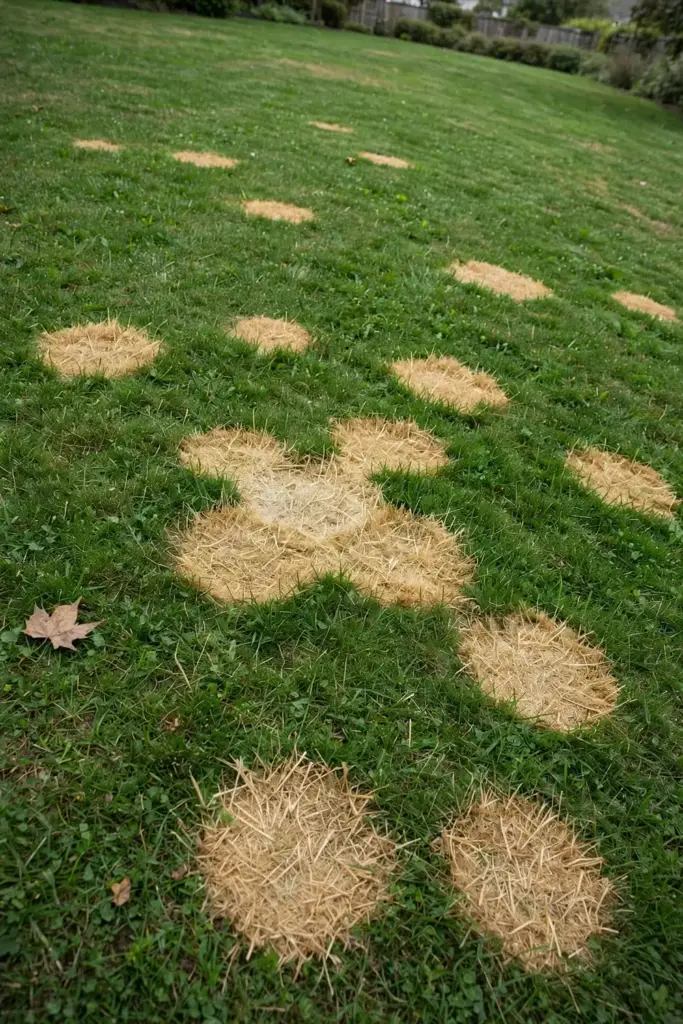
Penn State Extension turf disease guide puts spots on home lawns mowed at 2 to 3 inches at 2 to 5 inches across, and notes that spots merge into large areas of dead turf when conditions favor the disease. Closely mowed turf shows smaller spots. Mississippi State Extension puts spots on closely mowed areas at 1 to 2 inches across, and spots on higher-mowed lawns at 8 inches across. Individual spots grow together into larger irregular areas as the season runs.
Check the patches at sunrise. A cobweb-like white mycelium spreads over diseased grass in morning dew, then vanishes as the dew dries. That web is the fungus itself, and it is the fastest field sign on a dewy morning.
Grass inside an old patch may look dead to the soil surface. New growth pushes through from the crown once feeding improves, so a straw-colored patch fills in from the edges as the lawn grows.
How to Identify Dollar Spot on Individual Blades
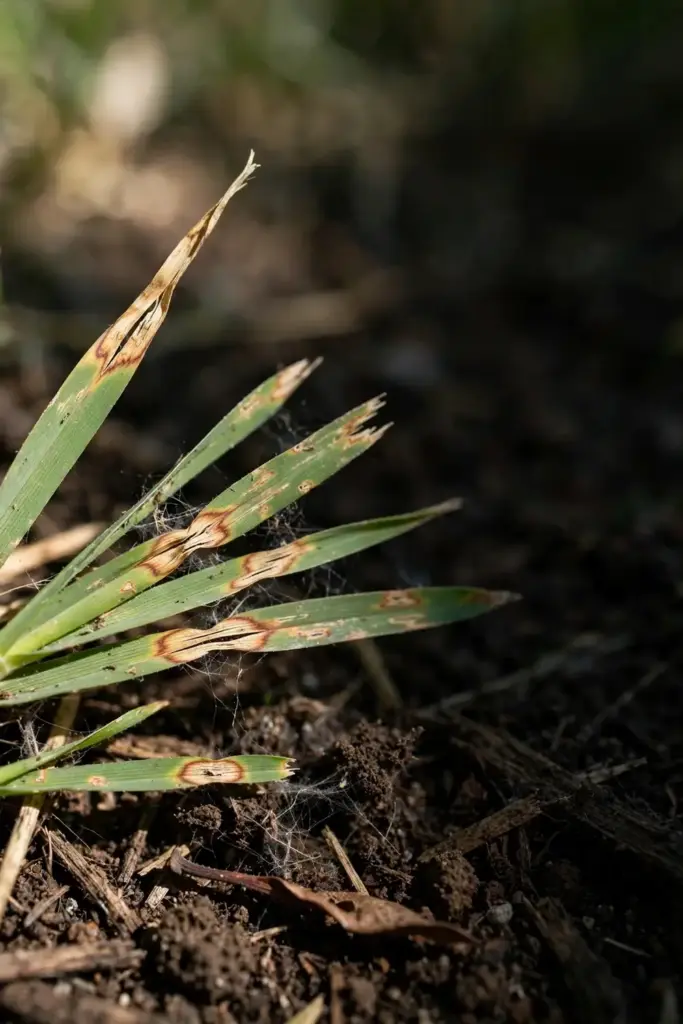
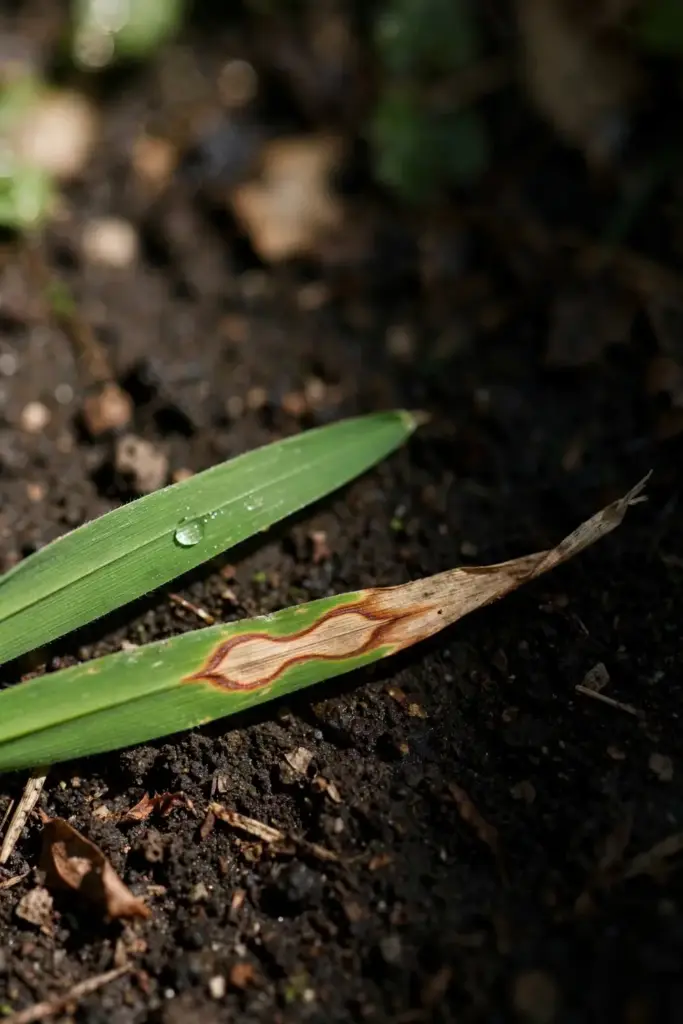
Pull a blade from the edge of a patch and read the lesion. Dollar spot lesions start as yellow-green blotches, then turn tan with reddish-brown borders.
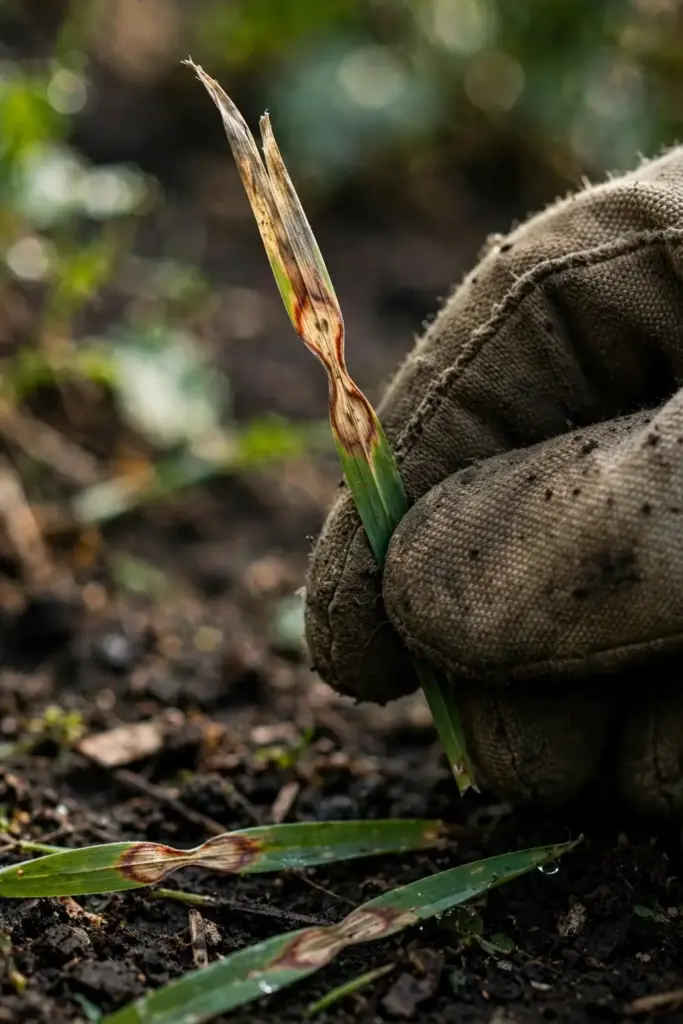
Clemson Extension leaf disease guide describes light tan spots with reddish-brown margins that develop across the leaves, and early-morning cobweb-like growth over the infected area. The classic shape is an hourglass. The lesion pinches the blade from both edges, and the tip above the lesion dies back and fades to straw color. A lesion that spans the full blade width cuts water and nutrients to everything above it, so the tip dies even while the base stays green.
On warm-season grasses the hourglass band may not show. Clemson Extension notes that straw-colored lesions on warm-season grasses move in from the leaf margins or occur as distinct bands across the blade instead. The patch shape plus the margin color still points to dollar spot when the band is missing.
Check the blade base. Dollar spot works on the leaf. The sheath and crown stay firm, and the blade pulls with normal resistance. A blade that slips off the stolon with a wet slimy base points toward brown patch instead.
Which Grasses Get Hit Hardest by Dollar Spot
Dollar spot attacks most turfgrass species. Creeping bentgrass, Kentucky bluegrass, perennial ryegrass, bermudagrass, zoysiagrass, tall fescue, and centipedegrass all show it.
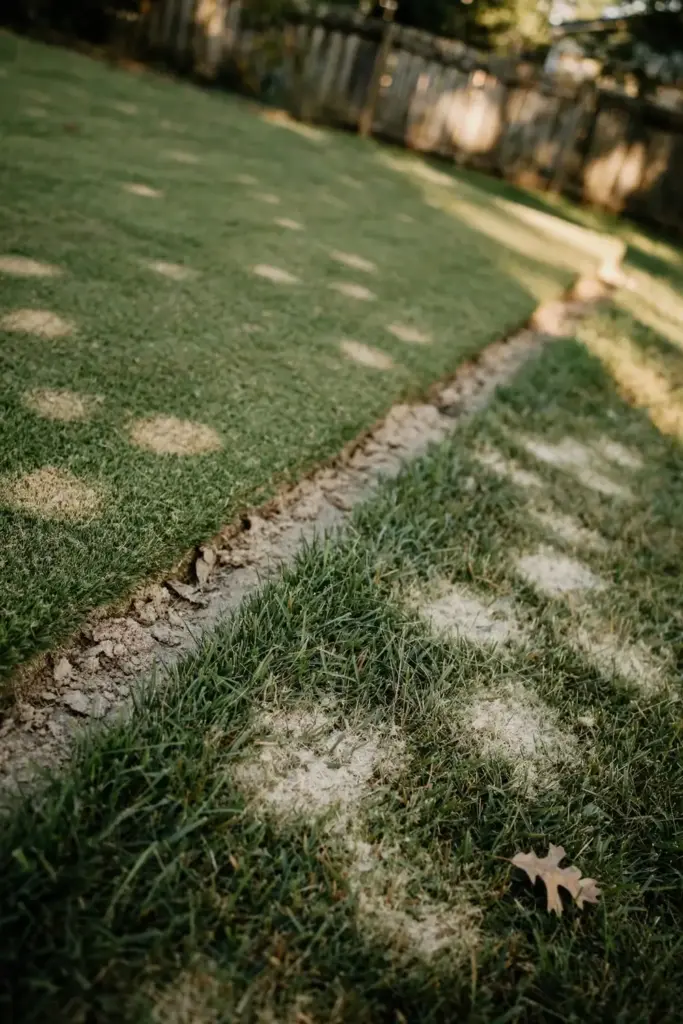
Fine-textured grasses mowed low show the classic small spots. Coarse grasses mowed high show larger diffuse patches that look worse and confuse the diagnosis. Mowing height shapes the symptom more than grass species does.
Bentgrass, bluegrass, and ryegrass rank among the most susceptible cool-season grasses. Bermudagrass and zoysiagrass rank among the most susceptible warm-season grasses. The Lawn Institute notes that certain cultivars of creeping bentgrass, perennial ryegrass, and Kentucky bluegrass are very susceptible, while other cultivars tolerate the disease.
New lawns and thin lawns suffer more. Young turf with shallow roots dries fast between waterings, and thin turf dries into drought stress that favors the fungus. Thick established turf shades its own soil and holds moisture longer.
Seed choice matters at renovation time. Cultivars with listed dollar spot tolerance hold up better under the same feeding and watering. Check the cultivar notes before buying seed for a lawn with a dollar spot history.
Dollar Spot vs Brown Patch
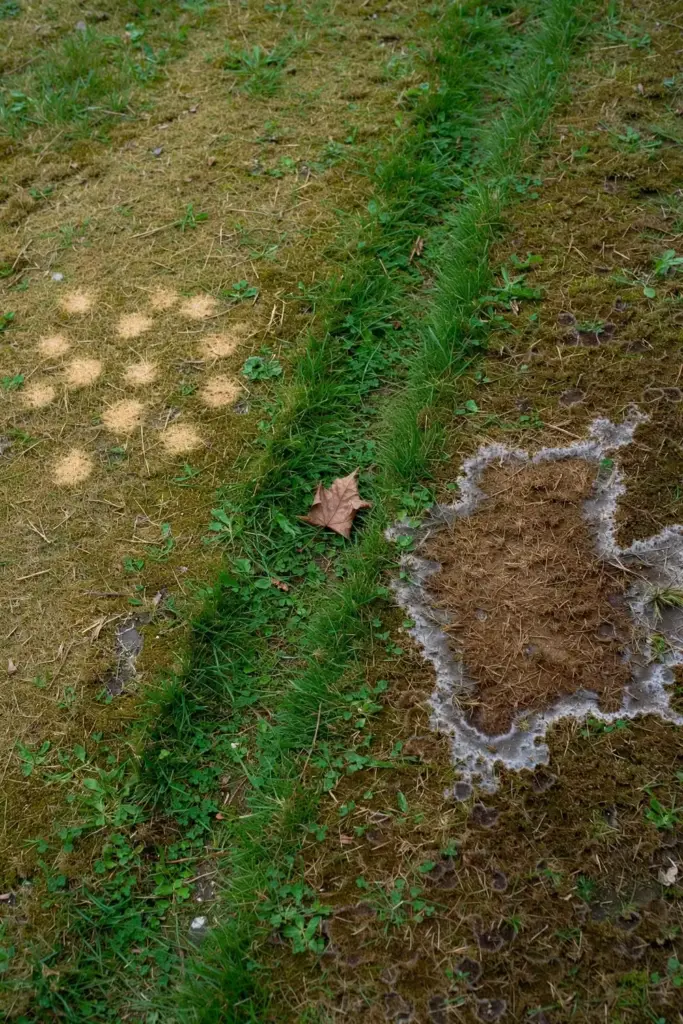
Size splits them first, and fertilizer history settles close calls. Dollar spot makes small circles on hungry turf. Brown patch makes large patches on heavily fed turf in hot humid weather.
| Clue | Dollar Spot | Brown Patch |
|---|---|---|
| Pathogen | Clarireedia jacksonii | Rhizoctonia solani |
| Patch size | 1 to 2 inches on closely mowed turf, 2 to 5 inches on home lawns, merging as disease runs | 4 to 12 inches in home lawns, reaching several feet in severe cases |
| Leaf lesion | Tan hourglass lesion with reddish-brown borders, tip dies back | Brown margins on blades, leaves slip off with a wet slimy base |
| Nitrogen link | Worse under low nitrogen, improves with adequate feeding | Worse after heavy nitrogen in disease weather |
| Season and temperature | Spring and fall, warm days with cool nights, 59 to 86 degrees Fahrenheit days | Summer, hot humid weather, nights above 65 degrees Fahrenheit with dew past 10 hours |
| Border sign | Cobweb-like white mycelium in morning dew | Gray-white smoke ring at the edge of active patches |
| Plant parts hit | Leaf blades, crowns usually survive | Leaf blades and sheaths, crowns and roots usually survive |
| Recovery | Grass outgrows the fungus once feeding improves | Damaged turf recovers once weather favors growth |
Kansas State Extension brown patch guide describes brown patch as a summer disease that turns active in hot humid weather when dew periods pass 10 hours and nighttime temperatures stay above 65 degrees Fahrenheit, with outbreaks worse under excessive nitrogen. That opposite-fertility rule is the highest-value field check in the table. Low nitrogen worsens dollar spot. Excess nitrogen worsens brown patch.
Small dollar spots can grow larger over time, so size alone misleads. Check lesions, fertilizer history, and season together. A large merged patch on an underfed lawn in spring points to dollar spot. A large patch on a heavily fed lawn in a hot humid stretch points to brown patch.
Pythium blight is the other lookalike. It also shows white mycelium in dew, and it kills fast in hot wet weather. Mississippi State Extension warns that mistaking dollar spot mycelium for Pythium leads to wrong and expensive fungicide use.
The brown patch guide covers that disease from the brown patch side, with its own feeding and watering plan.
Why Low Nitrogen and Long Leaf Wetness Drive Dollar Spot
Two conditions drive dollar spot. Low nitrogen slows growth so the fungus outruns the grass. Long leaf wetness gives the fungus the hours it needs to infect.
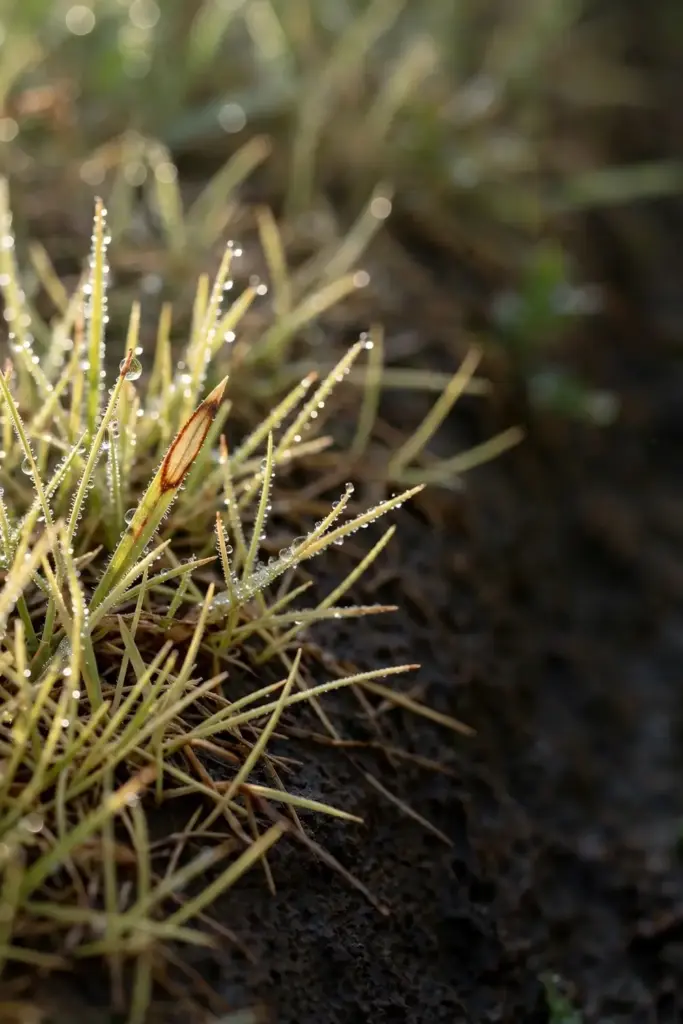
Nitrogen grows new leaf tissue. Fresh growth replaces diseased blades faster than the fungus kills them, so an adequately fed lawn outgrows dollar spot while a hungry lawn falls behind. Mississippi State Extension calls nitrogen the single most effective management tool against dollar spot, because feeding lets the grass outgrow the disease.
Leaf wetness sets the infection window. The Lawn Institute notes that the fungus needs 10 to 12 continuous hours of leaf wetness, and heavy dew on cool nights in late spring and early summer supplies those hours. Dew, rain, and evening irrigation all extend the wet period. Morning irrigation shortens it.
Temperature sets the season. Clemson Extension puts dollar spot activity at daytime temperatures of 59 to 86 degrees Fahrenheit with fairly cool nights, the warm-day cool-night pattern that builds heavy dew. The University of Georgia Extension adds dry soil, extended leaf wetness, and low soil nitrogen to the same list of promoters.
The mechanism is simple. The fungus lives on leaf surfaces and in thatch, waits for a long wet night, infects blades, and kills the tissue above each lesion. Shorten the wet period and feed the lawn, and the fungus loses both of its advantages.
What Makes Dollar Spot Worse in a Home Lawn
Drought stress, thatch, compaction, and shade make dollar spot worse. Each one slows the grass or lengthens the wet period.
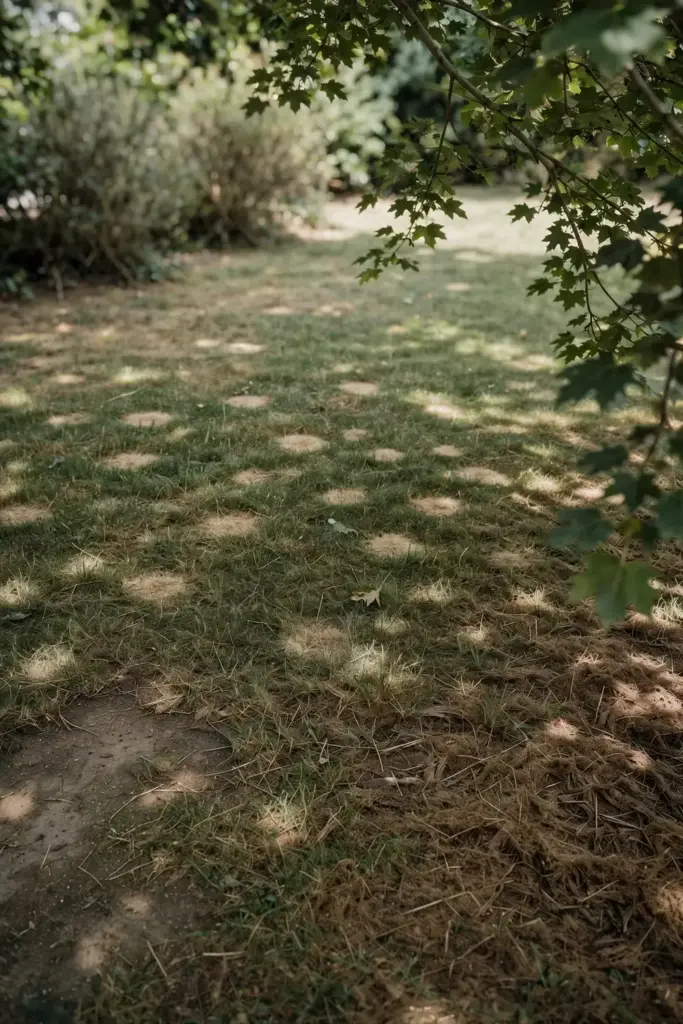
Drought stress opens the door. Dry soil slows growth, and slow growth cannot replace diseased blades. The University of Georgia Extension lists drought stress alongside excessive irrigation, improper mowing height, and excessive thatch as factors that favor dollar spot.
Thatch shelters the fungus. The pathogen survives in the thatch layer between outbreaks, and thick thatch holds moisture against the blades. Louisiana State University Extension notes that the pathogen survives in thatch and spreads on infected clippings moved by equipment or blown by wind.
Compaction and poor airflow lengthen wetness. Compacted soil drains slowly, and still air under fences, shrubs, and trees keeps dew on the blades past sunrise. Open airflow dries the lawn faster after rain and irrigation.
Low mowing and scalping add stress. Short turf dries fast, roots stay shallow, and the plant has little leaf area to regrow from. Mowing at the high end of the range for the grass type keeps deeper roots and faster regrowth.
Evening watering is the most fixable risk. Water that sits on blades overnight hands the fungus a full wet period. Morning watering gives the sun the whole day to dry the blades.
Step 1: Decide Whether Your Lawn Needs Treatment or Feeding
Most dollar spot calls for feeding and watering changes, not a sprayer. Decide that first, before spending on fungicide.
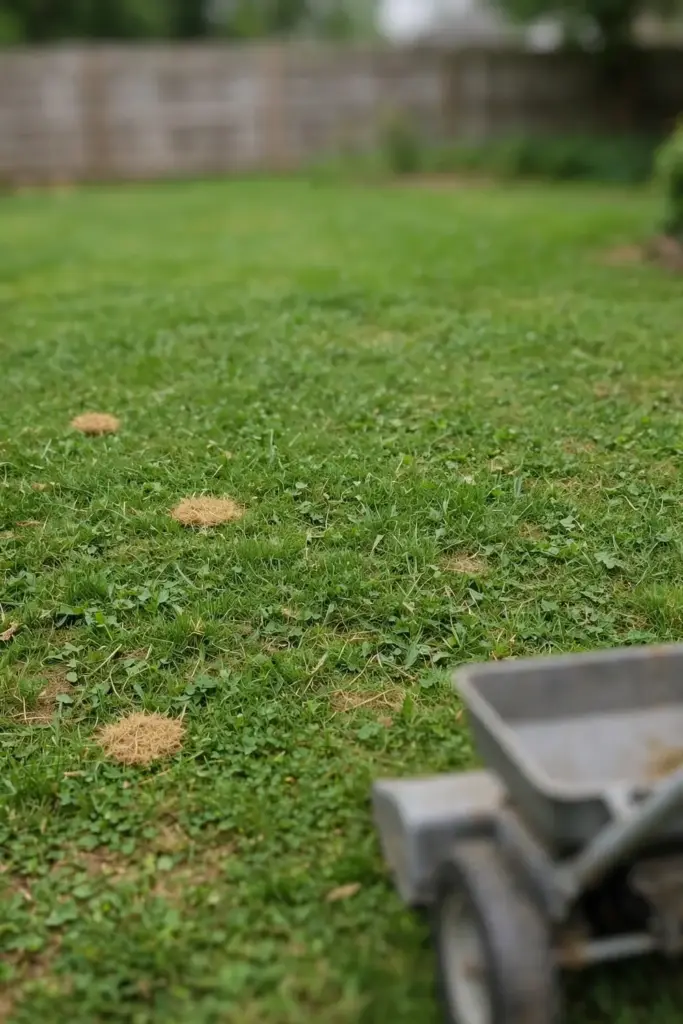
Count the damage. A scattering of small patches on an otherwise green lawn needs feeding. Large merged areas with thin turf and bare soil need feeding plus reseeding, and fungicide enters the plan only when patches keep spreading after feeding starts.
No spray reverses dead leaf tissue. Fungicide protects new growth, and it cannot green up blades the fungus already killed. Feeding grows the new blades that replace them.
Skip the sprayer when patches are few and the lawn still grows. Buy the fertilizer first, fix the watering second, and watch for two weeks. A lawn that greens up from feeding never needed fungicide.
Step 2: Confirm the Diagnosis in Morning Dew
Check the lawn before the dew dries. Mycelium, lesion shape, and patch size confirm dollar spot without a lab.
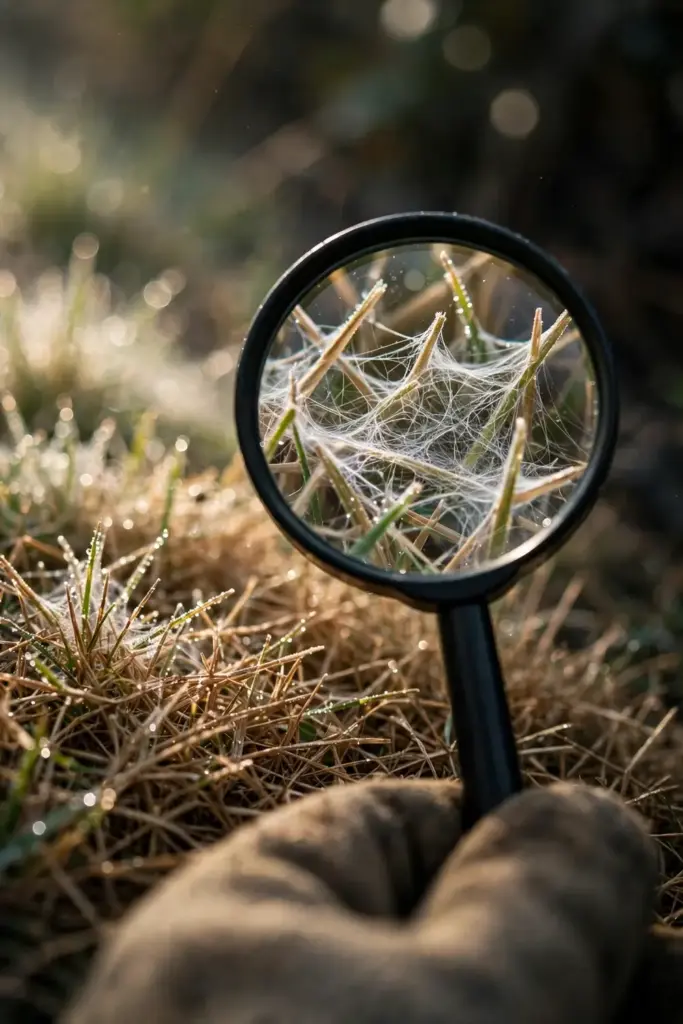
Walk the lawn at sunrise on a dewy morning. Look for cobweb-like white mycelium over the patches. Look for hourglass lesions with reddish-brown borders on blades at the patch edge. Measure a few patches. Small circles on hungry turf in spring or fall point to dollar spot.
Rule out brown patch with the table above. Check the fertilizer history. A lawn that missed spring feeding and shows small circles points to dollar spot. A lawn that got heavy nitrogen and shows large patches with smoke rings in hot humid weather points to brown patch.
Send a sample to the local Extension diagnostic lab when the signs stay unclear. Mississippi State Extension notes that results usually arrive within 3 to 7 days of the lab receiving the sample, with a full report and recommendation. A lab answer beats a second guess, and it stops a wrong fungicide purchase.
Step 3: Feed Nitrogen So the Grass Outgrows the Fungus
Feed the lawn. Nitrogen is the first move because it grows the new blades that replace diseased ones.
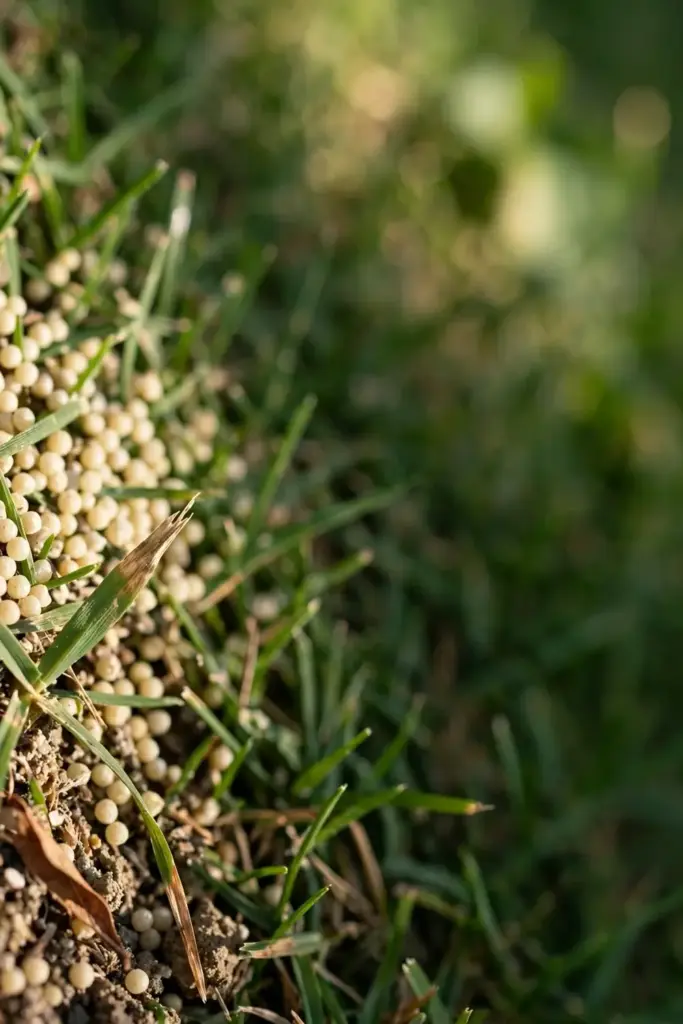
Apply a balanced lawn fertilizer at the label rate for the grass type and season. Light frequent feeding during active disease beats one heavy dose, because steady growth replaces diseased blades without pushing soft growth that other diseases attack. Mississippi State Extension puts it plainly. Maintaining nitrogen levels when the disease is most prevalent reduces severity by letting the grass outgrow the disease.
One fertilized lawn in Mississippi State Extension field notes lost all symptoms within 3 weeks of feeding. That is the clearest home-lawn proof that feeding works, and it is why feeding comes before spraying in this plan.
Time feeding to the lawn’s growth, not to the calendar. Feed when the grass grows actively in spring and early summer. The best time to fertilize lawn in spring guide sets the spring window for each grass type.
Skip heavy nitrogen in hot humid weather. Heavy nitrogen in disease weather feeds brown patch, and brown patch is the disease most likely to follow dollar spot on an overfed lawn. Feed enough to keep steady growth, and stop there.
Step 4: Water Deep, Early, and Infrequently
Water in the early morning, deeply and infrequently. That schedule shortens leaf wetness and grows deeper roots.
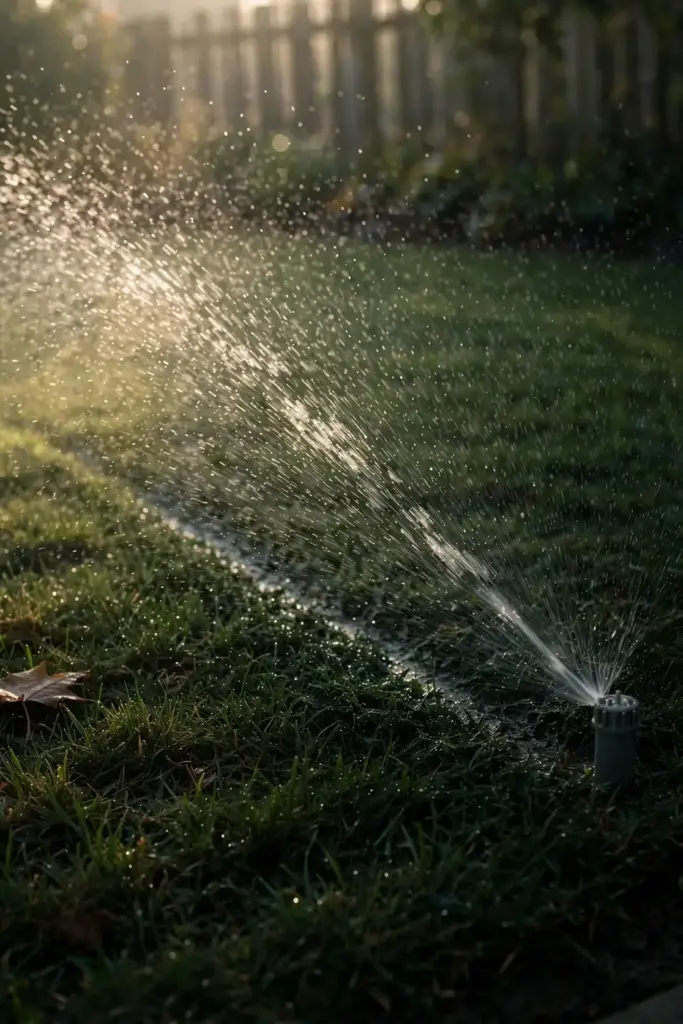
Morning water dries during the day. The University of Georgia Extension advises irrigating early in the day so foliage dries as fast as possible, and watering deeply and infrequently to avoid drought stress.
Skip evening watering. Mississippi State Extension warns against watering in the late morning or late afternoon and evening, because it prolongs leaf wetness and helps the disease. Late-day water hands the fungus the overnight wet period it needs.
Let the soil dry between waterings. Deep watering that soaks the root zone, followed by a drying interval, grows roots that reach moisture below the surface. Shallow daily watering keeps roots at the surface, where drought stress hits first.
Watch the lawn, not the schedule. Footprints that stay visible after walking signal dry turf that needs water. A lawn that springs back still holds moisture.
Step 5: Mow High, Bag Clippings, and Stay Off Wet Turf
Mow at the high end of the range for the grass type, and bag the clippings while dollar spot is active. Tall turf regrows faster and shades its own soil.
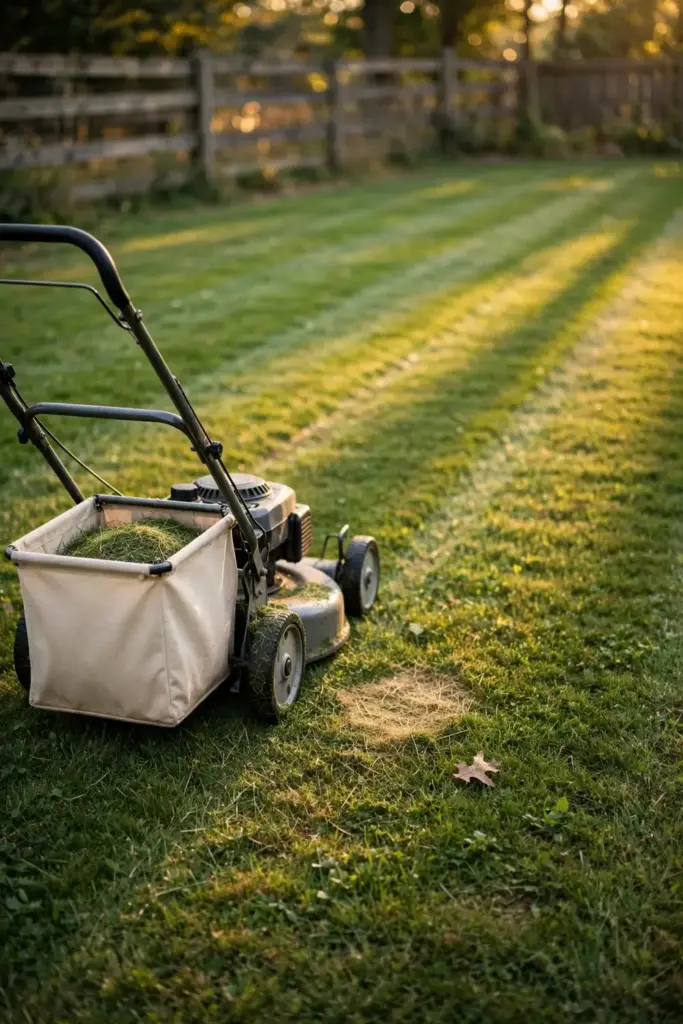
Set the mower to the high end for the species. Home lawns mowed at 2 to 3 inches show dollar spot patches at 2 to 5 inches across, and Penn State Extension notes that spots merge under disease-favorable conditions. Higher mowing grows deeper roots and more leaf area for regrowth.
Bag clippings while patches show. Louisiana State University Extension notes that the disease spreads on infected clippings moved by equipment or blown by wind. Bagging removes that inoculum from the lawn.
Stay off wet diseased turf. Foot traffic and mowing on wet grass carry the fungus on shoes and mower wheels. Mow when the blades are dry, and mow the healthy lawn first and the diseased patches last.
Clean the mower after cutting diseased turf. Wash clippings off the deck and wheels, and let the mower dry before the next cut. Mississippi State Extension lists basic equipment sanitation as the check on spread by mowers and sweepers.
Step 6: Cut Thatch, Aerate, and Open Airflow
Cut thatch, aerate compacted soil, and open airflow around the lawn. All three shorten the wet period and starve the fungus of shelter.
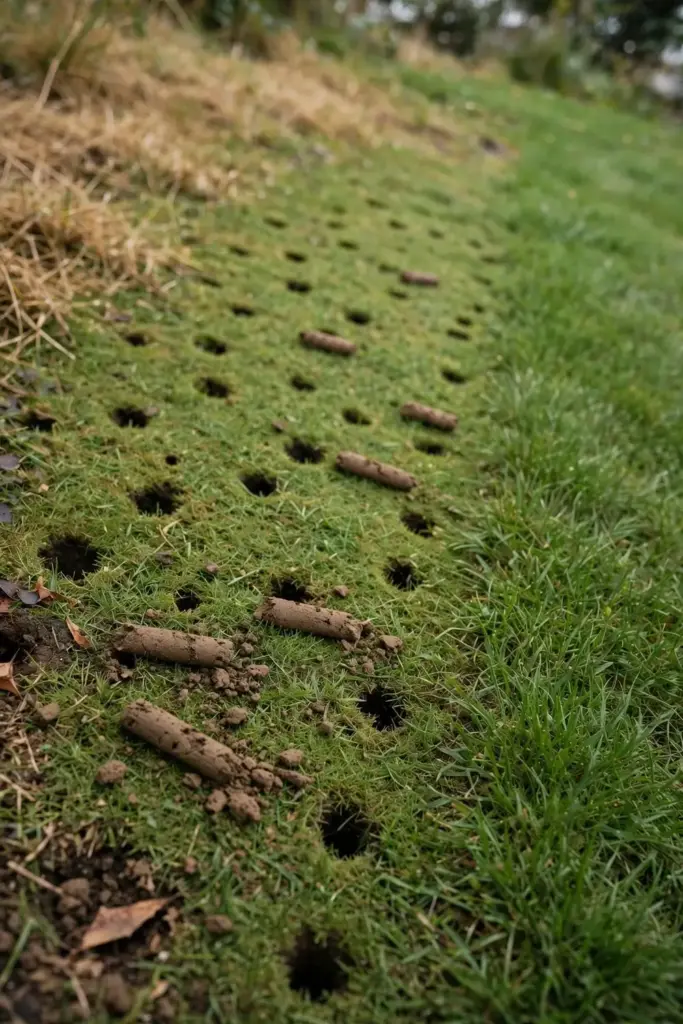
A spongy thatch layer holds moisture against the blades and shelters the fungus between outbreaks. Dethatch when the layer feels spongy underfoot and the lawn stays wet long after rain. Thin thatch dries fast.
Core aerate compacted soil. Aeration opens channels for water and air, and it breaks the thatch layer so the surface dries faster. Aerate when the grass grows actively, so the lawn fills the holes fast.
Open airflow. Prune low branches and thin dense shrubs where they trap still air over the lawn. Air movement dries dew faster after rain and irrigation.
The soil health guide walks through structure, organic matter, and drainage in practical detail.
Step 7: Use Fungicide Only for Severe Cases, and Rotate Groups
Save fungicide for moderate-to-severe cases. Cultural steps carry mild dollar spot, and fungicide carries the rest.
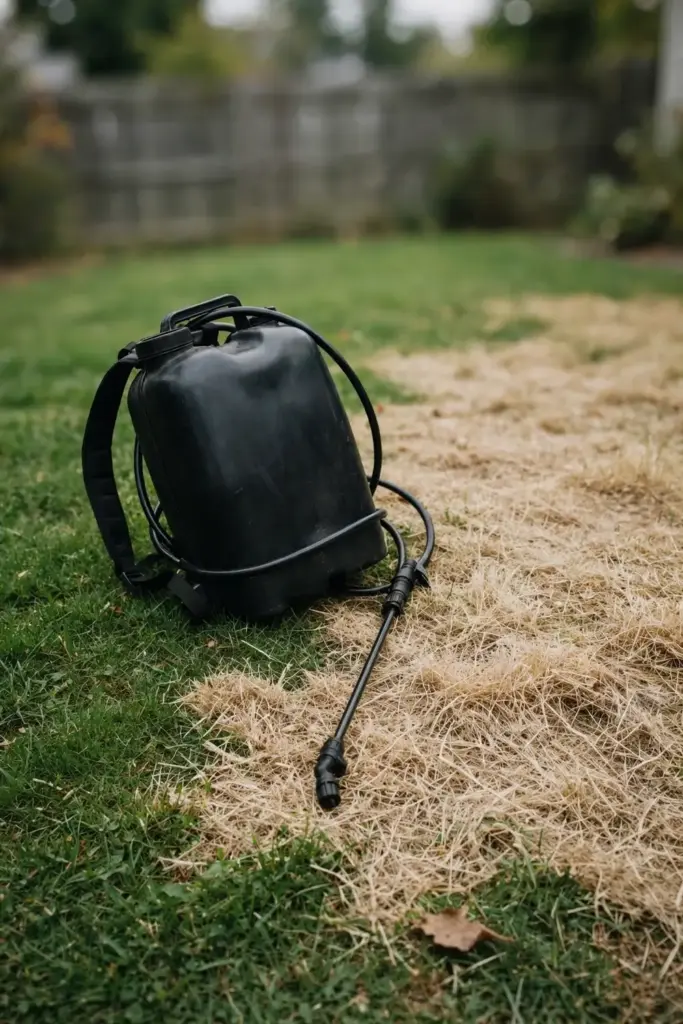
Apply fungicide when patches keep spreading after feeding and watering changes, or when large merged areas threaten the whole lawn. Preventive applications every 14 to 28 days hold the line when conditions favor the disease, and Mississippi State Extension notes that curative applications need higher rates and more frequent sprays and may not work.
Rotate FRAC groups. FRAC numbers each fungicide group by its mode of action, and alternating groups slows resistance. Mississippi State Extension warns that resistant strains develop when one fungicide group carries the whole season, and it advises using several types from different chemical groups. Alternate the groups across applications. Do not repeat one product all season.
Read the heat warnings before buying. Mississippi State Extension reports that propiconazole, though labeled for dollar spot, will probably chemically burn grass in hot weather, and azoxystrobin may further advance the disease. Both are not recommended for home lawns for that reason.
Two residential options carry Mississippi State Extension support. Myclobutanil, FRAC group 3, causes minor burns in some products, and Mississippi State Extension advises against using it when temperatures much exceed 85 degrees Fahrenheit. Fluxapyroxad, FRAC group 7, carries no burn warning in the same notes. Follow the label rate and interval for the product chosen, and keep the rotation across groups.
Skip home remedies with no Extension evidence behind them. Neem oil and iron-based products lack Extension support for dollar spot, so they do not belong in the plan.
Step 8: Try Biofungicides as a Preventive Option
Biofungicides fit the preventive corner for readers who want to avoid synthetic fungicides. They work before infection, and they carry no curative power once patches show.
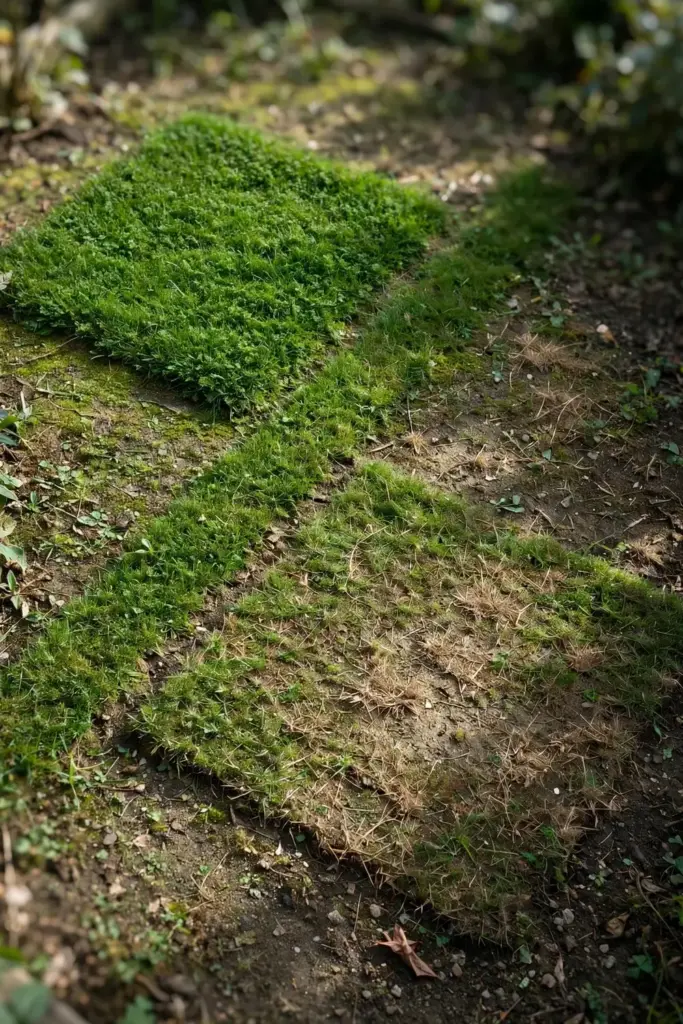
Treat them as a trial, not as the plan. Evidence for dollar spot control in home lawns is thin, and data on home-lawn efficacy is not available. A trial that shows no difference still leaves the cultural plan in place.
Apply a biofungicide product only at the label rate, and only before disease pressure peaks. A product applied after patches show cannot cure dead leaf tissue. The cultural steps still carry the plan.
Test on a small patch first. Treat one corner of the lawn, keep the rest on the cultural plan, and compare the two areas after a few weeks. A trial that shows no difference costs little and answers the question for the lawn.
Keep expectations honest. The trial is an extra, and the cultural plan is the foundation. Feeding, watering, and mowing fixes carry the lawn whether the trial works or not.
Step 9: Watch Recovery and Reseed Bare Spots
Recovery takes weeks, not days. New blades replace dead ones, and the lawn fills in from the patch edges.
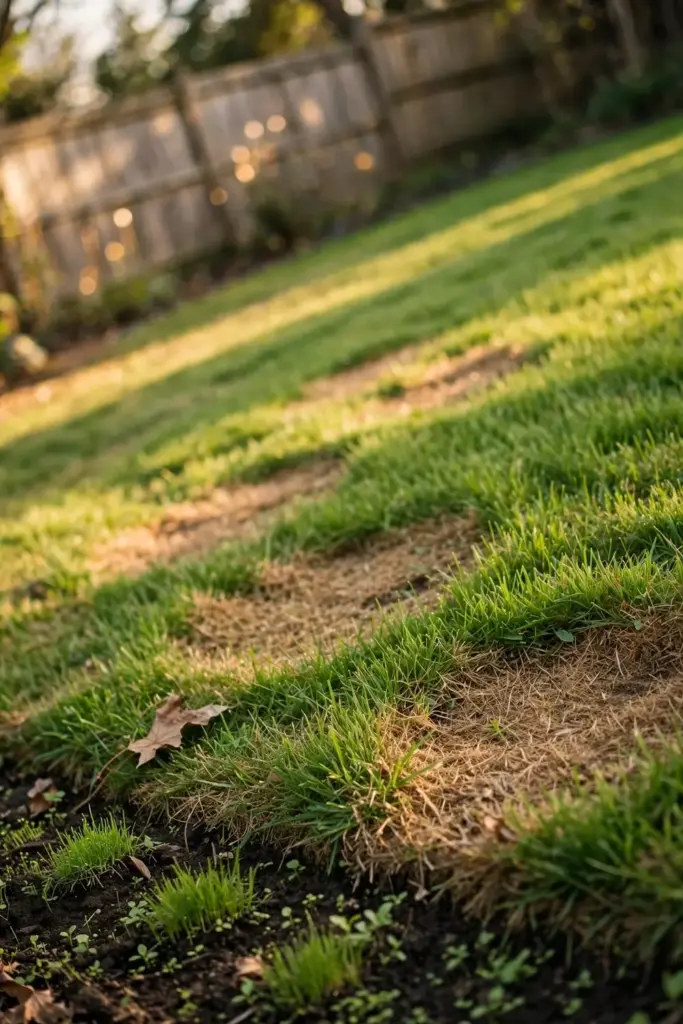
Watch for fresh green growth inside the patches. New blades at the patch center signal that feeding works. Patches that stay straw-colored and keep widening signal that the plan needs a second look.
Keep feeding and morning watering through recovery. The lawn still needs steady nitrogen to grow replacement blades. A second heavy dose will not speed regrowth, so hold the steady schedule from Step 3.
Reseed bare spots where the turf thinned past recovery. Rake the dead mat loose, sow seed matched to the existing grass type, and keep the seed bed moist until germination. Reseed when the grass type grows actively, so seedlings establish before stress returns.
Mow the recovering lawn high and bag the clippings until the patches close. Traffic stays light on thin areas, and the mower stays clean between cuts.
Step 10: Build a Season-Long Routine That Keeps Dollar Spot Down
A short routine through the season beats a rescue every spring. Feed, water, mow, check.
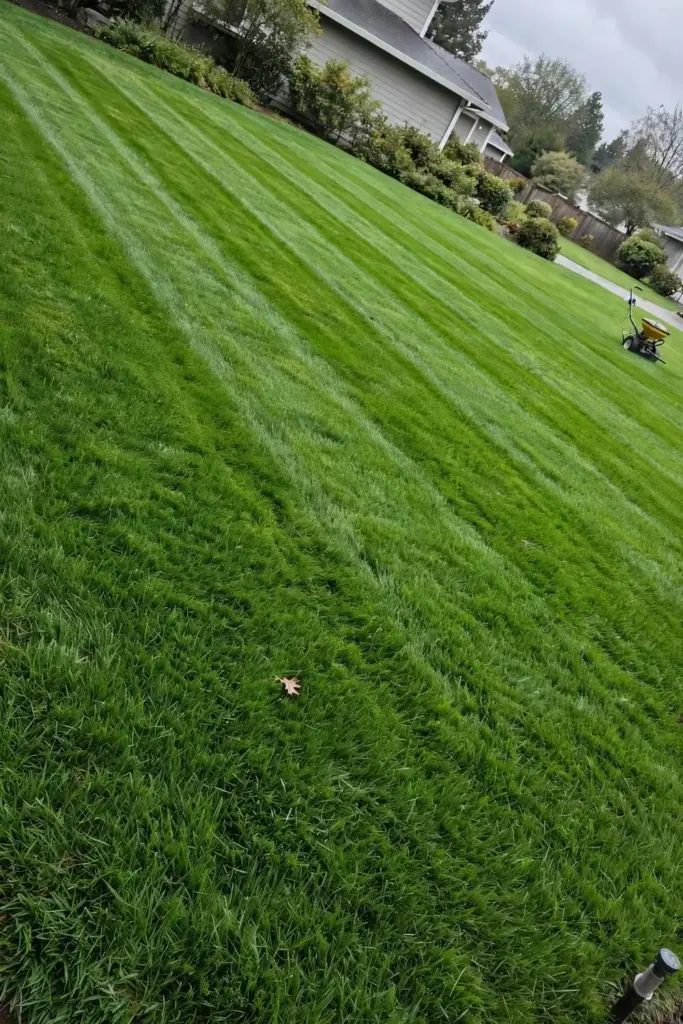
Feed on the lawn’s schedule. Spring feeding sets steady growth before disease pressure peaks, and steady nitrogen through the season keeps the grass ahead of the fungus. Hold the light frequent pattern from Step 3. Skip heavy rescue doses.
Water in the morning through the season. Morning water keeps the wet period short from spring through fall. Evening watering stays off the schedule while dew nights run.
Mow high and bag clippings during wet stretches. Check the lawn each week at sunrise for fresh patches and mycelium. Early patches answer to feeding alone, and late patches cost more.
Clean equipment after cutting diseased turf, and keep the thatch layer thin with annual aeration. The routine is small, and it holds across the whole season.
Keep a notebook of feeding dates, watering changes, and patch locations. The record shows which moves worked, and it stops next spring from repeating this spring.
Living With Dollar Spot Damage You Already Have
A lawn with dollar spot damage is a managed lawn, not a lost lawn. Feeding, watering, and patience fill most patches.
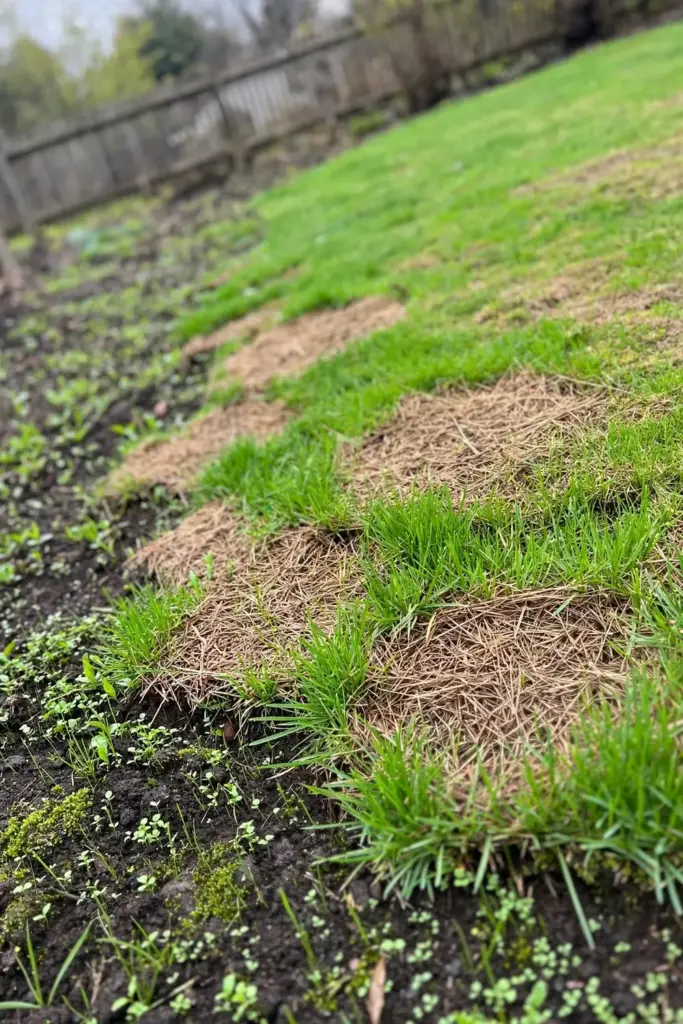
I have learned that a lawn with dollar spot rewards feeding and patience more than spraying.
Stop three habits. Do not scalp the lawn to make patches less visible. Do not water in the evening to green up dry turf. Do not spray a fungicide on a lawn that only needs feeding.
If patches show dark flecks and no hourglass lesions, look beyond dollar spot. The Bipolaris leaf spot guide covers a leaf spot complex with its own field signs for lawns with dark flecks and no hourglass lesions.
Thick turf covers old damage. Overseed thin areas, feed steadily, and give the lawn a full season to fill in. The patches fade as new growth replaces the dead blades.
Frequently Asked Questions
Dollar spot kills leaf blades in circles, and crowns usually survive. A fed lawn grows new blades through the patches within weeks. Severe cases on stressed turf thin the lawn and open bare soil to weeds, and those lawns need feeding plus reseeding. Total lawn death from dollar spot alone is uncommon on home lawns with steady care.
Yes. Dollar spot works on leaf blades, and the crowns keep growing. Mississippi State Extension field notes record a fertilized lawn that lost all symptoms within 3 weeks of feeding. Keep the nitrogen steady, water in the morning, and mow high while the lawn fills in. Bare spots that stay empty need reseeding.
Start with feeding, not a sprayer. When fungicide is needed, rotate FRAC groups and follow the label. Mississippi State Extension warns that propiconazole may burn grass in hot weather and azoxystrobin may advance the disease. Myclobutanil and fluxapyroxad carry Extension support for residential lawns, with a heat warning on myclobutanil.
No. Dollar spot is a turfgrass fungus, and it harms lawns, not people or pets. Children and pets can walk on a lawn with dollar spot, and the patches carry no toxin. Keep people and pets off the lawn until sprays dry after any fungicide application, per the product label.
Yes, with dry blades and a bag on the mower. Mow the healthy lawn first, then the diseased patches, and clean the deck and wheels after. Mowing wet turf spreads the fungus on shoes and wheels, and side discharge scatters infected clippings across healthy grass. Bagging keeps that inoculum off the lawn.
The fungus survives in thatch and on infected plant parts between outbreaks, and it returns when long wet nights meet a hungry lawn. One season of feeding rarely ends it. Hold the routine. Steady nitrogen, morning watering, high mowing, thin thatch, and clean equipment. Lawns on that routine show fewer patches each year.
Where to Go From Here
Dollar spot answers to feeding, morning water, and high mowing. Start with the morning-dew check, feed the lawn, and fix the watering schedule.
Work the steps in order. Confirm the diagnosis, feed nitrogen, water early, mow high, cut thatch, and hold the routine. Fungicide waits for severe cases, and the cultural steps carry the rest.
Next season, start early. Spring feeding and morning watering prevent more dollar spot than any spray treats. The routine is small, and it holds across the whole season.