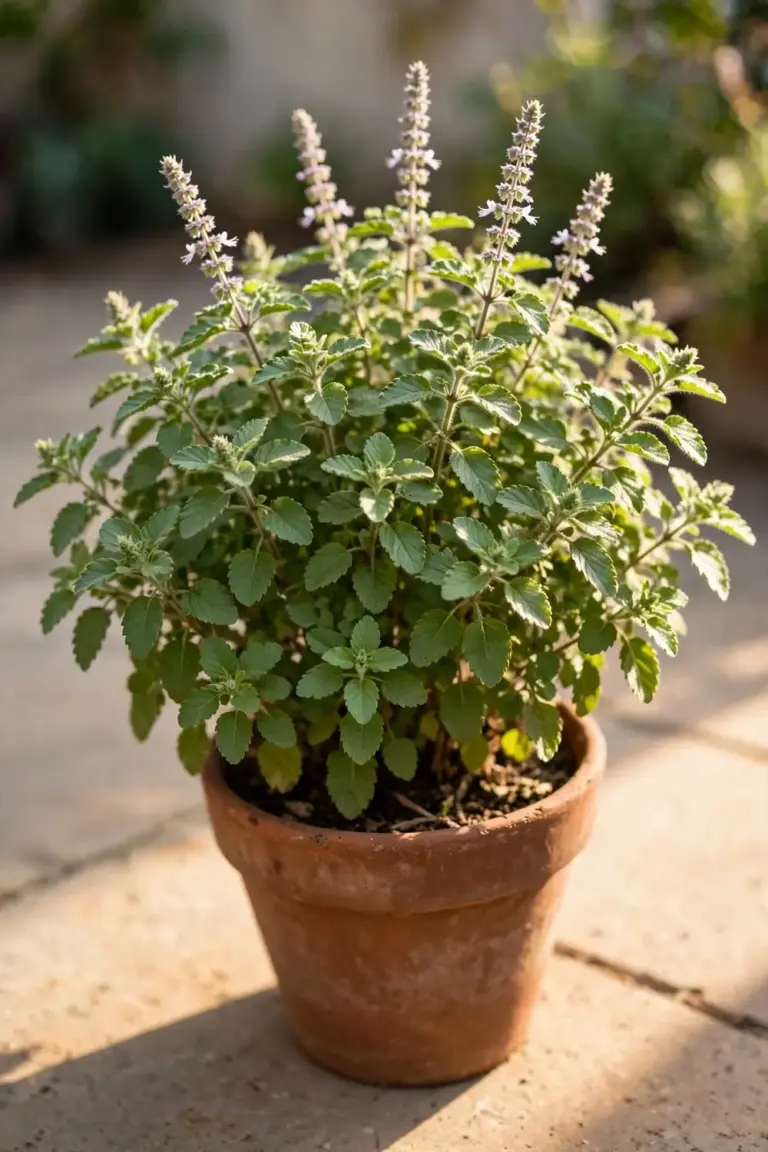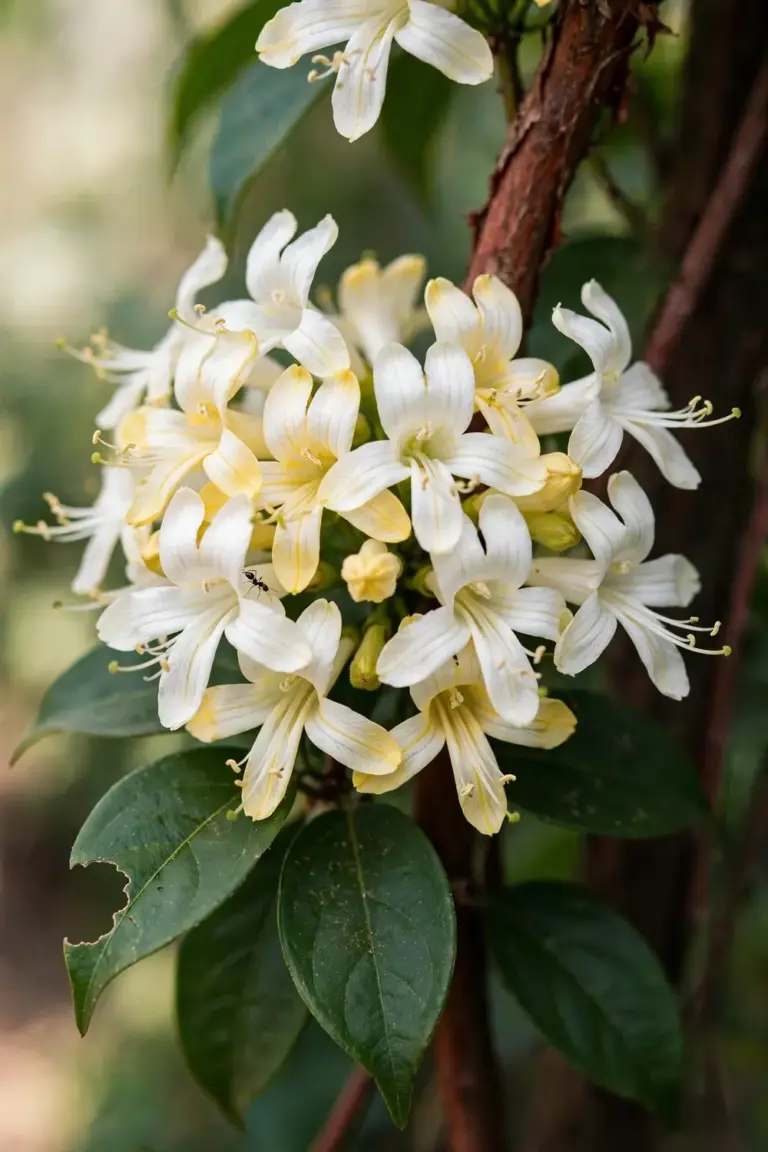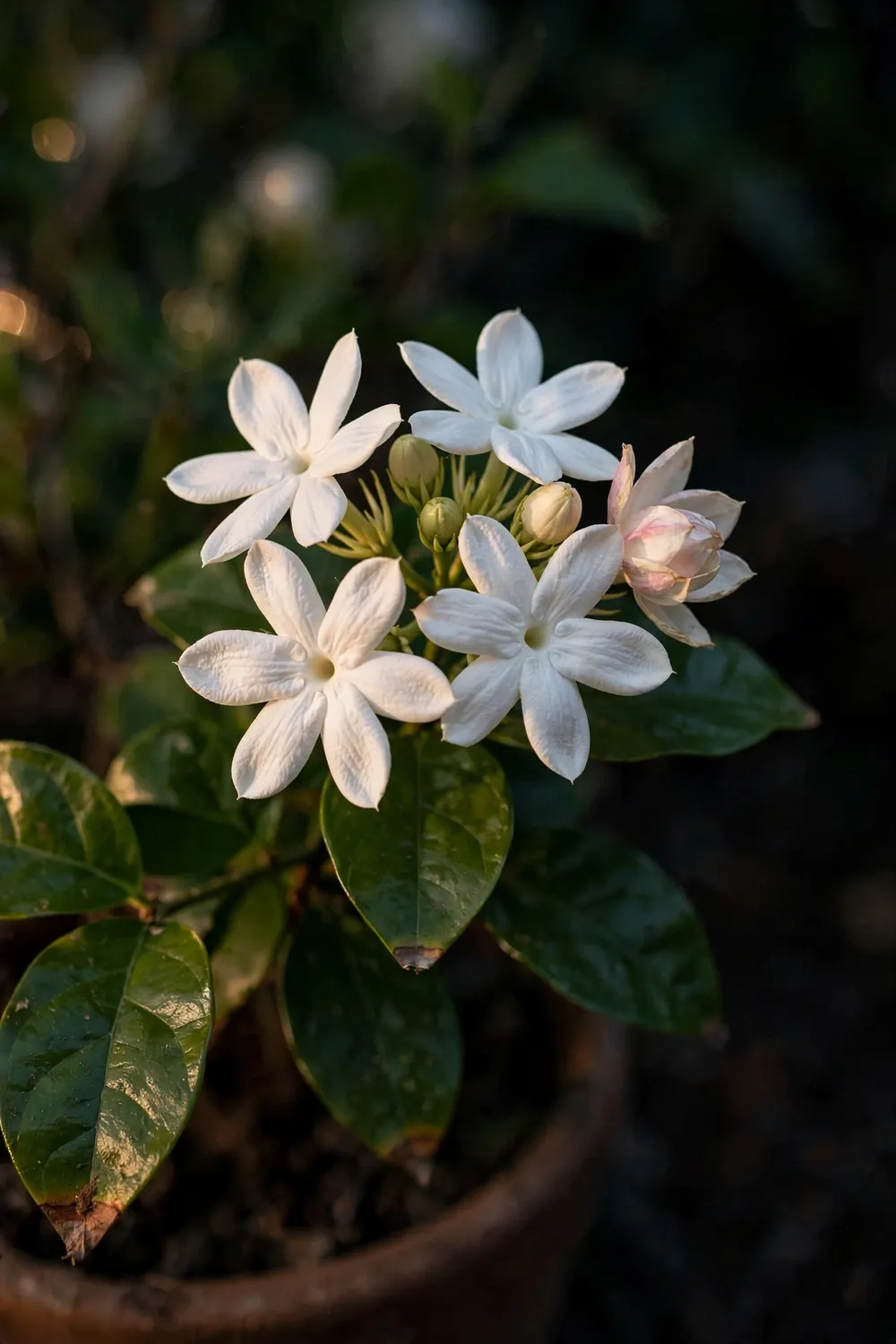

To grow Arabian jasmine, give the plant full sun, a loose well-drained mix, and a pot you can carry indoors, because this tropical shrub only survives outdoors year-round in USDA zones 9 through 11. A healthy plant reaches 6 to 10 feet in the ground but stays near 4 feet in a container, and it pushes fragrant white flowers from summer into fall, sometimes year-round in warm climates. I have learned that the container is the real hero of how to grow Arabian jasmine in a temperate climate, since every success story starts with a pot on wheels and a bright windowsill. This is melati, the white-flowered symbol of Indonesia, and the same plant sold as sampaguita, pikake, and mogra across the tropics.
1. Identify the Real Plant with 4 Traits in 30 Seconds
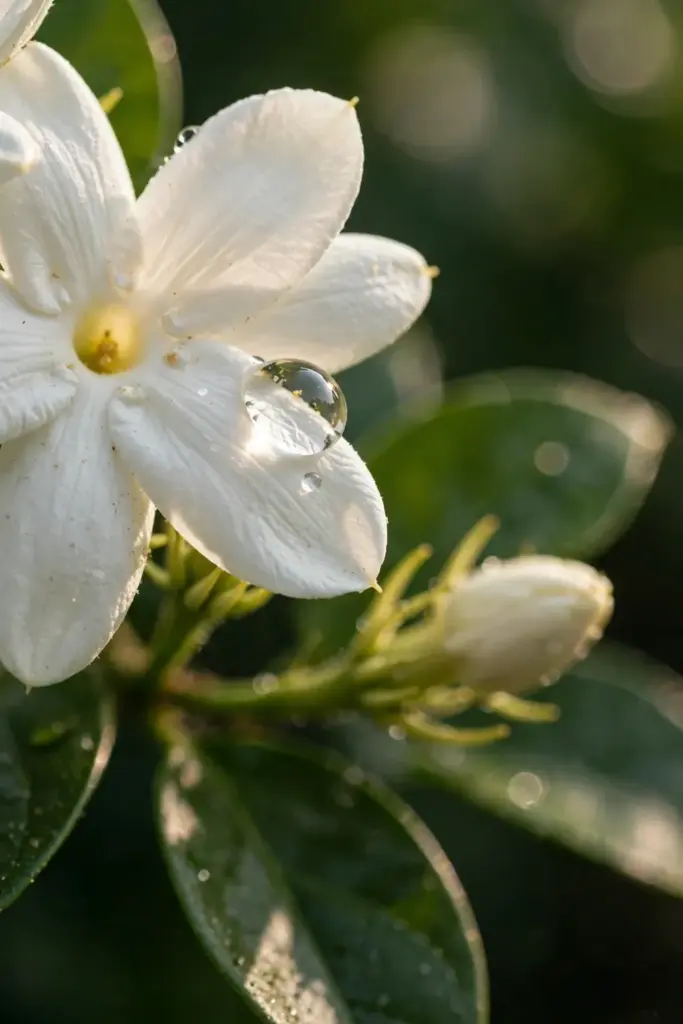
Jasminum sambac is an evergreen shrub or twining vine with opposite, simple, glossy ovate leaves 4 to 12.5 centimeters long. Unlike most jasmines, its leaves are not pinnate; each leaf is one simple blade, smooth except for a few hairs at the vein bases. True Arabian jasmine carries its flowers in clusters of 3 to 12 at the branch tips, each bloom a white corolla 2 to 3 centimeters wide with 5 to 9 lobes. The flowers open around 6 to 8 in the evening and stay open 12 to 20 hours, releasing their heaviest perfume through the night, then fade with a pink blush. The fruit is a small purple-black berry about 1 centimeter across, though named cultivars rarely set fruit at all.
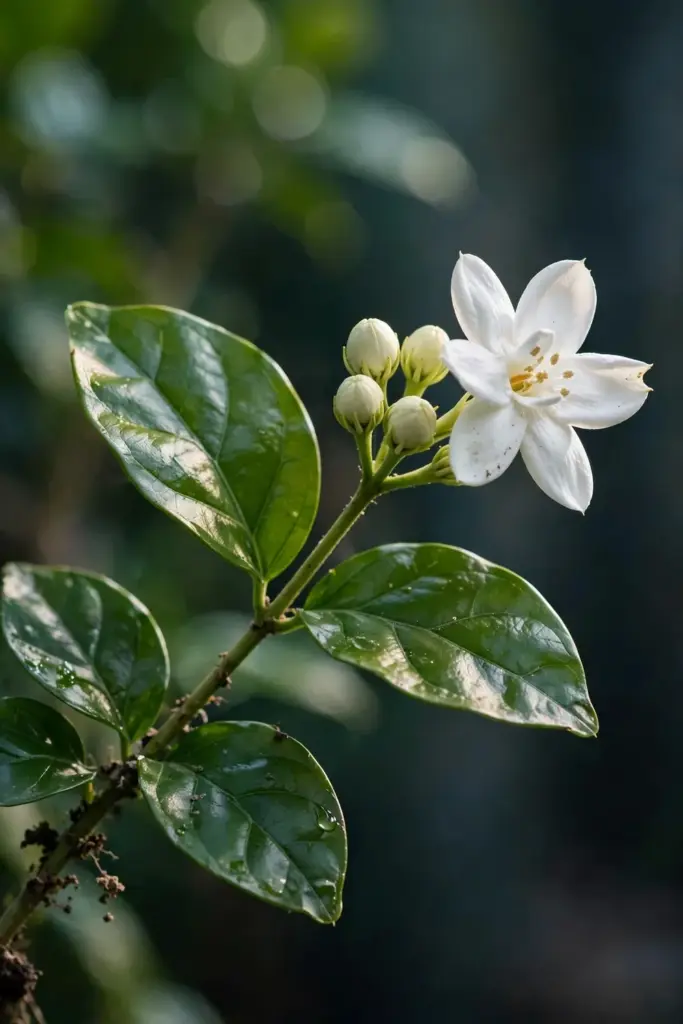
Those four traits, simple opposite leaves, tip clusters, night-opening white blooms, and the heavy evening scent, separate melati from every impostor in seconds. Walk the nursery bench with them in mind. Check the tag for the botanical name Jasminum sambac before you check the price.
Do not confuse this plant with the other names on the bench. Winter jasmine (Jasminum nudiflorum) flowers yellow in late winter and carries no fragrance. Star jasmine (Trachelospermum) is a different genus entirely. Spanish jasmine, the perfumer’s Jasminum grandiflorum, is a close cousin with larger pinnate leaves, and a dedicated Spanish jasmine guide treats it on its own terms. Only Jasminum sambac gives you the night-opening white blooms of melati.
2. Compare the 4 Named Cultivars Before You Buy
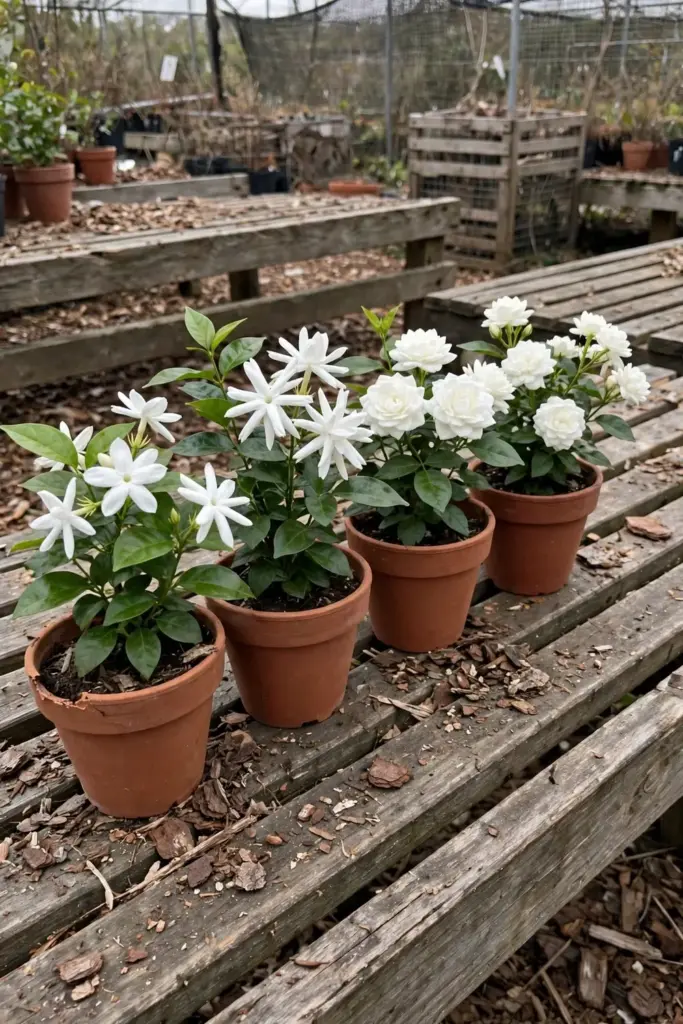
Named cultivars of Jasminum sambac differ by corolla structure, and every named cultivar must be propagated vegetatively to stay true to type, since seedlings vary and most plants set little viable seed. Buy the cultivar by name on the tag, and treat an unlabeled “jasmine” as a gamble on flower form. The four most traded varieties compare like this:
| Cultivar | Flower Form | Fragrance | Habit and Size | Best Fit |
|---|---|---|---|---|
| ‘Maid of Orleans’ | Single, 5 or more oval petals | Strong, classic, sweet | Bushy and compact, flowers from the stem tips in flushes about every 30 to 40 days in heat | Pots, first plants, heavy bloom |
| ‘Belle of India’ | Single to double, long slender petals, 1 inch across | Sweet | Intermediate between vine and shrub, 5 to 10 feet; needs higher temperatures and light to perform | Warm patios, collectors |
| ‘Grand Duke of Tuscany’ | Triple, rose-like, 1 to 1.5 inches across | Rich and sweet; botanical references call it less fragrant than the singles, though growers report strong scent | Slow-growing compact bush, 3 to 8 feet; flowers hold for days and often dry on the plant | Pots, conservatories, small spaces |
| ‘Arabian Nights’ | Double layer of petals, smaller than ‘Grand Duke of Tuscany’ | Fragrant | Bush, 5 to 10 feet | General garden and pot culture |
‘Maid of Orleans’ is the workhorse. It is the variety most often sold as sampaguita and pikake, and it answers to the names Mograw, Motiya, and Bela in Indian markets. A specialist nursery guide to growing sambac indoors notes that it flowers from the stem tips, drops each bloom within a day, and replaces it with more the next day, which is why a healthy plant seems constantly in flower. If you want maximum flowers per square foot of windowsill, start there.
‘Grand Duke of Tuscany’ trades bloom count for drama: fewer flowers, each one a miniature white rose, on a plant that stays compact enough for a tabletop pot. It grows slowly and needs regular pruning to stay dense, or it turns leggy. The Grand Duke of Tuscany cultivar profile shows how gardeners grow this rose-like form as a specimen. ‘Belle of India’ sits between the two in flower form and wants the warmest, brightest spot you own. ‘Arabian Nights’ (also sold as ‘Arabian Knights’) is the straightforward double for gardeners who want full flowers without fussing over the slowest grower.
3. Read the Zone 9-to-11 Map Before Choosing Ground or Pot
Jasminum sambac is hardy in USDA zones 9 through 11, and it does not appreciate freezing conditions, as the Gardenia growing guide documents. In zones 9 to 11 you can plant it in the ground in full sun to part shade, where it forms a 6-to-10-foot shrub or climbs a trellis toward 10 feet. Everywhere else, and in any zone 9 winter with a hard freeze in the forecast, the plant belongs in a container that moves indoors.
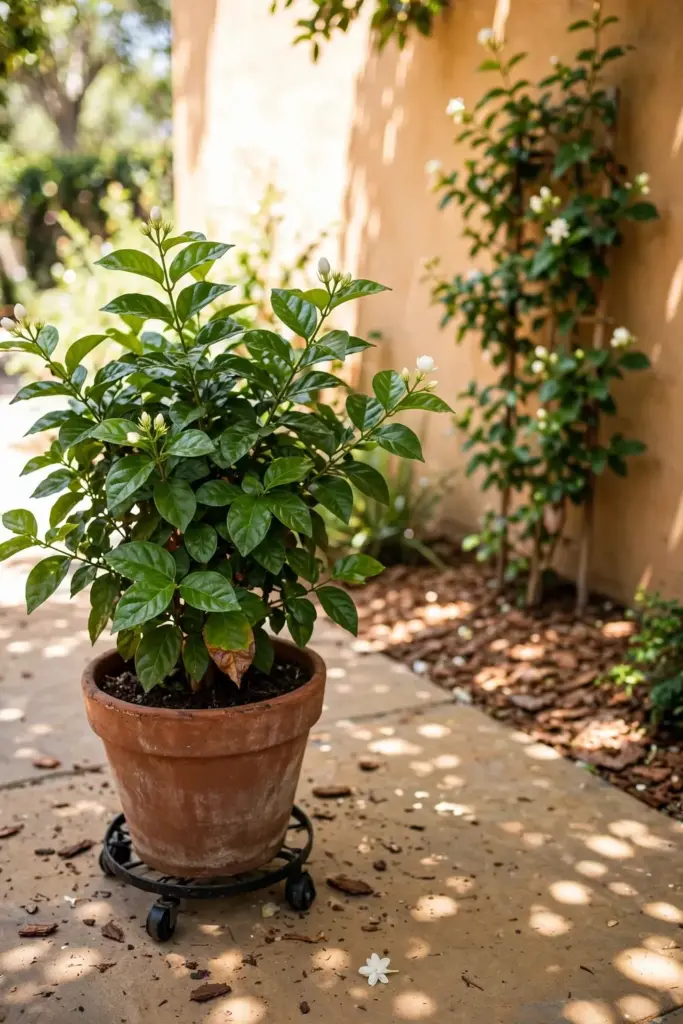
Zone 9 gardeners sit on the fence. A sheltered courtyard against a south wall can carry the plant through a mild winter, but one record cold night undoes years of growth, so even zone 9 growers keep a container backup or a frost cloth ready. Zone 8 and colder is container-only, no exceptions.
The indoor minimum sits near 60°F (15°C). Below that growth stalls; chilling shows as slowed growth, yellowing or dropping leaves, blackened water-soaked foliage, and lost buds, especially after a cold draft or a brush with near-freezing air. Plan the pot first and the planting hole second. How to grow Arabian jasmine anywhere colder than zone 9 is really the art of the moveable pot, and every section below assumes your plant lives in one.
4. Start with Full Sun and a Loose, Humus-Rich, Well-Drained Mix
Give the plant full sun to part shade outdoors, and the brightest light you own indoors. Flowering tracks light directly: too much shade cuts bud production, stretches stems, and leaves you with a green shrub and no perfume. Outdoors a south- or west-facing wall is ideal; indoors the plant wants the sunniest window in the house plus 4 to 6 hours of direct bright light. If the stems stretch and the leaf gaps widen, the plant is asking for more light, not more fertilizer.
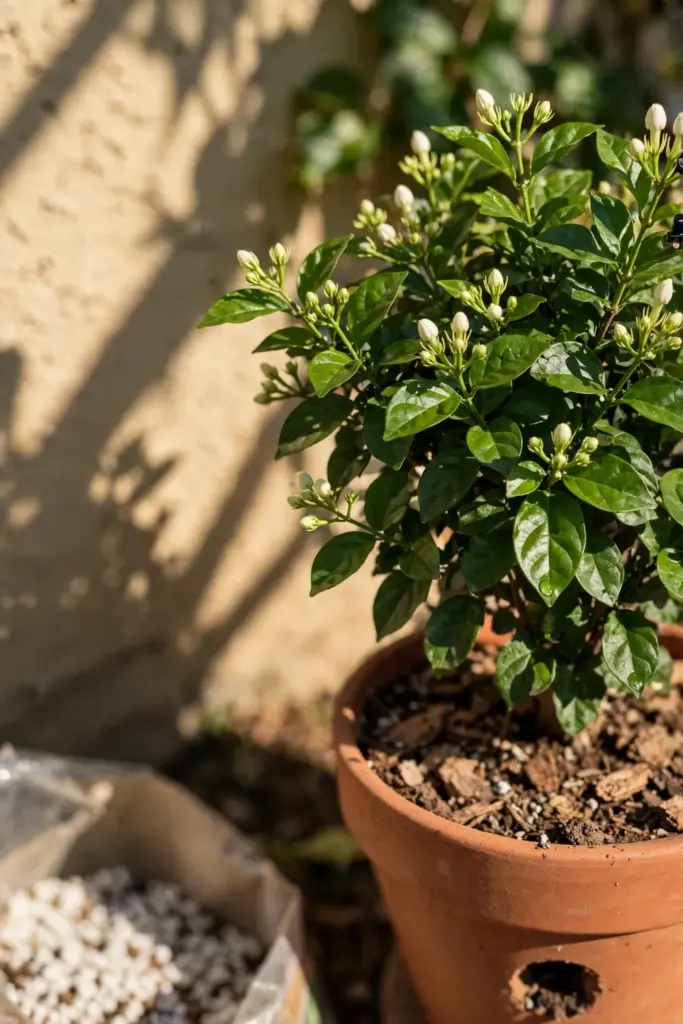
Roots want a loose, fertile, humus-rich mix that holds moisture yet drains fast. Waterlogged soil is the fastest way to kill this plant; the roots must never sit in soggy ground. Mix your own from 3 parts peat or coir, 2 parts perlite, and 1 part composted bark or compost, or buy a quality potting mix and cut it with a third perlite. A slightly acidic to neutral mix suits the plant, and the bark keeps the structure open for years. Build the soil right once and the watering section gets easy, because soil built for health forgives far more than a heavy mix does.
5. Pot It Like a Temperate Grower: 12-Inch Container, One Drainage Rule
Start a young plant in a 10- to 12-inch pot and step up one size each spring until you reach 14 to 16 inches, which houses a mature specimen for years. Use a container with multiple drainage holes. One drainage rule governs everything: water must leave the pot within seconds of watering, or the mix is wrong. Unglazed terracotta breathes and suits growers who tend to overwater; glazed ceramic or plastic holds moisture longer for dry indoor winter air.
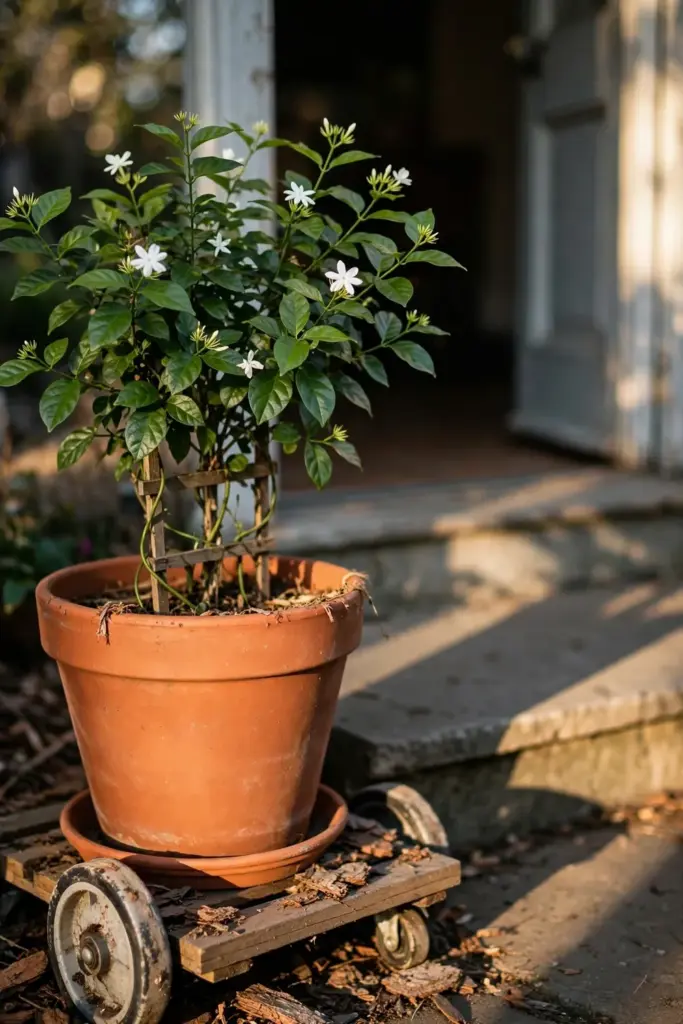
Put the pot on a wheeled saucer or plant caddy now, not in October. A 14-inch pot of wet mix weighs more than you want to dead-lift through a doorway at dusk, and the fall move indoors always happens on the coldest-feeling evening of the year. Set a small trellis in the pot at planting time if you want the vine form, or leave it unstaked for the sprawling shrub shape. Empty the saucer after every watering so the pot never sits in standing water. Raise the pot on small pot feet through the rainy season so air moves under the base and the drainage holes never seal against a wet saucer.
6. Water Deeply, Then Let the Top Inch of Mix Dry
Water thoroughly until it runs from the drainage holes, then wait until the top inch of mix feels dry before watering again. Arabian jasmine tolerates light drought once established, and growers report it blooms better on the slightly dry side than in constantly wet soil. Even moisture with fast drainage gives the best flowering, the healthiest foliage, and the strongest regrowth.
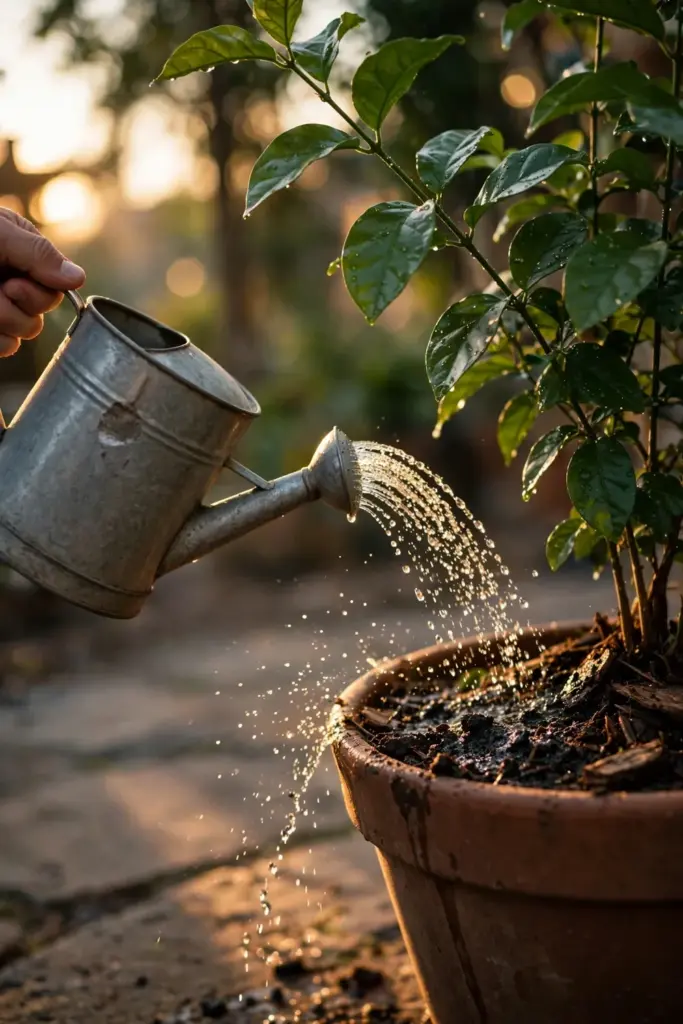
Summer and winter ask for different hands. In active summer growth the pot may need water every 2 to 3 days in heat; in the indoor winter rest it may go a week or more between drinks. The seasonal split looks like this:
| Season | Check | Water When | Feed |
|---|---|---|---|
| Summer outdoors | Daily finger test | Top inch dry | Every 2 weeks, half strength |
| Fall transition | Every 2 to 3 days | Top 2 inches dry | Taper off |
| Winter indoors | Weekly | Mix dry halfway down | None |
Check with a finger, not a calendar. Brown leaf edges usually mean the mix dried too far, fertilizer salts built up, or the indoor air turned desert-dry, and spider mites love that same dry air. Mulch the pot surface with a thin layer of bark to slow evaporation, but keep mulch off the stem.
7. Feed Every 2 Weeks in Summer with a Bloom-Focused Fertilizer
Feed once a month during the warm season with a balanced fertilizer, or every 2 weeks at half strength for a heavy bloomer in a large pot. Keep nitrogen modest: excess nitrogen pushes leafy growth at the expense of flowers, and the most common feeding mistake with this plant is a green shrub that never blooms. A bloom-focused formula, higher in phosphorus than nitrogen, suits a plant grown for flowers.
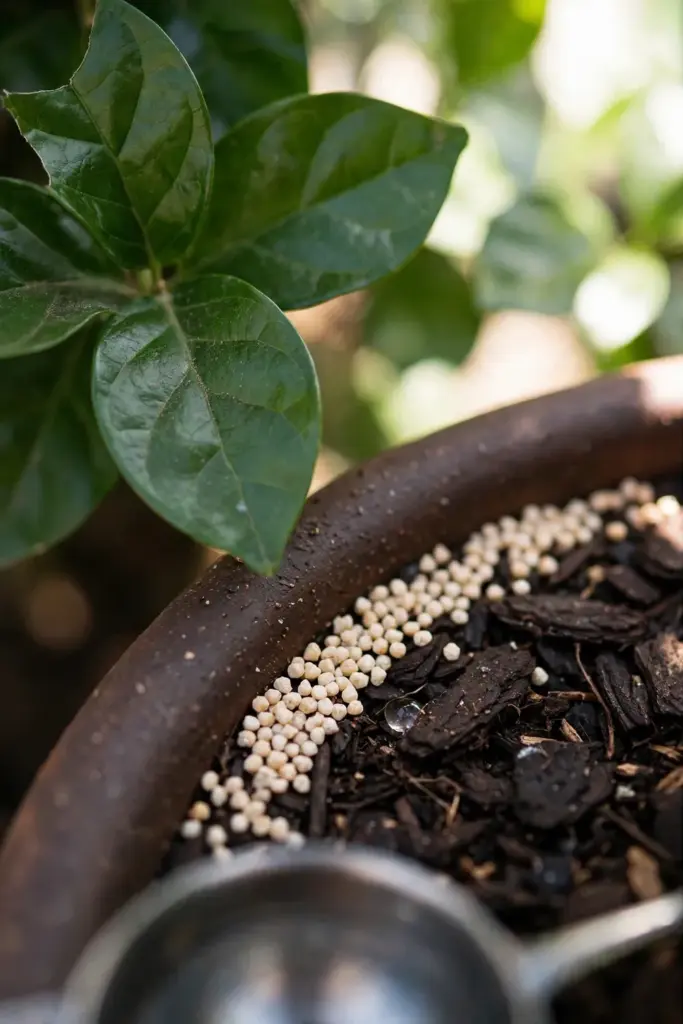
Stop feeding entirely in winter when growth slows. A resting plant cannot use fertilizer, and salts accumulate in the dry indoor mix, burning root tips and browning leaf edges. Resume feeding in spring when new growth starts, and flush the pot with plain water once at the start of the season to wash out winter salt buildup. One deep flush in March resets the mix better than a year of careful dosing.
8. Prune Right After Each Flush to Force the Next Round of Buds
Prune Jasminum sambac immediately after flowering to maximize the next flush. Cut each flowered stem back to just above a strong side shoot or lateral bud, using sharp clean tools. Flowers form on new growth, so every snip redirects energy into the shoots that will carry the next buds. Remove crossing, weak, or damaged stems through the season, and shape the shrub toward 4 to 5 feet so light reaches the interior.
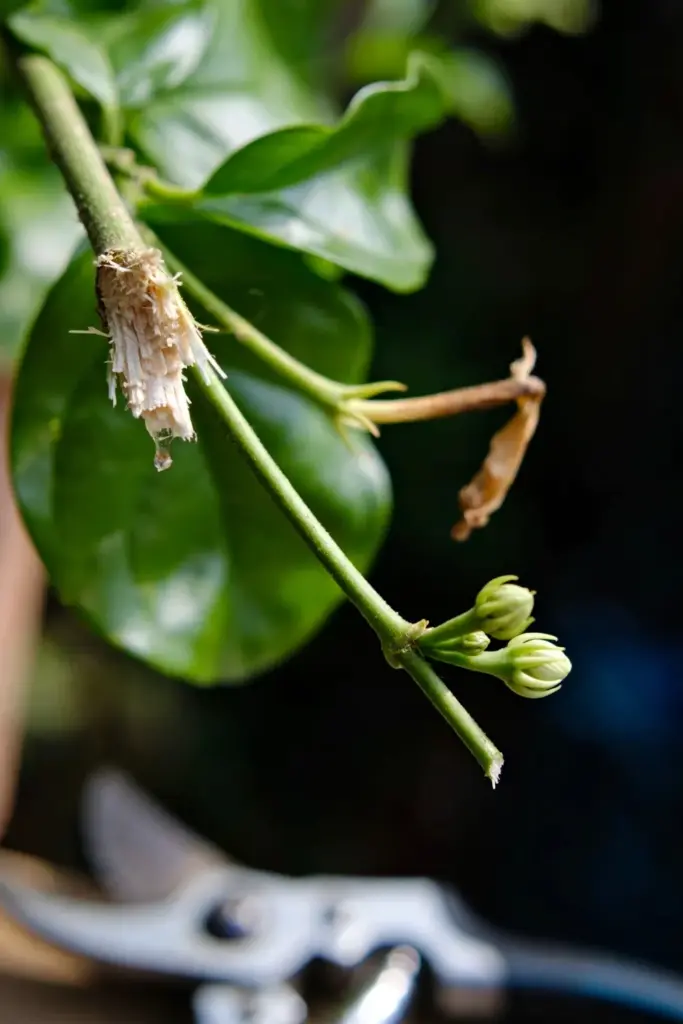
Do this after every flush, not once a year. ‘Maid of Orleans’ can cycle a fresh flush every 30 to 40 days in heat, and each flush is a pruning opportunity. Avoid heavy pruning in winter when the plant is vulnerable and resting; winter cuts heal slowly and invite dieback. The basic spring pruning technique of cutting to an outward-facing bud applies here too, and a plant pruned this way stays compact instead of sprawling into a tangled mound.
9. Take Semi-Ripe Cuttings in Summer for True-to-Type Plants
Sow no seeds for a named cultivar. Named Jasminum sambac cultivars must be multiplied vegetatively to stay true, and cultivated plants rarely bear seed anyway. Take semi-ripe cuttings in summer: a 4- to 6-inch stem that is firming up but not yet woody, cut just below a leaf node, with the lower leaves stripped and the top leaves halved to cut water loss. Dip the base in rooting hormone and set it in a moist, airy mix of perlite and coir under bright indirect light with gentle bottom warmth.
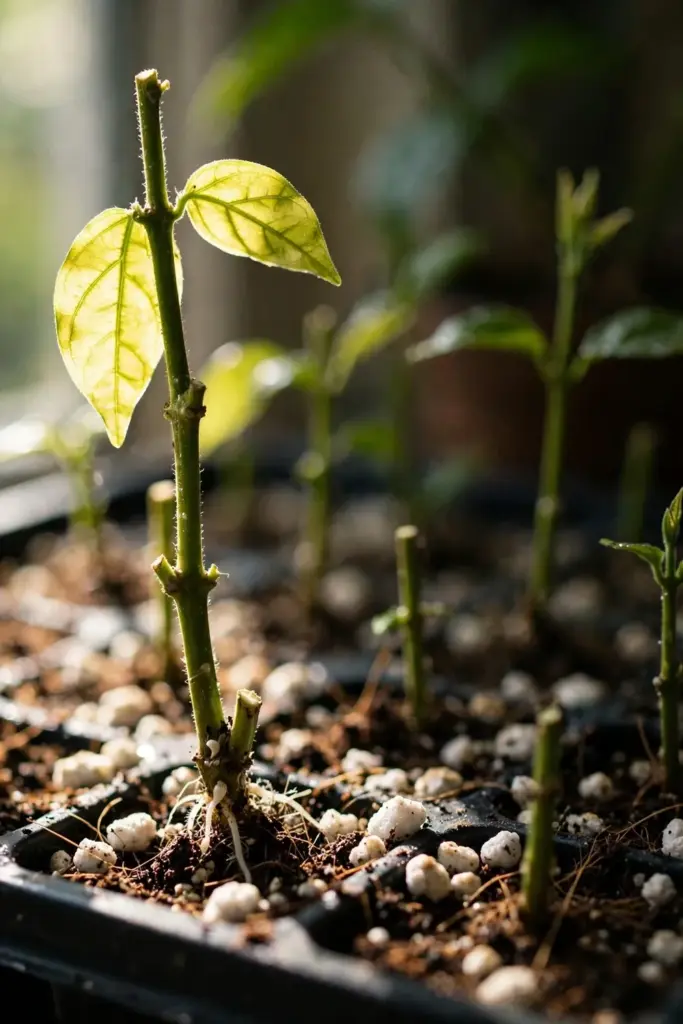
Roots form in 3 to 6 weeks; a gentle tug that resists means the cutting has struck. Keep the new plant in its small pot until roots fill it, then pot up into the 10-inch starting size. Do not rush a rooted cutting into a big pot: excess wet mix around a small root system is the classic way to rot a new plant. Layering works just as well for a plant you already own: pin a low stem to the soil surface, wound it lightly, and sever it from the mother plant once roots form.
10. Move the Pot Indoors When Nights Touch 50°F
Bring the plant inside before the first frost, and do not wait for the forecast to say freezing. When night temperatures start touching 50°F (10°C), growth stalls and chilling damage begins well above freezing. Moving early avoids the shock of a cold snap followed by a warm house, which drops buds and yellows leaves faster than a gradual transition.
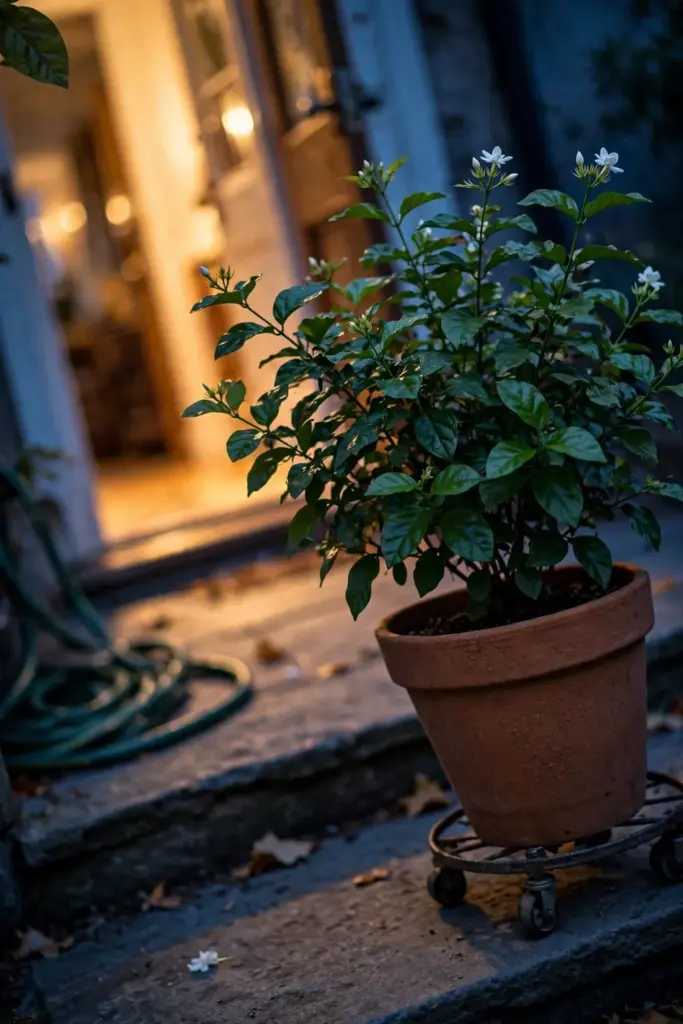
Harden the move in reverse: bring the pot in for a few hours a day over a week or two before the first frost date, so the plant acclimates to lower light and drier air. Inspect every leaf before the final move in, top and bottom, and wash the foliage with a strong spray of water to knock off hitchhiking aphids. One overlooked scale insect becomes a winter colony. Give the plant its final post-flush prune before it comes in, so it rests in its best shape.
11. Run the 5-Point Indoor Winter Routine: Light, Cool Air, Dry Soil, Humidity, Pest Watch
Winter indoors is a rest, not a growth season, and the routine has five points. First, light: the brightest window you own, ideally south- or west-facing, with at least 6 hours of sun a day, or add a grow light 6 to 12 inches above the canopy. The Spruce’s indoor jasmine guide confirms the formula: bright indirect light a few feet from an unshaded south or west window, room temperatures of 60 to 75°F, and a pebble tray for humidity. Second, temperature: normal room warmth by day with cooler nights; keep the pot away from radiators and cold drafts alike.
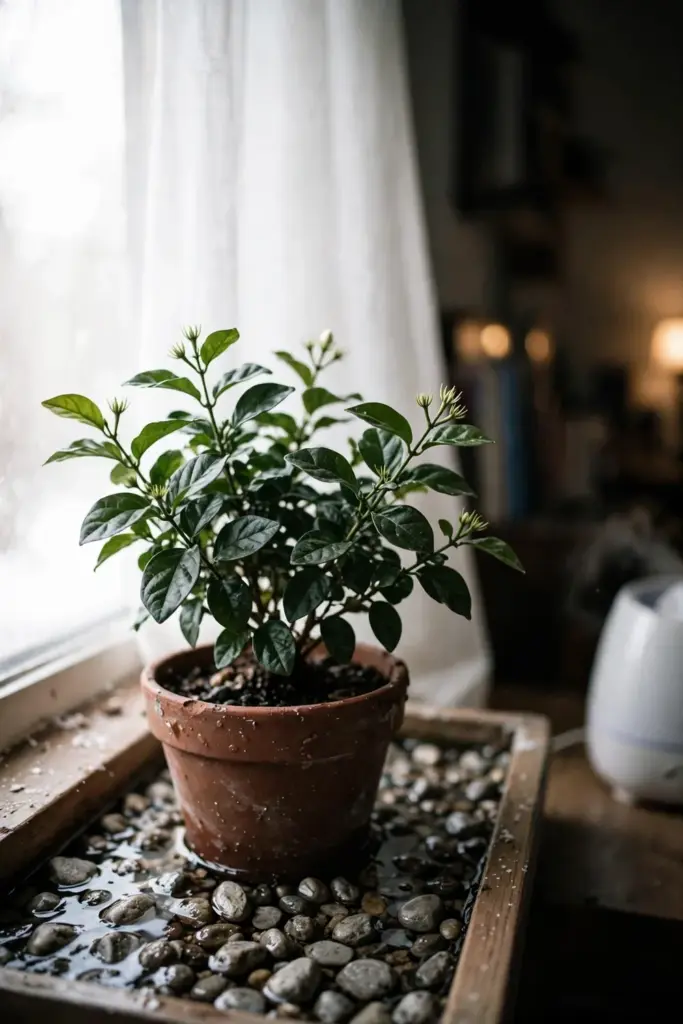
Third, water: let the mix dry further between waterings than you did in summer, and stop fertilizing altogether while growth is slow. Fourth, humidity: dry furnace air invites spider mites, so set the pot on a pebble tray with water, group plants together, or run a humidifier; misting helps for an hour and does little beyond that. Fifth, pest watch: check leaf undersides weekly for spider mites, scale, aphids, and whiteflies, and wipe early finds with a damp cloth plus neem oil or insecticidal soap. A plant that rests cool, bright, and dry wakes up in spring ready to bloom; a plant kept hot, dark, and wet spends spring recovering.
12. Bring the Pot Back Outside After the Last Frost
Wait until nights stay reliably above 50°F and the last frost date has passed, then reverse the fall process. Set the plant in shade for the first few days, then morning sun, then full sun over 7 to 10 days. Leaves grown behind glass sunburn in direct spring sun, and a hardened-off plant keeps every leaf it carried through winter.
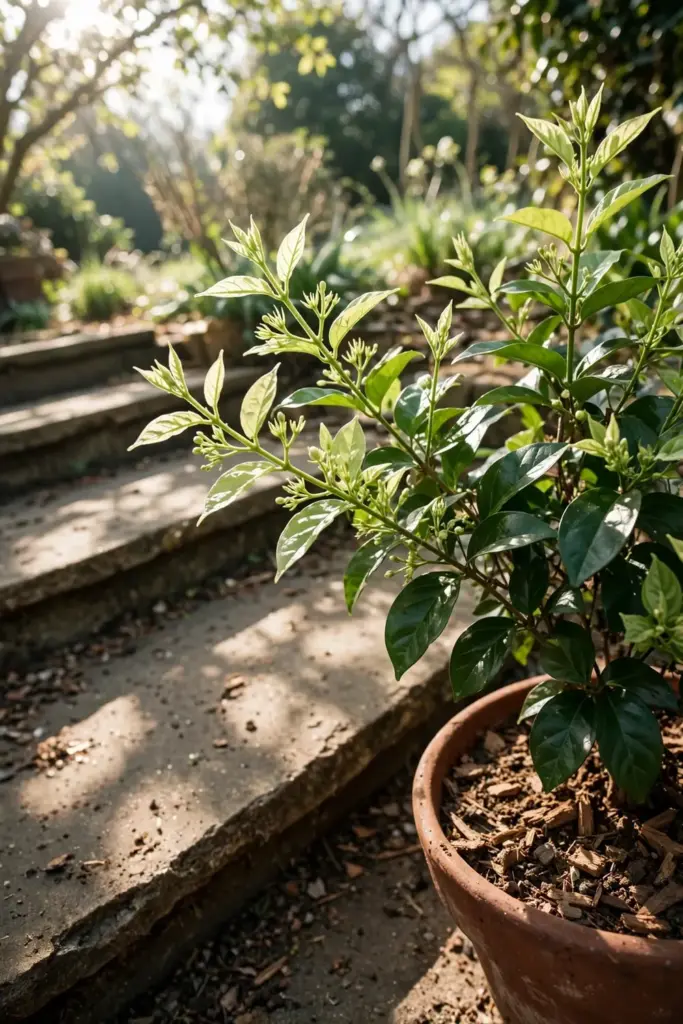
Spring is also repotting season. If roots circle the pot, step up one size with fresh mix, and prune lightly to shape before the first growth flush. Resume feeding only when new leaves emerge, not on the day the pot goes outside. The first outdoor flush usually follows within weeks of the move, and the flowers that open on warm June evenings are the payoff for the whole winter routine.
13. Pick the Blossoms at Dusk for Tea, Leis, and Garlands
Harvest at dusk, just as the buds start to open, because the fragrance peaks through the night. Pick flowers that opened the same evening, plus firm buds for stringing, and handle them gently: the petals bruise easily and brown where fingers press. A mature ‘Maid of Orleans’ in a 14-inch pot can supply a small bowl of blossoms per flush through the season.
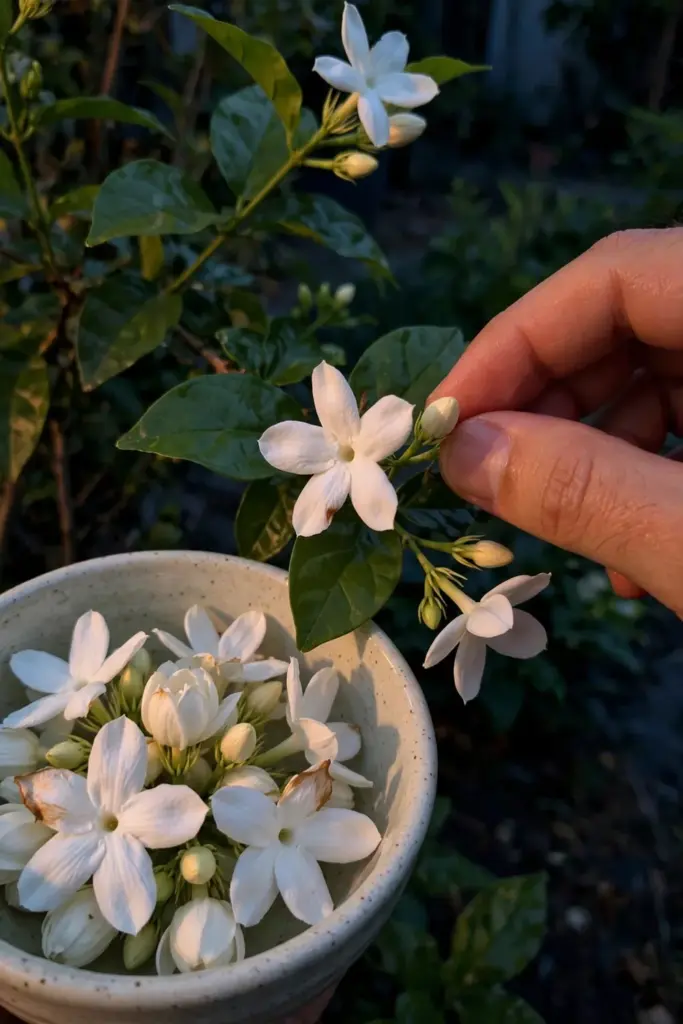
Use only unsprayed flowers for anything that touches food or skin. The classic use is scenting tea: fresh blossoms layered with green or white tea leaves perfume the tea with their aroma, and this is the jasmine of jasmine tea. In Hawaii the same flowers become pikake leis; in the Philippines they are strung as sampaguita garlands; in Indonesia melati adorns weddings and ceremonies as the national flower. Dry surplus blooms in a single layer in shade to keep a jar of scented flowers for the winter months.
14. Read the Bloom Calendar: June to August in Temperate Zones, Year-Round in the Tropics
In temperate climates expect the main show from June through August, with repeat flushes into fall while nights stay warm. In frost-free climates the plant can bloom nearly year-round, cycling flushes as fast as every 30 to 40 days in heat. Indoor plants bloom when light and warmth allow, and a bright sunroom can carry flowers deep into winter.
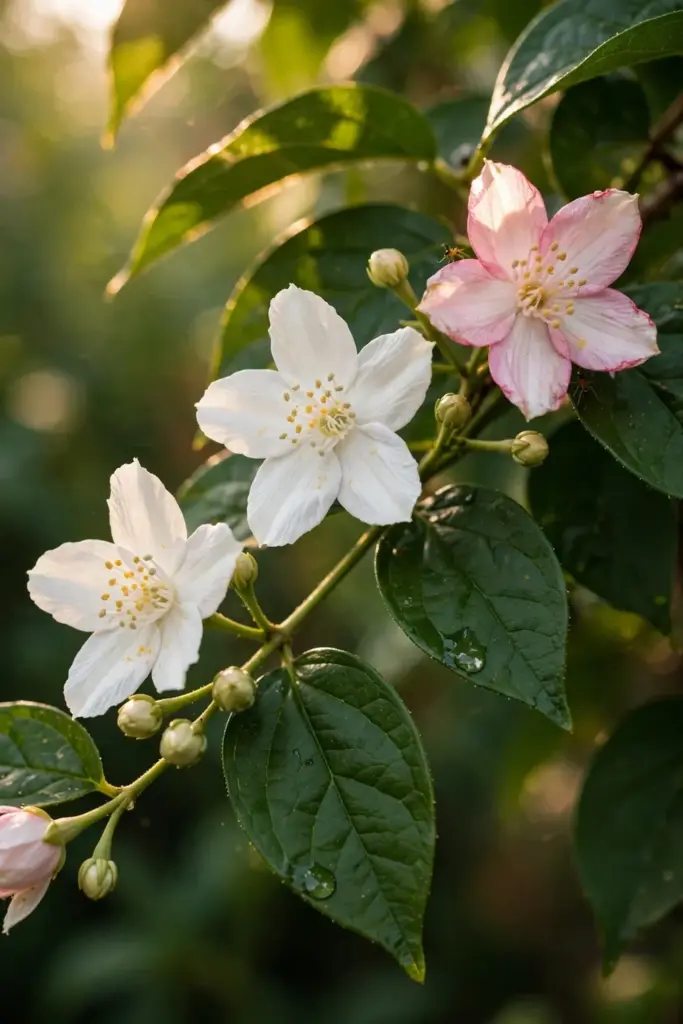
Buds that form and then drop point to unstable conditions: dry soil, waterlogged roots, a sudden temperature swing, or a move during bud formation. Keep conditions steady while buds develop, and do not move the pot once a flush starts. A plant that drops its first indoor buds usually holds the second flush once it settles. Mark the calendar when the first buds open; the next flush follows the 30-to-40-day rhythm in heat.
15. Scout for Spider Mites, Scale, Aphids, and Whiteflies Before They Spread
Outdoors the plant is mostly trouble-free, with occasional aphids on young shoots. Indoors the pest list grows: spider mites in dry air, scale on stems, aphids on new growth, and whiteflies on leaf undersides. Check foliage weekly through winter, and treat early finds by wiping leaves with a damp cloth plus neem oil or insecticidal soap; two applications usually clear a light infestation.
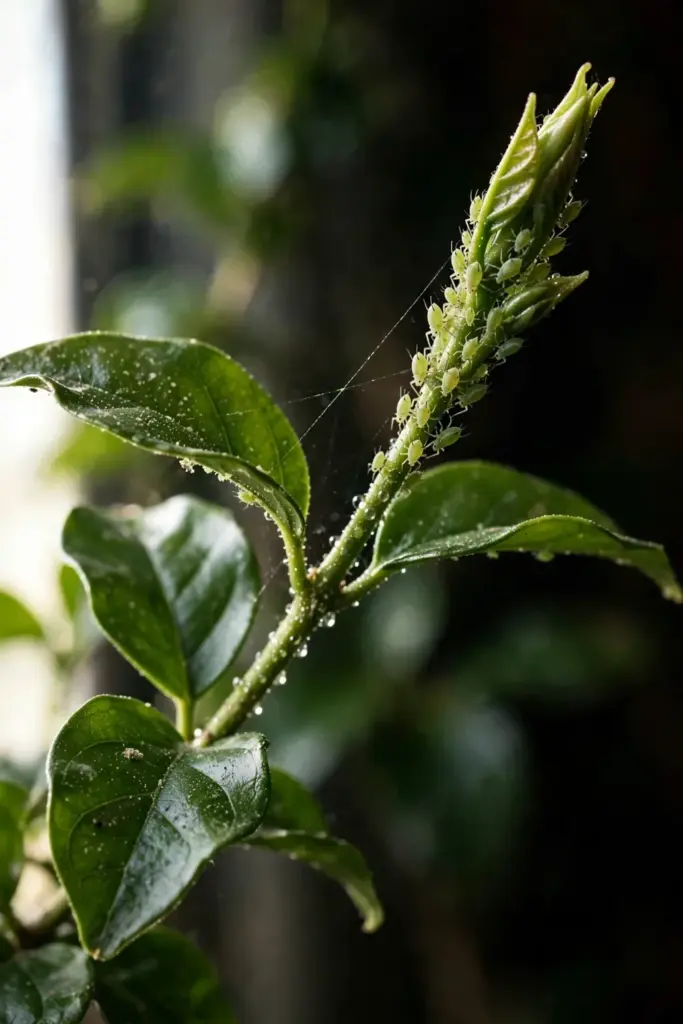
Prevention beats treatment. Wash new nursery plants before they join the collection, quarantine them for two weeks, and keep the winter air humid enough that spider mites never get the dry conditions they need. Yellow leaves trace back to overwatering, poor drainage, low indoor light, or cold far more often than to disease. Keep the mix draining, the light bright, and the pot above 60°F, and most problems never start. One regional caution: the University of Florida IFAS assessment rates Jasminum sambac a high invasion risk in north, central, and south Florida and does not recommend it for general planting there, so Florida gardeners should grow it in containers and check current local guidance before planting it near natural areas.
16. Skip the 7 Mistakes That Silence Arabian Jasmine Blooms
Learn how to grow Arabian jasmine by avoiding the seven errors that cost the most flowers. Planting it in the ground outside zones 9 to 11 with no indoor plan kills the plant the first hard winter. Deep shade gives leaves and no buds, ever. A heavy mix with no drainage drowns the roots within weeks. Heavy nitrogen grows a green shrub instead of flowers. Skipping the post-flush prune forfeits the next 30-to-40-day cycle. Waiting for frost to move the pot inside shocks the plant into dropping every bud. And buying an unnamed plant while expecting a named cultivar’s flower form ends in disappointment at the first bloom.
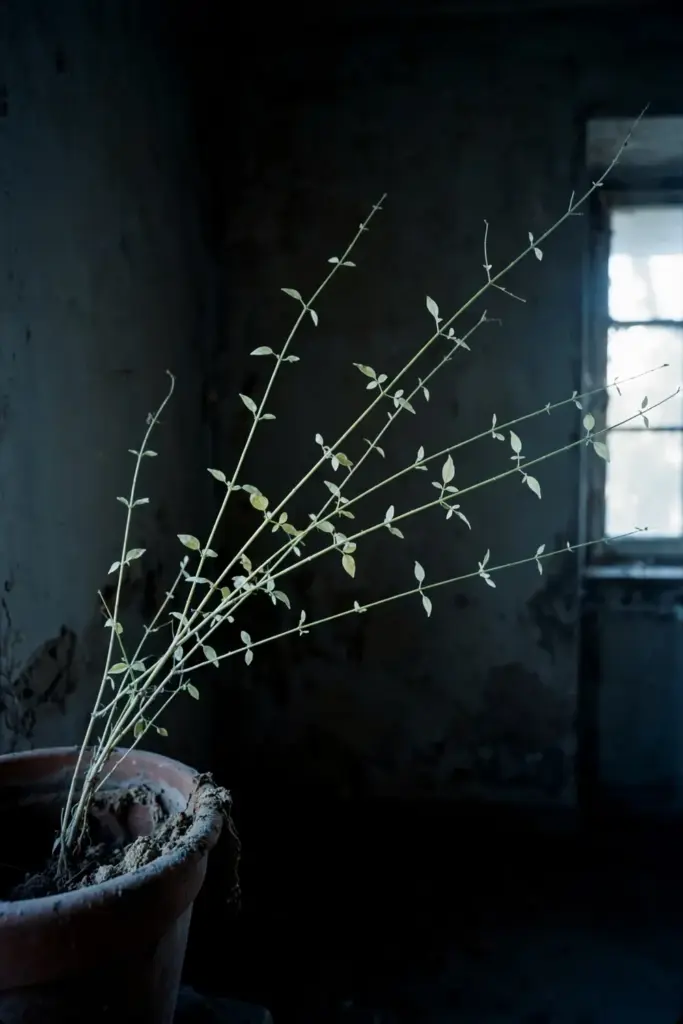
Fix the light first when blooms fail, then the fertilizer, then the pruning. Most silent plants are dark, overfed, or unpruned, and all three fixes cost nothing.
Frequently Asked Questions
Yes, with enough light. Give the plant a south- or west-facing window with at least 6 hours of sun, room temperatures of 60 to 75°F, and a humid microclimate from a pebble tray. Expect fewer flowers than an outdoor summer plant, and watch for spider mites in dry heated air. Move it outside for the warm months whenever you can.
Freezing is too cold, and damage starts well above it. The plant is hardy in USDA zones 9 to 11, keeps growing near 60°F indoors, and shows chilling injury, yellowing leaves, and bud drop after cold drafts or near-freezing exposure. Bring containers inside when nights approach 50°F, before the first frost, to stay safely above the damage zone.
It likes ground in zones 9 to 11 and pots everywhere else. In the ground it reaches 6 to 10 feet in full sun to part shade; in a pot it stays near 4 feet and moves indoors for winter. For most temperate growers the pot is the better choice, because the plant’s hardiness limit, not its preference, decides the question.
Jasmine is a common name applied to many species in the genus Jasminum, while Jasminum sambac is one specific species: Arabian jasmine, or melati. It is the night-opening, intensely fragrant white flower used for jasmine tea, pikake leis, and sampaguita garlands. Check the botanical name on the tag before following any growing advice.
Low light is the usual cause, followed by excess nitrogen fertilizer and missing the post-flush prune. Confirm the plant gets full sun or 6 hours of bright indoor light, switch to a bloom-focused fertilizer, and prune right after each flush. Buds that form and drop point to unstable water or temperature, not to a sick plant.
The University of Florida IFAS assessment rates Jasminum sambac a high invasion risk in north, central, and south Florida and does not recommend it for general planting there. Gardeners in Florida should grow it in containers and follow current local guidance. The rating is regional and does not apply automatically to other climates.