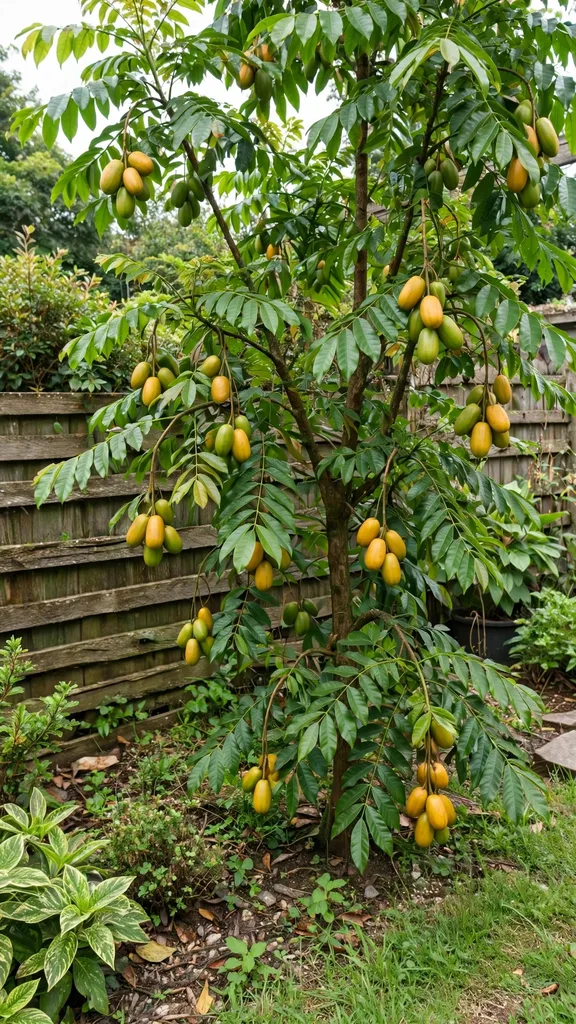
Sow 1 cleaned ambarella stone in warm weather and the seedling can be fruiting 4 years later. That speed sits at the center of how to grow ambarella: a fast tropical tree that reaches 9 to 12 m in most gardens and 18 m in its Melanesian homeland still starts willingly from a stone, a cutting, or a small dwarf plant in a pot. Give it full sun, soil that drains freely, and shelter from hard wind. Frost is the one condition it refuses.
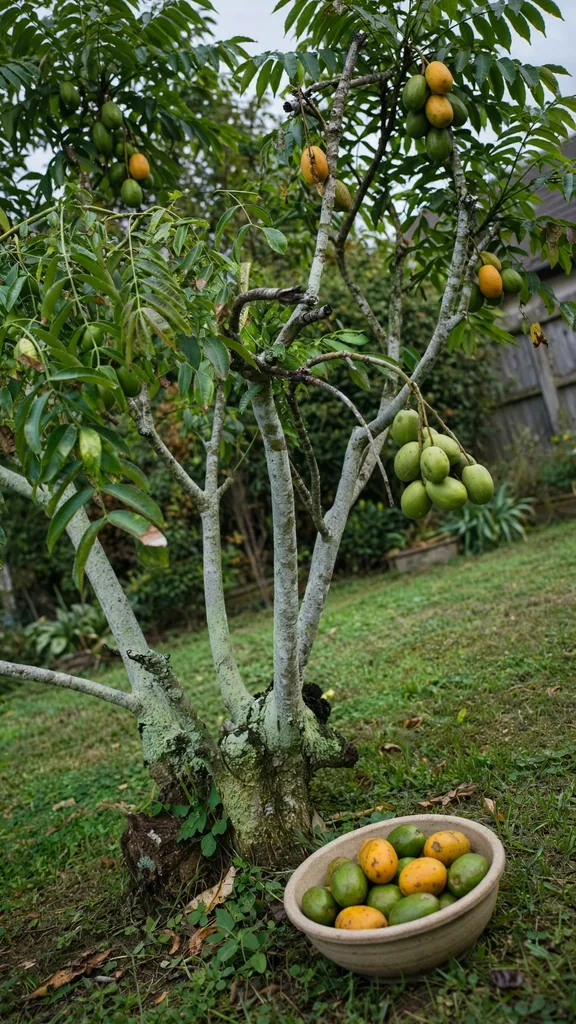
The ambarella, Spondias dulcis, belongs to the same family as the mango and answers to June plum, golden apple, and kedondong across the tropics. Its fruit hangs in bunches of a dozen or more, each fruit oval and 6.25 to 9 cm long, and a single tree fruits alone, dropping its crop a few fruits at a time over several weeks. Eaten firm and green, the flesh is crisp and tart. Left to ripen, it turns golden yellow and sweetens.
Growing a mango from seed is a different job. That job lives on the site’s mango growing guide. This page stays on the ambarella: the stone, the cutting, the pot, and the first bunch of fruit.
| Attribute | Detail |
|---|---|
| Botanical name | Spondias dulcis (syn. Spondias cytherea) |
| Common names | June plum, golden apple, kedondong, Otaheite apple |
| Family | Anacardiaceae, the mango and cashew family |
| Plant type | Fast growing deciduous tropical fruit tree |
| Mature size | 18 m in its homeland; 9 to 12 m in most gardens |
| Leaves | Pinnate, 20 to 60 cm long, with 9 to 25 glossy leaflets; turn yellow and drop in the cool, dry season |
| Flowers | Small white flowers in large terminal panicles; male, female and perfect flowers share each cluster, so one tree fruits alone |
| Fruit | Oval, 6.25 to 9 cm long, in bunches of 12 or more; green and crisp, ripening golden yellow |
| Climate | Humid tropical and subtropical; a trifle tenderer than mango; succeeds at 700 m altitude and below |
| Soil | Any soil that drains freely, limestone included |
| From seed | Germination in about 4 weeks; first fruit from about 4 years |
| From a cutting | Roots readily; fruits as soon as the plant is large enough to carry a crop |
| Season | Fall into midwinter in Florida; November to April in Hawaii |
Pick a Site With Full Sun and Shelter From Wind
Plant the tree where the canopy stands in full sun for the whole day. Ambarella carries its flowers in panicles at the branch tips, and a shaded tip flowers weakly or not at all. A tree squeezed between two buildings grows tall, thin, and nearly fruitless. Sun is the first fertilizer this tree gets, and it is free.
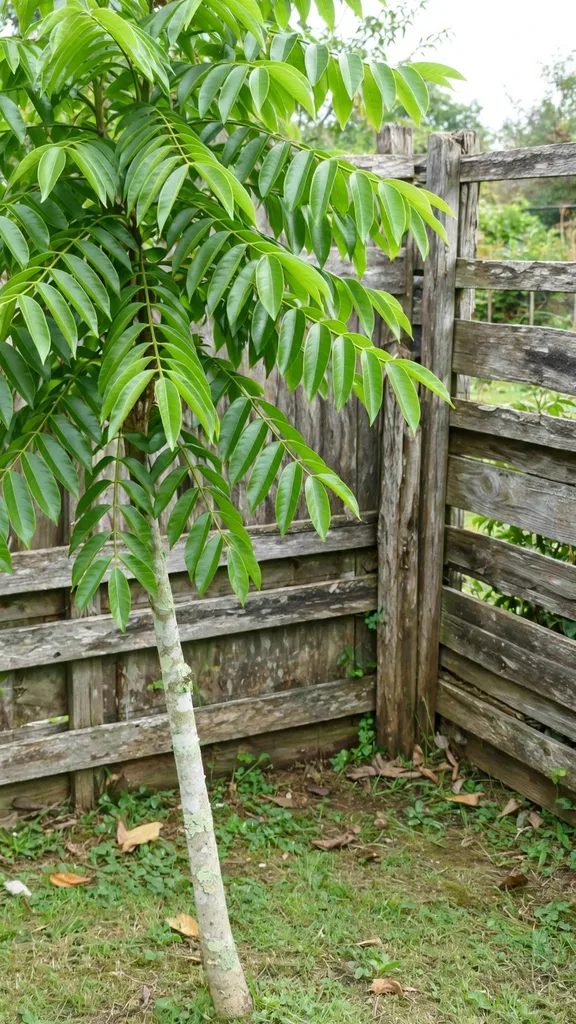
The climate limits are generous inside the tropics. The tree flourishes in humid tropical and subtropical areas, is only a trifle tenderer than its close relative, the mango, and succeeds up to an altitude of 700 m. Gardeners below that altitude with frost free winters can plant in the ground and stop worrying. Gardeners with real frost should start with the pot chapter, where the tree stays movable.
Soil asks for drainage and little else. The Purdue ambarella reference records that the tree grows on all types of soil, including the oolitic limestone of Florida, as long as they are well-drained. Heavy clay is the one real obstacle. On clay, plant on a broad, low mound so the crown sits above the wettest layer, and let the roots run down into the clay as they harden off.
Wind decides the exact spot inside a good site. The Purdue culture notes warn that mature trees are somewhat brittle and apt to be damaged by strong winds, so sheltered locations are preferred. Plant behind a fence line, a hedge, or the house wall that breaks the prevailing wind. Keep the canopy clear of roofs and keep the drop zone off paths: ripe season fruit falls green and hard, a few pieces a day, and a falling ambarella on a bare foot teaches the spacing lesson once.
Grow Ambarella From Seed
Start with a fully ripe, golden fruit. Eat the flesh or scrape it off, then wash the woody stone clean under a tap. The stone is the seed case: the 5-celled woody core contains 1 to 5 flat seeds, and it goes into the mix whole. Cracking the stone with pliers tears the seeds inside. Sow it fresh, within days of eating the fruit, because the seed inside loses strength as the stone dries out.
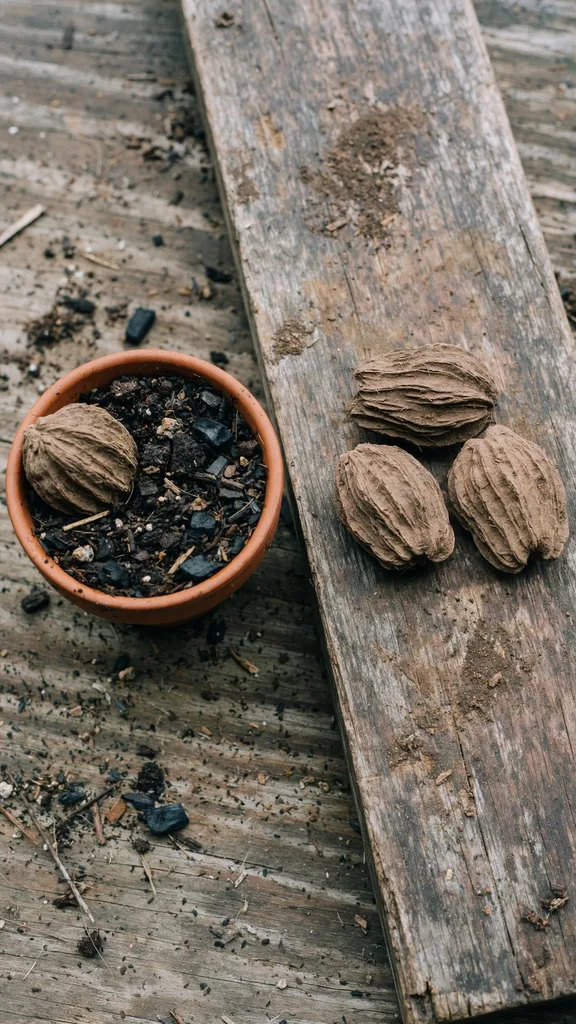
Sow the stone 2.5 cm deep in a pot of free-draining seed mix, water it in, and hold the pot warm and evenly moist. The Purdue propagation notes give the timing plainly: seeds germinate in about 4 weeks. Several seedlings can rise from one stone, because several seeds can be alive inside it. Thin them to the single strongest seedling once the first true leaves open, and snip the spares at the base. Pulling spares tears the roots of the keeper.
Grow the seedling on in light shade for its first months. Morton’s culture notes pass on Ochse’s recommendation that young trees be given light shade, and a seedling moved straight into fierce midday sun scorches at the leaf edges and stalls. Step the pot into longer sun across a few weeks. Plant the young tree out, or move it into its big pot, once the stem has thickened and the plant stands knee high with a root ball that holds together.
The seed route is the slow route, and the wait is measured in years. The same Purdue notes record that seedlings may fruit when only 4 years old, which is honest speed for a tree of this size. A papaya grown from seed fruits inside a year and sets an unfair standard. The ambarella seedling also carries a lottery ticket: its fruit can run larger, smaller, sweeter, or more sour than the fruit the stone came from. Gardeners who need a known crop start from a cutting instead.
Start From a Cutting or an Air Layer Instead
A cutting skips the lottery and most of the wait. Vegetative wood carries the parent tree’s fruit size and flavor into the new plant, and the UF/IFAS tropical fruit propagation guide states the payoff directly: trees propagated asexually are ready to produce fruit as soon as they are large enough to bear the weight of the fruit. A strong cutting planted in spring can carry its first small bunch years before a seedling of the same age flowers.
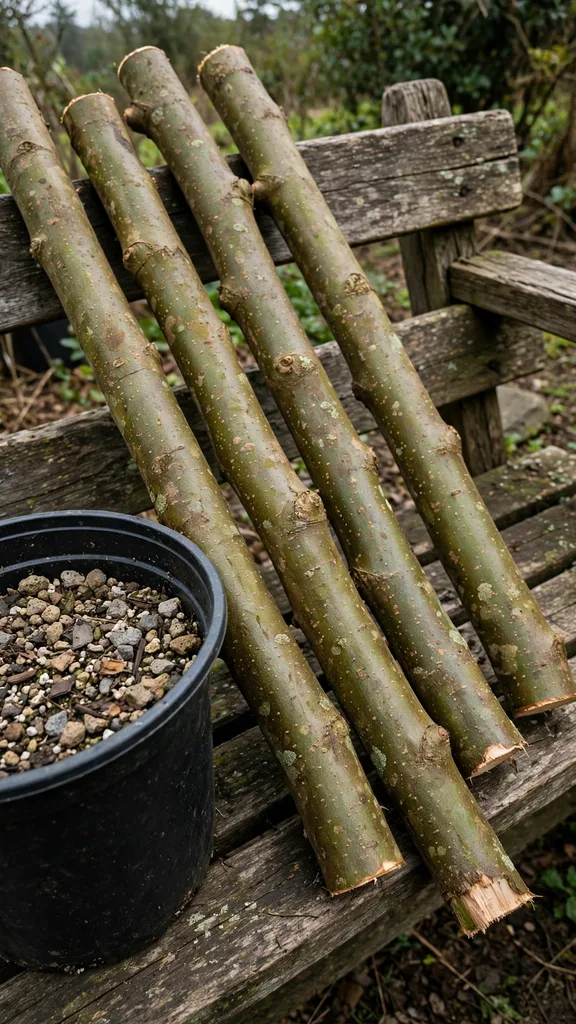
Take the cutting in warm weather from healthy, mature wood. The UF/IFAS guide gives spondias cuttings at 30.5 cm long and 1.9 cm thick, roughly the length of a school ruler and the thickness of a thumb. Strip the lower leaves, and remove any flowers or fruit on the piece, so they do not sap energy from the process of root generation. Work with a clean, sharp blade. A crushed cut end rots in the mix instead of rooting.
Rest the cuttings before potting them. The same guide directs growers to place cuttings in a dry, cool area for approximately 24 hours to allow their wounds to callus. The callus seals the cut against rot once the piece sits in damp mix. Skip the rest and a share of the cuttings blacken from the base upward within a fortnight.
Pot each callused cutting in a one-gallon container, about 3.8 L, filled with well-draining media that is kept moist but not wet, and stand the pots in dappled shade. The guide is equally direct about hormones: rooting hormones are not needed with spondias. Timing matters more than products. In south Florida the guide sets May through September as the best time to make cuttings, and the same warm-month rule holds anywhere this tree grows. Air layers work too, since the tree is easily propagated by seeds, large hardwood cuttings, or air-layers, and a layer roots while still fed by the parent tree, which makes it the safest route of all.
| Route | Time to First Fruit | Fruit Quality | Difficulty | Best For |
|---|---|---|---|---|
| Seed | From about 4 years | A lottery; can differ from the parent fruit | Easy | Cheap trees, rootstocks, patient gardeners |
| Hardwood cutting | As soon as the plant is large enough to carry fruit | Same as the parent tree | Easy to moderate | A known good tree, faster fruit |
| Air layer | As soon as the plant is large enough to carry fruit | Same as the parent tree | Moderate | One or two strong plants from a tree you can visit |
Plant the Tree in the Ground
Plant at the start of the warm, wet season, when the soil is warm and rain does the first month of watering. Dig the hole twice as wide as the root ball and no deeper than the ball itself. A deeper hole settles under the tree across the first year and buries the trunk flare, and a buried flare rots at the collar in wet weather. Set the tree so the top of the root ball sits level with the surrounding soil, or a finger’s width above it on heavy ground.
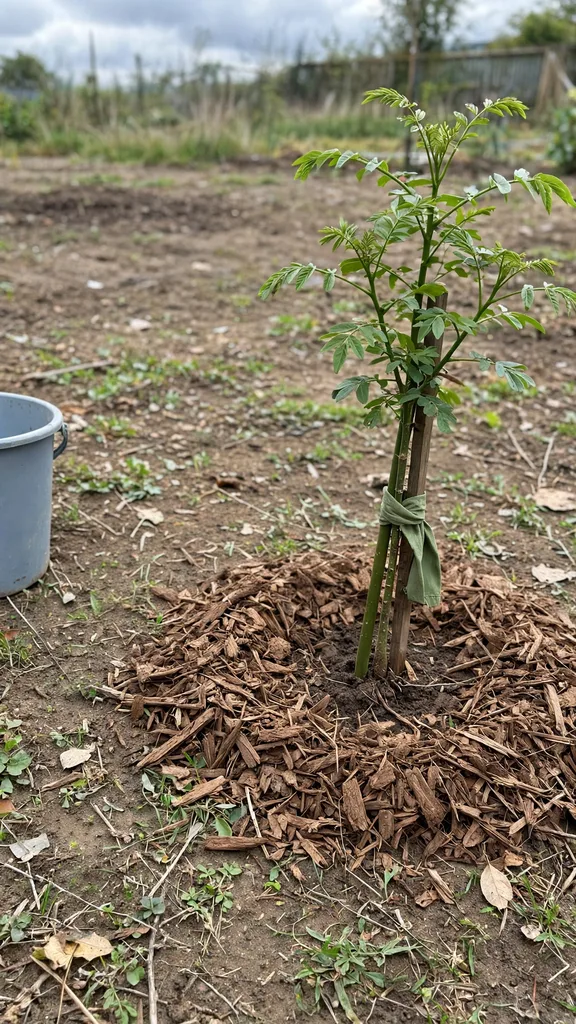
Backfill with the dug soil, firming it in layers with the heel of a boot, and water the planting hole through until the runoff runs clear and slow. The soak collapses air pockets against the roots. Air pockets dry the fine roots they touch, and a tree can wilt in wet ground when its roots hang in air. Top up any sinkhole that opens after the soak and water once more.
Spread a mulch ring 7.6 to 10.2 cm deep over the root zone and keep it a hand’s width clear of the trunk. Mulch holds the moisture the young tree needs between rains and keeps the mower and the string trimmer away from the bark. A trimmer ring cut through the bark girdles a young ambarella in one careless pass, and the tree dies from the top down over a single season.
Stake the tree on any plot where wind funnels between buildings or across open ground. Two stakes and a soft tie in a figure eight hold the trunk steady while the roots grip, and the tie comes off after the first full growing season. The brittle wood recorded in the site chapter starts as a leaning, wind-rocked trunk. A staked first year is the cheapest insurance the tree ever gets.
Grow Ambarella in a Pot
Choose the dwarf form for a pot. Nurseries sell a dwarf ambarella that flowers and fruits while still small enough to stand on a patio, and that form is the container tree. A standard seedling in a pot is a ground tree on layaway: it grows fast, fills the pot with roots inside two seasons, and then demands a planting hole anyway. Buy the dwarf, or take a cutting from one, and the pot stays a home instead of a waiting room.
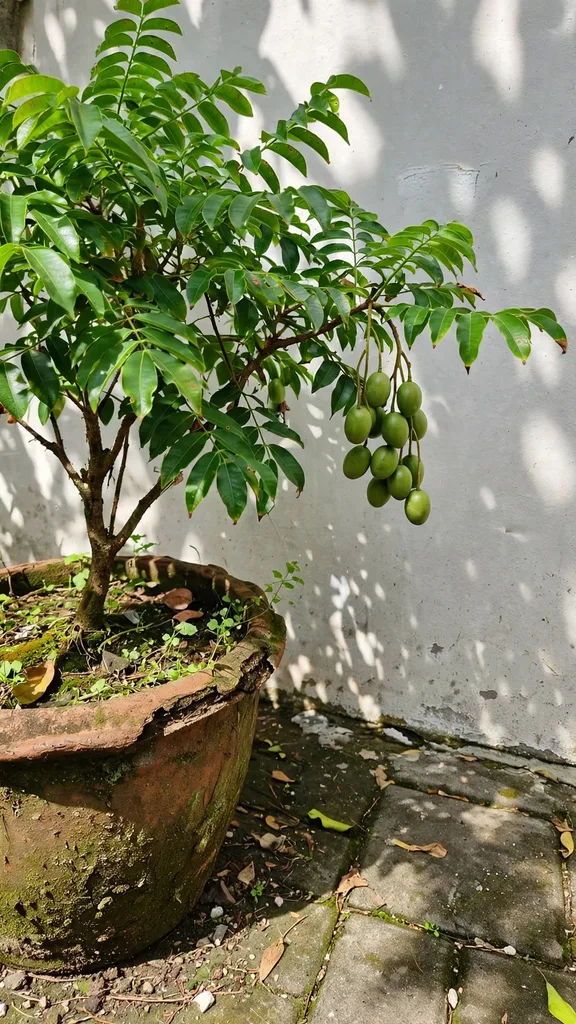
Start the young plant in the 3.8 L container from the cutting chapter, then move it up one pot size at a time as the roots fill each pot. A dwarf that will fruit at patio size finishes in the largest pot you can still drag across a deck or tip onto a trolley. Every pot needs real drainage holes in the base, and the mix needs to drain as freely as the seed mix did: a soil based mix cut with coarse grit or perlite holds its structure for years, where plain bagged compost slumps into a wet slab by the second summer.
A potted tree drinks and eats on a shorter clock than a ground tree. Water it whenever the top layer of mix has dried, soaking the whole root ball until water runs from the base, then let the pot drain fully. Feed it lightly as growth restarts in spring, at the rate printed on the packet, and stop there. A pot feeds a small root zone, and a heavy hand with fertilizer salts that small zone fast.
The pot earns its keep on the coldest nights of the year. A ground tree faces frost where it stands. A potted dwarf rolls against a warm wall, under a porch roof, or into a frost free shed for the night and rolls back out in the morning. Gardeners at the cold edge of this tree’s range grow it for decades that way, in ground nowhere, in fruit most years.
Water Deeply and Feed Lightly
Water a young ground tree deeply once a week through its first dry season, and twice a week in a rainless month. The goal is a root system that runs down and out, chasing the moisture gradient into the subsoil. Daily splashes train the roots to wait at the surface, and a surface-rooted tree is the first tree to suffer when the watering stops. Soak the whole root zone at each session, then let the surface dry before the next one.
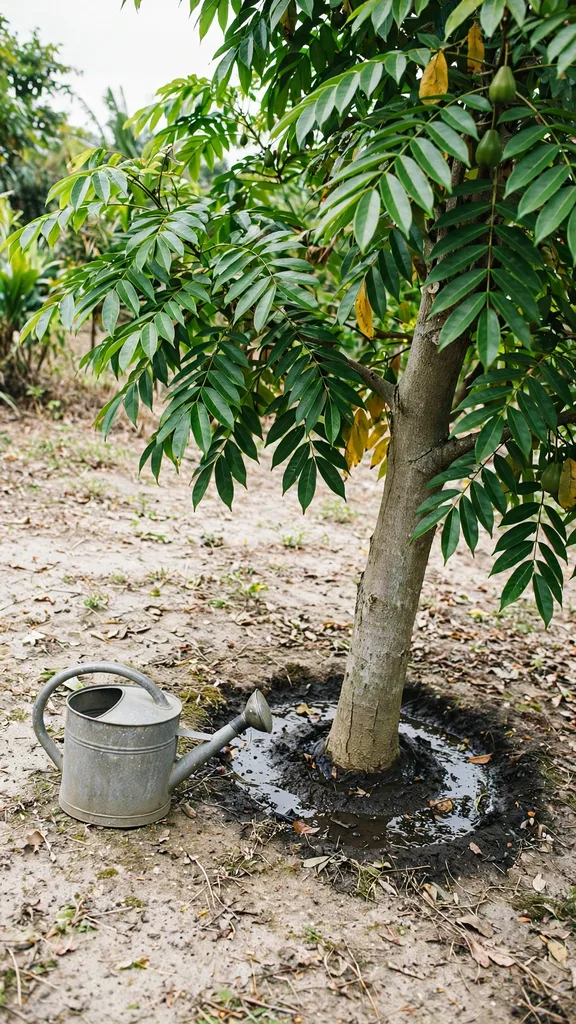
An established tree largely waters itself in a humid climate. It still needs a deep soak in a long dry spell, and it needs one most at the moment the crop is sizing. Fruit fills on water. A tree that runs dry through the weeks when its bunches are swelling picks that moment to drop fruit early and small, and the troubleshooting chapter picks up the pieces. Watch the bunches, not the calendar.
Feed once as growth restarts in spring, with a balanced fertilizer at the rate printed on the packet, spread under the canopy and watered in. One feed is the habit to build. Ambarella grows fast on poor ground across its home range, and a garden tree on decent soil needs a top-up, not a program. Gardeners who feed monthly grow leaves: long, soft, sappy shoots that flower late, snap in wind, and shade the fruiting wood beneath them.
Keep the mulch ring topped up as it thins, and let fallen ambarella leaves join it. The tree drops its leaves in the cool season and drops spent fruit through the harvest, and both rot down where they fall into feed for the root zone. Rake the ring clean only when fruit flies gather under a heavy drop. A tidy gardener feeds the bin. A lazy one feeds the tree.
Prune to Keep the Canopy in Reach
Prune once a year, after the harvest ends or as the tree stands bare in its cool season rest. Take out dead wood first, then crossing branches that rub, then any shoot growing straight up through the center of the canopy. The flowers arrive in panicles at the branch tips, so the shape to build is an open bowl of outward growing limbs with sunlit tips all around the outside.
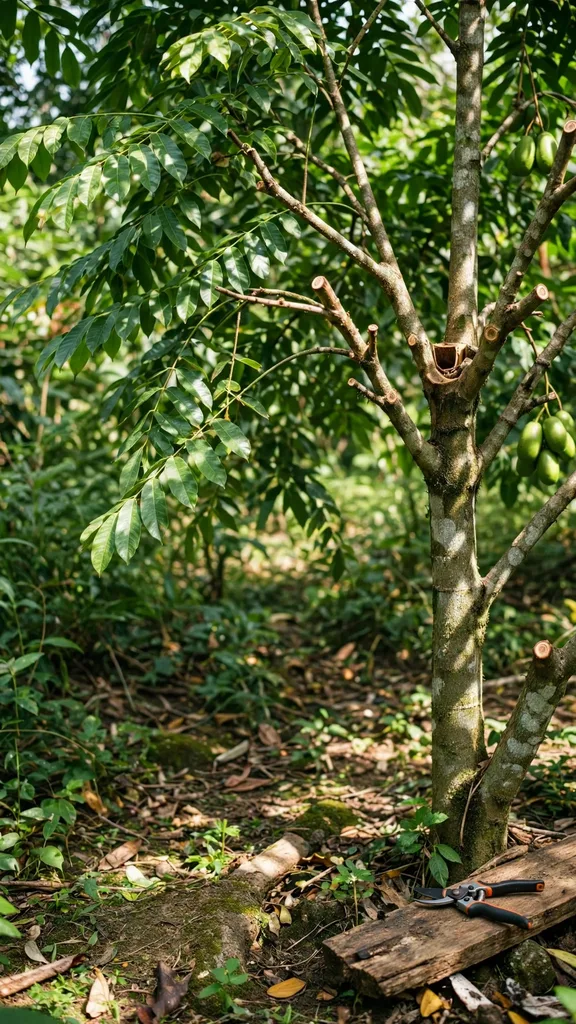
Shorten the leaders a little each year to hold the picking height. A tree left to itself reaches for its full 9 to 12 m, and fruit at that height belongs to the birds and the wind. Cutting the leaders back by a third keeps the next crop on wood a picker can reach from a short ladder. Small annual cuts heal fast. One heroic cut every five years opens big wounds on brittle wood and answers with a thicket of straight, weak regrowth.
Cut clean and cut close. Brittle wood tears when a saw drags, and a torn cut leaves a splintered stub that holds water and rots back into the limb. Use a sharp saw, support the limb’s weight before the final cut, and take the stub off at the branch collar. Skip the wound paint. A clean collar cut on a healthy tree seals itself.
Never prune a tree that is pushing its spring flush or carrying flowers. The cut removes the terminals the flowers were forming on, and the tree spends the season replacing wood instead of filling fruit. The bare weeks are the working window. A pruned tree in its rest wakes up already shaped.
Protect the Tree From Frost and Cold Wind
Read a bare ambarella in the cool season correctly before reaching for a remedy. At the beginning of the dry, cool season, the leaves turn bright-yellow and fall, and the tree stands leafless for a few weeks before pushing new growth. That is rest, not death. The scratch test settles any doubt: green tissue under the bark of a twig means a living, sleeping tree.
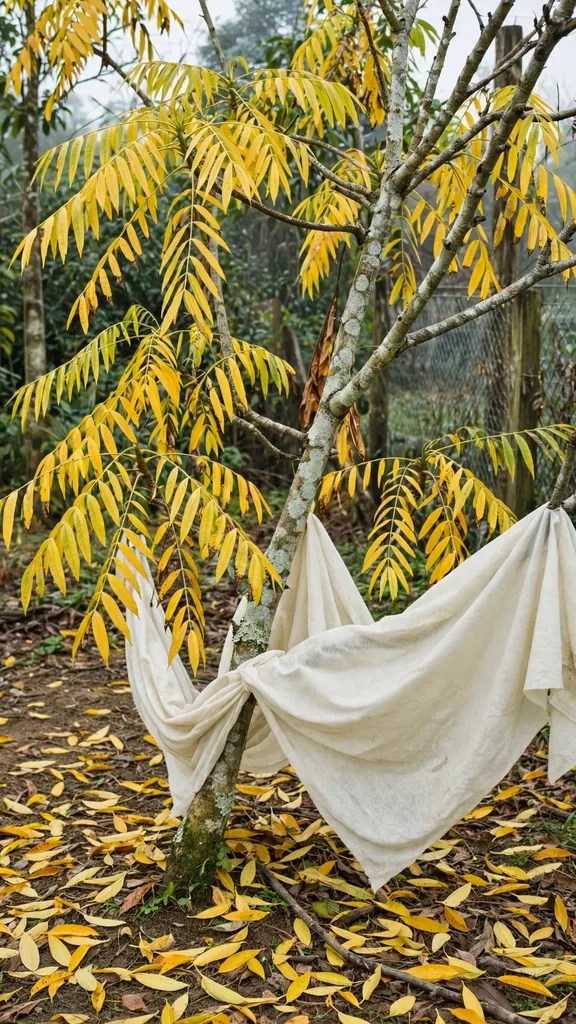
Frost is a different event, and this tree has almost no tolerance for it. A tree a trifle tenderer than mango takes damage on nights a citrus tree shrugs off. Young ground trees need a fleece cover thrown over the canopy before a forecast frost night and lifted off again in the morning. A cover left on for a week of dull days cooks the tree on the first sunny afternoon and invites mold into the bargain.
Water the root zone deeply the day before a cold night arrives. Wet soil stores daytime heat and releases it upward through the night, which buys the canopy a small but real margin. A dry tree in dry soil faces the coldest version of the night. The soak costs one watering session and pays out in live buds.
Potted trees take the simplest protection of all: they move. Roll the pot against a house wall that faces away from the wind, crowd it among other pots, or take it under a roof for the night. The move takes minutes. A frostbitten potted tree spends a year growing back the wood it lost in one night, and the fruit goes with the wood.
When Does an Ambarella Tree Bear Fruit?
The clock starts at planting and runs at two speeds. From seed, the Purdue notes record that seedlings may fruit when only 4 years old, and a seedling in poor soil or a cramped pot can take a year or two longer. From a cutting or an air layer, the UF/IFAS propagation guide gives the faster rule: a vegetatively propagated tree fruits as soon as it is large enough to bear the weight of the fruit. A well grown cutting usually carries its first bunch in its second or third year in the ground.
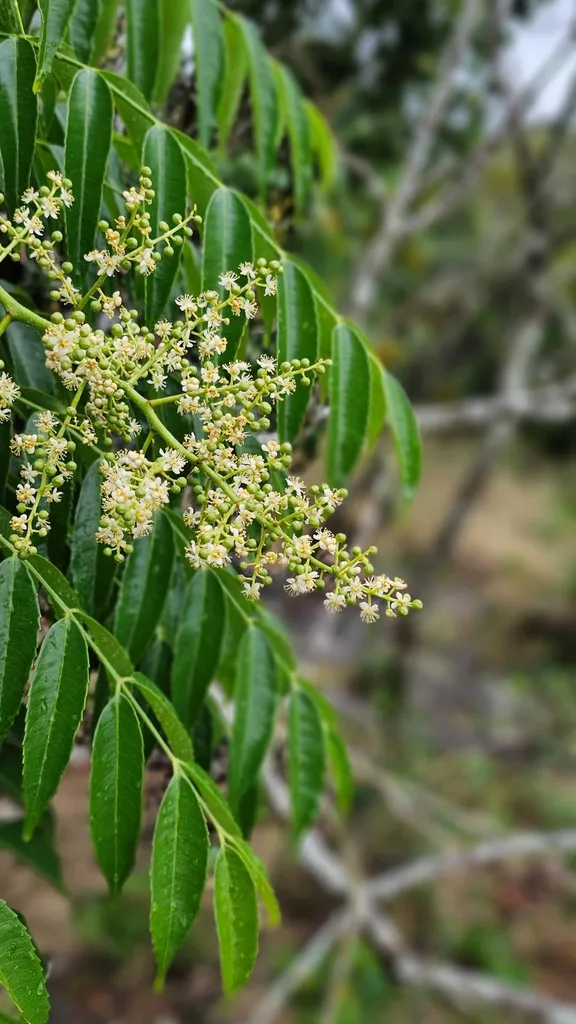
One tree is a complete orchard for this species. The Purdue description notes that the small whitish flowers are borne in large terminal panicles, assorted male, female and perfect in each cluster. Perfect flowers carry both parts, insects move the pollen inside the cluster, and the tree sets fruit alone on a patio or in a walled garden. A second tree adds crop volume. It adds nothing to pollination.
The season lands when most tropical fruit is absent. In Hawaii, the fruit ripens from November to April, and in Florida, a single tree provides a steady supply for a family from fall to midwinter, in the months when mango and many other popular fruits are out of season. Gardens in the ground tropics can see flowers and fruit across most of the year, with a main crop that follows the local dry season.
Set the ambarella clock against its slow neighbours and it reads fast. A lychee tree makes its grower wait far longer for a first crop, and a seedling mango runs on a similar clock to the ambarella with a larger tree at the end of it. Four years from a stone to a fruiting tree is a fair trade. The first crop is small, a few bunches on the outer canopy, and the crop builds as the canopy widens.
Harvest Fruit Green and Crisp or Gold and Ripe
The tree starts the harvest itself. While still green and hard, the fruits fall to the ground, a few at a time, over a period of several weeks. Walk the drop zone every morning during the season and gather what fell in the night. Fruit that falls onto mulch or grass arrives unbruised. Fruit that falls onto paving splits, and split fruit goes to the cooking pot the same day.
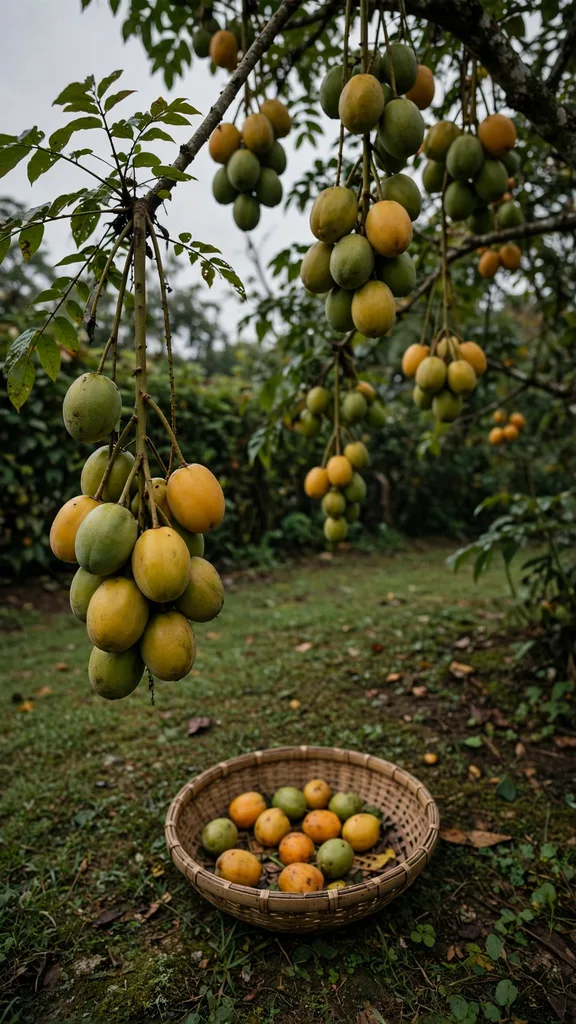
Eat the first share green. While the fruit is still firm, the flesh is crisp, juicy and subacid, and has a somewhat pineapple-like fragrance and flavor. Green ambarella eats like a tart apple crossed with a green mango: slice it, salt it lightly, or cut it into salads and relishes where the crunch does the work. This is the stage the markets of Southeast Asia prize, and the stage a home picker with a daily gathering habit eats most.
Let the second share ripen on the bench. As they ripen, the skin and flesh turn golden-yellow, the acid softens, and the pineapple note deepens. Stop at gold. If allowed to soften, the aroma and flavor become musky and the flesh difficult to slice because of the tough fibers extending from the woody core. An over-soft ambarella is a chore to eat and a waste of a good fruit.
Cut around the core, never through it. The woody, spiny core sits at the center of every fruit with fibers running out into the flesh, and the eating is in the flesh around it. The surplus has honest uses: unripe fruits can be made into jelly, pickles or relishes, or used for flavoring sauces, soups and stews, ripe fruit yields a rich juice for cold drinks, and stewed with a little water and sugar, then strained, the sliced flesh makes a sauce much like traditional applesauce with a deeper flavor.
Fix Small Fruit and a Tree That Will Not Flower
A tree that will not flower is usually telling the truth about its age, its light, or its pruning date. A seedling under 4 years old owes nobody a crop. A tree in half shade grows leaves and holds its flowers back. A tree pruned hard in spring loses the branch tips the panicles form on, and it spends the season replacing them. Fix the cause in that order: wait out the age, open the light, and move the pruning to the bare weeks after harvest.
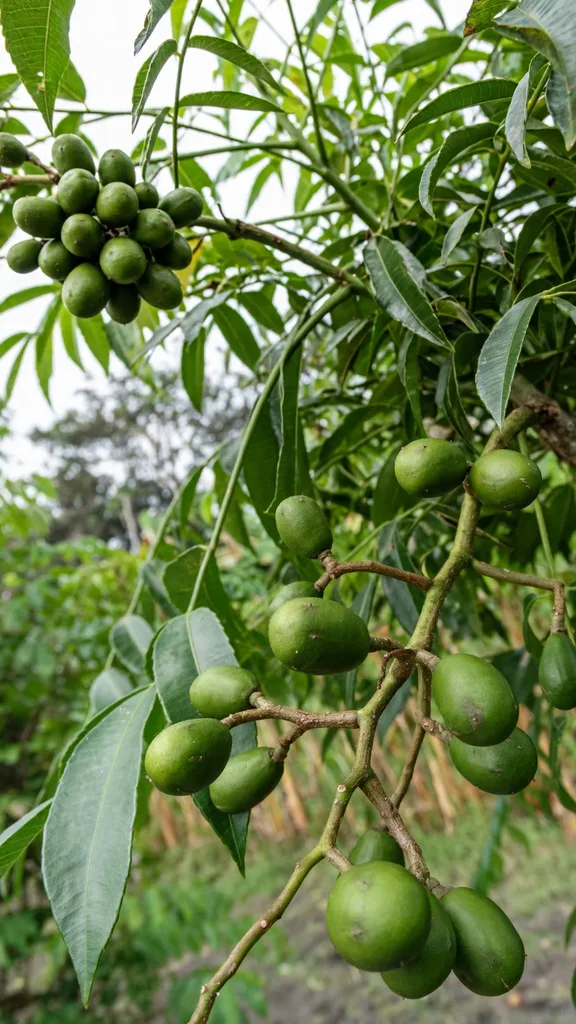
Small fruit is a sharing problem. A bunch sets a dozen or more fruit, and the tree divides one root system’s water and feed across every piece on the stalk. Thin each young bunch to the strongest 6 to 8 fruit with snips, taking out the smallest and any fruit that rubs its neighbour. The remaining fruit sizes up on the same water the full bunch was splitting. Thinning feels wasteful in the hand. The harvest table settles the argument.
Water decides the second half of fruit size. Bunches swell on a steady supply through the fill weeks, and a tree that runs dry in that window drops fruit early and ripens the rest small. Deep-soak a fruiting tree in every rainless week of the fill, and keep the mulch ring intact so the soak stays in the ground. A young tree also sizes fruit poorly in its first crops and improves as the canopy and root system widen. Patience is a treatment here, applied yearly.
Pests seldom stop this tree, and most trouble is local. In Indonesia, the leaves are severely attacked by the larvae of the kedongdong spring-beetle, while Florida reports no particular insects or diseases on the tree. Pick larvae off by hand into a bucket, hose scale off stems with a hard jet of water, and leave spray on the shelf. A fed, watered tree shrugs off the chewing that strips a stressed tree bare.
Frequently Asked Questions
About 4 years on a good site. The Purdue ambarella notes record seedlings fruiting when only 4 years old, and a tree in poor soil or a small pot can take longer. A cutting or air layer of a fruiting tree fruits years sooner, as soon as the plant is large enough to carry a crop.
Yes, and the dwarf form is the tree to choose. It flowers and fruits at patio size in the largest pot you can move, in a free-draining mix, watered whenever the top layer dries. The pot rolls under cover on frost nights, which lets gardeners outside the tropics keep a tree fruiting for years.
No. Each flower panicle carries male, female, and perfect flowers together, so a single tree pollinates itself with help from visiting insects. Plant one tree and spend the space a second tree would take on mulch, water, and wind shelter. A lone tree in a windy, exposed spot fruits worse than a sheltered one.
In the cool, dry season, leaf drop is the tree resting. The leaves yellow and fall, the tree stands bare for a few weeks, then new growth pushes. Out of season, sudden leaf drop points at dry roots or a waterlogged pot. Scratch a twig: green under the bark means a living tree that needs water or patience.
Plan for 9 to 12 m in a garden, with 18 m recorded in its Melanesian homeland. That is a large shade tree, so give it a site with room overhead and a drop zone clear of paths. Gardeners short on room grow the dwarf form in a pot, or prune a ground tree every year after harvest to hold the canopy at picking height.
Three causes cover most cases. The bunch set too much fruit, and the tree split its water and feed a dozen ways. The tree ran dry while the fruit was swelling. The tree is young, and young trees size fruit poorly. Thin each bunch to the strongest 6 to 8 fruit and water deeply through the fill.
Spondias dulcis pays back patience in bunches. Sow the stone, shelter the tree from wind, and the green fruit starts falling on schedule.