
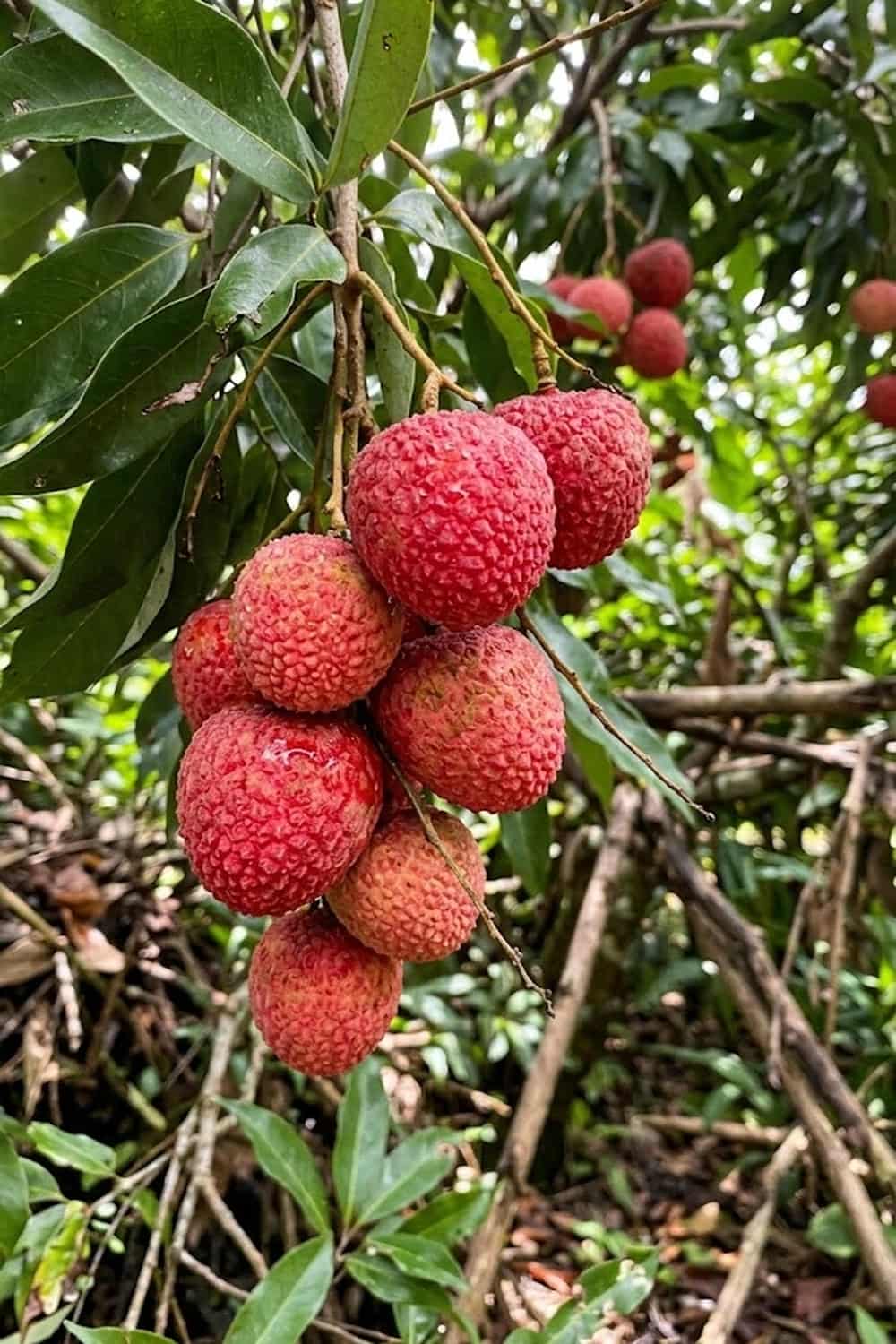

You’ve likely bought those expensive, translucent lychee fruits at the specialty market, absolutely loving the floral sweetness, but cringing at the price tag. The thought of growing your own exotic lychee fruit tree probably seems like a fantasy, especially when you read online about how incredibly finicky they are, often refusing to bloom or fruit for years on end. It is frustrating to invest time and money into a beautiful tree only to have it sit there as an expensive, green leaf producer. But I’m here to tell you that it is entirely possible to harvest your own heavy clusters of red fruit; you just need to understand the tree’s very specific, non-negotiable subtropical requirements and follow a structured success plan.
1. Select the Right Lychee Cultivar for Your Climate
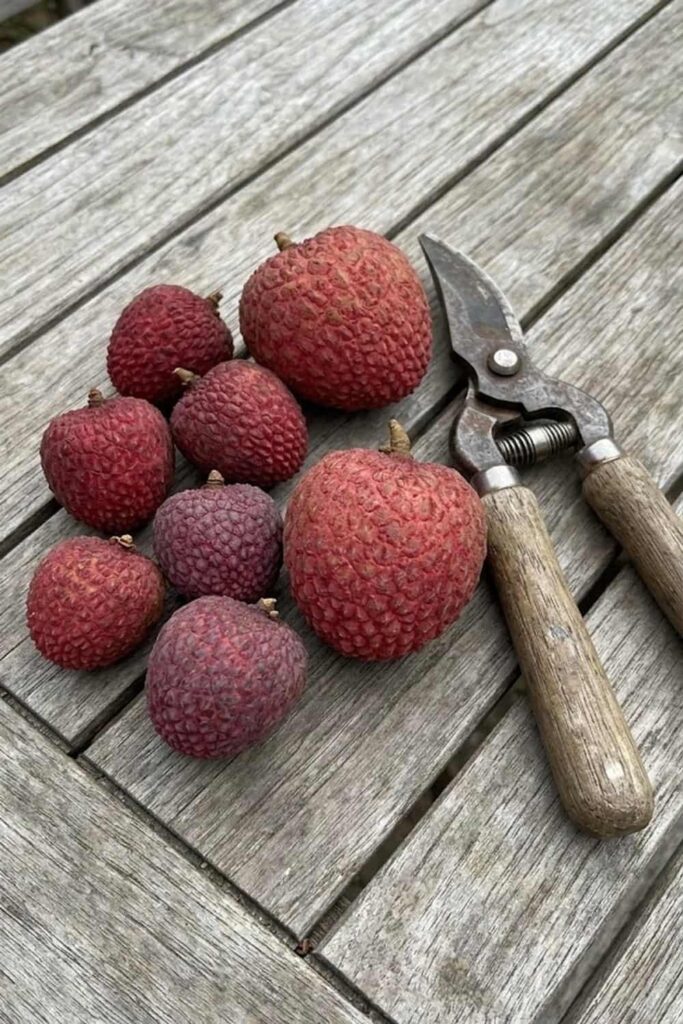
When I first decided to try my hand at growing lychee, I made the mistake of just buying whatever tree the local nursery had in stock. That’s a path to frustration. Successful Litchi chinensis cultivation fundamentally relies on selecting a variety matched to your specific environmental conditions. In the United States, this mostly means USDA Zones 9 to 11. If you are in a slightly cooler part of Zone 9, you must prioritize ‘Brewster’ because it has a higher chilling requirement (roughly 100–200 hours between 32°F and 45°F) which helps induce flowering when your spring is variable. Conversely, if you are in a true tropical Zone 10 or 11, ‘Mauritius’ is your best bet; it requires very little cold to set fruit.
I’ve respected ‘Mauritius’ for years; it is a reliable commercial workhorse. But for the homeowner, you have other fantastic options if you can find them. The ‘Emperor’ cultivar is incredible for smaller yards because it naturally wants to be a dwarf tree. However, its huge fruit often has large seeds. If you can find a ‘Kaimana’—originally from Hawaii—I highly recommend it. In my experience, ‘Kaimana’ offers the best balance: a manageable tree size, excellent cold tolerance once established, and fruit with a consistently small seed (often called a “chicken tongue” seed), meaning you get more of that incredible aril to eat.
2. Test and Adjust Soil pH for Acidic Growth
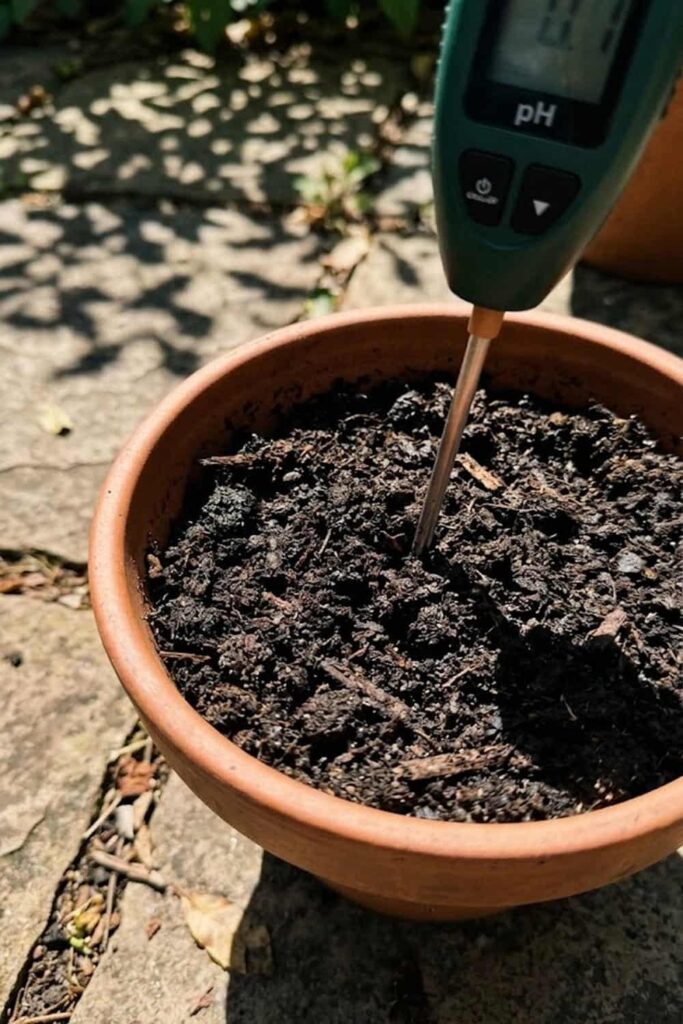
If you want to know how to grow lychee fruit trees that don’t look sickly and yellow, you must respect their need for acidic soil. I cannot stress this enough: lychees are acid-loving plants. In my experience, most soil-related failures stem directly from high pH. When the pH climbs above 7.0 (alkaline), the tree cannot absorb essential micro-nutrients, particularly iron and manganese. The visual result is severe interveinal chlorosis, where the leaves turn bright yellow while the veins remain green. This lockout starves the tree and entirely prevents it from having the energy to set fruit.
You must test your soil mix. Don’t guess. I highly recommend using a reliable digital pH meter or sending a sample to your local agricultural extension. Your absolute target pH range is 5.0 to 5.5. When I deal with alkaline soil, I incorporate soil sulfur or aluminum sulfate well before planting to lower the pH safely. It is an ongoing battle; you have to monitor the pH annually. If you are growing lychee in pots because your ground soil is hopeless limestone (a common issue in South Florida), use an acidic potting mix designed for azaleas or gardenias. Refer to the table below for the primary methods I use to manage soil acidity for Litchi chinensis.
Methods for Soil pH Management
| pH Modification Method | Recommended For | Frequency | Pros/Cons |
| Soil Sulfur (Elemental) | In-ground planting (mildly alkaline) | Apply 1-2 times/year (Spring/Fall) | Pro: Safe, long-lasting. Con: Slow-acting (takes months). |
| Aluminum Sulfate | Rapid pH drop (not recommended long-term) | Single corrective action | Pro: Works fast. Con: Risk of aluminum toxicity if overused. |
| Sphagnum Peat Moss | Potting mix/Soil amendment | At planting/Repotting | Pro: Improves texture and acidity. Con: Hard to re-wet once dry. |
| Pine Bark Mulch | Ongoing maintenance/Top dressing | Replenish annually | Pro: Gentle acidification, retains moisture. Con: Minimal, very slow pH change. |
3. Create a Custom Well-Draining Soil Mix
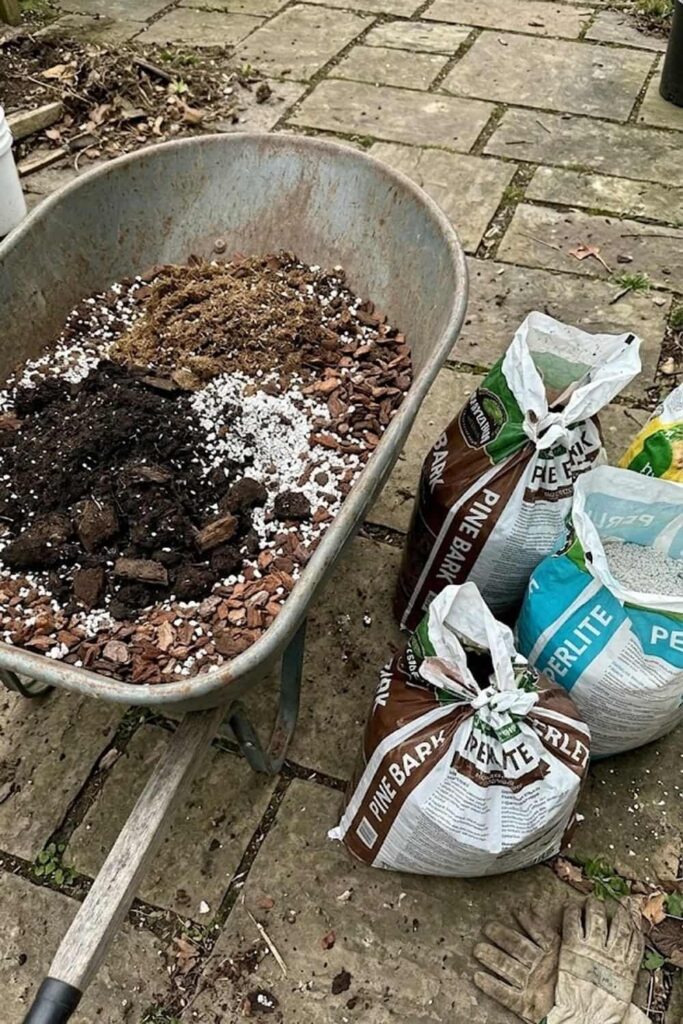
Once you’ve addressed the pH, you have to tackle the structural composition of the soil mix. Lychees, in my experience, require what I call “the contradiction”: they must have highly well-draining soil, yet they demand consistent moisture. They cannot tolerate standing water or “wet feet,” which rapidly leads to the dreaded phytophthora root rot. But if the soil dries out completely (especially during the critical establishment period), the tree will shed leaves and drop developing fruit to survive. This is why I always create a custom mix rather than trusting generic, heavy garden soil, which usually contains too much fine clay or silt and collapses over time.
For an in-ground tree, my successful tactic involves amending the native soil heavily—at least 50%—with organic matter like coarse compost, pine bark nuggets, and a massive amount of silica sand or perlite. This creates a porous, “chunky” soil structure. For lychee in pots, I bypass pre-made potting mixes entirely. My go-to, high-performance container soil mix recipe is:
- 2 Parts Fine Pine Bark Nuggets (This provides acidity and structure that doesn’t break down quickly.)
- 1 Part Sphagnum Peat Moss (This provides water retention and essential acidity.)
- 1 Part Perlite or Pumice (This guarantees essential aeration and drainage.)
You are aiming for a mix that feels light when dry but becomes a wet, yet still crumbly, sponge when watered. Proper drainage allows oxygen to reach the roots, which is just as important as water for nutrient uptake and long-term tree health.
4. Prioritize Full Sun Exposure for Maximum Fruit Set
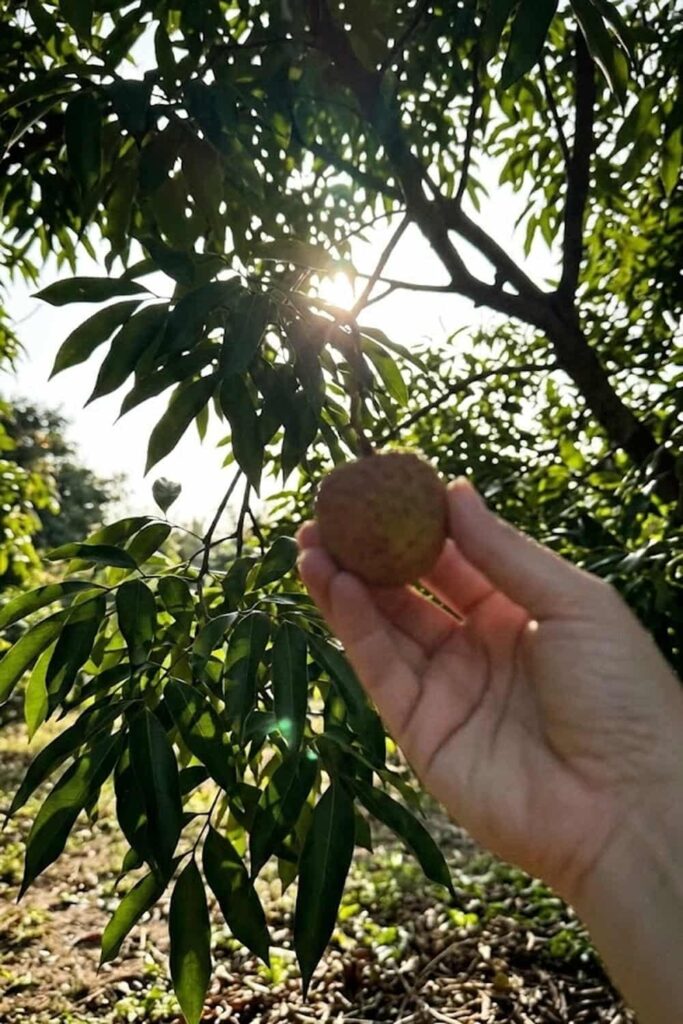
You must provide your Litchi chinensis with full sun. I often see gardeners planting these trees in partial shade, perhaps near a larger oak or next to the house, hoping to “protect” them. While this might keep the evergreen leaves looking lush, it is a catastrophic mistake if you actually want fruit set. Sunlight is the engine that drives photosynthesis, which in turn creates the carbohydrates (sugars) that the tree stores. Those stored sugars are absolutely essential for the tree to support a massive bloom and the subsequent development of those heavy fruit panicles.
A tree in partial shade might only give you a handful of fruits per year, if any. Your target location must receive a minimum of 6 to 8 hours of direct, unfiltered sunlight daily. I have respected how well lychee trees tolerate intense heat and light once they have a mature canopy. The challenge is protecting the young tree. When I plant a new, immature lychee, I often provide temporary shade for the trunk for the first 6 months, using a small screen or burlap, until it develops enough leaf mass to self-shade. But the leaves themselves must be in the light. Place your tree on the south or west side of your property, entirely clear of competing shade structures.
5. Implement Wind Protection Strategies
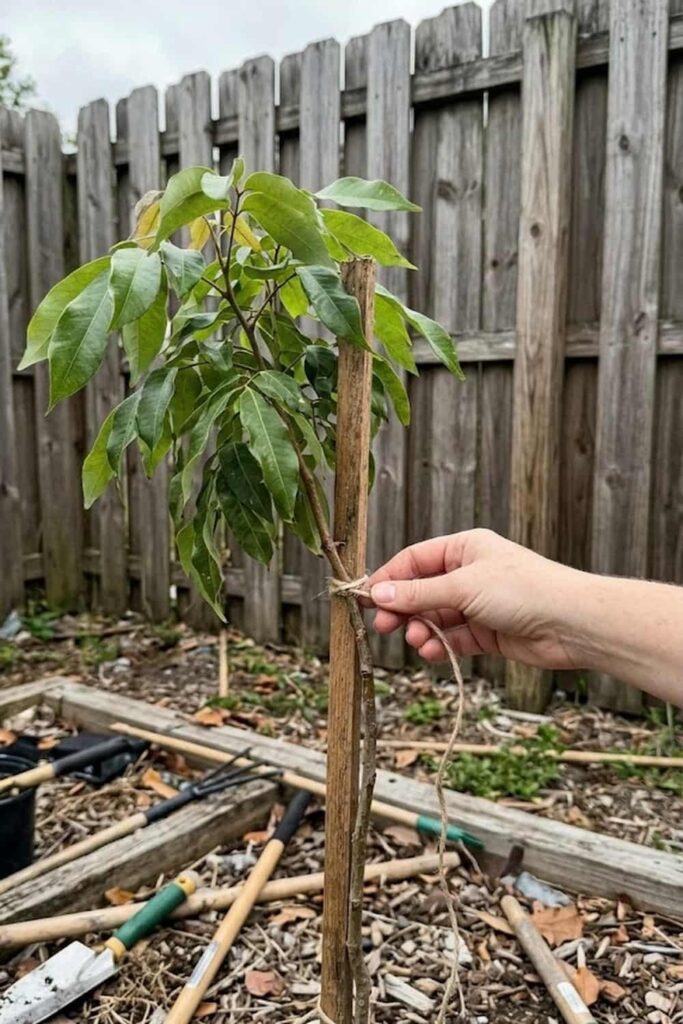
In my years growing lychee, I have respected full sun and proper drainage, but I initially underestimated the destructive power of wind. Lychee trees possess relatively brittle wood, especially when young, and their long, dense evergreen leaves act as a sail. Strong winds can snap large branches, but the more insidious damage is physiological desiccation. Wind rapidly strips moisture from the leaves and, during the bloom, it can literally blow the delicate flower panicles apart. Even after fruit set, dry, persistent winds cause significant fruit drop as the tree tries to reduce its hydraulic load.
I have found that providing structural wind protection is critical. I always stake young trees securely, but the best tactic is planting a biological or structural windbreak. I have positioned my own trees so that they are shielded from the prevailing strong winds (often from the north or east) by a sturdy, solid-panel fence or a line of other, more resilient tropical shrubs. If you lack natural protection, I recommend planting a temporary, fast-growing “nurse tree” nearby, which you can remove once the lychee is mature enough to withstand the elements. This sheltered microclimate is absolutely essential if you live in a coastal area prone to strong breezes. Protecting the panicles means more of them survive to develop fruit, leading to a much more bountiful harvest in the long run.
6. Establish a Consistent Deep Watering Schedule
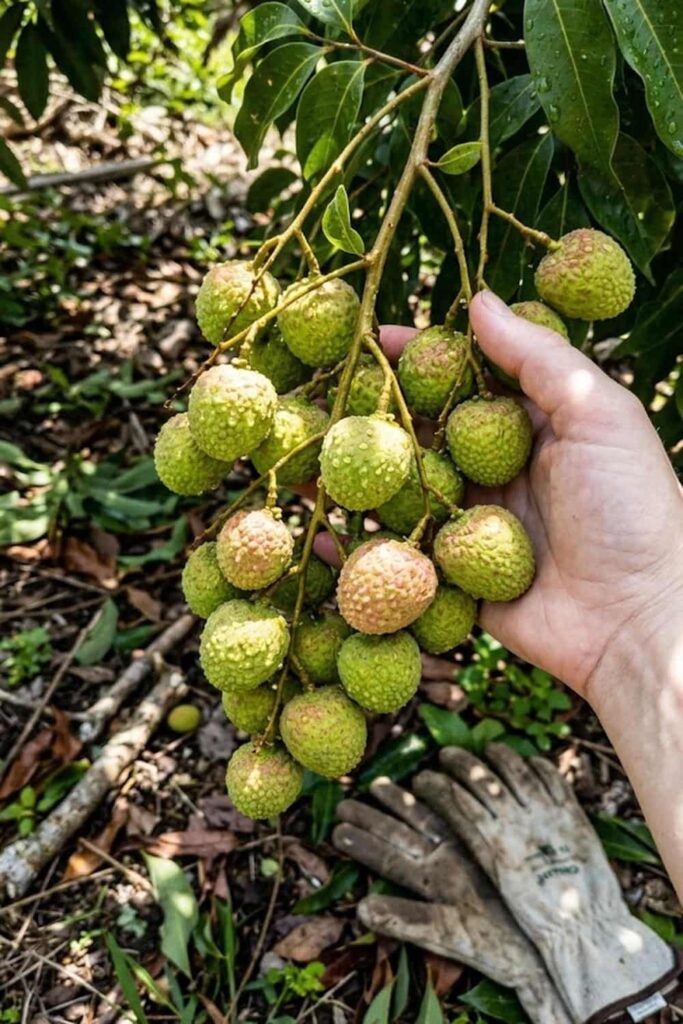
Growing lychee fruit requires a very precise approach to watering. I’ve learned that while the tree needs consistent, reliable hydration, you cannot simply keep the soil continuously saturated. This is why establishing a deep watering routine is so critical during the establishment period (the first 1-2 years). You are trying to train the roots to grow downward into the soil profile rather than staying near the surface where they are vulnerable to heat and drought. If you only provide light, frequent sprinkles, you encourage a weak, shallow root system.
I find that watering deeply and thoroughly twice a week is generally much more effective than watering lightly every day. When you water, do so until you see it draining from the bottom of the pot, or until the soil around an in-ground tree is saturated to a depth of at least 6 inches. However, you must adjust this schedule dramatically based on the tree’s growth cycle and the weather. I decrease watering significantly in late autumn to help induce a “growth check,” which is essential for fruit production. During winter, I only water when the soil feels completely dry a few inches down. You are mirroring the tree’s natural environment—heavy summer rains followed by a cooler, drier dormant period.
7. Apply Organic Mulching to Regulate Temperature
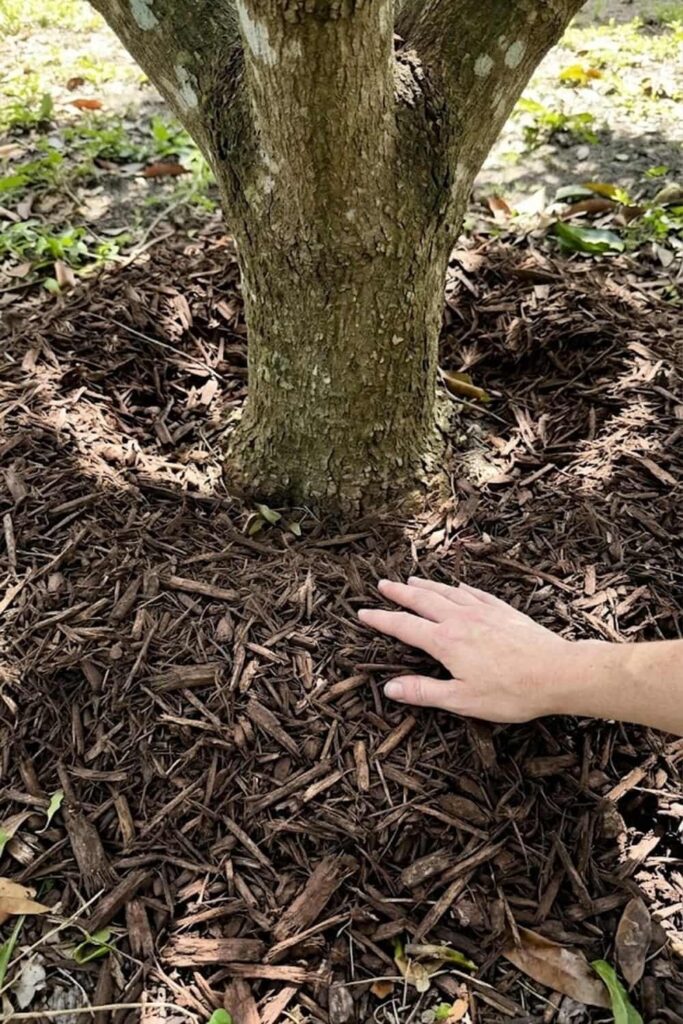
You absolutely must apply a thick layer of organic mulch around your lychee fruit tree. I have found that this is one of the single most beneficial, yet often overlooked, practices for growing healthy, productive lychees. Mulch serves multiple vital functions: it regulates soil mix temperature (keeping the roots cool in scorching summer heat and insulated during brief cold snaps), drastically reduces water evaporation from the soil surface, suppresses nutrient-competing weeds, and, as it breaks down, directly improves the soil’s acidity and structure.
I apply a 3- to 4-inch deep layer of pine bark mulch, pine needles, or wood chips. I respect pine-based mulch particularly because it adds gentle acidification as it decomposes, which supports the tree’s low pH requirements. I strongly advise you not to use dynamic mulches that break down too quickly, like fresh grass clippings, which can get slimy and reduce soil ventilation. When watering, you are trying to reach the soil mix itself, not just soak the mulch. Create a “doughnut” shape with the mulch, pulling it back several inches from the trunk to prevent it from trapping moisture against the bark, which can encourage fungal disease and pest problems.
8. Use High-Potassium Fertilizing During Bloom
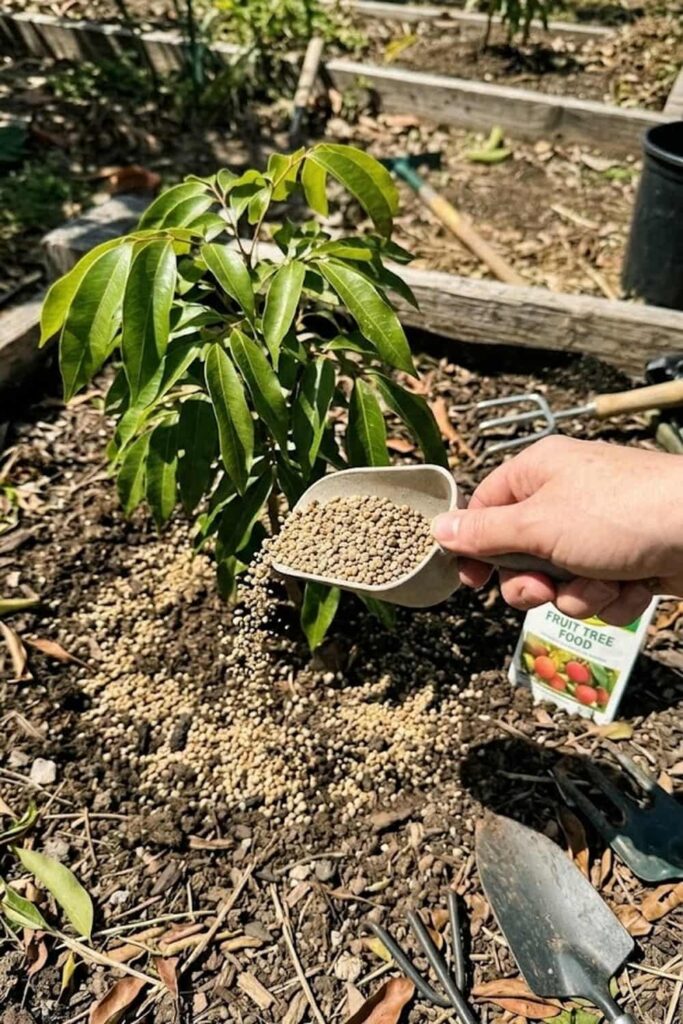
When it comes to fertilizing a mature lychee fruit tree, your primary goal is to encourage fruit, not green growth. When I first started, I used generic fruit tree fertilizers that were too high in nitrogen (the ‘N’ in N-P-K). High nitrogen post-establishment causes the tree to produce vigorous flushes of soft, vegetative leaves, which are highly susceptible to pests and, crucially, completely inhibits the development of flower panicles. For mature trees, you must shift your focus toward potassium (‘K’) and micronutrients to support bloom and fruit size.
I follow a specific fertilizing schedule using a high-quality, slow-release fertilizer that includes essential chelated iron, magnesium, and zinc. This iron is vital because, in my experience, lychees frequently develop yellow leaves (chlorosis) in non-acidic soils due to nutrient lockout. When you water, these nutrients are slowly released into the soil mix. I recommend this schedule: apply a balanced fertilizer once or twice a year during the spring and summer growing season, but stop fertilizing completely by late autumn. This “hard stop” helps induce the cool-season dormancy that Litchi chinensis requires. Review this table for a sample high-performance nutritional plan for mature lychee trees.
Sample High-Potassium Fertilizer Schedule
| Application Timing | Targeted Result | Recommended Nutrient Ratio (N-P-K) | Micronutrient Focus |
| Early Spring (Pre-Bloom) | Supports new panicle development and initial fruit set. | Low-N, High-K (e.g., 6-4-12) | Zinc, Magnesium |
| Late Spring (Fruit Development) | Increases fruit size, sweetness, and overall quality. | Low-N, Very High-K (e.g., 4-0-16) | Manganese, Chelated Iron |
| Mid-Summer (Post-Harvest) | Supports a single flush of vegetative growth and restores tree reserves. | Balanced (e.g., 8-8-8) or slightly High-N | General |
| Late Autumn/Winter | Induces dormancy and promotes starch storage for next year’s bloom. | NO FERTILIZER | None |
9. Induce Flowering with a Cool “Growth Check”
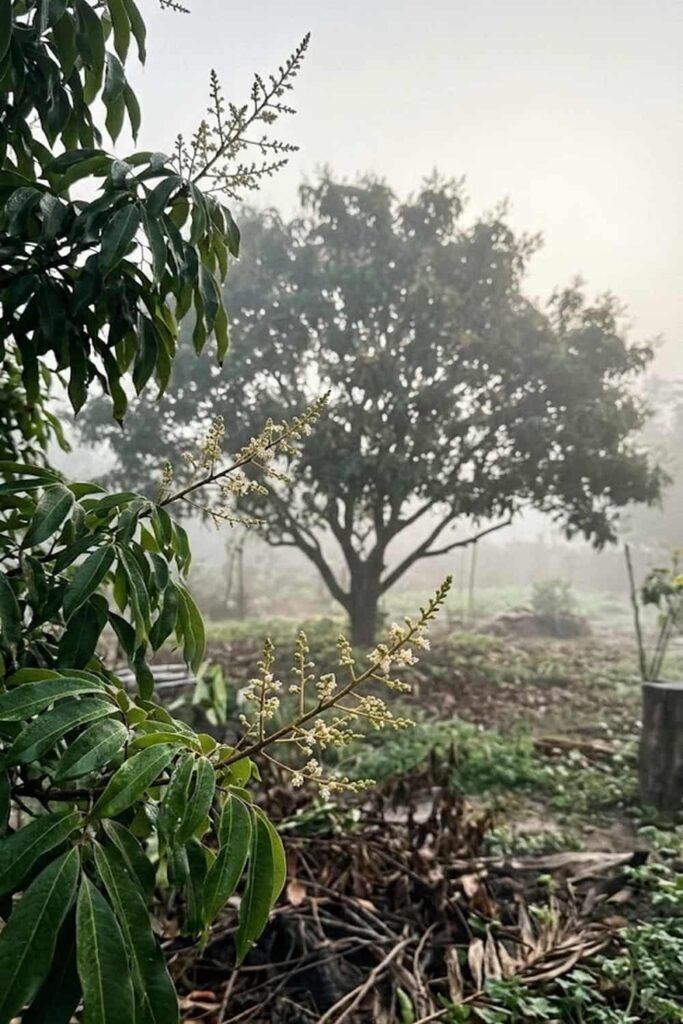
You must understand the most critical factor for Litchi chinensis success: how to grow lychee fruit requires specific atmospheric conditions. If your tree sits in continuous, tropical warmth all year, it will remain a gorgeous, evergreen foliage plant, refusing to bloom. I have learned that the lychee is not a true tropical; it is a subtropical that has a “non-negotiable” chilling requirement. To induce the development of flower panicles rather than more vegetative leaves, the tree must experience a significant cool period (the “growth check”) that stops active vegetative growth.
For established, fruiting-age trees, you are looking for a minimum of 100 to 200 hours where temperatures are between 32°F and 45°F during early winter (the exact requirement varies by cultivar). During this time, I also help trigger this check by withholding fertilizer (especially nitrogen) and dramatically reducing watering, only allowing the tree to dry out thoroughly. This cool-season stress forces the tree to store carbohydrates, which fuels the subsequent heavy bloom. A misty morning like this signifies that ideal cool, humid weather which helps the lychee tree transition into its reproductive phase. After several weeks of this specific stress, the tree will burst into bloom when the weather finally warms in spring.
10. Control Erinose Mites and Common Pests
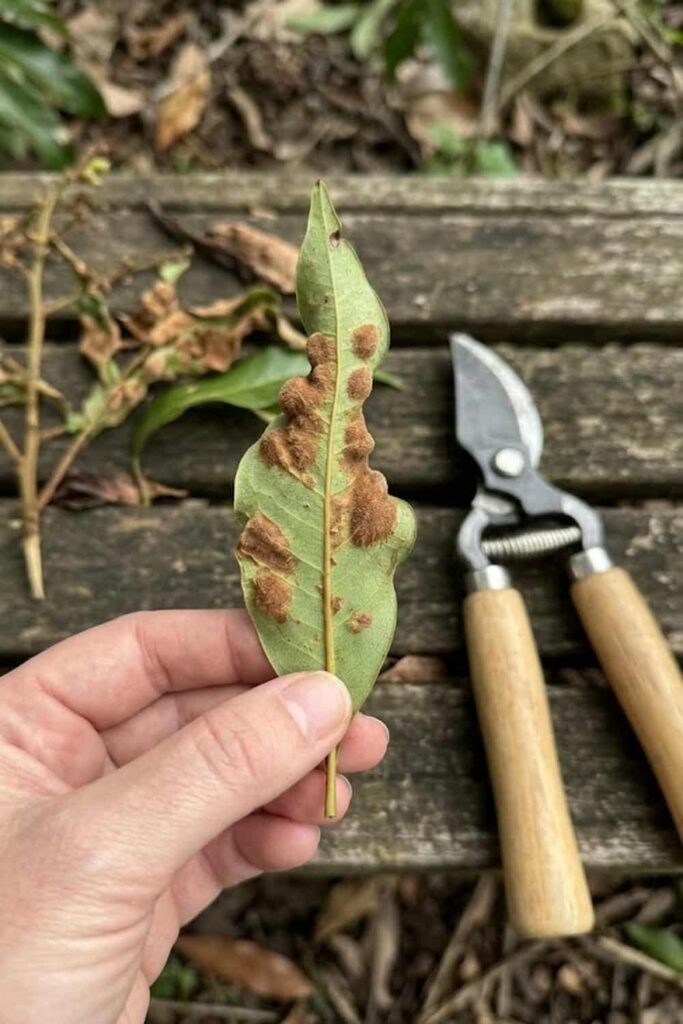
I have found that the biggest challenge for the backyard lychee fruit grower isn’t usually a catastrophic fungal disease, but rather a persistent, microscopic pest: the erinose mite (Aceria litchii). If you don’t manage this pest control proactively, your tree will become severely stunted. I respect how destructive these mites are; they feed on new growth, causing the young leaves to deform, curl, and develop a characteristic fuzzy, dark brown, or velvety gall (often called ‘erinose’ or ‘velvet gall’) on the underside. I have seen severe infestations entirely shut down a tree’s new growth and ruin the developing fruit panicles.
To control erinose mites, you must use a strong sulfur-based spray. I apply wettable sulfur or lime sulfur as soon as I see the very first signs of the fuzzy galls on new, red leaves. It is essential to achieve complete coverage, spraying the top and, especially, the underside of every leaf where the mites congregate. I will spray multiple times, separated by about 10 days, during each major growth flush. While I respect organic methods, the damage from these mites is so severe that quick, effective intervention is required. Regularly monitor your tree and maintain its overall health, as a weak, stressed lychee is much more attractive to pests.
11. Practice Minimal Pruning for Structural Integrity
When it comes to pruning an established lychee, I have learned that less is almost always more. Unlike a peach or apple tree that requires aggressive annual thinning to produce large fruit, the Litchi chinensis bears its fruit on the tips of the branches from the previous season’s growth. I respect how easily you can destroy an entire year’s harvest by getting too aggressive with the shears. In my experience, aggressive pruning stimulates a massive flush of vegetative leaves rather than flower panicles, as the tree tries to recover its canopy.
You should generally only prune for three reasons: safety (removing dead or crossing branches), structure (opening up the center of the canopy for better light penetration and ventilation), and size control (if you are growing lychee in pots). I focus my efforts on thinning out the crowded interior branches to improve airflow, which I have respected as a crucial factor in preventing fungal disease control problems. Do any necessary pruning immediately after you harvest the fruit in summer; this gives the tree enough time to develop new, mature growth that will bear next season’s crop.
12. Master Air-Layering for Faster Propagation
How to grow lychee fruit trees from seed is a test of patience I wouldn’t wish on anyone; those trees can take 10 to 15 years to fruit, and the quality is often poor. If you want a tree that produces quickly, you must master asexual propagation. In my experience, air-layering (also called maricotting) is the most effective tactic for the home gardener. This technique involves forcing a branch to grow roots while it is still attached to the parent tree. It is much more reliable than cuttings, and the new tree will be genetically identical to the parent, often fruiting within just 2 to 3 years.
To perform an air-layer, select a healthy, vertical branch about the thickness of a pencil. I respect this method because the parent tree continues to support the branch while it roots. You girdle the branch by removing a 1-inch ring of bark, scrape away the cambium layer, apply rooting hormone, and wrap the area with damp sphagnum moss and plastic. Keep the moss consistently moist, and within a few months, you will see strong white roots filling the plastic. Once the roots are established, you cut the new tree from the parent and pot it up. I find that early spring, when the tree is actively growing, is the best time for this propagation work.
13. Prevent Fruit Cracking with Humidity Management
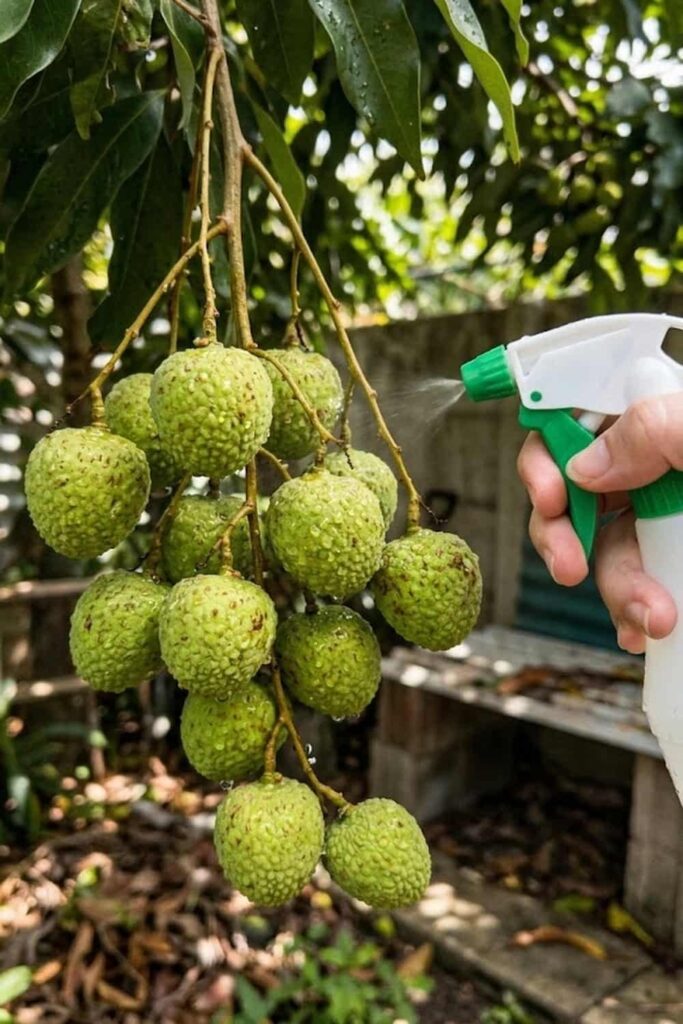
One of the most heartbreaking experiences in growing lychee fruit is watching a beautiful, heavy crop split open right before it is ready to harvest. This physiological disorder is known as fruit cracking, and in my experience, it is almost entirely caused by inconsistent watering and fluctuating humidity levels. When the tree experiences a dry spell followed by heavy rain (or sudden, aggressive watering by the gardener), the aril inside expands rapidly, putting immense pressure on the skin (pericarp), which hasn’t had time to stretch. The skin pops, ruining the fruit.
You must maintain stable moisture. My most effective tactic to control fruit cracking is twofold: First, ensure the soil mix is consistently and evenly moist—never let it go bone dry during fruit expansion. Second, I utilize organic mulching heavily, which I have respected as the single best way to buffer the soil against rapid moisture changes. If a sudden, heavy rain event is forecast, I will often deeply water the tree before the rain arrives to prevent a sudden hydraulic shock. Maintaining high ambient humidity around the canopy, perhaps by misting on scorching days, can also help, but consistent soil moisture is the primary defense.
14. Harvest at Peak Ripeness for Best Flavor
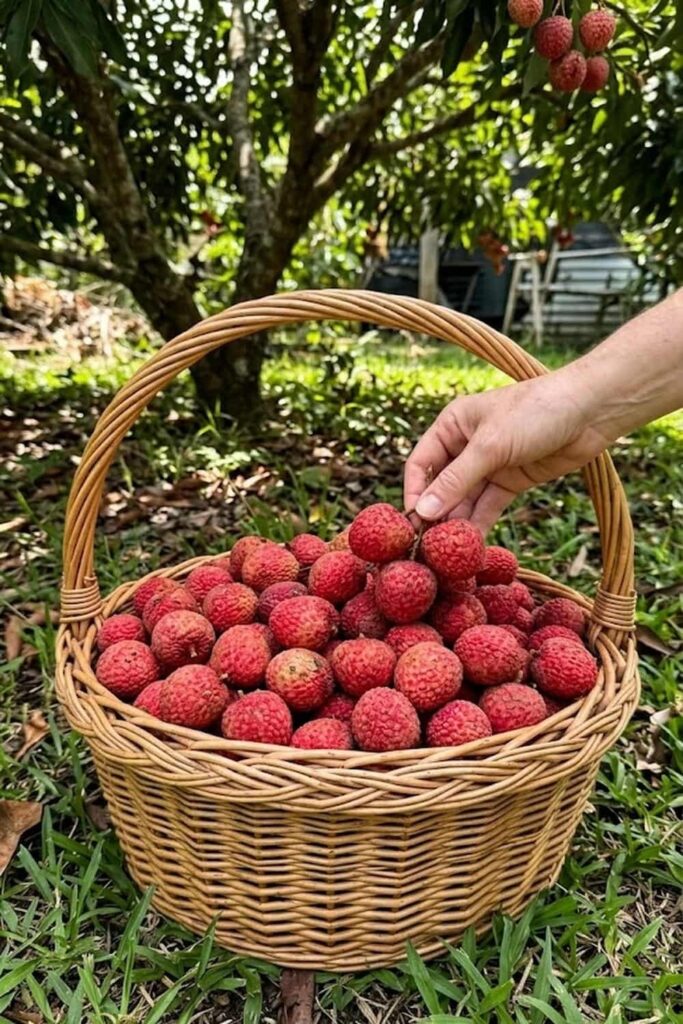
You have waited years for this moment, so don’t ruin your harvest by picking the fruit too early. Unlike bananas or avocados, Litchi chinensis is a non-climacteric fruit, meaning it absolutely will not ripen off the tree. Once you cut that panicle, the sugar development stops entirely. If you pick them when they are still partly green, they will remain sour and starchy. In my experience, waiting for the perfect moment is the difference between a sub-par fruit and the floral, honey-sweet explosion that lychee is famous for.
I judge peak ripeness by three main criteria. First is color: the fruit should be entirely, uniformly red or pinkish-red, with no green shoulders. Second is texture: the distinct “alligator skin” bumps (protuberances) should begin to flatten out slightly, and the fruit should yield gently to a soft squeeze, indicating the aril inside is plump. Third, and most reliably, is taste: harvest one sample fruit. If it is incredibly sweet and juicy, pick the whole cluster. Do not pick individual fruits; always harvest by cutting the entire panicle, which also provides a minimal structural pruning that the tree appreciates.
15. Store Fruit Correctly to Extend Freshness
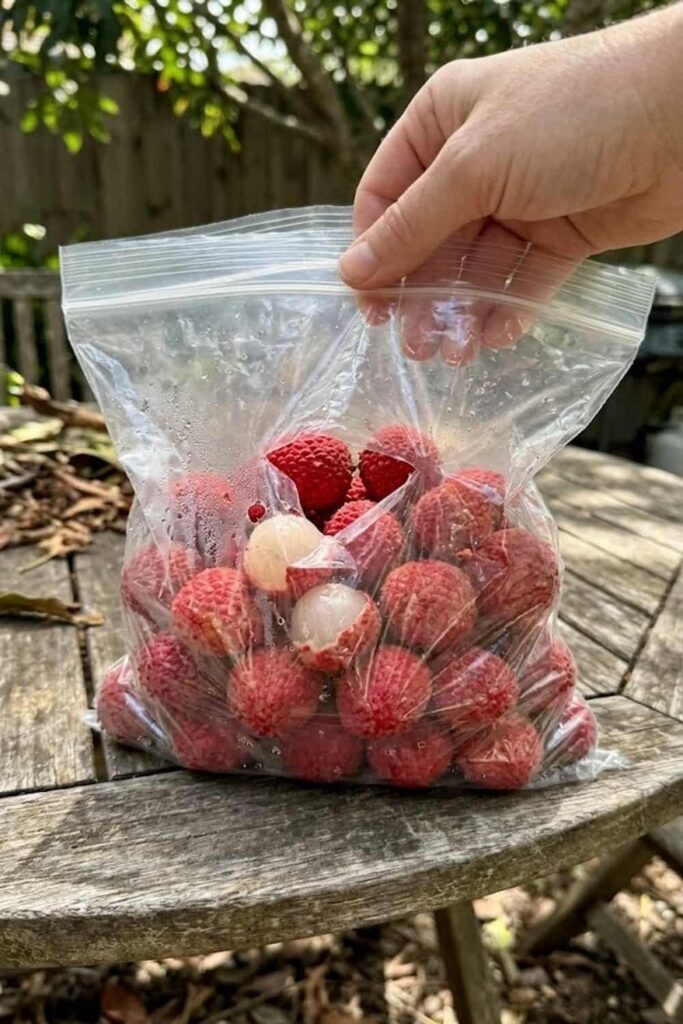
You must move your freshly harvested lychee into cold storage immediately. I have respected how rapidly this exquisite fruit deteriorates once removed from the tree. The brilliant red skin begins to turn brown and brittle within just 24 hours at room temperature, a phenomenon known as browning. This is caused by dehydration and oxidation, and while the fruit inside might still taste okay for a day or two, it rapidly loses its floral aroma and crisp texture, becoming dull and soft.
I have found that the most effective way to maintain “just-picked” freshness is to store the clusters in a sealed or perforated plastic bag inside the refrigerator. The dynamic cold environment (ideally around 35°F to 40°F) drastically slows the browning process. If you store them correctly, you can extend the shelf life for up to two weeks. I strongly advise you not to wash the fruit until just before you eat it, as moisture on the skin can encourage mold during cold storage. For long-term preservation, lychees also freeze exceptionally well; simply freeze the whole, unpeeled fruits in a single layer on a tray before transferring them to a freezer bag.
FAQ: Common Lychee Growing Questions
In my years of helping fellow gardeners, I have respected that the same few questions seem to pop up, especially when people are struggling with how to grow lychee fruit in less-than-ideal conditions. I have compiled the most critical ones here to ensure you have all the specific data you need to succeed.
Question: How to grow lychee fruit from seed at home? Answer: You must plant the seed immediately. Clean the pulp entirely from the brown seed, and plant it about 1 inch deep in a moist, dynamic soil mix like peat moss and perlite. I must respect the fact that while they germinate easily, seed-grown trees can take 10 to 15 years to fruit, and the resulting lychee fruit quality is unpredictable.
Question: How to grow lychee fruit in cold climates successfully? Answer: You must use container culture. If you are outside USDA Zone 9-11, planting in a large pot allows you to provide a mobile microclimate, moving the tree into a greenhouse or a sunny interior room when temperatures dip below 32°F (0°C). Use an acidic, well-draining soil and supplement with professional grow lights to ensure adequate light during winter.
Question: How to grow lychee fruit trees for a bountiful harvest? Answer: Success involves five dynamic pillars: acid soil (pH 5.0–5.5), well-draining soil, 6–8 hours of full sun, consistent summer moisture, and, most importantly, a cool, dry growth check period in winter to induce bloom. If you respect all five, you will enjoy heavy clusters of sweet, abundant fruit.
Conclusion
Successfully navigating the challenges of how to grow lychee fruit is one of the most rewarding achievements in subtropical gardening. This dynamic tree, while initially demanding, is surprisingly resilient once established. It is a reflective process; I have learned to respect the tree’s unique cycles—from the initial, fragile establishment period and the vital importance of proper watering to the annual winter “growth check” that signals it is time to set fruit. I have respecting that nature provides the floral sweetness only after a necessary period of stress.
By applying these 15 essential tactics—prioritizing acid soil, managing the soil mix, providing essential wind protection, and understanding the precise nutritional needs during bloom—you will avoid the dynamic pitfalls that claim so many other backyard trees. I have respecting that you, as a fellow passionate gardener, possess the patience required for this long-term project. The reward, harvesting heavy clusters of red, floral-sweet lychee that you grew yourself, is worth every moment of focused care and dedicated protection.








