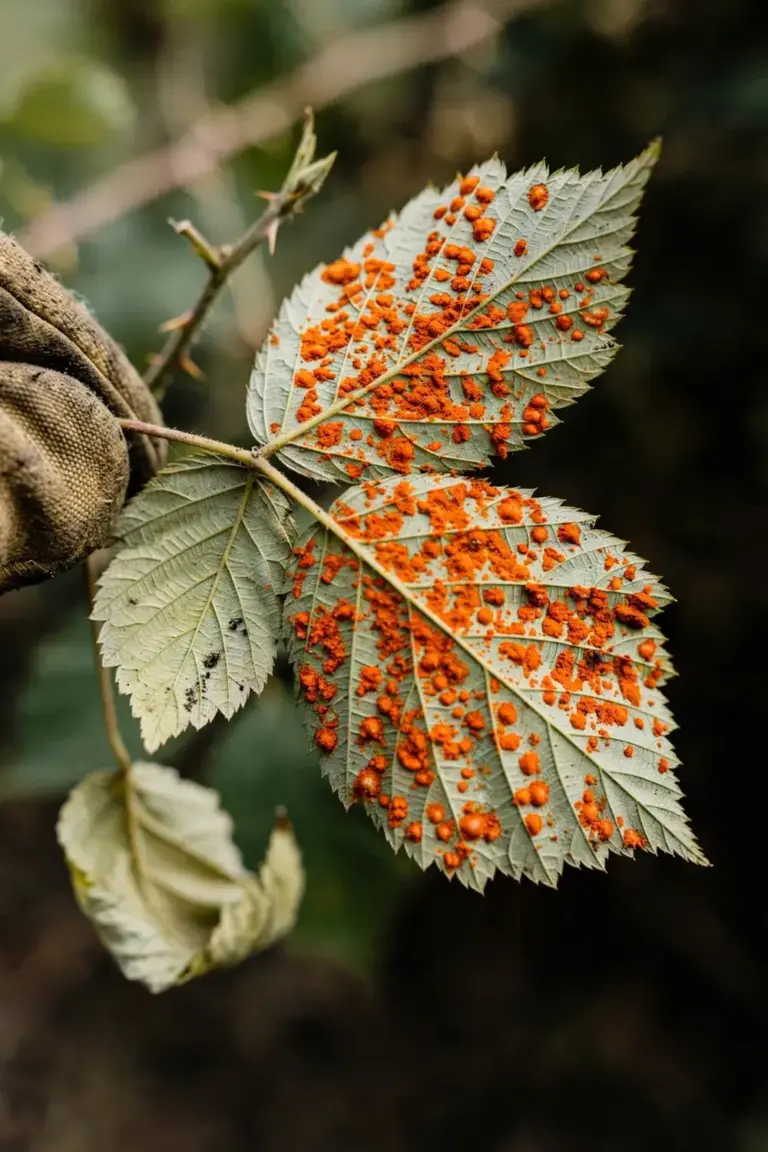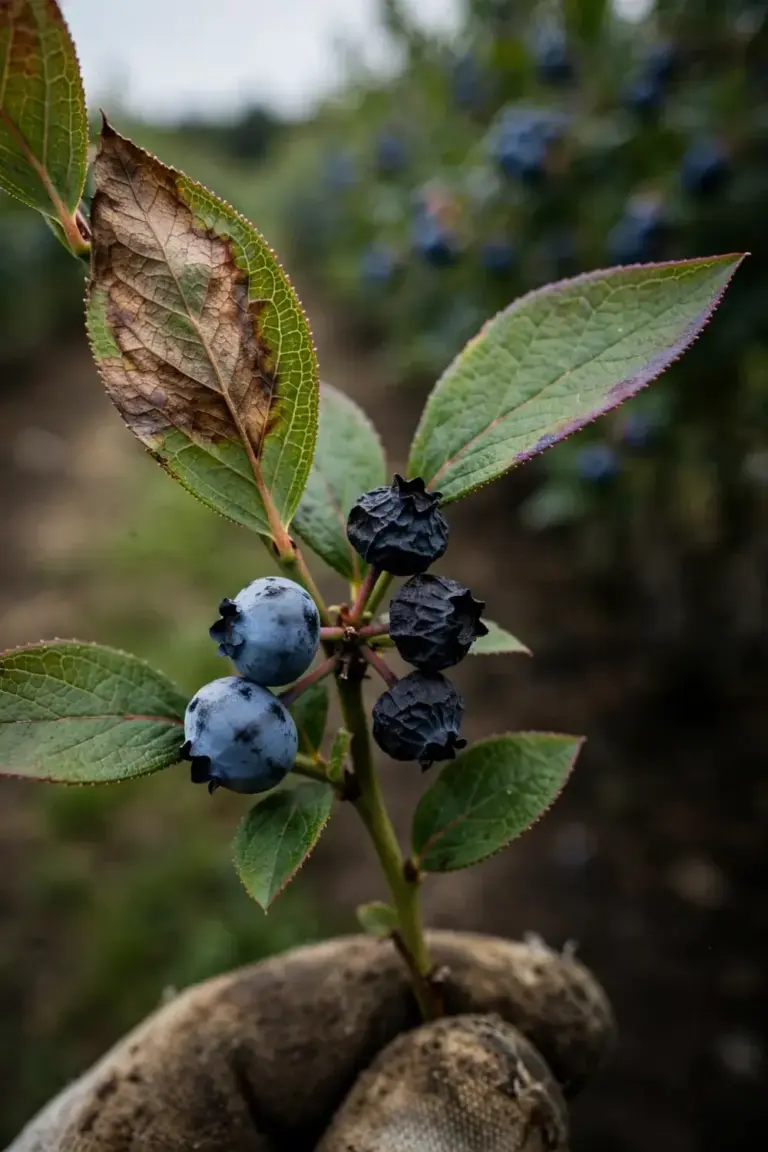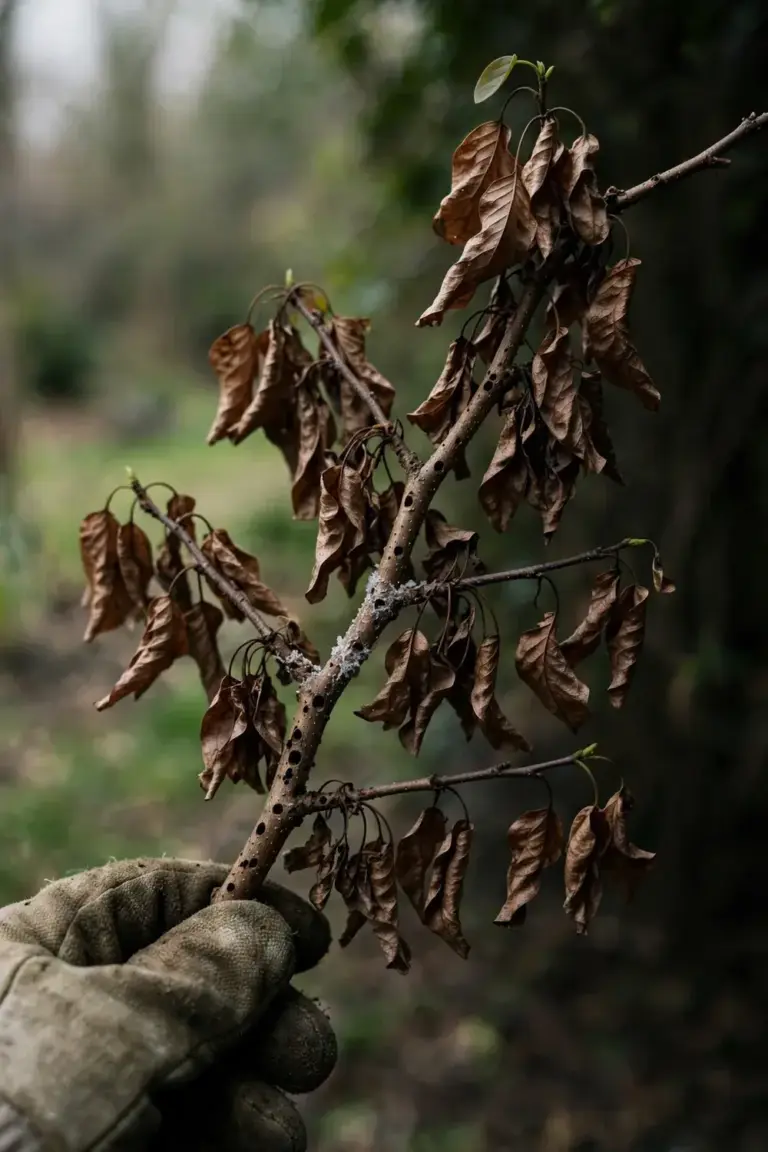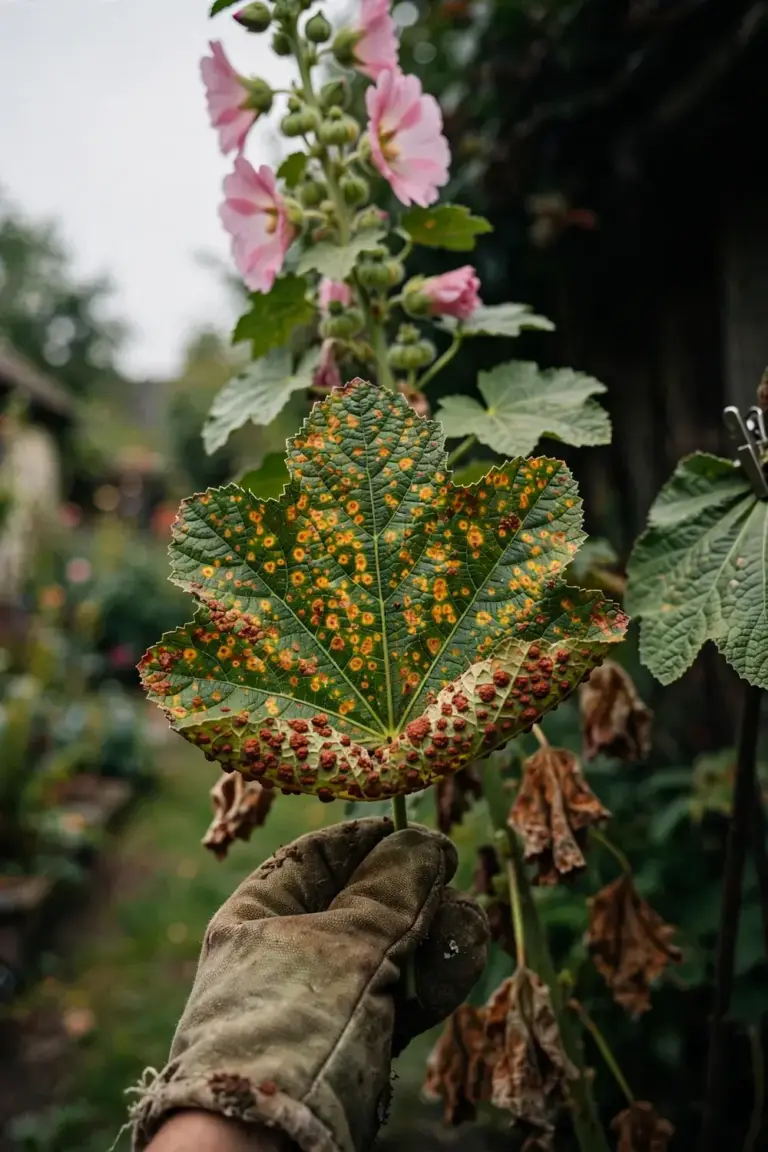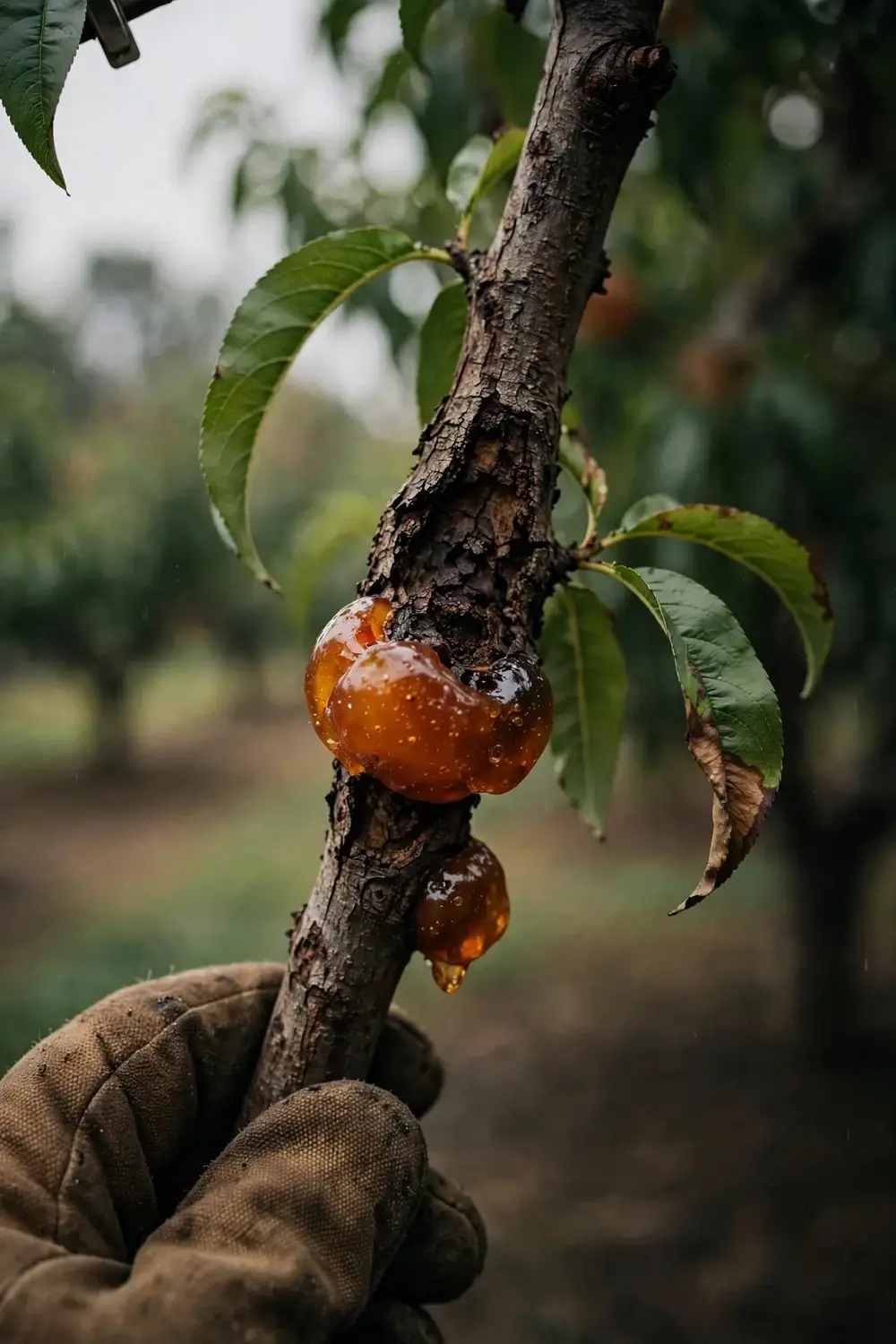

Gummosis on stone fruit is a symptom, not one disease. Four causes produce it: fungal canker, bacterial canker, borers, and injury. The 9 strategies below find the cause first, then treat that cause, starting with the triage call that decides whether the tree is worth saving.
The signature is amber gum beading, running, or hardening on bark. The gum sits on a wound, a canker, or a bore hole. Peach, nectarine, apricot, cherry, plum, and almond all ooze gum. Citrus trees ooze gum too, and that problem belongs to a different host lane with a different cause, so this article stays with stone fruit.
The rest of this page runs the order a gardener should follow. Identify the gum, match it to one of four lanes, then work the 9 steps from the first cut to next-season scouting. I have learned that the gum itself is the least useful thing to look at, and the bark around it tells the story.
What Gummosis on Stone Fruit Actually Is
Gummosis is the tree pushing gum out of a wound or a canker. The gum is a defense response. Gummosis names the symptom. A canker, a borer tunnel, or a mower wound causes gummosis.
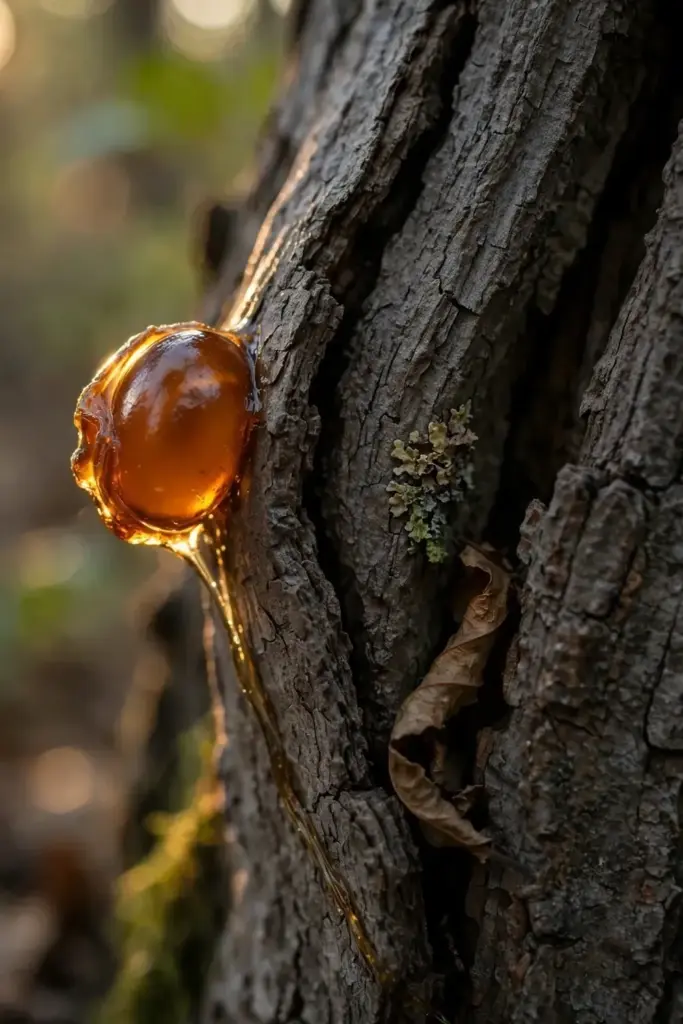
Fungal canker is one lane. The University of Georgia diagnostic guide to home orchard diseases lists gummosis under the fungus Botryosphaeria dothidea, with sunken lesions and oozing amber-colored resin or gum on trunks, limbs, and twigs. Small twigs may die as the disease advances. A second fungal lane, perennial canker from Cytospora and Leucostoma fungi, produces the same gum on stone fruit. The fungal attribution varies by source, so this article carries both fungal lanes and collapses them into neither.
Bacterial canker is a second lane, caused by the bacterium Pseudomonas syringae and also called bacterial gummosis. Borers are a third lane, injury a fourth, and every lane ends in the same visible gum. That shared endpoint is why the gum alone never names the cause.
Gum flows into the wound and traps spores and insects. Gum hardens into a seal. The tree pays for that seal with energy and with tissue, so heavy or repeated oozing marks a tree under real attack.
How to Identify Gummosis on Trunks and Branches
Start with the bark around the gum, not the gum itself, because the bark tells the lane while the gum only tells you the tree is fighting.
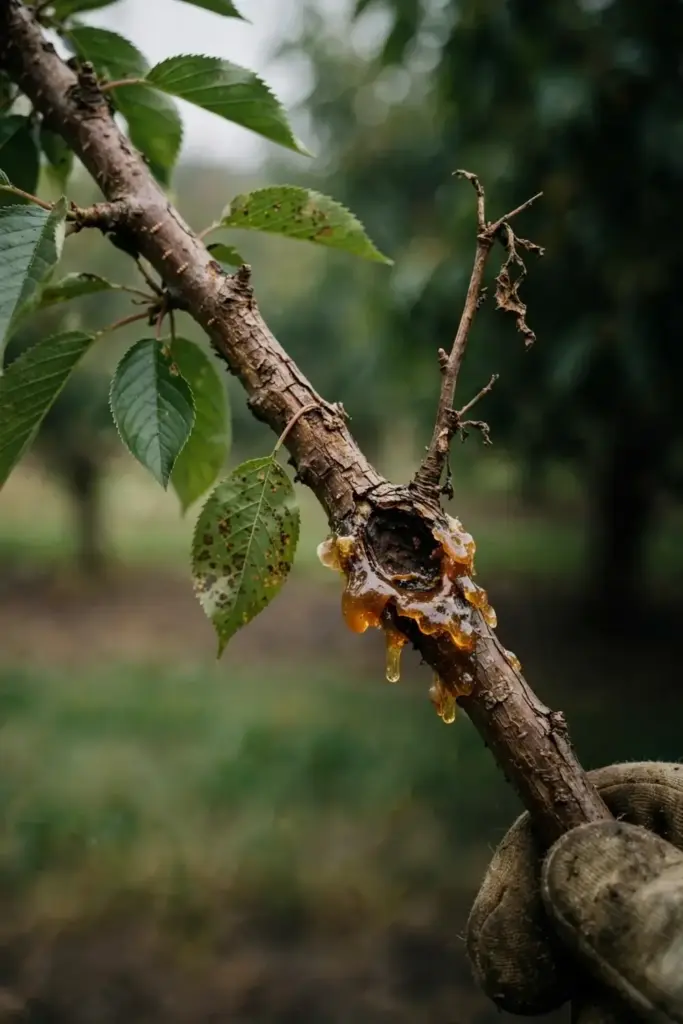
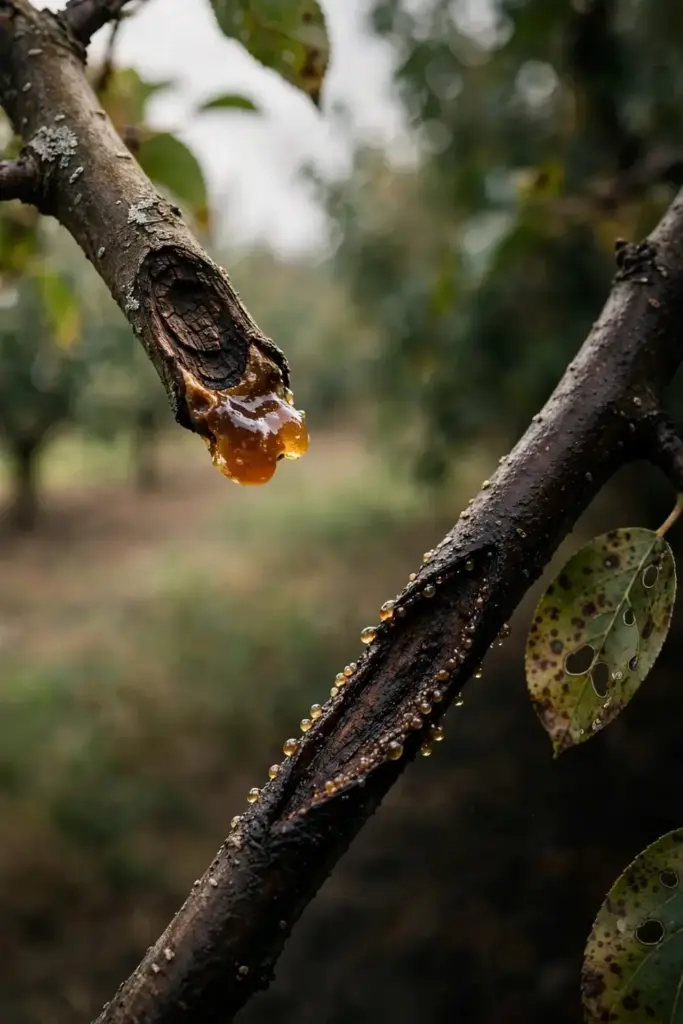
Fungal canker shows a sunken lesion under the gum. The bark sinks, darkens, and cracks at the edges. The University of Georgia diagnostic guide to home orchard diseases describes sunken lesions with oozing amber-colored resin or gum on trunks, limbs, and twigs. Perennial canker shows a slightly sunken, oval patch with light amber gum at the canker edges. The patch enlarges year by year or advances down a side branch. A canker that rings a whole branch starves everything above it, and the twigs past the ring die back.
Bacterial canker shows dark, watersoaked bark with a sharp margin between diseased and healthy tissue. The canker exudes quantities of gum laden with bacteria. Narrow brown streaks run from the canker into healthy tissue above and below. A branch girdled by a bacterial canker dies, preceded by yellowing and curling of the leaves above it. The full bacterial picture lives in the guide to bacterial canker in fruit trees.
Borer gummosis shows small entry holes in or beside the gum. The gum often comes in remarkable amounts. The Penn State Extension page on peach bark beetle and cherry gummosis notes that attacked trees produce remarkable amounts of gummosis in response to tunneling, and the tree is attempting to flush the beetles out of its tissue with the resinous gum. Probe a suspect hole with a thin wire. A tunnel or frass under the gum points at borers.
Injury gummosis shows a wound you can explain. A mower scar, a trimmer nick, a pruning cut, a storm crack, or a bark split sits at the gum site. The gum amount tracks the wound size. A fresh wound oozes clean gum with no canker under it. An old wound with a sunken, spreading patch under the gum has picked up a canker lane, and the canker now owns the problem.
How to Identify Gummosis on Fruit, Shoots, and Blossoms
Gum on fruit, shoots, or blossoms points away from a trunk canker and toward the bacterial, borer, or injury lanes. Check the blossoms and leaves with the gum. The company the gum keeps names the lane.
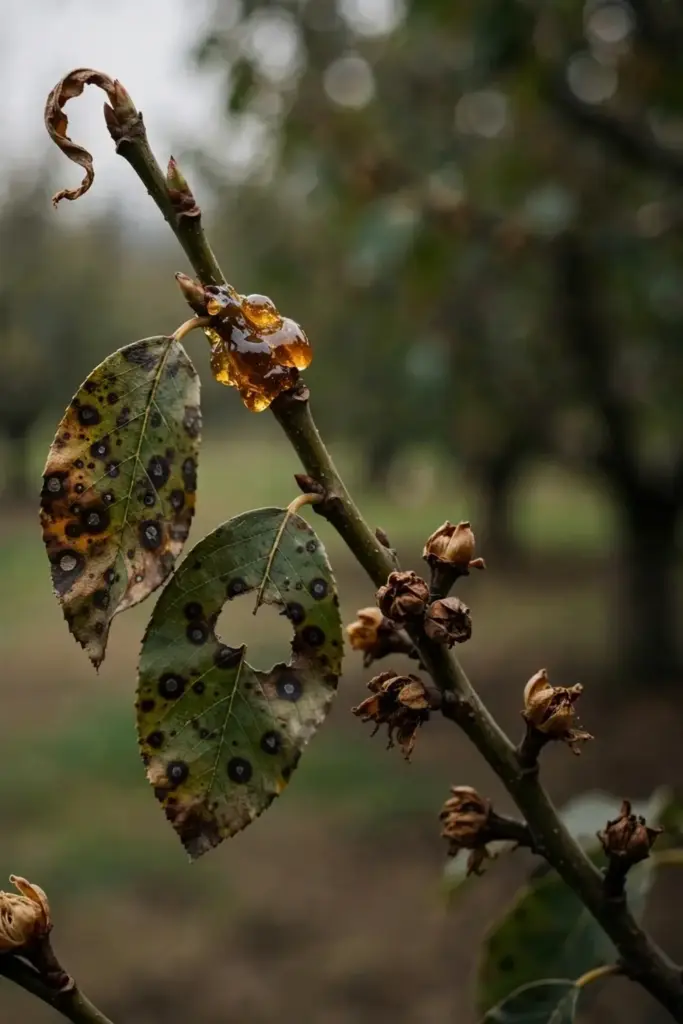
Bacterial canker hits buds, leaves, blossoms, and fruit together. Buds die in a progression upward from the lower limbs. Older leaves show dark circular spots that die and drop out, leaving a shot-hole pattern. Blossoms blast, meaning they brown and die without setting fruit. New shoots wilt, turn brown, and die from the tips. Gum plus blasted blossoms plus shot-holed leaves is a bacterial pattern. Gum on bark alone, with clean leaves and sound blossoms, is not.
Borer damage on shoots shows gum at a tunnel entrance with a wilting shoot past it. The shoot starves where the tunnel cuts the cambium. Fruit with gum at an insect puncture or a hail dent points at injury. The fruit itself is not diseased. The puncture let the tree answer with gum.
Fungal canker rarely starts on fruit. It starts on twigs and branches, then kills the twigs that feed the fruit. Fruit that shrivels on a dying twig belongs to the twig problem. Treat the twig, not the fruit.
One more check separates gum from rot. Gum is firm, amber, and stuck to the bark or the fruit surface. Rot is soft, sunken, and spreading through the flesh. Rot on fruit with no gum and no canker belongs to a fruit-rot lane, and it needs a different article.
Which Stone Fruits Get Hit Hardest
All six stone fruits ooze gum. Cherry and peach show it most often in home orchards. Young cherry trees carry the highest bacterial risk. Peach carries the heaviest fungal gummosis load. The table gives the first lane to check on each host.
| Host | Where Gum Usually Shows | First Lane to Check |
|---|---|---|
| Peach | Trunk, limbs, and twigs, with sunken cankers | Fungal canker. The UF/IFAS guide to fungal gummosis in peach is written around this host |
| Nectarine | Twigs and limbs, much like peach | Fungal canker, then bacterial canker |
| Apricot | Blossoms, shoots, and branch cankers | Bacterial canker. Blasted blossoms and dying shoots lead the pattern |
| Cherry | Bark on young trees, plus trunk gum after beetle attack | Bacterial canker on young trees. Borers on stressed trees. Penn State notes black cherry as the bark beetle’s preferred host, with peach and plum also attacked |
| Plum | Branches and trunk, with leaf spots in bacterial years | Bacterial canker, then borers |
| Almond | Blossoms, shoots, and scaffold cankers | Bacterial canker. Blasted blossoms and shoot death lead the pattern |
Young cherry trees deserve a closer look than the rest. Their bark is thin, their cankers spread fast, and a girdled young trunk ends the tree. Check a young cherry the week you spot gum. An older peach with one branch canker can wait for the next dry day.
Rootstock and vigor shift the odds. A stressed tree on a poor site oozes gum after wounds that a vigorous tree seals quietly. Site and water matter as much as species, and Step 8 covers them.
Gummosis Causes: Fungal Canker vs Bacterial Canker vs Borers vs Injury
Match the gum to the company it keeps. One row of this table rarely settles it. Two or three rows together name the lane.
| Clue | Fungal Canker | Bacterial Canker | Borers | Mechanical or Environmental Injury |
|---|---|---|---|---|
| Gum | Amber, oozing from a sunken canker on trunk, limb, or twig | Gum in quantity, laden with bacteria, from a watersoaked canker | Remarkable amounts of gum around entry holes | Clear to amber gum at a wound. Amount tracks wound size |
| Bark Under the Gum | Sunken lesion, darkened and cracked at the edges | Dark, watersoaked bark with a sharp margin. Brown streaks run into healthy tissue | Small entry holes. Tunnels run under the bark | Crack, split, mower scar, trimmer nick, or pruning cut at the gum site |
| Leaves | Mostly clean. Twigs past a girdling canker die back | Dark spots that die and drop out. Leaves above a girdled branch yellow and curl | Mostly clean | Clean |
| Blossoms and Shoots | Twigs die back as cankers advance | Buds die upward from lower limbs. Blossoms blast. New shoots wilt and die from the tips | Shoots wilt past a tunnel | No blossom pattern |
| Timing | Spreads in wet weather. Enters weak or wounded tissue | Active in late winter and spring. Enters through wounds, leaf scars, and frost damage | Follows stress. Drought, defoliation, compaction, and sun damage invite attack | Follows the injury. Storm, hail, pruning, or a mower pass |
| First Move | Prune out the canker in dry weather. Sanitize tools. Destroy the wood | Prune out the canker in dry weather. Sanitize tools. Destroy the wood | Probe the holes. Relieve the stress. Protect the bark | Stop the injury source. Protect the wound. Watch for a canker lane moving in |
Field clues sort the causes into lanes. Only a lab test names the exact pathogen. Treat the lane, not the guessed species. A tree with two lanes, such as a borer wound that picked up a fungal canker, needs both moves: probe the borers and prune the canker.
The fungal lane splits in two. Botryosphaeria canker and perennial canker both ooze gum on stone fruit, and the field clues above do not separate them. The guide to Botryosphaeria canker in fruit trees carries the full Botryosphaeria picture. The perennial canker lane gets the same pruning, sanitation, and vigor program, so the split changes little for the home gardener.
Why Gum Oozing Is the Tree Defending Itself
Gum is the tree fighting back. The tree floods a wound with sticky resin. The resin traps spores and insects. The resin hardens into a seal that keeps the wound closed.
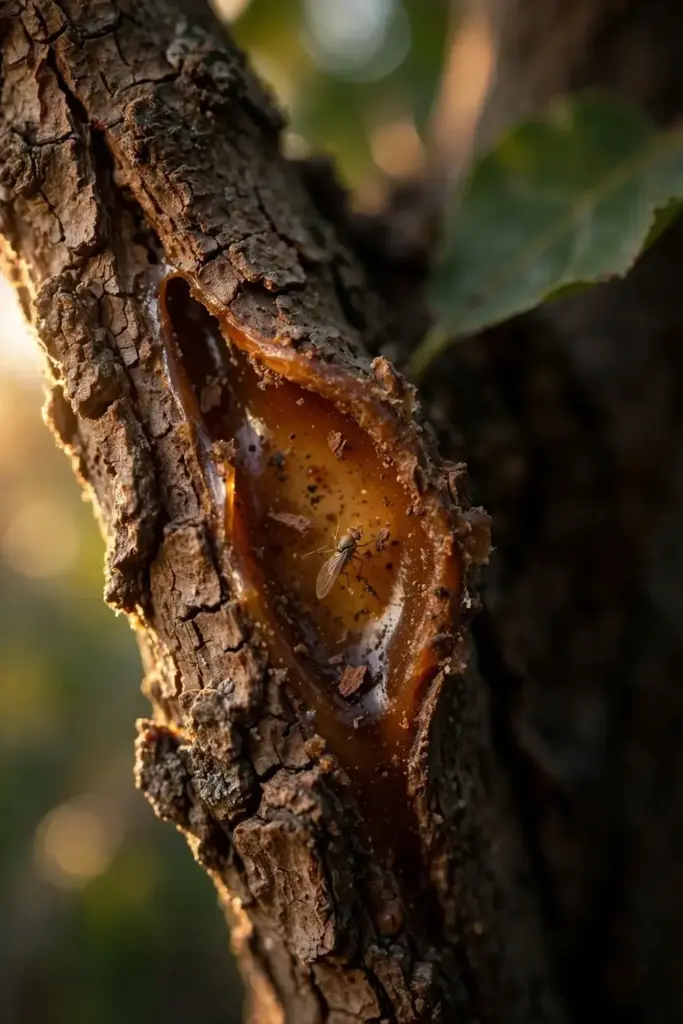
The Penn State Extension page on peach bark beetle and cherry gummosis describes the mechanism directly: the tree attempts to flush the beetles out of its tissue with the resinous gum. The gum excludes many of the beetles. Some beetles get past the defense. The same mechanism answers fungi and wounds. Gum flows, gum traps, gum seals.
Scraping the gum off undoes that work. Skip scraping. The gum seals the wound, and a scraped wound opens fresh tissue to spores, beetles, and rain, forcing the tree to spend more energy making a second seal over the same wound. Leave the gum alone and treat the cause under it.
Gum fails when the wound stays open. A girdling canker keeps killing tissue faster than the tree seals it. A heavy beetle attack keeps drilling new holes faster than the gum flushes them. Gum that keeps flowing from one spot for months marks a wound that never closed. That wound needs pruning, not scraping.
What Makes Gummosis Worse in a Home Orchard
Stress opens the door. Wounds open the door wider. Wet weather and dirty tools push the pathogens through it.
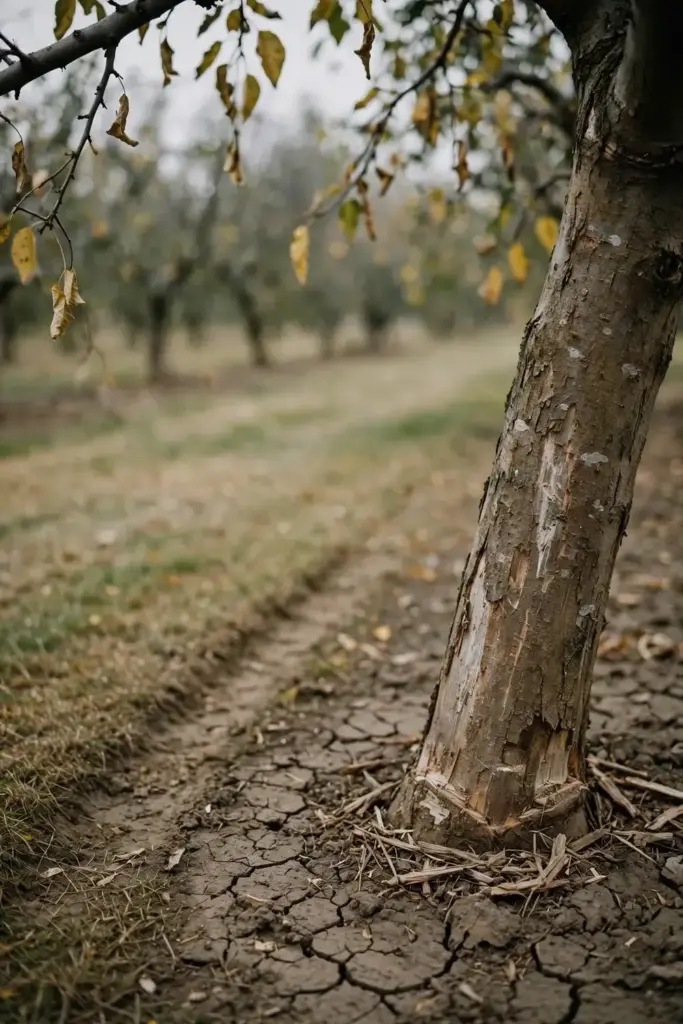
Drought, defoliation, soil compaction, and sun damage weaken trees. The Penn State Extension page on peach bark beetle and cherry gummosis notes that severe bark beetle attacks often follow periods of drought or other stresses, including defoliation, soil compaction, and sun damage to newly exposed trees. A stressed tree oozes gum after wounds that a vigorous tree seals quietly.
Wounds are the entry points. Mower and trimmer strikes, pruning cuts made in wet weather, storm breakage, hail dents, and bark splits all open tissue. Fungi and bacteria enter through wounds. Borers tunnel into stressed bark. Every wound you prevent is a canker that never starts.
Wet weather spreads the fungi. The Michigan State University Extension guide to perennial canker states that spores spread during wet weather, and successful infections occur in weak or wounded tissue. Overhead irrigation after pruning or harvesting keeps wounds wet and helps the fungi in. Water at the base. Keep the canopy dry after a cut.
Tools carry infection from tree to tree. A blade that cut through a canker carries spores and bacteria to the next cut. The UF/IFAS guide to fungal gummosis in peach advises disinfecting pruning tools periodically, especially after cutting infected material and before moving to the next tree. One uncleaned blade can seed a whole row.
Site stacks the odds. The UF/IFAS guide to fungal gummosis in peach warns against orchard establishment in low-lying areas with poor air circulation and soil drainage. Low wet ground holds humidity, holds cold air, and holds the tree wet through the infection window. A tree on a low wet site fights gummosis every year. A tree on a drained site with moving air fights it once. Gummosis on stone fruit follows the same pattern on every host. The wound opens, the stress holds it open, and the pathogen enters.
Step 1: Decide Whether the Tree Is Worth Saving
Count the damage before you reach for the saw: a tree that still leafs out strongly above the gum earns the full program, while a tree with cankers ringing the trunk does not.
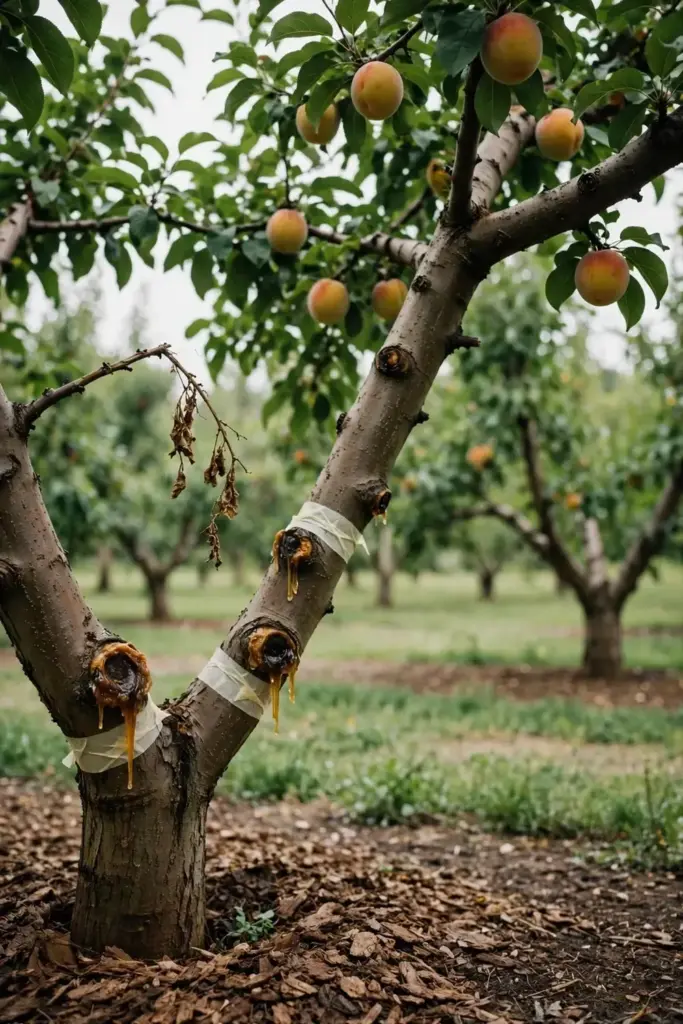
Walk the tree first and mark every gum site with tape, then check how much canopy still grows sound wood and whether a canker rings the trunk. A canker that rings the trunk girdles the tree, and no pruning program reverses that. A tree with one or two branch cankers and a full canopy earns every step below.
A young tree with a canker on the main trunk is a removal candidate. A young tree is cheap to replace and slow to recover. An older tree with a branch canker and sound fruit wood is a pruning candidate. The age of the tree and the place of the canker decide the call, not the amount of gum.
Removal protects the neighbors. A dying tree sheds spores and shelters borers. A tree you remove this season stops feeding next season’s infections. Replant on a better site with a vigorous tree, and the new tree starts clean.
Step 2: Diagnose the Cause Before You Cut Anything
Name the lane before the saw comes out. A wrong first cut wastes the season.
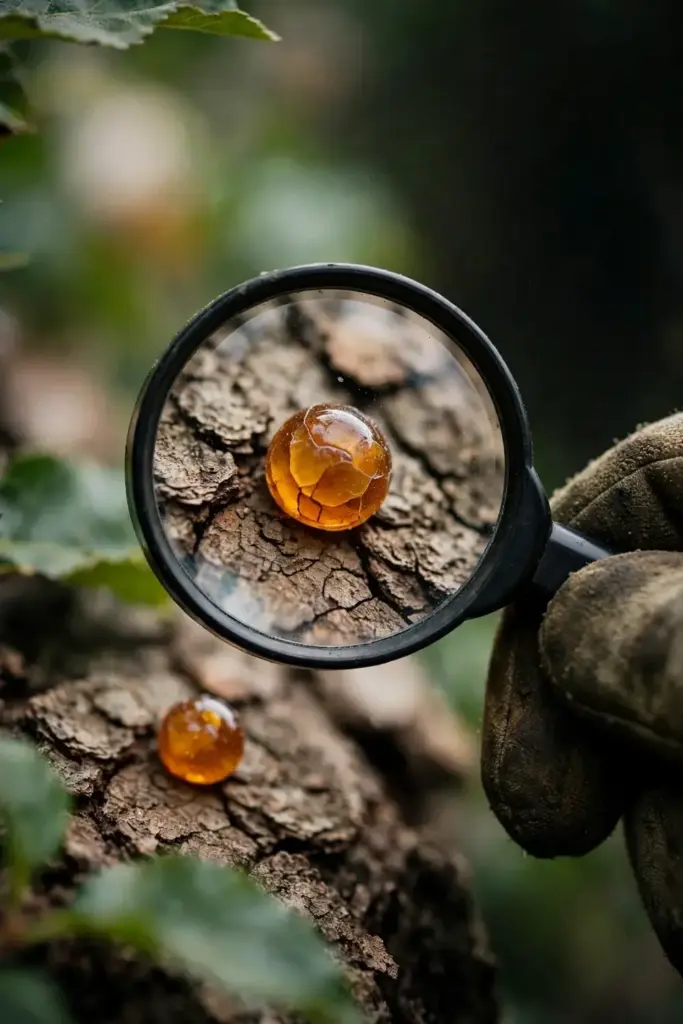
Run the differential table on the tree. Start at the gum, then check the bark under it, the leaves for spots and shot-holes, the blossoms for blast, and the bark for entry holes and frass. Check for a mower scar, a pruning cut, or a storm crack at the gum site. Two or three clues together name the lane.
Carry a hand lens. The lens shows entry holes, frass, and bark margins that the bare eye misses. Check the ground too. Fallen gum-covered fruit, pruned stubs left on the orchard floor, and old cankered wood nearby all feed the next round.
Write the lane down. Fungal, bacterial, borer, or injury. The lane sets the moves. A fungal lane gets pruning, sanitation, and vigor. A bacterial lane gets the same pruning and sanitation, with extra care about pruning timing and tool hygiene. A borer lane gets probing and stress relief first. An injury lane gets the injury source stopped first.
Two lanes can share one tree: a borer wound can pick up a fungal canker, and a storm crack can pick up a bacterial canker. Treat both lanes. Probe the borers, prune the canker, stop the injury, and sanitize the tools.
Step 3: Prune Out Cankered Wood in Dry Weather
Cut at least 10 cm (4 inches) below the canker margin. Cut on a dry day. Cut when the tree is actively growing and able to wall off the infection.
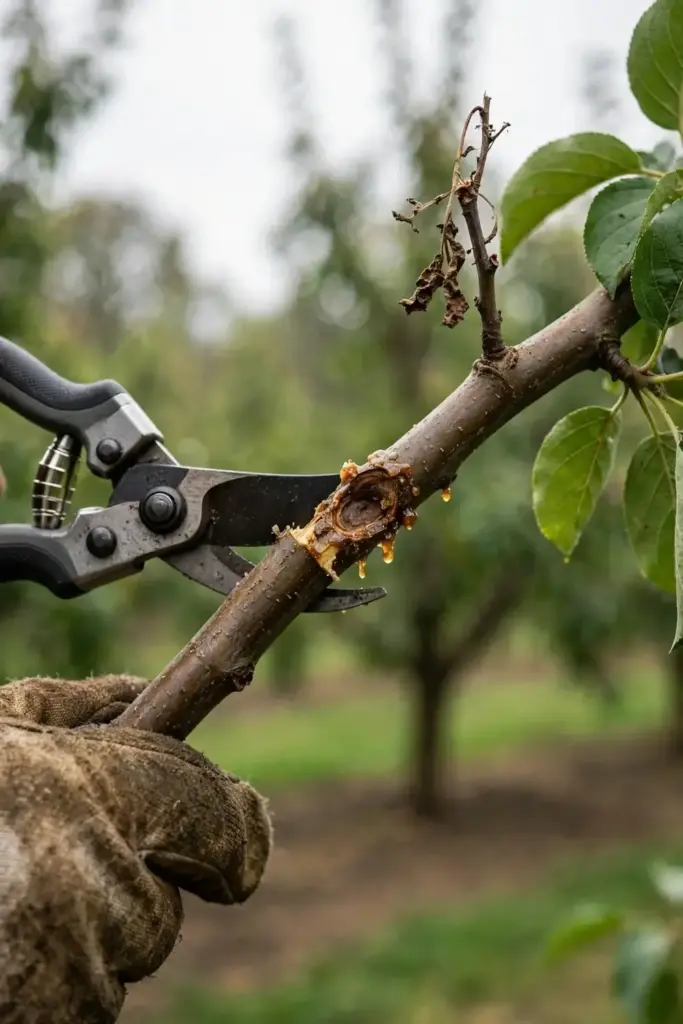
The Michigan State University Extension guide to perennial canker gives the clearance: prune dead branches at least 10 cm (4 inches) below the canker margin, and leave no stub. The same guide gives the timing: prune when the weather is dry and no rain is in the forecast, and when trees are actively growing and able to wall off the infection, after bloom. The UF/IFAS guide to fungal gummosis in peach adds two rules: prune dead limbs and infected twigs only within a dry period, and prune areas with fungal gummosis last, so the work moves from clean trees to infected trees.
Cut back into healthy wood past the discolored tissue. Flag every canker with tape before you start. Cut the worst branches first. Work outward to the lightest ones. The guide to spring pruning techniques covers clean cut placement for fruit trees in full.
Small cankers on a branch worth keeping allow a surgical option. The Michigan State University Extension guide to perennial canker states that cankers affecting less than half the diameter of the branch may be excised: remove the dead bark in an oval shape with about 2.5 cm (1 inch) of healthy bark past the canker margin. A canker past half the branch diameter earns a full branch cut instead.
Never prune when the trees are wet. Wet bark spreads spores on tools and hands. Wait for a dry day with no rain in the forecast. The cut heals faster on dry wood, and the tools stay cleaner.
Step 4: Sanitize Tools Between Every Cut
Disinfect the blade after every cut through infected wood, because one dirty blade seeds the next cut.
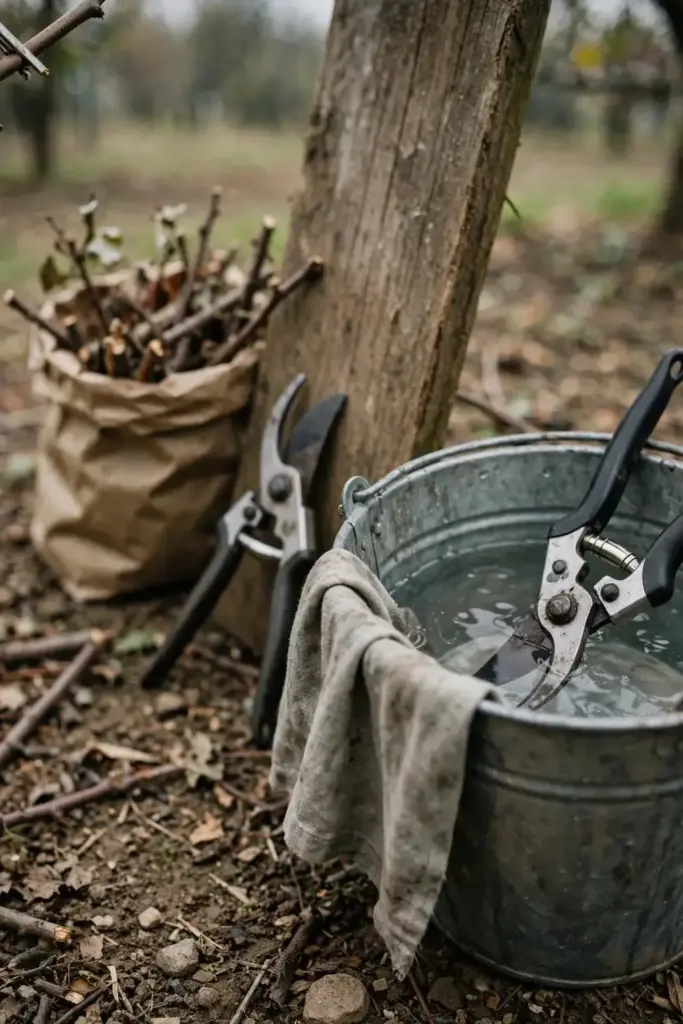
The UF/IFAS guide to fungal gummosis in peach names three sanitizers: rubbing alcohol, quaternary ammonium solution, or 10% bleach (sodium hypochlorite). Disinfect periodically, especially after cutting infected material and before moving to the next tree.
Carry two tools, so one cuts while the other soaks, and swap them at every cut through cankered wood. A spray bottle and a rag work too: spray the blade, wipe it, then cut. The routine feels slow on the first tree, fast by the third, and it is the cheapest control in the program.
Rinse the blades after the job and dry them. Bleach dulls and pits steel when it sits on the blade. A rinse, a dry, and a wipe of oil keep the shears cutting clean next season.
Step 5: Bag and Destroy Pruned Wood, Never Compost It
Bag every cankered branch. Carry it out of the orchard. Burn it where burning is allowed, bin it, or chip it off-site.
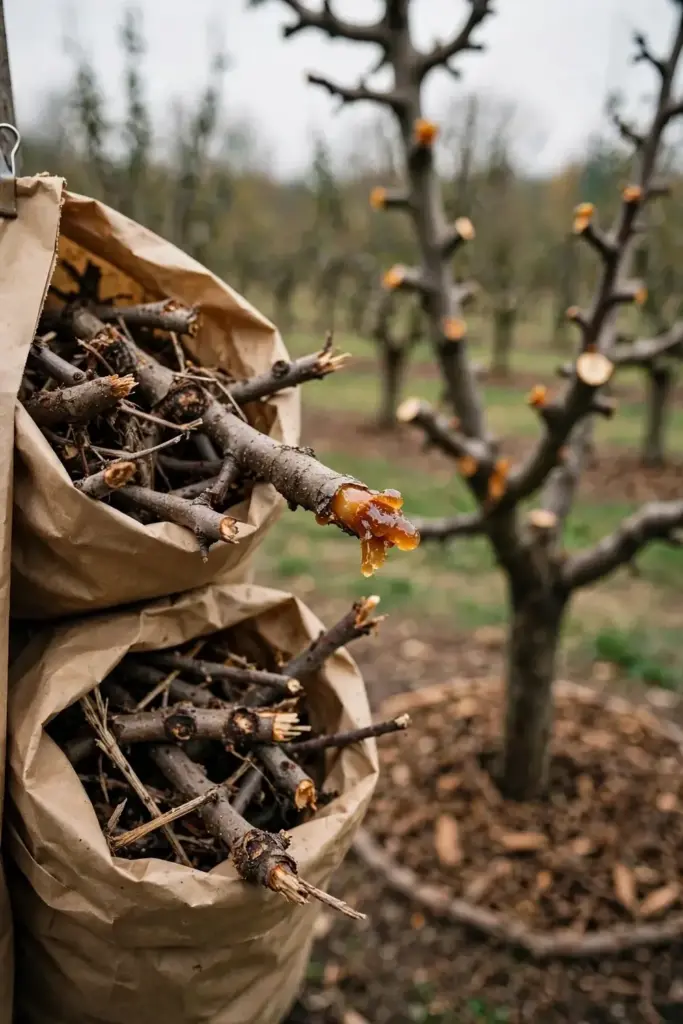
The Michigan State University Extension guide to perennial canker gives the reason: perennial canker fungi keep producing spores in pruned branches left on the orchard floor. A pile of prunings under the tree feeds the next infection. The prunings are inoculum, not mulch.
Never compost cankered wood. A home pile does not reliably kill canker fungi, and the finished compost goes back under the same trees. The loop seeds the next round. Bin the wood. The compost pile earns clean prunings only.
Pick up fallen gum-covered fruit at the same time. Fruit on the ground feeds the return trip for the fruit-rot fungi and shelters borer larvae. A clean orchard floor is part of the program, not tidiness for its own sake.
Step 6: Probe for Borers and Protect the Bark
Holes under the gum mean borers. Probe them. Then fix the stress that invited the beetles.
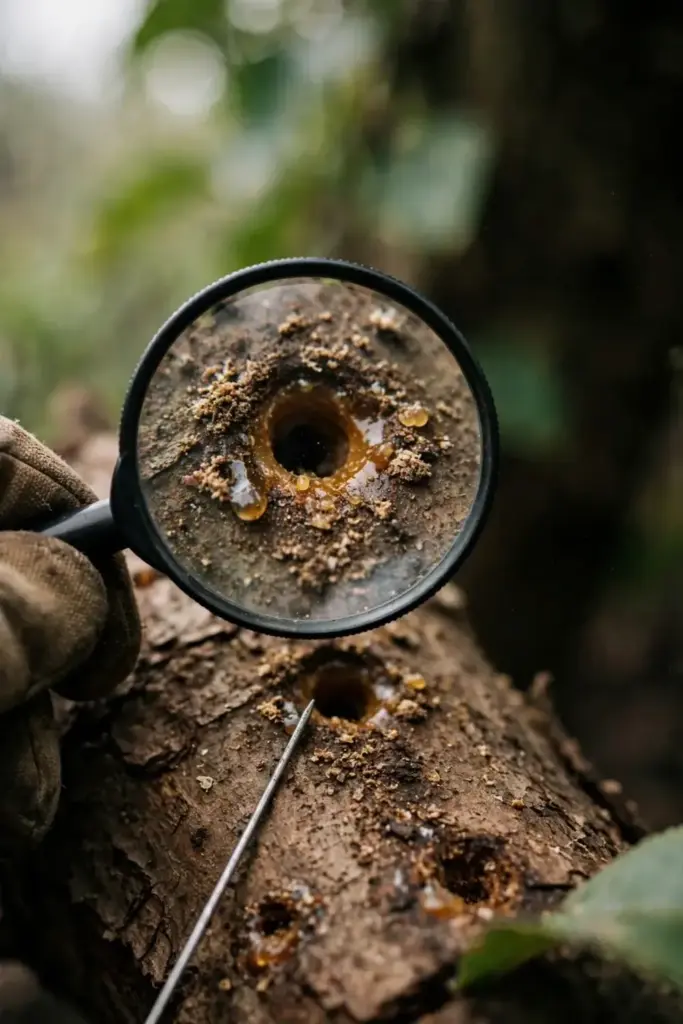
Probe suspect holes with a thin wire. A tunnel or frass under the gum confirms the borer lane. The Penn State Extension page on peach bark beetle and cherry gummosis notes that many bark beetles attack trees after another stress has weakened them, and that severe attacks often follow drought or defoliation. The beetles are the symptom. The stress is the cause.
Relieve the stress first. Water through drought. Fix compaction with mulch and a wider mulch ring. Shade a newly exposed trunk after a neighboring tree comes down. A vigorous tree flushes beetles out with gum and seals the holes. A stressed tree keeps drilling new ones.
Skip insecticide as the default. Mechanical probing, tree vigor, and bark protection come first. A dormant-oil spray in the dormant season is the standard low-impact borer step. Check the label for your tree and your state before you spray anything. A spray that misses the label wastes money and risks the tree.
Remove dead and dying trees that shelter beetle populations. A dead tree beside a live one breeds the beetles that attack the live one. The removal call from Step 1 doubles as borer control.
Step 7: Stop the Injuries That Open the Door
Every wound is an entry. Close the wound sources and the canker lanes lose their doors.
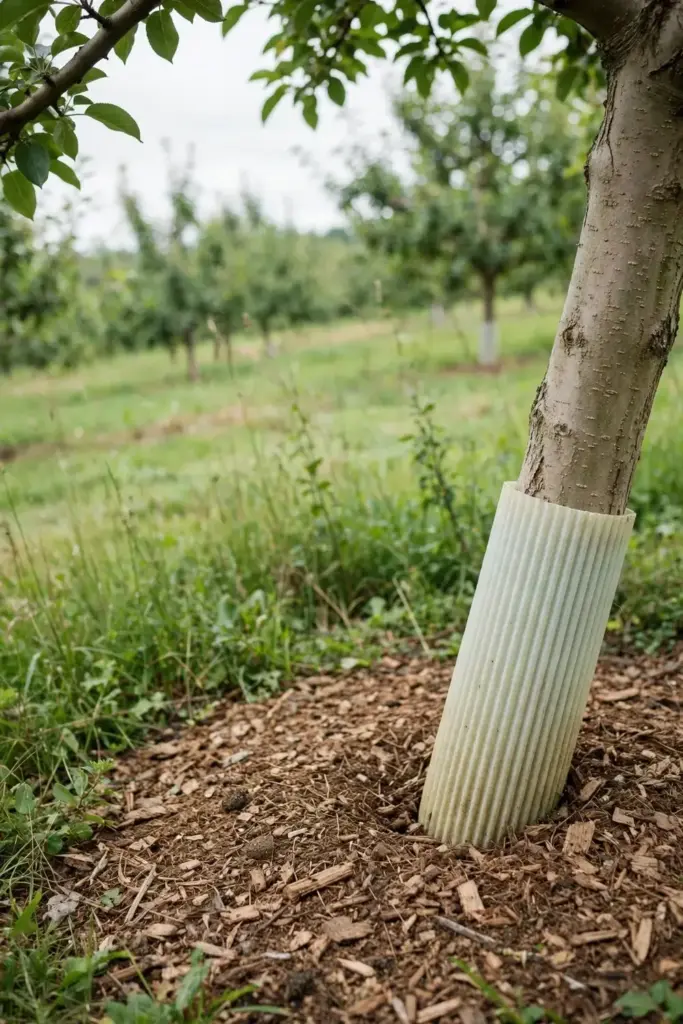
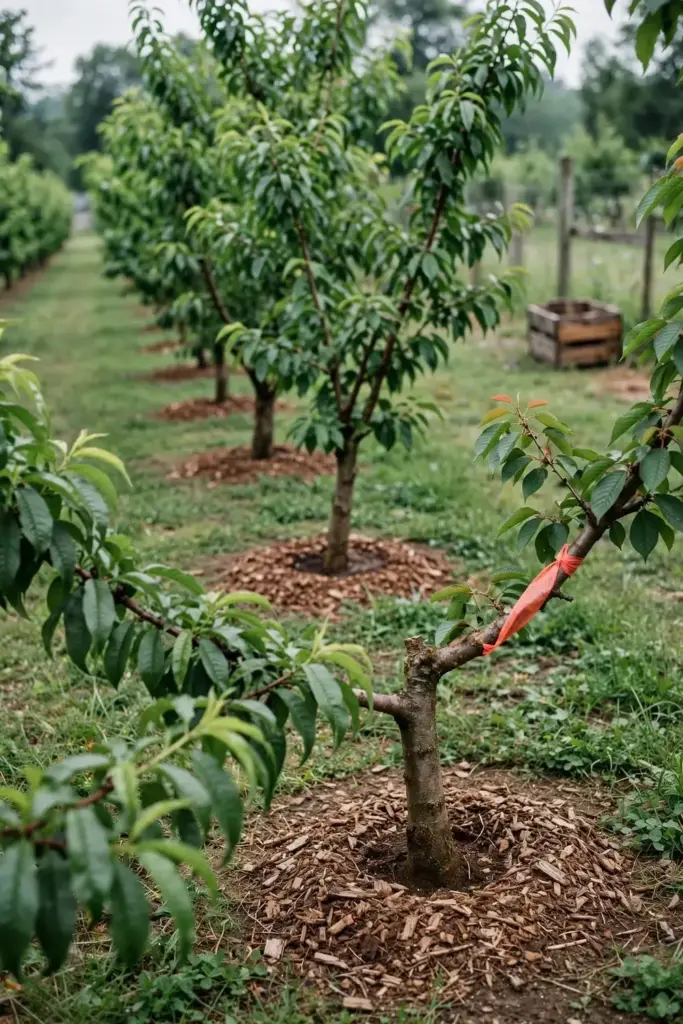
Keep mowers and trimmers away from the bark. A mulch ring around the trunk holds the mower at a distance. A plastic or wire guard on a young trunk stops trimmer nicks. One season of trimmer strikes on a young cherry can end the tree.
The Michigan State University Extension guide to perennial canker advises avoiding injury to trees, training trees to prevent narrow crotch angles between major scaffold limbs that are prone to breakage, and applying white latex paint to protect the trunk and lower scaffolds from southwest injury during winter. A narrow crotch splits under a fruit load or a storm. A southwest trunk face cracks in winter sun and frost. Paint the lower trunk and lower scaffolds white before winter where southwest injury is a known problem.
Prune in dry weather only. Step 3 gives the rule. Wet pruning cuts stay wet, and wet cuts invite infection. A pruning wound made on a dry day with a clean blade heals faster than the same cut made wet.
Fix storm damage promptly. A torn limb leaves a ragged wound that never seals cleanly. Cut the torn limb back to a clean union on the next dry day. The clean cut heals. The ragged tear does not.
Step 8: Keep the Tree Vigorous Enough to Wall Off Infection
A vigorous tree walls off cankers. A stressed tree feeds them. Vigor is the long program under all 9 steps.
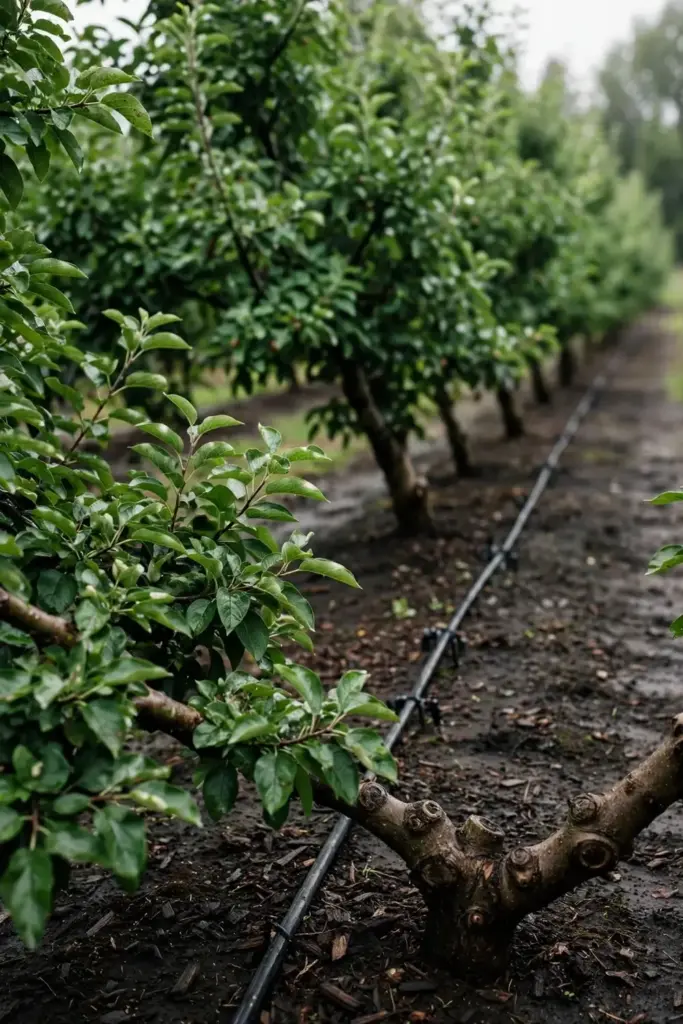
The Michigan State University Extension guide to perennial canker states the core fact: the pathogens infect only weakened, damaged, or dead tissue. Predisposing factors include winter injury, marginal sites, inadequate fertilization, and prolonged periods of drought. A tree with water, food, and drainage walls off infection at the wound edge. A tree without them lets the canker advance.
Water through dry spells. The University of Georgia diagnostic guide to home orchard diseases states that irrigation during periods of dry weather reduces plant stress and may minimize disease. Water at the base. Keep the trunk dry. A sprinkler that wets the trunk every evening works against the tree.
Feed the tree and mind the site. The guide to building soil health covers the soil side of vigor in full. Avoid low-lying ground with poor air circulation and soil drainage when you plant. The UF/IFAS guide to fungal gummosis in peach warns against exactly that site. Promote air movement through the canopy by proper pruning and by removing suckers from the base of the trunk. Airflow dries the canopy and closes the infection window.
Step 9: Watch the Tree for One Full Season Before You Relax
Cankers return. One season of checks decides whether the program worked.
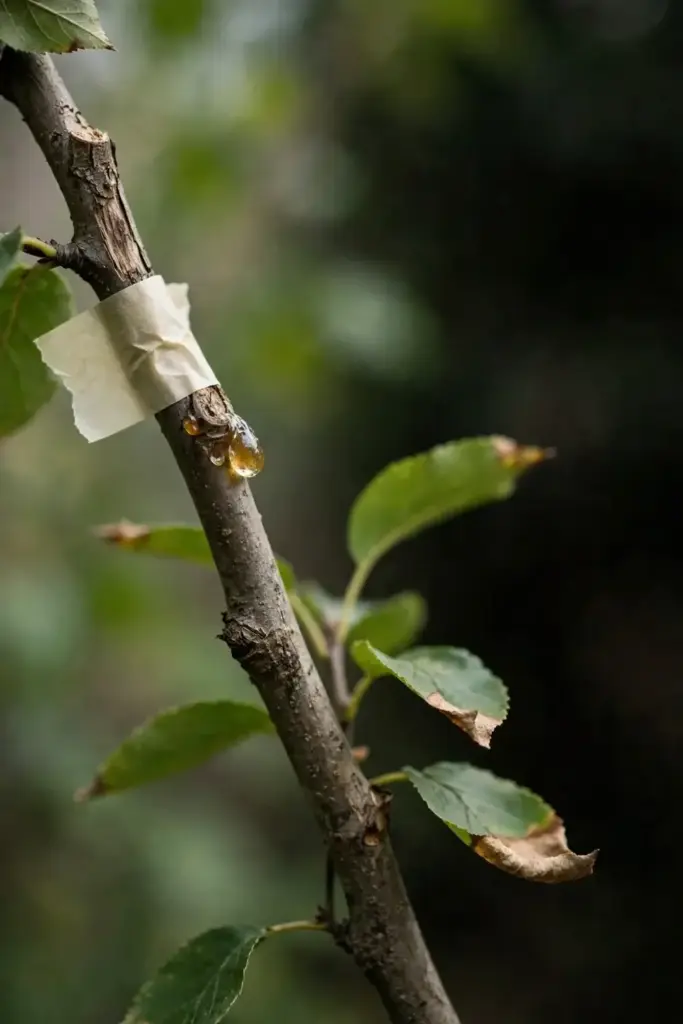
Walk the tree every few weeks through the growing season, checking every old gum site for fresh flow, every pruning cut for a spreading margin, and every branch for fresh entry holes. Mark old cankers with tape so a spreading margin shows against the mark. A margin that advances past the tape needs another cut in dry weather.
Re-prune on the next dry day. Cut at least 10 cm (4 inches) below the new margin. Sanitize the tools. Bag the wood. The routine from Steps 3 to 5 repeats until the tree holds clean.
Do not chase the gum with fungicide. The UF/IFAS guide to fungal gummosis in peach states that no fungicide is registered for use on fungal gummosis in peach. Sprays do not cure infected wood. A spray program that promises to cure gum wastes money and leaves the canker in place. Prevention, sanitation, and vigor do the work.
If gum keeps returning to the same limb after pruning, remove the whole limb. A limb that never seals is a reservoir. The tree does better without it than with it.
Living With Gummosis Damage You Cannot Undo
Old gum scars and healed cankers stay on the bark. The tree can still crop. A scarred trunk with a sound canopy earns patience, not removal.
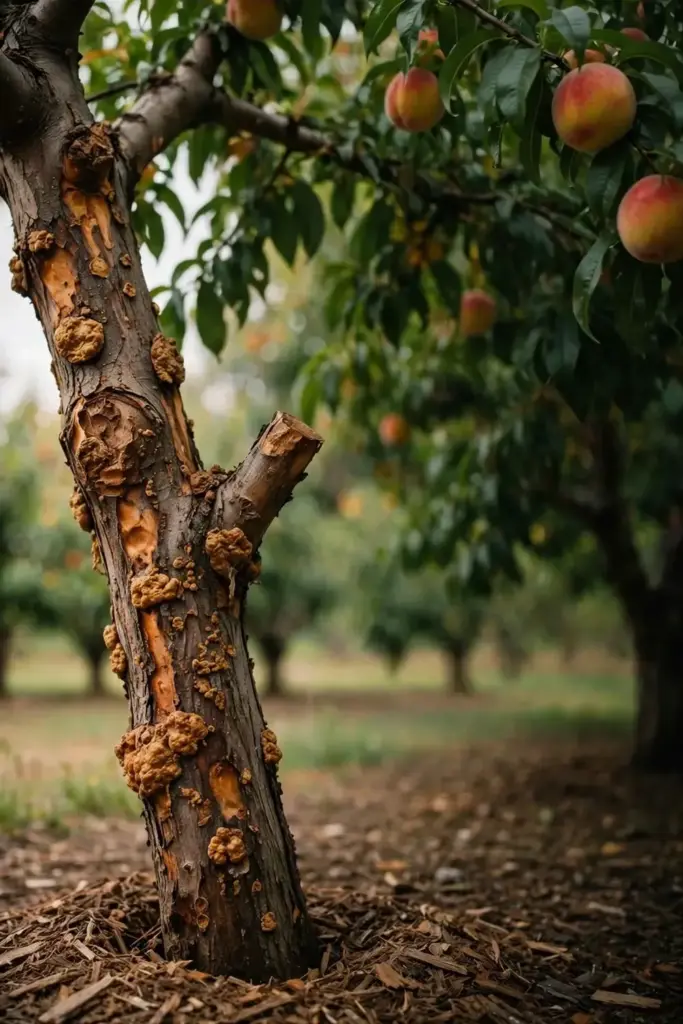
Fruit from sound wood is fine, because gum on the bark does not poison the fruit. Pick fruit without gum or damage, wash it, and eat it. Discard fruit that is rotted or split open. A light strike year costs some fruit, a heavy strike year costs more, and the pruning program next season is what recovers it.
Keep the tree vigorous. Keep the wounds closed. Keep the mower away from the bark. Check the old canker sites each spring. A healed canker that stays quiet for a full season has walled off, and the tree has won that round.
A trunk-girdled tree does not recover. A collapsing tree does not recover. Remove either one, and replant on a better site. The removal is not failure. It is the last step of the program, and it protects the trees beside it.
Frequently Asked Questions
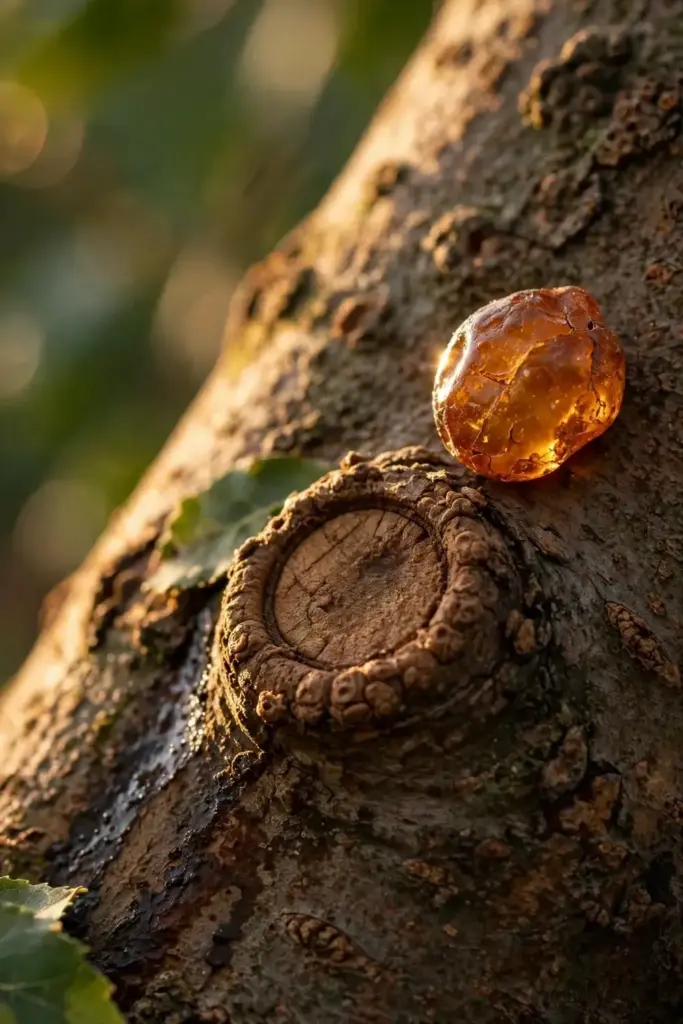
No. The gum seals the wound. Scraping opens fresh tissue to spores, beetles, and rain, and the tree then spends more energy making a second seal over the same wound. Leave the gum alone and treat the cause under it. Prune the canker, probe the borers, or stop the injury. The gum dries and falls away on its own once the wound closes.
Gummosis alone rarely kills a tree, and the cause under the gum decides the outcome. A branch canker costs a branch, a borer attack on a stressed tree costs vigor, and a canker that rings the trunk girdles the tree and ends it. Check the trunk first. A sound trunk with branch gum earns the pruning program. A ringed trunk earns removal, and removal protects the trees beside it.
No. Fungicide does not cure infected wood, and no fungicide is registered for fungal gummosis in peach, per the UF/IFAS guide. A spray on oozing gum wastes money and leaves the canker in place. Spend the effort on pruning in dry weather, tool sanitation, destroying pruned wood, and tree vigor. Protective sprays help only before infection, on healthy tissue, and only where a label covers your tree.
Yes, with sorting. Gum on the bark does not poison the fruit. Pick fruit without gum or damage, wash it, and eat it. Discard fruit that is rotted or split open. Fruit with gum at a puncture wound is safe to discard rather than eat, since the puncture invites rot. A light strike year costs some fruit. A heavy strike year costs more, and the pruning program next season recovers the crop.
Check for holes. Borer gum clusters around small entry holes, often with frass or a tunnel under the gum, and the leaves stay clean. Canker gum sits on a sunken lesion with darkened, cracked bark, and the bacterial lane adds leaf spots, shot-holes, and blasted blossoms. Probe a suspect hole with a thin wire. A tunnel confirms borers. A sunken canker with no holes confirms a canker lane.
Send a sample when the lane stays unclear after the field checks, or when a young tree or a whole row is at stake. Field clues sort the causes into lanes, and only a lab test names the exact pathogen. Contact your local Extension clinic for sampling instructions before you cut. Bag the sample, keep it cool, and label it with the tree, the date, and the symptoms.
Where to Go From Here
Start with the walk. Gummosis on stone fruit rewards the gardener who diagnoses first and cuts second. Check every stone fruit tree for gum, then check the bark, the leaves, the blossoms, and the holes around each gum site.
The order is diagnose, decide, prune dry, sanitize, destroy, probe, protect, feed vigor, and watch one full season. One next action beats ten good intentions. Walk the tree today. Name the lane. Prune on the next dry day.