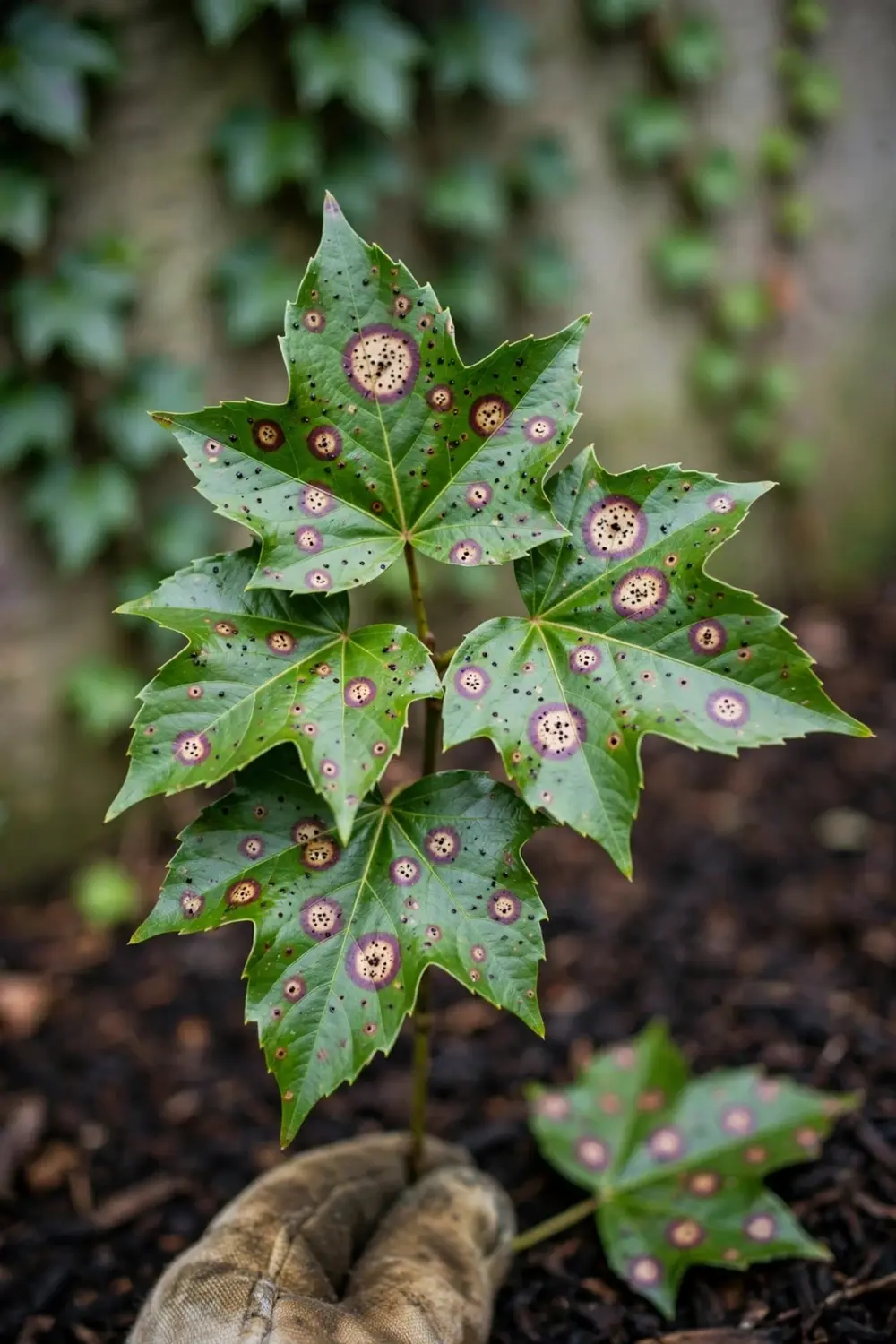

Skip the spray bottle. 6 moves protect a vine from Guignardia leaf spot on Boston ivy, and 4 of them cost nothing but time. The spots look alarming, and the vine almost always outgrows them.
Guignardia leaf spot on Boston ivy is a fungal disease that marks the leaves with dead spots ringed in purple-red. The fungus now carries the name Phyllosticta ampelicida, though older references call it Guignardia bidwellii, and both names point to one fungus. The disease is cosmetic in most years. A spotted leaf never heals, and no spray repairs it. I have learned to leave a lightly spotted vine alone and spend the effort on fall cleanup instead.
The rest of this page walks the six moves in order, from the decision that saves the spray money to the last-resort fungicide rules. Grape black rot comes from the same fungus complex, and it attacks fruit rather than vine leaves. That fruit disease gets its own treatment in the black rot guide.
What Guignardia Leaf Spot on Boston Ivy Actually Is
Guignardia leaf spot on Boston ivy is a leaf disease of one host and one fungal form. The pathogen is Phyllosticta ampelicida f. sp. parthenocissi, the form that attacks Boston ivy, Parthenocissus tricuspidata. Penn State Extension lists this form in its Boston ivy disease table. The Pacific Northwest Pest Management Handbooks describe the same fungus as a slightly different form of the fungus behind grape black rot. The leaf-spot form stays on leaves. It never turns into the fruit-rot syndrome that grapes suffer.
The current name is Phyllosticta ampelicida. Older references call it Guignardia bidwellii. The two names describe one fungus, not two diseases. The common name leads because gardeners search for it, and the current name appears wherever the pathogen itself is the subject.
Other plants carry their own Guignardia diseases under the same genus name. Horse chestnut blotch, orchid leaf spot, camellia leaf spot, and citrus black spot come from different species. This page covers the Boston ivy form only. Advice written for those other hosts does not transfer.
Virginia creeper is the closest lookalike host, and it stays out of this article. The Pacific Northwest handbooks note that Phyllosticta parthenocissi would be the name of the pathogen on Virginia creeper, Parthenocissus quinquefolia. Boston ivy carries simple three-lobed leaves. Virginia creeper carries five separate leaflets. Check the leaf before following any advice written for the other vine.
How to Identify Guignardia Leaf Spot on Young Boston Ivy Leaves
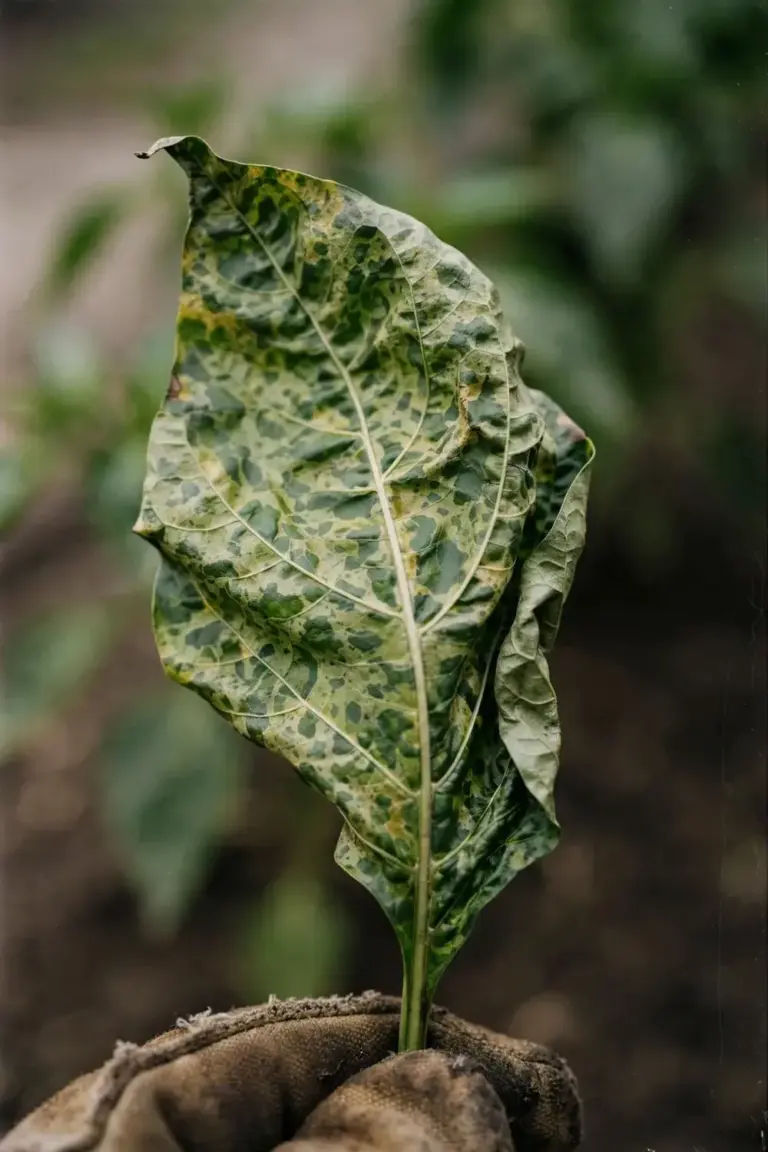
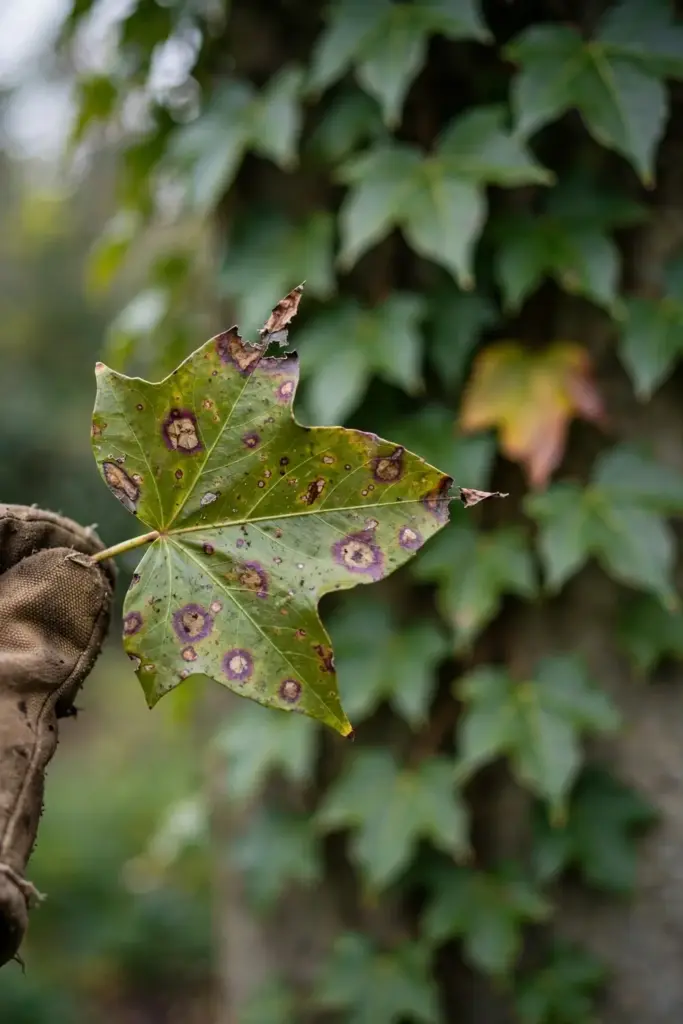
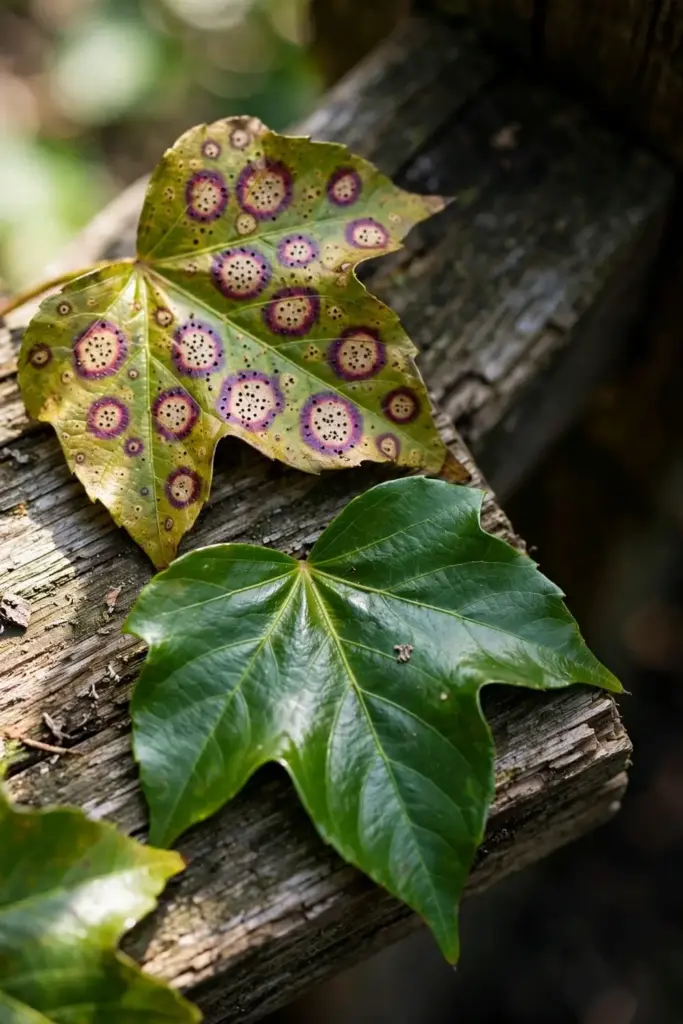
Guignardia leaf spot on Boston ivy starts on young leaves. Young leaves catch infection more readily than mature leaves, and an infection that lands before a leaf finishes expanding can pucker and distort the whole leaf. Early damage shows as small dead spots with a purple-red border. The border is the first field mark to learn.

The University of Wisconsin-Madison fact sheet on Guignardia leaf spot describes the spots as roughly circular, sometimes angular, dead areas 0.6 to 1.3 cm across. Spots on young leaves often sit near the leaf edge or along a vein. A single young leaf can carry several spots while the leaf next to it stays clean. That scattered pattern is normal.
Check the underside too. The spots read through both leaf surfaces. A young leaf that puckers around a fresh spot will keep that distorted shape all season. The distortion itself does no extra harm. The leaf still photosynthesizes around the dead tissue.
How to Identify Guignardia Leaf Spot on Mature Boston Ivy Leaves
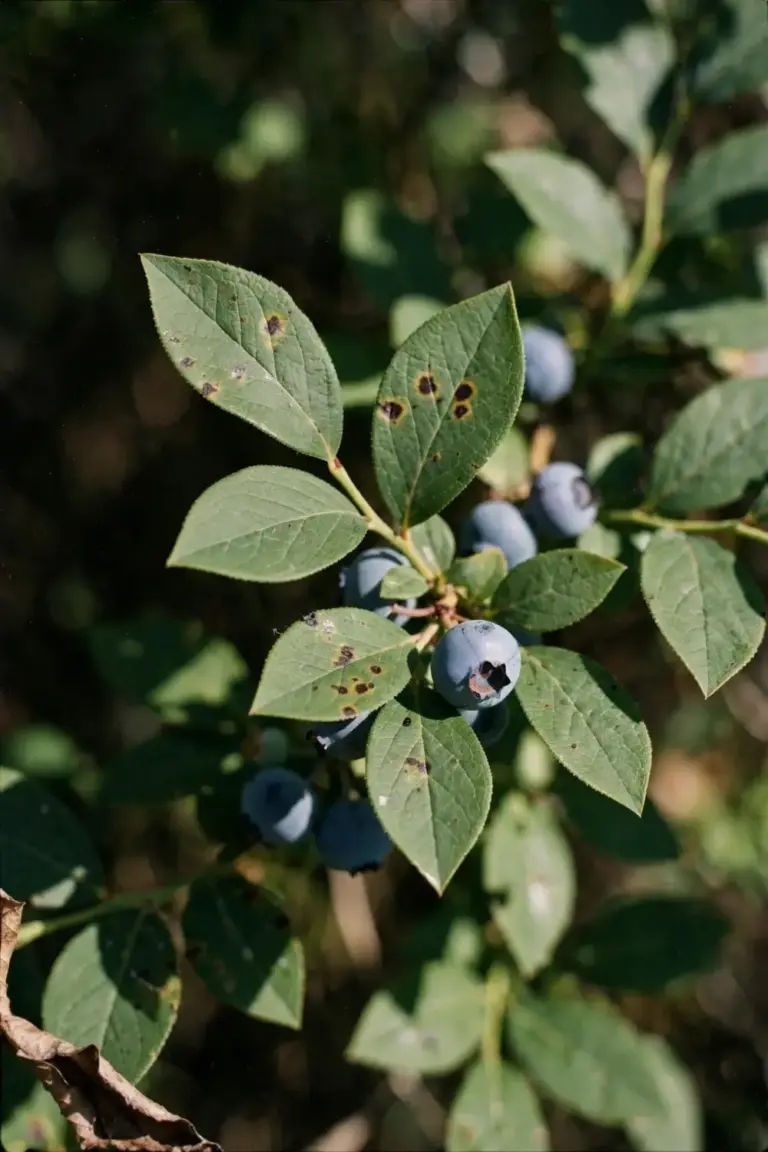
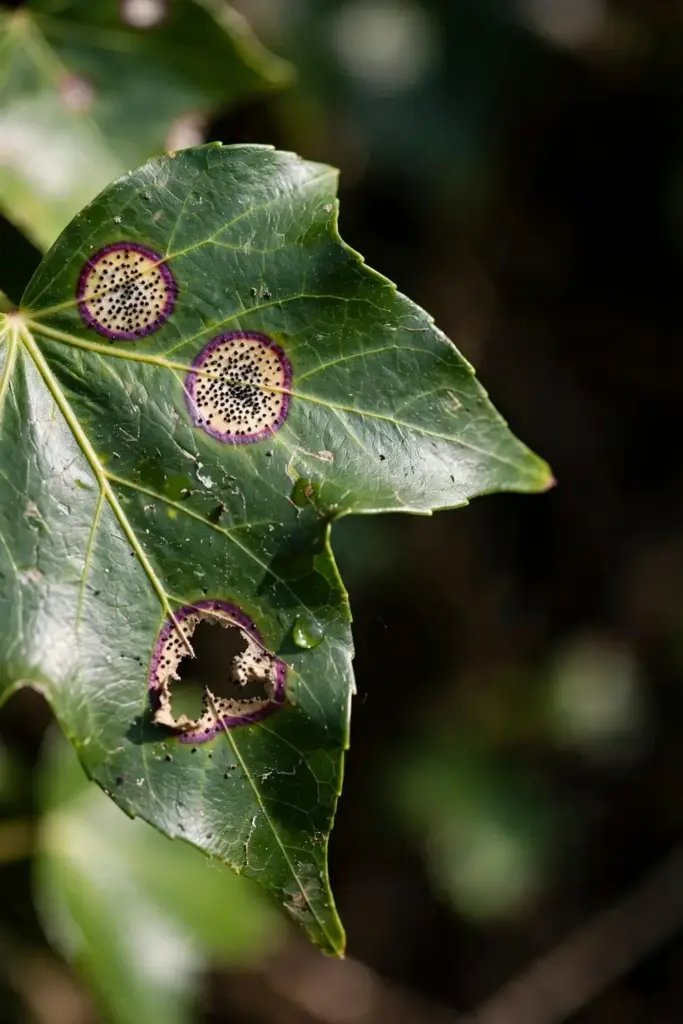
Mature leaves show the full signature. The spots turn round to angular as they grow, and large leaf veins can square off one edge. The Pacific Northwest handbooks describe a dark brown outline around each spot, then a pale halo, with lighter brown centers. The centers may fall out late in the season, leaving small holes with dark rims.

The confirming mark sits inside the spot. A diffuse ring of black dots appears within the dead tissue. Those dots are the pycnidia, the fruiting bodies of the fungus. A hand lens makes them plain. No other common Boston ivy problem puts black fruiting dots inside a bordered dead spot.
Heavy years bring defoliation. Leaves with many spots yellow and drop early. A vine that drops a share of its leaves in a wet year still leafs out clean the next spring. Defoliation becomes a real worry only when it repeats across seasons and thins the vine year after year.
Which Boston Ivy Plantings Get Hit Hardest
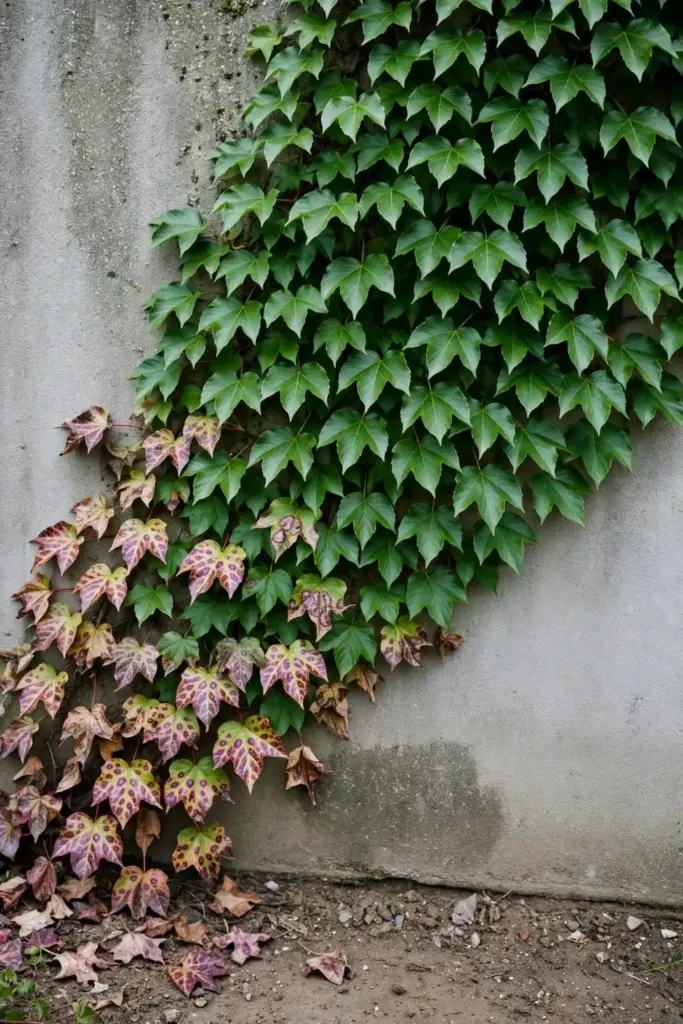
Risk follows moisture and litter, not vine age. A vine that dries fast after rain escapes most years. A vine that stays wet and stands over last fall’s leaves gets hit hardest. The table below ranks the common situations.
| Planting Situation | Risk | Why |
|---|---|---|
| Vine on a shaded wall where leaves stay wet | High | Slow drying keeps foliage wet long enough for spores to infect |
| Vine standing over fallen leaves left through winter | High | The fungus shelters in that litter and restarts the cycle in spring |
| Dense unpruned mat of growth | Moderate to high | Packed foliage traps humidity and slows drying after every rain |
| Vine in open sun with clear ground below | Low | Fast drying and no litter under the vine break both halves of the cycle |
Walls deserve a closer look. A north-facing or shaded wall can hold moisture for hours after a rain that dries elsewhere in the yard. The vine on that wall is the one to check first in a wet spring. The same vine on a sunny wall with clear ground below may show almost no spots in the same year.
Groundcover under the vine matters as well. A thick bed of perennials or mulch that holds spotted leaves through winter keeps the spore source in place. Bare soil or a swept strip under the vine does not. The cleanup step below pays for itself fastest exactly in the high-risk rows of this table.
Why Wet Leaves Drive Guignardia Leaf Spot
Fallen leaves shelter the fungus through winter. Spores form in that litter under cool, moist conditions. Splashing water carries the spores onto healthy leaves. Wind moves some spores too. The whole cycle runs on water, and every management move below either removes the spore source or shortens the time leaves stay wet.
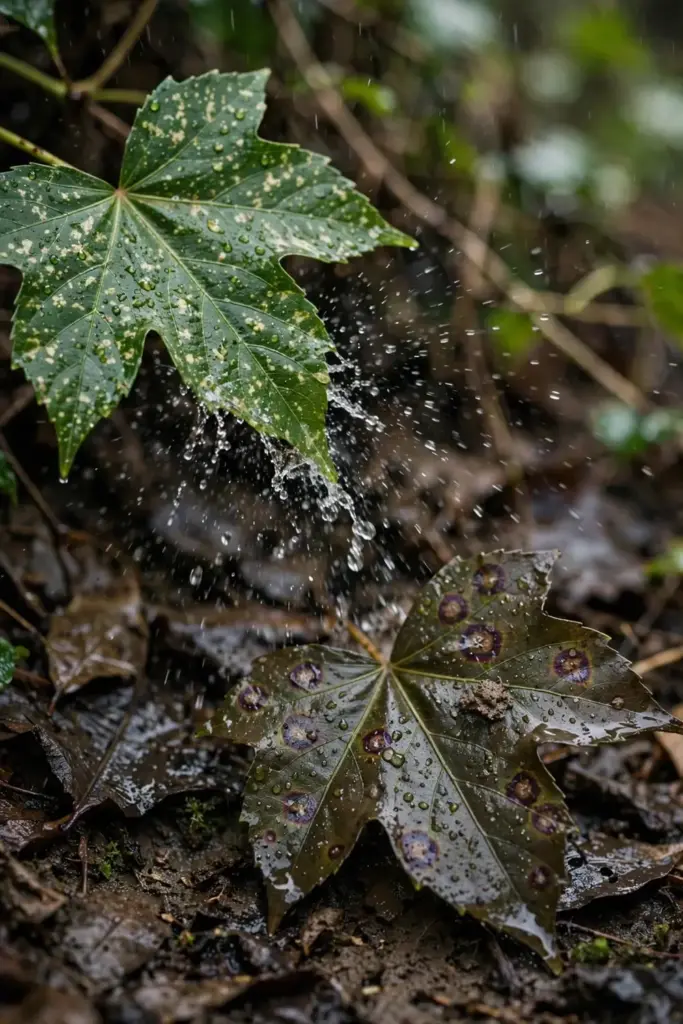
New infections need wet foliage. A leaf that dries within a few hours of sunrise mostly escapes. A leaf that stays wet through a cool overcast day gives spores the window they need. That is why the disease explodes in wet springs and nearly vanishes in dry ones. Weather decides the bad years more than any gardener action does.
The cycle climbs from the ground up. Lower leaves catch the first splash from infected litter. Upper leaves stay cleaner until heavy rain washes spores upward through the foliage. The bottom-up pattern is itself a diagnostic clue. Damage that starts at the top of the vine and works down points elsewhere.
The fungus also survives from season to season in the litter layer. Spring rain wakes the spores. The first infections of the year land on the first young leaves. That timing sets up the single most valuable cleanup in the whole program, and it falls before budbreak.
Cool, moist conditions produce the spores. A dry spell between rains breaks the chain, because spores that land on dry leaves fail to infect. The fungus cannot jump from leaf to leaf without a water film. That single fact explains why the disease clusters in wet springs and why the watering fix works as well as it does.
What Makes Guignardia Leaf Spot Worse in a Home Garden
Overhead watering is the biggest self-inflicted risk. A sprinkler that wets the vine every evening keeps foliage wet through the night. The fungus needs exactly that window. A soaker hose at the base never gives it the chance.
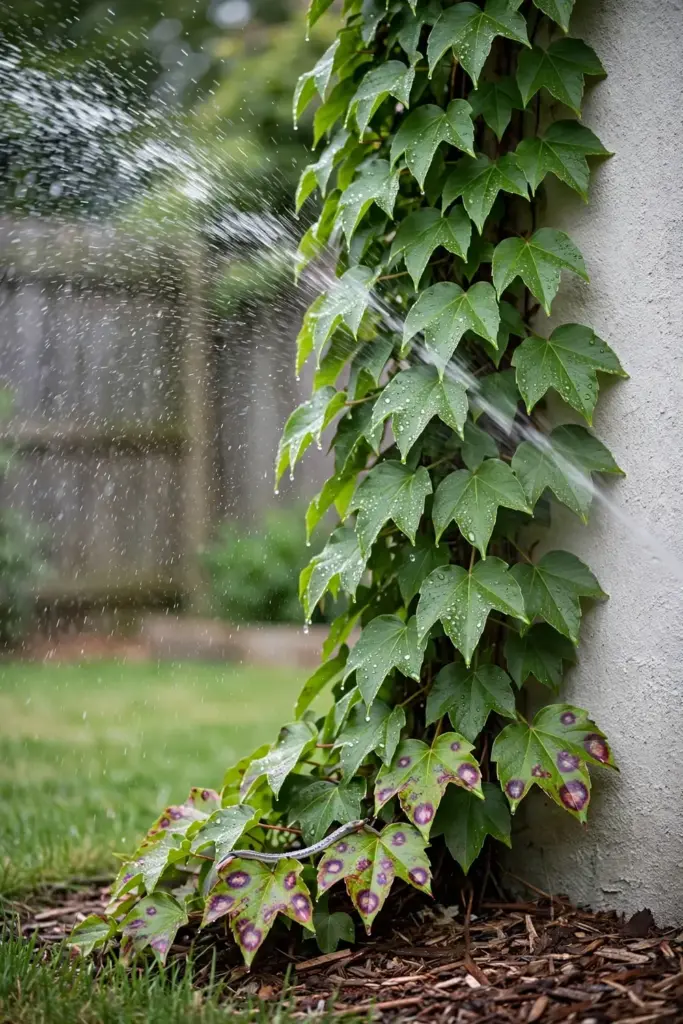
Crowding runs second. A vine left unpruned for years builds a dense mat. Air cannot move through it. Leaves deep in the mat stay wet long after the outer leaves dry. The same mat also traps fallen leaves inside the canopy, where they rot in place and feed spores back to the vine.
Skipped fall cleanup runs third. Leaves that drop under the vine in autumn and sit there all winter become the spring spore source. One missed cleanup does not doom a vine. Three missed cleanups in a row build the inoculum to the point where even a dry spring brings spots.
Site choice sets the ceiling. A vine planted against a shaded wall with no morning sun starts every season at a disadvantage. Morning sun dries foliage early and shortens the wet window. When a vine must grow on a shaded wall, the cleanup and watering steps carry extra weight because the site gives no help.
A vine that was defoliated last year starts this year weaker. Fewer leaves mean less energy stored for the next flush of growth. That is why repeated severe years compound. The threshold in Step 1 exists because one bad year costs little, while a run of bad years drains the vine.
Step 1: Decide Whether Spraying Is Worth It
Step 1 is a cost and benefit call, and the honest answer for most vines is no spray. Guignardia leaf spot on Boston ivy is cosmetic in most years. The vine leafs out clean each spring. Spotted leaves look rough and then drop. Spraying changes none of that, because fungicide protects new leaves and never cures spotted ones.
Spray earns its place in one narrow case. A vine that has suffered severe defoliation for several years running may need preventative fungicide to hold its canopy. Several years of repeated heavy leaf loss is the threshold. One bad wet year is not. A vine that leafs out fully each spring and holds its leaves into fall does not qualify.
The table below compresses the whole program into one view. Five of the six moves cost no spray and no product. The sixth waits at the end of the line.
| Strategy | What It Costs | When It Pays |
|---|---|---|
| Decide first | Ten minutes of honest judgment | Every year, before any other move |
| Leaf cleanup | One session each fall and spring | Every year, highest return of all six |
| Base watering | A soaker hose and a habit change | Every watering from spring on |
| Thinning | One pruning session per year | Every year, worst first on dense vines |
| Leave mild cases alone | Nothing | Every mild year, which is most years |
| Fungicide last resort | Product, repeat sprays, label care | Only after several years of severe defoliation |
Set the budget before the season starts. A vine that qualifies for spray still needs the first four moves. Fungicide on top of a litter layer and a soaked canopy buys little. Fungicide on top of clean ground and dry foliage buys the most protection the product can give.
Step 2: Remove Fallen Leaves Before Budbreak
Clear every fallen leaf from under the vine before budbreak in spring. The Pacific Northwest handbooks give this as the cultural control for the disease, and it is the highest-return move in the program. The fungus shelters in that litter. Removing the litter removes the spring spore source.
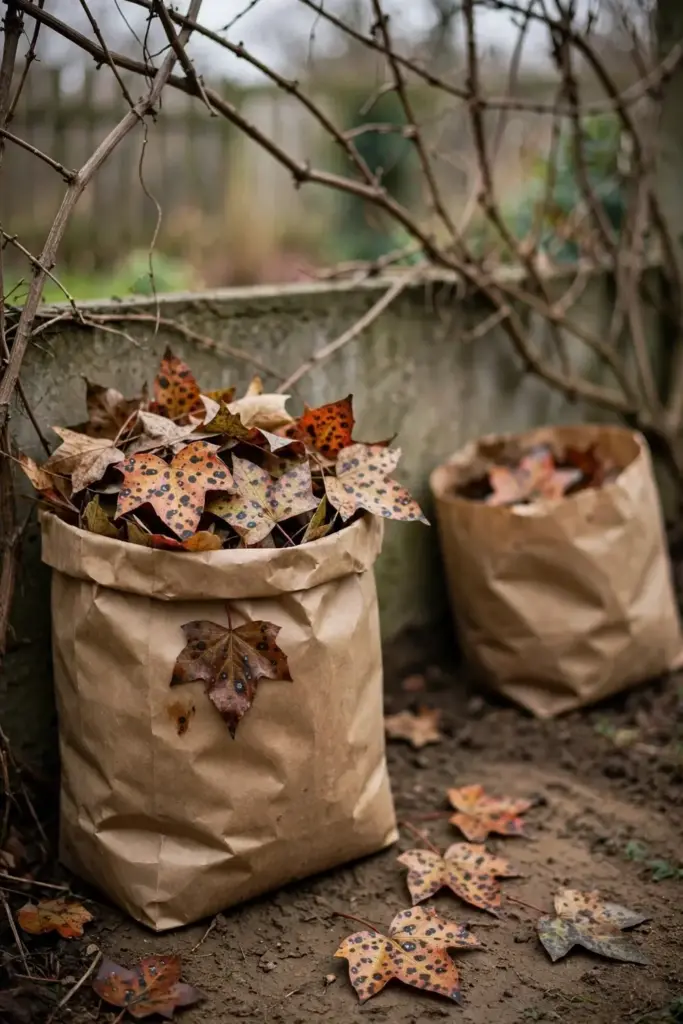
Collect the leaves and destroy them. The University of Wisconsin-Madison fact sheet lists burning where local rules allow it, burying, or hot composting. A municipal green-waste bag or the trash bin works when burning is not allowed and no hot compost pile exists. The point is removal from the garden, not neatness. Leaves left in a pile beside the vine still feed spores back to it.
Work the ground under the vine as well as the vine itself. Spotted leaves lodge in groundcover, in mulch, and in the crotch where the vine meets the wall. Rake them out. A leaf blower on a low setting clears a long wall planting faster than a rake, and it reaches into the base of the vine where a rake snags.
Repeat the cleanup in fall. Leaves that drop in autumn should not sit through winter. A fall pass plus a spring pass before budbreak brackets the whole dormant season. Two cleanups a year hold the spore source near zero on most vines.
Step 3: Water at the Base and Keep Leaves Dry
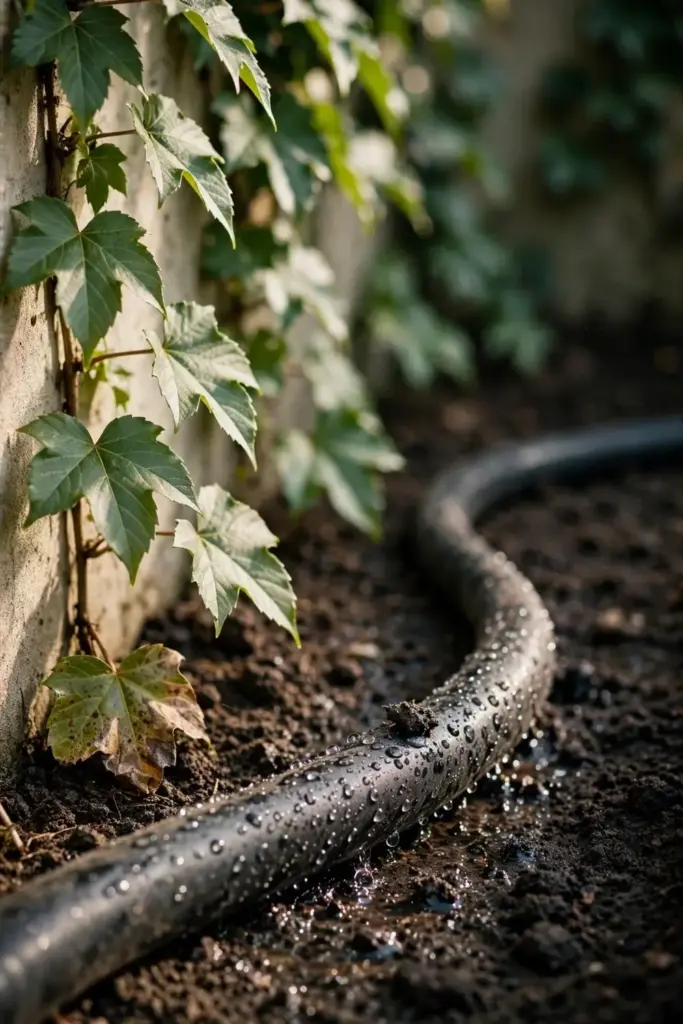
Water the soil, not the vine. A soaker hose or drip line at the base puts water at the roots and keeps the foliage dry. Dry foliage breaks the infection cycle at its weakest link. The soaker hose guide covers hose layout and run times for garden beds.
Pull overhead sprinklers off the vine. A sprinkler that arcs onto a wall planting wets every leaf it touches and holds the wet window open for hours. Cap that head, redirect it, or swap the zone to drip. Penn State Extension lists avoiding overhead irrigation as the first management step for this disease.
Check the roofline and the gutters too. A downspout that dumps onto a wall vine, or an overflowing gutter that sheets water down the wall, wets the vine on every rain. Fix the drainage and the vine dries on its own schedule. This one repair often matters more than any watering change.
Keep the habit through the whole season. One dry spring followed by a sprinkler-soaked summer still invites the disease. The fungus waits for any wet stretch. Base watering from first growth to leaf drop closes the window all year.
Step 4: Thin the Vine for Airflow and Fast Drying
Thin the vine so air moves through it and leaves dry fast after rain. The University of Wisconsin-Madison fact sheet names thinning for airflow as a core control. A thinner canopy dries in hours. A dense mat stays wet into the night.
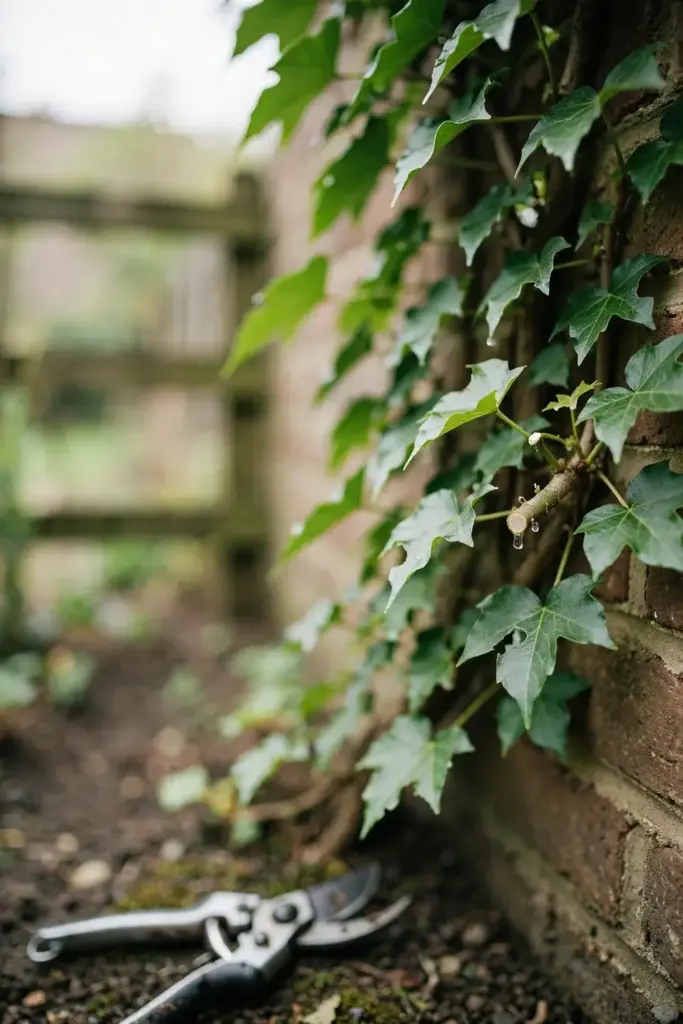
Cut during the dormant season when the vine is bare and the structure shows. Remove the weakest and most tangled growth first. Open gaps that let wind reach the inner leaves. The spring pruning guide covers clean cuts and tool care for woody climbers.
Pull spotted leaves during the same pass. Pick off the worst leaves on the lower vine and destroy them with the fallen litter. Do not strip the vine bare chasing every spot. The remaining leaves still feed the vine, and a bare vine in spring starts the season weakened.
Keep pruners clean between cuts. Wipe the blades with rubbing alcohol when moving from a heavily spotted section to a clean one. Spores ride on steel as readily as on water. The wipe takes seconds and keeps one pass of pruning from seeding the next section.
Hold the line through the growing season. One thinning pass a year keeps most vines open. A vine that grows fast on a rich site may need a light second pass in midsummer. Judge by drying time. Leaves that still feel damp at midday after a morning rain need more air.
Step 5: Leave Mild Cases Unsprayed
Mild cases need nothing. A vine with scattered spots that holds its canopy through the season is a cosmetic case. The spots look rough and the vine carries on. Spraying a cosmetic case spends money, adds chemical load to the garden, and protects nothing that needs protection.
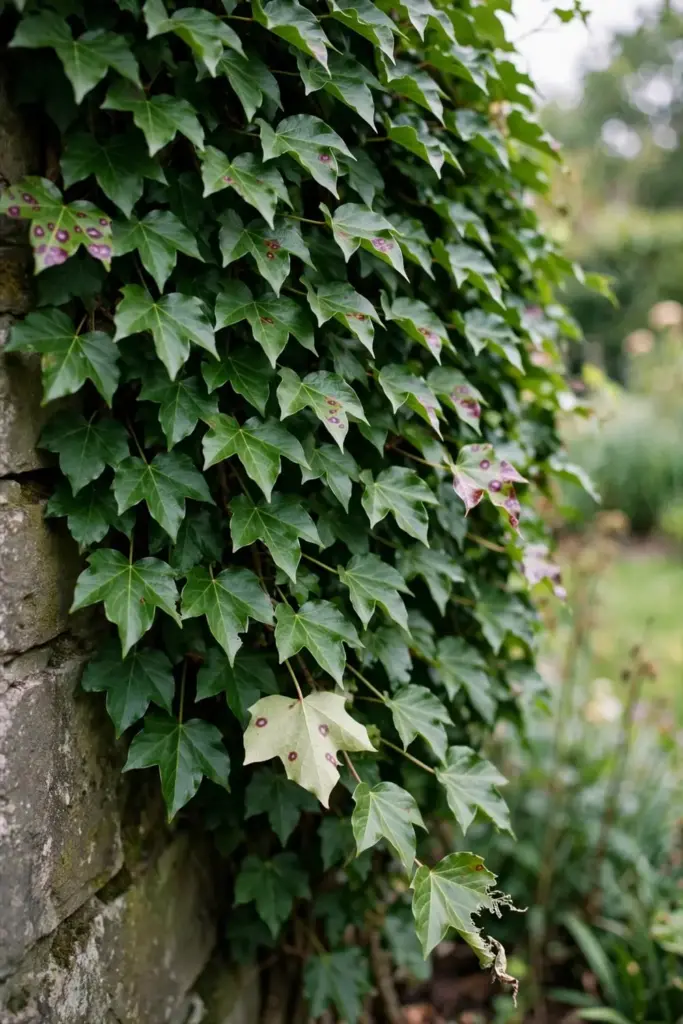
Watch the canopy, not the spots. The measure that matters is leaf cover. A vine that keeps its leaves into fall and leafs out fully the next spring is winning. A vine that thins out year after year is not. Count canopy, not spots.
Resist the late-season spray urge. Protectant fungicides work before infection, not after it. A canopy already spotted in late summer has no clean new growth left to protect. Save the product and the effort for a spring that qualifies under the Step 1 rule.
Patience is the move here, and it has a deadline. A mild case this year earns a watch note for next year. A mild case that turns severe three years running earns the Step 6 conversation. The log matters. A short note each fall on how much leaf the vine held turns a vague worry into a real record.
Step 6: Use Fungicide Only After Repeated Severe Defoliation
Fungicide is the last resort, and it follows strict rules. It applies only to a vine that has suffered severe defoliation for several years running. It protects new leaves. It never cures spotted ones. Read the product label and follow it exactly. The label is the law for rates, safety gear, and repeat intervals.
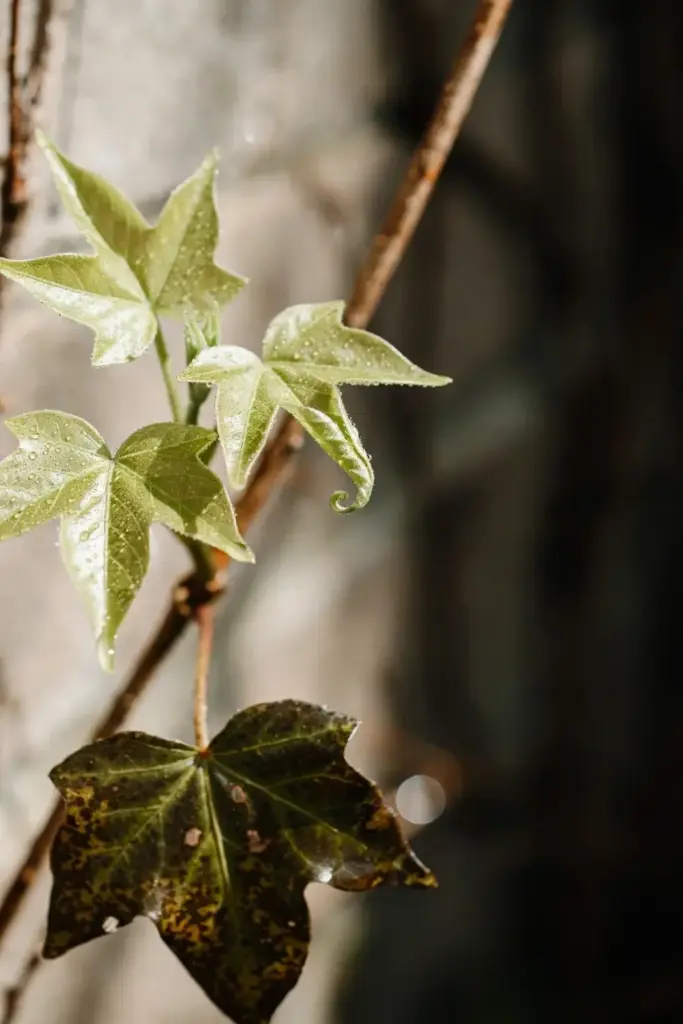
Timing starts at leaf emergence. The University of Wisconsin-Madison fact sheet directs the first application as leaves first begin to emerge. If the weather stays cool and wet, repeat applications run at seven to 14 day intervals until hotter, drier weather develops or until leaves are fully expanded and mature. Penn State Extension gives the same timing from the other direction: apply before, or soon after, the plants have moisture on their leaves for 48 hours.
Rotate active ingredients. The Wisconsin fact sheet names chlorothalonil, copper, mancozeb, and thiophanate-methyl as actives labeled for Guignardia leaf spot control. Do not use the same active ingredient for every treatment, above all with thiophanate-methyl. Rotate at least two active ingredients across the season. Rotation slows the rise of resistant strains of the fungus.
Skip the commercial rates in handbook tables. The Pacific Northwest handbooks list fungicide rates per 100 gallons of water for commercial formulation. Home gardeners do not mix at that scale. Buy a product with a home ornamental label, follow its label, and keep the spray to the vine that qualifies.
Be honest about follow-through before buying. A protectant program works only with thorough, repeated coverage. Two enthusiastic sprays in spring followed by nothing in the wet weeks after buys almost nothing. If the schedule will not hold, skip the product and put the effort into the first four moves instead.
Living With Leaves That Are Already Spotted
A vine spotted by midsummer is a waiting game. The spots will not heal. The leaves will hold or drop on their own schedule. The season is mostly decided, and the useful work points at next spring.
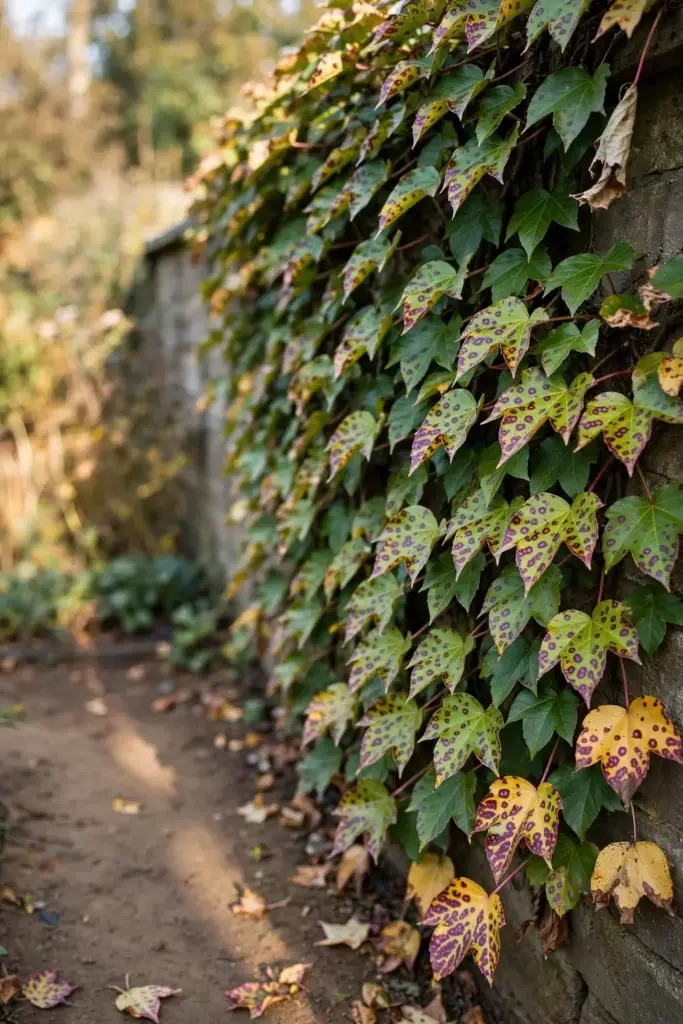
Keep up sanitation. Pick off the worst leaves and clear litter from under the vine so next year starts cleaner. Keep watering at the soil line. Do not strip the vine bare trying to clean it. The remaining leaves still photosynthesize and feed next year’s buds. A vine that looks rough in August can leaf out clean the following spring.
Skip late-season spray. Protectant fungicides applied after the canopy is fully spotted protect nothing, because no clean new growth remains to protect. Save the product and the effort for a spring that qualifies under the Step 1 rule.
Watch for the one escalation that matters. Penn State Extension notes dieback when the plant is severely infected. If sections of the vine die back, cut out the dead wood during the dormant prune and keep the cleanup going. Everything else about this disease rewards patience.
Start next spring with the full program. The fall cleanup comes first, before budbreak. The watering change follows at first growth. A vine that enters spring over clean ground and dries fast after rain starts the season with the spore source near zero and the wet window short. That combination is the whole prevention plan.
Frequently Asked Questions
Almost never. The disease is cosmetic in most years, and a vine that drops some spotted leaves still leafs out clean the next spring. Severe defoliation repeated across several years can weaken a vine, and Penn State Extension notes dieback in severely infected plants. If your vine is dying back, check the cleanup and watering steps first, then weigh the Step 6 spray rules.
No. A spotted leaf never heals. The dead tissue inside each spot stays dead, and no fungicide repairs it. Fungicides work as protectants on new leaves only, applied as leaves emerge in spring. Spraying a spotted canopy wastes product. Put the effort into leaf cleanup and base watering, which protect next year’s growth.
Yes, pick off badly spotted leaves any time during the season and destroy them. This slows the spread by removing active spore sources. Do not strip the vine bare, because the remaining leaves still feed the plant. Always clear fallen leaves from beneath the vine too, since the fungus shelters in that litter and restarts the cycle each spring.
Look for the black dots. Guignardia leaf spot shows bordered dead spots with a diffuse ring of black pycnidia dots inside the dead tissue. A hand lens makes the dots plain. Damage without those dots, such as sun scorch, wind burn, or insect chewing, shows no fruiting bodies. When in doubt, hold a spotted leaf to the light and check for the dot ring.
Only as prevention, and only on a vine that has suffered severe defoliation for several years running. Begin at leaf emergence in spring, before spots appear, and repeat at seven to 14 day intervals through cool, wet weather, rotating at least two active ingredients. Spraying after leaves are already spotted protects nothing. Follow the label exactly for rates and safety.
Where to Go From Here
Guignardia leaf spot on Boston ivy looks alarming and behaves mildly. That gap between appearance and reality is the whole story. Clear the fallen leaves, water the soil instead of the foliage, thin the vine for air, and most years the disease fades into background noise.
Your one action this week: walk the vine with a bag, pick up every fallen leaf beneath it, and check whether a sprinkler or downspout is wetting its leaves. Those two fixes cost nothing and do more than any spray bottle. If the vine qualifies for spray under the Step 1 rule, the Step 6 timing and rotation rules are ready when spring arrives.