Sow 10 seeds after the last frost and watch seedlings break the soil in 7 to 10 days. That is how to grow nasturtium in a sunny bed. One packet of seed, lean soil, and 6 hours of sun a day do the work. Work through 13 moves, from sowing seed after frost to picking flowers for the salad bowl.
Sow after the last frost. Water at the base in the morning. Pick flowers the same day you eat them. Pull the plants after the first hard frost.
I have learned that nasturtium forgives dry soil faster than it forgives rich soil. Rich soil grows big leaves and almost no flowers. Lean soil grows flowers from late spring until frost.
Nasturtium at a Glance: Sun, Soil, and Size
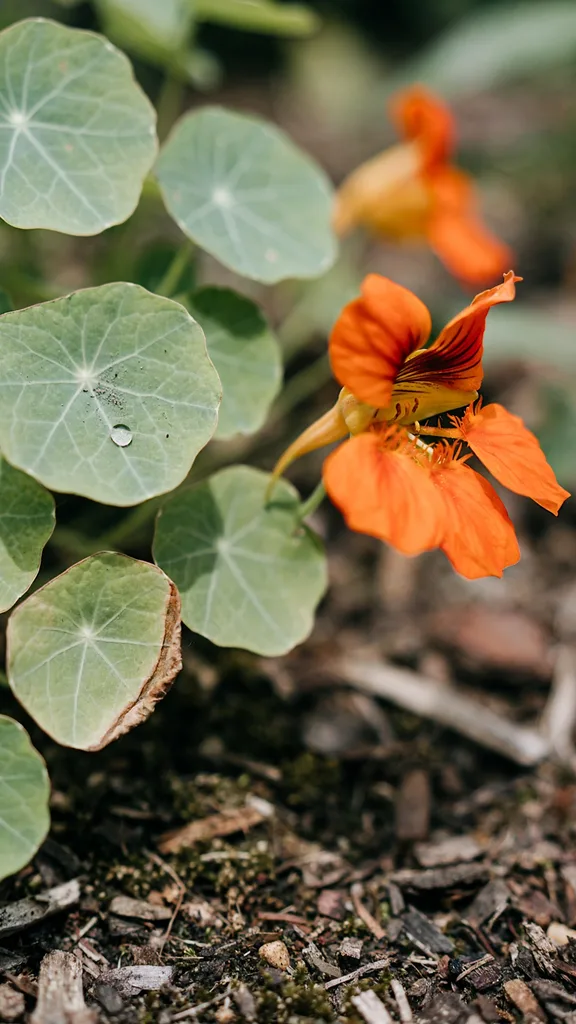
Nasturtium is a fast annual with round shield leaves and spurred flowers in yellow, orange, and red. Give it full sun, lean soil, and room to run.
| Spec | Tropaeolum majus |
|---|---|
| USDA zones | 2a to 11b |
| Life cycle | Tender annual, perennial only in zone 9a and warmer |
| Mature size | 30.5 cm to 3.0 m tall, 30.5 to 91.4 cm wide |
| Light | Full sun, 6 or more hours a day |
| Soil | Poor to average, well drained, acid to neutral |
| Flower size | 2.5 to 7.6 cm across |
| Bloom time | Late spring to early fall |
The North Carolina Extension plant profile lists nasturtium as hardy in zones 2a to 11b, 30.5 cm to 3.0 m tall, and 30.5 to 91.4 cm wide at maturity, with full sun defined as 6 or more hours of direct light a day. The same profile puts soil pH at acid to neutral, 6.0 to 8.0, and notes that nasturtium grows best in poor soils. Fertilizer pushes foliage at the cost of flowers.
Nasturtium comes from South America, and it behaves like a plant that never met a rich garden bed. The leaves are round shields on long stalks, and the flowers sit on slender stems above them. Bees and butterflies visit the open blooms, and deer leave the plants alone.
Sow Nasturtium Seed Directly After the Last Frost
Sow seed where the plant will flower, 1.3 cm deep and 25.4 to 30.5 cm apart, one week after the last frost has passed.
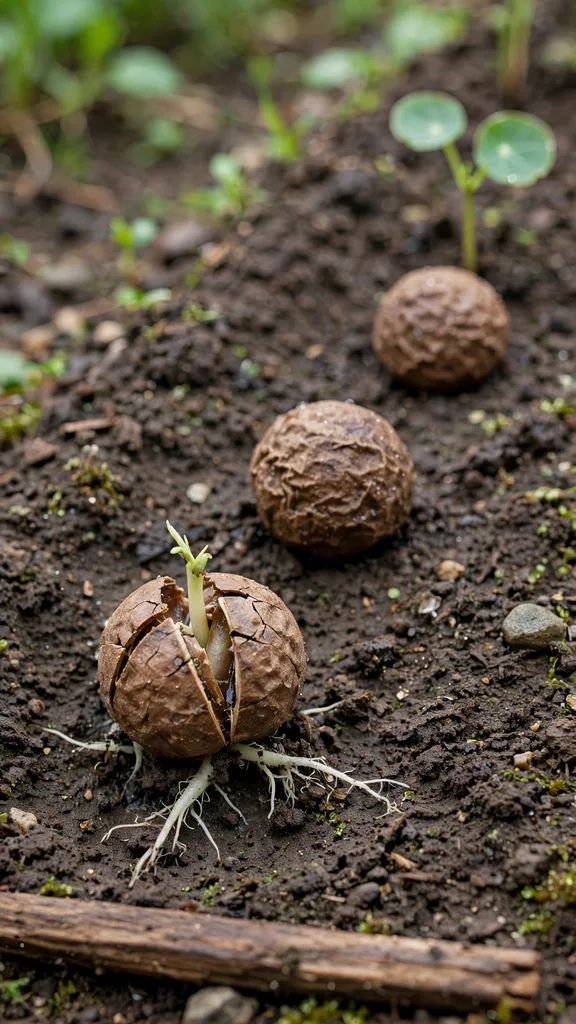
Soak the seed in room-temperature water for a few hours or overnight before you sow. The hard coat softens, and germination speeds up. Push each seed 1.3 cm into warm soil. The seed needs darkness to sprout, so cover it fully and press the soil down with your palm. Water the row with a gentle soak and keep the soil damp until seedlings appear.
Seedlings break the surface in 7 to 10 days in warm soil, according to the University of Wisconsin-Madison Extension nasturtium guide. The same guide says seed sown directly in the garden goes in during late spring to early summer, once all danger of frost has passed. Cold wet soil rots the seed before it sprouts, so wait for warm soil even if the calendar says spring.
Thin the row once seedlings stand 7.6 cm tall. Pull the weakest plants and leave the strongest one at each 25.4 to 30.5 cm mark. A crowded row grows thin stems that flop over each other, and the flowers hide under the leaves. One strong plant at full spacing outflowers three squeezed plants.
Start Nasturtium Indoors 4 Weeks Before Frost Ends
Start seed indoors only when the outdoor season runs short. Nasturtium hates transplanting, so a pot that goes into the soil intact beats a bare-rooted seedling every time.
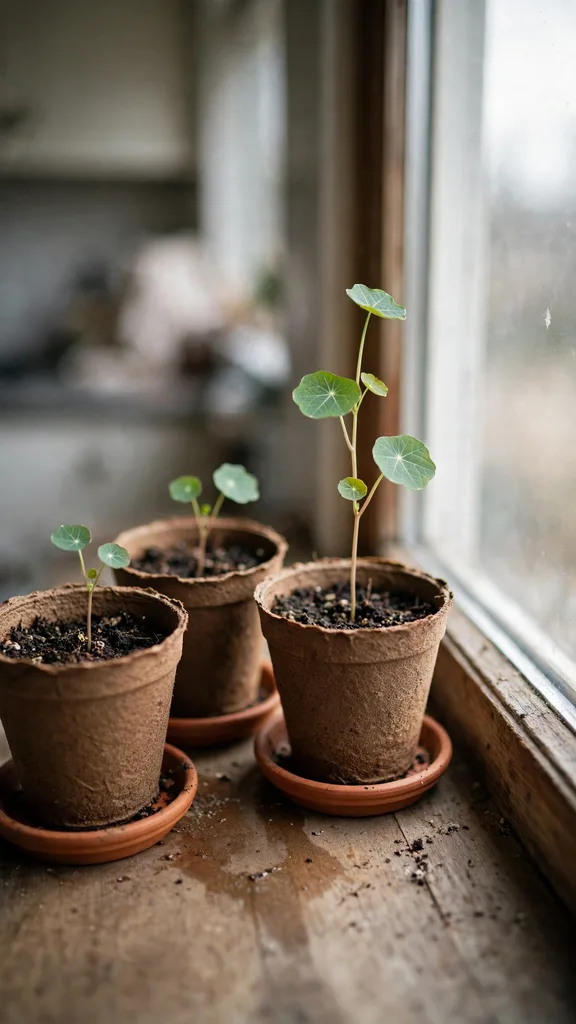
Sow 4 to 6 weeks before the last expected spring frost. Use peat or paper pots that break down in the soil. Fill each pot with seed-starting mix, sow one seed 1.3 cm deep, and water it in. Put the pots on a warm windowsill or under a grow light. Seedlings appear in 7 to 10 days.
Harden the plants off for a week before they move outside. Set the pots outdoors in shade for a few hours on day one, then add an hour of sun each day. Plant the whole pot after the last frost, with the rim buried 2.5 cm below the soil surface. A rim left above the soil wicks water away from the roots. The seed-starting guide walks through the same hardening routine for other tender annuals.
Pick a Nasturtium Variety for Beds, Pots, or Trellises
Pick the habit first and the color second. A trailing vine in a small pot swallows its neighbors, and a compact mound at the back of a border disappears behind taller flowers.
| Variety | Habit | Height | Best Use |
|---|---|---|---|
| Alaska | Bushy, variegated leaves | 30.5 cm | Edging, bright foliage even before bloom |
| Empress of India | Compact, dark leaves | 30.5 cm | Containers, crimson flowers against dark green |
| Jewel | Bushy dwarf, fluted petals | 30.5 cm | Front of borders, mixed colors |
| Tom Thumb | Compact, large blooms | 15.2 to 22.9 cm | Small gardens, window boxes |
| Whirlybird | Compact, semi-double flowers | 30.5 to 45.7 cm | Beds where flat flowers face upward |
| Jewel of Africa | Trailing, variegated leaves | 91.4 cm spread | Baskets, ground cover, walls |
| Troika | Trailing vines | 91.4 to 121.9 cm spread | Trellises, fences, large pots |
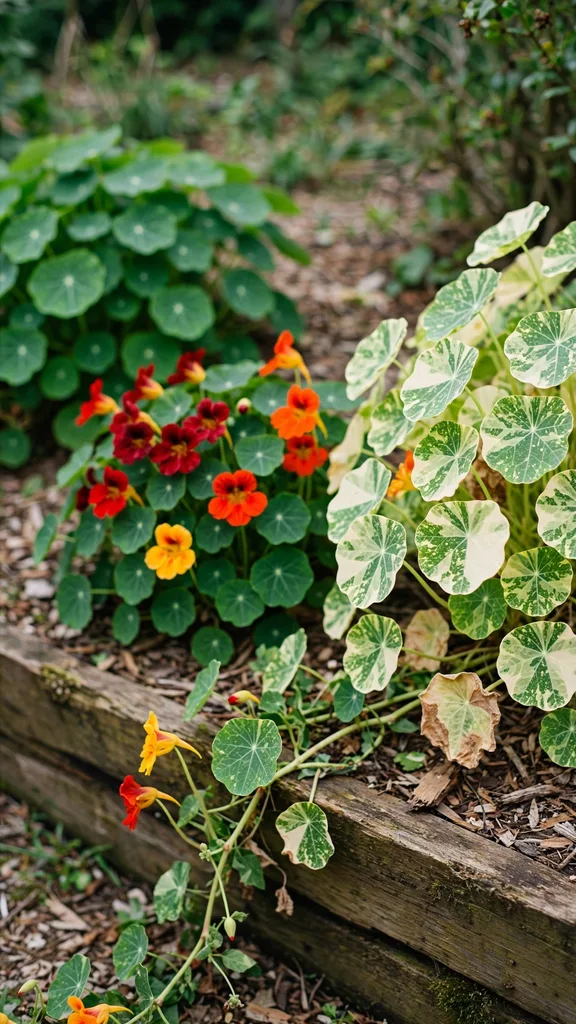
Climbing nasturtium is a habit label, not a separate species. Trailing types carry long stems with no tendrils, so they spill down a wall or climb only when you tie them. Compact orange nasturtium types sit in the Jewel and Tom Thumb range, with single flowers in warm shades. Double scarlet nasturtium types carry extra petals, and the Whirlybird series shows the semi-double form with flat flowers that sit on top of the stems.
Buy seed by habit, not by packet art. A packet that says trailing grows vines to 91.4 cm or more, and a packet that says dwarf stops near 30.5 cm. The spread matters more than the flower color, because a vine in the wrong spot eats the bed. Pair the front of the border with growing zinnia in the same hot sun, and the two flowers carry the bed from midsummer to frost.
Grow Nasturtium in Poor Soil for More Flowers
Starve nasturtium a little and it flowers. Feed it and it grows leaves.
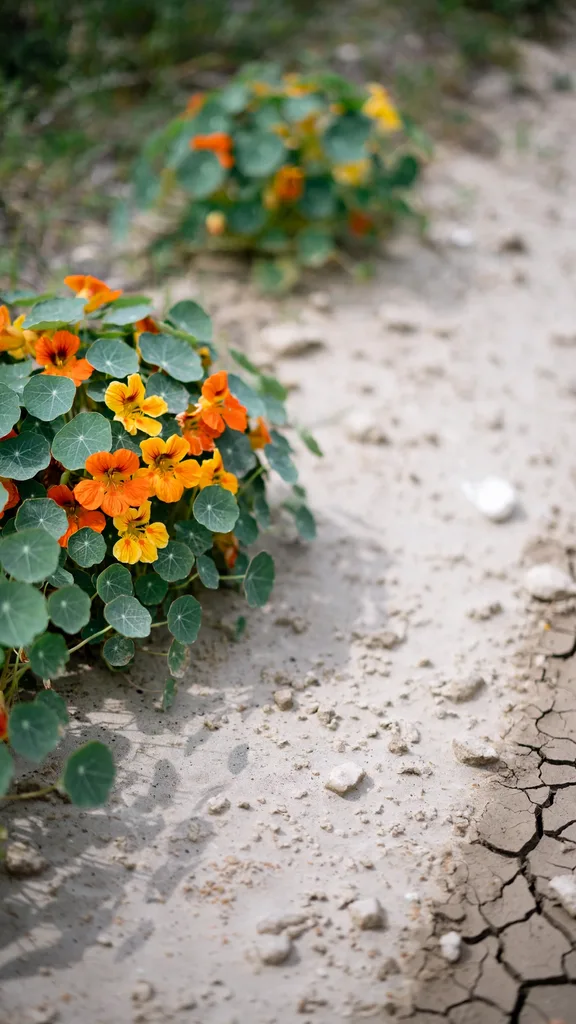
Poor soil is the whole trick. Nasturtium evolved on lean ground, and rich soil tells the plant to grow foliage instead of blooms. Compost, manure, and fertilizer all push the same way. A bed that grew tomatoes last year with heavy feeding is too rich for nasturtium this year. Pick the leanest corner of the garden, the strip along the path, or the bed you never amended.
Dig no fertilizer into the row. Skip the granular feed, skip the liquid feed, and skip the compost topdressing. The one exception is ground so poor that nothing grows in it at all. There, a light handful of compost mixed through the top 15.2 cm gives the seed a start without flipping the plant into leaf mode.
Watch the leaves for the verdict. Small round leaves with flowers between them mean the soil is right. Leaves the size of your palm with no buds mean the soil is too rich. Move the next sowing to leaner ground and leave the fertilizer bag in the shed.
Water Nasturtium Lightly and Skip the Fertilizer
Water at the base in the morning, then leave the plant alone. Nasturtium tolerates dry soil and drought. Wet leaves invite trouble. Give new seedlings a gentle soak every 2 to 3 days until roots take hold, then water only when the top 5.1 cm of soil feels dry. A deep soak once a week beats a light sprinkle every day, because shallow watering keeps roots near the surface where a hot spell dries them out fast.
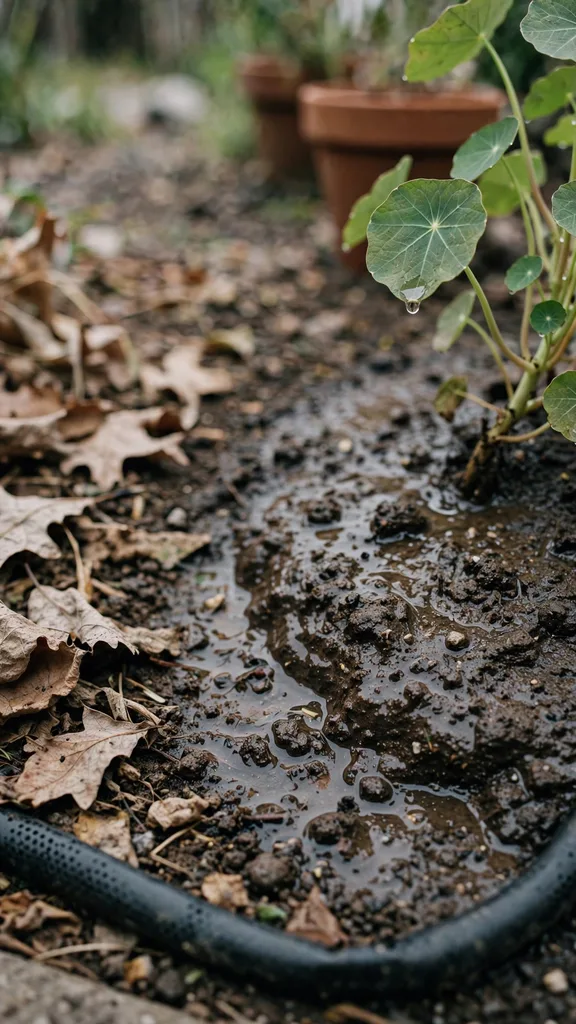
Water the soil, not the plant. A hose aimed at the leaves spreads soil onto the foliage and keeps it wet into the night. Wet foliage in still air is where leaf spots start. A watering can at the base, or a soaker hose laid along the row, keeps the leaves dry and the roots damp.
Stop watering like a vegetable bed. Nasturtium in bloom needs steady moisture, not constant moisture. A plant that wilts a little at midday and recovers by evening is coping with heat, not dying of thirst. Soak it only when the soil is dry to your second knuckle.
Plant Nasturtium as an Aphid Trap Crop
Plant nasturtium at the edge of the vegetable bed and let aphids choose it over your crops. The plant draws aphids onto itself, and that is the point.
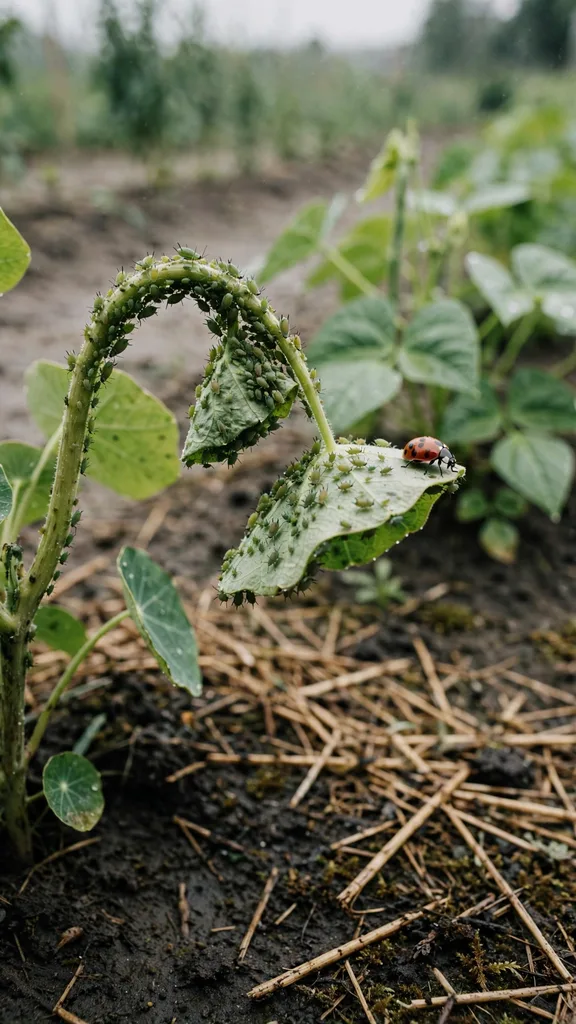
Aphids prefer nasturtium to most vegetables. Set a row of nasturtium 30.5 to 61 cm from beans, brassicas, and tomatoes, and the aphids cluster on the nasturtium stems first. You deal with the pests in one place instead of hunting them across the whole bed. A hard jet of water knocks a colony off the stems. Cut the worst stems and drop them in the compost when the colony gets thick.
Do not plant nasturtium in the middle of the brassica bed. Aphids and cabbage white butterflies both use nasturtium and cabbage, and a trap crop planted too close hands the pests a bridge to the crop. Keep the nasturtium at the edge, with open ground between it and the cabbages. The gap slows the move from trap to crop.
The trap works only while you watch it. Check the stems twice a week from late spring onward. A trap crop left unchecked turns into a breeding ground, and the aphids spill onto the vegetables anyway. Pull the whole plant when the colony outruns the water jet, and sow a fresh row in the same spot.
Fill Pots and Hanging Baskets With Trailing Nasturtium
Trailing nasturtium belongs in a pot with room to spill. A 25.4 cm pot holds one plant, and a 30.5 cm pot holds two.
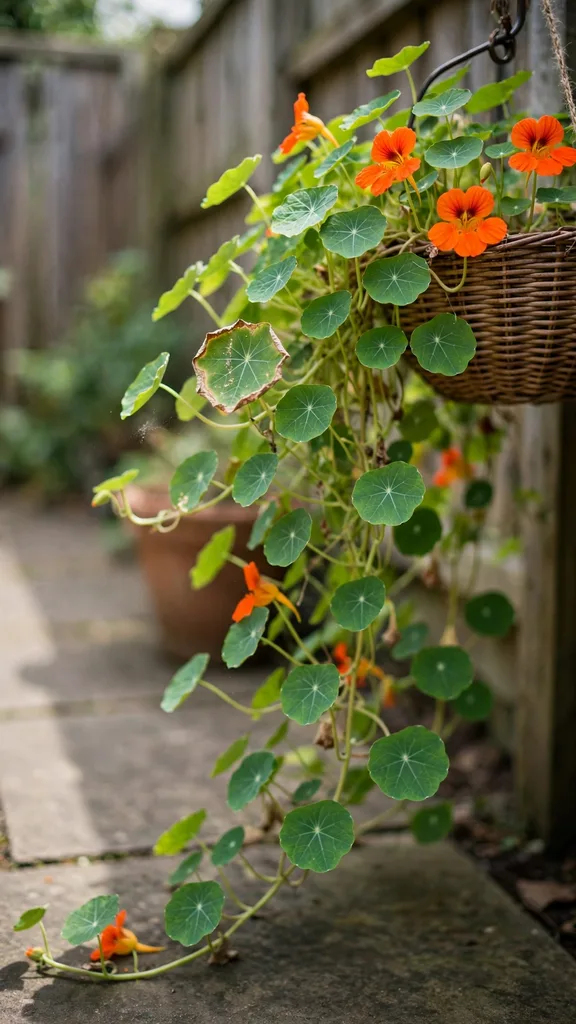
Fill the pot with lean potting mix, not rich compost. Add one part coarse sand or perlite to two parts mix so water drains fast. Nasturtium roots rot in a pot that stays wet, and a pot with no drainage hole is a death sentence. Drill holes if the pot has none.
Sow 3 seeds in the center of the pot and thin to the strongest one. Trailing stems spill over the rim and reach 91.4 cm across by midsummer. Hang the basket where the stems clear the ground, or set the pot on a wall where the vines fall free. Stems that drag on wet soil root at every node and turn into a tangled mat.
Water pots more often than beds. A pot dries out in a day of hot sun, and a dry pot stops blooming. Water when the top 2.5 cm feels dry, and let the excess run out the bottom. Feed nothing. A pot fed like a tomato grows leaves and no flowers.
Train Trailing Nasturtium Up a Trellis
Tie trailing stems to the trellis by hand. Nasturtium has no tendrils, so it never climbs on its own.
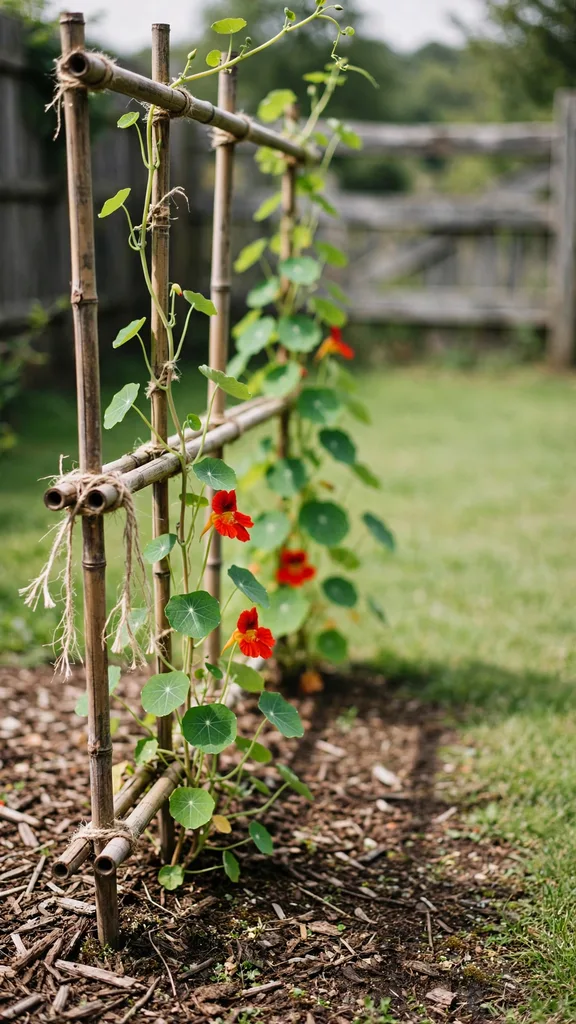
Set the trellis before you sow. A trellis 1.8 m tall suits the longest vines, and a fence or a bamboo teepee works just as well. A tall row of growing sunflower behind the trellis gives the vines a windbreak and a second flower color. Sow seed 15.2 cm from the base of the support and thin to one plant per 30.5 cm of trellis width. Stems grow fast in warm weather, and a vine left untied for a week tangles into a knot on the ground.
Tie loosely with soft twine every 30.5 cm of new growth. Loop the twine around the stem and the trellis in a figure eight, with a finger of slack. A tight tie cuts the stem as it thickens. Check the ties every 2 weeks through the season and retie the ones the stems outgrew.
Cut back the longest stems in midsummer when they pass the top of the trellis. A clean cut above a leaf node sends out two new side shoots, and the plant fills the trellis instead of piling over the top. The cut stems root easily in a glass of water, and those rooted cuttings fill gaps in the bed.
Pick Nasturtium Flowers and Leaves to Eat
Pick flowers in the morning, when the petals are cool and crisp. Nasturtium flowers and leaves are edible, with a peppery bite like watercress.
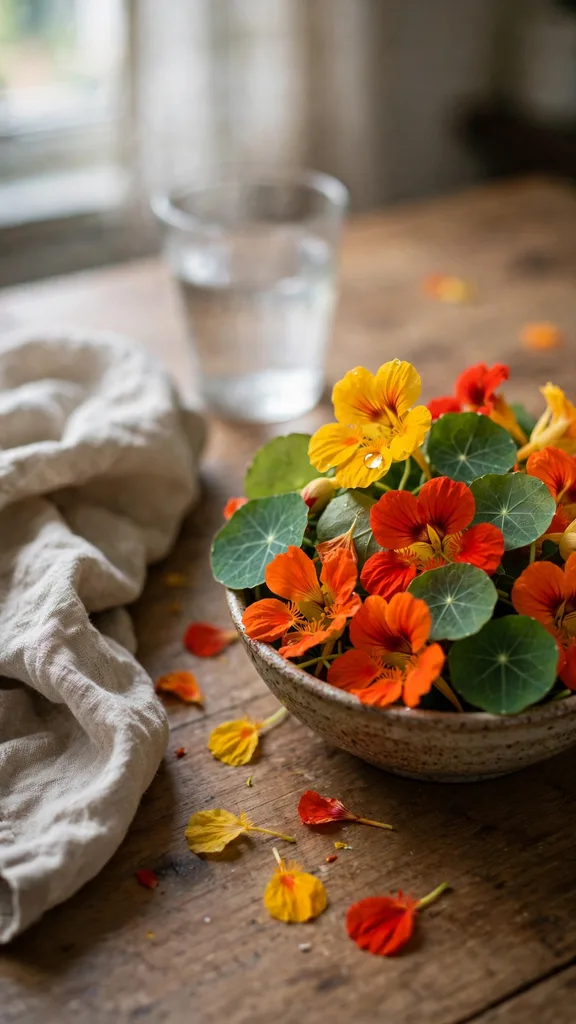
Pick young leaves for salads. Young leaves taste bright and peppery, while older leaves turn bitter. Tear the leaves into a green salad, lay whole flowers on top, and eat the flowers whole. The flowers carry a milder pepper than the leaves, and the color holds on the plate. Pick the flowers the same day you eat them. A flower picked in the morning wilts by evening in the fridge.
Leave the buds and the green seed pods for the kitchen too. The buds pickle like capers, and the young pods go into the same brine. Rinse every pick in cold water first. Aphids hide in the folds of the flower, and a rinse sends them down the drain.
Pick often and the plant blooms longer. Every flower you pick is one less seed pod forming, and the plant answers by making more flowers. Deadheading works the same way. Snip spent blooms at the stem, and new buds open within days. A plant left to set seed stops flowering and puts its energy into pods.
Stop Aphids and Cabbageworms Before They Spread
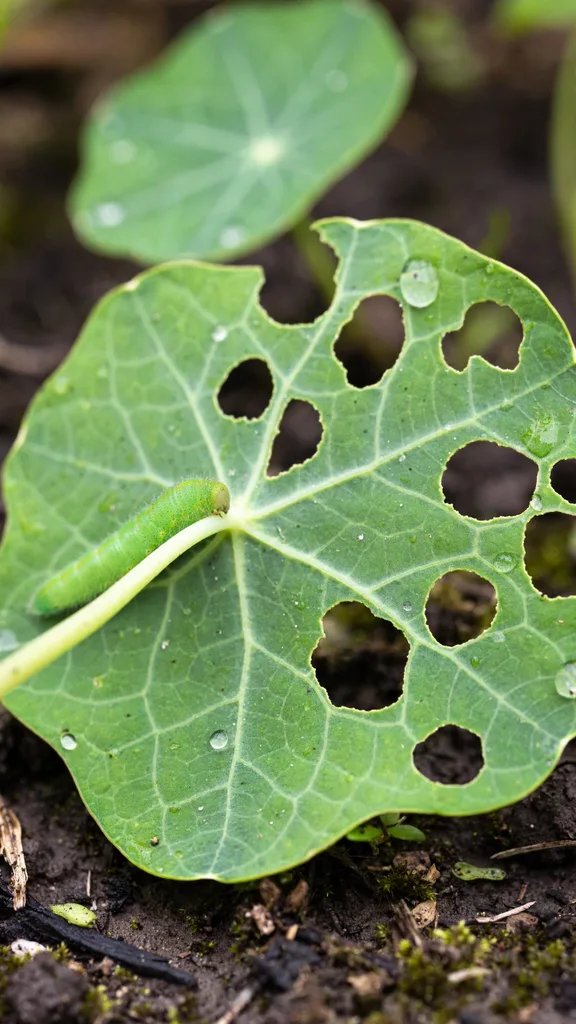
Check the undersides of the leaves twice a week. Aphids and imported cabbageworm caterpillars are the two pests that matter on nasturtium, and both start small.
Aphids cluster on the soft growing tips and the undersides of young leaves. A hard jet of water from the hose knocks most of them off, and ladybirds finish the rest. Spray in the morning so the leaves dry by noon. A colony that survives two water jets gets cut out. Snip the stem below the colony and drop it in a bucket of soapy water.
Imported cabbageworm caterpillars chew round holes in the leaves and hide along the veins, green and easy to miss against the leaf. Pick them off by hand and drop them in the same bucket. Check the leaves after rain. Damp mornings are when the caterpillars feed hardest.
Leafminers draw thin winding trails across the leaf surface. The trails look alarming and do no real damage. Leave them. A plant with a few mined leaves still flowers, and spraying for leafminers kills the insects that eat aphids.
Sow a Second Round 8 Weeks Before the First Frost
Sow again 8 weeks before the first frost. The first planting tires by late summer, and a fresh row carries the color into fall.
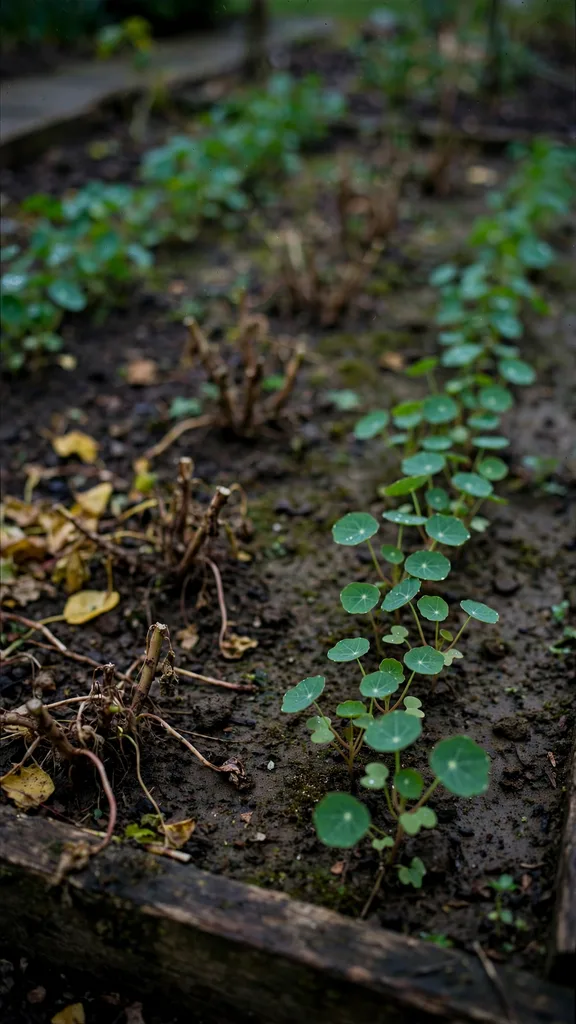
Cut the tired plants back by half in midsummer. Leggy stems and yellowing leaves mean the first planting is done. New shoots push from the lower nodes within 2 weeks, and the plant blooms again, flowering through September in most zones when cut back hard in July.
Sow the second round in a fresh spot if the first row sits in full sun. Afternoon shade suits the second sowing. Young seedlings in hot soil struggle, so a spot with morning sun and shade after 2 p.m. grows the strongest fall plants. Water the new row daily until seedlings stand 7.6 cm tall.
Time the second sowing by your frost date, not by the calendar. Seedlings need 7 to 10 days to appear, and the plants reach full bloom in the weeks that follow, so sow in time for the flowers to open before the cold arrives.
Skip 5 Mistakes That Leave You With Leaves and No Flowers
Five mistakes cause most nasturtium failures. All five are easy to skip once you know them.
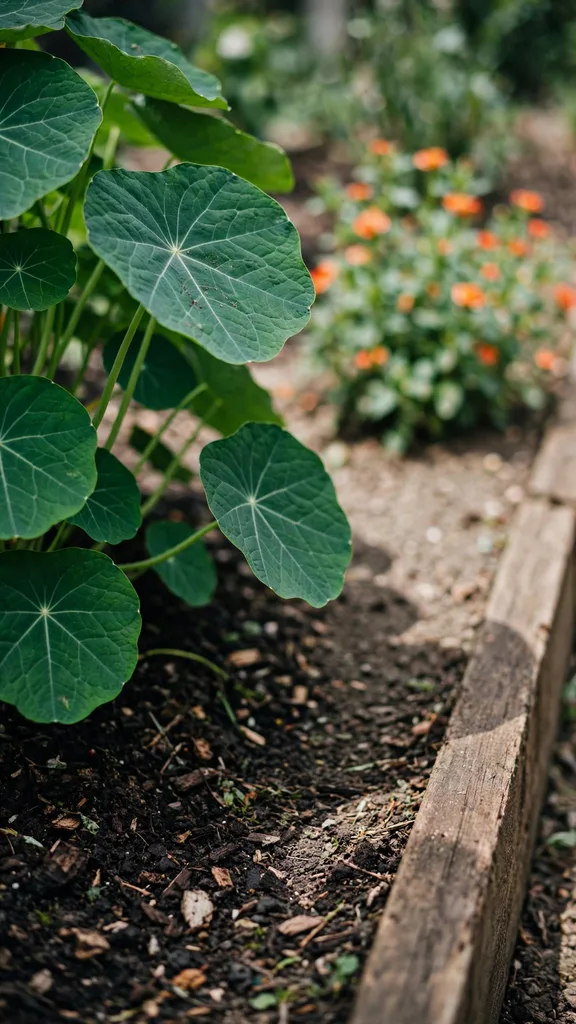
Mistake one is rich soil. Compost and fertilizer grow leaves the size of saucers and almost no flowers. Sow in the leanest bed you own and feed nothing.
Mistake two is sowing too early. Seed in cold wet soil rots before it sprouts. Wait one week past the last frost and check that the soil feels warm to your hand.
Mistake three is shade. Nasturtium in shade grows long pale stems and no blooms. Give the plant 6 hours of direct sun, and accept fewer flowers in a part-shade spot.
Mistake four is crowding. Seedlings left 7.6 cm apart tangle into a mat that flowers poorly. Thin to 25.4 to 30.5 cm and let each plant breathe.
Mistake five is letting the plant set seed. A plant that finishes its pods stops flowering. Pick the flowers, deadhead the spent blooms, and pull the pods you do not want to eat.
Frequently Asked Questions
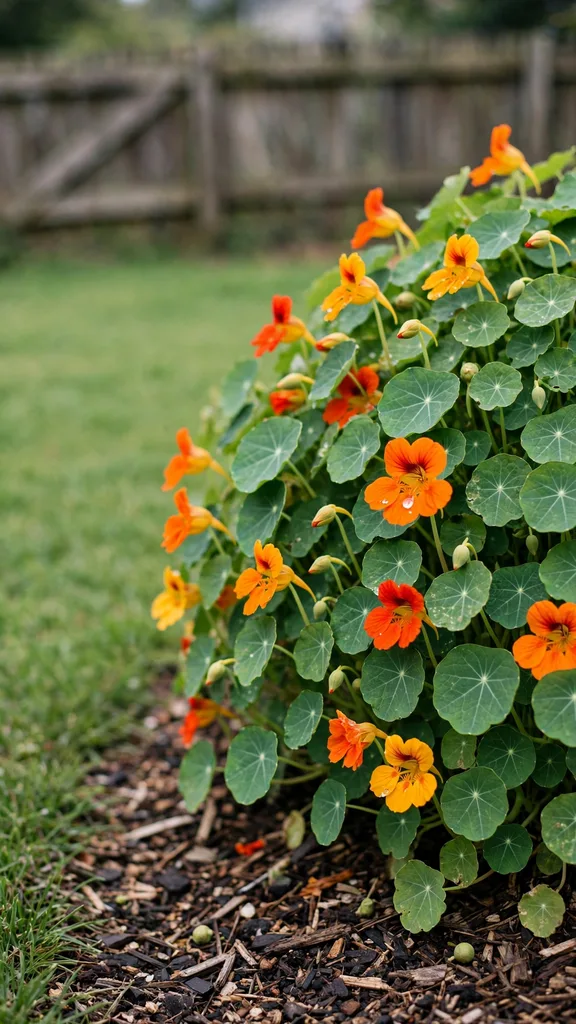
Seedlings appear in 7 to 10 days in warm soil. The first flowers open in the weeks that follow, and plants reach full size by midsummer, blooming until the first frost kills them. A second sowing 8 weeks before frost extends the color into fall. Growth runs fastest in warm weather with full sun and lean soil.
Yes. One plant fits a 25.4 cm pot, and two fit a 30.5 cm pot. Use lean potting mix with added sand or perlite for fast drainage, and drill holes if the pot has none. Water when the top 2.5 cm feels dry. Trailing types spill over the rim and reach 91.4 cm by midsummer, so hang the pot where stems clear the ground.
Yes. The flowers, young leaves, buds, and green seed pods are all edible, with a peppery taste like watercress. Pick young leaves, because older leaves turn bitter. Rinse every pick in cold water to wash out aphids hiding in the flower folds. Grow nasturtium without sprays if you plan to eat it, and skip plants from garden centers that may carry pesticide residue.
Rich soil is the usual cause. Fertilizer and compost push leaf growth and cut flowering to almost nothing. Shade is the second cause, since nasturtium needs 6 hours of direct sun to bloom well. Move the next sowing to lean soil in full sun and feed nothing. Cut the current plant back by half and stop watering it like a vegetable bed.
Nasturtium is a tender annual in most zones and dies at the first frost. It self-seeds freely. Seedlings appear in the same bed the next spring where the seed fell, and in zone 9a and warmer the plant behaves as a short-lived perennial that survives mild winters. Save dry seed pods in fall if you want to sow a chosen spot next spring instead of waiting for volunteers.