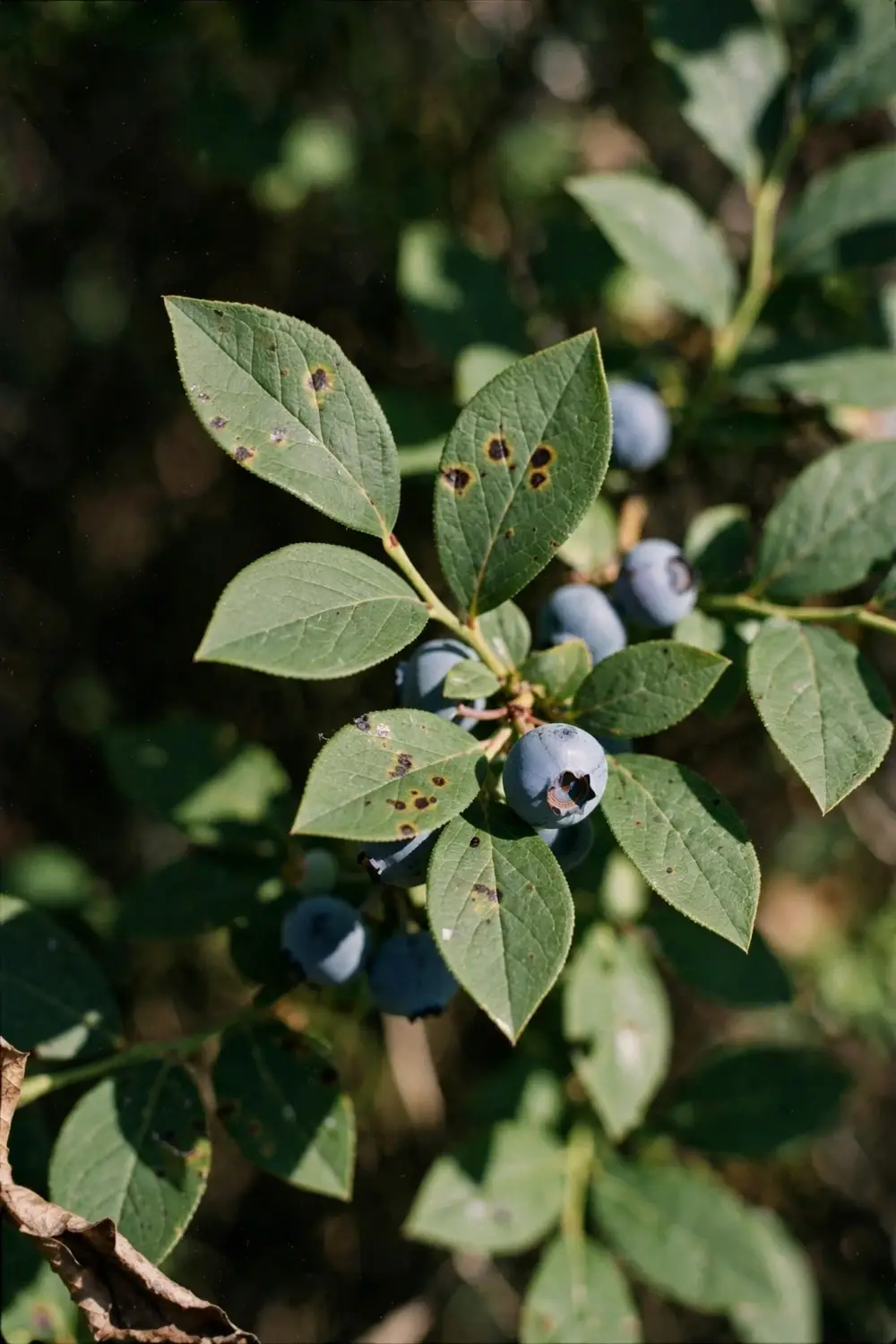

Give a spotted blueberry bush 10 minutes of close inspection before you reach for any spray. That is the whole job with dothichiza leaf spot, a minor fungal disease of blueberry that looks worse than it usually is. The rest of this page is 6 strategies, from the first pinpoint lesion to the decision to leave the sprayer in the shed.
Dothichiza leaf spot, also called Double Spot, is a fungal leaf disease of blueberry caused by Dothichiza caroliniana. It starts as pinpoint dark brown lesions that grow into round brown spots with a dark margin. Most home plantings need no spray at all.
I have learned to leave light cases alone and spend the effort on sanitation instead. Light spotting rarely costs fruit, and the steps below show when to watch, when to clean up, and when a spray earns its place.
What Dothichiza Leaf Spot Actually Is
Dothichiza leaf spot is Double Spot of blueberry, a fungal leaf disease caused by Dothichiza caroliniana. It attacks leaves. It does not rot fruit, girdle stems, or kill bushes in home plantings.
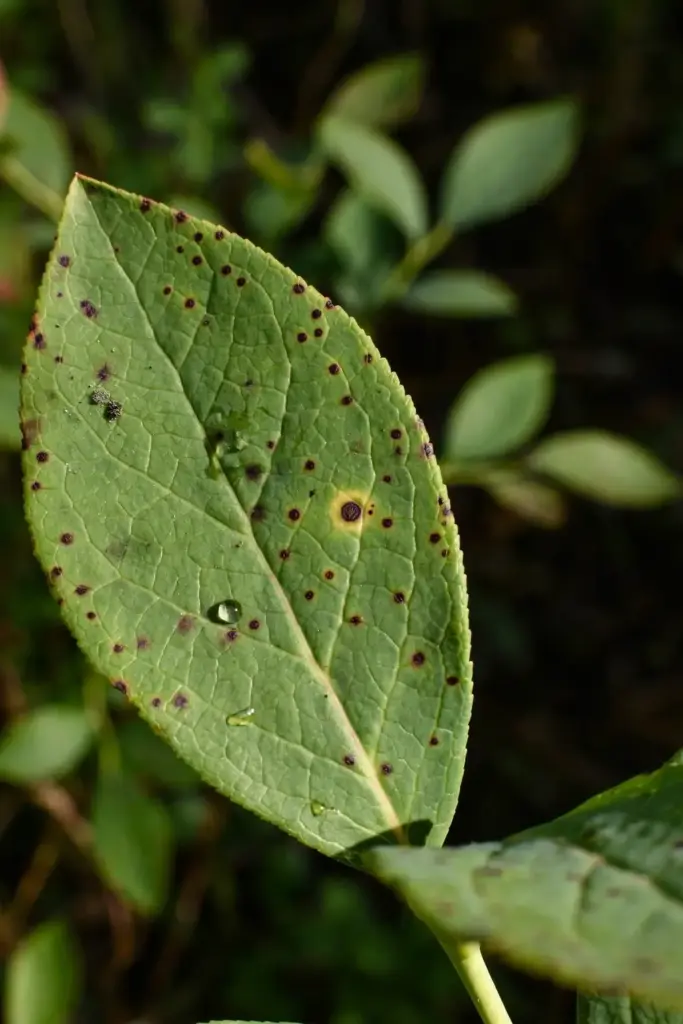
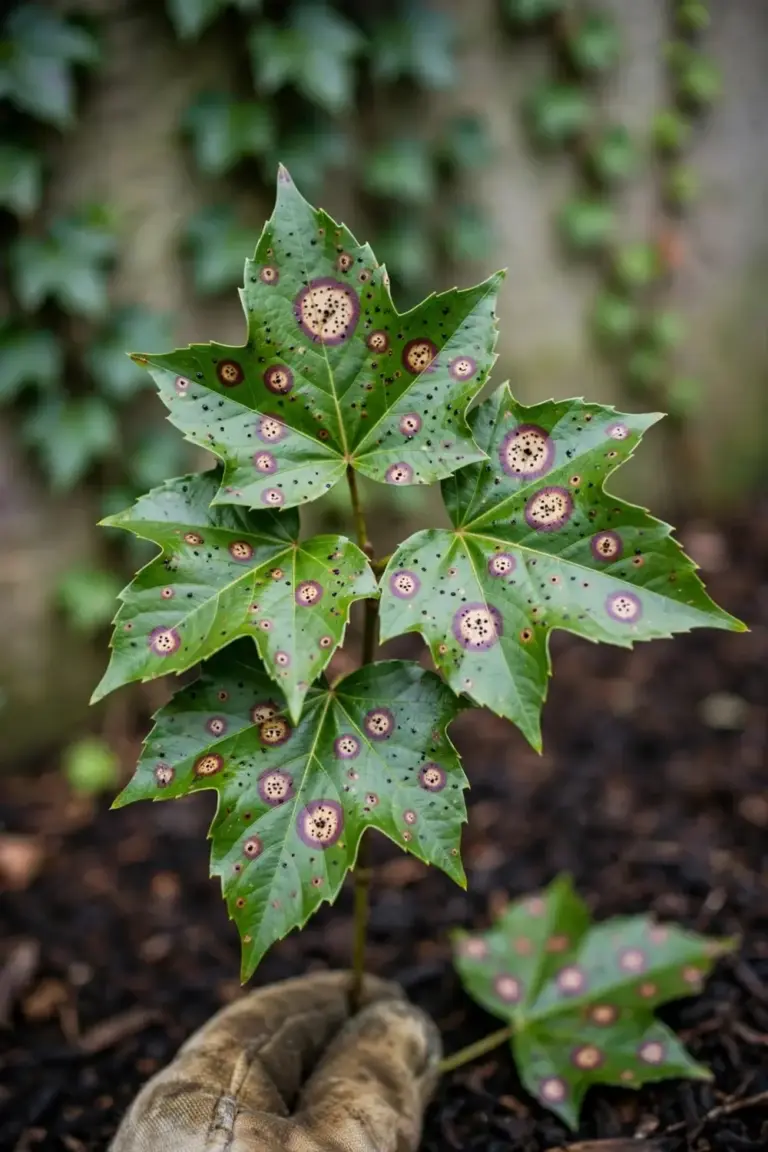
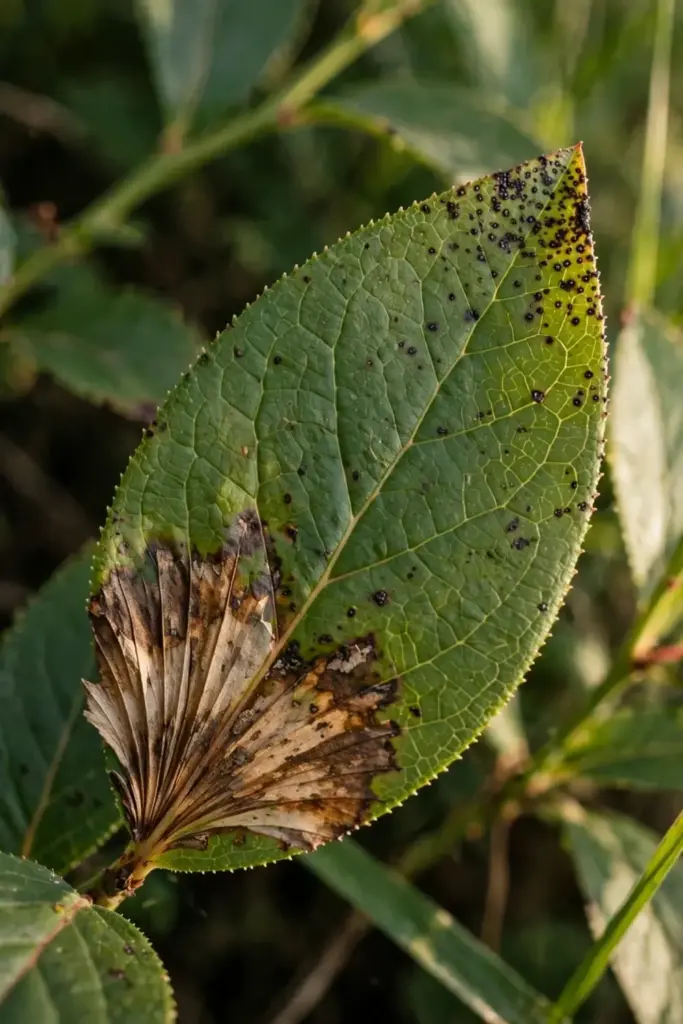
Florida agriculture officials describe the first lesions as pinpoint, dark brown marks that enlarge to circular or subcircular brown spots up to 3 mm in diameter, with a dark brown margin and a slight, diffuse yellow halo, in the Florida plant pathology bulletin on Dothichiza leaf spot of rabbiteye blueberry. The spots keep enlarging as the season runs on, and that growth gives the disease its Double Spot name.
The disease is documented on rabbiteye blueberry in Florida and on blueberry plantings covered by North Carolina Extension. Home gardeners face a different decision than commercial growers, because a few spotted leaves cost a home bush little.
Two names describe one disease, and both show up in Extension writing. Florida agriculture officials titled their bulletin Dothichiza leaf spot, after the pathogen Dothichiza caroliniana. North Carolina and Oregon Extension writers call it Double Spot, after the way the lesion grows a second dead area around the first. Use either name at a garden center. Check the botanical name before following any advice tied to a common name, since common names get reused across unrelated diseases.
The genus name needs one more clarification. Other fungi in the genus Dothichiza cause cankers on trees such as poplar and dogwood. Those canker fungi are different species with different syndromes and different hosts. They are not this leaf spot, and canker advice does not apply to spotted blueberry leaves. Only Dothichiza caroliniana is the leaf-spot pathogen on blueberry.
How to Identify Dothichiza Leaf Spot on Blueberry Leaves in Early Summer
Early-season dothichiza leaf spot shows as pinpoint dark brown lesions on blueberry leaves. Each lesion is tiny at first and easy to miss.
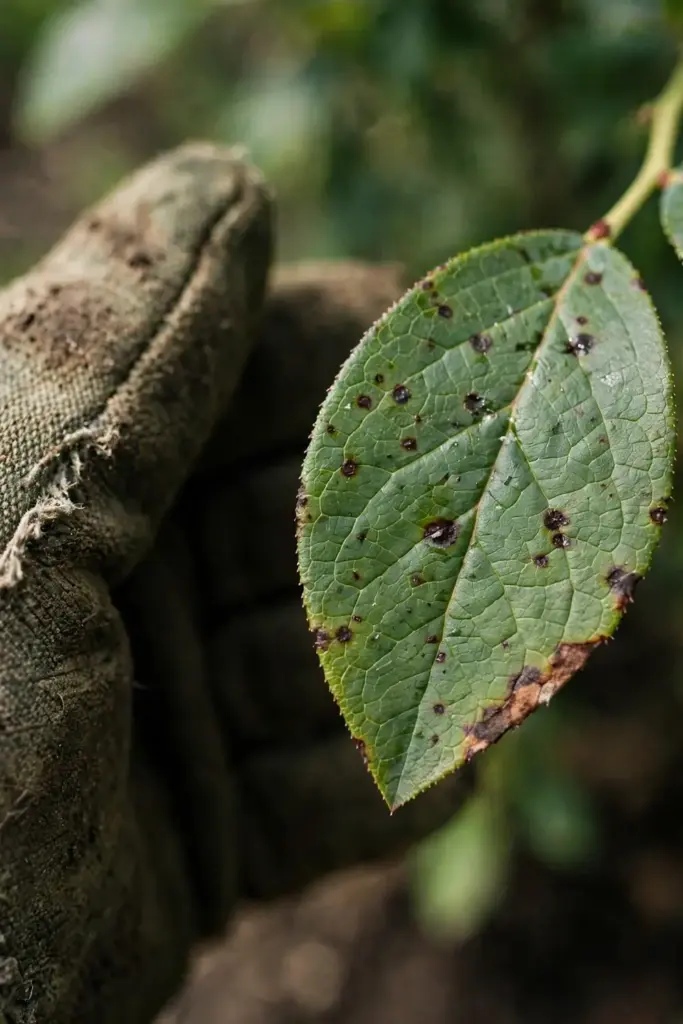
North Carolina Extension puts the first Double Spot lesions at 1/16 to 1/8 inch in diameter, in its guide to leaf diseases of blueberry. The lesions sit on the leaf surface as discrete dark marks. They do not show the pale center that marks Septoria leaf spot.
Check the lower leaves first, then move up the bush. Note how many leaves carry spots and whether the count is rising week to week. That count drives every later decision.
Inspect with the leaf in your hand and the light behind it. A fresh lesion reads as a small dark point against the green. Hold the leaf flat and turn it over. The underside shows the same mark without the halo glare that direct sun puts on the upper surface. Compare leaves across the bush rather than judging from one bad leaf. One spotted leaf on a bush of hundreds is background noise. When spots show on leaf after leaf in the same week, you are looking at a pattern worth tracking.
How to Identify Dothichiza Leaf Spot on Blueberry Leaves in Late Summer
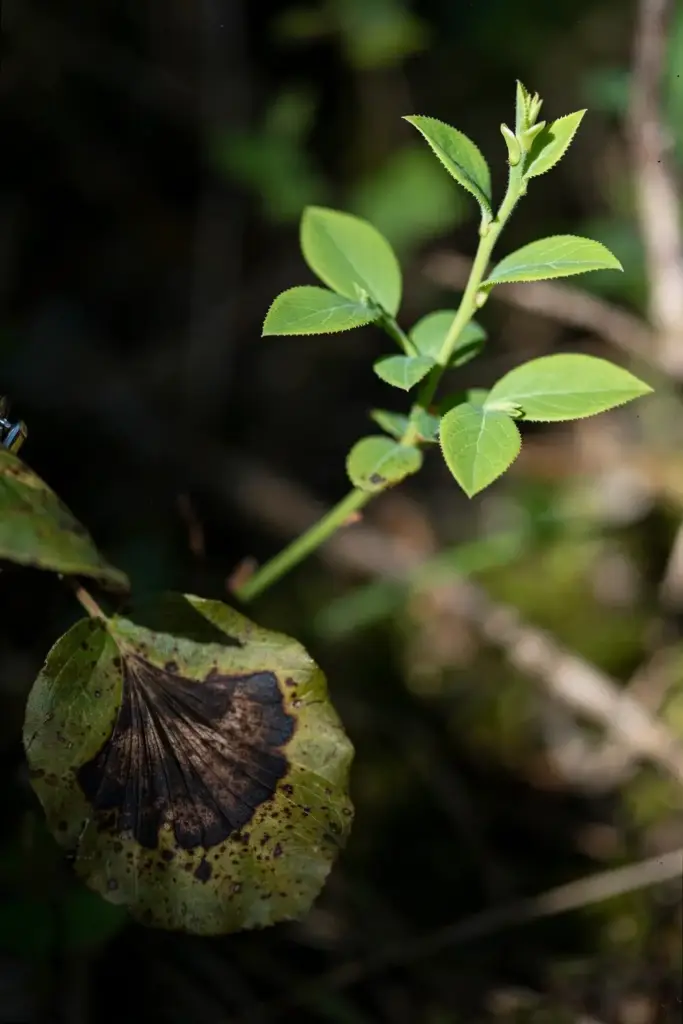
Late-summer dothichiza leaf spot grows a second, larger dead area around the original lesion. That second area is the field mark that names the disease.
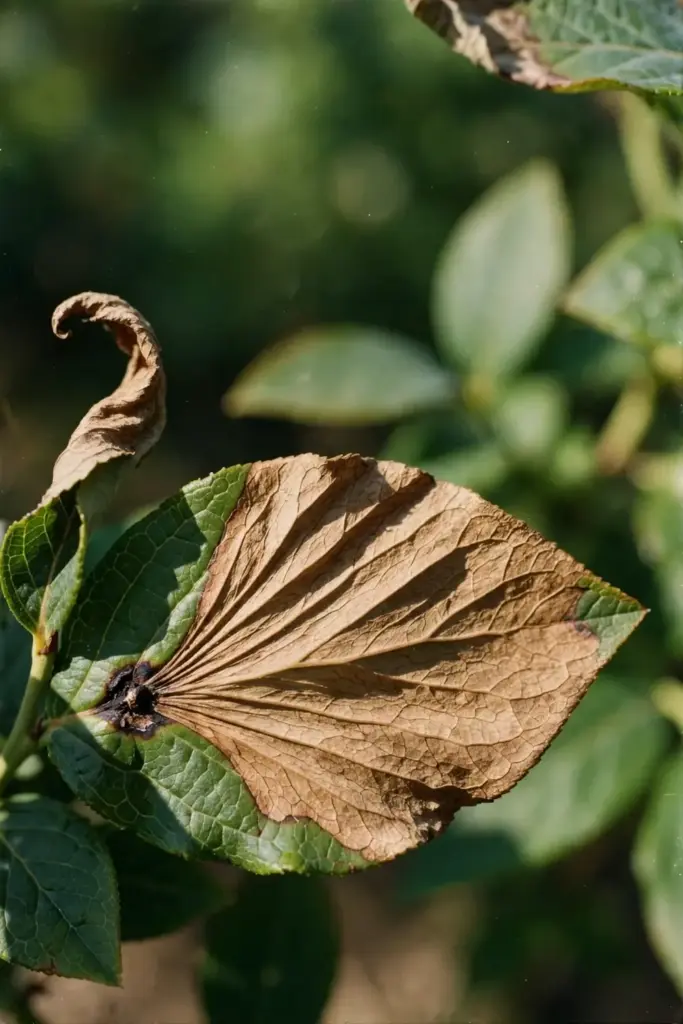
North Carolina Extension describes a secondary necrotic area that spreads in an irregular to fan-shaped pattern around the original lesion, in the same leaf-disease guide. The dark border around the original lesion persists while the large necrotic area surrounds it or sits to one side of it. That persisting border is the tell.
A leaf with one fan-shaped patch still feeds the bush. A leaf covered in merged patches drops early. The difference between those two states is the difference between watching and acting.
Which Blueberries Get Hit Hardest
No blueberry type carries proven resistance to dothichiza leaf spot. Susceptibility data is thin, and one old observation is all that exists.
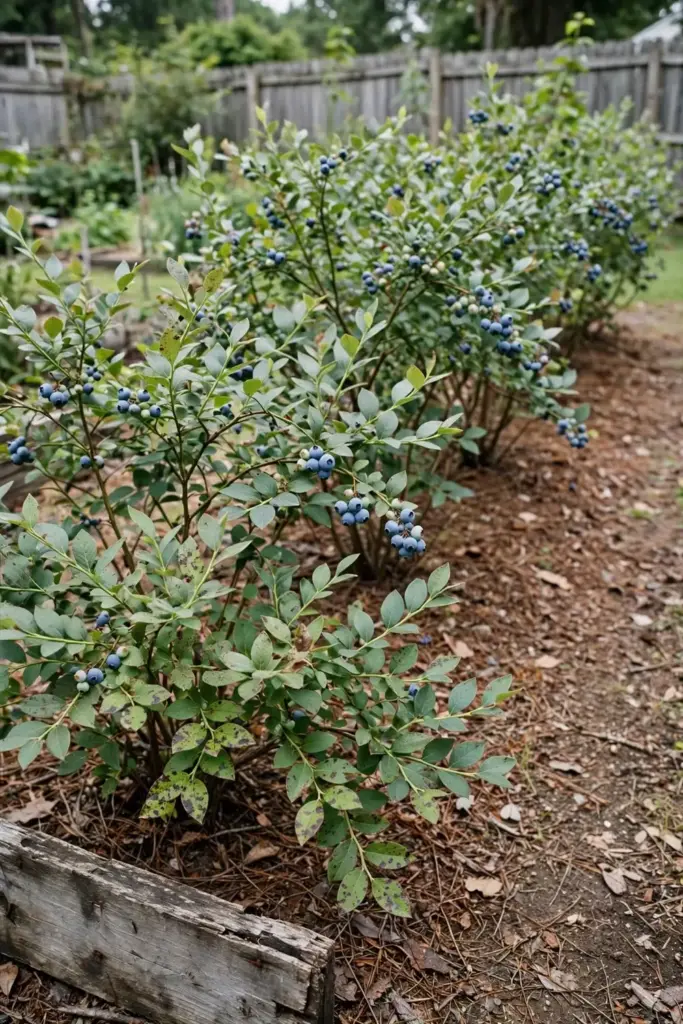
Florida officials once observed three rabbiteye cultivars at a commercial outlet, as recorded in the Florida bulletin. Homebell and Tifblue carried a few to a moderate number of lesions, 1 to 10 per leaf, with Tifblue showing fewer and smaller lesions. Climax showed none.
Treat that observation as a single snapshot, not a planting recommendation. One outlet on one day cannot rank cultivars. Buy healthy planting stock from a reputable nursery and judge your own bushes by the lesion count on their leaves.
Rabbiteye and highbush blueberries both appear in the Extension leaf-disease writing used here. The Florida bulletin documents the disease on rabbiteye blueberry. The North Carolina guide covers leaf diseases across the blueberry types grown in that state. Neither source ranks one type as more vulnerable than the other for Double Spot. The sources used here also give no age ranking for Double Spot, so no claim here says young bushes suffer more. Watch every bush in the row with the same inspection routine, and let your own counts rank your bushes.
Dothichiza Leaf Spot vs Septoria Leaf Spot on Blueberry
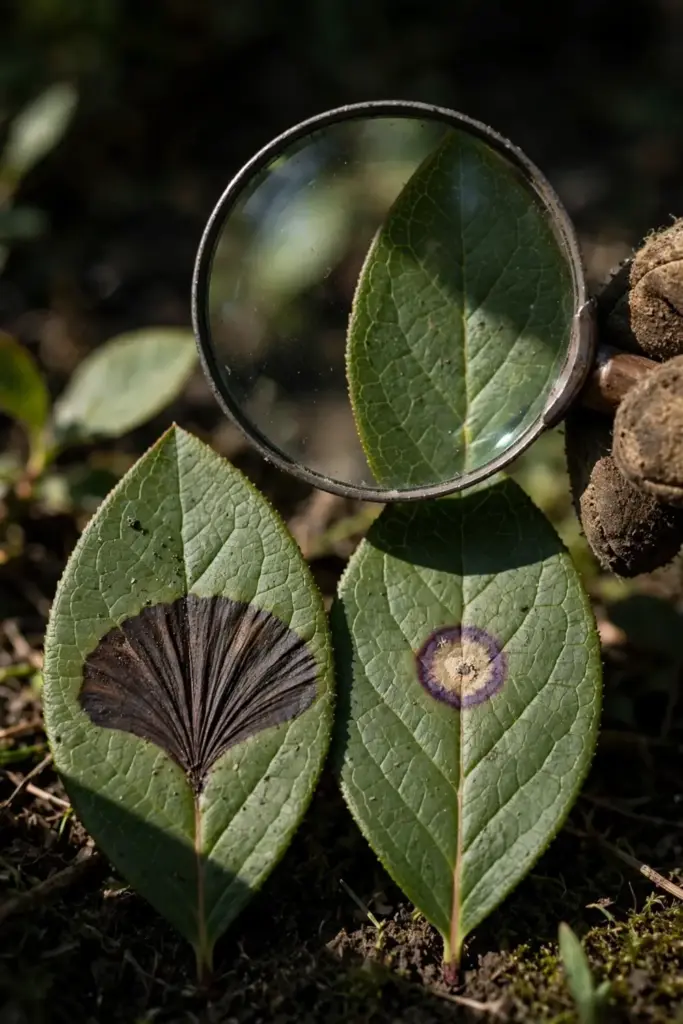
Dothichiza leaf spot and Septoria leaf spot share blueberry leaves, and North Carolina Extension describes both on the same leaf-disease page. Three field marks separate them: the center color, the fruiting bodies, and the stem.
| Field Mark | Double Spot (Dothichiza caroliniana) | Septoria Leaf Spot (Septoria albopunctata) |
|---|---|---|
| Early leaf lesion | Pinpoint dark brown mark, 1/16 to 1/8 inch across | Small spot, 1/8 to 1/4 inch across, white-to-tan center with purple border |
| Late-season change | Secondary dead area spreads in an irregular to fan-shaped pattern; dark border persists | Spots stay small; no fan-shaped secondary area |
| Fruiting bodies | None described in lesion centers | Small black fruiting bodies may be visible in lesion centers |
| Stems | No stem lesions described for Double Spot | Flat or slightly sunken stem lesions, tan-to-gray center, reddish-brown margin |
| Worst damage | Leaves, late in the season | Small plants or lower parts of large plants |
| Overwintering | Data not available for Double Spot in the sources used here | Fungus overwinters in infected leaves on the ground and in stem lesions |
When the leaf marks still leave doubt, a diagnostic lab settles the identification. Field identification is presumptive. Lab confirmation matters where the answer changes the action, such as a nursery deciding whether to destroy stock. Red spotting alone does not prove rust or a virus. Both need their own field marks and their own tests.
Use the table in the field, not from memory. Pick three leaves from different parts of the bush and check each one against the rows: center color, fruiting bodies, stem. A leaf that matches Double Spot on all three rows is a confident field call. A leaf that mixes marks from both columns goes in the bag for the lab. Guessing from one leaf wastes the table.
Why Late-Summer Spread Matters So Much
Late-summer spread matters because one small lesion becomes a large dead patch. The bush loses leaf area it needs for ripening fruit and storing energy.
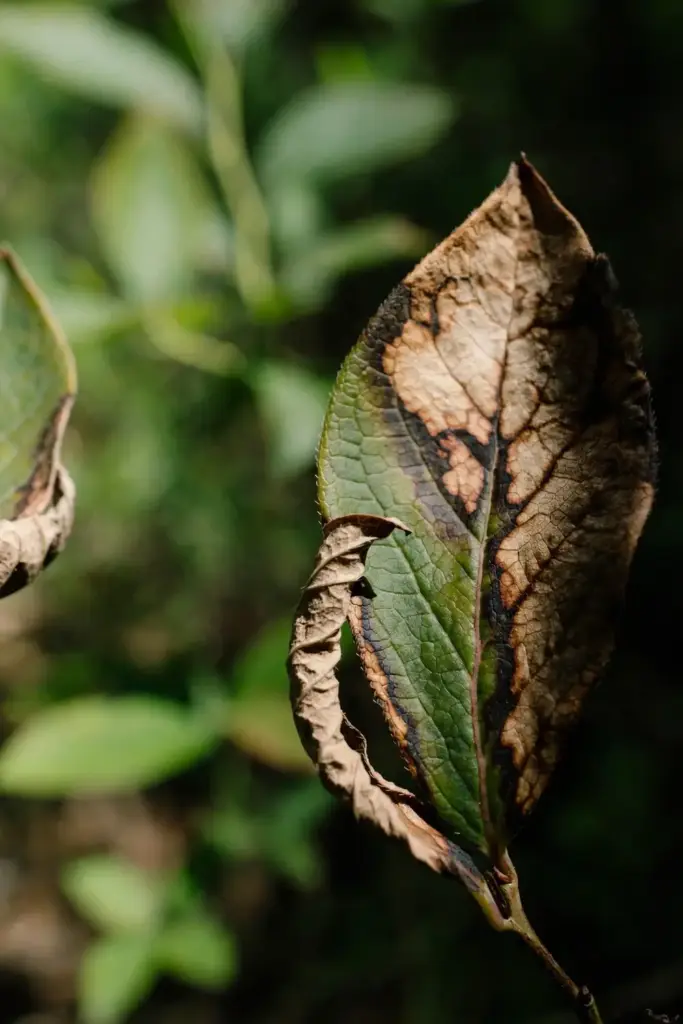
The fungus builds a secondary necrotic area around the original lesion, and that dead tissue cannot photosynthesize. The patch keeps widening while the weather stays favorable. One bush carries hundreds of leaves, so a few dead patches cost little. Losing large areas across many leaves cuts the energy the bush banks for next year’s buds.
The practical consequence is timing. Early-season spots cost little. Late-season spread on many leaves costs more. That is why the count in late summer, not the first spot of early summer, drives the spray decision.
What Makes Dothichiza Leaf Spot Worse in a Home Garden
Wet leaves and fallen infected leaves make dothichiza leaf spot worse. The fungus travels and survives where leaves stay wet and debris stays put.
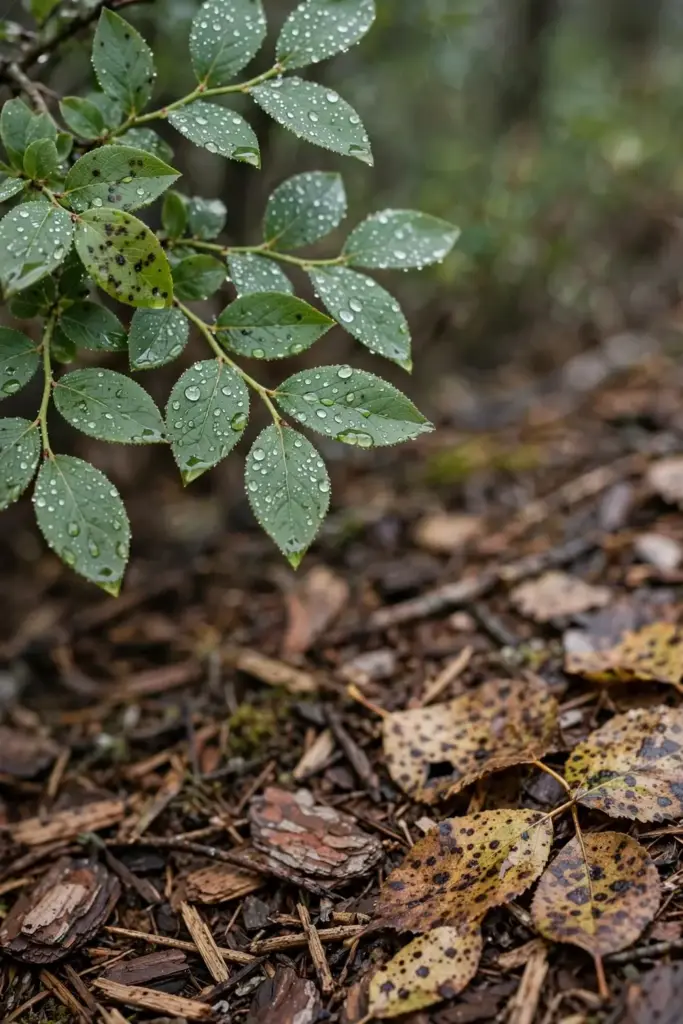
No Double-Spot-specific risk-factor trial exists in the sources used here. What follows is general leaf-spot practice, stated as such. Overhead watering keeps foliage wet for hours at a stretch, and wet foliage is the condition leaf-spot fungi exploit. Crowded canopies dry slowly after rain, because still air holds moisture against the leaf surface long after the rain stops. Fallen leaves left under bushes hold fungal material through the off season, ready to meet the next flush of growth. Stressed bushes tolerate leaf loss poorly, since they already run short on the energy that healthy leaves supply.
Every step below answers one of those four conditions. Dry the leaves, open the canopy, clear the debris, and keep the bush vigorous. No single step carries the season. The four together change the conditions the fungus needs.
Step 1: Decide Whether Dothichiza Leaf Spot Is Worth Treating
Start with the cost and benefit call, because most cases end here. Light spotting costs a home bush little, and spraying it buys nothing.
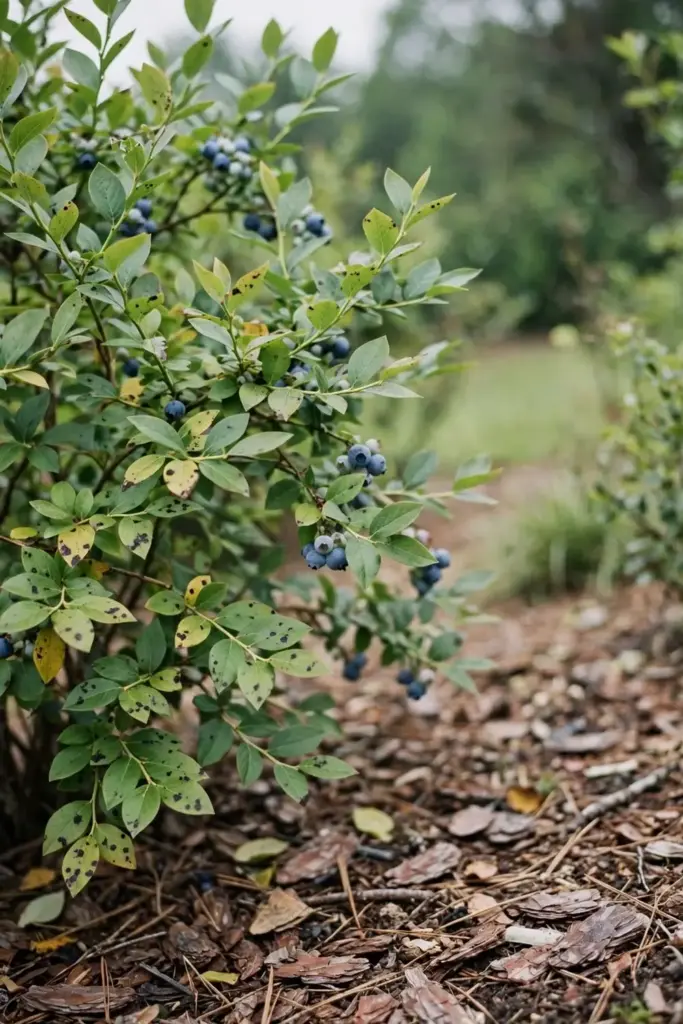
Oregon State Extension lists Double Spot among minor fungal diseases and states that no control is recommended unless disease incidence is high, in its blueberry disease guide. Fungicides applied to control fruit rot also aid in reducing Double Spot where they are already in use.
| Incidence | Action |
|---|---|
| A few spotted leaves on a bush | Watch and clean up |
| Many leaves with fan-shaped patches, defoliation starting | Move to Steps 3 through 5 |
| Spots on nearly every leaf plus early leaf drop | Spray only after sanitation, per Step 5 |
Set the threshold before you act. A bush with spots on a handful of leaves stays in the watch column. A bush losing leaves in late summer moves to the act column.
No source used here publishes a numeric threshold for high incidence, such as a percent of leaves spotted. Extension gives the principle, and the gardener supplies the judgment. Treat a bush as high incidence when fan-shaped patches cover many leaves across the whole canopy and leaves start dropping before fall color sets in. Treat a bush as light incidence when spots stay scattered on a minority of leaves and the canopy still looks full. Between those two states, watch one more week and count again.
Step 2: Confirm the Identification Before You Act
Confirm the identification before you spend money or spray anything. The wrong diagnosis wastes a season.
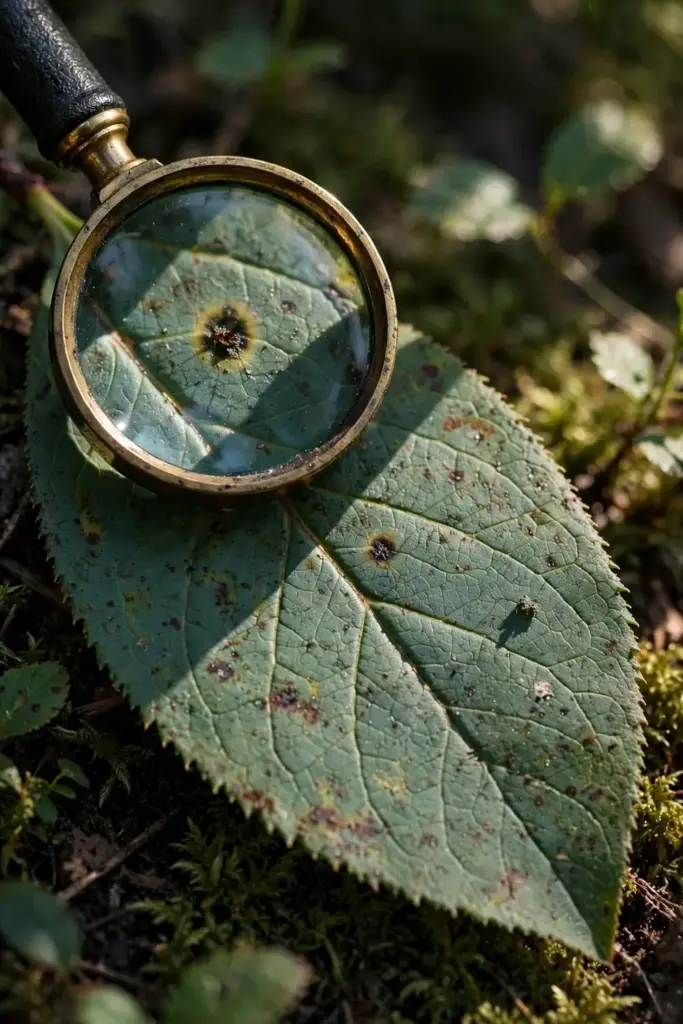
Match your leaves against the field marks in the differential table above: pinpoint start, dark border that persists, fan-shaped secondary area late in the season. Septoria shows a pale center and small black fruiting bodies. Those two signs rule Septoria in.
Photograph a few leaves against a plain background and keep the photos through the season. The photo record shows whether the count is rising. Send samples to a diagnostic lab when the answer changes the action.
Lab confirmation earns its cost in three situations. A nursery deciding whether to destroy stock needs certainty. A bush with symptoms that match no field mark in the table above needs a name before treatment. A planting where the leaf count keeps climbing despite sanitation and dry leaves needs a check that the diagnosis was right. For a backyard bush with classic fan-shaped patches, the field marks alone carry the decision.
Step 3: Clear Fallen Leaves and Disinfect Your Tools
Clear fallen leaves and spent debris from under the bushes after harvest. Fallen leaves carry next season’s inoculum for leaf-spot fungi as a group.
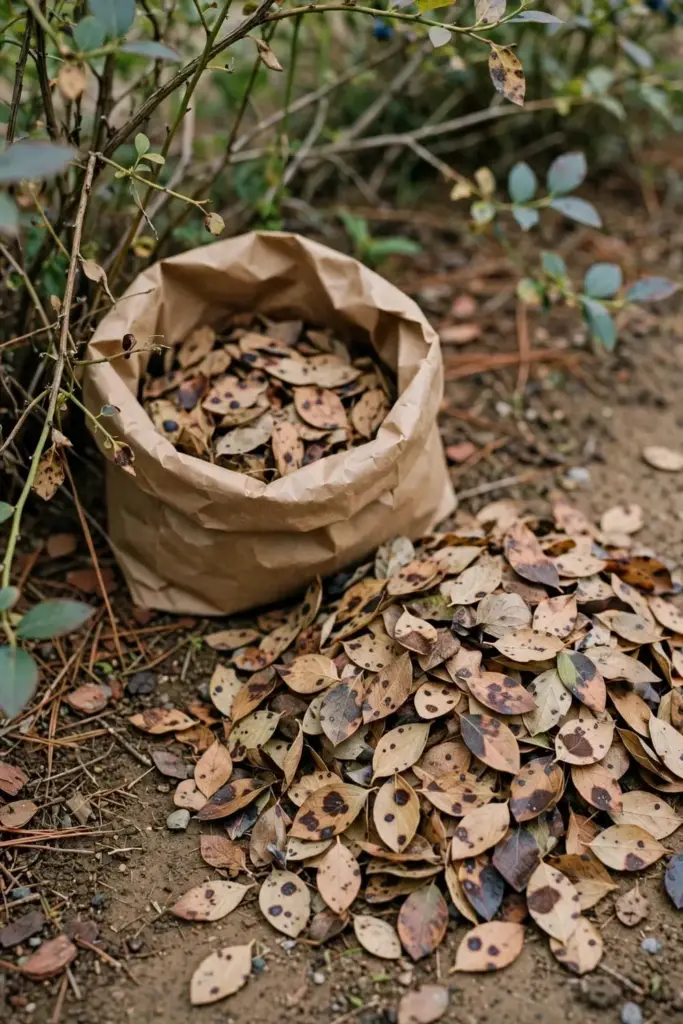
Rake the ground under each bush clean. Bag the leaves and send them away with household waste or burn them where local rules allow. Do not compost diseased leaves at home, since a cool home pile leaves fungal material alive. The cleanup below pairs with fall garden bed prep for the rest of the bed.
Disinfect pruning tools between bushes. Wipe blades with rubbing alcohol or a diluted bleach solution and let them dry. Clean tools stop you from carrying spores from a sick bush to a healthy one.
Time the main cleanup for after harvest, while leaves still fall in a steady stream. One pass rarely finishes the job. Walk the row again after the next windy day and pick up what the wind dropped. A bed that looks clean in August can hide a fresh layer of spotted leaves by September.
Step 4: Cut Leaf Wetness and Splash
Cut leaf wetness and splash, because wet leaves are the condition leaf-spot fungi exploit. Dry leaves break the cycle.
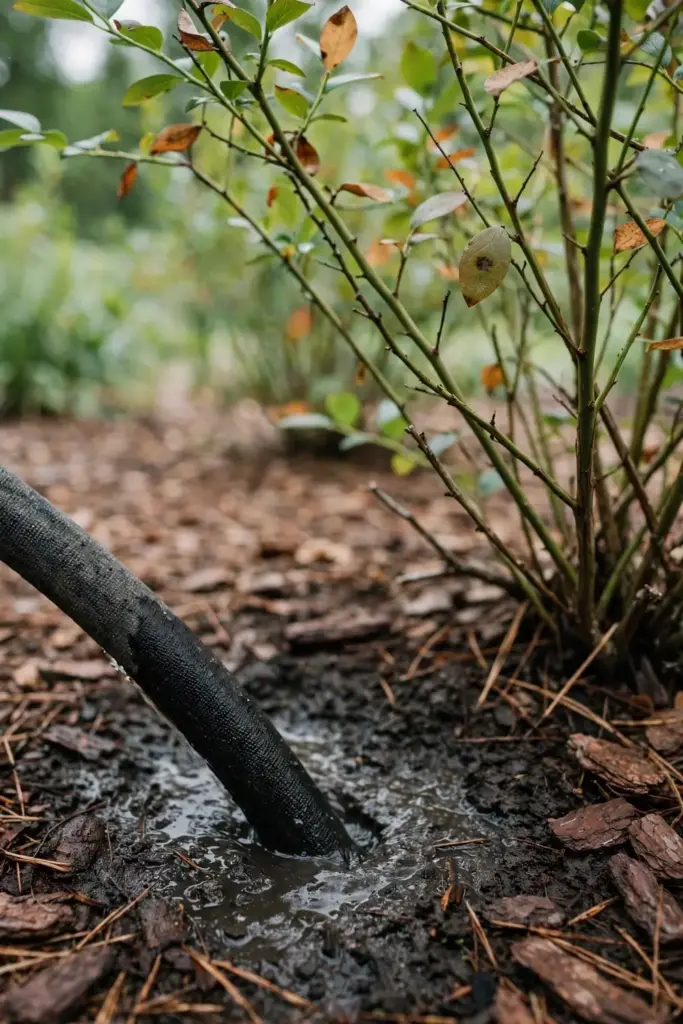
Water at the base of the bush with a soaker hose or drip line. Skip overhead sprinklers on blueberry foliage. Water in the morning so any accidental splash dries fast.
After a wet week, walk the row and look at the lower leaves. Rain splashes soil and spores upward, and the lowest leaves take the first hit. A fresh ring of spots low on the bush after heavy rain tells you the splash path is active. That is the moment to check the mulch layer and the canopy spacing before the next storm, not after it.
Spread mulch beneath the bushes to block soil splash from reaching the lowest leaves. Prune for air circulation so leaves dry after rain. Use spring pruning techniques to open the canopy without stripping the bush.
New plantings get the same treatment from day one. Space bushes so mature canopies never touch. Leave room to walk the row with a rake and a bag. A planting that starts open stays open with light annual pruning, while a planting that starts crowded needs hard corrective pruning later. Every fresh cut is a wound the fungus can use.
Step 5: Spray Only When Incidence Is High
Spray only when incidence is high. That is the one condition Extension names for treating Double Spot.
Oregon State Extension notes that fungicides applied to control fruit rot also aid in reducing Double Spot. Use a product labeled for blueberry leaf spot in your state, and follow the label for rate, timing, and pre-harvest interval. Labels carry legal force. A product labeled for another crop or another disease does not belong on your bushes.
Spraying a lightly spotted bush wastes money and adds chemical load for no gain. Spraying after sanitation, on a bush with high incidence, protects the healthy leaves that remain. It does not heal spots that already exist.
Judge the spray by the next inspection, not by the old spots. Old spots stay visible. New leaves should emerge clean, and the lesion count on the existing canopy should stop climbing. If the count keeps climbing after a labeled application, recheck the identification against the differential table before spraying again. A second spray on a wrong diagnosis doubles the cost and fixes nothing.
Step 6: Keep Bushes Vigorous With Correct Acidic Soil
Keep bushes vigorous with correct acidic soil. A vigorous bush tolerates leaf spots better than a stressed one.
North Carolina Extension advises a soil test before planting, and sulfur to correct high pH: apply wettable sulfur if pH is above 5.3 for rabbiteye blueberries or 5.0 for highbush, at 1.0 pound per 100 square feet on sandy soils to lower pH by 1 unit, or 2.0 pounds on heavier soils, aiming for around 4.8, in its home-garden blueberry guide. Apply sulfur at least 3 to 4 months before planting and retest before planting.
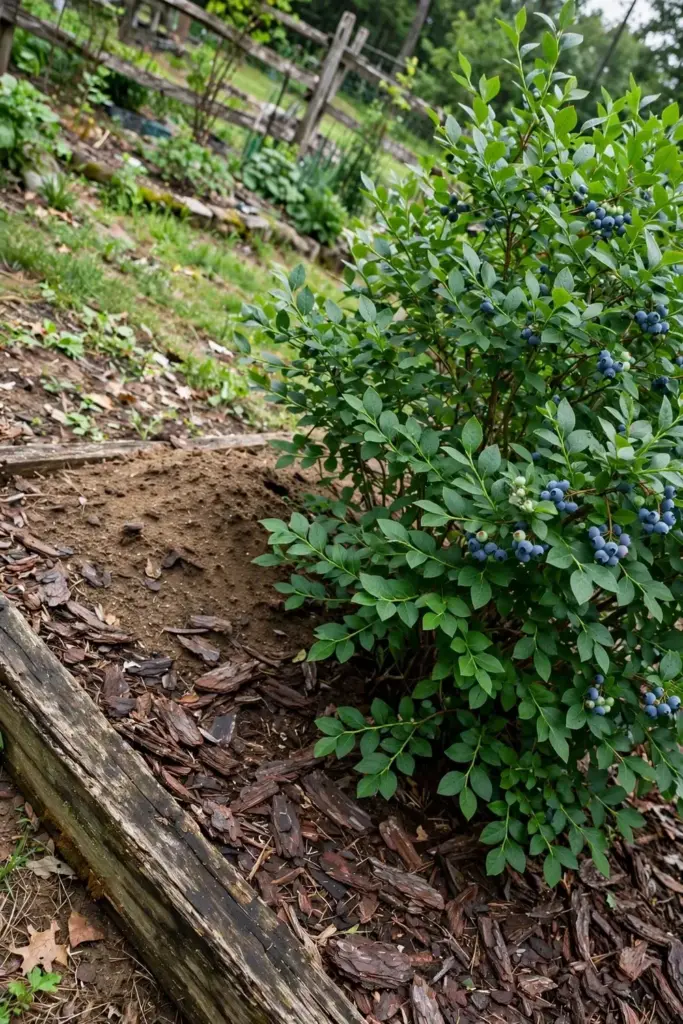
On heavy clay or wet ground, plant on a mound or ridge at least 6 inches above the surrounding soil, from the same guide. Water thoroughly 2 to 3 times per week during dry periods when bushes sit in a raised peat-sand mix. For the broader soil program behind that pH work, see this soil health guide.
A soil test through your local cooperative extension office gives the pH number to act on. Take samples from several spots around the bushes, mix them, and send the composite sample in for analysis. The report comes back with the pH and a sulfur recommendation matched to your soil. Guessing the pH from leaf color alone misleads, since yellowing has several causes and only one of them is soil pH.
Living With Blueberry Leaves That Already Show Double Spot
Leaves that already show Double Spot cannot be healed. The spots stay. The bush still produces.
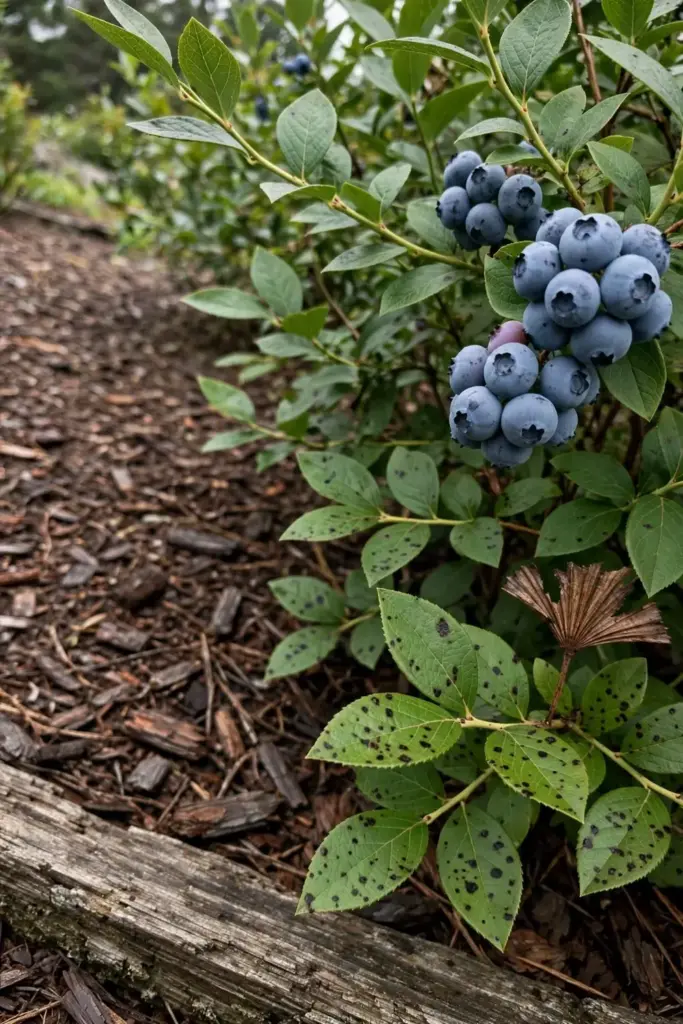
Shift the goal from cure to containment. Keep up sanitation, keep leaves dry, and let the bush carry its crop. Pick fruit on schedule. Spotted leaves do not taint the fruit. Wash harvested berries as usual and eat them with confidence. The spots live on the leaves, not on the berries.
A spotted bush still sets buds for next year while it carries this year’s crop. Protect that process with the same routine: weekly inspection, dry leaves, clean ground under the bush. The season ends with the Step 3 cleanup, and the next season starts from a clean bed.
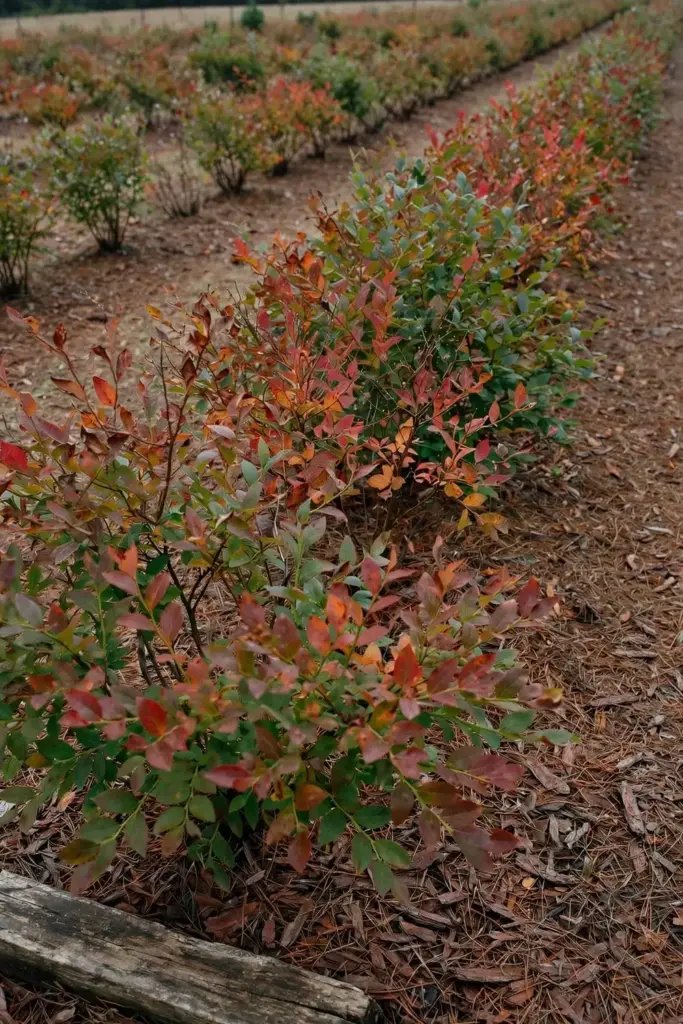
Learn the difference between disease drop and fall color. Blueberry foliage turns red and yellow in fall, and that color change is normal. Disease drop comes earlier, leaf by leaf, with fan-shaped dead patches on the fallen leaves. A leaf that falls green with a fan-shaped patch fell to the fungus. A leaf that turns fully red and drops with the rest of the canopy fell to the season.
At season end, run the Step 3 cleanup without mercy. A bed that hosted Double Spot this year starts clean next year only if the debris leaves the property.
Frequently Asked Questions
No. Dothichiza leaf spot is a minor leaf disease in home plantings. It spots leaves and can cause early leaf drop when incidence runs high. It does not rot fruit, girdle stems, or kill bushes. Oregon State Extension lists it among minor fungal diseases with no control recommended unless incidence is high. Treat it as cosmetic until the leaf count says otherwise.
Start with the lesion center. Double Spot starts pinpoint dark brown and grows a fan-shaped dead area late in the season, with the dark border intact. Septoria shows a white-to-tan center with a purple border, plus small black fruiting bodies in lesion centers. Septoria also attacks stems. Double Spot has no described stem lesions. The differential table above lays out all six marks side by side.
Usually no. Oregon State Extension recommends no control unless disease incidence is high. Light spotting needs sanitation and drier leaves, not a spray program. Spray only after cleanup, on a bush with high incidence, using a product labeled for blueberry leaf spot in your state. Follow the label for rate, timing, and pre-harvest interval. A spray protects healthy leaves. It never heals spots that already exist.
The sources used here document it on blueberry only. No host list beyond blueberry appears in the Florida bulletin or the North Carolina and Oregon guides cited here. That is not proof it never touches another host. It means no other host is documented in these sources. Keep the cleanup and the spraying, if any, on the blueberry bushes. Watch nearby plants and identify any new spotting on its own marks.
No. Spotted leaves alone do not kill next year’s crop. Heavy late-season defoliation weakens the bush and can cut the energy it stores for next year’s buds. That is why the spray decision turns on the late-summer leaf count, not the first spots. Clean up fallen leaves, keep the bush vigorous with correct acidic soil, and the bush heads into dormancy with reserves intact.
Blueberries need acidic soil. North Carolina Extension sets the sulfur threshold at pH above 5.3 for rabbiteye blueberries or 5.0 for highbush, with a target around 4.8. Test the soil before planting. Apply wettable sulfur at least 3 to 4 months before planting when the test reads high. Retest before planting. Acidic soil keeps bushes vigorous, and vigorous bushes tolerate leaf spots better.
Where to Go From Here
Dothichiza leaf spot is a minor disease with a loud look. Identify it by the pinpoint start and the fan-shaped late-season spread. Watch light cases, clean up fallen leaves, dry the canopy, and spray only when incidence runs high.
Walk your bushes this week. Count the spotted leaves on each bush and write the count down. That count tells you which column of the Step 1 table your bushes sit in, and it is the baseline every later decision builds on.
Keep the counts in one notebook across seasons. A bush that shows a few spots every year and never more needs nothing beyond cleanup. A bush whose count climbs year over year earns a closer look at its soil, its spacing, and its watering. The notebook turns a vague worry about spots into a record with a trend, and the trend makes the spray decision easy.