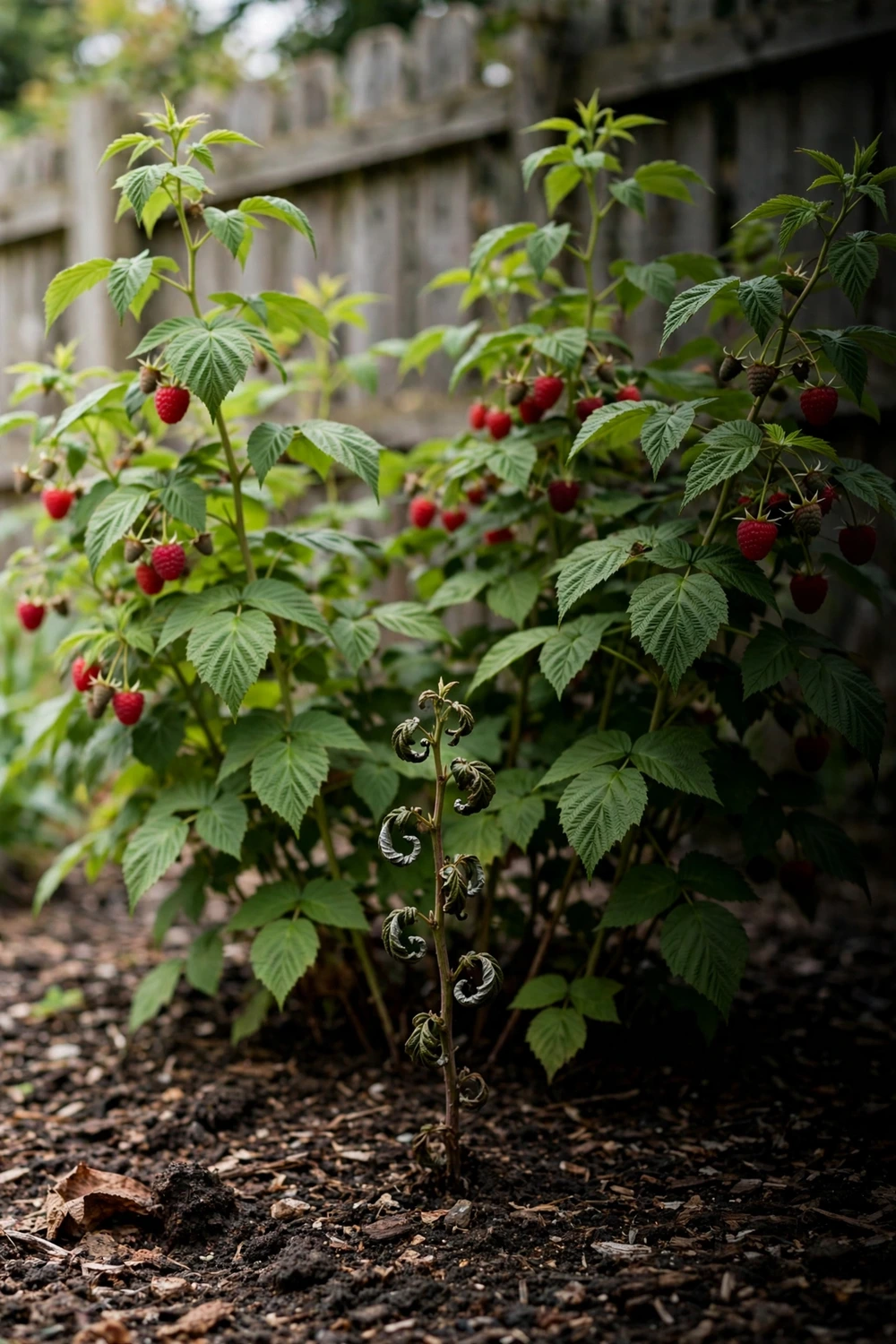

Raspberry leaf curl virus has no cure, and it spreads one cane at a time. An infected cane shows rounded leaves that curl downward, then grows shorter and stiffer each year while its fruit turns small, seedy, and crumbly. The 10 strategies below start with telling this virus from herbicide drift, then give the only playbook that works: lab testing, rogueing, certified stock, and aphid control that protects the healthy plants beside the sick one.
I have learned that the hardest part of this virus is leaving the sick plant alone and spending every effort on the healthy ones beside it.
The rest of this page walks through identification on leaves, canes, and fruit, the raspberries hit hardest, a compiled differential table against herbicide drift, the aphid mechanism behind every control decision, and the 10 strategies in order. Raspberries share the Rubus genus with salmonberries, and the salmonberry growing guide covers a cane fruit cousin that tolerates wet shade where raspberries sulk.
What Raspberry Leaf Curl Virus Actually Is
Raspberry leaf curl virus is a virus disease of raspberry plants. The pathogen is raspberry leaf curl virus, shortened to RpLCV. It infects Rubus species, and raspberry is the crop that carries the loss. Once a plant carries the virus, the plant carries it for life. No spray cures it. No pruning removes it. No fertilizer outgrows it.
The taxonomy is honest about its own limits. Older indexes place the virus in the genus Luteovirus. The current EPPO datasheet lists it as unclassified, because the virus has not been characterized and its precise taxonomic status remains open, as the EPPO datasheet on raspberry leaf curl virus explains. This guide calls it raspberry leaf curl virus (RpLCV) throughout, and never presents the old Luteovirus placement as settled.
The virus was described in the United States in the 1920s, and it remains a North American problem. The same EPPO datasheet records its range as Canada and the United States. The vector does not occur in the EPPO region. A gardener in the United States or Canada is the reader this guide serves. A gardener elsewhere faces different raspberry viruses, and this guide does not cover them.
Two look-alike names need fences. Peach leaf curl is a different disease. A fungus causes it, on peach trees, and it has nothing to do with raspberries. A European disease once called leaf curl of raspberry turned out to be caused by ringspot virus, carried in soil, and it is unrelated to the American virus. Names repeat across crops and continents. The pathogen, the vector, and the management decide the identity, and this guide stays on the American raspberry virus only.
How to Identify Raspberry Leaf Curl Virus on Leaves
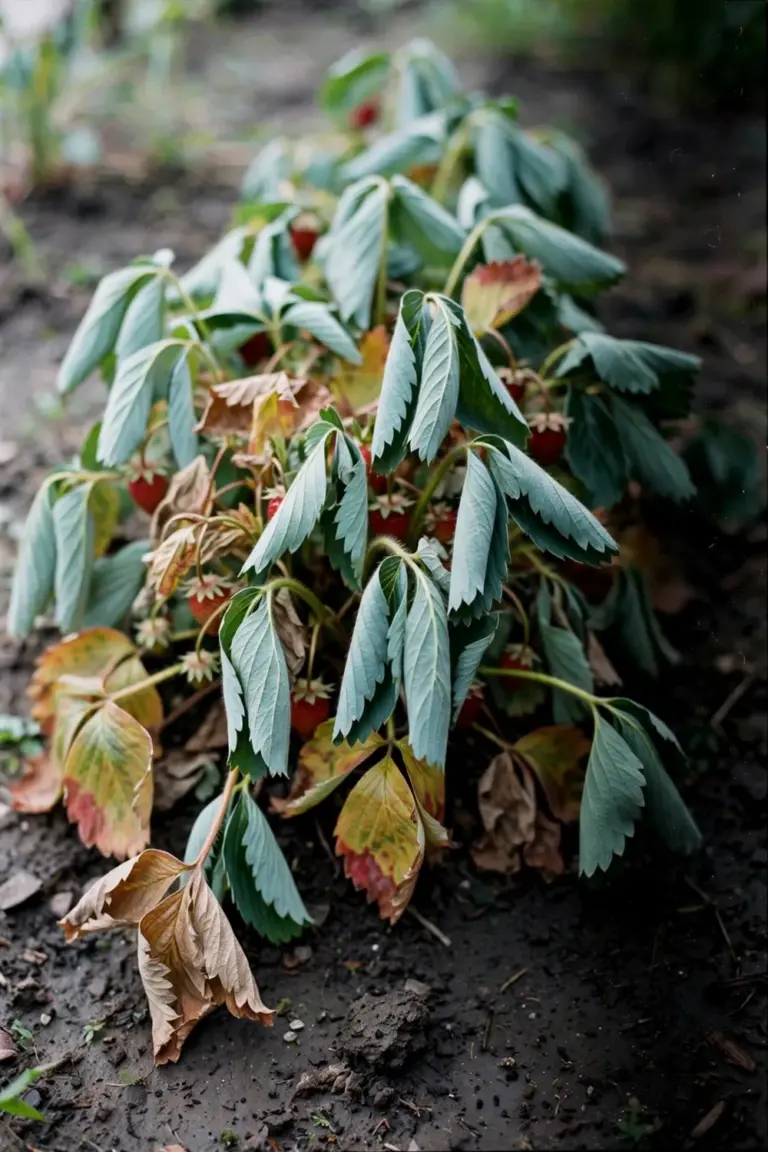
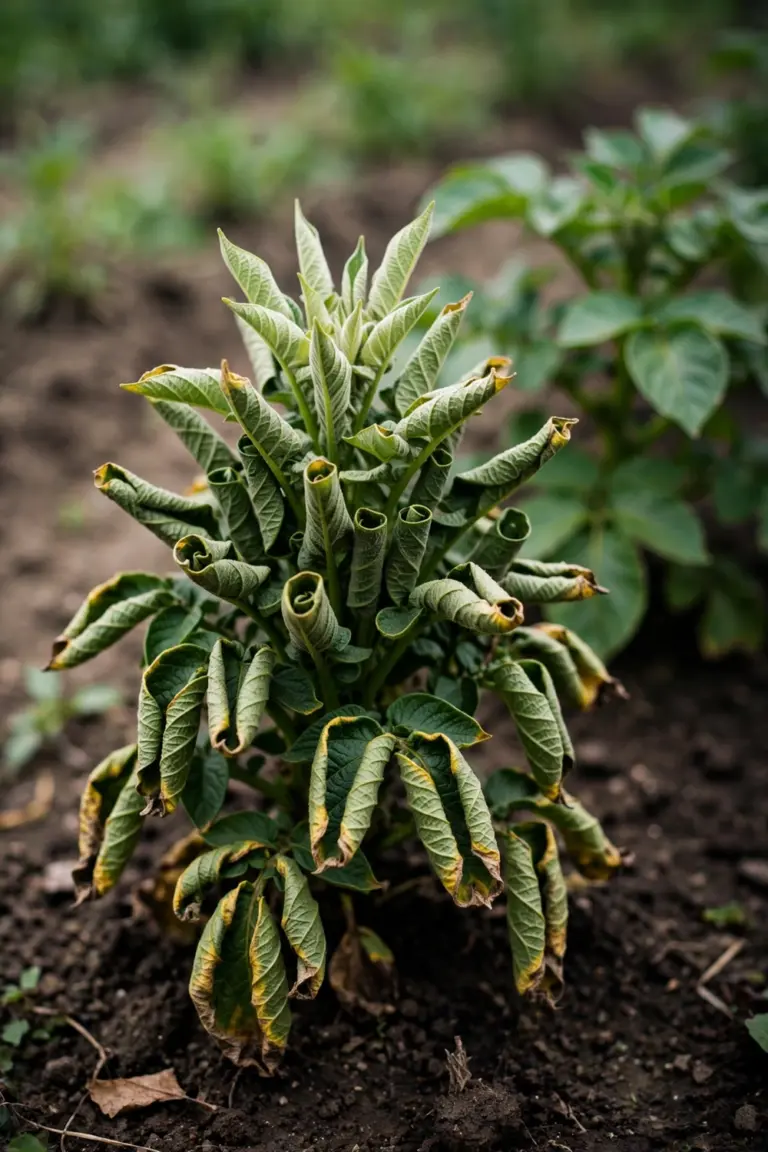
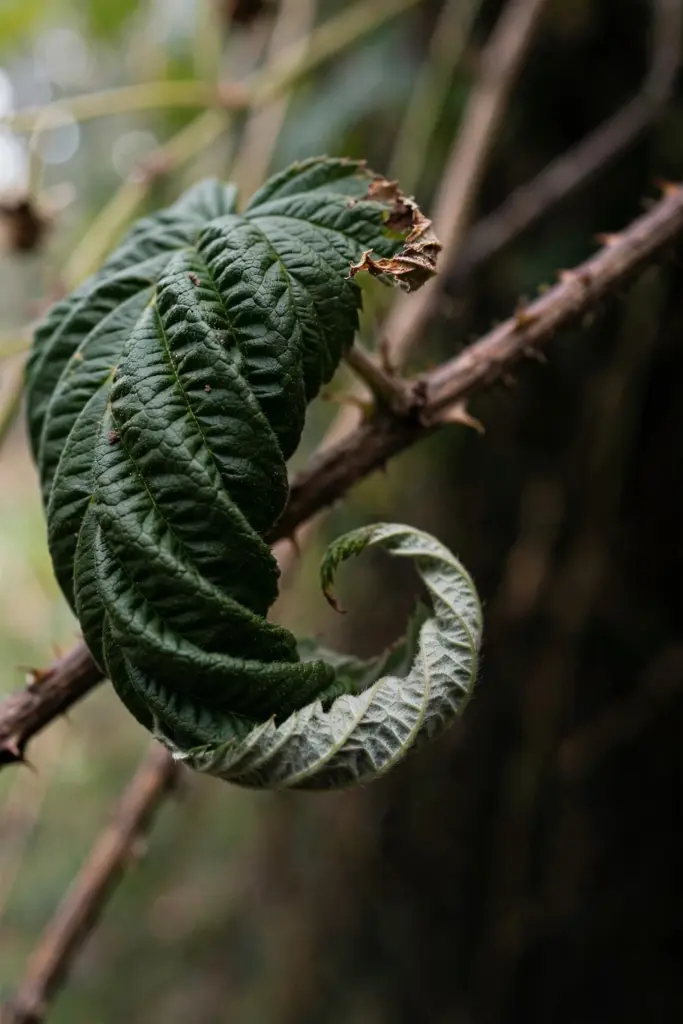
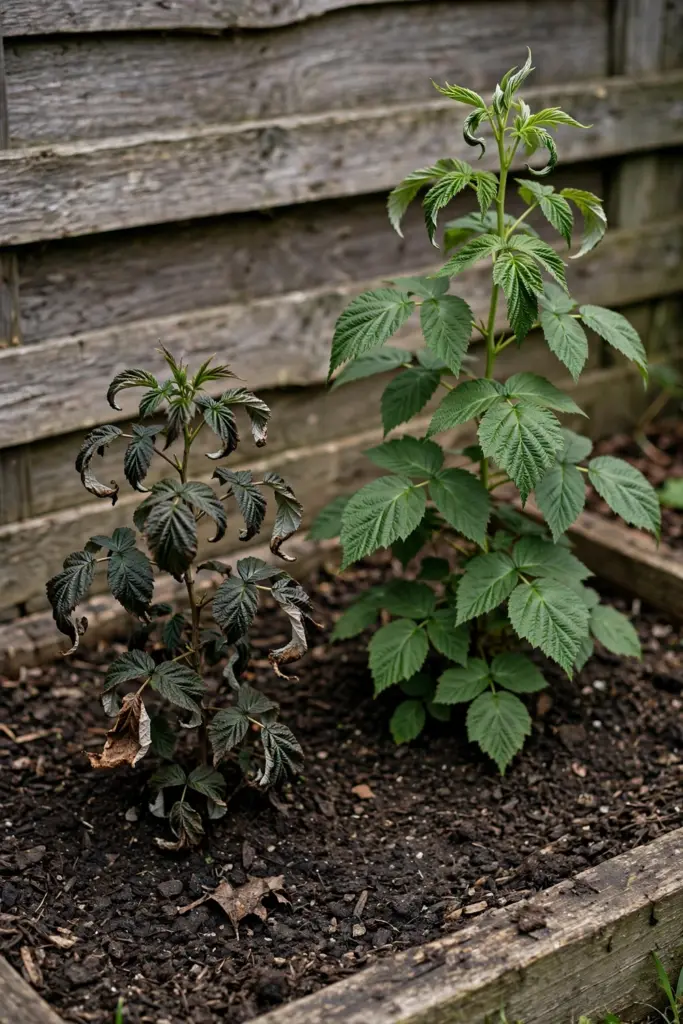
Raspberry leaf curl virus on leaves shows a rounded, curled leaf with tissue arched upward between the veins. The curl runs downward and inward. The leaf thickens, and it stays small and dark green. That combination of rounded shape, downward curl, and arched tissue between the veins is the field signature, as the UC IPM page on virus diseases of caneberries describes.
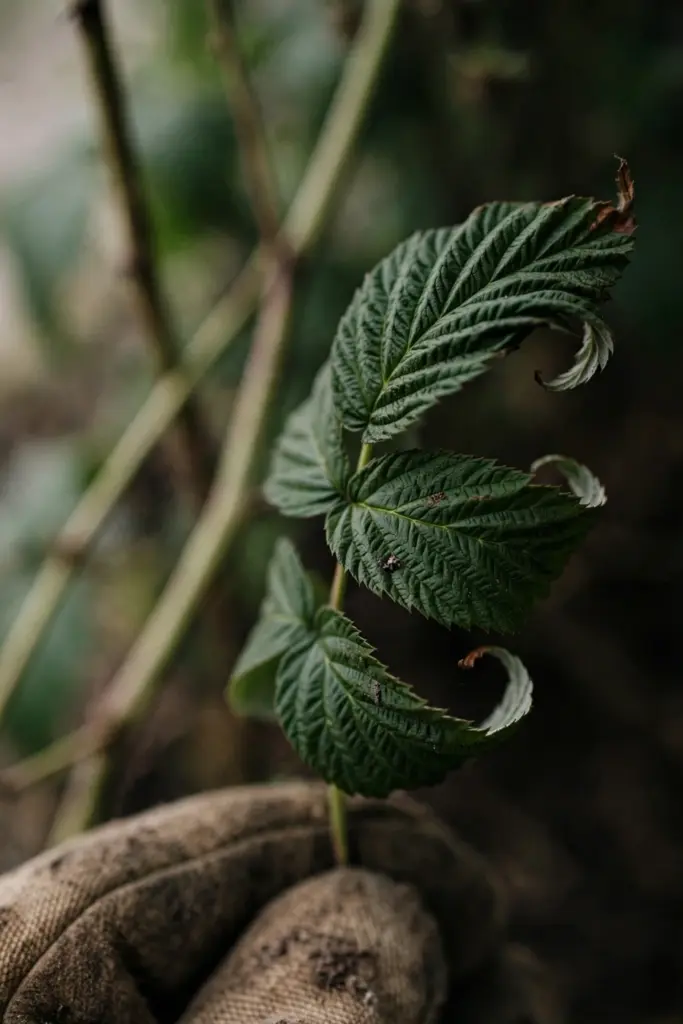
The pattern across the patch matters as much as the pattern on one leaf. Symptoms often appear on a single cane during a growing season, and they may not reach other canes until the following season. One sick cane among healthy canes points toward virus. A whole row going sick at once points somewhere else, and Strategy 2 works through that fork. First-year symptoms can be mild or absent, so a plant that looks fine in its first season can still carry the virus.
Touch the leaf. A healthy raspberry leaf feels thin and flexible. A leaf with leaf curl feels thick and stiff, and it holds its curled shape when you let go. Check the underside for aphids while you are there. Aphid feeding alone can twist petioles and curl leaves, and an aphid colony on a curled leaf tells you the vector is present even before the virus question is settled. The leaf test never settles the diagnosis on its own. Field identification is presumptive, and Strategy 3 sends the sample to a lab.
How to Identify Raspberry Leaf Curl Virus on Canes and Fruit
Raspberry leaf curl virus on canes shows as stunted, brittle growth that gets shorter every year. New canes come up undersized. Each year they run shorter than the year before. They look yellowish at emergence, then darken, turn stiff and brittle, and branch poorly. A cane that will not bend to root at the tip has lost the flexibility a healthy cane shows. The same UC IPM page describes that sequence, and it is the second half of the syndrome.
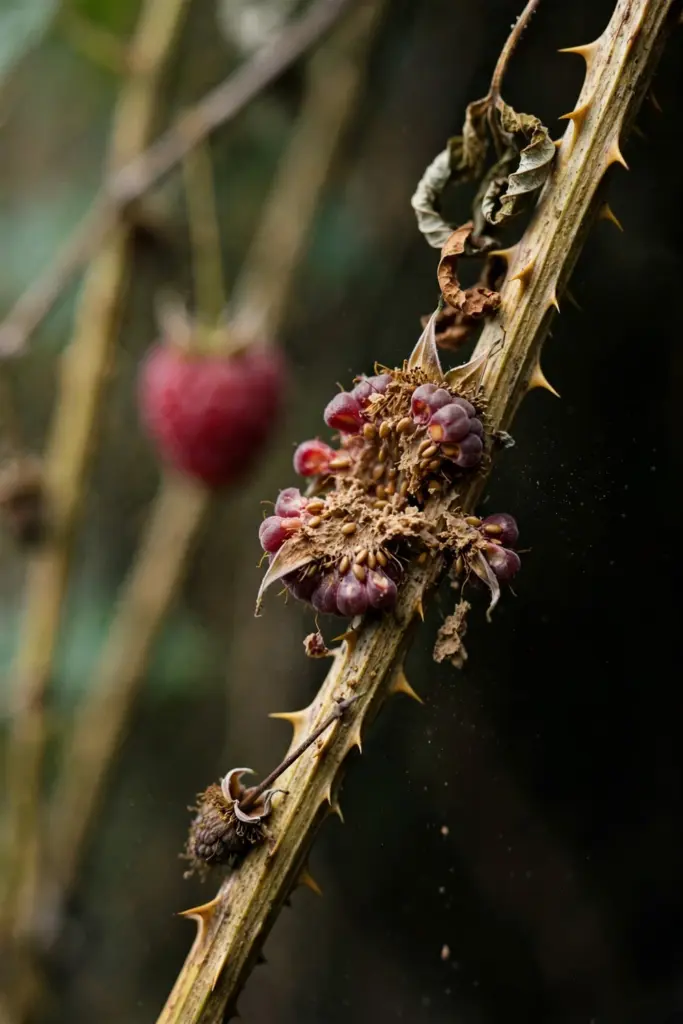
Fruit tells the same story in miniature. Berries on an affected cane turn small, dry, and crumbly. Drupelets fail to hold together, and the berry falls apart when picked or handled. A cane that showed leaf symptoms earlier in the season produces crumbly fruit later, which links the two signs across one cane. One crumbly berry proves nothing. Crumbly berries on a cane with rounded, downward-curled leaves and stiff, short growth point hard at this virus.
Chronic plants weaken across seasons. Winter injury takes hold more easily in a plant that spent the year stunted and brittle, and a weakened plant can die outright. That slow decline is why the cost and benefit call in Strategy 1 favors early rogueing over waiting. A plant that will not recover keeps feeding aphids that carry the virus to its neighbors while it declines. The patch pays for every season of waiting.
Which Raspberries Get Hit Hardest
Raspberry leaf curl virus hits raspberry, and every raspberry type sits in the risk zone. Red raspberries, black raspberries, and purple raspberries all host the virus. Early work distinguished two forms of the virus, with one form limited to red and purple raspberries and the other also infecting black raspberries. Whether those forms are distinct agents or strains of one agent remains an open question, and the practical point for a home gardener does not depend on it. Every raspberry type needs the same protection.
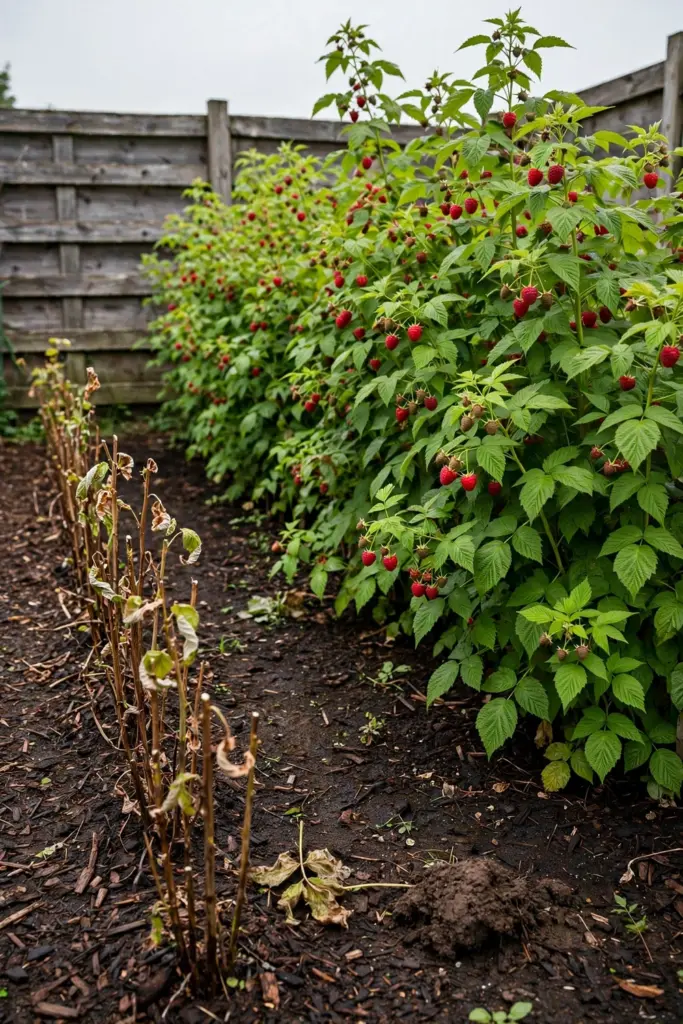
Black raspberries carry a special management rule, and Strategy 9 gives it the full treatment. They sit close enough to other raspberries in most gardens that one infected plant threatens the whole row. The separation distance in Strategy 9 exists because black raspberries and other raspberries share the same virus and the same vector. Plant them apart, and the patch keeps its buffer.
Wild brambles carry the same risk without a gardener ever planting them. A wild raspberry or blackberry cane in the fencerow can hold the virus, and aphids move it from the fencerow into the patch. Strategy 6 clears that bridge. New plantings near woods, roadsides, or abandoned lots face the highest pressure, because wild brambles cluster in exactly those edges. A patch surrounded by mowed lawn and clean beds faces less.
Age of planting does not protect a patch. Young plants from infected stock arrive already carrying the virus. Old plants pick it up from aphids over seasons. The difference is not resistance. The difference is exposure, and exposure is what the strategies control.
Raspberry Leaf Curl Virus vs Herbicide Drift
Raspberry leaf curl virus and herbicide drift both curl raspberry leaves, and gardeners confuse them because the leaf symptom looks similar at a glance. Stark Bro’s nursery guide warns that leaf curl symptoms may resemble and be confused with herbicide injury, and advises testing a sample before taking action. The table below is compiled from parallel sources. No published head-to-head comparison of the two exists, so the table carries that compiled status openly. The virus side comes from UC IPM and Stark Bro’s. The herbicide side comes from the Cornell Berry Diagnostic Tool, which lists herbicide drift and the 2,4-D, dicamba, and glyphosate injuries side by side with viruses.
| Feature | Raspberry Leaf Curl Virus | Herbicide Drift (2,4-D, Dicamba, Glyphosate) |
|---|---|---|
| Onset | Slow. One cane shows symptoms in one season, and other canes follow the next season | Sudden. Symptoms appear across exposed plants shortly after a nearby application or drift event |
| Leaf curl | Rounded leaves curl downward and inward, with tissue arched upward between the veins | Leaves curl and twist, often on new growth, without the rounded-leaf shape |
| Leaves | Small, dark green, thickened, stiff | Curl and twist appear without thickening into small dark leaves |
| Canes | New canes grow shorter each year, turn stiff and brittle, and branch poorly | No progressive cane decline across seasons. Canes keep their normal growth pattern |
| Fruit | Berries on affected canes turn small, dry, and crumbly | No crumbly-fruit syndrome tied to the curl |
| Spread pattern | Follows aphid movement from infected plants and infected planting stock | Follows exposure. Plants nearest the spray or downwind of it show symptoms first |
| What settles it | Lab test at an Extension clinic or plant diagnostic lab | Spray history. A recent application nearby, a neighbor spraying, or a pattern matching drift |
| What fixes it | Nothing cures the infected plant. Rogue and destroy it | Nothing reverses the exposure, and affected plants often outgrow mild drift on their own |
The management fork is the reason the table matters. Rogueing is right for the virus and wrong for drift. A gardener who rogues drift-damaged plants throws away plants that would have recovered. A gardener who waits out a virus keeps a source plant that feeds aphids all season. The differential decides the action, and the lab test settles the differential when the two look alike.
Five more lookalikes deserve one line each. Raspberry mosaic complex curls and mottles leaves, and it travels with a different vector, the large raspberry aphid. Aphid feeding alone twists petioles and curls leaves without any virus present. Leafhoppers curl the upper leaves of primocanes upward, the opposite direction from leaf curl virus. Leafrollers fold leaves around feeding larvae. Blackberry psyllid curls blackberry leaves severely, and it matters only where blackberries grow near conifers, which shelter the adults over winter.
Why Aphid Transmission Decides the Whole Fight
Aphid transmission decides the whole fight because the virus cannot move on its own. The established natural vector is the small raspberry aphid, Aphis rubicola. The aphid feeds on an infected plant, picks the virus up, and carries it to the next plant it feeds on. Transmission is persistent, which means an aphid that has picked the virus up keeps carrying it. The aphid is the delivery system, and every strategy that limits aphids limits the virus.
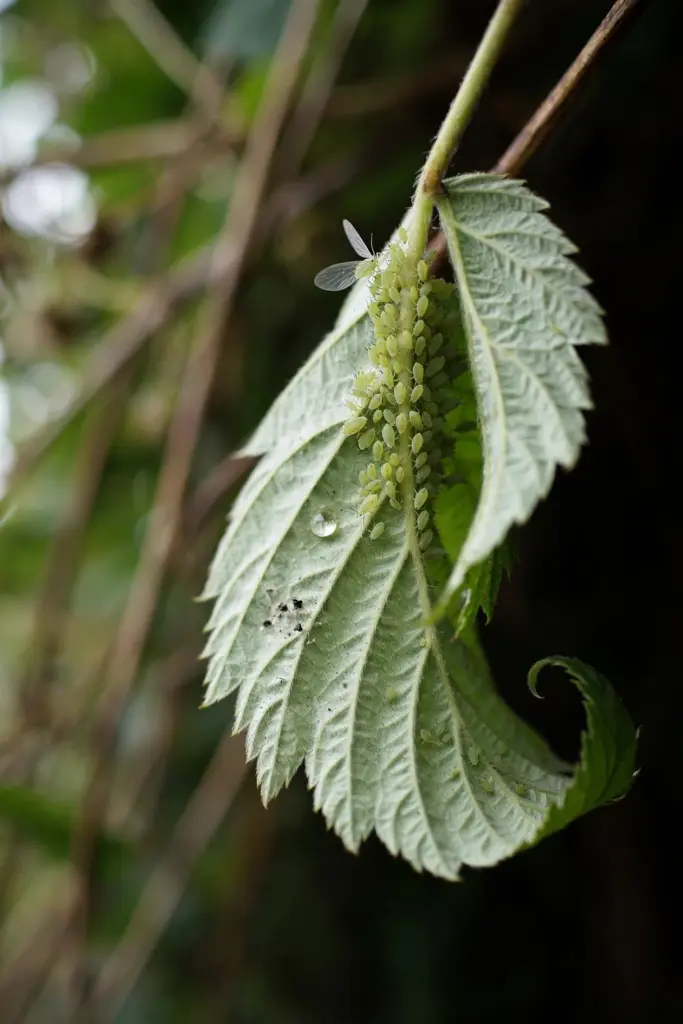
That single fact explains the whole management shape. A virus that moves by aphid needs a living source plant and a feeding aphid to reach a healthy plant. Remove the source plant, and the aphid has nothing to pick up. Block the aphid, and the source plant has no ride. Start with clean stock, and the patch has no source at all. Three of the ten strategies attack those three links, and the rest keep the links from reforming.
Two transmission limits matter for the home gardener. No seed or pollen transmission information exists for this virus. Gardeners do not spread it by saving seed. Grafting is the documented mechanical route, and home gardeners do not graft raspberries. Field pruning has not been established as a route for this virus, so tool disinfection is ordinary hygiene here rather than a control strategy. The virus moves by aphid and by infected planting material, and those two routes carry the whole risk.
The slow spread cuts both ways. EPPO notes that significant losses are rare because the virus spreads slowly. Stark Bro’s nursery guide describes infected plants declining over 2 to 3 years. Both statements can be true at once. A single plant declines across seasons, and the patch loses plants slowly rather than all at once. Slow spread is an opportunity, not a reason to relax. A slow virus gives the gardener time to rogue, to screen, and to replant clean. A fast virus would not.
What Makes Raspberry Leaf Curl Virus Worse in a Home Garden
Infected planting stock makes the disease worse before the garden season starts. A plant bought from an unverified source can arrive already carrying the virus, and it shows nothing in its first season. The gardener waters it, feeds it, and watches it, while aphids carry the virus to the healthy plants beside it. Certified virus-free stock is the only planting material that closes this door, and Strategy 5 covers it in full.
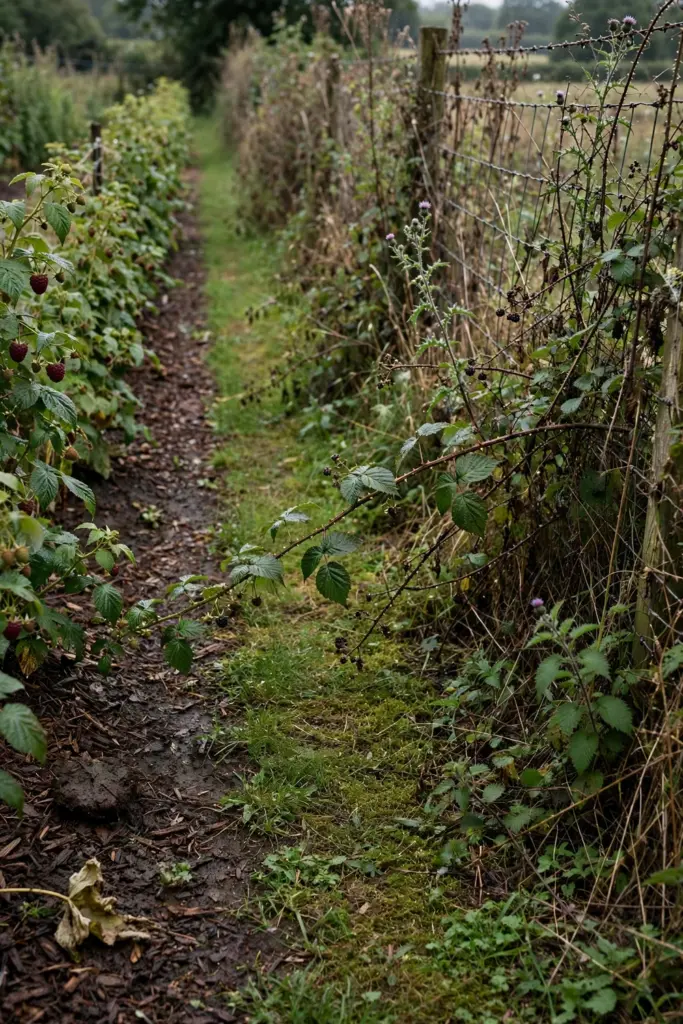
Wild brambles make the disease worse from outside the fence. A wild cane in the fencerow or the wood edge holds the virus between seasons. Aphids cross that short distance without effort. A patch next to unmanaged edges faces constant pressure, while a patch surrounded by mowed ground faces less. The risk is not the wild plant itself. The risk is the bridge it builds.
Aphid pressure makes the disease worse during the season. A heavy aphid colony on one infected cane moves the virus faster than a light colony does. Hot, dry spells favor aphid buildup, and a gardener who never looks at leaf undersides misses the buildup until the colony is large. Weekly checks from spring onward catch colonies early, when a hose blast or a soap spray still works. Strategy 7 gives the aphid routine.
Tight planting makes the disease worse in a different way. Canes packed together let aphids walk from plant to plant without flying. Airflow drops, leaves stay damp, and the gardener cannot see the one sick cane among the crowd. Spacing and pruning open the row, and an open row shows its problems early. The virus still spreads in a well-spaced patch, and spacing alone never stops it. Spacing buys visibility, and visibility buys early rogueing.
Strategy 1: Decide Whether Action Is Worth It
Step 1 is a cost and benefit call, and for most home gardeners the honest answer is to act at once. An infected plant cannot be saved. No spray cures it. No pruning removes the virus from it. Every season it stays in the ground, it feeds aphids that carry the virus to healthy plants. Rogueing one plant costs an hour and one plant. Waiting costs the row.
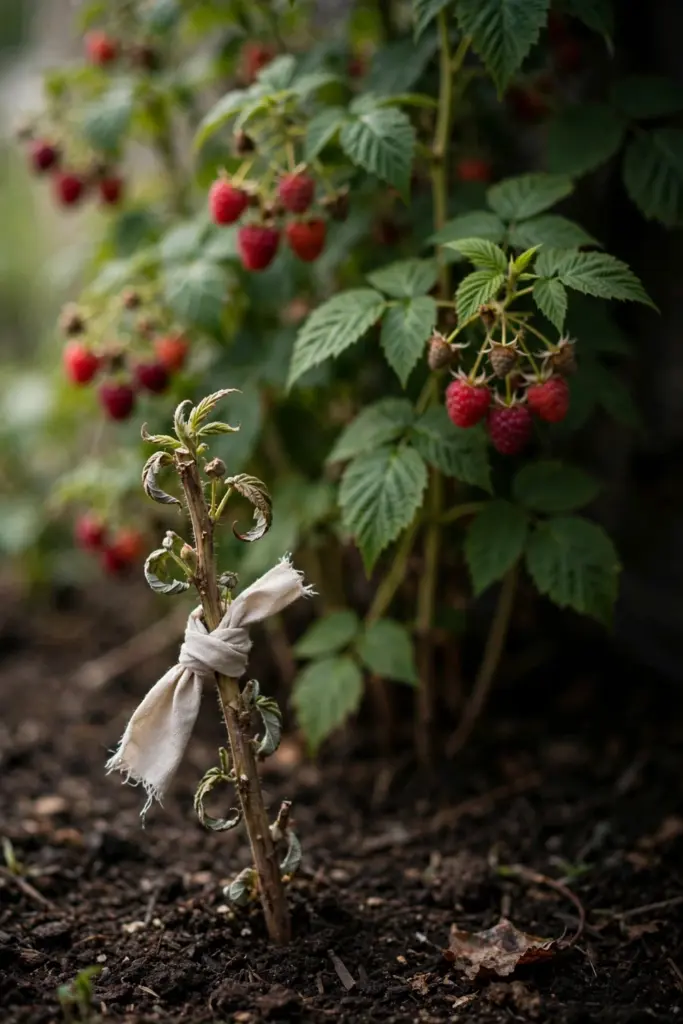
Weigh three facts before you spend anything. First, the infected plant is already lost, so treatment spending buys nothing for that plant. Second, the healthy plants beside it are the crop, and every strategy below protects them rather than the sick one. Third, certified replacement stock costs less than a season of sprays aimed at a virus that sprays cannot touch. The money goes to clean plants and to screening, not to the dying cane.
One exception deserves a pause. A gardener with a single cane showing mild symptoms and a lab test still pending should wait for the result before rogueing. Strategy 3 covers that wait. The pause lasts days, not weeks, and the cane stays marked and watched while the result comes back. Waiting for a lab result is discipline. Waiting a season because the plant might recover is not.
Strategy 2: Confirm the Identification Before You Act
Confirm the identification with the syndrome, not with one leaf. Look for rounded leaves that curl downward and inward, with tissue arched upward between the veins. Look for new canes that run shorter than last year, turn stiff and brittle, and branch poorly. Look for small, dry, crumbly fruit on the same cane. One sign alone proves little. The three together point hard at raspberry leaf curl virus.
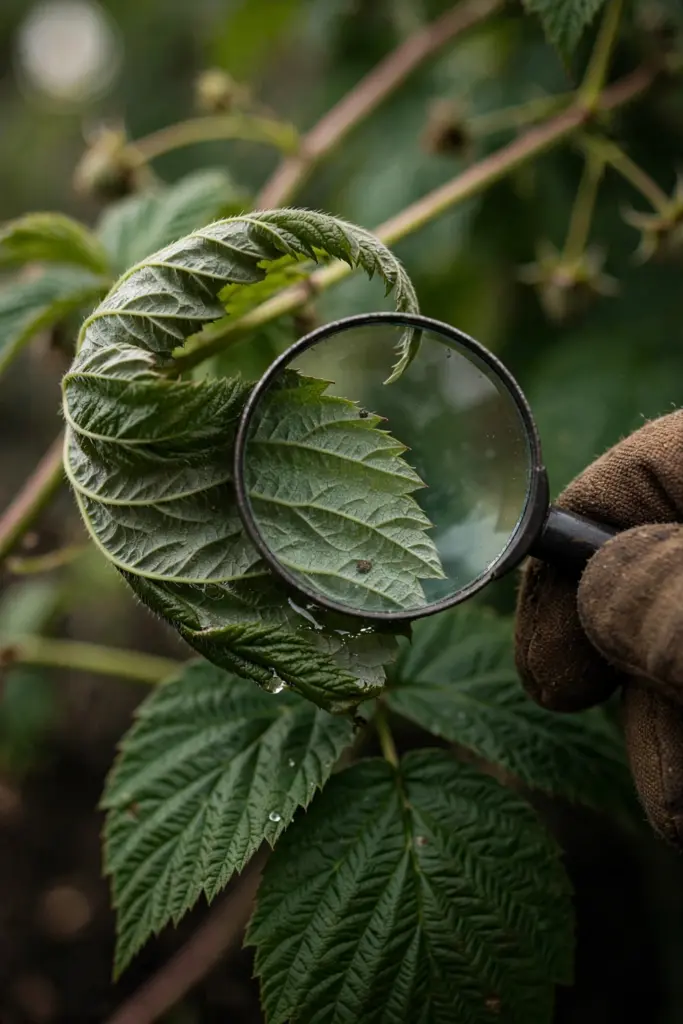
Check the spray history next. Ask yourself when the curl appeared. Ask whether you sprayed anything nearby, or whether a neighbor sprayed a lawn, a field, or a fencerow. Herbicide drift hits suddenly, across exposed plants, shortly after an application. Virus hits one cane first, then spreads across seasons. Timing separates them. A curl that appeared overnight across the whole row after a neighbor sprayed points to drift. A curl that appeared on one cane and stayed there for weeks points to virus.
Mark the suspect cane. Tie a strip of cloth or flagging tape around it, and write the date on a tag. The mark keeps the cane visible while you wait for the lab result, and it stops you from harvesting cuttings or tips from it. Never propagate from a suspect cane. Tips and suckers from an infected plant carry the virus, and a tip-layered cane from a sick parent grows into a sick plant.
Strategy 3: Send a Sample to the Lab Before You Rogue
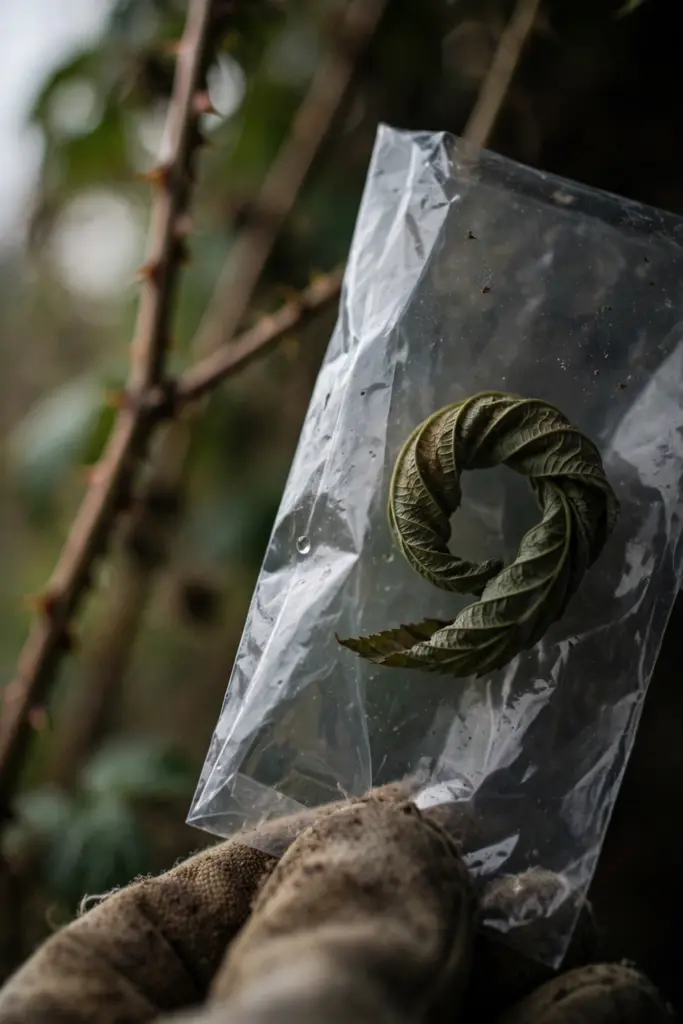
Send a sample to the lab before you rogue, because the lab result settles the differential. Contact your local Extension clinic or a plant diagnostic lab, and ask what sample it wants before you cut. Fresh symptomatic leaves usually form the core of the sample, along with a note on when symptoms appeared and whether any spraying happened nearby. A good note helps the lab as much as a good leaf does.
UC IPM states the limit of field identification plainly. No symptom pattern is diagnostic for one particular virus, and a lab test is what separates one virus from another. That limit is why this strategy sits before rogueing. A gardener who rogues on a guess can destroy a healthy plant damaged by drift, and a gardener who waits without testing can nurse a virus source all season. The lab breaks the tie.
Expect the result to take days, not minutes. Keep the marked cane in place while you wait, and keep aphids off it if you can. A hose blast on the marked cane knocks aphids off without chemicals, and it buys the healthy plants beside it a few days of lower pressure. The lab result, not the calendar, decides the next move. A positive virus result sends the plant to Strategy 4. A drift finding sends the patch to patience, water, and time.
Strategy 4: Rogue and Destroy Infected Plants
Rogue the infected plant whole, roots included, as soon as the lab result confirms virus. Dig the plant out with a fork or spade, and lift the full root mass. Roots left in the soil can sucker, and a sucker from an infected root grows into an infected plant. Check the hole after lifting, and pull any root pieces you find. The job is not done until the root mass is out.
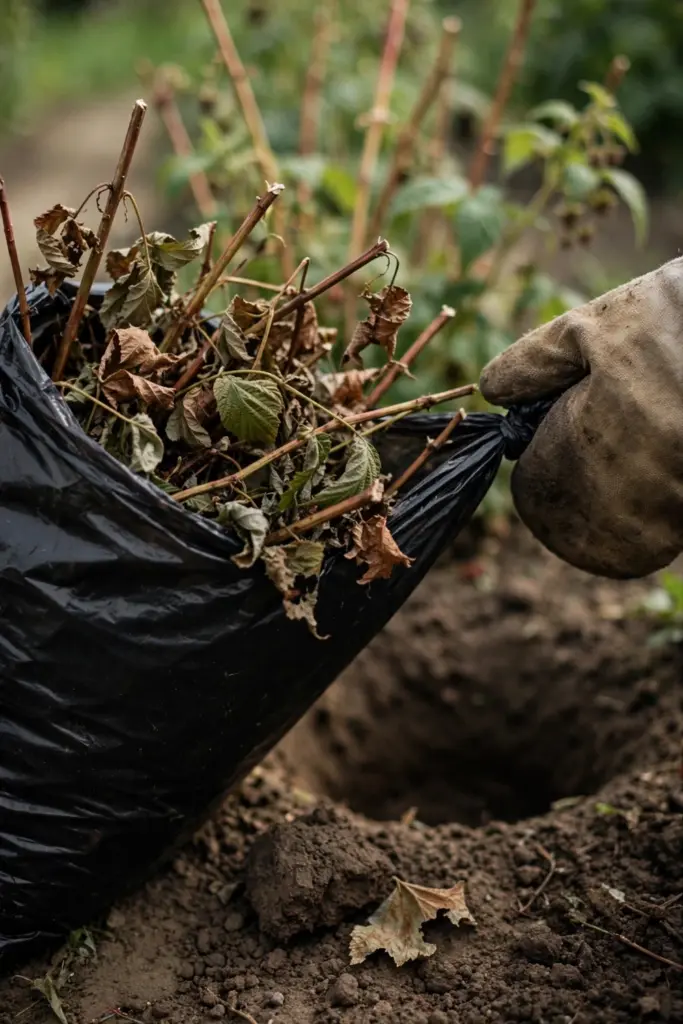
Double-bag the material, then trash it or burn it where burning is allowed. Bagging keeps aphids on the cut canes from drifting onto healthy plants during the trip to the bin. Never compost rogued plants. A home compost pile rarely heats evenly enough to be trusted with infected material, and the pile sits beside the garden for months. The trash bin or the burn pile ends the risk in one move.
Wash tools and gloves after the job as ordinary hygiene. Tool transmission has not been established as a route for this virus, so disinfection is not a control strategy here. Clean tools still matter for every other disease in the garden, and a washed fork starts the next job clean. Fill the hole with fresh soil, and do not replant raspberry stock into it until Strategy 5 is ready. The empty spot is a placeholder, not a loss. The loss would have been the row.
Strategy 5: Replant With Certified Virus-Free Stock Only
Replant with certified virus-free stock only, and never with cuttings, tips, or suckers from your own patch. Certified stock starts the next planting without the virus, which is the one clean start this disease allows. The certification scheme for raspberry planting material runs under EPPO Standard PM 4/10, and reputable nurseries sell stock that carries that virus check. Ask the nursery for certified stock by name, and keep the tag that comes with the plant.
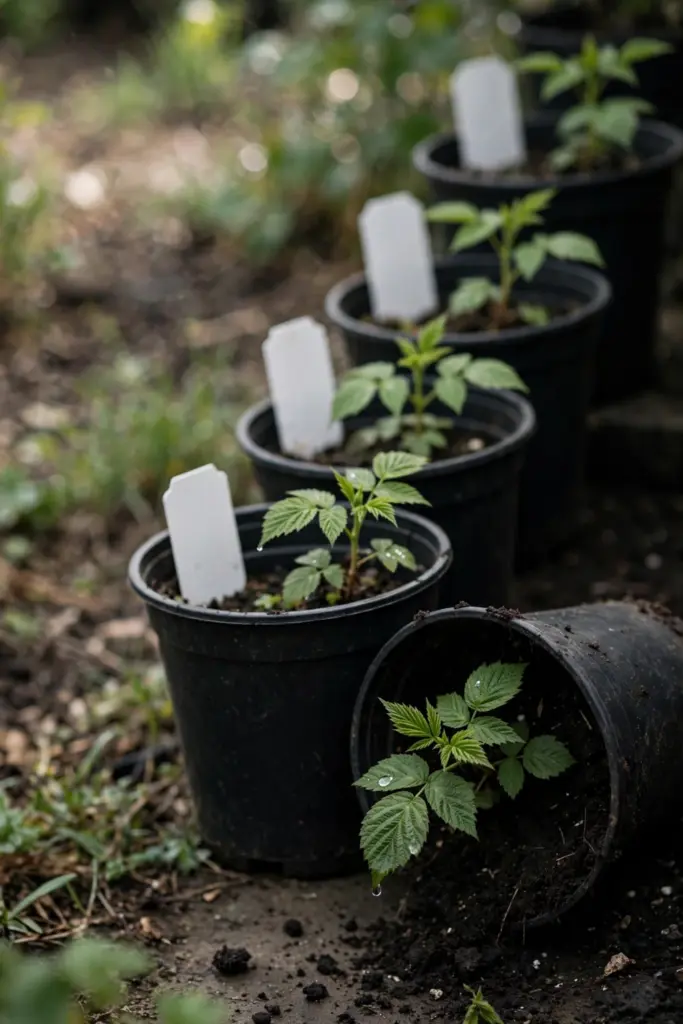
Keep the tag. The tag is the only proof that the plant arrived clean, and it settles the question if symptoms appear later. A plant with a tag and a clean history points to aphid spread after planting. A plant without a tag points to the nursery, and the nursery question has no answer without the paperwork. File the tag with the garden records, and note the planting date beside it.
Never accept raspberry plants from a neighbor, even a healthy-looking neighbor. A healthy-looking plant can carry the virus with mild or absent first-year symptoms, and a gift plant skips every check the certification scheme provides. The gift feels thrifty, and it replants the disease. Buy certified stock, keep the tag, and start each new planting with material that carries a virus check.
Strategy 6: Clear Wild Brambles Around the Patch
Clear wild brambles around the patch, because a wild cane holds the virus as well as a garden cane does. Walk the fencerows, the wood edge, the ditch bank, and any unmanaged corner within sight of the patch. Pull wild raspberry and blackberry canes, roots included, and bag them the same way you bag rogued plants. A cleared edge removes the reservoir that feeds aphids into the patch.
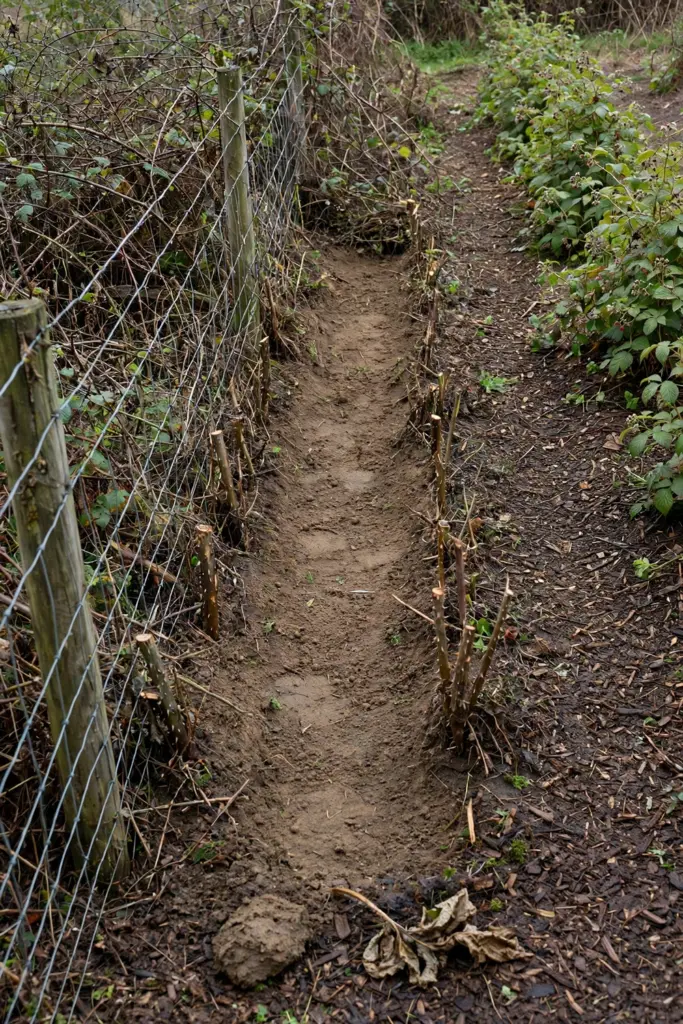
Work the edges once a season, and check them again after mowing or brush work. Wild brambles return from root pieces and from seed, and one season of clearing never ends the job. A spring walk catches new canes while they are small and easy to pull. A fall walk catches the canes that grew through the summer. Two walks a year keep the edge honest.
Coordinate with the neighbor when the brambles sit on the property line. A cleared garden side and an untouched neighbor side still leave a bridge, and aphids cross a property line without noticing it. A shared clearing, or a mowed buffer strip along the line, closes the gap. The conversation takes longer than the clearing. The clearing lasts longer than the conversation.
Strategy 7: Control Aphids Without Wiping Out Beneficials
Control aphids with the lightest tool that works, and protect the insects that eat aphids. Start with a weekly check of leaf undersides from spring onward. Aphids cluster on the undersides, and a colony found early comes off with a strong jet of water from the hose. Hose-blasting kills no beneficials, costs nothing, and works on small colonies before they grow.
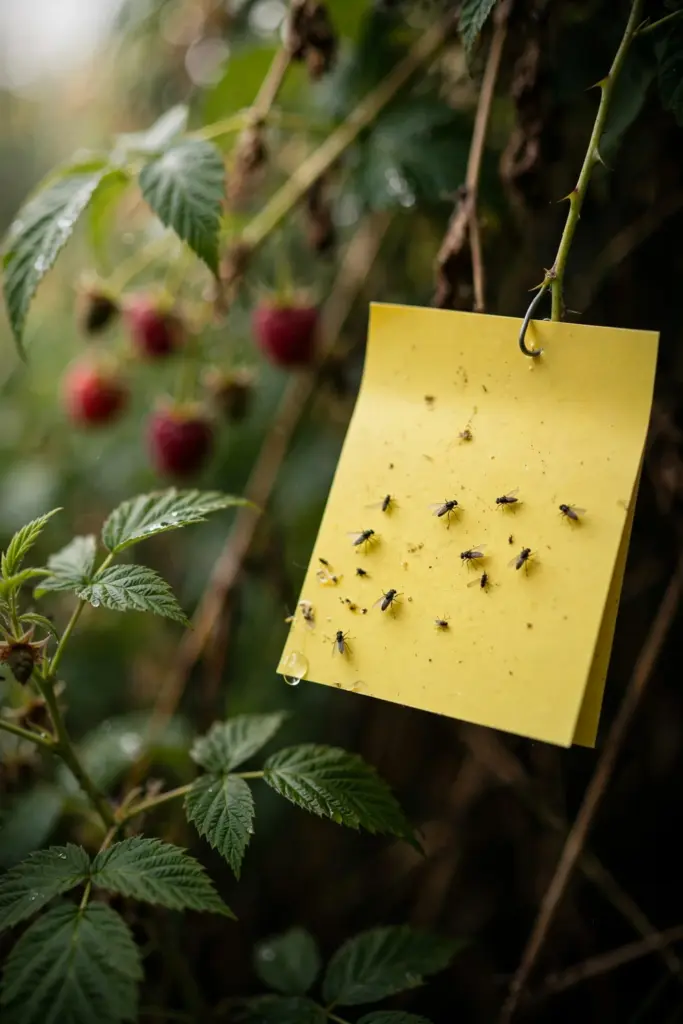
Set yellow sticky cards at cane height among the rows to track aphid pressure. A card that fills with aphids tells you the colony is building, and a card that stays clean tells you the pressure is low. Cards are monitors, not controls. They never replace the leaf check, and they never catch every aphid. The card reading guides the next move, and the next move stays light.
Use insecticidal soap only where aphids cluster, and only when the hose no longer keeps up. Spray the colony, not the whole row, and follow the label exactly. Soap kills on contact, so it reaches only the aphids it touches, and it leaves no residue to protect the plant afterward. That limit is a feature here. A broad spray kills ladybirds, lacewings, and the other predators that eat aphids all season. A targeted spray leaves them working. The predators are the long-term control, and the spray is the short-term rescue.
Strategy 8: Screen Valuable Plantings With Fine Mesh
Screen valuable plantings with fine mesh to keep aphids off the canes. Fine mesh screen or garden netting over the row blocks the vector, and a blocked vector cannot deliver the virus. Stark Bro’s nursery guide lists mesh screening among its control options for leaf curl, and it suits a small home planting better than any spray program. A short row under mesh stays cleaner than a long row left open.
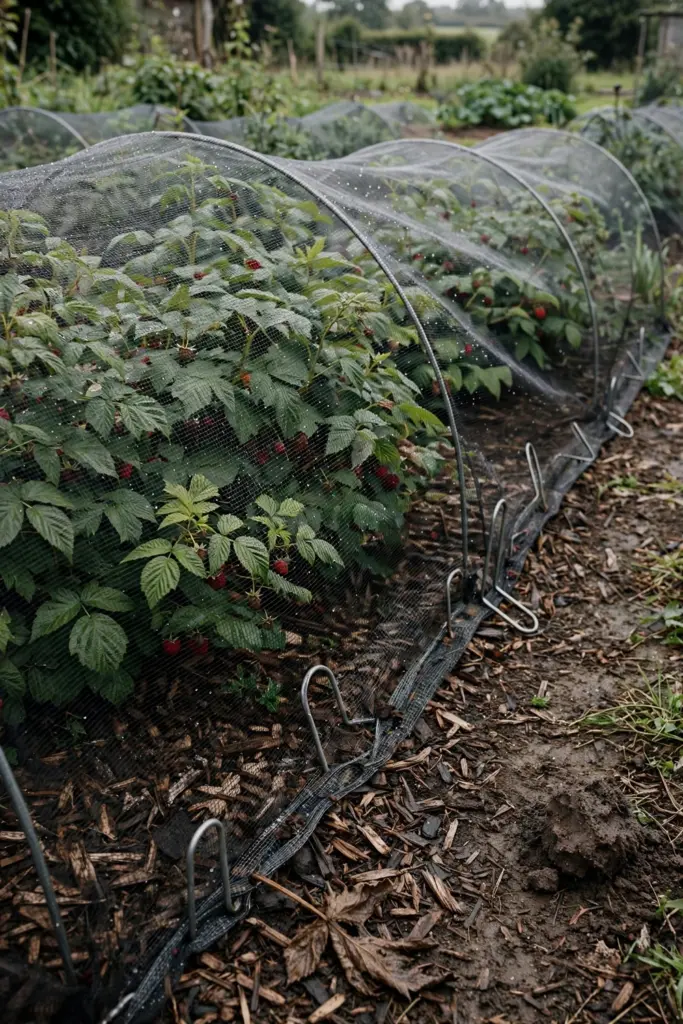
Support the mesh on hoops or a frame so it clears the canes. Mesh that rests on the foliage rubs leaves, traps moisture, and gives aphids a sheltered surface to colonize. Hoops hold the mesh off the plants, and the air gap keeps the row dry. Anchor the edges at the soil line so aphids cannot walk under the screen. A screen with an open edge is a tent with the door open.
Use screening where the plants matter most. A new certified planting, a favorite variety, or a small patch beside a wild edge earns the mesh first. A large established patch may not justify full screening, and Strategies 4 through 7 carry it instead. Mesh is a tool for the plants you cannot afford to lose, and the decision to screen follows the value of the planting.
Strategy 9: Separate Black Raspberries From Other Raspberries
Separate black raspberries from other raspberries by a real distance, not by one row. Plant black raspberry plants at least 23 to 30 m (75 to 100 ft) away from other raspberry plants, as Stark Bro’s nursery guide on raspberry pest and disease control advises. That distance breaks the short hop an aphid makes between neighboring plants, and it gives each planting its own buffer.
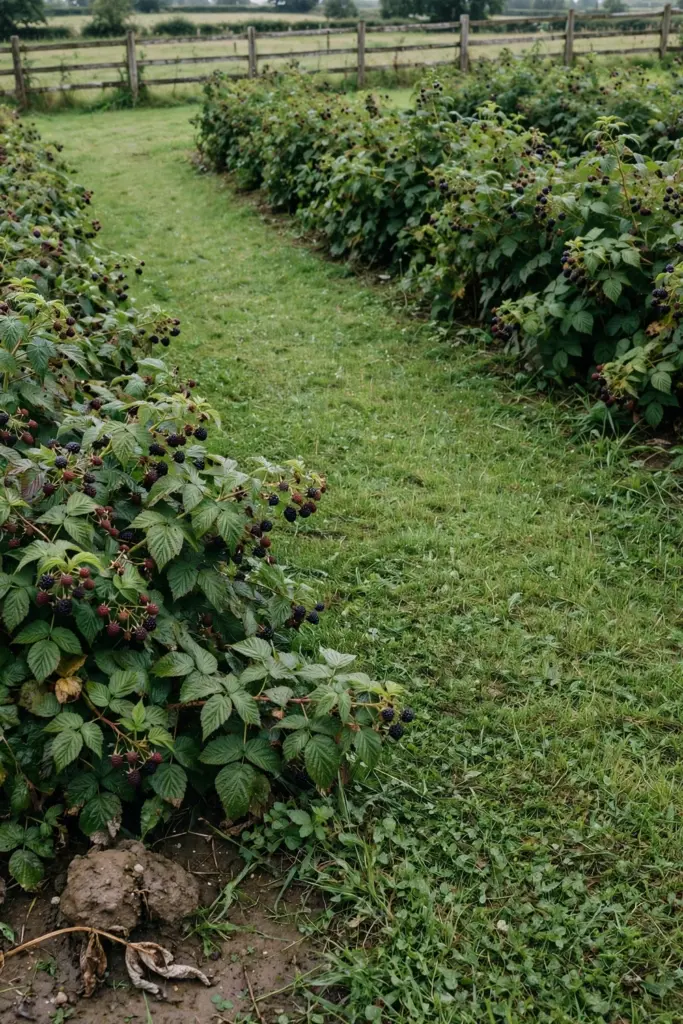
Measure the gap before you plant, not after. A gap that looks wide from the kitchen window shrinks once the canes grow, and a black raspberry row planted 5 m from a red raspberry row is one planting with a path between the rows. Pace the distance, or run a tape measure down the garden. The number is 23 to 30 m. A guessed gap is not a gap.
Keep the separation when you replant. A new black raspberry row goes in the measured spot, not in the empty hole beside the red raspberries. The empty hole tempts because it is ready, and the temptation replants the risk. The measured spot takes more work, and the work is the point. Separation is a one-time decision that protects both plantings for years.
Strategy 10: Quarantine and Inspect Every New Plant
Quarantine every new plant before it joins the patch. Hold new raspberry plants apart from the established row for a few weeks, and inspect their leaves during that hold. A plant that arrived carrying the virus may show nothing at first, and the hold gives symptoms time to appear. A plant that shows rounded, downward-curled leaves during quarantine never enters the patch. The hold costs a corner of the garden for a few weeks. A planted infection costs the row.
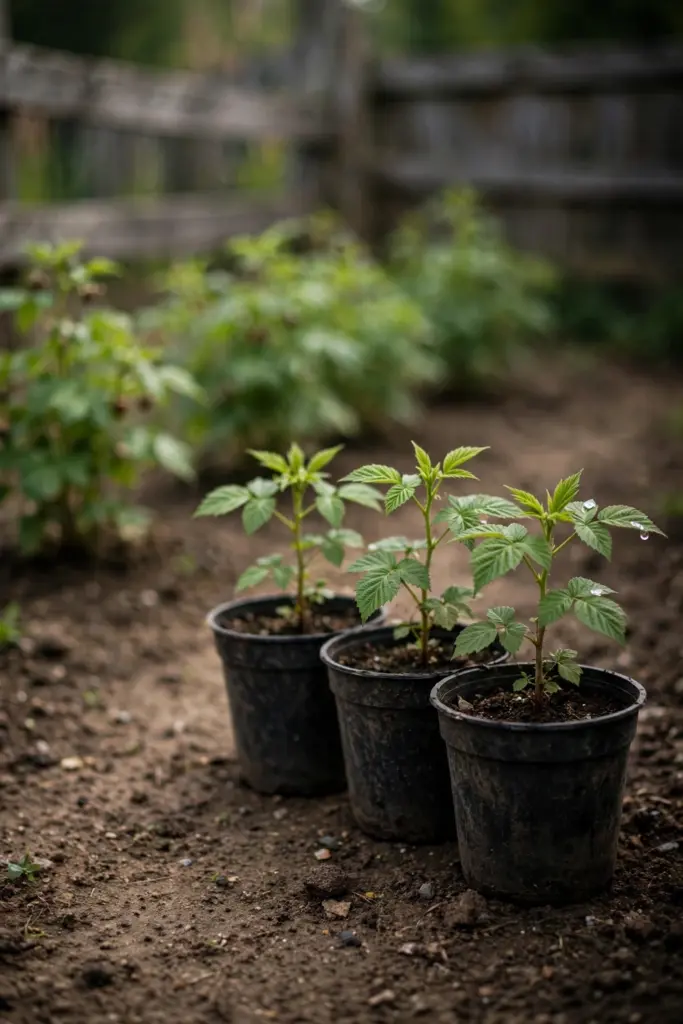
Inspect with the syndrome in mind. Look for rounded leaves, downward curl, arched tissue between the veins, and canes that run short and stiff. Check leaf undersides for aphids, and hose off any colony you find before it moves. A new plant with aphids gets a hose blast and a longer hold, not a place in the row. The quarantine is the last filter, and it works only when the gardener uses it every time.
Never replant uncertified stock into a patch that held infected plants. The patch soil holds no virus on its own, and the risk is the plant material, not the dirt. Certified stock goes into the cleared spot. Uncertified stock goes nowhere near it. That rule is absolute, and it is the one that keeps a cleaned patch clean.
Living With Raspberry Leaf Curl Virus Damage You Already Have
Living with the damage means protecting the healthy plants and letting the sick ones go. Keep the healthy canes growing, water them, feed them, and watch them. A patch with a few rogued plants still yields berries from the healthy canes, and the harvest from those canes is the point of the whole exercise. Removing the whole patch wastes healthy plants, and the virus does not require it.
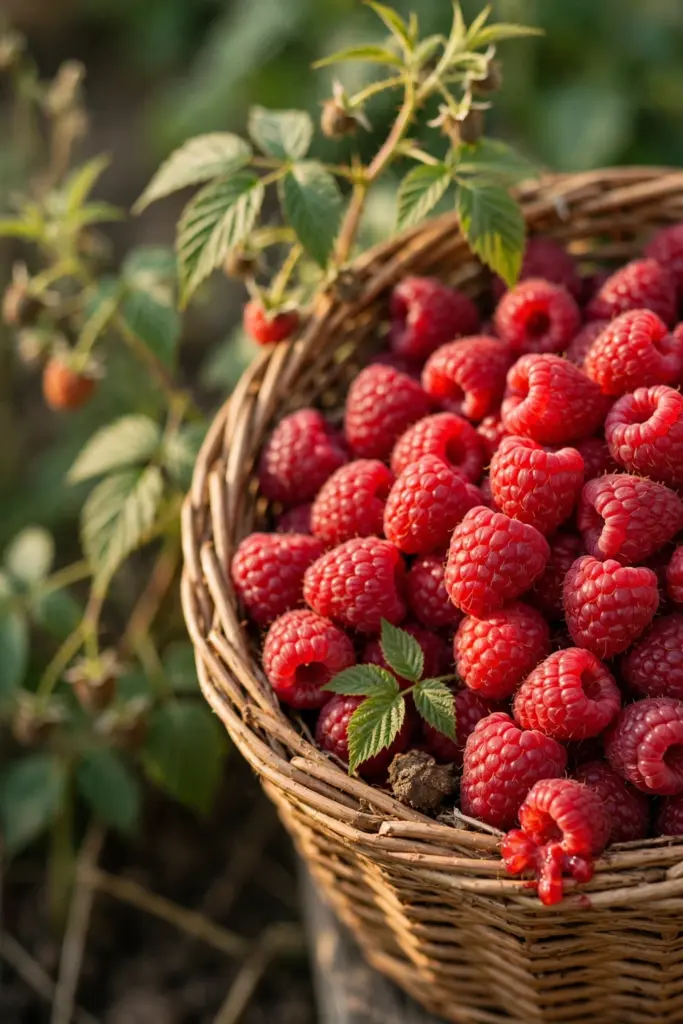
Eat the berries from healthy canes with confidence. The virus infects raspberry plants, not people, and fruit from a healthy cane in a managed patch is ordinary fruit. Fruit from an infected cane is small, seedy, and crumbly, and it makes poor eating on quality grounds alone. Pick it off and discard it with the rogued material if the cane is still standing, or leave the cane for the rogueing crew. Quality, not safety, decides that call.
Feed the remaining plants through the season, and build the soil under them. A steady supply of compost and a mulch layer keep the root zone cool and moist, and a vigorous plant shows its symptoms early enough to act on. The soil health guide covers building that foundation. Soil health never cures a virus, and this guide never claims it does. It keeps the healthy plants strong enough to carry the patch while the strategies do their work.
If the patch is gone, a different cane fruit fills the space while you plan the next raspberry planting. Thimbleberries grow thornless canes with soft fruit, and the thimbleberry growing guide covers shade planting and root barriers. A new raspberry planting goes into certified stock and a cleared spot, on the schedule the strategies set. The gap season is a pause, not a defeat.
Frequently Asked Questions
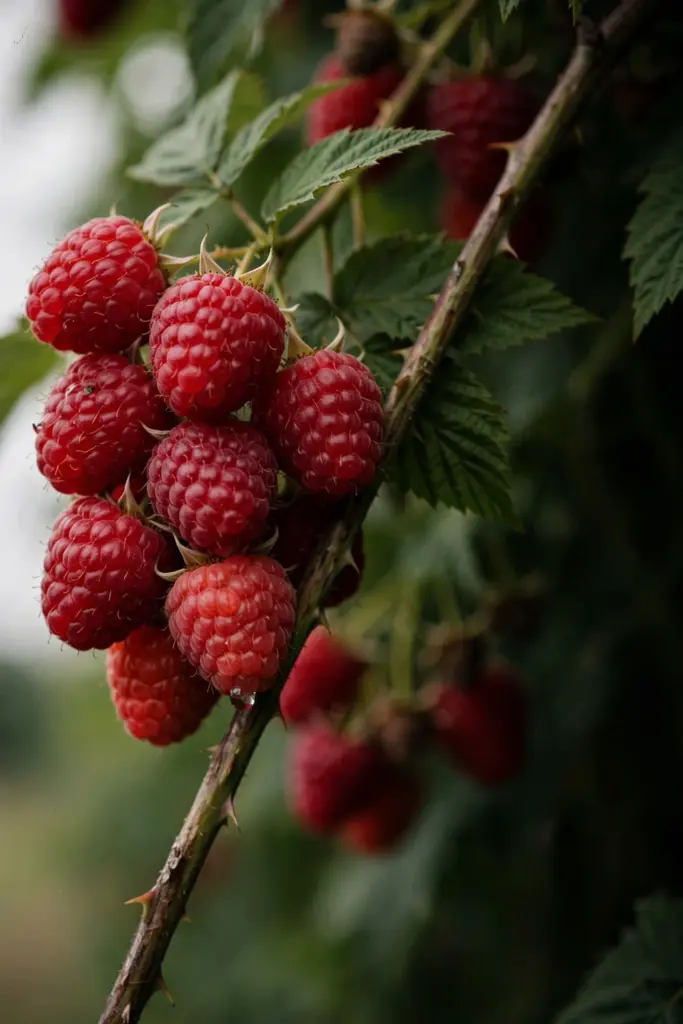
Yes. The virus infects raspberry plants, not people, and berries from an infected plant carry no risk to the eater. The berries are small, seedy, and crumbly, so they make poor eating on quality grounds. Pick the fruit if you like, and enjoy it fresh. Never propagate from that plant. Tips, suckers, and cuttings from an infected plant carry the virus into the next planting.
No. No spray cures a virus infection, and aphid control never removes the virus from a plant that already carries it. Aphid control protects the healthy plants beside the sick one, because every aphid kept off a healthy cane is one less delivery of the virus. Spray or hose the aphids on healthy plants, rogue the infected plant, and pair every spray with sanitation. Spraying a symptomatic plant expecting a cure wastes the spray.
No. Never compost rogued plants. A home compost pile rarely heats evenly enough to be trusted with infected material, and the pile sits beside the garden for months while the virus waits in living tissue. Double-bag the rogued plant, then trash it or burn it where burning is allowed. The trash bin or the burn pile ends the risk in one move. Composting only moves it.
Plant black raspberries at least 23 to 30 m (75 to 100 ft) away from other raspberry plants. That distance breaks the short hop an aphid makes between neighboring plants, and it gives each planting its own buffer. Measure the gap with a tape before you plant, because a gap that looks wide from the kitchen window shrinks once the canes grow. Keep the separation when you replant, and never fill the empty hole beside the red raspberries.
Yes, after you remove the infected plants whole, roots included, and replant with certified virus-free stock only. The risk sits in the plant material, not in the soil, so a cleared spot takes certified stock without a waiting period. Never replant uncertified stock, neighbor plants, or suckers from the old patch into the spot. Keep the nursery tag, note the planting date, and watch the new plants through their first season.
Where to Go From Here
Raspberry leaf curl virus has no cure, and the playbook is short: confirm the identification, send a sample to the lab, rogue infected plants at once, replant with certified virus-free stock, clear wild brambles, control aphids with a light hand, screen the plants that matter most, separate black raspberries by 23 to 30 m, and quarantine every new plant. Those moves protect the patch. The rest of the strategies handle neighbors, edges, and missed windows.
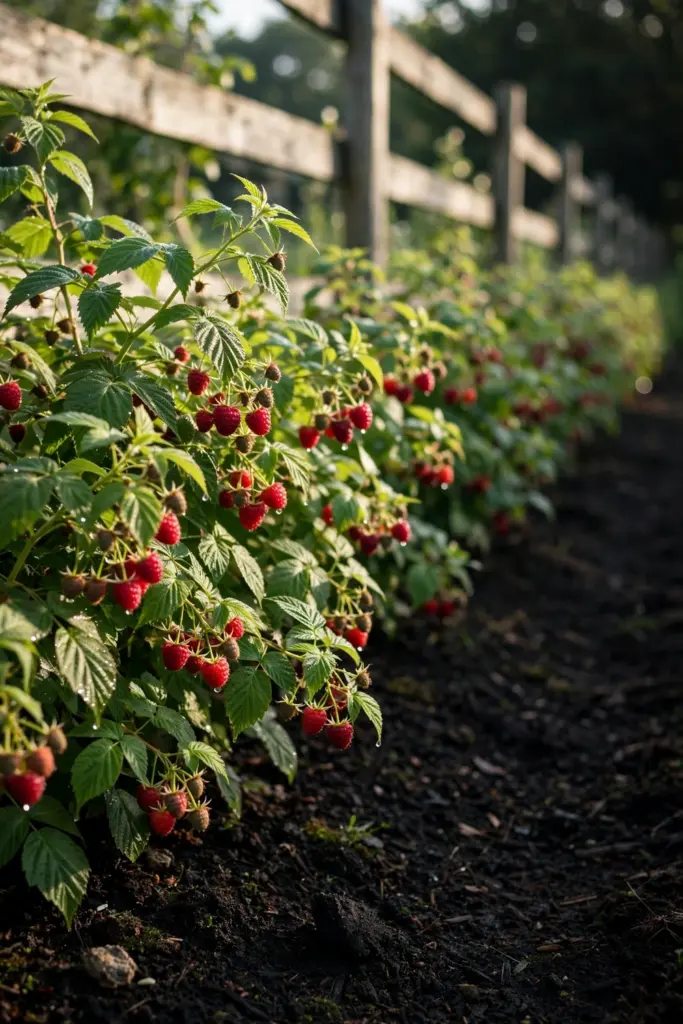
Start this week with a walk through the raspberry row. Check leaf undersides for aphids, look for rounded leaves curling downward on one cane, and mark any cane that matches the syndrome. If the pattern matches, send a sample to the lab, and rogue the plant when the result comes back. Then order certified stock for the empty spot, and let the reset begin.
If you want another cane fruit while the new raspberry planting settles, the tayberry training guide covers trellising, pruning, and tip-layering for a raspberry-blackberry cross. Keep the virus rules the same for every cane fruit you grow. Clean stock, fast rogueing, and early aphid control carry the whole patch, and the lab test settles every argument the leaves start.