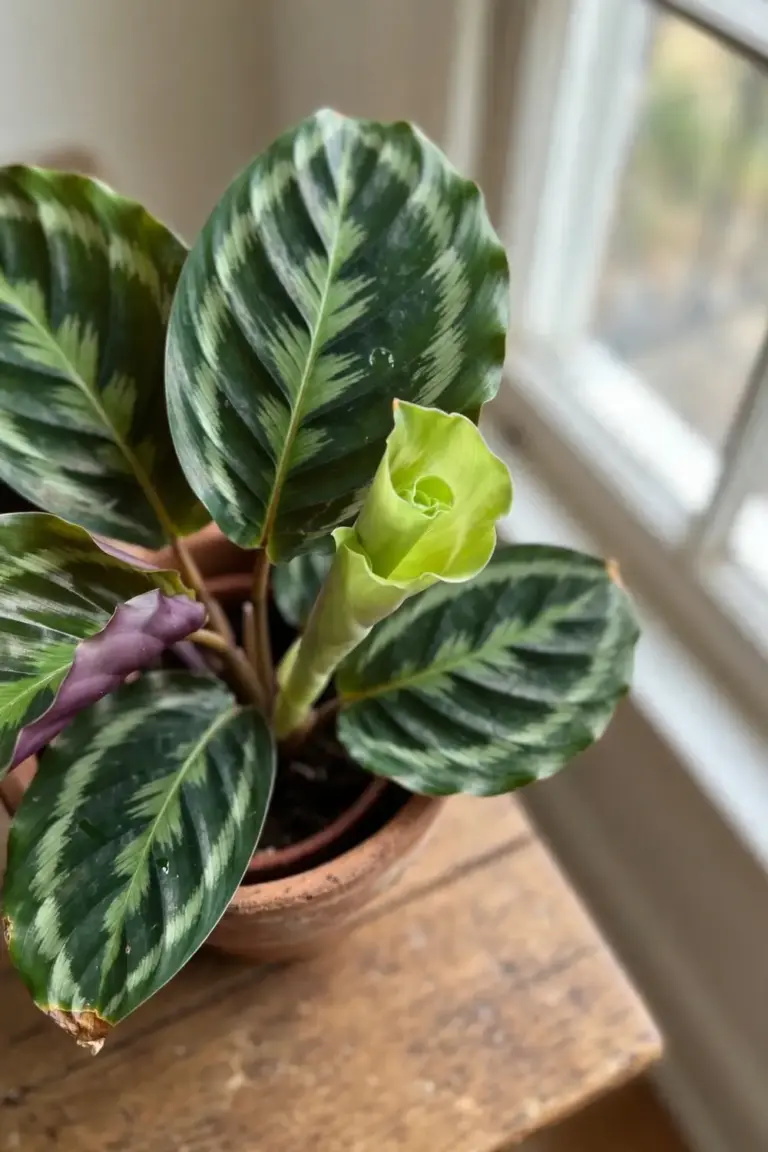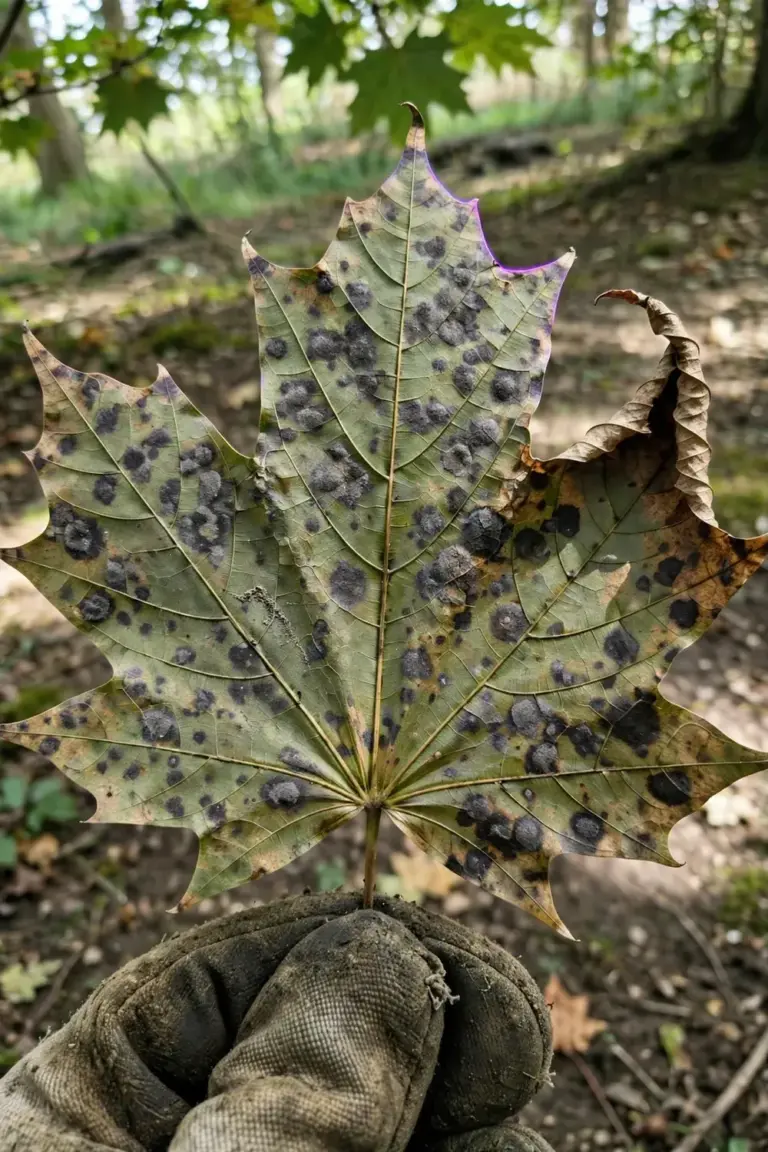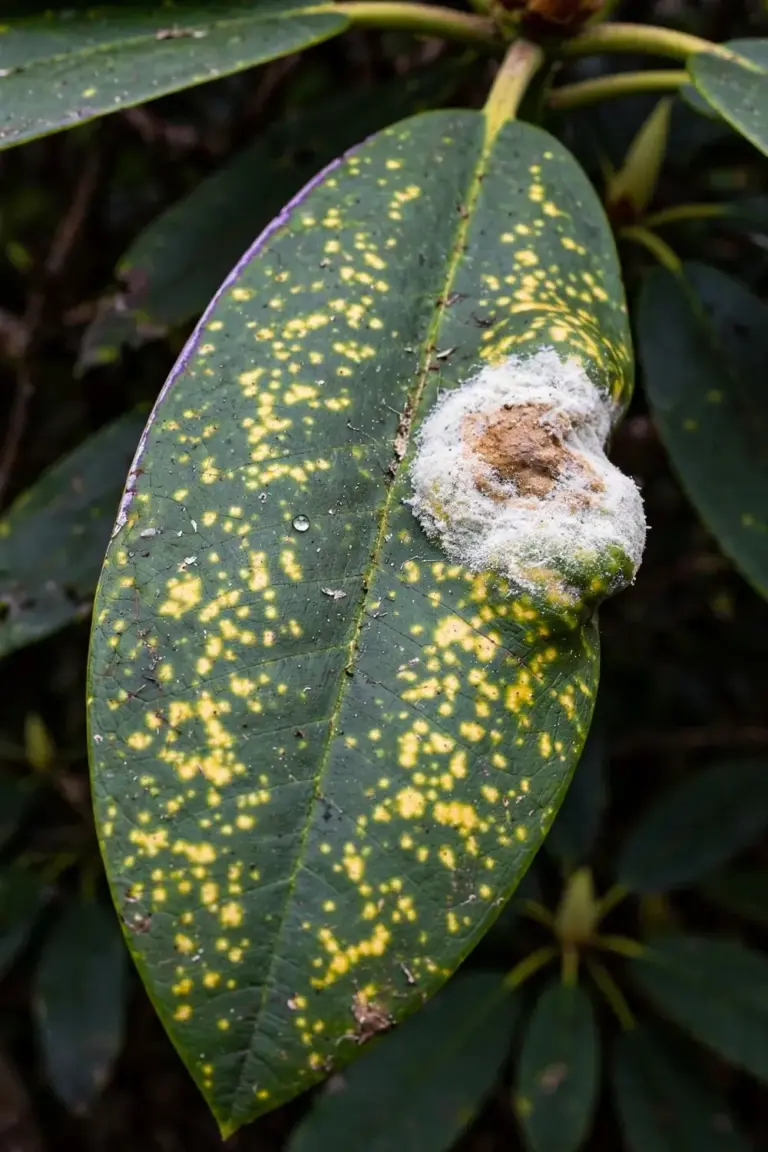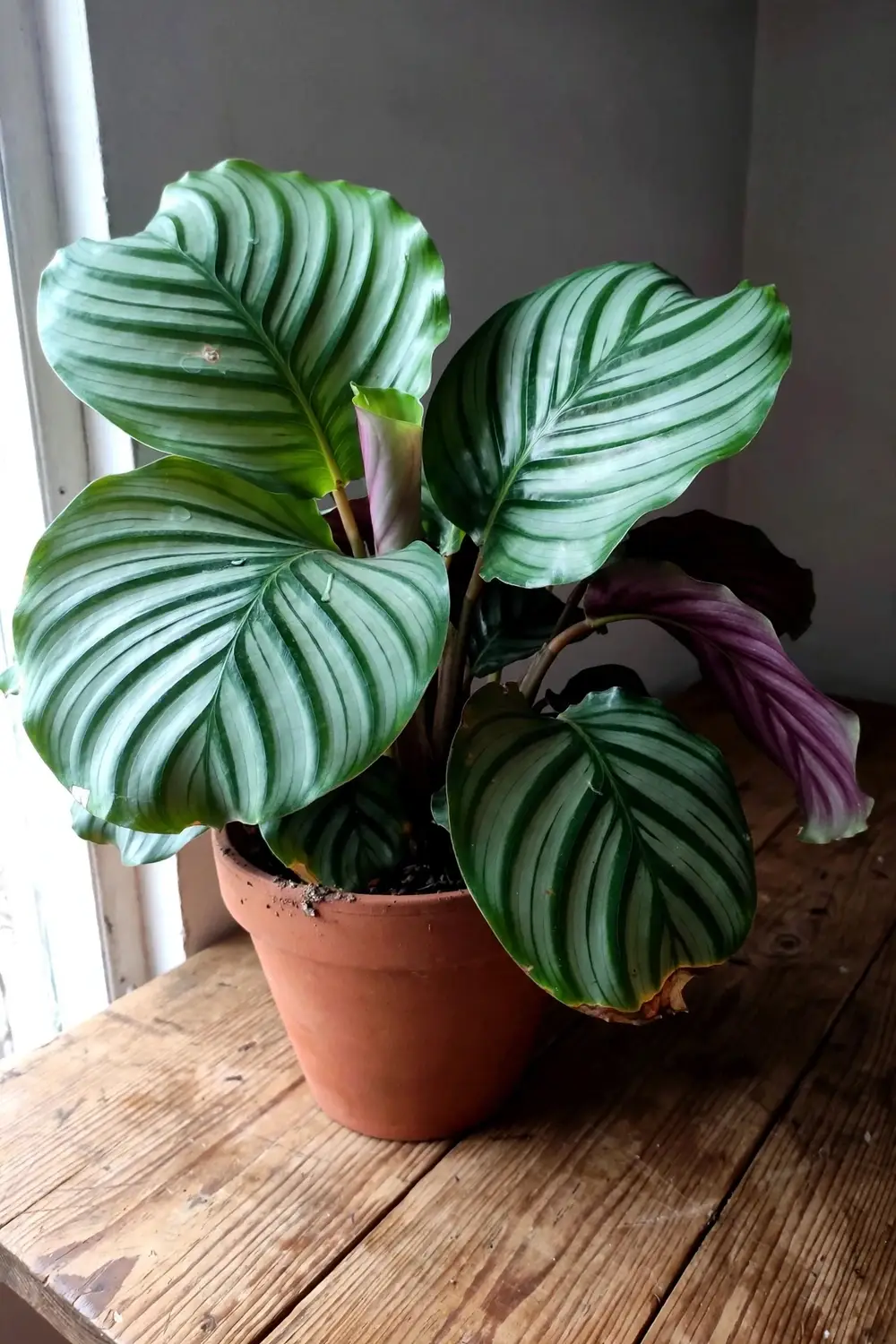

Your calathea speaks in five symptoms: curling, brown tips, yellowing, fading, and stippling. When you ask what’s wrong with my calathea, the leaves already carry the answer. Match the symptom to its cause first, then give the fix 7 days before judging it. Changing water, light, and feed all at once hides which fix worked.
The rest of this page walks each symptom in turn: normal night folding first, then curling, brown tips, yellowing, fading, pests, and root rot. Each section names the cause, the test, and the fix. Water and air get their own repair sections after the diagnosis.
One named calathea shows how care differs by variety, and the Calathea Freddie care guide covers that plant’s routine in full. Here, each symptom gets its cause, its test, and its fix.
1. First, Check Whether the Folding Is Normal Night Movement
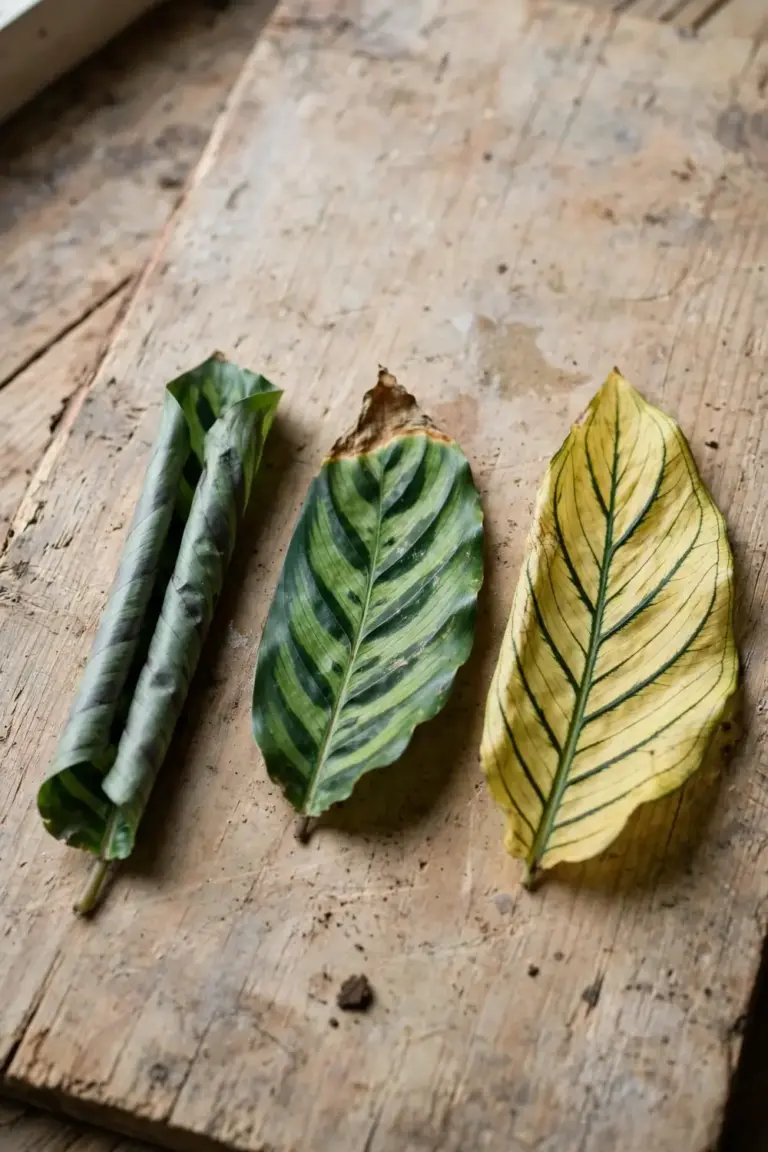
Leaves that rise at night and drop by day are normal. Leaves that stay folded through the day signal stress.
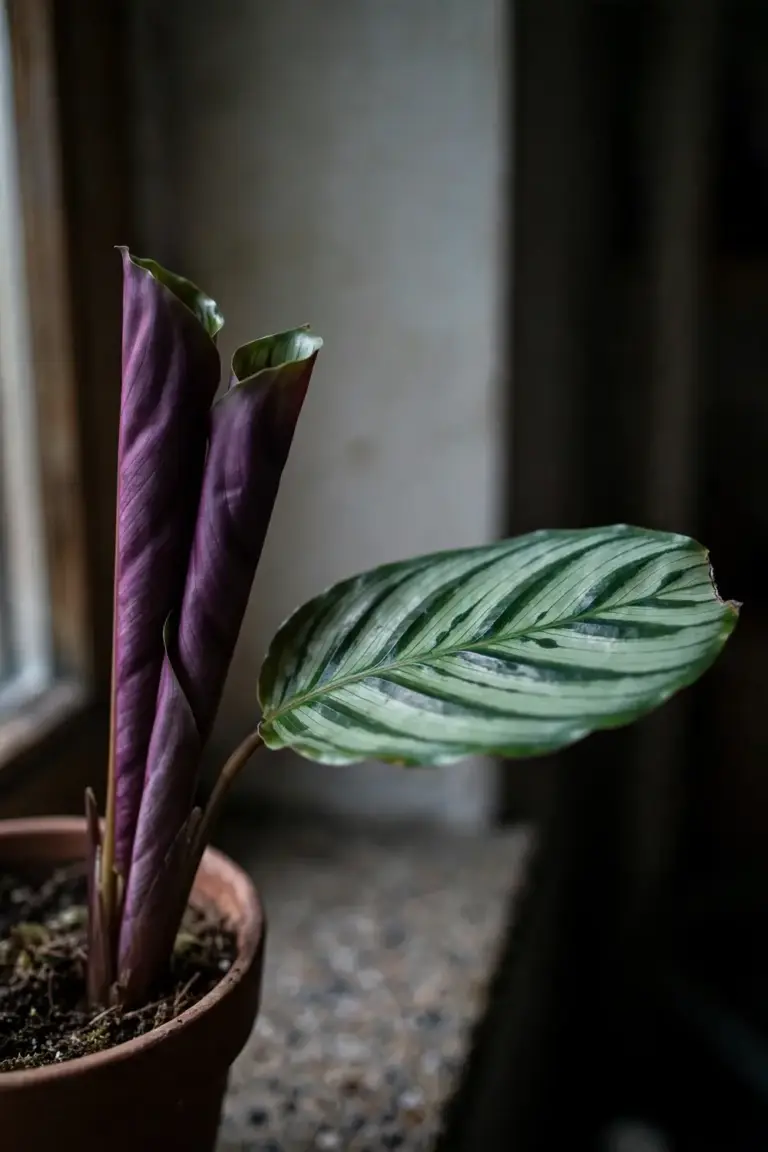
Calathea belongs to the prayer plant family, Marantaceae, and its leaves move on a daily rhythm called nyctinasty. The leaves fold in the evening and reopen at sunrise, as the North Carolina Extension Gardener Plant Toolbox describes for rattlesnake plant, a close relative sold under the calathea name. The same family movement shows in the Lemon Lime Prayer Plant care guide, which covers a Maranta cousin with the same nightly fold.
Test the plant at midday. Leaves open and flat at midday mean the plant is behaving normally, even if the evening fold looks dramatic. Leaves still folded at midday on two days running mean stress, and the curling section below holds the next test. Chasing a normal nightly fold with extra water drowns the roots. Check the clock before you reach for the watering can. A fold that never releases is the warning sign. Leaves stuck half-folded at noon with dry mix point to thirst; with wet mix, they point to root trouble. Either way, the fold itself is not the disease. The fold is the plant cutting water loss while the roots catch up. Fix the water or the air, and the next leaves open flat.
2. Match Each Symptom to Its Cause Before You Change Anything
One symptom points to one or two causes. The table below pairs each symptom with its most likely cause and its first test.
| Symptom | Most Likely Cause | First Test |
|---|---|---|
| Leaves folded at night, open by day | Normal nyctinasty | Check the plant at midday |
| Leaves curled all day | Dry soil, dry air, or a draft | Push a finger 2 cm into the mix |
| Brown tips and crispy edges | Fluoride or salts, low humidity, or excess feed | Check the water source and the feed history |
| Yellow leaves with soft stems | Overwatering or root rot | Unpot and inspect the roots |
| One yellow lower leaf, firm stems | Old leaf shed or low nitrogen | Count the affected leaves |
| Faded pattern and pale leaves | Too much direct sun | Check the window aspect |
| Tiny pale speckles and fine webs | Spider mites | Inspect leaf undersides with a magnifying lens |
| Sticky leaves and small bumps | Scale or mealybugs | Inspect stems and leaf joints |
| Drooping with wet soil | Root rot | Unpot and inspect the roots |
Work down the table one row at a time. Fix one cause, then watch the plant for a week before changing anything else. Two fixes at once hide which one worked, and the plant pays for both. New leaves carry the verdict, as the closing section explains.
3. Curling Leaves: Dry Soil, Dry Air, or a Draft
Curling means the leaf is losing water faster than the roots replace it. Dry soil, dry air, and drafts are the three drivers.
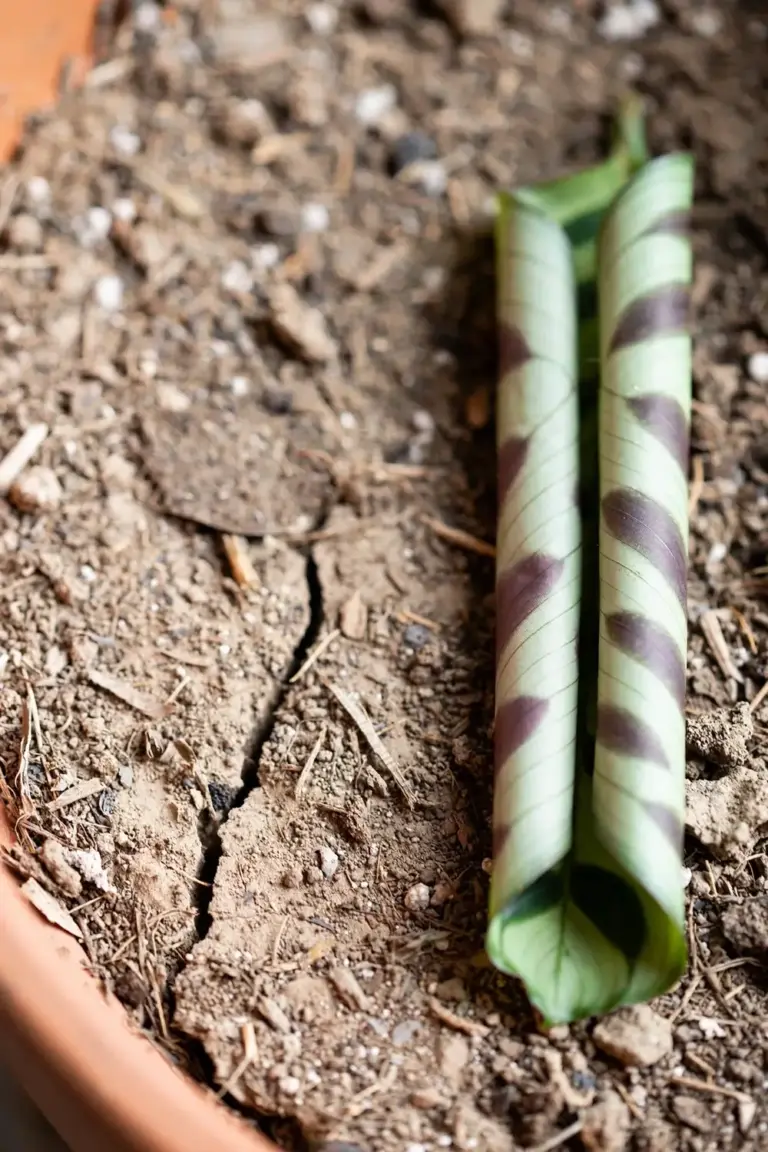
Start with the soil. Push a finger 2 cm into the mix. Dry mix at that depth means the plant needs water now. Water thoroughly until water runs from the drainage holes, then empty the saucer. The University of Florida IFAS Extension production guide lists wilted leaves as a sign of drought stress or root pathogens and advises keeping the potting medium uniformly moist but not wet. That pair, moist but not wet, is the whole watering rule for calathea.
Next, check the air. Browning or curling of leaf edges and tips can result from low humidity, as the North Carolina Extension Gardener Plant Toolbox states for rattlesnake plant. Air conditioning dries indoor air fast in Australian homes, and a plant beside a vent curls even when the soil is damp. Move the pot away from air conditioning vents, heaters, and doors that open to cold air. The same Extension page warns that rattlesnake plant does not tolerate drafts or sudden temperature changes. Curling that hardens into brown edges means the dry air has been at work for days. Fix the air, then wait for new leaves. Check the saucer after watering, too. Empty it 30 minutes after watering so the pot never sits in drained water.
4. Brown Tips and Crispy Edges: Water Salts, Fluoride, or Low Humidity
Brown tips mean salts or fluoride in the water, dry air, or excess fertilizer. The leaf edge dies first because salts collect there.
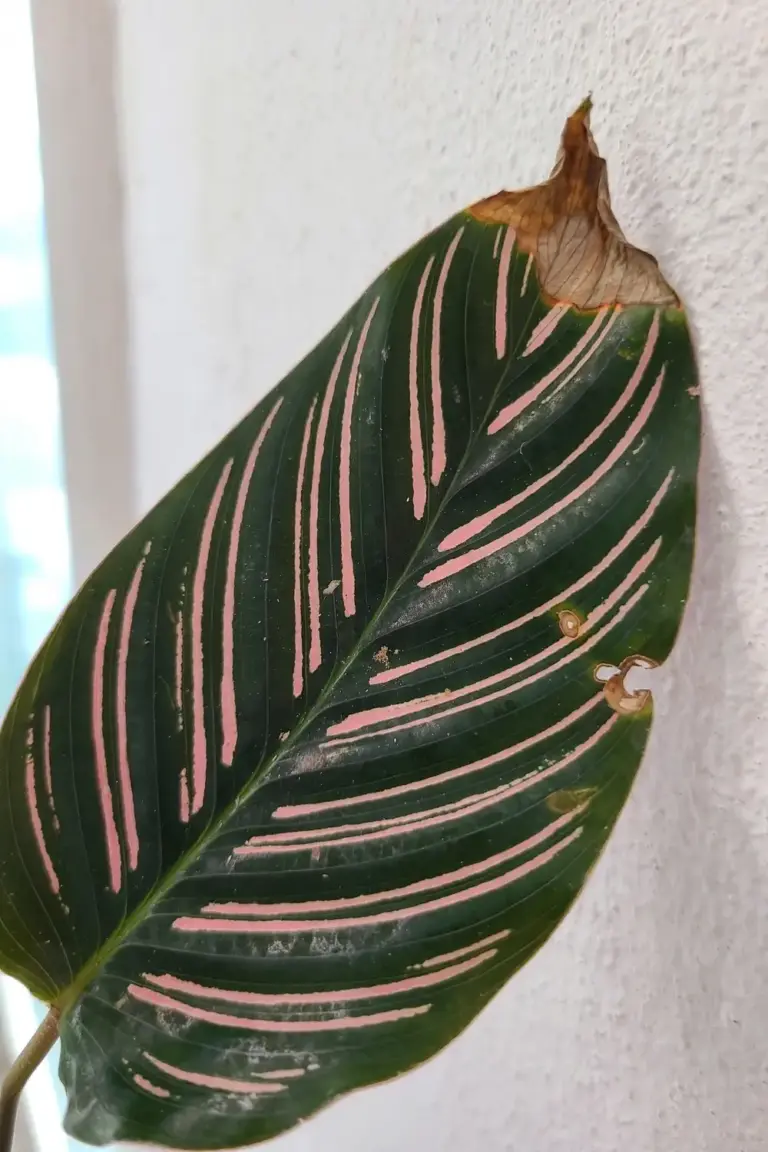
The University of Florida IFAS Extension production guide names fluoride toxicity as the cause of dead spots near leaf margins and advises avoiding water and fertilizer containing fluoride. The same guide lists leaf marginal or tip necrosis as a sign of low pH, excess fertilizer, or high manganese, and advises keeping pH close to 6 with soluble salts between 1.0 and 1.5 dS/m for interiorscape plants. The UC IPM houseplant problems guide adds overfertilization, salt buildup, excessively dry or wet soil, too much sun, low relative humidity, and drafts to the list of brown tip causes. Three causes share one symptom, so check them in order: water source, feed history, then humidity.
Sydney tap water carries both chlorine and fluoride. Sydney Water states that it adds small amounts of chlorine to protect water from pathogens and adds fluoride as a final step under the advice of NSW Health. Other Australian suppliers treat water differently, so check your own supplier’s water quality page. Rainwater or distilled water removes the fluoride question entirely. The water repair section below covers standing water, flushing salts, and the fluoride limit of a jug left overnight.
One named variety shows the same symptom set in a smaller plant, and the Calathea Network care guide covers its routine. Trimming dead tips changes nothing about the cause. Cut the dead edge with clean scissors if the look bothers you. New leaves stay clean only when the water or the feed changes.
5. Yellow Leaves: Too Much Water, Too Little Nitrogen, or Old Age
Yellow leaves mean too much water, too little nitrogen, or one old leaf dying on schedule. Stem firmness separates the three.
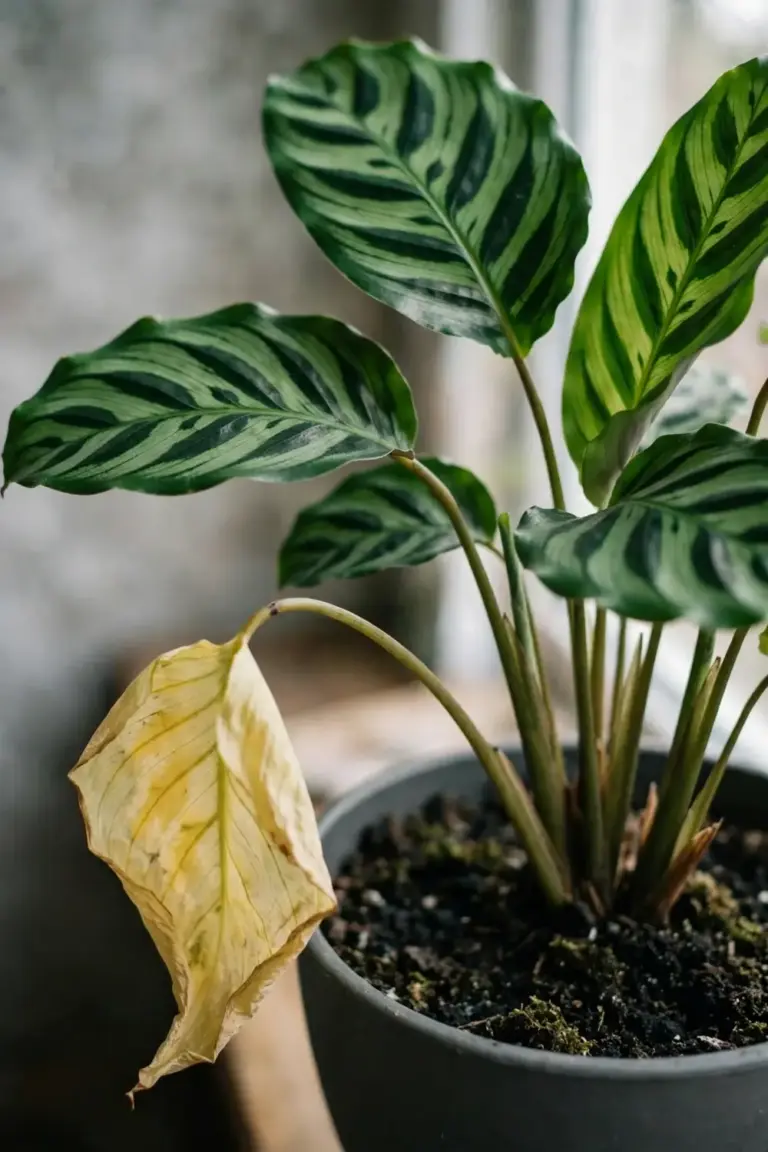
Start with the stem. Soft stems plus yellow leaves plus wet soil point to overwatering and root trouble. Firm stems plus one yellow lower leaf point to an old leaf finishing its life. Firm stems plus yellowing across the whole plant point to feeding or light. The UC IPM houseplant problems guide lists yellow-green older leaves as a sign of insufficient fertilizer, especially nitrogen, poor root health, insufficient light, or sap-sucking pests, and yellow-green newer leaves as a sign of overwatering, soil pH imbalance, or micronutrient deficiency. The same guide lists yellowing and dropping leaves as a result of inadequate light, low temperatures, overwatering, poor drainage, or soil pests and diseases.
The University of Florida IFAS Extension production guide lists leaf chlorosis as a sign of low fertilizer, overwatering, or high light levels, and advises increasing fertilizer, particularly nitrogen and iron, while reducing watering frequency and light levels. The North Carolina Extension Gardener Plant Toolbox states plainly that yellowing of the leaves can result from underwatering or overwatering. That overlap is why the finger test and the root check matter more than the color alone. One yellow lower leaf with firm stems is normal shed. Pull it off and move on. Several yellow leaves with wet soil mean the roots need inspection, which the root rot section covers.
6. Faded Pattern and Pale Leaves: Too Much Direct Sun
Faded pattern means too much direct sun. The markings bleach before the leaf burns.
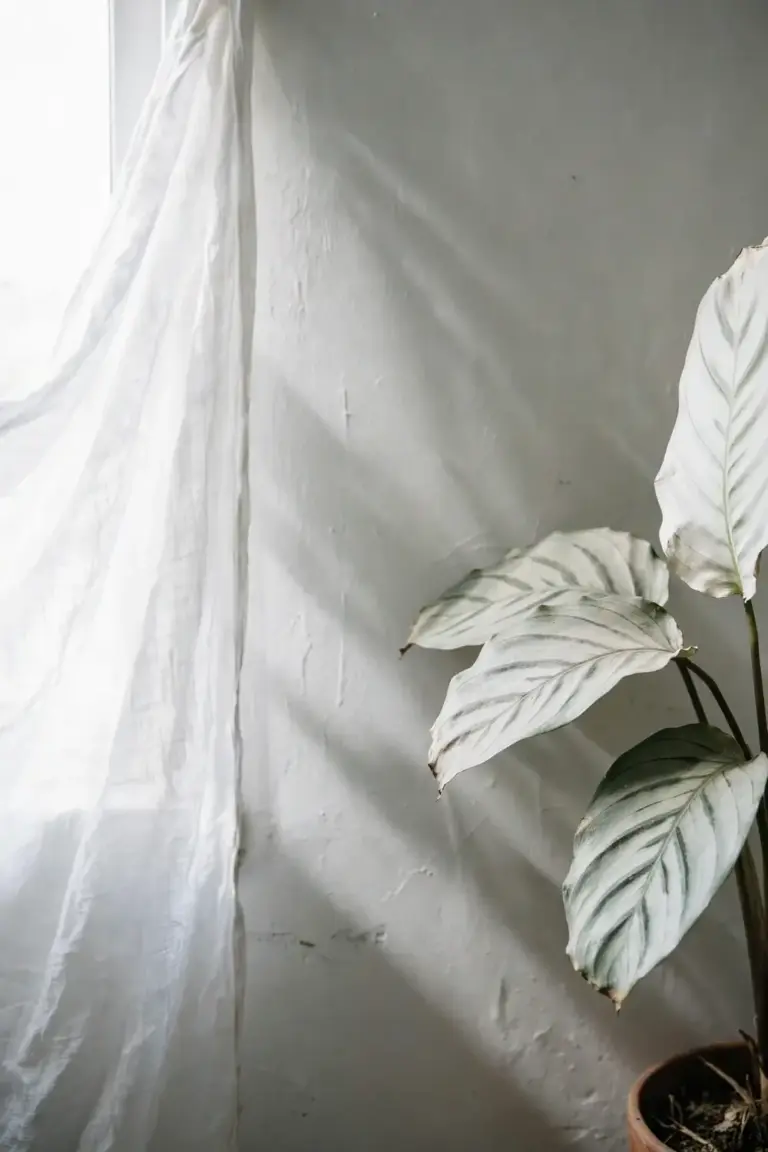
Calathea grows under forest canopy in its native range, and its leaves are built for filtered light. The North Carolina Extension Gardener Plant Toolbox advises limited sun to bright shade locations and states that rattlesnake plant does not tolerate full sun, though it tolerates early morning sun or diffused sun. The University of Florida IFAS Extension production guide puts optimal light at 150 to 200 foot-candles, about 1,600 to 2,200 lux, and notes that calatheas tolerate an interior light level as low as 75 foot-candles.
In Australia, a north-facing window takes the harshest sun, so move a fading plant to an east-facing window or a bright south-facing spot. A west-facing window takes harsh afternoon sun as well, so it needs a sheer curtain in summer. A sheer curtain also works when the only window faces north. Faded leaves never regain their pattern. The fix shows in new leaves, which open with full markings when the light is right. Sunburn arrives as bleached patches that turn brown and papery. Move the plant before the patches appear.
7. Stippling, Fine Webs, and Sticky Leaves: Spider Mites, Scale, or Mealybugs
Fine pale speckles plus webs mean spider mites. Sticky leaves plus bumps mean scale or mealybugs.
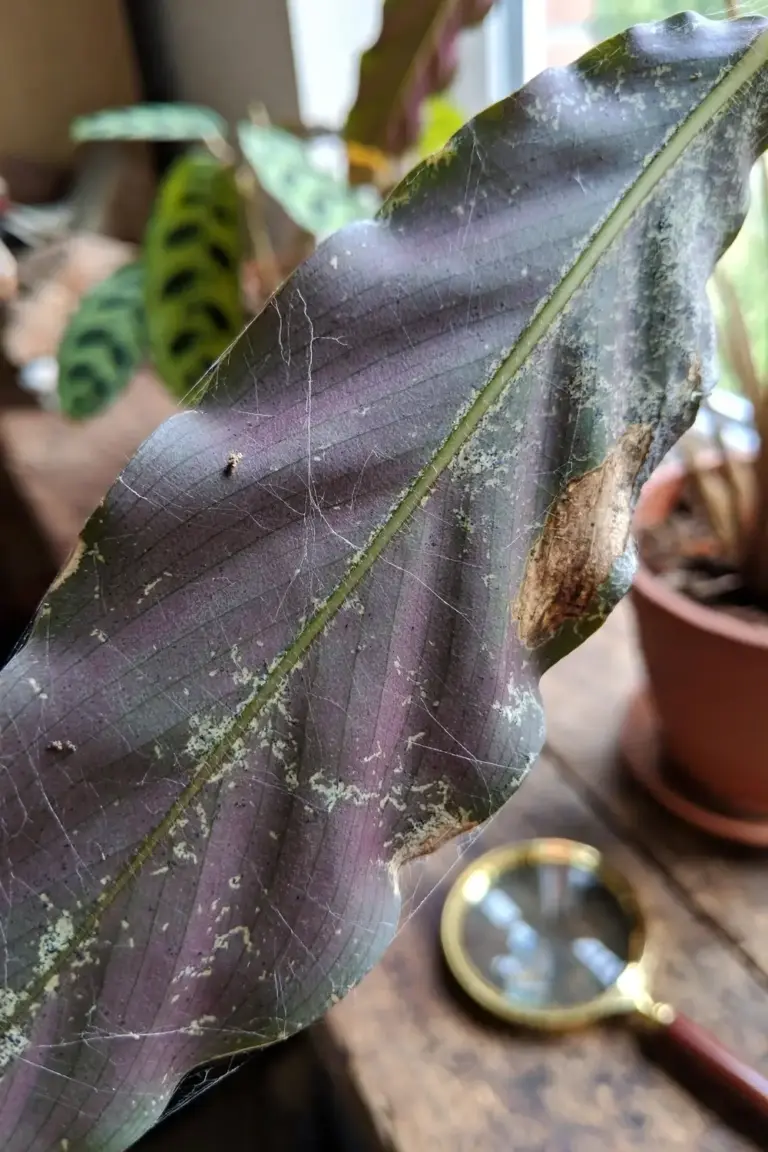
I check the leaf undersides with a magnifying lens before I blame the water, because mites hide where a spray never reaches. The UC IPM houseplant problems guide describes spider mite damage as yellowed leaves with tiny speckling, later bronzed and drying, with webbing near growing points. The same guide notes that low humidity and dusty conditions favor mite development, that adult spider mites are about 0.02 inch long, about 0.5 mm, and sit on leaf undersides, and that a 10X hand lens helps identification. Mites develop from egg to adult in about two weeks at 75 degrees Fahrenheit, about 23.9 degrees Celsius, so a small colony becomes a large one fast.
Isolate the plant at the first sign of mites. Wash leaf surfaces with water, covering the undersides, and repeat weekly. The UC IPM houseplant problems guide advises washing leaves, reducing dust, disposing of infested plant parts, and using horticultural oil or insecticidal soap labeled for the plant species only as a last resort. The same guide advises discarding a plant when control is impractical, to stop spread to other plants. Sticky leaves with small bumps point to scale or mealybugs instead. The UC IPM houseplant problems guide links sticky substance, sooty mold, small brown, white, or greenish objects on leaves, leaf drop, and distorted growing points to scale, mealybug, or aphid infestation. The North Carolina Extension Gardener Plant Toolbox also lists aphids, scale, mealybugs, and spider mites as the pests to watch for on this plant. Wipe scale and mealybugs off with a damp cloth, then wash the plant. Avoid broad-spectrum, long-residual sprays indoors.
8. Drooping, Mushy Stems, and a Sour Pot: Check the Roots
Drooping with wet soil means the roots are failing. Unpot the plant and look at the roots before you water again.
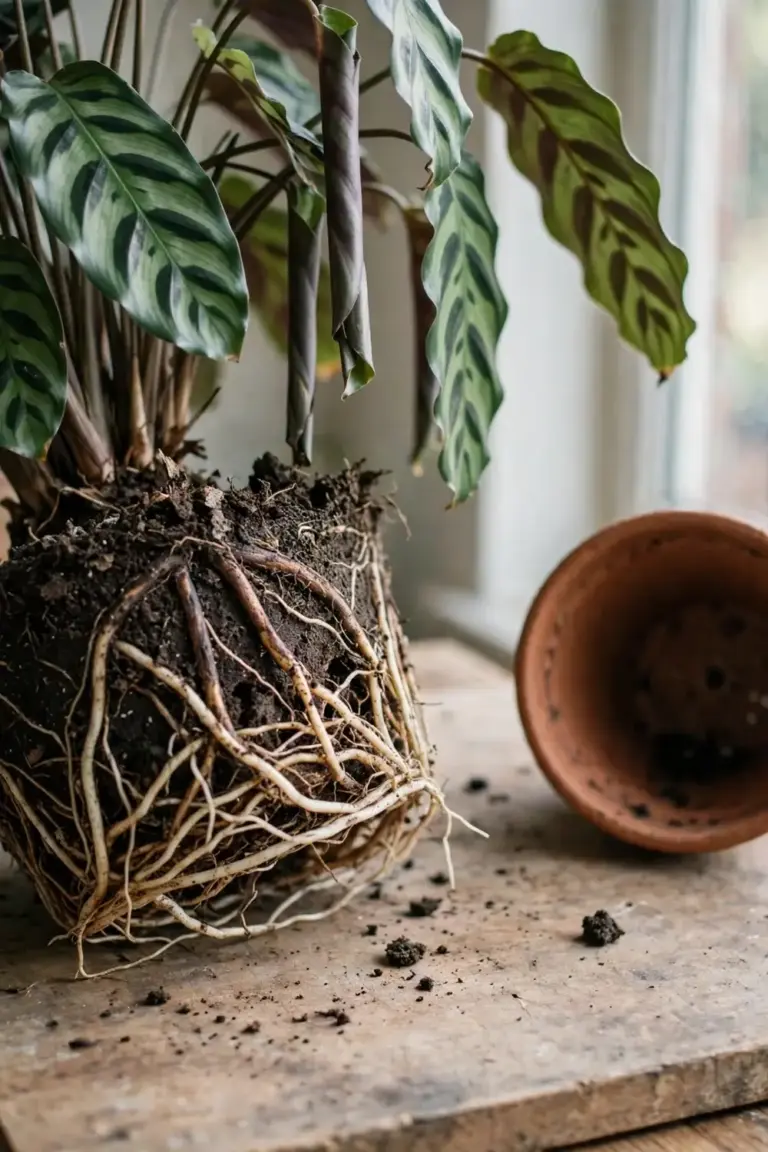
Drooping with dry soil means thirst, and water fixes it within hours. Drooping with wet soil means the opposite problem. The UC IPM houseplant problems guide states that wilting is usually caused by underwatering or excessive light but may also be due to root decay from soil pathogens, often associated with overwatering or poor drainage, and advises inspecting root systems whenever wilting occurs. The same guide lists soft stem bases as a sign of overwatering and soggy soil as a result of overwatering or poor drainage. The North Carolina Extension Gardener Plant Toolbox states that overwatering can result in root rot.
Slide the plant out of its pot. Healthy roots feel firm and look pale. Rotted roots feel soft, look brown or black, and smell sour. Cut soft roots away with clean scissors. Repot into fresh mix in a pot with drainage holes, and hold water until the top of the mix dries. A plant with most of its roots gone recovers slowly, if it recovers. The soil health guide covers the drainage and structure that keep roots breathing. Never let the pot sit in a saucer of water after repotting. When most roots are gone, shrink the pot. A small pot dries faster and gives the remaining roots air. Cut the worst leaves back by half to cut water loss, and keep the plant in bright shade while it rebuilds. Recovery takes weeks, not days. New leaves that open flat mean the roots are working again.
9. Fix the Water First: Rainwater, Standing Water, and Flushing Salts
Rainwater or distilled water removes the fluoride question entirely. Standing tap water clears chlorine only.
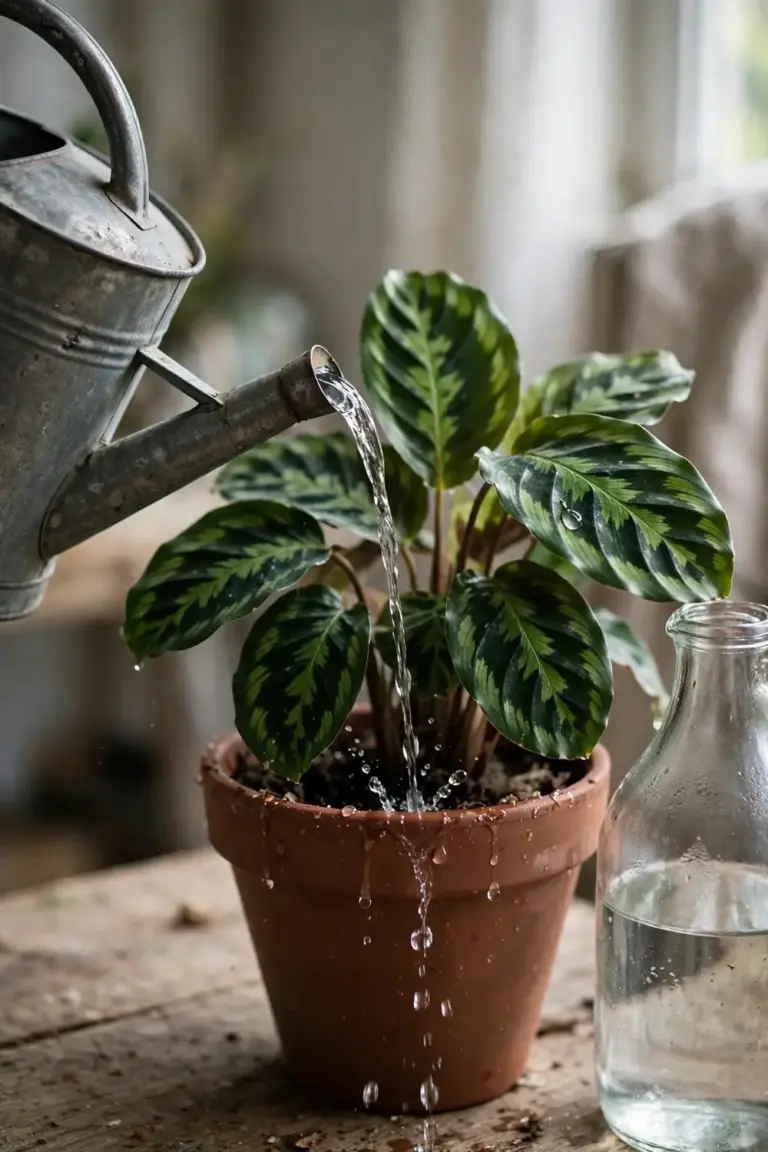
The University of Florida IFAS Extension production guide advises avoiding water and fertilizer containing fluoride, because fluoride toxicity shows as dead spots near leaf margins. Sydney Water adds chlorine to protect water from pathogens and fluoride under NSW Health advice. Standing a jug of tap water overnight lets free chlorine escape, while fluoride stays in the jug because fluoride is a dissolved salt and does not evaporate. Some suppliers use chloramine. Chloramine also persists in standing water. Check your supplier’s water quality page before relying on the jug method.
| Water Option | What It Removes | What It Leaves | When to Use It |
|---|---|---|---|
| Rainwater | Chlorine, fluoride, salts | Nothing harmful | Best choice when a tank or bucket is available |
| Distilled water | Chlorine, fluoride, salts | Nothing harmful | Best choice for one or two plants |
| Standing tap water | Free chlorine | Fluoride and chloramine | Only when the supplier uses free chlorine |
| Straight tap water | Nothing | Chlorine and fluoride | Last resort, and watch new leaves for brown tips |
Flush built-up salts when brown tips persist after a water change. Water thoroughly until water runs from the drainage holes, empty the saucer, and repeat. The University of Florida IFAS Extension production guide advises keeping soluble salts between 1.0 and 1.5 dS/m for interiorscape plants and keeping pH close to 6. A home grower without a meter reads the leaves instead: new leaves without brown tips mean the salts are under control. Water when the top 2 cm of mix feels dry, then water until it drains. Never let the pot sit in the drained water.
10. Fix the Air Next: Humidity, Drafts, and Air Conditioning
Calathea wants indoor air near 40 to 60 percent relative humidity, the band in which the University of Florida IFAS Extension production guide says plants keep their best appearance. Air conditioning and heaters pull it below that.
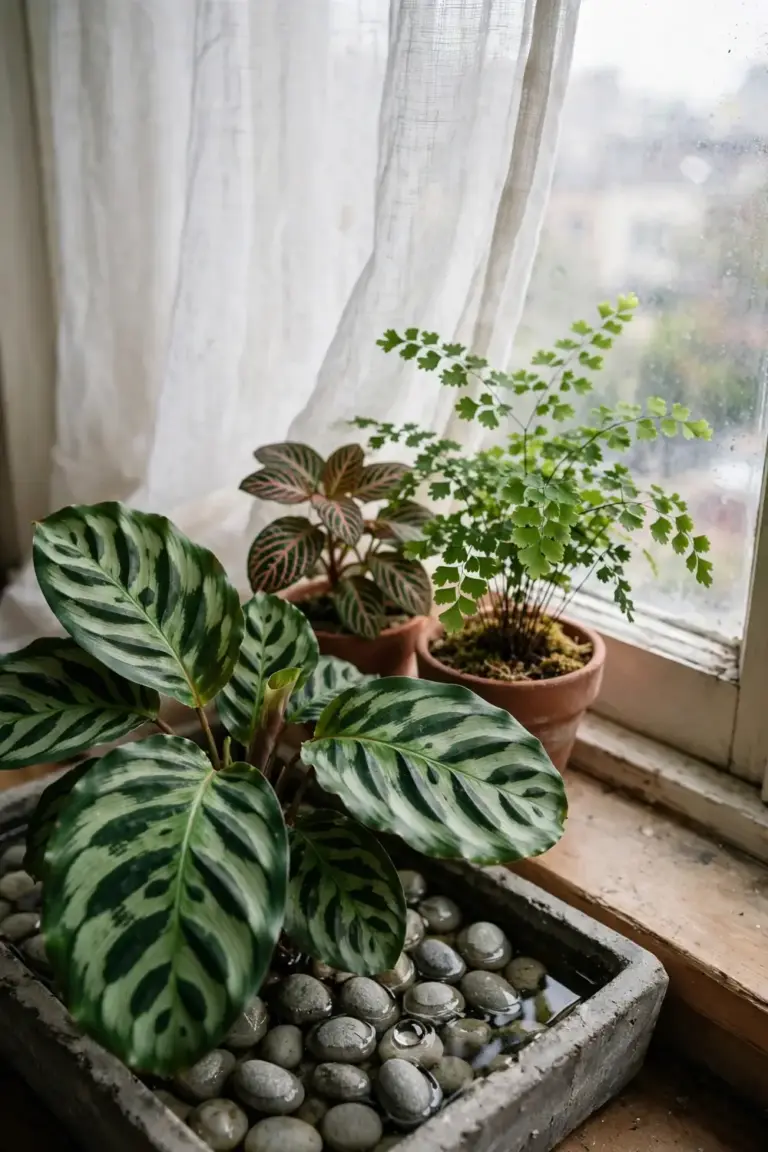
The University of Florida IFAS Extension production guide states that plants maintain their aesthetic appearance better when relative humidity stays between 40 and 60 percent, while production houses run 50 to 100 percent. The North Carolina Extension Gardener Plant Toolbox suggests standing a potted plant in a bed of wet pebbles or growing the plant in a humidified room. A room humidifier gives the steadiest result. A pebble tray under the pot helps, as does grouping humidity-loving plants together. A bathroom with a window gives warm, damp air for free.
Misting gives a brief lift and then the air dries again. Wet leaves also invite fungal leaf spots. The North Carolina Extension Gardener Plant Toolbox notes that fungal leaf spots can occur from wetting the leaves when watering. Mist the air around the plant, not the leaves, or skip misting and run a humidifier. Keep the plant away from air conditioning vents, heaters, and doors that open to cold air. The North Carolina Extension Gardener Plant Toolbox warns against drafts and sudden temperature changes and puts the indoor range at 65 to 75 degrees Fahrenheit, about 18.3 to 23.9 degrees Celsius. The University of Florida IFAS Extension production guide puts indoor temperatures at 65 to 80 degrees Fahrenheit, about 18.3 to 26.7 degrees Celsius, and notes that exposure below 55 degrees Fahrenheit, about 12.8 degrees Celsius, may cause chilling injury during shipping. Dust also slows photosynthesis, so wipe leaves with a clean cloth when dust collects.
11. Feed Lightly and Repot Only When the Roots Say So
Feed at the label rate, monthly, in spring and summer only. Repot only when roots fill the pot.
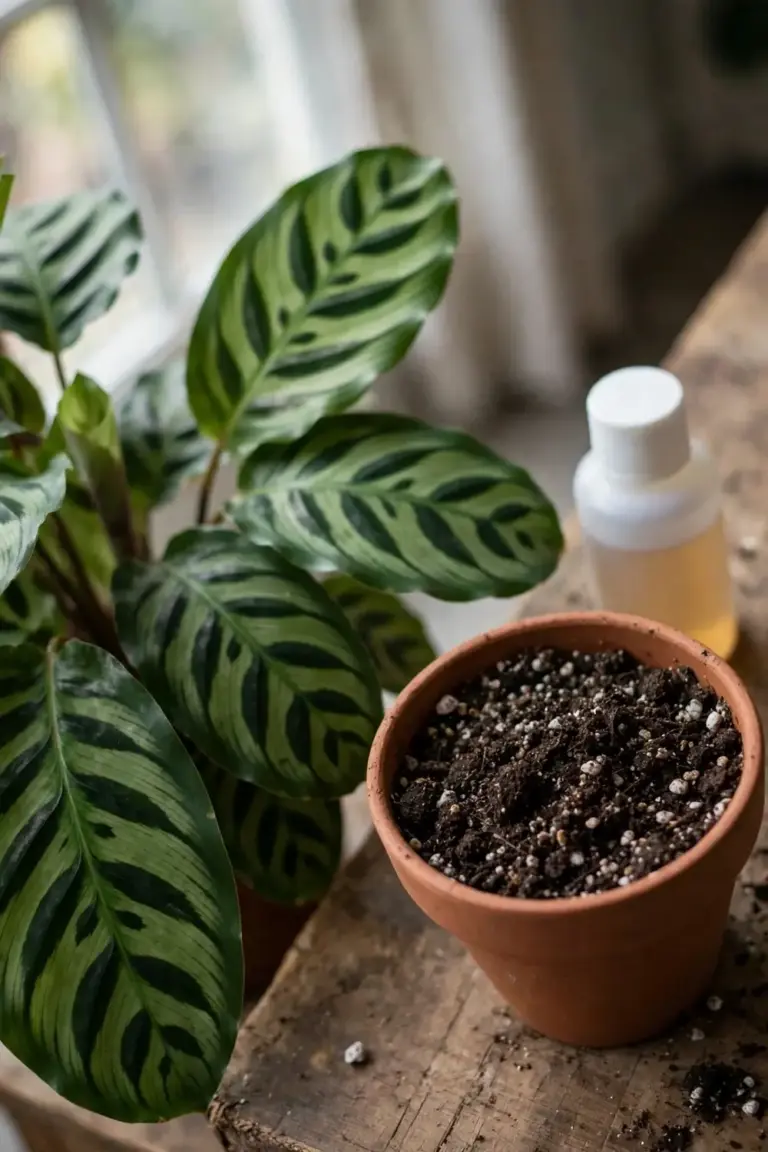
The North Carolina Extension Gardener Plant Toolbox advises applying a balanced fertilizer monthly during the growing season and reducing watering and fertilization in winter, when growth slows. The University of Florida IFAS Extension production guide uses a fertilizer with a 3-1-2 ratio for production plants and warns that leaf marginal or tip necrosis follows excess fertilizer. Overfeeding shows as brown tips, the same symptom as fluoride damage, so feed lightly and watch new leaves. Skip feeding in winter entirely. A plant that is not growing cannot use the feed, and the salts stay in the mix.
Repot when roots circle the pot or push from the drainage holes. Move up one pot size only. A pot far larger than the root ball holds wet mix around small roots and invites rot. Use a fresh, well-drained, peaty mix and a pot with drainage holes. Repot in spring, when growth resumes. A stressed plant with rotted roots gets fresh mix under the root rot section, not a larger pot. New leaves after repotting should open flat and hold their pattern. Read the fertilizer label before each feed. A balanced liquid fertilizer at the label rate, once a month in spring and summer, is enough. Extra feed does not speed recovery, and the salts it leaves behind show as brown tips on the next leaves.
12. Read the New Leaves, Not the Old Ones
Old leaves never heal. Judge the fix by the next new leaves.
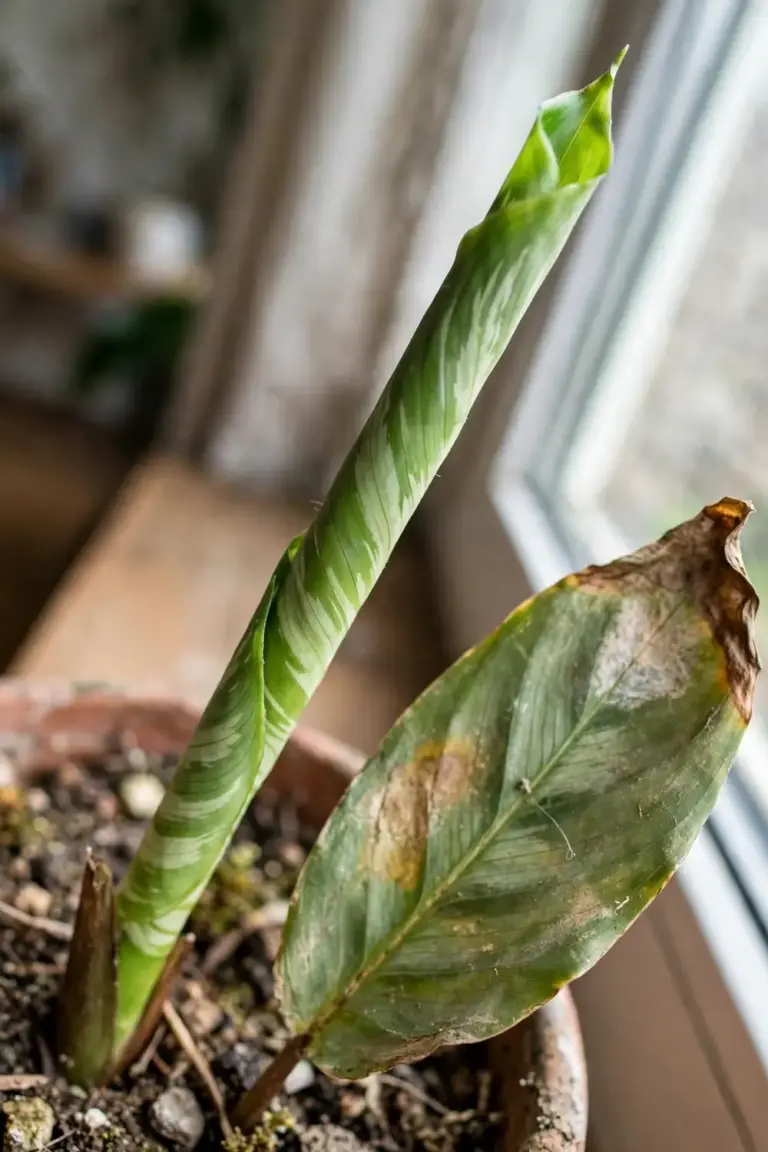
Brown tips stay brown. Faded pattern stays faded. Curled leaves may relax a little after watering, but a leaf that dried at the edge keeps the scar. That is normal, and it is not a sign the fix failed. Watch the newest leaves as they open. A healthy new leaf opens flat, holds its pattern, and shows no brown tip. Three clean new leaves in a row mean the fix worked. New leaves that repeat the old symptom mean the cause is still present, and the symptom table in the second section gives the next test.
Give the plant steady conditions while new leaves form. One water source, one light spot, one humidity routine. Changing three variables at once hides which change mattered. A calathea that holds steady for a month with clean new growth has found its spot. Leave it there. When new leaves repeat the old symptom, re-run the symptom table and check one variable at a time. Water source first, then humidity, then light, then feed. The table in the second section lists each test in order, so a second pass costs minutes, not a new round of guessing.
Frequently Asked Questions
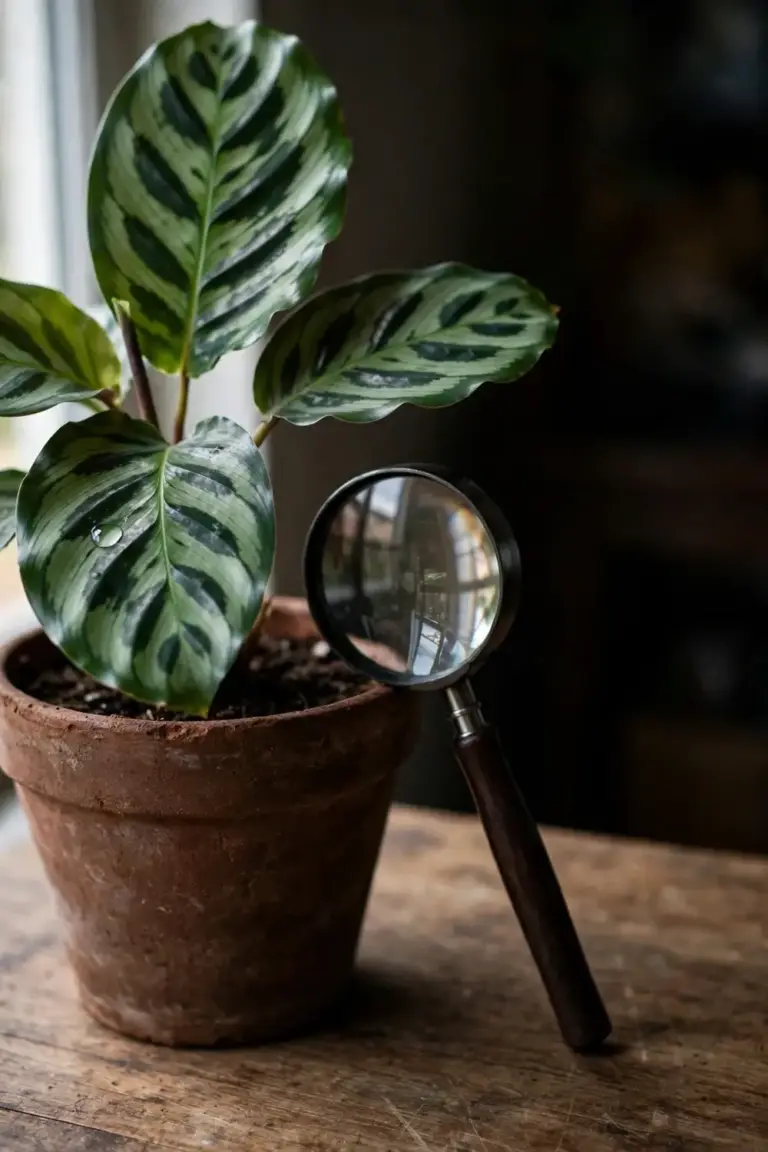
Folding at night is normal. Calathea leaves rise in the evening and reopen at sunrise, a daily rhythm called nyctinasty. The North Carolina Extension Gardener Plant Toolbox describes this fold for rattlesnake plant. Check the plant at midday. Leaves open and flat at midday mean normal behavior. Leaves still folded at midday signal stress, usually dry soil, dry air, or a draft.
Trimming is cosmetic and safe. Cut the dead edge with clean scissors, following the leaf’s natural shape. The leaf will not heal, and trimming does not fix the cause. Check the water source, the feed history, and the humidity instead. New leaves stay clean only when the cause changes. Leave a leaf in place when most of it is still green, since it still feeds the plant.
Tap water works when it is low in fluoride and salts, but many Australian supplies add fluoride. Sydney Water adds chlorine and fluoride to its supply. Standing water clears free chlorine only. Fluoride stays in the jug. Rainwater or distilled water removes the question entirely. Check your supplier’s water quality page for fluoride and chloramine before relying on the jug method.
Check the soil and the stems together. Dry soil plus firm stems plus drooping leaves mean thirst, and water fixes it within hours. Wet soil plus soft stems plus yellowing leaves mean overwatering, and the roots need inspection. The UC IPM houseplant problems guide advises inspecting root systems whenever wilting occurs. Healthy roots feel firm and look pale. Rotted roots feel soft, look brown, and smell sour.
Misting gives a brief lift and then the air dries again. Wet leaves also invite fungal leaf spots, which the North Carolina Extension Gardener Plant Toolbox lists as a result of wetting leaves when watering. A humidifier gives the steadiest result. A pebble tray under the pot helps, as does grouping humidity-loving plants together. A bathroom with a window gives warm, damp air for free.
Answer What Is Wrong With My Calathea by Reading New Growth
Your calathea speaks in five symptoms: curling, brown tips, yellowing, fading, and stippling. Match the symptom to its cause, fix one cause at a time, and judge the fix by new leaves. Rainwater or distilled water clears the fluoride question. Humidity near 40 to 60 percent keeps leaf edges clean, a band the University of Florida IFAS Extension production guide ties to the plant’s best appearance. Washing leaves and isolating the plant stops mites before they spread. Give the plant one stable month, then read the newest leaves. Clean new growth means the diagnosis was right.