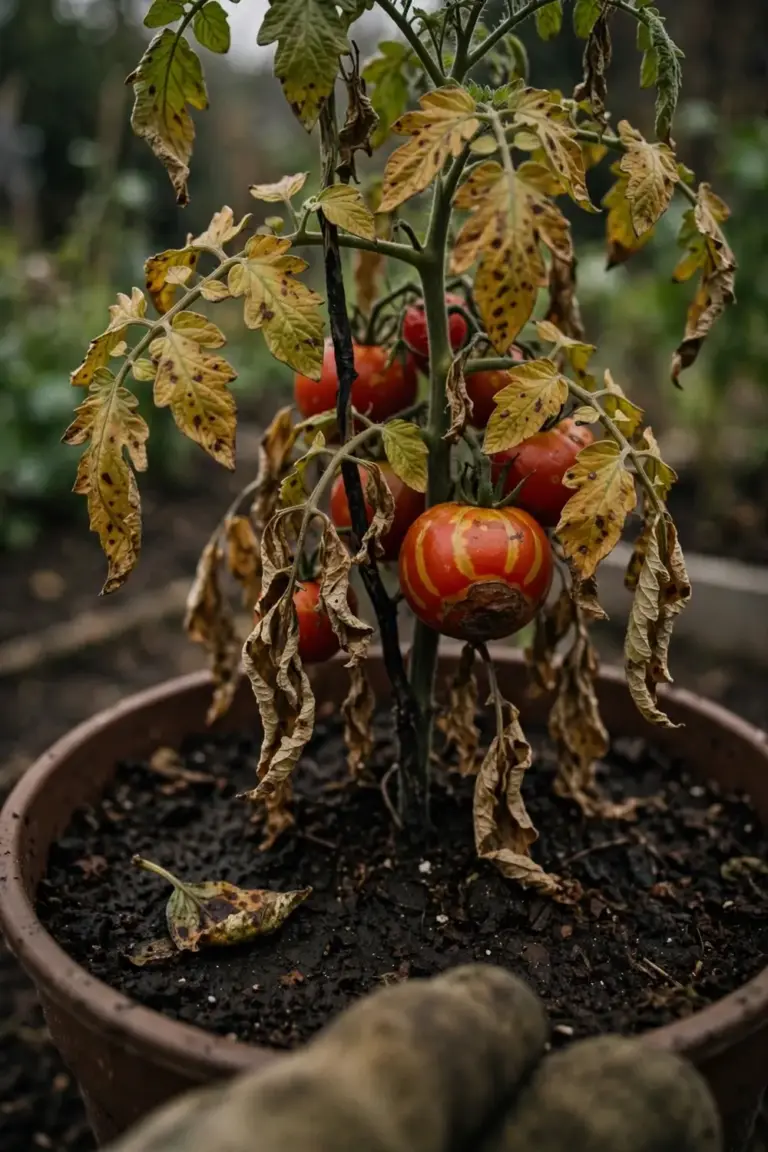

Most lime tree problems in Australia come down to 9 issues, and each one shows a different symptom. Yellow leaves point to water, roots, or a nutrient shortfall. Curling leaves point to leafminer. Black mold points to sap feeders. Read the symptom first, run 1 check, then act. That order fixes more trees than any spray bought on a guess.
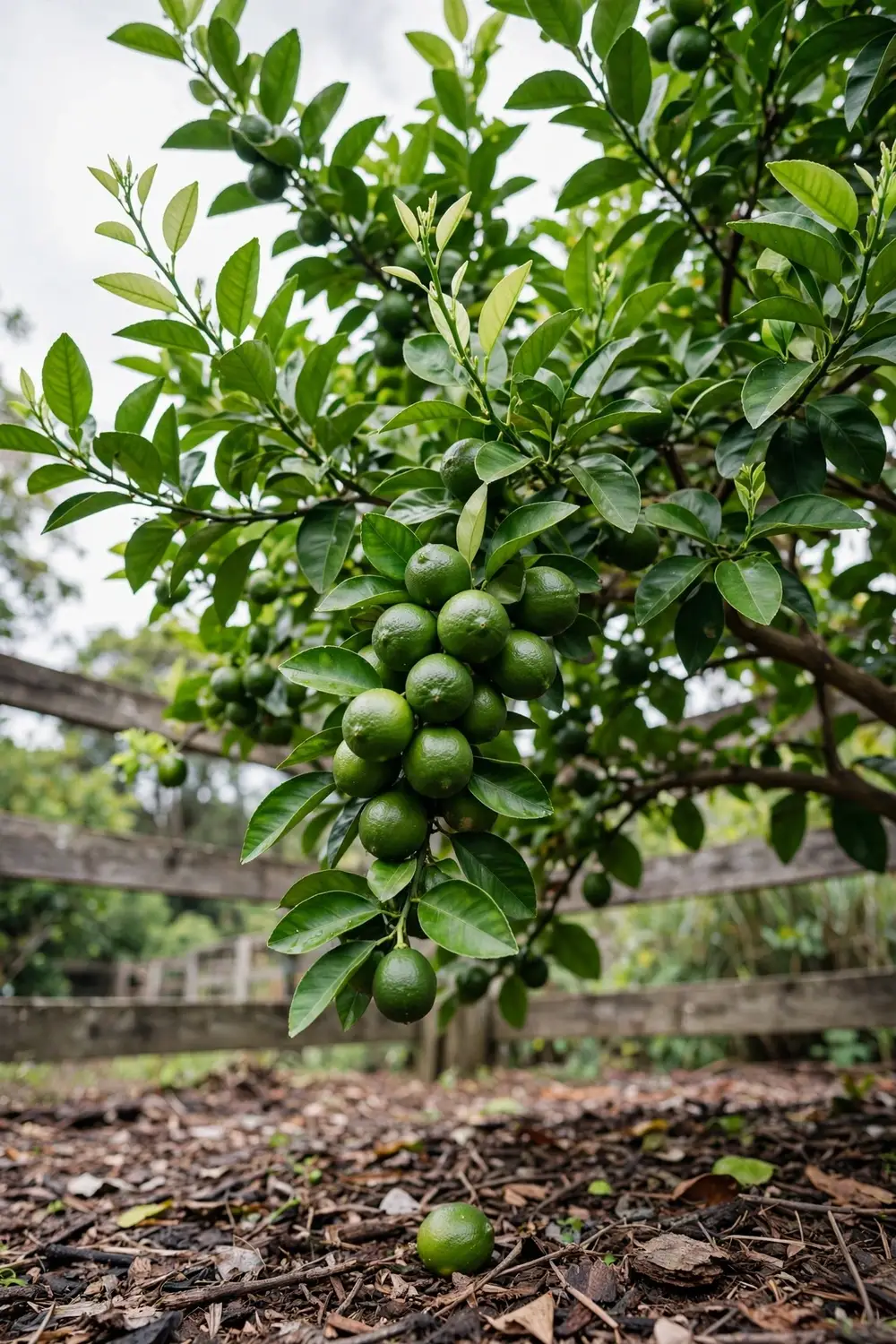
A lime tree tells you what it needs through its leaves, its fruit, and its soil. A Tahitian lime is the common garden lime in Australia, and a makrut lime, often called kaffir lime, grows for its leaves. A finger lime is a different native tree with its own needs, so this page covers the Tahitian lime and the makrut lime only.
I have learned that the lime tree I check with a finger in the soil outlives the one I water on a schedule.
Match the Symptom to the Cause First
| Symptom | First Check | Likely Cause | First Fix |
|---|---|---|---|
| Yellow leaves, whole leaf | Push a finger 5 cm into the soil | Overwatering or poor drainage | Let the soil dry, then water deeply |
| Yellow between green veins, new leaves | Look at the newest growth | Iron shortfall | Test soil pH, then treat the cause |
| Yellow between veins, old leaves | Look at the oldest leaves | Magnesium shortfall | Test soil pH, then feed to the label |
| Small narrow leaves, bunched shoots | Compare leaf size with last season | Zinc shortfall | Foliar feed to the label |
| Silver trails on curled new leaves | Uncurl one young leaf | Citrus leafminer | Oil spray on the next flush |
| Bumps on stems and twigs | Feel for hard lumps | Scale or citrus gall wasp | Prune galls, treat scale |
| Black film on leaves | Rub the film with a finger | Sooty mold from honeydew | Find and treat the sap feeders |
| No fruit on a young tree | Count the years since planting | Youth | Wait and feed lightly |
| Fruit splits open | Recall the last dry spell | Uneven watering | Water evenly through fruit growth |
| Black tips after a cold night | Check the overnight low | Frost damage | Prune dead wood in spring |
Work down this table before you buy anything. The check in the second column costs nothing. The fix in the last column only works when the check points at it.
1. Yellow Leaves: Match the Pattern to the Cause
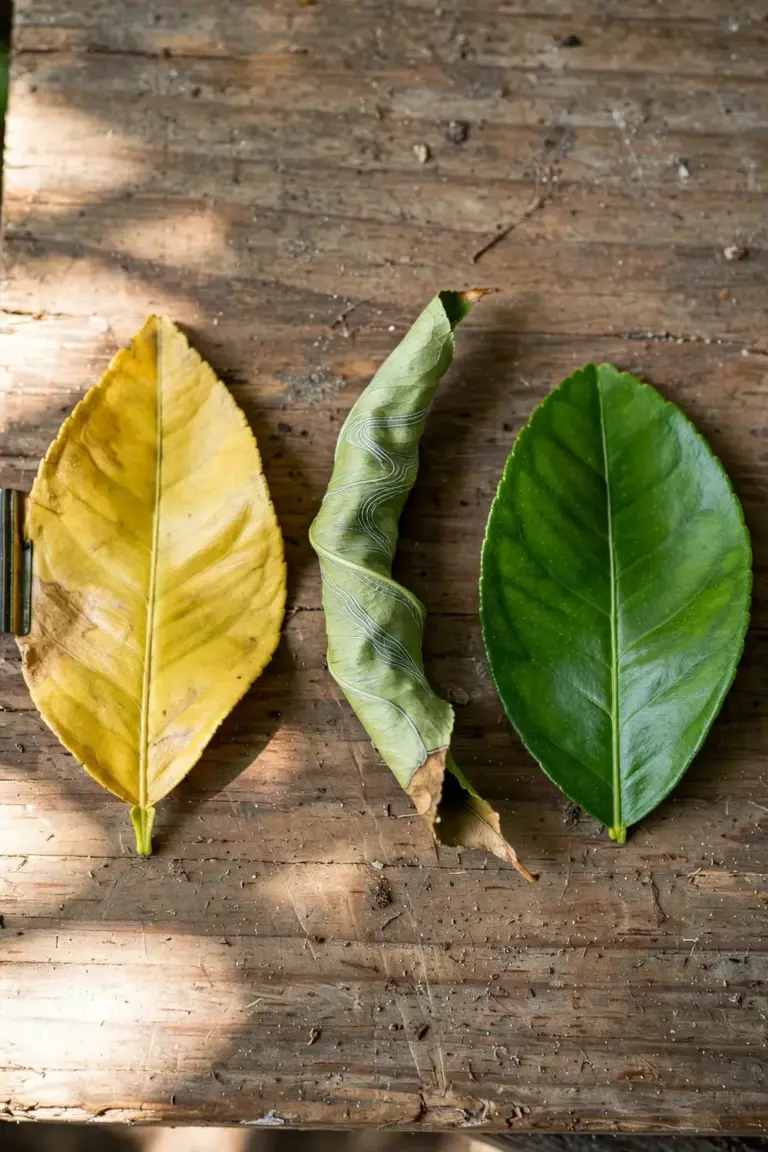
Yellow leaves carry a pattern, and the pattern names the cause. Whole-leaf yellowing on older leaves points to nitrogen shortage, overwatering, or root trouble. Yellowing between green veins on new leaves points to iron shortage, while the same pattern on older leaves points to magnesium shortage. Small narrow leaves with yellow mottling point to zinc shortage. One tree can show two patterns at once, so start with water before you reach for fertilizer.
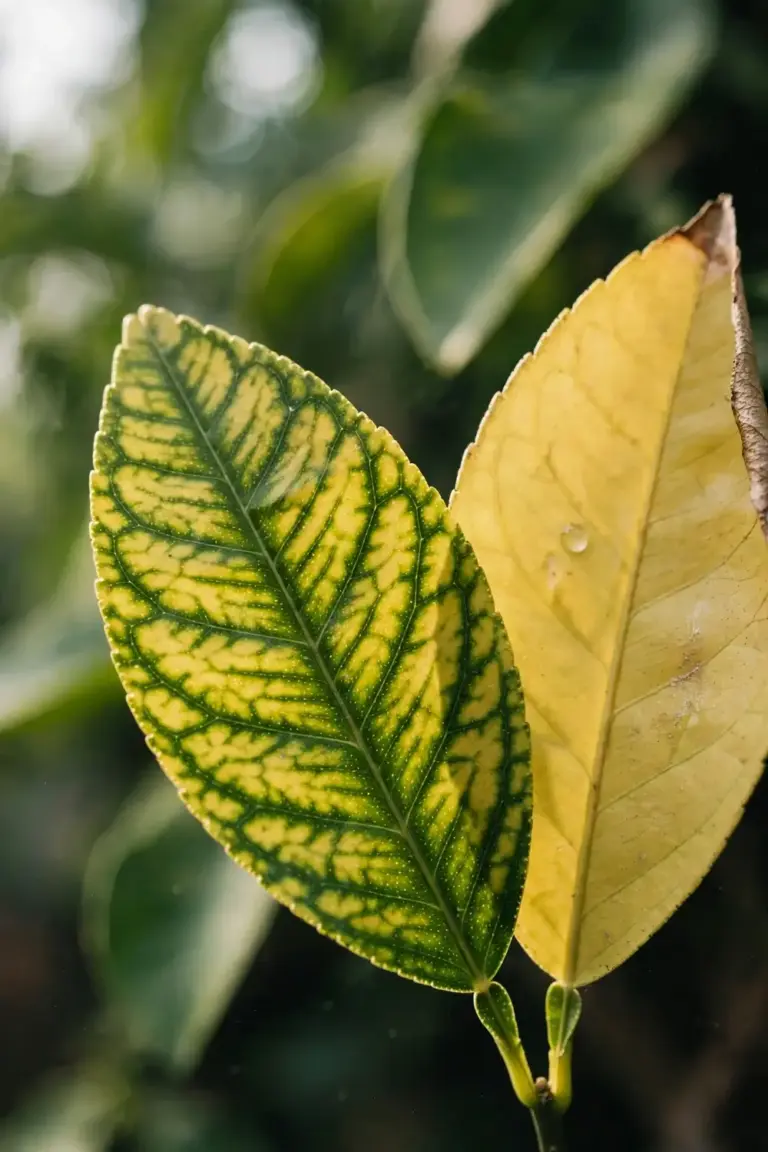
Push a finger 5 cm into the soil before you feed. Wet soil at that depth means the tree has wet feet, and feeding a wet tree makes the problem worse. Dry soil at that depth means the tree needs water first, then food. Citrus roots need air as much as they need water. Soil that stays wet starves the roots of air, and starved roots cannot take up nutrients even when the soil holds plenty.
One biosecurity fact belongs here, stated once. Citrus greening, also called huanglongbing, is not established in Australia. It causes blotchy mottling that crosses leaf veins, plus small lopsided bitter fruit. Do not diagnose it yourself. If a lime tree shows that combination, call the Exotic Plant Pest Hotline on 1800 084 881, as the NSW DPIRD citrus greening guide directs. The hotline call protects every citrus tree in the country, including yours.
2. No Fruit or Heavy Fruit Drop: Check Age First
A young lime tree drops fruit because it is young. A citrus tree planted within the last three to five years often sets fruit erratically or none at all, and that is normal. The tree spends its first years building roots, stems, and leaves. Fruit comes after the frame exists. Strip fruit from a tree in its first year or two after planting so the energy goes into the frame.
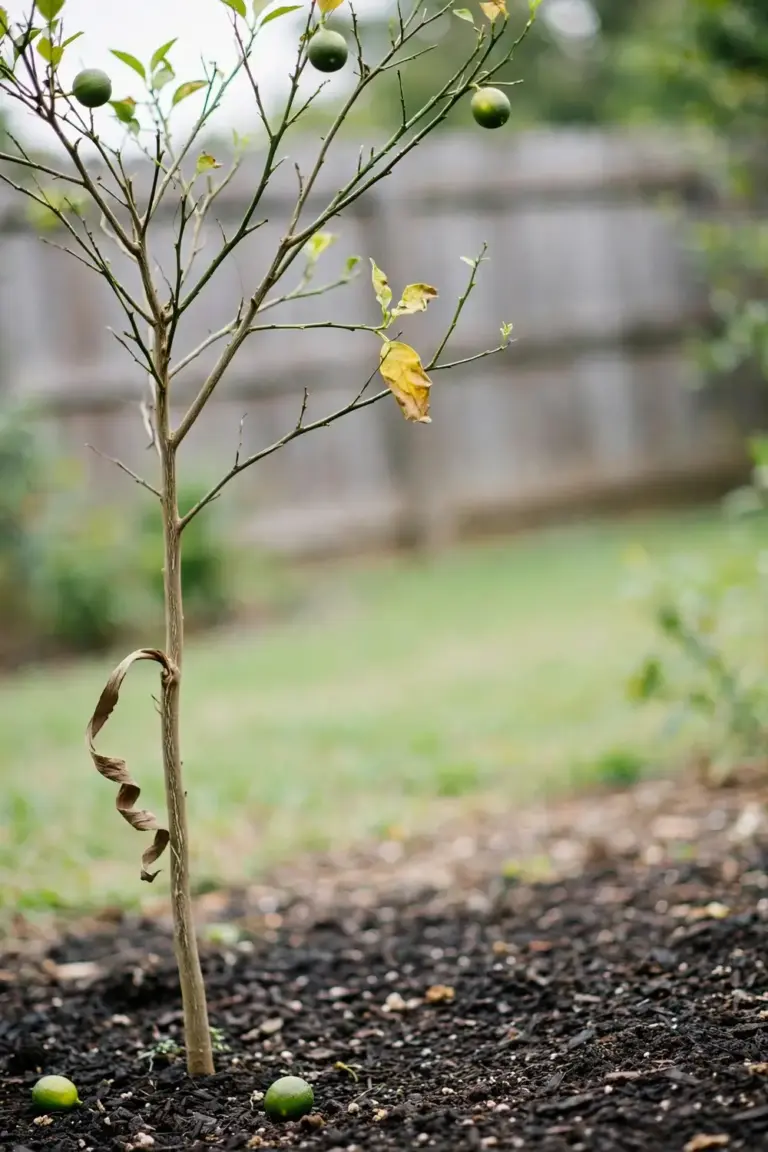
An older tree drops some fruit every year, and a small drop is normal. Trees set more fruit than they can carry, then shed the surplus. A late summer drop of a small share of the fruit needs no action. Drought makes the drop worse. Heat stress, a dry root zone, or a sudden cold snap can push a tree to shed more fruit than usual. Water evenly through fruit growth and the drop stays in the normal range.
A tree that flowers well and then drops everything needs a closer look. Check water first. Check whether the tree stands in a frost pocket or a wind tunnel. Check for root damage from digging or from a mower. A tree that skips a year after a huge crop is resting, not dying. It will flower again the next season. The LSU AgCenter citrus problems guide records the three to five year establishment window and the normal late summer drop.
Feed lightly while a young tree establishes. A heavy feed pushes soft growth that the tree cannot support. A light balanced feed in spring, watered in, supports steady growth. Do not feed a tree that is dropping fruit from drought. Water it first, wait a week, then judge again.
3. Curling Leaves: Leafminer Trails Tell the Story
Citrus leafminer larvae burrow under the leaf surface and leave silver winding trails. The leaf curls and distorts around the mine. New flush growth carries the damage. Mature hardened leaves resist it. A tree with leafminer looks ragged but rarely dies from it. Young trees suffer more because every leaf matters to a small canopy.
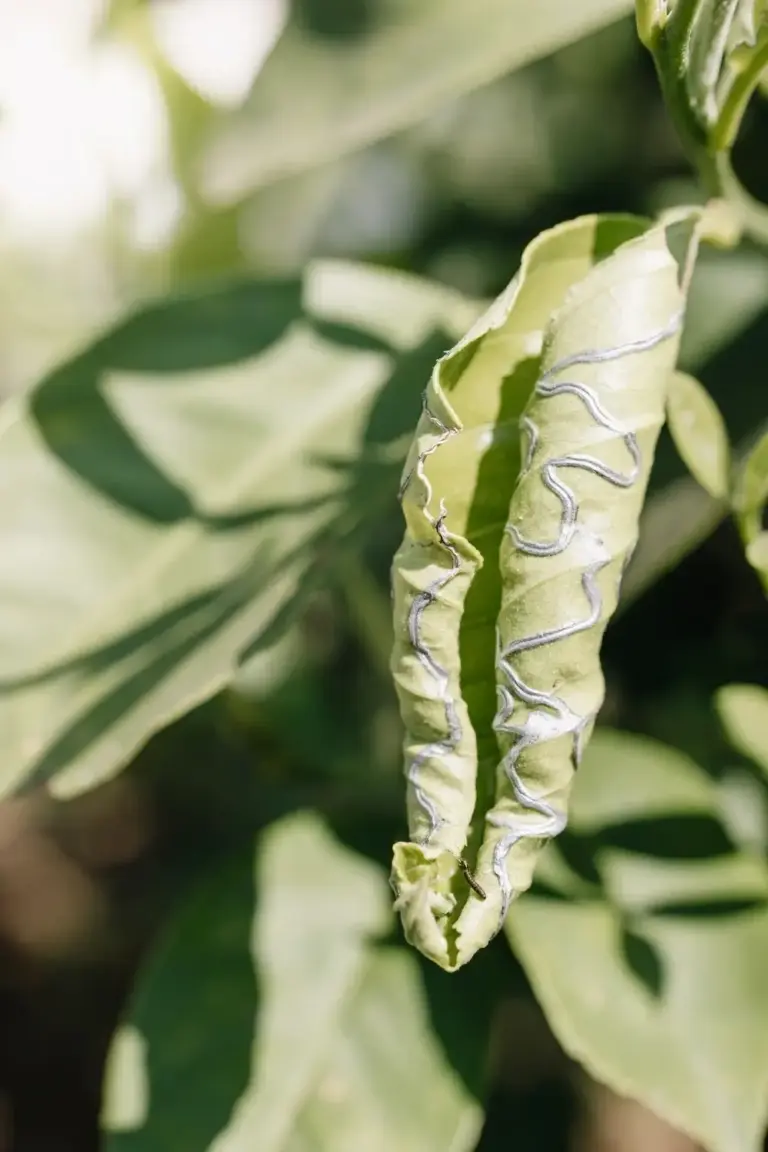
Check the newest flush. Uncurl one young leaf and hold it to the light. A silver trail with a tiny larva at one end confirms leafminer. Trails without larvae mean the wasp parasites or the season already ended the attack. No spray reaches a larva inside its mine, so timing matters more than product choice.
Work with the flush cycle. Leafminer numbers peak when the tree pushes soft new growth in warm weather. For trees younger than five years, monitor growth flushes weekly from December onwards when more than 25 percent of trees are flushing, and look for larvae on at least 20 advanced shoots, per the NSW DPIRD citrus leafminer guide. Fertilise in late winter to push strong spring growth when leafminer is less abundant. Skip hedging in summer and autumn. Do not overwater or overfertilise in late summer and autumn, because both push the soft flush that leafminer wants.
Horticultural mineral oil smothers the pest as it arrives. Spray at 0.25 to 0.5 percent, which is 250 to 500 mL of oil per 100 L of water, starting as the summer flush begins and before the first flushes reach 10 mm long, per the NSW DPIRD citrus leafminer guide. Stop when most leaves in a flush harden or pass 40 mm. Skip oil on very hot days above 32 degrees C and skip it when the tree is water stressed. Oil and heat together burn leaves. Follow the label on any product you use.
Parasitic wasps do quiet work against leafminer: the wasp Semielacher petiolatus parasitizes leafminer larvae in southern districts, and green and brown lacewings feed on leafminer too. Broad-spectrum insecticides kill these helpers, so the leafminer problem grows worse after the spray. Oil preserves the helpers, which is one more reason to reach for oil before a broad-spectrum spray.
4. Scale, Aphids, Mealybug, and Mites: Find the Honeydew Source
Sap feeders cluster on stems, leaf undersides, and fruit. Scale insects sit still under a waxy cover. Aphids crowd soft shoot tips. Mealybugs hide in leaf joints under white wax. All three excrete honeydew, and honeydew feeds sooty mold, so treat the feeder and the mold fades on its own. Treat the mold alone and it returns within weeks.
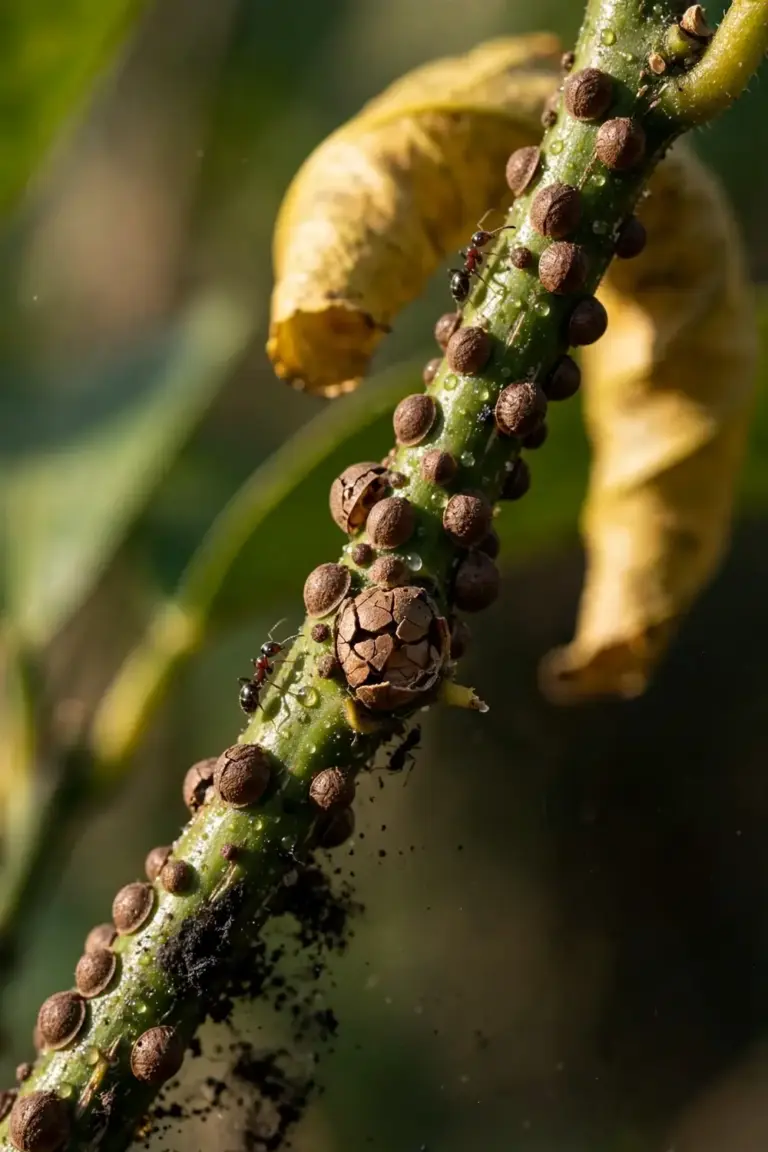
Scale on Stems and Leaves
Scale shows as small bumps on twigs, stems, and leaf veins. Soft brown scale, black scale, citricola scale, and cottony cushion scale all attack citrus in Australia. The risk period runs October to March. Check leaves and green twigs with a hand lens during that window. Ants farming the scale make the problem worse, because ants chase away the predators that eat scale. Control ant hotspots near the tree.
Natural predators do most of the work when sprays leave them alone. Lady beetles, lacewing larvae, and parasitic wasps all feed on soft scale, per the NSW DPI soft scale fact sheet. Broad-spectrum insecticide use kills these predators and the scale population rebounds harder. Oil spray smothers scale without wiping out the predator balance. The site’s citrus scale prevention and control guide covers identification and control in full.
Aphids on Soft Shoot Tips
Aphids crowd the soft tips of new growth and curl the leaves around them, feeding fast and breeding faster in warm weather. A strong jet of water knocks most colonies off a small tree. Repeat the jet every few days until the flush hardens. Lacewings and lady beetles follow aphid colonies and clean up the rest, so spray only when the colony keeps returning after water and predators have had a week.
Mealybug in Leaf Joints
Mealybug hides where a leaf meets a stem, under a white waxy coat. The wax sheds water, so contact sprays bounce off. Dab colonies with a cotton swab dipped in methylated spirits, or prune the worst shoot tips out and bin them. Check the tree weekly until no new white clusters appear. The site’s citrus mealybug control guide lists further control options.
Mites and Other Small Chewers
Mites stipple leaves with tiny pale dots and can bronze the leaf surface in a bad infestation. Citrus red mite is the common culprit on home trees. Check the undersides of leaves with a hand lens for moving dots and fine webbing. Oil spray covers mites on contact. Predatory mites keep mite numbers down when broad-spectrum sprays stay in the shed. The site’s citrus red mite guide covers identification and control.
Citrus Gall Wasp: Lumps on the Stems
Citrus gall wasp lays eggs in young citrus stems, and the stems swell into woody galls. Scattered small galls under 10 mm long point to a recent infestation. Larger galls over 50 mm long with many galls present point to a longer term infestation, per the NSW DPI gall wasp fact sheet. Prune galled wood out in winter before the adult wasps emerge in spring. Prune at least 56 days before expected adult emergence if galled wood stays on the ground under the canopy in shade, or at least 28 days before emergence if you rake the galls to the interrow. Bin or mulch the prunings promptly. Two parasitic wasps, Megastigmus brevivalvus and Megastigmus trisulcus, parasitize gall wasp eggs and reduce gall size and density, so keep broad-spectrum sprays away from the tree.
Bronze Orange Bugs: Big, Smelly, Seasonal
Bronze orange bugs are large shield bugs that feed on citrus fruit and shoots. They appear in warm weather and release a foul spray when disturbed. Wear gloves and eye protection. Knock them into a bucket of soapy water in the cool of the morning when they move slowly. Check the tree weekly through the warm season. Young trees need the most attention because a small canopy loses more to a few bugs.
5. Sooty Mold: Treat the Sap Feeders Behind It
Sooty mold is a black film that grows on honeydew, not on the leaf itself, so it blocks light and slows photosynthesis without infecting leaf tissue. Rub a leaf and the film wipes off. That wipe test separates sooty mold from leaf diseases that live inside the tissue.
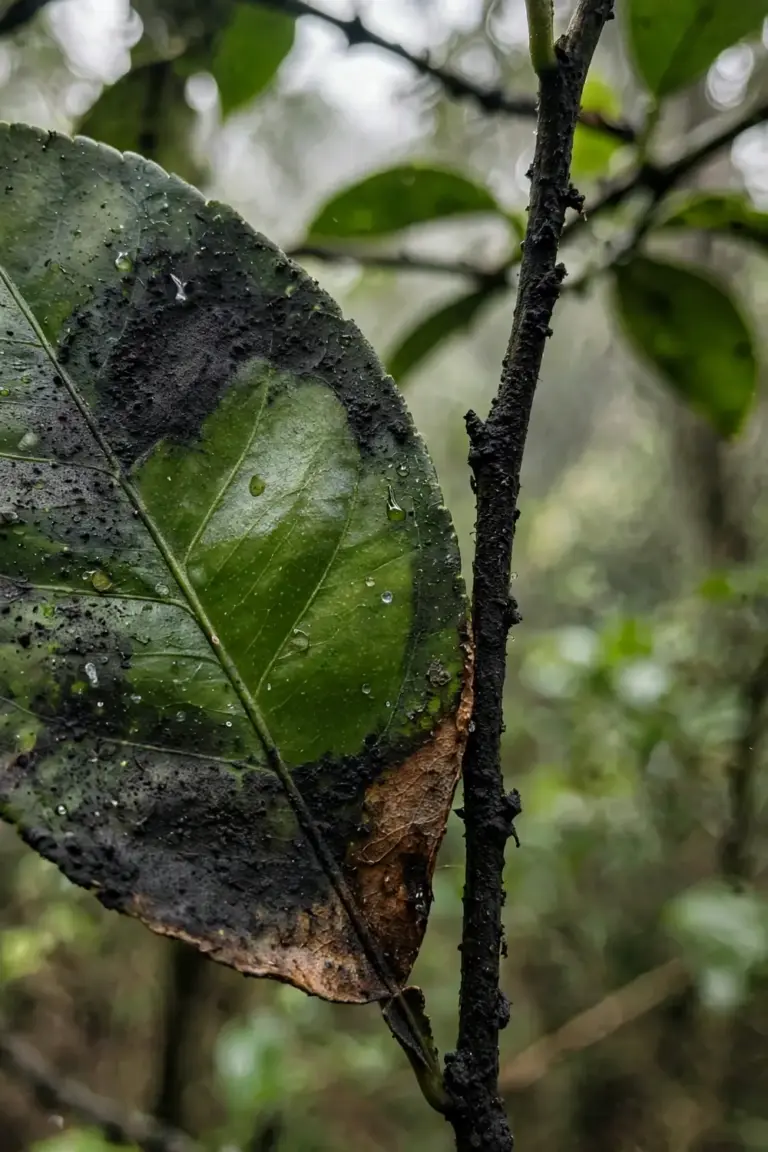
Find the honeydew source. Scale, aphids, mealybug, and whitefly all excrete honeydew. Walk the tree and check stem joints, shoot tips, and leaf undersides. The feeder colony sits above the worst mold. Treat the colony and the mold stops spreading. Rain and new growth replace the blackened leaves over the following weeks.
Wash the film off only after the feeders are gone. A soft cloth with plain water clears the worst of it. Washing first and treating second wastes the wash, because fresh honeydew re-coats the leaves within days. Keep ants off the tree while the predators work. Ants farm sap feeders for honeydew and drive predators away.
6. Iron, Zinc, and Magnesium Shortfalls: Small Leaves, Green Veins
Nutrient shortfalls show patterns, and each pattern names the missing element. Iron shortfall yellows new leaves first while the veins stay green. Zinc shortfall shrinks leaves, narrows them, and bunches shoots, with yellow mottling between the main veins. Magnesium shortfall yellows older leaves between the veins, often in a V shape that leaves the leaf tip green. Learn the three patterns and the diagnosis gets fast.
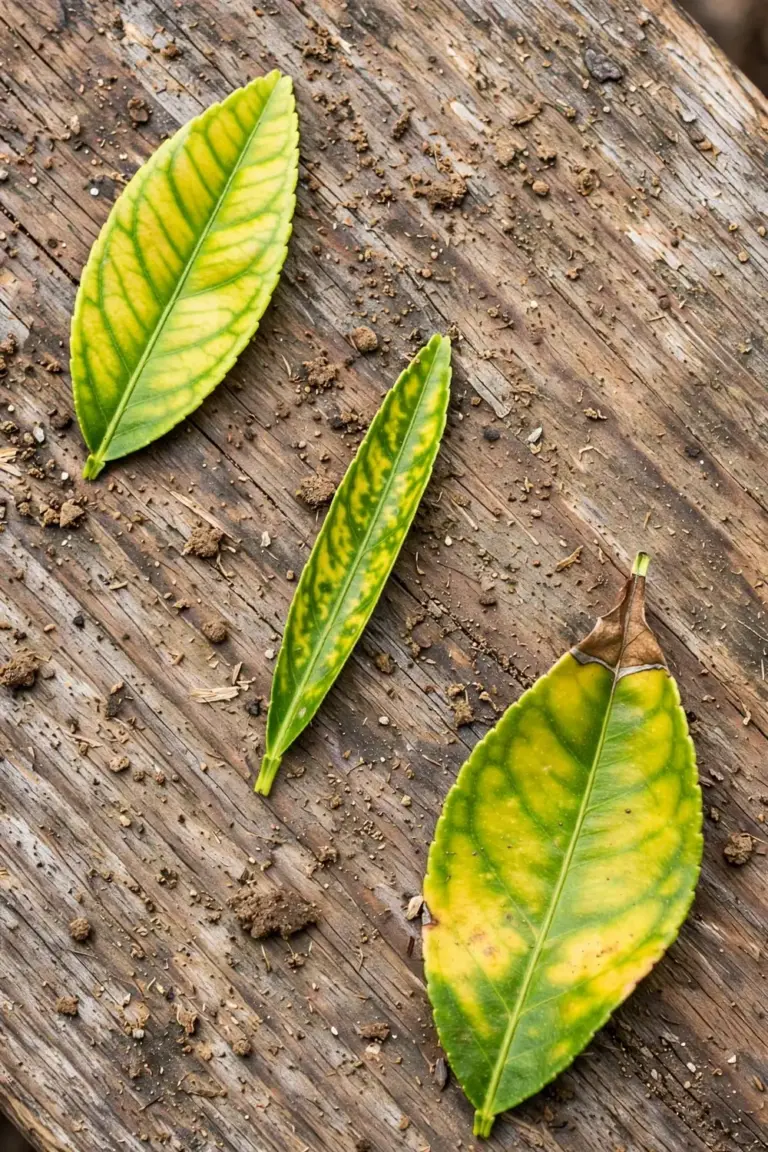
Iron shortfall usually means the roots cannot reach iron, not that the soil lacks it. Alkaline soil locks iron away. Wet soil damages roots so they cannot take iron up. Fix the soil cause first. The NSW DPI iron and zinc guide notes that iron deficiency appears on young leaves with veins greener than the rest of the leaf, and that zinc deficiency shows small narrow crowded leaves with yellow areas between the main lateral veins, as recorded in the NSW DPI iron and zinc deficiencies in citrus guide.
Zinc shortfall also stunts the tree. Twig dieback follows, with many small weak shoots and a bushy stunted shape. Fruit stays small, elongated, and pale. Excess phosphate fertilizer can deepen a zinc shortfall, so stop adding phosphate until the zinc pattern clears. A foliar feed of chelated zinc to the label corrects the leaf symptom while you fix the soil cause.
Magnesium shortfall starts on older leaves near the fruit. Yellow blotches spread from the leaf base and leave the tip green, forming a V. Heavy cropping drains magnesium. A soil test confirms the shortfall before you buy a magnesium product. Follow the label rate. Do not guess a dose from a forum post.
Test soil pH before you feed for any shortfall. A pH test costs little and answers the first question: is the nutrient missing, or is it locked away? Alkaline soil locks iron, zinc, and manganese away. Acid soil frees them. The right fix follows the pH number, not the leaf color alone.
7. Wet Feet and Root Rot: The Soil Check That Decides It
Citrus roots rot in soil that stays wet. Phytophthora collar rot and root rot attack the bark at the soil line and the fine feeder roots below. The tree yellows, drops leaves, and stops growing. The bark at the base may darken, crack, or ooze. By the time the canopy shows it, the roots have suffered for weeks.
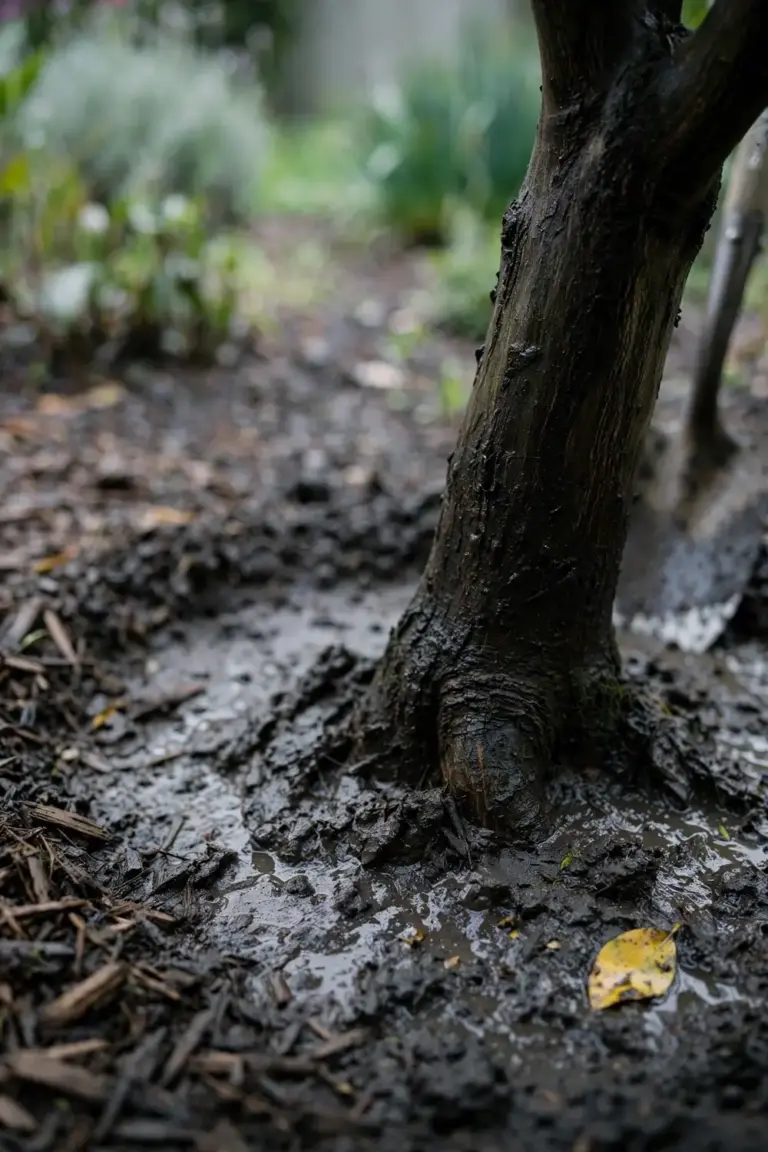
Run the soil check first. Push a finger 5 cm into the soil. Push a spade in 20 cm and look at the soil color and smell. Sour-smelling gray soil means water sits there. A tree in a pot needs drainage holes that run free. A tree in the ground needs soil that drains within hours of rain, not days. The site’s soil health guide covers drainage and soil structure in full.
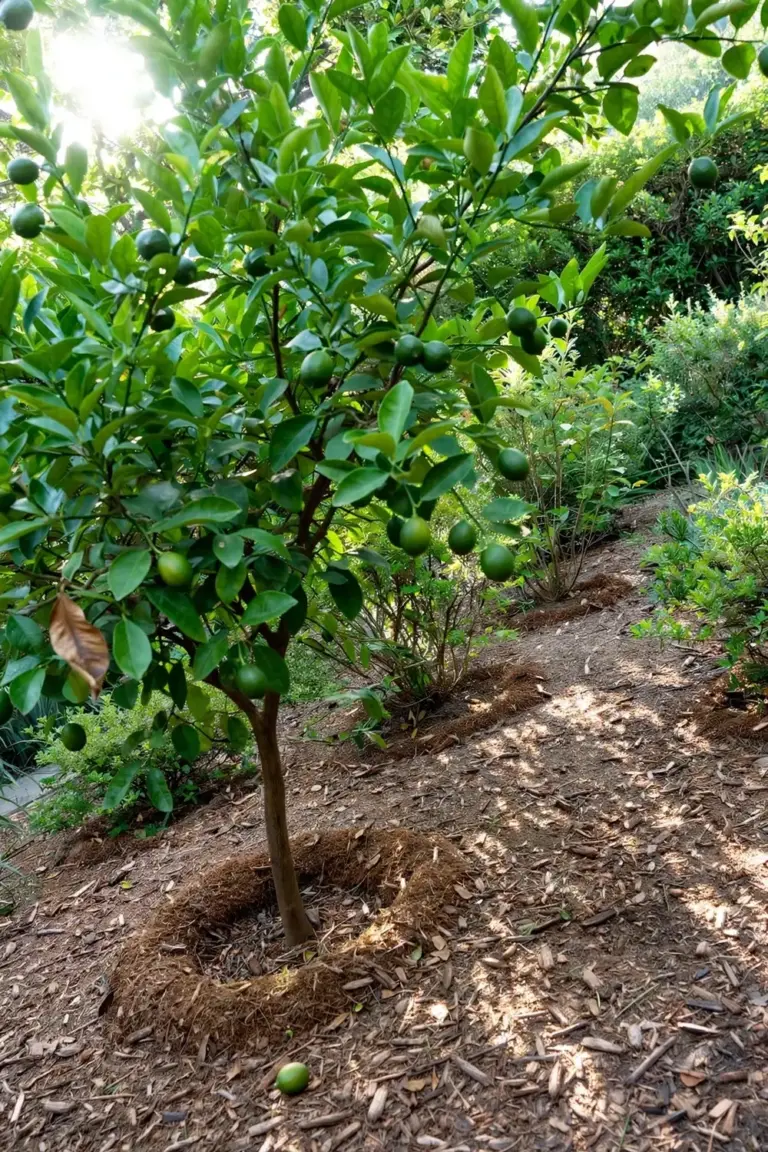
Fix drainage before you feed: lift a potted tree and check the holes, or raise a pot onto feet so water leaves freely. In the ground, stop watering until the top 5 cm dries. Mulch helps once drainage works, because mulch holds moisture evenly, but mulch piled against the trunk traps moisture against bark and feeds collar rot, so keep mulch 10 cm clear of the trunk.
A tree with early root rot can recover when drainage improves and watering stops drowning the roots. A tree with advanced rot, where bark peels from the trunk base and the canopy thins across the whole tree, rarely recovers. Replanting in a better spot with free drainage beats nursing a tree whose root system has collapsed. Choose the new spot for sun and drainage, not for closeness to the old one.
8. Frost and Cold Damage: Blackened Tips After a Cold Night
Frost blackens shoot tips, young leaves, and small fruit. The damage shows a day or two after the cold night, not during it. Leaves turn black or brown and feel papery. Young growth dies first. Established wood usually survives. A lime tree in a frost pocket suffers more than the same tree on a slope where cold air drains away.
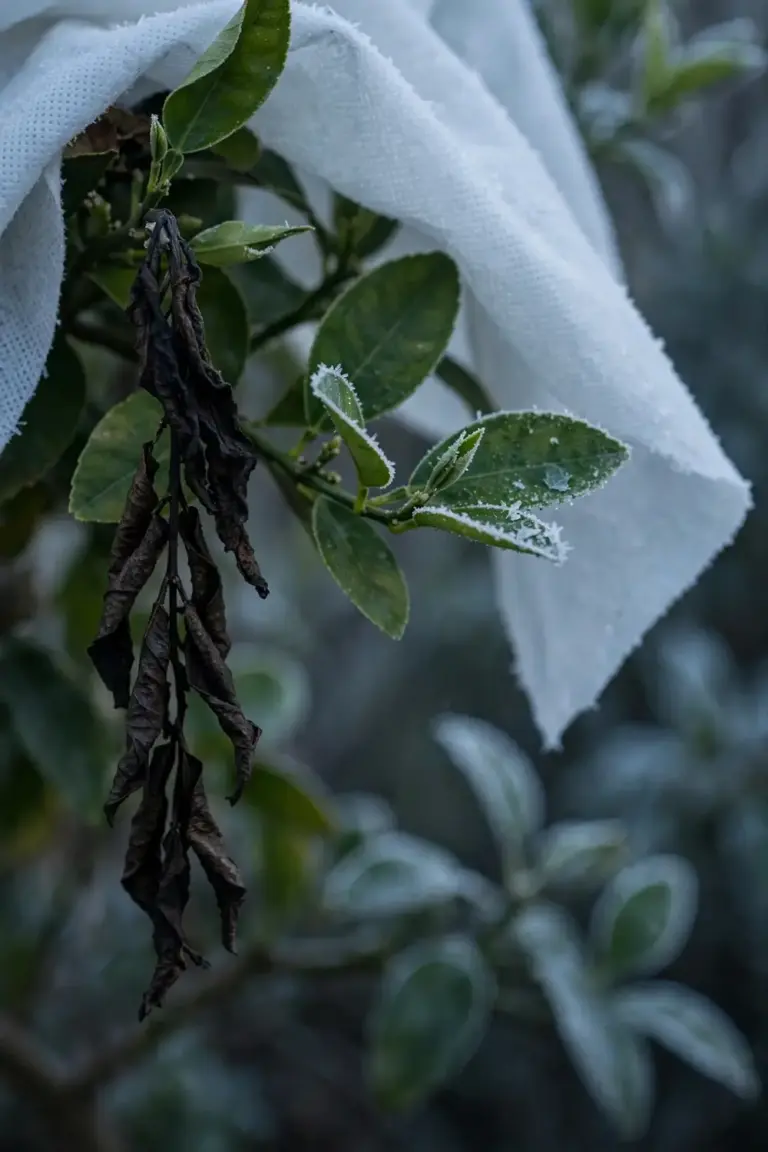
Wait before you prune. Frost-damaged wood looks dead but the line between dead and living wood only shows once spring growth starts. Prune in spring, cutting back to live wood with green cambium under the bark. Pruning in winter opens fresh cuts to the next frost and removes wood that might have survived.
Protect the next cold night with a frost cloth draped over the tree and pegged at the ground. The cloth traps ground warmth around the canopy. Water the soil before a forecast frost, because wet soil holds more heat than dry soil. Skip plastic sheeting, which touches leaves and freezes them harder. Potted trees move to a sheltered wall or under eaves for the coldest nights.
A tree on a slope sheds cold air downhill, while a tree in a hollow collects it. Plant on a gentle slope or near a brick wall that radiates stored heat after sunset. Fruit touched by frost drops or rots on the tree. Pick damaged fruit off and bin it so it does not attract pests. The tree replaces the lost fruit on the next flowering. A tree that loses leaves to frost still leafs out in spring when the roots and trunk stay alive.
9. Splitting Fruit: Even Water Beats a Big Drink
Fruit splits when the inside grows faster than the skin can stretch. A dry spell followed by heavy rain or a big irrigation swells the pulp quickly. The rind cannot keep up, so it cracks, usually from the stem end or the base. Split fruit rots fast and drops. The tree itself stays healthy.
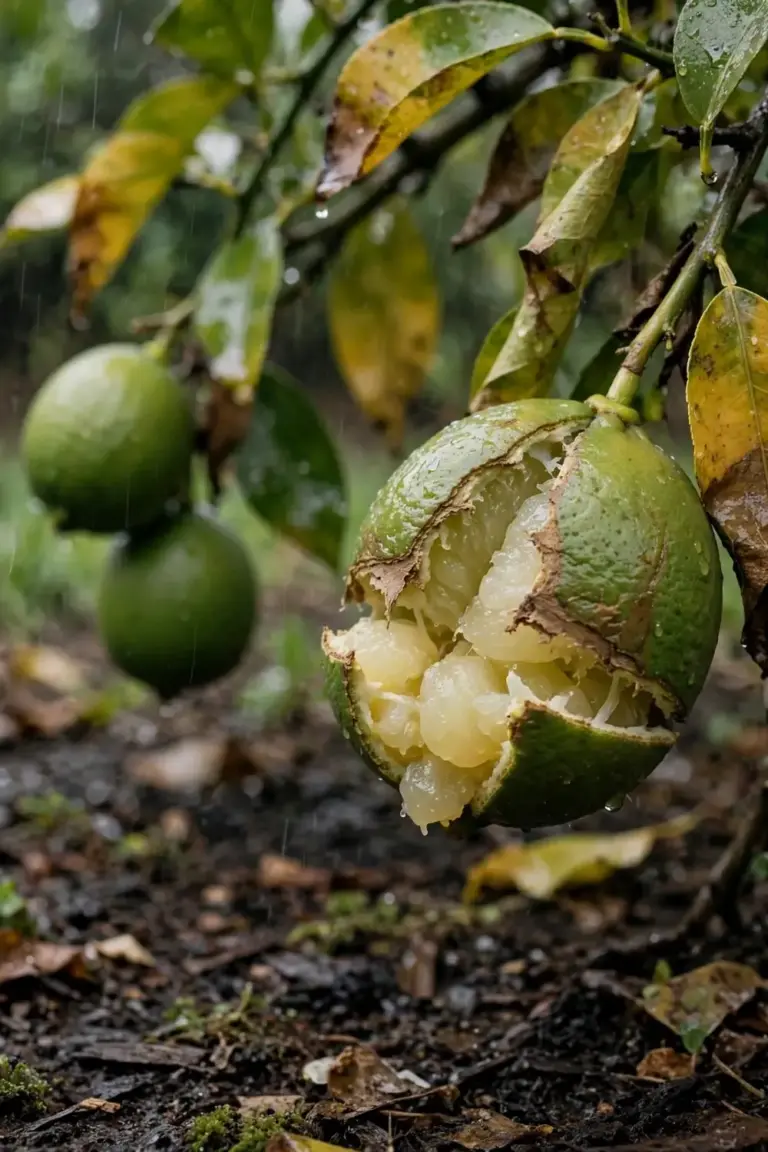
Water evenly through fruit growth. A long dry spell followed by a soak is the classic trigger. Mulch holds soil moisture steady between waterings. Drip irrigation beats a hose on full blast for even delivery. Water deeply once a week during dry weather rather than flooding the tree after a drought. The LSU AgCenter citrus problems guide records this exact mechanism: rapid water uptake swells the fruit faster than the skin can stretch, and even watering is the best defence.
Pick split fruit off the tree and bin it. Split fruit attracts fruit fly and fungal rot, and both spread to sound fruit nearby. Trees in pots split fruit more often than trees in the ground. A pot holds little soil, so it dries fast and then floods when you water. Check pot soil daily through fruit growth. Empty any saucer after watering so roots never sit in water. A few split fruit each season is normal, especially after a storm. A tree that splits most of its fruit needs a steadier watering routine and a check for shallow roots in sandy soil, which dries fastest.
Frequently Asked Questions
Read the pattern first: whole-leaf yellowing points to water or roots, yellow between green veins on new leaves points to iron shortage, yellow between veins on old leaves points to magnesium shortage, and small narrow bunched leaves point to zinc shortage. Push a finger 5 cm into the soil before you feed. Wet soil means hold the water and fix drainage, while dry soil means water first, then judge the leaves again in a week.
Youth is the common reason. A tree in its first three to five years sets fruit erratically and drops much of what it sets. Drought and heat stress add to the drop on older trees. Water evenly through fruit growth and skip heavy feeding during a dry spell. A tree that skips a year after a huge crop is resting. It flowers again next season when the frame and roots have caught up.
Early root rot can reverse when you fix drainage and stop overwatering: lift a potted tree, clear blocked holes, and let the soil dry between waterings, or in the ground improve drainage and keep mulch clear of the trunk. Advanced rot rarely reverses. Bark peeling from the trunk base and a thinning canopy across the whole tree mean the root system has collapsed, so replant in a spot with free drainage.
Call 1800 084 881 when you see symptoms that match no common problem on this page. Blotchy mottling that crosses leaf veins, small lopsided bitter fruit, and tiny psyllid insects on new flush all warrant a call. Do not move suspect plant material. Do not diagnose citrus greening yourself. The hotline forwards your call to your state agriculture department for assessment.
Yes, with two limits. Spray horticultural mineral oil at the label rate on new flush to smother leafminer and scale as they arrive. Skip oil on days above 32 degrees C. Skip oil when the tree is water stressed. Oil plus heat burns leaves. Stop spraying a flush once most leaves harden or pass 40 mm. Follow the label on any product you use.
Solve Lime Tree Problems With Checks First
Most lime tree problems answer to one check and one fix. Finger in the soil. Hand lens on the leaf underside. Gall size on the stem. Pattern on the yellow leaf. The check costs nothing and the fix follows it. Spraying before the check wastes money and kills the predators that do the work for free. Walk the tree once a week, run the checks above, and fix what you find. The tree does the rest.