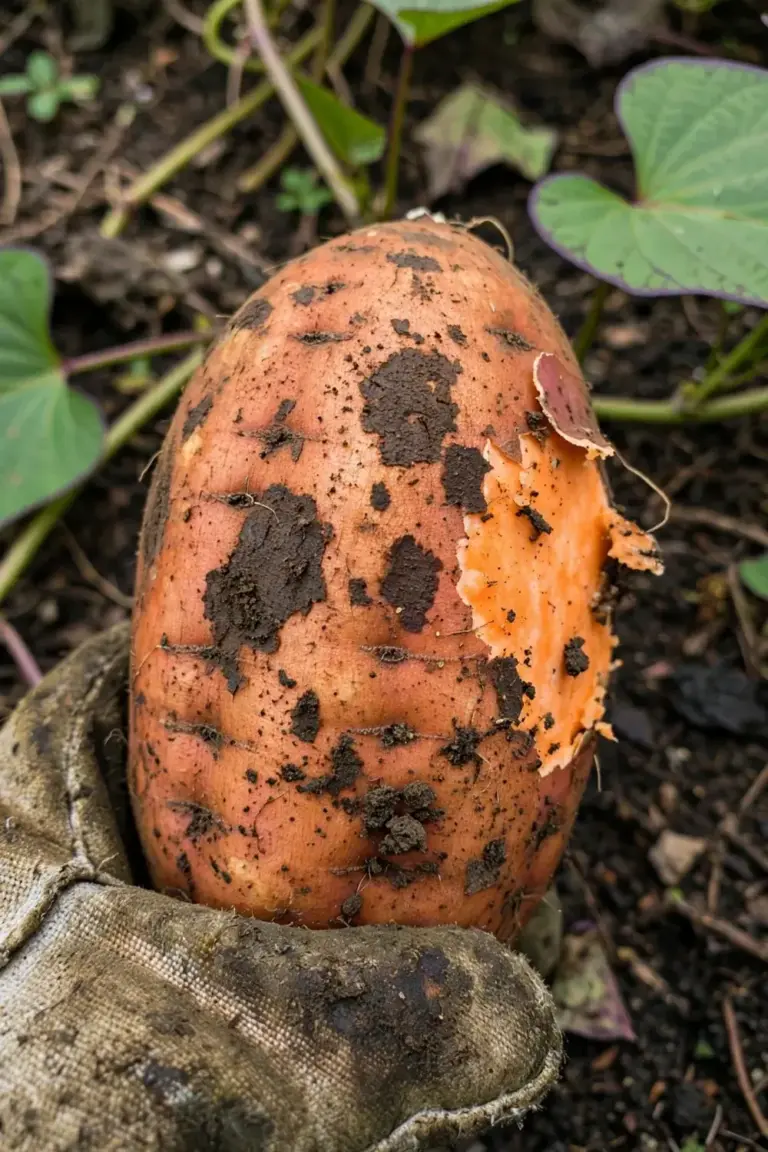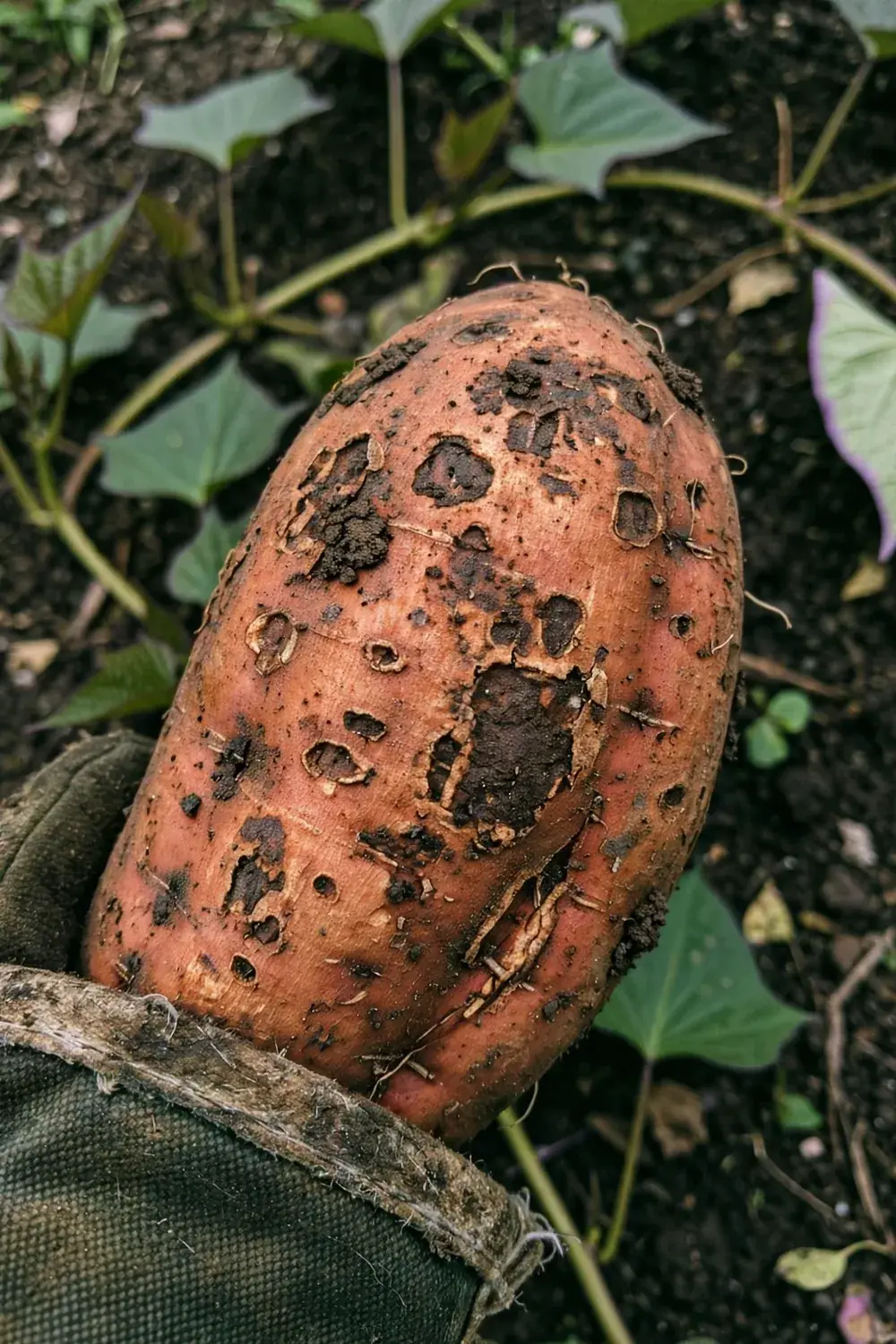

Dig 1 root and check the skin. Sweet potato soil rot (pox) shows as dark, corky, pitted lesions that deform the root, and the bacterium behind it persists in soil from season to season. Fungicides will not treat it. Fungicides target fungi, and this disease is a bacterium.
I have learned to read the tuber before I trust the vine above it. Sweet potato soil rot is a bacterial disease of sweet potato (Ipomoea batatas) caused by Streptomyces ipomoea. It attacks storage roots and fibrous roots. Above ground, infected plants yellow, wilt, and stay small, and in severe cases they die or fail to produce tubers.
The rest of this page gives one three-way ID check against scurf and black rot, one correction on fungicides, and 6 moves that keep the bacterium out of your patch. The moves are cultural. They starve the bacterium, shift the soil against it, and break the cycle between seasons.
What Sweet Potato Soil Rot (Pox) Actually Is
Sweet potato soil rot is pox of sweet potato. Streptomyces ipomoea, a soilborne bacterium, causes it. The disease hits storage roots and fibrous feeder roots, and it can kill young transplants when infection runs heavy right after planting.
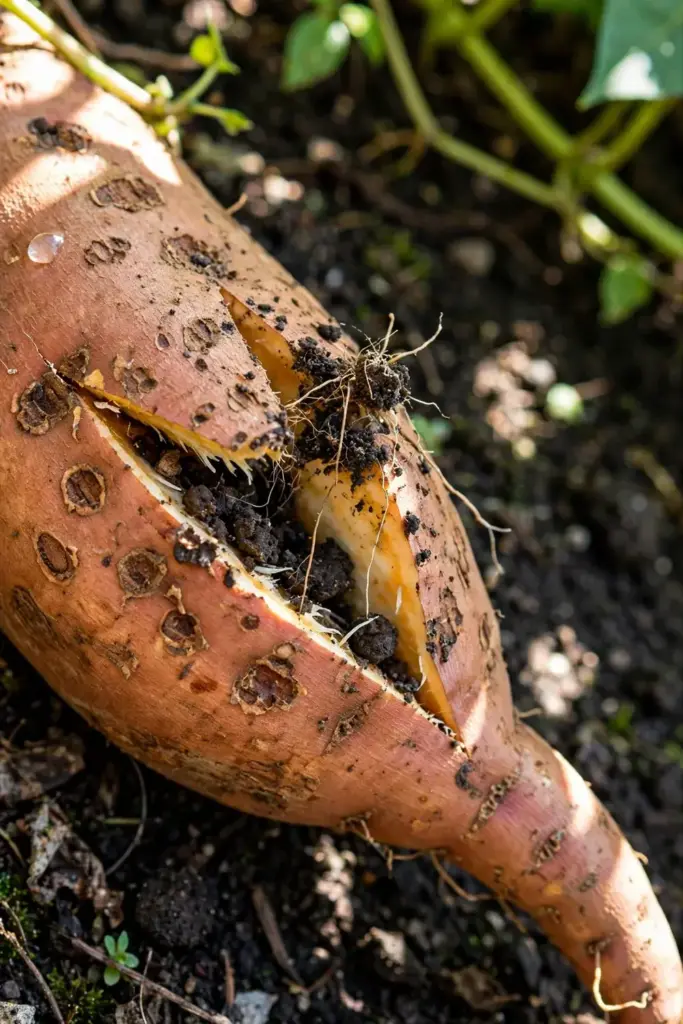
On storage roots, rough scabby pits and shallow surface lesions scar the skin. Lesions turn dark brown and corky, and roots crack, twist, or grow dumbbell shaped where lesions girdle them. Fibrous roots develop dark dead lesions that kill the root. Underground stems blacken and soften. The Texas Plant Disease Handbook describes these pits and scars as the signature of soil rot, and notes that heavy infection right after transplanting causes serious plant losses.
Light, dry soils and soil pH above 5.2 favor the disease. The same handbook names pH above 5.2 as the condition that favors soil rot. The bacterium travels on infected roots used as seed, so clean starting material is the first defense.
Pox is the second name for this disease. Do not confuse it with potato common scab. Common scab hits regular potatoes and comes from Streptomyces scabies, a different bacterium on a different host. Do not confuse soil rot with scurf either. Scurf is a fungus, and the next section sorts the three lookalikes.
Sweet Potato Soil Rot vs Scurf vs Black Rot
Three diseases mark sweet potato roots. Soil rot pits and deforms. Scurf stains the skin. Black rot sinks black spots into the root and turns the flesh bitter. The table below sorts them by cause, depth, and feel.
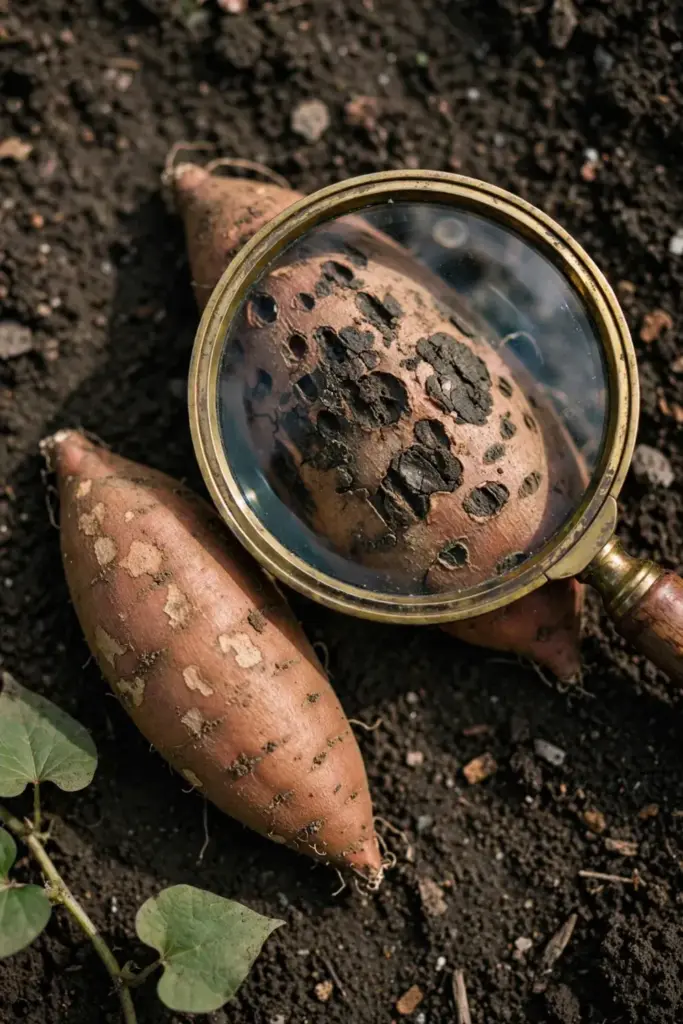
The Texas handbook lists scurf and soil rot side by side. Scurf stays superficial and skin deep, while soil rot leaves rough scabby pits and kills fibrous roots. Black rot sits apart again, with circular almost black spots and a bitter taste in the affected flesh.
| Disease | What Causes It | How Deep It Goes | What the Root Looks and Feels Like |
|---|---|---|---|
| Soil rot (pox) | Streptomyces ipomoea, bacterium | Pits the skin, kills fibrous roots | Rough scabby pits, corky dark lesions, cracked or deformed roots |
| Scurf | Monilochaetes infuscans, fungus | Skin only | Light brown blotches, superficial, flesh undamaged |
| Black rot | Ceratocystis fimbriata, fungus | Into the flesh | Circular almost black spots, firm dry rot, bitter taste |
Scurf is cosmetic. The flesh under a scurf blotch stays sound, though the grade drops and roots shrink in storage. Scurf needs no rescue spray in a home bed. Soil rot and black rot need a different response, because both reach past the skin.
Scurf and soil rot can mark the same harvest. Sort by depth and by the fibrous roots, then confirm with a lab when the call decides next year’s rotation.
Why Fungicides Will Not Fix Sweet Potato Soil Rot
Fungicides target fungi. Soil rot is a bacterium. A fungicide spray will not cure it, and a fungicide drench will not clean infected soil.
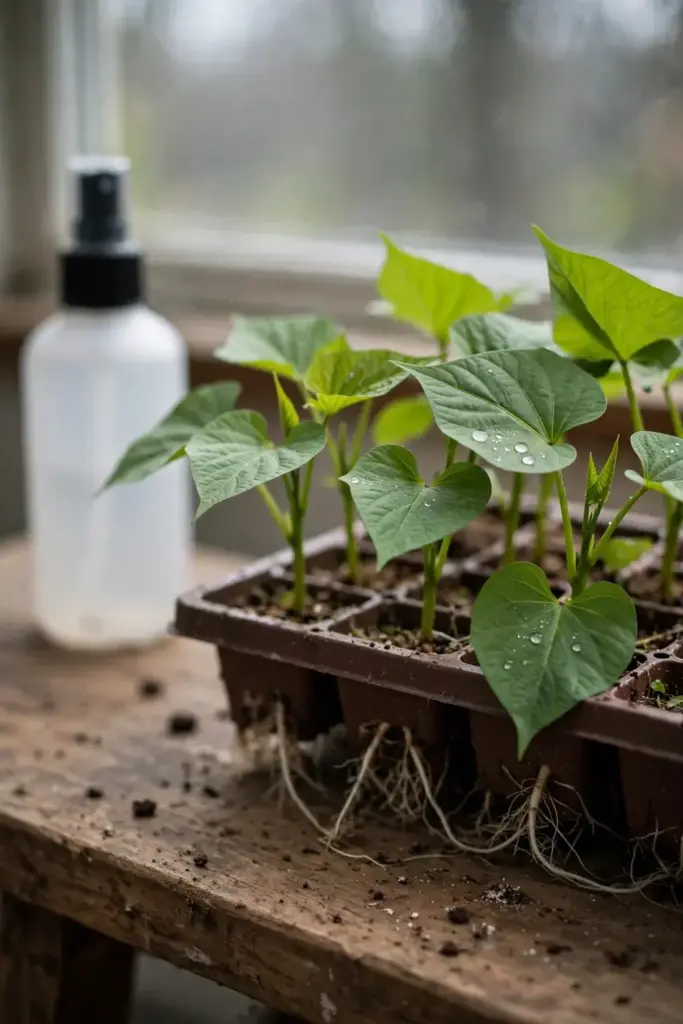
The confusion has two roots. First, the name scab drifts onto this disease, and scab sounds fungal. Second, some garden pages call Streptomyces ipomoea a fungus. The bacterium label settles it. Streptomyces is an actinomycete, a bacterium, and the Texas handbook files soil rot under bacteria.
Skip the spray. Spend the money on certified slips, a resistant variety, and a soil pH test.
Soil fumigation belongs to commercial fields. It has no place in a home patch, and this page does not carry it as advice.
1. Buy Certified Disease-Free Slips
Start with certified disease-free slips. Clean slips keep the bacterium out of a fresh bed, and a fresh bed is worth more than any rescue later.
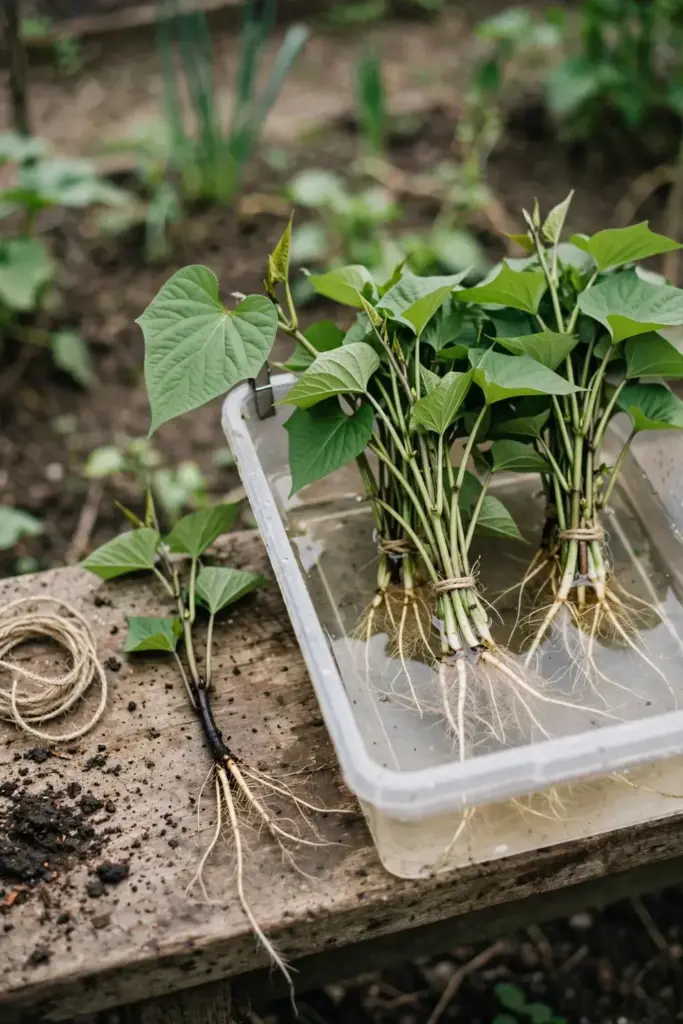
Buy from a supplier that certifies its stock. Inspect slips on arrival. Reject slips with dark lesions on stems or roots. The Clemson Home and Garden Information Center advises planting certified disease-free potatoes and avoiding transplants that show spots on the lower stems.
One infected slip carries the bacterium into clean soil. The first corky lesions show at harvest, months after planting.
2. Plant Resistant Varieties
Plant a variety with rated resistance to soil rot. Resistance does not mean immunity. It means fewer pits and a crop worth digging.
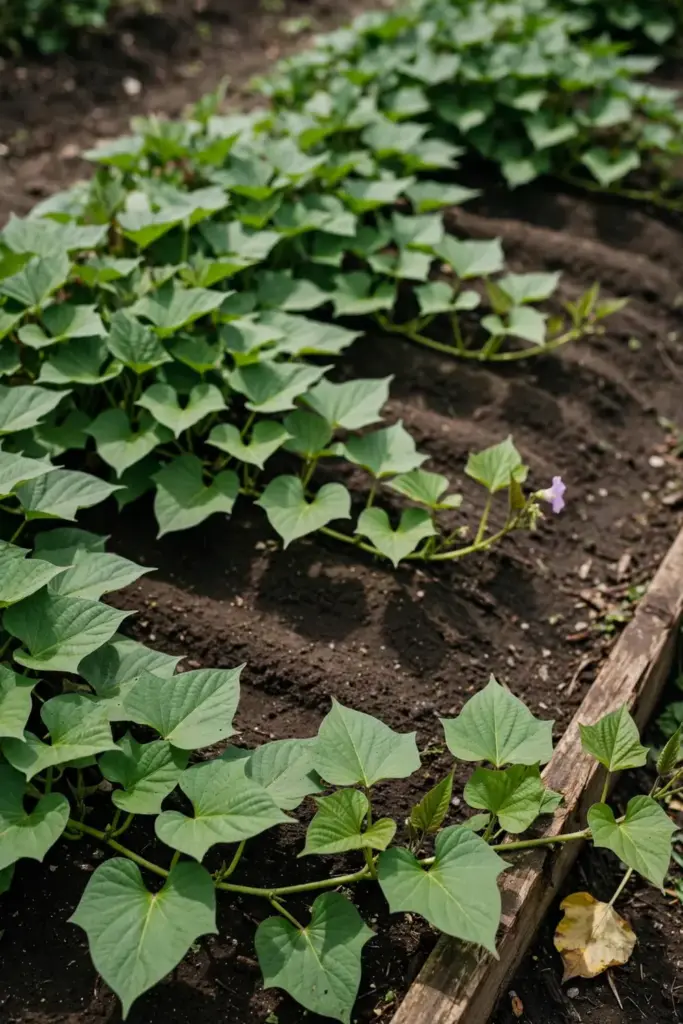
The LSU AgCenter guide rates Covington as intermediate to resistant for soil rot. The same Texas handbook rates Beauregard as resistant to intermediate, Hernandez as intermediate to resistant, and Jasper as resistant.
Check the rating before you order. A variety rated susceptible in your soil gives the bacterium a free season.
3. Test Soil pH and Hold It Below 5.2
Test soil pH before planting. Soil rot gains ground as soil pH rises above 5.2.
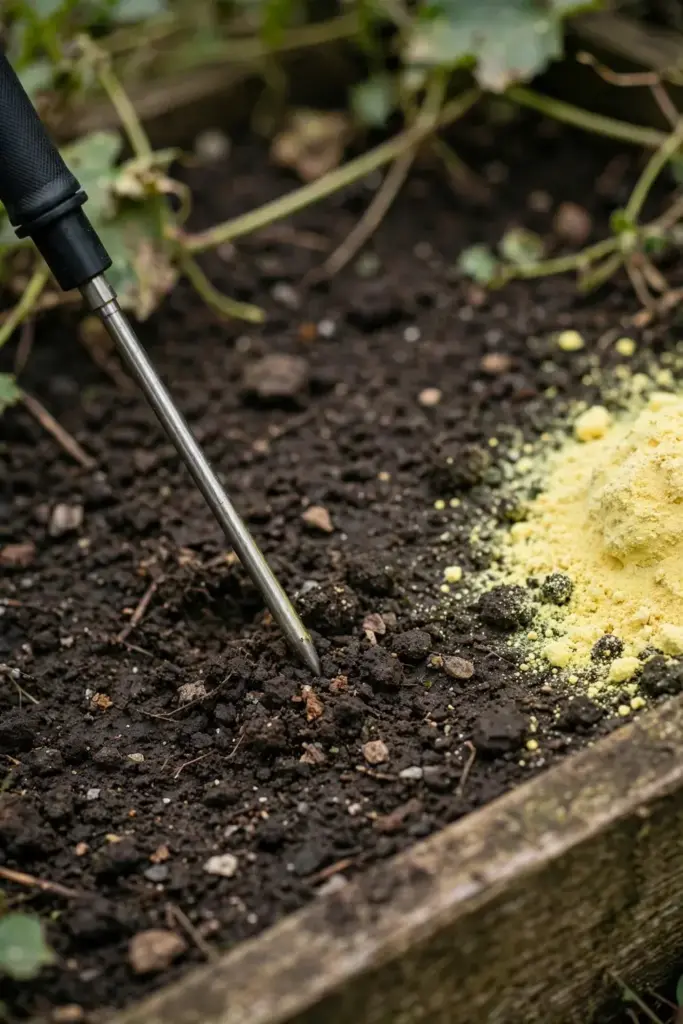
The same LSU guide advises holding soil pH below 5.2 when a susceptible variety is in the ground. A lab soil test gives the number to act on, and a home meter gives a rough check between tests.
That target sits below the 5.5 to 6.0 range the University of Georgia soil test sheet recommends for sweet potatoes, so expect a trade-off in nutrient availability. Use the low pH only where soil rot has shown, and pair it with a resistant variety so the pH does not carry the whole defense.
Elemental sulfur lowers pH. Apply it by the soil test result, then retest before planting.
A pH test skipped is a season guessed. Test first.
4. Rotate Sweet Potatoes Out for Years
Keep sweet potatoes out of an infected bed for 3 to 4 years. Rotation starves a soilborne pathogen of its host.
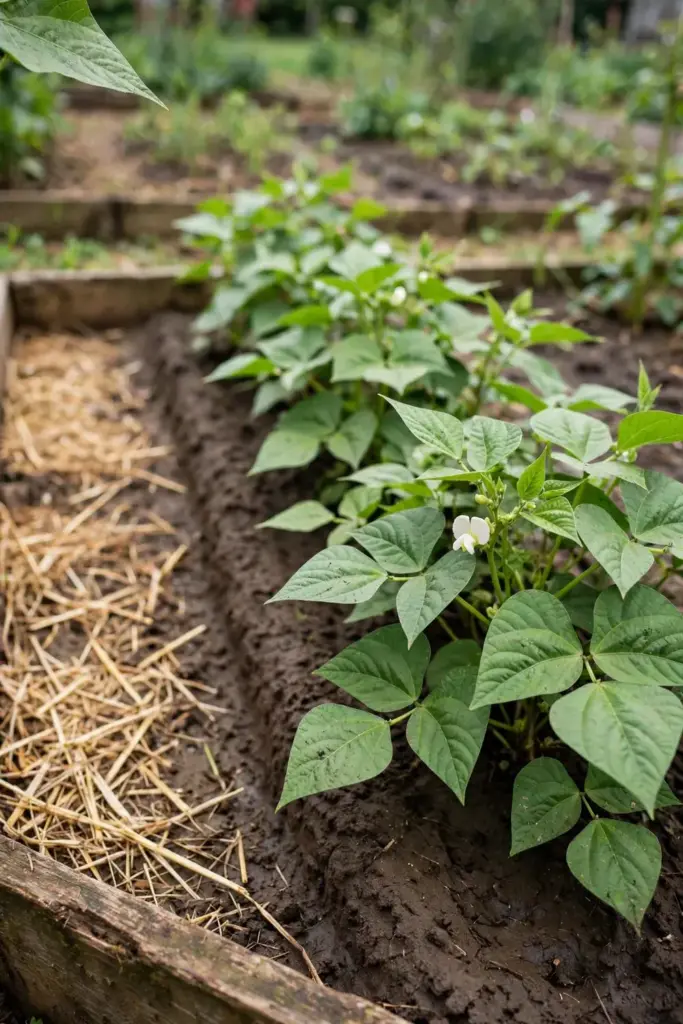
Plant unrelated crops in the bed during the rest years. The crop rotation guide covers how to place those crops so the bed still earns its keep. Give soil rot ground the same 3 to 4 year rest the Clemson notes give scurf ground.
Never replant an infected bed the next season. A one-year break does not clear it.
5. Sanitize Tools and Storage Boxes
Wash tools, bins, and storage boxes after they touch an infected crop. Soil and sap on a trowel carry the bacterium to the next bed.

Scrub with soap and water, then dry before storage. Remove all plant debris after harvest. The same Clemson notes list debris cleanup as part of sweet potato disease prevention.
A dirty crate undoes a clean slip order. Sanitize the box before the harvest goes in.
6. Never Save Infected Tubers as Seed
Cut slips above the soil line, and never bed an infected root for slips. Infected seed roots pass the bacterium to the next crop. The same Texas handbook tells growers to cut slips above the soil line to stop infected roots from reaching the planting field.
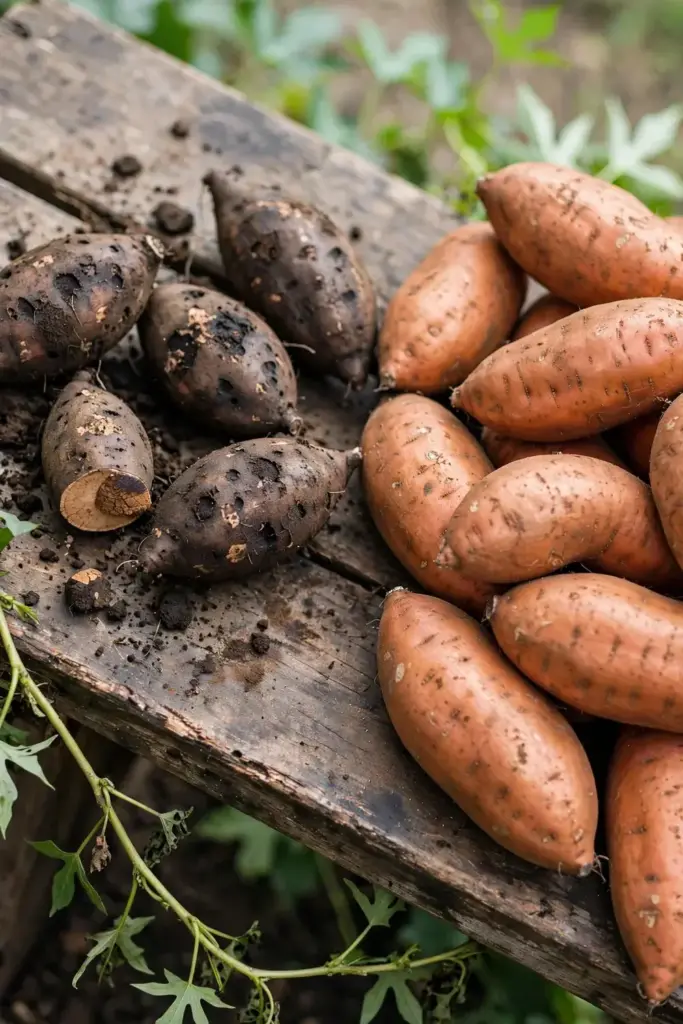
Sort at harvest. Keep firm, smooth roots for bedding. Bag lesioned roots for the trash. The how to grow sweet potato guide covers bedding slips and harvest timing for a healthy crop.
One infected mother root seeds a whole bed of slips. Discard it.
When Field ID Is Not Enough: Send a Sample to a Lab
Field ID sorts suspects. A lab names the agent. Send a sample when the call decides next year’s rotation or a pH change.
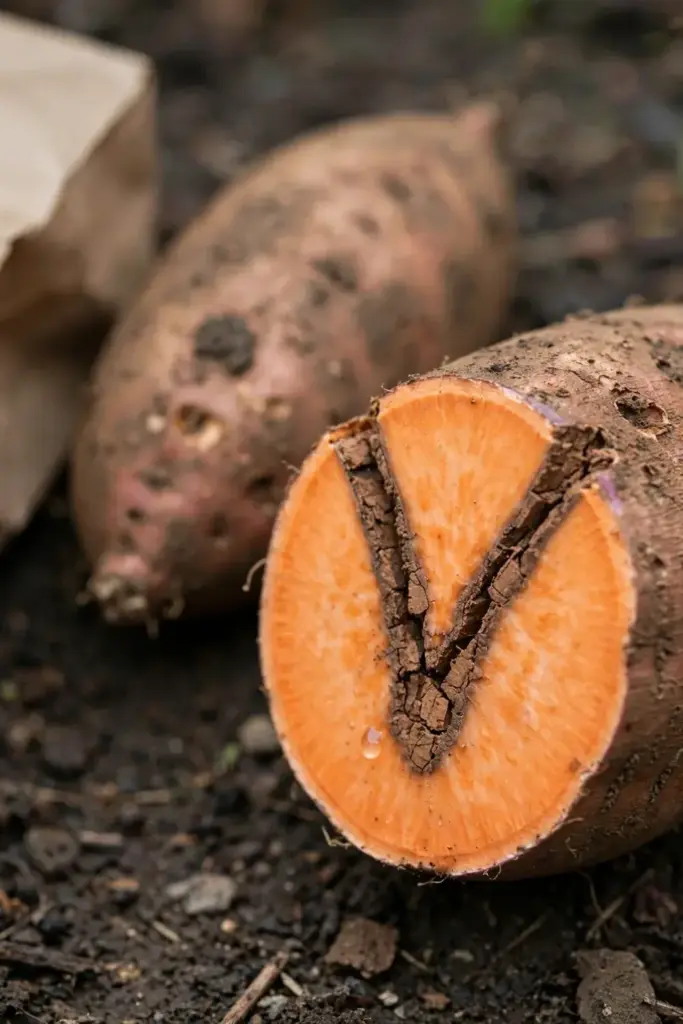
Send fresh roots with lesions plus a note on pH and rotation history. Keep the sample cool and dry.
A lab result beats a second season of guessing.
Frequently Asked Questions
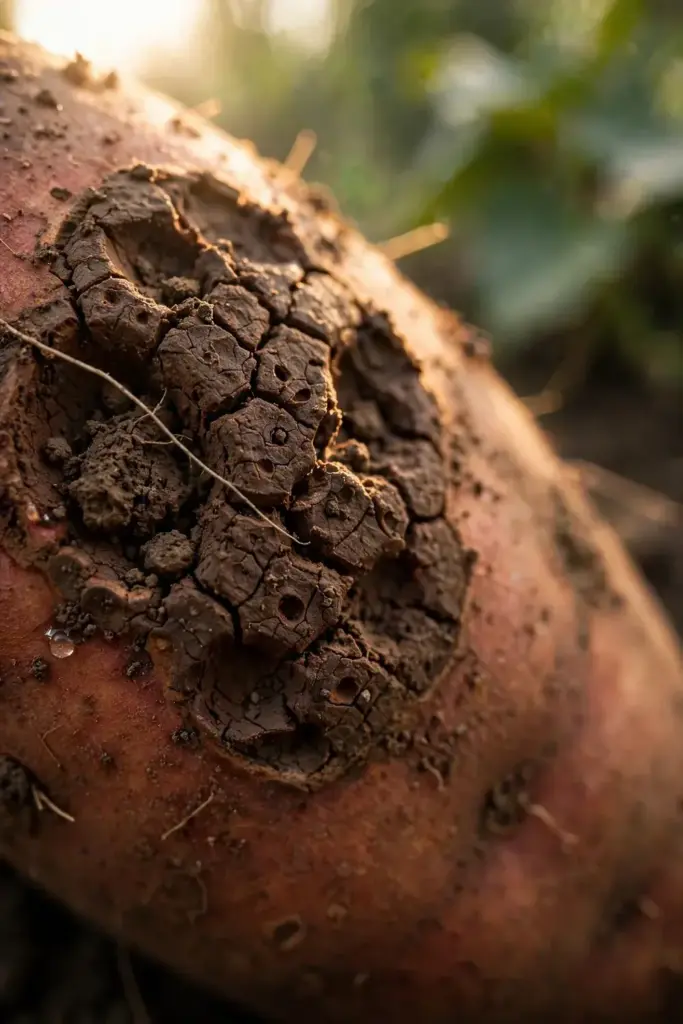
Peel and cut away small corky lesions on lightly affected roots, and cook the sound flesh as usual. Discard roots that are cracked, distorted, or rotted through, since their texture and flavor suffer. Wash your hands, knife, and board after handling lesioned roots. When a root looks mostly lesion, it belongs in the trash, not on the plate.
Do not compost infected roots or vines. Bag them and put them in the trash. Composting returns the material to the garden, and the bacterium would ride along to the next bed. The same rule covers cull piles left beside the bed. Clear the bed fully at harvest, then wash the tools and boxes that touched the crop.
No. Low pH slows the disease. It does not kill the bacterium in soil, and it does not rescue roots that already show corky lesions. Treat pH as one layer. Pair it with a resistant variety, certified slips, and a 3 to 4 year rotation. A bed that already shows soil rot needs the full playbook, not a pH shift alone.
No. Soil rot is a bacterial disease caused by Streptomyces ipomoea. Scurf is a fungal disease caused by Monilochaetes infuscans. Soil rot pits the skin, deforms roots, and kills fibrous roots. Scurf stays skin deep and leaves the flesh sound. The two diseases need different responses, so name the disease before you act. Field ID plus a lab test settles a mixed case.
Where to Go From Here
Walk the bed at harvest. Dig 1 root and check the skin before you trust the vine.
Plan next year now. Certified slips, a resistant variety, a pH test, and a rotation plan beat any rescue spray. The soil health guide helps you build the bed the next crop grows in.
Sweet potato soil rot is beatable with clean slips and a long rotation. Start with the tuber skin. End with a rotation plan.