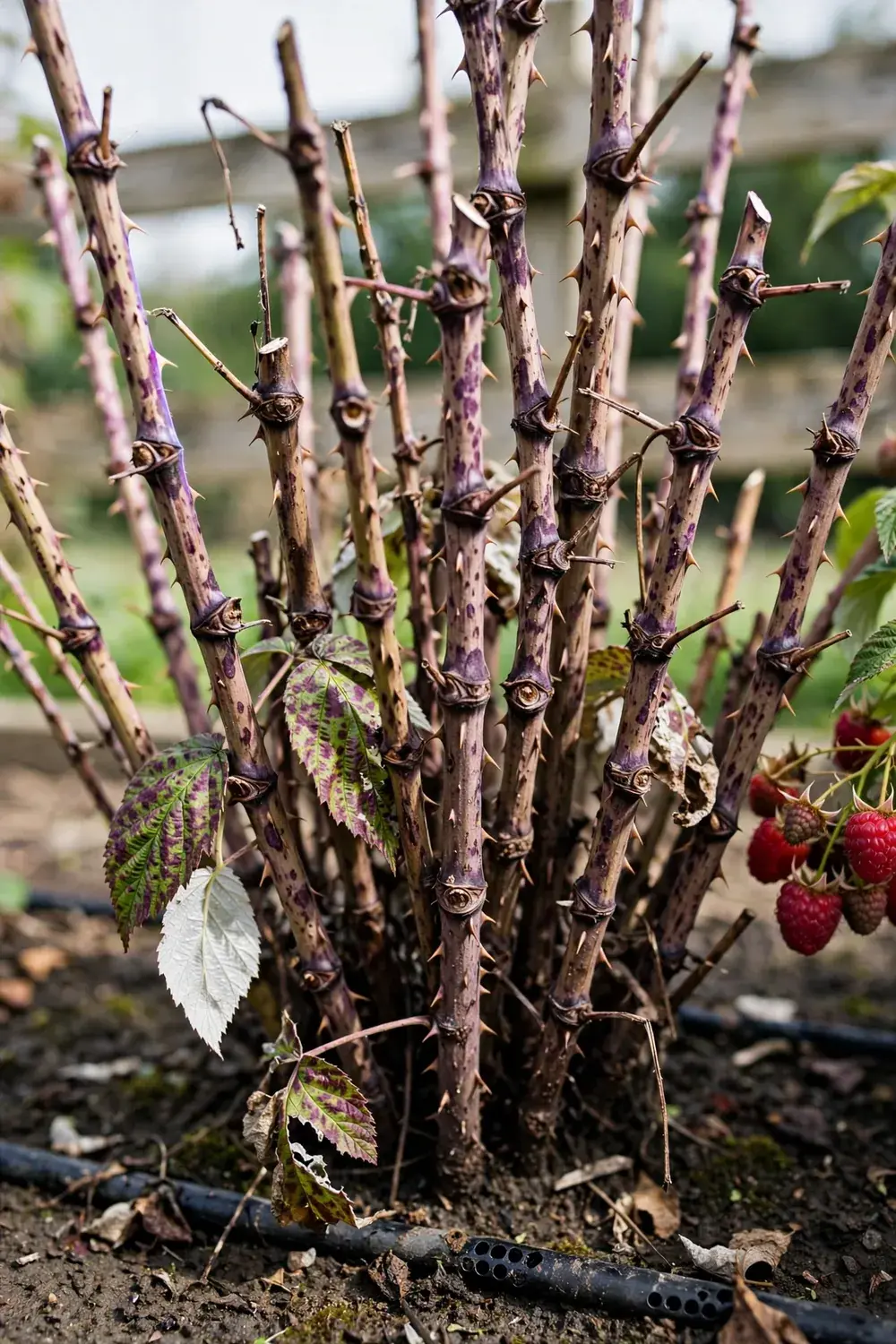

Purple patches on raspberry canes with a bare petiole left behind point to spur blight on raspberries, 1 of 3 cane diseases that spot raspberry canes. Spur blight on raspberries is a fungal disease that enters through the leaves and works down the petiole into the cane. It weakens buds and thins the fruiting wood, and it rarely kills a cane outright.
I have learned to check for the leftover petiole before I reach for the pruners, since that one sign separates spur blight from cane blight, the cane killer it gets confused with.
This guide gives 10 strategies. The first sorts spur blight from cane blight. The rest remove infected wood, dry the row, and protect new canes through the season.
What Spur Blight on Raspberries Actually Is
Spur blight on raspberries is a fungal disease of raspberry canes. The fungus is Xenodidymella applanata, formerly Didymella applanata. Older references, including the Clemson index of plant diseases, list it under the older name Didymella applanata. Use the current name in conversation and expect the older name on older fact sheets.
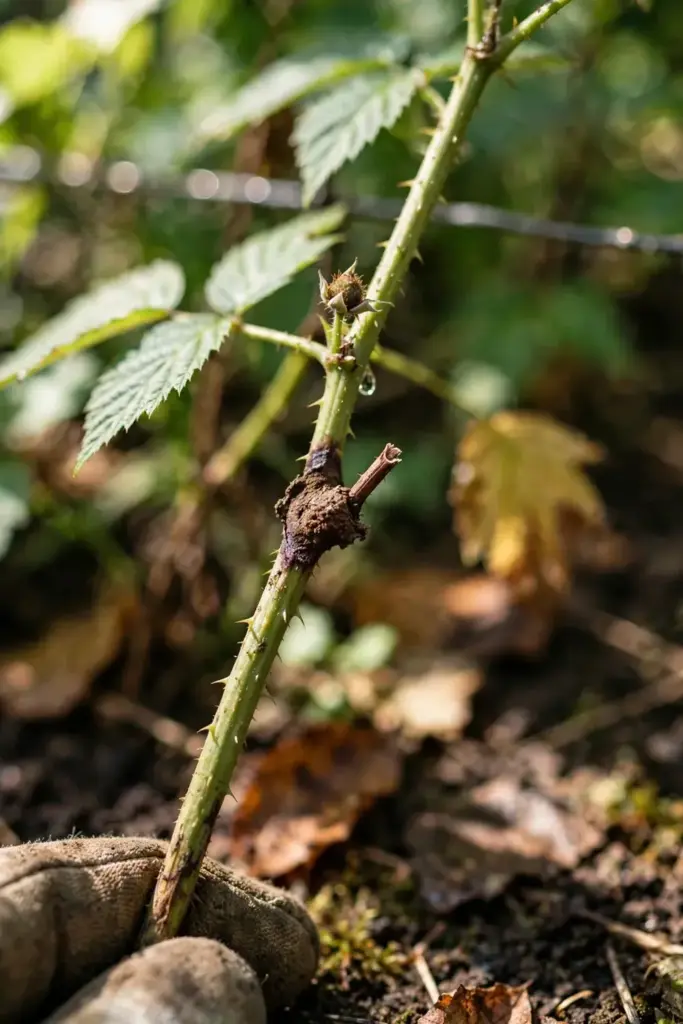
The disease runs on a one-year loop. Spores leave infected canes in wet spring weather and land on leaves. The fungus grows down the petiole into the cane and forms a lesion around the bud. The lesion overwinters in the cane. Next spring it releases spores that start the loop again.
Damage lands on buds first. Infected buds fail over winter or push weak shoots in spring. Fruiting laterals come out stunted. Canes lose fruiting branches and yield drops in severe cases. Scottish studies suggest spur blight does little damage to the cane itself, and the extent of damage in the United States is not clearly understood. That honesty matters. Spur blight looks alarming and usually costs less than it appears to cost. Cane blight is the disease in this pair that kills canes.
How to Identify Spur Blight on Raspberry Leaves
Spur blight on raspberry leaves starts on mature leaves low on the cane. Leaf lesions are brown with yellow margins and often V-shaped. Infection begins at the leaf edge, advances toward the midvein, and leaves a wedge-shaped mark. The wedge shape is the field mark. Young leaves resist. Disease starts on the lower third of the cane.
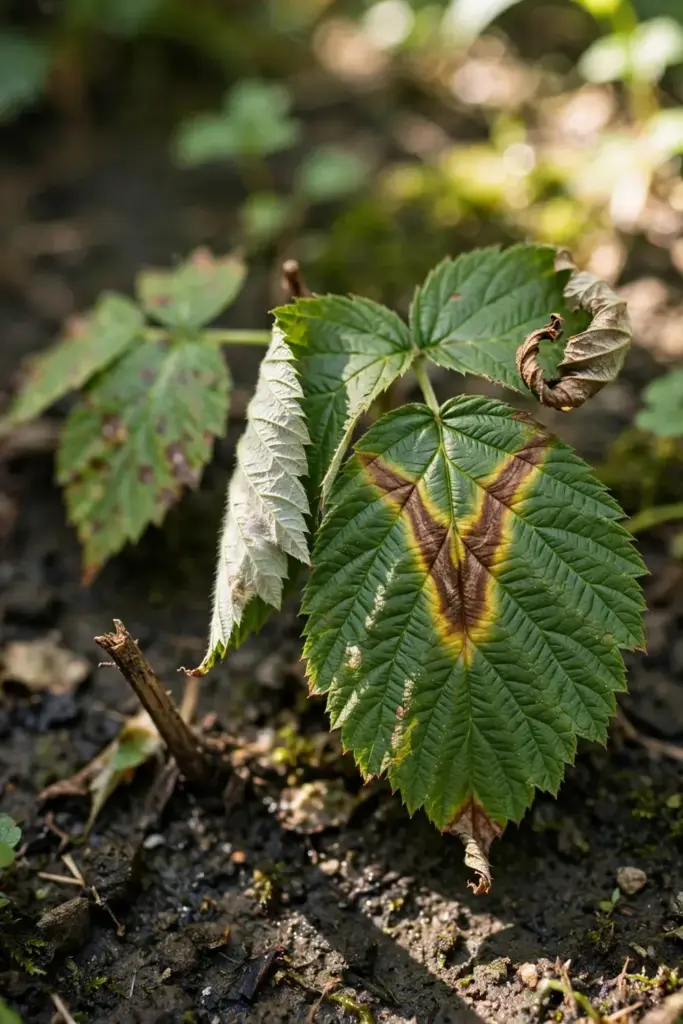
Infected leaves shrivel and drop, and the petiole stays on the cane. That leftover petiole is the sign. When leaves die from normal aging, the whole leaf falls off. When spur blight kills a leaf, the blade falls and the stem remains. Check several canes before you decide: one petiole proves little, but a row of bare petioles under V-shaped leaf damage proves plenty.
Timing helps. The best time to identify cane diseases is late summer and early fall, when primocane symptoms show clearly before the canes turn brown. Walk the row then. Look low on the cane first, where the oldest leaves sit.
How to Identify Spur Blight on Raspberry Canes and Buds
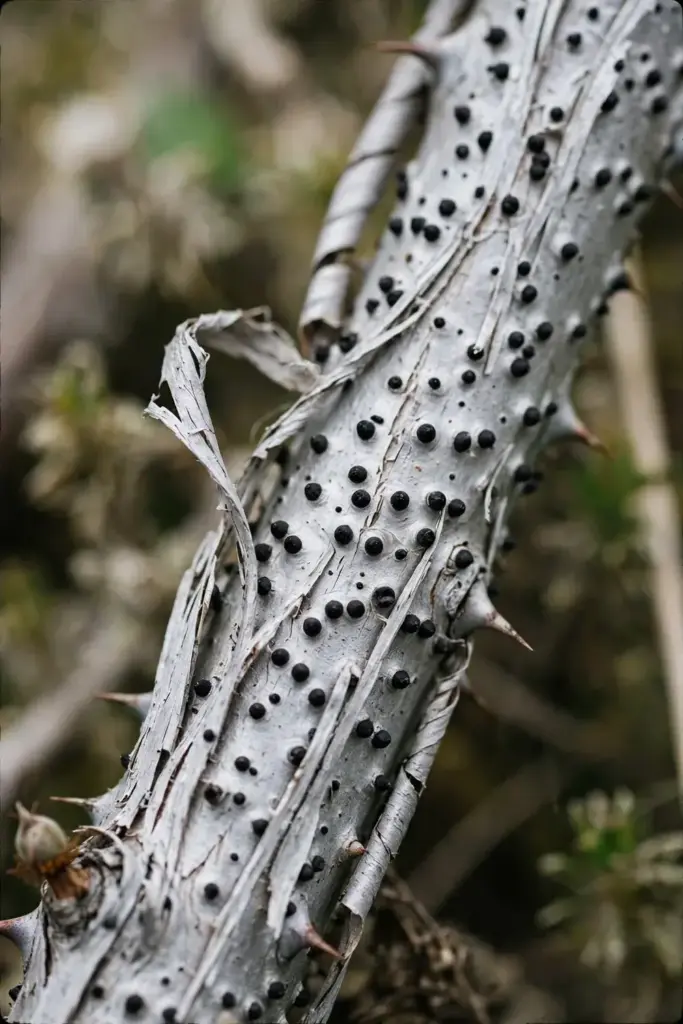
Spur blight on raspberry canes shows as a dark spot just below the point where a leaf attached. The spot starts chocolate brown or purple and about 1/2 inch across. It grows fast and can encircle the surface of the cane. The lesion sits at the node, centered on the bud, and that placement separates spur blight from anthracnose, which strikes between nodes.
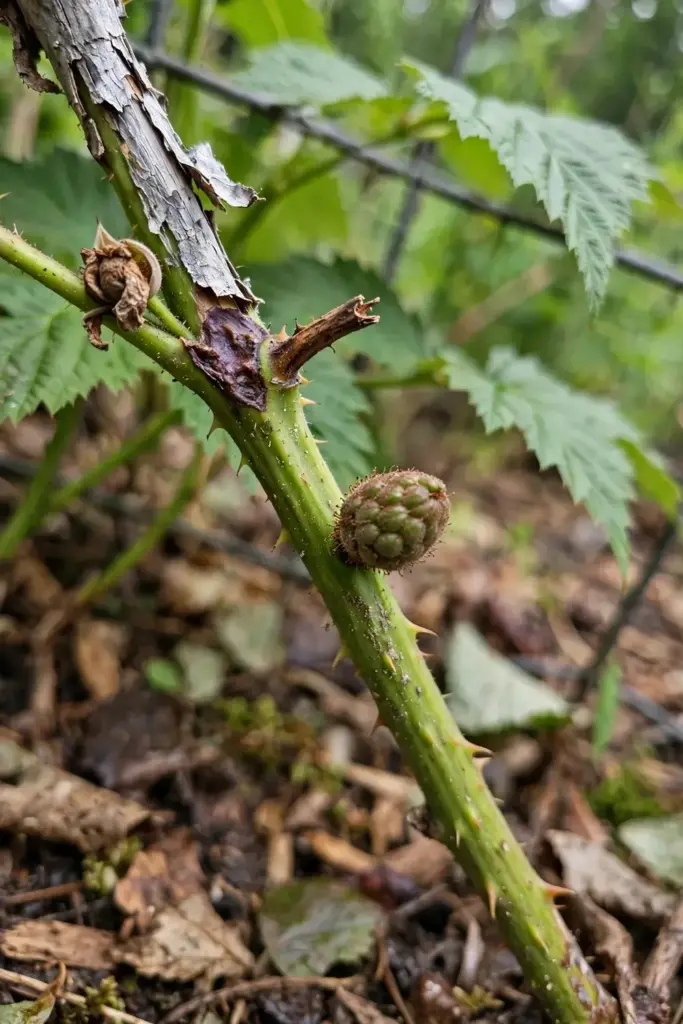
The lesion stays superficial. The fungus does not invade the vascular system. That single fact explains why spur blight rarely kills a cane. The cane keeps moving water past the lesion. Cane blight invades the vascular tissue, and that difference decides which disease threatens the cane itself.
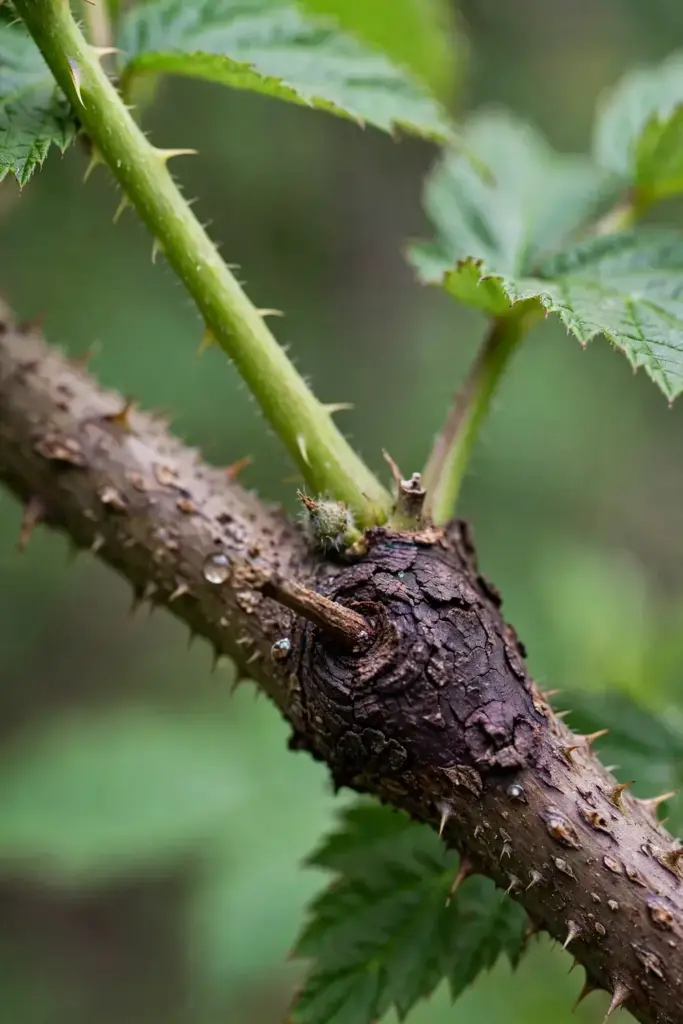
Late in the season the bark over the lesion splits. Overwintering lesions turn silver or gray. Tiny black dots appear in the bark. Those dots are fruiting bodies, and they release the next spring’s spores. Infected buds often fail to survive winter or produce weak shoots. Buds next to infected nodes usually fail to sprout, which leaves long bare stretches on the lower cane. Gardeners call that look leggy.
Spur blight can look like winter injury. Dead canes in spring invite that mistake. Winter injury alone kills canes back to snow level, and living buds below that line still sprout. Spur blight kills buds at infected nodes and leaves the cane standing with bare stretches. Check the bark for silver lesions and black dots before you blame the cold.
Which Raspberries Get Hit Hardest
Red raspberries take the worst of spur blight. All Rubus species are susceptible, and red raspberries are particularly sensitive. Ohio State describes spur blight as occurring only on red and purple raspberries. The two statements disagree at the edges, and the practical read is the same. Red raspberry rows deserve the closest watch. Purple raspberries sit next in line.
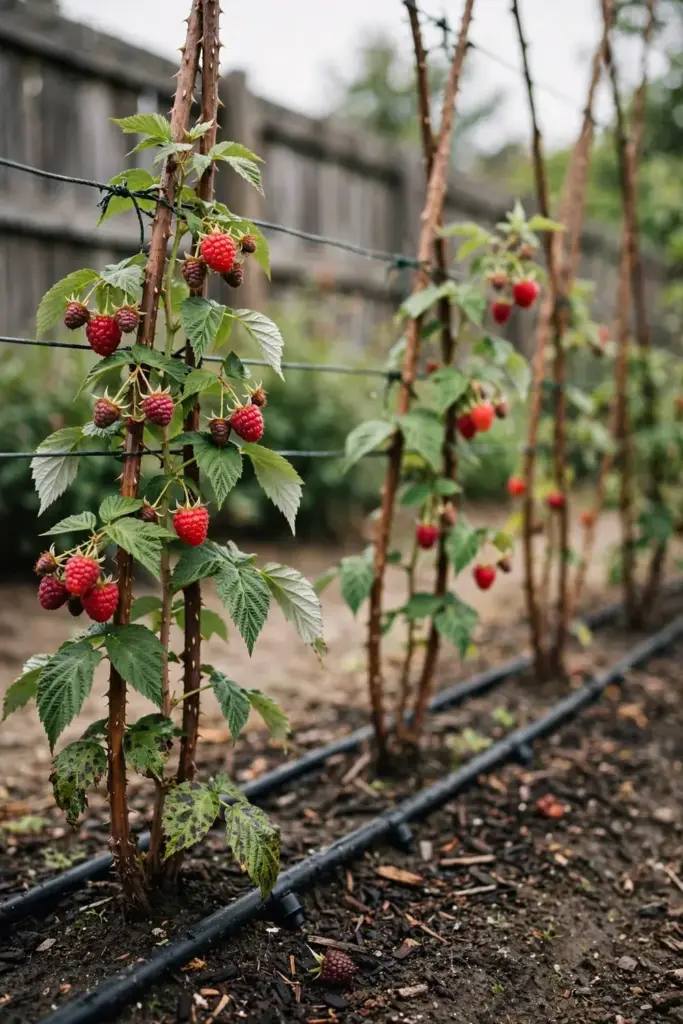
Blackberries escape spur blight. Ohio State describes the disease as occurring only on red and purple raspberries. A purple patch on a blackberry cane points elsewhere, usually cane blight or anthracnose. The guide to growing blackberries from seed covers blackberry planting and care for gardeners who grow both brambles.
Loganberry and youngberry can host spur blight. The Pacific Northwest handbook lists red raspberry, Loganberry, and Youngberry as hosts. Home gardeners who grow those trailing berries should run the same petiole test on them.
Spur Blight vs Cane Blight vs Anthracnose
Spur blight on raspberries shares its row with two other cane diseases. Spur blight, cane blight, and anthracnose all spot canes and all thin a harvest. Each disease infects a different part of the cane. The table sorts them.
| Feature | Spur Blight | Cane Blight | Anthracnose |
|---|---|---|---|
| Fungus that causes it | Xenodidymella applanata | Leptosphaeria coniothyrium | Elsinoe veneta |
| Entry point | Leaves and petiole, no wound needed | Wounds only, such as pruning cuts, rubbing, and insect damage | Young green tissue, including canes, leaves, fruit, and buds |
| Lesion site | At the node, just below the bud | Anywhere the cane is wounded | Between nodes, in the internodes |
| Depth | Superficial, no vascular invasion | Invades the vascular system, tissue reddish beneath the bark | Sunken pits in the bark |
| Leaf sign | Brown V-shaped lesion, petiole stays after the blade falls | Leaves above the infection wilt and die | Small round purple spots with a light center |
| Cane fate | Buds fail, laterals weaken, cane rarely dies | Cankers girdle the cane, tissue turns brittle and snaps, cane can die | Canes weaken and often die back to snow level in winter |
| Spread | Wind and splashing water | Splashing water only | Splashing water only |
| Host lean | Red raspberry hardest, blackberry highly resistant | All brambles, often worse on black raspberry | Worst on black and purple raspberry |
Two notes keep the table honest. First, cane blight carries a naming tangle. Pacific Northwest handbooks now place it in Kalmusia as Kalmusia coniothyrium, while most extension fact sheets still use Leptosphaeria coniothyrium. Both names point to the same fungus. Second, two diseases can share one planting. Field ID sorts suspects. A lab names the agent when the case stays unclear.
Why the Petiole Pathway Matters So Much
Spur blight on raspberries travels a path no other cane disease uses. Mature fruiting bodies appear in gray cane tissue from early April, and ascospores discharge in wet weather until dry weather prevails near the end of June. Those spores infect leaves on fruiting-cane laterals and on emerging primocanes. The fungus then grows through the petiole to the cane and invades cane tissue around the bud.
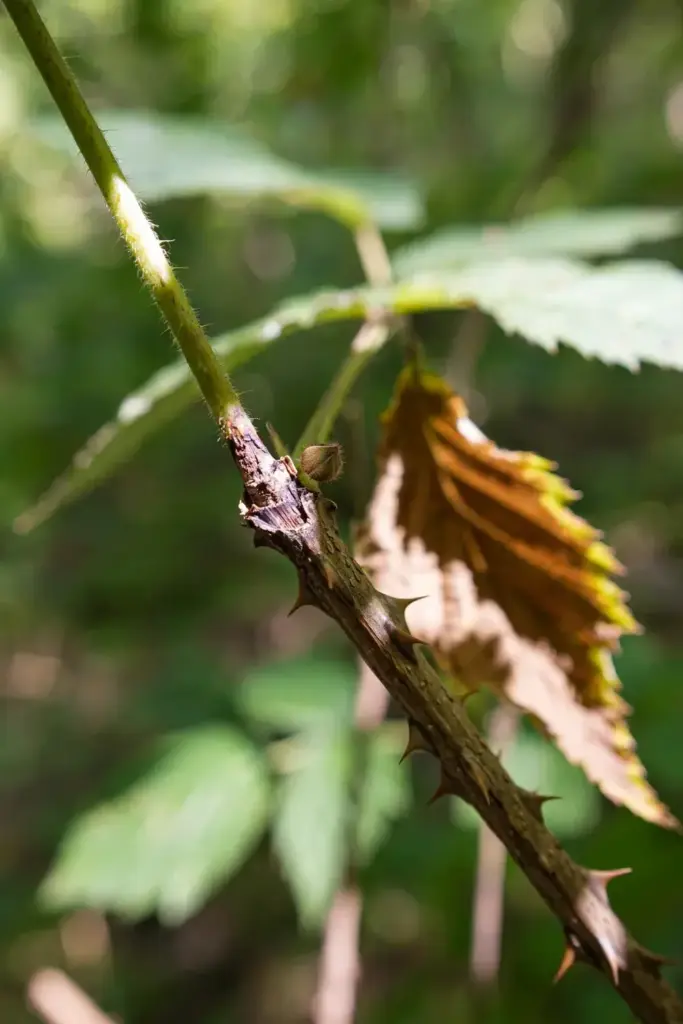
The leaf is the gate. A cane with healthy leaves resists spur blight even when spores land nearby. A cane with wet, mature, low leaves lets the fungus in. Young leaves resist infection, which is why disease starts low and climbs as leaves age. Under very favorable conditions the fungus can infect laterals and pedicels directly, but the petiole route drives most infections.
Buds suffer even when the fungus never reaches them. Buds may shrink in size even if the fungus has not grown through the petiole. Buds on infected canes also face more winter injury, and fruiting laterals may come out stunted. The lesion does not need to touch a bud to cost a harvest.
This pathway sets the whole management plan. Protect leaves and you protect canes. Dry leaves, open rows, and sanitation all work because they break the leaf-to-cane route. Fungicide timing follows the same logic. Sprays matter most while spores discharge in spring and early summer, before the fungus reaches the cane.
What Makes Spur Blight Worse in a Home Garden
Wet weather drives spur blight. Infection occurs in early spring and is favored by wet weather. Disease runs hardest in years with abundant rain in early summer. Spores need wet leaves to germinate, and every extra wet hour raises the odds.
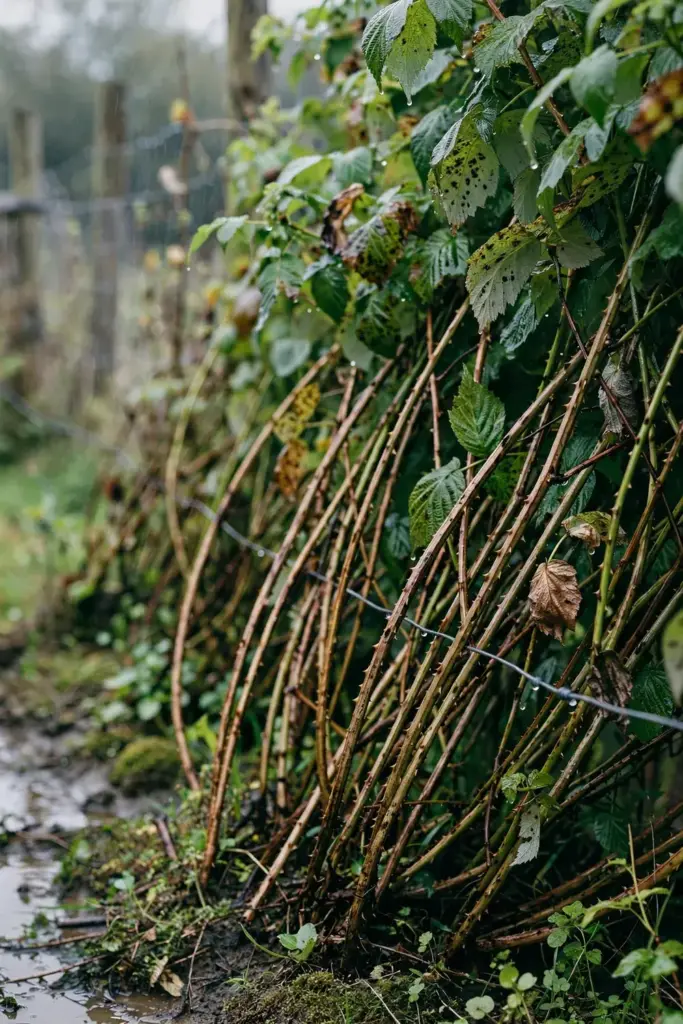
Dense rows hold that wetness. Tight canes shade each other and block airflow. Canes inside the row are more likely to die than canes on the edge of the row. Interior canes stay wet longest after rain and dew. Small primocanes that sprout late in summer also die more often than large primocanes, since thin canes carry less reserve wood.
Overhead watering feeds the fungus twice. It wets the leaves and it splashes spores from cane to cane. Weeds add a third push by slowing air movement around the row. Weeds are very effective in reducing air movement. Wild brambles nearby act as a reservoir that returns spores to a cleaned row.
Late fall warmth makes bud failure worse. Bud failure is more severe in years when temperatures remain warm into late fall. Warm falls keep the fungus active longer and leave buds less hardened for winter. Gardeners cannot control the weather, and they can control row density, watering, weeds, and sanitation. Those four levers decide most home-garden cases.
1. Run the Petiole Test Before You Cut Anything
Spur blight on raspberries earns its treatment only after a field check. Walk the row in late summer. Look low on each cane for bare petioles. Lift a fallen blade and check whether its stem stayed behind. Match the petiole to a brown or purple lesion just below the bud.
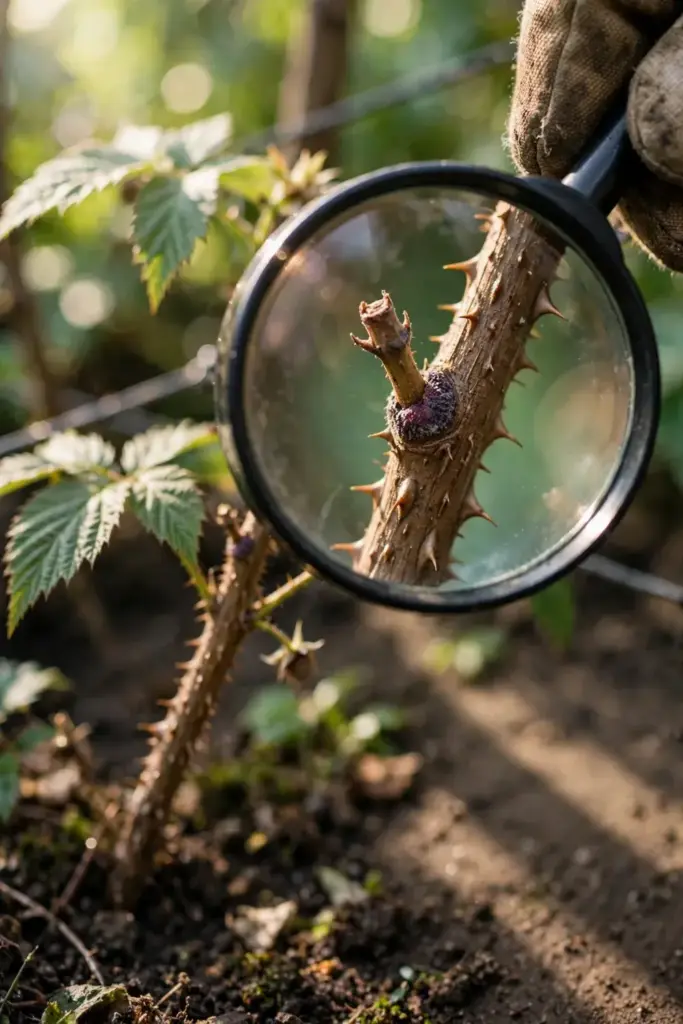
Three signs together make the call. A bare petiole alone could follow wind or age. A V-shaped leaf lesion alone could be another leaf spot. A bare petiole plus a V-shaped lesion plus a nodal cane lesion means spur blight with confidence. Check several canes across the row before you act. One cane proves little. A pattern across the row proves plenty.
The test also tells you what the disease is not. A cane with a wound at the lesion site points to cane blight. Round sunken pits between nodes point to anthracnose. Canes dead back to snow level with no silver lesions point to winter injury. Cutting before you test risks removing healthy canes and leaving the real problem standing.
Failure looks like a row pruned on a guess, with healthy wood in the burn pile and infected wood still standing to release spores next spring. Spend ten minutes on the petiole test. It saves a season of wrong cuts.
2. Remove Spent Floricanes Right After Harvest
Floricanes fruit once and die. Remove spent floricanes after harvest. Old fruiting canes carry the fungus through winter and release spores onto next year’s primocanes. Every week a spent floricane stands in the row, it feeds the next infection cycle.
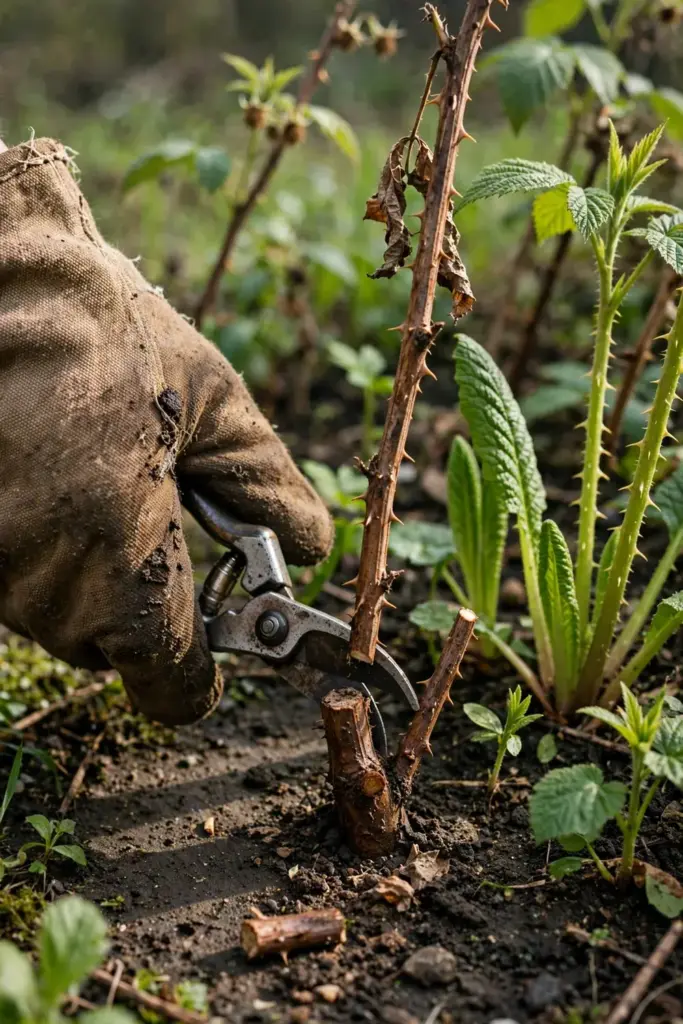
Cut each floricane at ground level. Carry the cut wood out of the row at once. Do not drop it in the aisle and collect it later. Spores wash off cut canes in the next rain. The best time to remove dead canes is during the weeks following harvest in late July or early August, even if some leaves are still green. Green leaves on a spent cane do not mean the cane still earns its place.
Spring pruning techniques cover clean cutting and timing for woody garden plants, and the same discipline applies here. Cut low. Cut clean. Get the wood out of the patch. A row with only this year’s primocanes standing dries faster and starts next spring with far less inoculum.
3. Cut Out Infected Primocanes and Destroy Them
After harvest, pull infected primocanes too. Remove any infected primocanes and burn or bury them. Primocanes carry next year’s crop, so this cut hurts. Keep it. A primocane with a heavy nodal lesion grows weak laterals and releases spores all next season. It costs more standing than cut.
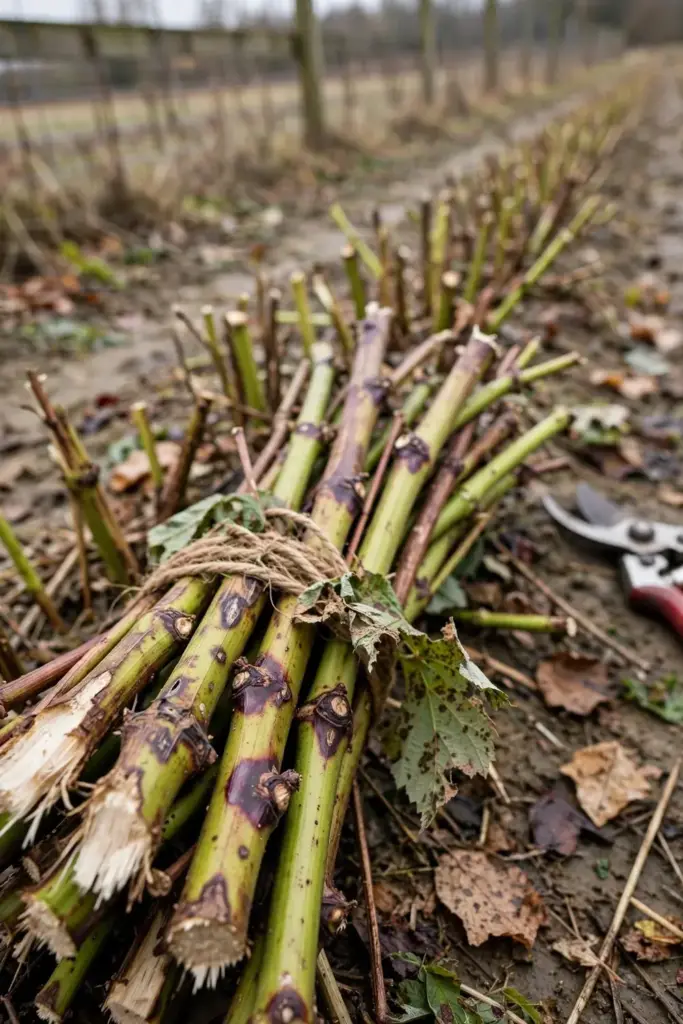
Work in two passes. The first pass follows harvest and takes spent floricanes plus the worst infected primocanes. The second pass runs in dormancy, in early winter or early spring before new primocanes emerge. The best time to remove old and infected canes is after the canes go dormant in early winter or early spring before new primocanes emerge. Dormant wood shows silver lesions clearly, and bare canes make the check fast.
Destroy every cut cane. Burn them where local rules allow, bury them, or bag them for the trash. Never leave cut canes in the patch or piled beside it. The fungus overwinters in infected plant material, and a pile beside the row is a spore bank with a short walk to the new canes. Complete pruning well before new canes emerge in spring.
4. Narrow Rows and Space Canes for Airflow
Airflow is the cheapest fungicide a gardener owns. Spur blight spores need wet leaves to germinate, and narrow rows dry fast. A recommended row width is 18 inches. Mow canes that spread into the walking aisle to hold that width. A row that looks thin dries in hours. A row that looks thick and leafy stays wet until noon.
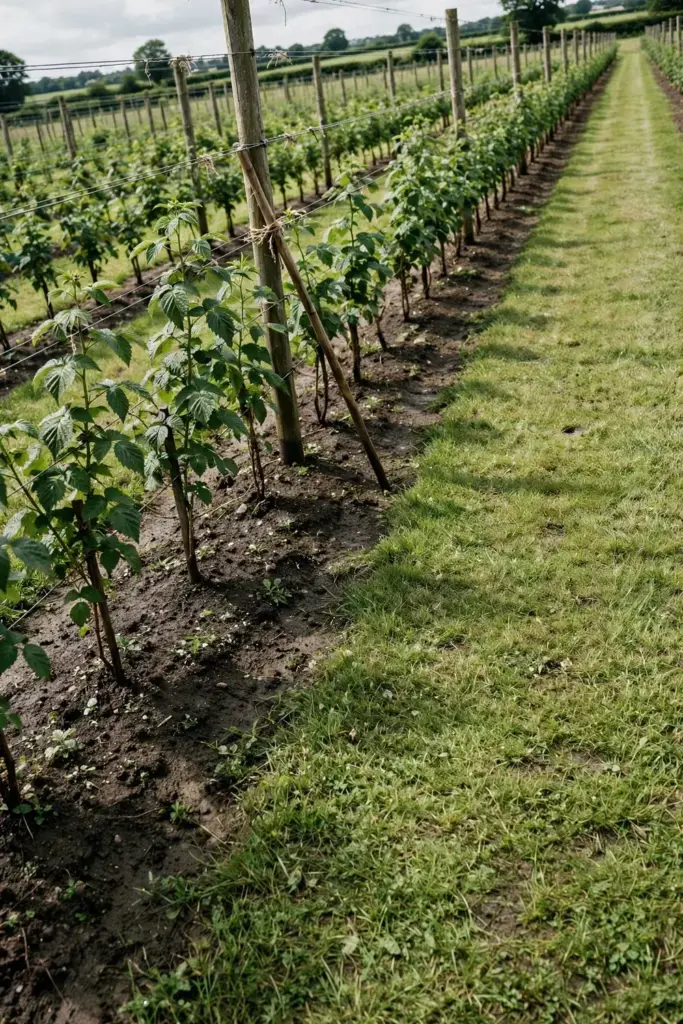
Thinning runs with narrowing. Cut weak, spindly, and crowded primocanes at the base. Keep the strongest canes with room between them. Sunlight should reach the base of the row. Light at the base dries the lowest leaves first, and the lowest leaves are the ones spur blight infects first.
Trellising helps the same way. Tie canes to wires so they stand apart instead of leaning in a wet clump. Rubbing canes also wound each other, and wounds invite cane blight. A trellised row dries faster and wounds less. That single structure fights both blights at once.
Failure looks like a row so thick you cannot see through it. Interior canes stay wet, spores germinate, and lesions spread from the inside out. Thin the row until air moves through it. The harvest drops a little. The disease pressure drops far more.
5. Water at the Soil Line and Stay Out of Wet Canes
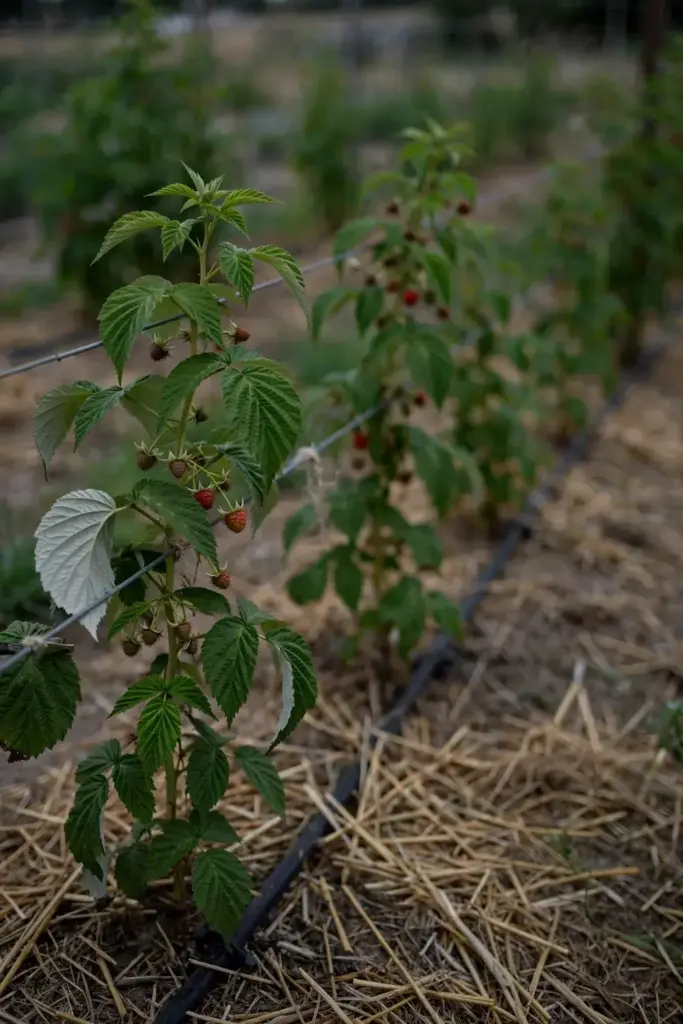
Water feeds spur blight when it lands on leaves. Avoid overhead irrigation, as it soaks the foliage and contributes to splash dispersal of spores. Drip tubing or a soaker hose puts water at the soil line and leaves the canopy dry. Switch to drip or trickle irrigation wherever the patch allows it.
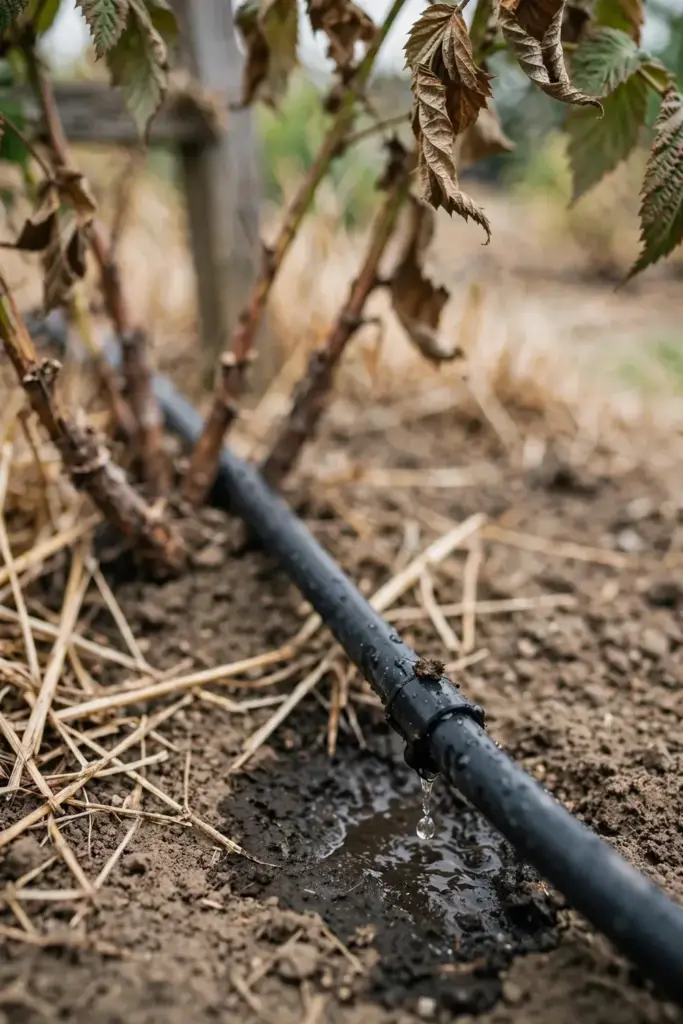
Sprinklers are a fallback, not a plan. If a sprinkler is the only option, water early on a sunny day so leaves dry quickly in the sun. Morning water dries in hours. Evening water sits all night, and a wet night is an infection night. Never run a sprinkler to cool the patch on a humid evening.
Stay out of wet canes. Do not work with canes in wet weather. Hands, sleeves, and tools move spores across wet foliage. Prune on dry days. Tie canes on dry days. Harvest in dry weather when the choice exists. A dry row is a row you can touch safely.
6. Weed the Row and Clear Wild Brambles Nearby
Weeds block airflow as surely as crowded canes do, so pull weeds inside the row and between rows through the season. Practice good weed control. A weedy row holds dew, shades the cane bases, and slows every drying breeze. A clean row dries fast after rain.
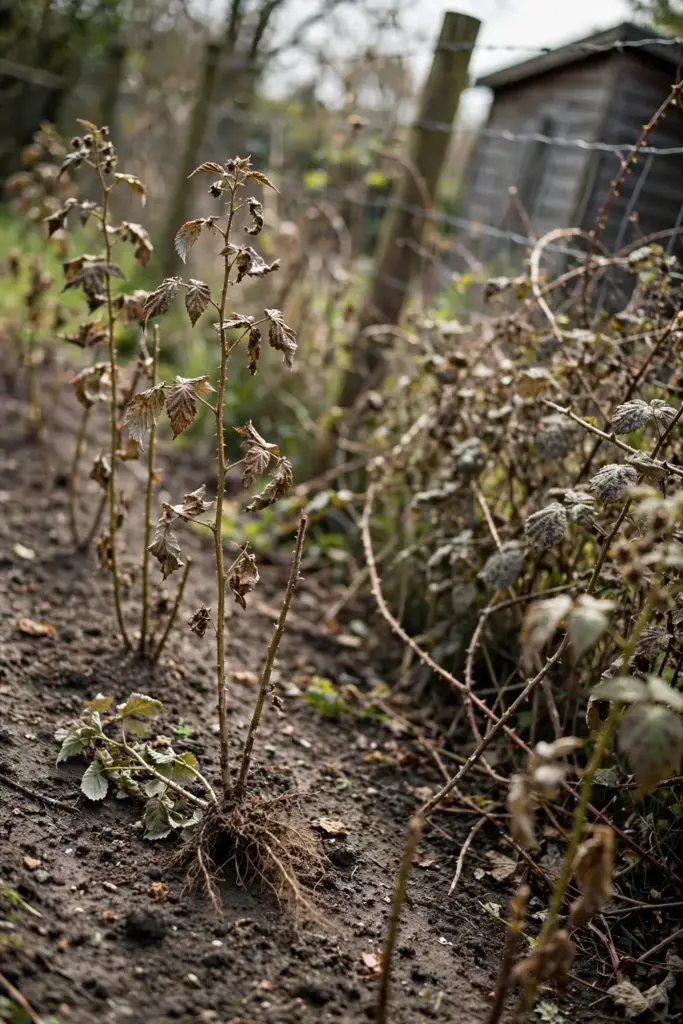
Wild brambles need the same treatment. Wild brambles, especially wild red raspberries, growing in the area should be removed, since they can serve as a reservoir for the disease. A wild patch at the fence line returns spores to a cleaned row all season. Walk the fence line once a year and pull wild raspberry seedlings before they establish.
Mow the aisle. Canes that spread into the walking path thicken the row and trap moisture. Cut them back to hold the narrow row from Strategy 4. Weeding, wild-bramble removal, and aisle mowing all serve one goal. Air must move through the patch.
7. Plant Less-Susceptible Cultivars When You Replant
No raspberry cultivar resists spur blight outright. No varieties of Rubus are truly resistant to spur blight, but some cultivars are less prone to the disease than others. UMass names Brandywine, Festival, Hilton, Killarney, Latham, Madawaska, and Newburgh as less prone. Choose from that list when a new planting goes in.
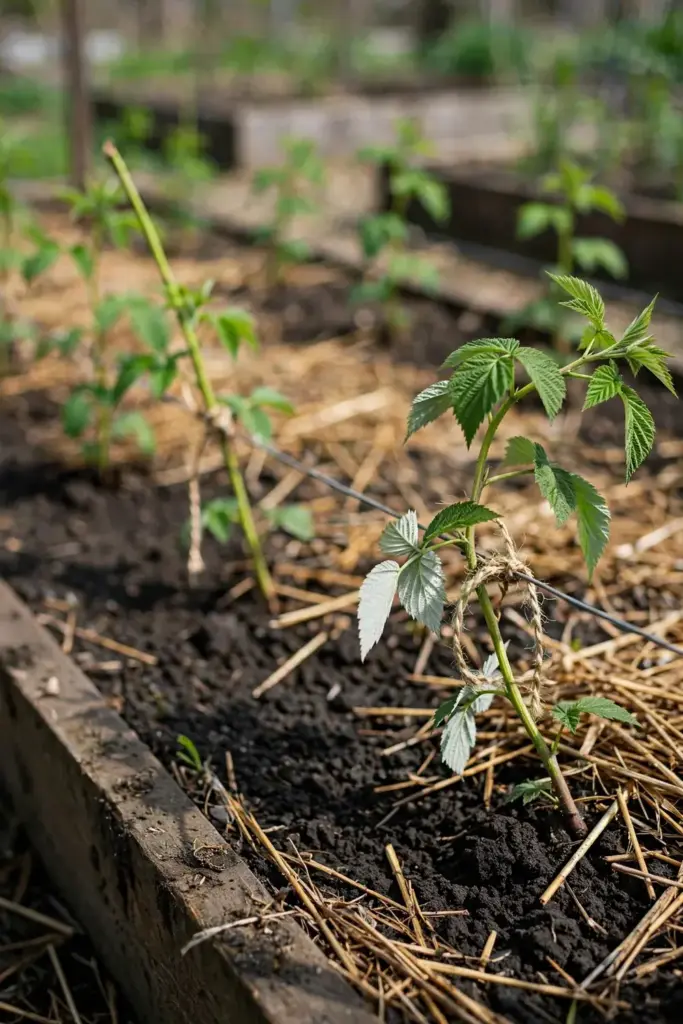
Two more names carry a different label. Plant resistant or tolerant cultivars such as Meeker or Willamette, respectively. Meeker earns the resistant label. Willamette earns the tolerant label, which means something else entirely. Willamette is readily infected by spur blight but also is tolerant and can produce a satisfactory crop even if disease incidence is high. Tolerant means the plant carries the disease and still crops. Less susceptible means the plant catches it less often. Keep those labels apart when you shop.
Start with certified disease-free stock from a reputable nursery, since infected plants carry the fungus into a clean bed on day one. A clean start plus a less-susceptible cultivar gives a new row its best opening. An infected start gives the fungus a head start no spray can erase.
8. Hold Back on Nitrogen Fertilizer
Nitrogen grows soft tissue, and soft tissue invites spur blight. Excessive applications of fertilizer, especially nitrogen, should be avoided, since it promotes excessive growth of very susceptible succulent plant tissue. A heavily fed row pushes soft, leafy canes that stay wet and catch spores. A moderately fed row grows firmer canes that dry faster.
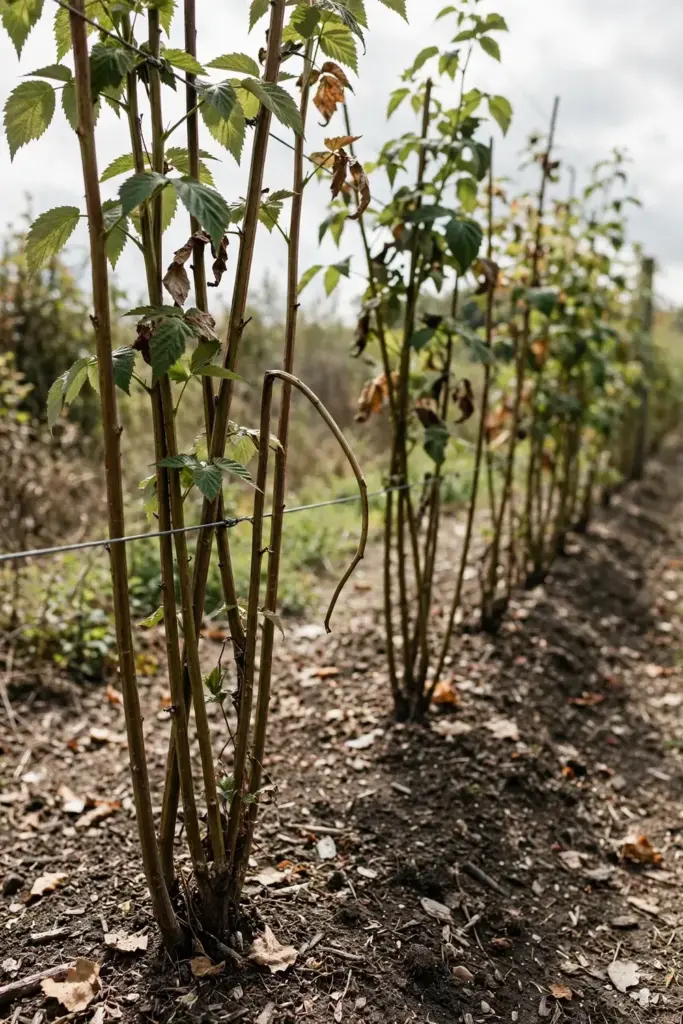
Spur blight is most severe in overgrown plantings. Overgrown means too much cane and too much leaf, and excess nitrogen drives both. Feed for vigor, then stop. Vigor means canes grow strongly and fruit well. Excess means canes grow rank and crowd each other.
A soil test settles the dose. Test before you feed, and feed only what the test calls for. Skip the extra handful of fertilizer in spring when the row already looks vigorous. The plants do not need it. The fungus will use it.
9. Apply Dormant Lime Sulfur Before Buds Open
Lime sulfur is the one spray with a clear home-garden role against spur blight. An application of lime sulfur before growth resumes in spring can decrease disease incidence. Dormant spraying coats overwintering canes and cuts the spore load before spring discharge begins.
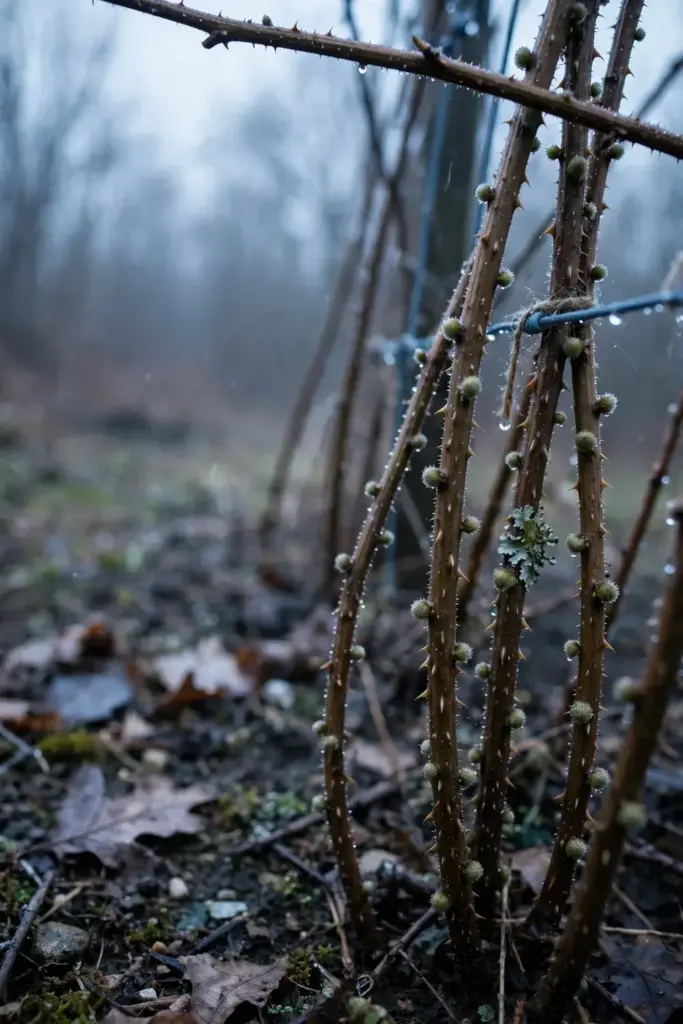
Timing decides safety. Lime sulfur should be applied before the emerging buds are 1/2 inch long, or plant damage will result. Check bud length before you spray. Buds past that length burn. A spray applied a week too late costs buds that spur blight never touched.
Read the product label and follow it exactly. Home-garden lime sulfur products carry their own rates and safety directions, and labels differ by product and region. Wear gloves and eye protection. Spray on a calm, dry day. Dormant spraying is a once-a-year job. Mark it on the calendar when the canes are still bare.
10. Use Preventive Fungicides Only as a Last Layer
Fungicides prevent spur blight infection. They do not cure it. A preventive fungicide application may be desirable after pruning if the planting has a history of spur blight. A planting with no history needs no spray. Cultural control carries it. Reserve fungicide for rows where spur blight returns year after year despite clean pruning and dry rows.
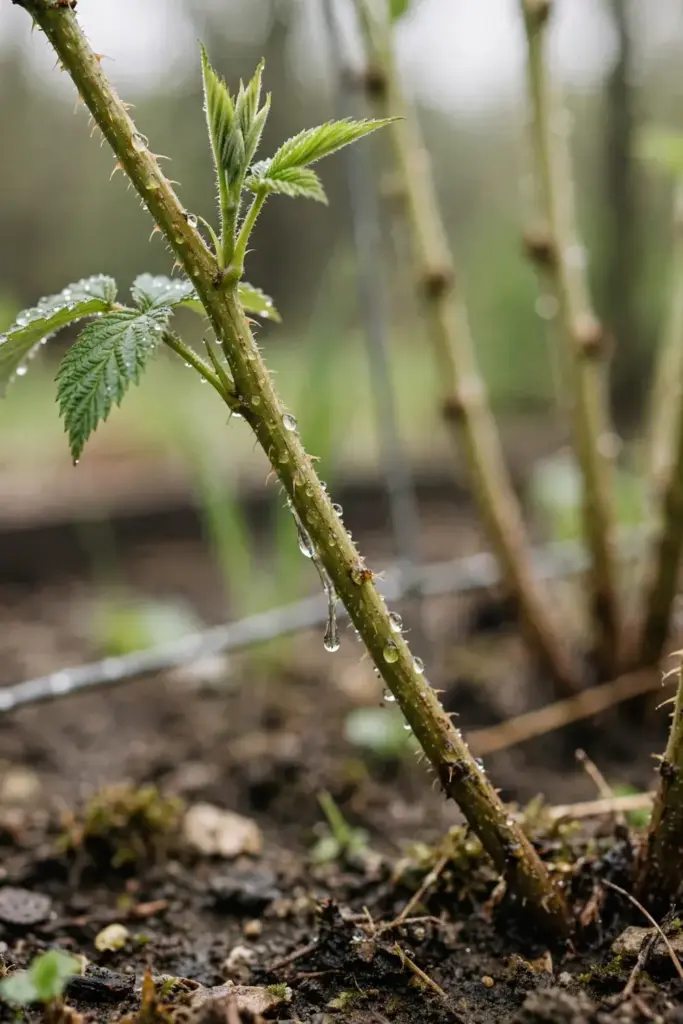
Timing follows the spore calendar. Spray at bloom or when new shoots are 8 to 10 inches long, then repeat 2 weeks later and after harvest to protect the foliage on fruiting canes and primocanes. That schedule covers the leaf-infection window, when spores discharge and leaves are vulnerable. Sprays aimed at canes in late summer arrive after the fungus is already inside.
Home-garden options exist. Bonide Captan 50 WP at 3 Tbsp per gal water can be used in home gardens. That listing carries two limits. It applies in Washington only, and the fruit cannot be used within 3 days of harvest. Check your own state registration before you buy any product. University of Minnesota Extension lists copper sulfate, myclobutanil, Actinovate, and Oxidate as products that provide some protection, and adds that fungicides will only partially control the diseases. Partial control is the honest expectation. Sprays support sanitation and airflow. They never replace them.
Living With Spur Blight Damage You Already Have
A row that already carries spur blight still produces fruit. Keep the canes that survived winter with living buds. Cut the canes that died to the ground. In some years, cane diseases kill nearly all of the canes in certain raspberry patches, and the right move is to remove all the canes to prevent disease from spreading to the new canes. A hard reset beats a slow decline.
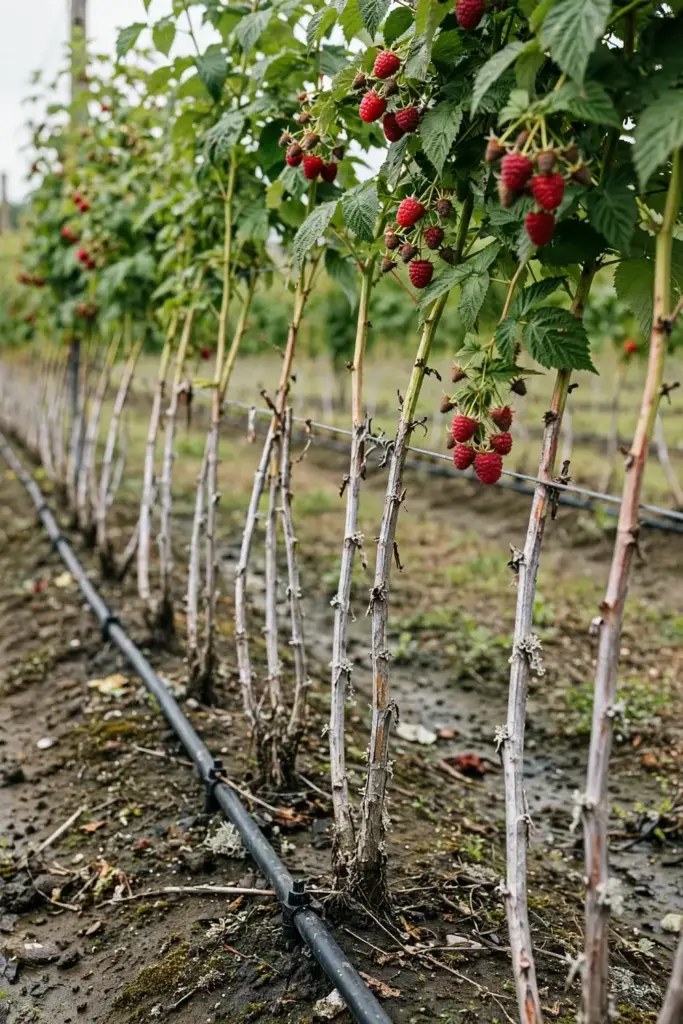
Expect leggy canes. Buds at infected nodes fail, and bare stretches stay bare. Healthy buds above and below the damage still fruit. Scottish research found that canes compensate for lost lower laterals by producing more laterals higher up and heavier berries. The crop shifts upward. Thin the weakest laterals so the plant feeds the strong ones.
Mowing is the drastic option for a badly hit patch. Cut the whole patch in late winter or early spring and remove or burn the canes. Fall-bearing raspberries still fruit on new primocanes the next year. Summer-bearing raspberries lose the next summer’s crop entirely. Mow fall-bearing rows freely. Mow summer-bearing rows only when disease has already wrecked the crop.
Replanting starts clean. If the patch keeps failing, pull it and start fresh in a new bed with certified stock and a less-susceptible cultivar. The guide to growing raspberries from seed covers starting a new patch from the beginning. A fresh bed in sun with good airflow beats a tired bed that has hosted spur blight for years.
Frequently Asked Questions
Rarely. Spur blight stays superficial and does not invade the vascular system, so the cane keeps moving water past the lesion. The real damage is bud failure and weak laterals, which thin the harvest. Cane blight is the disease that girdles and kills canes. A cane that dies outright usually carries cane blight, winter injury, or root trouble, not spur blight alone. Check the petiole sign before you blame spur blight.
Most home rows do not. Sanitation, narrow rows, drip watering, and weed control carry the disease in ordinary years. Ohio State notes that special fungicide sprays specifically for spur blight are generally not warranted. Consider a preventive spray only when spur blight returns year after year despite clean culture. Sprays prevent infection and never cure lesions that already show. Read the label for home-garden use.
Check the bark and the bud pattern. Spur blight leaves silver lesions with tiny black fruiting dots, bare petioles, and bare stretches at infected nodes. Winter injury alone kills canes back to snow level, and living buds below that line still sprout. A cane dead to the ground with no silver lesions points to winter kill or another disease. A cane standing with silver patches and failed buds at the nodes points to spur blight.
No. The fungus overwinters in infected plant material, and a home compost pile rarely heats evenly enough to destroy it. Burn cut canes where local rules allow, bury them, or bag them for the trash. Carry every cut cane out of the patch. A pile beside the row keeps spores within splash distance of next year’s canes. Clean removal is part of the treatment, not just tidiness.
No, not in any practical sense. Ohio State describes spur blight as occurring only on red and purple raspberries, and blackberries escape it. A purple patch on a blackberry cane points to cane blight or anthracnose instead. Run the same differential check on blackberries, and expect a different answer. Keep blackberry rows in the same sanitation routine anyway, since cane blight and anthracnose both use blackberry canes.
Where to Go From Here
Walk the row this week with the petiole test in mind. Check low on the primocanes for bare petioles and nodal lesions. Cut what the test condemns. Carry the wood out and destroy it.
Plan next year now. Narrow the row. Switch the water to the soil line. Choose a less-susceptible cultivar when a row needs replanting. The bramble guide to luscious raspberries and blackberries covers the wider bramble patch, from planting through harvest.
Spur blight on raspberries is beatable with dry leaves and clean cuts. Start with the petiole. End with a row that dries fast after rain.