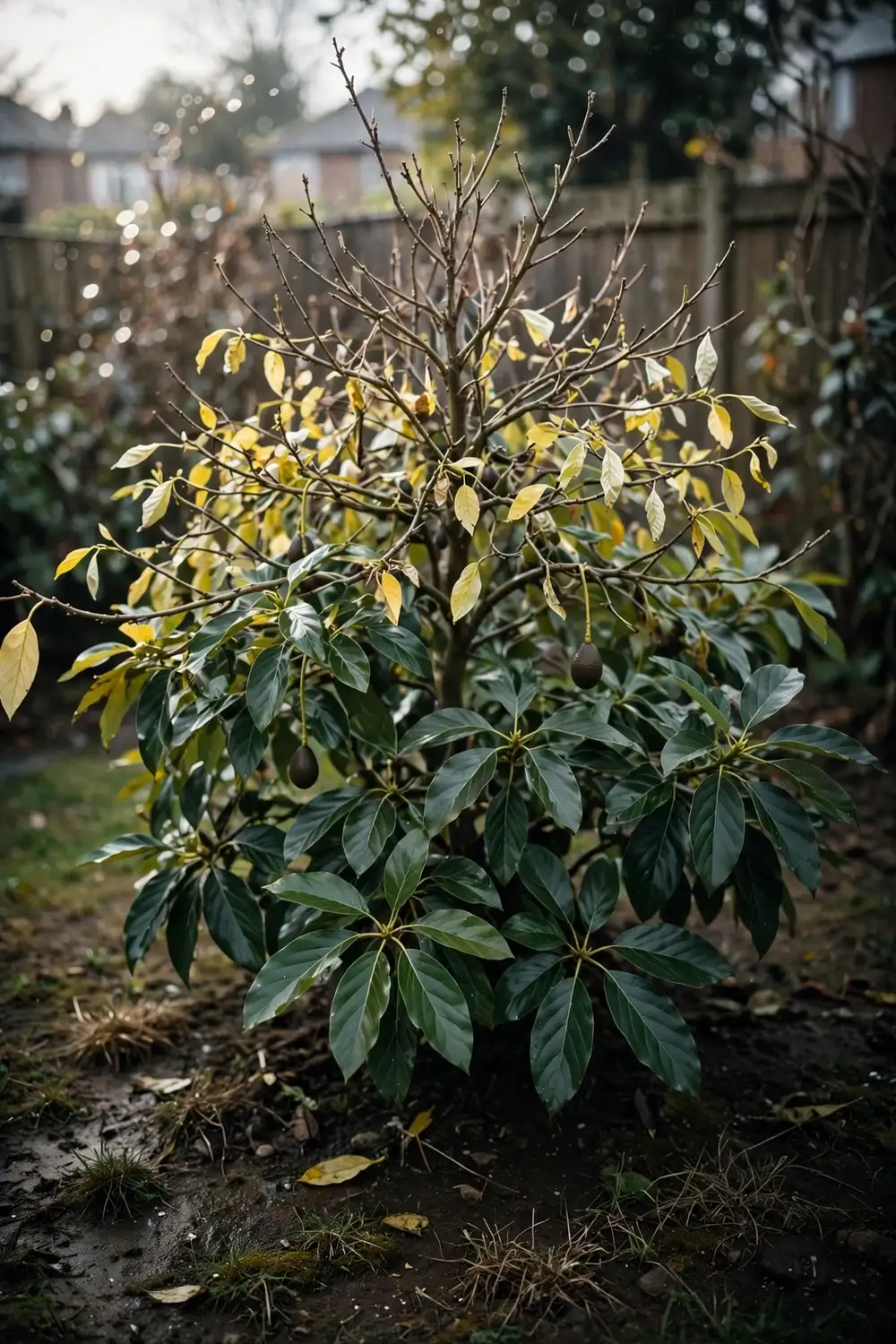

Your avocado tree looks thirsty even though the soil is wet. It takes as little as 6 to 8 hours of saturated soil for the swimming spores of Phytophthora to start a root infection, and the symptoms that follow look exactly like drought for months. Leaves turn pale, then yellow at the edges. Small branches die back from the top, fruit stays small, and the whole canopy thins out year after year. If that sounds familiar, the problem is probably underground, and it is probably Phytophthora root rot.
Phytophthora root rot is the most serious disease of avocado worldwide, and it kills by destroying the fine feeder roots that absorb water. The cruel part is that the symptoms look like drought, so most gardeners water more, which feeds the very organism causing the damage. I have learned that the first honest step is to dig, not to water: a quick look at the roots tells you more than a season of guessing.
This guide covers what Phytophthora root rot actually is, how to confirm it on your own tree, how to tell it apart from lookalikes, and seven fixes ordered by what actually works, starting with the hard decision about whether your tree is worth saving.
What Phytophthora Root Rot Actually Is
Phytophthora root rot of avocado is caused by Phytophthora cinnamomi, a soilborne organism that behaves like a fungus but is not one. It belongs to the oomycetes, the water molds, a group more closely related to diatoms and brown algae than to true fungi. That distinction matters because it changes which treatments work: products aimed at true fungi often miss it entirely.
The organism lives in soil and attacks the small feeder roots first. Once those roots rot, the tree cannot take up water or nutrients no matter how much you irrigate. The canopy symptoms that follow, wilting, yellowing, dieback, are the tree starving and dehydrating with wet feet.
Phytophthora cinnamomi is remarkably tough. It produces four spore stages, including thick-walled resting spores that let it survive in soil for years, even without a host. Research from South African tree-health programs notes there is no practical way to eradicate it from infested soil once it is established. Management, not cure, is the honest frame for this disease.
It is also remarkably unfussy about hosts. The University of California’s IPM program records more than 1,000 host species, and some estimates run past 5,000 across agriculture, horticulture, and forestry. Avocado just happens to be one of its favorites, and the damage shows up fast because avocado feeder roots are shallow and sensitive.
How to Spot Phytophthora Root Rot on Avocado Leaves
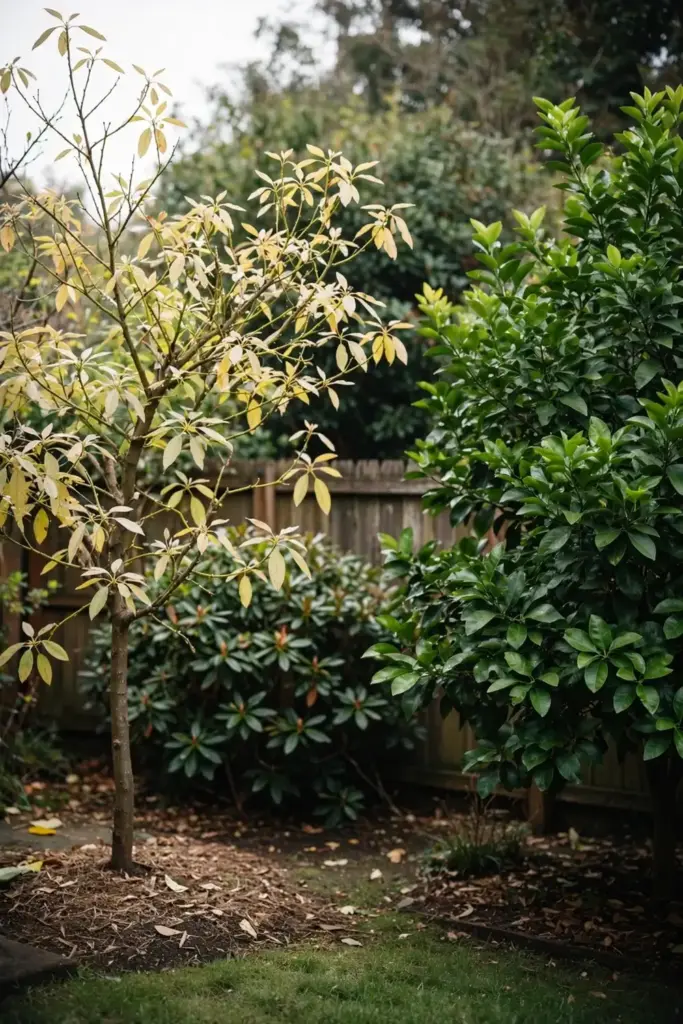
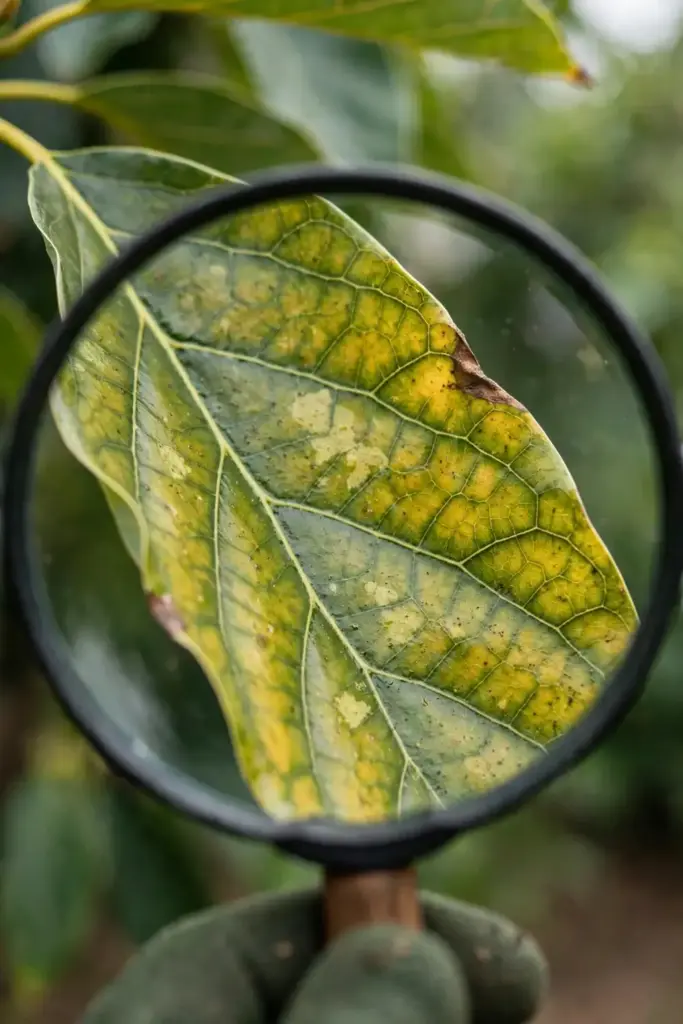
Start with the canopy, because that is what you see first. Infected trees produce small leaves that look pale green or yellowish instead of the deep glossy green of a healthy avocado. Leaf tips turn brown and necrotic. Wilting appears even when the soil underneath is moist, which is the signature contradiction of this disease: a thirsty-looking tree standing in wet ground.
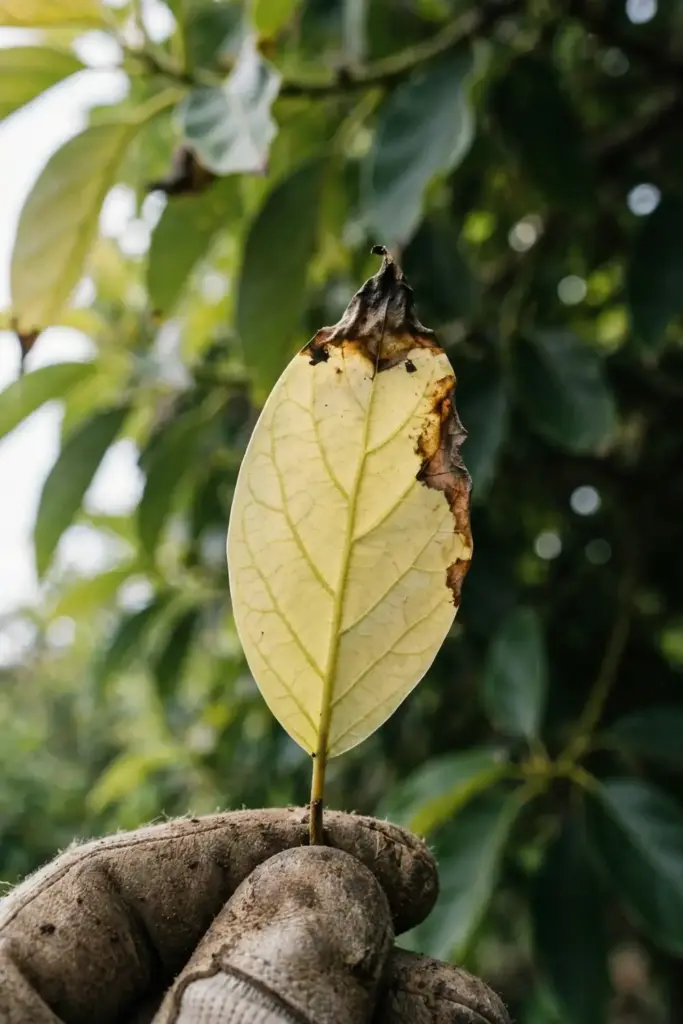
Growth stalls. New flushes are rare, the canopy thins, and you will notice very little fallen leaf litter under the tree, because there is not much foliage to shed. Small branches die back starting at the top of the tree. As the canopy opens up, the remaining branches and fruit get sunburned, which adds a second layer of damage.
One odd symptom is worth knowing. Diseased trees often set a heavy crop of unusually small fruit. The tree is stressed and throwing everything into reproduction before it dies. If your avocado is loaded with marble-sized fruit that never sizes up, suspect the roots.
Decline can be fast or slow. Some trees collapse within a season of heavy rain; others fade over several years. Either way, the University of California’s avocado pest management guide describes the same progression: sparse canopy, dieback, reduced production, eventual death.
How to Spot Phytophthora Root Rot on Avocado Roots
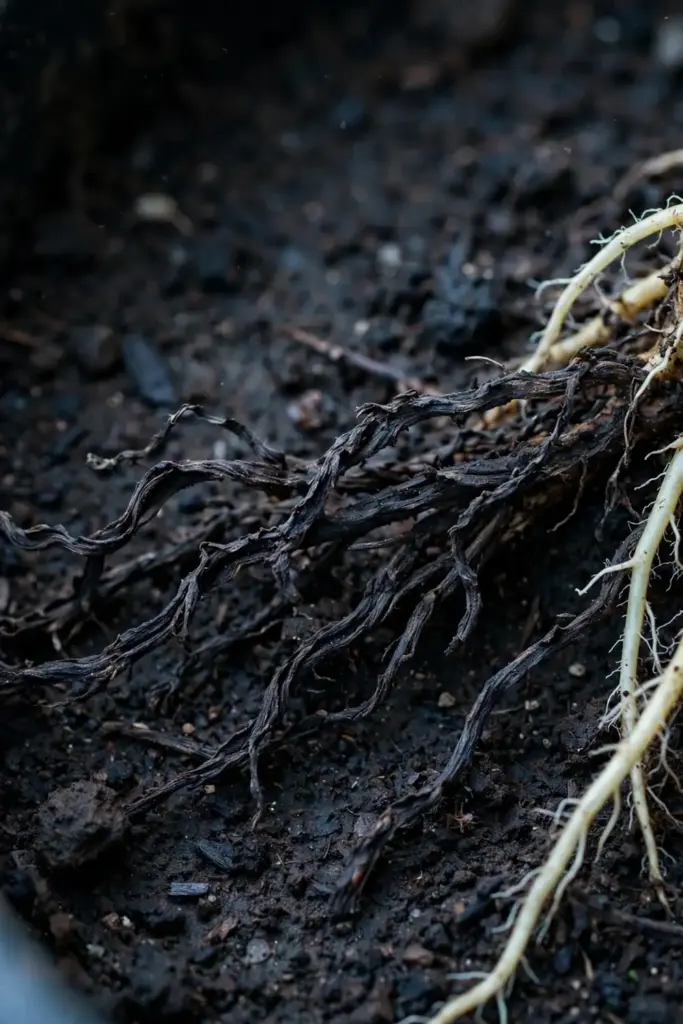
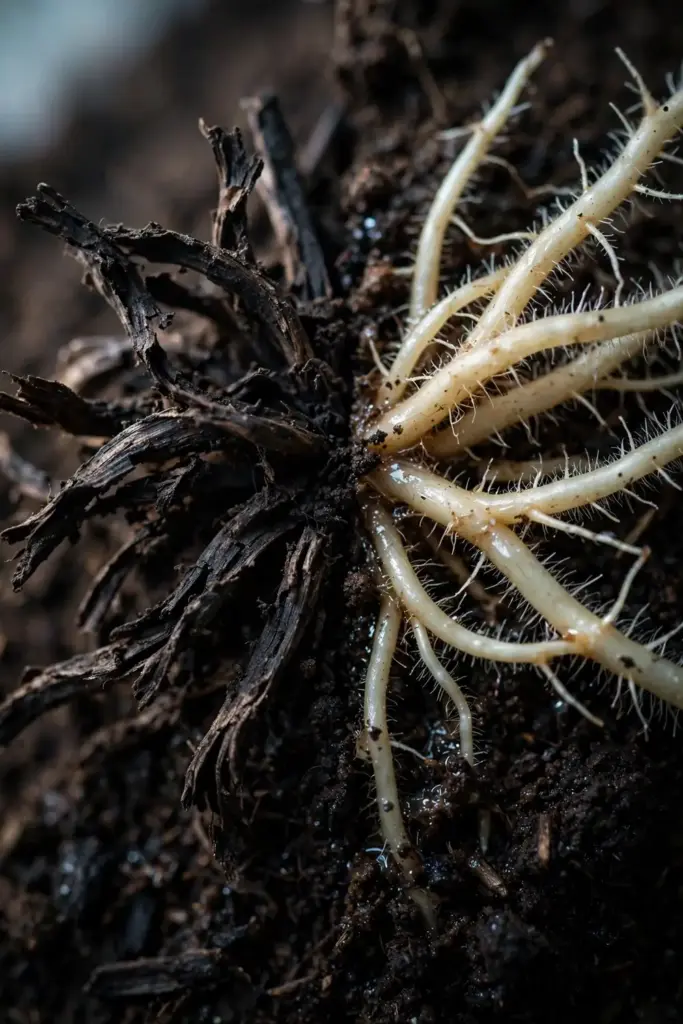
Leaf symptoms suggest; roots confirm. Pick a spot halfway between the trunk and the drip line, scrape back the mulch, and dig down 6 to 8 inches with a hand trowel. Healthy avocado feeder roots are pale, flexible, and plentiful, forming a dense mat in the top foot of soil.
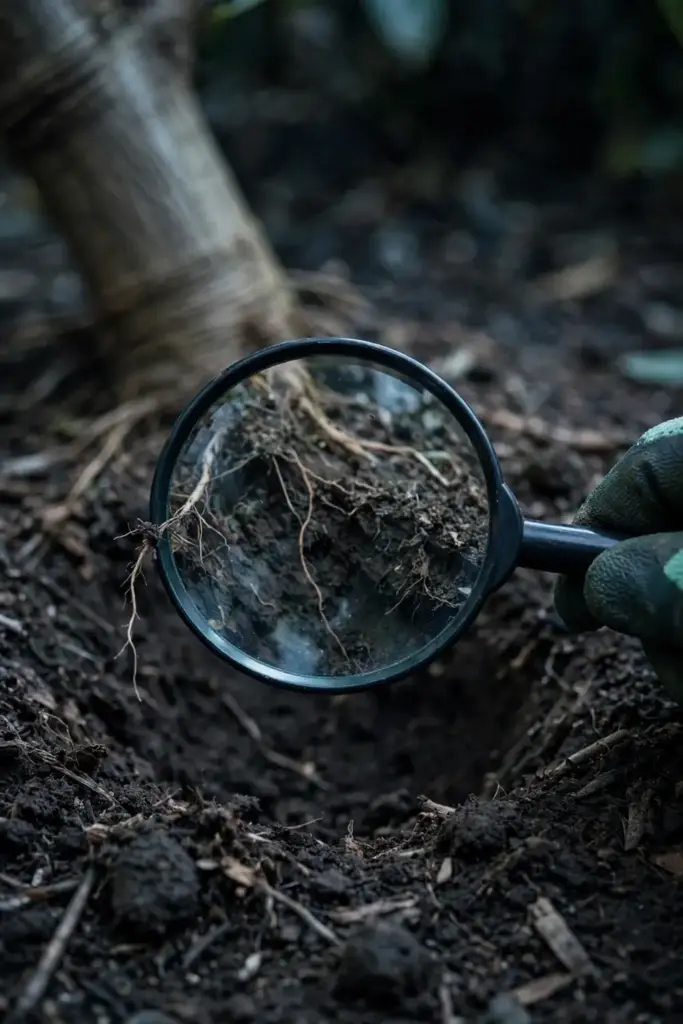
On an infected tree, that mat is gone or going. The small roots you find are black, brittle, and dead, snapping instead of bending. In advanced cases there is almost nothing left but the larger structural roots, which the pathogen mostly spares. That pattern, dead fine roots with intact large roots, points strongly at Phytophthora rather than at physical damage or gophers.
Do this check on a dry day and put the soil back when you finish. You do not need to dig up the tree or wash roots. If the feeder roots look healthy and white, your canopy problem is something else, and the differential diagnosis table below will help you sort it out.
Which Trees Get Hit Hardest by Phytophthora
Avocado sits at the top of the susceptibility list. Phytophthora cinnamomi is the single most damaging pathogen of avocado in California, Australia, South Africa, and Latin America, and commercial orchards treat it as a permanent management cost rather than a solvable problem. A 2025 review in Frontiers in Microbiology estimates production losses of 45 to 90 percent on severely affected trees.
Citrus is the next most relevant host for home gardeners. If you grow lemons or other citrus near your avocado, know that they share several Phytophthora species, and the same wet-soil conditions invite trouble in both. Our lemon growing guide covers citrus care, but the drainage advice here applies equally.
Beyond those two, the host list reads like a nursery catalog: rhododendron, azalea, boxwood, Japanese maple, oak, and dogwood all suffer. That breadth is exactly why the organism is so hard to starve out. Even if you remove the avocado, susceptible ornamentals nearby can keep the pathogen fed.
Some plants tolerate it well. Missouri Botanical Garden notes white cedar and American arborvitae as tolerant choices for replanting a spot where Phytophthora has killed something. Keep that in mind for Step 6.
Phytophthora vs Pythium vs Fusarium vs Overwatering
Four problems produce a wilting, yellowing plant with rotting roots. They need different responses, so getting the diagnosis right saves you from treating the wrong thing for a year.
| Feature | Phytophthora root rot | Pythium root rot | Fusarium wilt / root rot | Simple overwatering |
|---|---|---|---|---|
| Main victims | Avocado, citrus, rhododendron, many woody plants | Seedlings, cuttings, container plants | Many hosts, often one-sided wilt | Any plant in soggy soil |
| Root appearance | Feeder roots black, brittle, gone; large roots intact | Root tips brown and mushy, whole root system soft | Vascular browning inside stems; roots may look okay early | Roots brown and soft but recover when soil dries |
| Wilting pattern | Wilts despite wet soil | Damping off at soil line in seedlings | Often one branch or one side first | Wilts in wet soil, perks up as soil dries |
| Leaf symptoms | Small pale leaves, brown tips, thin canopy, small fruit | Seedlings collapse suddenly | Yellowing between veins, vascular streaking | Yellow lower leaves, edema blisters possible |
| Soil test | Persists years in soil | Flares in warm wet potting mix | Survives as chlamydospores | No pathogen present |
| Key fix | Drainage plus phosphite | Sanitation, fresh mix, less water | Remove plant, rotate, resistant varieties | Water less, improve drainage |
The single most useful distinction is the wilt response. If the soil dries out for a week and the plant perks up, you were overwatering. If it keeps declining in properly drying soil, a pathogen is eating the roots, and the black brittle feeder roots point to Phytophthora.
Pythium is Phytophthora’s close cousin and also an oomycete, so the two get confused constantly. In practice, Pythium hits seedlings and container plants hardest, while Phytophthora is the one killing established landscape trees. Fusarium is a true fungus with different chemistry, and it often shows vascular discoloration inside the stem, which Phytophthora does not.
When in doubt, your local extension diagnostic lab can confirm Phytophthora from a root sample. A lab test costs less than a replacement tree and ends the guessing.
Why Standing Water Turns Phytophthora Lethal
Here is the mechanism behind every recommendation below. Phytophthora spreads by zoospores, tiny swimming spores released from sacs called sporangia when soil is saturated. They literally swim through water films in the soil toward root tips, guided by chemical signals from the roots. No standing water, no swimming. No swimming, no new infections.
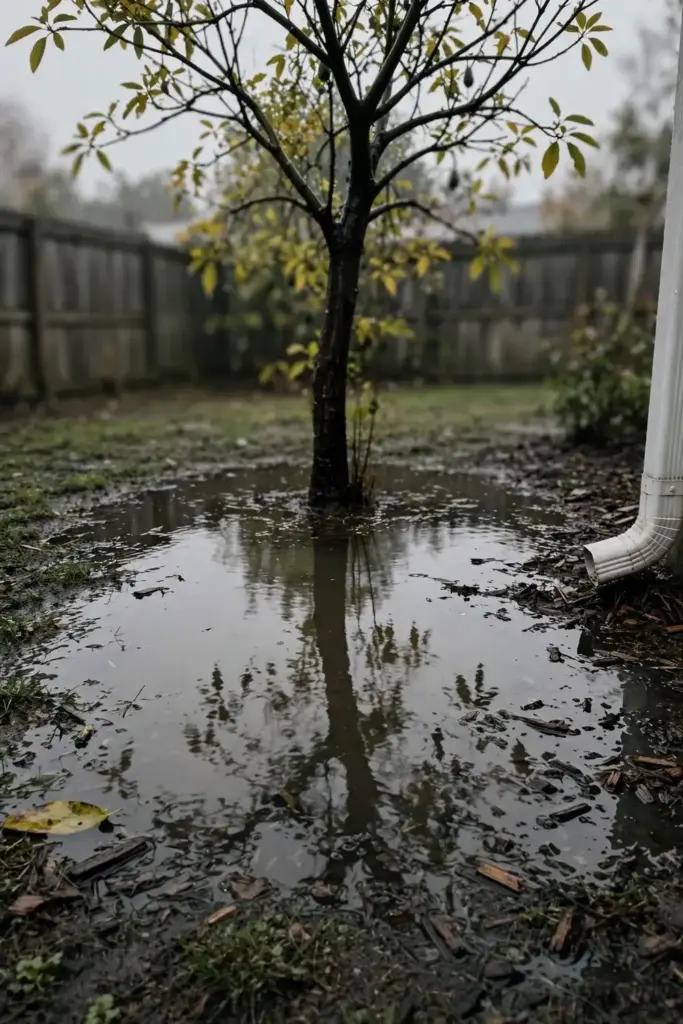
That is why the disease explodes after the exact events gardeners cannot control: heavy rain, flooding, a broken irrigation line. Missouri Botanical Garden’s plant doctors note that flooded and saturated soil for as little as 6 to 8 hours creates ideal conditions for root rot spread. One bad storm on heavy clay can do more damage than a whole season of mild overwatering.
The resting spores are the second half of the problem. Chlamydospores and oospores sit dormant in soil for years, waiting for wet conditions and a susceptible root. This is the honest answer to the most asked question about this disease: Phytophthora stays in the soil for years, and you should assume a spot that once had it still has it.
Understanding this changes your priorities. Fungicides applied to a soggy site fail because new zoospores keep arriving with every irrigation. Fix the water first and every other treatment works better. Skip the water fix and nothing else holds.
What Makes Phytophthora Worse in a Home Garden
Heavy clay soil tops the list. Clay holds water in the root zone long after rain stops, giving zoospores days of swimming time. If your soil forms a slick ball that does not crumble, assume drainage is your main enemy.
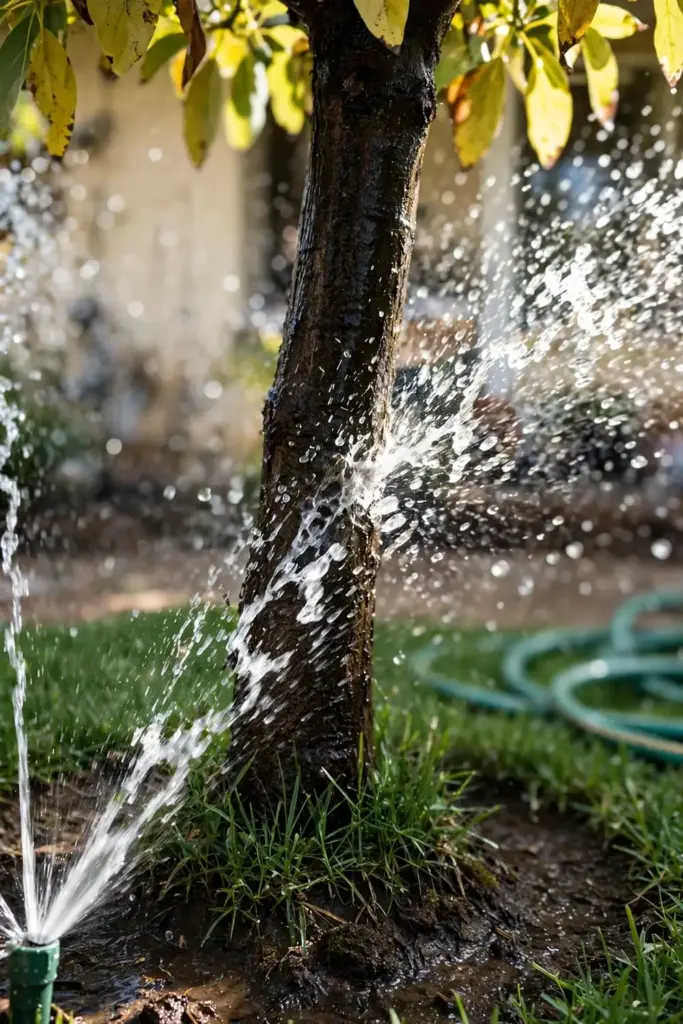
Planting too deep runs second. Avocado graft unions and root crowns buried under soil or mulch stay wet, and the pathogen colonizes the buried bark. The flare where trunk meets roots should sit at or slightly above the surrounding soil, never below it.
Overwatering, especially with sprinklers that wet the trunk zone daily, keeps the top foot of soil permanently moist. Avocado feeder roots live exactly there. Drip irrigation placed away from the trunk is kinder than overhead watering for this reason.
Contaminated nursery stock starts many home-garden infections. The pathogen rides in on the roots of an apparently healthy plant, on muddy boots, on shared tools, or in soil moved from an infested bed. Buying from reputable nurseries and cleaning tools between jobs are unglamorous defenses that work.
Finally, stress multiplies everything. Drought between floodings, heavy nitrogen pushing soft growth, weed whacker wounds at the base: each one lowers the tree’s defenses while the pathogen waits for its wet window.
Step 1: Decide Whether Your Tree Is Worth Saving
This is the step most guides skip, and it is the most valuable one. Not every infected tree should be treated. Be honest about where yours stands before spending money or weekends.
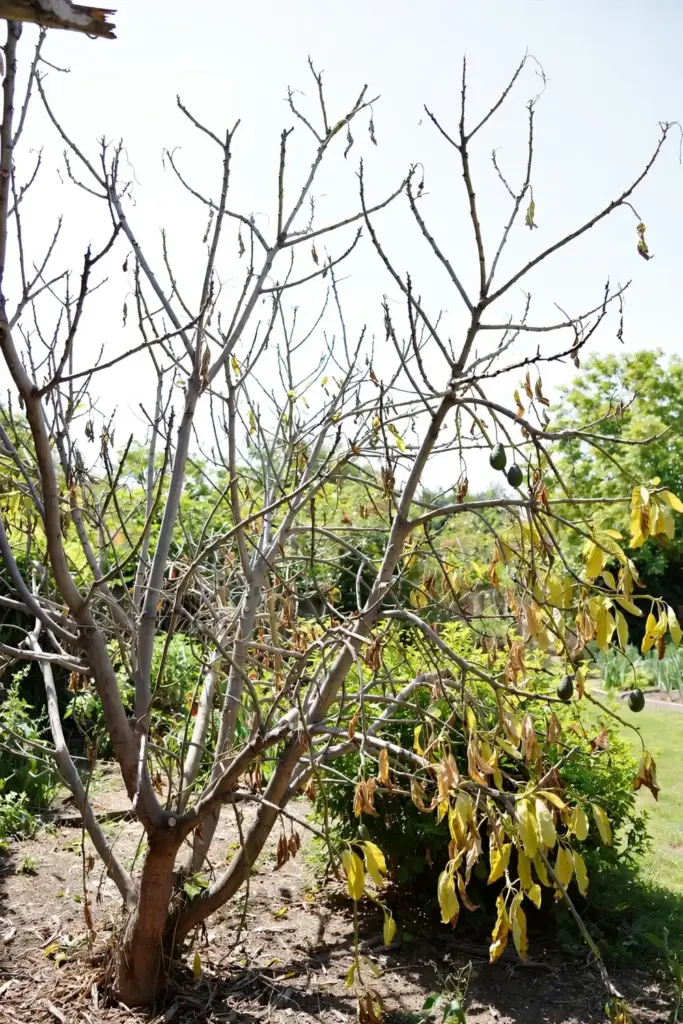
A tree worth fighting for still has a living canopy on more than half its branches, pushes some new growth in spring, and shows white healthy roots when you check beyond the worst spots. Early to moderate infections respond to drainage fixes and phosphite. Recovery is slow, measured in seasons, but real.
A tree that is probably lost has lost most of its canopy, shows dieback through the scaffold branches, and has almost no live feeder roots left anywhere you dig. No treatment rebuilds a root system from nothing. Phosphite and fungicides suppress the pathogen; they do not resurrect dead roots.
Consider the tree’s value honestly. A young tree you planted last year is cheap to replace with clean stock on resistant rootstock in a better spot. A twenty-year-old ‘Hass’ shading your patio is worth a serious rescue attempt. There is no shame in removal. Planting a new tree in improved soil often gives you fruit years sooner than nursing a stump.
If you decide to remove, do it completely. Grind or dig the stump, remove as many roots as practical, and do not compost the material. Then move to Step 6 before replanting anything susceptible in that spot.
Step 2: Fix the Drainage Before You Do Anything Else
Every other fix on this list underperforms in soggy soil, so drainage comes first. Start with the simplest test: dig a hole 12 inches deep and wide near the tree, fill it with water, let it drain, then fill it again and time the second draining. If the second fill takes more than 4 hours to disappear, your drainage is poor enough to sustain Phytophthora.
Stop watering so often. Most established avocados in decent soil need deep watering every 7 to 14 days in summer, not a daily sprinkle. Let the top few inches dry between waterings. If you run sprinklers, keep the spray off the trunk and out of the inner canopy zone where feeder roots concentrate.
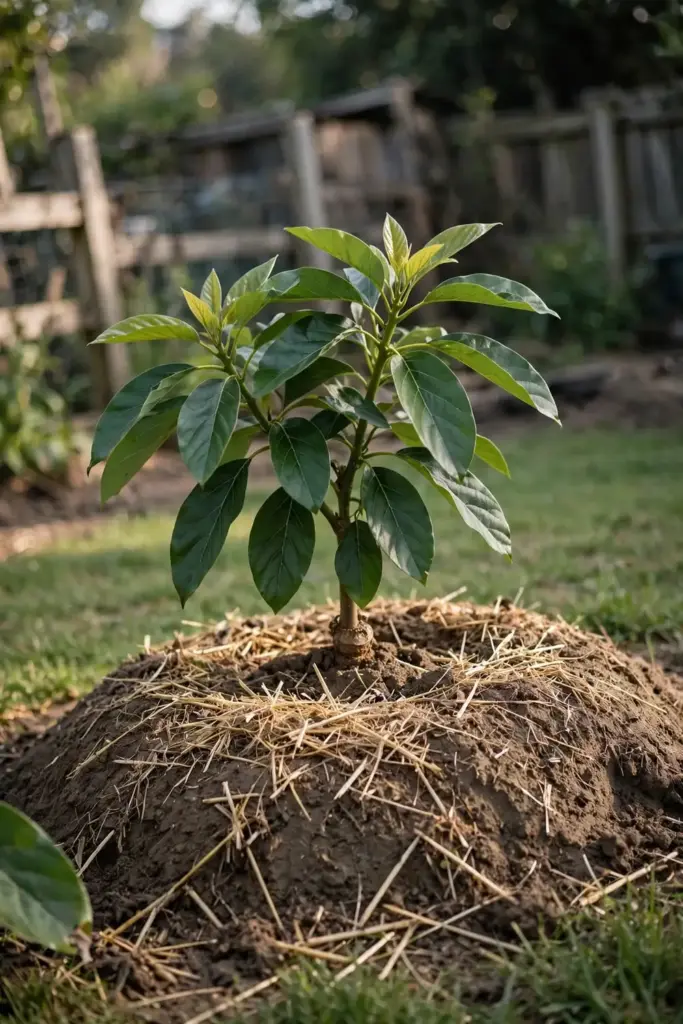
For trees in flat, heavy ground, build the soil up, not down. A broad, low mound 8 to 12 inches high and several feet across lifts the root crown out of the wettest zone. Our fall garden bed prep guide walks through building raised growing areas, and the same mounding principle rescues a drowning avocado.
Long term, consider where the water comes from. Redirect downspouts away from the tree, break up compacted layers with a broadfork. Skip the rototiller, and keep the area under the canopy free of turf that demands daily water. Drainage is not a product you buy. It is a set of small permanent changes, and it starts with healthy soil structure.
Step 3: Mulch Deep and Feed Lightly for New Feeder Roots
Once water is controlled, give the tree the conditions to regrow the feeder roots it lost. A deep organic mulch is the single best tool for this. Spread 4 to 6 inches of coarse wood chips or bark under the canopy, keeping it a few inches back from the trunk itself.
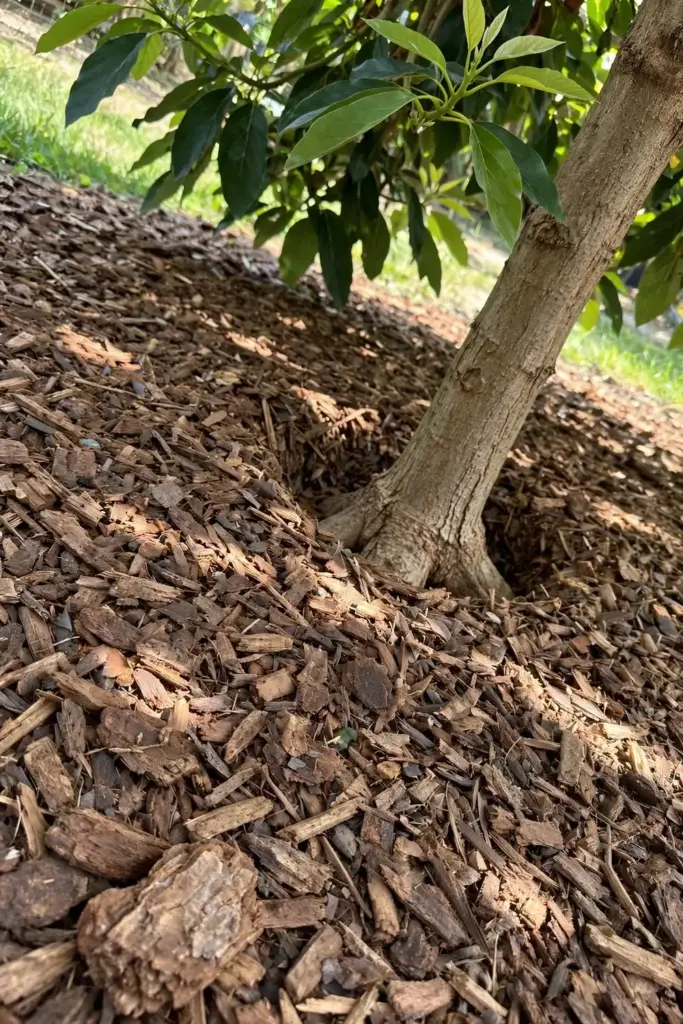
Mulch does three jobs at once. It keeps soil moisture even instead of swinging between flood and drought, it feeds the soil biology that competes with Phytophthora, and it prevents the soil compaction that suffocates new roots. Research orchards in Australia and California treat mulching as a core practice, not a decoration.
Feeding needs restraint. A sick tree cannot use heavy fertilizer, and excess nitrogen pushes soft, susceptible growth while salts accumulate around damaged roots. Use a light application of a balanced organic fertilizer in spring, and skip the urge to “push” the tree back to health with extra doses. Compost tea and mycorrhizal products get marketed hard for root rot, but the evidence for them against Phytophthora is thin. Spend that money on mulch and drainage work instead.
Watch for the sign that it is working: a flush of new leaves in spring that hold their deep green color into summer. That means new feeder roots are online.
Step 4: Apply Phosphite the Way Research Supports
Phosphite, sold as phosphorous acid or potassium phosphite, is the best-supported chemical tool against Phytophthora in avocado. Current research calls trunk injection or foliar spray with phosphite the most effective single intervention available to growers. It works two ways: it directly slows the pathogen and it switches on the tree’s own defense responses.
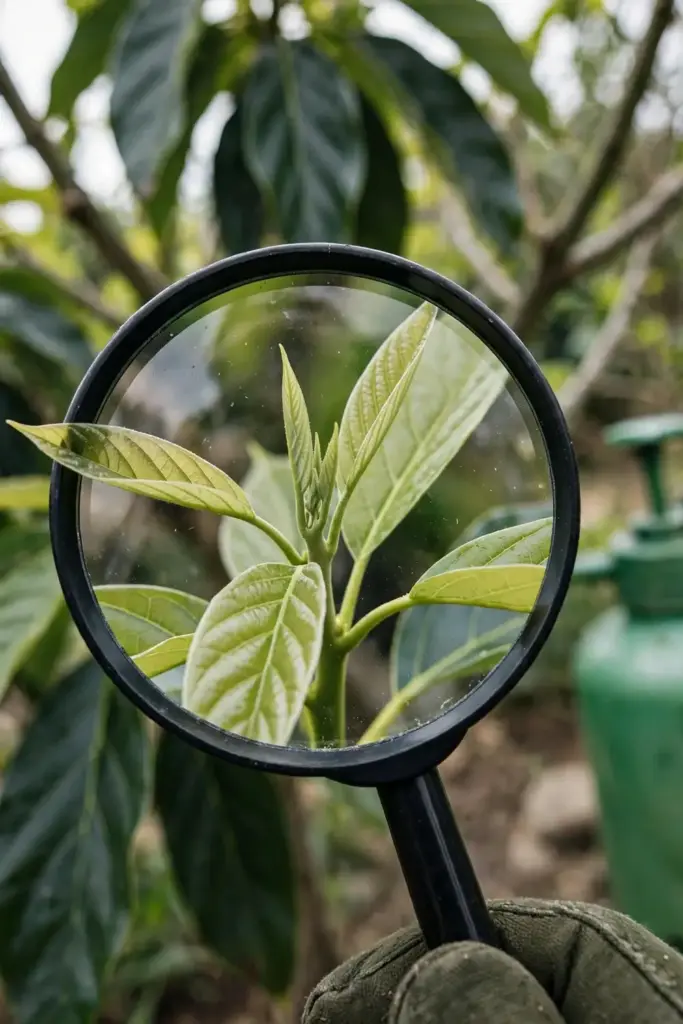
For home gardeners, foliar spray is the practical route. Trunk injection needs equipment and training, and drilling into a stressed tree carries its own risks. Mix and apply exactly per the label, treat in spring when the tree is actively growing, and repeat as the label directs through the season.
Set expectations correctly: phosphite suppresses Phytophthora and buys the tree time to regrow roots. It does not sterilize the soil. Protection fades, which is why orchards reapply on schedule, so think of it as a crutch while drainage and mulch do the structural healing.
One caution: phosphite is not a fertilizer, even though the name sounds like phosphorus. Do not substitute it for nutrition, and do not mix it casually with other sprays. Read the label as if it were a prescription, because for your tree, it is.
Step 5: Understand What Fungicides Can and Cannot Do
Walk into any garden center and you will find products promising to cure root rot. Honesty requires saying what they actually deliver. Soil-applied fungicides containing mefenoxam or similar chemistry can suppress Phytophthora populations around the roots for a period of weeks to months. Suppression is not eradication, and in poorly drained soil the effect washes out fast.
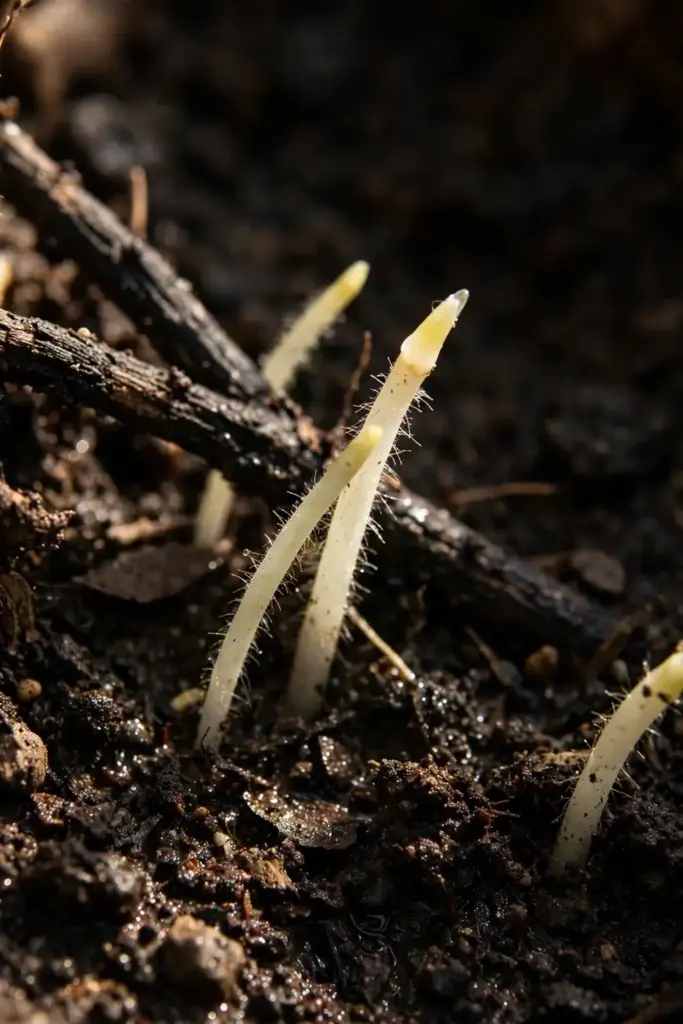
There are real downsides. Repeated use selects for resistant pathogen strains, which is a documented problem in nursery production. Some products also suppress beneficial soil organisms you are trying to encourage with mulch. And no fungicide compensates for standing water: applied to a swamp, even the best chemistry fails.
The practical hierarchy is therefore fixed: drainage first, mulch and sanitation second, phosphite third, conventional fungicides a distant fourth for severe cases where you need short-term suppression. If a product claims to “kill Phytophthora in soil” permanently, that claim outruns the science. The University of California’s avocado disease guide leans on cultural practices for exactly this reason: they are the only measures that change the conditions favoring the pathogen.
Step 6: Replant With Resistant Rootstocks If the Tree Is Lost
If Step 1 told you the tree is gone, this step is your fresh start, and it is often the fastest route back to harvest. Do not plant another avocado in the same unamended hole. That is how gardeners lose two trees to the same pathogen.
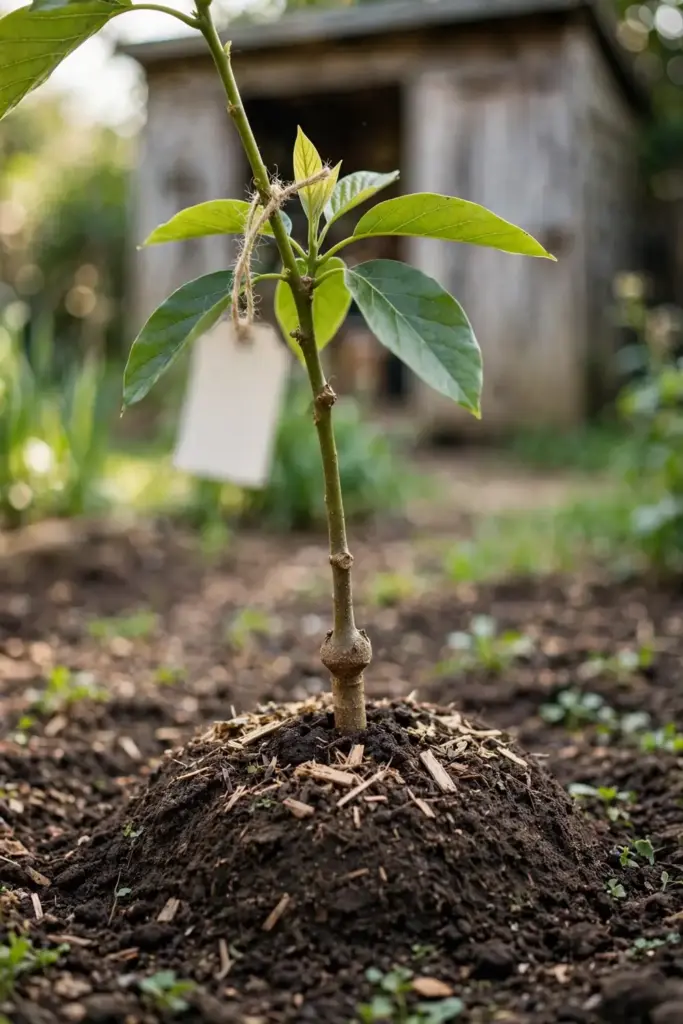
Wait at least one season if you can, and use the time to fix the site. Build the mound, improve drainage, and solarize the soil if your climate allows: clear plastic over moist soil for 4 to 6 weeks in high summer heat suppresses many soil organisms near the surface.
When you replant, buy grafted trees on rootstocks with documented Phytophthora tolerance from a reputable nursery, and ask directly about the rootstock’s resistance. Tolerant rootstocks still get infected under heavy disease pressure. They buy crucial resilience in imperfect soil. Plant high, with the graft union well above the soil line, on your prepared mound.
Consider the nuclear option for truly infested ground: plant something else there. Citrus on tolerant rootstock, or a non-host ornamental, breaks the cycle while your new avocado goes into a cleaner spot. Patience here pays compound interest.
Step 7: Keep Phytophthora Out of the Rest of Your Garden
Phytophthora moves on mud. Every tool, boot, and wheelbarrow that touches infested soil becomes a delivery vehicle. Clean tools with soap and water after working around a sick tree, and disinfect with a 1:9 bleach solution when moving between the sick zone and healthy beds.
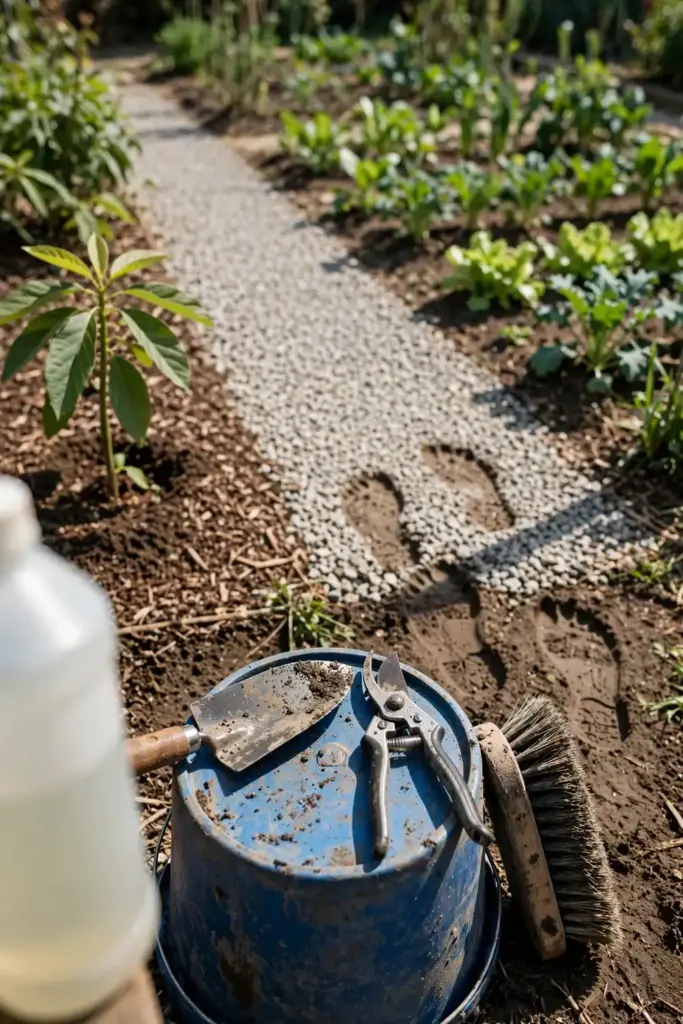
Never move soil from around an infected tree to another part of the garden. That includes the tempting shortcut of spreading “extra” soil from the avocado bed onto the vegetable patch. Bag suspect soil and dispose of it with municipal green waste, where commercial composting heat does what your home pile cannot.
Quarantine new plants. Keep nursery purchases in their pots for a few weeks, watch for wilt or decline, and check the drainage holes for blackened roots before planting. A two-dollar plant can import a thousand-dollar problem.
Finally, design water flow on purpose. Grade beds so runoff moves away from healthy trees, and never let the avocado’s drainage water pool around other susceptible plants like citrus or rhododendron. Containment is unglamorous and completely effective at the scale of a home garden.
Living With a Damaged Avocado Tree
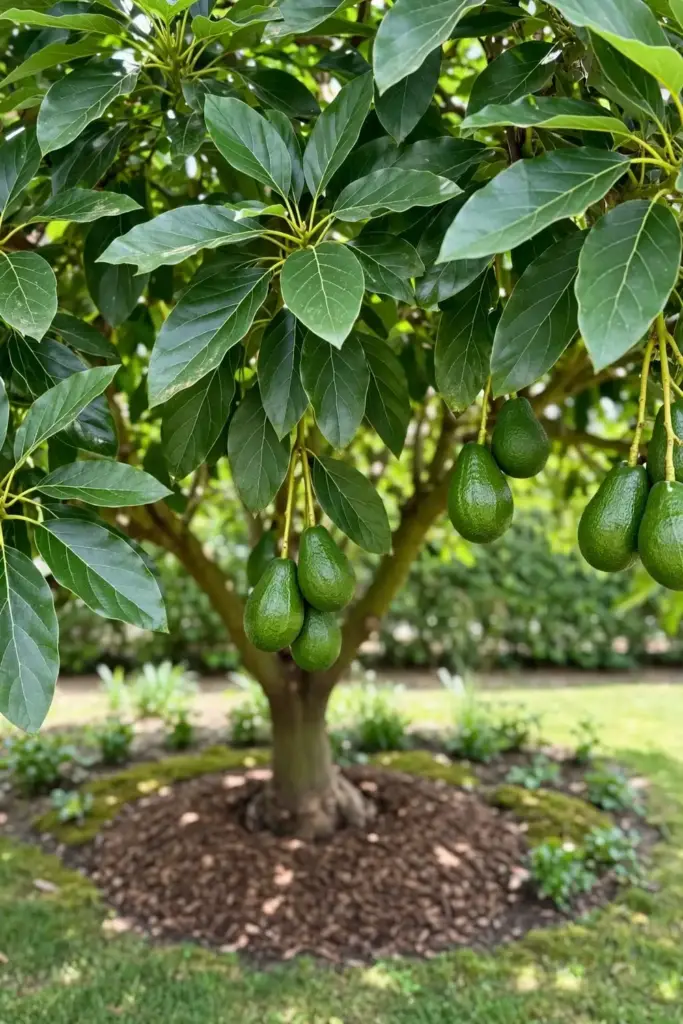
Sometimes the tree survives but never fully recovers, and that outcome deserves its own plan. A tree that holds a thin canopy year after year can still produce a modest crop of fruit, and fruit from a Phytophthora-affected tree is safe to eat. The pathogen lives in roots and soil, not in the flesh of the fruit.
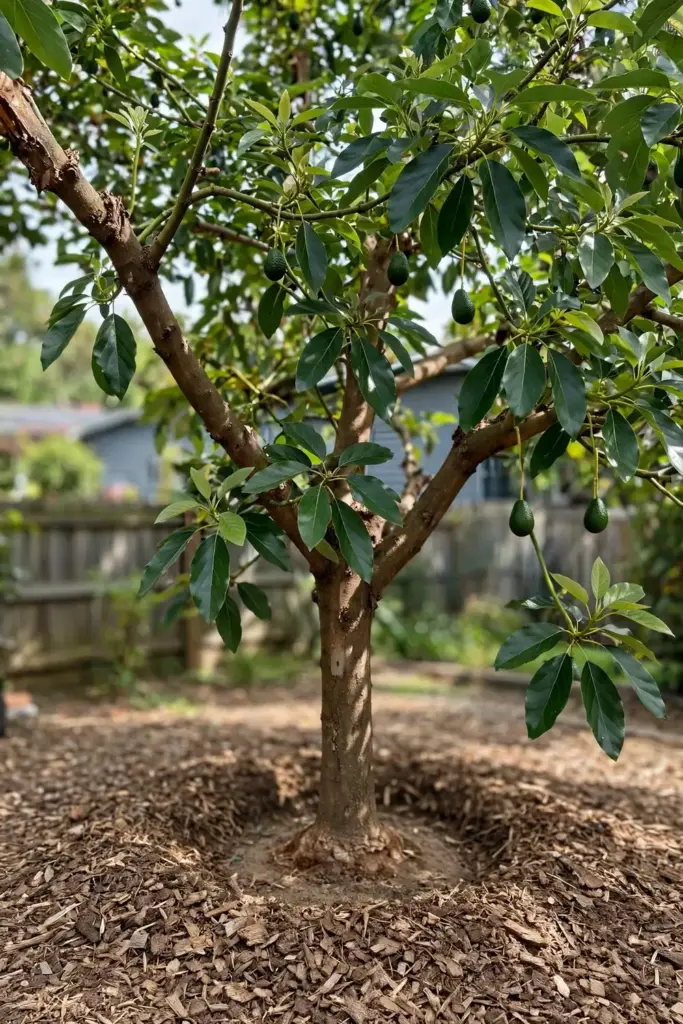
Adjust your expectations and your care. Keep up the mulch and the careful watering permanently; this tree will always be drainage-sensitive. Prune out dead wood each winter to let light into the canopy and reduce sunburn on the remaining branches. Expect smaller crops and plan your guacamole accordingly.
Watch for the turn. If decline resumes despite good care, the honest move is removal before the tree becomes a hazard or a reservoir infecting its neighbors. A declining tree you manage deliberately is fine. One you ignore becomes everyone else’s problem.
One more honest note: a lightly affected tree in a dry climate with fixed drainage can stabilize for years. “Stable but thin” is a legitimate outcome, not a failure. Not every garden problem needs a cure. Some just need management.
Frequently Asked Questions
Years. The thick-walled resting spores persist through dry spells and winters, reactivating when soil saturates and susceptible roots are near. Missouri Botanical Garden notes survival for years as long as moist conditions recur, and researchers consider eradication from infested ground impractical. Assume any spot that once hosted the disease still carries it, and plant accordingly.
Early infections can stabilize and even improve with drainage correction, deep mulch, and phosphite treatment, though recovery takes seasons, not weeks. Advanced cases with most of the canopy dead and no live feeder roots rarely come back, because no treatment regrows roots from nothing. The honest test is in Step 1: living canopy plus some healthy roots means fight on; otherwise replant.
Nothing available to home gardeners permanently eradicates it from soil. Phosphite sprays or injections are the best-supported option, suppressing the pathogen while stimulating the tree’s defenses. Soil fungicides with mefenoxam-type chemistry give temporary suppression but select for resistance with repeated use. Every chemical option underperforms without drainage fixes, so treat water management as the real fungicide.
It spreads, but not through the air like a leaf fungus. It moves in water and on mud: runoff, splashing rain, contaminated nursery stock, dirty tools, and boots. With over 1,000 recorded hosts including citrus, rhododendron, and boxwood, nearby susceptible plants are at real risk in shared drainage. Clean tools, contain runoff, and quarantine new plants to stop it traveling.
Yes. Phytophthora colonizes roots and lower stems, not fruit flesh. The fruit is safe to eat, though heavily stressed trees produce small fruit with poor flavor and texture. Harvest what ripens normally and enjoy it. The disease is a root problem, not a food safety problem, so there is no reason to waste the crop.
Your local cooperative extension diagnostic lab can confirm it from a root and soil sample, usually for a modest fee. Collect fine roots and surrounding soil from the drip line of the suspect tree, keep the sample cool, and follow the lab’s submission instructions. Home test kits exist but are less reliable. A lab result ends the guessing and tells you whether the full seven-step program is warranted.
Where to Go From Here
If your tree is in the ground right now and declining, start today with two actions: cut back watering to deep, infrequent soakings, and dig the root check from the identification section. Those two steps cost nothing and tell you whether you are fighting Phytophthora or just overwatering.
Then work the seven steps in order. Drainage, mulch, phosphite, and honest triage resolve most home-garden cases that are resolvable at all. The trees that do not make it teach you where not to plant the next one, which is knowledge that pays off for decades.
For the deeper science behind these recommendations, the University of California’s avocado disease guide and Missouri Botanical Garden’s root rot pages document the symptoms, life cycle, and cultural controls this article follows. Your avocado’s roots cannot speak, but they leave evidence. Learn to read it and you will catch the next problem years earlier.