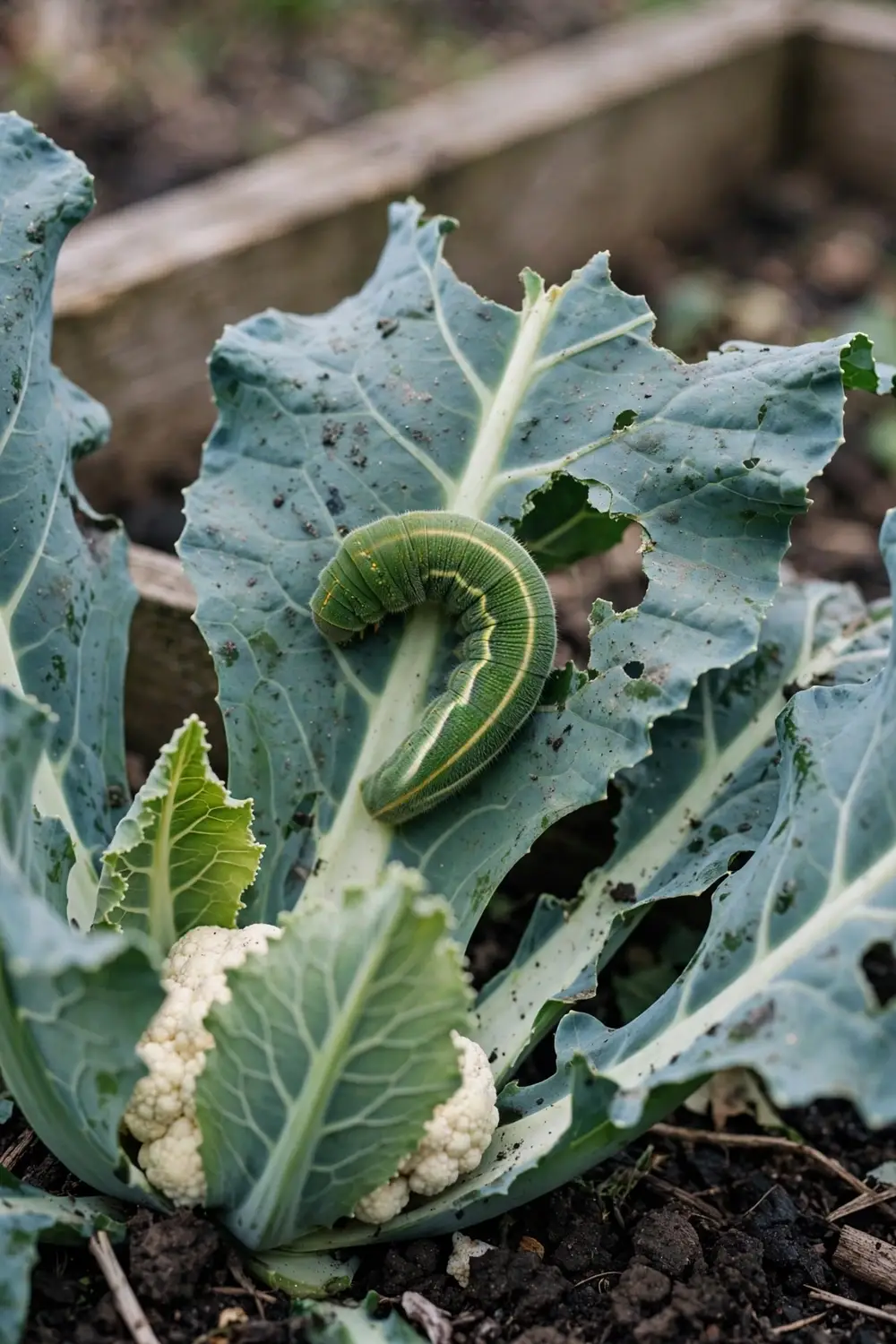

Check the underside of the lowest leaves first. 5 caterpillar types eat cauliflower in Australia, and 3 of them hide inside the curd where sprays cannot reach. The rest of this page names each one, shows how to tell them apart, and works through the controls that actually reach them, from handpicking to netting to two sprays with stated withholding periods.
A caterpillar is the larva of a butterfly or moth. A cauliflower is Brassica oleracea var. botrytis. Naturally means non-synthetic controls. Caterpillars on cauliflower belong to four species groups, and each group answers to a different control.
1. Identify the Cabbage White Butterfly Caterpillar by Its Velvet Skin
The cabbage white butterfly caterpillar is a velvety green caterpillar with a faint yellow stripe down its back. It grows to 30 mm long, and its skin looks soft and fuzzy under a hand lens. The adult is a white butterfly with a wingspan of 40 to 50 mm, and the female carries two black spots on each forewing while the male carries one, according to the NSW Department of Primary Industries guide to insect pests of crucifer vegetables.
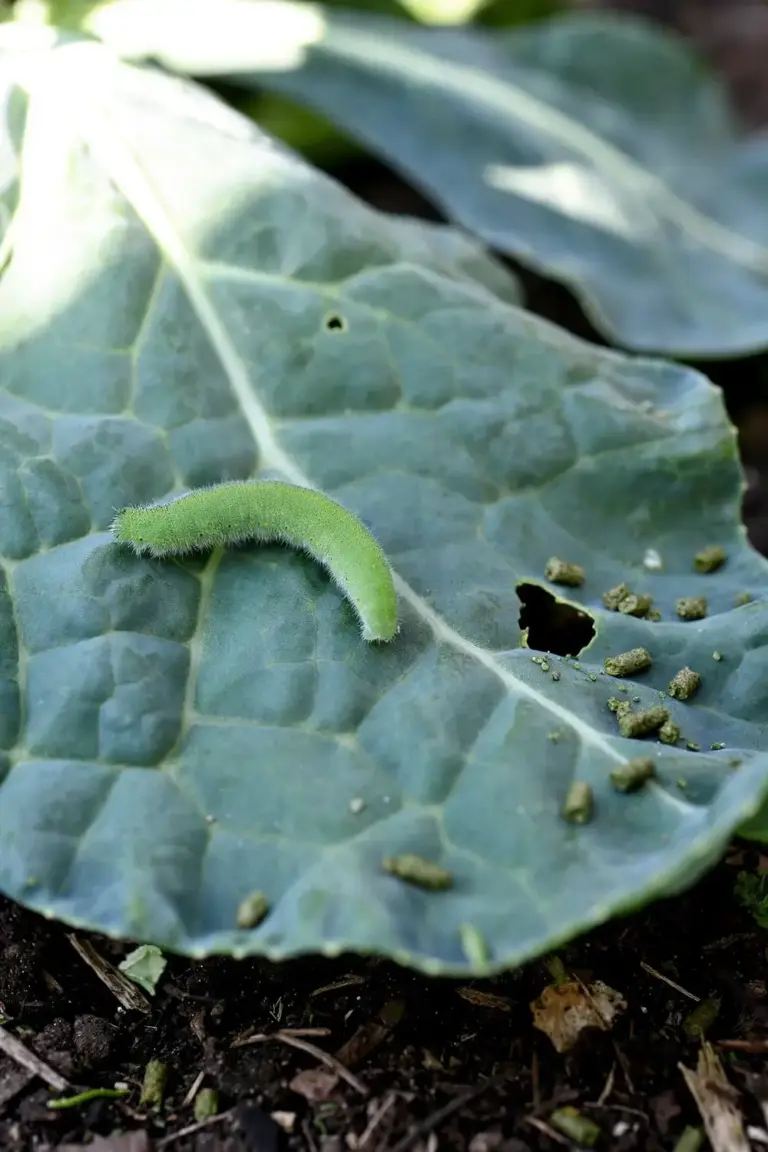
Find the eggs before the caterpillars. The female lays single yellow conical eggs on the leaf surface, often on the underside of the outer leaves. One butterfly can lay 300 to 400 eggs in her lifetime, according to the Utah State University Extension guide to caterpillar pests of brassicas. A plant with ten eggs today holds ten caterpillars next week, so egg removal is the cheapest control on this page.
The caterpillar feeds sluggishly along the leaf veins and blends into the foliage. Young caterpillars chew small holes in the outer leaves. Older caterpillars move toward the center of the plant and feed inside the developing curd. Green frass on the leaves marks a feeding caterpillar nearby. Follow the frass trail to the caterpillar.
2. Name the Cabbage Moth and the Diamondback Moth as One Insect
The cabbage moth and the diamondback moth are the same insect in Australia. Its scientific name is Plutella xylostella. Australian sellers, labels, and departments call it cabbage moth. International sources call it diamondback moth. The two names describe one pest, so this article treats them as one caterpillar and never counts them twice.
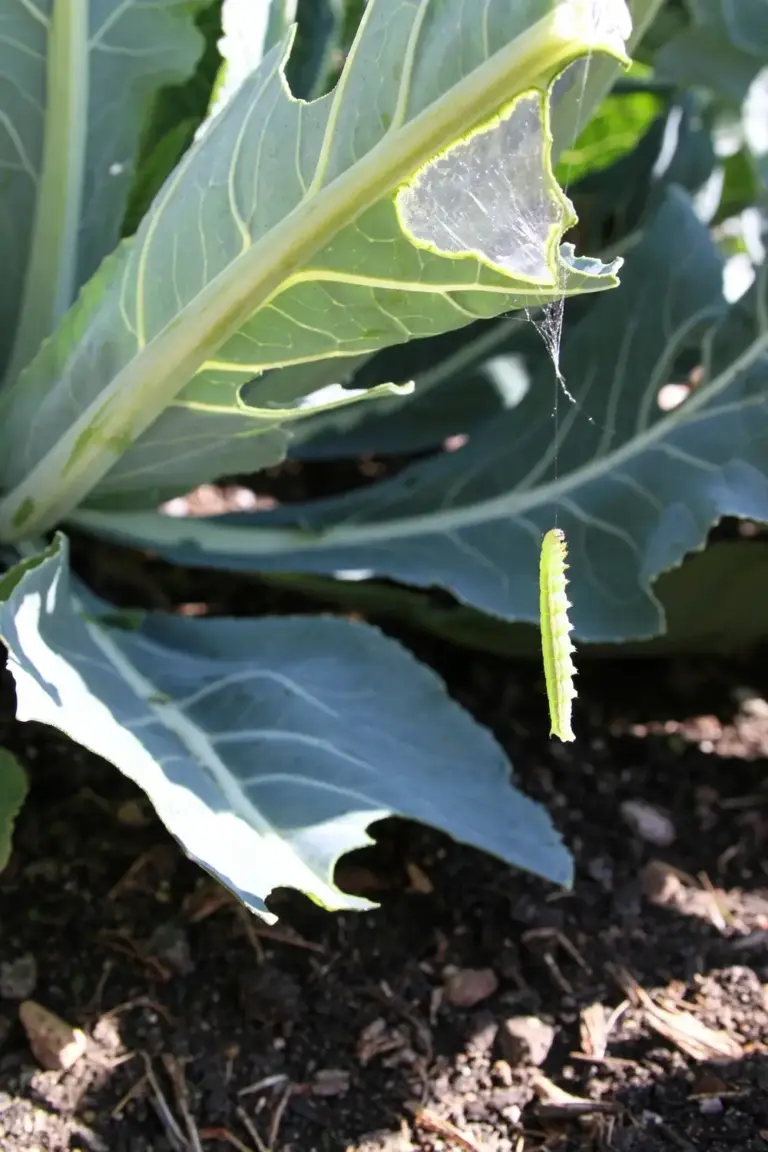
The caterpillar is small, pale green, and tapered at both ends. It grows to 12 mm long, far smaller than the cabbage white caterpillar. Poke it and it wriggles violently, then drops from the leaf on a silk thread. That wriggle-and-drop reaction identifies it faster than any color check. The adult moth is 9 mm long, greyish brown, with a row of diamond-shaped markings down its back when the wings fold at rest, according to the NSW Department of Primary Industries guide to insect pests of crucifer vegetables.
Young caterpillars mine the leaf and leave windowpane feeding, where the upper leaf skin stays intact over a hollowed patch. Older caterpillars chew small holes through the leaf. In warm conditions the whole life cycle takes 3 weeks, according to the same NSW guide. Three weeks from egg to moth means a missed week of checking can put a second generation on the plant.
Treat this caterpillar as the resistance risk on the page. The NSW guide states plainly that cabbage moth is notorious for its rapid development of resistance to insecticides. Rotate control methods instead of repeating one spray. Netting, handpicking, and Bt do not share a resistance path with synthetic sprays.
3. Spot the Green Looper by Its Looping Walk
The green looper walks like an inchworm. It grips the leaf with its front legs, arches its body into a loop, then brings its hind legs forward. No other cauliflower caterpillar moves that way. The loop test identifies it even when color fails, because caterpillar color shifts with diet and age.
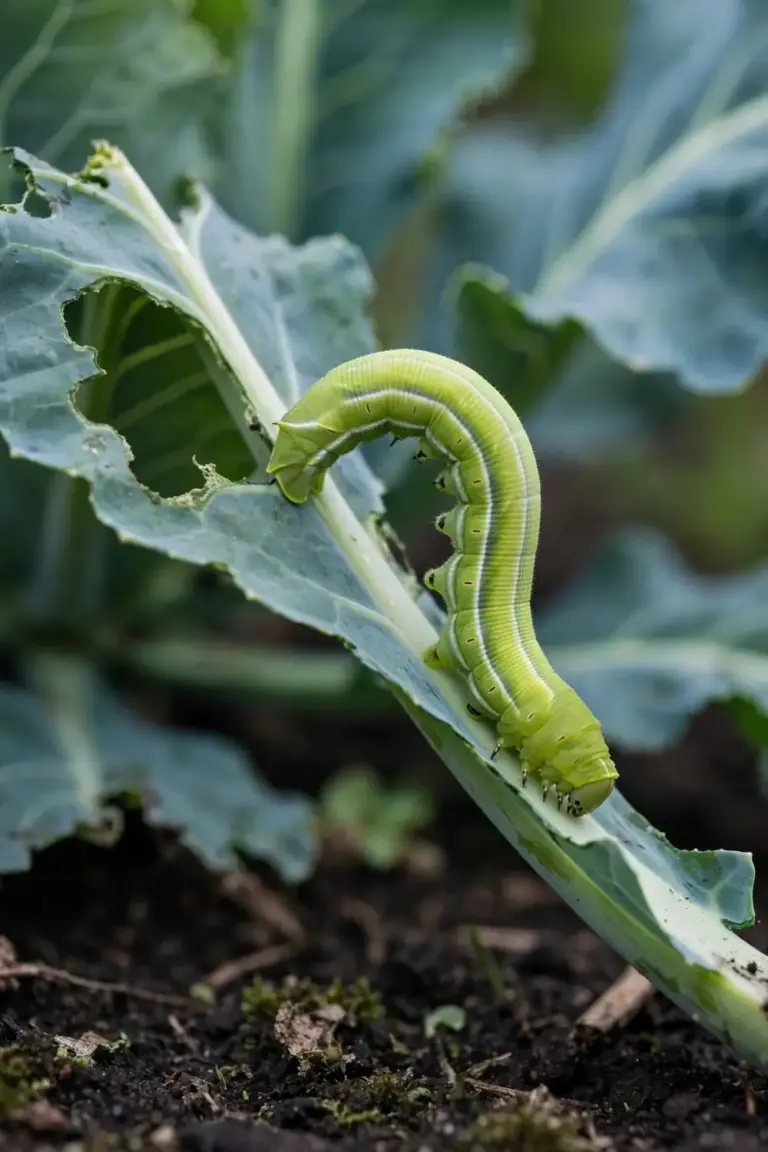
The caterpillar is lime green with faint white stripes down its body. It grows to 40 mm long, longer than the cabbage white caterpillar and far longer than the cabbage moth caterpillar. Its body is smooth, not velvety. The adult is a brown moth with silver patterns on its forewings and a wingspan of 30 to 40 mm. The larvae pupate in a flimsy white cocoon on the underside of a leaf or inside a folded leaf.
In Australia the looper on your cauliflower is a green looper, Chrysodeixis species. The best-known local species is the tobacco looper, Chrysodeixis argentifera. Do not call it Trichoplusia ni. That species is the American cabbage looper, and it is not established in Australia. The name on the Australian label is green looper or tobacco looper, and the Yates Dipel label lists green looper and tobacco looper among the caterpillars it controls.
Loopers chew large holes in leaves and feed at night. Check the undersides of leaves during the day, where loopers rest. A looper near the curd chews into the head the same way a cabbage white caterpillar does. Handpick it the same way, and spray Bt the same way, because Bt kills loopers too.
4. Tell Helicoverpa Apart by Size, Hair, and Soil Pupation
Helicoverpa caterpillars are the giants on this page. They grow to 40 to 50 mm long, roughly double the cabbage white caterpillar. Their colors vary widely: green, yellow, pink, reddish brown, or almost black. Color alone never identifies Helicoverpa. Size, hair, and pupation site do.
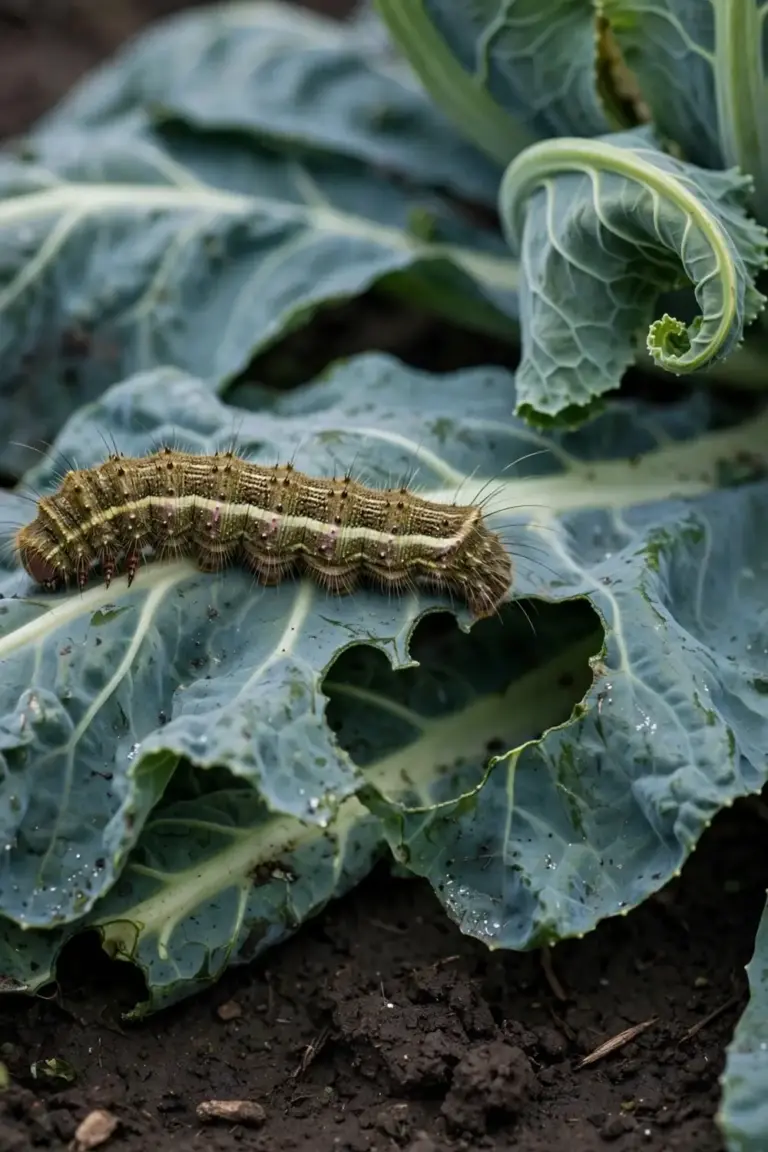
Look for conspicuous body hairs on raised bumps along the body. Look for a broad yellowish white stripe down each side and a darker edged whitish line down the middle of the back. When fully grown, the caterpillar drops to the ground and pupates in the soil. No other cauliflower caterpillar on this page pupates in the soil. A large hairy caterpillar that vanishes into the soil was Helicoverpa. These traits come from the NSW Department of Primary Industries guide to insect pests of crucifer vegetables.
Two species share the name. Helicoverpa armigera is the corn earworm. Helicoverpa punctigera is the native budworm. Tell them apart by the hairs around the head: punctigera carries black hairs around its head, while armigera carries white hairs around its head and black hairs along its body. The distinction matters for records, not for control. Both species answer to the same controls on this page.
Helicoverpa eats flowers and fruit as well as leaves, so a caterpillar chewing into a curd fits its habits. It is less common on cauliflower than the cabbage white caterpillar, but it is the one most likely to take a whole curd in a night. Check for it when damage appears fast and the caterpillar is large.
| Caterpillar | Full-Grown Length | Skin and Marks | Movement Test | Where It Pupates |
|---|---|---|---|---|
| Cabbage white butterfly caterpillar (Pieris rapae) | 30 mm | Velvety green, faint yellow stripe | Sluggish, stays on the leaf | On leaves or nearby objects |
| Cabbage moth / diamondback moth caterpillar (Plutella xylostella) | About 12 mm | Smooth pale green, tapered at both ends | Wriggles violently, drops on a silk thread | Silken netlike cocoon on leaves |
| Green looper (Chrysodeixis species) | 40 mm | Smooth lime green, faint white stripes | Loops like an inchworm | Flimsy white cocoon on leaves |
| Helicoverpa (H. armigera, H. punctigera) | 40 to 50 mm | Hairy, color varies, broad pale side stripes | Crawls, does not loop or drop on silk | In the soil |
5. Check the Curd Before You Trust the Leaves
A clean outer leaf can hide a ruined curd. Caterpillars tunnel into the developing head and feed where sprays cannot reach them. A caterpillar inside the curd sits off the sprayed surface, so contact sprays miss it and Bt sprayed on the outer leaves never reaches its gut. Prevention beats cure once caterpillars are inside the head.
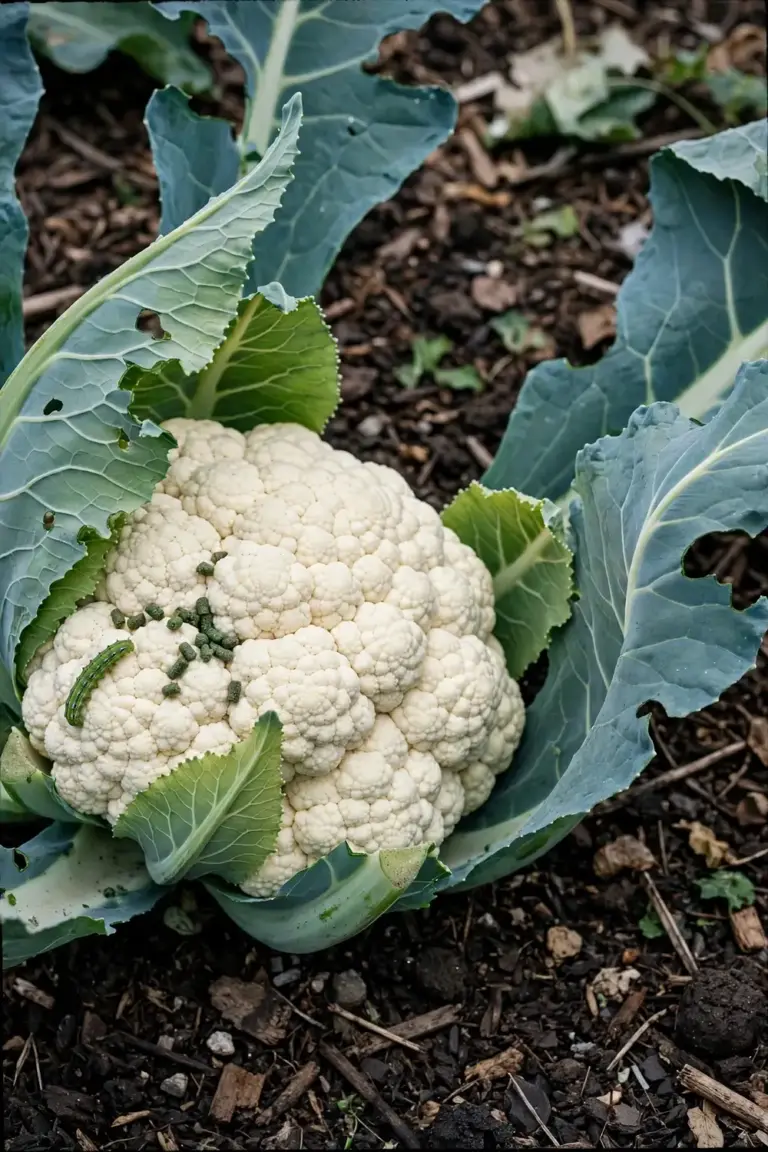
I check the curd before I pick it, because a clean leaf can hide a caterpillar inside the head.
Open the wrapper leaves gently and look into the curd. Green frass pellets wedged between the florets mean a caterpillar fed inside. A brown tunnel through the white curd means the damage is old. A live caterpillar curled in a floret means the head is still salvageable if you pick the caterpillar out and wash the curd well. Lift it out with tweezers, grip gently, and drop it in the soapy bucket. Cut away any browned florets. A curd with deep tunnels and soft rot goes to the compost, not the kitchen.
Time your checks to the curd, not the calendar. Start checking the head when it reaches the size of a golf ball. Check every two to three days while the curd grows. A caterpillar that enters a golf-ball curd eats its way through the whole head by harvest. Two minutes of checking per plant, twice a week, saves the head.
6. Handpick Caterpillars on Cauliflower and Crush the Eggs Every Two to Three Days
Handpicking is the first control, not the last resort. It works on every caterpillar on this page, it costs nothing, and it removes the pest before it lays the next generation. Walk the bed every two to three days. Turn each leaf. Pick every caterpillar you find and drop it into a bucket of soapy water.
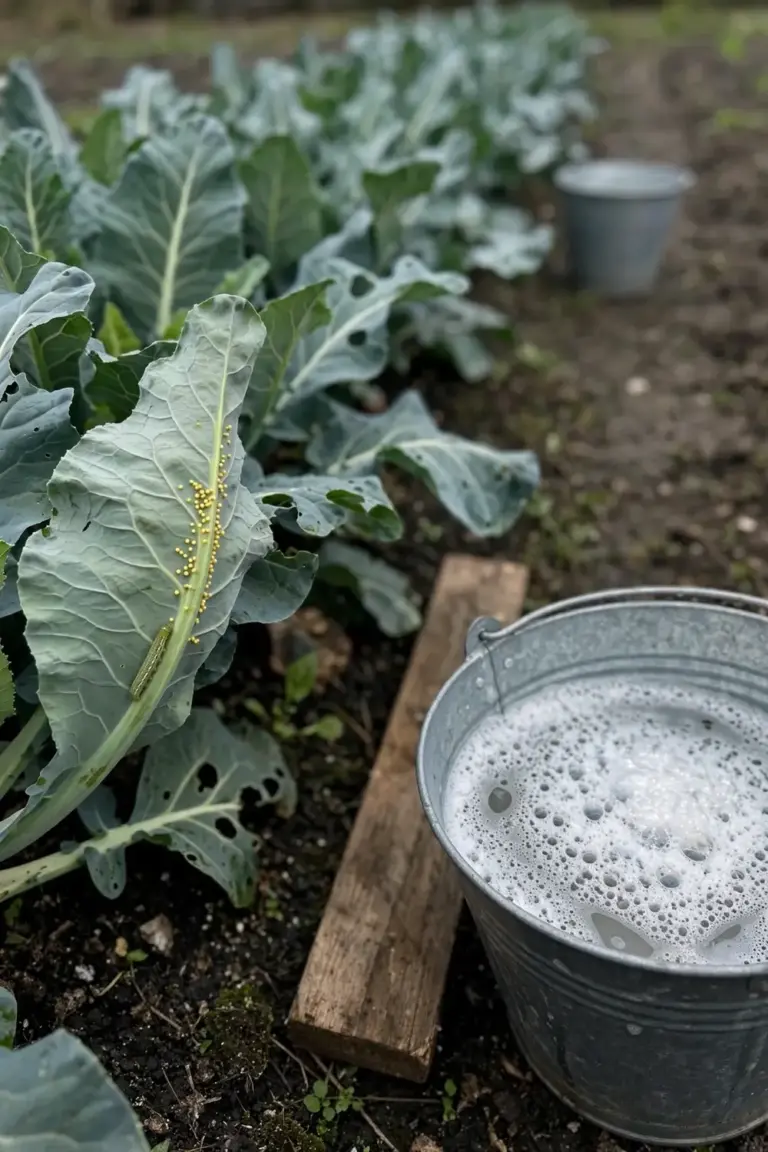
Crush the eggs at the same time. Cabbage white eggs sit singly on the leaf surface, yellow and conical. Diamondback eggs sit singly or in small clusters on the lower leaf surface along the main veins. Rub them off with a thumb. One minute of egg crushing removes a week of caterpillars.
Work the undersides. Caterpillars rest on the undersides of leaves during the day and feed at night. The underside of the lowest leaves holds the eggs. The center of the plant holds the oldest caterpillars. Check the curd last, with the wrapper leaves parted gently. Check after rain too, because rain washes Bt off and fresh caterpillars hatch on wet leaves.
Handpicking alone controls a light infestation. Ten plants with two caterpillars each take ten minutes to clear. A bed with fifty caterpillars per plant needs netting and spray as well. Handpicking still matters there, because it cuts the population the spray must handle and it catches the caterpillars the spray misses inside the curd.
Carry a bucket of soapy water on the walk. Drop each caterpillar into the bucket instead of flicking it onto the path, because a flicked caterpillar crawls back to the nearest leaf. Tip the bucket into the compost when the walk ends. Rinse the bucket before the next walk. The bucket is the whole kit: no sprayer, no gloves required, no cost beyond dish soap and water.
7. Cover the Bed With Insect Netting From Transplant Day
Netting is the most reliable control on this page. It stops the butterflies and moths from laying eggs at all. Drape fine insect netting over hoops from the day you transplant, not the day you first see damage. A butterfly that cannot reach the leaf cannot lay an egg on it.
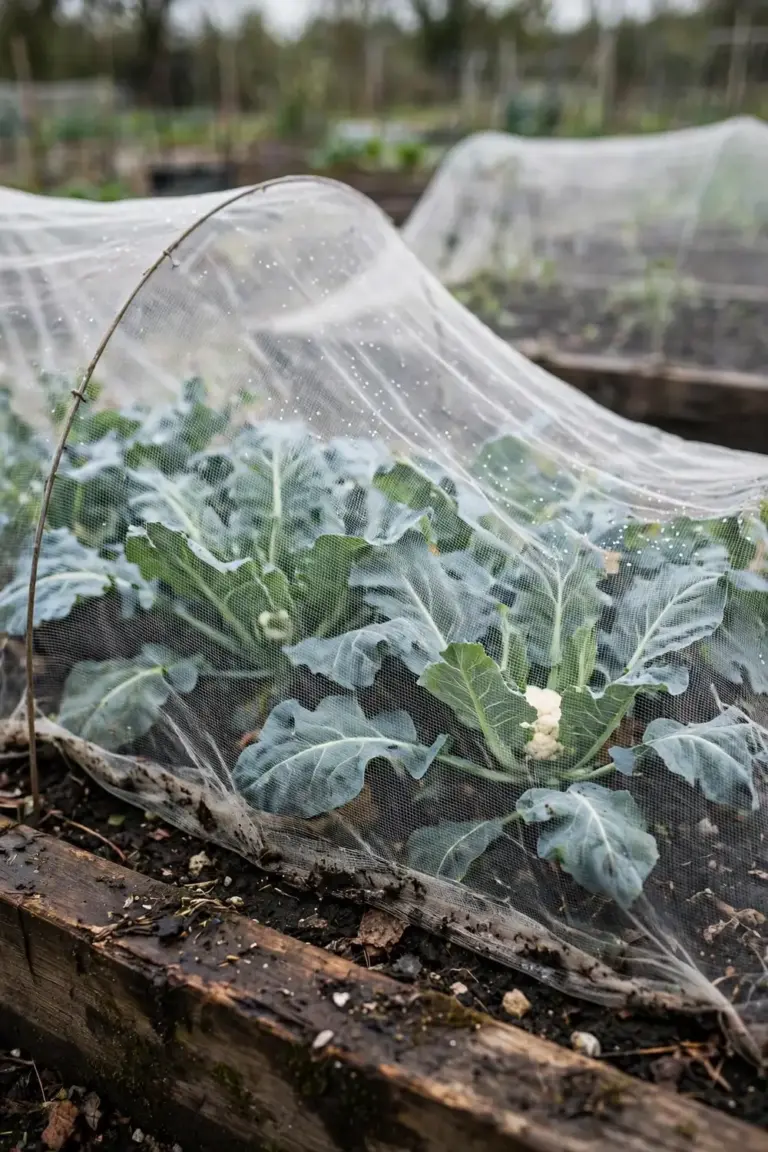
Seal the edges. Butterflies enter through any gap at soil level. Bury the netting edge in soil or weigh it down with timber boards along the whole bed. A net with one loose edge protects nothing. Check the seal after wind and after you lift the net to harvest.
Lift the net only to work, then seal it again. Every harvest, every handpick, every spray means opening the net. Close it the same visit. A net left open overnight invites the moths it was bought to exclude.
Netting has one weakness. It traps any caterpillars already on the plants when you cover them. Handpick the bed clean before you net it, and check under the net twice a week for the first two weeks. A caterpillar that hatches under netting feeds in safety until you find it. After two clean checks, the net does the work alone.
Hoops hold the net off the leaves. Wire or poly pipe hoops every metre keep the mesh clear of the foliage, so butterflies cannot lay eggs through the mesh onto a leaf pressed against it. The net must clear the tallest leaf by a hand width. A net draped flat on the plants lets a butterfly lay through the fabric, and the caterpillars hatch inside the barrier.
8. Spray Bt on Both Leaf Surfaces in Late Afternoon
Bt is Bacillus thuringiensis var. kurstaki, a bacterium that kills caterpillars and only caterpillars. The caterpillar eats sprayed foliage, the bacterial protein paralyses its gut, and the caterpillar stops eating. Death follows in 3 to 4 days, according to the Yates Dipel label. Bt is certified for use in organic gardens by Australian Certified Organic, and it is safe for bees, ladybirds, birds, fish, mammals, and pets.
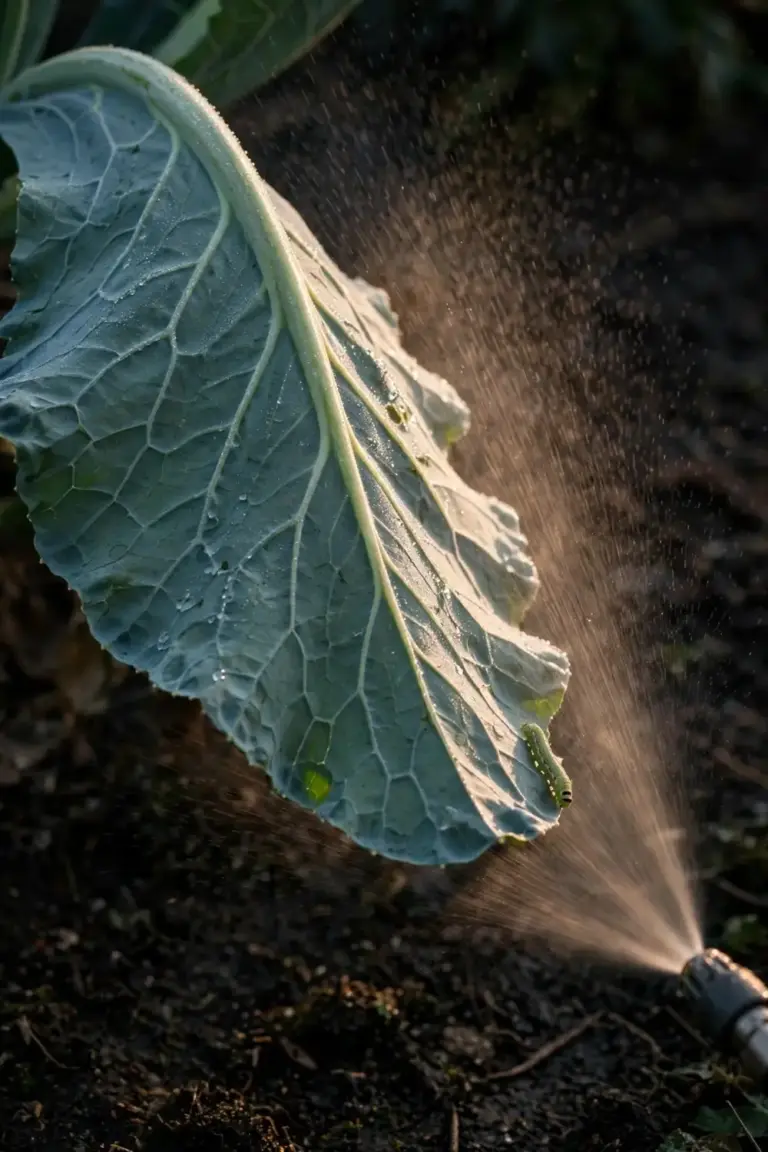
Mix one 10 g sachet per 10 L of water, or 5 g per 5 L, following the same label. Spray both sides of all foliage, because caterpillars rest and feed on the undersides. Respray at 5 to 7 day intervals as more caterpillars hatch or after rain washes the spray off. Spray in the late afternoon, when the sun is off the leaves and the caterpillars are about to feed.
Read the shelf before you buy. The Yates Dipel product has been discontinued and replaced with OCP eco-caterpillar killer, as the Yates page states. The Bt mechanism and the rates on the old label still describe how any Bt kurstaki product works. Buy any Bt kurstaki product and follow its own label. Do not pay a premium for a discontinued packet.
Bt fails in two ways. It fails when it lands only on the upper leaf surface while the caterpillar feeds below. It fails when the caterpillar is already inside the curd, off the sprayed surface. Spray both sides, and keep checking the curd. Bt is a surface weapon, and a caterpillar that never eats a sprayed surface never meets it.
9. Use Spinetoram Only When Bt Falls Short
Spinetoram is the step up from Bt. It kills by contact and by ingestion, and it moves through the leaf from the upper surface to the lower surface, so it reaches caterpillars feeding underneath. Use it when Bt has not held the population after two sprays, or when caterpillars are large and feeding hard. Do not start with spinetoram when Bt would do.

The Yates Success Ultra label lists brassica vegetables including cauliflower, and its pest list for brassicas names cabbage white butterfly, diamondback moth, loopers, and helicoverpa. The rate for brassicas is 5 mL per litre of water, according to the Yates Success Ultra label. Spray when pests first appear and repeat at 7 to 14 day intervals while pests stay active. Spray all foliage, including the undersides, to the point of runoff.
The withholding period for brassicas is 3 days. Do not pick cauliflower for 3 days after spraying, per the same label. Pests stop feeding immediately but may take up to 3 days to die, so a caterpillar that is still moving the next morning is not proof the spray failed. Wait out the three days, then check again.
Respect the two limits on the label. Do not spray when shade temperatures sit near 28 degrees Celsius or higher, or when plants suffer moisture stress. Do not spray flowering plants while bees feed on them, because spinetoram is highly toxic to bees while the spray stays wet. Spray in the cool of the early morning or late evening, and keep the spray off flowers.
Write the spray down. Note the date, the product, and the earliest pick date on the tag at the bed end. Spinetoram needs 3 days on brassicas, and a tag keeps that interval honest when the curd looks ready the next morning. A notebook line beats memory when two beds run on different spray dates. Rotate the next spray to Bt, so the bed never sees spinetoram twice in a row.
10. Keep Pyrethrum as the Last Resort, Not the First Spray
Pyrethrum kills on contact and breaks down fast in sunlight. That combination makes it the last resort on this page, not the first spray. It knocks down caterpillars fast, and it also knocks down the beneficial insects that eat them. Every pyrethrum spray sets back the predators that would have worked for free.
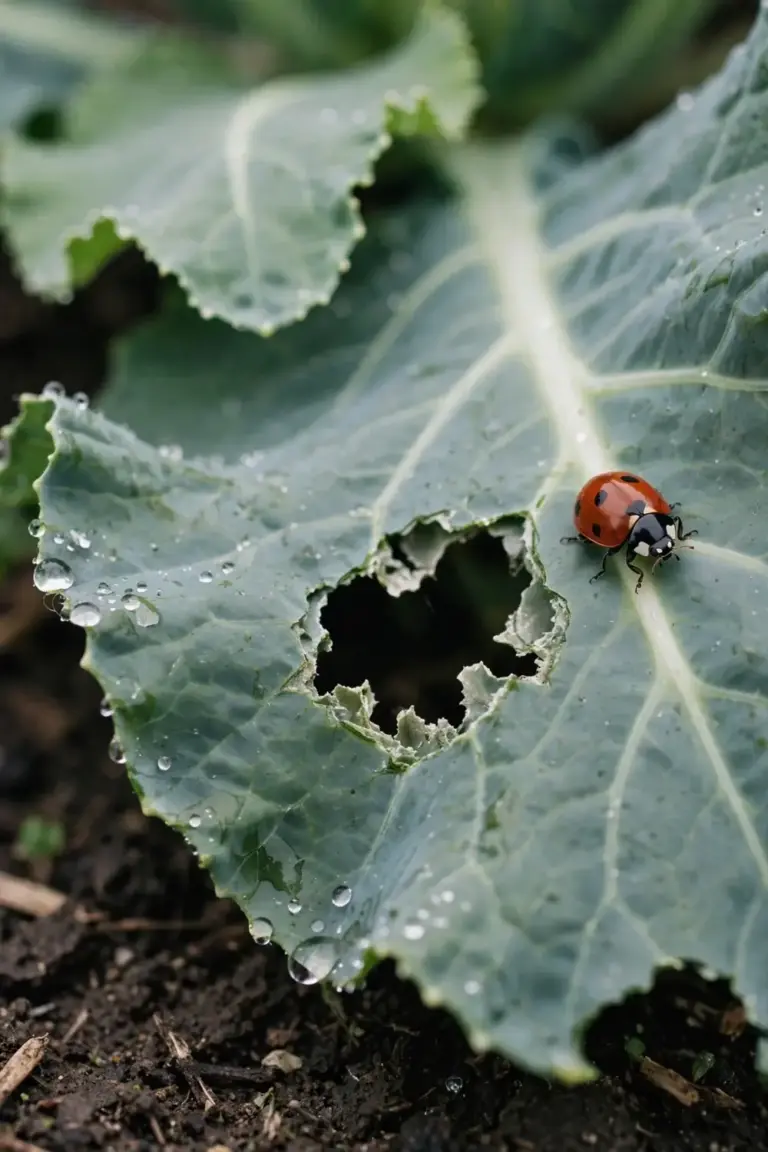
Use it when a heavy infestation needs a fast knockdown and Bt plus handpicking have not held it. Spray in the cool of the evening, when bees have stopped foraging. Cover both leaf surfaces to the point of runoff. Do not spray when shade temperatures are expected to exceed 30 degrees Celsius, and do not spray when rain is expected within 2 hours, per the Yates pyrethrum label.
The withholding period for the Yates pyrethrum concentrate is 1 day. Wash edibles very well before eating, per the same label. One day is short, but it is still a day. Mark the spray date on the bed, and do not harvest the next morning out of habit.
Pyrethrum does not reach caterpillars inside the curd, and it does not stop the next moth from laying eggs tomorrow. It buys one clean day. Netting buys the season. Pair any pyrethrum spray with a netting check the same week, or the caterpillars return on the next flight of butterflies.
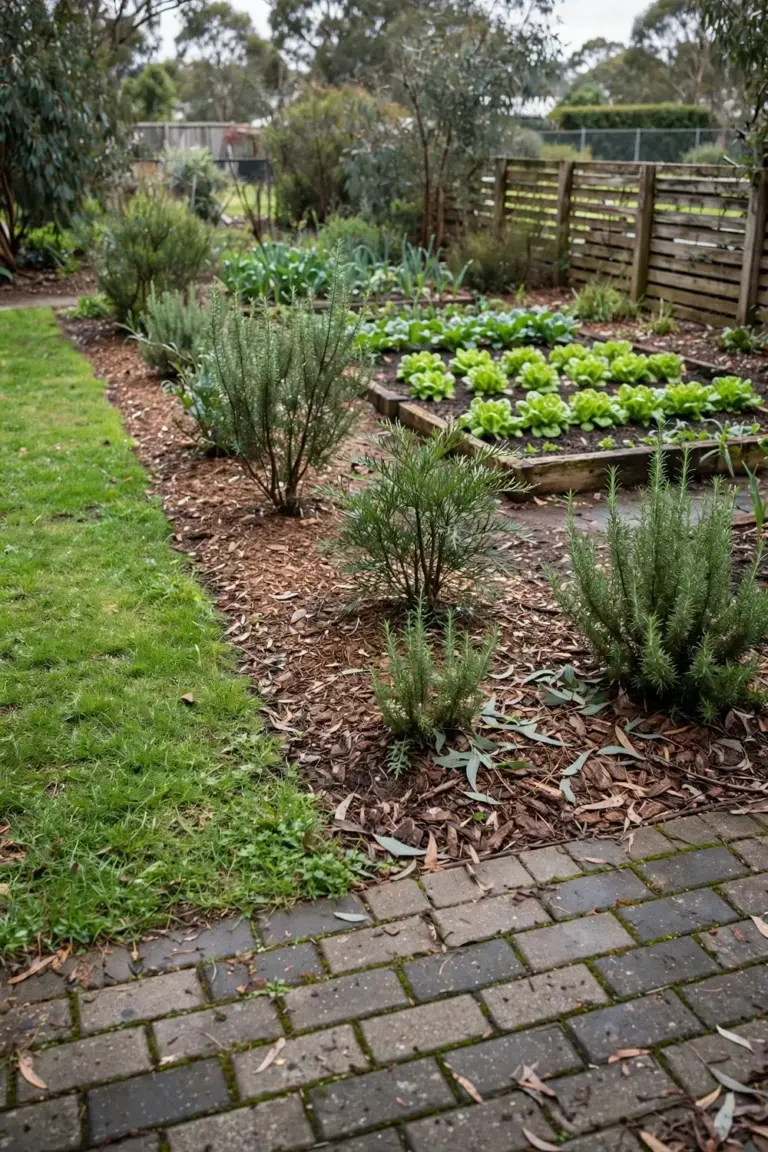
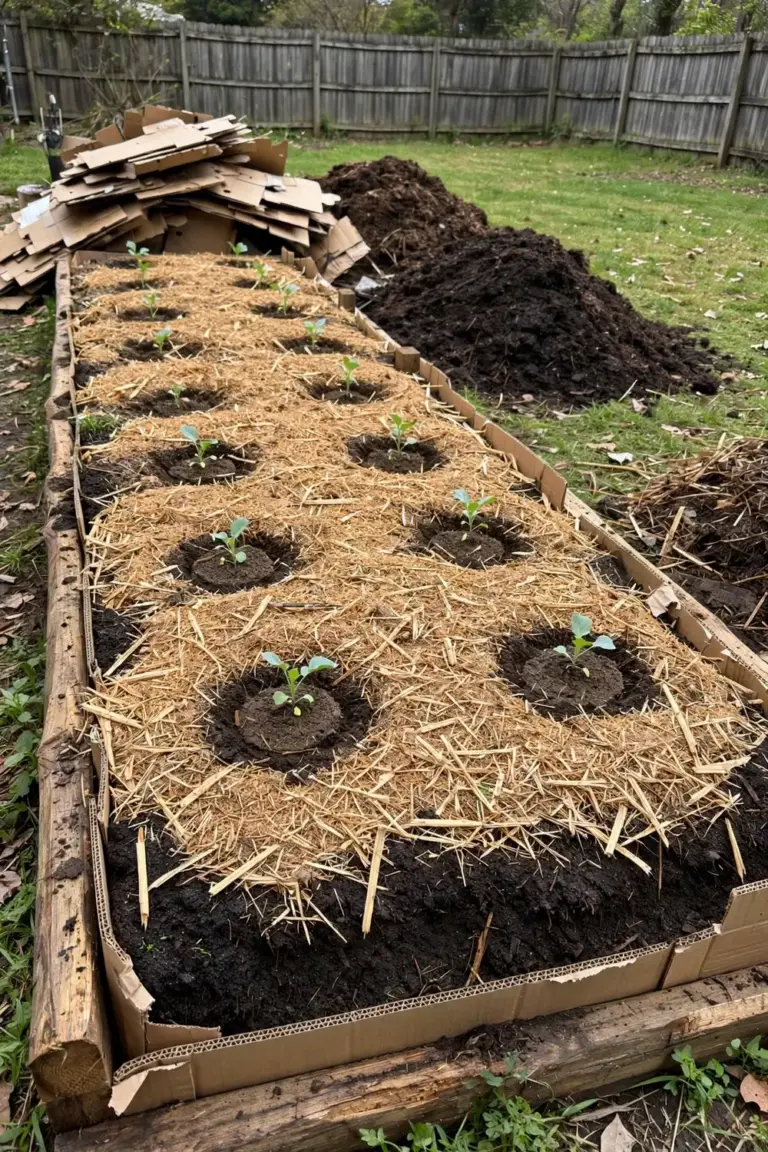
11. Build a Bed That Caterpillars Struggle to Reach
Prevention is the bed, not the bottle. Start with clean ground. Clear brassica stubble after harvest, because pupae shelter in crop debris. Rotate brassicas to a fresh bed each season, so soil-pupating Helicoverpa emerges to find no host. A bed that grew cauliflower last season is the wrong bed for cauliflower this season.
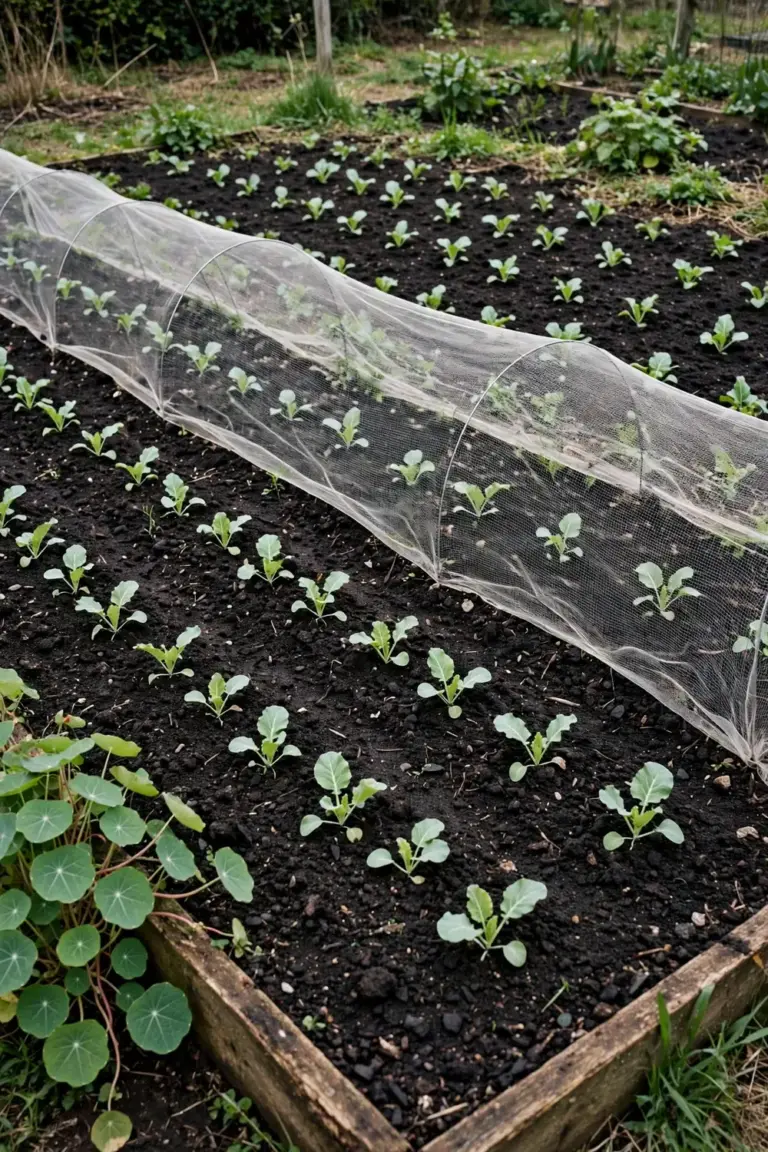
Feed the soil. Strong plants outgrow light caterpillar damage, and healthy soil feeds the predators that eat caterpillars. Soil health is the foundation under every control on this page: compost, organic matter, and steady water grow plants that replace a chewed leaf.
Invite the predators. Tiny wasps parasitise cabbage white caterpillars and diamondback caterpillars, and the NSW guide names Cotesia wasps on cabbage white and Diadegma wasps on cabbage moth. Those wasps work only when the bed offers nectar and shelter and when broad sprays stop killing them. Attracting beneficial insects shows how to build that habitat beside the vegetable bed.
Plant nasturtiums as an experiment, not a control. Gardeners plant nasturtiums as decoy plants, hoping caterpillars choose them over the cauliflower. Treat the decoy as a side trial beside netting, not a replacement for it. If the nasturtiums draw butterflies, they also draw them to the bed. Watch what actually happens, and keep the net on.
Check the weeds and the neighbours too, because wild brassicas and weedy mustards along a fence feed the same caterpillars and host the same moths. Pull wild mustard and shepherd’s purse from the bed edges before they flower. A clean edge is part of the control.
Frequently Asked Questions

Yes, after you clean it. Pick out every caterpillar, cut away any browned florets, and soak the head in salty water for 20 minutes so hidden caterpillars let go. Rinse the head well under running water. A head with deep tunnels and soft rot goes to the compost. The caterpillars are not poisonous. The rot they leave behind ruins the curd.
No. None of the four caterpillars on this page stings, bites, or carries venom. The cabbage white caterpillar feels soft and velvety. The Helicoverpa caterpillar feels hairy. Wash your hands after handling any caterpillar, because garden soil and frass carry bacteria. Gloves help if the hairy ones bother your skin, but the caterpillars themselves are harmless to touch.
Sprays kill the caterpillars on the plant, not the moths in the street. A white butterfly can fly in from a neighbouring garden the day after you spray and lay a fresh batch of eggs. Netting stops that cycle, because it bars the egg-laying adult. Without netting, expect to repeat handpicking and Bt every five to seven days while butterflies stay active.
No. Bt kurstaki targets caterpillars only, because its protein acts in the caterpillar gut. The Yates Dipel label states it is safe for bees, ladybirds, birds, fish, mammals, and pets. Spinetoram is different: it is highly toxic to bees while the spray stays wet. Spray spinetoram in the cool of the early morning or late evening, and keep it off flowering plants while bees feed.
Net the bed from transplant day, and check the curd every two to three days once it reaches golf-ball size. Handpick any caterpillar before it tunnels in. Once a caterpillar is inside the curd, sprays cannot reach it, so removal by hand is the only control left. Prevention at the net and early checks at the curd are the two moves that protect the head.
Walk the Bed Twice a Week and Catch Trouble Early
Walk the bed twice a week. Turn the lowest leaves. Check the curd once it reaches golf-ball size. Pick what you find, crush the eggs, and seal the net again before you leave. That routine holds caterpillars below damage level on most beds, and it tells you early when a bed needs Bt or a step up to spinetoram.

Keep the withholding periods on the bed, not in your head. Bt carries no withholding period on its label. Pyrethrum needs 1 day. Spinetoram needs 3 days on brassicas. Mark the spray date and the earliest pick date on a tag at the bed end. A tag beats memory when the curd looks ready the morning after a spray.
Start the next bed under netting from transplant day. Netting is the one control that stops eggs instead of chasing caterpillars. For the full growing picture beyond pest control, the site’s how to grow cauliflower guide covers planting, feeding, and harvest. This page stays on caterpillars on cauliflower.