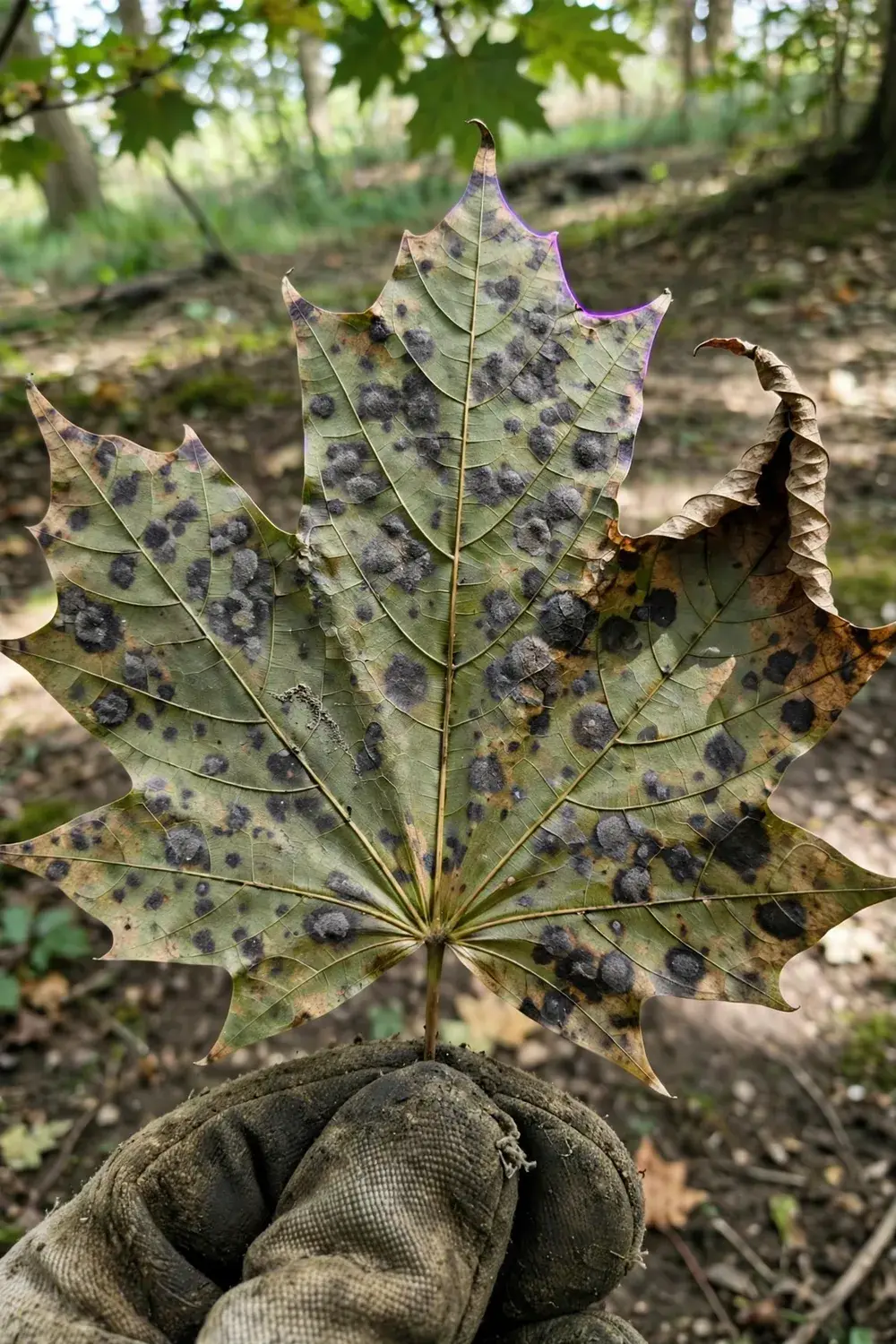

Venturia leaf spot is a fungal disease of maple, caused by Venturia acerina. The published record holds 1 Extension paragraph describing it and 0 treatment playbooks. That thin record is the whole story, and this page does not pad it.
I have learned to distrust a confident field ID for a disease with one paragraph of published description. The honest move is to read that paragraph, note what it does not say, and get a lab ID before naming the disease on your tree.
The rest of this page gives you the paragraph, a table of what the record holds, and the diagnosis steps worth taking.
1. What Venturia Leaf Spot on Maple Actually Is
Venturia leaf spot is a fungal leaf disease of maple (Acer spp.). Venturia acerina causes it. The name also appears as Venturia leaf blight of maple, and the two names describe the same disease.
Cladosporium humile is the asexual name for the same fungus, not a second disease. The disease index lists both names, which is how one fungus ends up looking like two problems.
Venturia leaf spot is not apple scab and not pear scab. Apple scab is Venturia inaequalis on apple, and pear scab is Venturia pyrina on pear. The three share a genus. They are separate species on separate hosts, and scab advice does not transfer to maple.
2. What the Only Published Description Says
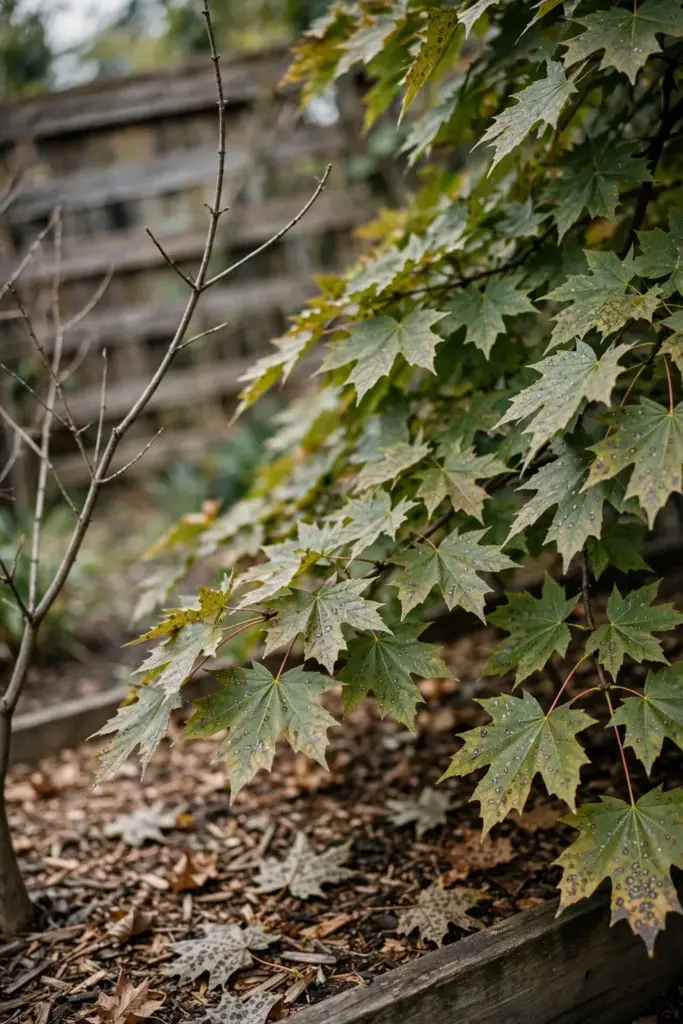
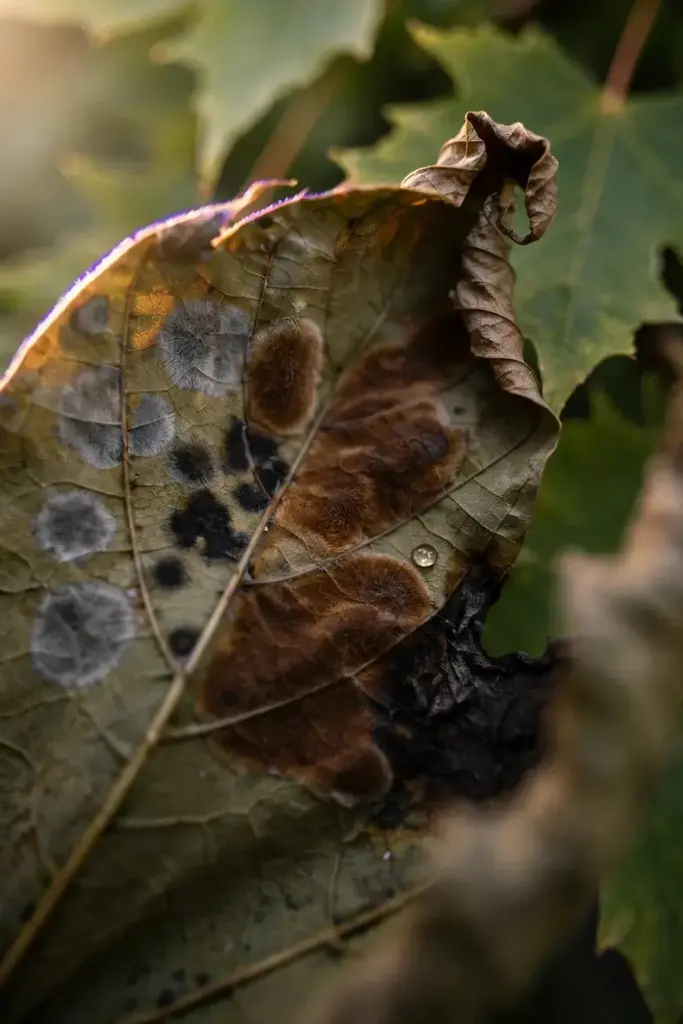
One University of Illinois Extension newsletter paragraph describes Venturia leaf spot. The fungus overwinters on leaves and infects maple leaves in spring. Symptoms begin as dull, gray spots that grow and become velvety, brown, and eventually black. Affected leaves wither and commonly drop prematurely. The newsletter calls the disease similar to anthracnose and maple leaf blister, which is a similarity statement, not a field key.
| Question | What the Published Record Says |
|---|---|
| Pathogen | Venturia acerina, a fungus; Cladosporium humile is the asexual name for the same fungus, per the International Code of Nomenclature example |
| Host | Maple (Acer spp.) |
| Symptoms | Dull gray spots grow velvety brown, then black; leaves wither and drop early, per the University of Illinois Extension newsletter |
| Infection timing | Overwinters on leaves; infects in spring |
| Importance | Rated “of less importance” among silver maple spot fungi in the USDA Silvics account for silver maple |
| Treatment | Data not available |
| Prevention | Data not available |
| Field key | Data not available; no published differential names Venturia leaf spot |
3. Why No Treatment Playbook Exists for Venturia Leaf Spot
No published source gives a Venturia-specific treatment or prevention program. No product, rate, timing, or sanitation program appears anywhere in the searchable record for this disease. That absence is the finding, not a gap in this page.
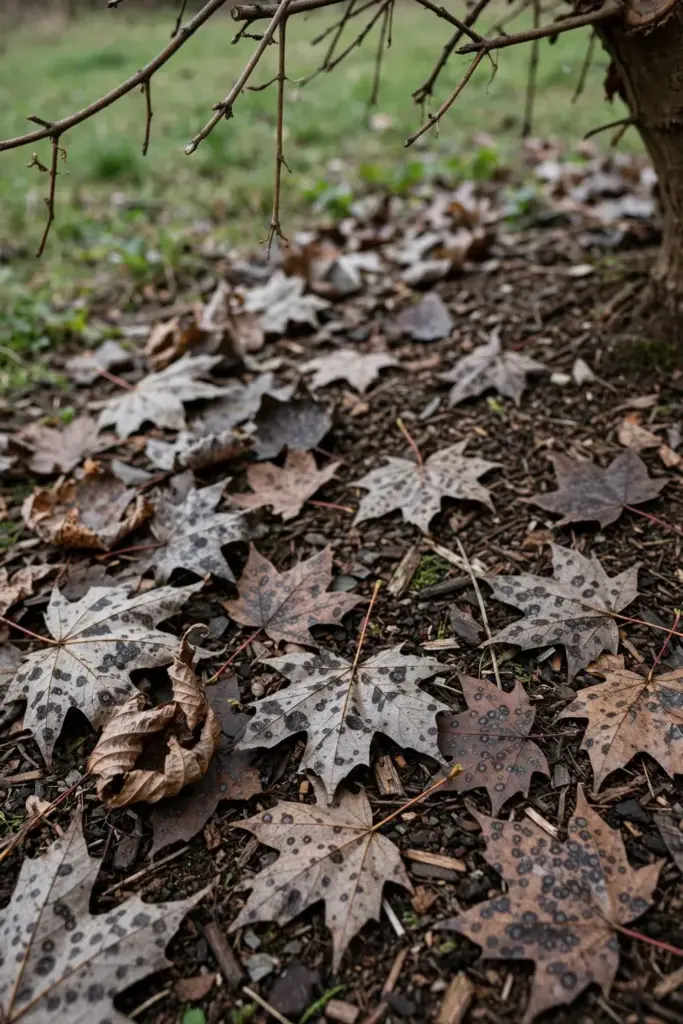
Do not borrow another disease’s playbook and relabel it. Tar spot advice belongs to tar spot. Anthracnose advice belongs to anthracnose. Carrying either one over to Venturia leaf spot would dress up another disease’s evidence as this disease’s evidence.
The thin record fits the Silvics rating. A disease rated “of less importance” draws little study, and little study leaves one paragraph. Home gardeners meet the same result: nothing to spray on, nothing to schedule, and no honest way to dress that up.
4. What to Do When Your Maple Has Spots
Take diagnosis steps, not treatment steps. No Venturia-specific action exists, so the work is getting a real ID.
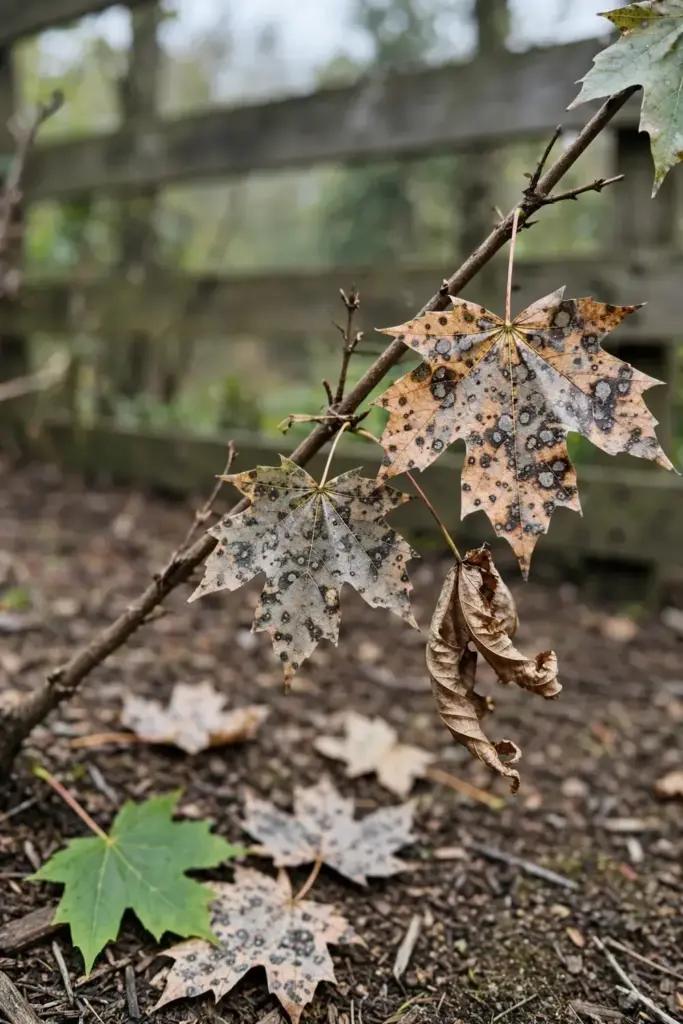
Photograph the spots over days, not once. Note the color progression from dull gray toward brown and black, and whether leaves wither and drop early. Dates and photos give a diagnostic lab something to work with.
Check the documented maple leaf diseases first. Tar spot, anthracnose, and purple-bordered leaf spot (Phyllosticta minima) all have published descriptions and playbooks, which is more than Venturia leaf spot has. A leaf-spot disease with a full published record shows the contrast: the Bipolaris Leaf Spot Guide carries the kind of identification and management detail this disease lacks.
Send a sample to a diagnostic lab for confirmation. One newsletter paragraph is not a field key, and look-alike leaf spots share symptoms. The lab settles it.
Water during drought and avoid wounding the bark. None of that treats Venturia leaf spot. It keeps the tree in shape while you get an ID. More disease guides live in the Plant Care archive.
5. Frequently Asked Questions
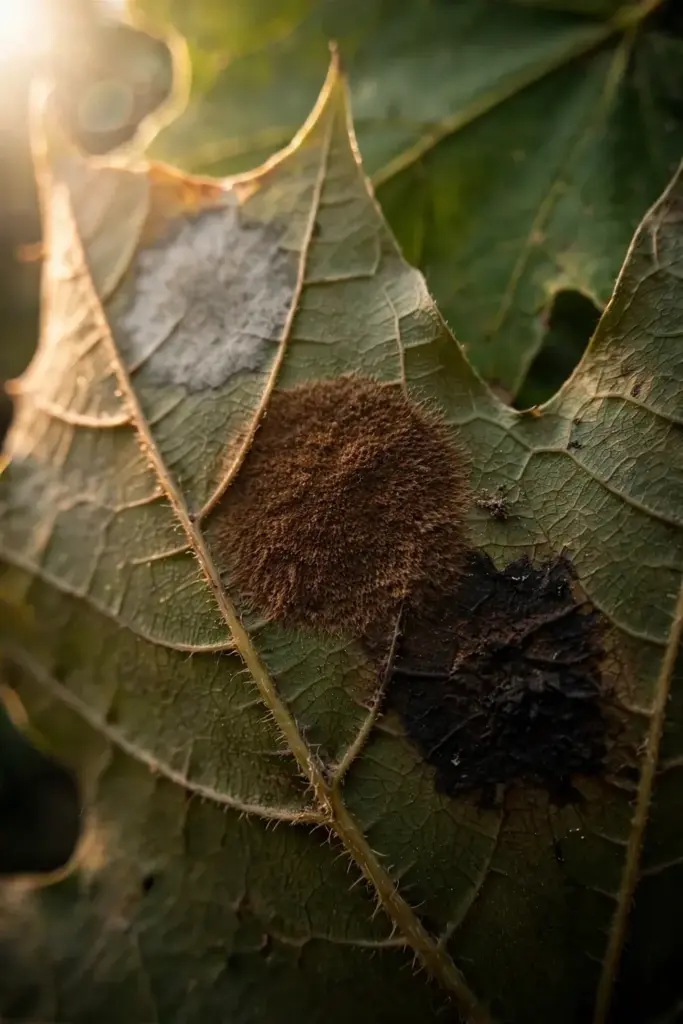
No. One Extension paragraph describes the symptoms, and no published field key separates Venturia leaf spot from anthracnose, leaf blister, or other maple leaf spots. Photos help a diagnostic lab, and the lab result is the ID. A confident name from a photo alone would outrun the published evidence.
No. Apple scab is Venturia inaequalis on apple, and pear scab is Venturia pyrina on pear. Venturia leaf spot is Venturia acerina on maple. The three share a genus and nothing else that matters to a gardener. Scab sprays, timings, and resistant varieties do not transfer across these species and hosts.
No published program names a product or timing for this disease, so data is not available. Spraying on a guess spends product and effort on an unconfirmed target. Get a lab ID first. If the lab names a different disease, follow that disease’s published program instead of improvising one for Venturia leaf spot.
The published record does not describe tree death from Venturia leaf spot. The Illinois paragraph describes withering and early leaf drop, and the USDA Silvics account rates the fungus “of less importance” on silver maple. Still get an ID, because other maple problems do kill trees and early leaf drop alone cannot tell them apart.