
Match bark, leaf, and flower or fruit before you settle a name. That is Australian tree identification for the 21 common trees on this page. The rest of this page is 21 trees, from the first gum to the final coastal tree.
I have learned that bark settles a gum tree ID faster than leaf shape alone.
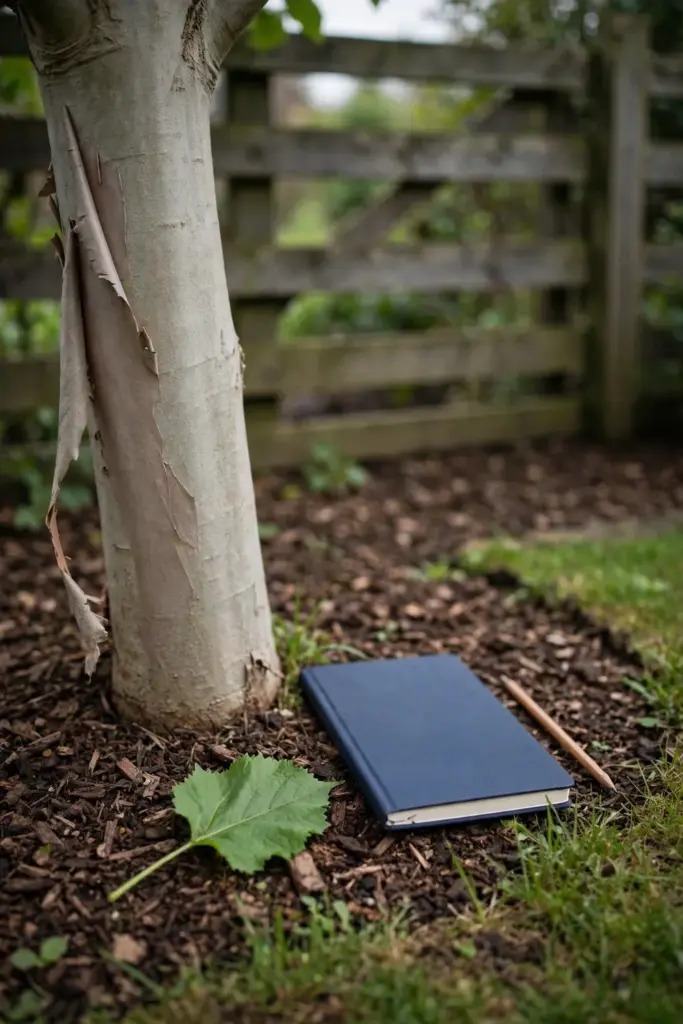
Work from the trunk outward. Read bark first. Read leaf second. Read flower or fruit third. Photograph each clue in daylight with the whole tree in one wide frame. A name built on three clues holds. A name built on one leaf fails against the nearest lookalike.
Australian tree identification names a tree from bark, leaf, flower or fruit, habit, and habitat. A photo set plus one state flora authority settles a garden ID without a guess. A single leaf gives a lead. Three clues give the verdict.
Use Three Clues Before You Name Any Tree
Three clues name a tree because bark, leaf, and flower or fruit each rule out a different set of lookalikes.
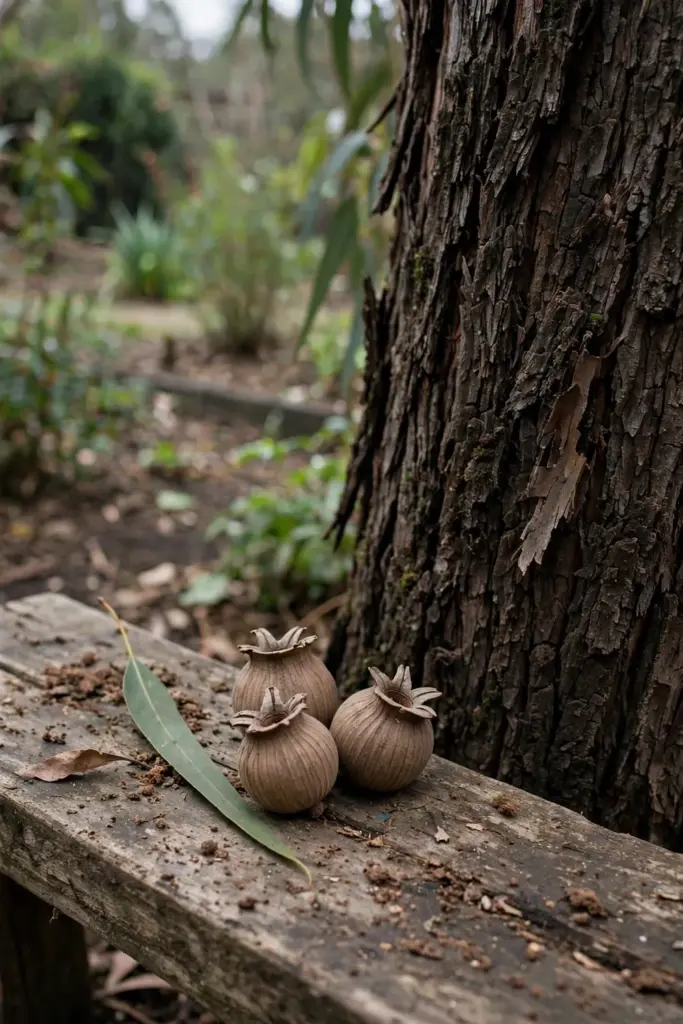
Start at the trunk. Record bark texture, color, and shedding pattern on the trunk and on the branches. Smooth bark peels in ribbons or patches. Rough bark stays furrowed, stringy, or hard and dark. Bark on the upper branches can differ from bark on the trunk, so photograph both levels. A trunk view plus a branch view fixes the bark type. One trunk view leaves the branch bark unknown.
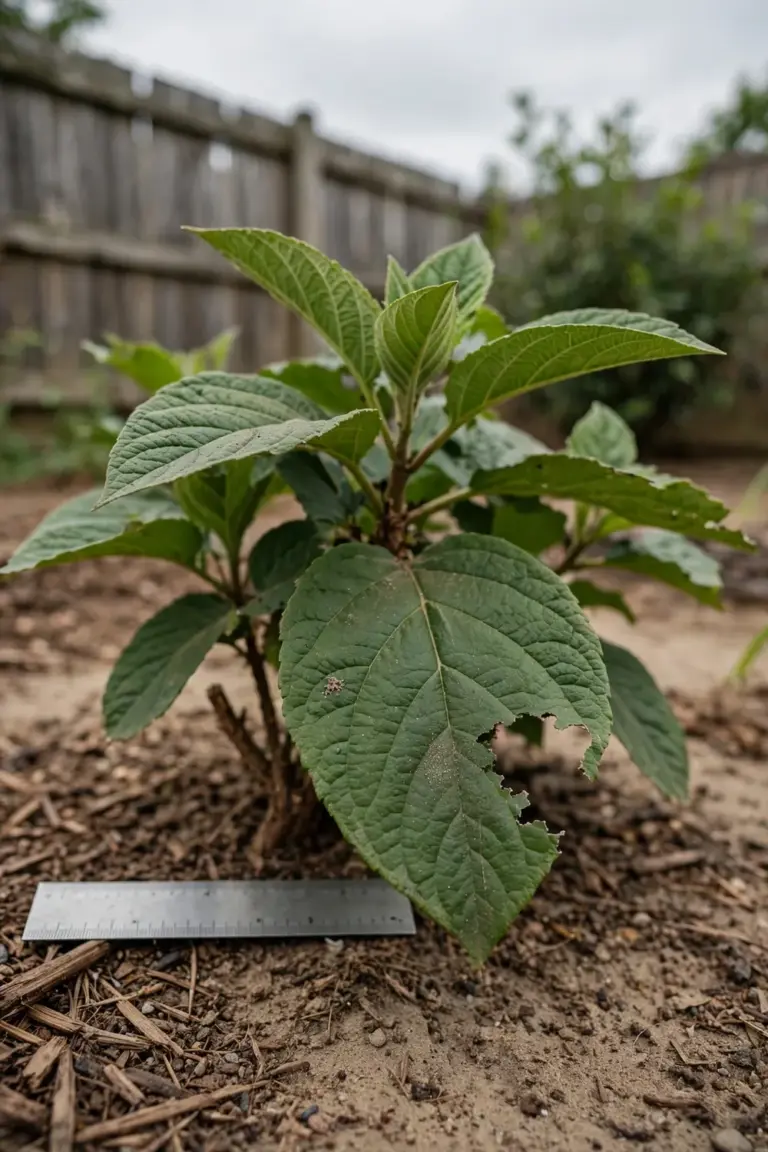
Read leaf next. Record shape, arrangement, stalk, and scent when crushed. Leaves sit opposite each other in pairs, alternate along the stem in a staggered pattern, or whorl in a ring around one node. A phyllode is a flattened leaf stalk that acts as a leaf. Needle-like branchlets belong to she-oaks, not to true pines. Note soil and drainage with the photo set, because building soil health shapes which trees establish in one spot. Soil notes plus habitat notes remove whole groups from the search.
Read flower or fruit last. Record flower form and color, fruit shape, and seed form. Gum nuts carry valved caps. Wattle heads carry dense balls of tiny flowers. Bottlebrush spikes carry dense brushes of stamens. Banksia cones carry woody follicles. A flower photo plus a fruit photo separates families that share leaf shape. Leaf shape alone merges those families.
Confirm the name in one state flora authority, and match the botanical name in the record for the state where the tree grows. The New South Wales FloraOnline carries NSW species records, the Victorian VicFlora carries Victorian species records, and the Western Australian FloraBase carries Western Australian species records. A common name alone can point to two different trees.
| Clue | What You Check | What It Rules Out |
|---|---|---|
| Bark | Texture, color, shedding pattern on trunk and branches | Smooth bark group vs rough bark group |
| Leaf | Shape, arrangement, stalk, scent when crushed | Simple leaves vs phyllodes vs needle branchlets |
| Flower or fruit | Flower form and color, fruit shape and seed form | Brush flowers vs pea flowers vs catkins |
1. Name River Red Gum by Smooth Bark and Gum Nuts
River Red Gum is the gum with smooth cream bark and ribbed gum nuts near water.
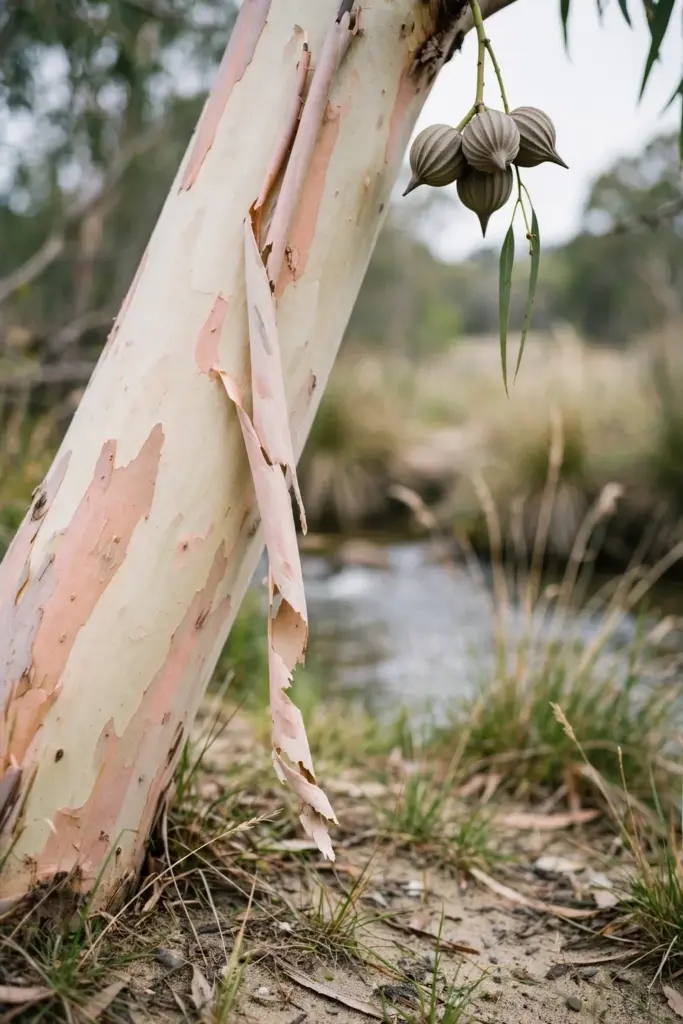
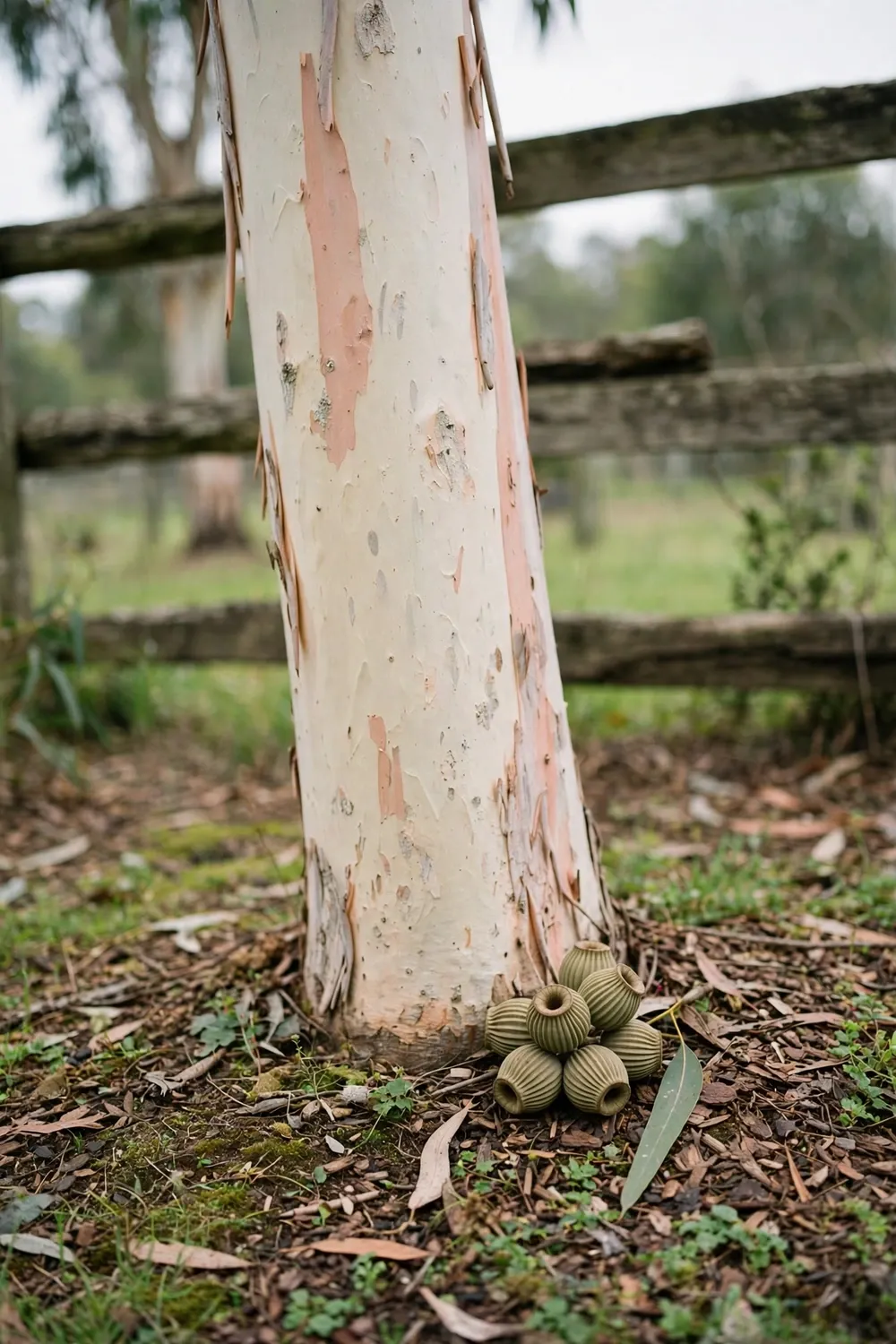
River Red Gum is Eucalyptus camaldulensis. The trunk sheds bark in smooth patches that leave cream, pink, and gray skin. The canopy carries long narrow leaves that hang from slender stalks. The gum nuts sit in clusters, and each nut carries a small cap with valves that open at the tip. The tree grows near rivers, creeks, and floodplains, and it spreads a wide canopy over open ground. Bark plus gum nuts plus a streamside spot point to River Red Gum. One clue alone points to several gums.
Separate River Red Gum from Sydney Blue Gum by bark and fruit. River Red Gum bark stays smooth from trunk to branch, while Sydney Blue Gum bark turns rough at the base and smooth above. River Red Gum nuts carry a pointed cap that rises above the rim. Sydney Blue Gum nuts sit rounder in the cluster. Growing a River Red Gum from seed is a separate job, and growing a eucalyptus tree from seed covers that work. This page names the tree. It does not teach the planting.
2. Name Sydney Blue Gum by Rough Base and Blue Leaves
Sydney Blue Gum is the tall gum with a rough dark base and blue green leaves.
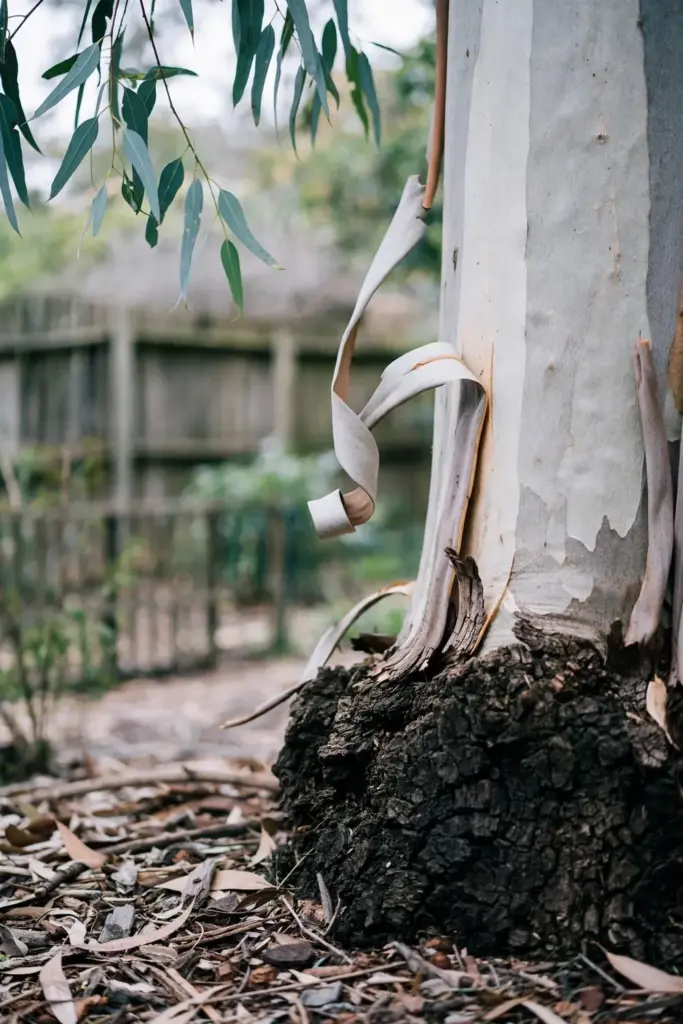
Sydney Blue Gum is Eucalyptus saligna. The trunk base carries rough dark bark, and the bark above turns smooth and sheds in long ribbons. The adult leaves sit broad and blue green, and they hang from slender stalks. The gum nuts sit in clusters of small rounded cups. The tree grows tall and straight in wet forest and in large gardens with deep soil. Bark change from base to crown plus broad blue leaves point to Sydney Blue Gum. Leaf color alone fades in dry shade and misleads.
Separate Sydney Blue Gum from River Red Gum by the trunk base, where Sydney Blue Gum keeps a rough stocking and River Red Gum stays smooth to the ground. Sydney Blue Gum nuts sit rounder and smaller in the cluster, while River Red Gum nuts carry a pointed cap. A trunk base photo settles the pair, and a canopy photo leaves the pair open.
3. Name Grey Ironbark by Hard Furrowed Bark
Grey Ironbark is the gum with hard dark bark that stays rough to the branches.
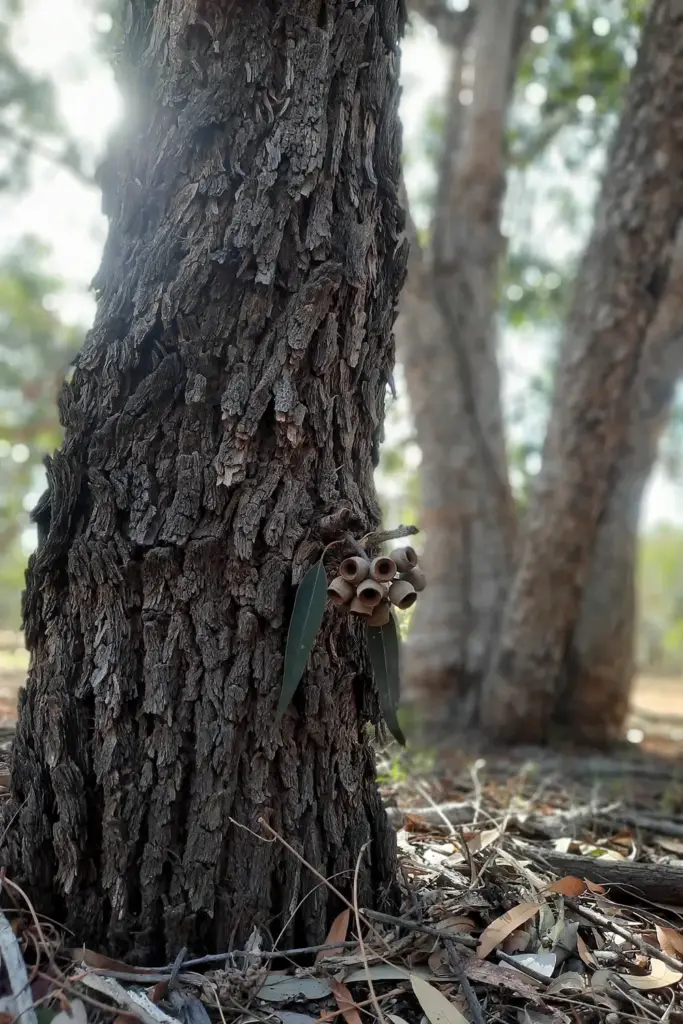
Grey Ironbark is Eucalyptus paniculata. The bark runs hard, dark, and deeply furrowed from the trunk into the branches. The bark feels solid under a knuckle tap, and it sheds in small hard flakes rather than in ribbons. The leaves sit narrow and glossy green, and they hang from slender stalks. The gum nuts sit small and cup shaped in clusters. The tree grows in coastal forest and in streets where the soil holds moisture. Hard bark plus narrow glossy leaves point to Grey Ironbark. Bark color alone shifts with rain and age.
Separate Grey Ironbark from stringybark by bark texture, since ironbark stays hard and furrowed and resists a thumbnail press, while stringybark pulls away in long fibrous strings. Grey Ironbark bark changes slowly as the trunk adds wood, and how trees add a new ring of wood each year explains that slow thickening. A bark pull test settles the pair, and a distant trunk photo leaves the pair open.
4. Name Messmate Stringybark by Fibrous Bark Strings
Messmate Stringybark is the gum with bark that pulls away in long fibrous strings.
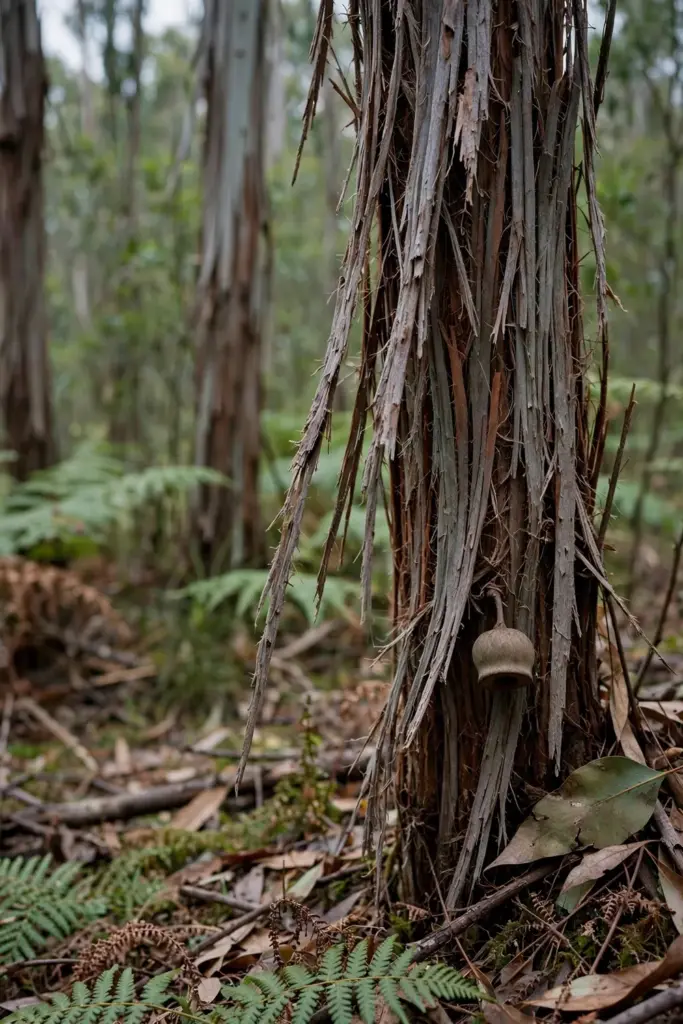
Messmate Stringybark is Eucalyptus obliqua. The bark runs thick, fibrous, and stringy from the trunk into the branches, and it lifts in long strips when pulled. The leaves sit broad and uneven at the base, with one side of the blade wider than the other. The gum nuts sit barrel shaped in clusters, and each nut carries a flat rim. The tree grows in cool forest and in large gardens with deep soil and steady rain. Fibrous bark plus uneven leaf bases plus barrel nuts point to Messmate Stringybark. Bark color alone overlaps with other stringybarks.
Separate Messmate Stringybark from Grey Ironbark by bark pull, since stringybark lifts in long fibers and ironbark stays hard and refuses the pull. Messmate leaves carry an uneven base that ironbark leaves lack. A close leaf photo with a bark pull settles this pair, and a trunk photo alone leaves the pair open.
5. Name Broad-Leaved Paperbark by Peeling Paper Layers
Broad-Leaved Paperbark is the tree with bark that peels in soft papery sheets.
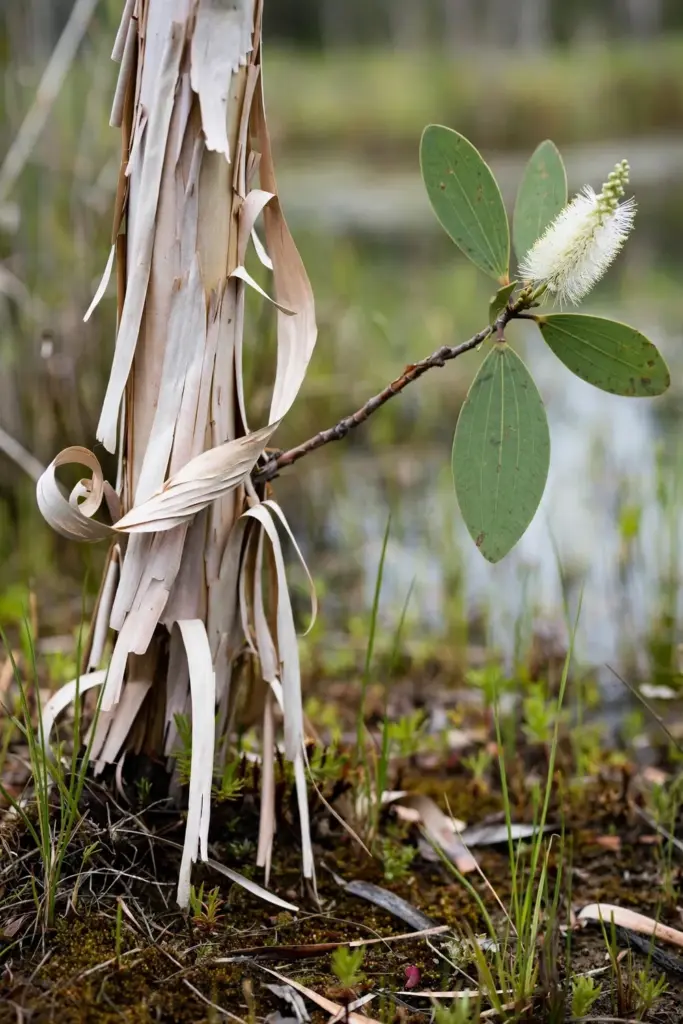
Broad-Leaved Paperbark is Melaleuca quinquenervia. The bark peels in soft white and cream sheets that lift from the trunk in layers. The leaves sit broad and oval with several lengthwise veins. The flowers form white bottlebrush spikes that sit at the branch tips. The fruit forms small woody cups packed along the old spike. The tree grows in wet ground, in swamps, and in gardens with damp soil. Papery bark plus broad veined leaves plus white spikes point to Broad-Leaved Paperbark, and bark alone can resemble a peeling gum in dry light.
Separate Broad-Leaved Paperbark from a peeling gum by leaf and flower. Paperbark leaves carry several lengthwise veins and sit stiff in the hand, while gum leaves carry one main vein and hang from slender stalks. Paperbark flowers form white spikes, and gum flowers form clusters of stamens around a cap. A leaf vein photo with a flower photo settles the pair, and a bark photo alone leaves the pair open.
6. Name Golden Wattle by Round Yellow Heads and Wide Phyllodes
Golden Wattle is the wattle with round golden heads and wide curved phyllodes.
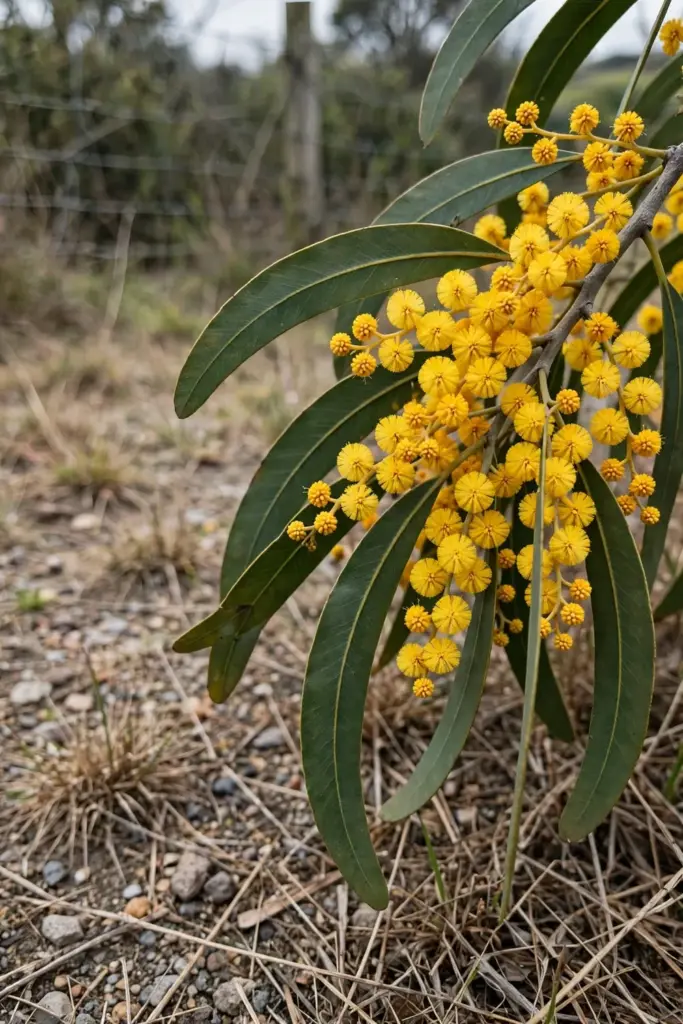
Golden Wattle is Acacia pycnantha. The flowers form round heads of deep golden yellow, and each head packs many tiny flowers into one ball. The phyllodes sit wide and curved like a sickle, with one main vein along the edge. The bark runs smooth and gray brown on young stems, and it roughens with age. The tree grows as a small tree or a large shrub in open woodland and in gardens with sun and drainage. Round golden heads plus wide curved phyllodes point to Golden Wattle. Flower color alone overlaps with other wattles.
Separate Golden Wattle from Silver Wattle by phyllode and flower timing. Golden Wattle phyllodes sit wide and curved. Silver Wattle phyllodes sit narrow and silvery with a blue cast. Golden Wattle heads glow deep gold. Silver Wattle heads run pale cream to soft yellow. A phyllode photo plus a head photo settles the pair. A flower photo alone leaves the pair open.
7. Name Silver Wattle by Silvery Phyllodes and Pale Heads
Silver Wattle is the wattle with silvery blue phyllodes and pale cream heads.
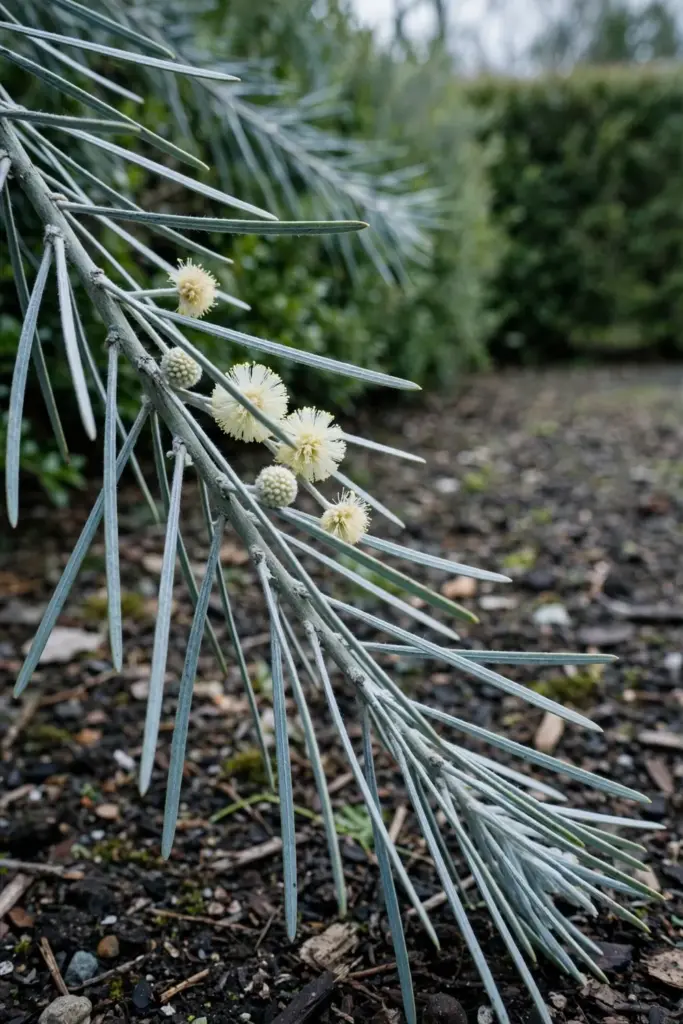
Silver Wattle is Acacia dealbata. The phyllodes sit narrow and silvery blue, and young growth carries a fine silvery coat. The flowers form round heads of pale cream to soft yellow. The bark runs smooth and gray green on young stems, and it darkens with age. The tree grows fast in cool gardens and in forest edges with steady moisture. Silvery phyllodes plus pale heads point to Silver Wattle. Leaf color alone fades in hard sun and misleads.
Separate Silver Wattle from Golden Wattle by phyllode width and head color. Silver Wattle phyllodes sit narrow and silvery. Golden Wattle phyllodes sit wide and curved. Silver Wattle heads run pale. Golden Wattle heads run deep gold. A phyllode photo in shade plus a head photo settles the pair. A distant yellow canopy leaves the pair open.
8. Name Blackwood by Dark Timber Bark and Narrow Phyllodes
Blackwood is the wattle with dark rough bark and narrow glossy phyllodes.
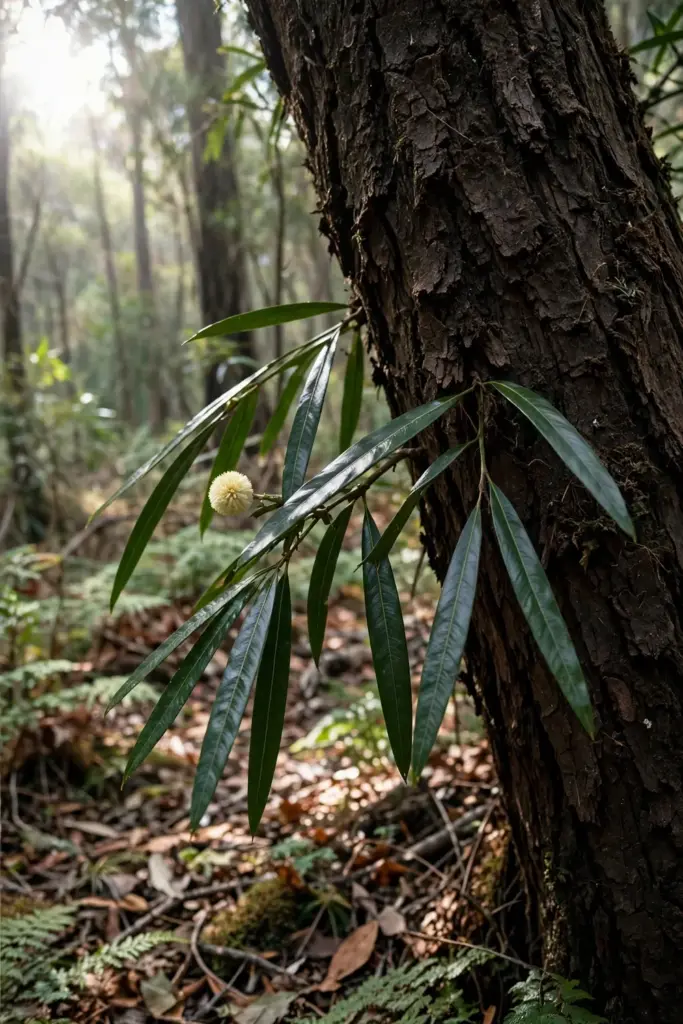
Blackwood is Acacia melanoxylon. The bark runs dark brown and rough, and it furrows with age into hard plates. The phyllodes sit narrow and glossy dark green, with several lengthwise veins. The flowers form round heads of pale cream. The pods sit flat and twisted when ripe, with dark seeds inside. The tree grows in cool wet forest and in gardens with deep soil and shelter. Dark bark plus narrow glossy phyllodes plus pale heads point to Blackwood. Bark alone overlaps with other dark barked wattles.
Separate Blackwood from Silver Wattle by phyllode color and bark. Blackwood phyllodes sit dark glossy green. Silver Wattle phyllodes sit silvery blue. Blackwood bark runs dark and rough. Silver Wattle bark stays smooth and gray green on young stems. A phyllode photo plus a bark photo settles the pair. A flower photo alone leaves the pair open.
9. Name Crimson Bottlebrush by Red Spikes and Stiff Leaves
Crimson Bottlebrush is the shrub tree with crimson brush spikes and stiff narrow leaves.
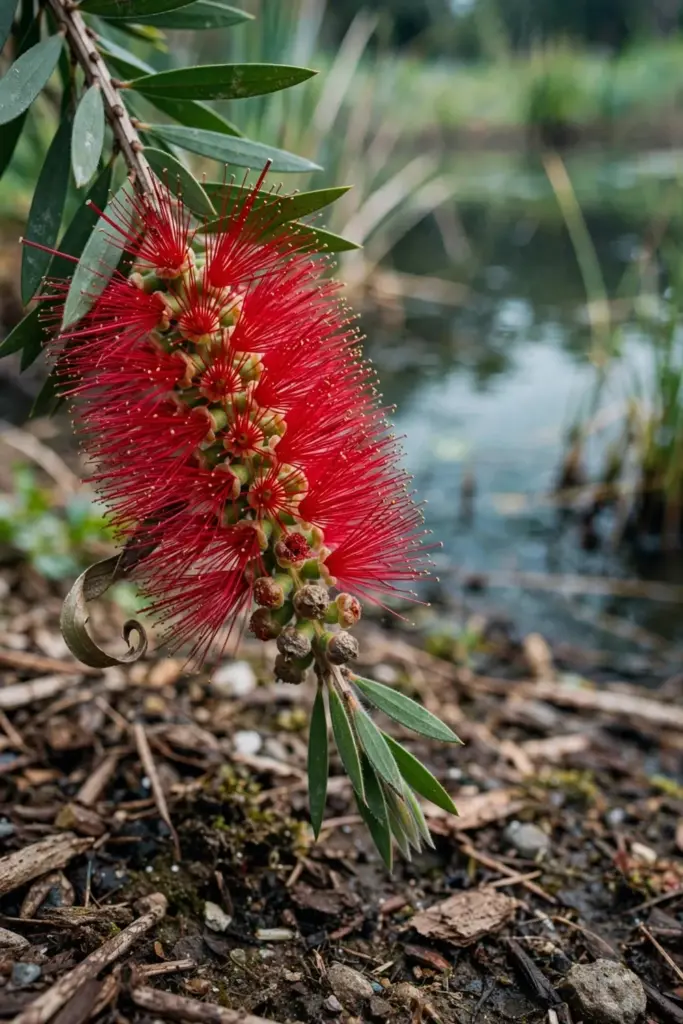
Crimson Bottlebrush is Callistemon citrinus. The flowers form dense spikes of crimson stamens that ring the stem like a bottle brush. The leaves sit narrow, stiff, and lemon scented when crushed. The fruit forms small woody cups packed along the old spike. The bark runs rough and gray brown. The plant grows as a large shrub or a small tree near water, in gardens with sun, and in damp soil. Crimson spikes plus stiff scented leaves point to Crimson Bottlebrush. Flower color alone overlaps with other bottlebrushes.
Separate Crimson Bottlebrush from paperbark by flower color and bark. Crimson Bottlebrush spikes run crimson red. Paperbark spikes run white or cream. Crimson Bottlebrush leaves sit narrow and scented. Paperbark leaves sit broad and veined. A spike photo plus a crushed leaf scent note settles the pair. A spike photo alone leaves the pair open.
10. Name Old Man Banksia by Gnarled Bark and Serrated Leaves
Old Man Banksia is the banksia with gnarled bark, serrated leaves, and large cones.
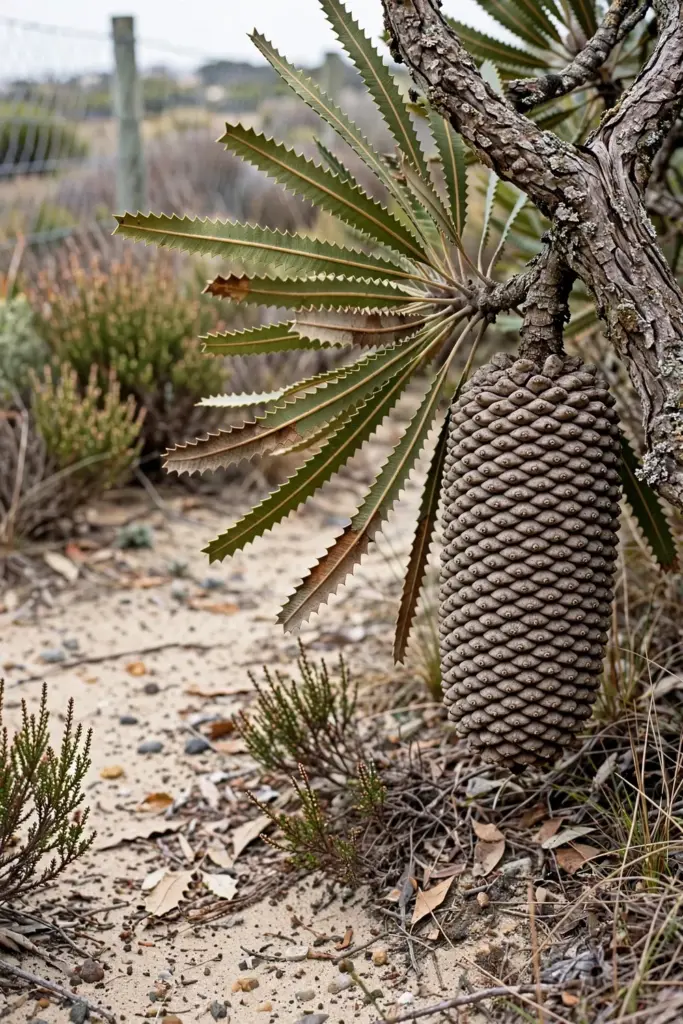
Old Man Banksia is Banksia serrata. The bark runs thick, gnarled, and gray brown, and it furrows into rough plates. The leaves sit long and serrated along the edges, with teeth that catch a fingertip. The flowers form tall spikes of yellow green that age to brown. The cones carry woody follicles that hold seed. The tree grows in coastal heath and in gardens with sandy soil and sun. Gnarled bark plus serrated leaves plus large cones point to Old Man Banksia. Leaf shape alone overlaps with other banksias.
Separate Old Man Banksia from a young banksia by bark and cone size. Old Man Banksia bark runs thick and gnarled. Younger banksias carry thinner and smoother bark. Old Man Banksia cones sit large and woody. Other banksia cones sit smaller. A bark photo plus a cone photo settles the pair. A leaf photo alone leaves the pair open.
11. Name Forest She-Oak by Drooping Needle Branchlets and Small Cones
Forest She-Oak is the she-oak with drooping needle branchlets and small woody cones.
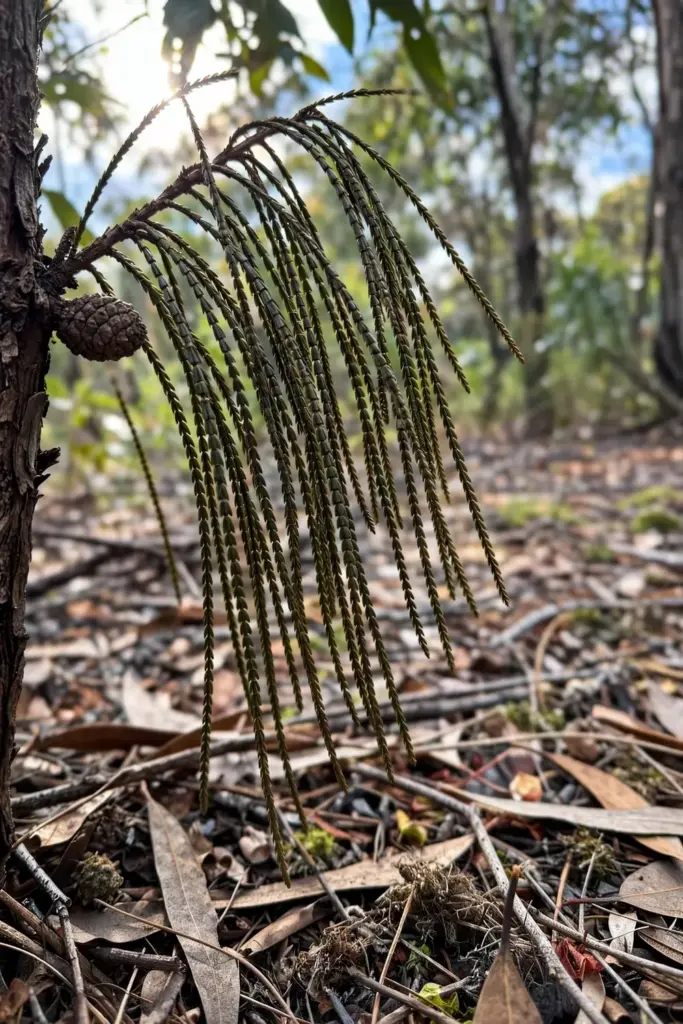
Forest She-Oak is Allocasuarina torulosa. The branchlets hang drooping and jointed, and each joint carries tiny scale teeth. The leaves are the branchlets themselves, and true leaves stay reduced to scales. The cones sit small, woody, and knobbly on the branches. The bark runs rough and dark brown. The tree grows in open forest and in gardens with sun and drainage. Drooping jointed branchlets plus small cones point to Forest She-Oak. Branchlet shape alone overlaps with other she-oaks.
Separate Forest She-Oak from Coastal She-Oak by branchlet and cone. Forest She-Oak branchlets hang drooping and fine, while Coastal She-Oak branchlets sit stiffer and coarser. Forest She-Oak cones sit smaller and knobbly, and Coastal She-Oak cones sit larger and barrel shaped. A branchlet photo with a cone photo settles the pair, and a canopy photo alone leaves the pair open.
12. Name Coastal She-Oak by Stiff Branchlets and Barrel Cones
Coastal She-Oak is the she-oak with stiff jointed branchlets and large barrel cones.
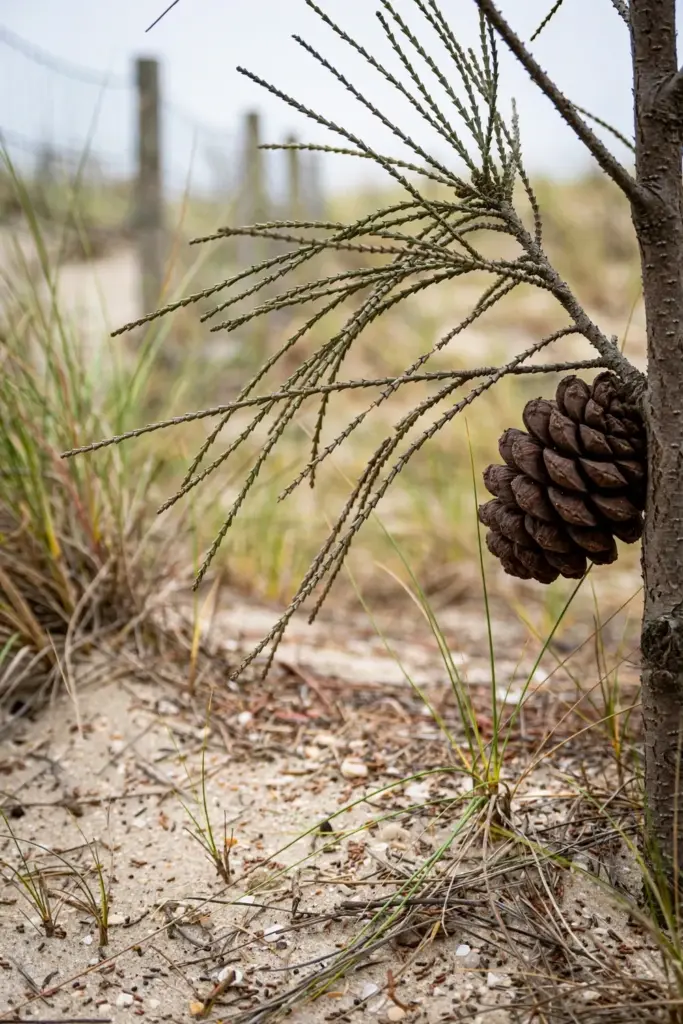
Coastal She-Oak is Casuarina equisetifolia. The branchlets sit stiff, jointed, and green, and each joint carries tiny scale teeth. The cones sit large, woody, and barrel shaped. The bark runs gray brown and rough. The tree grows on coasts, on dunes, and in gardens with wind and salt. Stiff branchlets plus large barrel cones plus a coastal spot point to Coastal She-Oak. Branchlet shape alone overlaps with Forest She-Oak.
Separate Coastal She-Oak from Forest She-Oak by branchlet stiffness and cone size. Coastal She-Oak branchlets sit stiff and coarse. Forest She-Oak branchlets hang drooping and fine. Coastal She-Oak cones sit large and barrel shaped. Forest She-Oak cones sit smaller and knobbly. Nurseries in Florida sell Coastal She-Oak under the name Australian pine. Coastal She-Oak is a she-oak, not a true pine. True pines carry cones with overlapping scales and needle leaves in bundles. A cone photo plus a branchlet photo settles the pair. A common name alone misleads.
13. Name Jacaranda by Purple Trumpets and Fern Leaves
Jacaranda is the street tree with purple trumpet flowers and fern-like leaves.
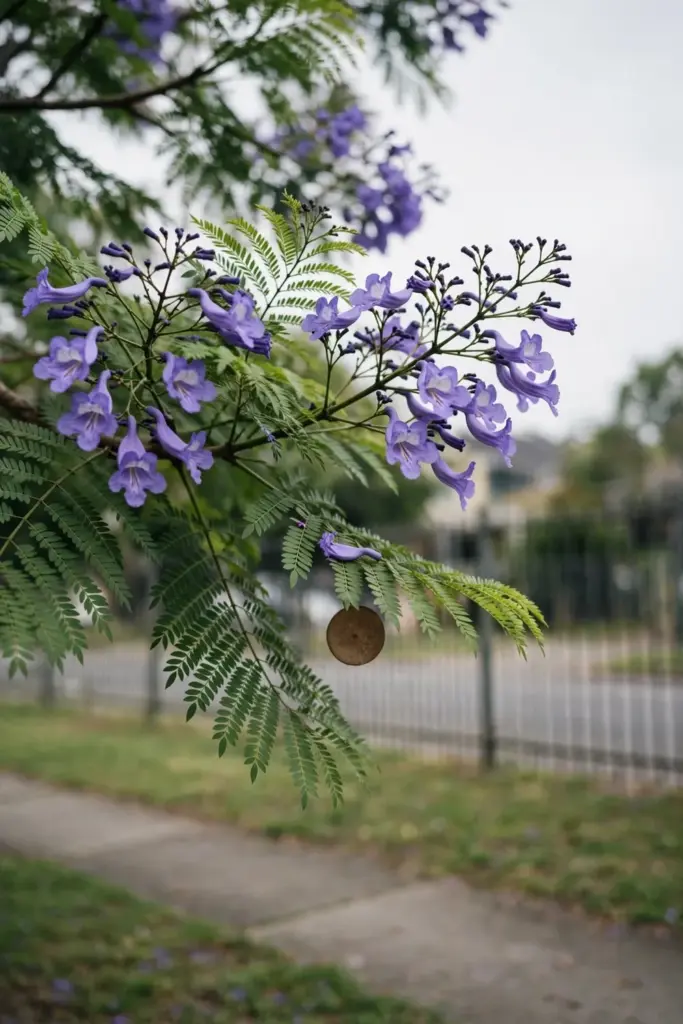
Jacaranda is Jacaranda mimosifolia. The flowers form clusters of purple trumpets that cover the canopy. The leaves sit twice divided, with many small leaflets along each branch, and they give the canopy a fern-like look. The fruit forms round flat pods with papery seeds inside. The bark runs gray brown and rough on older trunks. The tree grows in warm streets, in parks, and in gardens with sun and drainage. Purple trumpets plus fern leaves plus flat pods point to Jacaranda. Flower color alone overlaps with other purple flowered trees.
Separate Jacaranda from a purple flowered native by leaf and pod. Jacaranda leaves sit twice divided with many small leaflets, while native purple flowered trees carry simple or once divided leaves. Jacaranda pods sit round and flat, and native pods sit curved or woody. A leaf photo with a pod photo settles the pair, and a flower photo alone leaves the pair open.
14. Name Moreton Bay Fig by Buttress Roots and Broad Leaves
Moreton Bay Fig is the fig with wide buttress roots and broad glossy leaves.
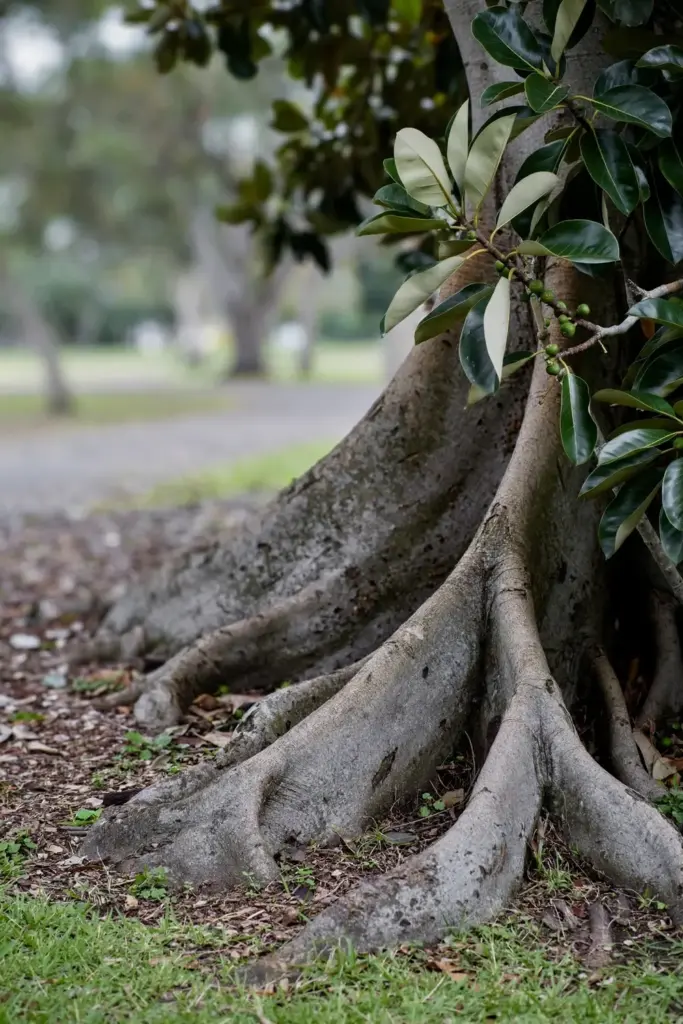
Moreton Bay Fig is Ficus macrophylla. The roots flare into wide buttresses at the base, and the buttresses spread across the ground. The leaves sit broad, glossy, and oval with a pale underside. The fruit forms small round figs that sit along the branches. The bark runs smooth and gray on young stems, and it roughens with age. The tree grows large in parks, in streets, and in gardens with deep soil and room. Buttress roots plus broad glossy leaves plus small figs point to Moreton Bay Fig, and leaf shape alone overlaps with other figs.
Separate Moreton Bay Fig from a rubber tree by root and fruit. Moreton Bay Fig roots flare into buttresses, while a rubber tree keeps a single trunk without buttresses. Moreton Bay Fig fruit forms small figs on the branches, and a rubber tree carries no figs. A base photo with a fruit photo settles the pair, and a leaf photo alone leaves the pair open.
15. Name Illawarra Flame Tree by Scarlet Flowers and Lobed Leaves
Illawarra Flame Tree is the tree with scarlet flowers and lobed leaves that drop before bloom.
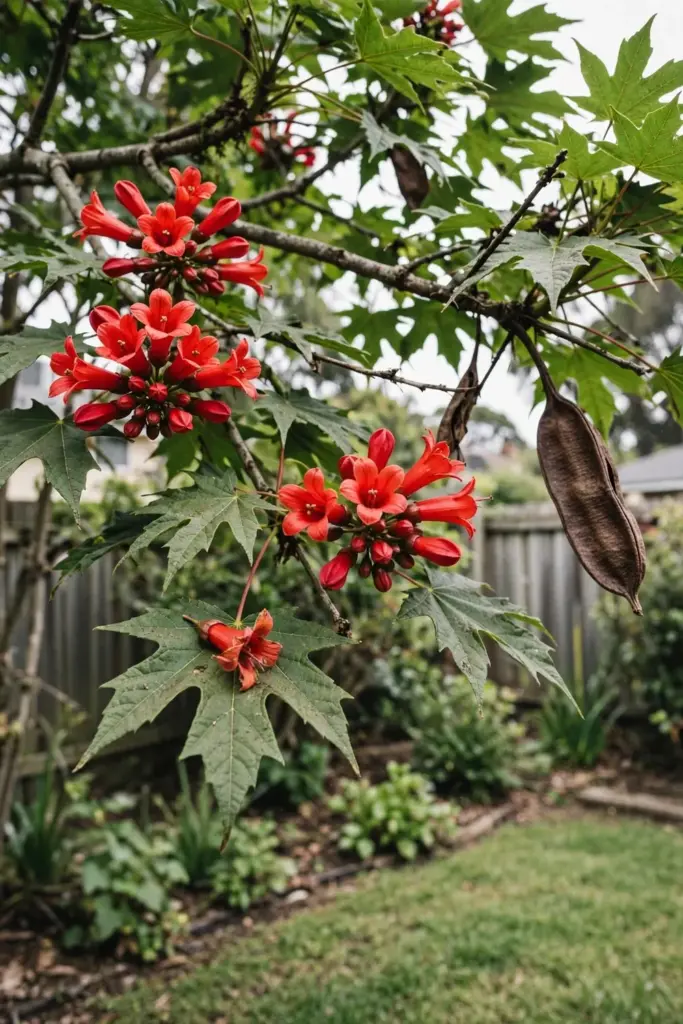
Illawarra Flame Tree is Brachychiton acerifolius. The flowers form clusters of scarlet bells that cover the bare branches. The leaves sit lobed like a maple, with several pointed lobes. The tree drops most leaves before the flowers open, so the canopy turns red with no green behind it. The fruit forms boat shaped pods with seeds inside. The bark runs smooth and gray brown. The tree grows in warm gardens and in coastal forest with sun and drainage. Scarlet bells on bare branches plus lobed leaves point to Illawarra Flame Tree. Flower color alone overlaps with other red flowered trees.
Separate Illawarra Flame Tree from Queensland Bottle Tree by trunk and leaf. Illawarra Flame Tree keeps a straight trunk and lobed leaves. Queensland Bottle Tree swells into a bottle trunk and carries simple leaves. Illawarra Flame Tree flowers run scarlet. Queensland Bottle Tree flowers run cream to pink. A trunk photo plus a leaf photo settles the pair. A flower photo alone leaves the pair open.
16. Name Silky Oak by Fern Leaves and Golden Brush Flowers
Silky Oak is the tree with fern-like leaves and golden brush flowers.
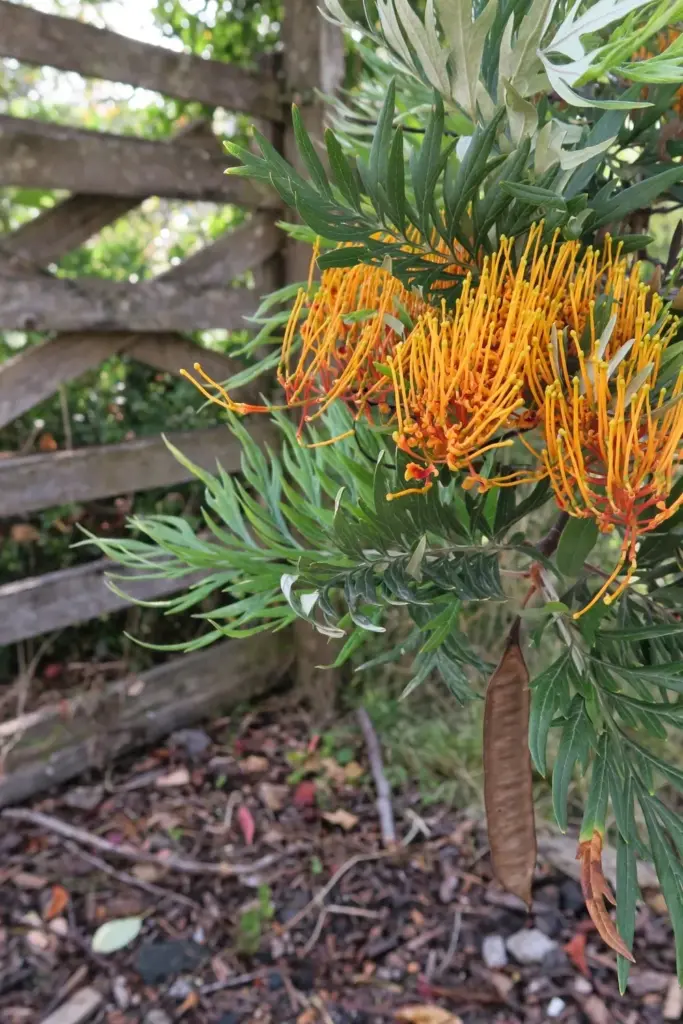
Silky Oak is Grevillea robusta. The leaves sit deeply divided, with narrow lobes that give the canopy a fern-like look. The flowers form golden brushes of curved styles that sit in clusters along the branches. The fruit forms flat pods with winged seeds. The bark runs rough and gray brown. The tree grows tall in warm gardens and in coastal forest with sun and drainage. Fern leaves plus golden brushes point to Silky Oak. Leaf shape alone overlaps with Jacaranda.
Separate Silky Oak from Jacaranda by flower and pod. Silky Oak flowers form golden brushes of curved styles. Jacaranda flowers form purple trumpets. Silky Oak pods sit flat and leathery with winged seeds. Jacaranda pods sit round and papery. A flower photo plus a pod photo settles the pair. A leaf photo alone leaves the pair open.
17. Name Lilly Pilly by Glossy Leaves and Pink Berries
Lilly Pilly is the tree with glossy leaves, fluffy white flowers, and pink berries.
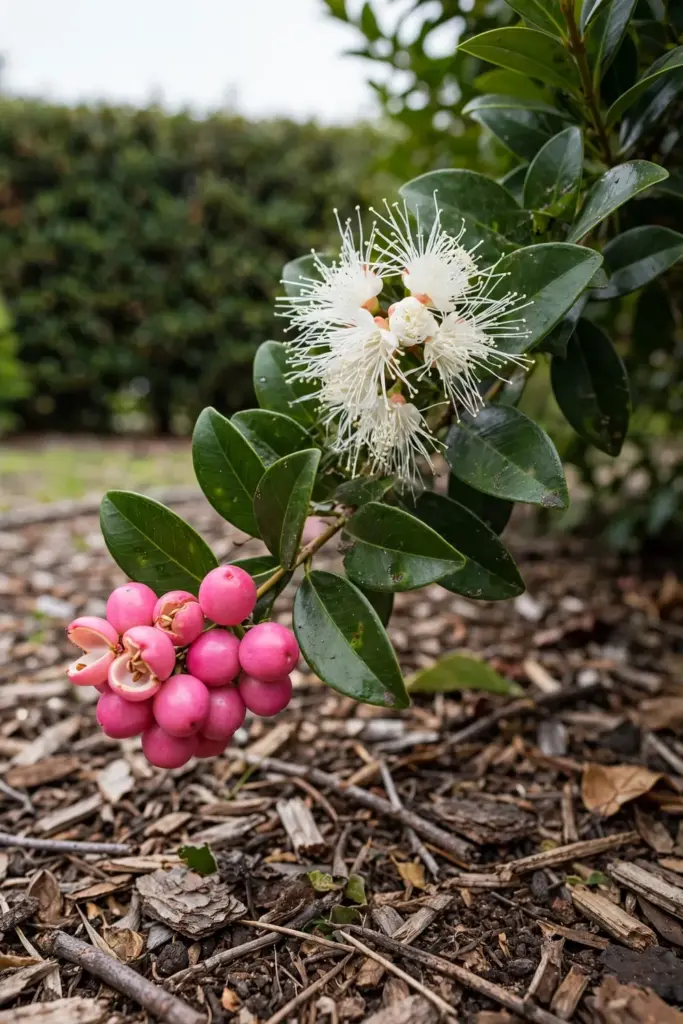
Lilly Pilly is Syzygium smithii. The leaves sit glossy, oval, and opposite each other in pairs. The flowers form fluffy clusters of white stamens. The fruit forms pink to magenta berries that sit in clusters. The bark runs smooth and gray brown. The tree grows as a dense tree or a clipped hedge in gardens with sun and steady moisture. Glossy opposite leaves plus fluffy white flowers plus pink berries point to Lilly Pilly. Leaf shape alone overlaps with other myrtles.
Separate Lilly Pilly from a cherry guava by leaf arrangement and fruit. Lilly Pilly leaves sit opposite in pairs, while cherry guava leaves sit alternate along the stem. Lilly Pilly berries sit pink and clustered, and cherry guava fruit sits round and single. A node photo with a fruit photo settles the pair, and a leaf photo alone leaves the pair open.
18. Name Queensland Bottle Tree by Swollen Bottle Trunk
Queensland Bottle Tree is the tree with a trunk that swells into a bottle shape.
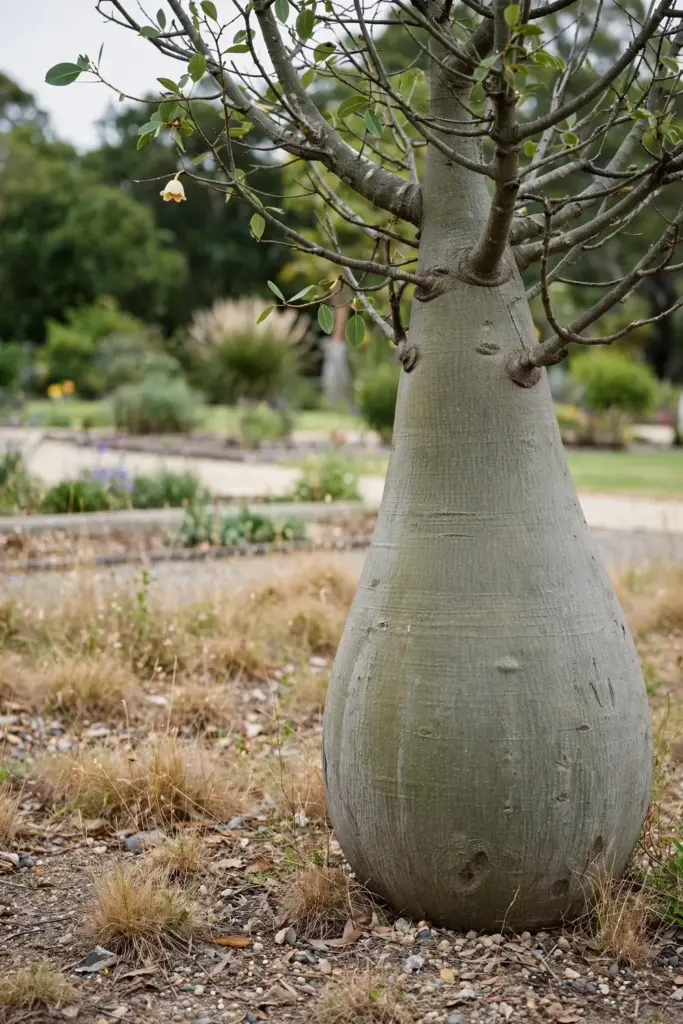
Queensland Bottle Tree is Brachychiton rupestris. The trunk swells into a bottle or barrel shape, and the swelling grows stronger with age. The leaves sit simple and oval to lobed, and they vary on one tree. The flowers form small bells of cream to pink. The fruit forms boat shaped pods with seeds inside. The bark runs smooth and gray green. The tree grows in dry inland gardens and in open woodland with sun and drainage. A bottle trunk plus simple leaves plus boat pods point to Queensland Bottle Tree. Trunk shape alone can resemble a baobab in a quick photo.
Separate Queensland Bottle Tree from Illawarra Flame Tree by trunk and flower. Queensland Bottle Tree swells into a bottle trunk. Illawarra Flame Tree keeps a straight trunk. Queensland Bottle Tree flowers run cream to pink and sit small. Illawarra Flame Tree flowers run scarlet and cover the canopy. A trunk photo plus a flower photo settles the pair. A trunk photo alone leaves the pair open.
19. Name Norfolk Island Pine by Tiered Branches and Triangle Canopy
Norfolk Island Pine is the pine with tiered branches and a neat triangle canopy.
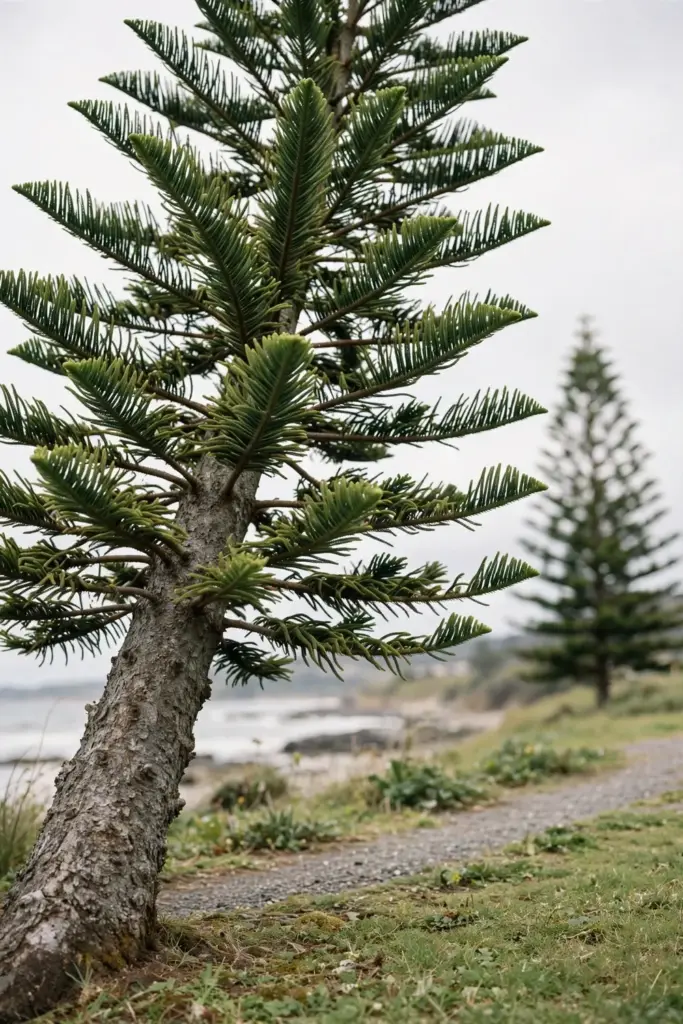
Norfolk Island Pine is Araucaria heterophylla. The branches ring the trunk in tiers, and each tier carries horizontal limbs. The canopy forms a neat triangle, wide at the base and narrow at the tip. The leaves sit small, curved, and overlapping along the branchlets. The cones sit large and round on the upper branches. The bark runs gray brown and rough. The tree grows on coasts, in parks, and in gardens with wind and sun. Tiered branches plus a triangle canopy point to Norfolk Island Pine. Canopy shape alone overlaps with Bunya Pine at a distance.
Separate Norfolk Island Pine from Bunya Pine by branch tier and leaf. Norfolk Island Pine branches ring the trunk in even tiers, while Bunya Pine branches sit uneven and thick. Norfolk Island Pine leaves sit small and curved, and Bunya Pine leaves sit stiff, pointed, and sharp to touch. A tier photo with a leaf photo settles the pair, and a distant canopy photo leaves the pair open.
20. Name Bunya Pine by Heavy Cones and Sharp Pointed Leaves
Bunya Pine is the pine with heavy cones and stiff pointed leaves.
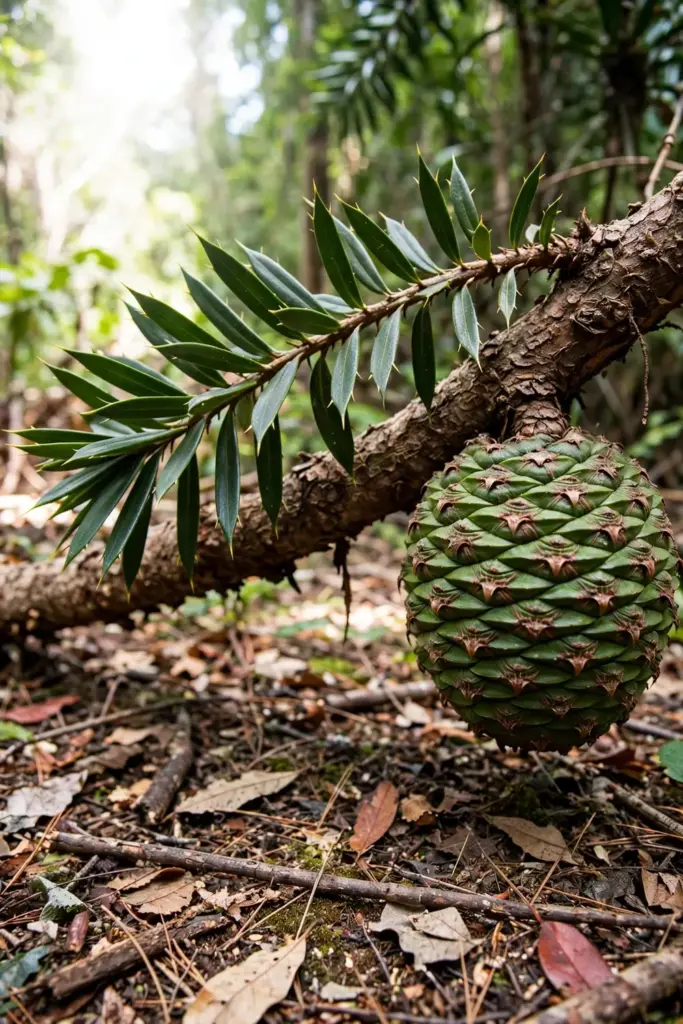
Bunya Pine is Araucaria bidwillii. The leaves sit stiff, pointed, and glossy, and each leaf ends in a sharp tip. The cones sit very large and heavy on the upper branches. The branches sit thick and uneven around the trunk. The bark runs dark brown and rough. The tree grows in warm gardens and in rainforest edges with deep soil and room. Sharp pointed leaves plus heavy cones point to Bunya Pine. Cone size alone overlaps with Norfolk Island Pine in a quick photo.
Separate Bunya Pine from Norfolk Island Pine by leaf touch and cone. Bunya Pine leaves feel stiff and sharp. Norfolk Island Pine leaves feel small and curved. Bunya Pine cones sit larger and heavier. Norfolk Island Pine cones sit smaller. A leaf close view plus a cone photo settles the pair. A canopy photo alone leaves the pair open.
21. Name Tuckeroo by Dark Bark and Orange Fruit
Tuckeroo is the coastal tree with dark rough bark and orange fruit.
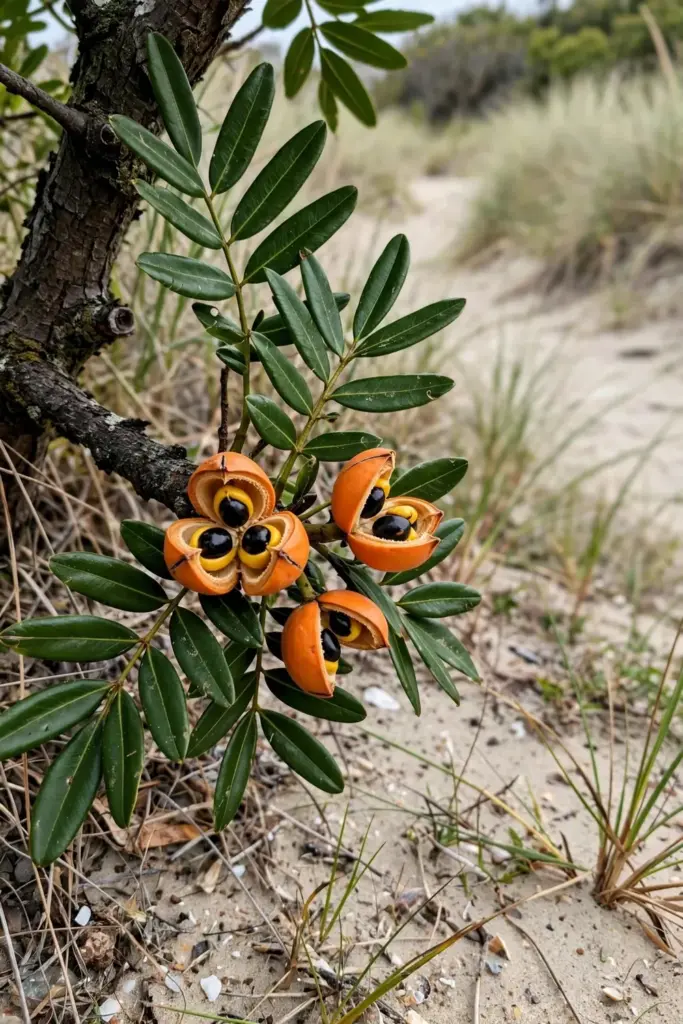
Tuckeroo is Cupaniopsis anacardioides. The bark runs dark brown and rough, and it furrows with age. The leaves sit compound, with several glossy leaflets along one stalk. The flowers form small cream clusters. The fruit forms orange capsules that split to show dark seeds with a yellow aril. The bark, leaf, and fruit together separate Tuckeroo from the nearest lookalikes. The tree grows on coasts, in parks, and in gardens with wind and sun. Dark bark plus compound leaves plus orange capsules point to Tuckeroo, and fruit color alone overlaps with other orange fruited trees.
Separate Tuckeroo from a tamarind by leaflet and fruit. Tuckeroo leaflets sit glossy and broad, while tamarind leaflets sit small and feathery. Tuckeroo fruit splits into orange capsules with dark seeds, and tamarind fruit forms brown pods with sticky pulp. A leaflet photo with a split fruit photo settles the pair, and a fruit photo alone leaves the pair open.
Frequently Asked Questions About Australian Tree Identification
Bark alone narrows a gum tree to one bark group, and it rarely settles the species. Each bark group holds several species with near matching bark. Leaf shape, gum nut form, and habitat must join the bark clue before the name firms up. Photograph the trunk base, the upper branches, one leaf with its stalk, and one gum nut cluster. Match all four views in one flora record. A name built on bark alone fails against the nearest bark twin.
A wattle carries phyllodes or divided leaves, round flower heads or spikes of tiny flowers, and flat pods. A gum tree carries simple leaves on slender stalks, stamen clusters around a cap, and woody gum nuts with valved caps. Bark differs too, since wattle bark runs smooth to rough brown while gum bark sheds, strings, or hardens by group. Check the flower first, since pea flowers and stamen clusters separate the two families. Leaf form confirms the split.
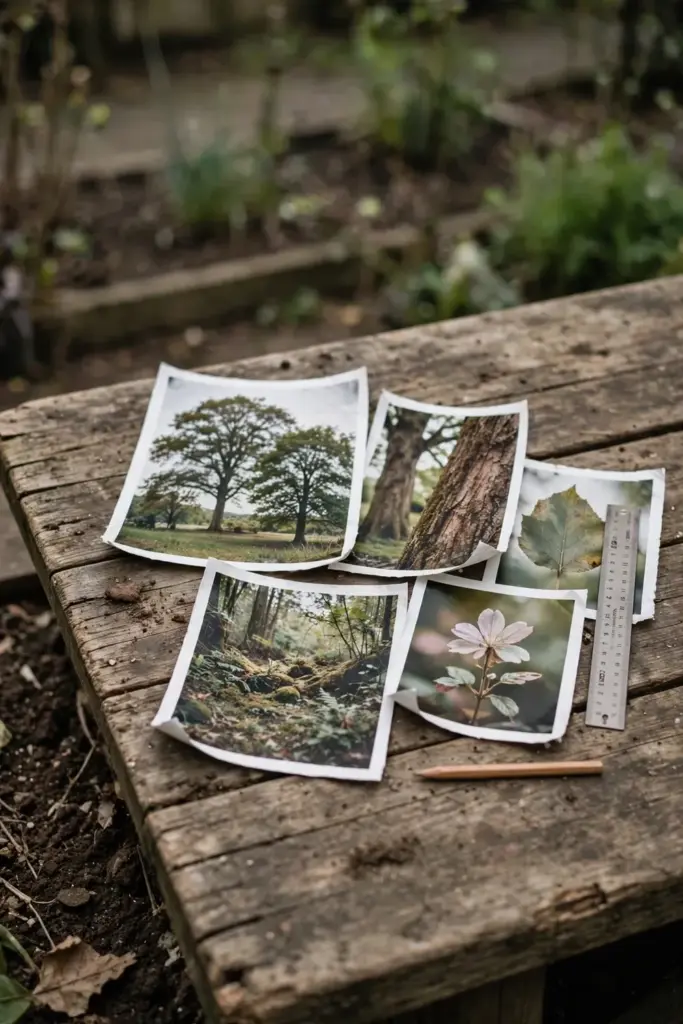
An expert needs five views: the whole tree, the trunk base, one leaf with its stalk, one flower or fruit cluster, and the habitat. The whole tree fixes habit and size, the trunk base fixes bark type, and the leaf fixes shape and arrangement. The flower or fruit fixes the family, and the habitat fixes the range. Add a ruler beside the leaf for scale. Sharp daylight frames beat long notes, and one blurred leaf view ruins the set.
Common names follow local use, not botany, so one name can point to two trees in two states. Lilly Pilly names several Syzygium species in nurseries, and ironbark names several hard barked gums. The botanical name fixes the tree. Check the botanical name in one flora record for the state where the tree grows. A common name gives a lead, and a botanical name gives the verdict.
Habitat and planting pattern separate natives from planted exotics. A native tree grows in bush, in a reserve, or in a self sown patch with local undergrowth. A planted exotic grows in a row, in a pot, in a street planting, or in a mulched garden bed. Flower and fruit traits still carry the ID, and the flora record confirms the range. A tree outside its native range in a tidy pattern points to a garden planting.
Do not taste a leaf to identify a tree. Taste adds no ID value, and it risks poisoning from a toxic species. Touch adds little either, since bark texture reads through a photo and leaf scent reads from a crushed fallen leaf with gloves. Photograph the tree, note the traits, and confirm the name in one flora record. When a tree may be toxic, keep children and pets clear and seek a herbarium verdict before any action.
Name the Tree, Then Confirm It in One Flora Record
Three clues name the tree, and one flora record confirms the name. Photograph bark, leaf, and flower or fruit. Match the three views against the 21 entries on this page. Check the botanical name in the flora record for the state where the tree grows. A confirmed name beats a fast guess. A fast guess wastes the next step, whether that step is care, pruning, or removal. Pruning a named tree is a separate job, and spring pruning techniques cover that work. This page names the tree. The flora record closes the ID.