
2 years. That is the honest answer to the question this article tackles, because vidanga is a slow, climbing, tropical berry crop that tests your patience before it rewards you. If you are trying to figure out how to grow vidanga from India, start by understanding that you are not growing a kitchen herb. You are growing Embelia ribes, a large scandent shrub whose red-to-black berries are one of Ayurveda’s oldest anthelmintic drugs, and a plant the wild can no longer supply on its own.
This is a conservation-cultivation article, not a backyard-garden article. The seeds of vidanga barely wake from dormancy. Natural regeneration in the forest is very difficult, mostly because the embryos are small and frequently abortive. Yet more than 100 tons of the drug are traded every year, and the plant is officially vulnerable in Maharashtra and Karnataka. Growing it, therefore, is the point. The crop needs real support, a real nursery, and two full years before the first harvest, but the KAMPA official cultivation package from Karnataka gives you every number you need.
I will walk you through the identity maze first, because the market name “vidanga” covers several species and the genus name Embelia gets confused with ornamental currants. Then the nursery method from the Karnataka Medicinal Plants Authority’s official cultivation brochure, the honest propagation numbers, the spacing, the harvest window, and why cultivation is conservation. If you need a refresher on raising seedlings before you start, our seed-starting guide covers tray setup and hardening in detail.
1. The Climate Reality: A Tropical Belt Crop, Not a Backyard Herb
Two years and a tropical hillside are the entry price. Vidanga grows wild in the hills of eastern India, in Assam, Bengal, Orissa, Bihar, and Madhya Pradesh. The agro-package tested in India puts the working range at 18 to 35 degrees Celsius and 700 to 1,500 mm of annual rain, on light black cotton soil, sandy soil, or even rocky ground, in tropical conditions between 800 and 1,500 m altitude.
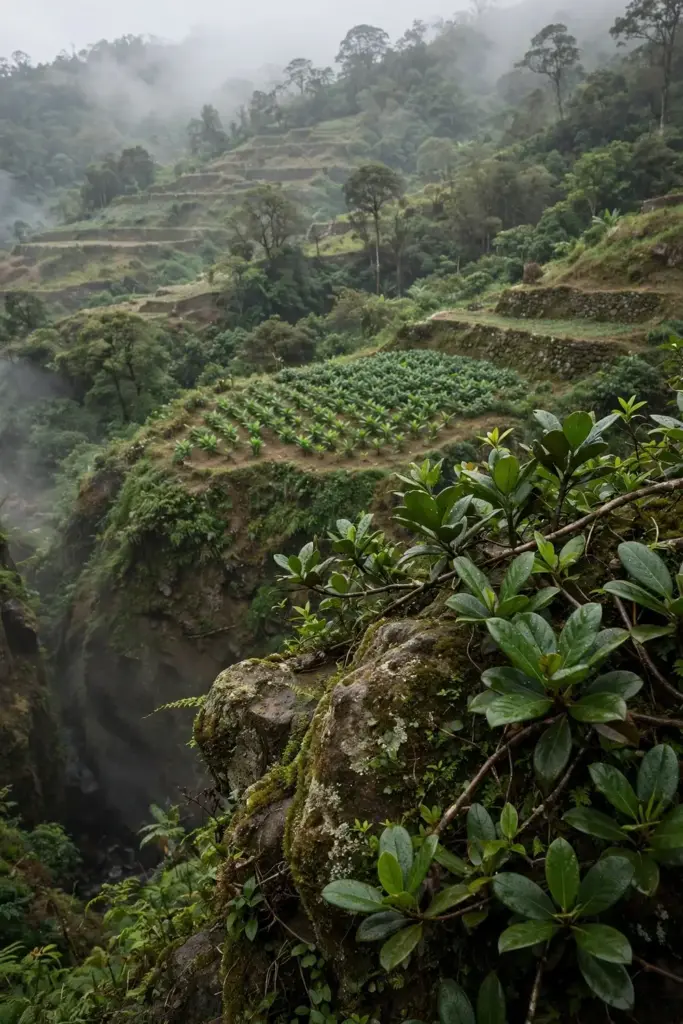
That range matters more than any other decision you make. The plains of north India in a hot summer, and anywhere that touches frost, will not hold this plant. If your climate does not resemble the humid tropical hills where it evolved, treat this as information, not as a project. Hot lowland gardeners in the gangetic plains can admire vidanga in a botanical garden. They cannot reliably fruit it at home.
2. Vidanga Is a Market Name: Four Species, One Basket
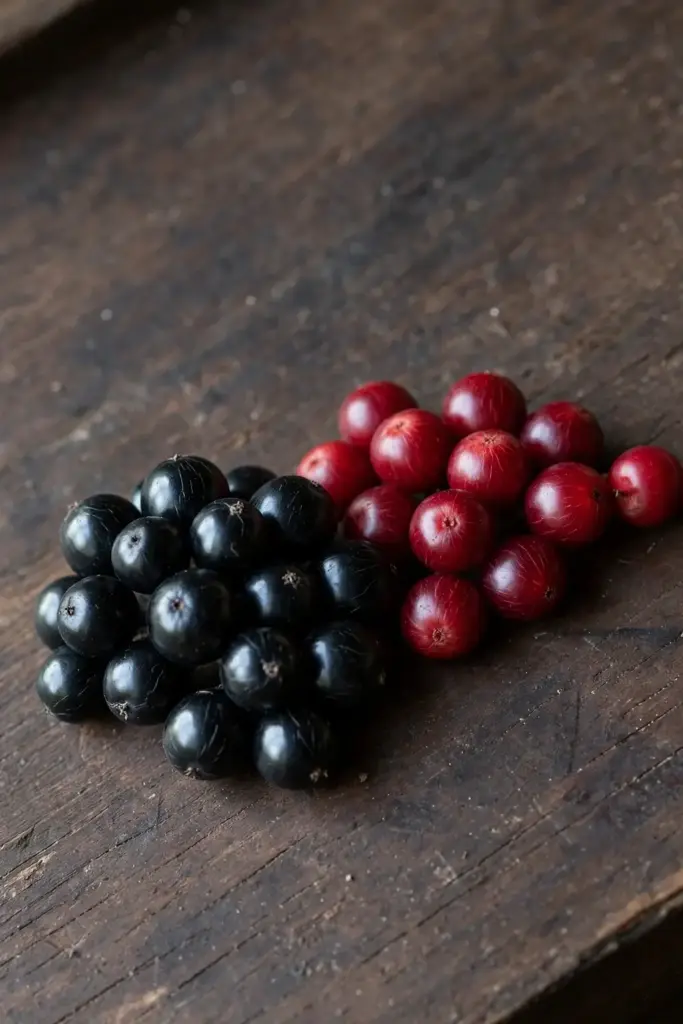
The first trap is the name itself. “Vidanga” in the trade is not one species. Research from India documents four species sold under the market name: Embelia ribes (the Ayurvedic official species), Embelia tsjeriam-cottam, Embelia drupacea, and Maesa indica, which contains no embelin at all. One survey found 26 species traded as vidanga, including Myrsine africana and even Piper cubeba, the cubeb pepper that got its own article in this tier. That is an adulteration menace, not a botanical quirk. The comparative trade data in the table below comes from the species comparison published in Current Science.
| Species | Trade Name | Fruit Color | Embelin | Official Status |
|---|---|---|---|---|
| Embelia ribes | Kala Vavding | Black | 2.3 to 3.1% | Ayurvedic official |
| Embelia tsjeriam-cottam | Lal Vavding | Red | 1.6% | Accepted substitute, similar embelin |
| Embelia drupacea | Vavding | Black | Lower | Traded, not official |
| Maesa indica | Vidanga, Baibidanga | Reddish-brown | Absent | Not genuine vidanga |
Embelia ribes is the species you want, and Embelia tsjeriam-cottam is the closest relative: the two carry similar embelin levels, though ribes performs better in ulcer models while tsjeriam-cottam is an acceptable immunomodulatory substitute. The practical rule is simple. Buy planting material by its Latin name, never by the market name alone, and distrust any cheap “vidanga seed” that cannot name its species.
3. Embelia Is Not Ribes: The Genus Fence
A second, quieter confusion lives in search engines. Queries for embelia ribes surface ornamental Ribes, the flowering currants and red currants, because the two Latin names share the syllable “ribes.” They are entirely different genera. Embelia belongs to Primulaceae, the primrose family, and is a tropical Asian scandent shrub. Ribes belongs to Grossulariaceae and is a temperate berry genus that has nothing to do with Ayurveda. The Embelia ribes entry on Wikipedia keeps the botanical identity straight if you need a quick reference.
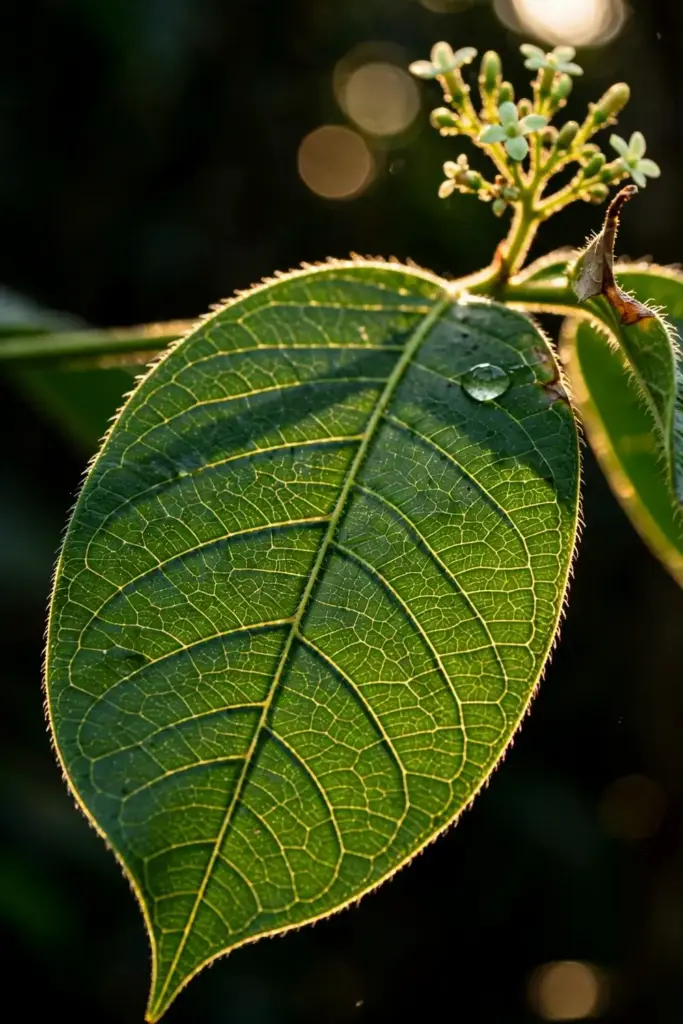
Keep this fence in your notes when you shop. A nursery selling “ribes” is selling currants. A label reading Embelia ribes is the one you want. The confusion also means search results mix the two, so verify every cultivation claim you find online against the Latin binomial before you trust it.
4. Two Years to Berries: The Honest Timeline
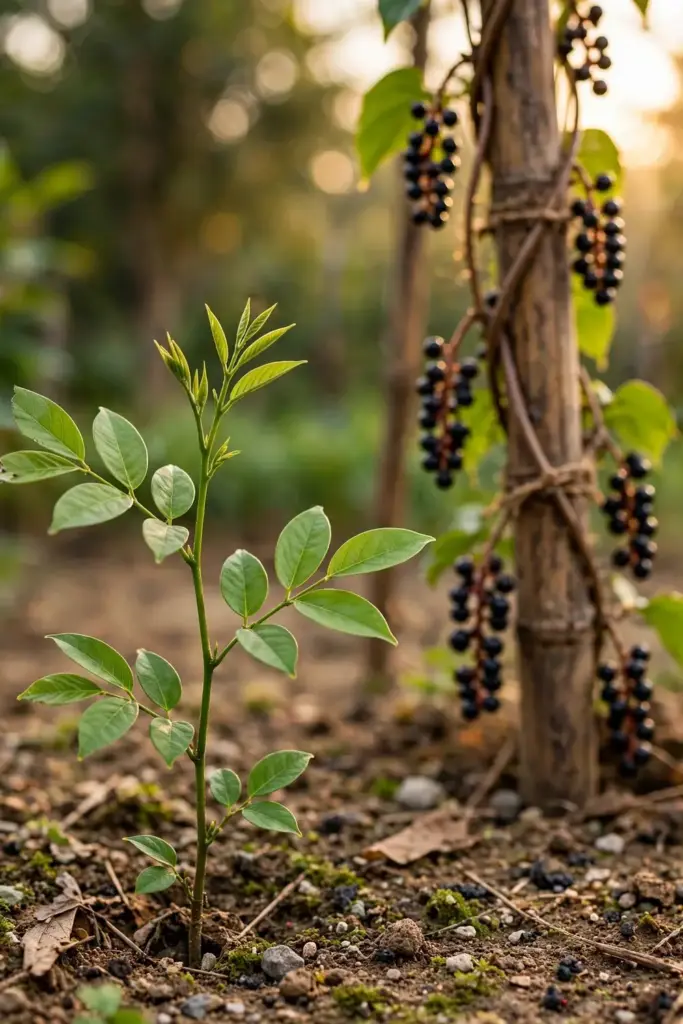
Two years from transplant to harvest is the number the official package gives, and every shortcut version of it fails. Seeds go into nursery beds in May and June. Six-month seedlings move to the field. The plant spends its first full year establishing vines, its second year building the fruiting wood, and only then does the real fruiting start: berries form in August and September and ripen from November to January.
Compare this with the instant-gratification herbs on this site. It belongs in the same patience class as mangosteen, our long-wait fruit guide describes: a crop you plant for the second year, not the second month. The payoff is real. The official package records about 25 quintals of dried fruit per hectare, and the plant is allowed to keep growing after the harvest, so year three and beyond are pure bonus.
5. Seeds Barely Wake: The Abortive-Seed Problem
Natural seed regeneration in this species is very difficult. The embryos are small and mostly abortive, so a bed of untreated seed gives you almost nothing. This is the first fact the conservation literature repeats, and it is the reason tissue culture is recommended for mass multiplication.
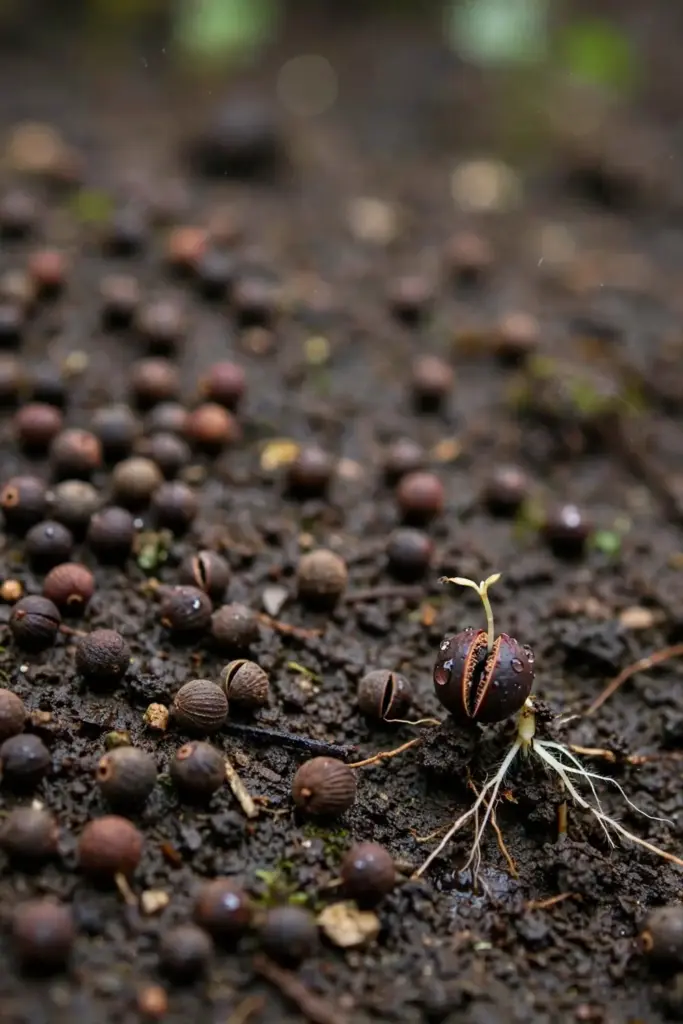
The propagation standardization work done at UAHS Mudigere in 2016 tested the fixes honestly. Gibberellic acid at 750 ppm gave the earliest germination, at 30 days, and the highest rate: 2.07 percent. Read that number twice. Two percent is the best result the lab could report. It is not a failure of your technique. It is the biology of the species. Anyone selling you a packet of “easy vidanga seed” with a high germination promise is selling you a different plant.
6. Seeds, Cuttings, or Tissue Culture: The Propagation Decision
You have three doors into this crop, and each has a number attached. Pick the one that matches your scale.
| Method | Success Rate | Cost and Access | Best For |
|---|---|---|---|
| Seeds + GA3 750 ppm | 2.07% germination | Cheap, but sow heavily | Small trials, breeding work |
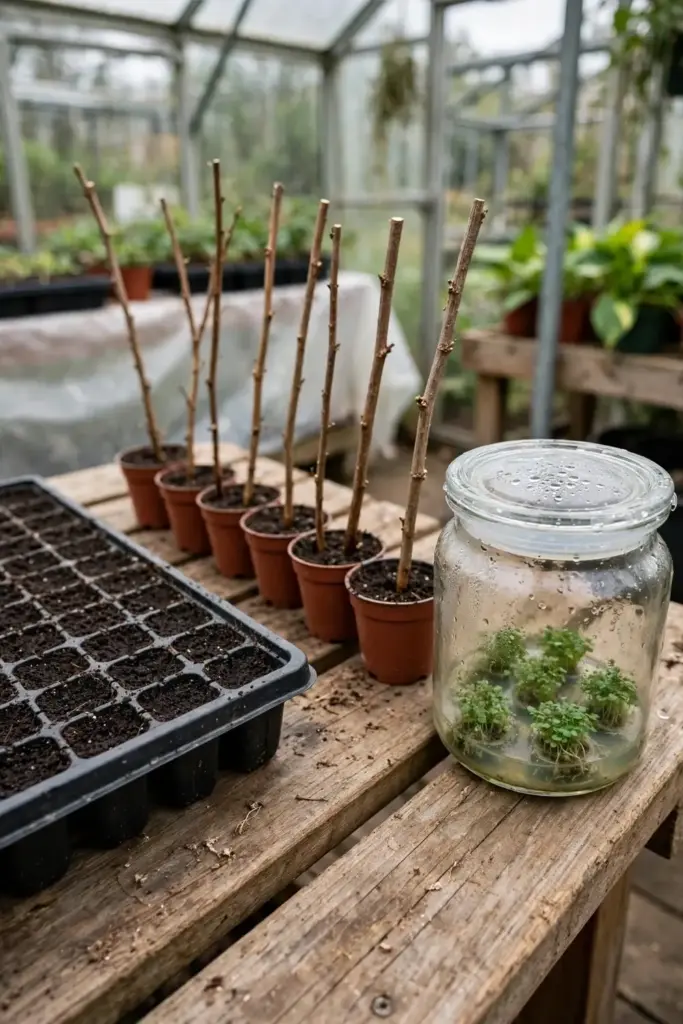
| Hardwood cuttings + IBA 3000 mg/l | 36% rooting | Moderate, needs hormone | Farm-scale multiplication |
| In-vitro micropropagation | 10 shoots per node | Lab access required | Conservation, commercial nurseries |
Hardwood cuttings treated with IBA at 3,000 mg per liter rooted at 36 percent in the Mudigere trials, which makes cuttings the sensible farm method: take more cuttings than you need, expect a third to take, and you will have a plantation. Micropropagation is the research-grade route. Work on nodal segments showed 10.0 ± 0.72 shoots per node on medium with 0.5 mg per liter BA plus 0.1 mg per liter IAA, which is how conservation programs plan to multiply the species at scale.
For a home or farm grower, the practical path is the KAMPA nursery method with GA3-treated seed, backed up by a batch of hardwood cuttings. Sow generously. Expect losses. The numbers are honest, and honesty lets you plan. Micropropagation stays a lab story for now: the nodal-segment work published in the Journal of Medicinal Plants Research produced 10.0 ± 0.72 shoots per node on medium with 0.5 mg per liter BA plus 0.1 mg per liter IAA, which is how conservation programs plan to multiply the species at scale.
7. Seed Preparation: The GA3 Route, Step by Step
If you choose seeds, do not skip the treatment. Untreated seed sits dormant and rots. Here is the sequence that the research supports.
| Step | Action | Time |
|---|---|---|
| 1 | Collect ripe berries, extract and clean the seed | November to January |
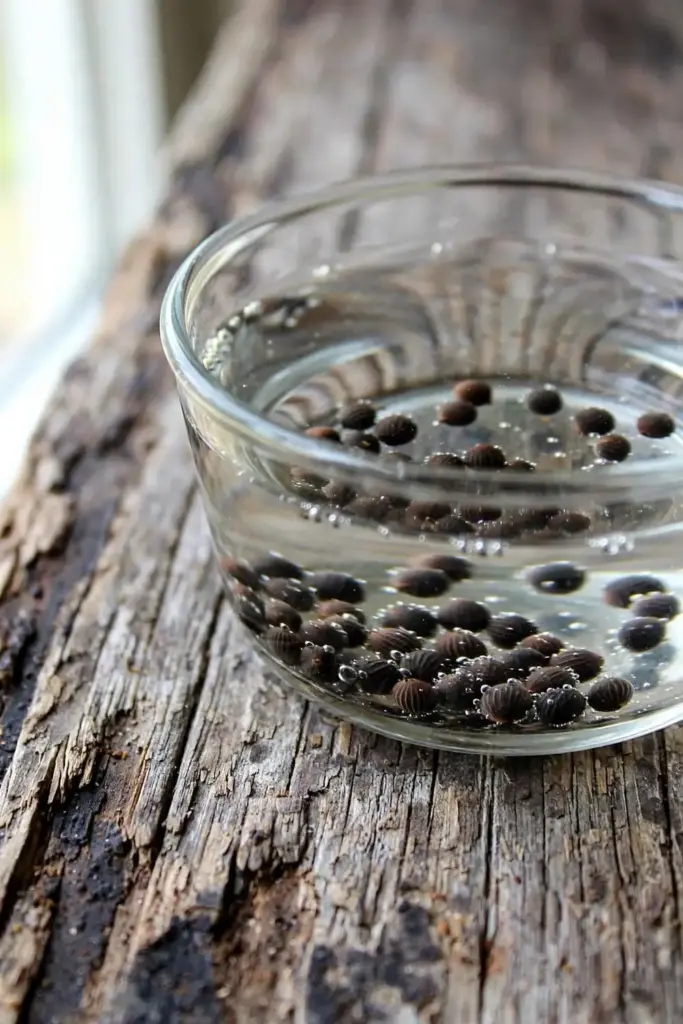
| 2 | Soak seed in GA3 at 750 ppm | 12 to 24 hours before sowing |
| 3 | Sow in well-prepared nursery beds | May to June |
| 4 | Keep beds shaded and evenly moist | Daily through the monsoon |
| 5 | First emergence | 30 days after sowing |
Keep your expectations calibrated. Even with the GA3 treatment, most of the seed will not germinate. That is why the official package calls for five kilograms of seed per acre of nursery: the quantity absorbs the losses.
8. The KAMPA Nursery: May to Six-Month Seedlings
The official KAMPA cultivation brochure is admirably specific about the nursery phase, and this is where your crop is actually won or lost. The nursery is where most attempts at how to grow vidanga from India are won or lost. Seeds go into well-prepared nursery beds in May and June. Five kilograms of seed prepares a full 10,000 plants, which is sufficient for one acre of land. Seedlings stay in the nursery for six months, receiving compost or vermicompost and weeding after 15 to 30 days.
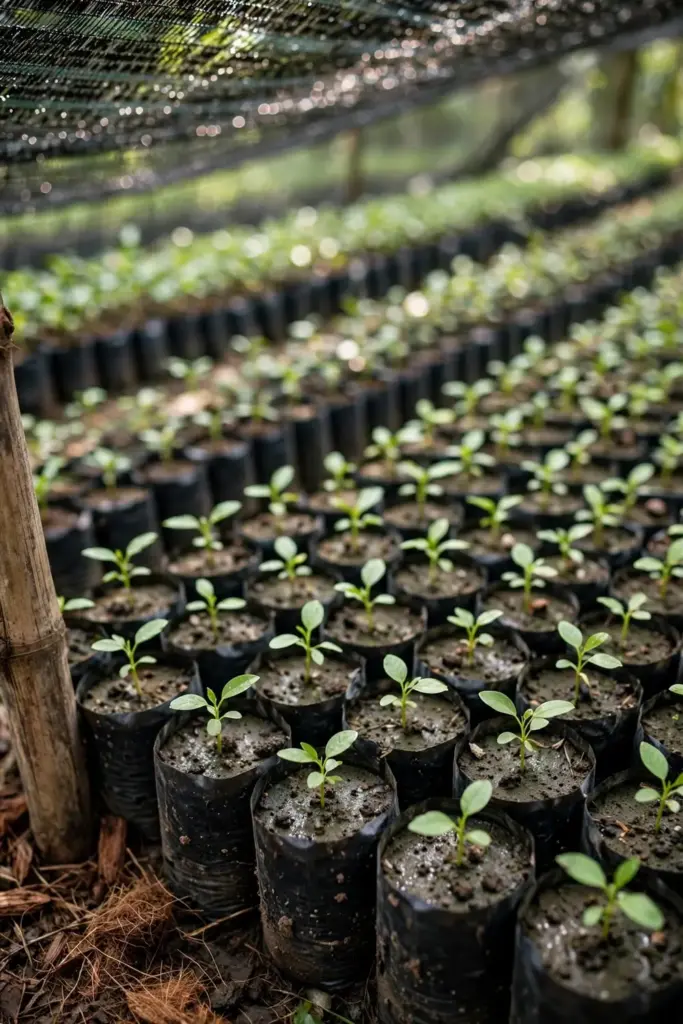
Six months of nursery care is long for a medicinal plant, and it is the reason the one-acre figure is given as a planning unit. Ten thousand seedlings at 60 by 60 cm spacing cover an acre, and the nursery-to-field ratio in the KAMPA package is built into that single number. Raise your seedlings under light shade, keep the beds free of competing weeds from the first month, and transplant only when the seedlings are sturdy. Weak seedlings transplanted early become the plants that die in the field’s first dry spell.
9. Transplanting: 60 by 60 cm or the 1 by 1 m Alternative
Six-month seedlings move to a heavily manured field at 60 by 60 cm spacing, per the KAMPA package. The brochure allows planting in pits of 1 by 1 foot size as an alternative. The alternative agro-package tested in India uses a wider 1.0 by 1.0 m grid with 5 to 10 tons of farmyard manure per hectare, which suits heavier soils and gives the vines more air.
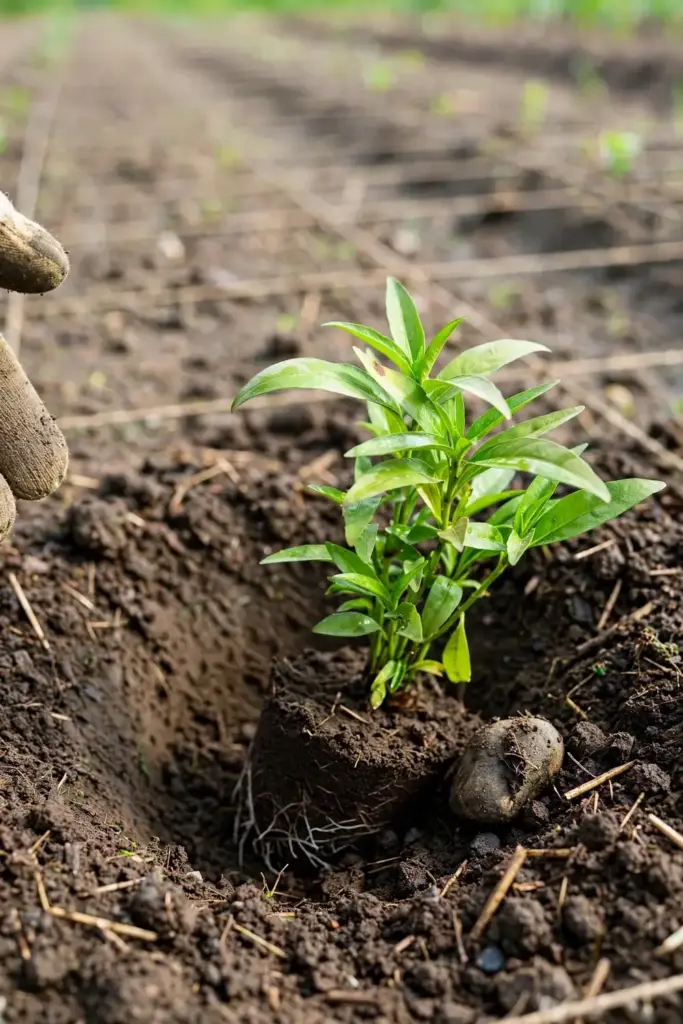
Both spacings work. The tighter KAMPA grid suits the smallholder one-acre unit and gives earlier canopy closure, which suppresses weeds. The wider meter grid suits mechanized or semi-mechanized field work and the FYM-based nutrition package. Choose one and stay consistent. Mixed spacing in one field makes the support and harvest work uneven.
10. Support and Training: A Scandent Shrub Needs Something to Climb
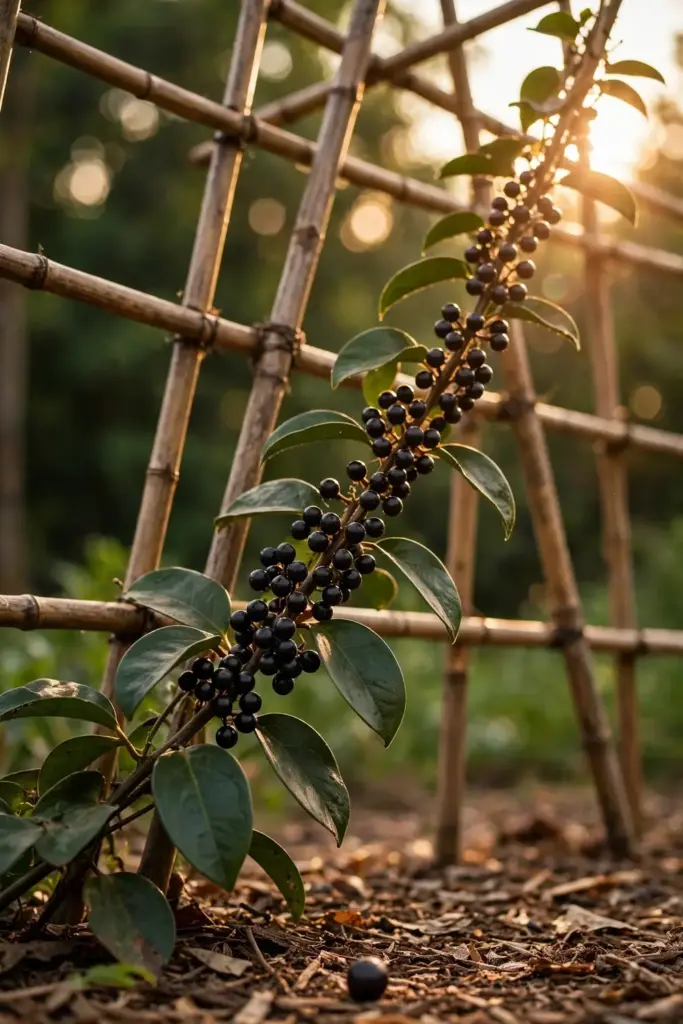
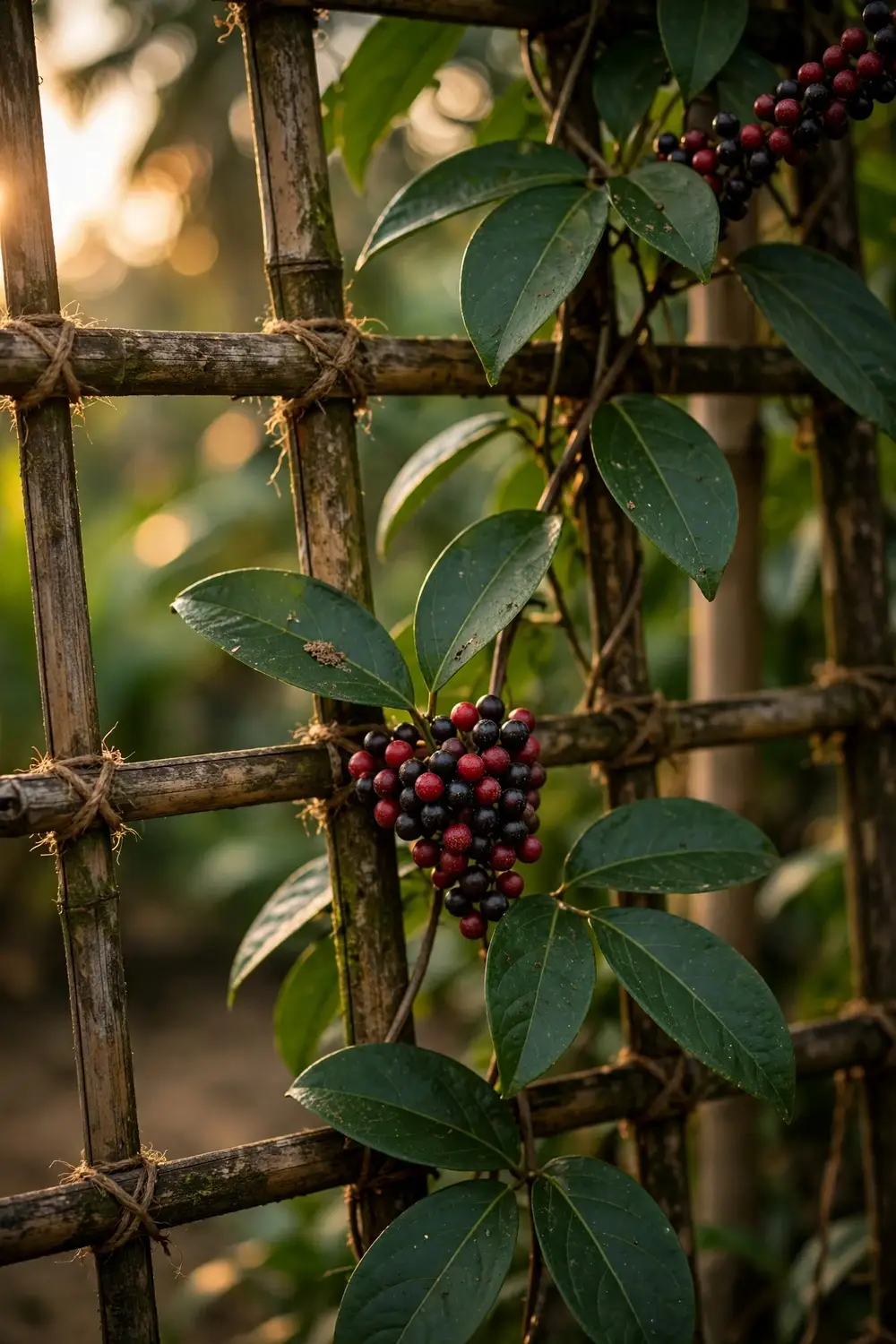
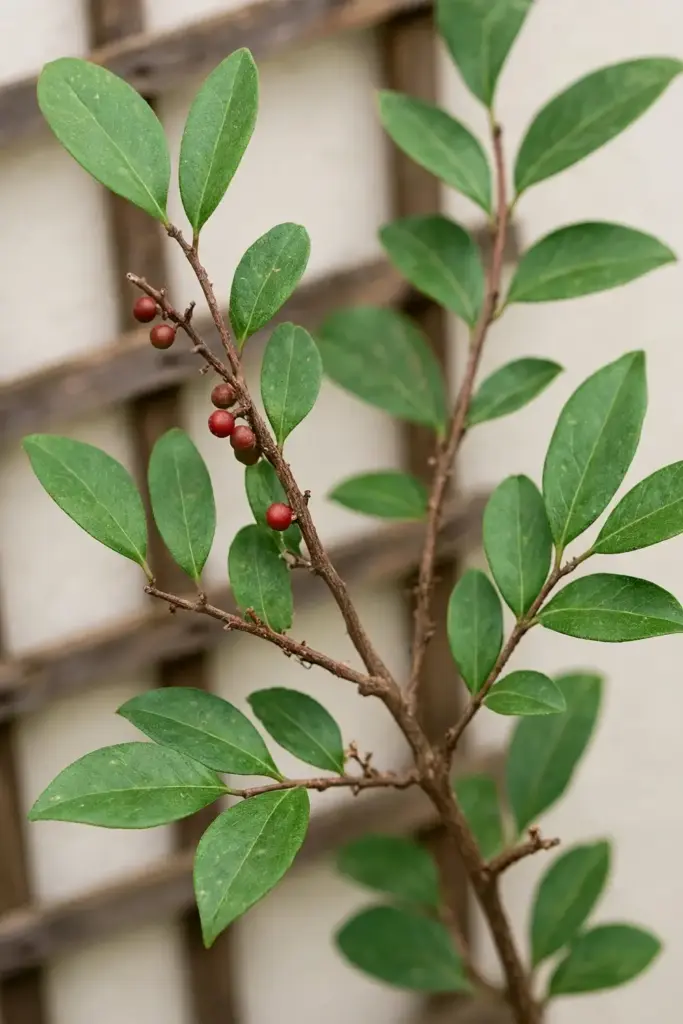
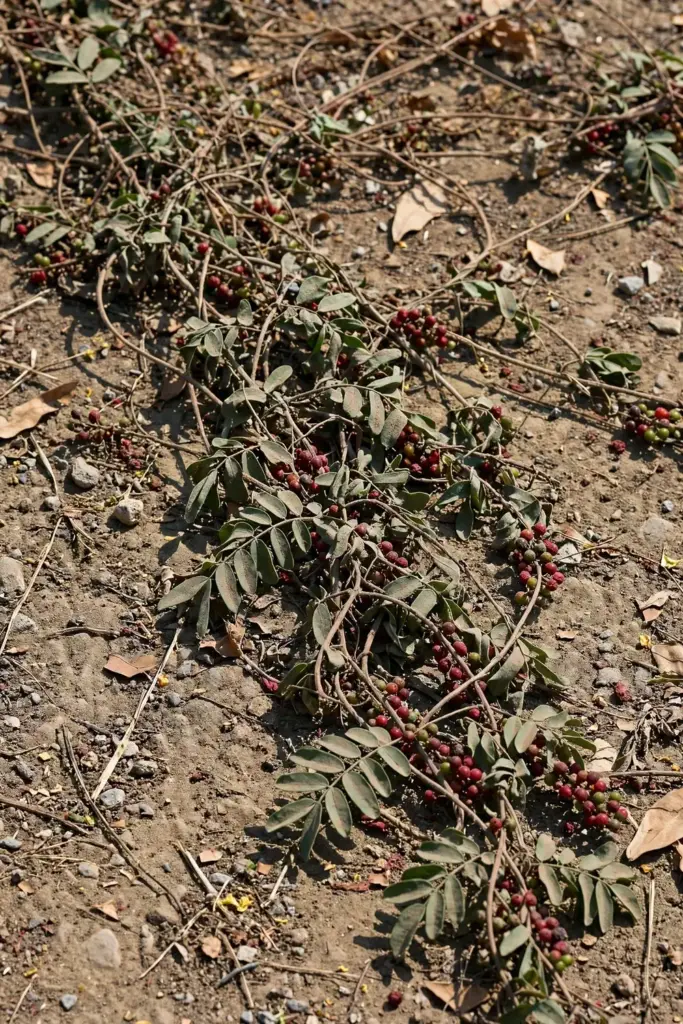
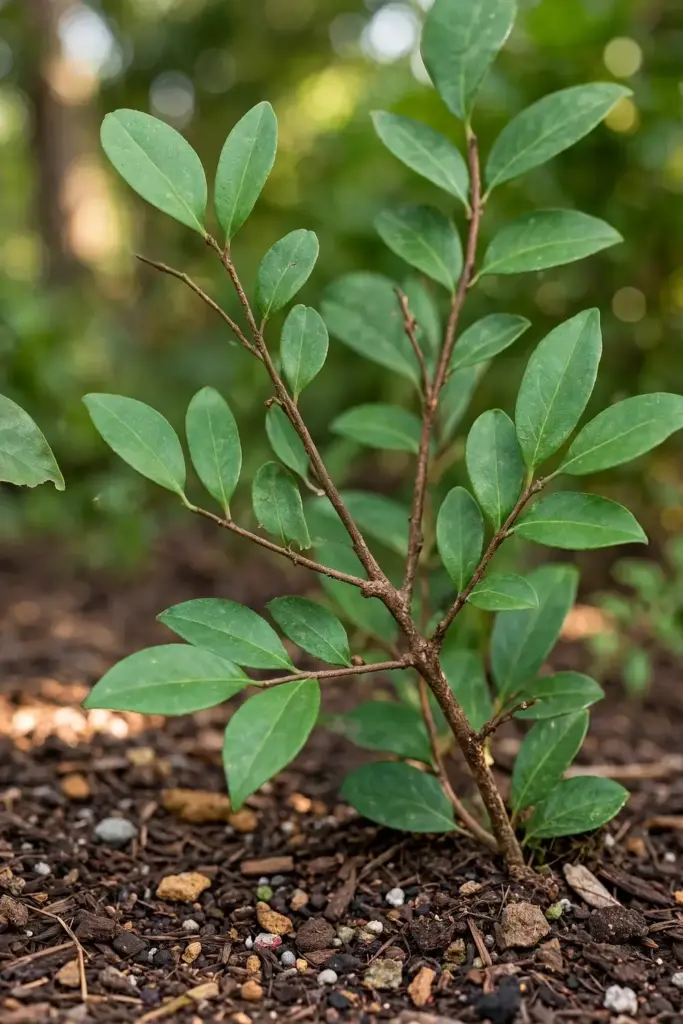
Vidanga is a large scandent shrub, which is botanist language for a plant that scrambles upward through whatever is near it. It will not stand upright on its own like a neat garden shrub. Give it something to climb from the first year: bamboo poles, a wire trellis, or even an existing sturdy shrub as a living host.
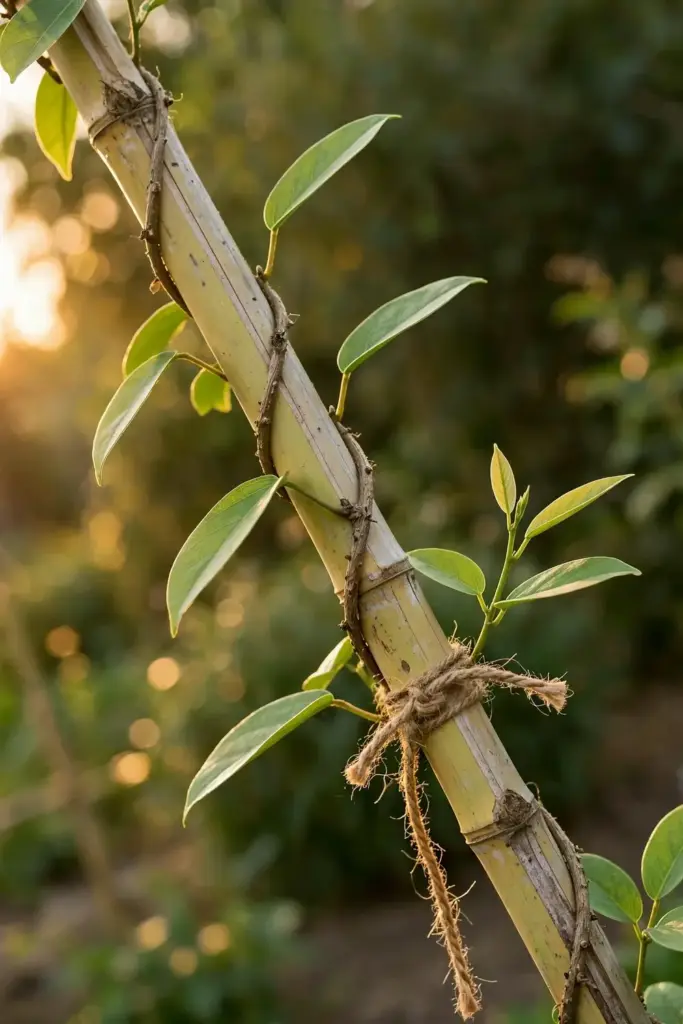
Training matters because the fruit forms on the established vine network. Untangled ground-level sprawl fruits poorly and rots in the monsoon. Tie the lead vines loosely to the support in the first year, prune out the weak tangles in the winter with clean sharp tools, and keep the fruiting wood in the air.
11. Soil and Feeding: Compost First
The plant accepts several soils, including light black cotton soil, sandy soil, and rocky ground, across tropical regions up to 1,500 m. It does not accept waterlogging. Pick a well-drained slope or raised beds where the monsoon cannot pool.
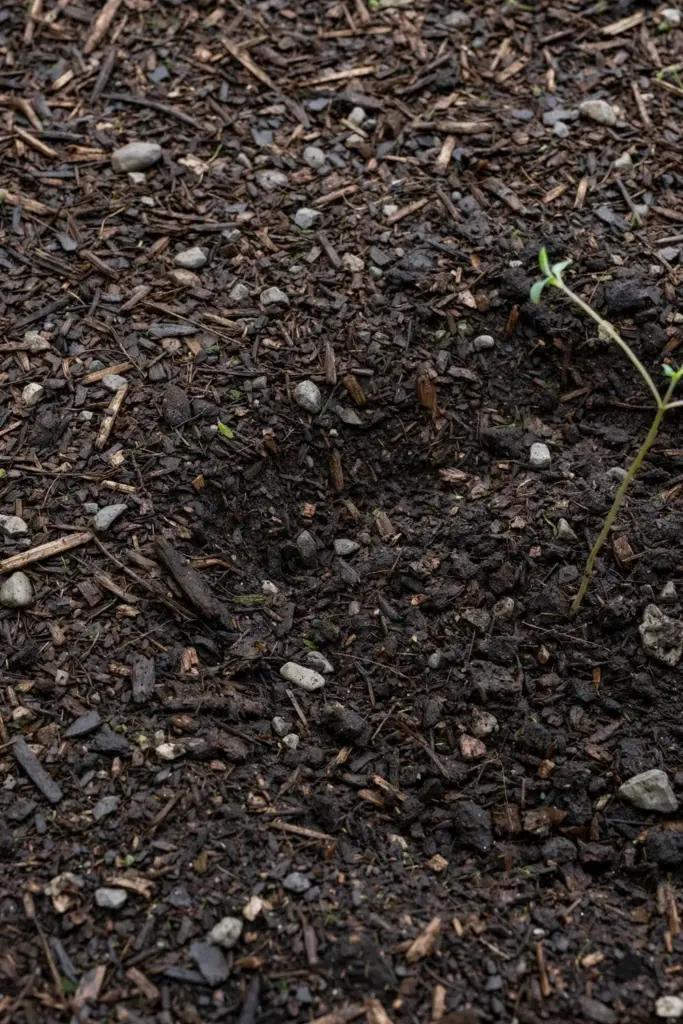
Feeding is organic by the official book: compost, vermicompost, or well-rotted organic manure is preferred, with the field heavily manured before transplanting. The alternative package adds 5 to 10 tons of farmyard manure per hectare. No synthetic fertilizer schedule is published for this crop, and that is honest: nobody has run the trials. Feed it like the forest-floor plant it is. Rich, humusy, and mulched.
Our soil health guide explains how organic matter builds the pest resistance your vines will need, and it is worth reading before you prepare the field.
12. Watering: Every 15 Days
The plantation is irrigated usually at an interval of 15 days, per the KAMPA package. That is the entire official guidance, and it tells you the crop is moderately thirsty, not a wetland plant. In the nursery phase, keep beds evenly moist through the monsoon and into the dry months. In the field, the 15-day interval assumes a tropical climate with seasonal rain.
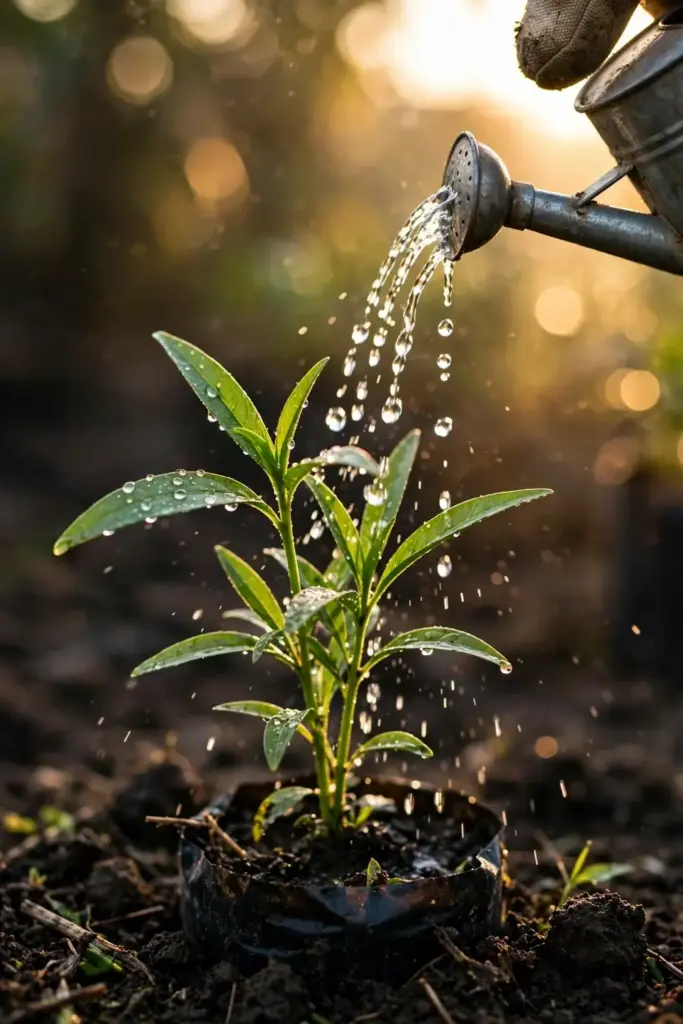
Watch the vines, not the calendar. Wilting leaf tips in the dry season mean the interval is too long for your soil. Yellowing lower leaves in the monsoon mean the drainage is failing, which is the more dangerous problem. This is a plant that forgives a missed watering and punishes standing water.
13. Growing Vidanga in Containers: A Nursery Project Only
Be honest with yourself here. A two-year, climbing, tropical shrub with a support structure does not belong in a pot as a harvest crop. It belongs in a container only during the nursery phase: the six months between sowing and transplanting, when seedlings grow in polybags under shade.
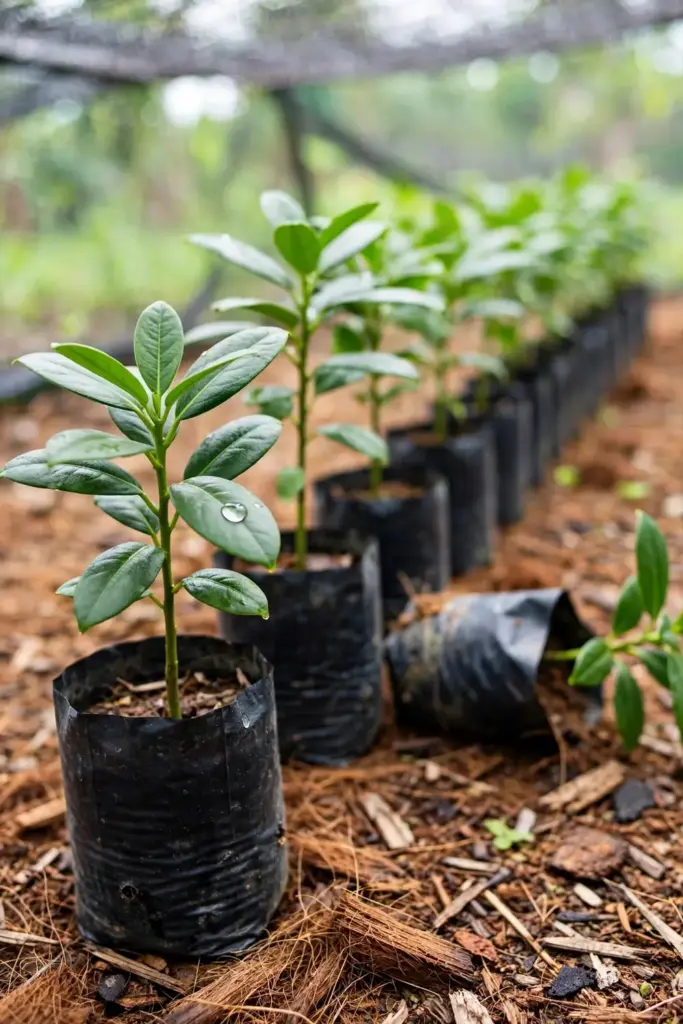
One plant in a very large container might survive a season as a curiosity, but it will not give you berries on any schedule worth planning. If your only growing space is a balcony, grow something else and visit vidanga in a medicinal plant garden. Our indoor herb gardens guide will help you pick a crop that actually fits container life.
14. Pests and Diseases: Honestly Thin Literature
The alternative agro-package states there are no serious pests or diseases on this crop, and the published literature largely agrees by saying very little. That silence is data: pest researchers publish almost nothing on this crop, which suggests the pressure is genuinely low.
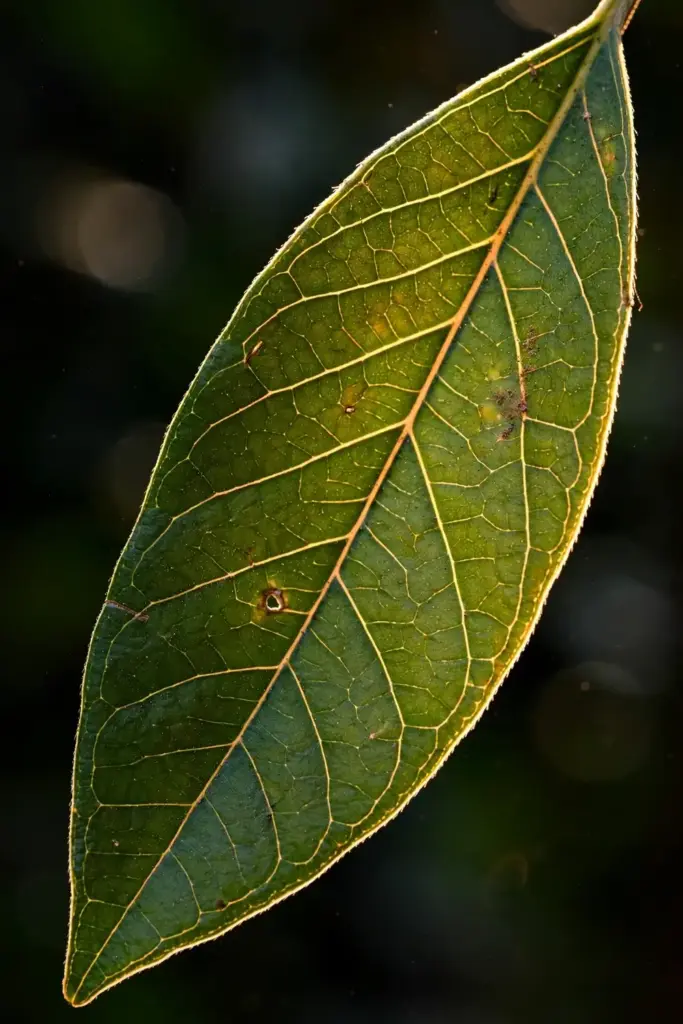
Practically, watch for the usual suspects of humid tropical vines: scale insects on old wood, mealybugs in the leaf axils, and root rot where drainage fails. The 15-day irrigation and the well-drained slope are your main protection. Spray schedules for this crop do not exist in the published record, so grow it clean and monitor it yourself.
15. Flowering and Fruiting: March to January
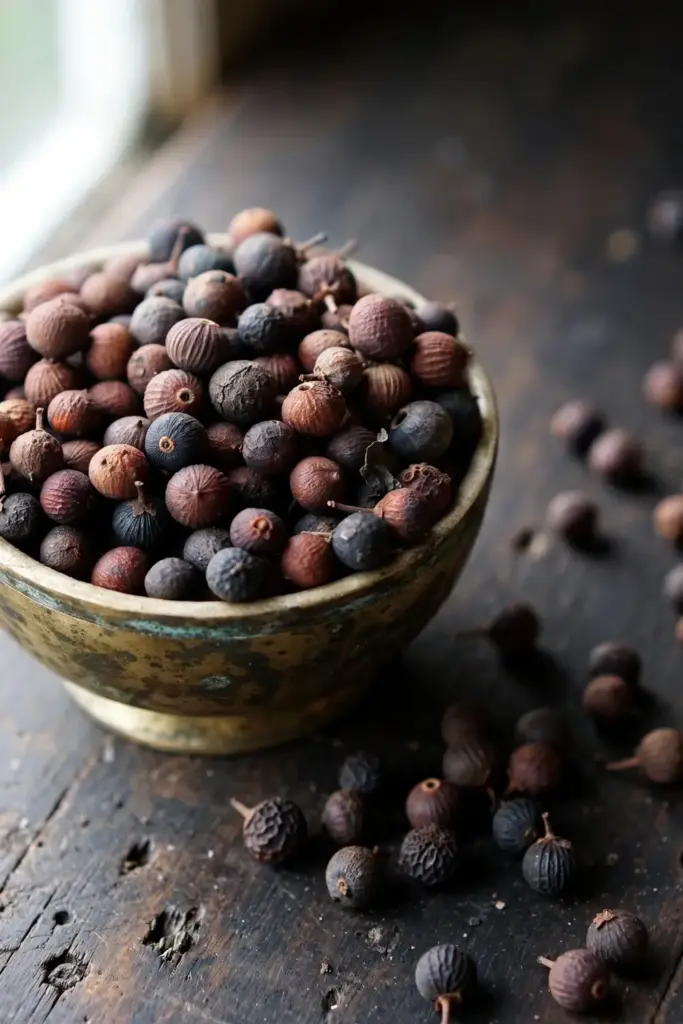
The reproductive calendar is long and fixed. Flowering happens in March and April, with small white or greenish-white flowers. Fruiting runs from June to October, with the real fruiting start in August and September after the second year of plantation. The berries ripen from November to January, turning from red to blackish.
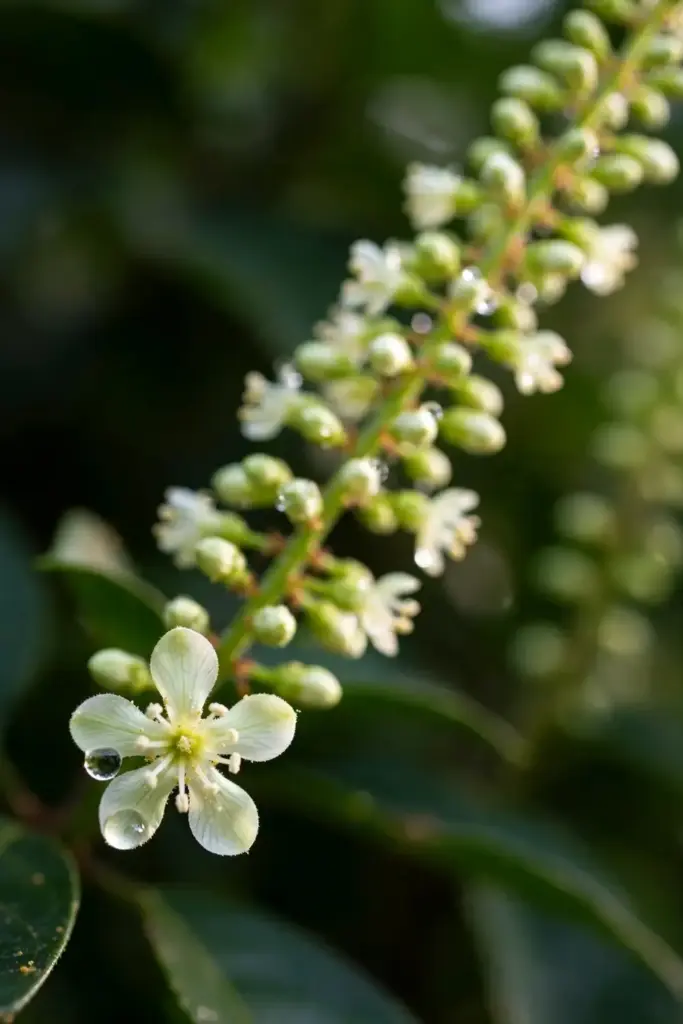
This calendar is why the harvest is a winter job and the sowing is a monsoon job. Everything in between is establishment and waiting. Mark the March flowering on your calendar as the year’s first milestone: no flowers in year two’s spring means no fruit in year two’s winter, and a missing flowering tells you the plant is stressed long before harvest time.
16. Harvest: Picking the Berries in Year Two
Harvesting is done after two years. The fruits are collected manually when fully ripe, from November to January, and the plant is allowed to grow further. The official package records about 25 quintals of dried fruit per hectare, which is 2.5 tons, a serious yield for a medicinal berry crop.
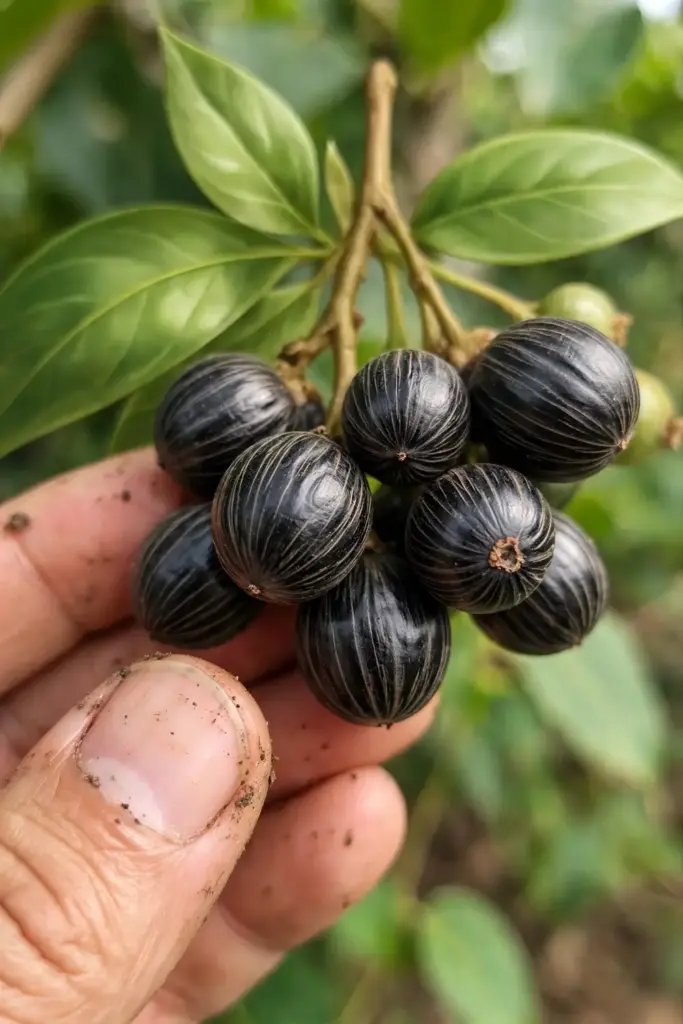
Pick only the fully blackish, striated berries, 3 to 4 mm across, and leave the unripe red ones for the next pass. Manual picking is slow work, but it is also quality control: the market pays for ripe, intact berries with their embelin content intact. The official KAMPA package records about 25 quintals of dried fruit per hectare, which is 2.5 tons, a serious yield for a medicinal berry crop. After the harvest, the vine stays in place and fruits again the following year.
17. Drying and Storing: Shade-Dry, Jute Bags
The KAMPA post-harvest guidance packs three details worth respecting into one sentence: the fruits are collected, dried in shade, and stored in clean, porous jute bags. Shade drying, not sun drying, protects the embelin and the berry color. Porous jute, not plastic, lets the last moisture escape and prevents mold. Clean bags matter because the dried berry is a drug raw material, and contamination ruins the batch.
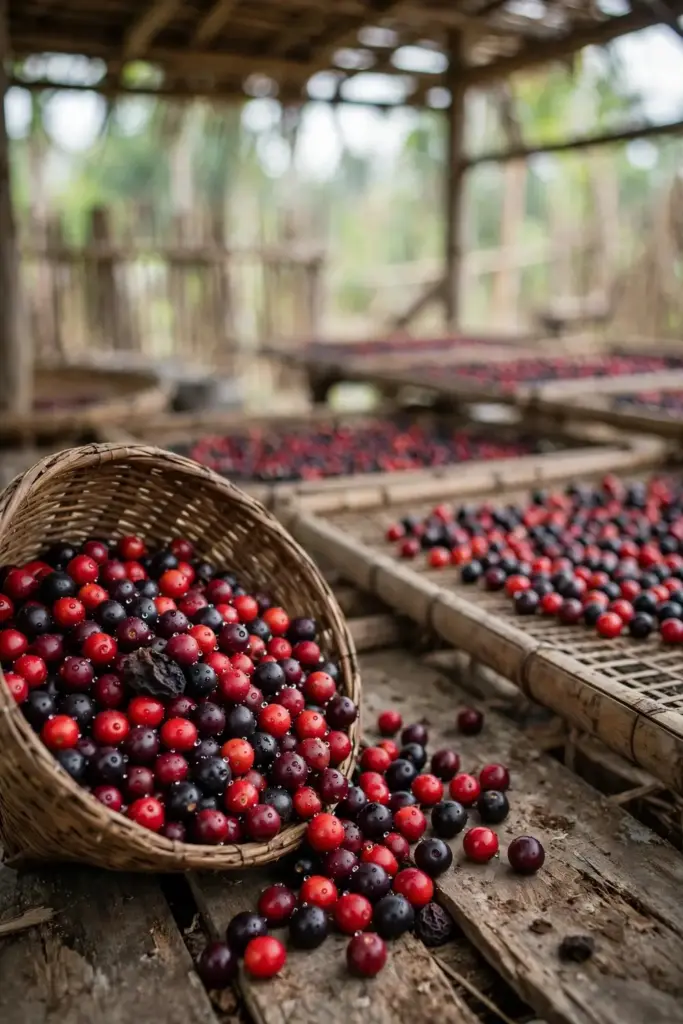
Dry the berries on raised trays under a ventilated roof until they are hard and rattle-dry. Pack them only when fully dry. A batch that goes into storage with residual moisture will mold within weeks, and moldy vidanga is worthless. The 2001 brochure priced the fruit at Rs. 100 to 150 per kg, with the explicit note that the medicinal plant market is volatile and economics may vary. Prices have moved since, but the volatility warning still holds.
18. Why Growing Vidanga Is Conservation
This is the section that justifies the whole article. The Current Science conservation assessment lists Embelia ribes as vulnerable in Maharashtra and Karnataka, with its population declining by more than 50 percent per decade in the surveyed areas, driven by habitat loss, local use, trade, and the harvesting of immature fruit. Natural regeneration is poor because the seeds barely germinate. Every kilogram of berries the forest supplies is a kilogram the forest can barely replace.
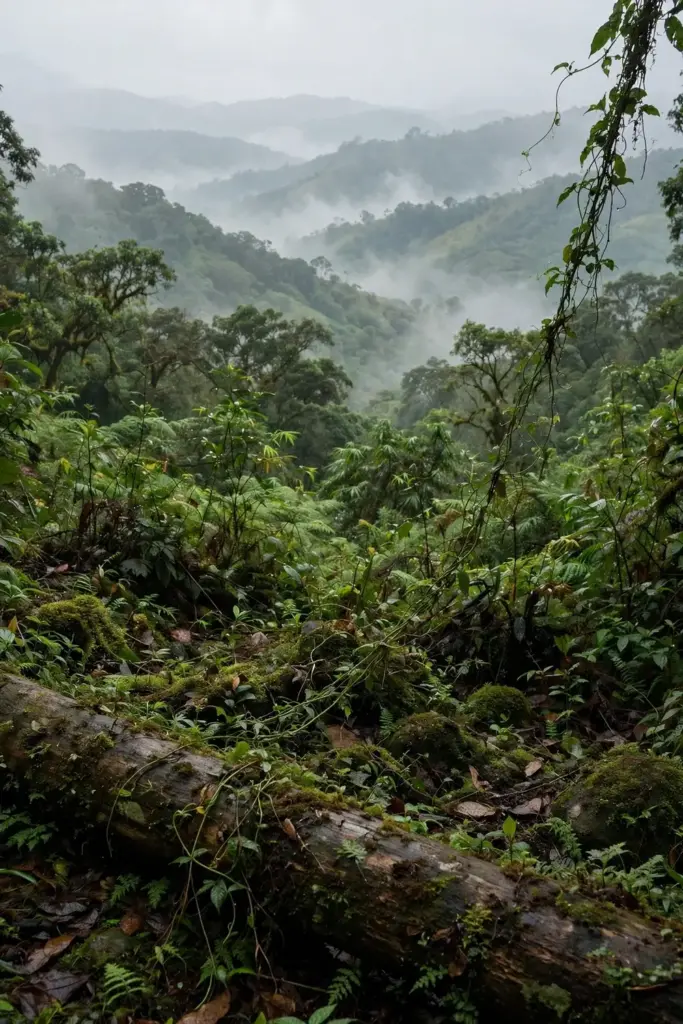
The response has been institutional. Karnataka has established Medicinal Plants Conservation Areas, the MPCAs at Agumbe, Charmadi, Devimane, Kemmanagundi, Kollur, Kudremukh, Subramanya, and Telacauvery, specifically to protect threatened species including this one. The National Medicinal Plants Board flagged vidanga among 32 species for large-scale cultivation, and the market demand exceeds 100 tons a year. Cultivation is not a hobby here. It is the conservation strategy. Every field of vidanga takes pressure off the wild vines.
19. Krimighna: The Anthelmintic Tradition
In Ayurveda, vidanga is krimighna, the worm-expelling drug, and this is the signature use the tradition repeats across centuries. Sushruta records the fruit as anthelmintic and tonic. The brochure notes it improves digestive function, relieves flatulence and constipation, and is especially useful in expelling tapeworm. The active compound is embelin, a benzoquinone; the comparative analyses published in Current Science put berry embelin between 2.3 and 3.1 percent for genuine E. ribes.
The classical formulations tell the story of its standing: Vidangadi churna, Kumariasava, Sanjivani Vati, and the nasal preparations Anu taila and Shadbindu Taila, all documented in the 1mg Ayurveda monograph on vidanga. Modern commercial products include the infant digestive Diarex and the cough formula Koflet. Chewing the seeds is a traditional practice for bad breath and gum health, in moderation.
This is traditional-use framing, not medical advice. The anthelmintic reputation is real and centuries old, but dosing, treatment of infections, and any therapeutic use belong to a qualified Ayurvedic practitioner, not to this article.
20. Safety: The Pregnancy Fence
This section is mandatory, and it is short for a reason. Vidanga has documented antifertility, antispermatogenic, and contraceptive effects in the research literature, and the precautions section of the 1mg monograph flags the same cautions. Pregnant women must avoid it. Anyone dealing with infertility should use it only under qualified supervision. Mild gastrointestinal upset is possible with use.
The drug is also mildly laxative on its own, which is why classical practice pairs it without extra laxatives. That sounds gentle, and it is, but the reproductive effects are the fence that matters. If pregnancy is possible, or planned, vidanga is not your herb. Consult a clinician before any internal use.
21. Common Mistakes
Every crop has a failure pattern, and vidanga’s is distinctive.
Sowing untreated seed and expecting a nursery. The abortive-embryo problem is biological. Use the GA3 treatment, sow five kilograms per acre of nursery, and accept the losses in your plan.
Growing it without support. A scandent shrub on the ground is a rotting shrub. Pole it or trellis it from year one.
Harvesting in year one. The plant fruits after two years. Early picking weakens the vine for nothing.
Buying “vidanga” without a Latin name. The market name covers four species plus dozens of adulterants. Embelia ribes on the label, or walk away.
Planting it in the plains heat. The 800 to 1,500 m tropical belt is a requirement, not a suggestion. Hot lowland summers will defeat it.
Confusing it with currants. Ribes is a different genus. Verify the binomial on every label and every search result.
22. Troubleshooting
Flowers in March but no fruit by August. The plant may be too young, or pollination failed in a stressed season. Check water and nutrition first, and confirm the vine is actually in its second year or later.
Seedlings damping off in the nursery. The beds are too wet or too shaded. Improve drainage, thin the sowing, and weed on the 15 to 30 day schedule the brochure gives.
Vines growing but never climbing. The support is missing or too far from the lead shoots. Tie the leads loosely to the pole and prune the ground sprawl.
Berries staying red into February. The fruiting wood may be shaded or the season unusually cool. Ensure the vines get full light and wait; unripe berries picked early are a wasted harvest.
Mold in stored berries. They went into the jute bags before they were rattle-dry. Spread and re-dry immediately, and discard any batch that smells musty.
Slow growth in year one. Normal. The plant is building roots and vine structure. Feed with compost, keep the 15-day irrigation, and judge it in year two.
Frequently Asked Questions
Two years from transplant to the first real harvest. Seeds sow in May to June, seedlings spend six months in the nursery, and the field plant fruits in August to September of its second year, with berries ripening from November to January. Plan the plantation as a perennial, not a season crop.
The embryos are small and mostly abortive, which makes natural regeneration very difficult. The best laboratory result, gibberellic acid at 750 ppm, gave 2.07 percent germination with emergence at 30 days. Sow heavily, treat the seed, and consider hardwood cuttings with IBA at 3,000 mg per liter, which rooted at 36 percent.
No. Embelia ribes belongs to Primulaceae and is a tropical Asian climbing shrub. Ribes species are temperate currants in Grossulariaceae. Search engines mix the two because the names share a syllable. Always verify the Latin binomial on labels and in cultivation advice before you trust it.
Embelia ribes is the Ayurvedic official species, traded as Kala Vavding with black berries and 2.3 to 3.1 percent embelin, per the comparative trade study. Embelia tsjeriam-cottam is the closest traded relative. Maesa indica contains no embelin and is not genuine vidanga. Buy planting material by Latin name only.
Only as a nursery project. Seedlings can spend their six nursery months in polybags, but a two-year climbing shrub needs field soil, a support structure, and a tropical hillside climate. For balcony growing, choose a crop that fits container life and visit vidanga in a medicinal plant garden instead.
No. The research literature documents antifertility and contraceptive effects, and pregnant women must avoid it. Anyone with fertility concerns should use it only under qualified supervision. Mild digestive upset is also possible. Consult a clinician before any internal use of this herb.
Where to Go From Here
If you have the climate, learning how to grow vidanga from India repays the two-year wait with a genuine conservation harvest. Start with the KAMPA numbers: five kilograms of seed, a May nursery, six-month seedlings, and the 60 by 60 cm field. Get the Latin name right on your planting material, give the vines something to climb, and shade-dry the berries into jute bags when November comes. You will have grown one of Ayurveda’s oldest drugs, and you will have taken a small piece of pressure off the wild vines that can barely replace themselves.