
If the leaves of your pear tree feel sticky to the touch, sap-sucking bugs are almost certainly feeding on it. 5 sap-sucking pests attack pears in Australia: pear psylla, aphids, scale insects, pear lace bug and leafhoppers. This guide shows you how to tell them apart from their damage alone, then get rid of them with water, predators and horticultural oils instead of synthetic insecticides.
A note on names before we start. “Sap-sucking bugs” here means the soft-bodied insects that pierce plant tissue and drink the sap: aphids, scale, psylla, lace bugs and leafhoppers. “Pear trees” means all pears, the genus Pyrus, European and Asian types alike. The keyword mentioned dwarf pears, yet the pest set is identical on dwarf and full-size trees, so this article covers every pear tree.
1. Do the Sticky Test Before You Identify Anything
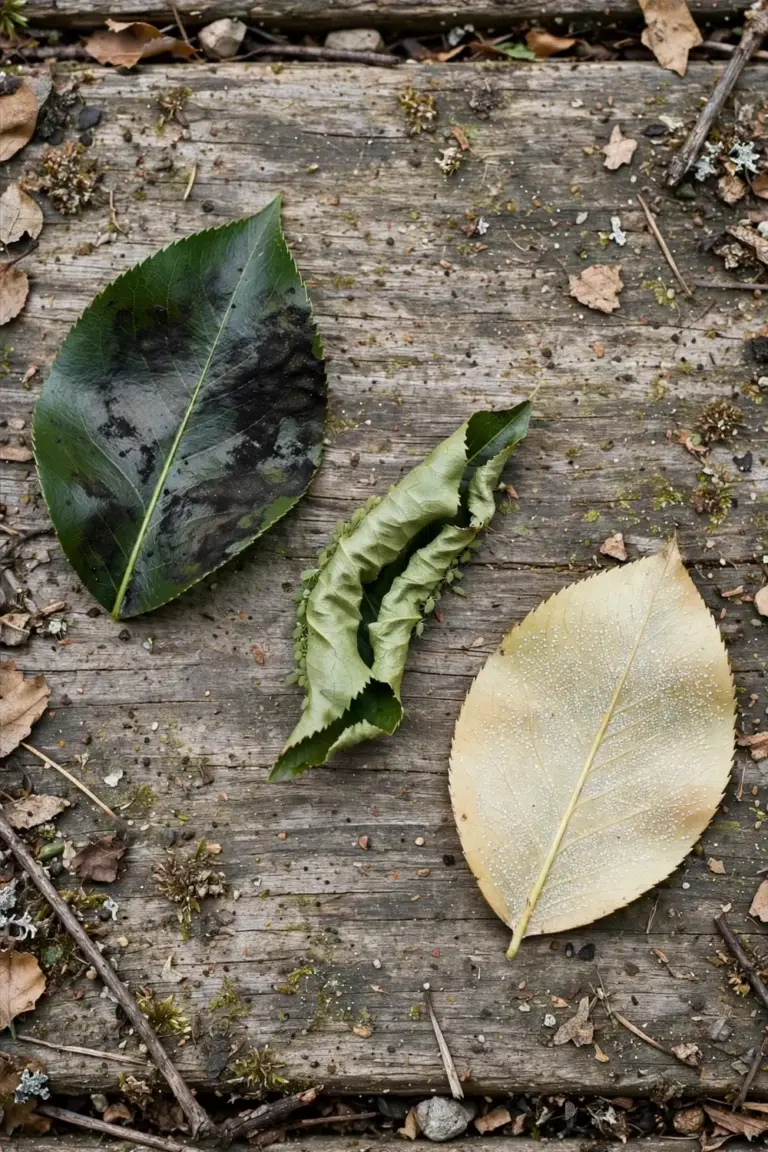
Touch a leaf. If it feels tacky or varnished, you are dealing with honeydew, and honeydew means sap-suckers. Honeydew is the sugary waste that sap-feeding insects excrete as they drink. It coats leaves, twigs and fruit in a clear sticky film. A black powdery coating often follows, because sooty mould fungi grow on the honeydew. The mould does not infect the tree. It blocks light from the leaf surface, which slows photosynthesis on badly coated leaves and weakens the tree over a whole season.
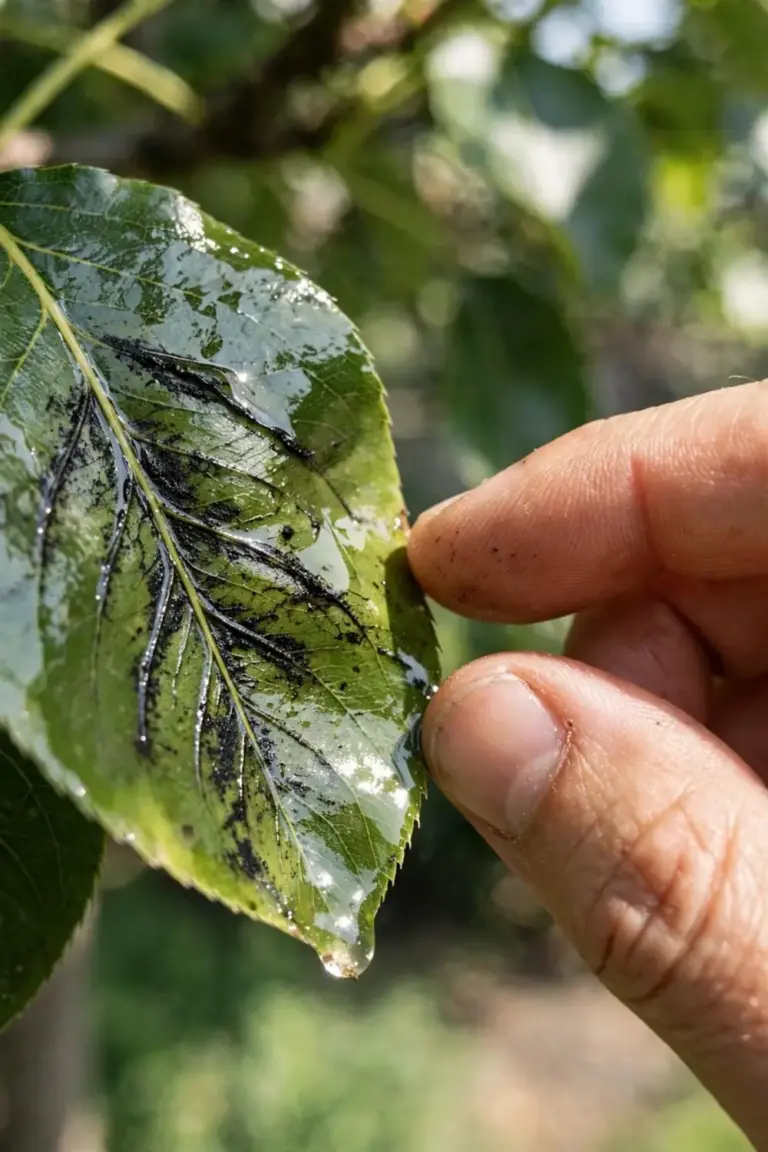
The sticky test narrows the field fast. Chewing pests like caterpillars leave holes and ragged edges, while sap-suckers leave stickiness, curling, stippling or bumps. If the leaf is sticky, you can skip every chewing pest and focus on the five sap-suckers covered here.
Run the test in the right places. Check the undersides of leaves, the tips of new shoots and the bark of young twigs. Sap-suckers cluster where the tissue is softest and the sap flows easiest. Early morning is the best time to look, because the insects are sluggish and the honeydew has not yet dried in the heat.
2. Identify Pear Psylla by Its Honeydew Bath
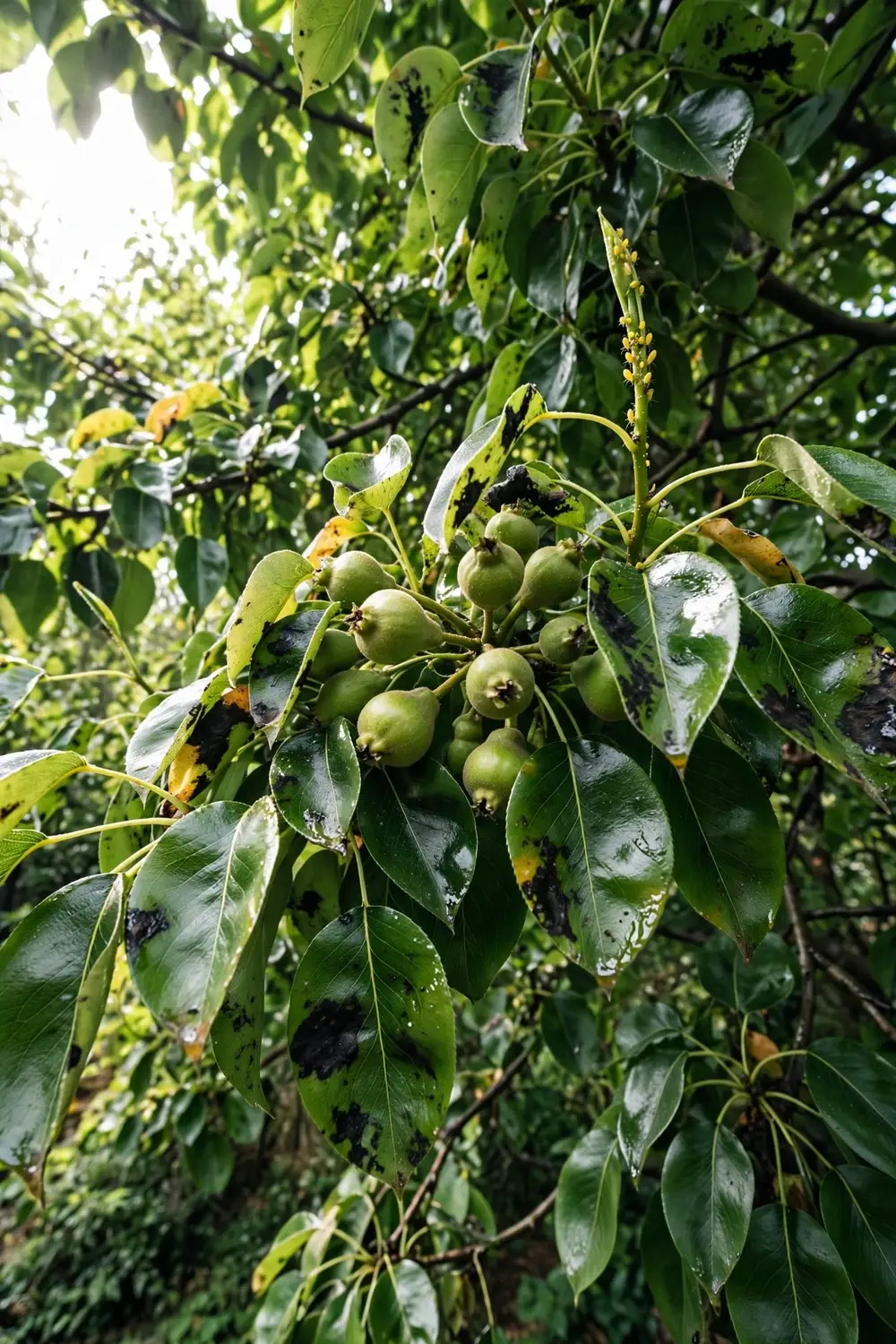
Pear psylla is the pear tree’s most dedicated sap-sucking pest. It feeds only on pear, and its nymphs sit inside droplets of their own honeydew. If you find tiny yellow insects bathing in sticky droplets on new growth, you have found pear psylla.
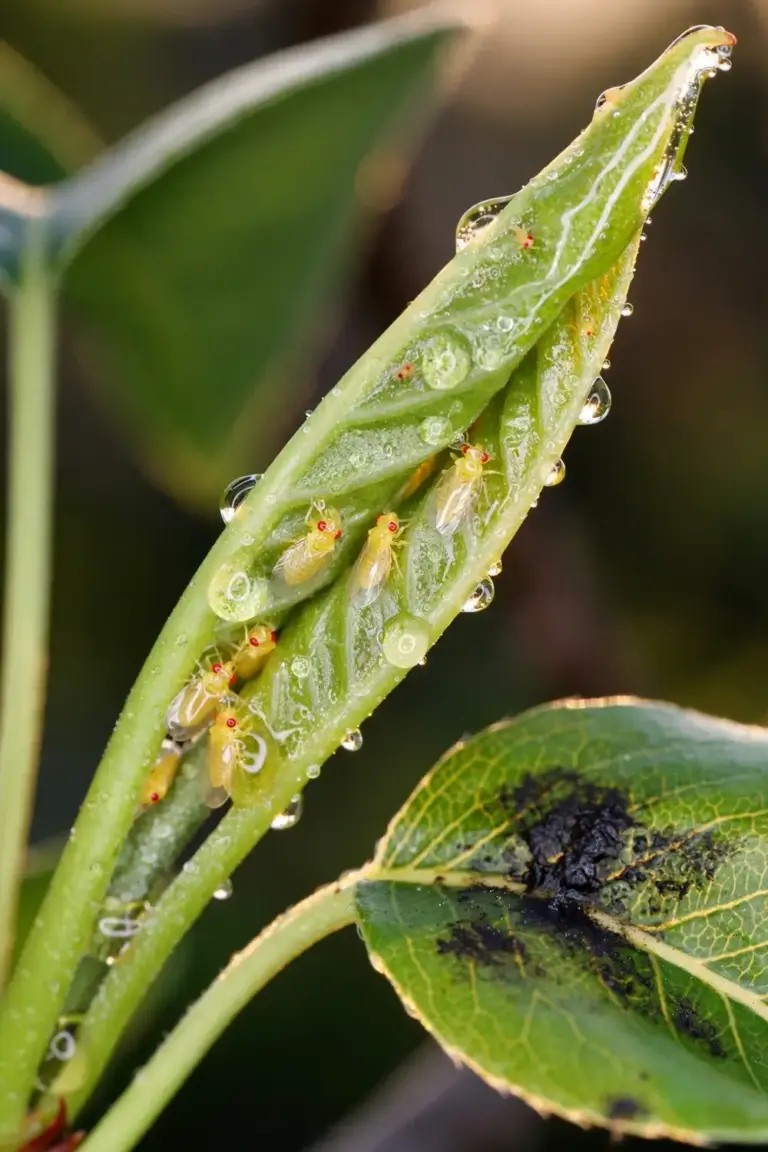
The adults are 2 to 3 mm long and look like miniature cicadas, with clear wings folded rooflike over the body. They become active as soon as temperatures climb in spring. The eggs are tiny, yellowish and laid along the midveins of new leaves. The nymphs are yellowish, wingless and flattened, and the early stages live visibly wet inside their honeydew. Later stages turn green, then brown, and develop wing pads. Four to five generations can hatch in a single year, so populations build fast once they start. The generation that matters most is the first. Eggs laid at bud break hatch into the nymphs that seed the whole season, which is why a single dormant oil spray at that moment has an outsized effect. Miss that window and you will be fighting overlapping generations all summer, with eggs, nymphs and adults present at once.
Heavy infestations cause real damage. Leaves develop brown spots, then drop early. Fruit skin blackens and scars where honeydew and sooty mould coat it. Severe attacks can partially or completely defoliate a tree, weaken fruit buds and reduce the following season’s crop. Penn State Extension notes that psylla injects a toxin as it feeds, which adds to the stress.
One fear you can set aside in Australia: pear psylla transmits pear decline disease overseas. Plant Health Australia confirms that pear decline is absent from Australia, so it cannot threaten your tree here. Overseas sources warn about this disease because psylla transmits it in their regions, yet their warning does not apply to Australian gardens. Spend that worry on the direct feeding damage instead: honeydew, sooty mould, leaf drop and weakened growth.
3. Spot Aphid Colonies Clustered on Shoot Tips
Aphids are the soft, slow-moving clusters packed onto shoot tips and the undersides of young leaves. They barely move when disturbed. If the colony looks like a crowd of tiny pear-shaped bodies in green, black, yellow or pink, it is aphids.
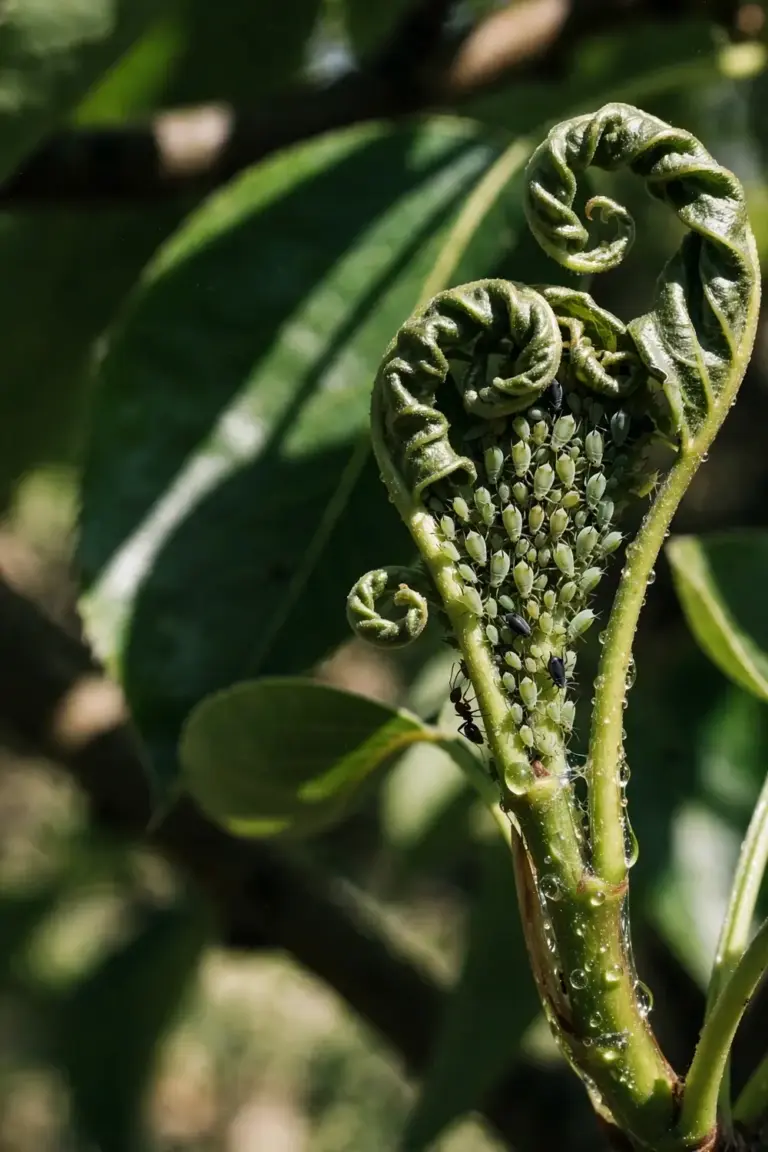
Three aphid species commonly infest pear. The green peach aphid is pale green and feeds on succulent shoots throughout the tree. The melon or cotton aphid ranges from yellowish to dark green and does the same. The bean aphid is black and clusters mainly on shoot tips. All three excrete honeydew, which attracts ants and grows the same black sooty mould seen with psylla. Honeydew also causes russeting, a rough brown scarring, on pear fruit.
Aphid feeding stunts and deforms new growth. Leaves curl, twist and stay small. Shoots stop extending. Washington State University’s Hortsense notes that large populations can check the tree’s growth, although the crop itself often escapes serious harm. Aphids multiply fastest on soft, nitrogen-pushed growth, so a tree fed heavily with high-nitrogen fertilizer invites them. Switching to a slow-release or low-nitrogen fertilizer removes that invitation. Building healthy soil with compost and mulch feeds the tree steadily instead of in flushes, which grows tougher foliage that aphids colonise more slowly.
Ants farming your aphids are a warning sign. Ants protect aphid colonies from predators in exchange for honeydew. If ants stream up the trunk to a colony, controlling the ants is part of controlling the aphids.
4. Find Scale Insects Hiding as Bark Bumps
Scale is the sap-sucker most gardeners walk past. The adults do not look like insects at all. They look like small bumps on the bark, and the waxy shell protects them from sprays that would kill exposed insects. If a “bark bump” scrapes off with a fingernail to reveal a soft body underneath, it is scale.
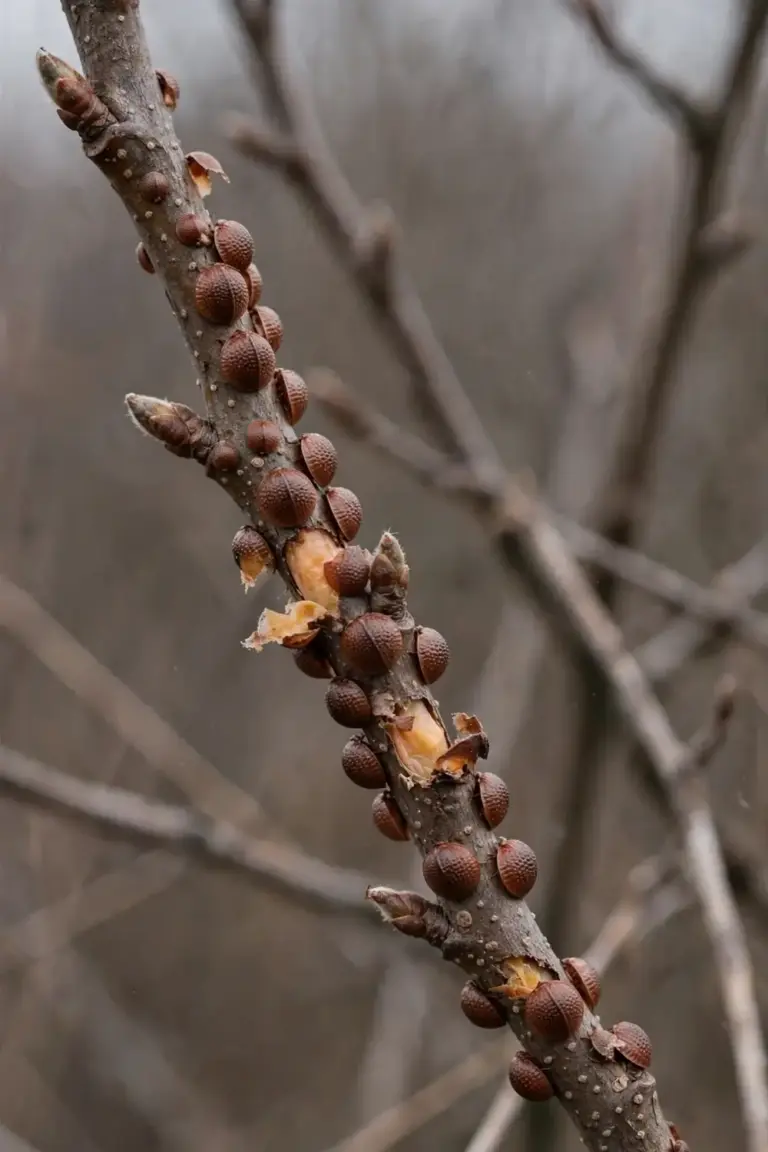
The pear lecanium scale is the classic example. Adults reach about 5 mm across, reddish brown and rounded like tiny helmets, sitting on branches, stems and leaf undersides. The Pacific Northwest pest handbooks describe the young crawlers as flat, oval and pinkish brown, migrating to leaf undersides to feed before returning to twigs to overwinter. There is one generation per year. Like aphids and psylla, large populations excrete enough honeydew to russet fruit and grow sooty mould. Severe infestations devitalise the tree, slow its growth and can kill twigs outright.
Check for scale in winter when the leaves are gone. Run your thumb along young twigs and branches, feeling for the raised bumps that stand out against bare bark. Pay special attention to the undersides of branches and the forks where twigs meet, because crawlers settle in sheltered spots first. Mark badly encrusted branches with a ribbon tie so you can find them again at spray time. This is also when the insects are most vulnerable, because a dormant oil spray can smother the overwintering stages before spring growth starts.
5. Rule Out Pear Lace Bug by the Stipple Pattern
If the upper leaf surface shows fine white or yellow stippling but the leaf is not sticky, suspect pear lace bug rather than psylla or aphids. Lace bugs feed on the leaf underside and leave their signature on top.
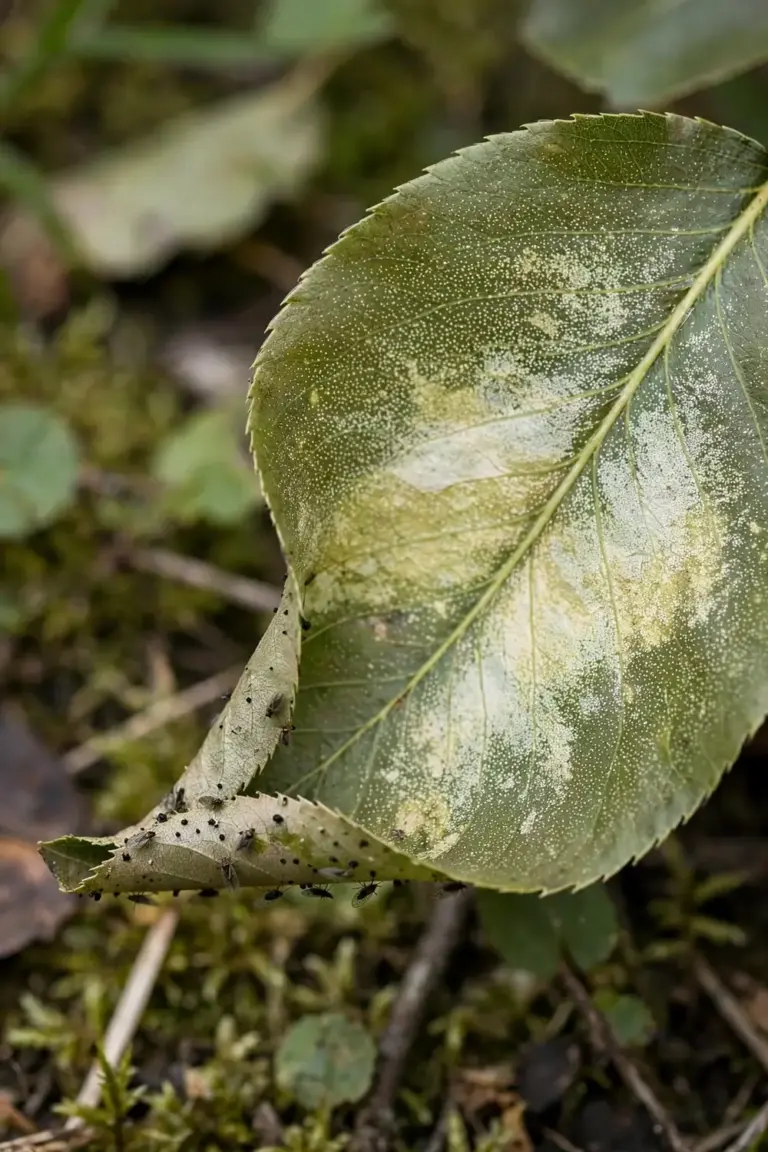
Pear lace bug, Stephanitis pyri, is a true bug about 3 mm long with delicate lace-patterned wings. Both adults and nymphs pierce leaf tissue on the underside and empty the cells. Each feeding puncture kills a tiny spot, and thousands of punctures merge into a bleached, stippled look on the upper surface, often worst near the main veins. Flip the leaf over and you will find the insects themselves plus black spots of excrement and the white cast skins of moulted nymphs. Heavy attacks can yellow whole leaves and push them to drop early.
Lace bugs produce little honeydew, which is exactly why the stipple-without-stickiness pattern points to them. They prefer stressed or neglected trees and are more common in small home orchards than in well-managed ones. Because they feed exposed on leaf undersides, they are easier to hit with oil sprays and water jets than armoured scale. A strong blast directed upward into the canopy underside dislodges both nymphs and adults, and the black excrement spots wash off with the same pass.
6. Check Leaf Undersides for Leafhoppers
Leafhoppers are the sap-suckers that jump. Tap an affected branch and watch: tiny wedge-shaped insects that spring away or flit to another leaf are leafhoppers. Aphids and psylla nymphs do not jump.
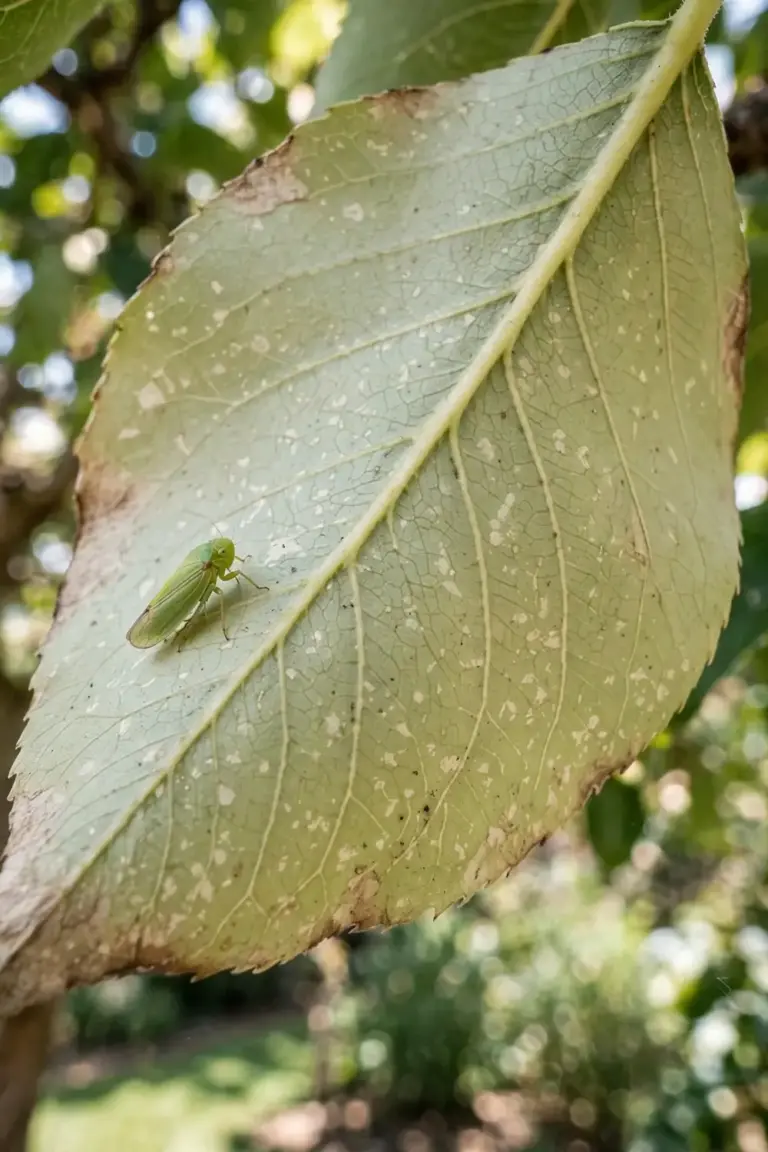
Leafhoppers feed the same way, piercing tissue and draining sap, and their damage looks like pale stippling scattered across the leaf. Unlike psylla and aphids they excrete little honeydew, so leaves stay dry and sooty mould stays away. Populations spike in warm weather, and a single tree can host several species through summer.
Leafhoppers rarely justify treatment on their own in a home garden. They are mobile, their damage is mostly cosmetic, and the predators that eat aphids eat leafhoppers too. Note their presence, then focus your effort on the honeydew producers, which cause the economic damage.
7. Use the Quick ID Table to Confirm Your Suspect
Use this table to match what you see on the tree to the pest. Start with the stickiness question, then check where the insects sit.
| Pest | Where to Look | Key Symptom | Honeydew |
|---|---|---|---|
| Pear psylla | New shoots, leaf midveins, suckers | Nymphs sitting in sticky droplets; black sooty mould | Heavy |
| Aphids | Shoot tips, leaf undersides | Soft clustered bodies; curled, stunted leaves | Heavy |
| Scale insects | Bark of twigs and branches | Bumps that scrape off; twig dieback | Moderate |
| Pear lace bug | Leaf undersides | White-yellow stippling on upper leaf; black excrement spots below | Little to none |
| Leafhoppers | Leaves generally | Pale stippling; insects jump when disturbed | Little to none |
If your tree shows two symptom patterns at once, it likely hosts two pests. Aphids and psylla commonly share a tree in spring. Treat for the heavier infestation first, because the honeydew producers do the most damage. Keep this table bookmarked on your phone for the weekly checks through spring, when early identification saves the most work. Photograph anything you cannot name; a clear photo of the insect and the damage together is worth more than a description when you ask for help.
8. Hose Off Light Infestations First
A strong jet of water is the cheapest effective treatment for aphids and psylla nymphs. It physically dislodges the insects, washes honeydew off the leaves and buys predators time to catch up. Use it before you buy any spray.
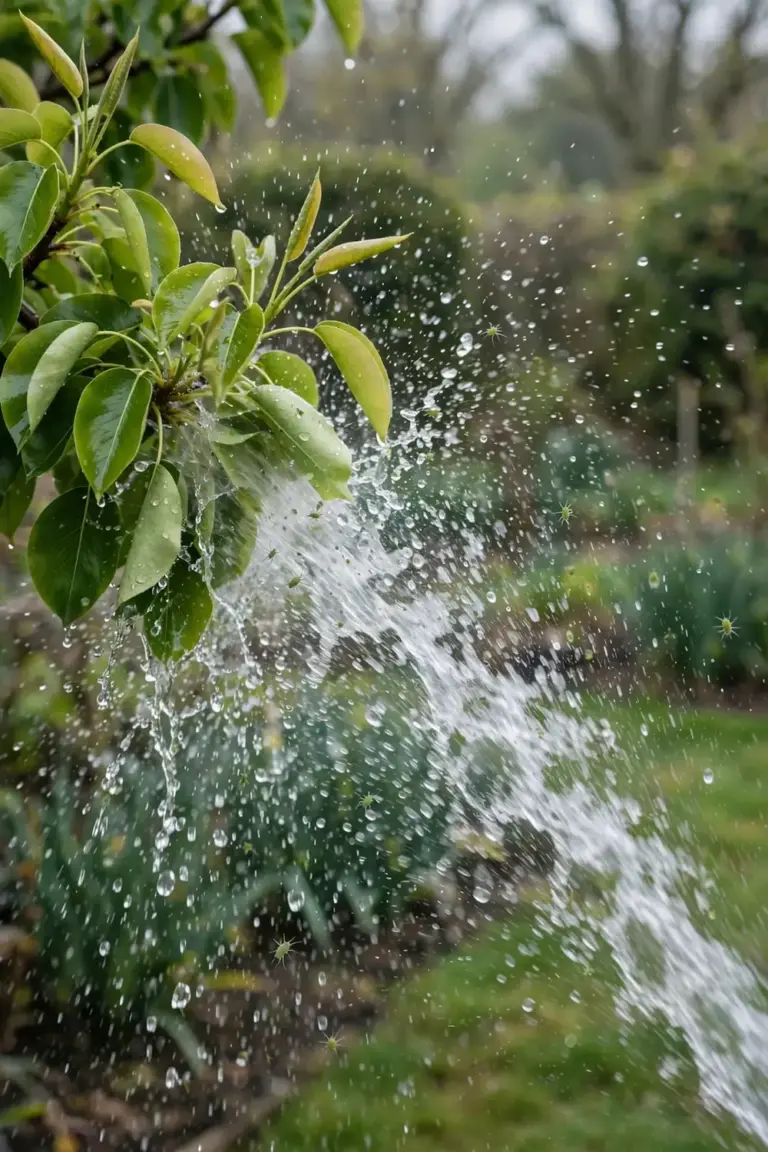
Aim the nozzle at the undersides of leaves and the tips of shoots, where the colonies sit. A firm stream, not a mist, does the work. Washington State University lists washing aphids and honeydew off with a strong stream of water among its first-choice non-chemical controls. Repeat every few days during peak pressure, because eggs and sheltered survivors rebuild colonies quickly.
Water works best as an opener, not a finisher. It knocks exposed aphids and young psylla nymphs off the tree, but it will not shift armoured scale or eggs glued into bark crevices. Pair it with the predator strategy below for colonies that keep rebounding. On a small tree you can combine both steps in one visit: hose the colonies off, then leave the survivors for the ladybirds that arrive within days to feed on the stragglers.
Spray in the morning so foliage dries by evening. Wet leaves overnight invite fungal problems, which would trade one pest for a disease. Avoid blasting open blossoms, which damages pollination.
9. Recruit Ladybirds and Lacewings to Do the Work
The predators already living in your garden can clear aphid and scale infestations if you stop killing them. Ladybird beetles and their larvae, green lacewing larvae, hoverfly larvae and tiny parasitic wasps all feed on pear sap-suckers. The Pacific Northwest pest handbooks specifically name green lacewing larvae and ladybeetles as aggressive predators of lecanium scale.
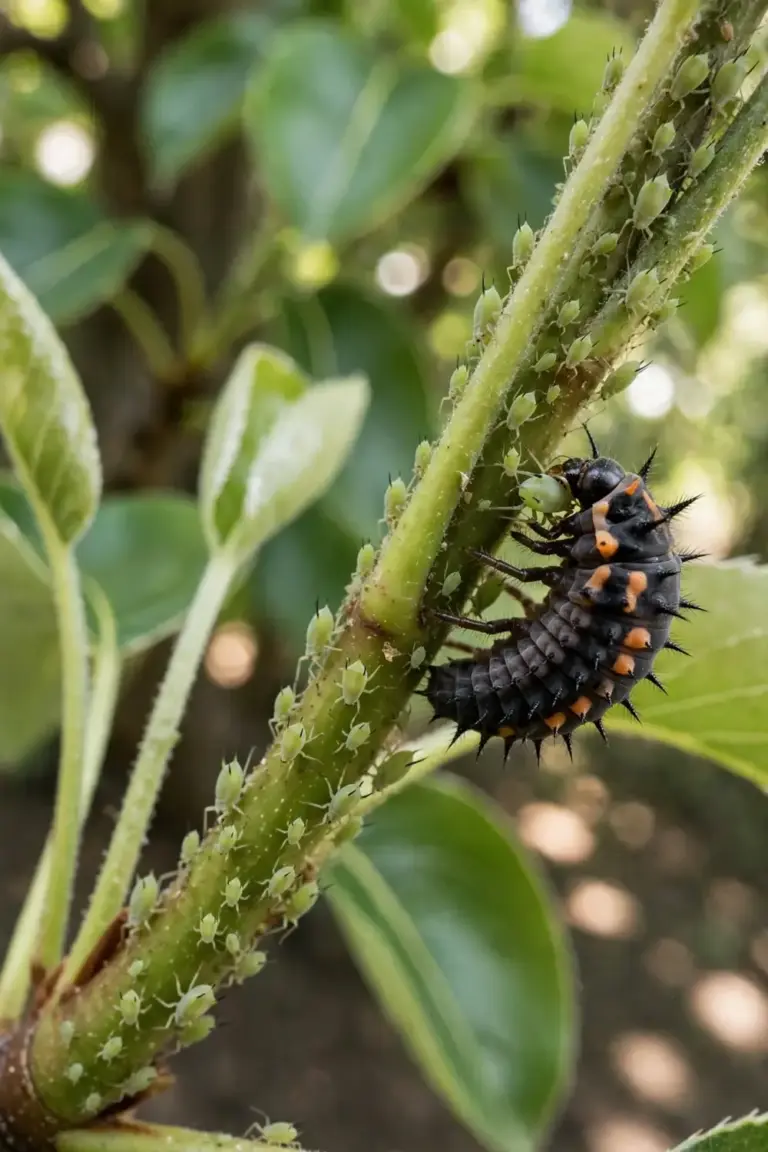
UC IPM’s guidance for aphids on pear is blunt: predators and parasites often reduce populations enough that treatment becomes unnecessary. Its organically acceptable methods list starts with biological control and tells growers to delay any chemical control as long as possible, so predators get their chance. Broad-spectrum insecticides kill the predators along with the pests and usually make the next outbreak worse.
Make your garden predator-friendly. Plant flowering herbs and small-flowered plants near the pear tree to feed adult hoverflies and parasitic wasps. Our guide to attracting beneficial insects lists the shelter plants that keep these predators resident. Leave some undisturbed mulch and leaf litter for overwintering ladybirds. Where ants farm aphids, a sticky band around the trunk stops the ants without spraying anything.
I tap the branch over a white sheet before I reach for the spray bottle, because the predators that fall out tell me whether the tree is already fighting back.
10. Spray White Oil or Neem at the Right Moment
Horticultural oils smother sap-sucking insects by coating them and blocking their breathing. White oil and neem oil are the two organic options Australian gardeners reach for, and both work on pear when the timing is right.
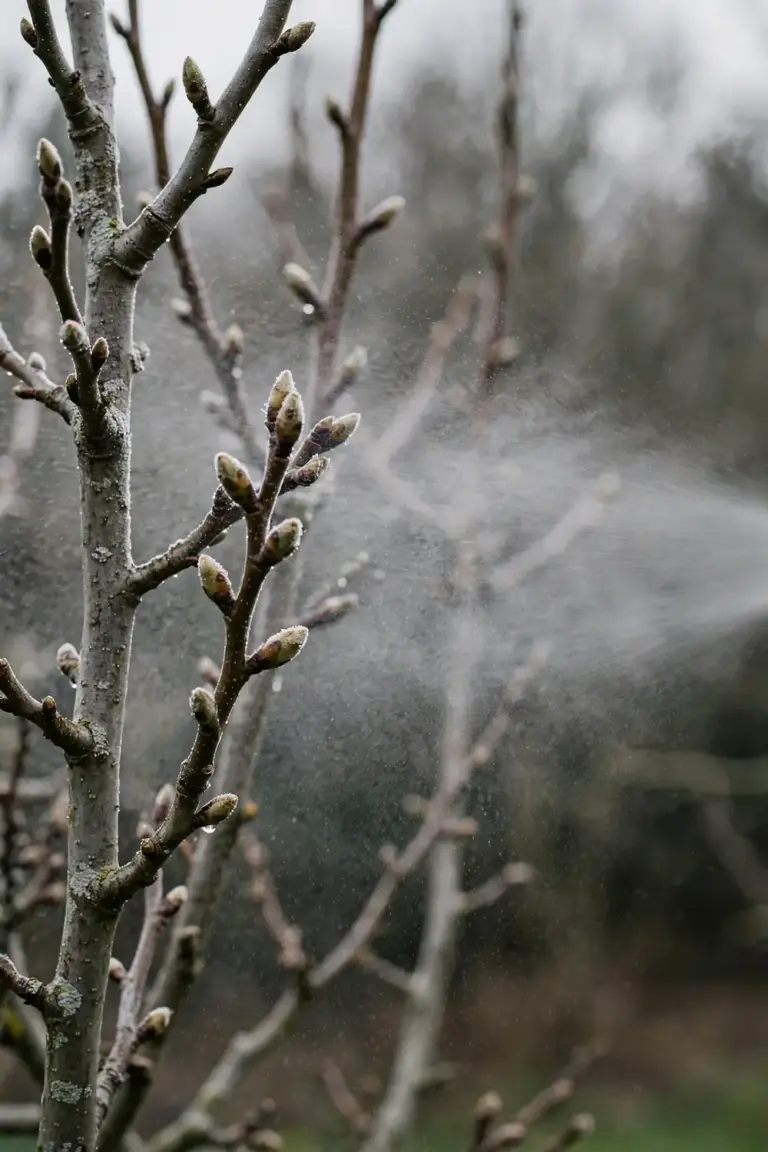
For scale and overwintering aphid eggs, spray dormant oil in late winter just as buds begin to swell. The oil coats the bark, twigs and buds and suffocates the stages hiding there. Penn State Extension recommends oil at bud break to stop psylla egg-laying before it starts. Australian white oil labels list scales, aphids, mealybugs and mites on pome fruit among their approved uses, which covers pear directly.
For active-season aphids, UC IPM lists sprays of approved narrow-range oils or neem oil as organically acceptable. Neem adds a second mode of action: its azadirachtin disrupts feeding and moulting, so survivors stop reproducing. Cover both leaf surfaces, especially the undersides where the insects feed, because oil only kills what it touches. A colony sheltering inside a curled leaf will survive a spray that coats only the upper surface, so open the canopy with your free hand as you work. During peak pressure, reapply every 7 to 14 days, and always spray again after rain washes the coating off.
Never spray oils in the heat of the day or when hot sunny weather is forecast. Oil plus heat scorches leaves. Spray in the cool of early morning or late evening, and keep the mix off open blossoms to protect pollinators. This restraint around flowering is a core principle of organic pest control for a pollinator-friendly garden: the spray should hit the pest, never the bee.
11. Prune the Water Shoots They Breed On
Psylla and aphids concentrate on the softest growth a pear tree makes: water shoots, the vigorous vertical suckers that sprout from branches and the trunk. Removing them removes the nursery.
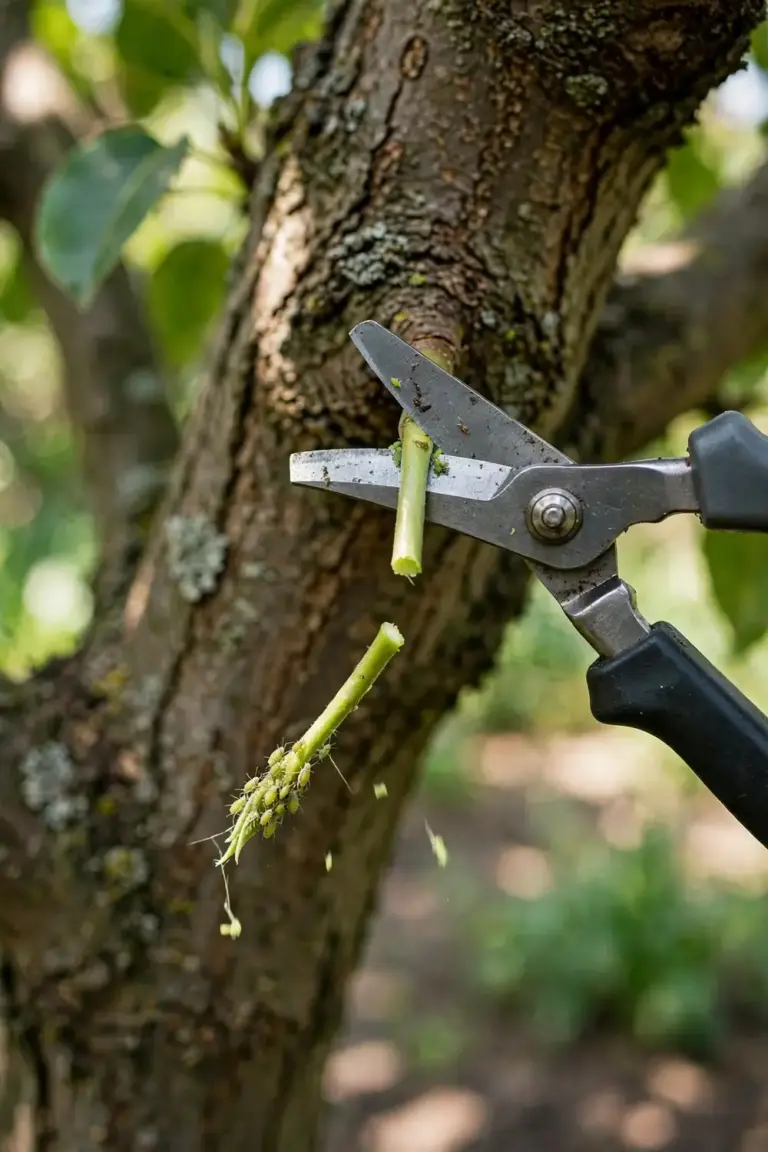
Penn State notes that late-season psylla infestations concentrate on water sprouts. These shoots are pure tender growth with no fruit to protect, so they are expendable. Cut them out in winter while the tree is dormant and you can see the structure clearly. During the growing season, snap off or prune any water shoot that carries a heavy colony, and dispose of the material in the bin rather than the compost, so eggs and nymphs do not hatch back onto the tree.
Pruning also opens the canopy. Better airflow dries honeydew faster, slows sooty mould and lets spray coverage reach the leaf undersides. Thin crowded branches so light penetrates the center of the tree. A dense, dark canopy is a nursery; an open one is a workplace for predators.
12. Time Your Attack to the Pest Calendar
Each sap-sucker is vulnerable at a different moment, and the calendar tells you which weapon to pick up. Late winter, as buds swell, is the dormant oil window: scale sits exposed on bare bark, psylla adults return to lay eggs and aphid eggs wait on buds. One thorough oil spray now hits three pests at once. This is the highest-value spray of the year.
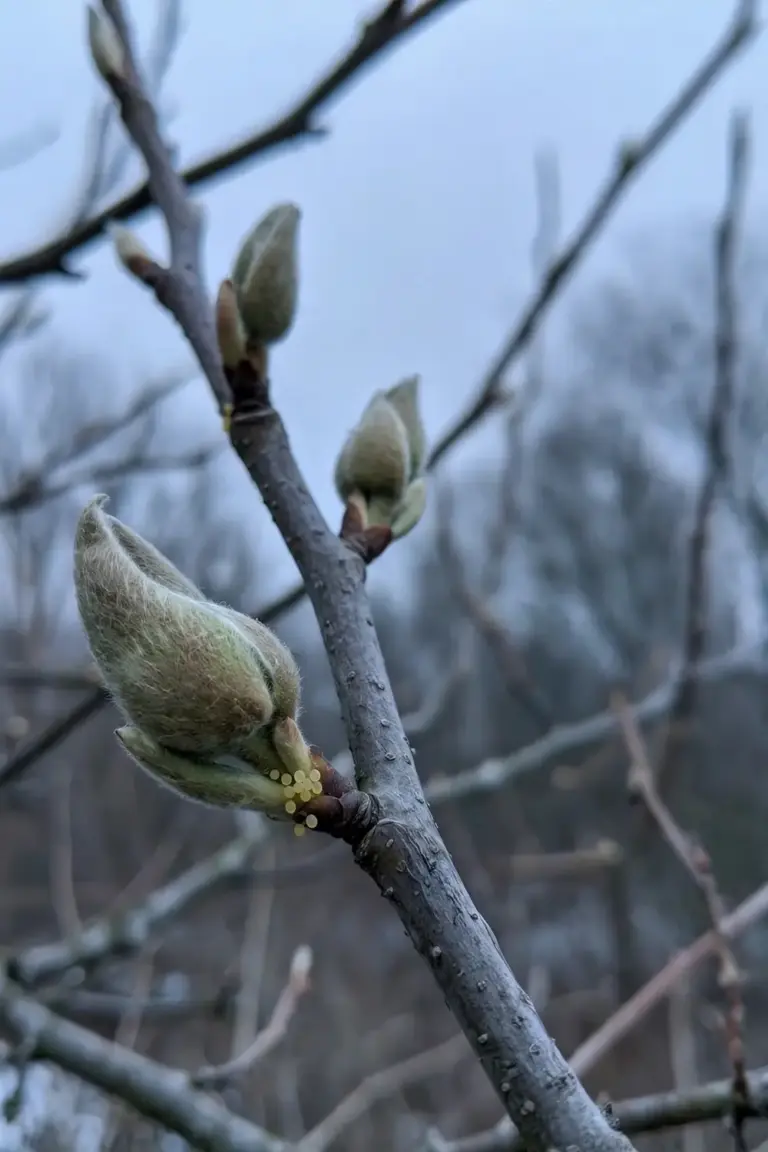
Spring belongs to watching, not spraying. Check shoot tips weekly for the first aphid clusters and psylla eggs along leaf midveins. Hose off what you find. This is also when predators wake up and start working, so every spray you skip is a gift to the ladybirds. Summer shifts the pressure to leafhoppers and lace bugs on the foliage, plus the later psylla generations on water shoots. Keep the hose handy and prune out the worst shoots.
Autumn is cleanup. Rake up fallen leaves, because lace bug adults overwinter in leaf litter and garden rubbish. Strip any mummified fruit still hanging on the branches, since it shelters pests through winter. A tidy winter garden starts the next spring with fewer pests, which means the dormant oil has less work to do.
13. Watch Potted and Dwarf Pears More Closely
Dwarf and potted pears suffer the same five pests as full-size trees. The insects do not care how tall the trunk is. Pots change the odds, not the pest list.
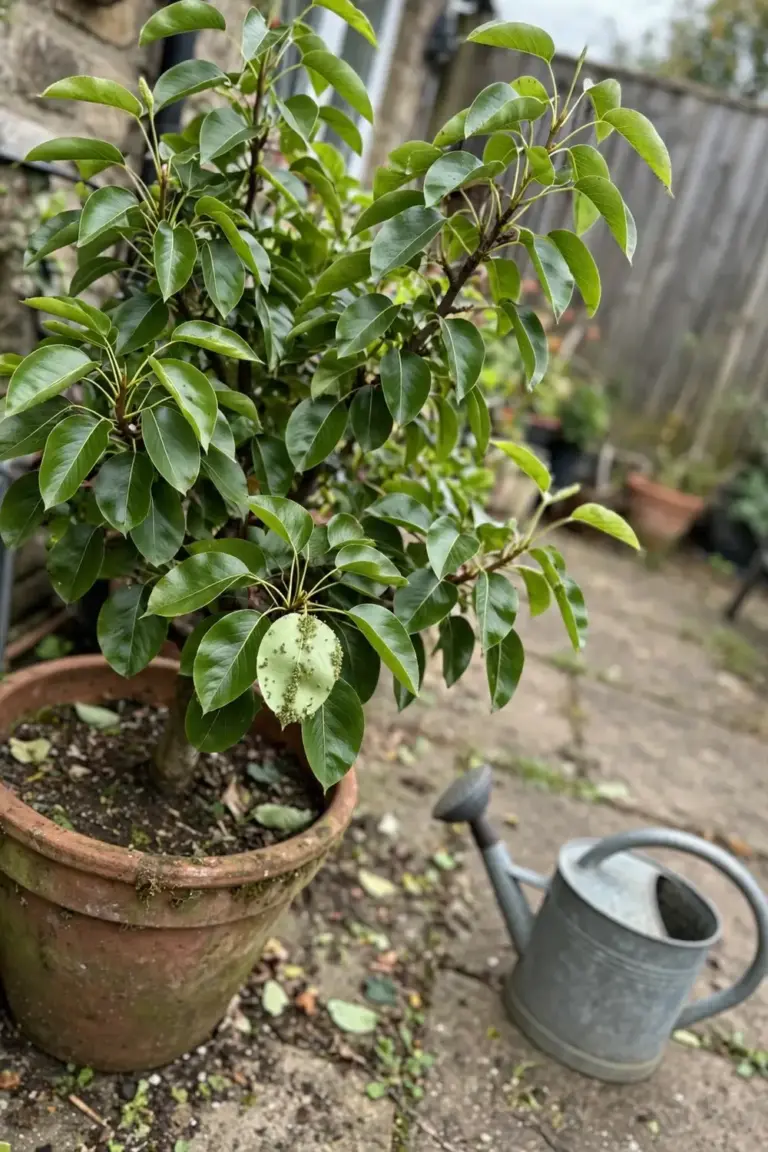
Container trees live under constant mild stress, because their roots are confined and the potting mix dries fast in summer heat. A dry tree is a vulnerable tree. Stressed pears push soft compensating growth after each watering, which is exactly what aphids and psylla colonise first. A pot also concentrates the problem: every pest on a two-metre dwarf tree sits within arm’s reach, so check the whole tree, not just eye level.
Inspect leaf undersides weekly from bud break through summer. Turn leaves over and look for the first aphid clusters, psylla eggs along the midvein and the stippling that betrays lace bugs. Catching the first generation matters more in a pot, because there is nowhere for the problem to dilute. The hose treatment from section 8 is ideal for potted trees: tip the pot, blast the undersides and let the runoff drain away from the mix.
Keep potted pears watered evenly and mulched. Consistent moisture grows steady, hardened foliage that resists colonisation better than the flush-and-wilt cycle of a neglected pot.
14. Know When the Tree Can Handle Sap-Sucking Bugs Alone
A few aphids in spring are normal and not a crisis. UC IPM observes that aphids are infrequently a problem in pear orchards and seldom require treatment; with warm weather they leave pears for other hosts and predators usually finish the job. A healthy tree tolerates light feeding without measurable harm.
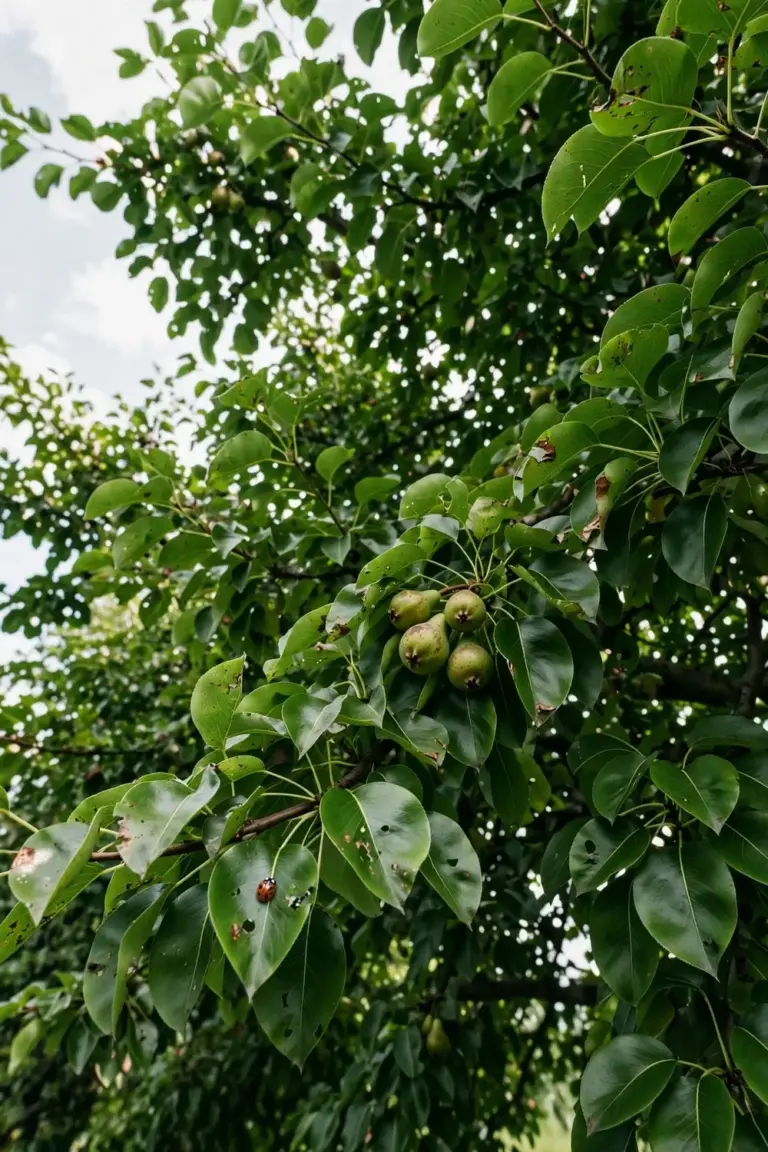
Treat when the damage crosses from cosmetic to economic. Act when honeydew coats developing fruit, when shoot tips stop extending, when sooty mould blackens a large share of the canopy or when a scale infestation starts killing twigs. These are the signs the pest population has outrun the predators.
Do not chase zero insects. A small resident pest population feeds the predators that protect the tree all season. The goal is balance: enough predators to hold sap-suckers below damage levels, and intervention only when the scale tips. That restraint is what makes the control organic in practice, not just on the label. A tree that has survived a light spring with its predator community intact enters summer stronger than a tree stripped bare by sprays.
Frequently Asked Questions
No. Pear psylla, aphids, scale, lace bugs and leafhoppers feed only on plant sap and cannot bite people or pets. The honeydew they excrete is sugary insect waste, unpleasant on skin and garden furniture but not toxic. Wash your hands after handling heavily infested foliage, as you would after any garden work, and keep the concern focused on the tree’s health.
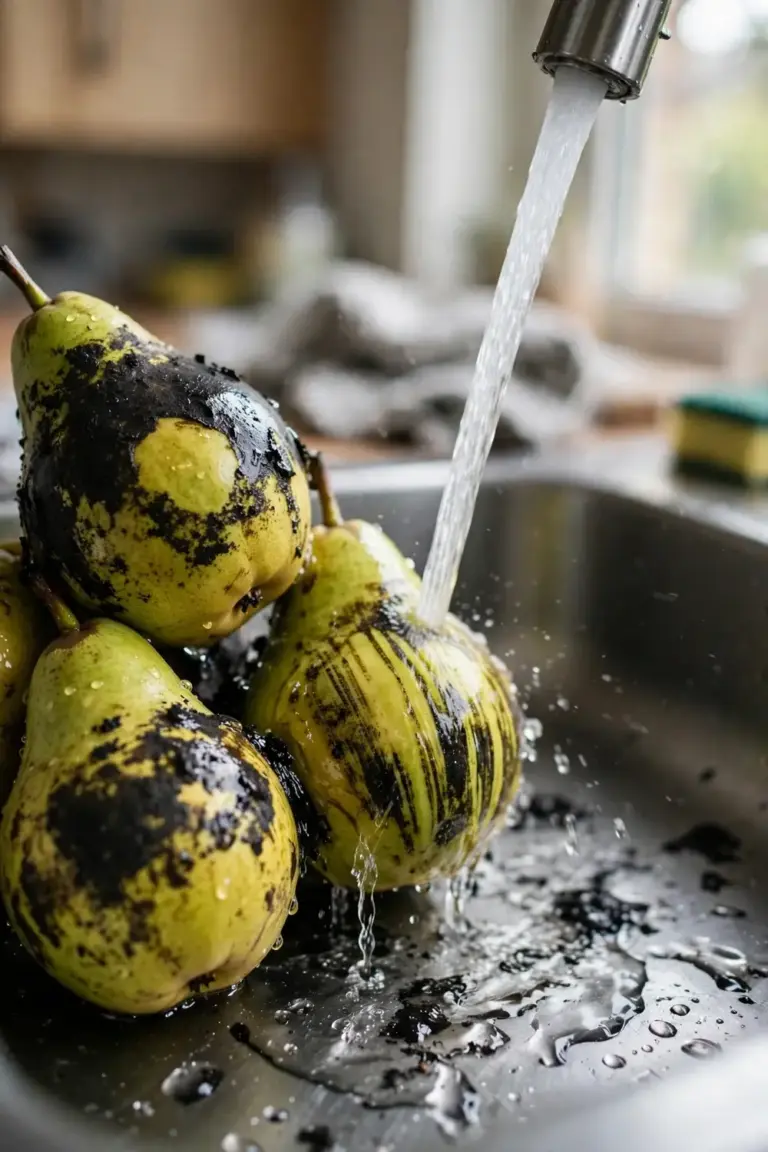
Yes. Sooty mould grows on honeydew sitting on the fruit surface and does not penetrate the flesh. Wash the fruit well and peel it if the blackening bothers you. The mould is a cosmetic problem and a signal that sap-suckers need controlling, not a food safety problem. Fruit with heavy russeting from honeydew damage is still edible, though it may look less appealing fresh.
Direct contact can harm them, which is why timing and targeting matter. Spray in the early morning or late evening when bees and hoverflies are inactive, coat only the infested foliage, and avoid open blossoms entirely. Oils break down quickly and leave no long-lasting residue, so predators that arrive after the spray dries are unaffected. Never use broad-spectrum synthetic insecticides if you want predators working for you.
Most of these pests overwinter on or near the tree. Psylla adults shelter in bark crevices, scale sits on twigs all winter, and aphid eggs wait on buds and bark. When spring warmth and new growth arrive together, the survivors start feeding and reproducing within weeks. Dormant oil sprays in late winter target exactly this overwintering generation, which is why one well-timed spray prevents months of trouble.
No. Pear decline is a phytoplasma disease that pear psylla transmits in some overseas regions, and overseas sources often warn about it. Plant Health Australia lists the disease as absent from Australia. It poses zero risk to your tree here. Focus your effort on the direct feeding damage: honeydew, sooty mould, leaf drop and weakened growth.
A Calm Tree Is a Watched Tree
Sap-sucking bugs on pear trees are a diagnosis problem first and a spraying problem second. Run the sticky test, match the symptom to the pest in the table, and start with water and predators before any bottle. Spray white oil or neem only at the moments each pest is vulnerable: dormant oil at bud break for psylla and scale, targeted oil in the growing season for aphids. Prune the water shoots, watch potted trees weekly and let a light spring aphid presence feed your ladybirds. The tree does not need a pest-free life. It needs you to notice early and act in proportion, season after season.