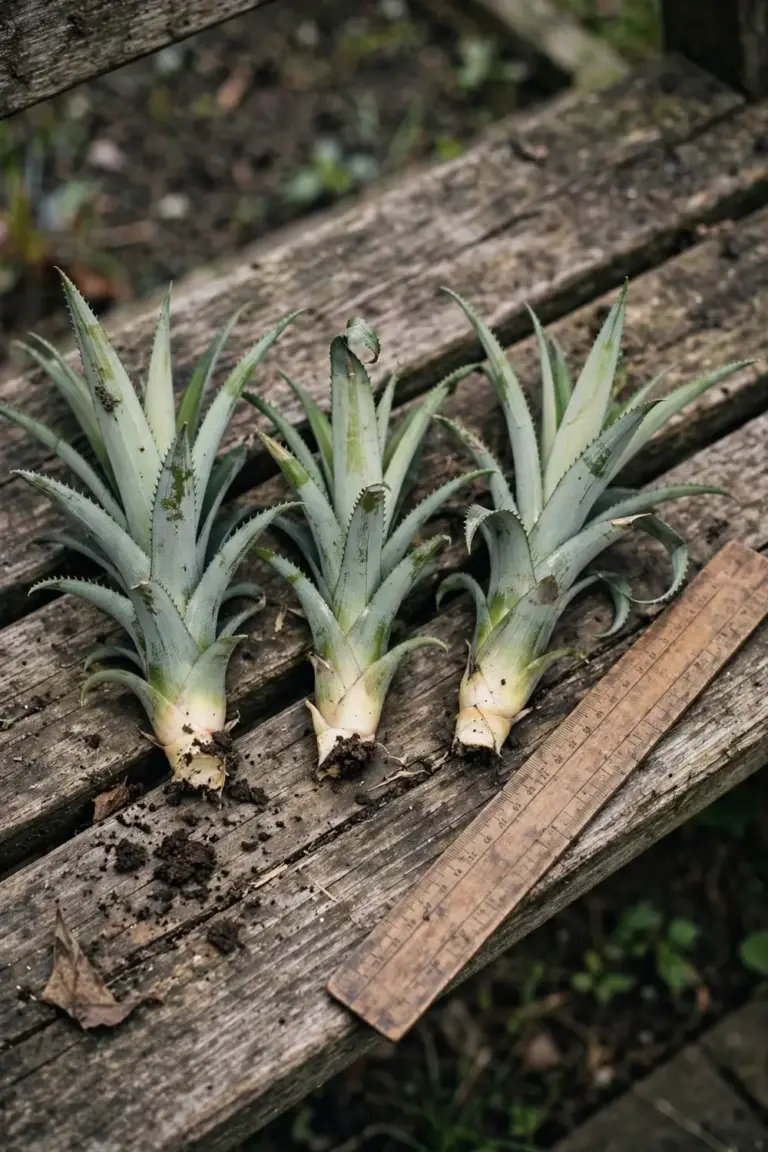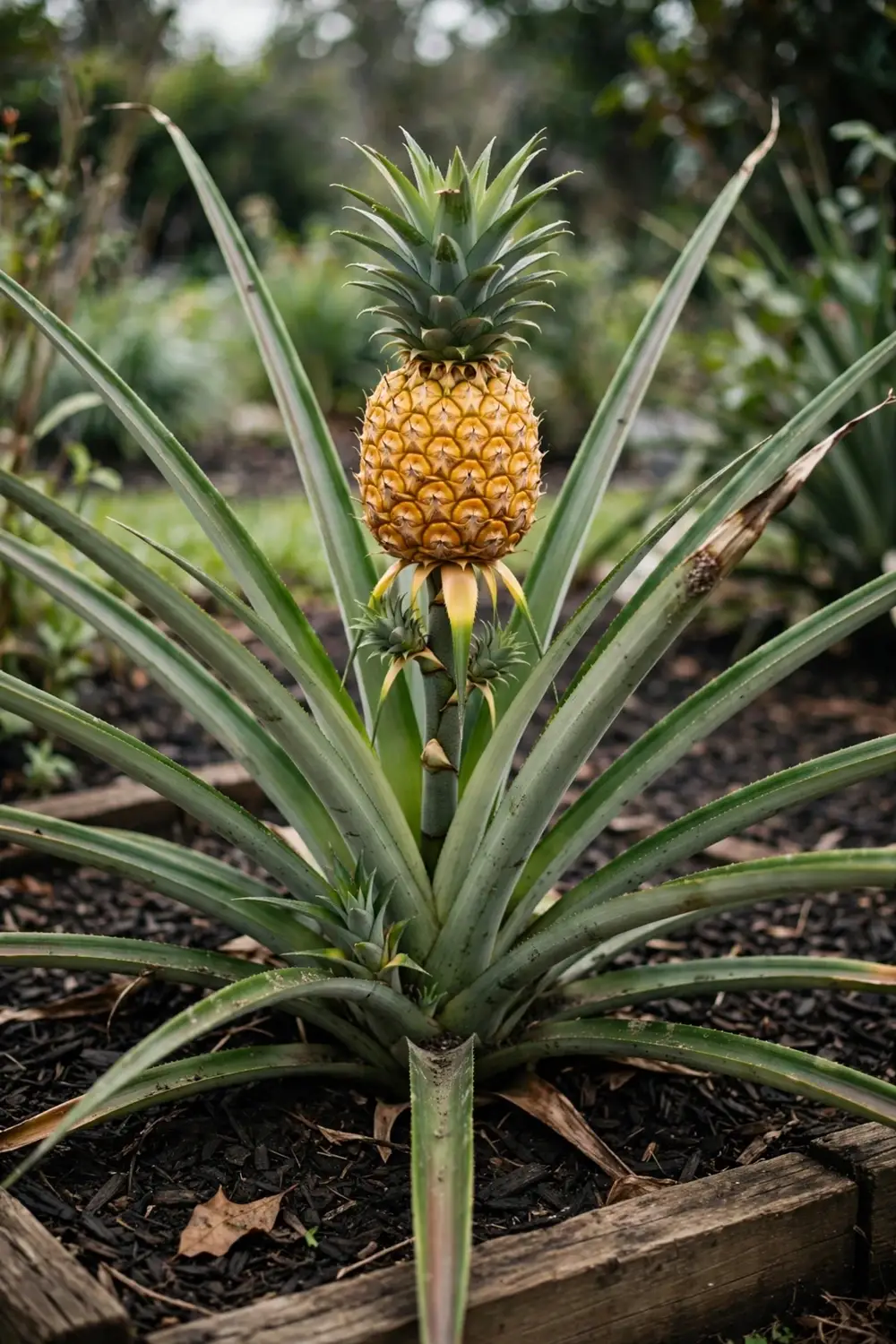

When to remove pineapple pups from the parent plant comes down to one measurement. Take each pup off once it reaches 15 to 20 cm long. Leave one sucker on the parent plant for the ratoon crop and take the rest off for planting. That single rule covers most home plants.
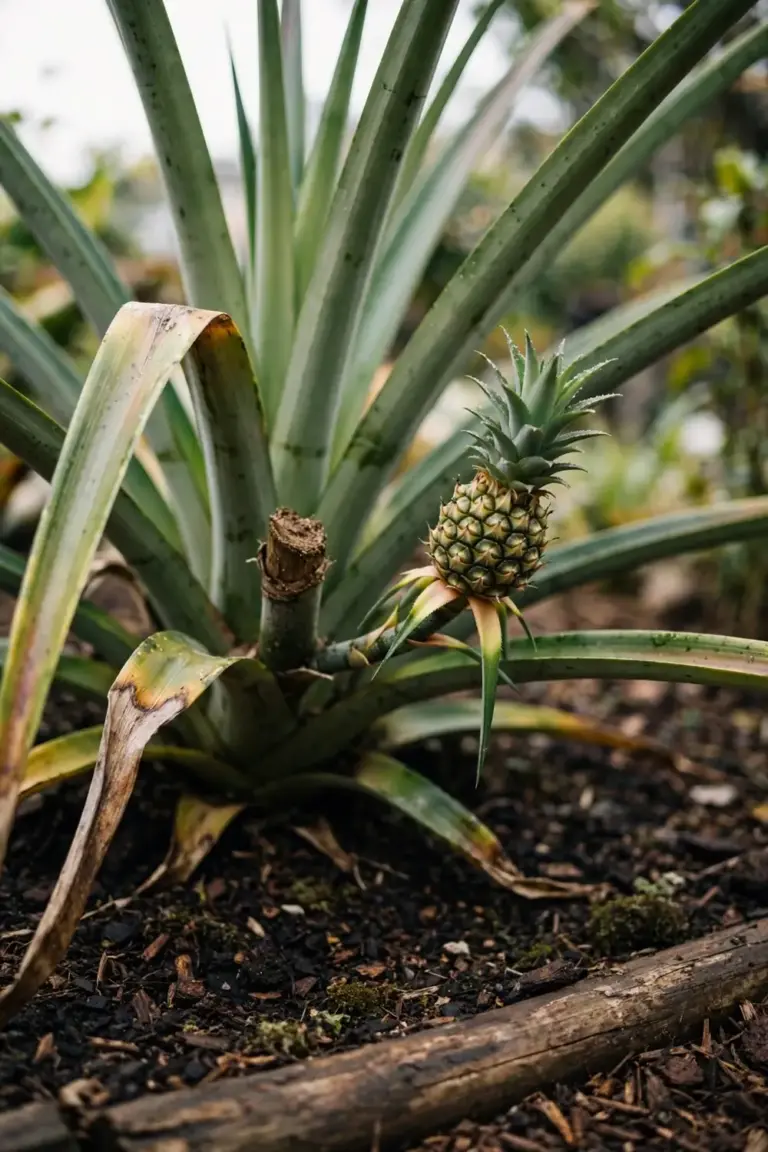
A pup is an offset that grows from the parent pineapple plant. Pineapple is Ananas comosus, a perennial bromeliad. A slip grows from the fruit stalk just below the fruit. A sucker grows from a leaf axil on the stem. A hapa grows lower on the stalk and looks like a slip without the curved base. A ratoon grows from underground stem tissue. Each type follows its own timing rule, so name the pup before you touch it.
The rest of this page is 8 moves, from naming the pup to planting it and waiting for fruit. General propagation method lives in the site’s guide to propagating your plants. This page stays on the one decision: when each pineapple pup comes off the parent plant.
1. Name the Pup Before You Touch It: Slips, Suckers, Hapas, and Ratoons
A slip grows from the fruit stalk directly below the fruit and carries a curved base where it joins the stalk. A sucker grows from a leaf axil on the stem and grows larger and more vigorous than a slip. A hapa grows well below the base of the fruit on the stalk and lacks the curved base that marks a slip. A ratoon grows from underground stem tissue and stays attached at the base of the plant.
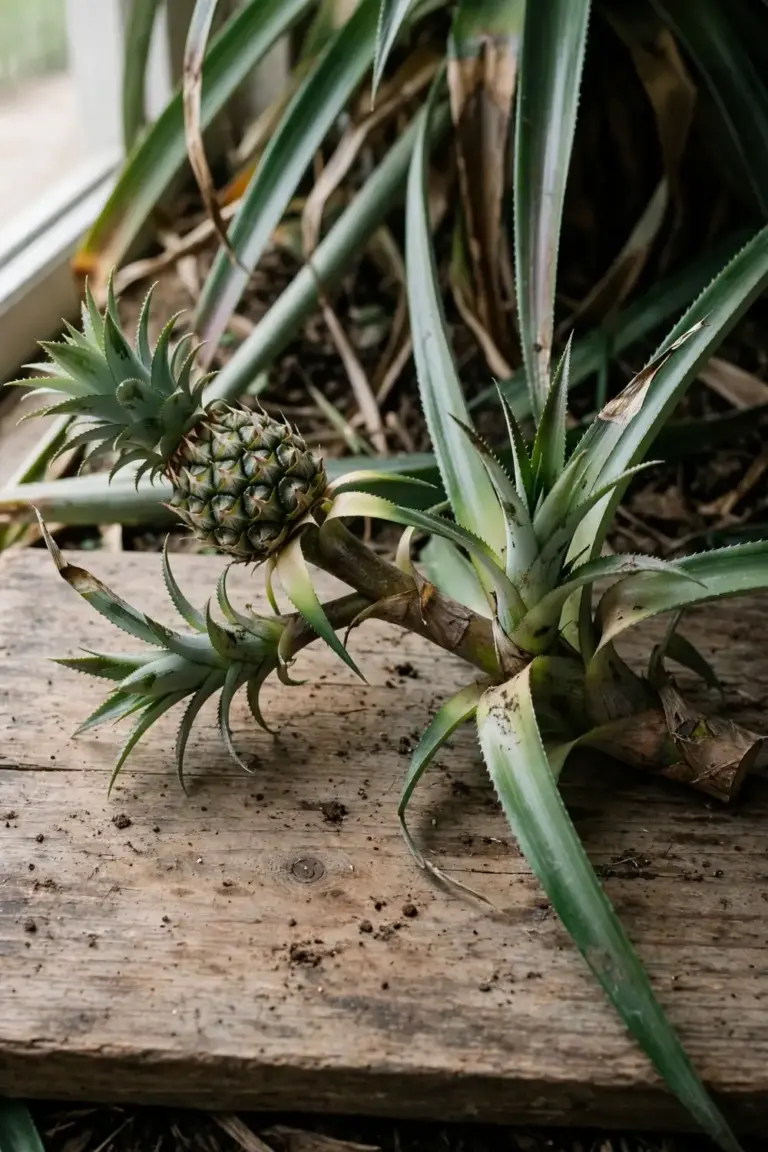
The University of Florida IFAS Extension names four planting materials: the crown of the fruit, slips and hapas from the stalk below the fruit, suckers from the leaf axils, and ratoons from underground stem portions. That list gives the field check. Find where the pup joins the parent. Stalk below the fruit means slip or hapa. Leaf axil means sucker. Base below the soil line means ratoon.
| Pup Type | Where It Grows | What It Becomes |
|---|---|---|
| Slip | Fruit stalk, directly below the fruit | New plant, fruit in 12 to 18 months |
| Hapa | Fruit stalk, well below the fruit | New plant, fruit in 12 to 18 months |
| Sucker | Leaf axil on the stem | New plant, or the ratoon crop if left on the parent |
| Ratoon | Underground stem tissue | Second fruit on the parent plant |
The crown belongs in its own group. It is the leafy top of the fruit itself. Crowns root and fruit, but they take longer. The Northern Territory Government puts crowns, called tops, at 2 to 3 years to fruit, against 12 to 18 months for suckers or slips. A pup is already partway grown when you remove it, while a crown starts from the top of a harvested fruit. Keep the two apart and the timing rules stay clean.
Tell a slip from a hapa by the base. A slip base curves where it joins the stalk, while a hapa base runs straight. The curve is the mark. Run a finger along the base of the pup where it meets the stalk. A bend means slip, and a straight join means hapa. Both come off with the same twist and both fruit on the same timeline, so the distinction matters for naming, not for timing. Get the name right and the rest of the job follows.
Varieties stay pointer level here. The Northern Territory Government names Cayenne and Queen as the two varieties grown across tropical and subtropical Australia. Cayenne is the smooth type with large fruit, and Queen is the smaller rough variety with deep golden flesh. The pup timing rules apply to both varieties, so variety choice belongs to a general growing guide.
2. Wait Until Each Pup Reaches 15 to 20 cm Before You Remove It
A pup needs 15 to 20 cm of growth before removal. That range converts the 6 to 8 inch rule that The Spruce gives for pups: waiting until they grow to 6 to 8 inches long usually results in a new plant that matures more quickly and can move into the flowering stage at 14 to 16 months. A pup removed too small has little stored energy and roots slowly. A pup left to size up carries its own reserves into the pot. The difference shows in the first month after planting, when the sized-up pup pushes new leaves from its center and the small one sits still.
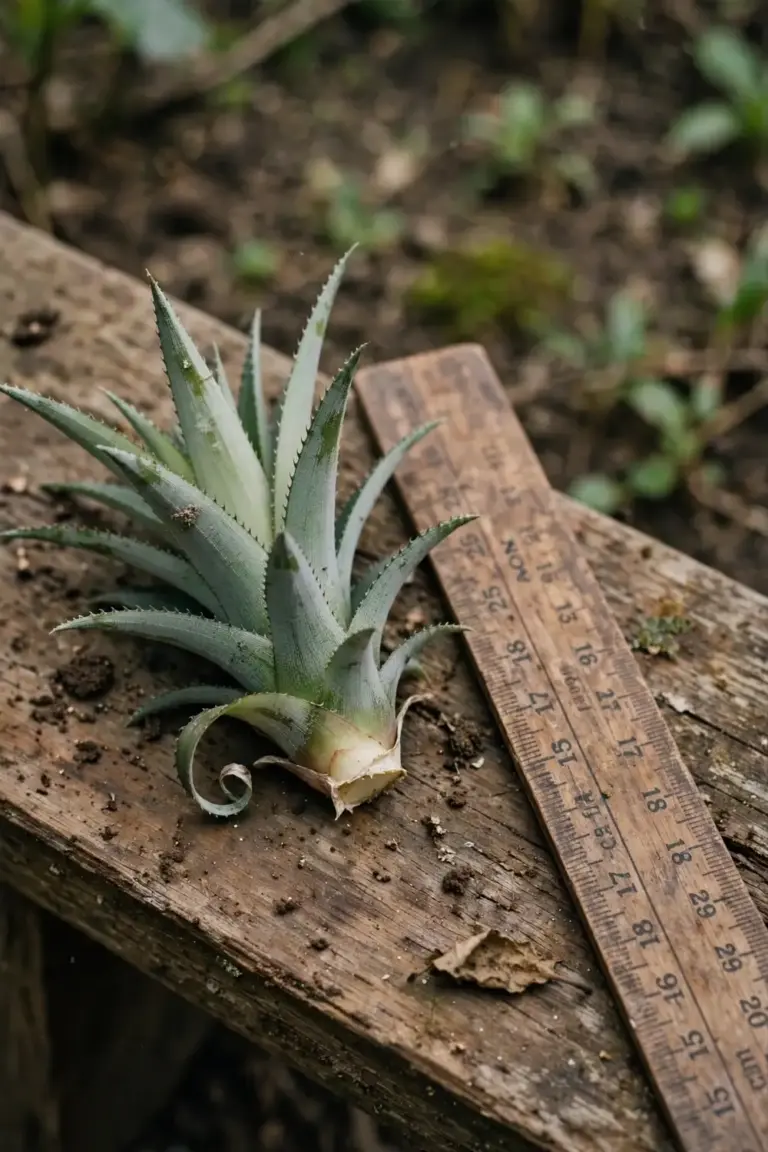
The University of Florida IFAS Extension gives the same rule in different words: slips and hapas should be left on the peduncle for several weeks after harvesting the fruit to develop a usable size for planting. Suckers should be left on the plant after fruit harvest to develop usable size for planting. The peduncle is the fruit stalk. The message is the same for every pup type. Leave it attached until it reaches usable size. Several weeks after harvest is the usual wait, and the ruler decides the exact day.
Size also sets the speed of the next crop. The University of Florida IFAS Extension states that the larger the crowns, slips, hapas, suckers, and stem pieces, the more rapid the growth and time to fruiting after planting. A 20 cm sucker outgrows a 10 cm sucker after planting. The wait costs weeks. The payoff is months of faster growth. A gardener who pulls early to save time pays for it twice: once in slow rooting, once in a late harvest.
Measure with a ruler, not with a guess. Hold the ruler beside the pup from its base to its longest leaf tip. A pup at 15 cm meets the floor. A pup at 20 cm meets the top of the range. A pup below 15 cm stays on the parent. Check weekly after harvest. Pups grow fast once the fruit is off the plant and the parent stops feeding fruit.
Pups on one plant rarely reach size on the same day. Take the big ones off as each one hits 15 to 20 cm and leave the small ones attached. A staggered harvest beats a single clear-out, because each pup gets the full wait it needs. Mark the small ones with a loose cloth strip if the plant carries many, then return each week with the ruler. The last pup off a plant is often the strongest, since it fed longest from the parent.
3. Leave One Sucker for the Ratoon Crop and Remove the Rest
Leave one sucker on the parent plant after harvest. That sucker grows into the ratoon crop, the second fruit from the same plant. Remove every other pup once each one reaches size. The parent feeds one second fruit well. The parent feeds a crowd of pups poorly.
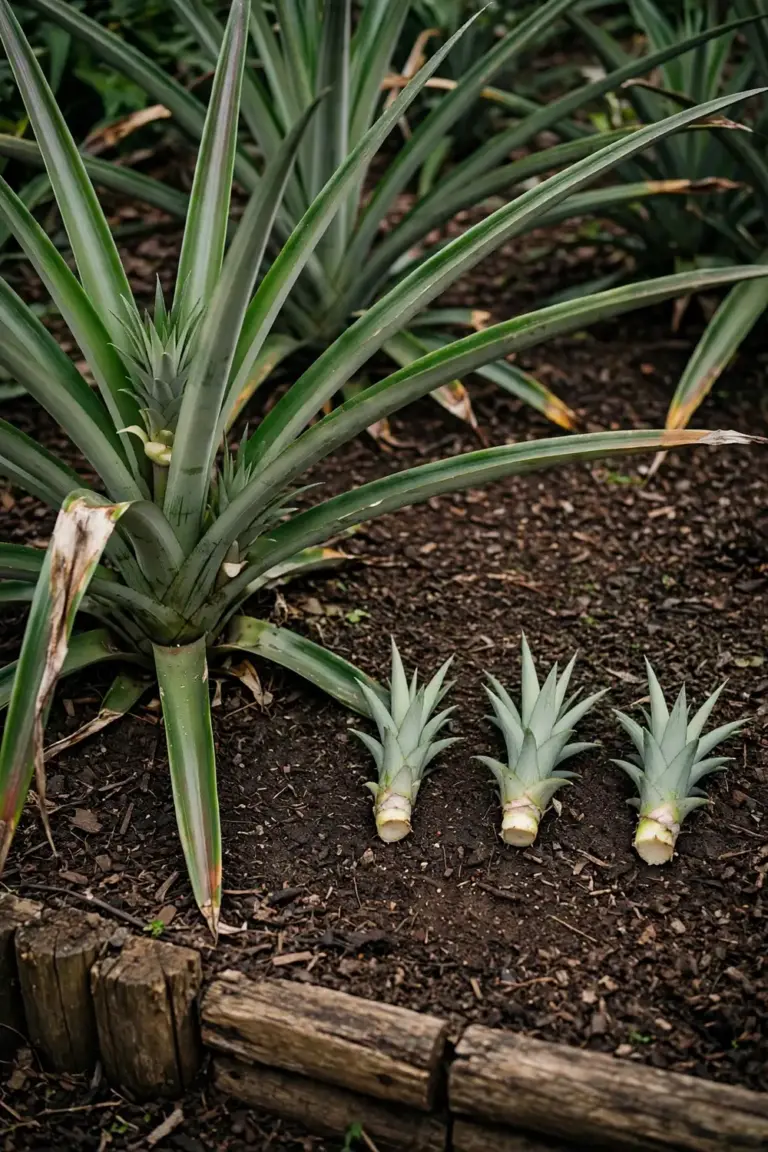
The Spruce describes the ratoon plainly: the ratoon fruit develops from a slip or sucker left on the parent plant, fruit development takes about 14 months, and the fruit is smaller and often sweeter. All other pups can be removed from the original plant to direct energy into the second crop. If more are left on the parent plant, multiple smaller fruits develop. One sucker means one decent second fruit. Five suckers mean five small ones. The parent has one root system and a fixed store of energy, so every extra pup takes a share of the same meal.
Count the pups before you start cutting. A parent plant after harvest often carries several pups across its stalk, stem, and base, and the count decides how many pots to prepare. Line up one pot per pup you plan to keep, plus the keeper that stays on the parent. A pup with nowhere to go sits in a bucket and softens. A few minutes of preparation saves every pup you remove. Set out the knife, the rubbing alcohol, the gloves, and the pots before the first cut, then work through the plant in one pass. A sucker low on the stem with a solid base holds up better than a thin sucker high on a weak point. Remove the rest with the methods in the next two sections. The keeper stays attached and keeps growing. Check the keeper weekly while it grows. A keeper that yellows or wilts loses its place, and the next strongest sucker takes over the job.
Stop after one ratoon crop. The Spruce states that a third harvest is not recommended due to the decreased size of the fruit, so plants are usually cut down after producing a single ratoon crop. The plant declines after the second fruit. Pull it out, compost the spent stem, and plant a fresh pup in its place. The cycle restarts with stronger stock. A fresh pup out-yields a tired third crop every time.
4. Twist Slips Off the Fruit Stalk After Harvest
Twist a slip off the fruit stalk once it reaches 15 to 20 cm. Grip the slip at its base, close to the stalk. Twist it sideways with a firm turn until it snaps free. A ripe slip separates cleanly. A slip that resists needs another week on the parent.
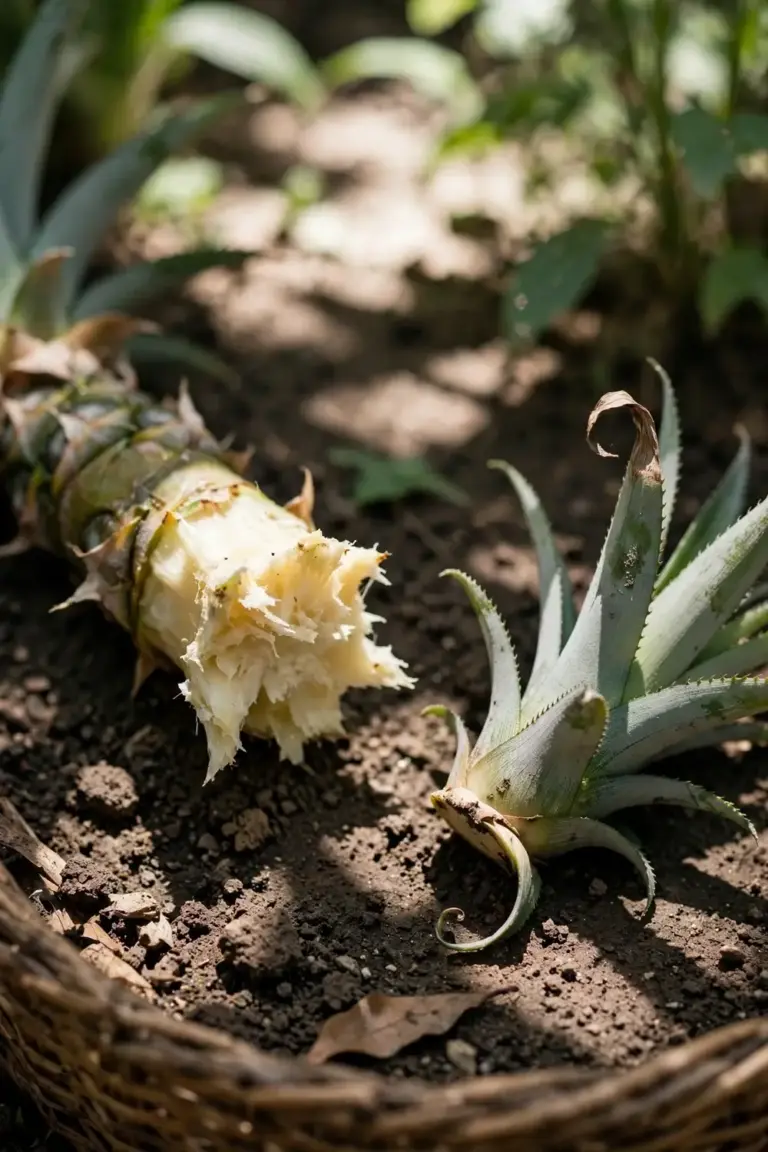
Slips grow on the stalk below the fruit, so harvest comes first. Pick the fruit, then let the slips size up. The University of Florida IFAS Extension advises leaving slips and hapas on the peduncle for several weeks after harvesting the fruit to develop a usable size for planting. The stalk stays alive after the fruit comes off, and the slips keep drawing from it while they grow.
Check the base after the twist. A clean break shows pale tissue with no torn strip hanging from the stalk, while a ragged tear needs a trim with a clean knife. Cut the ragged edge back to firm tissue, because the drying step in a later section closes the wound. A ragged base left untended rots in the pot, so take slips off in dry weather when you can.
Take slips off in dry weather when you can. A wet stalk tears more easily and the wound stays damp. Morning sun after dew dries works well. Put each slip in a basket or on a dry bench as you work down the row. Do not pile slips in a damp bucket, where wet slips sweat and the cut ends soften.
5. Cut Suckers Off the Stem With a Clean Knife
Cut a sucker off the stem with a clean, sharp knife. Slip the blade between the sucker and the parent stem at the base. Cut outward in one firm stroke. Keep a small collar of parent tissue on the sucker base. A collar carries root buds that speed establishment.
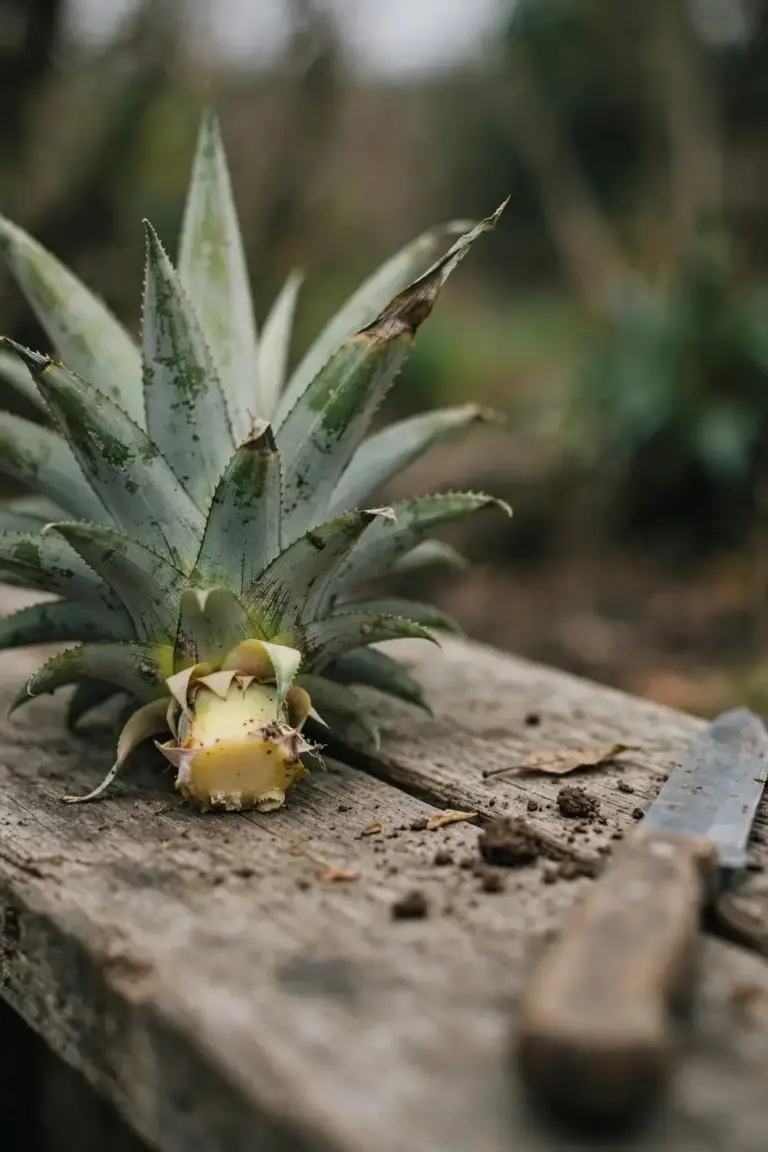
Suckers attach harder than slips. A sucker grows from a leaf axil and bonds to the stem over months. Twisting works for slips. Twisting tears suckers. The knife gives a clean cut and a fast heal. Wipe the blade with rubbing alcohol between plants. One dirty blade spreads rot from a sick plant to a healthy one. A clean blade is the cheapest insurance in the whole job.
Work from the smallest sucker to the largest, since small suckers come off fast and teach the angle. Large suckers need a longer cut and a steadier hand, so hold the parent stem with one hand and cut with the other. Keep fingers clear of the blade path. Pineapple leaves carry spines on many varieties, so wear sturdy gloves for this job.
Ground suckers need the same knife, with more care. A ground sucker grows from below the soil line and may carry its own roots already. Dig the mix away from its base first, then cut where it joins the parent stem. Keep the roots on the sucker if it has them, because a rooted ground sucker establishes faster than a rootless one. Pot it straight after drying, the same as any other pup.
Leave the keeper sucker alone. Mark it with a short strip of cloth tied loosely around its base if the plant carries several suckers. The marker stops a mid-job mistake. Remove every sucker except the marked keeper. The keeper stays on the parent and grows into the ratoon crop.
6. Dry Every Pup 1 to 2 Days in the Shade Before Planting
Dry every pup for 1 to 2 days in the shade before planting. Lay the pups on a dry bench or a rack in open shade with air moving around them. The cut end forms a callus. The callus seals the wound against soil fungi.
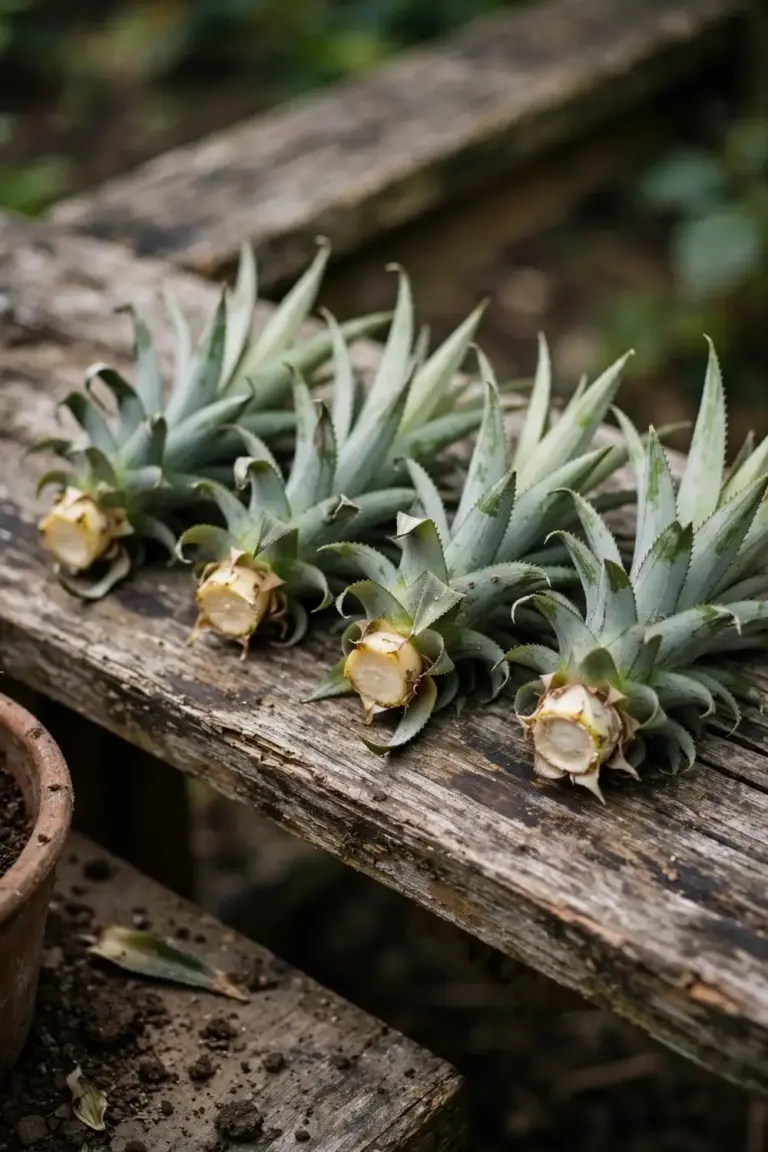
The University of Florida IFAS Extension gives this drying rule directly: detach the slips, hapas, or crown from the original plant and let them air dry in the shade for a day or two. Shade matters. Sun dries the cut fast and scorches the leaves. Open shade dries the cut at a steady pace and keeps the pup alive. A covered porch or a bench under a tree works.
I dry every pup in the shade for a day or two before I plant it, because a wet cut end rots in the soil.
Check the cut end before planting. A dry cut feels firm and looks pale. A wet cut feels soft and looks dark. Give a soft cut another day in the shade. Planting a wet pup invites rot at the base, and a rotted pup never roots. Patience at this step costs one day and saves the pup.
Do not soak pups in water before planting. Water softens the callus and undoes the drying step. Plant straight into mix after drying, then water lightly and let the mix drain. The roots form in damp mix, not in a bucket of water.
7. Plant Pups Shallow in Free-Draining Mix
Plant each pup 7.6 to 10.2 cm deep in free-draining mix. That depth converts the 3 to 4 inch planting depth that Harvest to Table gives for suckers and slips. The base sits firm in the mix and the center of the pup stays clear of soil, because soil packed into the heart of a pup rots the growing point. A pup planted too deep rots, while a pup planted too shallow topples in wind.
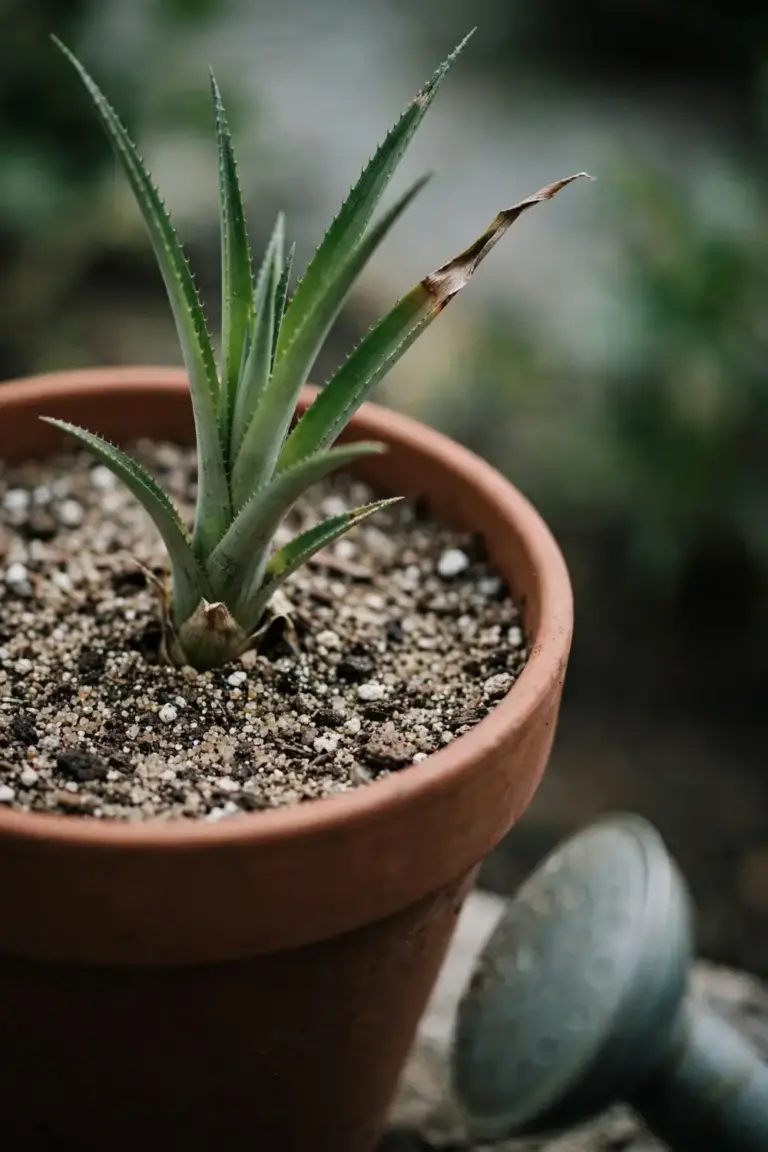
Use a mix that drains fast, because pineapple roots rot in wet soil. A blend of potting mix with coarse sand or perlite drains well and holds enough moisture for rooting. Fill the pot to 2 cm below the rim. Set the pup in the center and firm the mix around the base with your fingers. Water once, lightly, and let the pot drain fully, since the pot needs a drainage hole. A pot without one holds water at the base and rots the cut end before roots form. Give a potted pup a pot of 20 liters or larger, so it reaches fruiting size without a mid-season repot.
Mulch helps once the pup roots, and the site’s mulching guide covers the method. Keep mulch away from the pup base for the first weeks. Mulch piled against a fresh cut holds moisture on the wound. A bare ring around the base keeps the cut dry while roots form. Add mulch later, once new leaves show.
Feed nothing at planting. A fresh pup has no roots to take up fertilizer. Fertilizer in the planting hole burns the cut end. Wait until new leaves grow from the center, then feed lightly. Soil health decides how fast the pup establishes, and a loose, living mix beats a bag of fertilizer at this stage.
8. Expect the Ratoon in About 14 Months and New Plants in 12 to 18 Months
The ratoon crop takes about 14 months from the time you leave the keeper sucker on the parent. New plants from removed pups take 12 to 18 months to fruit. Those two timelines set the calendar for the whole job.
The Northern Territory Government gives the removed-pup timeline: propagation via suckers or slips take 12 to 18 months to fruit, whereas tops require 2 to 3 years. The Spruce gives the ratoon timeline: fruit development takes about 14 months for a ratoon from a slip or sucker left on the parent plant. The two figures come from different sources and agree with each other. The ratoon sits inside the removed-pup range because the keeper sucker never stops growing. The keeper never suffers transplant shock, so it fruits on schedule.
| Planting Material | Time to Fruit |
|---|---|
| Slip or sucker removed and planted | 12 to 18 months |
| Keeper sucker left on parent (ratoon) | About 14 months |
| Crown or top from a harvested fruit | 2 to 3 years |
Temperature sets the pace. The Northern Territory Government states that pineapples grow best where temperatures range from 20 degrees Celsius at night to 30 degrees Celsius during the day, and that temperatures below 10 degrees Celsius can result in leaf necrosis. The University of Florida IFAS Extension adds the hard floor: pineapple plants do not tolerate freezing temperatures below minus 2 degrees Celsius, and temperatures below 15.5 degrees Celsius and above 32 degrees Celsius may slow plant growth. A plant in warm, steady conditions fruits at the fast end of the range. A plant in cool or heat-stressed conditions fruits at the slow end. Night temperature matters more than day temperature, because cool nights stall growth even when days run warm.
Australia fits this crop in the tropical north and the subtropical east. The Northern Territory Government notes that pineapple originated in South America and is grown across tropical and subtropical Australia. Darwin and coastal Queensland sit in the warm band. Sydney and Perth sit at the cool edge, where pots move under cover in winter. Cold nights below 10 degrees Celsius damage leaves, so a potted pup comes indoors or under a frost cloth on cold nights. Plant pups in the warm months and let them root before the cool season arrives.
The University of Florida IFAS Extension gives a wider planning figure for a planted pup: the time from planting to harvest ranges from 18 to 24 months depending on cultivar, cultural practices, and temperature. That range covers the slower end of home growing, where pots, cool nights, and late feeding stretch the calendar. Use 12 to 18 months as the target for a well-grown pup in warm conditions and 18 to 24 months as the honest outer range for a pup in a pot at the cool edge.
Frequently Asked Questions
Leave pups on the parent until after harvest. A pup removed early has little stored energy and roots slowly. The fruit still draws from the parent while it ripens, and a pup pulled early loses its food source. Wait until the fruit comes off, then let pups size up for several weeks. Remove each pup once it reaches 15 to 20 cm. The wait costs weeks and buys months of faster growth after planting.
Wait. Some plants pup late, and some varieties pup less than others. Keep watering and feeding the parent. Check the leaf axils and the fruit stalk weekly after harvest. A plant that never pups still gives the crown from its fruit as planting material. A crown takes 2 to 3 years to fruit against 12 to 18 months for a slip or sucker. The crown is slower, but it keeps the line going.
Feed the keeper sucker lightly once it grows new leaves. A ratoon crop draws on the same root system as the parent, so it needs less help than a fresh pup. A small dose of balanced fertilizer once a month during warm growth keeps leaves green. Stop feeding when nights cool. Fertilizer pushed into a cold plant sits unused in the mix and burns roots. The parent soil carries the ratoon most of the way.
Grow removed pups in pots with drainage holes and free-draining mix. A pot of 20 liters or larger holds a pup to fruiting size without a mid-season repot. Set the pot in full sun. Move it under cover when nights fall below 10 degrees Celsius. Water when the top 2 cm of mix dries. Pots dry faster than garden beds, so check moisture twice a week in summer heat.
The parent plant fruits once from its own stem. The second fruit comes from the keeper sucker, not from the old stem. The old stem declines after the first harvest while the sucker grows. Cut the plant down after one ratoon crop. A third harvest is not worth keeping, because fruit size falls with each crop. Pull the spent plant and plant a fresh pup in its place.
10. Start Removing Pineapple Pups From the Parent Plant This Weekend
Pick one plant this weekend, name its pups, and measure each pup against a ruler. Leave the strongest sucker for the ratoon crop, then twist off the slips and cut off the extra suckers. Dry the removed pups in the shade for a day or two, then plant them shallow in free-draining mix. Write the date on each pot label, so you know when the 12 to 18 month clock started. A label beats a memory. One plant becomes three or four. The ratoon fruits in about 14 months and the planted pups fruit in 12 to 18 months. The next crop starts with the pups you already own. The whole job takes under an hour once the pups reach size, and the reward is a second harvest from the same plant plus a row of new plants for free.