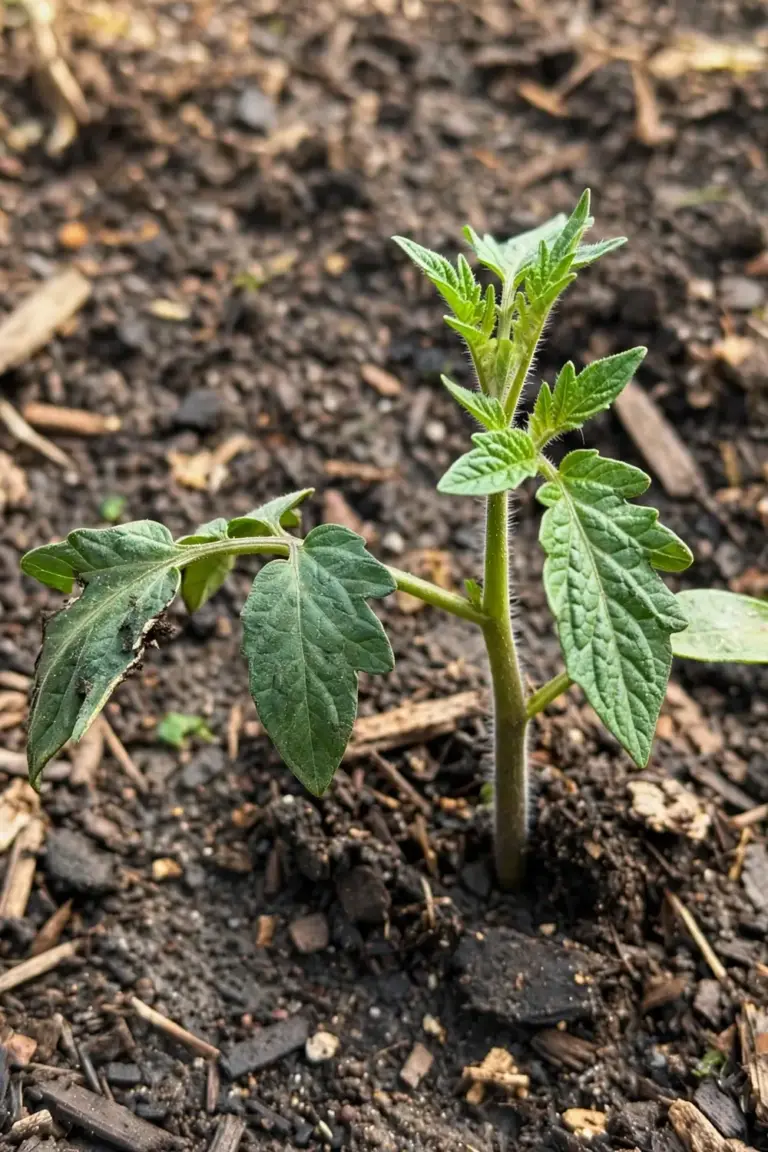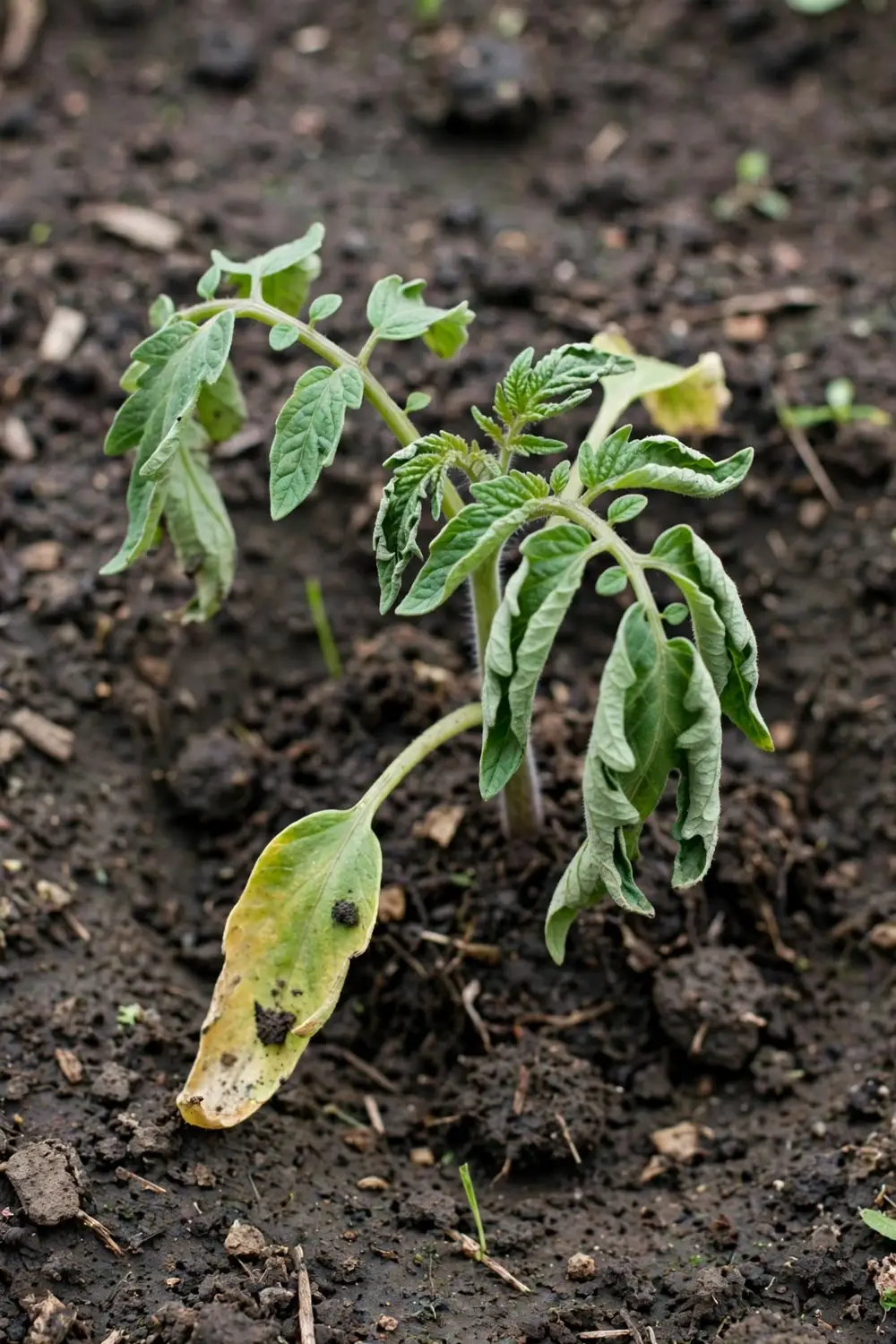

A tomato seedling that wilts the afternoon after transplanting usually has tomato transplant shock. Its roots cannot yet replace the water its leaves lose through transpiration. Most seedlings recover within a week once you run the 4-move recovery plan: water, shade, wind shelter, and mulch.
I have learned that the seedling I shade for three days recovers faster than the one I leave to tough it out in full sun. The rest of this page runs the diagnosis first, then the recovery, then the hardening routine that prevents the next case.
1. Name the Mechanism: Roots Cannot Keep Up With Leaf Water Loss
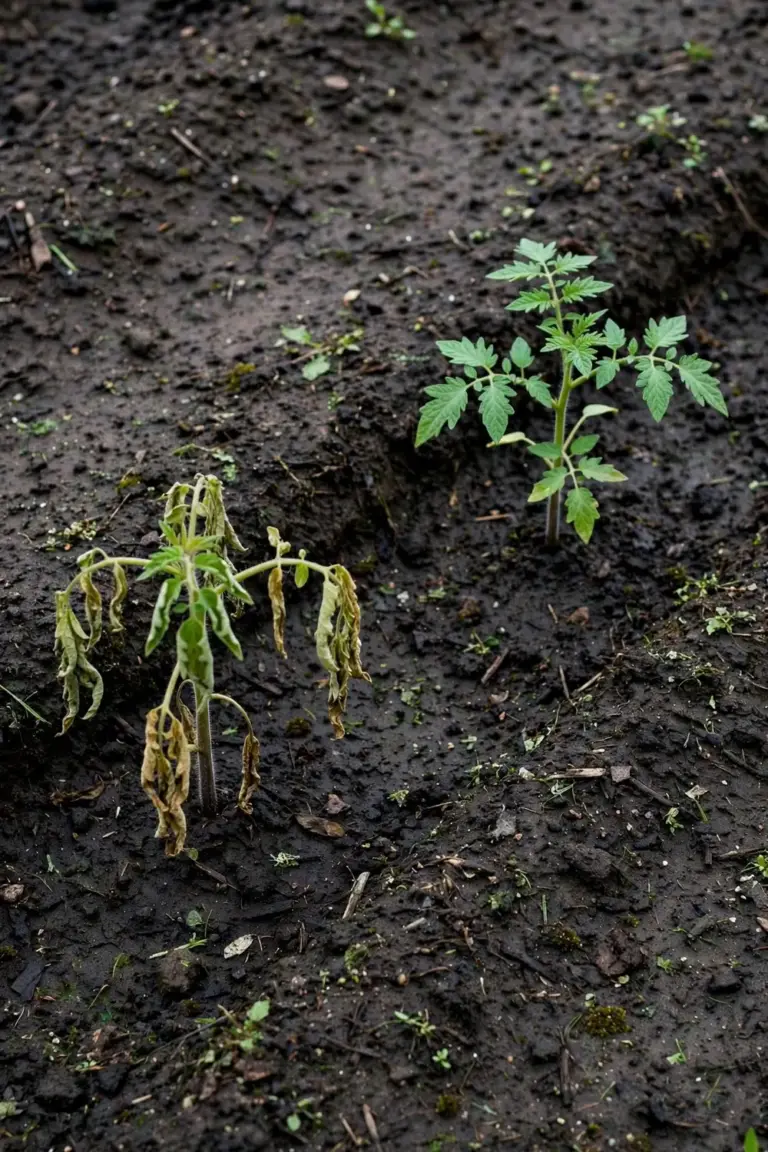
Transplant shock is a water gap, not a disease. A seedling moves from a pot to open ground with a small root ball. Its leaves keep transpiring water into sun and wind. Its roots cannot pull water fast enough to replace what the leaves lose. The plant wilts because the supply line is short.
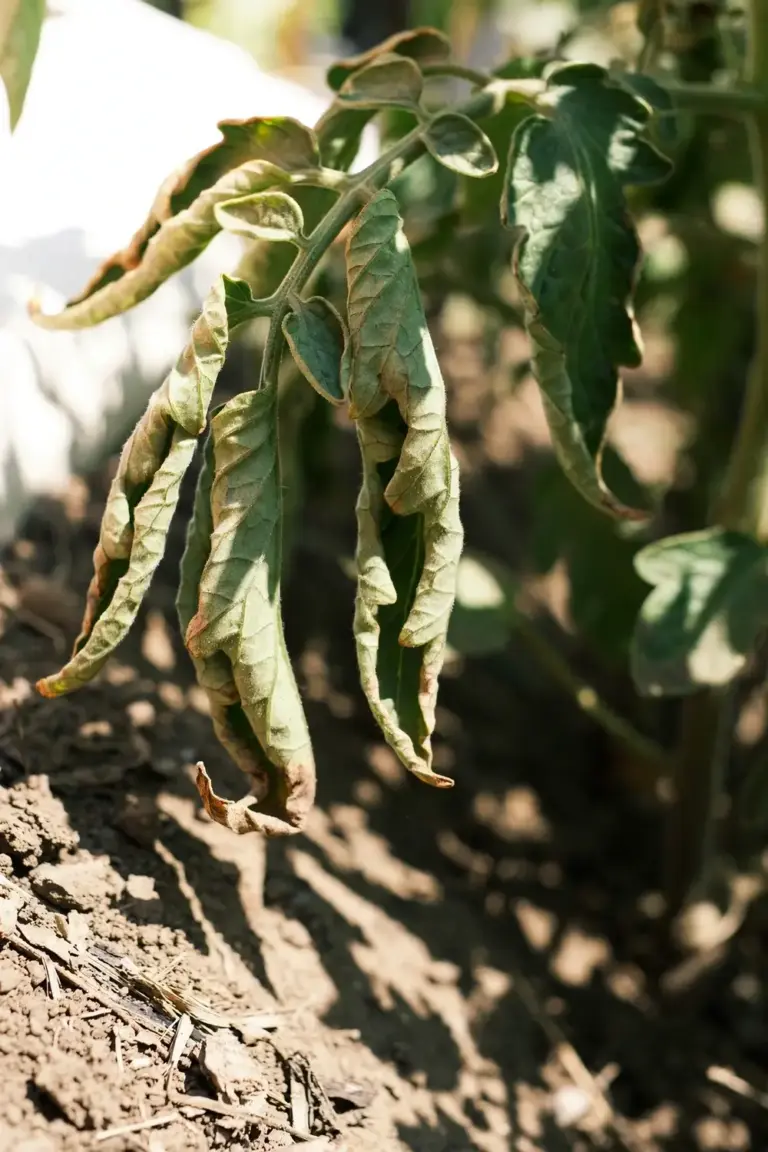
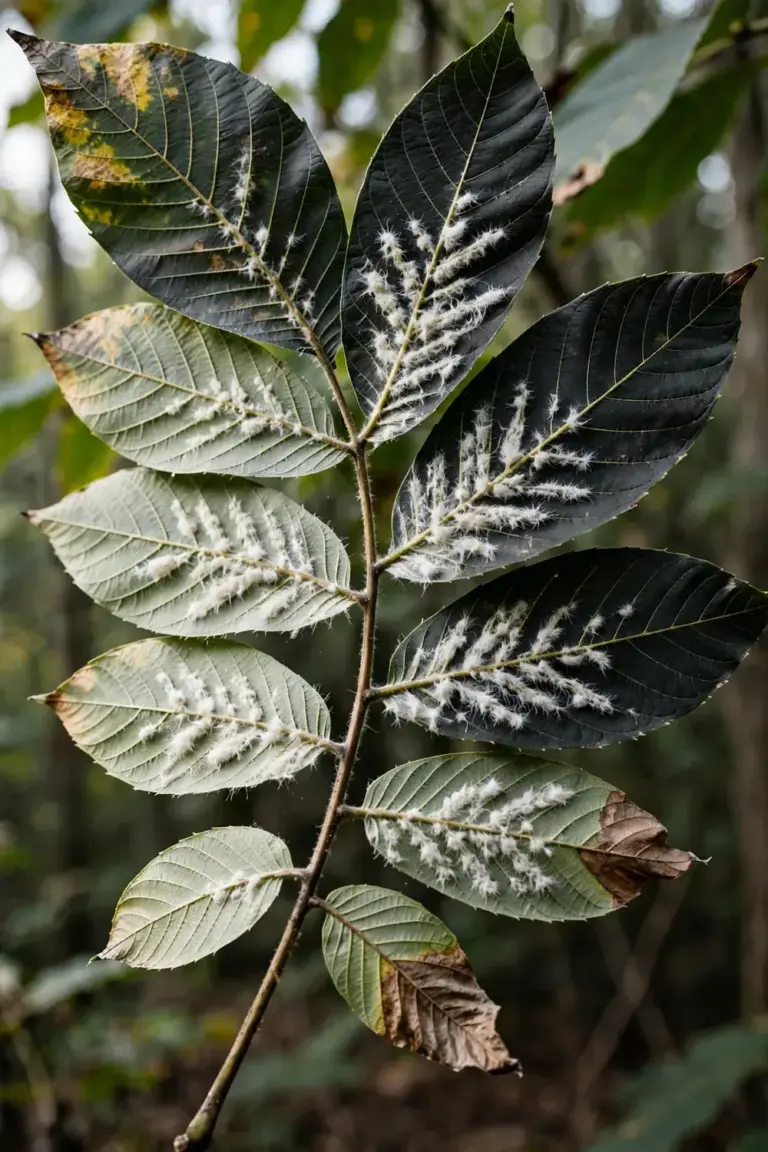
Cornell horticulture professor Steve Reiners describes the sequence plainly in Cornell’s transplant shock notes. The plant closes the stomata on its leaves, the small pores through which water transpires. It diverts resources to build a thicker waxy cuticle on the leaves. Growth stalls while the plant defends itself. Leaves may yellow, brown, or turn white as chlorophyll drops under harsh conditions.
That stall is the cost of shock. The plant survives, but the check in growth delays maturity. The fix targets the gap directly: cut leaf water loss, and keep the root zone wet while new roots grow. Every step below serves one of those two jobs.
Three things make the gap wider. Hot sun drives faster transpiration, and dry wind strips moisture from leaves just as fast. A small or damaged root ball supplies less water. A seedling that faces all three on transplant day wilts hard, while a seedling that faces none of them may show no shock at all.
Transplant shock hits hardest in the first 48 hours. That window decides the outcome. A seedling that gets shade, water, and wind shelter in those two days usually pulls through. A seedling left to bake in full sun while its root ball dries out can lose leaves it never regrows.
The damage starts with the fine roots. A seedling absorbs most of its water through root hairs, the fine threads at the root tips. Transplanting snaps many of those threads, even with careful handling. The remaining roots are fewer and shorter. They pull less water. New root hairs grow back over days, not hours. That regrowth sets the recovery clock. Until the root hairs return, the leaves must lose less water than they did before the move.
2. Run the 5-Sign Shock Checklist Before You Act
Check the seedling before you treat it. Shock looks like several other problems. The table below sorts the common signs. Read it before you water, feed, or pull anything.
| Symptom | Shock? | Other Cause |
|---|---|---|
| Whole plant wilts in afternoon sun, recovers by morning | Yes, classic shock | None, this pattern is shock |
| Wilting that never lifts, even at dawn | No, look deeper | Root rot from overwatering |
| Stem pinched, tan, and collapsed at the soil line | No, disease | Damping-off, stem and root rot |
| Lower leaves yellow while the plant still stands | Maybe, mild check | Low nitrogen or cold soil |
| White or bleached patches on leaves after the move | Yes, sunscald after transplant | None, this follows shock |
| Wilting on one side or one stem only | No, suspect wilt disease | Fusarium wilt or bacterial wilt |
| No growth for a week, leaves still green | Yes, root rebuild | Cold soil stall |
The first row is the signature of shock. A seedling that wilts in afternoon sun and stands up again by morning is losing water faster than its roots can replace it. That plant needs shade and water, not medicine. Check it twice: once in the heat of the afternoon, once at dawn. The dawn check is the honest one. A plant that stands tall at dawn is recovering, even if it wilts again by three in the afternoon.
The second row points the other way. A seedling that stays wilted at dawn has a root problem. Roots that sit in soggy soil cannot take up water at all. More water makes that plant worse. Check the soil with a finger before you water. Wet soil plus a wilted plant means the roots are drowning, not thirsty. Let the bed dry a finger-depth before you water again, and check the drainage. A bed that holds puddles after rain needs organic matter worked in, not more water.
The third row is the one that ends the seedling. A stem that turns tan and collapses at the soil line has damping-off. That plant does not recover. Pull it, and read the differential in the next section before you replant in the same hole.
The fourth row covers the slow cases. Lower leaves yellow when the plant runs short of nitrogen, or when cold soil blocks uptake. A mild shock can cause the same yellowing, because a checked plant stops feeding. Yellowing alone does not diagnose shock. Pair it with wilting or stalled growth before you act.
The fifth row is sunscald, shock’s close cousin. Leaves that move from indoor light to full sun bleach white where the light hits hardest. The plant recovers once it grows new leaves with a thicker cuticle. Shade is the fix, and the hardening routine in section 5 prevents the next case.
The sixth row is the warning sign. Shock wilts the whole plant evenly. A plant that wilts on one side while the other side stays firm has a wilt disease, not shock. Pull it. Do not compost it. Wilt pathogens persist in garden soil.
The seventh row is the quiet case. A seedling that sits green and still for a week is rebuilding roots underground. New growth above ground waits until the roots can support it. Give that plant water and patience. It is working, not dying. Scratch the stem lightly with a fingernail if you doubt it. Green tissue under the skin means the plant lives. Brown, dry tissue means it does not.
3. Tell Shock From Disease, Cold, and Salt Before You Treat It
Shock shares symptoms with three other problems, and each one needs a different fix. Treat the wrong one and you waste the seedling. Worse still, the wrong treatment can kill a plant that would have recovered on its own.
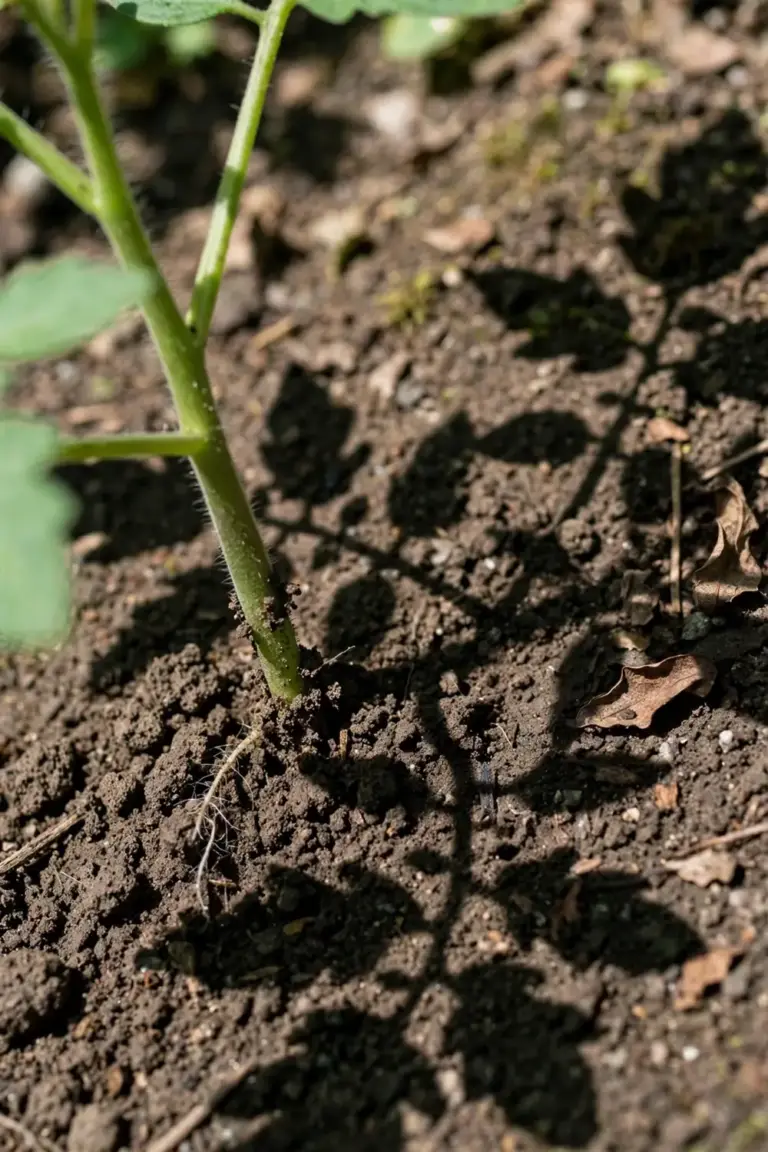
Damping-off kills seedlings at the soil line. Clemson vegetable pathologist Anthony Keinath describes the sign on a tomato transplant in Clemson’s damping-off guide: a tan, collapsed area on the stem just above the soil line. The water mold Pythium is the most common cause of seedling disease on tomato. Damping-off moves fast. A seedling that looks fine in the morning can collapse by evening. No recovery plan saves a stem that has collapsed. Pull the plant, and set any replacement at least 15 cm away from the old hole, because pathogen numbers in the soil vary by spot.
Cold soil stalls tomato seedlings without wilting them. Delaware Extension vegetable specialist Gordon Johnson lists cold, windy conditions after transplanting as the main shock trigger in Delaware Extension’s transplant shock notes. Night temperatures below 10 degrees Celsius raise the risk. Tomato roots take up water slowly in cold soil. A seedling planted into cold ground sits still for days. Wait for warm soil. In Australia, that means spring soil that has warmed after winter, roughly September to November in the southern states. A soil thermometer beats a calendar date.
Salt injury mimics shock with a different cause. The same Delaware Extension notes warn that too much fertilizer in transplant water or in beds near the plant causes salt injury and plant losses. Fertilizer salts pull water out of root cells. A seedling fed a strong dose at transplanting wilts even in wet soil. Hold all fertilizer until new growth appears. A checked seedling needs water and shade, not food.
Rough handling causes shock that no amount of water fixes quickly. Delaware Extension lists stem crushing and root damage during extraction as shock risks. A seedling lifted by its stem, with roots torn or left exposed to air, starts life in the ground with a broken supply line. Handle seedlings by the root ball or by a leaf. Never pull a seedling out by its stem. Tease apart circling roots gently, and set the plant at the same depth it grew in the pot, with one exception covered in the next section. If roots circle the pot in a tight mat, score the mat lightly with a clean knife so new roots head outward instead of continuing in circles.
Wilt diseases get one pointer here. Fusarium wilt and bacterial wilt both cause one-sided wilting that climbs the plant. Leaves yellow on one side first. The plant does not recover with water or shade. Pull it. Do not compost it. No home treatment reverses a wilt infection once it takes hold.
Depth errors cause two opposite failures. Delaware Extension warns that burying green stem or leaf tissue below ground exposes that tissue to rotting organisms, while a root ball set too high dries out and causes plant loss. Tomatoes are the one crop that tolerates deep planting, because roots form along the buried stem. Bury the stem up to the first true leaves, and strip any leaves that would sit below the soil. Never bury leaves. A buried leaf rots, and rot at the stem invites the damping-off organisms.
4. Run the 4-Day Recovery Plan: Water, Shade, Wind, Mulch
Recovery has four moves. Water, shade, wind shelter, and mulch. Run all four on day one. A shocked seedling needs every one of them.
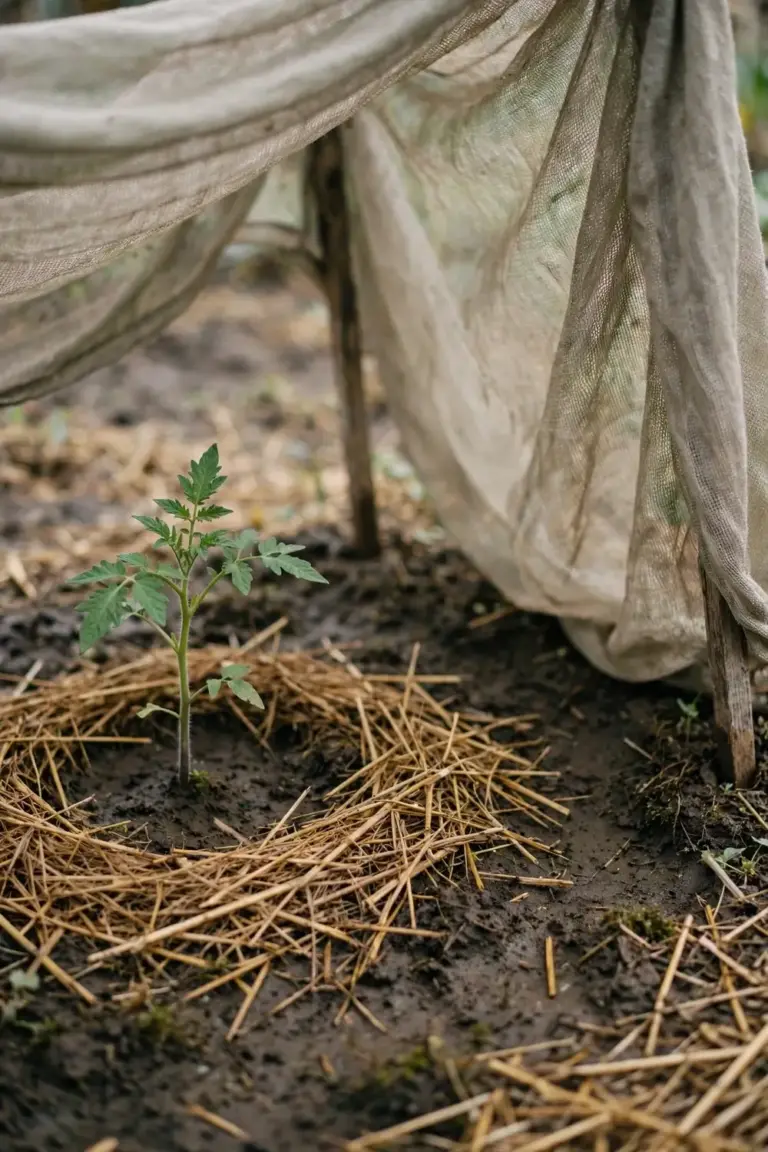
Water the root ball first, soaking it before planting and watering the planting hole well. Cornell’s notes stress the point: keep the root ball soaked at planting, and never allow the soil around the root ball to dry out. Check the soil with a finger each morning. Water when the top 3 cm feel dry, at the base of the plant, not over the leaves. Wet leaves in hot sun add stress without helping the roots. A slow pour around the base beats a hard spray from a hose, because it soaks in instead of running off.
Shade the seedling for two to three days. A shade cloth draped over stakes, an upturned bucket with air holes, or a sheet of cardboard on the sunny side all cut transpiration. Shade beats water alone here, because it attacks the loss side of the gap. Pull the shade off gradually. Morning sun on day three. Full sun by day four or five. A seedling that stays shaded for a week grows soft again and needs hardening all over.
Break the wind. Wind strips moisture from leaves as fast as sun does. A low windbreak on the windy side, a tomato cage wrapped in shade cloth, or a position behind a fence all help. Delaware Extension names windy conditions after transplanting as a shock trigger. A seedling on an exposed ridge wilts faster than the same seedling behind a hedge. Move pots into shelter. Shield bed plants with a board or a row cover for the first days, and weigh the cover down so wind does not lift it onto the plant.
Mulch around the base once the plant stands up. A 5 to 8 cm layer of straw, sugar cane mulch, or bark keeps soil moisture steady and soil temperature even. Keep the mulch 3 cm clear of the stem. Mulch piled against the stem traps moisture and invites rot. The mulching guide covers materials in detail. Mulch is the fourth move because it holds the gains from the first three, and it keeps the bed from drying out between waterings on a hot day.
Potted seedlings recover faster than bed seedlings when you move the pot. A pot in shock goes into shade on a veranda, out of the wind, with its saucer full of water. A bed seedling stays where it is, and you bring the shade to it. Either way the job is the same: cut water loss, keep the root ball wet. A pot that dries out in an afternoon needs a saucer and a second check at dusk.
Hold fertilizer until new growth appears. A shocked seedling cannot use fertilizer, and a strong dose burns roots. Delaware Extension’s salt injury warning applies here. Wait for the first new leaf. That leaf is the signal that roots are working again. Then feed at half strength, and water it in well.
Skip Epsom salt. No extension source backs Epsom salt as a shock cure. Magnesium helps only when the soil lacks magnesium, and a shocked seedling needs water and shade, not a folk remedy. Spend the effort on shade and water instead.
Watch for the recovery sign. New growth at the tip means the roots have caught up. The plant stops wilting in afternoon sun. Leaves darken from pale to green. Cornell’s trial plants, moved unhardened from greenhouse to field in hot weather, looked bad for a few days, then resumed growth in about a week. Expect a similar arc. A mild case turns in three to four days. A hard-checked plant can take two to four weeks.
5. Harden Off the Next Batch for 7 to 14 Days
Hardening off is the prevention step. It moves seedlings from indoor comfort to outdoor reality in stages, so transplant day is not a shock.
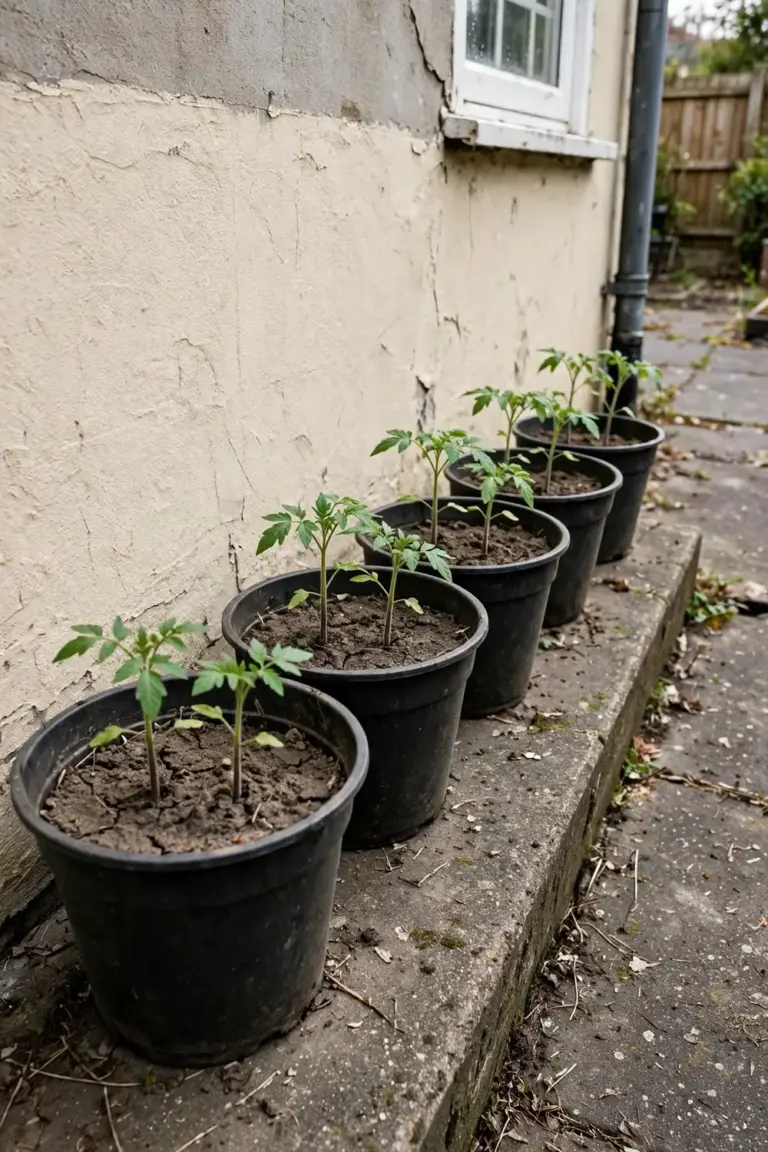
Start one to two weeks before transplanting. The University of Maryland Extension hardening guide sets the window at one to two weeks before setting plants out. Place seedlings outside in a shaded, protected spot on warm days, and bring them in at night. Each day, increase the amount of sunlight the transplants receive. Reduce watering frequency to slow soft growth, but do not let plants wilt.
The daily ramp matters more than the total days. Day one and two: one to two hours in shade. Day three and four: three to four hours with morning sun. Day five onward: longer stretches with direct sun, until the plants spend a full day outside. Bring them in if a cold night threatens. Maryland Extension warns against putting tender seedlings outdoors on windy days, or when temperatures fall below 7 degrees Celsius. Even cold-hardy plants suffer if exposed to freezing temperatures before they harden.
Delaware Extension sets a floor of five days for hardening. A proper hardening routine reduces fertilizer and water, and exposes plants to outside conditions in a protected area. Five days is the minimum. Seven to fourteen days is the standard. A batch hardened for five days beats a batch moved straight from the windowsill.
Cornell adds an honest counterweight. Professor Reiners ran field trials with unhardened tomato plants moved straight from the greenhouse in heat above 32 degrees Celsius. The plants looked bad for a few days. Then they grew out of it, and about a week later they were growing just fine. Hardened plants in the same trial did not resume growth any faster. Both groups produced first ripe fruit at about the same time. Hardening is insurance, not magic. It reduces damage and leaf loss. It does not make the plant grow faster afterward.
Indoor-grown seedlings need the most hardening. Cornell notes that seedlings raised indoors under lights, without any direct sunlight, are the most likely to suffer severe damage from a sudden move. Give those plants a few days of outdoor sun and breeze at minimum. A seedling raised in a greenhouse with some sun exposure needs less.
Australian timing runs on the southern calendar. Start hardening in early spring, when nights stay above 10 degrees Celsius. In Sydney, Melbourne, and Adelaide that usually means September to October. In Brisbane and the far north, the window opens earlier, and heat is the bigger threat. Shade cloth is standard kit in Australian gardens for a reason. Use it for the first days after transplanting, not just for hardening.
The seed starting guide covers the weeks before hardening: sowing, light, and potting on. Hardening starts where that guide ends.
6. Know When to Pull a Seedling and Start Over
Some seedlings do not recover. Knowing when to pull one saves a week of nursing a dead plant.
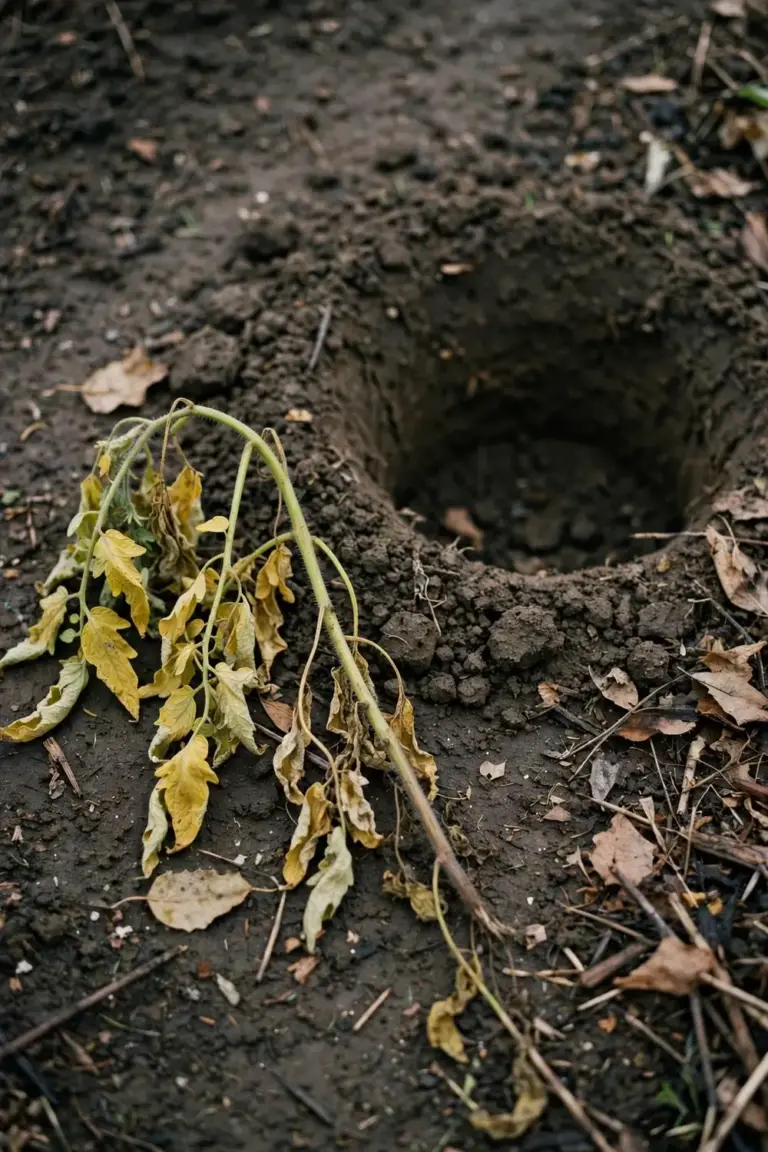
Pull the seedling when the stem has collapsed at the soil line. That is damping-off, and no recovery plan reverses it. Pull it, bag it, and bin it. Never compost a damped-off plant, because the pathogens persist in home compost. Set any replacement at least 15 cm away from the old hole.
Pull the seedling when the stem turns brown and mushy below the soil. That is stem rot. The plant cannot transport water past a rotted stem. The leaves will yellow and drop. The plant will not regrow from a rotted base.
Pull the seedling when no new growth appears after three weeks of good care. A healthy shocked seedling shows new growth within a week, or within two to four weeks for a hard-checked plant. Three weeks with no new leaf, no green tip, and no firm stem means the roots never established. The bed space is worth more than the seedling.
Pull the seedling when wilt hits one side only and spreads upward. That pattern points to a wilt disease, not shock. Pull it. Never compost it, because wilt pathogens persist in garden soil, and composting spreads them to the next bed.
Keep the seedling when leaves stay green and the stem stays firm. A plant that sits still for a week with green leaves is rebuilding roots. Water it, shade it, and wait. New growth is the only verdict that matters, and it arrives on the plant’s schedule, not yours.
Replanting after a loss is a fresh start, not a repeat. Check the soil with a finger. Warm, moist, well-drained soil is the target. If the old hole held a damped-off seedling, move the new hole 15 cm away. If the old seedling died of cold, wait for warmer nights. If it died of salt, flush the bed with plain water before replanting. Fix the cause, then plant the replacement. Harden the replacement first, even if it came from a nursery. A fresh seedling with no hardening repeats the same shock.
Tomato Transplant Shock: Frequently Asked Questions
Most seedlings recover within a week. A mild case turns in three to four days once shade and water are in place, while a hard-checked plant can take two to four weeks to show new growth. The clock starts when you fix the water gap, not when you transplant. A seedling left in full sun with a dry root ball keeps losing ground. Shade it. Water it. Watch the tip.
Water when the top 3 cm of soil feel dry, not on a calendar. Daily watering in heavy soil drowns roots and makes wilting worse. Daily watering in fast-draining sandy soil may be right. The finger test decides. Water at the base of the plant, and keep the soil around the root ball moist. Soggy soil plus a wilted plant means the roots are drowning, so let the bed dry before you water again.
Shade cloth is the single most effective rescue tool. It cuts transpiration, which is the loss side of the water gap. Drape it over stakes for two to three days, then remove it gradually. Morning sun on day three, full sun by day four or five. A seedling that stays shaded for a week grows soft again. Shade buys time for roots to catch up, and roots are what end the shock.
No. Damping-off collapses the stem at the soil line, and a collapsed stem cannot transport water. The plant does not regrow from a rotted base. Pull it, bag it, and bin it. Do not compost it. Set any replacement at least 15 cm away from the old hole, because pathogen numbers in the soil vary by spot. Prevention is the only move: sterile mix, good airflow, and soil that drains.
Yes, unless the nursery hardened them for you. Ask at the counter. Seedlings raised under cover need the same gradual exposure as home-grown ones. Start with one to two hours in shade, and build up over seven to fourteen days. Seedlings left outside at the nursery in full sun may already be hardened. When in doubt, give them three to four days of gradual exposure. That costs little and prevents the worst shock.
New Growth Means the Shock Is Over
Transplant shock is a water gap with a clear fix. Shade the leaves, water the root ball, break the wind, and mulch the bed. Most seedlings turn within a week. Check the seedling at dawn. A plant that stands tall at dawn is on its way back, even if it still wilts by three in the afternoon. That dawn check is the one that tells the truth. The tomato growing guide covers feeding, staking, and harvest once the seedling is growing again. Healthy soil under the plant does the quiet work of holding moisture steady while roots spread. Plant the next batch on a cloudy afternoon, harden it first, and the shock never gets a foothold.