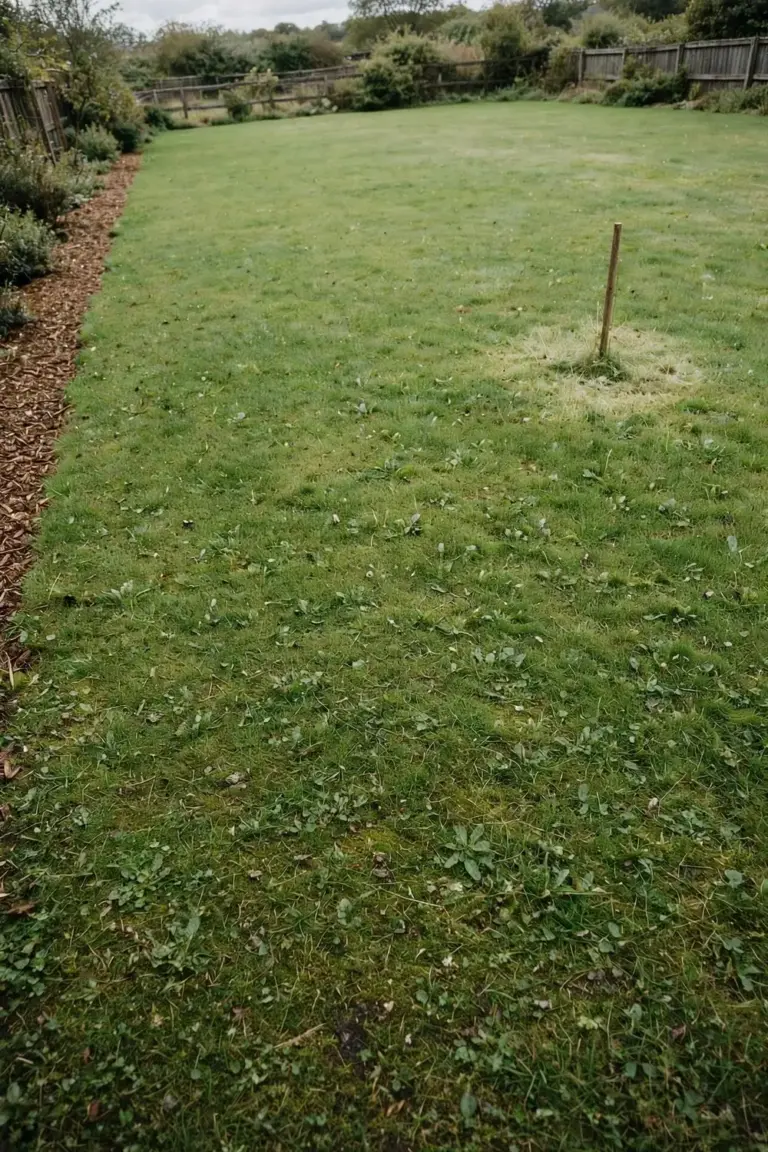

Roll the stem between your fingers and read 3 traits in 30 seconds. A stem with flat sides and edges is a sedge, while a round, hollow stem with joints is a grass, and a plant with netted veins in its leaves is a broadleaf, not a grass at all. Those 3 checks answer is this grass a weed in under a minute.
Then judge the plant by its address. A weed is a plant in the wrong place. Couch in a buffalo lawn is a weed, while buffalo in a couch lawn is a weed too, and the same couch growing in a couch lawn is the lawn. The test tells you what the plant is. The address tells you whether it is a weed.
I have learned that the stem I roll between my fingers answers faster than any photo of the whole plant does. The rest of this page is 5 tests, from the stem roll to the action that fits the answer. When the answer is a weed you can manage by hand, the organic weed control approach starts with removal, not spray.
1. Run the 30-Second Stem Test First
The stem test sorts the plant into 1 of 3 groups before you name anything. Roll the stem between thumb and finger. Feel for edges. Snap it and look at the cut end. Then look at how the leaves leave the stem.
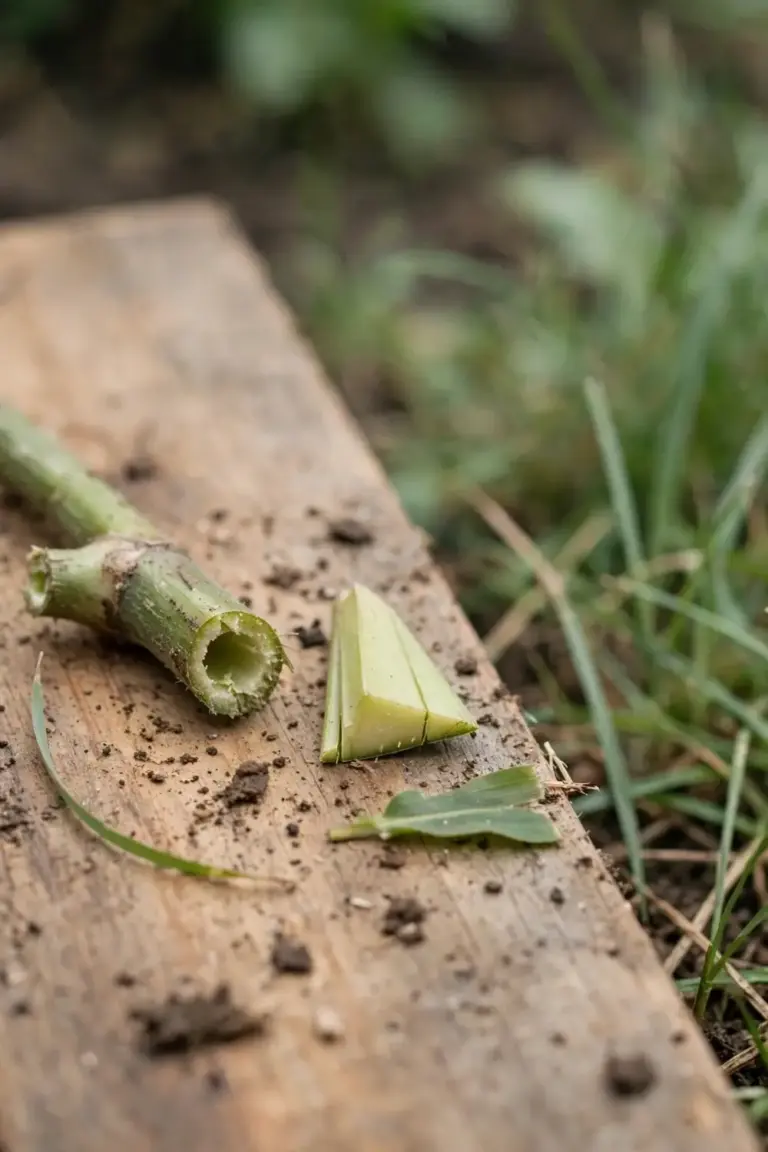
A grass stem is hollow, round or flattened, with swollen joints called nodes along its length. A sedge stem is solid and usually triangular in cross-section, with no obvious nodes. A broadleaf stem varies in shape, and its leaves carry netted veins instead of parallel ones. Texas A&M AggieTurf groups turf weeds exactly this way: broadleaf weeds, grasses and grass-like weeds, and sedges, with stem shape, leaf arrangement, and leaf veins as the separating traits. Grass leaves sit in 2 ranks, alternating from opposite sides of the stem. Sedge leaves sit in 3 ranks, spiralling around the stem. Broadleaf veins branch like a net. Grass and sedge veins run parallel.
Work the test in order, because each step rules out a whole group. Roll the stem first, since edges mean sedge and the test ends there. Look for nodes next, because nodes mean grass. Then look at the veins, because netted veins mean broadleaf even when the stem feels round. A plant that fails all 3 checks is probably a rush, with round, solid stems, or a plant too young to show its traits. A seedling with no stem to roll is a plant to watch, not a plant to pull. Mark it with a stick and check it again in a week, when the stem has grown enough to test.
The test needs no tools and no app. It needs a stem thick enough to feel. Pull one stem, not the whole plant, so the rest stays put for the next test. If the stem snaps cleanly and shows a hollow center, the plant is a grass. If the cut end is solid and three-sided, the plant is a sedge. If the leaves show a net of veins, the plant is a broadleaf and the grass question is already settled.
The test has 2 blind spots worth knowing. A seedling with no stem to roll cannot be tested, and a plant mowed to stubble may show no stem at all. Mark both with a stick and check again in a week, when the stem has grown enough to feel. The second blind spot is a stem that feels round but belongs to a sedge, because a few sedges carry round stems. The collar check covers that case: a fused sheath with 3-ranked leaves still points at sedge when the roll test says round.
Check the collar too, where the blade meets the sheath that wraps the stem. Grass sheaths are split open along their length, so you can peel the sheath away from the stem. Sedge sheaths are tightly closed or fused, and they grip the stem all the way around. The Missouri Department of Conservation field guide uses that sheath difference, plus the 3-ranked sedge leaves against 2-ranked grass leaves, as the backup check when a stem is too thin to roll. A thin stem that still shows a fused sheath and 3-ranked leaves is a sedge, even if your fingers cannot feel the edges yet.
Read the seed head as part of the same test, because the head carries the plant’s family marks in plain sight. Grass seed heads ride on open spikes, racemes, or panicles, with spikelets arranged along branching stalks. Sedge heads sit in dense clusters of flattened spikelets, often with long leaf-like bracts spreading out from the base. A head that shows 3 long bracts at its base points at sedge before you ever touch the stem.
2. Read the Weed-Versus-Desirable Matrix
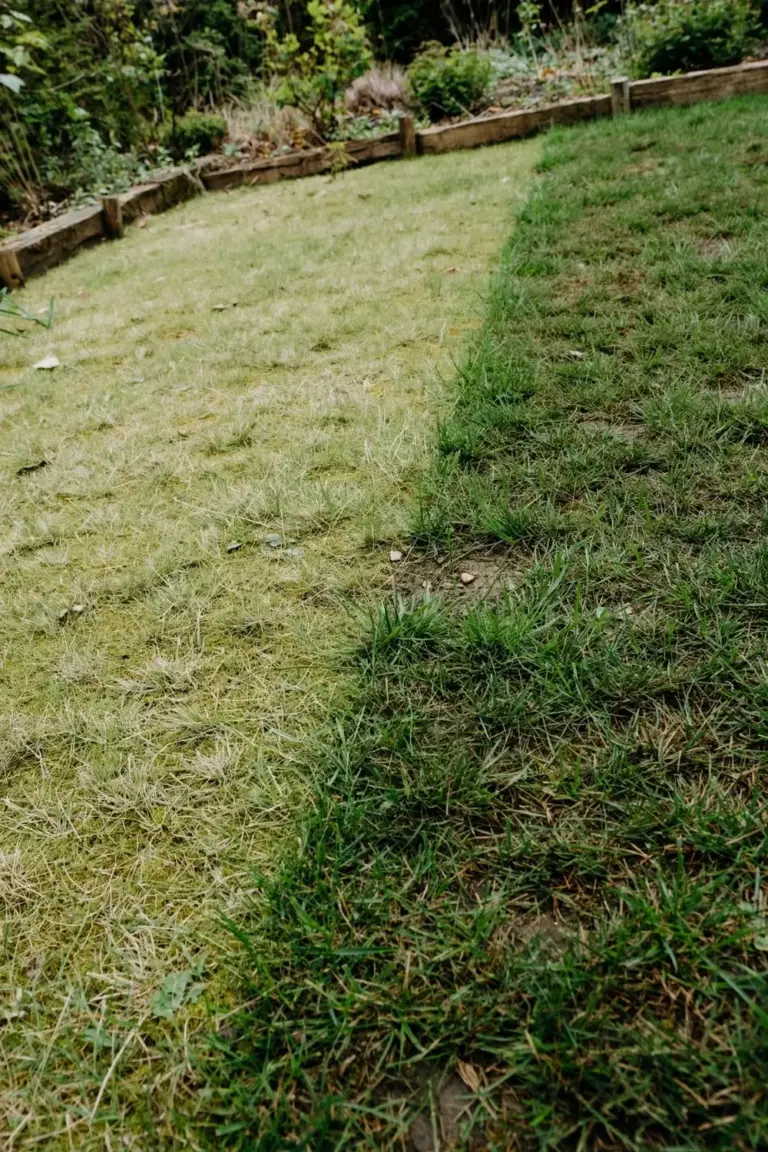
The matrix turns the stem test into a decision. Find the row that matches your plant and your lawn. The third column gives the reason, so the answer is a judgment you can check, not a label to trust blindly. Run the stem test first, then read the row, because the matrix assumes you already know whether the plant is a grass, a sedge, or a broadleaf. A row read without the stem test is a guess with a table around it.
| What You See | Weed or Desirable | Why |
|---|---|---|
| Buffalo growing in a buffalo lawn | Desirable | The plant matches the lawn you planted. |
| Couch growing in a couch lawn | Desirable | The plant matches the lawn you planted. |
| Kikuyu growing in a kikuyu lawn | Desirable | The plant matches the lawn you planted. |
| Couch creeping into a buffalo lawn | Weed | A different turf in the wrong lawn. |
| Buffalo spreading into a couch lawn | Weed | A different turf in the wrong lawn. |
| Kikuyu invading a couch lawn | Weed | A different turf in the wrong lawn. |
| Nutgrass in any lawn | Weed | A sedge, not a grass, with tubers below ground. |
| Winter grass in a warm-season lawn | Weed | An annual grass that seeds in the cool months. |
| Paspalum clump in a couch lawn | Weed | A coarse clump grass in the wrong lawn. |
| Ryegrass in a buffalo lawn in winter | Depends | Desirable if you sowed it as winter cover. Weed if it arrived on its own. |
| Broadleaf plant in any lawn | Weed | Not a grass at all. A different plant in the wrong place. |
The ryegrass row is the one that teaches the principle. Ryegrass is a desirable lawn grass in its own right. Turf managers sow it over warm-season lawns to hold color through winter while buffalo sleeps. The same ryegrass, arriving uninvited, is a weed. Nothing about the plant changed. The address changed.
Read the matrix with the stem test in hand. A plant that reads as a grass in the stem test and matches your lawn is desirable. A plant that reads as a sedge is a weed in any lawn, because no home lawn is planted with sedges. A plant that reads as a broadleaf is a weed in any lawn for the same reason. The matrix keeps you from pulling a desirable grass that looks different, and from keeping a weed that looks like grass.
The matrix also handles the plants that sit between the rows. A paspalum clump in a garden bed is a weed, the same way it is a weed in a couch lawn, because the bed is not a lawn at all. A native grass that self-seeds into a lawn is a weed in the lawn and a welcome plant in a native bed. The plant never changes. The address does, and the matrix follows the address every time.
3. Ask the 4 Questions Before You Pull It
The stem test names the group. The 4 questions pin down the plant and the action. Answer them in order, with the plant in front of you.
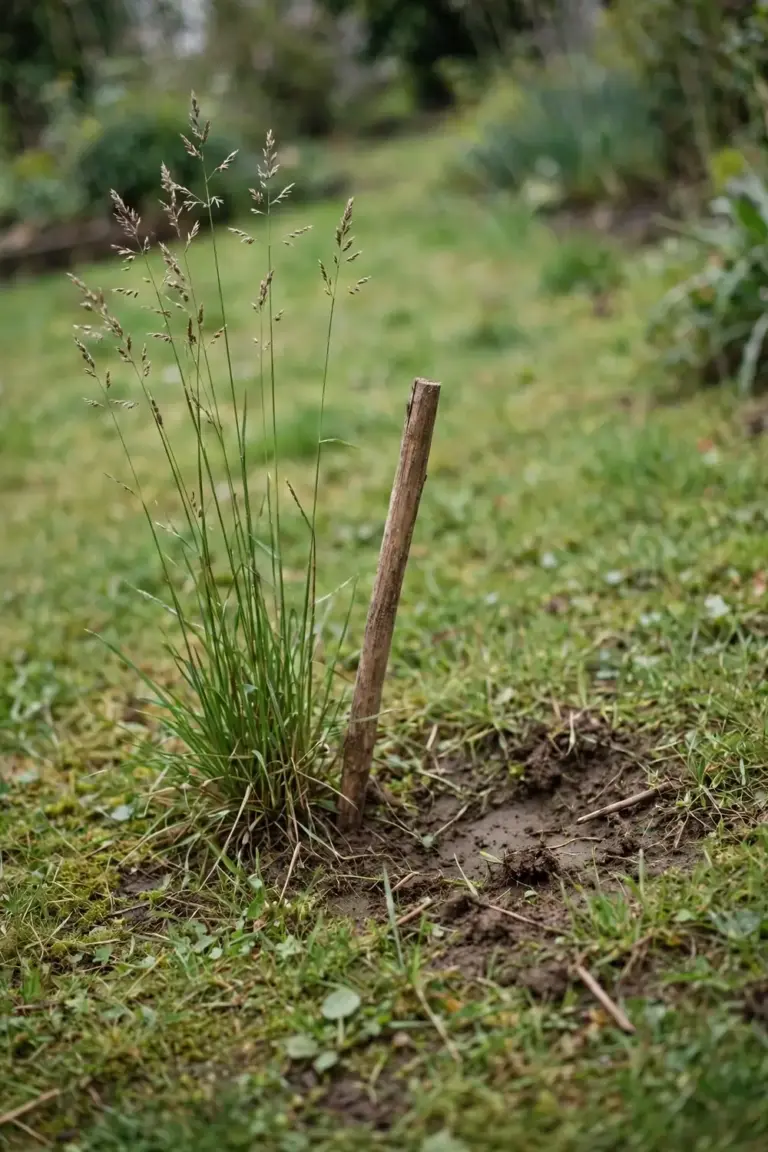
Question 1 asks where the plant grows. A plant in the middle of the lawn faces a different judgment than a plant along the fence, the garden edge, or a bare patch. Edge plants often arrive from next door or from a garden bed. Center plants usually arrive by seed, by runners, or from the soil itself. A plant that grows only in one damp corner points at water. A plant spread evenly across the lawn points at seed or at a turf weakness. Sketch the patch on paper if the lawn is large. A map of 5 minutes beats a memory of a week, because patches shift as the lawn grows and the first patch you noticed may not be the oldest one.
Question 2 asks how fast the plant grows after mowing. A plant that stands taller than the lawn 3 days after a mow is growing faster than your turf. Nutgrass does this. Its leaves outgrow the surrounding grass within days of a cut, which is why it shows as a pale patch that keeps reappearing. A plant that grows at the same speed as the lawn is harder to spot and usually a turf invader, like couch in buffalo, which creeps rather than shoots. Mow first, then watch. The 3 days after a mow are the honest window, because every plant starts level and the fast ones separate from the pack on their own.
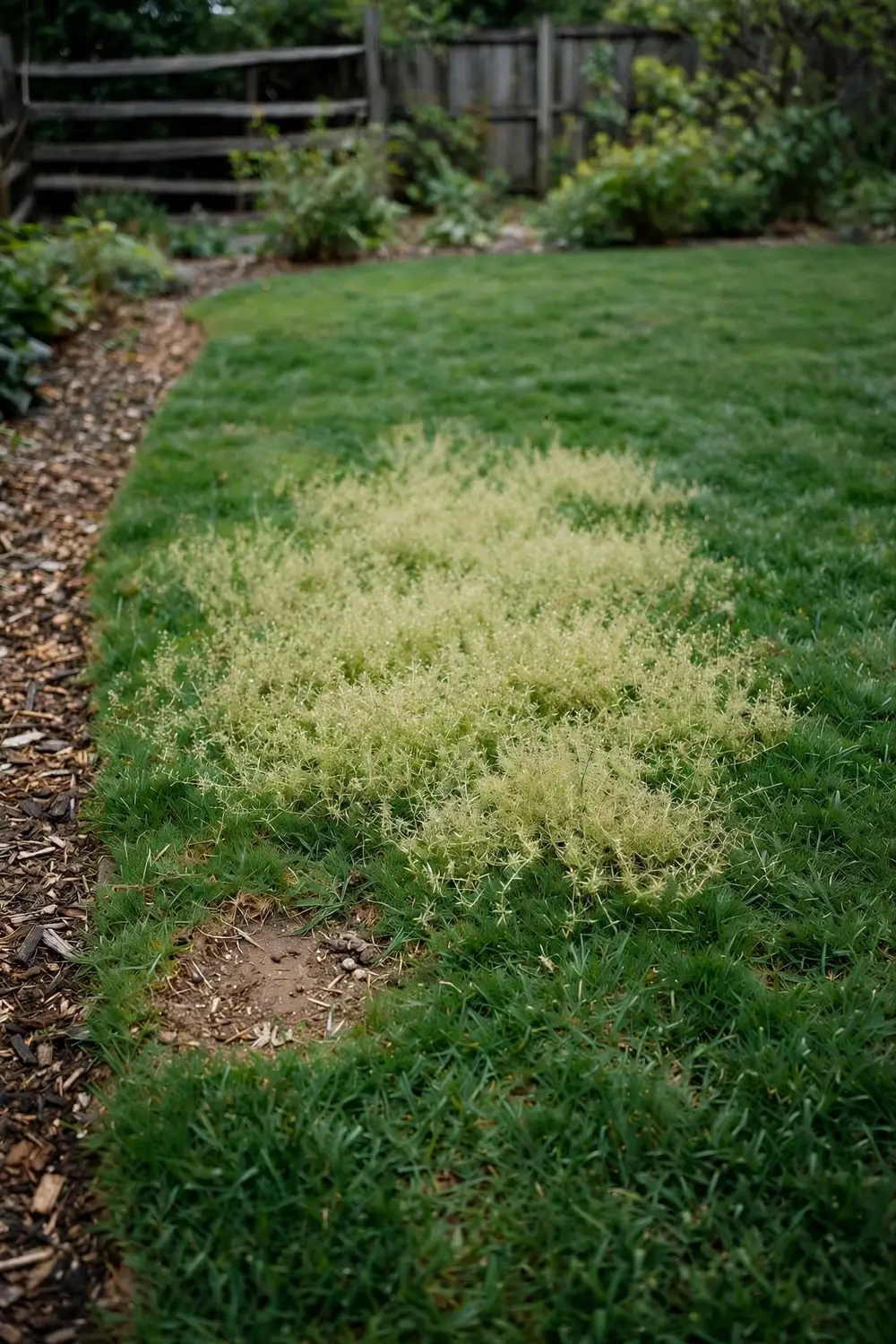
Question 3 asks what the seed head looks like. A seed head is the plant’s signature. Winter grass pushes up pale seed heads even when mowed short. Paspalum throws tall seed stalks with dark seeds along the edge. Nutgrass carries a head of flattened spikelets on slender stalks. A plant with no seed head yet is a plant to watch, not a plant to guess at. Let it grow one more week, then read the head. Photograph the head against a dark background, because a pale seed head on a pale sky reads as nothing in a photo, and the photo is what you will compare against a guide.
Question 4 asks what the roots hold. Lift one plant with a fork and look at what comes up. Rhizomes are horizontal underground stems. Stolons are horizontal stems above ground. Tubers are small storage organs on the rhizomes. A plant with tubers is a plant that regrows from pieces left in the soil. Pulling the tops off a tuber plant buys weeks, not a cure. A plant with a shallow fibrous root system pulls clean and stays pulled. Dig on a damp day if you can, because wet soil lets the fork lift the whole root mass, while dry soil snaps the tops off and leaves the tubers behind to sprout again.
Answer all 4 before you act. The questions cost 5 minutes. A wrong pull costs a season, because the plant you pulled was the lawn, and the weed you kept was the invader.
4. Name the 3 Lookalikes That Fool Lawns
Three plants fool Australian lawns more than any others. Each one mimics the lawn around it. Each one has a tell that settles it.
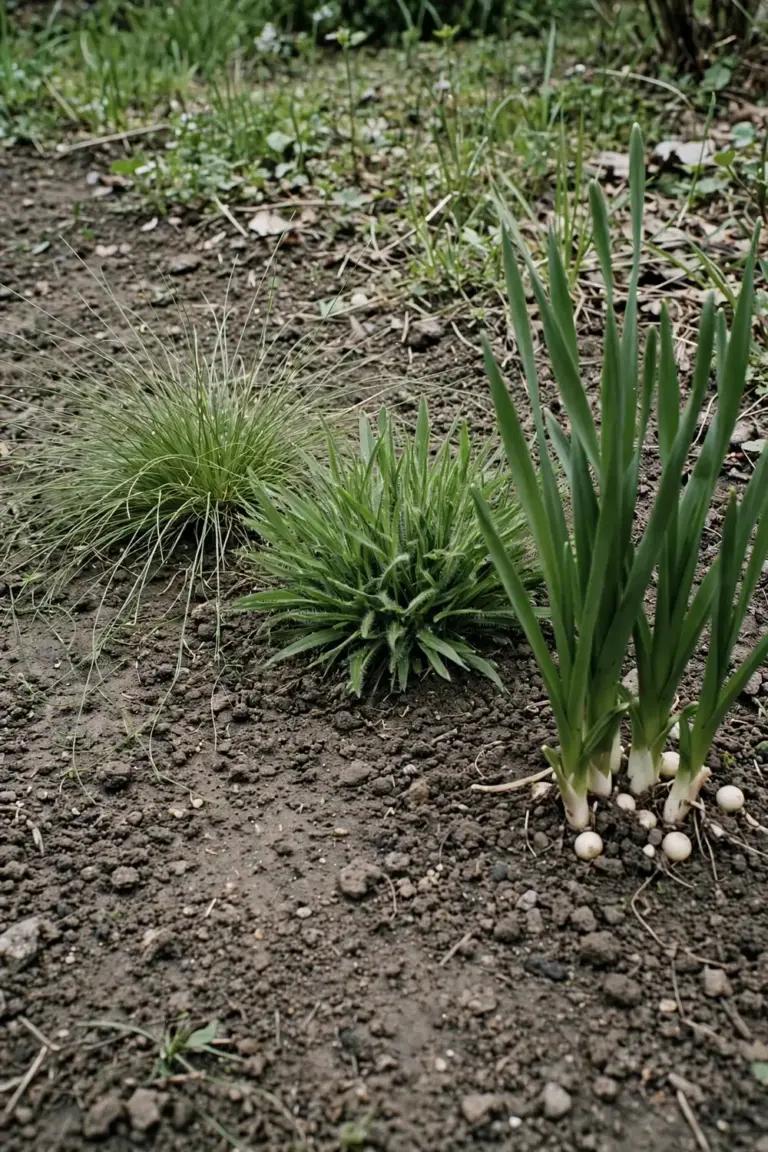
Couch in buffalo is the first. Buffalo leaves are broad, coarse, and dark, while couch leaves run finer, lighter, and lower to the ground. A patch of couch inside buffalo reads as a thin, pale area that the mower seems to miss. The tell is the runner. Couch spreads on wiry runners that creep across the surface and root at the nodes. Buffalo spreads too, but its runners are thicker and its leaves stay broad. Pull one runner and compare its leaf width against the lawn beside it. The finer leaf is the invader. Couch spreads hardest in the warm months, when its runners run fastest, so a patch that grows through summer and stalls in winter fits the couch pattern.
Kikuyu in couch is the second. Couch is fine and dense. Kikuyu is coarse, thick-stemmed, and fast. A patch of kikuyu inside couch reads as a rough, fast-growing island that the mower struggles to keep level. The tell is the stem. Kikuyu stems are thick and fleshy, and the leaves feel hairy. Couch stems are thin and wiry. Kikuyu also outgrows couch after a mow, so the patch stands taller within days. The same speed test that catches nutgrass catches kikuyu. Kikuyu also throws long runners over paths and garden edges, which is why a kikuyu patch near an edge grows back from outside the lawn even after you pull the patch itself.
Nutgrass is the third, and the one most worth learning. Nutgrass is not a grass. It is a sedge, and its stem gives it away. Roll the stem and feel the triangle. Its leaves are thicker and stiffer than grass leaves, arranged in 3 ranks at the base, with a crease down the center. UC IPM notes that nutsedge stems are solid and triangular in cross-section, while grass stems are hollow and round, and that the tubers grow on rhizomes 20 to 36 cm below the surface, forming patches up to 3 m across. That depth is why pulling the tops fails. The growing point sits in a basal bulb, and each tuber carries buds that sprout new plants. A pulled top leaves the tuber bank untouched. Nutgrass loves warm, moist soil, so it shows first in the damp corner, the overwatered strip, or the hollow where water sits after rain. Fixing the wet spot matters as much as removing the plant, because dry soil slows the sedge while wet soil feeds it.
Name the lookalike before you act on it, because couch in buffalo, kikuyu in couch, and nutgrass each need a different response. The stem test plus the speed test separate all 3: a plant that is fine and creeping is couch, a plant that is coarse and fast is kikuyu, and a plant with a triangular stem is nutgrass.
Lawns rarely hold one problem at a time. A buffalo lawn can carry a couch patch at one edge and nutgrass in the damp corner, and each patch needs its own answer. Work the lawn patch by patch, not plant by plant, because one test per patch keeps the answers clean. Test the edge patch first, then the corner patch, and write each answer down before moving on. A lawn with 2 answers is a lawn with 2 jobs, and the jobs run in either order as long as each patch gets the answer that fits it.
5. Act on the Answer You Got
The answer drives the action, and each answer has exactly one first move. Do not spray a plant you have not named. Do not pull a plant you have not tested.
If the answer is desirable, leave it. A desirable grass that looks thin usually needs water, food, or mowing height, not removal. Feeding the lawn and raising the mow height thickens the turf and closes the gaps where weeds enter. The organic pest control for beginners approach starts with the lawn itself: a dense lawn is the first defence, and a thin lawn invites every invader on the street. Mow high through the warm months and water deep rather than often, because short, thirsty turf is the lawn that weeds colonise first.
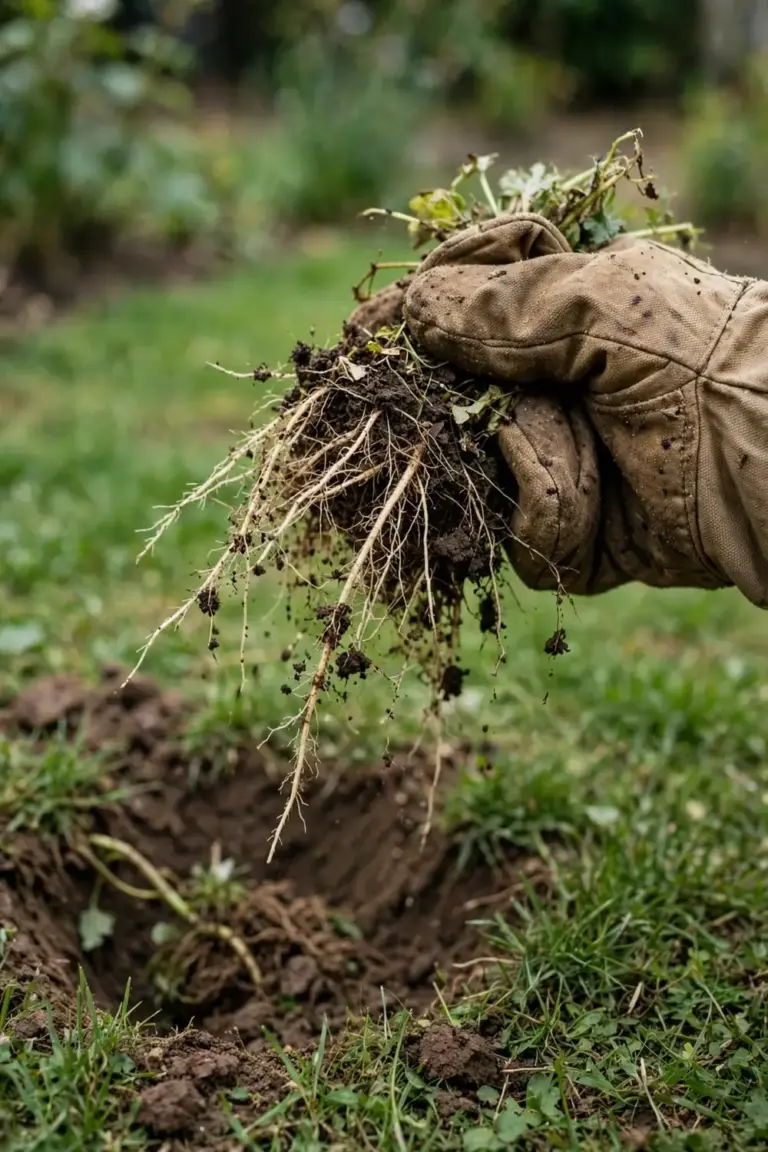
If the answer is a weed in a small patch, hand-pull it with the roots. Lift with a fork, not a tug, so the runner or tuber comes up with the top. Work after rain or watering, when the soil gives up the roots whole. For nutgrass, dig the whole patch and take the soil with it, because the tubers sit below the surface. Bag the pulled plants. Do not compost them. Compost heaps do not run hot enough in a home heap to kill tubers and seeds, and the pile hands the weed back to the bed. Check the patch again in 2 weeks, because a single missed runner or tuber restarts the whole colony.
If the answer is a weed across a wide area, check the label before any spray. Selective herbicides work by turf type, and a product safe on couch can damage buffalo. Read the label for your turf, your weed, and your state. Products belong to the weed-killer lane; this page decides the weed, and the label decides the product. Pre-emergent products belong to the same rule: they stop seeds from germinating, and they work only when applied before the weed’s germination window, which is why naming the weed first decides whether a pre-emergent helps at all. In garden beds, mulch suppresses the next round of weeds once the first round is out. A bare bed after clearing is an open invitation, and a covered bed is a closed one.
If the answer might be a declared weed, report it instead of pulling it. Serrated tussock is a Weed of National Significance in New South Wales, and NSW DPI directs anyone who sees it to contact their local council weeds officer for assistance. Chilean needle grass and buffel grass sit on declared-weed lists in parts of Australia. Do not move a suspect declared weed. Do not put it in the green bin. Photograph it, note the address, and call your local council weeds officer or state biosecurity authority. A pulled declared weed that drops seed on the way to the bin spreads the problem. The officer confirms the plant, and then directs the removal, so your job ends at the phone call. A report made early costs nothing and can stop an infestation that would cost the whole street a season of work.
For a plant you cannot name, photograph it before you touch it. Take 3 shots: the whole plant in place, a close shot of the stem and leaf base, and a close shot of the seed head. Put a coin beside the stem in the close shot, because scale turns a guess into a measurement. WeedScan runs a CSIRO AI model trained on more than 120,000 weed images and covers more than 930 priority weeds, with a record sent for formal verification. Read its limit honestly: common garden weeds are not the focus of the app. WeedScan confirms a suspect priority weed. It does not name every lawn weed. For the everyday lawn weed, the stem test in this page is the faster tool.
Frequently Asked Questions About Grass Weeds
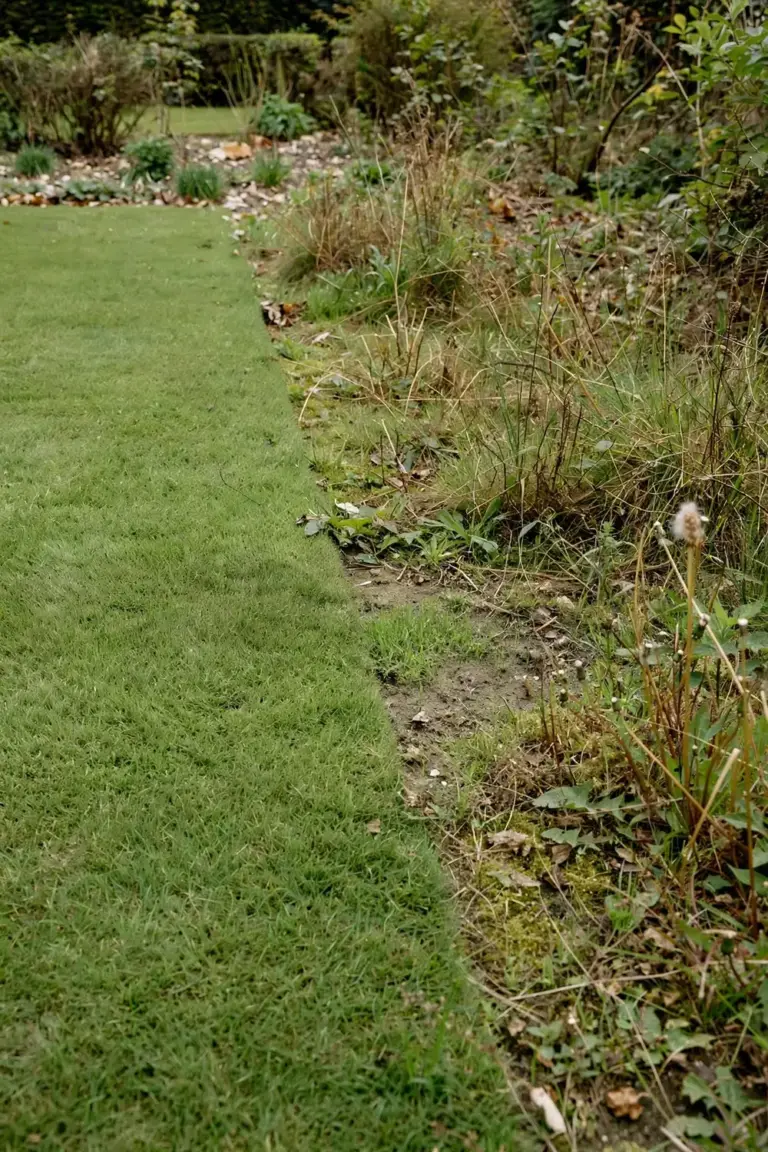
Couch is a weed only where it is not wanted. Couch in a couch lawn is the lawn. Couch in a buffalo lawn is a weed, because it is the wrong turf in the wrong place. Couch in a garden bed is a weed for the same reason. Judge the plant by its address, not by its name. The stem test tells you the plant is couch. The lawn tells you whether couch belongs there.
Roll the stem between your fingers. Nutgrass has a solid, triangular stem with edges you can feel. Grass has a round, hollow stem with joints. Nutgrass leaves are thicker and stiffer than grass leaves, arranged in 3 ranks at the base, and they outgrow the lawn within days of a mow. Nutgrass also grows from tubers below the soil, so pulling the tops leaves the plant behind.
Winter grass, or Poa annua, is a weed in warm-season lawns. It is an annual grass that grows through the cool months and pushes up pale seed heads even when mowed short. It forms clumps that stand out against buffalo, couch, or kikuyu. Turf managers sometimes sow it on purpose as winter cover, which is the one case where it is desirable. Everywhere else in a warm-season lawn, it is a weed.
No. Pulling an unnamed grass risks pulling the lawn and keeping the weed. Run the stem test first, then answer the 4 questions: where it grows, how fast it grows after mowing, what the seed head looks like, and what the roots hold. Photograph the whole plant, the stem and leaf base, and the seed head. If the plant might be a declared weed, report it to your council weeds officer instead of pulling it.
Do not pull it, move it, or bin it. Declared weeds carry legal duties, and moving one can spread seed to new ground. Photograph the plant, note the exact address, and contact your local council weeds officer or state biosecurity authority. Serrated tussock is a Weed of National Significance, and NSW DPI directs sightings to the local council weeds officer. Let the officer confirm the plant and direct the removal.
Run the Test Before You Pull
Roll the stem, read the matrix, ask the 4 questions, name the lookalike, then act on the answer. That order answers is this grass a weed with evidence, not a guess, and it keeps you from pulling the lawn and keeping the weed. The stem test takes 30 seconds. The matrix takes a minute. The 4 questions take 5. A wrong pull costs a season. Walk the lawn with a fork and a phone, test the patch that bothers you, and let the answer decide the move.