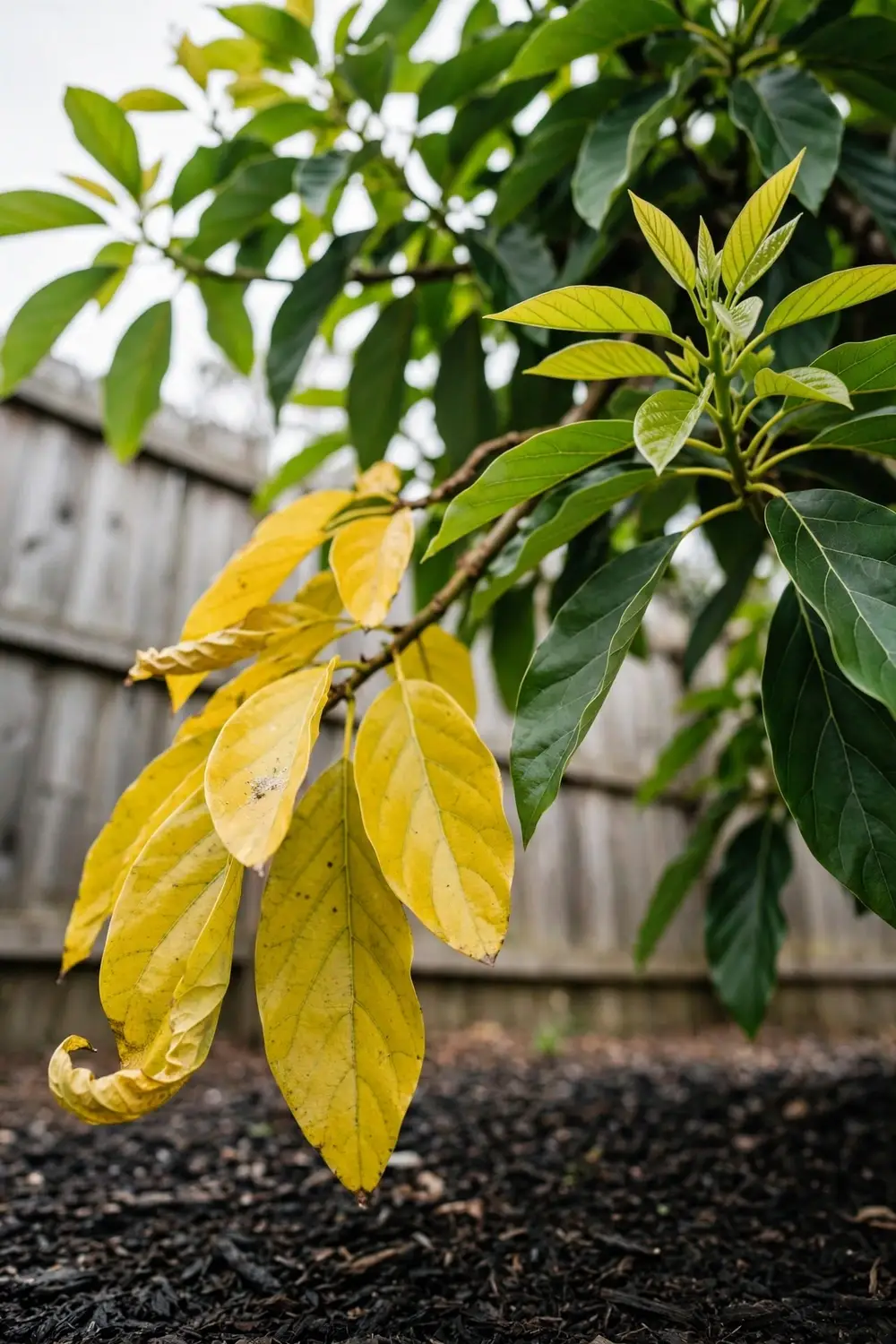

Yellow avocado leaves mean 9 possible causes, and the pattern on the leaf answers why are my avocado tree leaves turning yellow faster than any product label. Start with where the yellow sits: old leaves, new leaves, tips, or veins. The rest of this page walks the pattern table first, then one cause at a time, with one test and one fix per cause.
I have learned that the avocado leaf I read by its pattern tells me more than any fertilizer label does.
Some yellow is normal. Avocado trees shed old leaves through the year, and a heavier fall often arrives with a new flush of growth. Treat the tree only when the pattern points to a real problem. Check three things before you act: soil moisture with a finger test, where the yellow sits on the tree, and whether new growth looks healthy. Those three checks separate the nine causes below.
1. Match the Pattern Before You Treat Anything
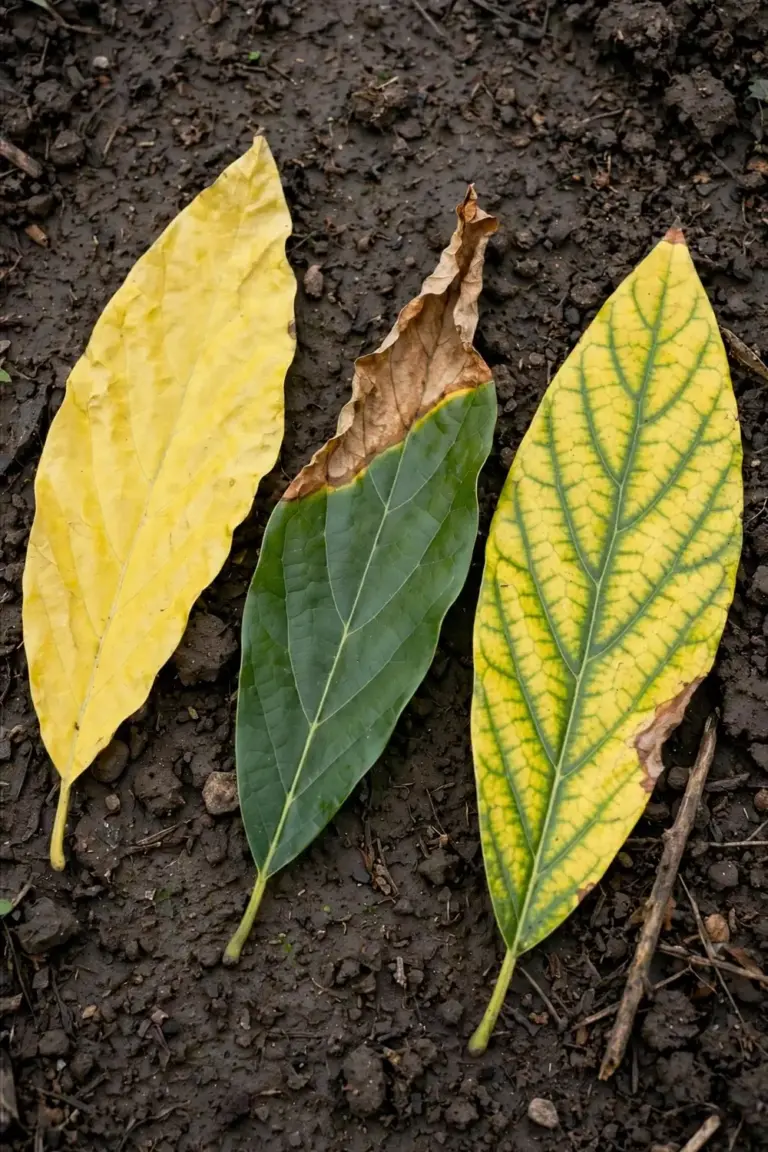
Match the pattern first. The table below maps nine yellow-leaf patterns to their most likely cause and first action.
| Where the Yellow Is | What It Looks Like | Most Likely Cause | First Action |
|---|---|---|---|
| Oldest interior leaves | Even yellow, then drop, new growth green | Normal old-leaf drop | Do nothing, watch new growth |
| Whole canopy, wilting | Yellow and limp in wet soil | Overwatering or poor drainage | Stop watering, fix drainage |
| Leaf edges, dry soil | Dry, crispy edges, curling leaves | Underwatering | Deep soak at the drip line |
| Older leaves, even pale yellow | Uniform light green to yellow, small leaves | Nitrogen deficiency | Soil test, then feed per test |
| Young leaves, green veins | Yellow between veins on new leaves | Iron deficiency | Test soil pH, chelated iron per label |
| New leaves, mottled | Mottled yellow between veins, small leaves | Zinc deficiency | Leaf test, zinc chelate per label |
| Older leaves, yellow between veins | Interveinal yellow on older leaves | Magnesium deficiency | Soil test, magnesium supplement per label |
| Leaf tips and edges | Brown crispy tips, sharp line to green tissue | Salt burn | Deep slow soak to leach salts |
| Sun-facing leaves and fruit | Bleached yellow-white patches after heat | Sunburn and heat | Shade the exposed side |
| New growth after a cold night | Blackened or browned tender growth | Cold and frost | Cover young trees, wait for warmth |
| Leaf undersides | Yellow stipple, black specks below | Lace bugs or mites | Flip the leaf, check before spraying |
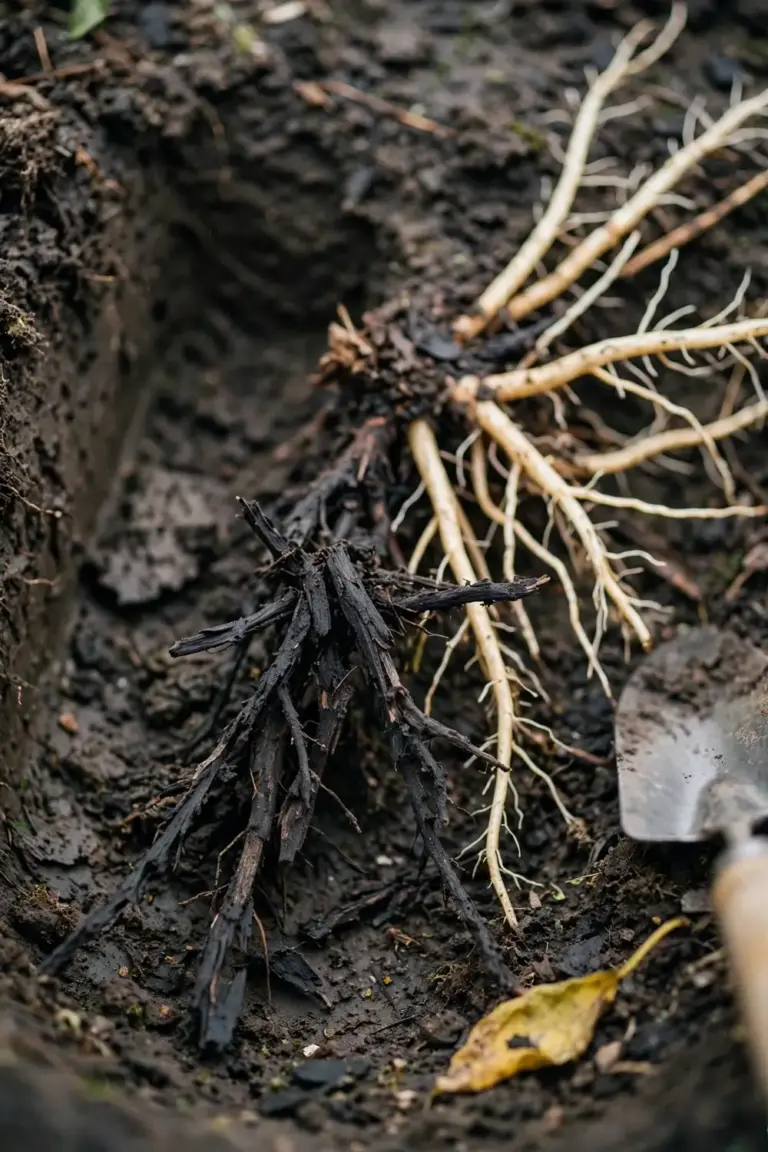
| Canopy, wilting in wet soil | Yellow, wilt, dieback, soil stays wet | Phytophthora root rot | Check feeder roots, improve drainage |
Read the table row that matches your tree, then jump to that cause below. Each cause section opens with its test, then its fix, then the sign it worked. Work one cause at a time. Fixing two things at once hides which fix helped.
Run the three checks in order before you touch any product. First, push a finger into the soil at the drip line and read the moisture. Second, stand back and read the pattern: old leaves or new, tips or veins, one branch or the whole canopy. Third, look at the newest growth, since new growth tells the truth about the tree right now. Those three checks place your tree in one row of the table, and the row names the fix.
2. Treat Normal Old-Leaf Drop as Normal, Not a Disease
Old leaves yellow and drop as new growth pushes. Leave the tree alone when the yellow sits on the oldest interior leaves and new growth looks green.
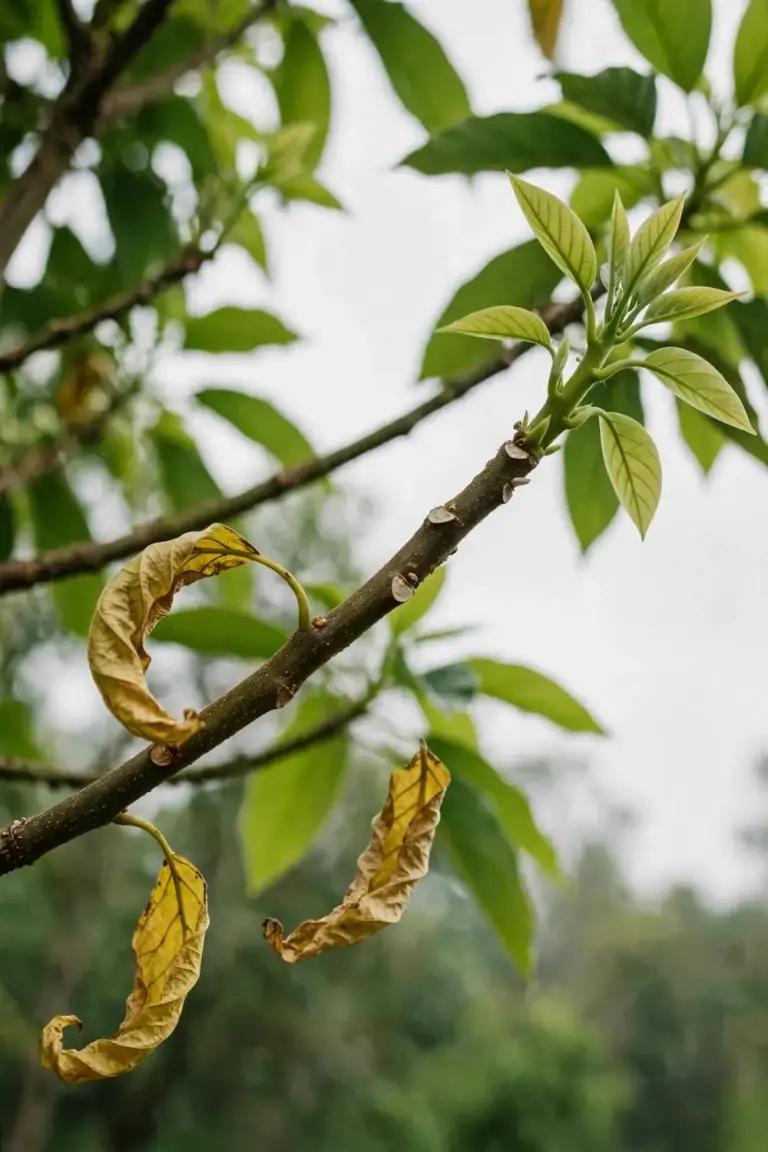
Avocado is evergreen, and evergreen trees replace leaves through the year. Old leaves yellow, drop, and make room for the new flush. Research on seasonal avocado leaf loss found leaves shed in every month of the year, with peak losses arriving around flush and bloom periods, per a seasonal avocado leaf study published through Avocado Source. A heavier fall during a spring flush is normal turnover, not a disease signal.
Worry only when the pattern breaks. Whole-canopy yellowing, yellow new growth, or heavy drop with no new flush points to one of the causes below. A healthy tree drops old leaves and pushes green new growth in the same weeks. A sick tree loses leaves faster than it grows them.
Watch the calendar of the tree, not the calendar on the wall. A flush of new growth after flowering pulls nutrients out of old leaves, so a wave of yellow old leaves around bloom time is the tree reallocating, not failing. The same wave in midwinter, with no flush and no flowers, deserves a closer look. The test stays the same in both cases: new growth green means wait, new growth yellow means act.
3. Fix Overwatering and Poor Drainage First
Overwatering kills avocado feeder roots by starving them of air. Back off the water and fix drainage before you feed anything.
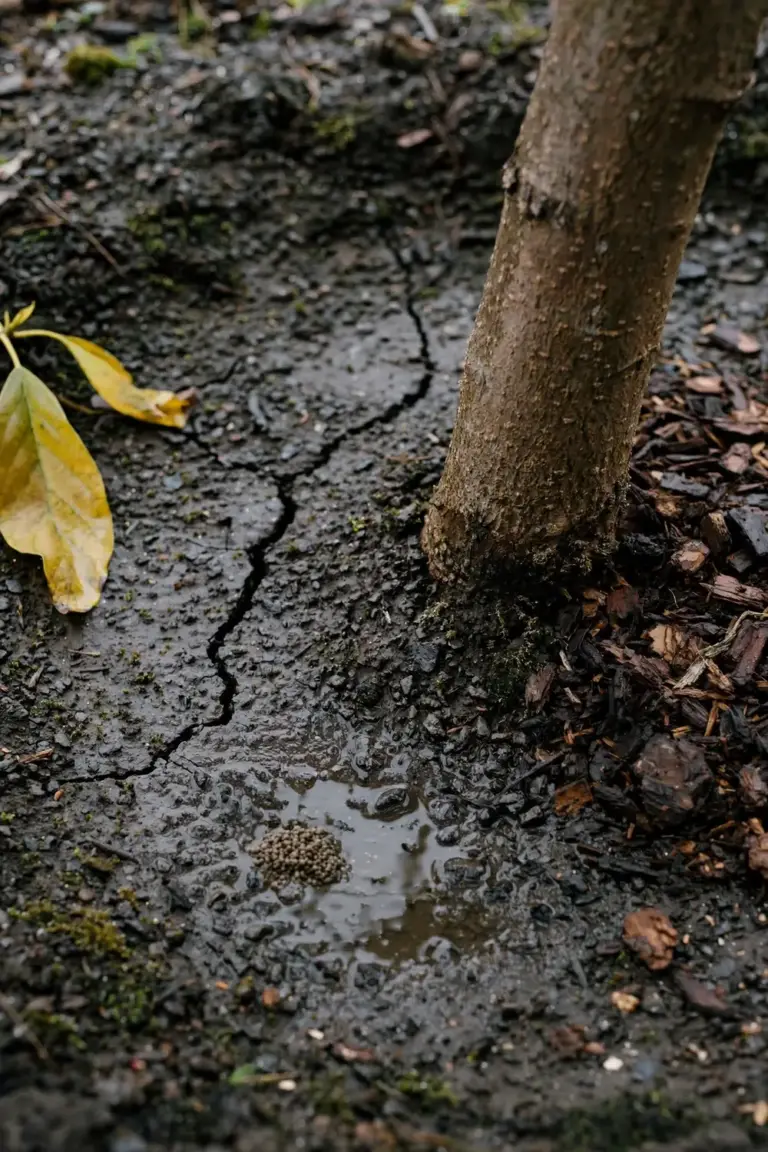
Avocado feeder roots sit shallow and need air in the soil. Waterlogged soil pushes air out. Roots suffocate. Leaves yellow, wilt, and drop even though the soil feels wet. The classic trap is watering a wilting tree that already sits in wet soil. More water makes the wilt worse.
Test with a finger. Push a finger 5 cm into the soil near the drip line. Wet soil at that depth means no water today. Soggy soil two days after rain means drainage is the problem, not the weather. Clay soils hold water longest, and trees planted in a low spot or a saucer-shaped hole collect it.
Fix the drainage first. Plant on a gentle mound or a raised bed when the soil is heavy clay. A mound lifts the root zone above the surrounding wet soil and gives excess water somewhere to go. Keep mulch clear of the trunk so the crown stays dry. Water less often and deeper, and let the top soil dry between soaks. Building healthy soil with organic matter improves drainage over time, and the site’s soil health guide covers that work in full. New growth that stays green after you ease off the water confirms the diagnosis.
4. Water Deep When the Soil Dries
Underwatering shows as dry, crispy leaf edges and curling leaves on a tree standing in dry soil. Water deep at the drip line, then let the top soil dry before the next soak.
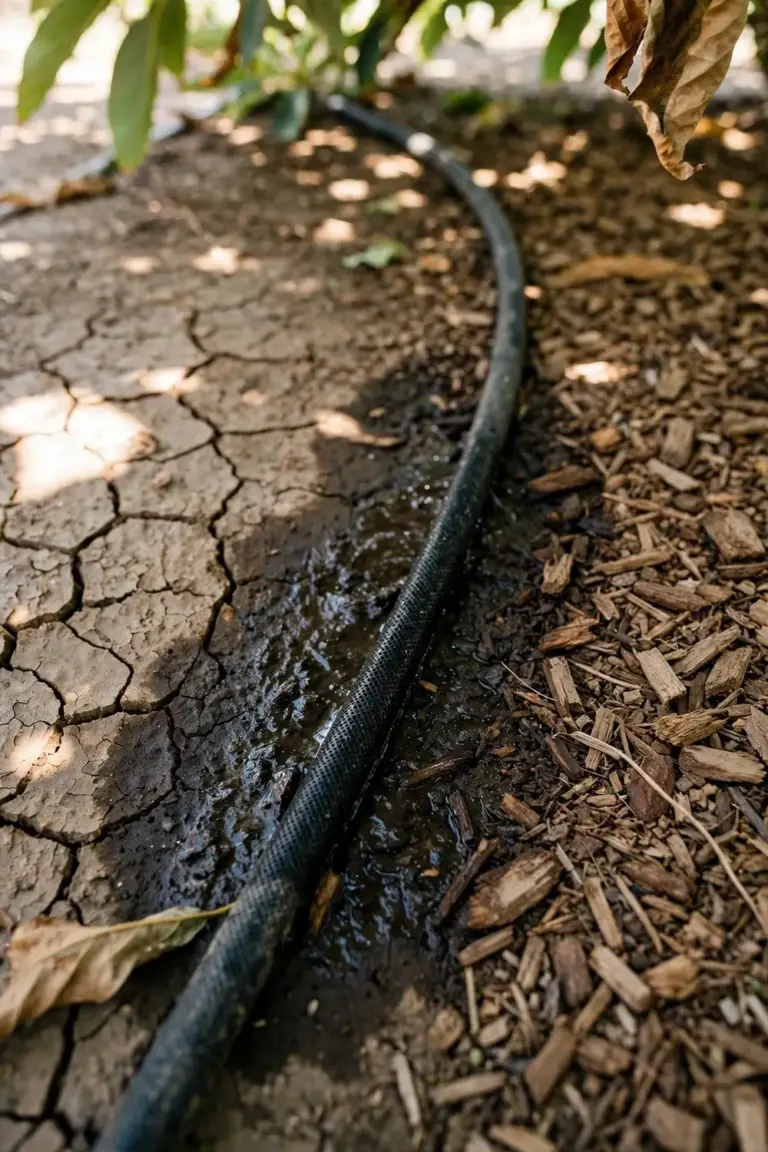
A thirsty avocado curls its leaves to cut water loss, and leaf edges crisp first. The soil test is simple. Dry soil at finger depth plus curling leaves means water now. The fix is a slow, deep soak out at the drip line, where the feeder roots actually live. Water at the trunk misses most of the root zone on a mature tree.
Mulch holds the moisture you apply. A coarse organic mulch layer under the canopy slows evaporation and keeps soil temperature steady. The site’s mulching guide covers mulch types and depth. Skip light daily sprinkles. Shallow watering wets the surface and leaves the deep roots dry, and salt builds up in the top soil. Leaves that uncurl within a day or two of a deep soak confirm underwatering was the cause.
Potted trees dry faster than in-ground trees. A pot holds a small soil volume, and summer sun heats the pot wall and pulls moisture out fast. Check a potted avocado daily through summer, and water when the top soil dries. A saucer under the pot keeps the roots wet, so empty it after watering. Move a potted tree into afternoon shade through a heatwave, and the tree stops crisping at the edges.
5. Feed the Deficiency the Pattern Points To
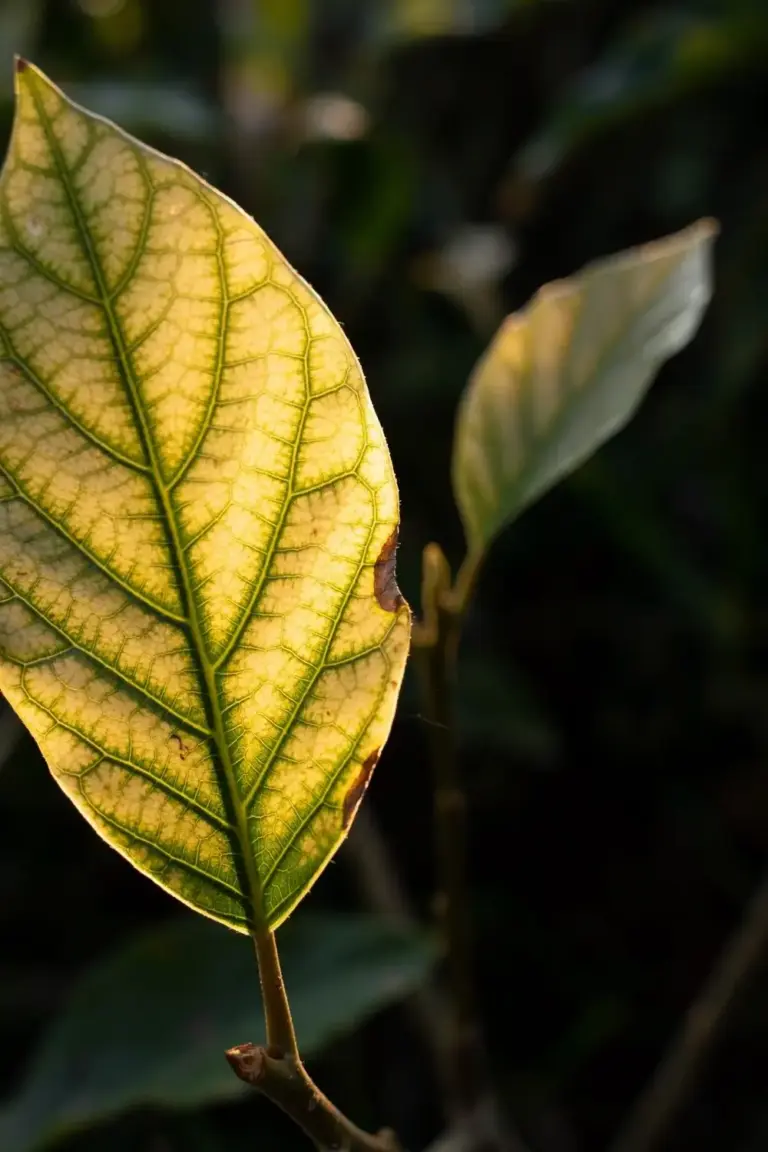
One pattern names one missing nutrient: nitrogen yellows older leaves evenly, iron yellows young leaves while veins stay green, zinc mottles between veins and shrinks new leaves, and magnesium yellows between veins on older leaves.
Start with a soil test. Guessing the nutrient wastes money and can poison the tree with excess salts. A soil test names the missing nutrient and the pH, and pH decides whether the tree can even use the nutrient in the soil. Take small samples from several spots around the drip line, mix them, and send the mix to a soil lab. The report comes back with pH, major nutrients, and micronutrients, and the fix follows the report instead of a guess.
Nitrogen runs short first in hungry trees. Nitrogen moves inside the tree from old leaves to new growth, so older leaves yellow first and evenly, and growth stalls. Research cited by the California Avocado Commission found nitrogen, zinc, and iron leaf concentrations lower in chlorotic leaves. Home gardeners need no tissue lab. A soil test plus the older-leaf pattern is enough to act on, and a balanced fertilizer applied per label restores green growth.
Iron deficiency looks different. Young leaves turn yellow while the veins stay green, a pattern called interveinal chlorosis. The cause is often not missing iron. Iron locks up in alkaline and limestone soils, so the soil holds iron the tree cannot use. A University of California study of iron chlorosis in avocado orchards describes yellow foliage with green venation, marginal leaf burn, and defoliation in severe cases. Fix the soil condition first. Chelated iron applied per label can green up new growth, but the fix fails again if the soil stays alkaline.
Zinc deficiency mottles between veins and shrinks new leaves. Severe cases produce little leaf, a rosetting of stunted, misshapen leaves and twigs, per a California Agriculture study of zinc deficiency in avocado. Zinc chelate applied per label corrects it. Magnesium deficiency yellows between veins on older leaves, since magnesium moves inside the tree like nitrogen, and Cornell’s nutrient guide lists magnesium among the interveinal chlorosis causes. A magnesium supplement applied per label follows the soil test. New growth that emerges green after the targeted feed confirms the diagnosis.
6. Flush Salt Before It Burns More Leaves
Salt burn shows as brown, crispy tips and edges with a sharp line between dead and green tissue. Leach the root zone with a deep, slow soak.
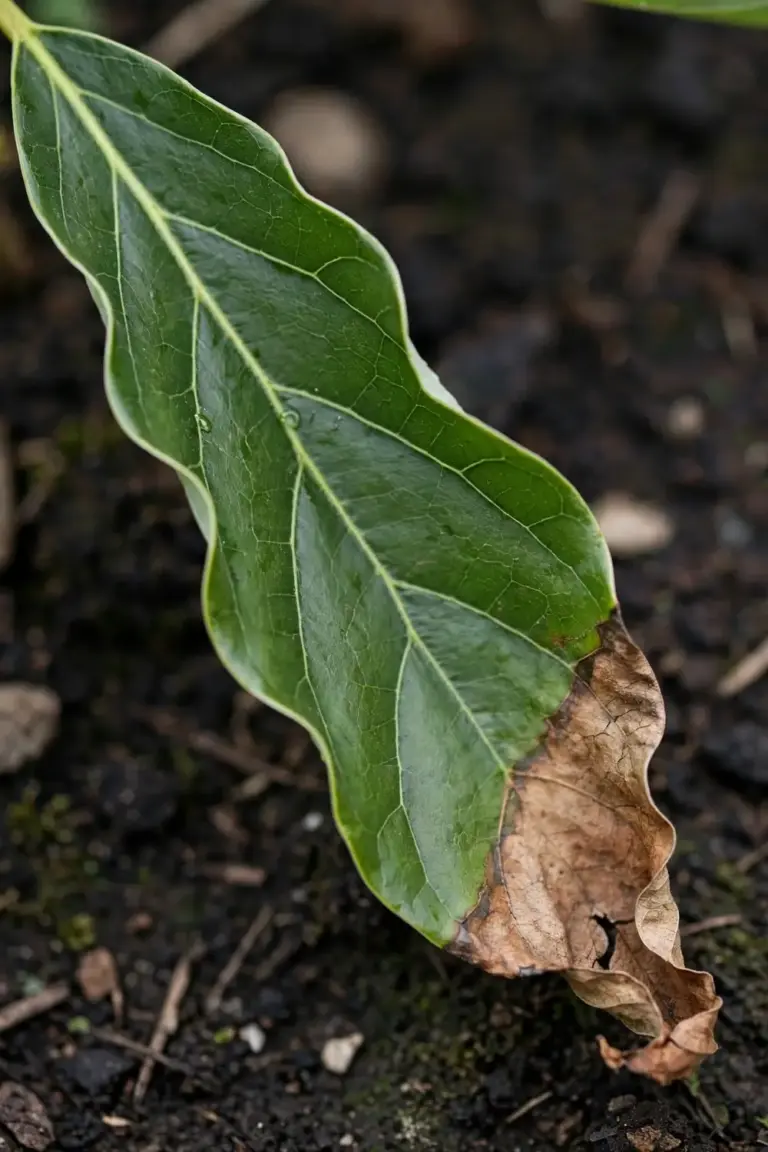
Avocado ranks among the most salt-sensitive fruit trees. Chloride injury produces leaf tip burn, while sodium injury produces interveinal necrosis, per a California Agriculture study of avocado leaf burn. The same study found avocado trees more sensitive than most other plants to chloride and sodium salts. Salts ride irrigation water into the root zone, and each watering leaves a little behind. Bore water, heavy fertilizer use, and coastal soils all add salt.
The pattern separates salt burn from other causes. Burn starts at leaf tips and margins on older leaves, where veins end and salts collect. The line between brown and green tissue stays sharp. Sunburn bleaches the face of the leaf. Lace bug damage sits in the middle of the leaf. Tip burn on older leaves points to salt.
Leach the salts down. Run a slow, deep soak that pushes water below the root zone, and repeat after the soil drains. Light sprinkles make salt worse by leaving salts in the top soil. Test bore water and soil salt levels before you replant or re-fertilize. A water test from your supplier or a lab names the salt load, and the number decides whether leaching alone fixes the problem or the water source needs changing. Fertilizer adds salt too, so cut back on feeding while salt damage is active and resume only after new growth comes clean. Mulch slows surface evaporation, which slows salt concentration at the surface. New leaves that emerge without burnt tips confirm the leaching worked.
7. Shade New Growth Through Heatwaves
Sunburn bleaches yellow-white patches on leaves and fruit facing the afternoon sun. Shade the exposed side and water before the heat arrives.
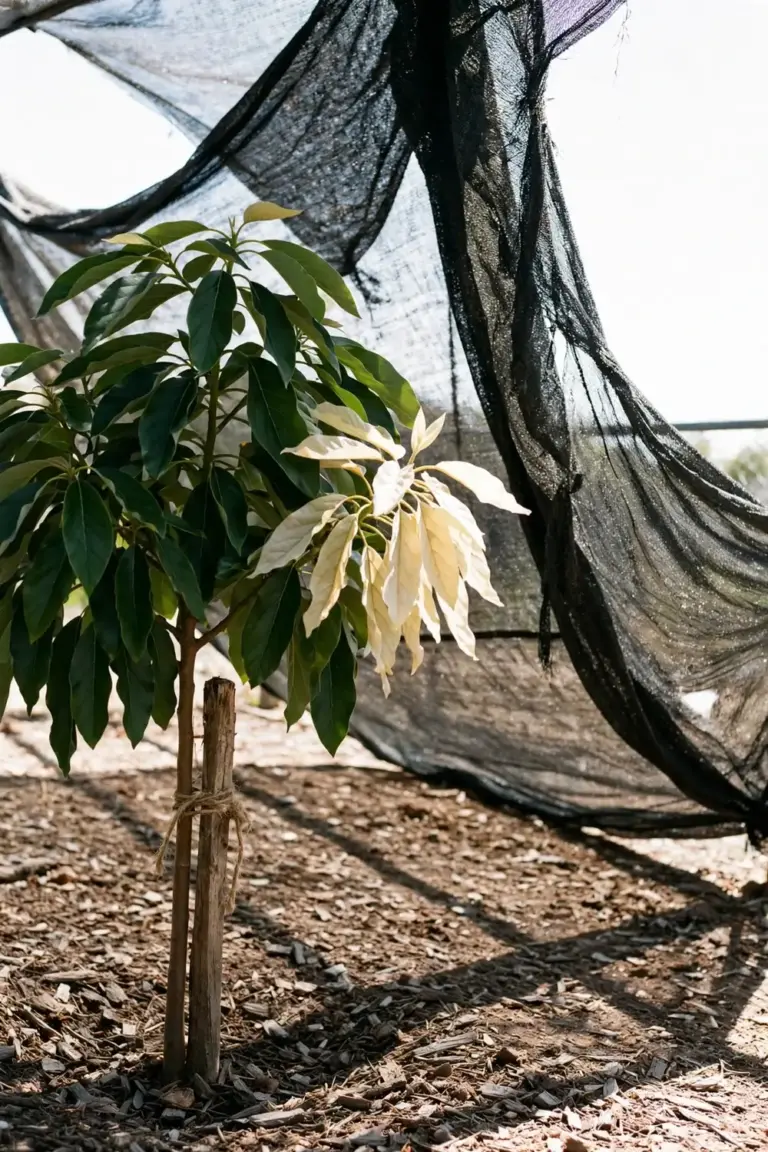
Young trees burn first. Thin canopies, recent pruning, and trees that lost leaves to another problem expose bark and fruit to direct sun. Fruit sunburns on the exposed shoulder, and bark sunburns on the trunk. Leaves bleach yellow-white on the sun-facing side, then dry and crisp. A leaf that bleaches only on its sun-facing half, while the shaded half stays green, names sunburn beyond doubt.
Water before the heat, not during it. A well-watered tree cools its leaves through transpiration, and dry soil during a heatwave burns leaves faster. Give the deep soak in the early morning, so the tree carries full water into the hottest hours. Shade cloth over a young tree through the worst weeks of summer cuts the direct load. Prune lightly in summer so the canopy keeps shading its own trunk and fruit, and new growth that stays green after the heatwave passes confirms sunburn was the cause.
8. Protect the Tree From Cold Nights
Cold snaps blacken or brown new growth and young leaves first, so cover a young tree and skip feeding until warm weather returns.
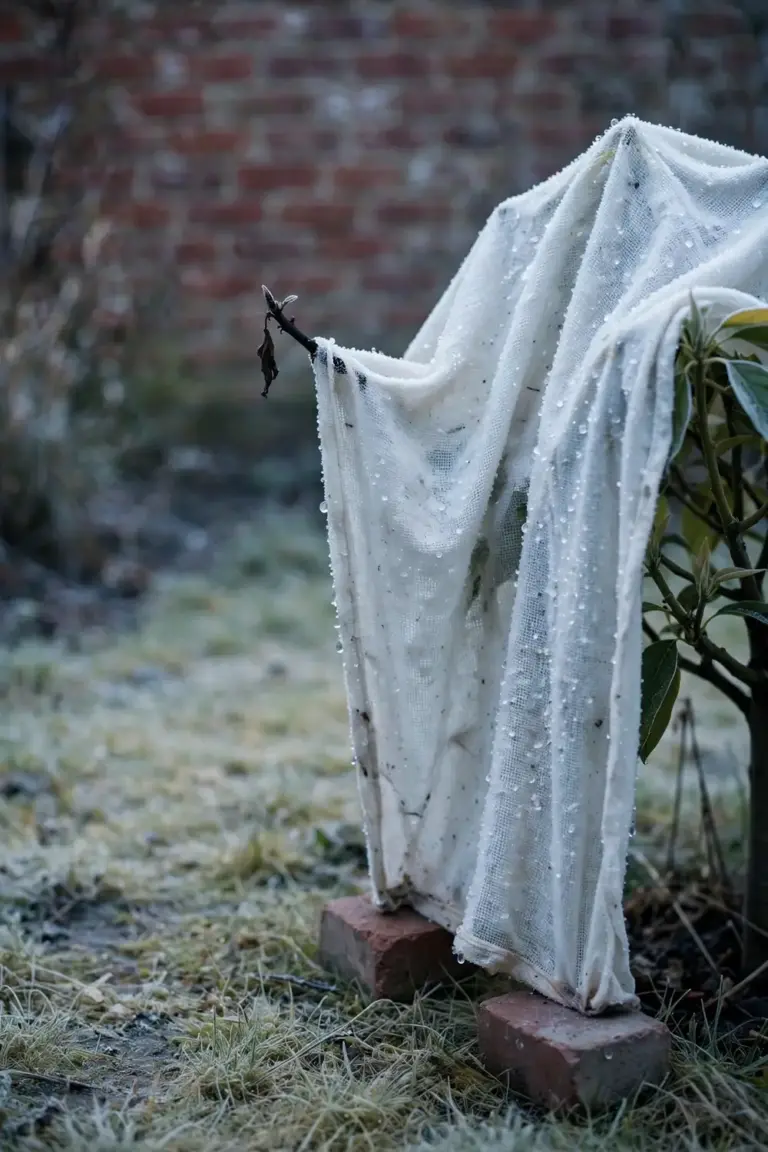
Frost damages tender tissue, so new flush growth, flowers, and young fruit suffer first, and leaves blacken or brown after a cold night. Established trees handle light cold better than young trees. Trees in low spots collect cold air first, so a tree in a hollow frosts harder than the same tree on a slope.
Plant with cold in mind. A north-facing position against a brick wall catches reflected warmth and shelters the tree from southerly cold winds. Avoid frost pockets at the bottom of a slope, where cold air pools overnight. A young tree in a pot moves under cover on frost nights, which no in-ground tree can do. Site choice beats every after-the-fact fix.
Cover a young tree with frost cloth on cold nights, and remove the cover in the morning so heat never builds under it. Skip fertilizer after frost damage. Feeding pushes soft new growth into the next cold snap. Prune dead tissue only after warm weather returns, when the line between dead and living wood shows clearly. New growth that pushes green in spring confirms the tree survived the cold.
9. Check Leaf Undersides for Lace Bugs and Mites
Lace bugs stipple leaves yellow and leave black specks of excrement on the underside. Mites bronze or silver the leaf surface. Flip the leaf before you spray anything.
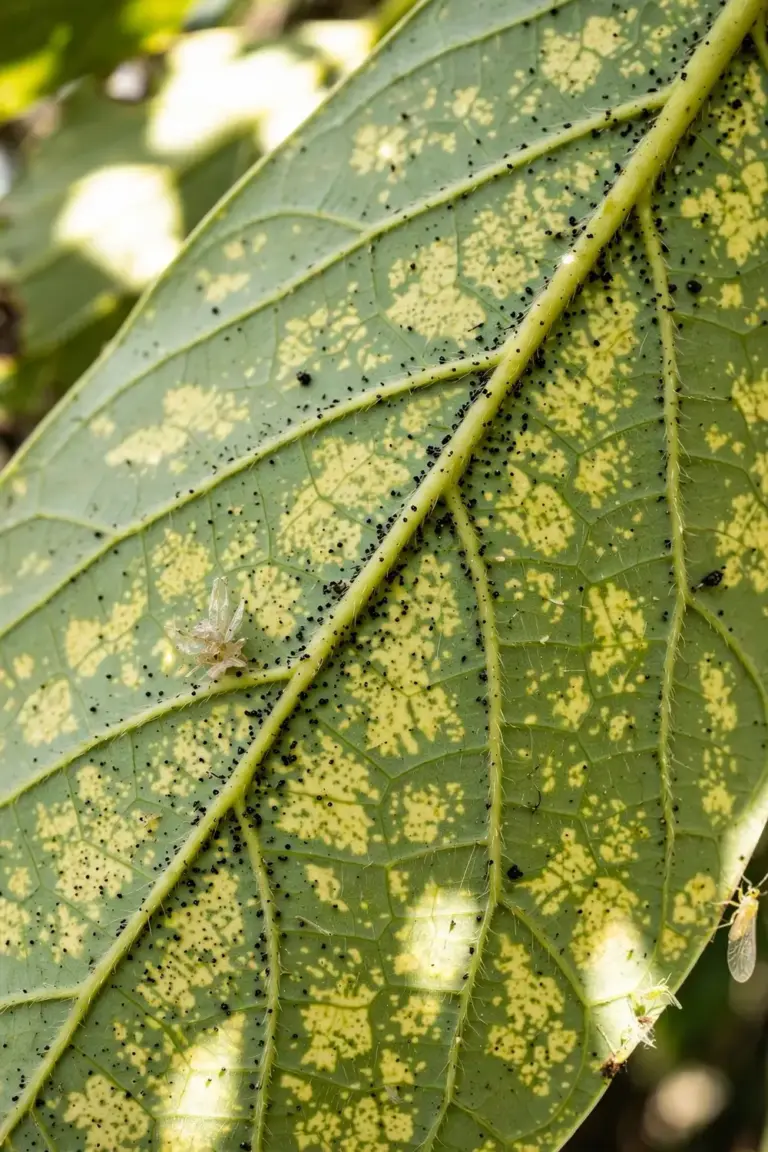
Avocado lace bug feeds in groups on the underside of leaves, and a colony causes faint pale green to yellowish blotches visible on both leaf surfaces, with black shiny specks of excrement on the under surface, per the UC IPM avocado lace bug guide. Heavy feeding turns blotches into large brown or tan dead patches, and damaged leaves dry, curl, and drop early. The same guide warns that salt damage and sunburn can look similar, so check the pattern: lace bug damage sits in the middle of the leaf between veins, while salt burn starts at tips and margins.
Mites discolor leaves differently. Avocado brown mite, persea mite, and sixspotted mite cause brown, silvery, or yellow roundish patches, or bronzing of leaves, per the same UC IPM guide. Mite feeding leaves no dark excrement, and fine silk webbing plus cast skins sometimes show under a hand lens. A cheap hand lens settles the argument in seconds: black specks mean lace bugs, webbing and cast skins mean mites, and neither means salt or sunburn.
Tolerate low pest numbers. Natural enemies eat lace bugs and mites, and broad-spectrum sprays kill those enemies and trigger worse outbreaks. UC IPM advises against treating low numbers, and recommends short-persistence contact materials such as oil or pyrethrin only when numbers climb toward extensive foliage damage. The site’s organic pest control guide covers soft materials and natural enemies in full. Check the undersides of ten leaves across the canopy once a week through the warm months, and act only when stippling spreads from leaf to leaf. Leaves that hold their green after pest numbers fall confirm pests were the cause.
10. Suspect Root Rot When Wilting Meets Wet Soil
Root rot wilts and yellows a tree standing in wet soil. Dig down and check the feeder roots: black, brittle roots name Phytophthora root rot.
Phytophthora root rot, caused by Phytophthora cinnamomi, is the most destructive disease of avocados worldwide and the major limiting factor to avocado production in Australia, per Avocados Australia. The pathogen destroys the fine feeder roots, which blocks water and nutrient uptake and leaves the tree unable to control salt uptake. Leaves curl, droop, and slowly turn yellow. Leaf margins and veins turn brown as roots fail to control salt. Fruit stays small and shrivels on the tree.
Confirm with a root check. Dig a small hole at the drip line and lift a handful of feeder roots. Healthy feeder roots look pale and firm. Infected feeder roots turn black and brittle and die, per NSW DPI, and in advanced stages only remnants of the root system remain. The soil under an affected tree stays wet long after rain, because the tree cannot absorb the moisture. That wet-soil-plus-wilt combination separates root rot from simple underwatering, where the soil runs dry.
Act on drainage and hygiene, not on a spray bottle. Improve drainage, plant future trees on mounds or raised beds in heavy clay, and keep a coarse organic mulch under the canopy without piling it against the trunk. Buy certified disease-free nursery stock. Never move soil from around a sick tree to a healthy one, since the pathogen travels in soil and water. Clean tools after working around an infected tree.
If the root check confirms black feeder roots, stop feeding and ease water back to the minimum that keeps the soil barely moist. A sick tree cannot use fertilizer, and fertilizer salts burn the few working roots it has left. Hold off on any further digging around the root zone, since each disturbance breaks more feeder roots. Work the full protocol in the site’s avocado root rot guide from here, and judge progress by new growth, not by old leaves: fresh green flush means the tree is rebuilding roots, while continued wilt with no flush means the decline continues.
Rule out sunblotch before you settle on root rot. Avocado sunblotch viroid causes sunken yellow streaks on young stems and fruit, plus occasional leaf mottling, and infected trees may show no symptoms at all, per Farm Biosecurity. NSW DPI records sunblotch only at Alstonville on the New South Wales north coast and on some farms in the lower Murray, and considers the incidence very low across Australia. Sunken streaks on stems and fruit point to sunblotch. Wilting with black feeder roots points to root rot.
Avocado Yellow Leaves FAQ
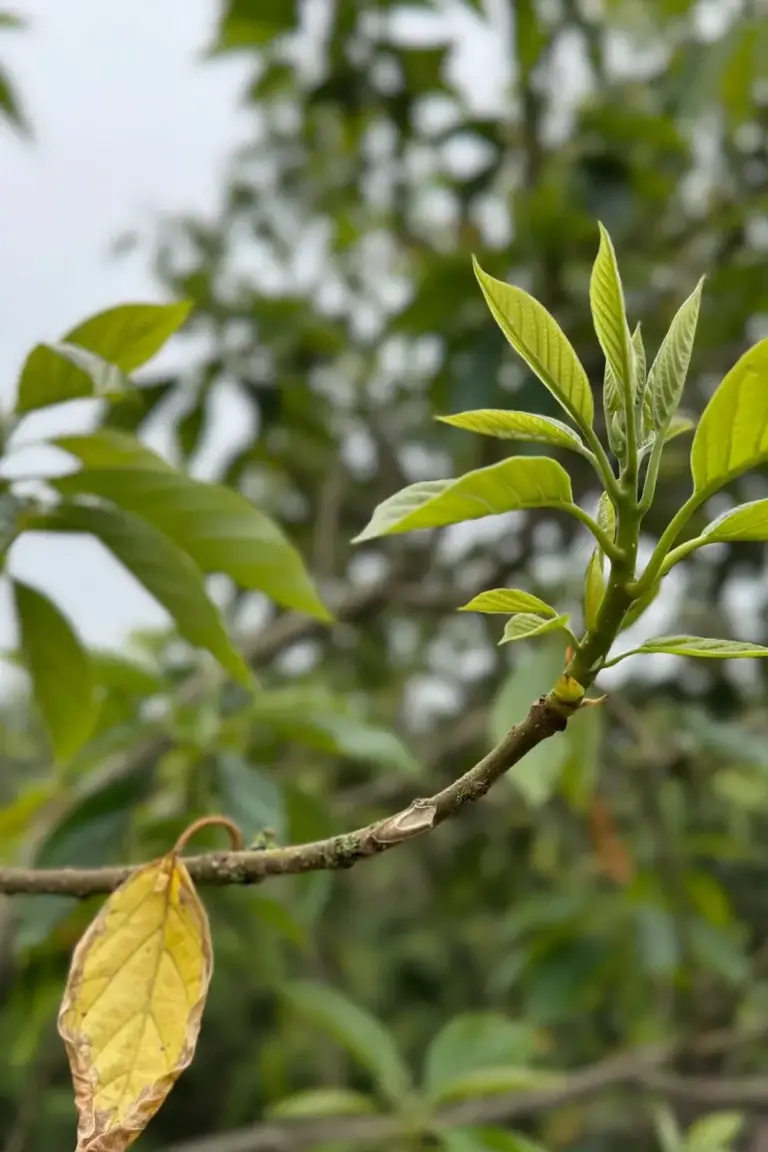
Yellow leaves rarely turn green again. A leaf that lost its chlorophyll stays yellow, and the tree replaces it with new growth. Judge the fix by the new leaves, not the old ones. New growth that emerges green means the cause is fixed. New growth that emerges yellow means the cause is still active. Prune nothing until the new growth tells you the story.
Leave yellow leaves on the tree until they drop on their own, since a yellowing leaf still feeds the tree while it fades. The tree reabsorbs mobile nutrients from old leaves before shedding them, and pulling leaves early removes that salvage. Remove leaves only when they hang dead and dry, or when they carry pest colonies you want off the tree.
Water by soil moisture, not by calendar. Push a finger 5 cm into the soil at the drip line. Water when the top soil dries, and skip watering when it stays moist. Young trees need more frequent checks than established trees, and clay soils need longer gaps between soaks than sandy soils. Mulch holds moisture and cuts watering frequency in summer.
No single fertilizer fixes yellow leaves, because the pattern names the missing nutrient. Soil test first, then feed the deficiency the test names. Nitrogen feeds even yellowing on older leaves. Chelated iron feeds iron chlorosis on young leaves, zinc chelate feeds mottled small leaves, and magnesium feeds interveinal yellowing on older leaves. Always apply per label, and fix drainage before feeding a waterlogged tree.
Worry when yellow leaves come with wilting in wet soil, dieback at branch tips, or sunken yellow streaks on stems and fruit. Wilting in wet soil with black feeder roots points to Phytophthora root rot. Sunken yellow streaks point to sunblotch viroid, which NSW DPI records at very low incidence in Australia. Both need identification before treatment.
Fix One Cause, Then Watch the New Growth
Fix one cause, then watch the new growth. The pattern table names the most likely cause, the test confirms it, and green new growth proves the fix worked.
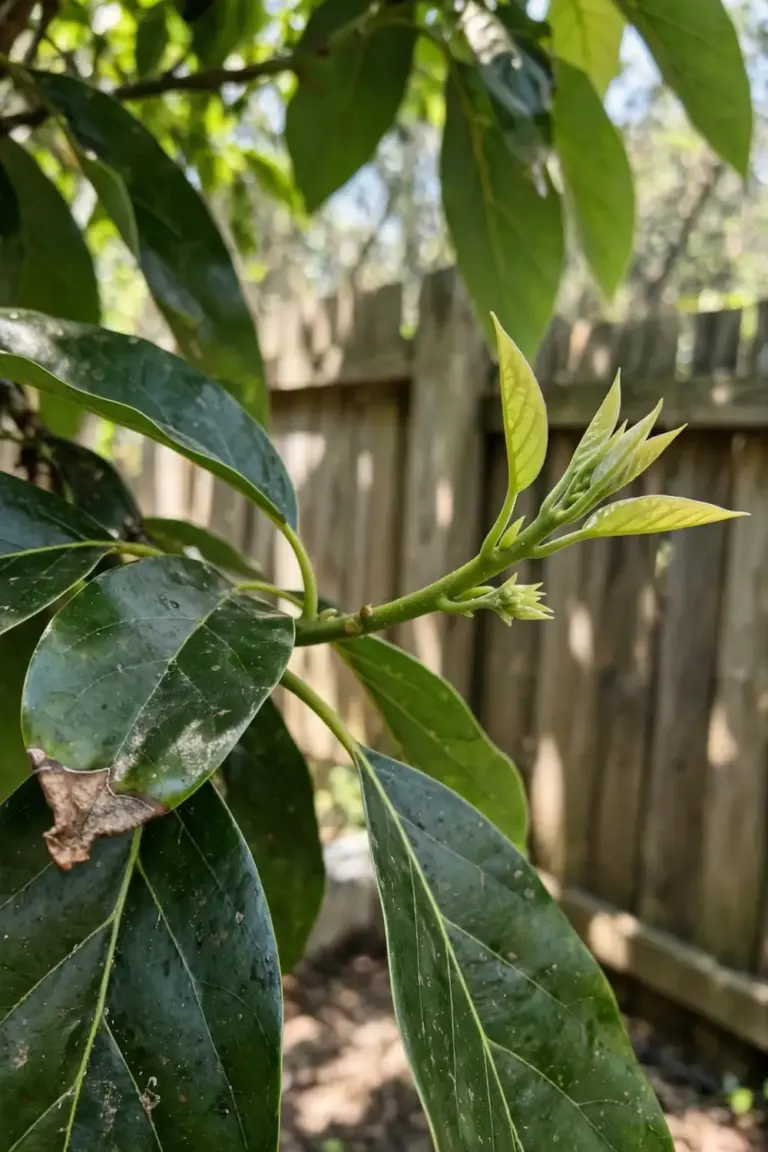
Walk the tree once a week through the season. Check soil moisture, flip a few leaves, and watch the new flush. One fix at a time keeps the diagnosis honest. A tree that pushes green new growth after a single fix tells you exactly what was wrong. A tree that keeps yellowing after one fix tells you to work the pattern table again, because the real cause still hides in a row you skipped.
Keep the pattern table bookmarked. Next time yellow shows up, run the three checks, find the row, and work that one cause. Most yellow avocado leaves clear up with one fix, and the tree tells you the fix worked with green new growth. A tree that keeps yellowing after two fixes needs a closer look at roots and soil, since the real cause may sit below ground.