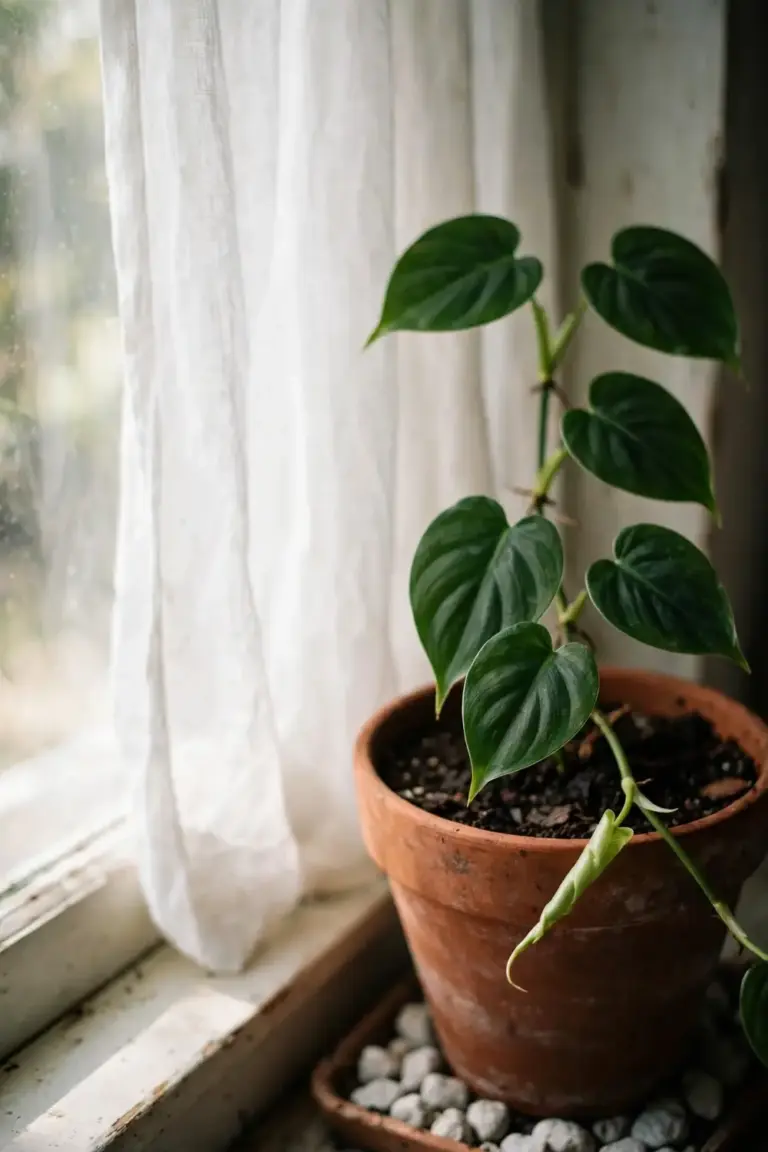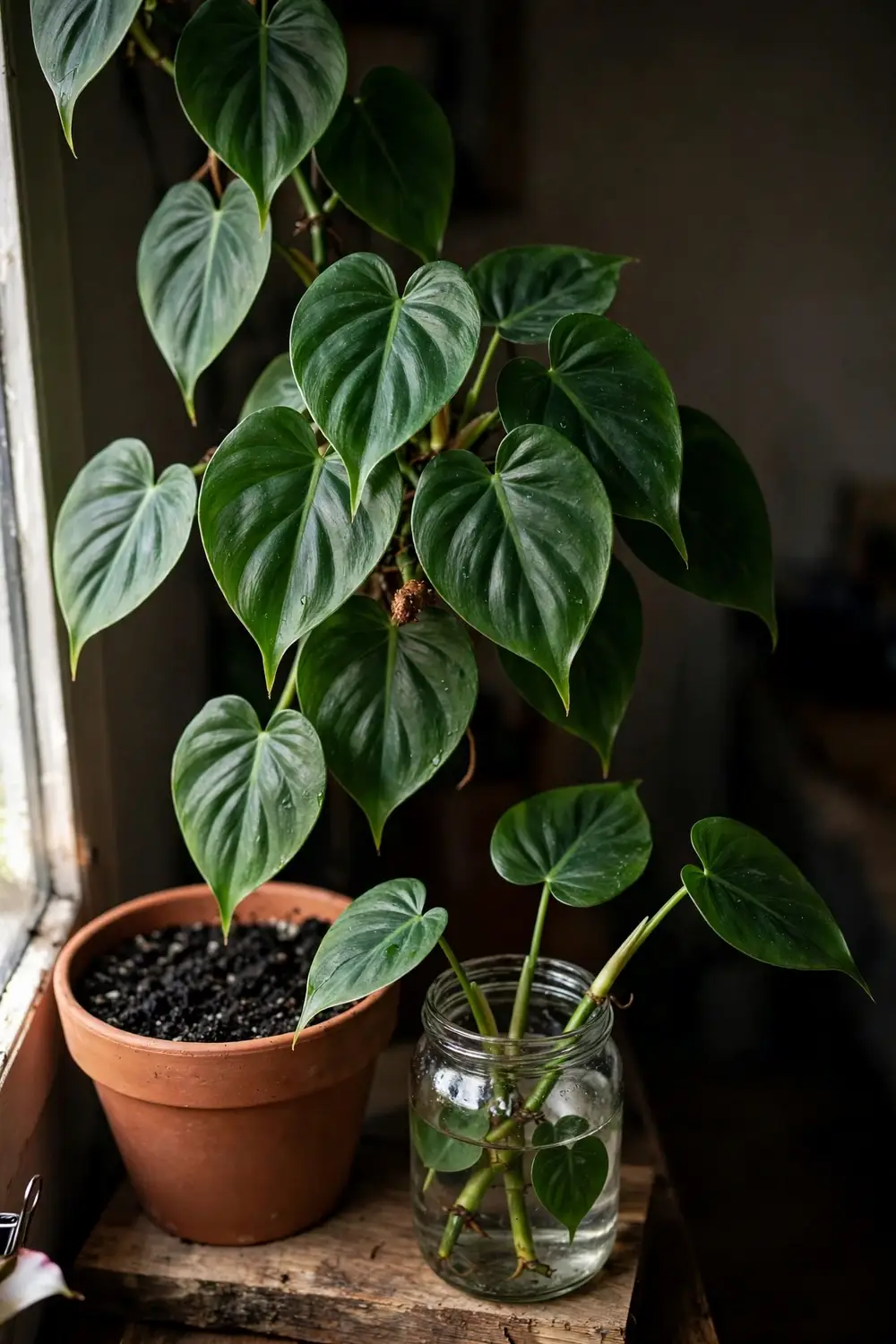

Cut a philodendron stem just below a node, and the cutting roots in water or soil within 2 to 4 weeks. Cut anywhere else, and the stem sits in water until it rots. A cutting needs one node and one leaf. That is how to propagate philodendron from cuttings. The rest of this page gives the seven moves, from finding the node to potting the rooted cutting.
Philodendron is the genus Philodendron. A cutting is a stem piece with a node. A node is the small bump on the stem where a leaf, an aerial root, or a new shoot grows. Roots grow from the node. Leaves alone never grow roots. I have learned that the cutting I check at the node roots faster than the one I leave sitting in stale water.
1. Cut Below a Node or the Cutting Never Roots
A cutting without a node never roots. The node carries the meristem tissue that grows roots and shoots. A leaf stem with no node may stay green in water for weeks, yet it will never become a plant. Check for the node before you cut anything, because the node decides whether the whole job works.
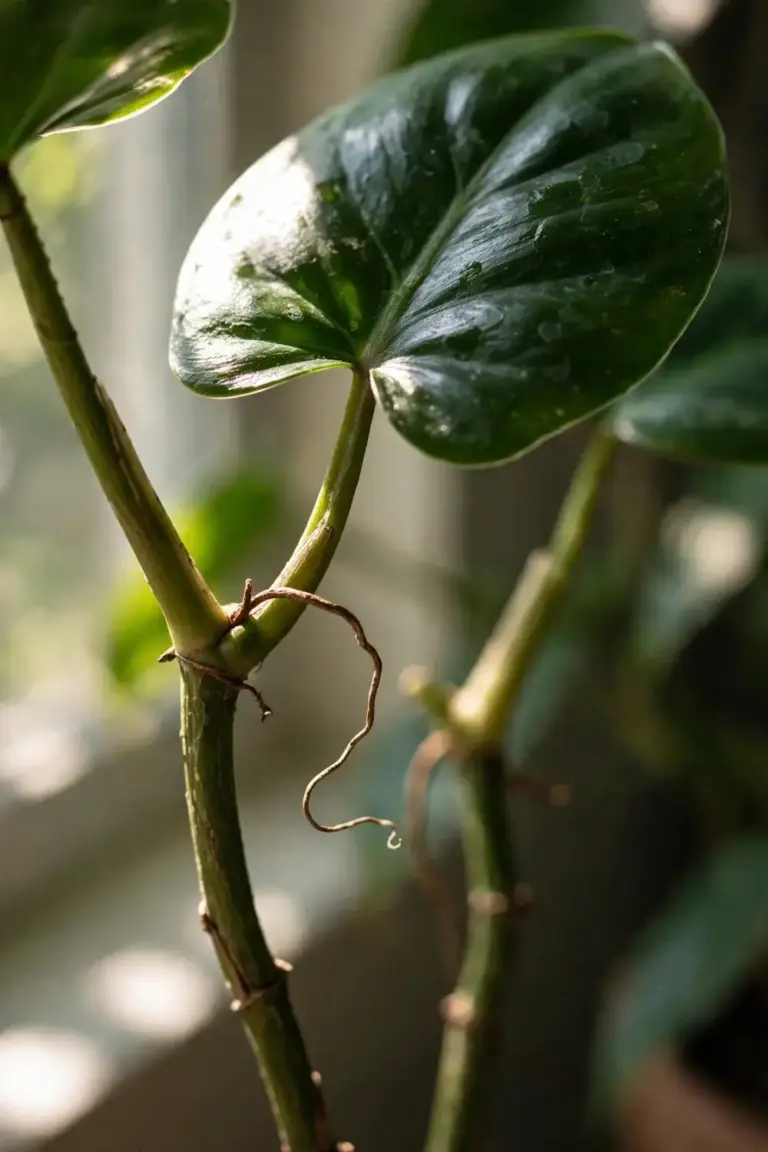
Find the node on the vine first. Look for a small raised bump on the stem where a leaf stalk meets the vine. Look for a brown nub or a thin aerial root hanging from the same spot. Feel for a raised ring on thicker stems. Every node sits where a leaf once grew or still grows. A cutting needs at least one node and one leaf. Two nodes give the cutting a backup rooting point, so a cutting with two nodes survives a damaged node better than a cutting with one.
Each node also holds an axillary bud. The bud waits beside the leaf stalk. It grows into a new shoot after the cutting roots. A cutting with two nodes carries two buds, which means two chances for new growth. A cutting with one node carries one bud. The bud stays dormant until roots form, then it wakes and pushes out the first new leaf.
Take cuttings from a healthy vine only. Pick a stem with firm green leaves and no yellow patches. Skip stems with soft brown spots or black tips. A sick parent gives weak cuttings. A strong parent gives cuttings that root fast and grow on without a stall. Water the parent plant the day before you take cuttings, so the stems hold full moisture when you cut them.
Trailing and non-trailing philodendrons grow differently, and the difference shapes the cutting. Trailing types grow long vines with spaced-out nodes. Non-trailing types grow upright with tight nodes clustered near the crown. Both types root from stem cuttings. The trailing vine gives long easy cuttings. The upright type gives short sections with several nodes packed close together.
Nodes look different across types. A heartleaf vine shows a small green bump beside each leaf stalk, often with a thin aerial root already hanging from it. An upright philodendron shows a thick stem with ring scars where old leaves fell. Feel along the stem with a fingertip. The node feels raised and firm. The internode between nodes feels smooth. Once you can find nodes by touch, you can take cuttings from any philodendron without guessing.
2. Take the Cutting Where the Node Sits
Cut just below a node with clean, sharp scissors or pruning shears. Leave a short stub of stem below the node, about 1 cm long. The stub keeps the node intact and gives the cutting a base to sit in water or soil. A cut through the node destroys the growth tissue. A cut far below the node leaves a bare stub that rots first and spreads rot upward.
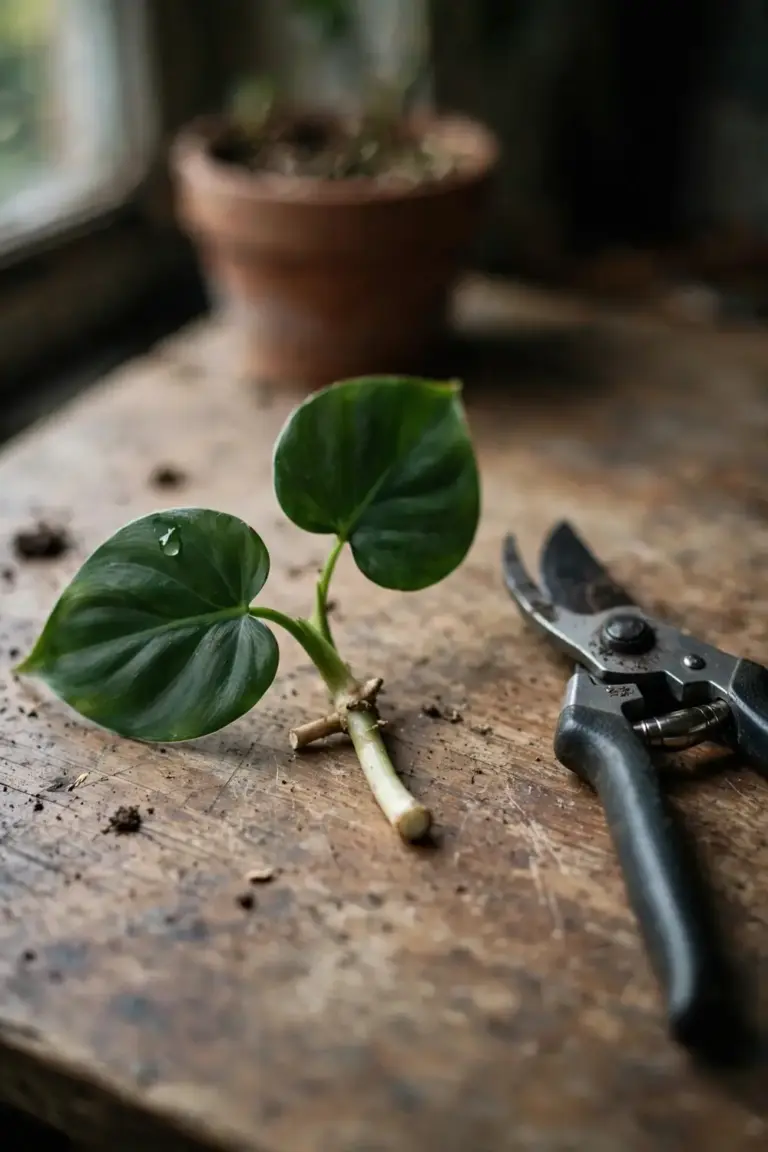
Trailing types root from stem sections 3 to 6 inches long with the lower leaves removed, according to Iowa State Extension. That band converts to 7.6 to 15.2 cm. Strip every leaf that would sit below the water line or under the soil. Leaves underwater rot. Leaves buried in soil rot. Both kinds of rot spread to the stem within days.
Non-trailing types need a different cut. Iowa State Extension advises stem sections with at least two nodes for non-trailing types. Cut a section with two or three nodes and one or two leaves. Sections that carry aerial roots root more reliably than sections without them. A rooting hormone can speed rooting on these slower types. Follow the label on the hormone bottle for the dose and the method, since this page gives no hormone dose because the dose varies by product and the label carries it.
Pick the right tool for the stem. Small scissors cut thin trailing vines cleanly. Pruning shears cut thick upright stems without crushing them. A sharp knife works on woody stems when shears crush the tissue. Whatever tool you pick, it must cut in one clean motion, because a crushed stem seals slowly and rots fast while a clean cut seals fast and roots fast.
Clean the blades before the first cut and between plants. Wipe scissors or shears with rubbing alcohol or a household disinfectant. Dirty blades move fungi and bacteria from one plant to the next. One wiped blade per plant keeps a sick vine from infecting a healthy one, and the whole job takes seconds. Label the cutting when you take several kinds at once. A strip of masking tape on the jar holds the name. Unlabeled cuttings mix together within a week.
Take cuttings during active growth, when the vine pushes new leaves. Warm months give the fastest rooting. Cool months slow every step. A cutting taken in the growing season roots in weeks. A cutting taken in the cold season may sit for a month before roots show. Timing matters less than the node, yet a warm room in any season still roots cuttings fine.
3. Pick Water or Soil by What You Want to Watch
Water shows the roots. Soil skips the transplant shock. Both methods work. Pick water when you want to watch roots grow and learn the timing. Pick soil when you want one step and no move later. A cutting rooted in soil never faces the shift from water roots to soil roots.
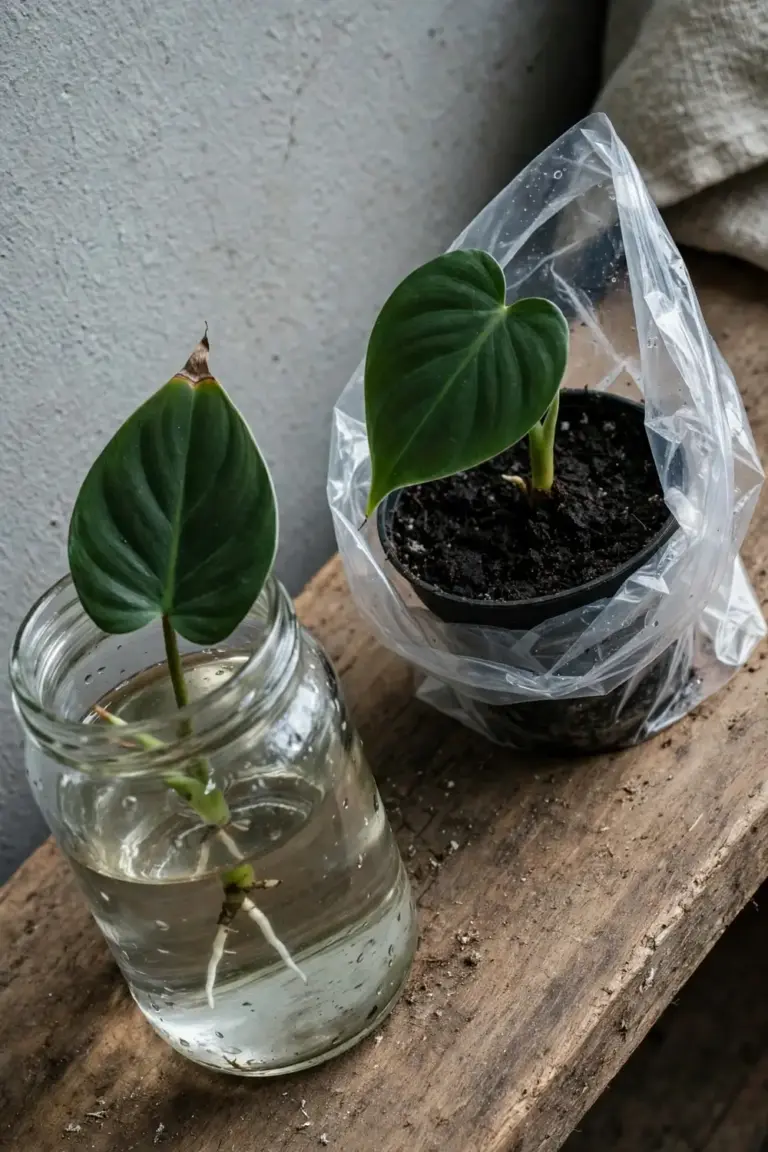
Water roots grow fast and look strong in the jar. They grow in water, so they adapt to water. Soil demands different roots, thicker and tougher than water roots. A water-rooted cutting sometimes stalls for a week or two after potting while it grows soil roots. A soil-rooted cutting skips that stall. It grows soil roots from the start and keeps growing after potting without a pause.
Water also teaches the rhythm. You see the first white root tips push out. You see the roots branch and lengthen. You learn how long rooting takes on your own windowsill. Soil hides all of that. You wait and guess. Beginners learn faster in water, even when soil gives a smoother finish.
The University of Nebraska-Lincoln Extension lists stem cuttings as the method for heartleaf philodendron and several other types, including velour, elephant ear, fiddleleaf, and split-leaf forms, in its houseplant propagation table. Air layering appears beside stem cuttings for some types. Air layering stays outside this page. This page covers cuttings only, and cuttings alone give every reader a full method.
| Method | Speed | Risk | Best For |
|---|---|---|---|
| Water | Roots show in 2 to 4 weeks | Rot from stale water; stall after potting | Beginners who want to watch roots grow |
| Soil | Roots form in 3 to 6 weeks | Rot from wet soil; roots stay hidden | Growers who want one step and no transplant |
Humidity shapes both methods. Dry indoor air pulls moisture from the leaves faster than a rootless cutting can replace it. A cutting in dry air wilts even when the jar holds water. A cutting in dry air loses water faster than the stem can pull it in. The leaves curl at the edges first, then crisp. Move the cutting away from heaters and air vents. A plastic bag over a soil cutting holds humidity around the leaves. A jar near other plants sits in slightly damper air, and both tricks buy the cutting time while roots form.
4. Root the Cutting in Water, Step by Step
Set the cutting in water with the node submerged and the leaves dry. Use a clear glass or jar. Fill it with room-temperature water until the node sits under the surface. Keep every leaf above the water line. A leaf in water rots within days. The rot clouds the water and spreads to the stem, and a cloudy jar means the cutting is already in trouble.
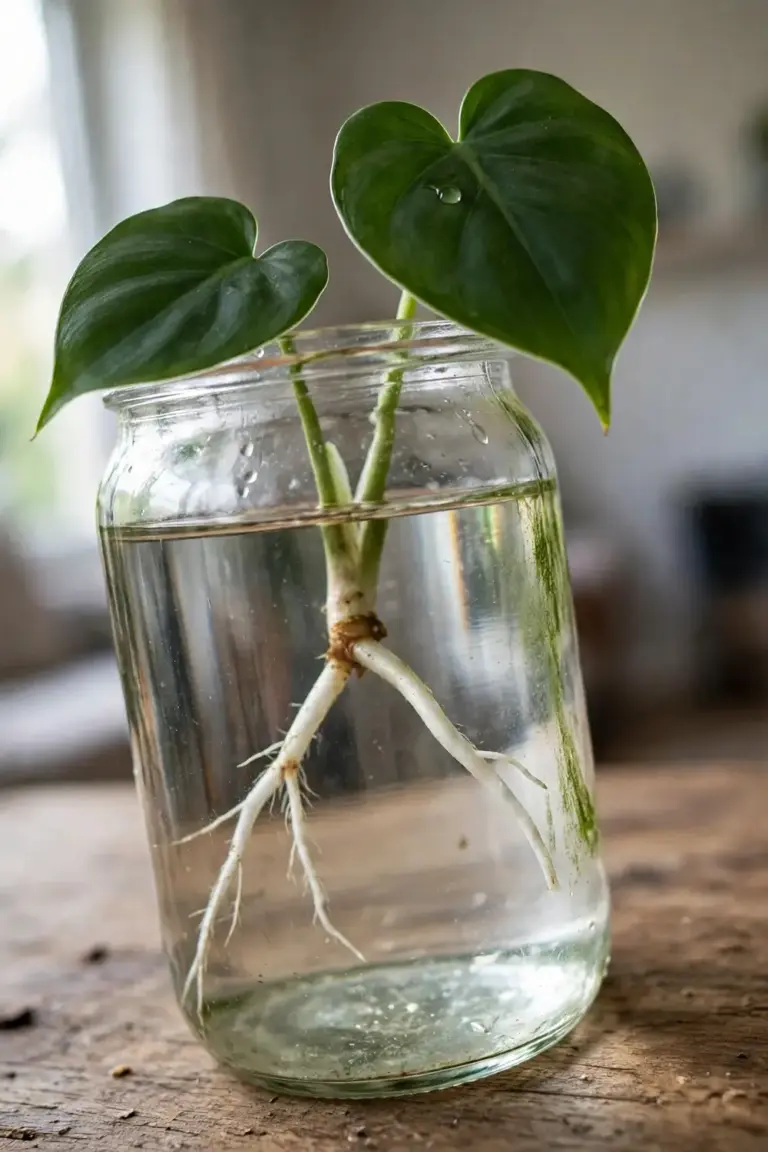
Change the water every couple of days. Fresh water keeps oxygen near the cutting and starves the bacteria that cause rot. Penn State Extension advises changing the water every couple of days and keeping developing cuttings in a bright area out of direct sunlight, in its houseplant propagation notes. Direct sun heats the jar and dries the cutting. Bright indirect light feeds photosynthesis without cooking the stem.
Watch the node, not the calendar. White root tips push out of the node first, then the roots lengthen and branch over the next weeks. A healthy root looks white or pale tan and feels firm when you touch it gently. A rotting stem looks brown and soft and smells sour. Cut off a rotting tip with clean scissors, change the water, and start the wait again. A cutting caught early recovers. A cutting left in rot dies.
Keep the cutting in bright indirect light near a window that never gets direct sun. A north-facing or east-facing window works in most homes. A south-facing window works when the jar sits a meter back from the glass. Warmth speeds rooting. A room near 21 degrees Celsius roots cuttings faster than a cold room. Cold water slows every step, so refill the jar with room-temperature water rather than cold water from the tap.
Pick a jar that holds the cutting upright without crowding it. A narrow jar tips over. A wide jar lets the cutting slide down until leaves touch the water. A jar with a narrow neck holds the stem in place. A dark glass jar slows algae growth. A clear jar shows roots better. Either jar works when you change the water on schedule.
Algae in the jar looks green and slimy. It grows in light and warm water. Algae itself rarely kills a cutting, yet it coats the stem and blocks oxygen. Rinse the jar and the stem when algae appears. Change the water. Move the jar a little farther from the window. The cutting roots fine once the jar stays clean.
Roots sometimes stall. A cutting sits in fresh water for three weeks with no root tips. Check the node first. A firm green node is alive and resting. A brown soft node is rotting. Check the light next. A jar in deep shade grows roots slowly. Move it to a brighter spot. Check the temperature last. A cold windowsill in a draft slows every step. Move the jar to a warmer shelf. Most stalled cuttings start rooting within a week of the fix.
5. Root the Cutting in Soil, Step by Step
Fill a small pot with moist, well-drained potting mix. A mix of potting soil, perlite, and orchid bark drains fast and still holds moisture. Poke a hole in the mix with a pencil. Set the cutting in the hole with the node buried and the leaves above the surface. Firm the mix gently around the stem. The mix must touch the node on all sides. Air gaps dry the node out and stall rooting.
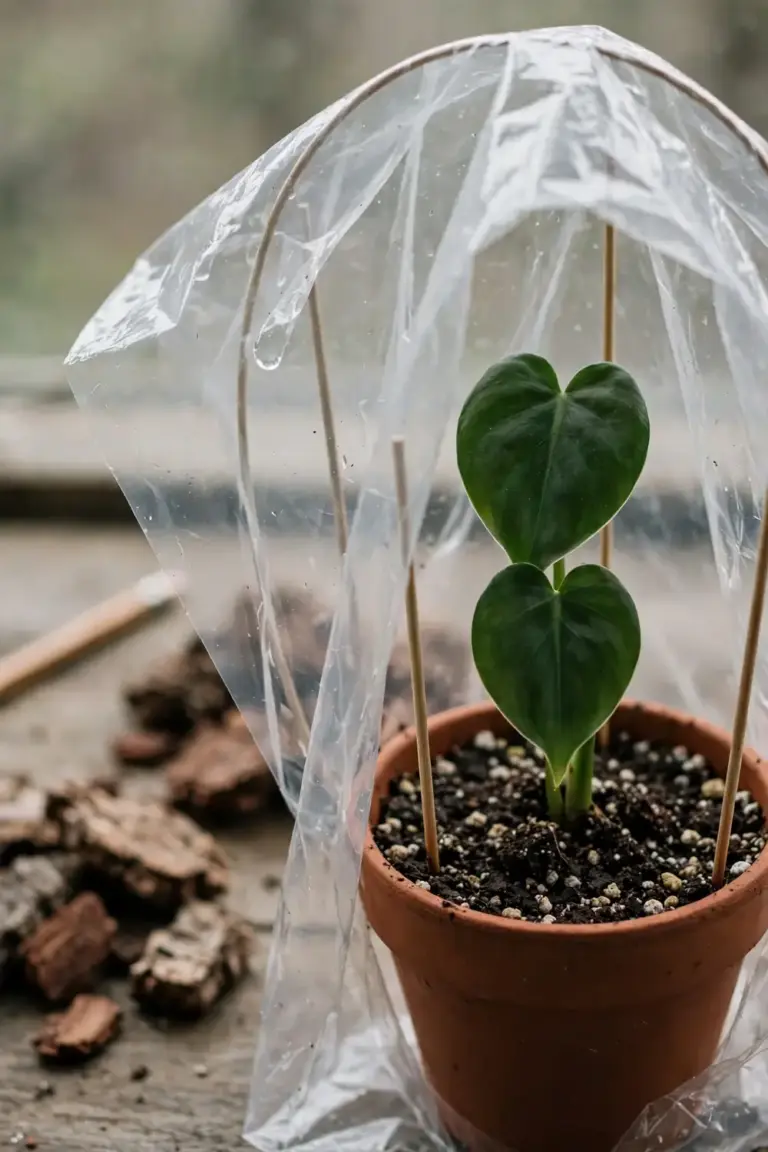
Water the pot lightly after planting until the mix feels damp like a wrung-out sponge, since soggy mix rots the cutting and dry mix starves it. Water again when the top 2 cm of mix dries. A clear plastic bag over the pot holds humidity. Prop the bag up with sticks so the plastic never touches the leaves. Open the bag for a few minutes each day to let fresh air in. Stale air under a sealed bag grows mold on the mix surface.
The University of Arkansas System Division of Agriculture advises terminal cuttings 2 to 4 inches long with 4 to 6 leaves for vining houseplants such as philodendron, in its houseplant propagation guide. That band converts to 5.1 to 10.2 cm. Do not let the cuttings wilt after removal from the parent plant. A wilted cutting roots slowly or not at all, so move the cutting from vine to pot without delay.
Check for roots with a gentle tug. Tug the stem lightly after three weeks. Resistance means roots hold the cutting in the mix. No resistance means the cutting still needs time. A gentle tug never harms a rooted cutting, while a hard yank tears new roots, so tug once a week at most and tug less once the cutting shows new growth.
Soil health shapes the mix the cutting roots in. A mix with structure and life grows stronger roots than a mix of dust and peat. The site’s soil health guide covers the biology that keeps a mix alive. The cutting needs that biology from the first week, because roots feed on the mix as much as the mix feeds the roots.
Pick a pot with drainage holes. A pot without drainage drowns the cutting. A pot 10 cm wide fits one cutting. A pot 15 cm wide fits three cuttings. Terracotta dries faster than plastic, and plastic holds moisture longer, yet either pot works when you water by feel and check the top 2 cm of mix before watering again.
6. Care for the Cutting in Its First Weeks
Keep the cutting warm, bright, and damp for the first weeks. Bright indirect light feeds the cutting while it has no roots. Warmth near 21 degrees Celsius speeds root growth. Cool rooms slow it. Dry air dries leaf edges. A pebble tray or a nearby humidifier lifts humidity without wetting the leaves. Grouping cuttings together also lifts the local humidity a little.
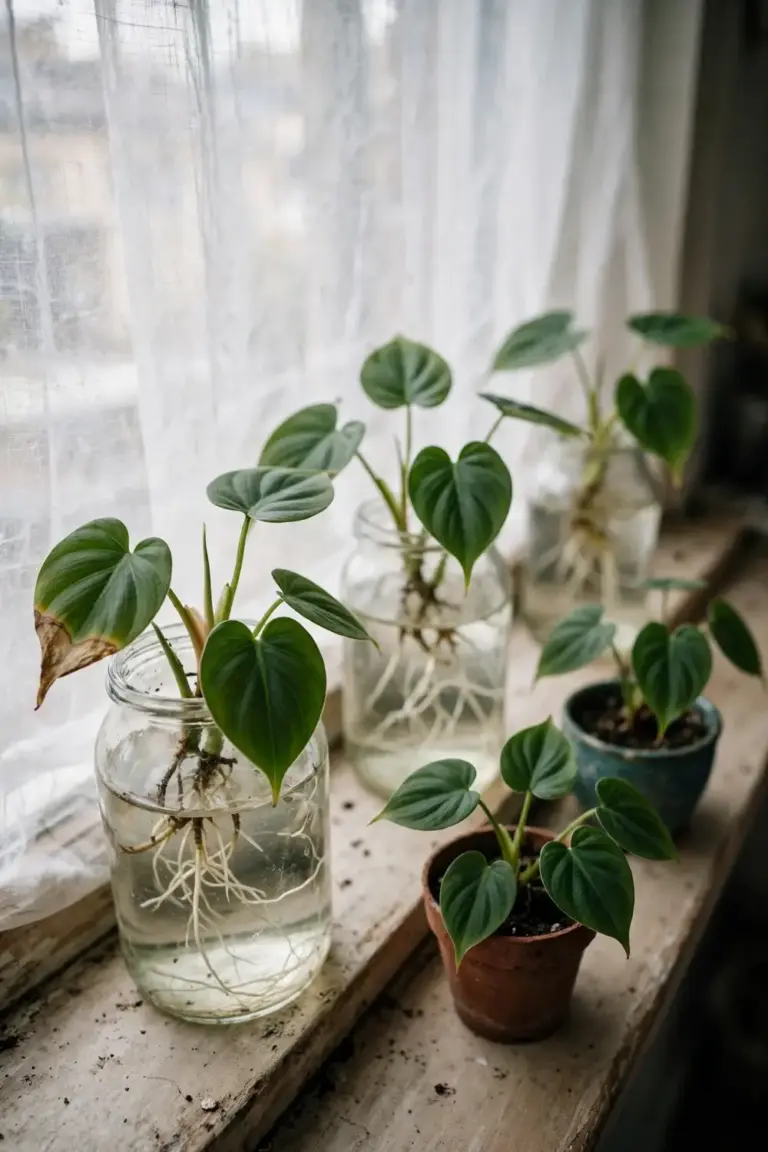
Water with a light hand. A cutting without roots drinks almost nothing. The stem pulls a little water through the cut end. The leaves lose a little water to the air. The balance is delicate. Too much water rots the stem. Too little water wilts the leaves. Check the mix or the jar every two or three days. Water the mix when the top 2 cm dries. Change the jar water every couple of days.
Watch for rot every time you check the cutting. Rot shows as a brown soft stem, a sour smell, or cloudy water. Cut off the rotting part with clean scissors. Change the water or let the mix dry a little. A cutting caught early recovers. A cutting left in rot dies. Daily checks catch rot before it spreads, and a quick check costs less than a minute.
Check for pests while you check for rot. Spider mites and mealybugs move onto stressed cuttings. Look under the leaves. Look at the stem joints. A cutting with pests needs isolation from other plants. Wipe pests off with a damp cloth. A healthy cutting resists pests better than a stressed one, so steady water and light double as pest prevention.
Keep philodendron away from children and pets. Iowa State Extension notes that philodendrons contain calcium oxalate crystals, which cause pain and swelling in the mouth and throat when eaten. Wash your hands after handling cuttings. Keep cuttings on a high shelf or behind a closed door until they move to their pots. The sap can irritate skin on sensitive hands, so gloves help when you take many cuttings.
Routine care starts once the cutting roots. Watering, light, and feeding follow the same rules as any indoor philodendron. The mican philodendron plant care page covers daily care for one popular type. The cutting needs steady care, not special care, from here on. A rooted cutting is a young plant, and young plants grow on routine.
Bright indirect light means light that never burns a leaf, so hold your hand between the window and the cutting at midday: a soft shadow with blurry edges means indirect light, a hard sharp shadow means direct sun, and a missing shadow means deep shade. The cutting wants the soft shadow. Move it until the shadow softens. That test works in any room, any season, any hemisphere.
7. Pot Up the Cutting When Roots Say It Is Ready
Pot up the cutting once its roots reach 5 to 8 cm long, because short roots tear when you handle them and long roots tangle in the jar and break during the move. Iowa State Extension advises potting once new roots are several inches long. That band matches the 5 to 8 cm window in this section. Roots in that window survive the move and grow on without a stall.
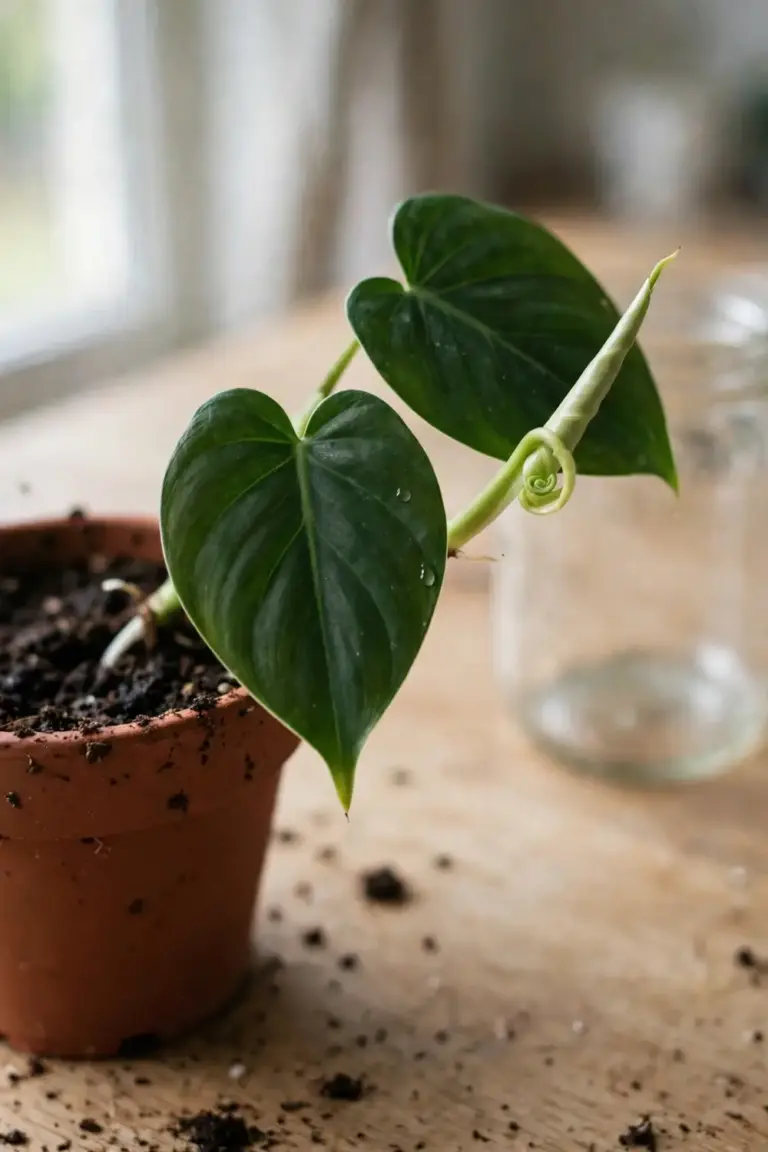
Pick a small pot with drainage holes. A pot 10 cm wide fits one cutting. A pot 15 cm wide fits three cuttings. Fill it with moist potting mix. Poke a hole for each cutting, set each cutting in with the roots spread out and the node buried, firm the mix gently, and water lightly after potting. The mix should settle around the roots without packing hard.
Keep the potted cutting damp for two weeks. Water-rooted cuttings need extra water at first while they grow soil roots. Water when the top 2 cm of mix dries. Keep the pot in bright indirect light. Skip fertilizer for the first month, because fertilizer burns new roots and a cutting fed too early grows weak leaves on damaged roots. Plain water and steady light grow stronger roots than any feed.
New growth proves the cutting took. A fresh leaf unrolls from the tip within a few weeks of potting. The vine lengthens from the top node. The leaves stay firm and green. A cutting that drops its leaves after potting may still recover. Give it two weeks of steady care before judging it. Roots grow before leaves show it, so patience beats panic.
A stalled cutting needs a diagnosis, not more water. Check the roots first. White firm roots mean the cutting is alive and resting. Brown soft roots mean rot. Cut off rot, repot in fresh mix, and water lightly. Check the light next. A cutting in deep shade grows slowly. Move it closer to a bright window. Check the pot last. A pot without drainage drowns roots even when you water lightly.
Several cuttings in one pot give a full plant fast: three cuttings in a 15 cm pot fill out within months, while five cuttings crowd the pot and fight for water. Space the cuttings evenly around the pot. Point the leaves outward. The vines spill over the rim together and read as one full plant. A single cutting in a small pot grows slower and looks sparse for a season.
Frequently Asked Questions About Propagating Philodendron From Cuttings
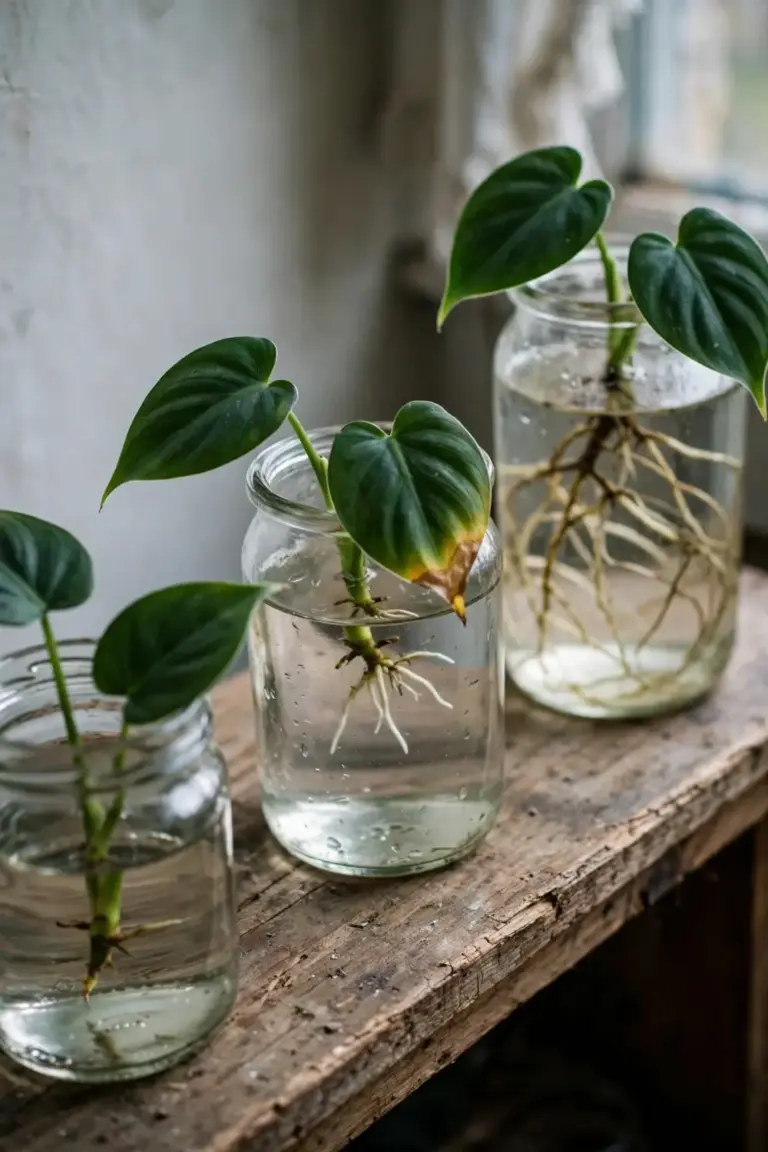
No. A leaf alone never grows into a plant. The leaf has no node, and roots grow from the node only. A leaf in water may stay green for weeks. It will never grow roots or a new stem. Take a stem cutting with at least one node and one leaf, since the node carries the growth tissue that builds the whole plant.
Water cuttings show roots in 2 to 4 weeks. Soil cuttings root in 3 to 6 weeks. Warmth and bright indirect light speed both methods. Cold rooms slow both methods. Watch the node for white root tips, because the calendar gives a rough window while the roots give the real answer. Pot up the cutting once roots reach 5 to 8 cm long.
Rooting hormone helps slow types and non-trailing sections. Trailing types root fast without it. A hormone dip speeds rooting on cuttings that carry aerial roots. Follow the label on the bottle for the dose and the method. This page gives no hormone dose, because products vary. Clean tools and fresh water matter more than hormone for most cuttings.
Stale water causes most rot. Change the water every couple of days. A leaf under the water line rots fast and clouds the jar. Strip every leaf that would sit below the surface. A brown soft stem means rot has started. Cut off the rotting part with clean scissors, change the water, and start again. A cutting caught early recovers.
A cutting can live in water for months. It will not thrive there forever. Water carries no nutrients, so the leaves shrink and the growth stalls. Pot the cutting once roots reach 5 to 8 cm long. A potted cutting gets nutrients from the mix and grows a full vine. Water suits the rooting stage. Soil suits the growing stage.
Take One Cutting and Watch It Root
Take one cutting from a healthy vine this week. Cut below a node. Set it in water or soil. Change the water or check the mix every couple of days. The roots show in weeks. The new plant costs nothing but a jar and a little patience. General propagation methods for other plants live on the site’s how to propagate your plants and grow more for free page. This page stays on philodendron cuttings. Start with one cutting. The second cutting gets easier, and the third cutting feels routine. Within a season, one vine becomes three plants, and the parent plant grows back bushier from the cut.