
Treat the whiteflies first and the sooty mould stops growing. Wash the mould off with mild soap and warm water, then spray the whiteflies with soap or oil, and check the leaf undersides every week. Plan on 4 to 5 spray passes, spaced 5 to 7 days apart, to break the egg cycle. I have learned that the leaf underside I check every week stays cleaner than the one I spray after the mould appears.
The rest of this page shows how to get rid of sooty mould and whiteflies on plants, in chain order. Confirm the feeder, wash the mould, control the whiteflies, then hold the gain.
1. Start With the Chain: Mould Is the Symptom, Whitefly Is the Cause
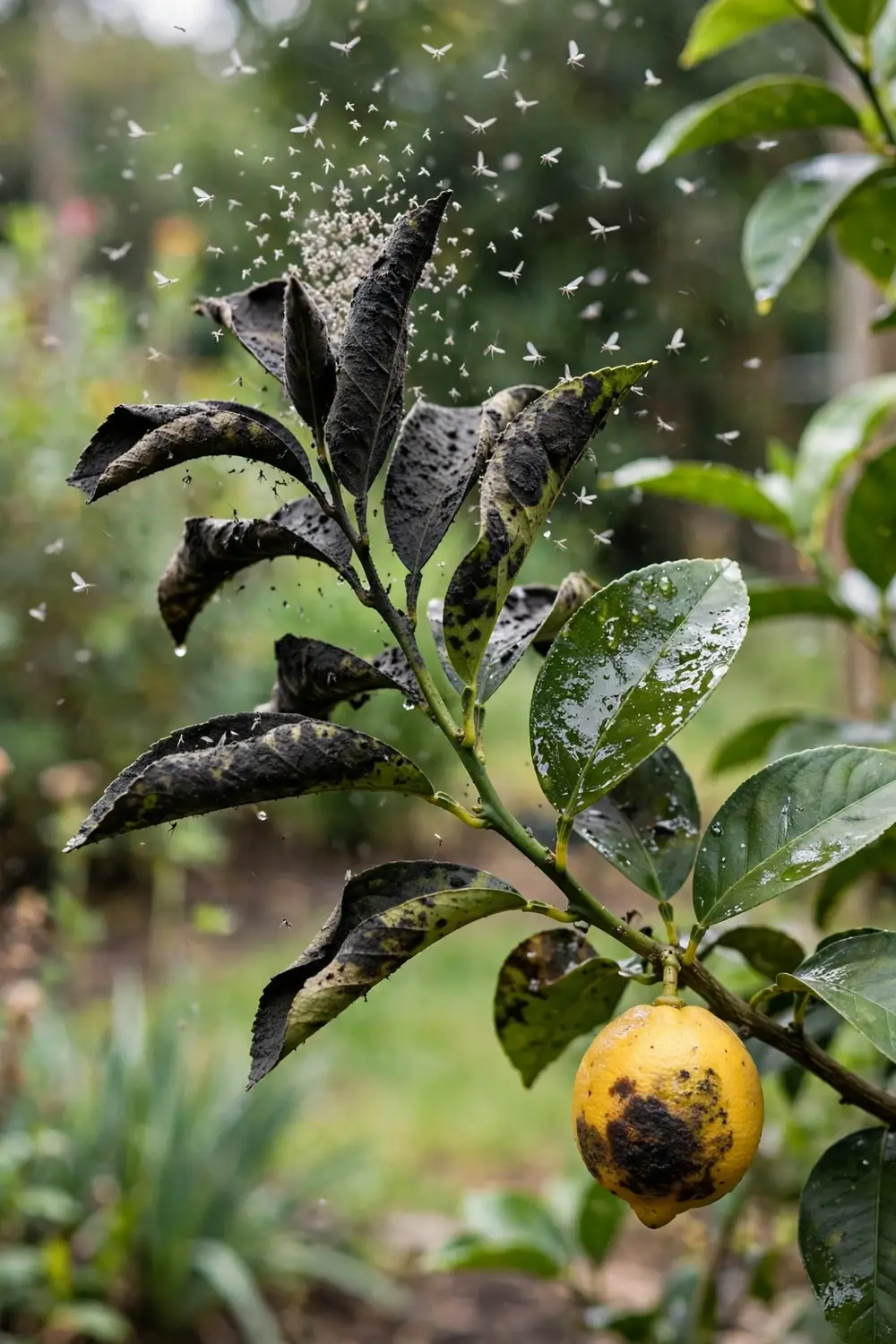
Sooty mould is a black fungal growth that lives on honeydew. Honeydew is the sticky sugary excretion that sap-sucking insects leave behind. Whiteflies feed on sap and excrete honeydew. The mould grows on the honeydew, not on the plant.
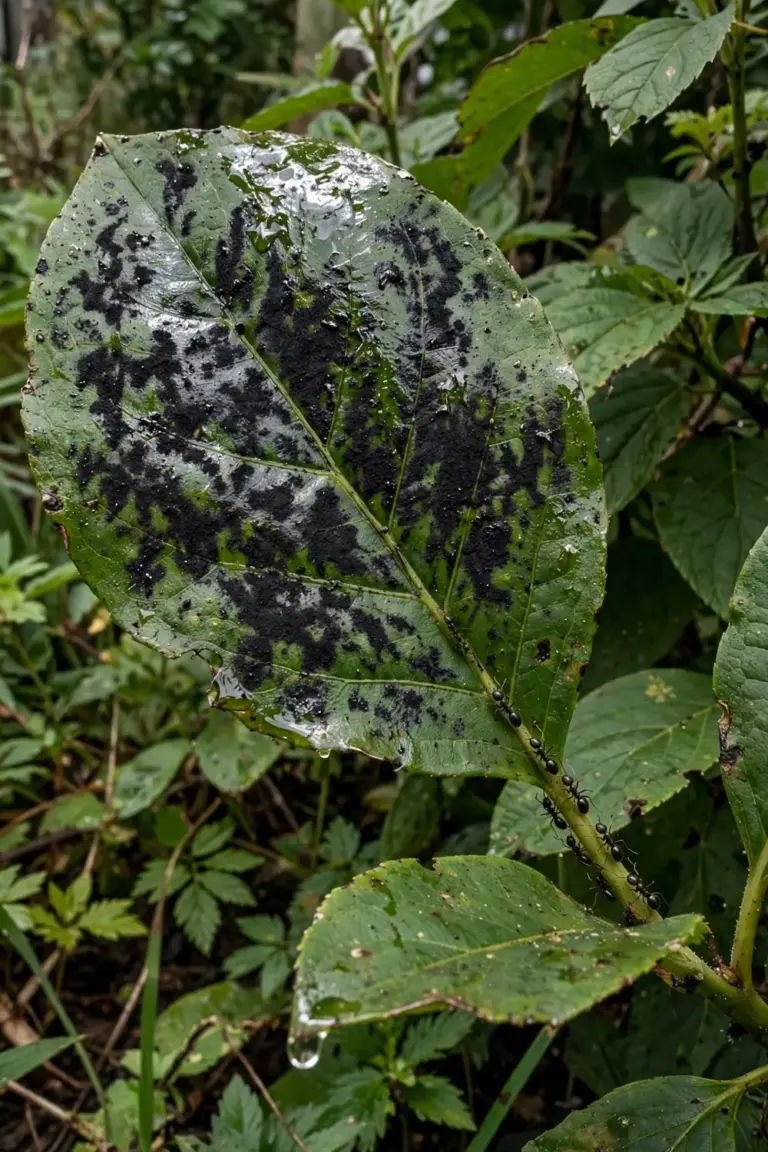
Treat the mould alone and it returns. Kill the feeder and the mould has nothing left to grow on. That order decides the whole job.
The chain costs the plant light. A leaf under a black coating catches less sun. Less sun means slower photosynthesis. Slower photosynthesis means slower growth and fewer flowers and fruit. The plant does not die from the mould alone. It weakens while the feeder keeps draining sap. Both halves of the chain hurt the plant at once.
Match the response to the load. A light dusting of mould with a few whiteflies needs a wash, a spray, and a weekly check. A plant coated black with clouds of adults needs the full program: wash, prune, spray on schedule, traps, and ant control. The diagnosis stays the same. The effort scales with the infestation.
| What You See | What It Means | First Move |
|---|---|---|
| Black soot on leaves | Mould growing on honeydew | Find the insect feeding above it |
| Sticky leaves or sticky ground under the plant | Fresh honeydew | Check the leaf undersides |
| A white cloud when you brush the plant | Adult whiteflies lifting off | Confirm nymphs on the undersides |
| Ants marching up the stems | Ants farming the honeydew producers | Cut ant access, then treat the feeder |
| Yellowing leaves under the black coating | Light blocked by the mould layer | Wash the mould after treating the feeder |
2. Confirm Whiteflies on the Undersides of Leaves
Whiteflies are tiny, sap-sucking insects that fly around plants when disturbed. Adults look like tiny white moths dusted with powder. Nymphs are oval, legless, and do not move. Nymphs cause most of the damage.
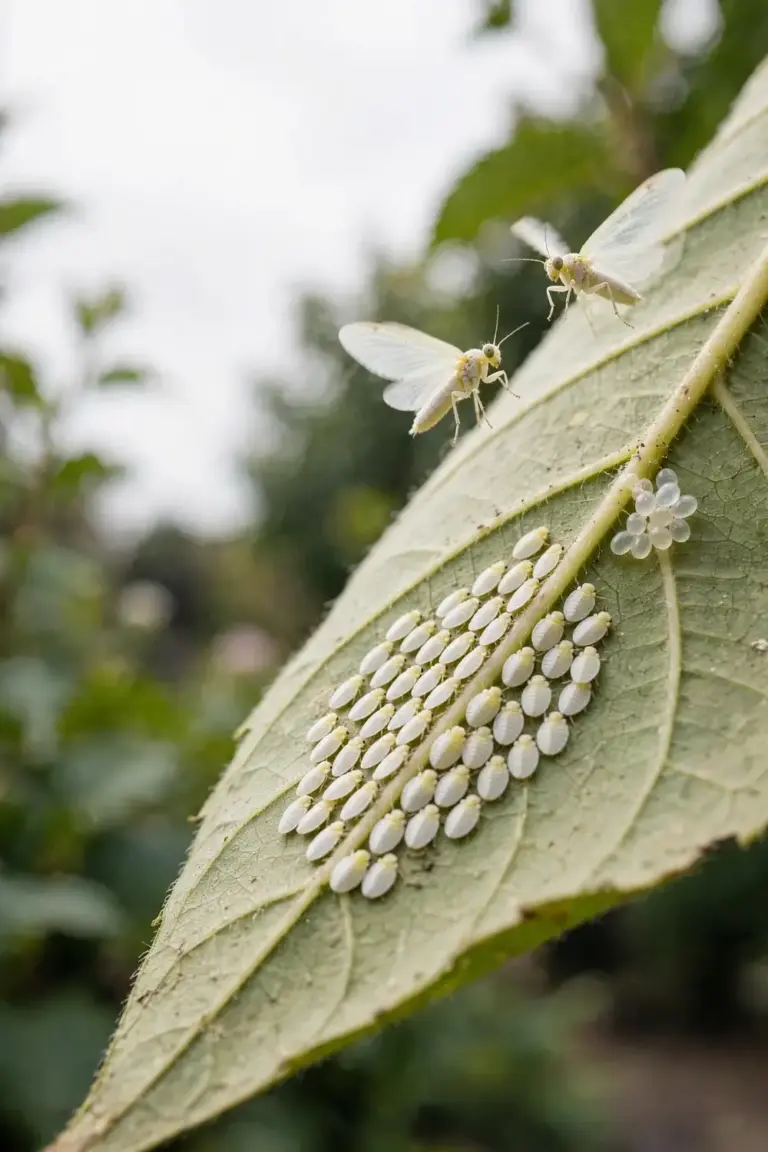
Start under the leaves, where whitefly adults rest and nymphs sit flat and pale, like tiny scales glued to the leaf. A hand lens helps. A leaf that looks clean from above can carry a full colony underneath, feeding quietly where you never look.
Nymphs pass through stages on the same leaf. Early nymphs crawl a short way, then settle and stop moving. Settled nymphs feed in place for the rest of their growth. That stillness makes them easy to miss and hard to dislodge. A finger wiped across a settled colony feels like a row of tiny bumps on the leaf. The bumps are the nymphs.
Adults live a different life. Adults fly. Adults lay the eggs that start the next colony. One adult female lays eggs across many leaves, so a small adult cloud can seed a wide infestation. Greenhouse whitefly is the species most home gardeners meet in Australia. Silverleaf whitefly shows up too, mostly on vegetables. The home treatment stays the same for both. Confirm the feeder, then treat the undersides.
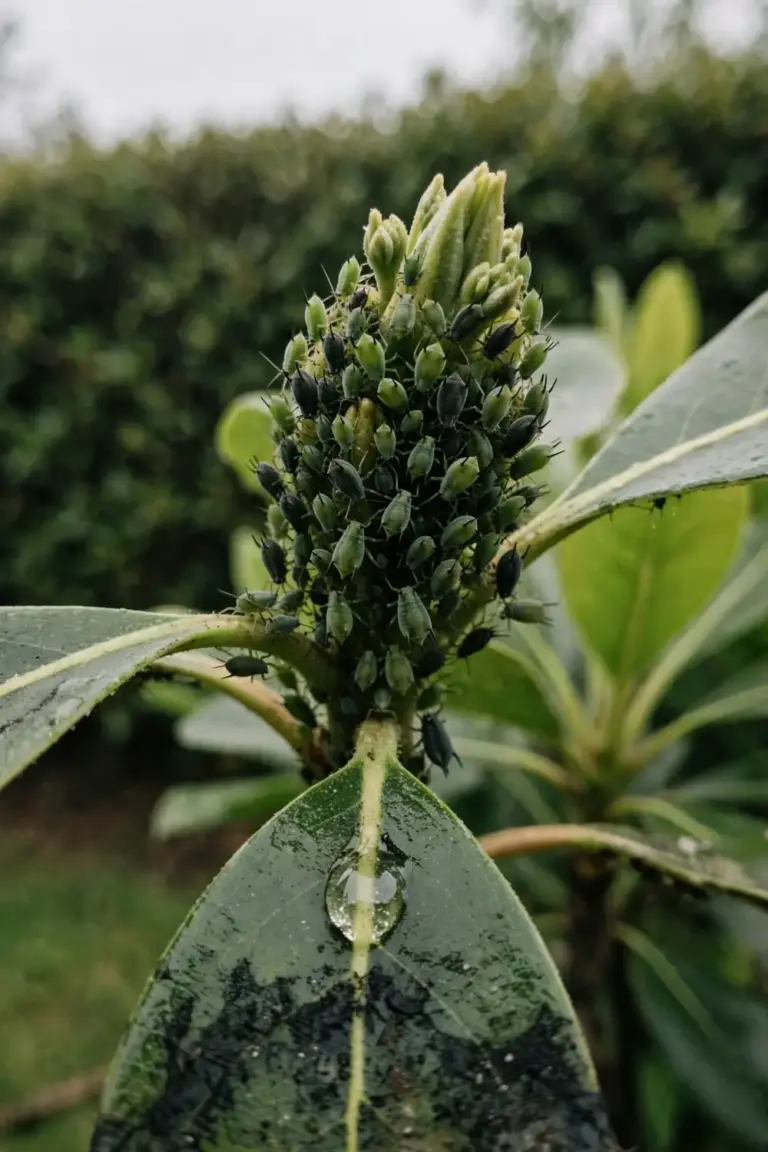
Tell whitefly honeydew from scale and aphid honeydew by the feeder, not the mould. Scale insects sit as bumps on stems and leaf veins and do not move. Aphids cluster on shoot tips and buds and stay put when brushed. Whitefly adults lift off in a cloud when brushed, and whitefly nymphs sit flat on the leaf undersides. Ants farm all three. The mould cannot tell you which one fed it. The undersides can.
Check the lowest leaves first. Nymphs settle low, where the air stays still and the leaves stay shaded. Adults move up as the colony grows. A plant with nymphs only on the lowest leaves holds a young colony. A plant with nymphs at every level holds an old one. The lowest leaves tell you how long the colony has been there.
Run the brush test: brush the foliage lightly with the back of your hand and watch. A white cloud lifting off the plant points at whiteflies. No cloud means the feeder may be scale or aphids instead. The mould looks the same either way, but the treatment changes with the feeder, so confirm before you spray.
UC IPM notes that whitefly signs include tiny nymphs on the undersides of leaves, sticky honeydew on leaves, fruit, or beneath plants, and a covering of black sooty mould. Yellowing, silvering, or drying leaves with nymphs on them round out the picture. Match two signs before you commit to a whitefly plan.
3. Name the Black Coating for What It Is: Sooty Mould
Sooty mould is a fungus that grows on honeydew, and it does not infect the plant. The coating blocks sunlight from the leaf surface. A leaf that cannot catch light cannot photosynthesize well, so growth slows, leaves yellow early, and leaves drop.
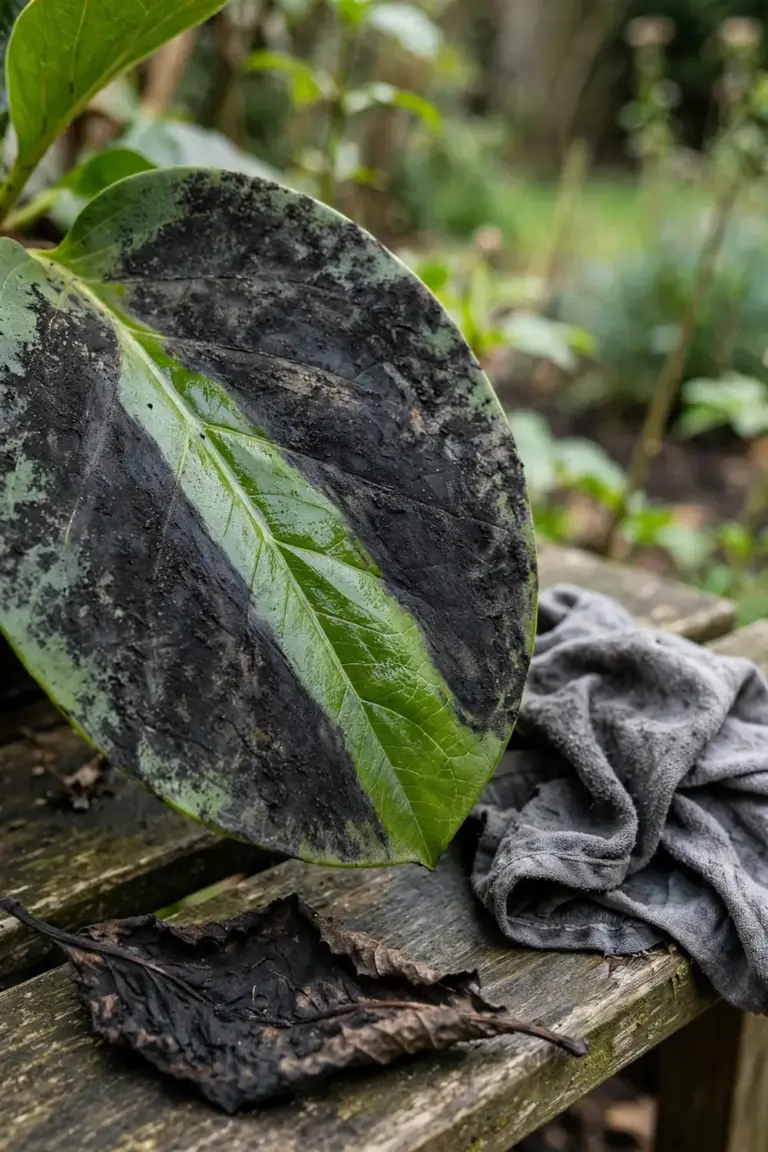
The name comes from the look. The dark threadlike growth of the fungi resembles a layer of soot. The coating sits on the surface. It wipes off. A disease that lives inside the leaf tissue does not wipe off. That wipe test separates sooty mould from leaf spot and other tissue diseases.
Mould spreads wherever honeydew lands. Honeydew drips from the feeding colony onto the leaves below. It coats stems and fruit. It coats furniture and paving under a heavily infested tree. Every blackened surface traces back to the same feeder. Wash the surfaces after the feeder numbers drop. Washing before that point only resets the clock, because fresh honeydew lands on the clean leaf within days.
Mould stays after the feeder leaves. A colony killed by spray or predators stops producing honeydew, yet the old mould dries on the leaf and stays black until rain or washing removes it. Old mould on a clean leaf means history, not a live infestation. Check the undersides for the truth: no nymphs and no fresh honeydew means the feeder is gone and the mould is leftover. Wash it off and move on.
Powdery mildew looks different. It shows as a white powder on the leaf surface. Sooty mould shows as black. Aphids, psyllids, mealybugs, scale, and whiteflies all excrete honeydew. Any of them can feed a mould coating. This page covers the whitefly-driven chain. If the undersides hold scale bumps or aphid clusters instead of whitefly nymphs, the feeder is different and the treatment changes with it.
Indoor plants grow the same chain on a smaller scale. A whitefly colony on a potted citrus or hibiscus by a bright window drips honeydew onto the leaves below and the sill beneath. The treatment stays the same. Wipe the leaves with mild soap and water, spray the undersides, and re-check weekly. Indoor colonies spread fast because no predators reach them, so start the sprays at the first sign of honeydew.
UC Agriculture and Natural Resources states that sooty mould grows on plants and other surfaces covered with honeydew, and that the mould does not infect plants but can indirectly do damage by coating leaves to the point that sunlight cannot reach the leaf surface. Fruit or vegetables covered with sooty mould stay edible. Wash the mould off with mild soap and warm water.
4. Wash the Mould Off With Soap and Water
Wash the mould after you confirm the feeder, not before. Washing first gives a clean leaf for a day. The feeder keeps excreting honeydew. The mould grows back on the fresh honeydew. Treat the feeder in the same session as the wash, or wash after the first spray.
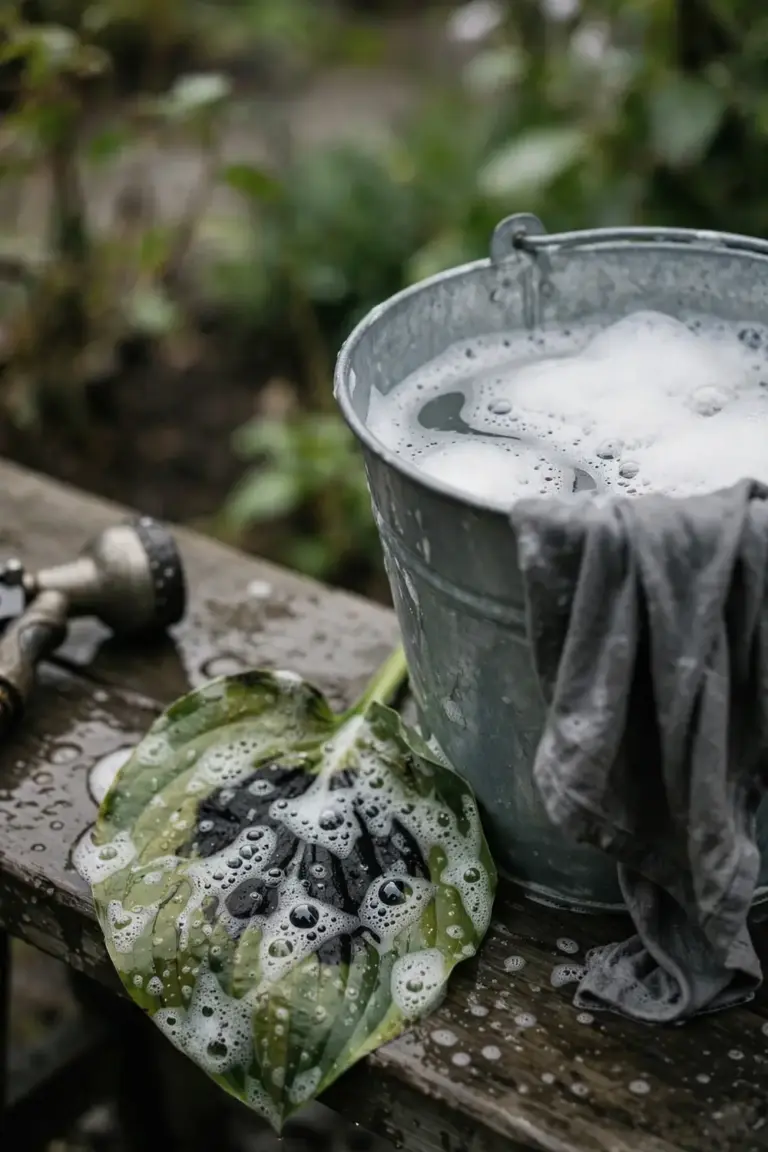
Use mild soap and warm water on fruit and vegetables. Use a strong stream of water on sturdy foliage. Wipe soft leaves by hand with a damp cloth. Work from the top of the plant down so dirty water falls on leaves you have not cleaned yet. Rinse with clean water after the soap pass.
Gather three things before you start: a bucket, a soft cloth, and a hose with a spray nozzle. The bucket holds the soapy water. The cloth does the wiping. The hose does the rinsing. A potted plant can move to a spot where dirty water falls on paving instead of the bed. An in-ground tree needs a rinse that carries the wash water away from the root zone, not into it.
Run a two-pass wash on heavy mould. The first pass loosens the coating. The second pass lifts what the first pass left. A single pass smears thick mould across the leaf. Two passes clear it. Rinse the cloth in clean water between passes so you stop wiping old mould onto clean leaves. Clean the tools when you finish. A cloth left dirty carries mould and honeydew to the next plant it touches.
Prune the worst growth. A branch coated solid black with mould and crawling with nymphs costs more effort to clean than it returns. Cut it out. Bag the prunings. Do not compost fallen leaves from a mouldy plant. Compost piles do not run hot enough in a home heap to be worth the risk of carrying the problem back to the bed.
Skip fungicide. Sooty mould is not a disease feeding on the plant, so a fungicide has nothing to kill. The fix is the feeder, not the fungus.
5. Control Whiteflies With Soap, Oil, Traps, and Beneficials
Control starts with the leaf undersides. Every spray must reach them. A spray that lands only on the tops of leaves misses the nymphs doing the feeding. Spray in the cool of the day, when the spray stays wet long enough to coat the nymphs. Hot sun on wet leaves burns tissue.
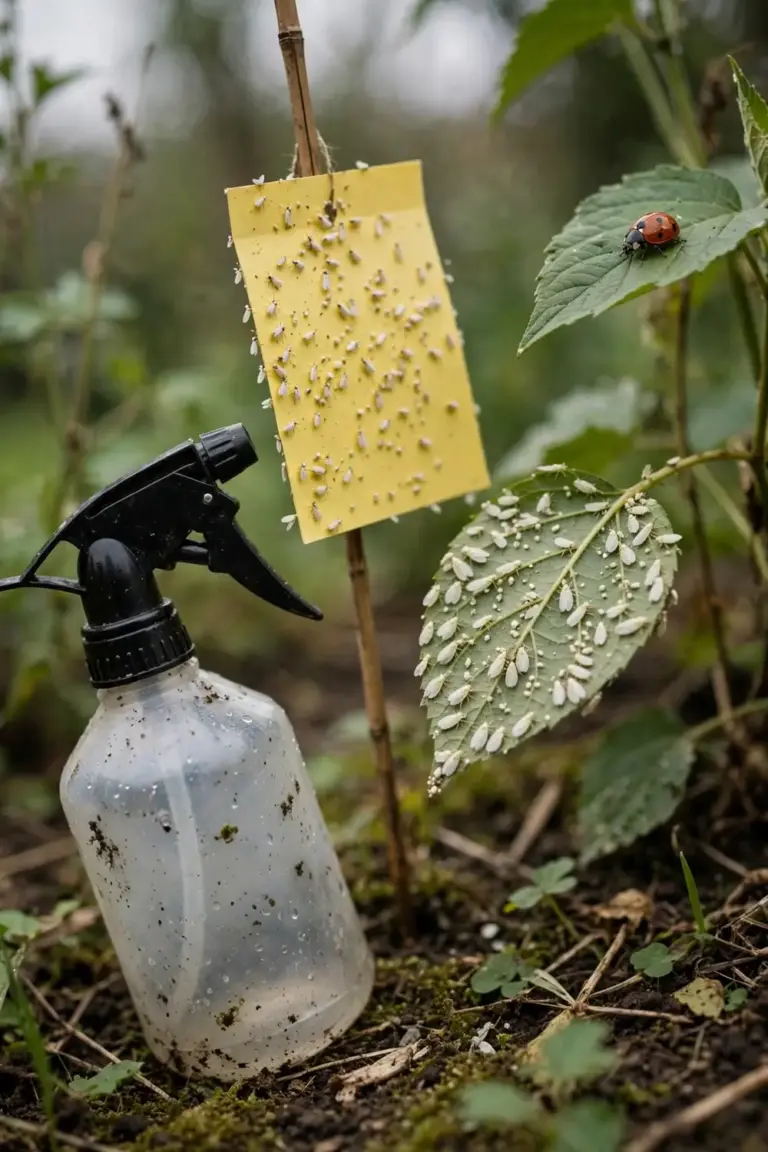
Hose the adults off first. A strong stream of water knocks adults off the plant. It also washes off honeydew and loose mould. Prune out isolated infested leaves when you first detect them. Early pruning removes a colony before it spreads across the plant.
Spray soap or oil next. The Pacific Pests guide to sooty moulds recommends soap sprays at 5 tablespoons of soap in 4 L of water, or 2 tablespoons of dishwashing liquid in 4 L of water, and commercial white oil to kill the sap-sucking insects. The sprays work by blocking the breathing holes of insects, causing suffocation and death. The oils must contact the insects to work, so a pass across the tops of leaves alone wastes the spray.
Use horticultural oil or white oil the same way. Oil coats the nymphs, suffocates them, and smothers eggs. Coverage decides the result, because oil works only where it lands. Repeat the spray on the schedule the label gives. One pass rarely ends an infestation, since eggs keep hatching after the spray dries and each new hatch restarts the cycle.
Vacuum the adults on a small plant in the early morning, when the cool air leaves them slow. Missouri Extension describes vacuuming adult whiteflies with a small hand-held vacuum, then placing the vacuum bag in a large plastic bag and freezing it for 24 hours to kill the insects. Vacuuming helps most when an infestation is just starting and the adults have not laid many eggs. It cuts the egg load before the first spray.
Hang yellow sticky traps to catch adults and track numbers. Missouri Extension recommends one trap for every two large vegetable plants, and warns that traps used outdoors may catch whitefly natural enemies, so it advises using traps when whiteflies first appear and removing them when the population drops. Traps cut adult numbers. Traps do not cure an infestation on their own. Read them as a gauge. Falling trap counts mean the sprays and the predators are working. Protect the predators. Ladybirds, lacewings, and parasitic wasps in the Encarsia genus all attack whiteflies. UC IPM whitefly guidance names these natural enemies as the force that keeps whitefly numbers down when broad insecticides stay out of the garden. A garden sprayed with a broad insecticide kills the predators with the pest. The whiteflies return first because they breed faster than their enemies. Hold the broad sprays. Let the predators work.
Encarsia wasps work quietly. A female wasp lays one egg inside a whitefly nymph. The wasp larva eats the nymph from the inside. The parasitized nymph turns dark and hard. A leaf with many dark nymphs holds a working wasp population. Leave those nymphs alone. They are already dead, and the wasps inside them are the next generation of control. Buying wasps helps in a glasshouse. Outdoors, conserving the wild ones already present usually does more. Skip the broad spray and the wasps do the job for free.
Reserve any insecticide for spot use and follow the label. A spot spray on one crawling branch kills the colony there without stripping the whole garden of predators. A blanket spray across every plant kills the predators everywhere. The whiteflies come back to a garden with no enemies left. That is how a small problem becomes a season-long one.
Spray in the cool of the day, when the spray stays wet long enough to coat the nymphs. Early morning or late afternoon beats hot midday. Hot sun on wet leaves burns tissue, and spray dries too fast to coat the nymphs well. Skip open flowers when you spray. Open flowers feed bees and other pollinators, and a spray pass across them wastes product on the wrong target. Aim at the leaf undersides, where the nymphs feed.
Missouri Extension notes that wiping out a whitefly population usually takes four to five applications of a registered insecticide at five- to seven-day intervals. Soap and oil need the same rhythm. The eggs and the nonfeeding pupae shrug off most sprays. Repeat passes catch each new hatch before it lays eggs of its own. Miss a pass and the cycle restarts. For a fuller organic framework, the site’s organic pest control for beginners guide lays out the same spray-then-repeat rhythm across common garden pests.
6. Check Citrus, Hibiscus, Gardenia, and Roses First
Whiteflies pick soft new growth. Check the flush first. New leaves, buds, and shoot tips carry the heaviest colonies. Old hard leaves carry fewer.
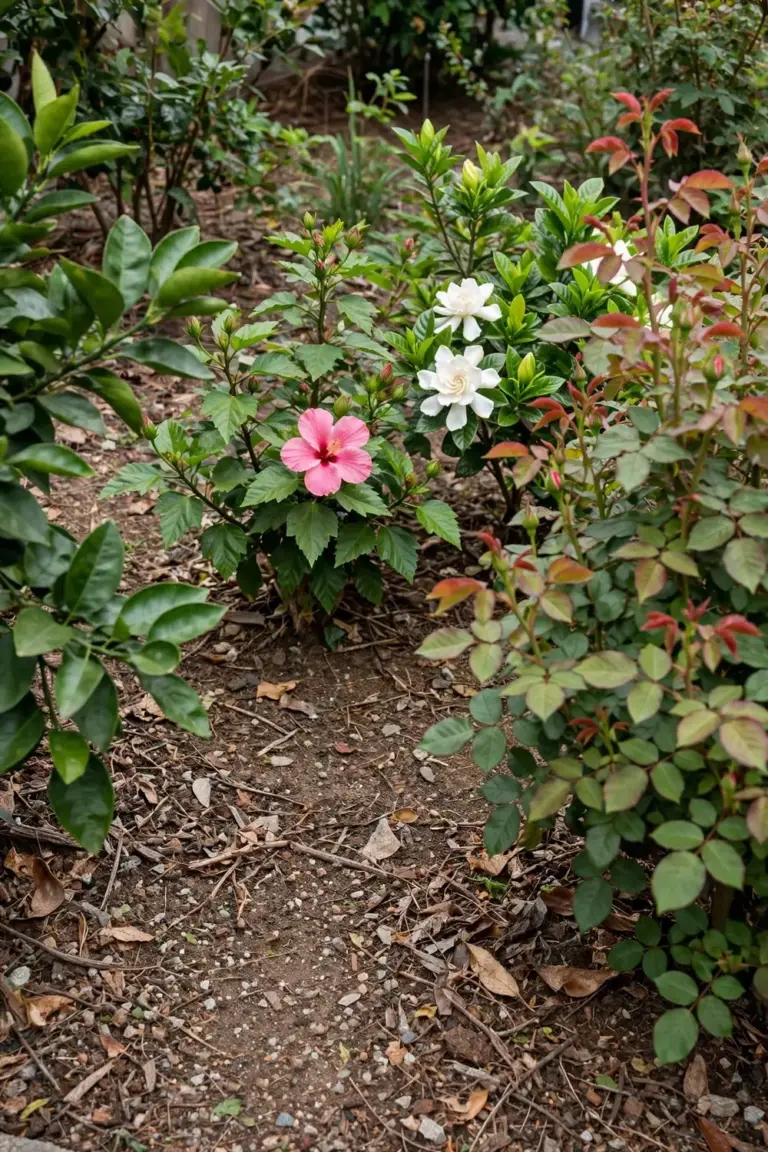
Citrus comes first in most Australian gardens. Lemon, orange, and mandarin trees push soft flushes through the warm months. Whiteflies settle on the flush. Honeydew drips onto the leaves below. The mould follows the drip line. Check the flush, then check the leaves underneath it. Check the fruit too. Fruit under a dripping colony wears the mould on its rind. The fruit stays edible after washing, but the rind tells you where the colony sits above it.
Hibiscus runs second. Hibiscus pushes soft growth fast and holds it through the warm season. Whiteflies gather on the buds and the young leaves. A hibiscus in full flush can hide a large colony behind a healthy-looking front. Part the foliage. Look at the undersides. Buds that fail to open deserve a close look, since a heavy nymph load on the bud can stall it.
Gardenia follows the same pattern. Gardenia leaves are thick and glossy. Honeydew shows as a shine before the mould shows as black. A glossy leaf that feels tacky is a leaf with honeydew on it. Check the undersides before the black arrives. Gardenia flowers hide colonies too, so check behind the blooms as well as under the leaves.
Roses carry whiteflies on the soft tips and the buds. Roses also carry aphids on the same tips. The two feeders look different. Whitefly adults lift off in a cloud when brushed. Aphids stay put. Confirm the feeder before you spray. The mould treatment stays the same. The insect treatment does not.
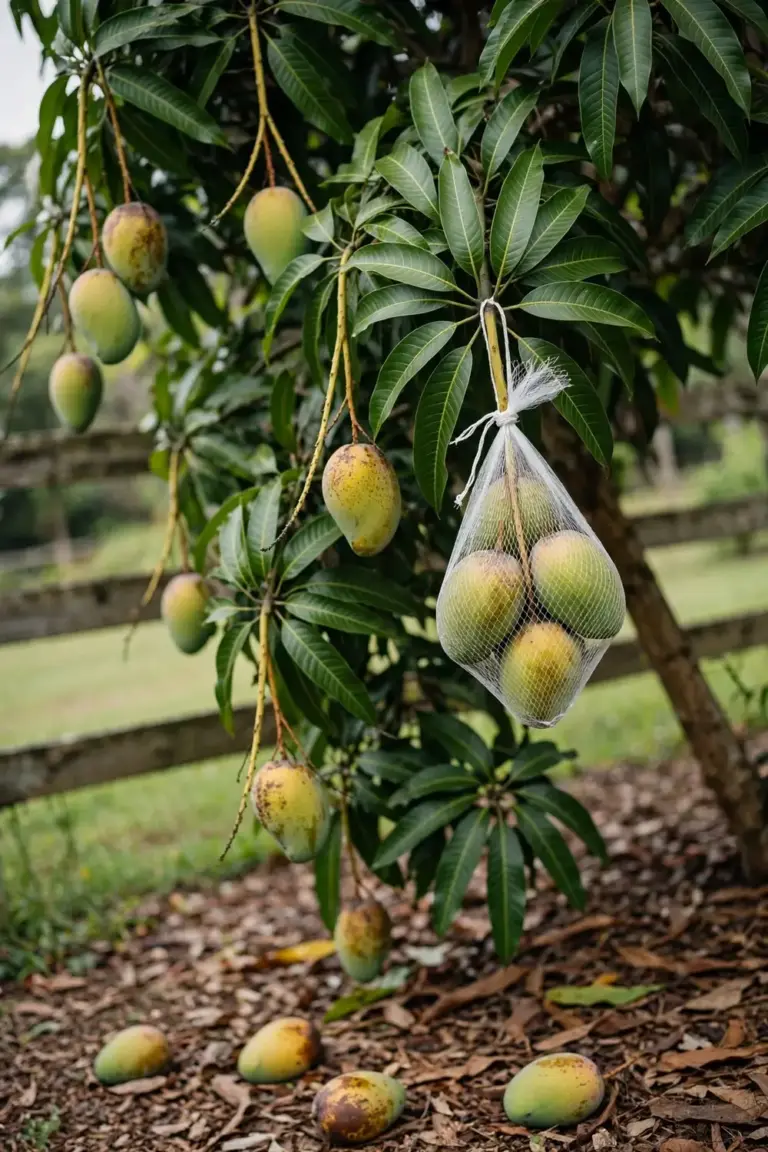
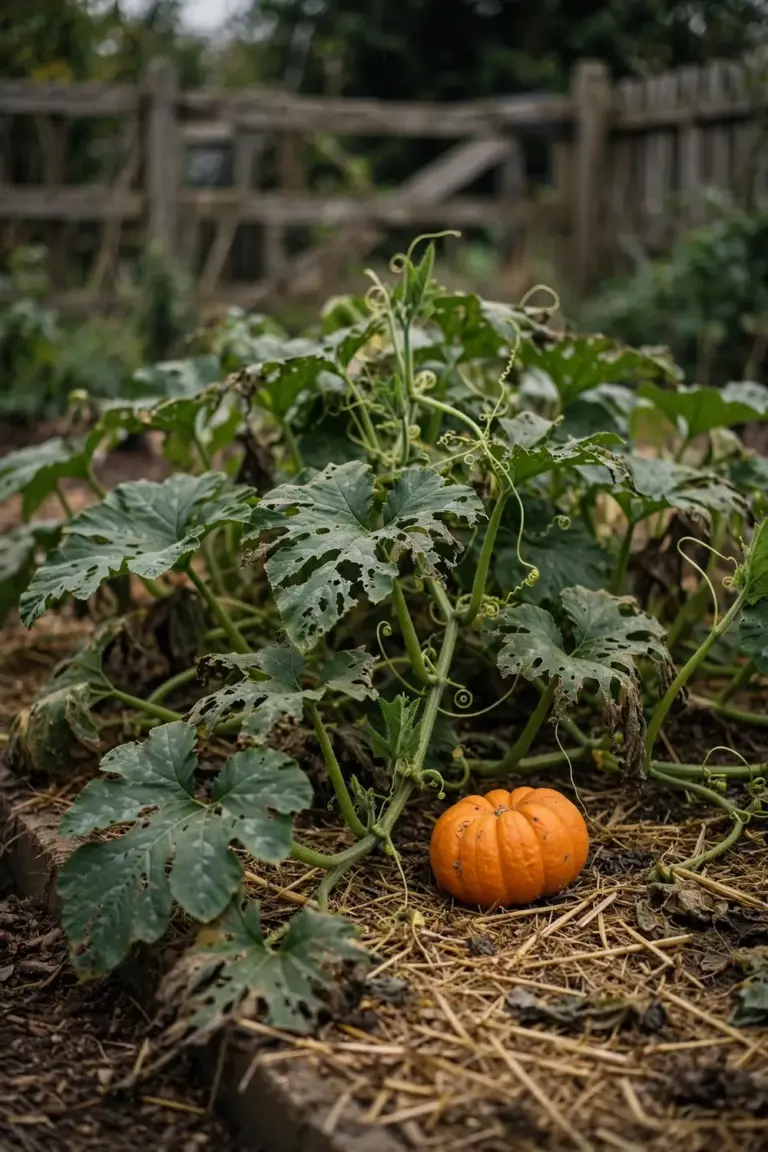
Mango and other ornamentals and vegetables can host whiteflies too. Tomato, capsicum, cucumber, and zucchini all sit on the host list for greenhouse whitefly. The check stays the same everywhere. Soft new growth first, leaf undersides second, honeydew third. One check routine covers every host.
Check the neighbours after you check the worst plant. Whitefly adults fly to the next plant when the first one gets crowded or sprayed. A clean citrus tree beside a crawling hibiscus will not stay clean long. Walk the whole bed, not one plant. Treat every plant that shows nymphs. The colony you skip becomes the source of the next outbreak.
7. Re-Check Weekly So the Pair Does Not Return
Re-check the leaf undersides every week until two clean checks in a row. A clean check means no nymphs, no fresh honeydew, and no new mould. One clean check can be luck. Two in a row means the cycle broke. A clean check takes five minutes on a small plant and a little longer on a tree. Work the same route each time, from the lowest leaves up, so no plant gets skipped.

Write the checks down. A notebook line per plant, with the date and what you saw, beats memory. Memory forgets which plant was clean and which was crawling. The notebook shows the trend. Falling numbers mean the plan works. Rising numbers mean a pass got missed or a neighbour plant is feeding the colony.
Start over cleanly if the numbers rise for three checks in a row. Go back to the wash, then the spray, then the traps. Check the neighbour plants again. Look for an ant bridge you missed. A rising trend means the plan has a hole, not that the plan failed. Find the hole.
Time the effort to the warm season. Whiteflies breed fastest in warm weather and slow down in the cool months. A colony found in late autumn may sit quiet through winter and explode with the spring flush. Keep the weekly check through the warm season, when new flushes give whiteflies fresh food. Ease off when the cold slows them, but do not stop entirely. One winter check a month catches a colony before spring.
Cut ant access while you re-check. Ants protect honeydew producers from predators and parasites so they can harvest the honeydew. A sticky compound around the trunk keeps ants out of the canopy. Prune limbs that touch buildings or fences so ants lose their bridges. Once ants leave, predators and parasites move back in and start feeding on the whiteflies.
Feed the plant for steady growth, not a flush. Heavy feeding pushes soft growth that whiteflies prefer. Water and fertilize to keep the plant healthy without pushing excessive soft growth. Strong plants carry a small whitefly population without a mould outbreak. Weak plants and overfed plants both invite one. For the soil side of that balance, the site’s soil health guide covers the feeding and watering rhythm that keeps plants steady.
Plant for predators. Companion planting for pest control covers the flowering plants that feed ladybirds, lacewings, and parasitic wasps between pest cycles. Predators that stay in the garden catch the next whitefly arrival early. A garden with nowhere for predators to live starts every outbreak from zero.
Frequently Asked Questions About Sooty Mould and Whiteflies
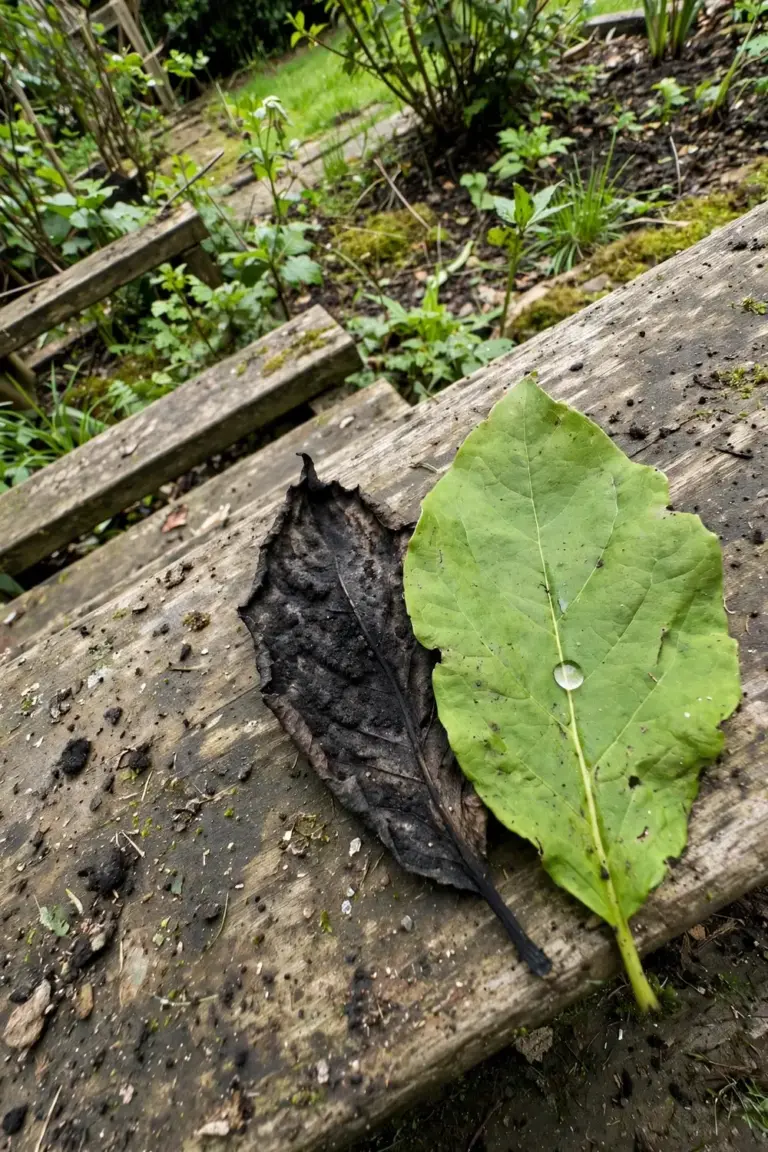
Yes. Sooty mould grows on honeydew on the fruit surface. It does not infect the fruit. Wash the fruit with mild soap and warm water before eating. Peel citrus and other thick-skinned fruit as usual. Discard any fruit that is soft, rotting, or damaged underneath the coating, since that damage is separate from the mould.
No. Sooty mould is a fungus growing on honeydew, not a disease feeding on the plant. A fungicide has no plant disease to kill. The mould returns as long as the feeder keeps excreting honeydew. Spend the effort on the whiteflies. Wash the mould off with soap and water after the feeder numbers drop.
The feeder is still there. Washing removes the mould and the honeydew it grew on. It does not remove the whiteflies. Fresh honeydew lands on the clean leaf within days. The mould regrows on the fresh honeydew. Wash and spray in the same session, then repeat the spray until the undersides stay clean.
No. Traps catch flying adults and show how heavy the pressure is. They do not reach the nymphs feeding on the leaf undersides. Nymphs cause most of the damage and lay the next generation. Use traps as a gauge next to soap or oil sprays, not as the cure. Falling trap counts mean the sprays and the predators are working.
Check the leaf undersides every week. Look for nymphs, fresh honeydew, and new mould. Keep spraying on the label schedule until the undersides stay clean. Stop when two weekly checks in a row show no nymphs and no fresh honeydew. A single clean check can miss eggs that hatch after the spray dries.
Get Rid of Sooty Mould and Whiteflies by Killing the Feeder First
The chain runs one way. Whiteflies feed, honeydew falls, mould grows. Break the chain at the feeder and the rest follows. Confirm the whiteflies on the leaf undersides. Wash the mould off with soap and water. Spray soap or oil onto the undersides on a repeat schedule. Hang a trap to track the adults. Re-check weekly until two clean checks in a row. Start at the undersides today, and the black coating stops coming back.
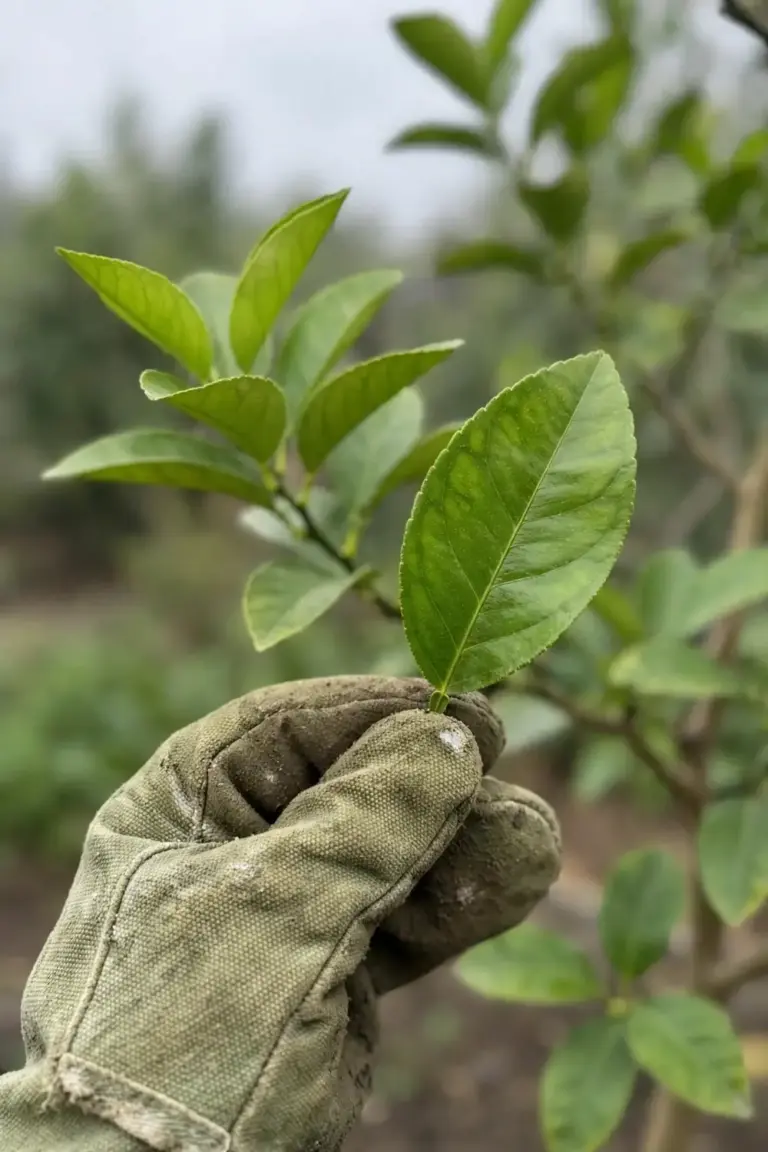
The real payoff is a routine that keeps every plant clean. One clean plant is a moment. A routine is a season.