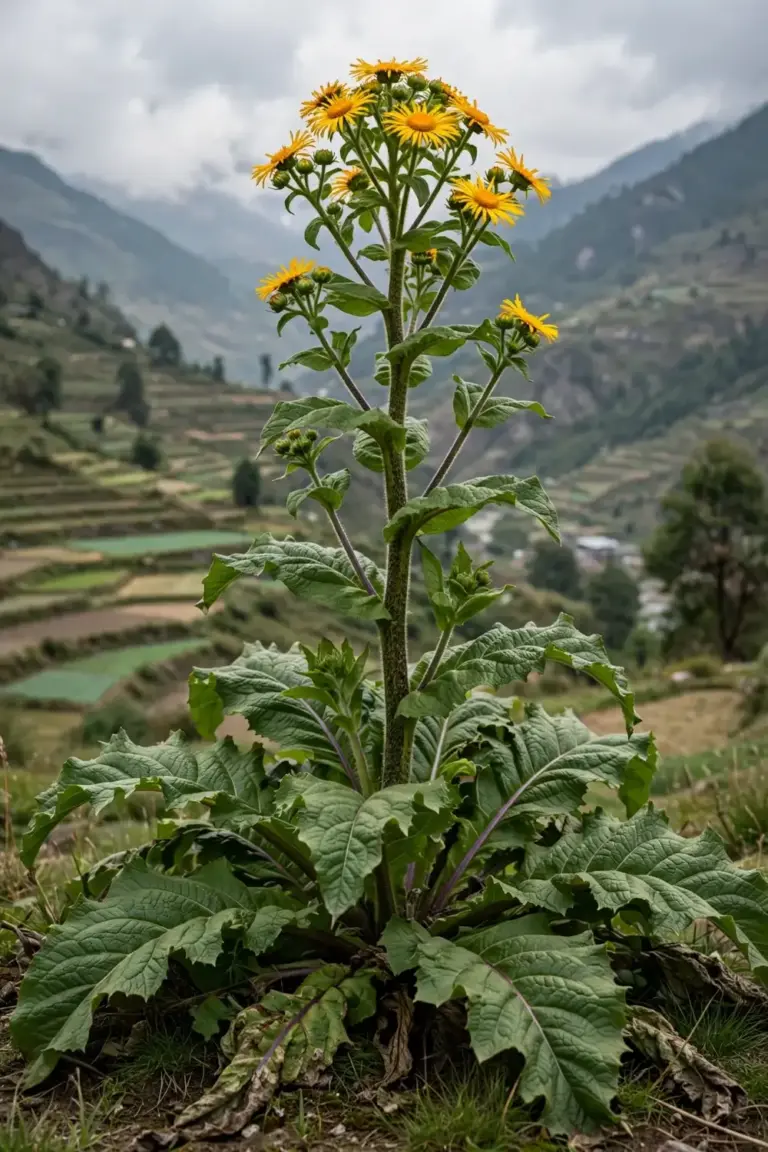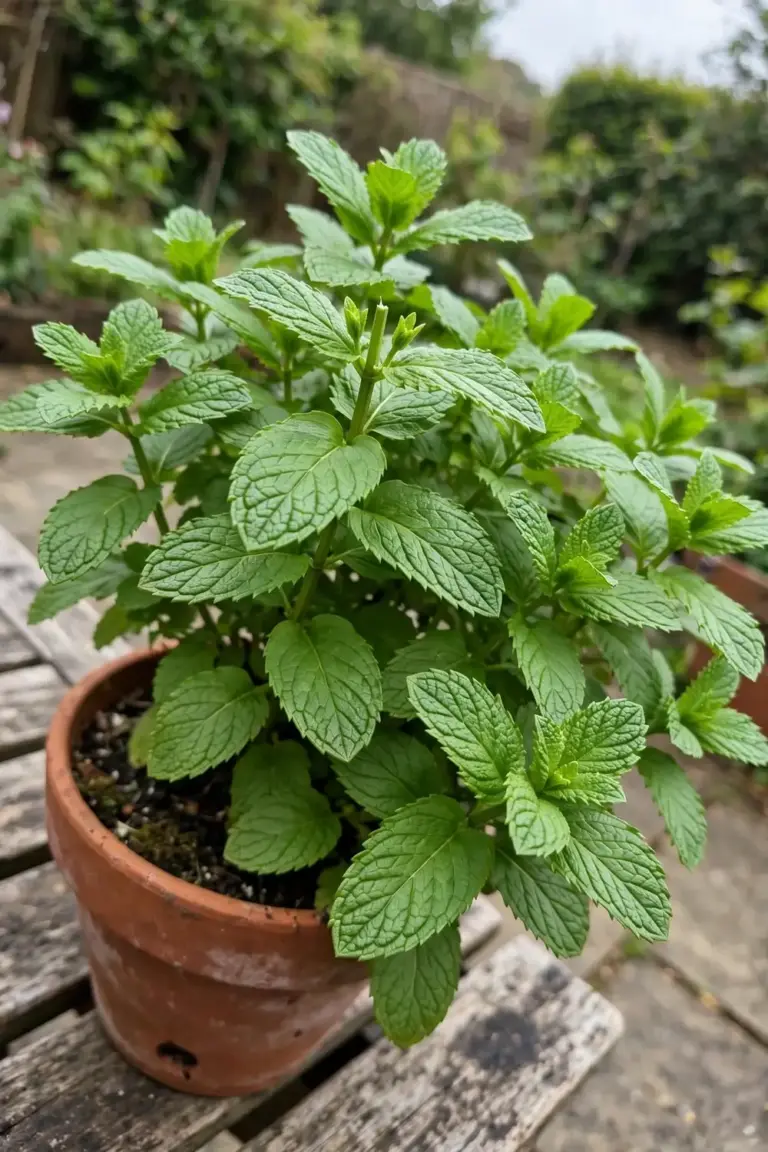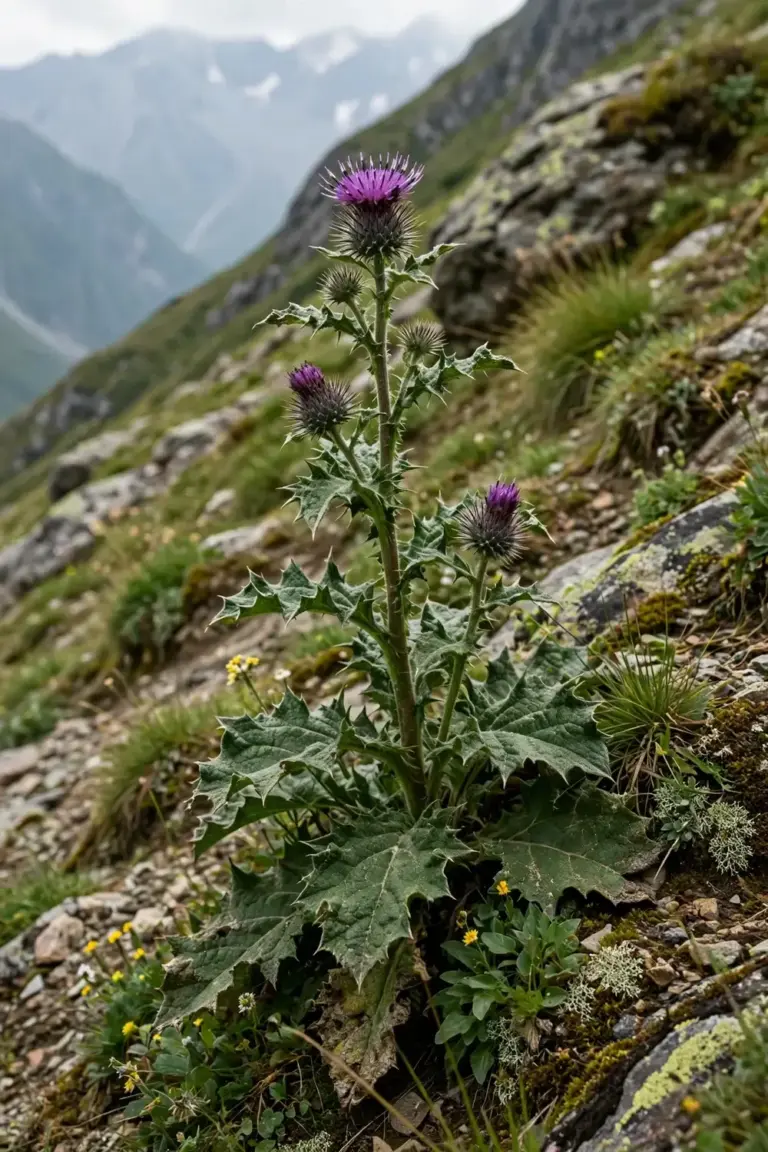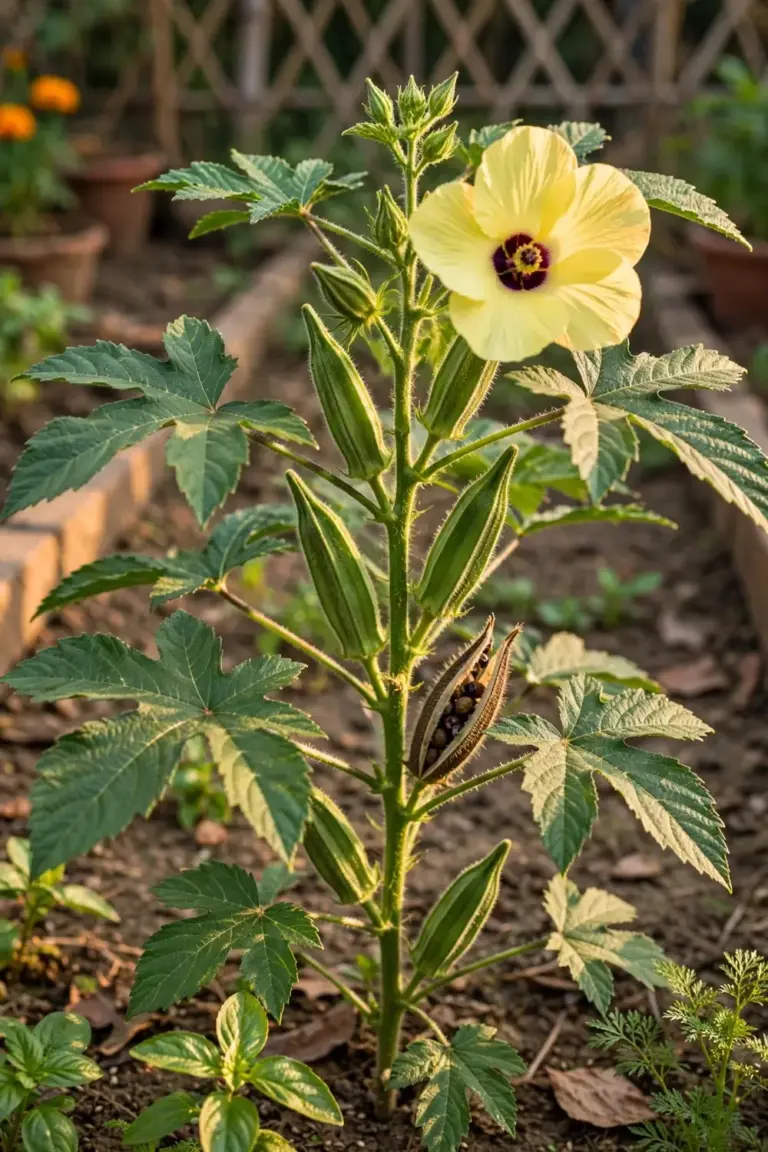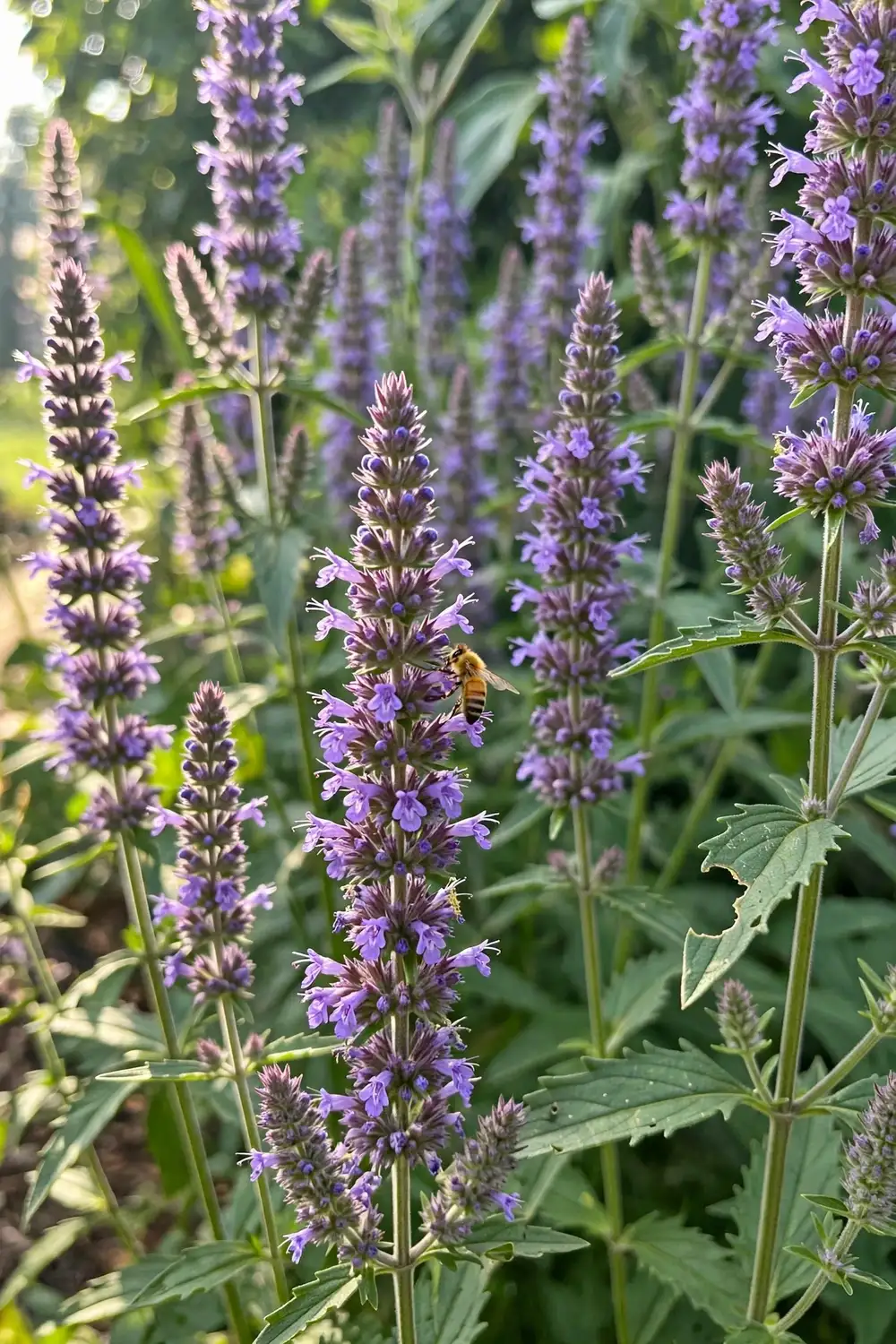

Sow a pinch of dust-fine seed on the surface of moist soil, leave it uncovered, and in 1 to 3 weeks you will have the starts of jing jie, the Chinese medicinal herb sold as “Japanese catnip.” Learning how to grow schizonepeta takes one season of about 120 days from seed to harvest, asks for nothing fancier than sun and ordinary soil, and ends with the first hard frost. That last fact matters more than anything else here, because half the sellers on the internet will tell you it is a perennial. It is not.
1. Climate and Location: Where Schizonepeta Thrives
Schizonepeta grows as a summer annual in every USDA zone, because it does not need to survive winter. It completes its life in one season: germinate in spring, flower in late summer, set seed, and die when hard frost arrives. That single-season habit is actually good news for cold-climate gardeners. You do not need to overwinter it, protect it, or gamble on hardiness. You only need a frost-free window of about 120 days, which every zone from 3 to 10 can provide.
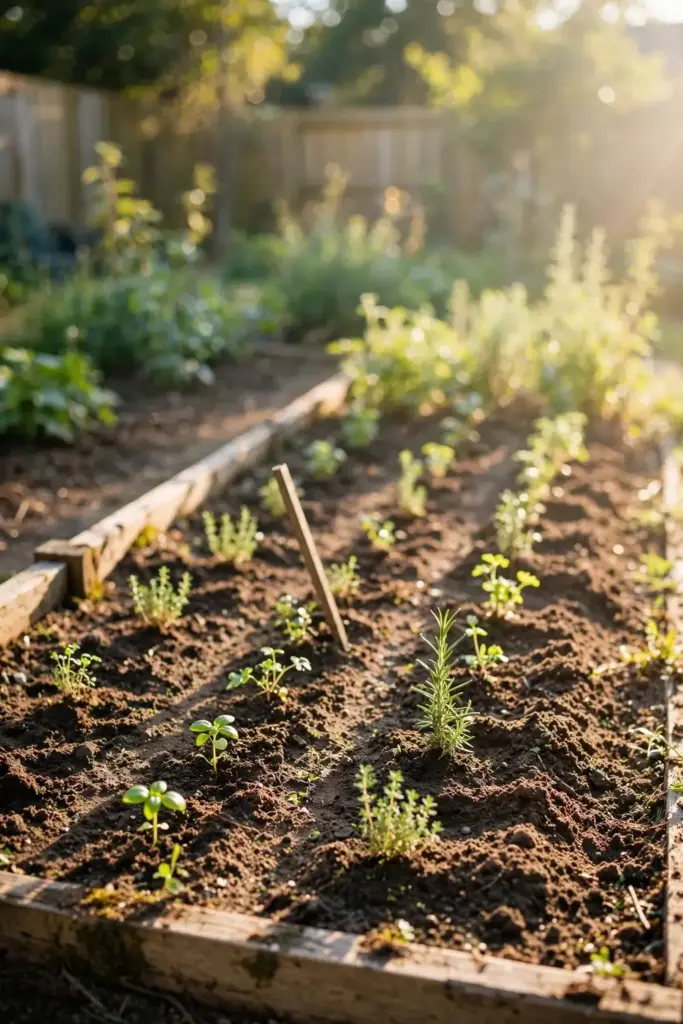
Give it full sun for the sturdiest plants and the strongest aroma. It tolerates a half day of shade, but shaded plants grow lanky, flower weakly, and produce less of the volatile oil that makes the herb worth growing. In hot climates, afternoon shade is a fair trade, because sustained heat above the mid 80s slows growth. Site it where the morning sun hits early and dries the foliage, and you will prevent most of the problems this plant ever has.
2. Schizonepeta vs Catnip: The Disambiguation Table
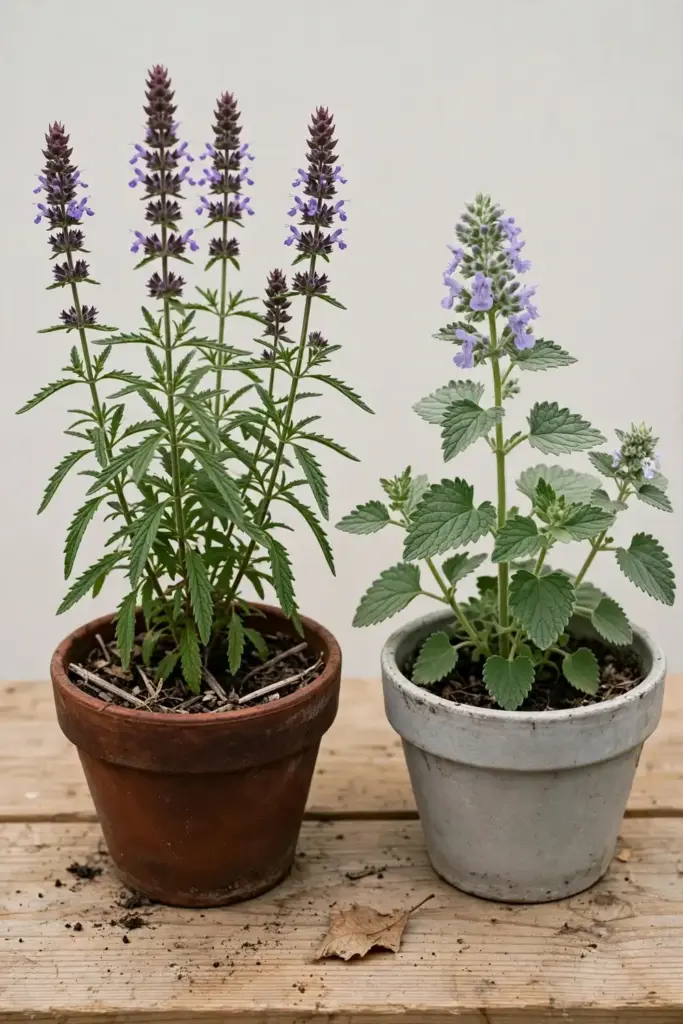
The nickname “Japanese catnip” has done this plant no favors. It is not catnip, it does not excite cats, and it belongs to a different genus entirely. Read this table once and you will never confuse them again.
| Feature | Schizonepeta (Jing Jie) | True Catnip |
|---|---|---|
| Botanical name | Schizonepeta tenuifolia | Nepeta cataria |
| Genus | Schizonepeta | Nepeta |
| Common nickname | Japanese catnip (commercial name) | Catnip, catmint |
| Life cycle | Annual: dies at first hard frost | Perennial: returns every spring |
| Effect on cats | None: no euphoric response | Strong euphoric response |
| Key chemistry | Menthone, pulegone, limonene | Nepetalactone |
| Traditional use | Jing jie in Chinese herbalism | Cat toys, mild tea herb |
| Height | About 2 to 4 feet | About 3 to 4 feet |
The two share a family (Lamiaceae, the mints) and a vague family resemblance in the flower spikes, and the similarity ends there. If you buy seed labeled “Japanese catnip,” check the Latin name on the packet. Schizonepeta tenuifolia is the right plant. Anything labeled only Nepeta is regular catnip. Gardeners who want a cat-attracting plant should read the complete catnip guide instead, which covers true catnip from seed to harvest in full detail: How to Grow Your Own Catnip from Seed.
3. Annual, Not Perennial: Correcting the Sellers
Here is the correction this guide exists to make. Google’s AI Overview shows seed product cards labeled “Perennial.” Bing’s Copilot calls schizonepeta “a fragrant perennial herb.” Seed sellers list it as a “purple flowering perennial.” All of them are wrong, and the error is not harmless. A gardener who believes schizonepeta is perennial will skip succession sowing, wait for a plant that never returns, and conclude the crop failed.
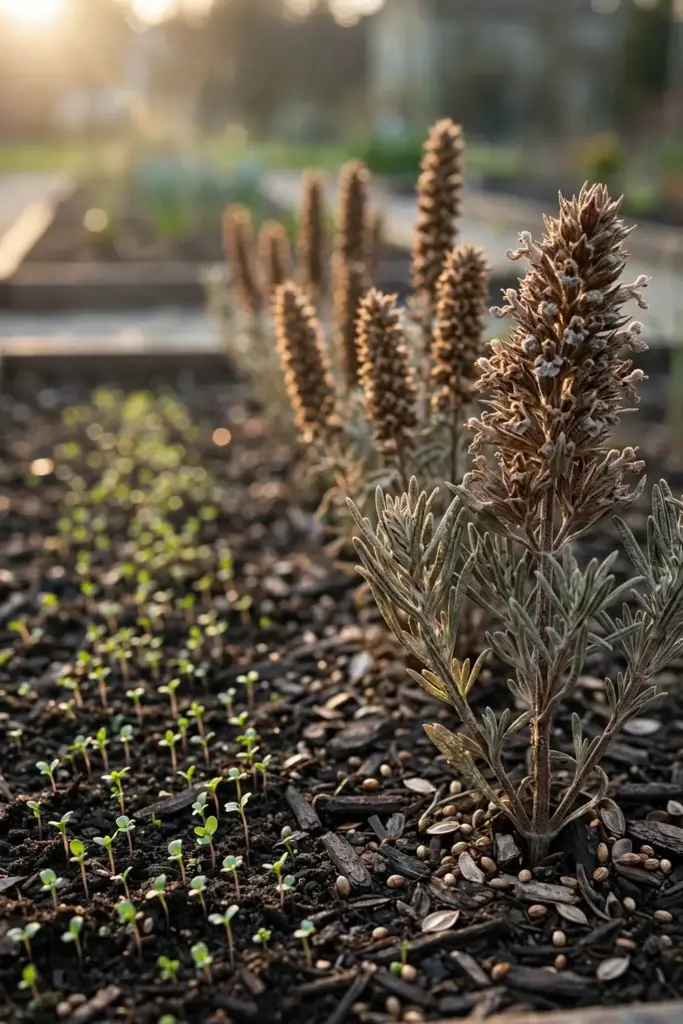
The botanical record is unambiguous. Schizonepeta tenuifolia is an annual herb: it germinates, flowers, sets seed, and dies in a single growing season, taking about 120 days from sowing to maturity. Two seed specialists, Strictly Medicinal Seeds and Gardener’s Basic Seeds, label it “Annual” outright. The perennial label appears to have spread because the plant self-sows readily. Seedlings that pop up next spring where last year’s plants stood look like a perennial returning, but they are new plants from dropped seed, not regrowth from the same roots.
Plan your season around the truth. You will sow it fresh every spring, and you will succession-sow every 2 to 3 weeks if you want a continuous supply. Treat it like basil, not like catmint, and it will behave exactly as expected.
4. Seed Selection and Viability
Buy seed from a specialist herb-seed seller, not from a generic marketplace listing with no Latin name. The packet should say Schizonepeta tenuifolia and ideally “jing jie” or “Japanese catnip.” Packets that say only “catnip” are selling Nepeta cataria no matter what the photo shows.
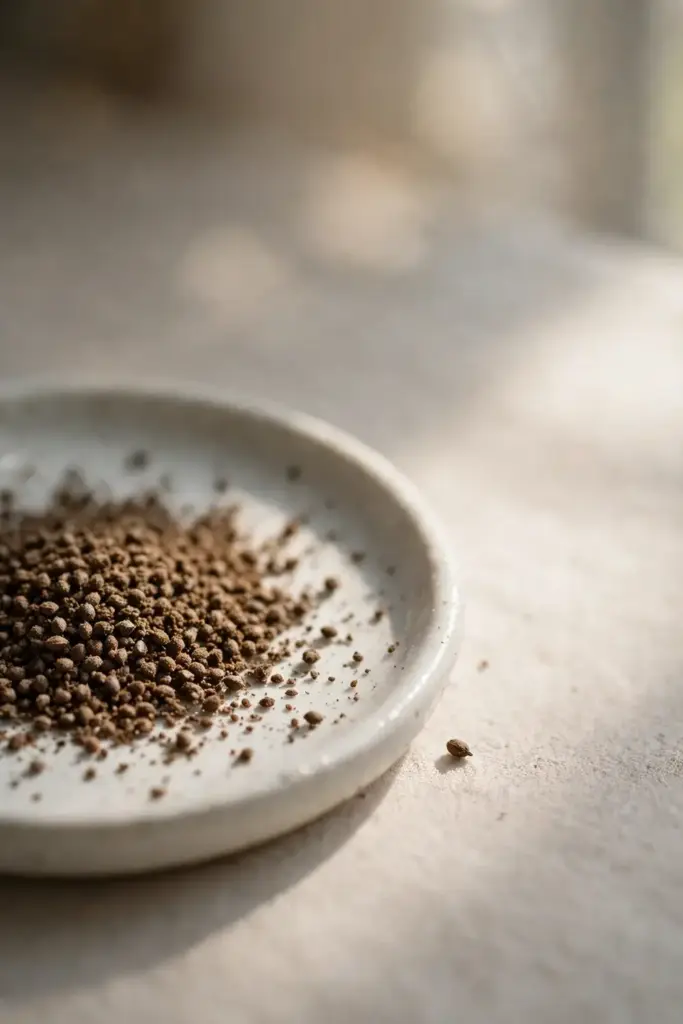
Fresh seed germinates best. Mint-family seed stays viable 2 to 3 years when stored cool and dry, but germination rates drop noticeably after the first year. If your seed is more than a year old, sow 50 percent thicker than the packet suggests to compensate. One packet of 100 seeds is plenty for a home garden: thinned to 1-foot spacing, that is a row several yards long, and a single healthy plant yields a generous bundle of flowering tops.
Check the seed itself before sowing. Schizonepeta seed is tiny and brown, about the size of fine sand grains. Crushed, pale, or dusty seed has lost viability. Good seed feels gritty between your fingers and shows no mold or musty smell.
5. Scarification: Waking the Seeds Up
Schizonepeta seed carries a hard coat that slows water uptake, which is why germination advice keeps mentioning scarification. Scarification means nicking or abrading the seed coat so moisture can reach the embryo. It is a small job with a real payoff: scarified seed germinates faster and more evenly, closer to the 1-week end of the 1 to 3 week range.
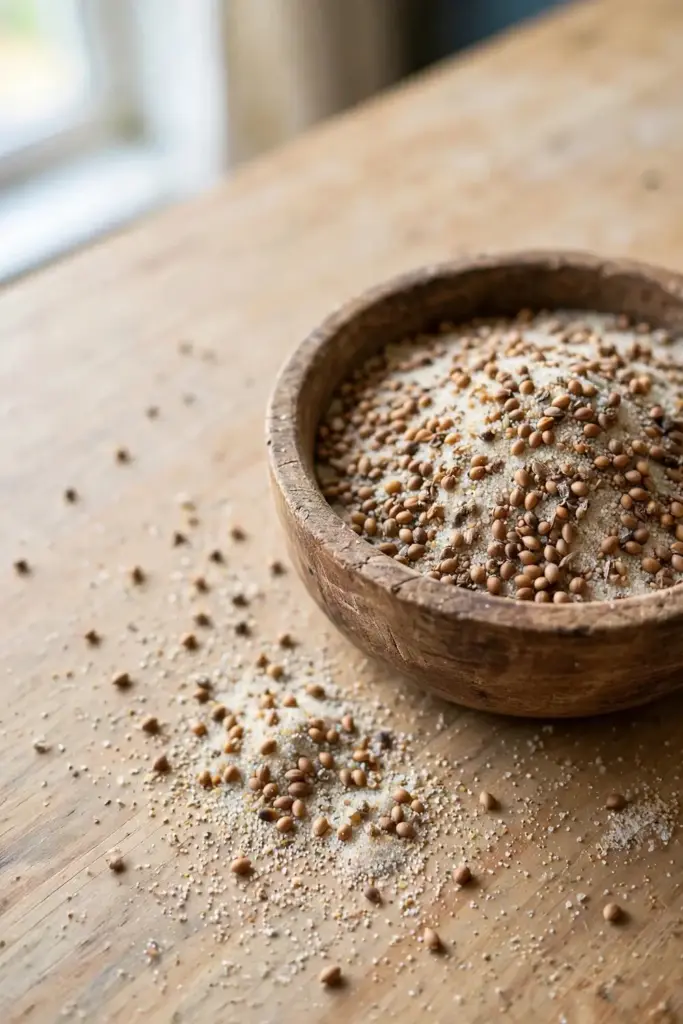
The sand method is the simplest. Mix the seed with three parts fine dry sand, rub the mixture gently between your palms for about a minute, and sow the whole mixture. The sand doubles as a sowing carrier, which solves the second problem with this seed: it is so fine that even distribution is nearly impossible without a carrier. Chinese growers use exactly this technique, mixing seed with fine sand at roughly a 1 to 3 ratio before sowing.
The soak method works too. Soak the seed in room-temperature water for 12 to 24 hours, drain, and sow immediately. Do not soak longer than 24 hours; drowned seed rots instead of germinating. Either method is enough. Doing both is unnecessary and risks damaging the tiny embryos.
6. Sowing Methods: Indoor Starts vs Direct Sowing
You can start schizonepeta indoors or sow it directly in the garden, and both work for anyone learning how to grow schizonepeta from seed. Indoor starts buy you 6 to 8 weeks of head start in short-season climates. Direct sowing is simpler and avoids transplant shock, which this plant resents mildly. Choose by your frost window.
| Step | Action | Time |
|---|---|---|
| 1 | Scarify seed with the sand method | 5 minutes |
| 2 | Fill trays or pots with fine seed-starting mix, watered through | Day 0 |
| 3 | Scatter the seed-sand mixture on the surface; do NOT cover | Day 0 |
| 4 | Press gently so seed contacts the mix; mist | Day 0 |
| 5 | Cover with a humidity dome or plastic; keep at 65 to 75 F | Days 1 to 21 |
| 6 | Remove cover at first sprouts; give strong light | Days 7 to 21 |
| 7 | Thin or pot up at 2 true leaves | Week 3 to 4 |
| 8 | Transplant after last frost, 1 foot apart | Week 6 to 8 |
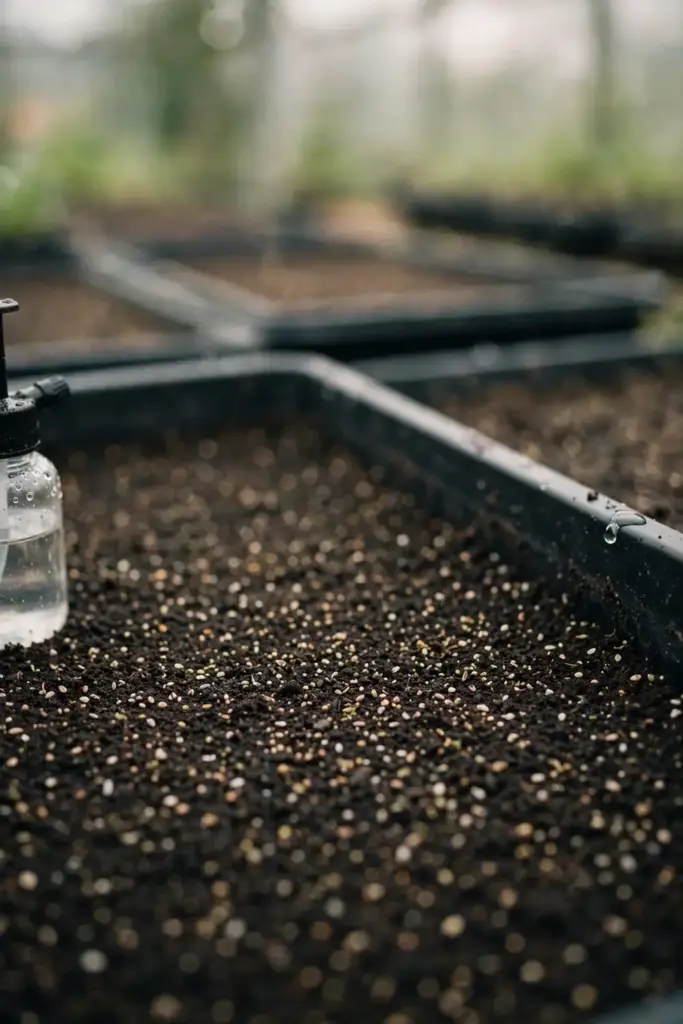
The single most important detail is step 3: do not cover the seed. Schizonepeta needs light to germinate. Buried seed germinates poorly or not at all, and “sowed it too deep” is the most common reason for a failed tray. Surface sow, press lightly, and mist instead of watering from above so the seed is not washed into the mix.
For direct sowing, wait until the soil has warmed and the last frost has passed. Rake the bed smooth, scatter the seed-sand mixture evenly, press it in with the back of the rake or a board, and mist. Keep the surface evenly moist until germination, which takes 1 to 3 weeks. A light row cover holds moisture and warmth while letting light through.
7. Germination and Seedling Care
Expect the first sprouts in 7 to 14 days, with stragglers continuing to 3 weeks. The seedlings are tiny: two rounded seed leaves followed by the first toothed true leaves with the faint square stems of the mint family. Do not mistake slow emergence for failure. If nothing has appeared at 3 weeks, the usual causes are seed buried too deep, the surface dried out, or old seed.
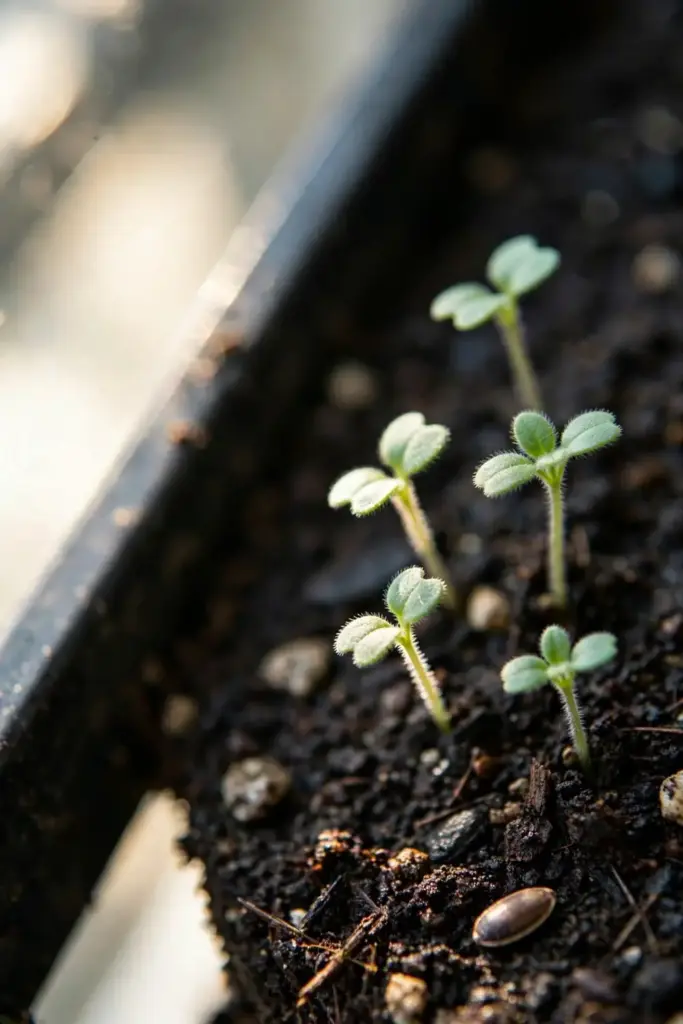
Once sprouts appear, light becomes the priority. Indoor seedlings need 14 to 16 hours of strong light daily; a south-facing window is rarely enough, and a simple shop light hung 2 to 3 inches above the seedlings prevents the leggy, pale growth that dooms transplants. Keep the mix evenly moist but never soggy. Mint-family seedlings damp off fast in wet, airless mix.
Thin ruthlessly. At the 2-true-leaf stage, thin indoor seedlings to one per cell or 2 inches apart in trays. Crowded seedlings compete, stretch, and transplant poorly. It feels wasteful to pull healthy sprouts. It is not. One strong plant outyields five weak ones.
8. Transplanting Without Setbacks
Harden seedlings off for 7 to 10 days before they move outside: a few hours of outdoor shade at first, building to full sun and a full day out. Seedlings moved straight from indoors to full sun scorch, wilt, and stall for weeks.
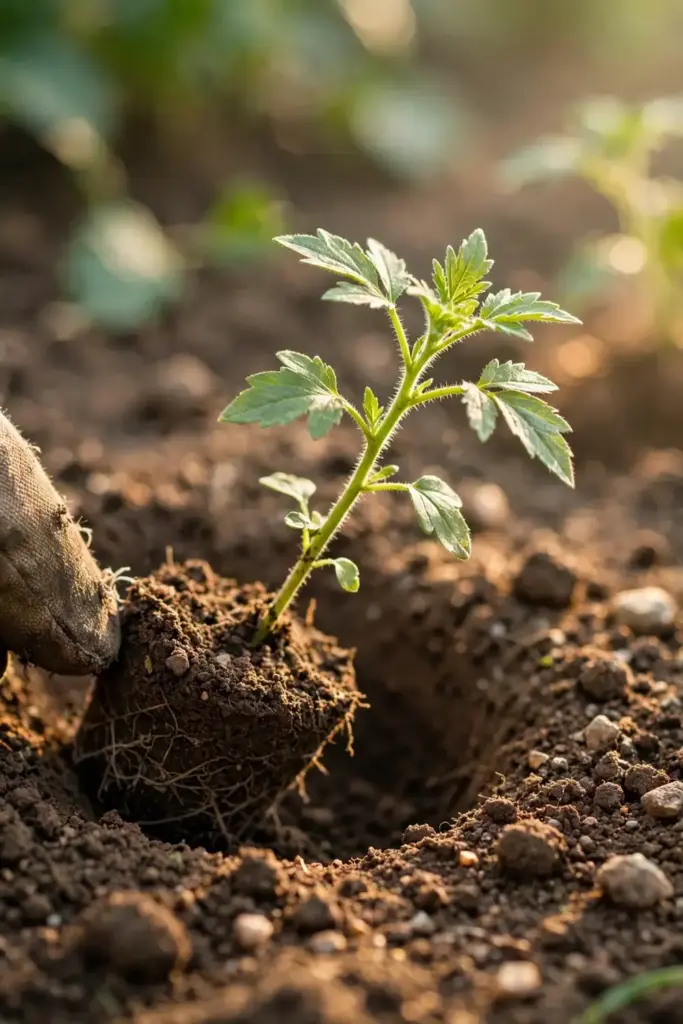
Transplant on a cloudy afternoon or in the evening to reduce shock. Set plants 1 foot apart in the bed; they will fill the space by midsummer. Plant at the same depth they grew in the tray. Water each transplant in thoroughly, then mulch lightly with straw to hold moisture. Schizonepeta tolerates transplanting better than most taprooted herbs, but it still sulks for a few days. New growth within a week means it has taken.
9. Soil: What Schizonepeta Actually Wants
Ordinary garden soil grows schizonepeta well. It wants a loam that drains freely, with a pH between 5.5 and 7.5. Sandy loam is ideal; heavy clay that holds water invites the root rots that are this plant’s main enemy. If your soil is clay, plant on a slight mound or in a raised bed 6 to 8 inches high.
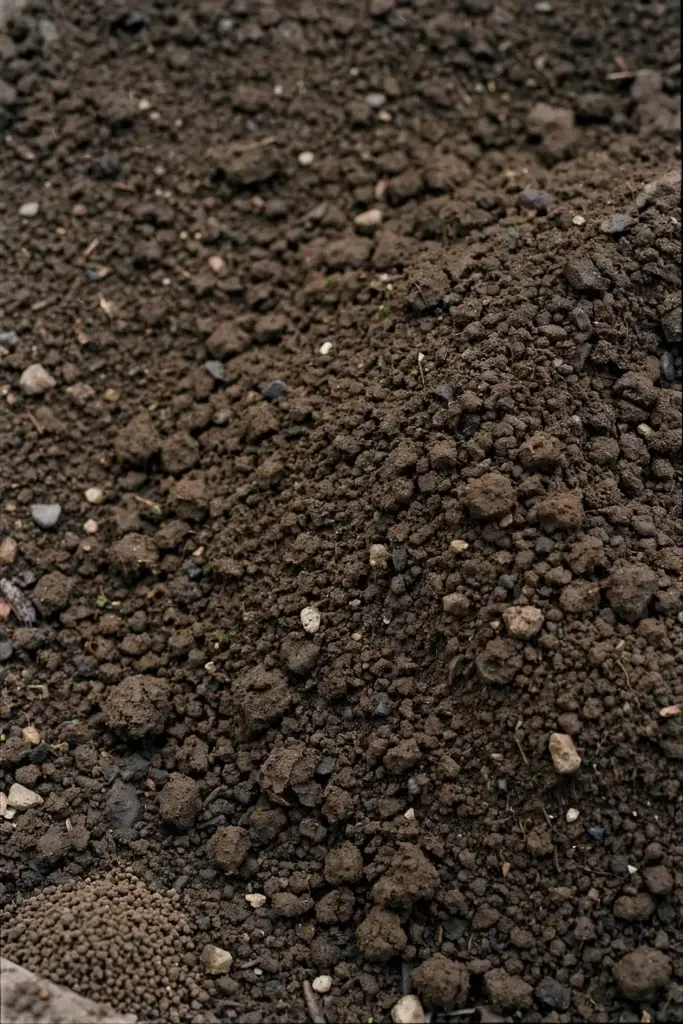
Do not overfeed the soil. Rich, heavily manured ground produces soft, floppy plants with diluted aroma. A moderate soil with a single inch of finished compost worked in before planting is plenty. The plant evolved in lean field margins, and it performs best when the soil is decent rather than luxurious. For the full story on building soil that feeds plants without pampering them into weakness, see the soil health guide: Soil Health and Pest Resistance.
10. Watering
Water deeply and then let the top inch of soil dry before watering again. Schizonepeta likes consistent moisture while establishing, then tolerates normal dry spells once its roots are down. In most climates, 1 inch of water per week from rain or irrigation is enough.
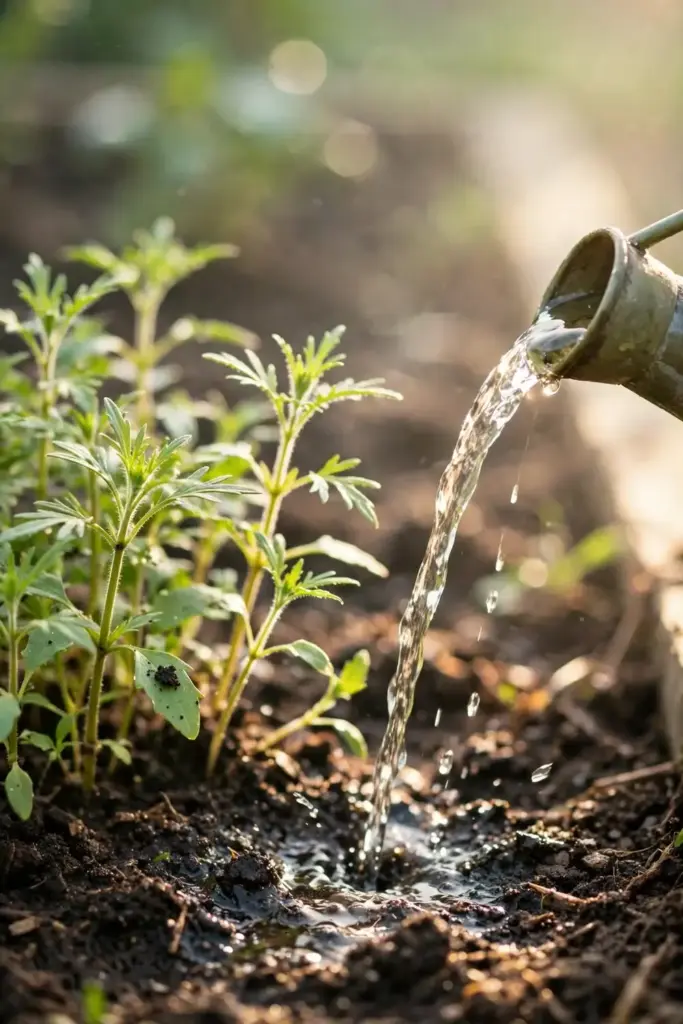
The two watering mistakes are opposites. Soggy soil rots the crown and invites fungal disease; this is the more common killer. Letting transplants dry out completely in their first two weeks is the other. A 2-inch straw mulch solves both: it holds moisture in the root zone while keeping the crown dry. Water at the base, not overhead, once the plants are up. Wet foliage in humid weather is an invitation to powdery mildew.
11. Feeding: Less Than You Think
Schizonepeta barely needs feeding. The compost you worked in at planting carries it through the season in most soils. If growth looks pale or stunted by midsummer, one light side-dressing of balanced organic fertilizer is enough. Half the label rate is the right dose.
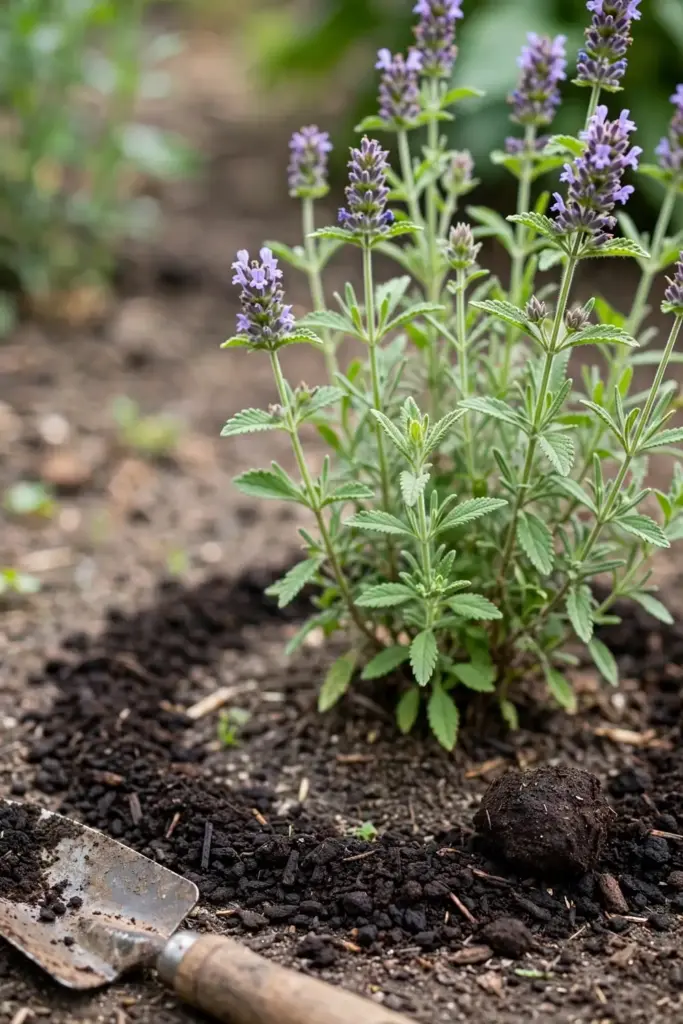
Excess nitrogen is the enemy of quality here. It pushes soft, watery growth with weak aroma and makes plants flop in wind. Herbs grown for volatile oils consistently test stronger when grown lean. If you must choose between feeding and not feeding, choose not feeding. The plant will tell you if it disagrees, and it rarely does.
12. Flowering and Seed Saving
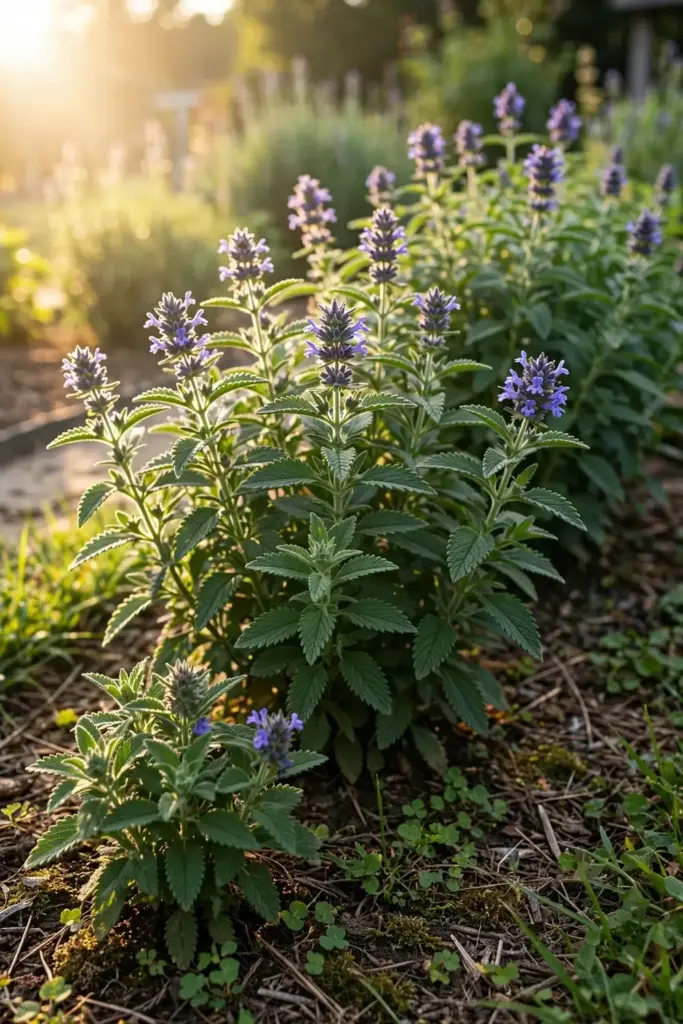
Plants flower in late summer, sending up dense spikes of small purple flowers that bees work heavily. The flowers are modest but pretty, and a row in full bloom hums. For leaf and top harvest, you can pinch the first flower spikes to extend vegetative growth, but let at least a few plants flower fully.
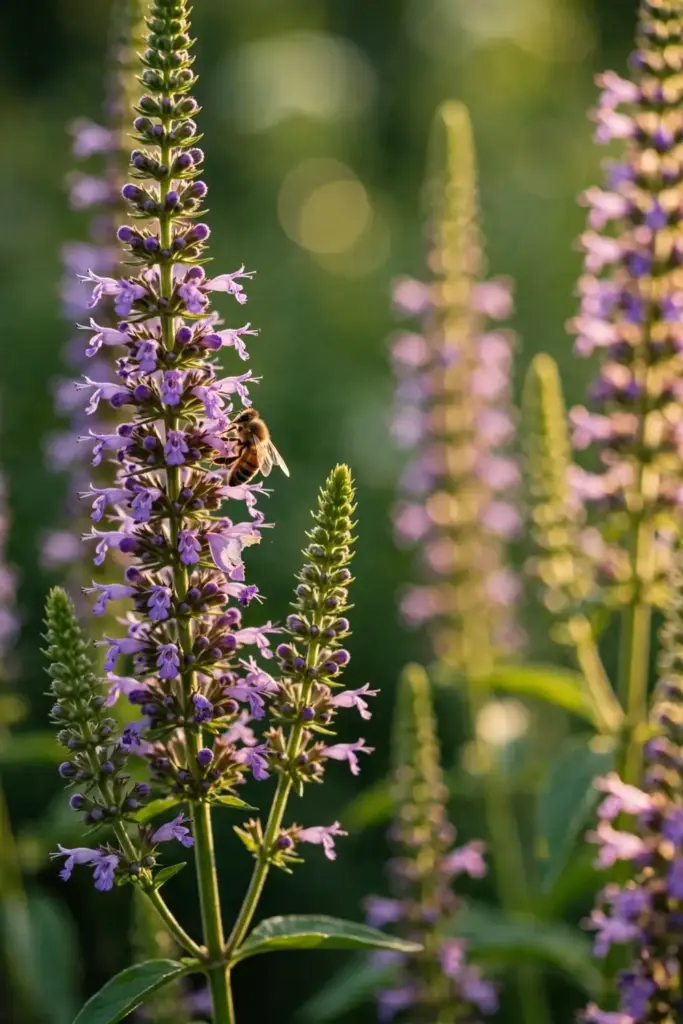
Saving your own seed closes the loop and guarantees next year’s supply. Let the spikes brown fully on the plant, cut them into a paper bag, and rub the spikes to release the tiny seeds. Winnow away the chaff by pouring between two bowls in a light breeze. Store the cleaned seed in a labeled envelope in a cool, dry place. Home-saved seed germinates as well as or better than commercial seed, and it costs nothing.
One caution: schizonepeta self-sows with enthusiasm. If you let every spike shatter, next spring’s volunteers will carpet the bed. That is free seed, but it is also a weed problem in a tidy garden. Deadhead what you do not want to save, or plan to thin the volunteers.
13. Succession Sowing: Keep the Supply Coming
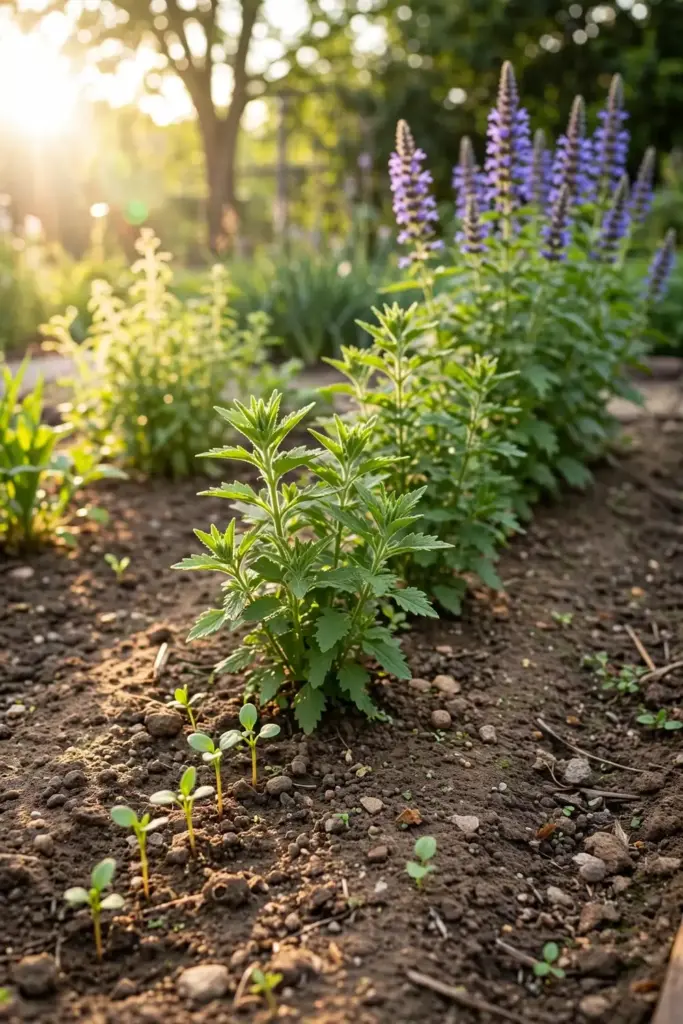
Because schizonepeta is an annual with a 120-day life, one spring sowing gives you one flush of harvest. Succession sowing, planting a new batch every few weeks, stretches that flush across the whole season. This is the technique the perennial myth makes gardeners skip, and it is the difference between a single harvest and a steady supply.
| Sowing | Timing | Harvest Window |
|---|---|---|
| First | 2 weeks after last frost | Early to midsummer |
| Second | 3 weeks after the first | Midsummer |
| Third | 3 weeks after the second | Late summer |
| Fourth (mild climates) | 8 weeks before first frost | Early fall |
Each sowing needs only a short row or a few pots. The later sowings grow faster in warm soil and catch up surprisingly well. Stop sowing 8 weeks before your expected first hard frost so the last batch has time to mature. In mild-winter climates you can push a fall sowing for an early-winter harvest of young leaves.
14. Pests and Diseases
Schizonepeta is notably trouble-free, which is one of its charms. The aromatic oils that make it valuable also repel most insects. Aphids occasionally cluster on tender shoot tips in spring; a strong jet of water dislodges them, and ladybugs usually finish the job. Spider mites can appear in hot, dusty weather; overhead watering of the surrounding area (not the plants) raises humidity and discourages them.
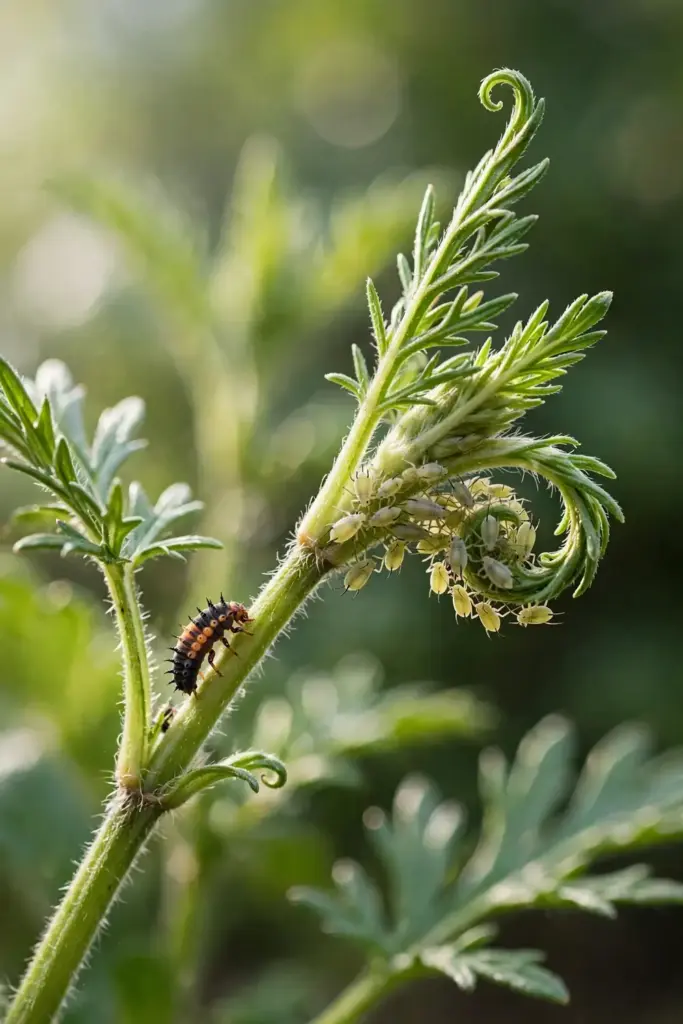
Disease is almost entirely about moisture management. Powdery mildew dusts the leaves in humid, crowded plantings; the cure is spacing, morning sun, and watering at the base. Crown rot follows soggy soil and is fatal; prevention through drainage beats any treatment. Good air circulation, achieved by the 1-foot spacing and full sun, prevents nearly everything this plant suffers from.
15. Harvest: Leaves and Flowering Tops
Harvest begins when plants are about a foot tall and well branched, usually 8 to 10 weeks after sowing. The usable parts are the leaves and the flowering tops, cut just as the flower spikes begin to open. That stage carries the strongest aroma; cut earlier and the yield is thin, cut later and the volatile oils fade as seed sets.
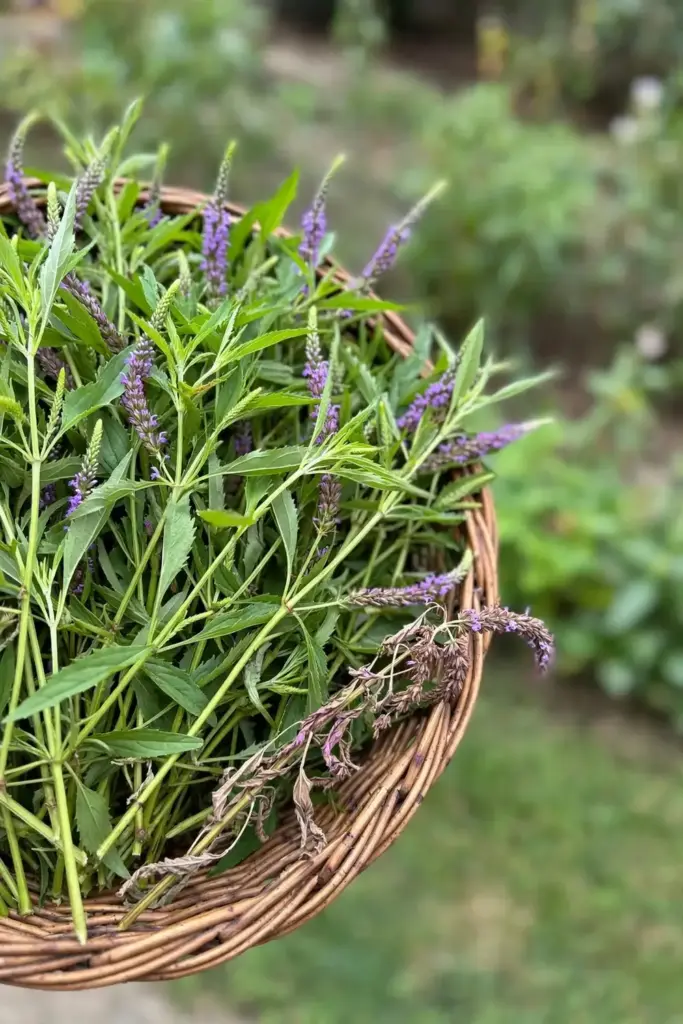
Cut stems in the morning after the dew dries, when oil content peaks. Take no more than one third of the plant at a time, cutting just above a leaf node so side shoots regrow. A healthy plant cut this way produces two or three harvests in a season. Use clean, sharp scissors; torn stems heal slowly and invite disease.
16. Drying and Storage
Dry the harvest quickly and in the dark to preserve color and aroma. Tie small bundles of stems and hang them upside down in a warm, airy room out of direct sun, or spread flowering tops in a single layer on screens. Good air circulation matters more than heat; a fan on low in the drying room prevents mold. Most material is crisp-dry in 5 to 7 days.
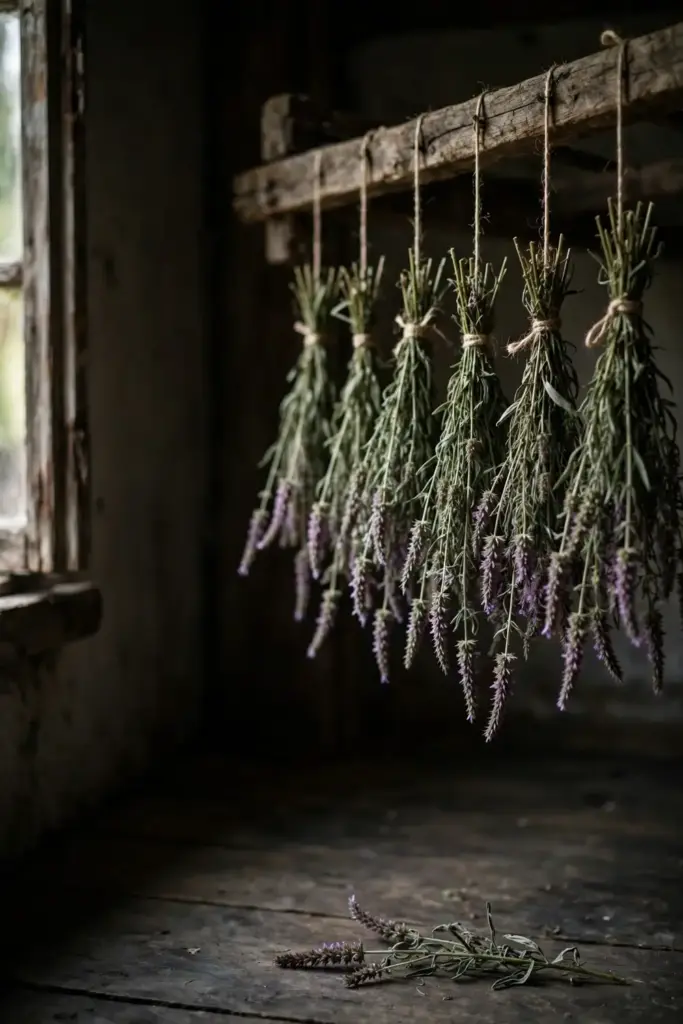
Strip the dried leaves and flowering tops from the stems and store them whole in glass jars away from light and heat. Crumble only what you need, when you need it; whole material holds its volatile oils far longer. Properly dried and stored, schizonepeta keeps usable aroma for about a year. After that it is not unsafe, just faded, and faded herb is a sign to grow a fresh batch.
17. Uses: Tea and Kitchen, Conservatively
Jing jie is one of the classic herbs of Chinese herbalism, traditionally used for wind-cold patterns: the early stages of colds, headaches, and itchy skin eruptions. In the kitchen garden it is used as a tea herb and a seasoning green with a minty, slightly pungent flavor. A teaspoon of dried flowering tops steeped 5 to 10 minutes makes a fragrant tea.

Keep the framing honest and conservative. Traditional use is not the same as proven effect, and this article is a growing guide, not a medical one. Pregnant gardeners, nursing mothers, and anyone taking medication should talk to a clinician before using schizonepeta medicinally rather than relying on internet summaries. Grow it, enjoy it as a tea herb, and leave dosage questions to professionals.
18. Growing in Containers
Schizonepeta grows well in pots, which makes it a good choice for balconies and small spaces. Use a container at least 8 inches deep and wide per plant, with drainage holes that actually drain. Fill with a standard potting mix cut with a handful of coarse sand or perlite for drainage.
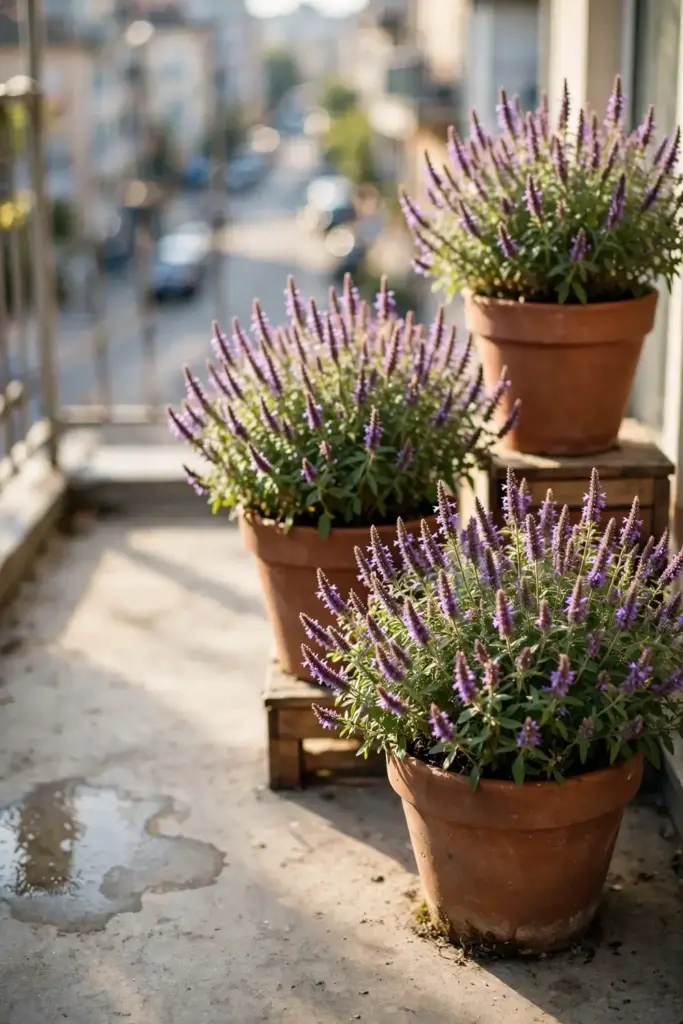
Container plants need more attention to water than bed plants; pots dry fast in sun, so check daily in summer. Feed once midseason with half-strength liquid fertilizer if growth pales. One plant per 8-inch pot, or three in a 14-inch pot spaced evenly. Move pots to catch the morning sun, and you will harvest as well as any in-ground grower.
19. 7 Mistakes That Kill Schizonepeta
- Believing it is perennial. The number-one mistake, courtesy of mislabeled seed listings. It dies at frost. Sow fresh every spring and succession-sow through the season.
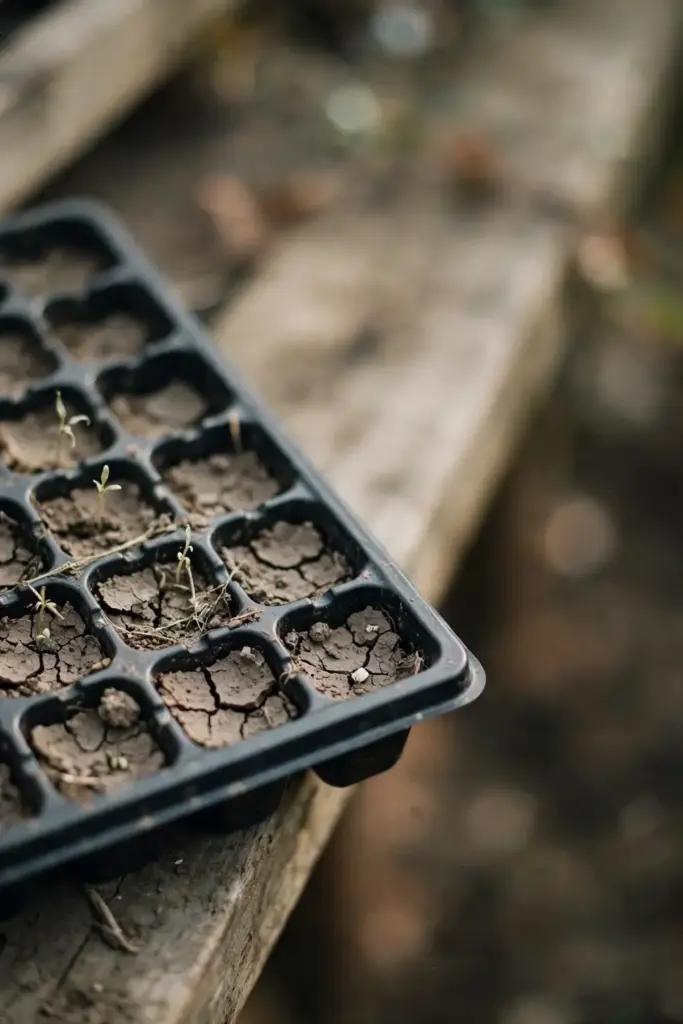
- Burying the seed. Light is required for germination. Seed sown even a quarter inch deep germinates poorly. Surface sow and press, never cover.
- Sowing old seed thick and hoping. Old seed has genuinely lower germination. Test it on a damp paper towel first, or buy fresh.
- Drowning the seedlings. Soggy mix causes damping off, which kills seedlings overnight. Moist, not wet, with air circulation.
- Planting in shade. Half shade is tolerated, but full shade gives leggy, flowerless plants with no aroma worth harvesting.
- Overfeeding. Heavy nitrogen makes floppy, weak-flavored plants. Lean soil grows stronger herb.
- Letting it all go to seed. Unchecked self-sowing turns next year’s bed into a thicket of volunteers. Deadhead or harvest the spikes.
20. Troubleshooting
Nothing germinated after 3 weeks. The seed was likely buried, dried out, or dead. Surface sow a fresh batch, keep it evenly moist under a humidity dome, and test old seed on a damp paper towel first.
Seedlings are tall, pale, and flopping. Not enough light. Move them under strong lights 2 to 3 inches above the tops for 14 to 16 hours a day. Leggy seedlings rarely recover fully; starting a fresh tray is often faster.
Plants wilt every afternoon but recover at night. The roots cannot keep up with transpiration in heat. Mulch, water deeply in the morning, and give afternoon shade in hot climates. Persistent wilt with moist soil means root trouble; check drainage.
White powder on the leaves. Powdery mildew from humidity and crowding. Improve air circulation, water at the base, and remove the worst leaves. It rarely kills the plant but reduces harvest quality.
No flowers by late summer. Usually too much shade or too much nitrogen. Next season, give full sun and skip the fertilizer. Pinching early buds delays flowering, so stop pinching by midsummer if you want bloom and seed.
Volunteers everywhere next spring. Last year’s seed shattered. Thin them to 1-foot spacing and treat them as a free crop, or hoe them out where unwanted. Mulch the bed after harvest to suppress them.
Frequently Asked Questions
It is an annual. Schizonepeta tenuifolia germinates, flowers, sets seed, and dies in one growing season of about 120 days. The perennial label on seed listings and AI answers is wrong. What looks like a perennial returning is self-sown seedlings from last year’s dropped seed, not regrowth from the same roots.
No. Despite the nickname, schizonepeta contains no nepetalactone, the compound that triggers the euphoric response in cats. Its chemistry runs to menthone, pulegone, and limonene instead. Cats ignore it. If you want a plant your cat will enjoy, grow true catnip, Nepeta cataria.
Scarification helps but is not mandatory. Rubbing the seed with fine sand or soaking it 12 to 24 hours speeds water uptake through the hard seed coat and pushes germination toward the faster end of the 1 to 3 week range. Fresh, surface-sown seed germinates acceptably without it.
Expect 1 to 3 weeks, with most sprouts appearing in the second week under good conditions. Keep the surface evenly moist and uncovered in good light at 65 to 75 F. If nothing appears by week 3, the seed was likely buried too deep, dried out, or too old.
You can grow it in containers on a sunny balcony or under strong grow lights, but a typical windowsill is not enough light for a full harvest. Use pots at least 8 inches deep, give it the brightest spot available, and expect somewhat smaller plants than outdoor-grown ones. For a serious indoor herb supply, succession-sow small pots every 3 weeks.
Jing jie is the traditional Chinese name for schizonepeta, used historically for wind-cold patterns such as early colds, headaches, and itchy rashes. As a garden herb it makes a pleasant minty tea from the dried flowering tops. Traditional use is not proof of effect; consult a clinician before medicinal use, especially during pregnancy or alongside medication.
Where to Go From Here
You now know how to grow schizonepeta: an annual herb that asks for sun, surface sowing, and honest expectations. Sow your first batch two weeks after the last frost, succession-sow through the season, and save seed from your best plants for next year. If you are planning the cool-season side of the herb garden, the fall herbs guide rounds out the calendar with companions that pick up where summer annuals leave off: Fall Herbs to Plant.