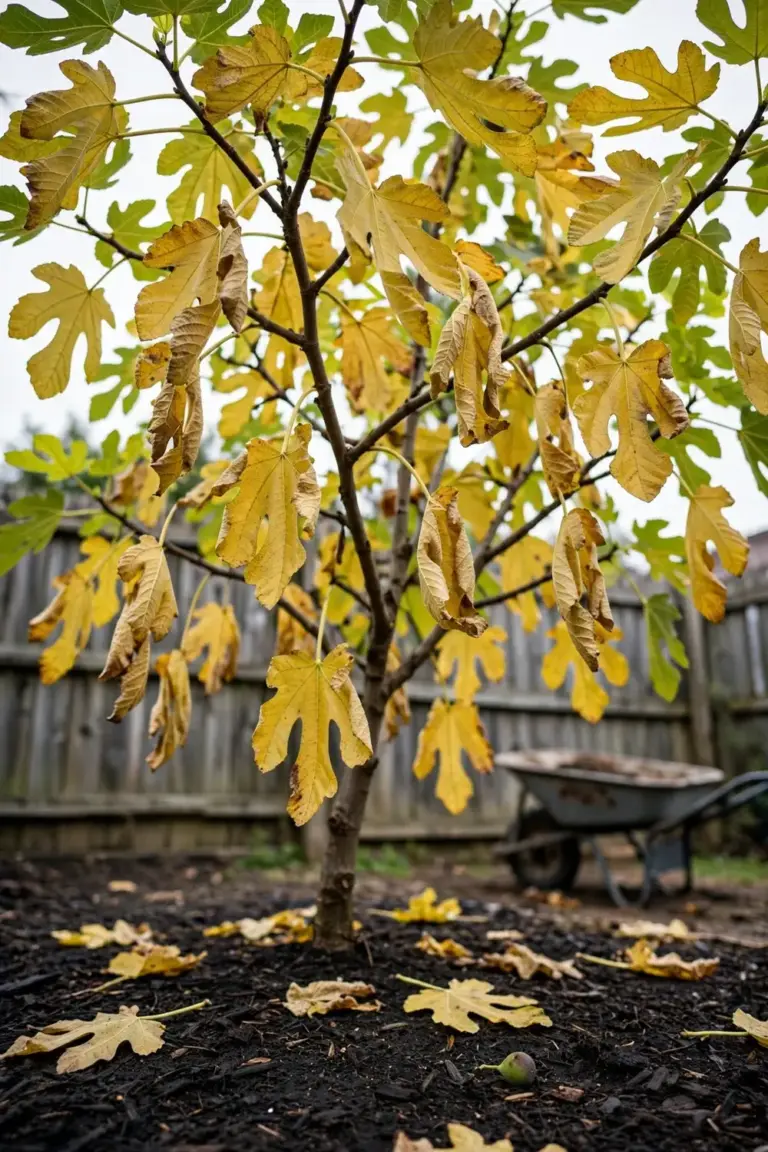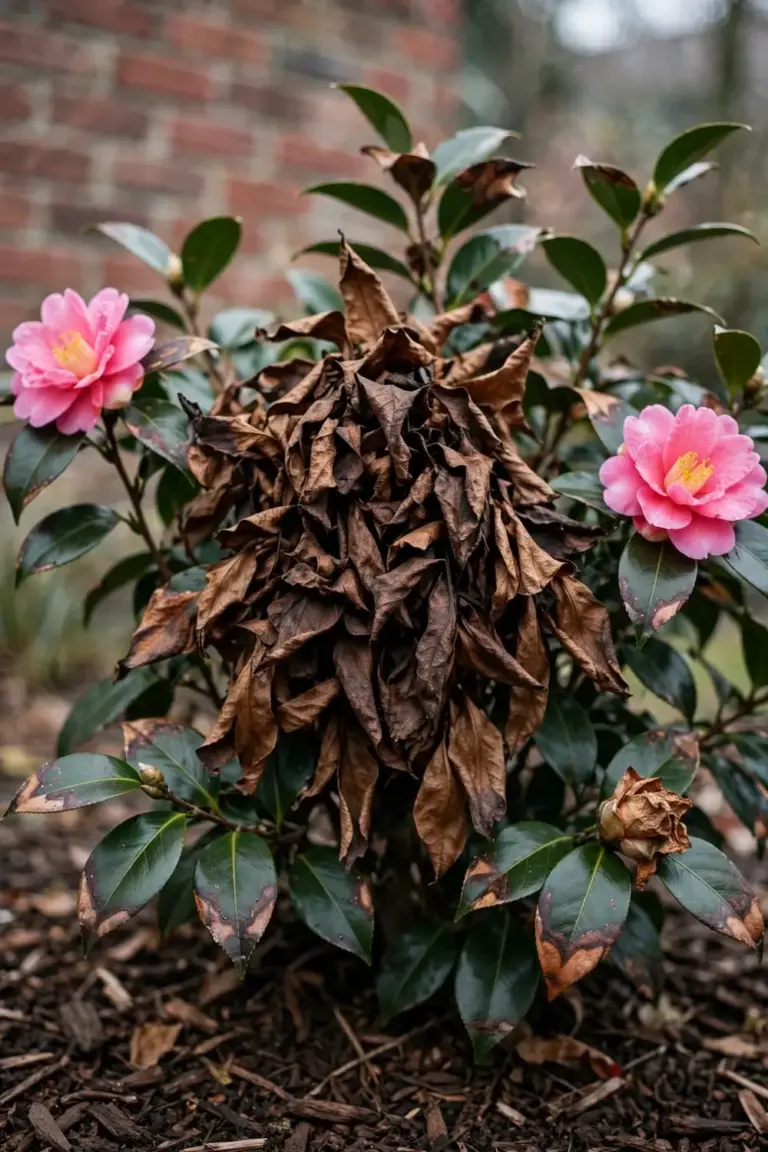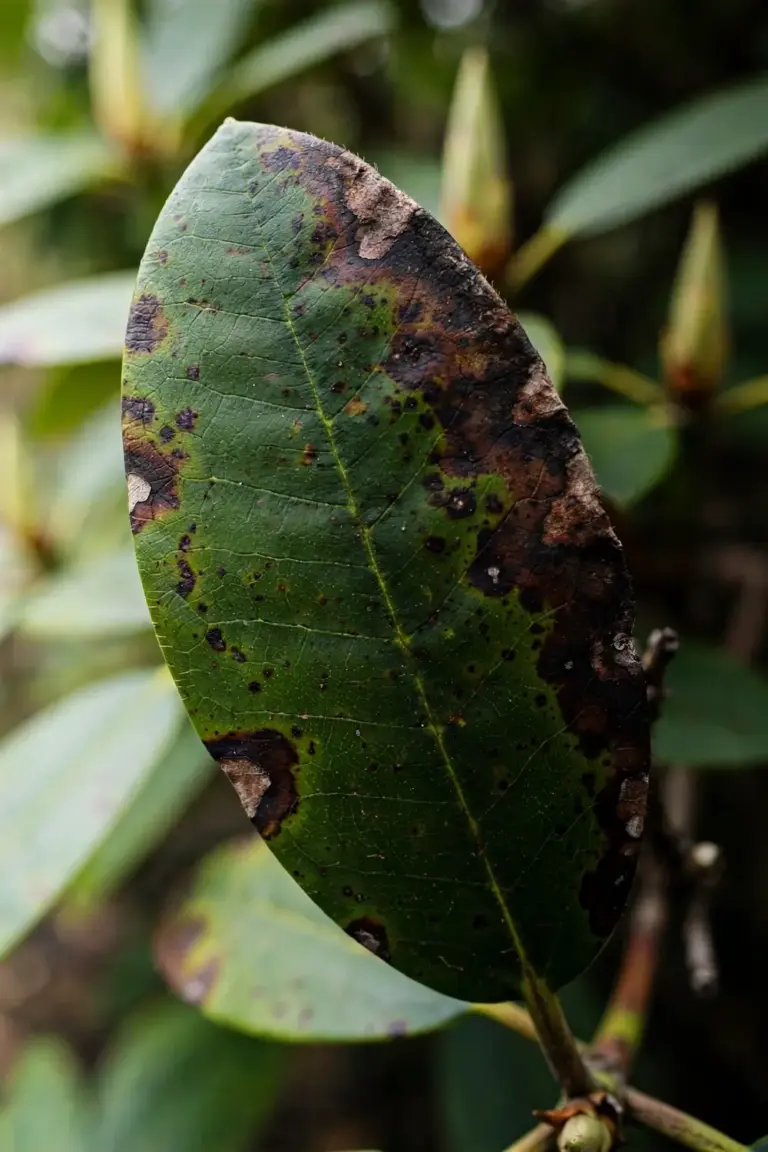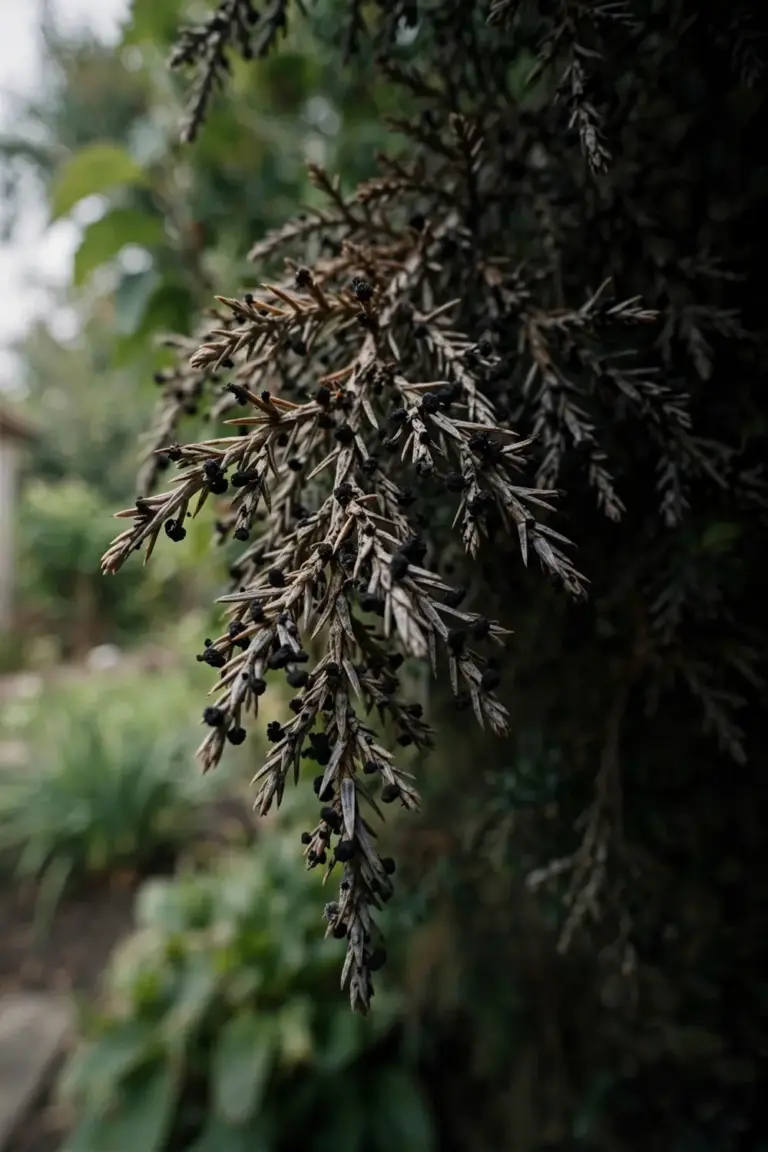

Walk to the tree and look at where the damage sits before you name anything. 4 locations cover every gum tree fungus: leaves, bark, roots, or the whole crown. Fungal problems on gum tree hosts follow one triage: find the location, name the fungus, then act on what the location allows.
A gum tree in Australia means a tree in the genera Eucalyptus, Corymbia, or Angophora. It does not mean sweet gum, which is Liquidambar, or black gum, which is Nyssa. Those two trees carry different diseases, and advice written for them does not apply here. I have learned that the gum tree I name from where the damage sits gets treated sooner than the one I name from a single spotted leaf. Most established-tree fungal problems have no home cure. The work you can do is triage, sanitation, and prevention, plus knowing when to call an arborist.
1. Start With Where the Symptom Sits: Leaves, Bark, Roots, or Whole Tree
The symptom location sets the shortlist. Leaf damage points at leaf fungi. Bark damage points at canker fungi. Base damage points at root fungi. Whole-crown damage points at a root problem, a severe infection, or a non-fungal cause.
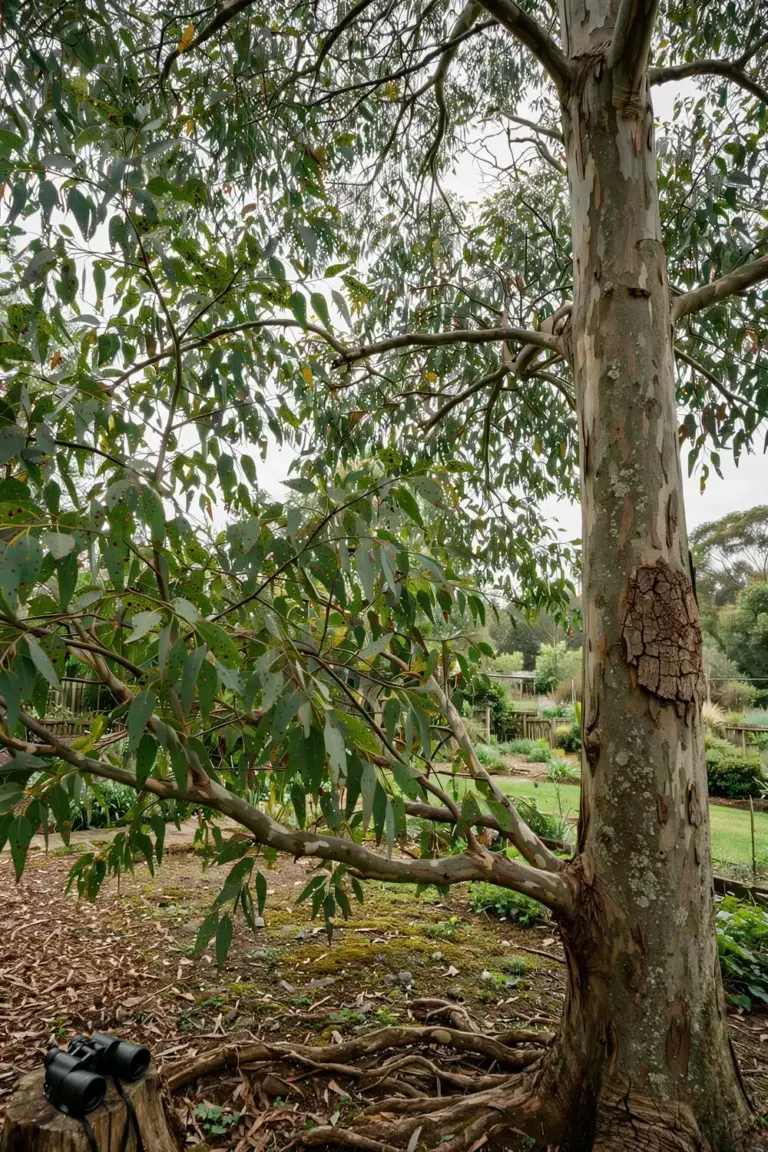
Start at the ground and work up. Look at the base first for mushrooms, oozing sap, or peeling bark. Then look at the trunk and branches for dead bark patches, target-shaped lesions, or bleeding kino. Then look at the canopy with binoculars. Never climb a tree to inspect it. A ladder against a diseased limb adds a fall to a fungus problem.
Photograph each zone before you touch anything. One photo of the whole tree, one of the worst branch, and one close-up of the symptom give an arborist or a biosecurity officer more than a bag of picked leaves ever will. Keep the photos dated. Fungal symptoms change across weeks, and the change itself is diagnostic.
2. Read the Triage Table Before You Touch the Tree
The table sorts the common gum tree fungi by where you find them. Find your row first. Then read that row’s full section for the detail.
| Where | What It Looks Like | Most Likely Fungus | Treatable? | First Step |
|---|---|---|---|---|
| Leaves | Purple, brown, or red-margined spots that blight and drop | Teratosphaeria leaf diseases | Manage, not cure | Sanitation plus airflow |
| Leaves, young growth | Bright yellow powdery pustules on new shoots, buds, or fruit | Myrtle rust | Manage, report | Do not touch, photograph, report |
| Leaves | White powdery film on the leaf surface | Powdery mildew | Manage | Airflow plus labelled spray |
| Leaves | Black film that wipes off with a finger | Sooty mould | Manage the pest, not the mould | Find the sap-sucking insects |
| Bark, trunk, branches | Bleeding kino, cracked bark, target-shaped lesions | Canker fungi, including Quambalaria | Manage, arborist for large limbs | Protect wounds, call an arborist |
| Base, roots | Honey mushrooms, white fans under bark, black bootlaces | Armillaria root rot | No cure | Arborist, reduce spread |
| Base, roots | Wilting in wet soil, collar rot, sudden decline | Phytophthora root rot | No cure | Drainage, hygiene, arborist |
| Whole crown | Thinning crown, dead tips, progressive dieback | A symptom, not one fungus | Depends on the cause | Find the cause first |
Treatable means the gardener can reduce spread and protect the tree. It never means a spray cures an established infection in a large tree. The sections below keep that line straight.
3. Leaf Spots That Blight and Defoliate: Teratosphaeria Leaf Diseases
Teratosphaeria leaf diseases are a group of fungal pathogens that spot, blight, and defoliate eucalyptus leaves. They are among the more common eucalyptus tree diseases in Australia, and they show as spots first, then dead patches, then early leaf drop.
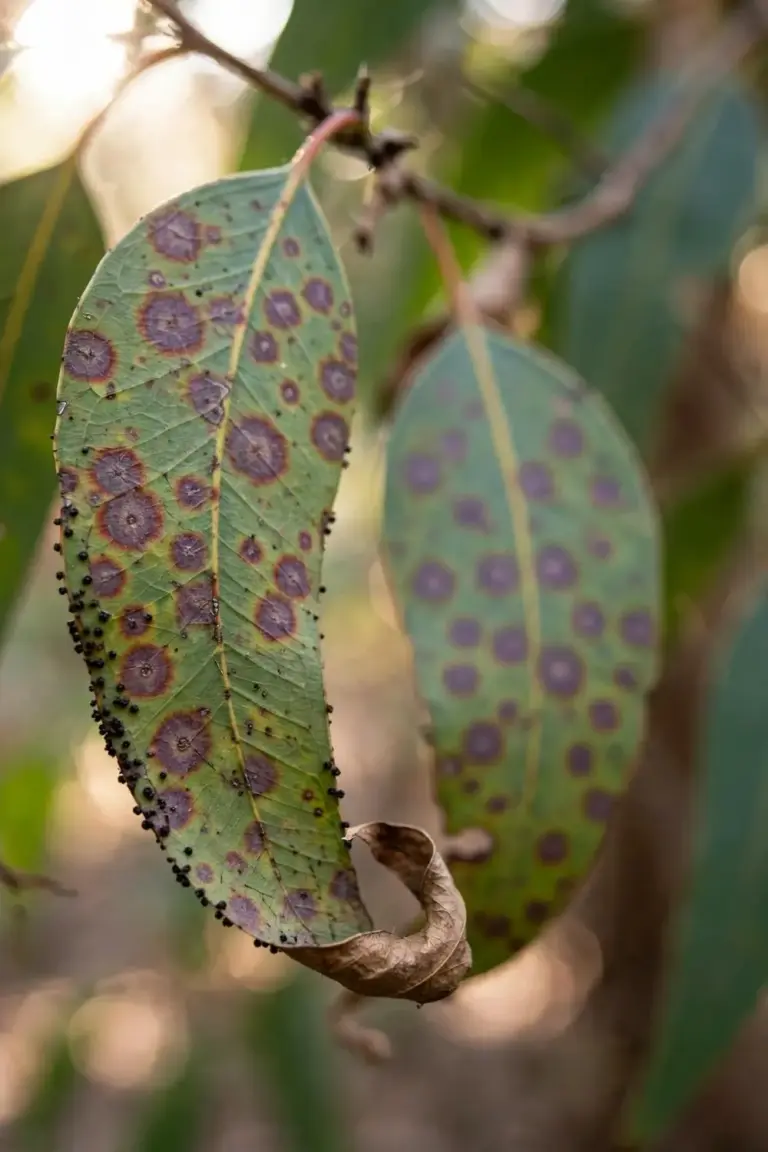
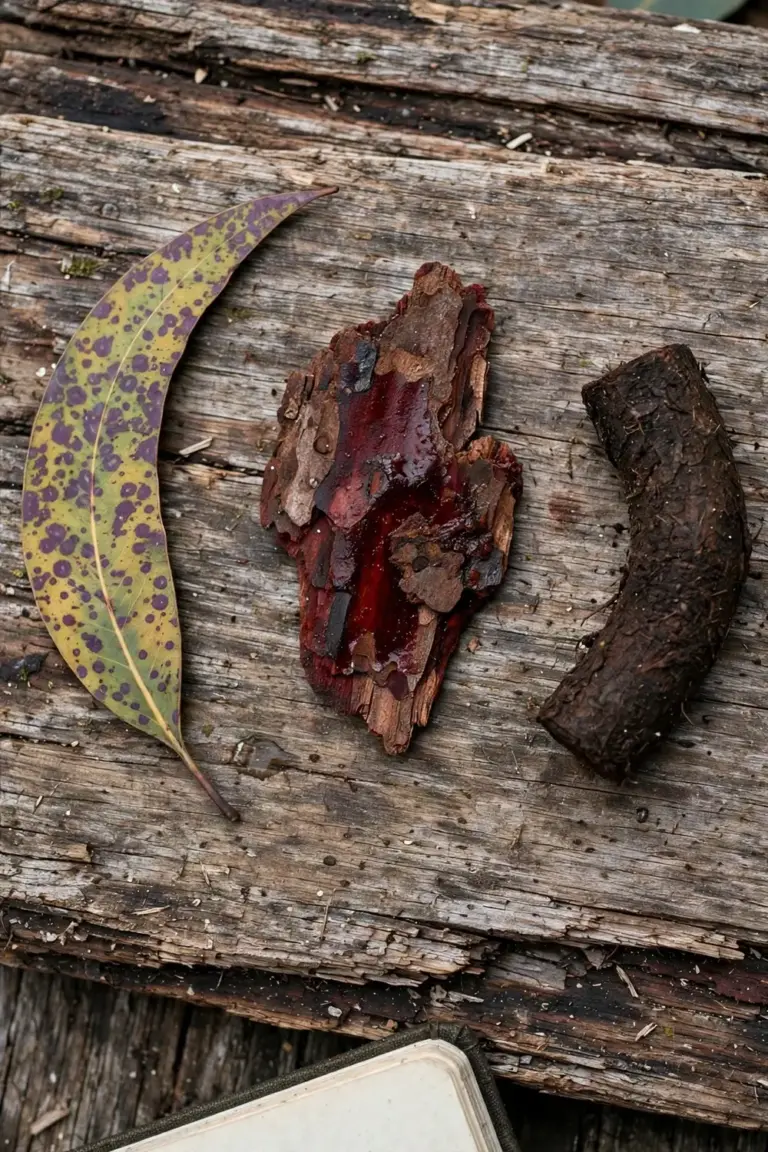
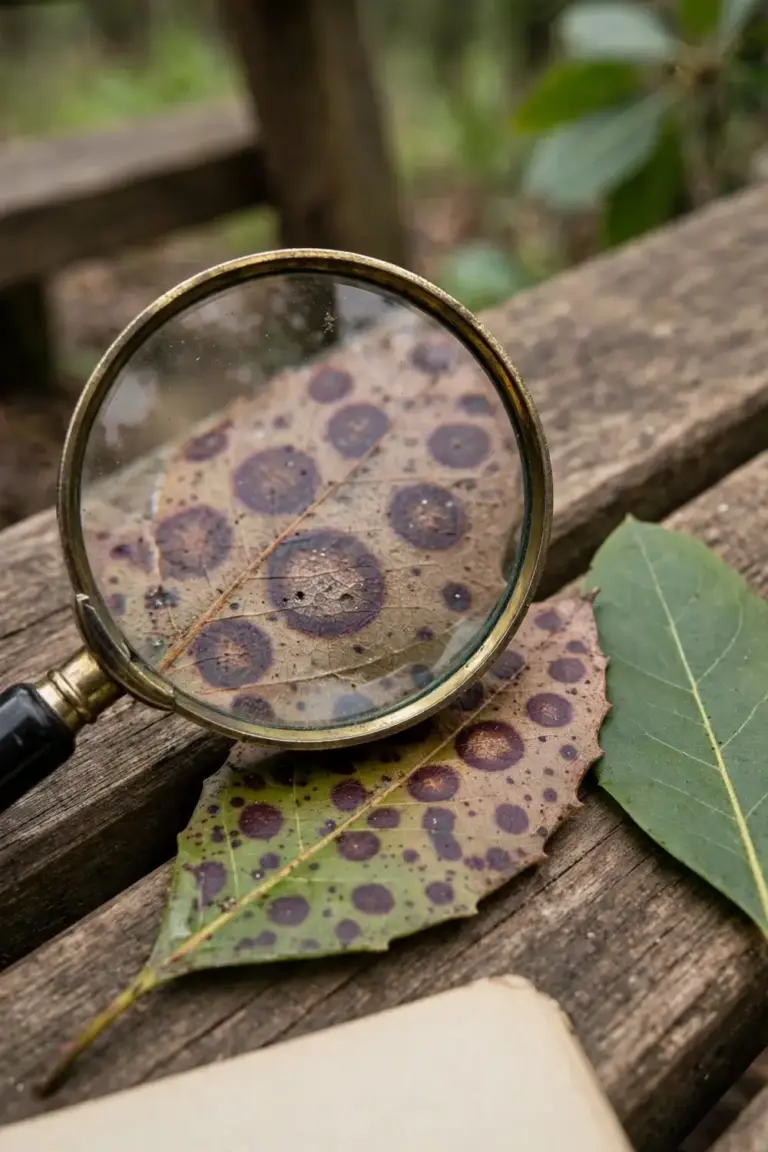
The spots differ by species, and species-level identification needs a lab. Teratosphaeria epicoccoides starts as small purple spots on the upper leaf surface. The spots expand until they cover the surface. Yellow lesions appear on the leaf veins, and brown to black spores can appear on the underside of the leaf. Teratosphaeria viscidus makes circular spots with red borders plus black spore masses. Infection starts in the lower canopy. If infection reaches the tree tip, it can lead to 90 percent defoliation, according to the Arbor Operations tree disease guide. Teratosphaeria pseudoeucalypti makes brown leaf spots with red margins plus black spore masses. Teratosphaeria corymbiae makes yellow or brown leaf spots.
The pattern matters more than the species name. Spots that start low, spread upward, and drop leaves in waves point at Teratosphaeria. A single spotted leaf on an otherwise healthy canopy points at a passing stress, not an epidemic. Check the underside of the leaf for spore masses. A hand lens helps. The black dots on the underside are fruiting bodies, and their presence confirms a fungal leaf disease rather than a nutrient problem or sun damage.
Young trees and stressed trees suffer most. A healthy mature gum tree drops spotted leaves and grows on. A young tree that loses most of its canopy in one season grows slowly the next year. The home response is sanitation and airflow. Rake fallen leaves from under the tree and bin them. Never compost infected leaves. The compost pile stays warm and damp, and the fungus survives in it. Thin crowded growth for airflow, using clean tools, and keep the soil surface clear of leaf litter through the wet season.
4. Yellow Powder on Young Growth: Myrtle Rust
Myrtle rust is a fungal disease of plants in the Myrtaceae family, caused by Austropuccinia psidii. It attacks young growth. The first sign is bright yellow powdery pustules on new shoots, young leaves, flower buds, or young fruit. The pustules darken with age. Leaves buckle and twist. Severe infection strips the crown and causes dieback.
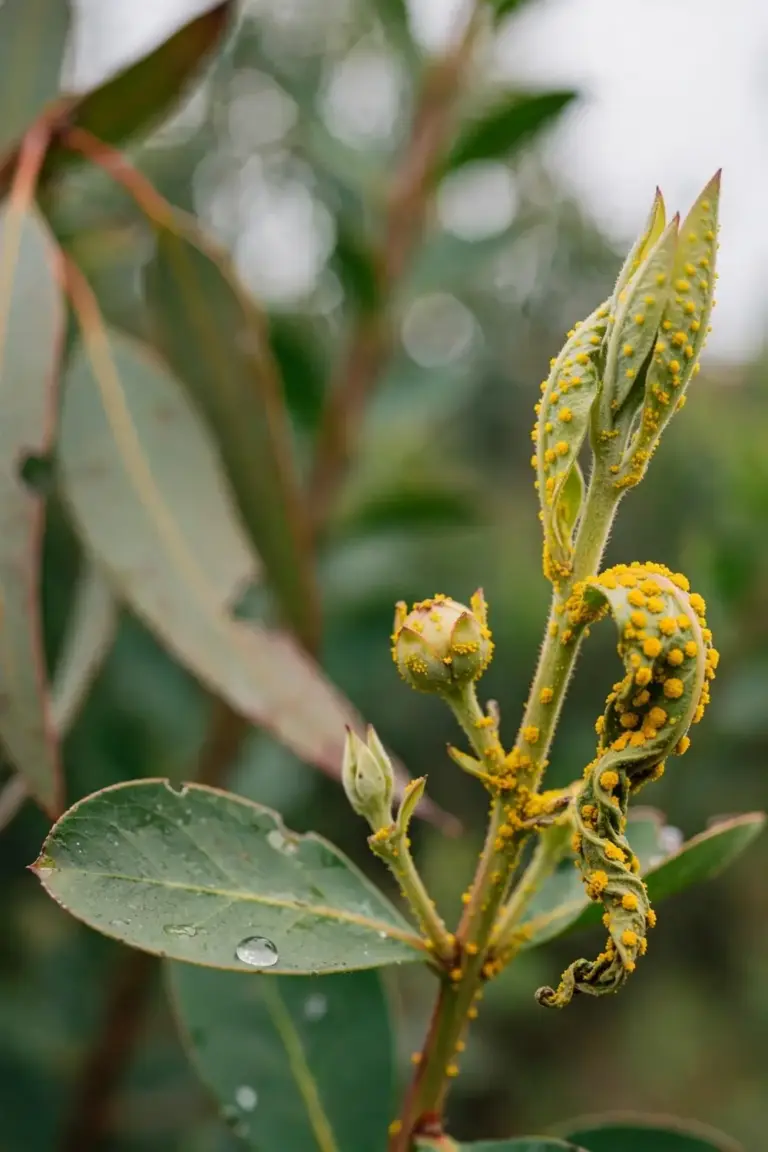
Myrtle rust was first detected in Australia in April 2010 on the central coast of New South Wales, and it has since spread along the east coast and into other states and territories. Its host range exceeds 350 species from 58 genera in Australia alone, according to a peer-reviewed survey of the rust in south-east Queensland forests. Eucalyptus, Corymbia, bottlebrush, paperbark, tea tree, and lilly pilly all sit inside that host range. The rust infects young tissue. Old hardened leaves resist it.
Do not touch a suspected myrtle rust infection. Do not pick samples. The pustules hold thousands of spores, and spores travel on hands, clothing, tools, and vehicles. Photograph the whole plant, the affected shoot, and the pustules. Then report the sighting to your state agriculture department or call the Exotic Plant Pest Hotline on 1800 084 881. Reporting matters even in areas where the rust is established, because the data guides containment and research.
A home gardener cannot cure myrtle rust on a large tree. Fungicides registered for myrtle rust exist, and a qualified arborist applies them on high-value trees. The home contribution is surveillance, hygiene, and plant choice. Wash tools and boots after working near an infected tree. Keep new plantings away from known infected hosts. Choose resistant species and varieties where a nursery names resistance. If a young tree in a pot shows pustules, isolate the pot, bag the plant for disposal if an officer advises it, and clean the area.
5. White Film on Leaves: Powdery Mildew
Powdery mildew is a white powdery film that sits on the leaf surface. The film wipes off with a finger and leaves the leaf tissue intact underneath. Powdery mildew is a true fungus. It feeds on the leaf surface and rarely kills an established gum tree.
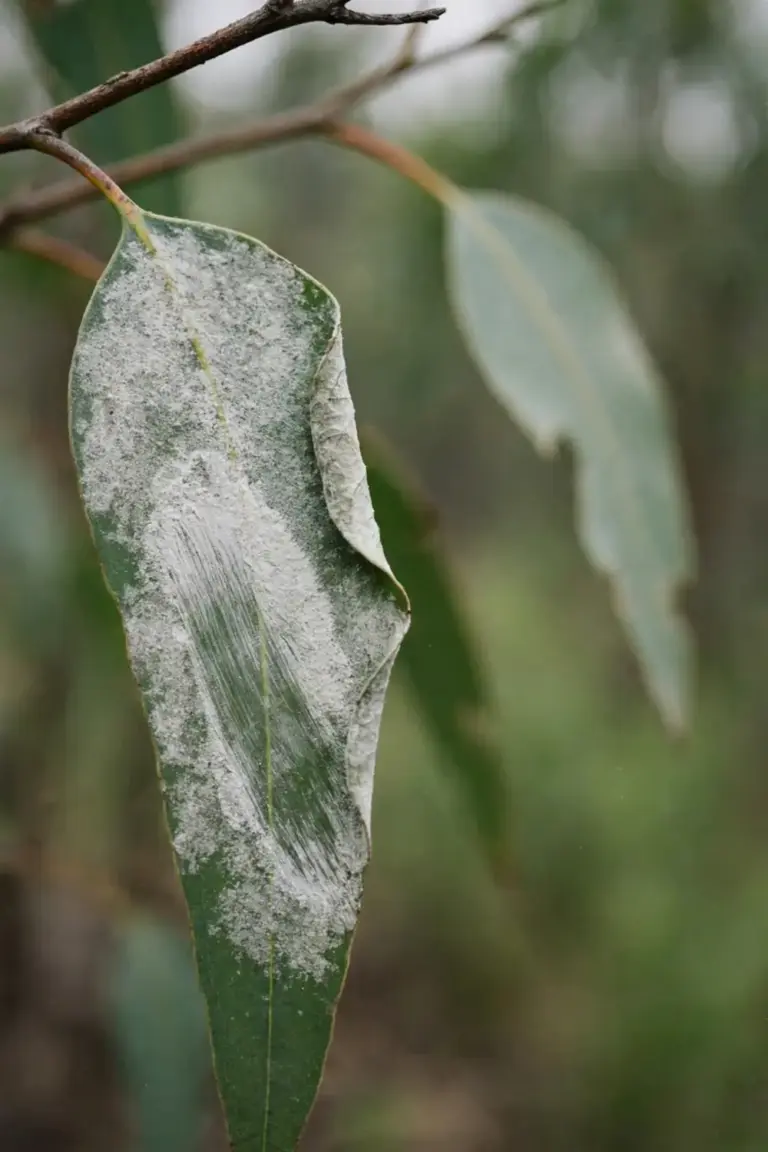
Powdery mildew favours warm dry days with humid nights. Crowded canopies hold humidity against the leaves. Shaded lower branches show the film first. Young soft growth shows it more than old hardened leaves. The film spreads across the leaf in patches, and heavy infection curls the leaf edge and slows growth.
Check the film before you spray anything. Rub the white patch gently. Powdery mildew lifts off as a dry powder. A mineral deposit from hard water or spray residue lifts off as a gritty crust. Downy mildew grows on the leaf underside and shows as a gray-purple felt, not a white surface film. The distinction matters because the treatments differ.
The home response is airflow first, spray second. Thin crowded growth so air moves through the canopy. Water at the soil line, never over the canopy. A labelled copper or bicarbonate spray can suppress the film on young trees. Follow the label exactly. No spray cures an established infection on a large tree. The spray protects new growth while the season turns. If the film covers most of the canopy of a mature tree, the tree usually outgrows it as the weather changes, and the right move is monitoring rather than a spray program.
6. Black Film That Washes Off: Sooty Mould
Sooty mould is a black film that coats leaves, twigs, and fruit. The film wipes off with a finger and leaves green tissue underneath. Sooty mould is a group of fungi that grow on honeydew, the sugary waste that sap-sucking insects excrete. The fungi do not invade the leaf. They sit on the surface and block light.
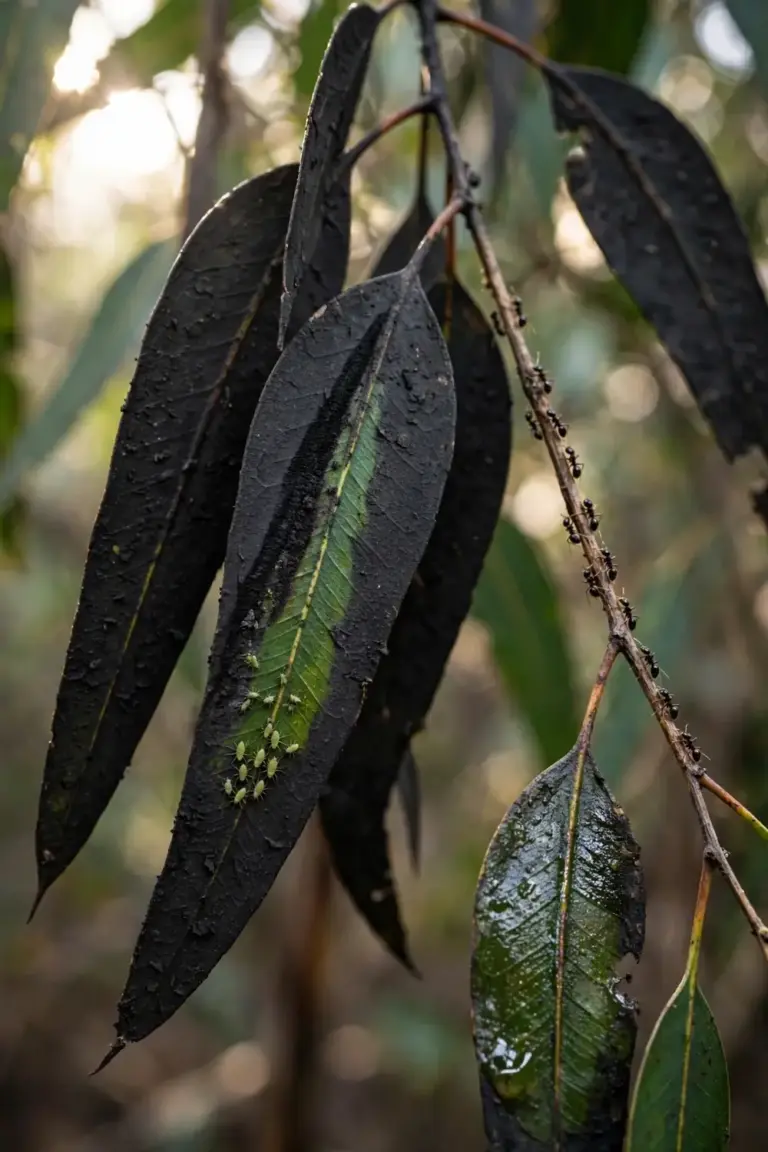
Find the insects, not the mould. The film means sap-sucking insects feed above it. Check the undersides of leaves and the shoot tips for aphids, scale, psyllids, or mealybugs. Ants farming the insects are a second clue. An ant trail up the trunk leads to the colony. The mould follows the honeydew rain downward, so the blackest leaves sit below the colony.
The fix is the insect, not the fungus. Knock a light infestation off with a strong jet of water. Prune the worst infested shoot tips and bin them. Encourage predators by leaving the tree unsprayed for a few weeks where the infestation is light. Ladybirds, lacewings, and parasitic wasps eat sap-sucking insects. A horticultural oil spray labelled for the insect can help on a young tree. Follow the label exactly. Never spray open flowers. A broad-spectrum insecticide kills the predators with the pests, and the pest population rebounds first.
Wash the film off after the insects are gone. A gentle hose-down clears the black coating and lets the leaves photosynthesise again. The film alone rarely kills a tree. A heavy coating across most of the canopy slows growth, and the real damage comes from the insects draining sap above it.
7. Bleeding Bark and Target Lesions: Cankers and Quambalaria
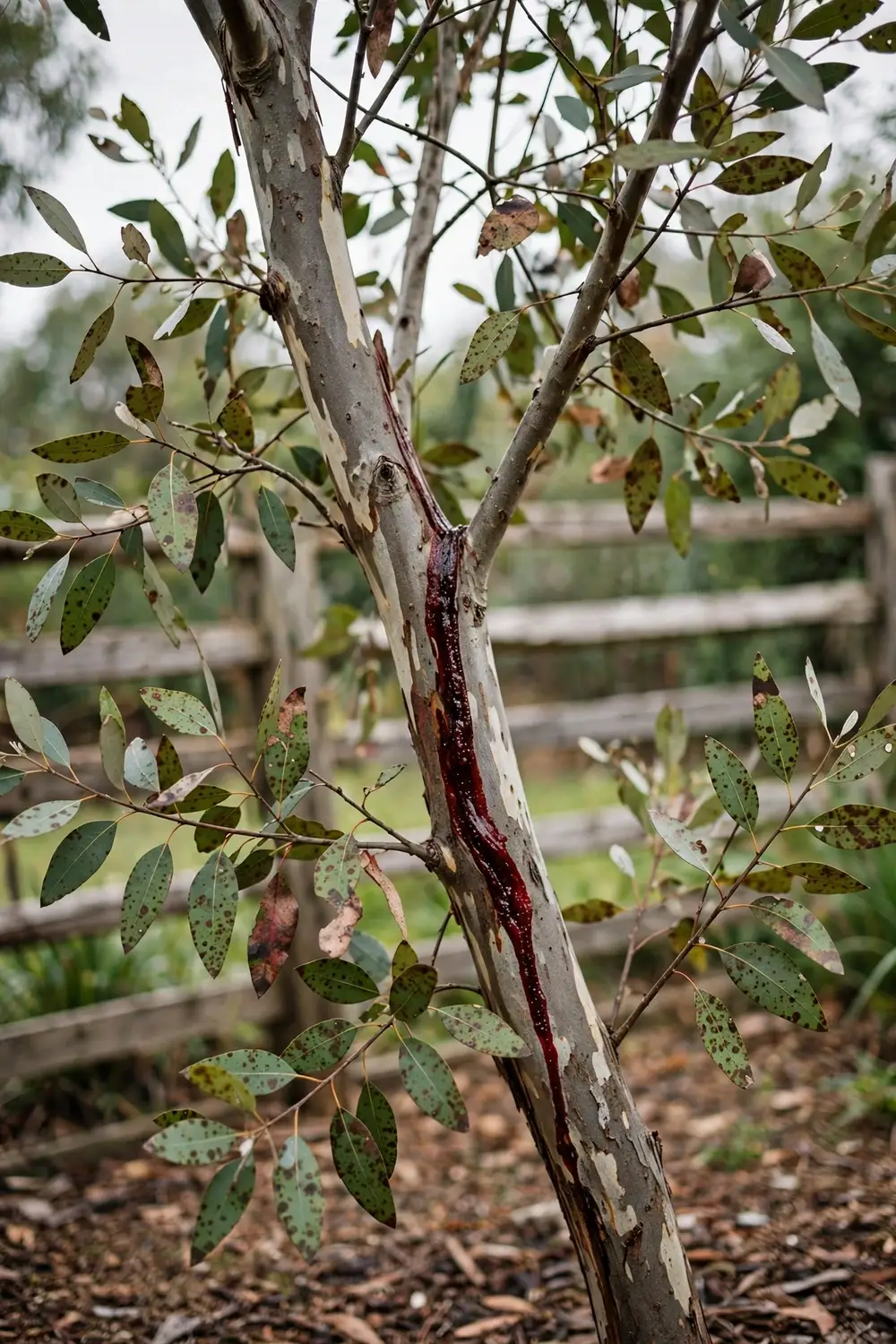
A canker is a dead patch of bark and the wood beneath it. The tree walls the patch off, the fungus breaks through, and the cycle repeats. The result is a target-shaped lesion: rings of dead bark around a wound. Kino bleeds from the lesion and stains the bark dark red. Girdling follows when the lesion circles the trunk or a limb, and the part above the girdle dies.
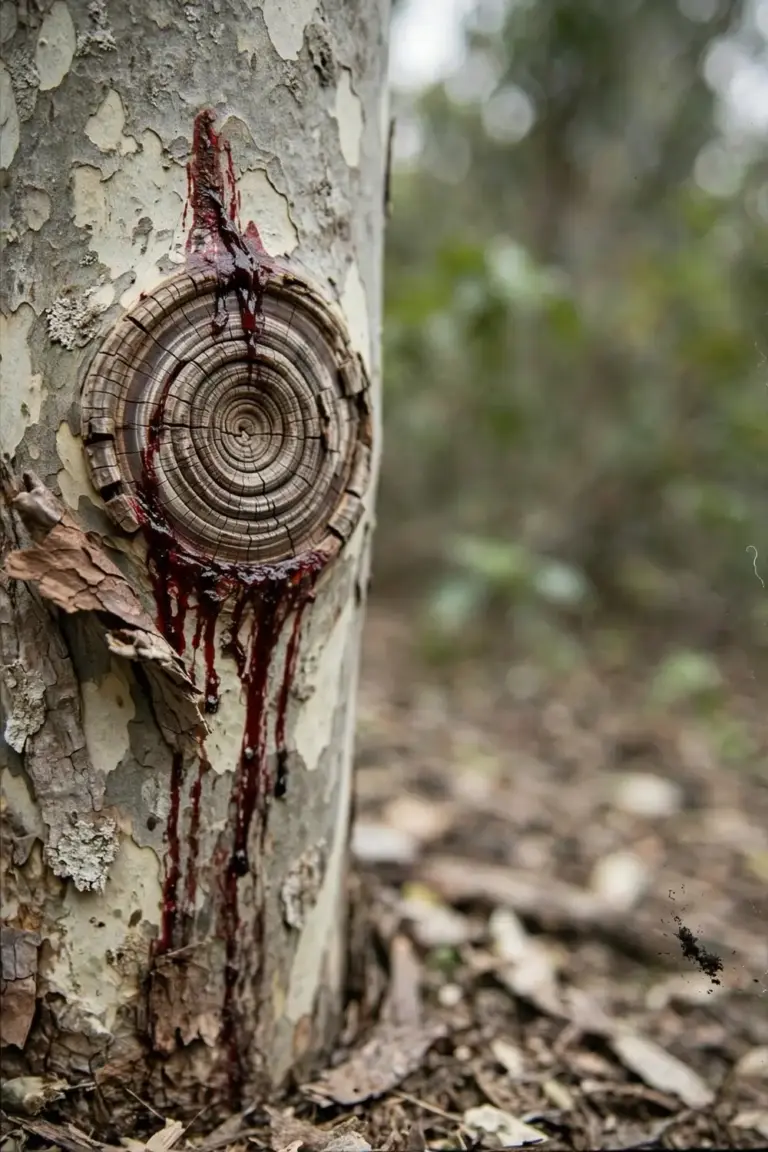
Quambalaria coyrecup causes marri canker on marri and red flowering gum in Western Australia. The fungus is native to the south-west. Its spores enter the stem through a wound or crack and infect the sapwood. The infected tree produces an abundance of kino in response. As the infection spreads it causes a target-like infection site that may ring-bark the tree and often causes the bark to crack and shed, according to the Western Australian Department of Biodiversity, Conservation and Attractions. Quambalaria pitereka causes marri shoot blight. That fungus is native to the east coast and was introduced into Western Australia, where it damages flowers and fruit. Infected parts show dark lesions, deformed growth, and premature death, and white spore masses may appear on flowers and fruit in the right conditions.
Not every kino bleed is a canker. Marri trees ooze red kino from wounds, insect damage, and branch stubs. Small cracks that ooze kino often callus over and vanish. A canker keeps growing. Watch the lesion across weeks. A lesion that widens, sheds bark, and bleeds repeatedly is a canker. A crack that dries and calluses is a wound healing.
The home response is wound care and an arborist. Keep mowers and whipper snippers away from the trunk, and never wound the bark with a tool and leave it. Prune dead branches back to sound wood with clean tools, and clean the tools between cuts with a disinfectant. Do not paint wounds with sealant, because sealant traps moisture and the fungus grows under it. A canker on a large limb or the trunk is an arborist job. The arborist judges whether the limb stays, whether the tree stays, and whether the tree is safe near a house or a path.
8. Death From Below: Root Rot and Collar Rot
Root rot kills from below ground, so the canopy shows the damage last. The signs are wilting in wet soil, yellowing leaves, a thinning crown, and branches that die back from the tips. Two fungal groups cause most gum tree root rot in Australia: Armillaria and Phytophthora. They demand different responses, so the distinction matters.
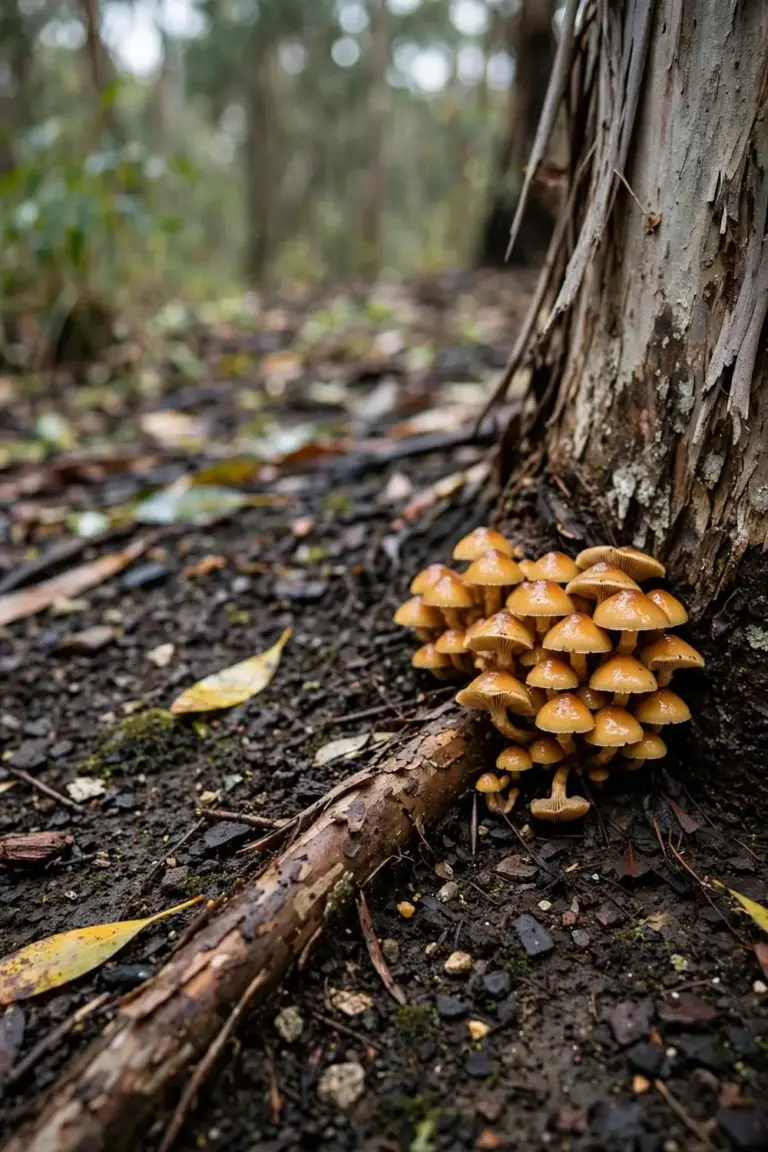
Armillaria root rot comes from Armillaria fungi, also called honey fungus. The signs sit at the base. Honey-colored mushrooms cluster at the base of the trunk or along surface roots in autumn. A white fan of fungal tissue grows under the bark at the base. Black bootlace-like rhizomorphs run through the soil and along roots. The fungus survives on buried dead wood for years. There is no cure for Armillaria in an established tree, according to a Wisconsin forestry note on the disease. Infected wood rots from the inside, and a tree with rotted roots can break over without warning. A tree with Armillaria near a house, a path, or a play area is an arborist job, not a home project.
Phytophthora root rot comes from Phytophthora cinnamomi. Phytophthora cinnamomi is a water mould, not a true fungus. That distinction matters because fungicides aimed at true fungi do not control it. The pathogen lives in the soil, attacks fine roots, and blocks water and nutrient uptake. The disease is listed as a key threatening process under Australian environment law, and the pathogen is impossible to eradicate from infested areas in most situations, according to the Australian Government environment department. Wet soil favours it. Poor drainage, a low planting spot, and overwatering all raise the risk.
Confirm root rot before you act. Dig one side of the root zone gently with a hand trowel. Healthy roots are firm and pale inside. Rotted roots are soft, dark, and smell sour. A collar at the base that is soft and dark points at collar rot. A base with white fans points at Armillaria. Do not dig all the way around the tree. One careful check gives the answer without adding root damage.
The home response is drainage, hygiene, and an arborist. Stop watering the tree. Improve surface drainage so water moves away from the base. Keep mulch clear of the trunk. Clean boots, tools, and vehicle tyres after working near an infested tree, because soil moves the pathogen. Never move soil or plant material from an infested site to a clean site. If the tree stands near people or property, call an arborist for a stability assessment.
9. Thinning Crown and Dead Tips: Dieback
Dieback is a symptom, not a fungus. The crown thins. Shoot tips die. Branches die back from the tips toward the trunk. The pattern develops over months or years. Dieback has many causes, and naming the cause decides the response.
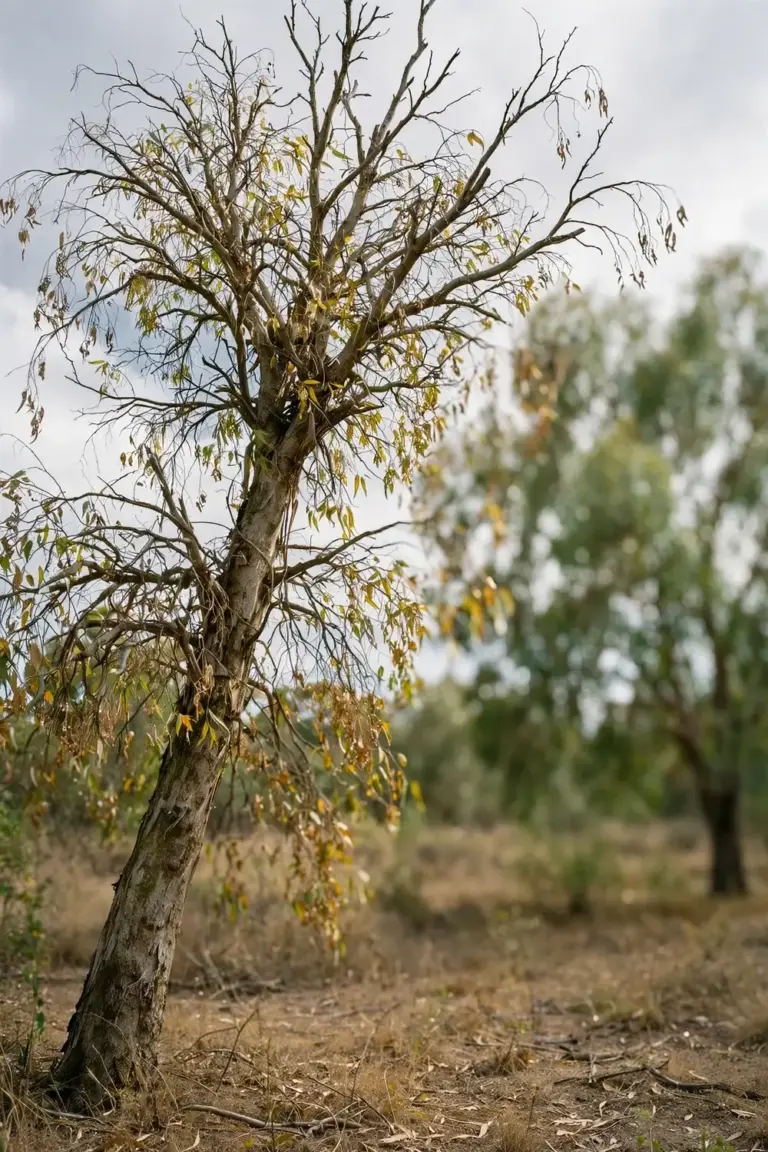
Fungal causes of dieback include Phytophthora root rot, Armillaria root rot, severe Teratosphaeria defoliation, and canker fungi that girdle limbs. Non-fungal causes include drought, waterlogging, soil compaction, herbicide drift, borer insects, and old age. A tree that thins after a wet winter points at a root problem. A tree that thins after a dry summer points at drought. A tree that thins on one side points at a local cause on that side, such as a damaged root zone or a canker on one limb.
Work the checklist before you name a fungus. Check the soil moisture with a finger test at 10 cm. Check the base for mushrooms, fans, kino, or soft bark. Check the leaves for spots, powder, or film. Check for recent changes near the tree: trenching, paving, fill soil, a new drain, or a herbicide application nearby. A single change in the root zone explains more dieback than any fungus ever will.
Call an arborist early for dieback on a large tree. Dieback in a large tree is a safety question as much as a health question. Dead limbs fall. A rotted root plate fails without warning. The arborist assesses stability, tests for root disease, and advises whether the tree stays, gets pruned, or comes down. A home gardener cannot assess root plate stability from the ground.
10. Run the Organic Treatment Ladder: Sanitation, Airflow, Spray, Arborist
Organic treatment is a ladder, not a single spray, and each rung costs more effort than the last. Climb the ladder in order and stop when the problem is managed.
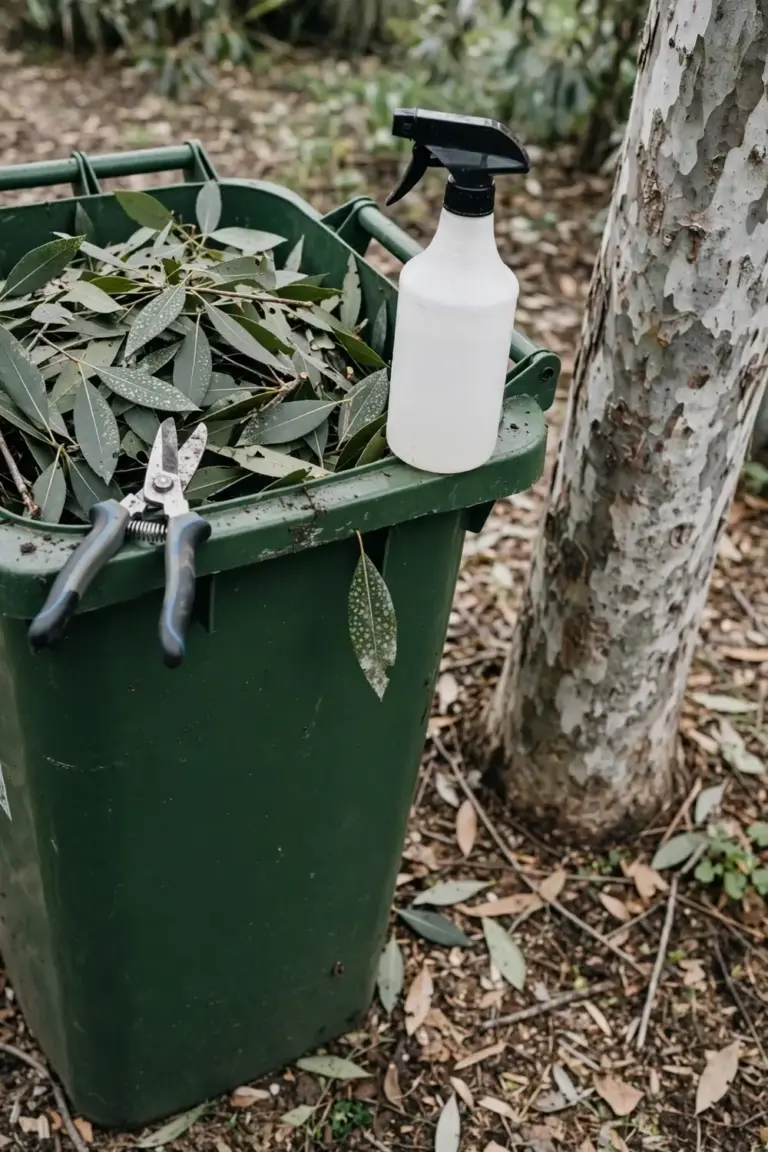
Rung one is sanitation. Remove fallen leaves, fallen fruit, and dead twigs from under the tree and bin them. Never compost infected material. The compost pile stays warm and damp, and fungal spores survive in it. Pick up fallen fruit daily in a fruiting season. Disinfect tools after working on an infected tree. A bucket of disinfectant and a rag take two minutes and stop the next infection.
Rung two is airflow and water. Thin crowded growth so air moves through the canopy and leaves dry after rain. Keep the soil surface clear of leaf litter through the wet season. Water at the soil line, never over the canopy. Keep mulch clear of the trunk by a hand span. Wet leaves grow fungi. Dry leaves do not.
Rung three is a labelled organic spray. Copper sprays and bicarbonate sprays are labelled for some leaf diseases on some plants. The Arbor Operations tree disease notes name copper-based fungicides for other leaf diseases such as fig rust and olive leaf spot. A spray protects new growth. A spray never cures an established infection in a large tree. Follow the label exactly. Wear gloves and eye protection. Keep pets and children off the sprayed area until it dries. Never spray in wind or rain. Never spray open flowers. A spray applied against the label harms the tree, the soil, and the applicator.
Rung four is the arborist. Call an arborist when the tree is large, when the damage sits high in the canopy, when a limb or the trunk shows a canker, when root rot is suspected, or when the tree stands near people or property. The arborist prunes safely, tests for root disease, applies registered treatments where they help, and advises on removal when removal is the honest answer. An arborist visit costs less than a fallen limb.
11. Prevent the Next Infection: Drainage, Spacing, Water, Clean Tools
Prevention beats treatment on every gum tree fungus. Fungi need wet tissue, still air, and a wound. Remove one of the three and the infection fails.
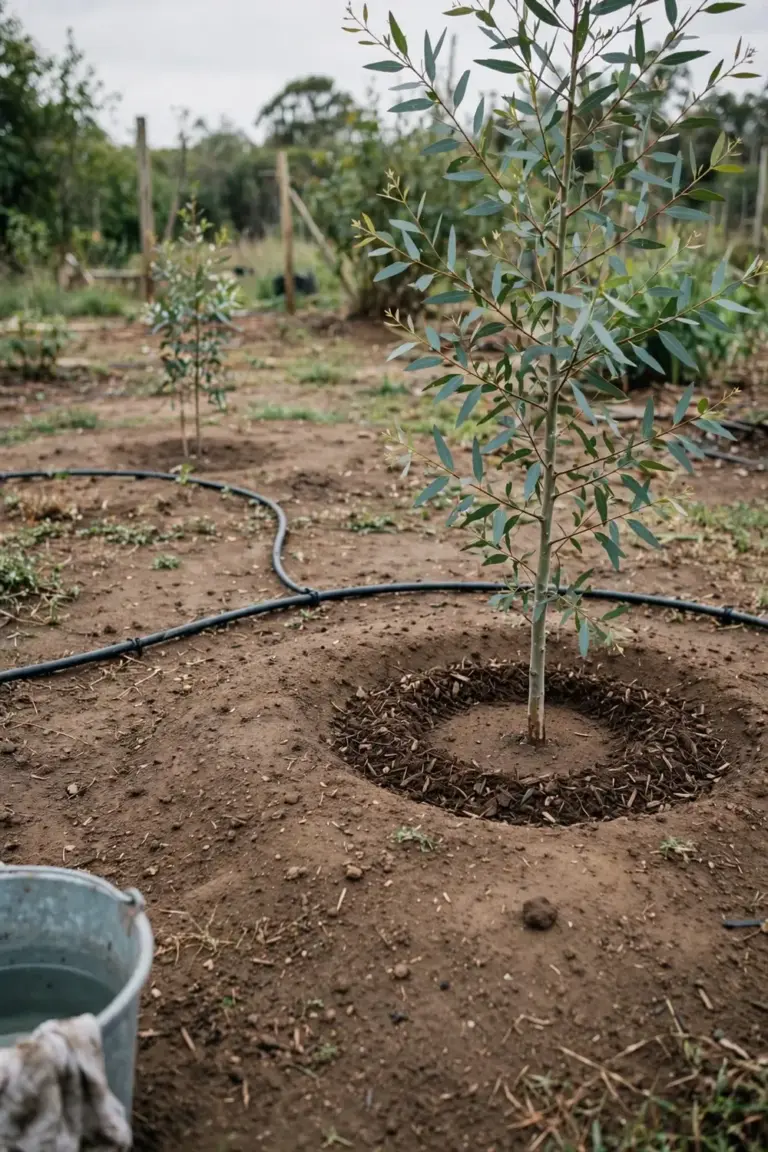
Drainage comes first. Plant a new gum tree on a slight mound in heavy soil. Keep the planting hole no deeper than the root ball. Grade the soil so water moves away from the base. Never let water pond around the trunk. Phytophthora and other root fungi thrive in wet soil, and a tree that sits in water loses its fine roots before any fungus arrives.
Spacing comes second. Give each tree room for its mature canopy. Crowded trees hold humidity against their leaves and shade their own lower branches. A shaded, damp lower canopy grows leaf fungi first. Space new plantings for the mature size, not the pot size. A small tree in a large gap grows faster than a large tree in a small gap.
Water comes third. Water at the soil line in the morning so leaves dry by evening, and never water on a schedule. Check the soil with a finger test first: a tree in moist soil needs no water, while a tree in dry soil needs a deep soak. Overhead watering wets the canopy and invites leaf fungi, so a drip line or a soaker hose keeps the leaves dry.
Clean tools come last and cost least. Disinfect secateurs, saws, and loppers between trees. A spray bottle of disinfectant and a rag live in the tool bucket. Clean boots and tyres after working in wet soil. Never move soil from a diseased site to a clean site. Soil health supports the tree that resists infection, and spring pruning techniques keep the canopy open and dry. The organic pest control guide covers the sap-sucking insects that feed sooty mould.
12. Frequently Asked Questions
Yes. Myrtle rust, Armillaria root rot, and Phytophthora root rot all kill healthy trees. A vigorous tree resists leaf fungi better than a stressed tree. Root fungi kill vigorous trees too. Stress raises the risk, and good drainage, spacing, and wound care lower it. No tree is immune to every fungus.
Rarely. Root rot in an established tree has no home cure. The gardener stops watering, improves drainage, and keeps soil away from the base. An arborist assesses stability and advises on removal. A young tree in a pot can sometimes recover with fresh mix and a raised position. A large tree with rotted roots is a safety question.
Only a labelled spray for the named problem, applied exactly as the label directs. A spray protects new growth. A spray never cures an established infection in a large tree. Copper and bicarbonate sprays suit some leaf diseases. Myrtle rust and root fungi need an arborist or a biosecurity officer. Spraying the wrong product wastes money and harms the soil.
Sooty mould itself is not dangerous. The fungi grow on honeydew and do not invade the leaf. The danger sits with the sap-sucking insects that excrete the honeydew. Those insects drain sap and weaken the tree. Control the insects and the mould washes away. A heavy coating across most of the canopy slows growth by blocking light.
Call an arborist when the tree is large, when damage sits high in the canopy, when a canker girdles a limb or the trunk, when root rot is suspected, or when the tree stands near a house, a path, or powerlines. Call a biosecurity officer for suspected myrtle rust. Never climb a diseased tree to inspect or prune it.
13. Name the Fungal Problem on Your Gum Tree by Location, Then Act on What It Allows
Name the problem by where it sits: leaves mean a leaf fungus, bark means a canker fungus, the base means a root fungus, and the whole crown means a root problem, a severe infection, or a non-fungal cause. That one habit separates the problems you can manage from the problems that need an arborist.
The honest rule stays the same across every fungus here. Sanitation, airflow, drainage, and clean tools prevent more disease than any spray ever will. A spray protects new growth. A spray never cures an established infection in a large tree. An arborist answers the safety question that a home gardener cannot. Photograph first, touch second, and report myrtle rust before you do anything else.