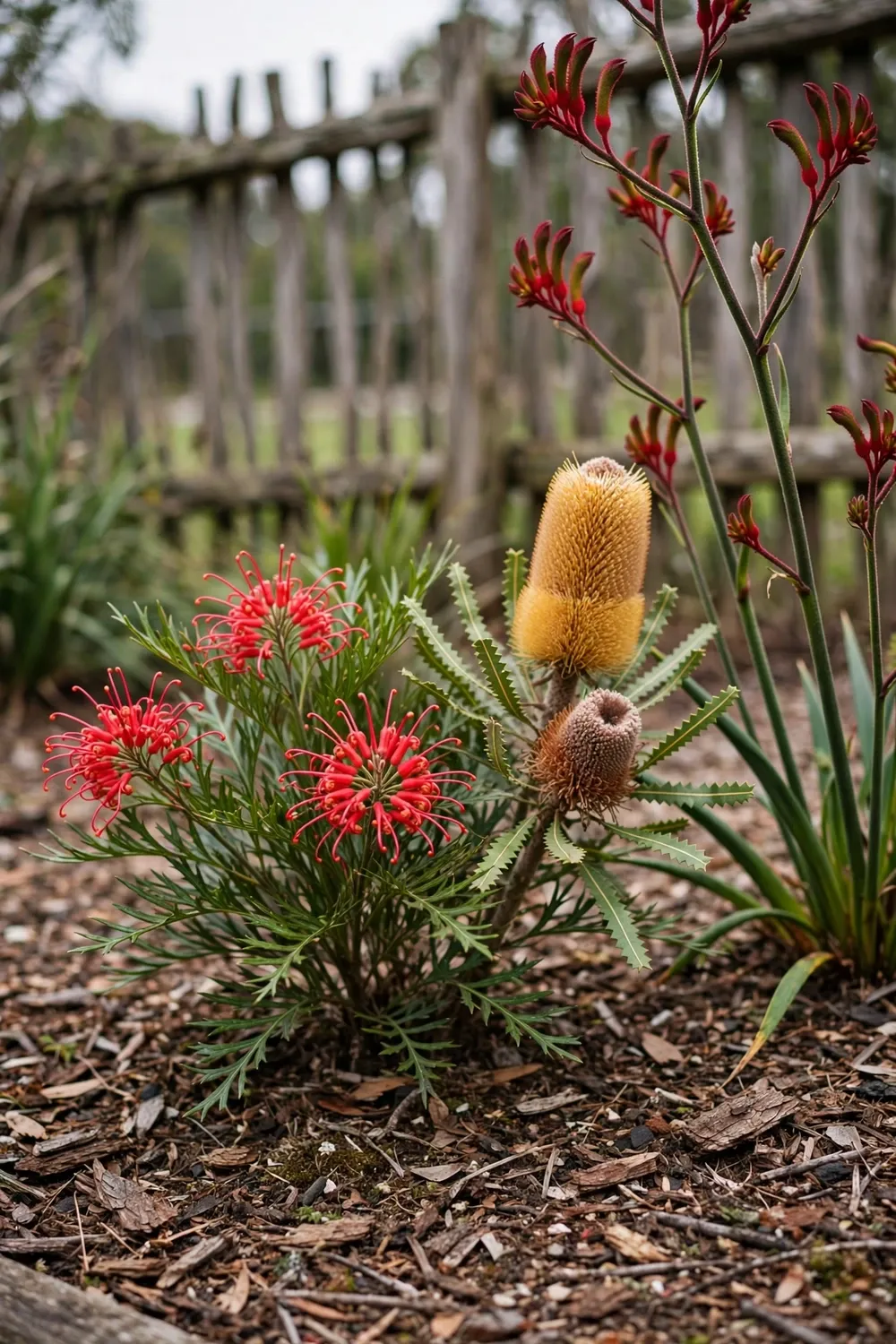

Five rules decide whether Australian native plants thrive in your garden: drainage, sun, local provenance, low-phosphorus feed, and mulch 75 to 100 mm deep. A native that gets all five thrives on neglect. A native that misses one fails while the gardener blames the plant.
I have learned that a native planted in the wrong soil fails faster than a native planted in the wrong season.
The rest of this page is 12 moves, from the five rules to the first-year plan. Read the rules first. Buy the plant second.
Grow Natives by 5 Shared Rules
The five rules below cover nearly every Australian native in a home garden. They work because Australian soils are old, low in phosphorus, and often free draining, and the plants evolved to match those soils.
| Rule | What It Means | Failure If Skipped |
|---|---|---|
| Drainage | Water leaves the root zone within hours, never days | Roots sit wet, rot sets in, and the plant dies from below |
| Sun | Full sun for most natives, part shade for rainforest types | Weak growth, thin foliage, and few flowers |
| Local provenance | Stock grown from seed collected near your district | Poor frost tolerance, poor humidity tolerance, short life |
| Low phosphorus | Feed native formulas only, or feed nothing | Phosphorus toxicity burns roots and kills Proteaceae first |
| Mulch | Coarse organic mulch over the root zone, clear of stems | Dry roots, weed pressure, and wild soil temperature swings |
Drainage sits first because it kills fastest. A native in wet soil rots in weeks. A native in dry soil wilts, then recovers with one deep watering. Check drainage before you buy anything. Dig a 30 cm hole, fill it with water, and watch. Water that still stands the next morning means a raised bed or a different spot.
Sun runs a close second. Most Australian natives evolved under open sky. They flower best in full sun. Rainforest natives break the rule. They evolved under a canopy, and they want part shade plus steady moisture. Match the plant to the light you have, not the light you wish for.
Match the Plant to Your Place Before You Buy
A native that thrives 500 km away can fail in your garden. Distance matters less than conditions. Frost, humidity, rainfall, and soil type decide survival. A plant from a dry inland district sulks in humid coastal air. A plant from a wet coastal forest dries out in inland heat.
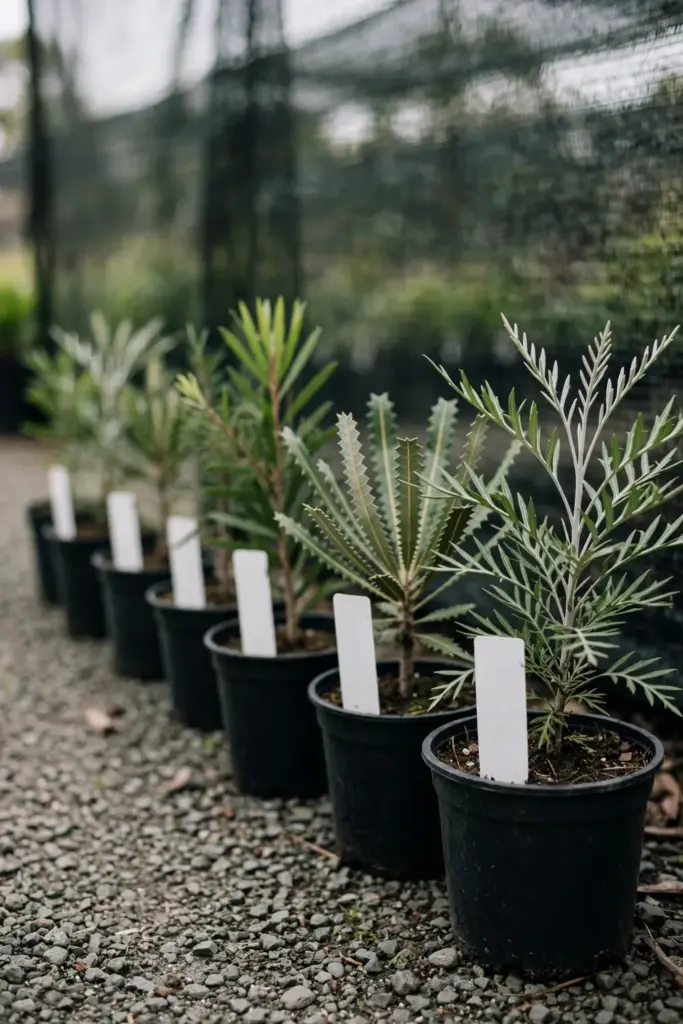
Local provenance solves most of this. Buy stock grown from seed collected in your district or a district with matching conditions. Local plants carry the frost tolerance and the rainfall rhythm of your area. They also feed the local birds and insects that evolved beside them. Ask the nursery where the seed came from. A label that names a district beats a label that names only a state.
Western Australian natives carry a special warning. Many come from sand country with dry summers. They rot fast in humid eastern summers with wet soil. The Australian National Botanic Gardens notes that Western Australian banksia species are prone to root-rot fungus and grow poorly where summers bring high humidity and rainfall, according to the Australian National Botanic Gardens banksia page. Treat a WA native as a drainage test. Give it sharp drainage, a raised bed, and no summer wet feet. Skip it if your summers stay humid and your soil stays wet.
Rainfall shapes the choice too. A garden that gets 400 mm a year needs different natives than a garden that gets 1,200 mm. Read the label for rainfall tolerance. Match the number to your district. A plant that needs more rain than your sky delivers will live on irrigation forever. A plant that needs less rain than your sky delivers will rot in the first wet winter.
Plant in the Cool Months on a Free-Draining Spot
Plant Australian natives in the cool months. Autumn and winter suit most districts. Early spring suits frost districts, once the last hard frost passes. Cool-month planting gives roots months to spread before summer heat arrives. A native planted in high summer spends its first weeks fighting heat instead of growing roots.
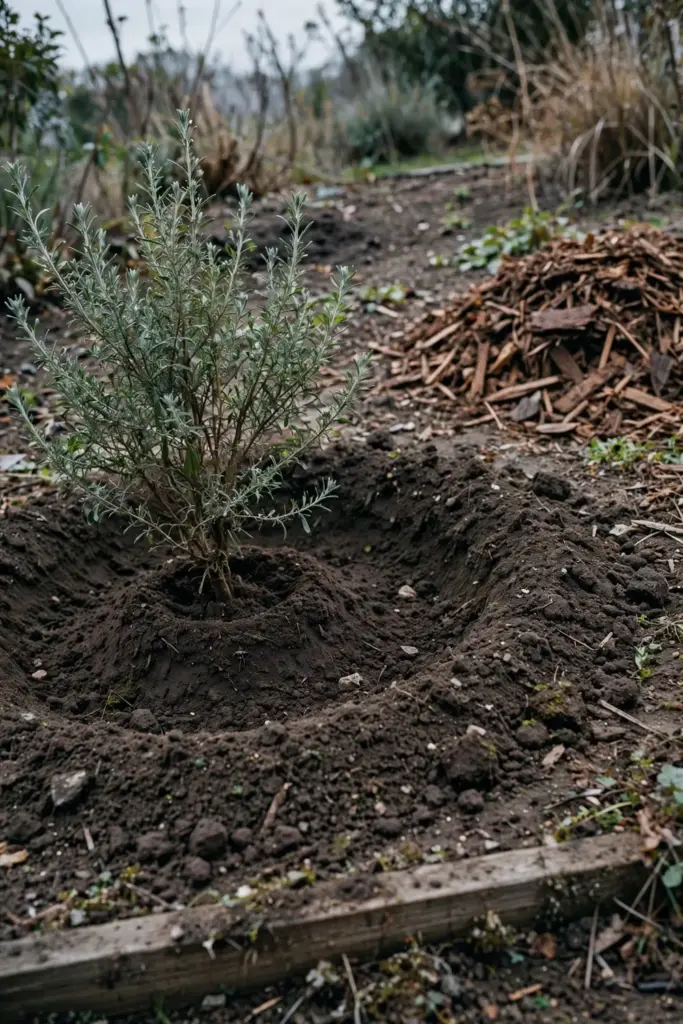
Dig the hole wider than the pot. Loose soil around the root ball lets roots spread fast. Tease out roots that circle the pot. Circling roots keep circling after planting, and they strangle the plant within a few years. Pull them outward with your fingers. Cut any root that refuses to straighten.
Soak the root ball before it goes in the ground. Submerge the pot in a bucket of water until bubbles stop rising. A dry root ball sheds water after planting, and the plant wilts while the soil around it stays damp. Pour water into the empty hole too. Wet soil grips the root ball. Dry soil leaves air pockets that dry roots out.
Keep organic matter out of the base of the hole in clay soil. Organic matter at the base keeps breaking down, and it robs roots of oxygen while it rots. Mix well-rotted organic material with the topsoil that goes around the roots in the top 15 to 20 cm of the planting hole instead, according to the Gardening With Angus native planting method. Backfill with that mix. Firm it into the gaps. Form a shallow saucer around the plant to hold water while it soaks in.
Set the plant at the same depth it sat in the pot. A native planted too deep rots at the stem. A native planted too shallow dries out at the root crown. Check the soil line on the stem. Match it to the new soil level. Mulch after watering in, not before.
Fix the Soil Before the Plant Goes In
Australian natives want soil that drains fast and feeds little. Most do best in soil that tests slightly acidic, from pH 5.5 to 6.5, according to the Garden Variety native plant care guide. Test the soil with a cheap kit before you plant, since a kit costs less than one dead shrub. The test takes ten minutes. The result shapes every decision after it.
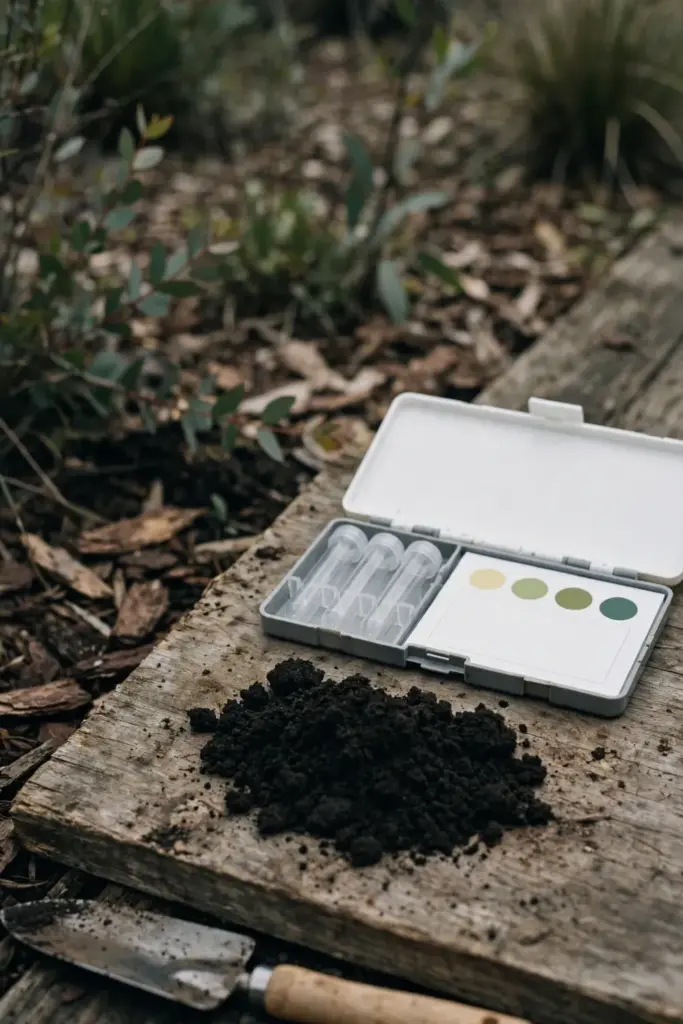
Do not lime around natives. Lime lifts pH and pushes soil toward alkaline, and most natives dislike alkaline soil. A garden that already runs alkaline needs acid-tolerant natives or a raised bed filled with native mix. Lime belongs on lawns and vegetable beds, not on native beds.
Clay soil needs structure work, not more clay. Dig coarse organic matter through the top soil. Add gypsum to heavy clay to crack it open. Build a raised bed where clay stays wet, since a raised bed of 30 cm lifts roots above the wet zone. Natives in raised beds survive winters that drown natives in flat clay.
Sandy soil needs the opposite fix. Sand drains fast and holds little food. Mix compost through the top soil to hold moisture. Mulch thick to slow evaporation. Water more often in the first summer. Sandy soil suits most natives once the organic matter goes in. The same soil that starves roses feeds grevilleas.
Soil health shapes everything after planting. Living soil holds water, cycles nutrients, and supports the fungi that feed native roots. The site’s guide to building soil health covers the soil side of the job in full. Feed the soil and the plants follow.
Water Deep, Then Back Off
Water a new native deeply at planting, then water through its first dry season. Deep watering pushes roots down, while shallow watering keeps roots near the surface, where heat kills them. Soak the root zone until water runs 20 cm down. Check with a finger or a trowel. Dry soil at 10 cm means the soak fell short.
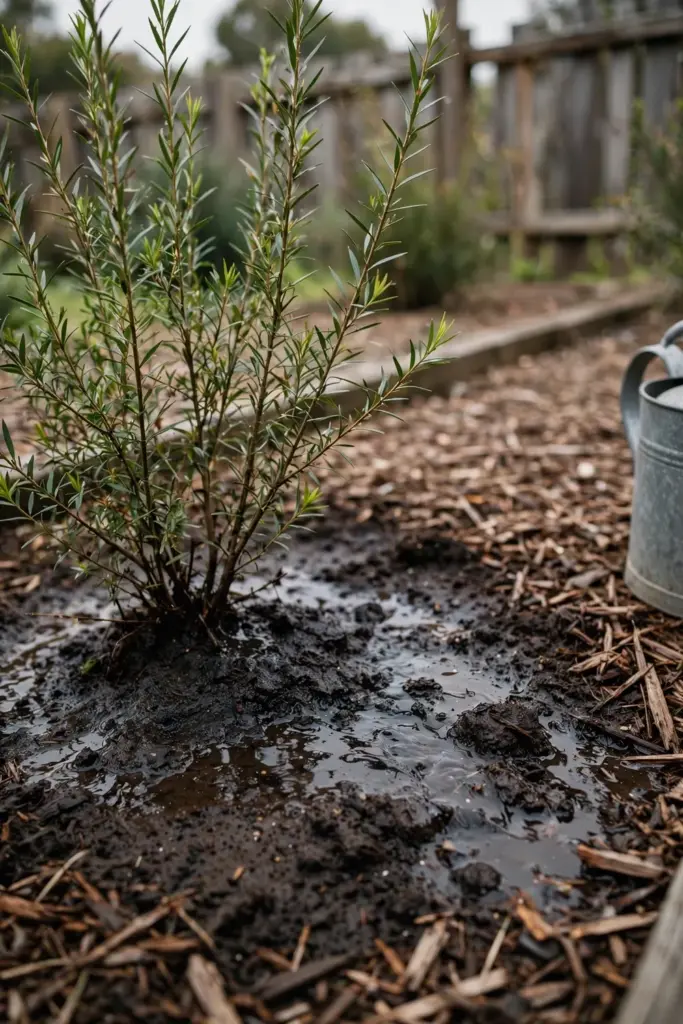
Taper the watering as the plant settles. A native watered weekly forever grows lazy roots and soft growth. A native weaned off water grows deep roots and tough leaves. Cut back to fortnightly watering in the second summer, then to rainfall alone by the third summer for dry-country species. Rainforest natives keep needing steady moisture. Know which group your plant belongs to.
Overwatering kills more natives than drought. Wet roots rot, and rotting roots stop taking up water. The plant wilts, the gardener waters more, and the rot speeds up. Wilting in wet soil means rot, not thirst. Check the soil before you reach for the hose. Dry soil at finger depth means water, and water it deeply when it reads dry. Damp soil means wait.
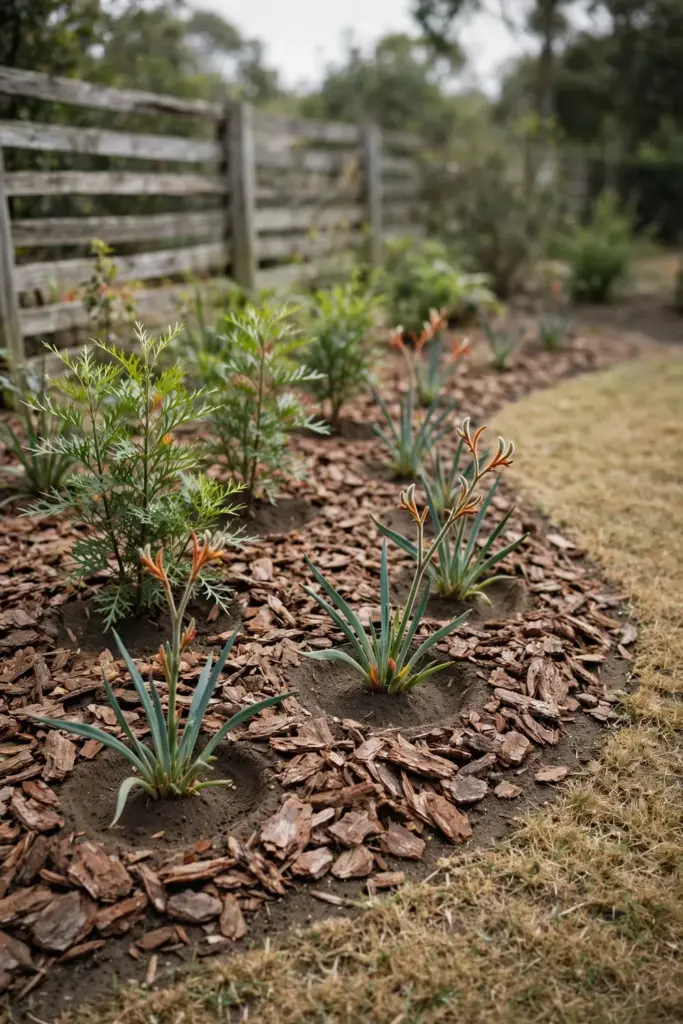
Mulch carries half the watering job. A layer of coarse organic mulch 75 to 100 mm deep holds moisture, cools roots, and blocks weeds, per the same native care guide. Keep mulch clear of stems, since mulch piled against a stem rots the bark and invites borers. Leave a clear ring of 5 cm around every stem. The site’s explainer on what mulching does for weeds, pests, and moisture covers the mulch side in full.
Rain tanks beat town water for natives. Town water runs slightly alkaline in many districts. Rainwater runs slightly acidic. Natives prefer the acidic side. A tank also delivers water without the chlorine load. Use tank water where you can. Use town water without guilt where you cannot.
Feed Low Phosphorus or Feed Nothing
Phosphorus kills sensitive natives. Australian soils run low in phosphorus. Native roots evolved to scavenge tiny amounts. A standard garden fertilizer floods those roots with far more phosphorus than they evolved to handle. The roots burn, the leaves yellow, and the plant dies. The gardener blames drought.
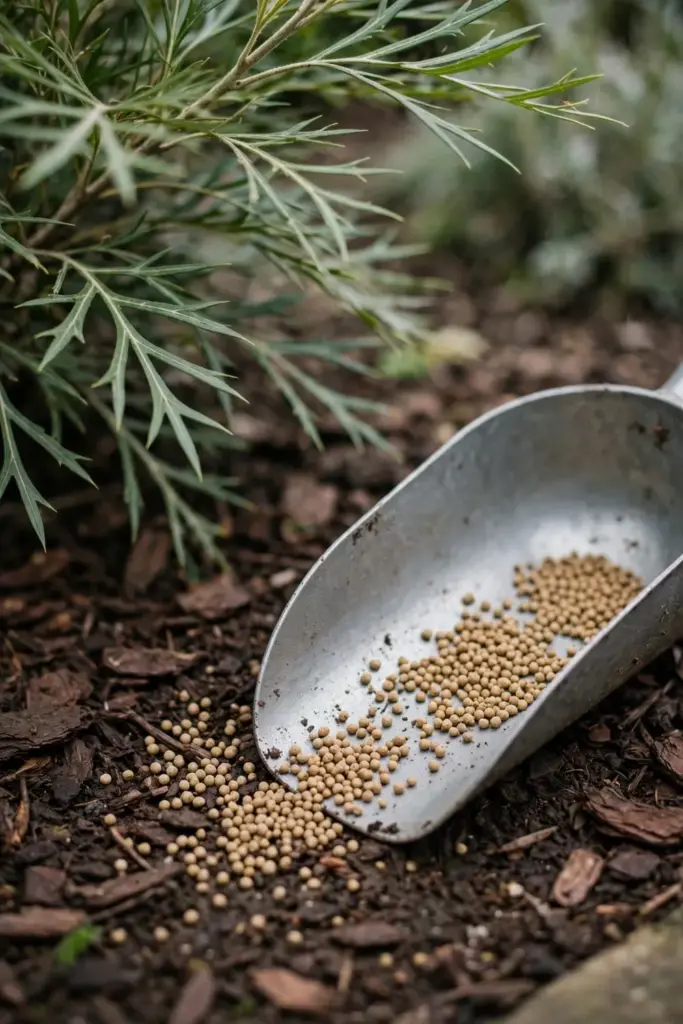
Proteaceae carry the highest risk. Grevillea, banksia, hakea, and waratah sit in this family. They grow proteoid roots, dense mats of fine roots that mine phosphorus from poor soil and pull it in fast. A dose that feeds a rose poisons a grevillea. Treat every Proteaceae plant as phosphorus sensitive until you know otherwise.
Read the label before you feed. Native fertilizer must cap phosphorus at 2 percent, according to the Garden Variety native plant care guide. Many sensitive natives prefer zero percent. A native formula near NPK 10-1-8 suits most natives, per the same native care guide. The middle number is phosphorus, so keep it at 1 or below. A 10-10-10 balanced fertilizer has no place near natives.
Feed once or twice a year at most, in spring and autumn. Established natives in reasonable soil need no feeding at all, in any season, in any year. A native that grows well without feed needs no feed. Feed a pale, slow plant once and watch. Feed a healthy plant never.
Skip compost and manure near sensitive natives. Compost and manure carry phosphorus, and mushroom compost carries phosphorus while running alkaline. Both harm Proteaceae. Use compost on vegetable beds and exotic beds instead. Use a native-specific slow-release fertilizer or nothing on native beds.
Seaweed solution is the safe exception. Seaweed carries almost no phosphorus. It feeds soil life and steadies stressed plants. Apply it after planting and after heat waves, since it will not burn roots. It will not replace a feed, and it does not need to.
Prune Light After Flowering
Prune Australian natives lightly and often. Tip pruning after flowering keeps shrubs dense and floriferous. Pinch the spent flower head and 5 to 10 cm of soft tip growth. New shoots sprout below the cut and carry next season’s flowers. A shrub pruned this way stays compact for years.
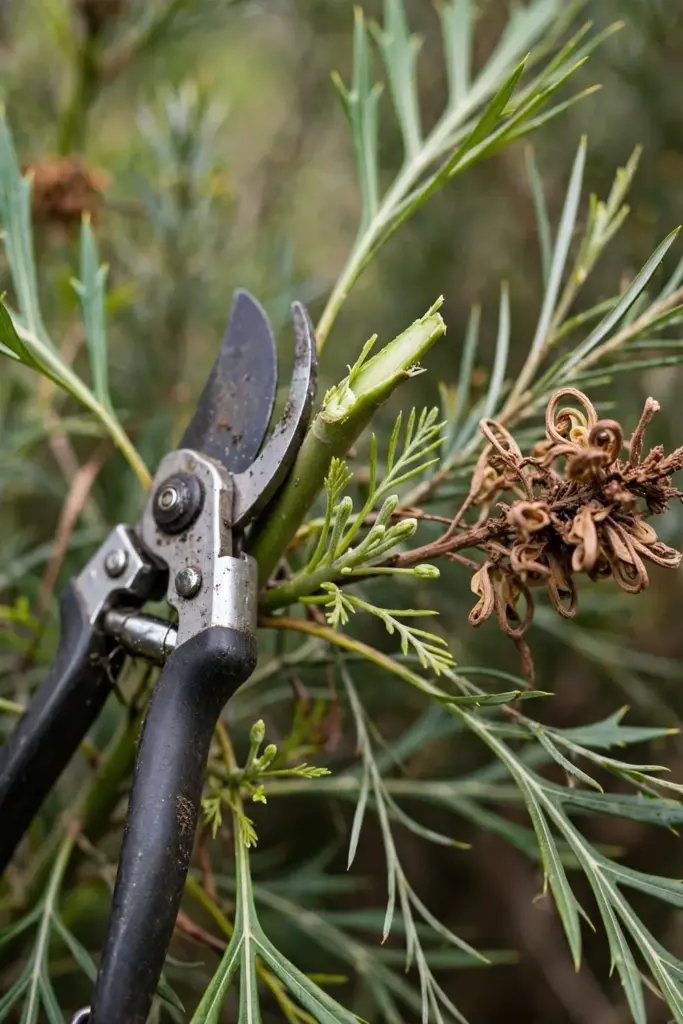
Never cut into old bare wood on most natives, because that wood rarely reshoots. Old wood on many natives carries no dormant buds. A branch cut back to bare wood stays bare, and the shrub turns leggy and sparse. Prune while green growth remains below the cut. Leave leaves on every branch you shorten.
Prune at the right time. Flowering natives set buds on new growth or old growth depending on the genus. Prune after flowering finishes. Pruning before flowering cuts off the coming display. A light trim after flowering also shapes the shrub before the next growth flush.
Remove dead wood any time. Dead wood harbours borers and fungus. Cut it back to live tissue. Clean the cut. Sterilise secateurs between plants if disease is present. A clean cut heals. A ragged cut invites rot.
Hedges need a different rhythm. A lilly pilly hedge needs trimming two or three times a year to stay dense. Trim little and often. A hedge cut hard once a year turns woody and thin at the base. Small regular trims keep leaves from top to bottom.
Let Each Native Group Bend the Rules
Native groups bend the five rules in different directions. Learn the group before you plant the species. Five groups cover most garden natives.
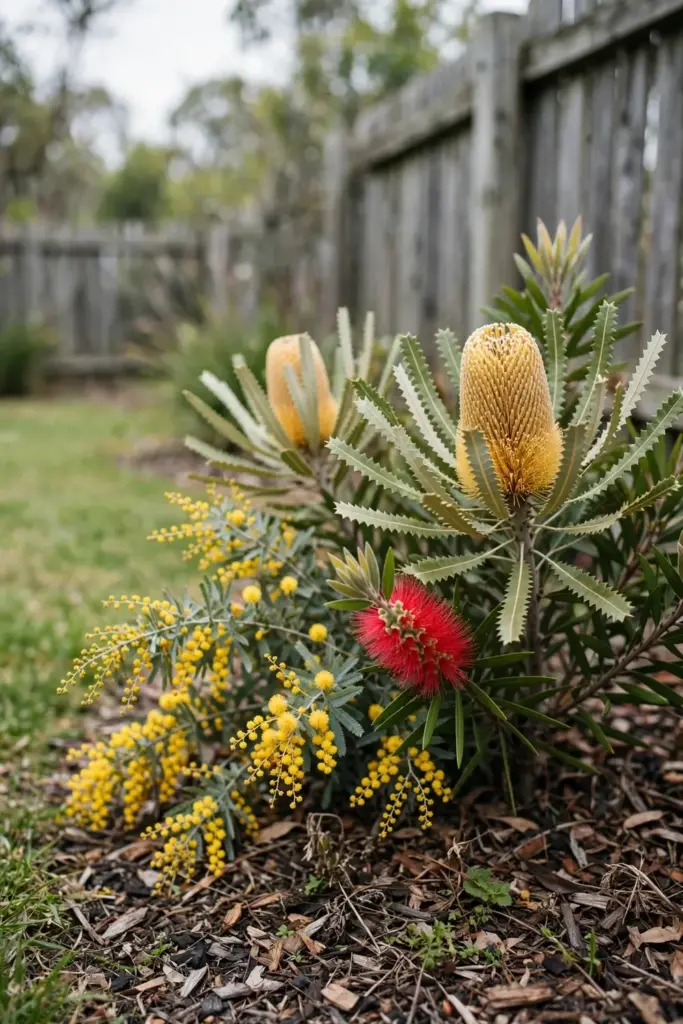
Proteaceae (grevillea, banksia, hakea, waratah) demand sharp drainage and zero or near-zero phosphorus. They grow proteoid roots that mine poor soil. They hate wet feet and rich feed. They love full sun and lean soil. Banksias alone span groundcovers to trees 25 m tall, so size varies more than care does. Read the label for mature height. Buy the size that fits the gap.
Myrtaceae (bottlebrush, tea tree, eucalyptus, lilly pilly) tolerate richer soil and more water than Proteaceae. Bottlebrush and tea tree handle damp spots that kill banksias. Lilly pilly handles hedges and shade that starve grevilleas. Eucalyptus needs space and full sun. Myrtaceae still dislikes phosphorus-heavy feed, but it forgives a standard native formula.
Acacia (wattle) fixes its own nitrogen. Wattle feeds itself through root nodules that pull nitrogen from the air. It needs no nitrogen feed. It grows fast, flowers young, and dies young. Treat wattle as a short-lived nurse plant. Let it shelter slower natives, then remove it when it ages out. Wattle seed germinates after heat or scratching. Direct-sown wattle suits revegetation blocks better than garden beds.
Native grasses (kangaroo grass, wallaby grass, weeping grass) want sun and little else. They handle poor soil, drought, and frost. They die back in winter and reshoot in spring. Cut them hard in late winter to refresh the clump. They feed seed-eating birds through autumn. They suit mass planting on banks and verges where shrubs fail.
Rainforest natives (native ginger, native violets, tree ferns, lilly pilly in shade forms) break the sun rule. They want part shade, steady moisture, and rich organic soil. They suit courtyards and south-facing beds. They fail in open sun and dry wind. Give them leaf litter mulch and shelter from afternoon sun.
Fire shapes some natives. Serotinous species hold seed in woody cones until fire opens them. A banksia cone on the shrub is a seed bank waiting for heat. Gardeners do not need fire to grow them. Nursery seed comes pre-treated. The site’s article on 2 pyrophytic plants found in Australia covers the fire side in full.
Keep Pots to Dwarf Forms and Native Mix
Pots suit dwarf natives and small shrubs. A pot holds a 45 cm groundcover banksia or a compact grevillea. A pot never holds a tree banksia or a gum. Buy the dwarf form by name. Check the label for mature height. A tree in a pot outgrows the pot, then sulks.
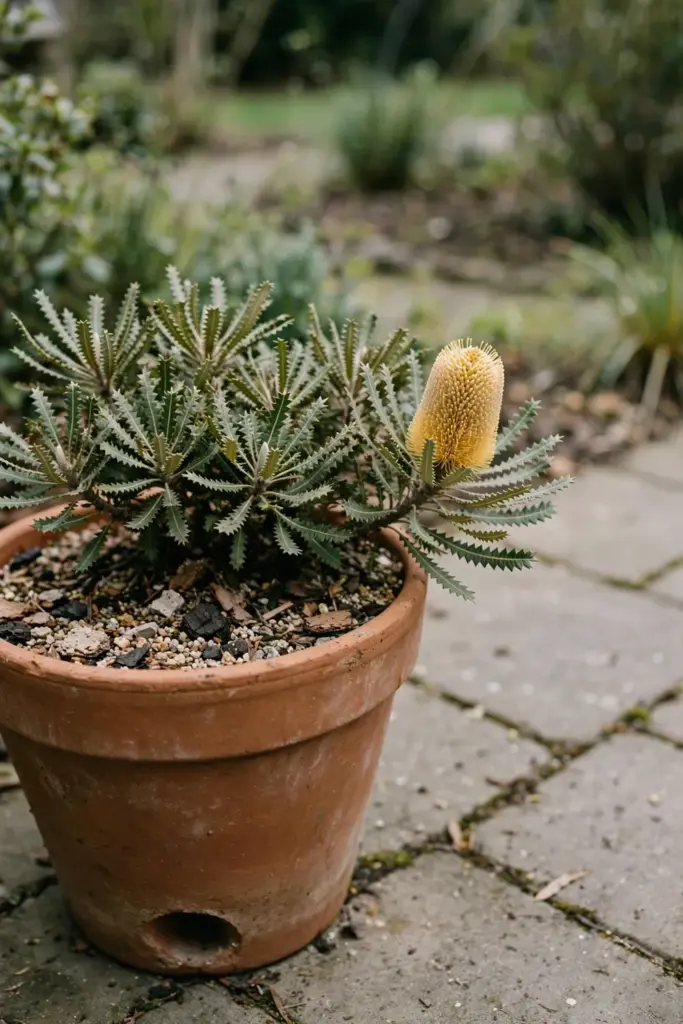
Use native potting mix, not standard mix. Standard mix carries phosphorus levels that harm sensitive natives. Native mix runs low in phosphorus and drains fast. Add coarse sand or perlite for extra drainage, because a pot with no drainage hole kills natives fast. Drill one or buy a pot that has one.
Water pots more often than beds. Pots dry out in days. Beds hold moisture for weeks. Check pots with a finger every second day in summer. Water when the top 5 cm dries. Feed pots once in spring with native slow-release fertilizer. Pots leach food faster than beds, so pots earn the one feed that beds skip.
The site’s guide to the best Australian native plants for container gardens covers pots in full. This page stays on in-ground growing. Pots get this section and that link, nothing more.
Layer the Garden for Birds and Bees
Native gardens feed wildlife. Nectar-rich flowers feed honeyeaters, lorikeets, bees, and butterflies. Seed heads feed finches and parrots. Dense shrubs shelter small birds from cats and currawongs. A native garden with three layers feeds more wildlife than a lawn with one tree.
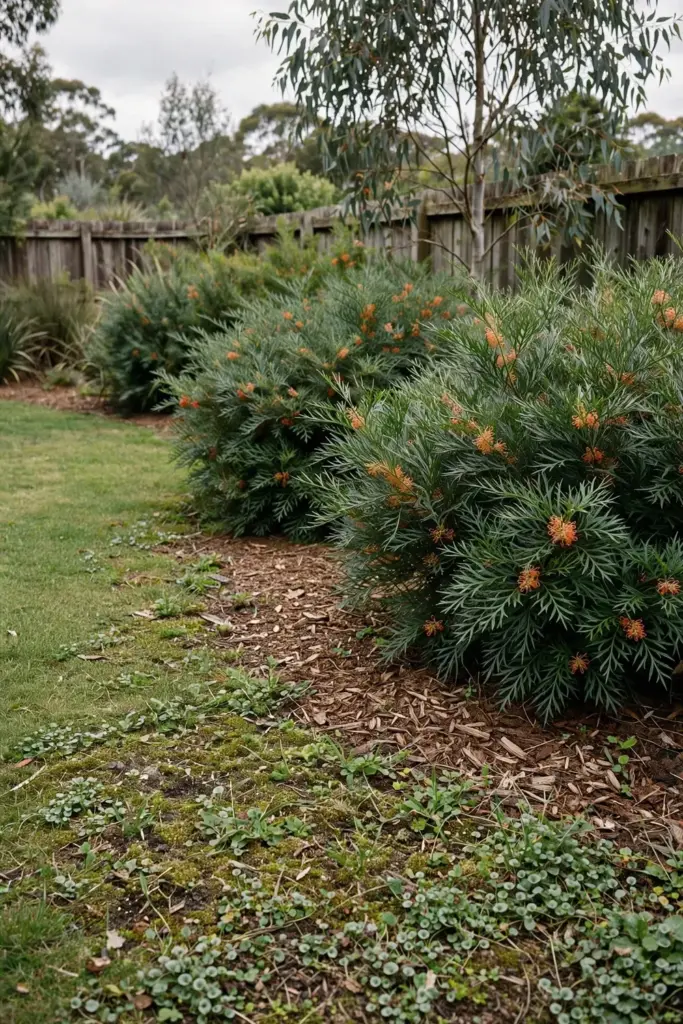
Plant in layers. Groundcovers hold the soil and feed ground birds. Shrubs at waist height give small birds nesting cover. Trees above give shade, perches, and canopy food, and a garden with all three layers hums. A garden with one layer stays quiet.
Flower across the seasons. A garden that flowers only in spring starves birds in winter. Mix winter-flowering banksias with spring-flowering grevilleas and summer-flowering bottlebrushes. Something must flower every month. Check the flowering season on every label before you buy.
Skip pesticides on natives. Native flowers feed insects. Insects feed birds. A spray that kills aphids kills the ladybirds that eat them, and the birds that eat the ladybirds. Let the food web work. Pick off a bad infestation by hand. Hose aphids off with a hard jet of water from the hose. Leave the rest to the birds.
Water for wildlife matters as much as flowers. A shallow birdbath with a stone in it gives birds and bees a drink. Keep the water clean and change it weekly. A birdbath near shrubs beats a birdbath in open lawn. Birds drink, then dart into cover.
Skip the 5 Mistakes That Kill Natives
Five mistakes kill more natives than any disease, pest, or storm. Each one is easy to skip once you see it.
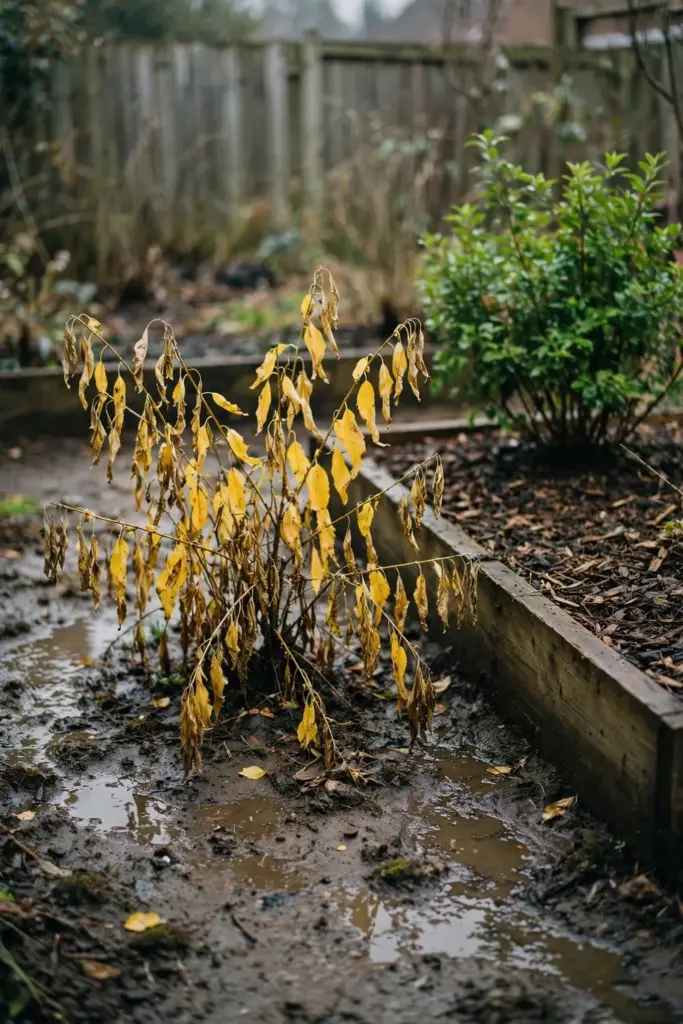
Mistake one is planting in wet soil. A native in a bog rots. Check drainage first, and raise the bed if water stands. Move the plant if the spot stays damp.
Mistake two is feeding standard fertilizer. A rose feed poisons a grevillea, so read the label first. Keep phosphorus at 2 percent or below. Feed nothing when in doubt.
Mistake three is liming the bed. Lime lifts pH past what natives tolerate, so keep it away from native beds. Test pH before you amend anything.
Mistake four is planting a tree in a gap that fits a shrub. A 25 m banksia in a 3 m courtyard becomes a removal job. Read the mature height on the label. Match the plant to the gap.
Mistake five is watering forever. A native on weekly irrigation grows soft and shallow-rooted. Wean it off water by the second summer. Let rainfall carry it. Rainforest natives keep the water. Dry-country natives do not.
Diagnose the 3 Failures That Matter
Three failures cover most dead natives, so diagnose in order and fix the cause, not the symptom.
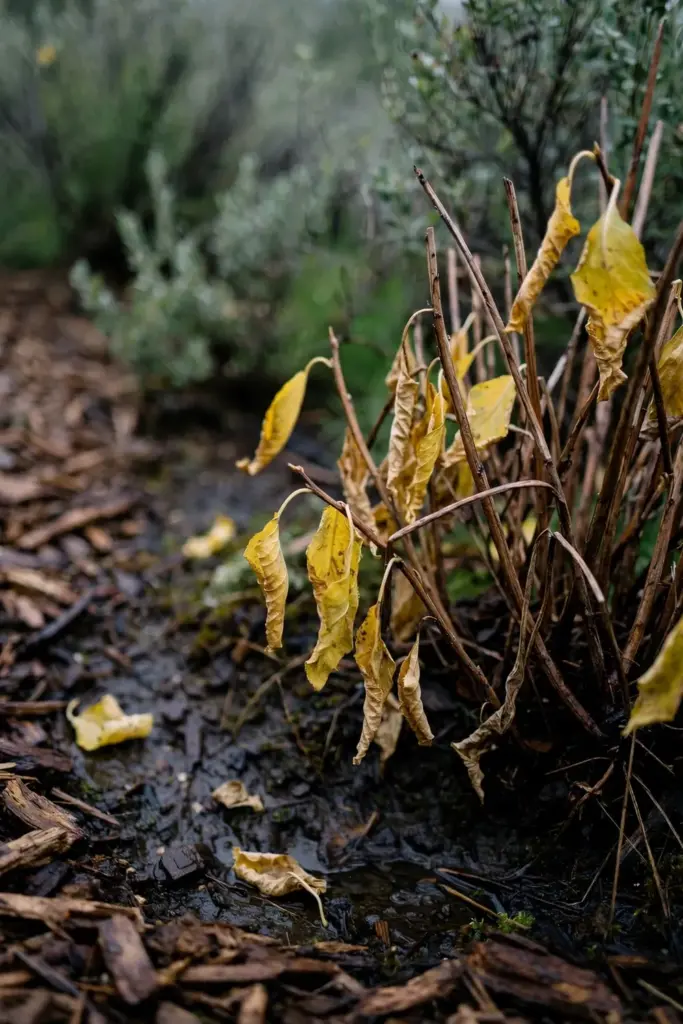
Phytophthora root rot is the killer. Phytophthora cinnamomi is a soil-borne water mould that attacks roots and rots them. Infected roots blacken and stop taking up water. Leaves yellow, wilt, and hold on the plant. The plant dies standing. The pathogen moves in soil and water, and it thrives where drainage stays poor. Prevention beats cure. Buy clean stock from reputable nurseries. Keep drainage sharp. Clean tools and boots between beds. Never move soil from a sick bed to a healthy one. No home cure revives a plant with rotted roots. Remove it, bag it, bin it, and never compost it.
Yellowing leaves mean several things. Yellow leaves on a hungry plant point to low nitrogen or wrong pH, while yellow leaves on a wet plant point to rot. Yellow leaves on a new planting point to transplant shock. Check the soil first. Wet soil means wait. Dry soil means water. Pale soil and pale leaves mean a native feed in spring. Yellowing after a feed means phosphorus burn, and the fix is flushing with water, not more feed.
No flowers mean wrong light, wrong prune, or young age. A native in shade flowers poorly. Move it or prune the shade. A native pruned before flowering loses its buds. Prune after flowering. A native grown from seed may need years before its first flower. Seedling banksias and grevilleas flower in two to five years depending on the species. Grafted and cutting-grown stock flowers sooner. Patience beats fertilizer here. A feed will not force a seedling to flower early.
Frequently Asked Questions About Australian Native Plants
Most established natives need no fertilizer at all. Australian soils run low in phosphorus, and native roots evolved to scavenge tiny amounts. Feed only a pale, slow plant, once in spring, with a native formula capped at 2 percent phosphorus. Standard rose or garden fertilizer poisons phosphorus-sensitive natives. Compost and manure carry phosphorus too, so keep them off native beds. Seaweed solution is the safe exception.
Yellow leaves point to wet roots, hunger, wrong pH, or transplant shock. Check the soil before you act. Wet soil means rot risk, so hold the water. Dry soil means a deep soak. Pale leaves on dry soil mean a native feed in spring. Yellowing right after feeding means phosphorus burn, so flush with water. Yellow leaves on a new planting often mean shock, and the plant recovers once roots settle.
Plant in the cool months. Autumn and winter suit most districts. Early spring suits frost districts, once the last hard frost passes. Cool-month planting gives roots months to spread before summer heat arrives. A native planted in high summer spends its first weeks fighting heat instead of growing roots. Water the new plant in deeply, mulch, and water through the first dry season.
Yes, with dwarf forms and native potting mix. A pot holds a compact grevillea or a groundcover banksia. A pot never holds a tree banksia or a gum. Use native mix, not standard mix, and add coarse sand for drainage. Every pot needs a drainage hole. Water pots more often than beds, since pots dry in days. Feed pots once in spring with native slow-release fertilizer. Beds need no feed.
Rainforest natives and some Myrtaceae handle clay better than Proteaceae. Lilly pilly, bottlebrush, and tea tree tolerate heavier soil if drainage moves. Banksia, grevillea, and hakea sulk in wet clay. Raise the bed 30 cm for sensitive species, or pick clay-tolerant natives instead. Dig coarse organic matter through the top soil and add gypsum to crack heavy clay. Never plant a sensitive native into flat, wet clay.
Start With One Local Plant
One local native teaches the whole system. Pick a plant grown from seed collected near your district. Plant it in a free-draining sunny spot in the cool months. Water it through the first dry season. Feed it nothing. Mulch it 75 to 100 mm deep. Watch it settle.
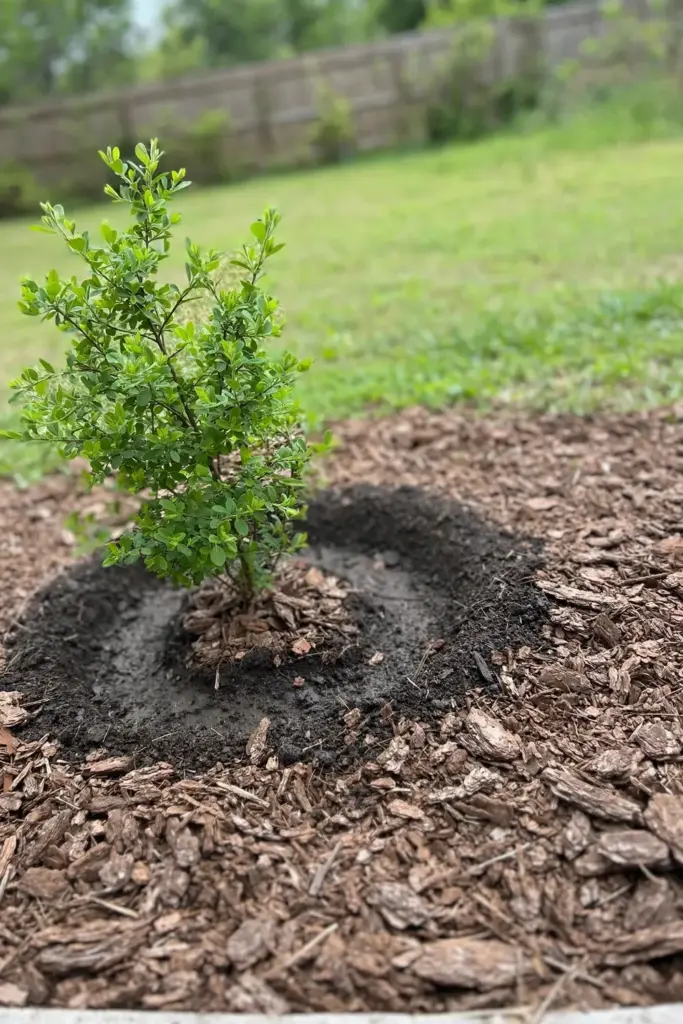
The first plant shows what your soil and climate actually grow. The second plant gets easier. The garden builds from there, one local plant at a time.